DIY Cable Management Ideas That Actually Work


DIY cable management uses cheap, everyday items, ties, clips, boxes, and sleeves, to bundle and hide the cords around a desk. Store-bought organizers work, but they add up fast, and you can get the same tidy result for a fraction of the price with things you already own. Here are creative DIY cable management ideas to tame the wires in a home office setup without spending much. For the full step-by-step on routing cables as you go, our guide to cable management for a standing desk walks through the setup.
Why cable management matters
Tangled cables do more than look messy. Loose cords on the floor are a trip hazard, tangled wires fray and wear out faster, and a cluttered desk pulls at your attention while you work. A few minutes of DIY cable management fixes all three, and keeps a workspace safe, tidy, and easy to focus in.
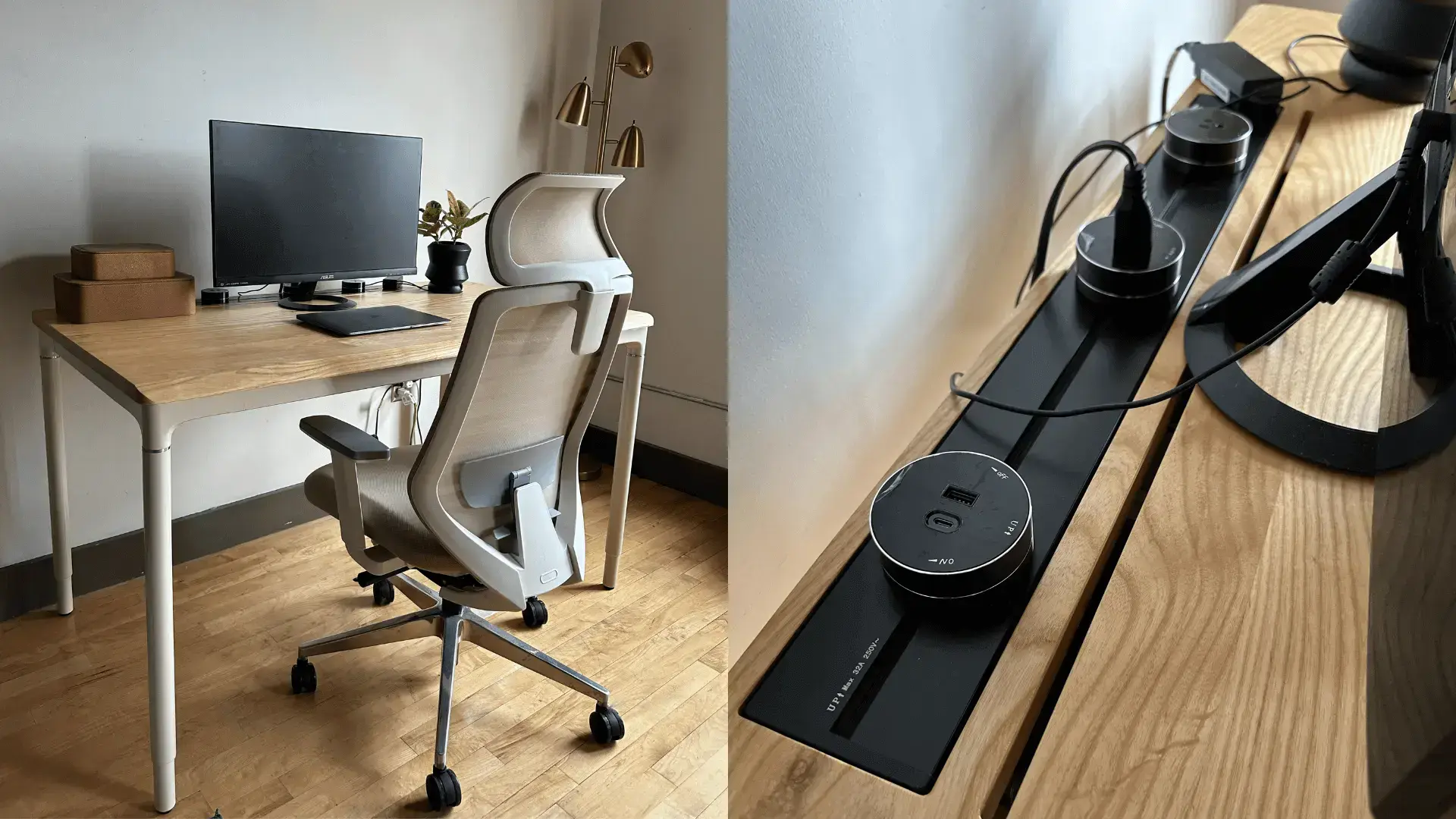
DIY cable management ideas
Each of these is cheap, quick, and uses common household items. Mix and match the ones that fit your desk.
1. Cable ties or Velcro straps
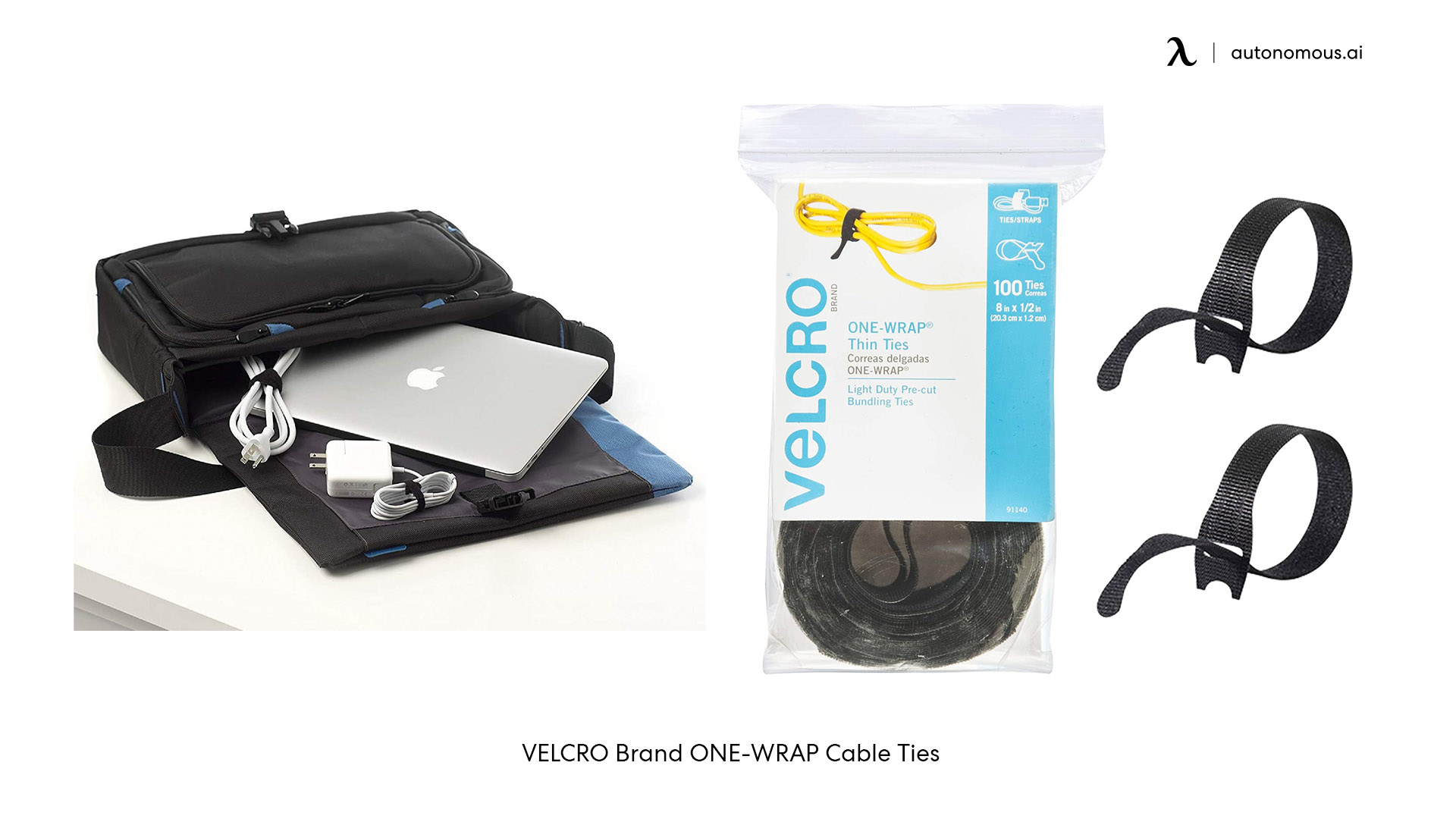
The simplest DIY cord organizer is a Velcro strap or tie wrapped around a bundle of cables to stop them tangling. Velcro is reusable, so it suits a setup that changes often. No straps on hand? Twist ties or bread-bag clips do the same job for free.
2. Binder clips as cable holders
Clip a binder clip onto the edge of your desk and thread cables through the metal handles. It turns loose cords into a tidy DIY cable holder that keeps chargers within reach and stops them sliding off the desk when you unplug a device.
3. Toilet-paper rolls for storage
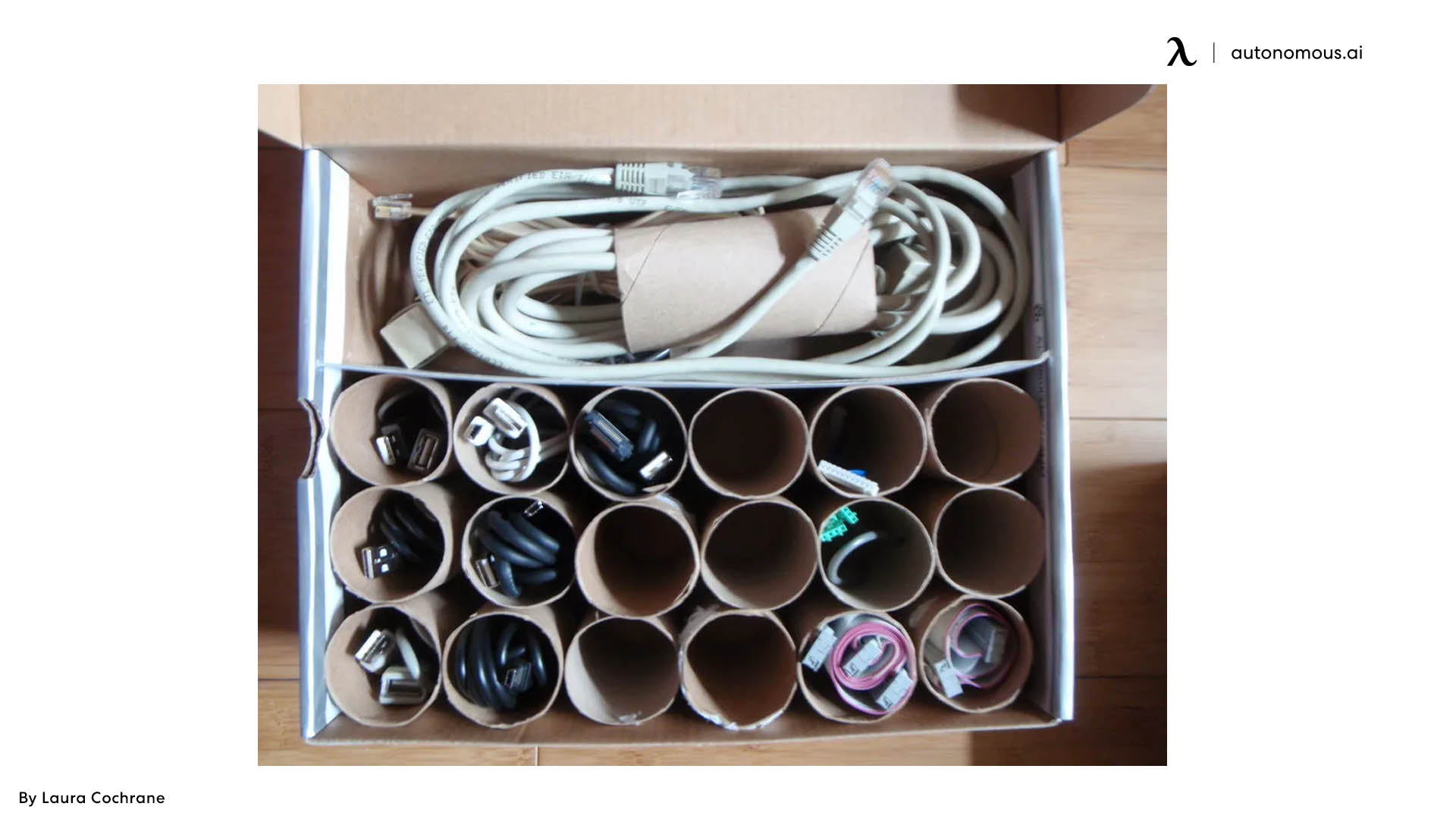
Empty toilet-paper or paper-towel rolls make a free way to store loose cables. Coil each unused cord, tuck it inside a roll, and label the roll so you can find it later. Spray-paint them to match your room, or stand a roll on end as a quick headphone or charger hanger.
4. A DIY cable box for chargers
For a pile of charging cables, a small box hides the mess. Cut holes in a shoebox or a decorative box, run the cords through, and drop the power strip inside so only the charging ends poke out. It is one of the cheapest cable storage ideas, and it keeps a nest of adapters off the desk.
5. Color-coded thread or ties
Wrap cords together with colored thread or color-coded ties, and give each device its own color. It works like Velcro but adds a system: green for power, blue for data, and so on, so you can spot and swap a single cable later without unplugging everything.

6. A DIY cable tray under the desk
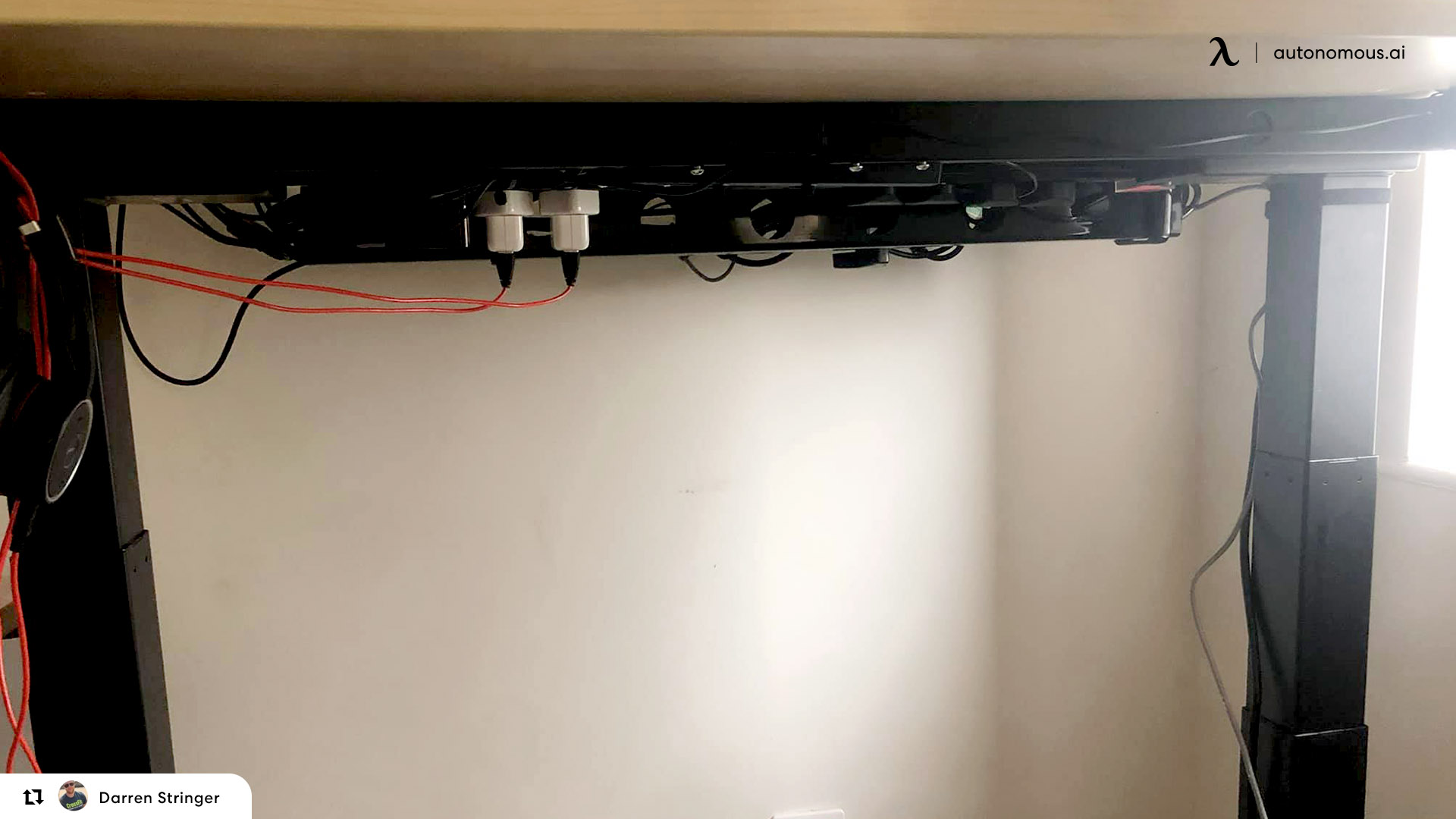
An under-desk cable tray holds a power strip and bundled cords out of sight. You do not need a store-bought one: a plastic rain gutter offcut or a metal utensil holder screwed to the underside of the desk works as a DIY cable tray, and keeps the floor clear of a tangle.
7. Hide the power strip
A power strip on the floor is an eyesore. Mount it under the desk with adhesive strips or brackets, or tuck it inside a decorative box with holes cut for the cords. Either way, it comes off the floor and the cords route neatly to one hidden point.
8. Run cables along the wall
For a home office desk against a wall, guide the cords along the baseboard with adhesive cable clips so they stay off the floor and out of sight. Command hooks or adhesive strips work if you do not have clips, and low-tack options protect the paint when you move things later.
9. A hanging rack for spare cables
An old hanging rack, hook rail, or a scrap-wood bracket gives unused cables a home. Coil and hang the wires you are not using, along with spare chargers and headsets, so they stop wandering off around the house. Add one in each room where cords tend to pile up.
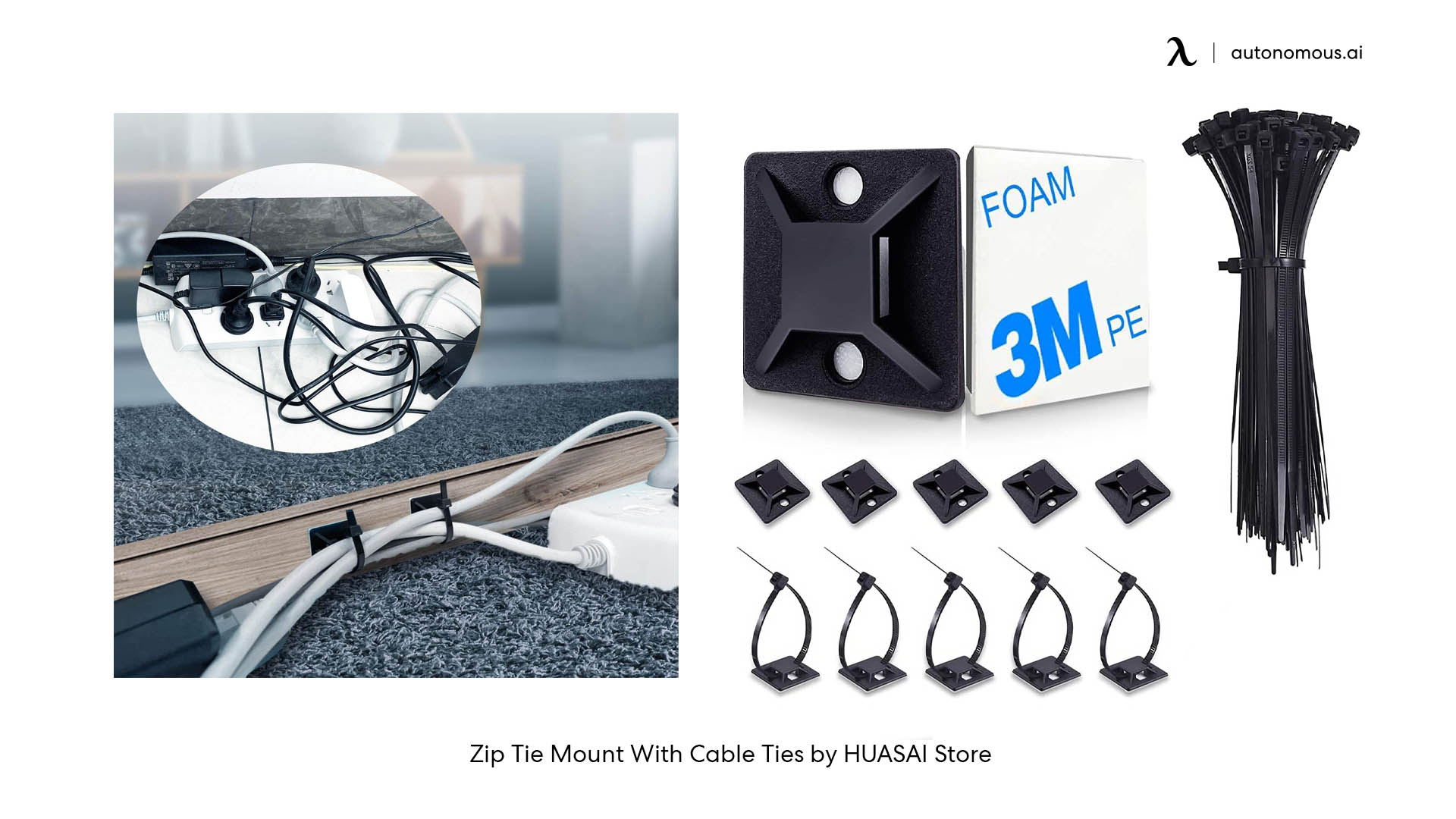
10. Zip ties and cable clips
Pair a zip tie with an adhesive cable clip: bundle the cords with the tie, then stick the clip to a wall or the desk edge to hold the bundle in place. Use low-impact clips on painted walls, and keep them off spots you rearrange often.
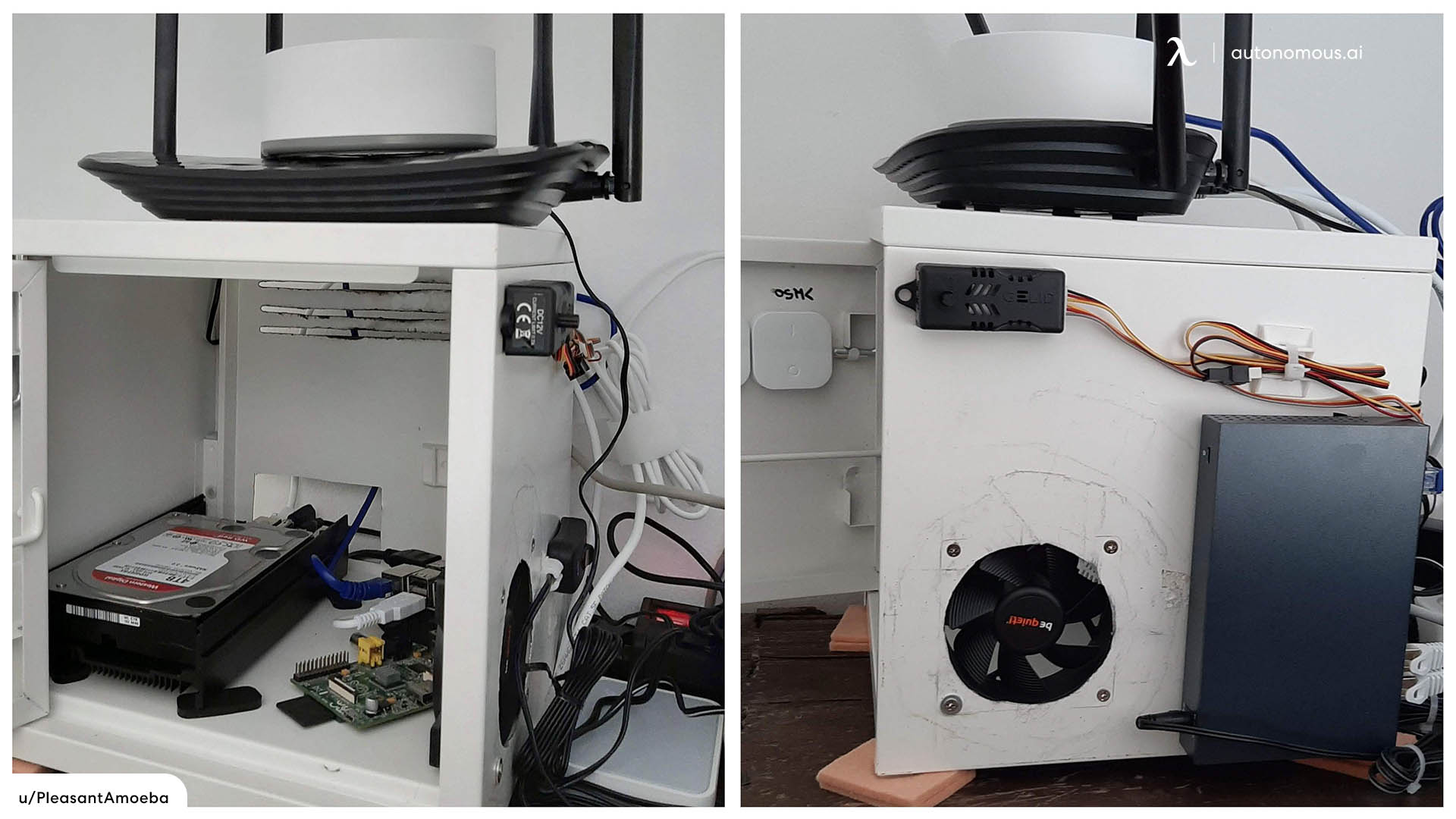
11. A cable cabinet or shelf
If your desk has a shelf or cabinet, turn it into invisible storage. Line up the power bars and coil the cables inside in a set order to avoid tangling, then drill a hole or two in the back for the wires to exit. Close the door and the whole tangle disappears.
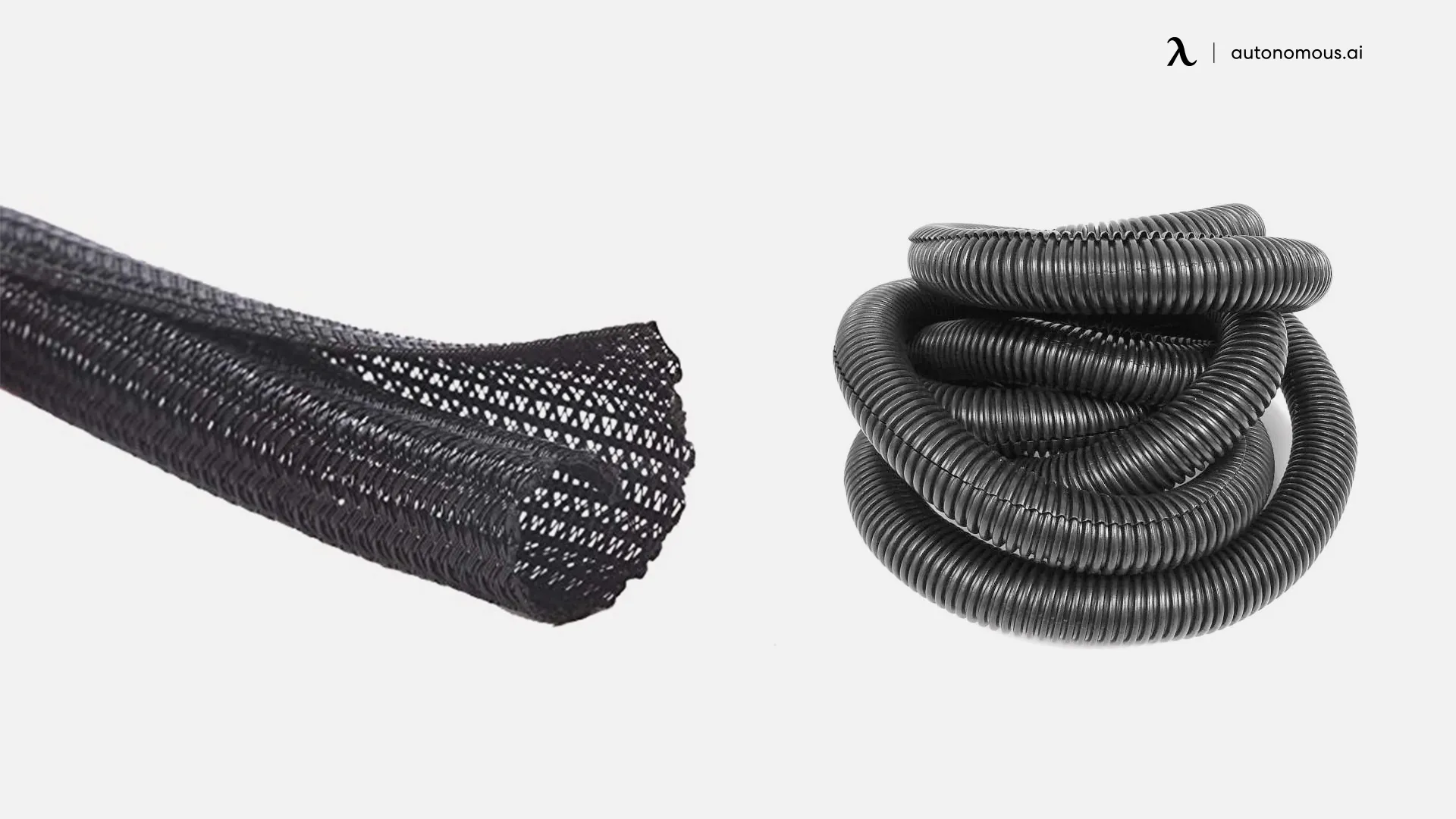
12. Wire sleeves
A wire sleeve is a fabric or neoprene tube with a zip that swallows several cords into one clean line. It gives a minimalist look, protects the wires, and cuts to length, which makes it one of the tidiest ways to handle the run from the desk to the wall.
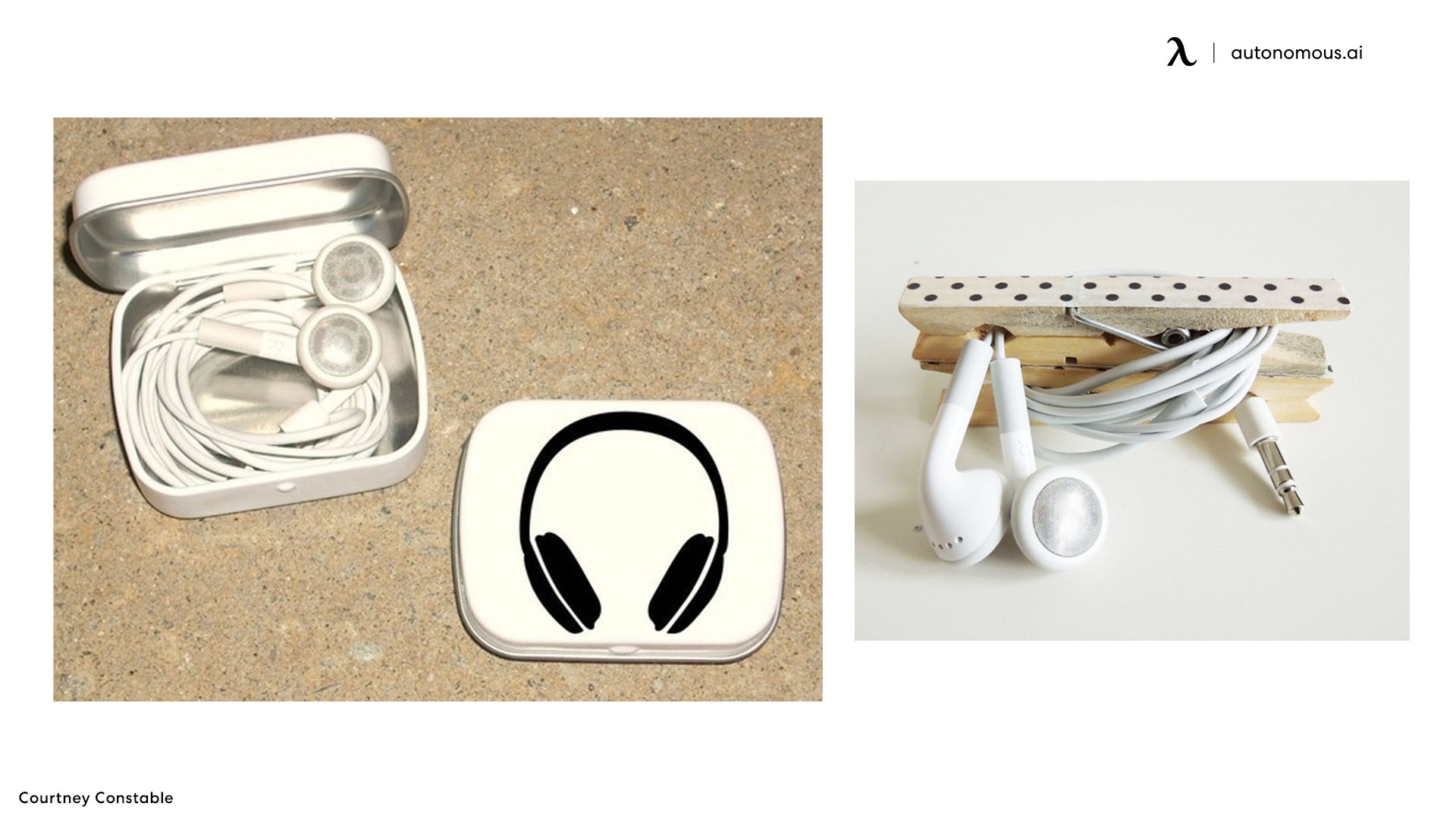
13. Earphone organizers from clay
Shape a small organizer from air-dry clay, paint it, and use it to wind your earbuds so they do not tangle in a bag. It is a fun, near-free DIY cord organizer for the small cables that always end up knotted at the bottom of a drawer.
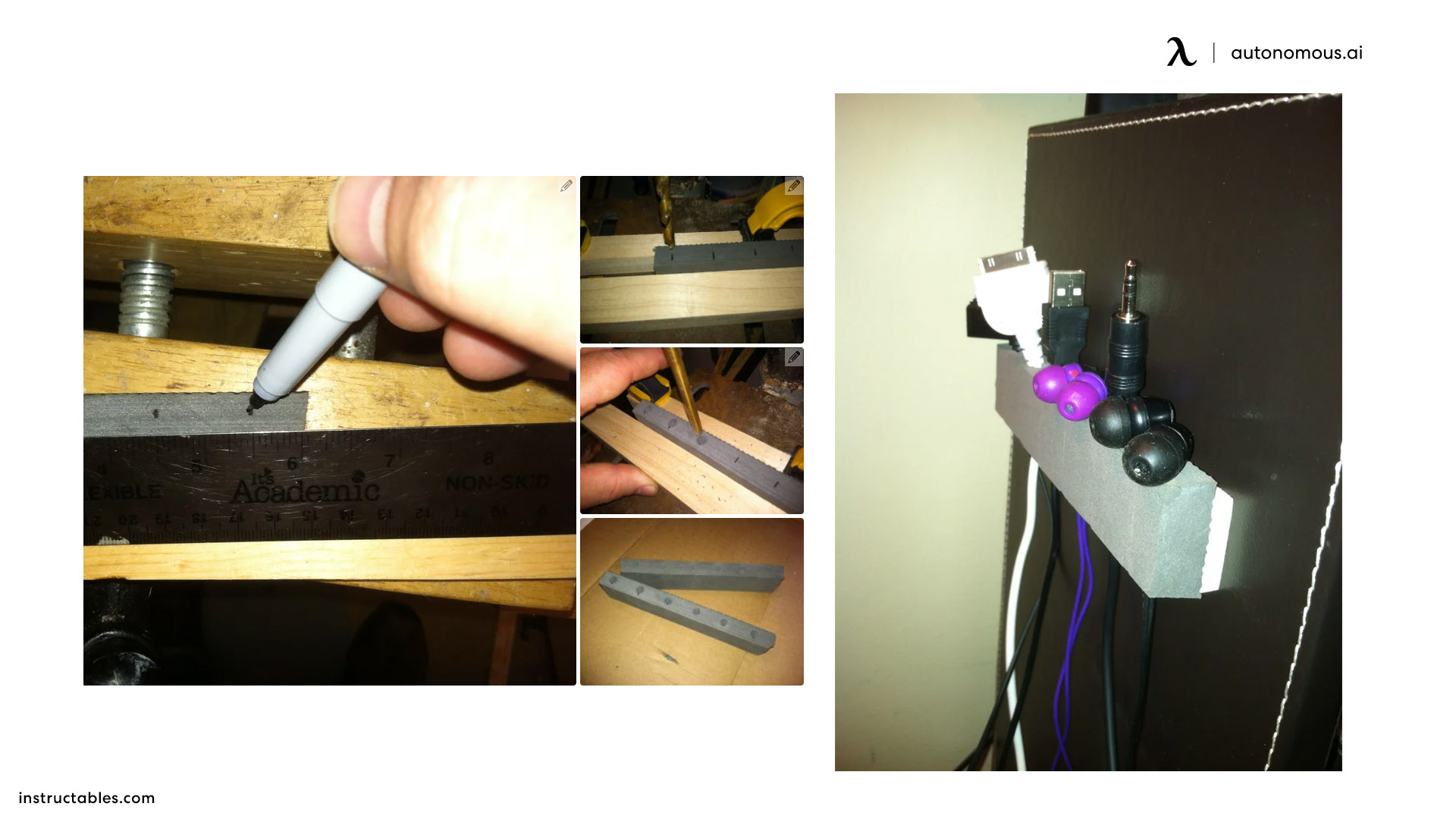
14. A foam charger organizer
Glue one side of a Velcro strip to the wall and the other to a strip of foam rubber, then cut slots in the foam to hold cable ends. It keeps chargers and USB cords visible and in place, so the one you need is never lost behind the desk.
15. DIY cable "bones"
For long cables with nowhere to go, cut a bone shape from stiff cardboard or rubber, about four inches long, with a notch at each end. Wind the excess cord around the middle and hook it into the notches. Hide it behind the PC, and the slack is gone.

FAQs
How do I manage multiple wires on my desk?
Group similar cables with ties or Velcro, then route them into a tray or sleeve so they run as one bundle rather than a tangle. Clip cords to the desk edge or underside to keep them off the surface, and label each cable or use color-coded ties so you can find and swap one later.
How do you make a DIY cord organizer?
The easiest DIY cord organizer is a binder clip on the desk edge with cables threaded through the handles. For storage, cut holes in a shoebox to hide chargers and a power strip. Colored thread, foam-and-Velcro slots, and clay earbud winders all work too, using items you already have.
How do you hide cables on a standing desk?
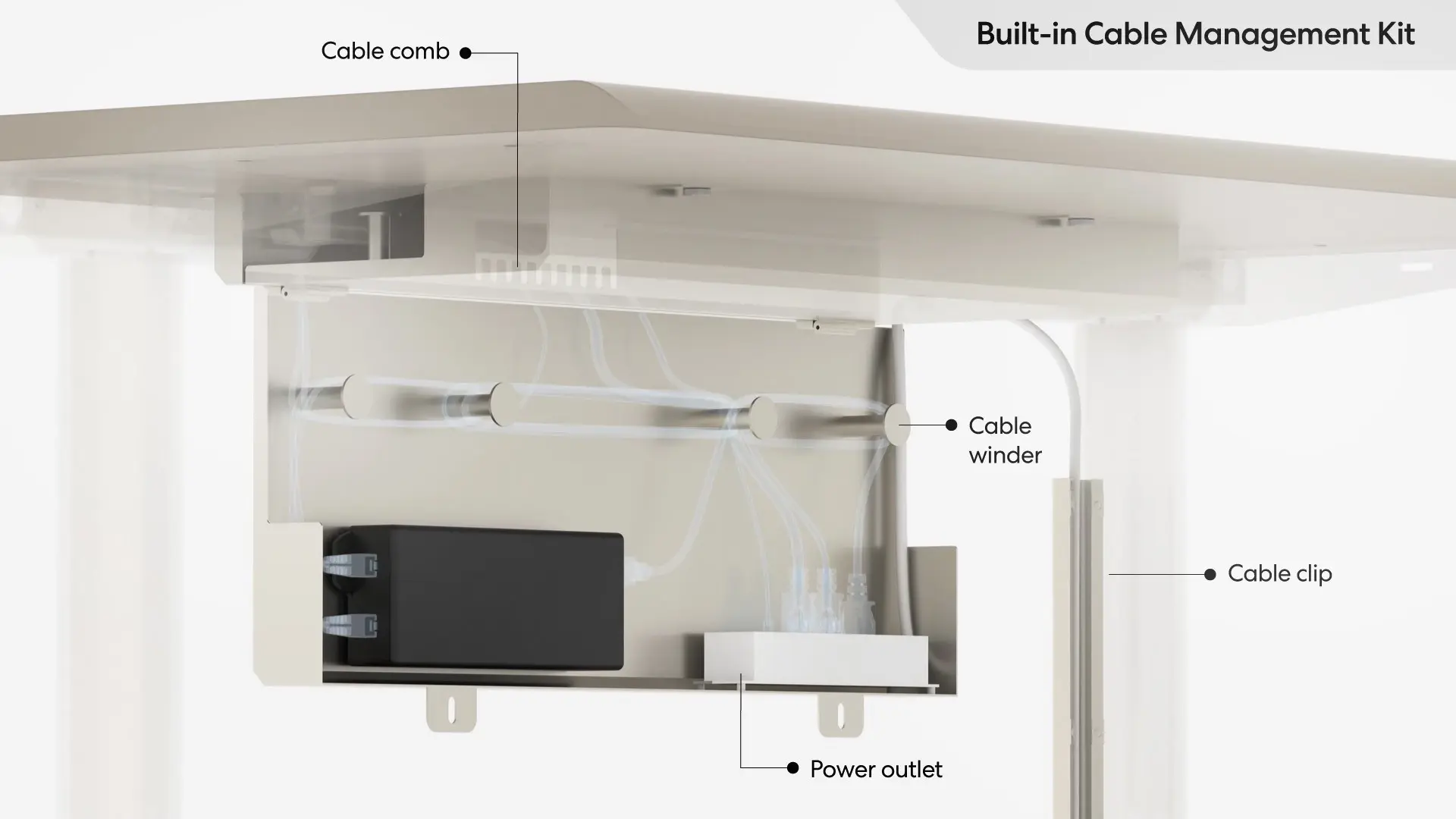
Use a cable sleeve or raceway attached to the frame or legs so cables flex as the desk moves, and mount a tray or power strip underneath to keep the run off the floor. Leave enough slack for the desk to rise. A standing desk with a built-in tray handles most of this for you.
How do you hide cords behind a desk against a wall?
Run the cords down one leg and along the baseboard with adhesive clips, then into a single sleeve to the outlet. If the desk has grommets or a back channel, route the wires through those.
What is the cheapest way to do cable management?
The cheapest fixes use what you own: twist ties or bread-bag clips to bundle cords, toilet-paper rolls to store spares, a shoebox to hide a power strip, and command hooks to run cables along a wall. None of these cost anything extra, and together they tidy a desk for free.
Do DIY cable management ideas look as good as store-bought ones?
They can, if you keep the palette consistent and hide the bulky parts. A painted box, a fabric sleeve, and clips that match the desk read as clean as a bought organizer. The trick is routing the run to one hidden point rather than leaving cords crossing the open surface.
Bottom line
DIY cable management does not have to be the easy path, but it is the cheap and satisfying one. Bundle the cords, hide the power strip, route the run to one point, and use everyday items, ties, clips, boxes, and sleeves, to do it for next to nothing. Start with one or two of these ideas, and a tangled desk turns tidy without a trip to the store. For more finished options, browse the office accessories range.
References
- Occupational Safety and Health Administration (OSHA). Walking-Working Surfaces and Slip, Trip, and Fall Prevention. https://www.osha.gov/walking-working-surfaces
- Cornell University Ergonomics Web. Office Ergonomics Guidelines. https://ergo.human.cornell.edu/