Best Office Chairs With a Leg Rest or Footrest

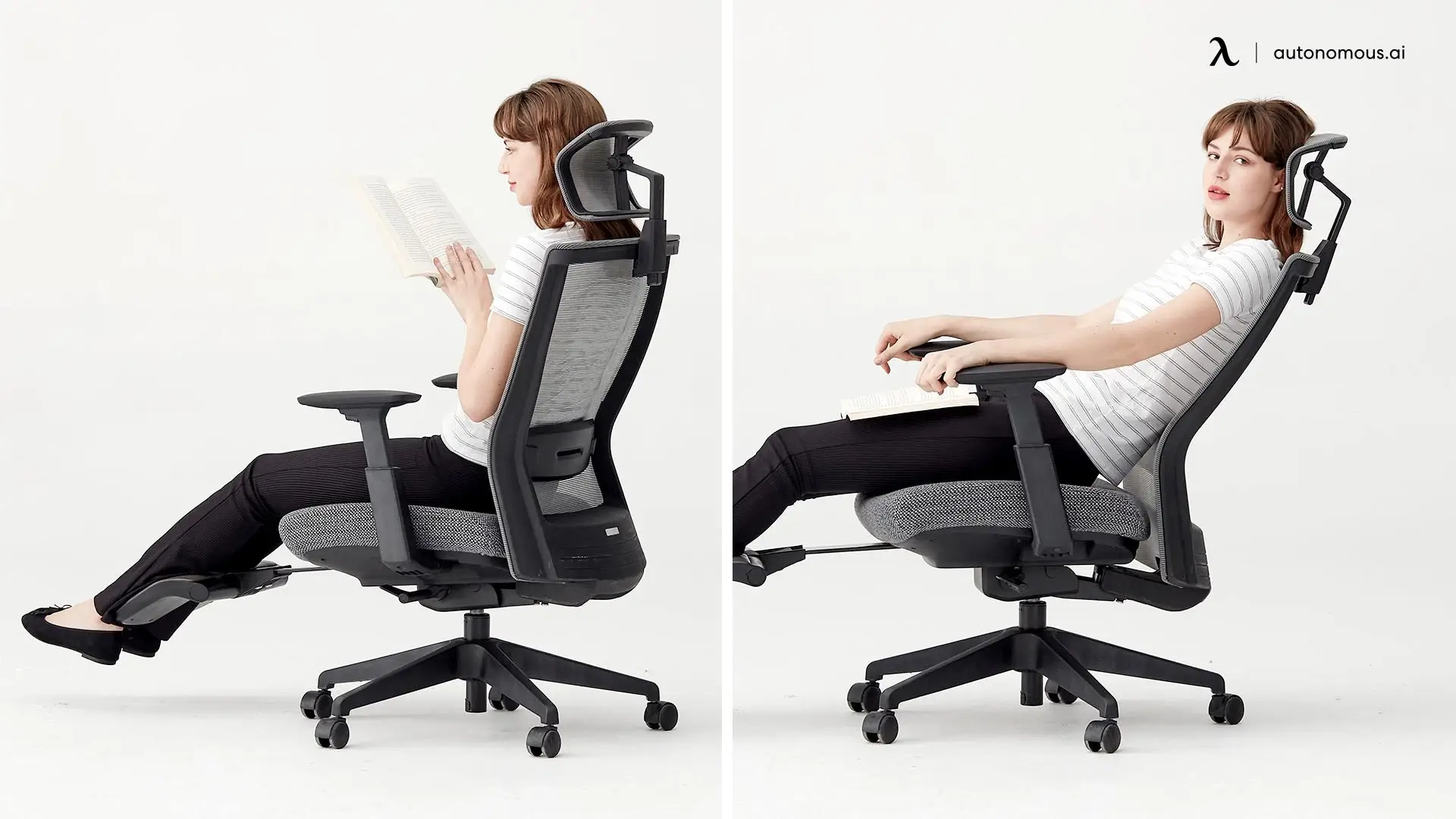
The best office chair with a leg rest keeps you upright and supported for work, then lets you extend a footrest for short circulation breaks without leaving your seat. That distinction is the whole point: a leg rest is a recovery tool for tired legs, not a recliner for all-day lounging, and the models worth buying treat it that way.[1] Below are nine office chairs with a built-in leg rest, rated on weight capacity, recline, and how well the footrest holds up across a full workday, plus three Autonomous office chairs that pair with a separate footrest for a cleaner, more durable setup.
What to look for
There is also a use case behind this search that no other roundup names. The most-discussed thread on it, a 150-comment r/WFH question titled "best chair for someone who folds their legs into their lap," lands on a point worth leading with: people who want a leg rest often want to pull a leg up onto the seat and sit cross-legged. That needs a wide, flat-enough seat you can fold a leg onto, not just a footrest. A narrow, deeply contoured task seat fights you no matter how good its footrest is. So this guide flags seat width and shape, not only whether a footrest exists.
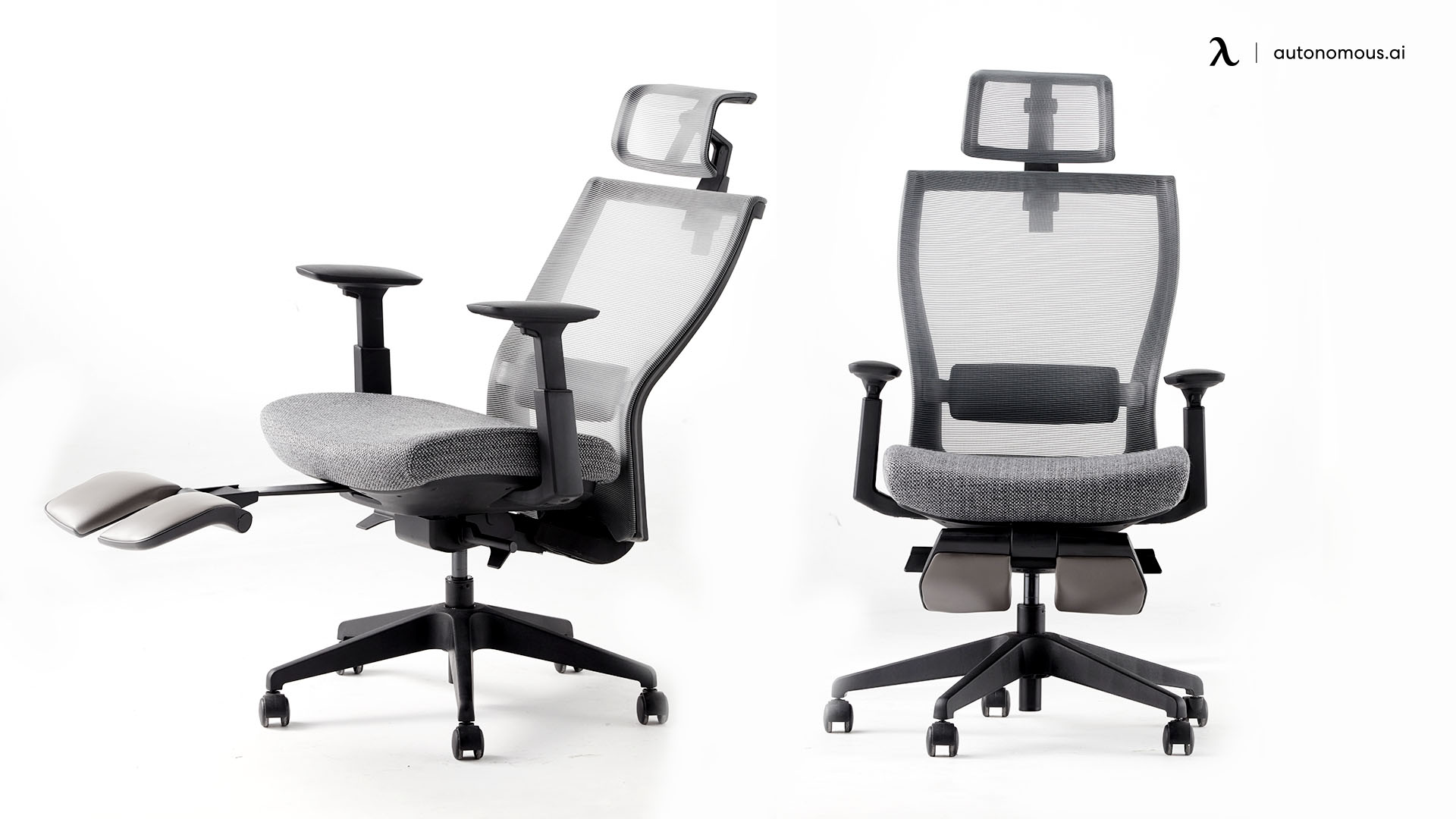
- Retractable footrest, not a fixed one. A built-in footrest that slides out and stows keeps the chair usable at a desk. A permanently extended leg rest gets in the way during work.
- Seat width and a flat-enough pan, if you fold your legs up. To sit cross-legged you need room to pull a leg onto the seat. A wide, shallow-contour seat wins here; a narrow bucket seat does not.
- Recline depth. A leg rest only helps if the back reclines far enough to shift weight onto it. Look for at least 130 degrees.
- Real ergonomics underneath. A footrest is comfort, not support. The chair still needs adjustable lumbar, seat depth, and arms so it works for the 8 hours you are not reclining.
At a glance
Each pick below prioritizes something different, so the table shows the core differences before the detailed reviews.
Chair | Footrest or leg rest | Capacity | Best for |
|---|---|---|---|
Hinomi H2 Pro | Retractable footrest (paid add-on) | 330 lb | Premium ergonomics |
Sihoo Doro C300 (footrest version) | Retractable footrest | 300 lb | Value |
Hbada E3 Pro (footrest version) | Retractable footrest | ~300 lb | Mid-range |
Welax S9 Pro | Retractable footrest, tucks in | 300 lb | Budget |
Vonesse (with footrest) | Retractable footrest | ~300 lb | Budget alternative |
Hinomi X2 Pro | Full retractable leg rest | ~330 lb | Reclining and naps |
LiberNovo StepSync | Retractable footrest + spine stretch | Verify | Movement and deep recline |
FlexiSpot ErgoX | Retractable footrest | Verify | Recognized brand |
Gaming chair (Dowinx, GTRacing) | Pull-out footrest | Varies | Reclining on a budget |
The 9 best office chairs with a leg rest or footrest
1. Hinomi H2 Pro, best premium ergonomic chair with a footrest
Best for: buyers who want a full task chair first and use the footrest for breaks.
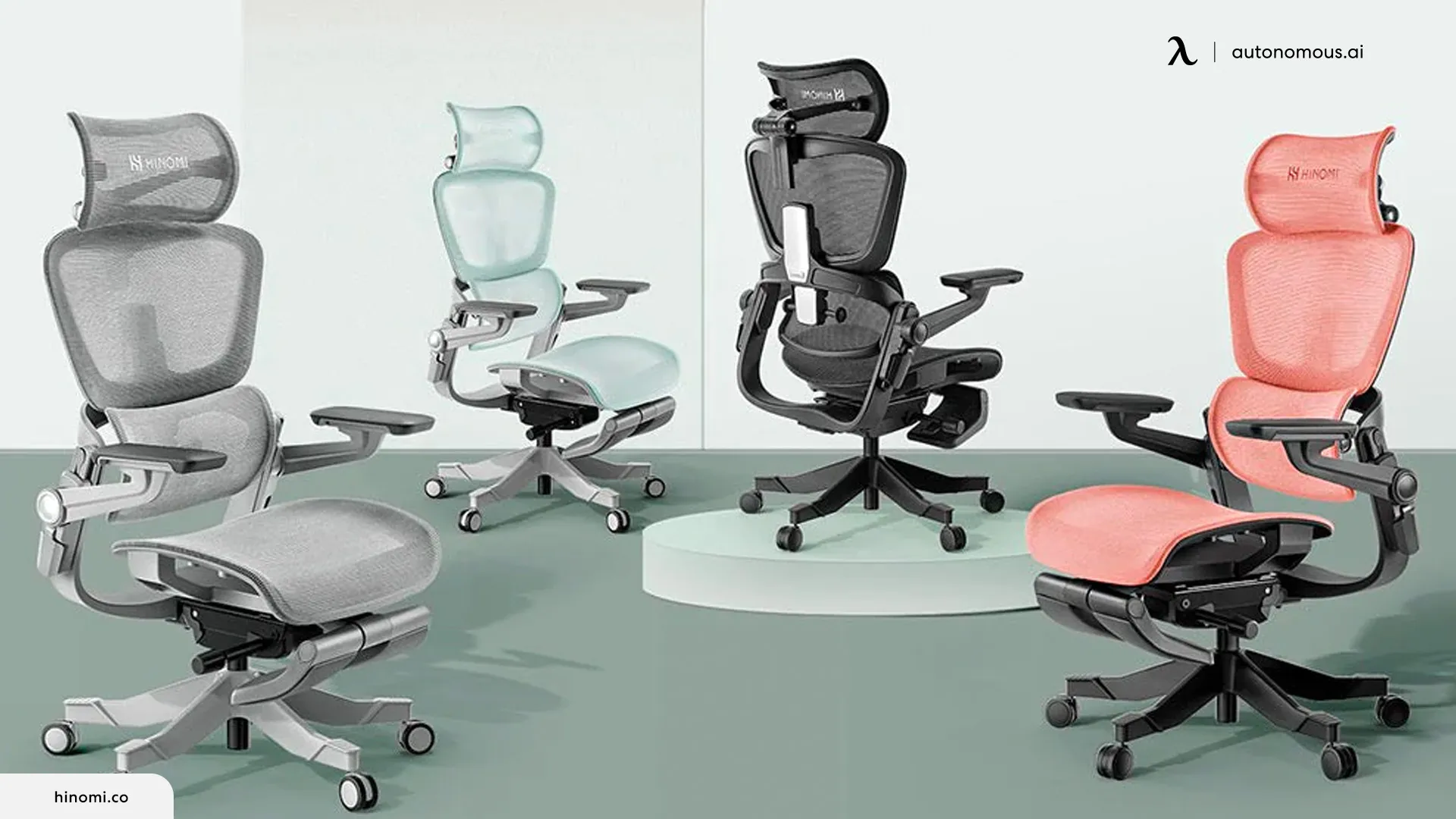
The H2 Pro is a genuine 19-point ergonomic chair that offers a footrest, not a lounge chair pretending to be ergonomic. Its 3D auto-adapting lumbar tracks your lower back as you tilt, moving up to 12 degrees and adjusting 3cm in height and 2.5cm in depth, so support stays put when you recline to its full 143 degrees. The waterfall-edge seat adjusts 8cm in depth on an aluminum ADC12 frame with breathable hybrid mesh, rated to 330 pounds with up to a 10-year warranty, and the whole chair folds in half for storage. The Hinomi lineup is well reviewed, but be honest about the footrest: it is a separate retractable add-on with vegan-leather padding, and reviewers consistently call it the chair's weak point, lower in quality than everything else. A 6'4" owner notes the seat can pop out of the highest recline lock if you do not fully engage it.
Pros:
- 19 adjustment points, 3D tracking lumbar, folds flat
- 330 lb capacity and up to a 10-year warranty
- Real task-chair ergonomics, not a padded recliner
Cons:
- Footrest is a separate paid add-on and the chair's weak point
- Lumbar runs intense and the armrests drift out of position
- Premium price, around $759
2. Sihoo Doro C300 (footrest version), best value
Best for: most people who want a real built-in footrest without premium pricing.
The Doro C300 footrest version puts a genuine retractable footrest on a strong, hands-off ergonomic base for around $350. Its dynamic lumbar is weight-sensing: it tracks your back automatically across four height levels and 2.36 inches of travel, so there is little to tune. The 3D arms move three ways and coordinate with the seatback as you recline through 110, 120, and 130 degrees, and the wide high-density mesh seat suits bigger frames up to 300 pounds. It is certified to SGS, BIFMA, TUV, and EN1335, holds 12 patents, and averages 4.4 stars across hundreds of reviews. The footrest slides out to lift your legs and ease lower-back pressure on breaks.
Pros:
- Weight-sensing auto lumbar, almost nothing to tune
- Wide 300 lb seat with strong certifications and review base
- Retractable footrest built in at around $350
Cons:
- The base footrest version predates the Pro V2 fixes for loose armrests and a reclining sacrum gap
- Less fine adjustment than the Hinomi
3. Hbada E3 Pro (footrest version), best mid-range
Best for: buyers cross-shopping the Sihoo who want a floating lumbar and a 4D headrest.
The Hbada E3 Pro in its footrest configuration is the most common cross-shop against the Sihoo Doro C300, and the two trade blows. It pairs a breathable mesh back with a 3-zone floating lumbar that flexes across your lower and mid back, a 4D headrest, 720-degree swiveling armrests, and a retractable footrest. It leans on a more conventional, static-feeling support than the Sihoo's weight-sensing system, which some people prefer for its predictability.
Pros:
- 3-zone floating lumbar and a 4D headrest
- 720-degree armrests and a retractable footrest
- Strong, predictable static support
Cons:
- Support is static rather than dynamic like the Sihoo
- Hbada sells the E3 with and without a footrest, so confirm you are buying the footrest version and its current price
4. Welax S9 Pro, best budget footrest chair
Best for: buyers who want a footrest and simple one-hand adjustment on a budget.
The Welax S9 Pro is the budget pick that still feels considered. Its standout is one-touch control: a single lever changes seat depth, tilt, height, and backrest recline, so you switch between working and reclining without hunting through knobs. The retractable footrest is a full 15.7 by 10.6 inches and tucks completely into the chair body when stowed, which keeps it usable at a desk. You also get 6D armrests, a 3D adaptive headrest, adjustable seat depth, German-imported mesh, a reinforced aluminum base, an SGS Class-4 gas lift, and quiet PU casters, rated to 300 pounds with a 60-day return. It is simpler than the Sihoo or Hinomi on lumbar sophistication, but for the money the large footrest and one-touch mechanism are a lot of chair.
Pros:
- Large footrest that fully retracts into the chair body
- One-touch lever for depth, tilt, height, and recline
- 6D arms and a 300 lb aluminum base at a budget price
Cons:
- Simpler lumbar than the pricier picks
- Newer brand, so confirm the live price and warranty
5. Vonesse Ergonomic Chair with Footrest, budget alternative
Best for: a second budget option if the Welax is unavailable.
The Vonesse is a reasonable fallback if the Welax is out of stock. It offers a 3D headrest and armrests, dynamic lumbar support, an adjustable-depth breathable mesh seat, and a retractable footrest, covering the same brief at a similar low price. It does not stand out on any one feature the way the Welax does with its one-touch control, but it is a workable low-cost footrest chair.
Pros:
- 3D headrest and armrests with dynamic lumbar
- Adjustable-depth mesh seat and a retractable footrest
- Low price
Cons:
- Lesser-known brand with a thinner review record
- Verify the live spec sheet and price before buying
6. Hinomi X2 Pro, best full leg rest for reclining
Best for: people who genuinely recline or nap and want a full leg rest, not just a footrest.
If you want an actual leg rest rather than a slide-out footrest, the X2 Pro is the pick. Its retractable legrest extends to support the whole lower leg, and paired with a lockable 143-degree recline and 4-level tension control, the chair genuinely converts into a lounger: recline the 4-panel QuadSync back, extend the legrest, and owners compare it to a resort lounge chair. It keeps real ergonomics too, with a dual-zone floating lumbar aimed at chronic back pain, dual-axis armrests, a waterfall-edge mesh seat with 8cm depth adjustment and a 2.5-degree forward tilt, an aluminum frame, and SGS, TUV, and BIFMA certification. It costs more than the H2 Pro, so it is for people who actually spend part of the day reclined.
Pros:
- Full retractable legrest, not just a footrest
- Deep lockable recline with dual-zone lumbar for back pain
- Aluminum frame and full safety certifications
Cons:
- Pricier than the H2 Pro
- The recline focus is overkill if you rarely lie back
7. LiberNovo StepSync, best for movement and deep recline
Best for: buyers who want an active, moving chair with a footrest, not a static seat.
The LiberNovo ships as a bundle with a StepSync footrest and is built around movement rather than a fixed posture. It reclines to 160 degrees, its adaptive lumbar follows your lower back as you shift, and it adds a built-in spine-stretch function that mobilizes your back through the day, with the StepSync footrest extending for the recline. It is a newer, design-forward brand, so the long-term durability record is thin.
Pros:
- 160-degree recline with a footrest and a spine-stretch function
- Adaptive lumbar that moves with you
- Active-sitting design rather than a static seat
Cons:
- Newer brand with a thin durability track record
- Confirm the live price, warranty, and weight capacity
8. FlexiSpot ErgoX, best recognized brand with a footrest
Best for: buyers who want a footrest from a brand with real support behind it.
FlexiSpot is best known for standing desks, and the ErgoX brings a retractable footrest to a mesh ergonomic chair from a company with a genuine warranty and support operation, which the no-name Amazon listings lack. You get a dynamic lumbar, adjustable armrests, a recline and tilt function, and a breathable mesh back, with a footrest that slides out for breaks. It does not lead on any single spec the way the Sihoo or Hinomi do, but the brand backing is the reason to pick it over a cheaper unknown.
Pros:
- Footrest from an established brand with real support and warranty
- Dynamic lumbar, adjustable arms, recline and tilt
- Breathable mesh back
Cons:
- Fewer standout features than the Sihoo or Hinomi
- Confirm the specific ErgoX footrest configuration and price
9. Gaming chair with a pull-out footrest, best for reclining on a budget
Best for: reclining and napping cheaply, not eight-hour desk posture.
A padded gaming chair with a pull-out footrest, from a brand like Dowinx or GTRacing, reclines close to flat and adds a leg rest for a low price. Be clear on the tradeoff, and this is the honest part most roundups skip: the PU-padded bucket seat and separate lumbar and neck pillows are less supportive for real desk work than a proper task chair, the padding traps heat, and the deeply contoured bucket is the worst seat shape here for folding your legs up. Buy it for movie-watching, gaming, and naps, not for a full workday of typing.
Pros:
- Near-flat recline plus a footrest for a low price
- Plush, padded, and easy to lounge in
Cons:
- Bucket seat fights cross-legged sitting
- Pillow lumbar is less supportive and the padding runs warm
- Confirm the specific model and price, since these turn over fast
A cleaner alternative: an ergonomic chair plus a separate footrest
No Autonomous chair has a built-in leg rest, but for the most common reason people search for one, the better answer is not a built-in footrest at all. If you want to fold your legs up and sit cross-legged, you need a wide, flat seat plus a separate footrest. The Autonomous ErgoChair Ultra 2 has a four-layer webbing seat that is wide and flat enough to pull a leg onto, which a contoured foam bucket fights, and webbing holds a folded position better. Pair it with a standalone footrest and you get the fold-your-legs-up setup on top of real ergonomics: seat-depth adjustment, a lumberless flex-frame, 4D arms, a 320-pound rating, and a lifetime frame warranty.

For everyone else, the most supportive route is simply a top ergonomic chair plus a separate footrest. Every built-in footrest above is a compromise somewhere: an add-on weak point on the Hinomi, a simpler base chair on the budget picks, a less-ergonomic bucket on the gaming chairs. The Autonomous ErgoChair Pro, Mesh, and Ultra 2 carry none of those, and a standalone under-desk footrest adds foot elevation for a few dollars while adjusting in height and tilt on its own axis, independent of the chair.
.webp)
.webp)
FAQs
Do any ergonomic office chairs have a built-in leg rest?
Yes, but few true task chairs do. Most that advertise one use a retractable footrest that slides out and stows, like the Hinomi H2 Pro or the Sihoo Doro C300 footrest version. A full leg rest that supports the whole lower leg is more common on recliner-style or gaming chairs than on ergonomic task chairs.
Is a footrest or a full leg rest better for an office chair?
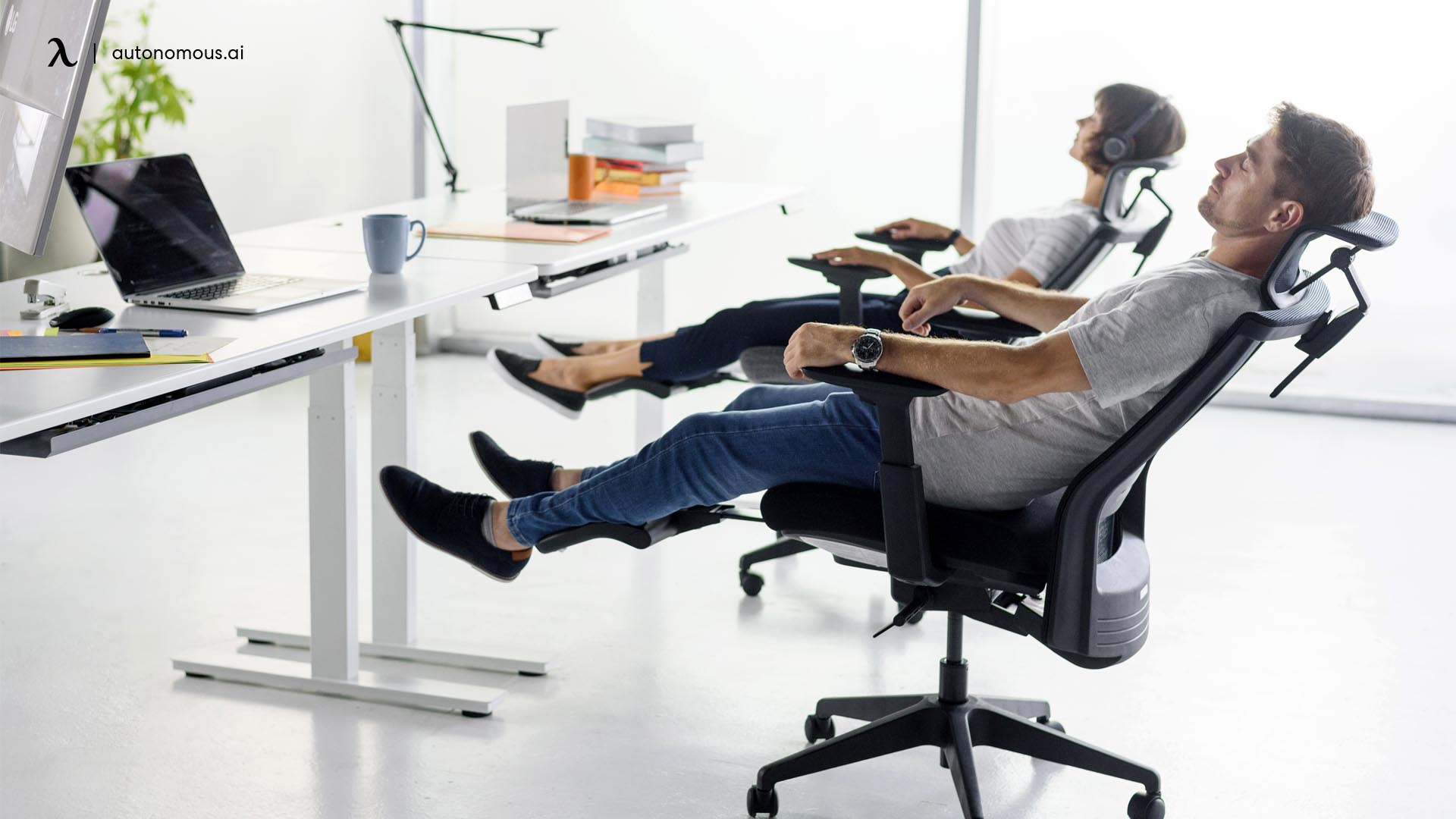
A retractable footrest is better for desk work because it stows out of the way and keeps the chair usable. A full leg rest suits people who recline for long stretches or nap in the chair, but it gets in the way during focused work. Match the type to how much you actually recline.
What is the best office chair for sitting cross-legged?
The best chair for folding your legs up has a wide, flat-enough seat you can pull a leg onto, not just a footrest. A contoured bucket seat fights the position. A wide webbing or flat mesh seat, like the Autonomous ErgoChair Ultra 2, works better for cross-legged sitting than a deeply sculpted foam seat.
Are chairs with a footrest good for your back?
A footrest itself does not support your back; it elevates your legs to ease pressure during breaks. What matters for your back is the chair underneath, so pick one with adjustable lumbar, seat depth, and arms first, then treat the footrest as a comfort extra rather than the main feature.
Can I add a leg rest to a chair that does not have one?
Yes. A separate under-desk footrest is inexpensive, adjusts in height and tilt on its own, and pairs with any chair without compromising its seat or recline. For most people who want occasional foot elevation with full support, a good ergonomic chair plus a standalone footrest is the better setup.
Bottom line
Most ergonomic task chairs do not come with a leg rest, so the real choice is between a built-in retractable footrest and a great chair paired with a separate one. For full ergonomics with a footrest, the Hinomi H2 Pro leads and the Sihoo Doro C300 footrest version is the value pick. If you actually recline or nap, a full leg rest on the Hinomi X2 Pro or a gaming chair fits better. And if the real goal is folding your legs up onto the seat, prioritize a wide, flat seat like the Autonomous ErgoChair Ultra 2 over the footrest itself. Match the chair to how you sit, and add a standalone footrest if you want the most support for the least compromise.
References
- Occupational Safety and Health Administration (OSHA). Computer Workstations eTool: Chair and footrest guidance. https://www.osha.gov/etools/computer-workstations/components/chairs
- Cornell University Ergonomics Web. Seated posture and footrest guidance. https://ergo.human.cornell.edu/