ErgoChair Pro
Black Friday price.
Built for 12-hour sessions.
Explore the Types of Warehouse Workstations You Need to Know

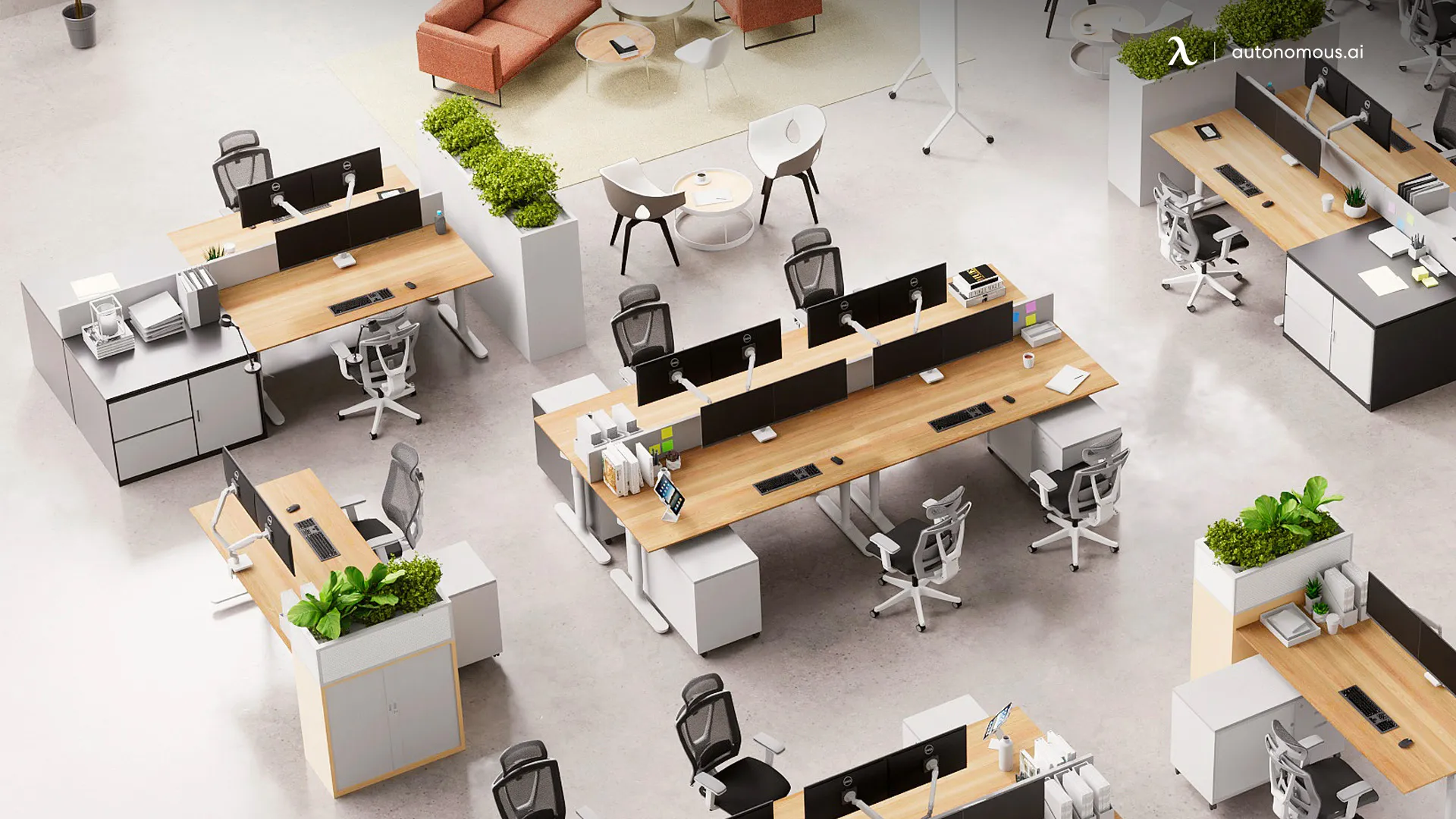
Most warehouses use seven workstation types: packing benches, pick and pack stations, mobile computer carts, receiving and shipping stations, assembly and heavy-duty benches, ESD benches and height-adjustable benches. The right one depends on what moves across the surface, how heavy it is and whether the worker stands or sits.
Each type is covered below, followed by the numbers that decide whether a station is comfortable for a full shift: surface height, load rating, mats and lighting.
7 Kinds of Warehouse Computer Workstations
Most warehouse work stations fall into seven groups, sorted by the task they serve rather than by the material they are made of. Many now carry a monitor, scanner or label printer, which is why buyers search for them as computer workstations.
1. Packing Benches
A packing bench is a flat, wide work surface with box and tape storage above or below it, where picked items get boxed, padded and sealed. Common add-ons are an overhead shelf for void fill, a roll holder for paper or bubble wrap, a tape gun bracket and a shelf for a label printer.
The point to get right is reach. OSHA's warehousing guidance says to place high-volume items near standing elbow height, so the boxes and tape a packer touches hundreds of times a shift should sit there, not on a bottom shelf.
2. Pick and Pack Stations
A pick and pack station combines picking from nearby bins with packing at the same bench, so one person finishes an order without walking to a separate packing line. Larger sites often feed these stations from carousels or shuttles that bring totes to the worker.
OSHA's item-picking guidance gives concrete limits worth building around: keep item weights under 10 pounds (2 pounds for a pinch grip) and tote weights under 35 pounds.
3. Mobile Computer Carts
A mobile computer cart is a wheeled stand with a battery, a laptop or monitor mount and a scanner holder, used for cycle counts, labeling and receiving at the dock. It removes the walk back to a fixed terminal. Check that the casters lock, that the battery covers a full shift and that the top adjusts in height for both tall and short users.
Not every role needs a powered cart: a supervisor who stops for only a few minutes at each location can carry a lighter mobile laptop workstation instead.
4. Receiving and Shipping Stations
A receiving or shipping station sits at the dock and holds a computer, a scanner, a floor or bench scale and a label printer, often in an L or U layout so the worker turns rather than walks. Incoming freight gets checked against the purchase order here, and outgoing cartons get weighed, labeled and staged.
Because cartons land on this bench, its height matters more than most. OSHA advises keeping cases to 35 pounds or less and, for heavier cases, raising the pallet so the lift happens between knee and mid-chest height.
5. Assembly, Testing and Heavy-Duty Workbenches
Assembly and testing benches hold small parts bins, power strips, a task light and sometimes a magnifier or soldering station; heavy-duty versions use welded steel frames for motors, dies and machine parts. Basic industrial workbenches with wood, steel or laminate tops cover general repair and light assembly.
The split that matters is the load. A bench for kitting small parts and a bench that holds a gearbox need different frames, so match the rated load (see the sizing section below) to the heaviest item plus tools and fixtures, not to the average job.
6. ESD Workstations
An ESD workstation is a bench with a static-dissipative top or mat, a grounding point and wrist-strap connections, used wherever circuit boards, drives or other electronics are handled. A static spark too small to feel can damage a component, so returns processing and electronics kitting often need one.
The bench is only one part of the setup. The mat, wrist straps and floor or footwear grounding all have to connect to a common ground.
7. Height-Adjustable and Cantilever Benches
A height-adjustable bench lets each shift set the surface to its own elbow height, using a crank, pins or electric legs. Cantilever designs carry the top on columns at the back, which leaves open legroom at the front and space for a seated worker or a cart to roll underneath.
These suit stations shared by several people of different heights, which describes most multi-shift warehouses. For an office or admin corner inside the building, standard office desks with electric lift are an option: the Autonomous Desk, for example, travels from 27.2 to 46.5 inches and carries up to 250 lbs, which fits a computer station but not a parts bench.
Warehouse Workstation Types Compared
| Type | Main task | Typical extras | Watch for |
|---|---|---|---|
| Packing bench | Boxing and sealing orders | Roll holder, tape bracket, printer shelf | Supplies within elbow-height reach |
| Pick and pack station | Picking and packing in one spot | Bins, tote rails, scanner | Tote weight under 35 lb |
| Mobile computer cart | Counting, labeling, receiving | Battery, laptop mount, scanner | Locking casters, battery life |
| Receiving and shipping | Checking and labeling freight | Scale, label printer, computer | Bench height for carton lifts |
| Assembly and heavy-duty | Building, testing, repair | Parts bins, task light, power | Rated load vs heaviest item |
| ESD workstation | Handling electronics | Dissipative mat, wrist straps | Common ground, strap tests |
How to Size a Warehouse Workstation
Four numbers decide whether a station is usable for a full shift: surface height, rated load, what the worker stands on and how much light reaches the work.
Work Surface Height
Work surface height should follow the worker's elbow and the type of task, not a fixed number. The Canadian Centre for Occupational Health and Safety gives these ranges for working in a standing position:
- Precision work (fine electronic assembly, writing): about 5 cm (2 in) above elbow height, with elbow support.
- Light work (assembly line, packing, mechanical jobs): about 5-10 cm (2-4 in) below elbow height.
- Heavy work that needs downward force: 20-40 cm (8-16 in) below elbow height.
So a packing bench and a heavy-duty bench used by the same person should not be the same height, and neither should follow a standard desk height chart, which is written for seated office work.
Load Rating
The rated load is the weight the maker says the frame carries, usually as a uniformly distributed load across the top. Check it against the heaviest item that will sit on the bench plus tools, fixtures and monitors, and ask whether the figure is spread evenly or concentrated, since a motor set on one corner stresses the frame differently. On height-adjustable benches, ask whether the figure applies while the legs are lifting or only when they are still.
Anti-Fatigue Mats and Standing
Anyone standing at a station for most of a shift needs an anti-fatigue mat or cushioned footwear; OSHA's warehousing page lists both. CCOHS adds two cautions: very thick foam mats can increase fatigue and tripping, and mats with slanted edges are safer. A foot rail or small footrest lets the worker shift weight from one leg to the other. In wet areas OSHA suggests grated floors, platforms or rubber mats so workers stand on a dry surface.
Lighting Levels by Task
Light levels should match the detail of the task. In CCOHS's lighting guidance, bulk storage areas with occasional visual tasks sit at 100-200 lux, simple assembly and reading good print at 200-500 lux, and difficult assembly at 1000-2000 lux. Aisle lighting is rarely enough for a packing or assembly bench, so a task light mounted on the bench usually closes the gap.
FAQs
1. What Are Warehouse Workstation Tables Used For?
Warehouse workstation tables are used for packing, labeling, light assembly and quality checks. They are wider and stronger than office tables, carry shelves or bins for supplies, and are set near elbow height so workers can handle items without bending or reaching overhead.
2. Why Use Mobile Workstations in a Warehouse?
Mobile workstations in a warehouse bring the computer and scanner to the task, so workers stop walking back to a fixed terminal. They suit cycle counts, dock receiving and relabeling. Pick one with locking casters, a battery that lasts a full shift and an adjustable top.
3. What Are Rolling Workstations?
Rolling workstations are desks or carts on casters that can be moved between areas as tasks change. In a warehouse they usually carry a laptop, scanner and printer; in an office they are lighter laptop stands. Locking wheels keep them steady while in use.
4. How Does a Mobile Laptop Workstation Help in a Warehouse?
A mobile laptop workstation lets a supervisor or clerk check inventory, process orders and fix shipping problems at the spot where they happen. It works best for short stops; for full shifts of scanning, a powered cart with a battery and scanner mount is the sturdier choice.
5. What Is the Standard Desk Height for Warehouse Work?
There is no single standard desk height for warehouse work, because the right height follows the worker's elbow and the task. CCOHS suggests about 5-10 cm below elbow height for light work, 20-40 cm below for heavy work and slightly above elbow height for precision work.
6. Can Office Desks Work in a Warehouse Setting?
Office desks can work in a warehouse office, at a dock computer station or in a clean admin area. They are not built for parts, cartons or impact loads on the shop floor, so check the rated load and keep heavy items on an industrial bench instead.
Conclusion
Pick the warehouse workstation by task first: packing benches and pick and pack stations for orders, carts for work on the move, dock stations for freight, heavy-duty and ESD benches for parts and electronics. Then size it: surface height set to the worker's elbow and task, a rated load above the heaviest item, a mat for standing work and task lighting for anything finer than bulk handling. A height-adjustable frame is the simplest way to fit one bench to every shift.
Desk Pro
Black Friday price.
So 12 hours isn’t 12 hours sitting.