Deep Work Time per Day and How Long Each Session Should Be

Most people can do one to four hours of deep work a day, in sessions of 60 to 90 minutes, and a beginner should start with one focused hour. The one-to-four-hour range comes from Cal Newport's book Deep Work, which draws on Anders Ericsson's research into how long expert performers could practice at full effort.
Treat four hours as a ceiling, not a target. Below: how long a session should run, how many hours to aim for, how to build a deep work routine, and how to track deep work time so the number means something.
What Counts as Deep Work Time?
Deep work time is a block of uninterrupted time spent on one hard, high-value task, such as writing, coding, analysis or learning a difficult skill. Deep work is a term from Cal Newport, a computer science professor, for focus without distraction that pushes your ability to its limit.
Shallow work is everything that can be done while distracted: email, chat, scheduling, most meetings and status updates. It still has to happen, but it rarely moves a hard project forward. Newport's test is to ask how long it would take to train a smart recent graduate to do the task. If the answer is weeks, it is probably shallow.
Newport's book rests on four deep work rules: work deeply, embrace boredom, quit social media and drain the shallows. This page covers the time side: how long, how often and how to count it.
How Long Should a Deep Work Session Be?
A deep work session should usually last 60 to 90 minutes: long enough to get past the warm-up and short enough to stop before the quality drops. Beginners can start shorter and build up.
Short blocks lose more to switching. Sophie Leroy's research on attention residue found that after switching tasks, part of your attention stays on the task you left, and performance on the new one suffers. Her study did not time how long that lasts, but the cost comes once per block, so it takes a bigger share of a 20-minute block than of a 75-minute one.
The 90-minute figure is a rule of thumb, not a measured limit that fits everyone. If 60 minutes is hard at first, the Pomodoro method (25 minutes of work, 5 minutes of rest) is a fine way in. Stretch the work part by 10 to 15 minutes each week.
Take a real break between sessions, 10 to 20 minutes away from the screen. Do not spend it in your inbox: reading messages is another task switch, and the residue follows you back into the next block.
Check: for one week, note the minute your work starts to slip, such as rereading the same paragraph or making small mistakes. Set your session length a little below that point.

How Many Hours of Deep Work per Day?
One to two hours of deep work a day is a realistic target for most people with a normal job, and about four hours is the upper limit even for experts. Newport puts the limit near one hour a day for people new to this kind of focus and around four hours, rarely more, for people trained in it.
| Where you are | Daily deep work | How to split it |
|---|---|---|
| Starting out | 1 hour | One 60-minute block at the same time each day |
| Building the habit | 2 hours | Two 60-minute blocks, or one 90-minute block plus one 30-minute block |
| Practiced, with a protected calendar | 3 to 4 hours | Two or three blocks of 60 to 90 minutes with real breaks between them |
Keep the source in mind. The four-hour figure traces back to studies of elite violinists and other expert performers, not office workers, so it is a ceiling to respect, not a quota. Oliver Burkeman's 3-3-3 rule lands in the same range: three hours on your most important project, then three shorter tasks and three maintenance jobs.
The rest of the day is not wasted. Two hours of deep work plus six hours of meetings, reviews and email is a normal, productive day for most people.
Check: if you reach four hours of deep work a day and the last block produces work you redo the next morning, drop back to three.
How to Build a Deep Work Routine
A deep work routine works when the blocks sit at the same time on the same days, so you stop deciding whether to start. Newport describes four ways to schedule it:
- Rhythmic: the same block every day, such as 8:30 to 10:00 a.m. This suits most people with a regular job and is the easiest to keep.
- Bimodal: whole days or weeks set aside for deep work, with normal days in between. This suits researchers, writers and anyone who controls their calendar.
- Journalistic: a session wherever a gap opens. It needs practice, because switching into focus on short notice is hard.
- Monastic: cutting most shallow work out entirely. Few jobs allow it.
Put the first block at the time of day you are most alert, which for many people is the first hours of the morning, before messages pile up. Book it in your calendar like a meeting, decide the one thing you will produce in it, and start the same way each time: same place, phone in another room, notifications off.
| Time | Sample rhythmic day |
|---|---|
| 8:30 to 10:00 | Deep block 1: the hardest task of the day, one written goal |
| 10:00 to 10:20 | Break away from the screen |
| 10:20 to 12:00 | Email, chat, reviews, short meetings |
| 13:30 to 14:45 | Deep block 2: continue block 1 or the second priority |
| 14:45 to 17:00 | Meetings and shallow work, then a short shutdown list for tomorrow |
The shutdown list at the end matters more than it looks. Writing down where you stopped and what comes next gives tomorrow's first block a clear starting point.

How to Track Deep Work Hours
Track deep work hours by counting only blocks of 30 minutes or more spent on one planned task with no message checks, and total them each week. Time at your desk is not deep work time, and a loose definition makes the number look good while the work does not change.
A simple counting rule:
- One planned task: you wrote down what the block is for before it started.
- No checks: no email, chat, phone or news. The block ends at the minute you check, and the time before it counts only if it reached 30 minutes.
- Log interruptions: note each one, even when you return quickly.
Why be strict? In a study by Gloria Mark and colleagues at UC Irvine, people who were interrupted finished their task faster with no drop in quality, but after only 20 minutes they reported much higher stress, frustration, effort and time pressure. Interrupted time can look productive while it wears you down, so it should not count the same.
| Day | Block | Task | Interruptions | Counted |
|---|---|---|---|---|
| Mon | 8:30 to 10:00 | Write the API design doc | 0 | 1.5 h |
| Mon | 13:30 to 14:30 | Fix the flaky test suite | 1 (chat at 14:10) | 40 min |
| Tue | 8:30 to 8:50 | Review the pricing model | 1 (call at 8:50) | 0 (under 30 min) |
Tools: a paper tally card where you can see it works well, and Newport suggests exactly that kind of visible scoreboard. A timer plus a spreadsheet works too. Automatic time trackers show which apps you used, but they cannot tell deep from shallow, so label the blocks yourself.
Check: once a week, put your deep work hours next to what you shipped. If the hours rise and the output does not, your counting rule is too loose.
Set Up Your Space for Deep Work
A space for deep work needs three things: no interruptions you can hear or see, fresh air, and a chair and desk that keep your body out of your attention. A productive work environment is mostly about removing what pulls you out, not adding gadgets.
Cut Noise and Visible Interruptions
The fastest fix is distance from your phone: put it in another room, not face down on the desk. Turn off desktop notifications, close chat, and use noise-canceling headphones in a shared space. A clear signal such as a closed door or headphones on tells coworkers you are in a block.
Keep the Air Fresh in a Small Room
Air quality affects thinking more than most people expect. In a study of 24 office workers published in Environmental Health Perspectives, cognitive test scores were about twice as high on days with more outdoor air and low VOC levels as in a conventional office setup, and higher carbon dioxide on its own lowered scores. CO2 from your own breathing builds up in a small closed room, so open a window or step out between blocks.
A Quiet Room at Work
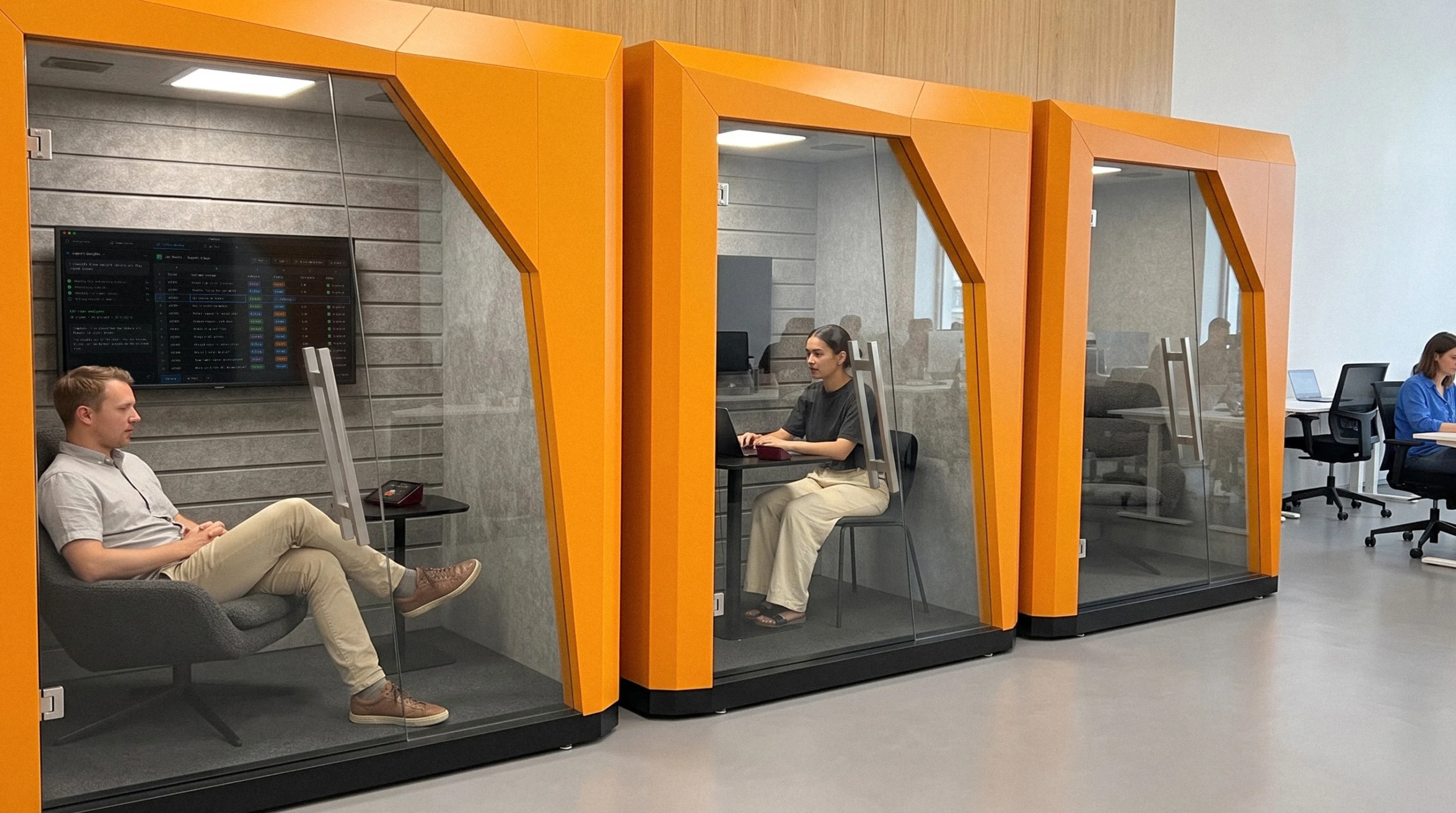
Headphones help, but they cannot give you a closed door on an open floor. Spaceship is Autonomous's one-person indoor pod, a closed room on the office floor. Autonomous lists 30 dB of speech reduction, marked preliminary. Two roof fans always run, one pulling fresh air in and one pushing stale air out, at 32 dB(A) at full speed, so it is not silent. It is built around a lounge chair and a laptop table (sold separately), not a desk, so it fits laptop work and reading.
ErgoChair Pro for Long Seated Blocks
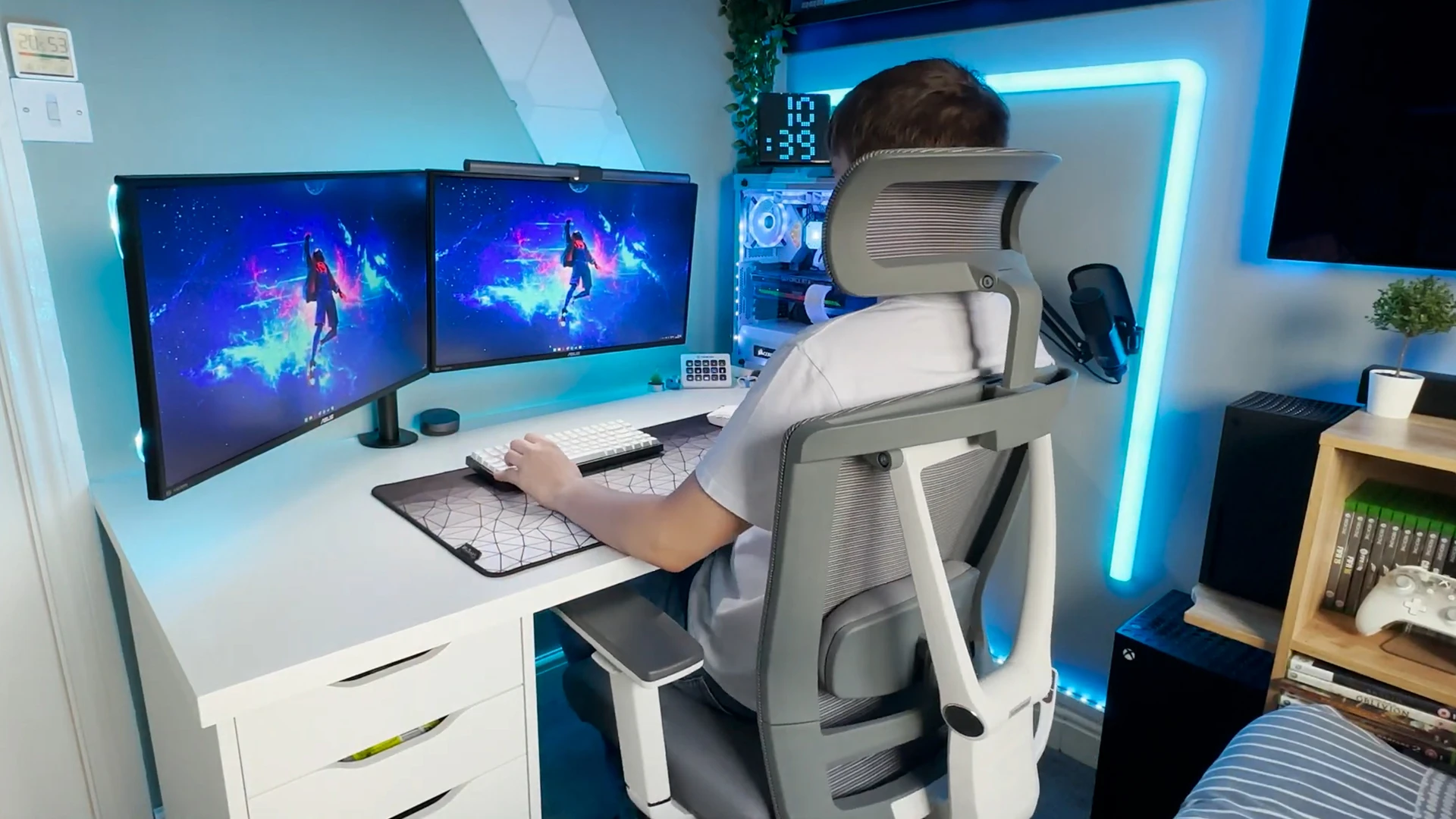
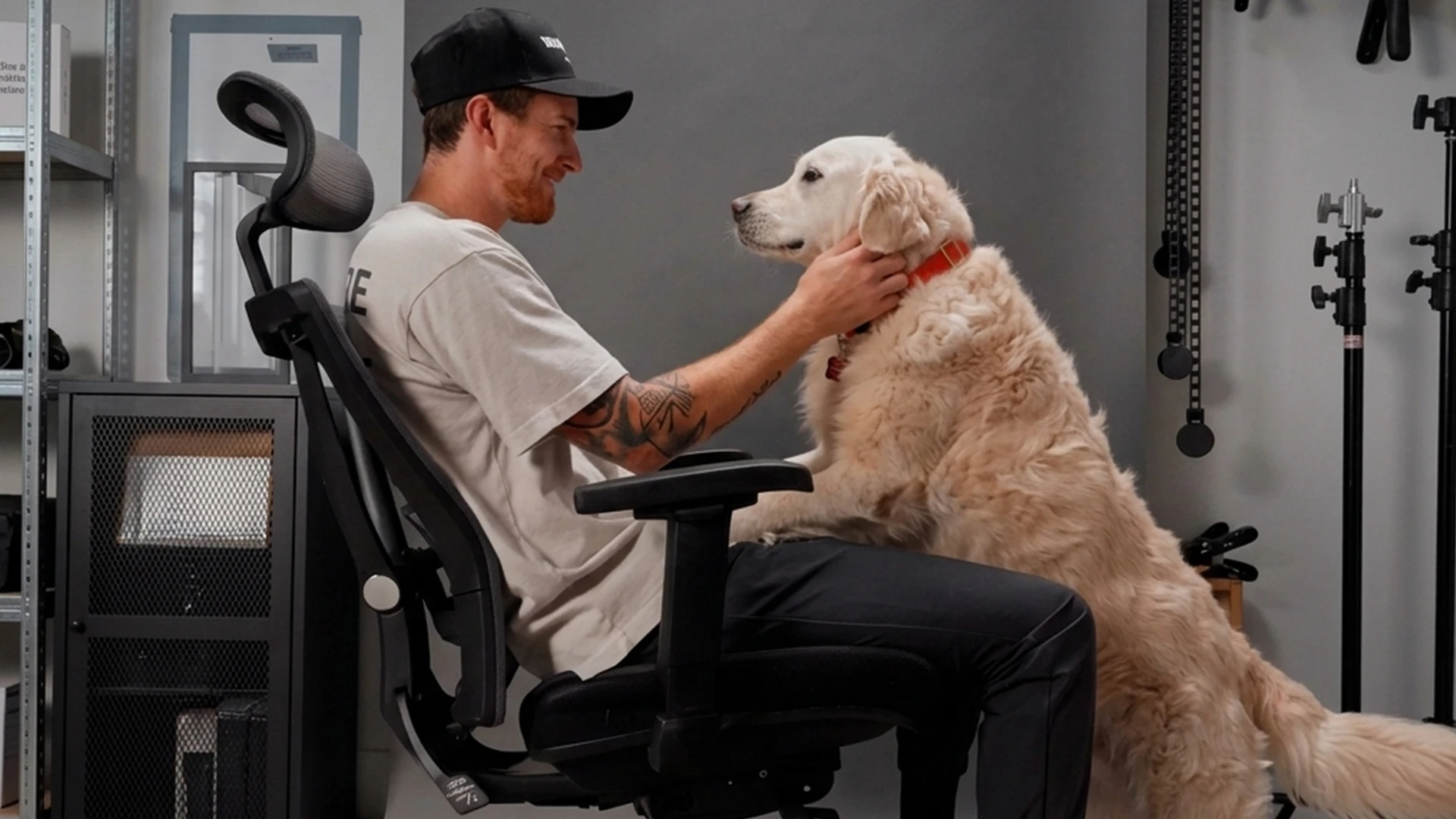
A good chair matters in deep work because discomfort is a distraction you cannot close like a browser tab. Among ergonomic chairs, the Autonomous ErgoChair Pro has 9 adjustment points, a lumbar support that slides through a 6 inch range, a 22 degree recline with 5 lock positions and a seat that tilts forward 5 degrees. Its Donati synchro-tilt mechanism is tested to 100,000 cycles, and it carries 300 lb with a lifetime warranty.
It suits someone who sets a chair up once and sits for long blocks. One honest limit: owners report the armrests do not lock for slide or swivel, and the seat tops out at 22 inches, which is low for very tall people.
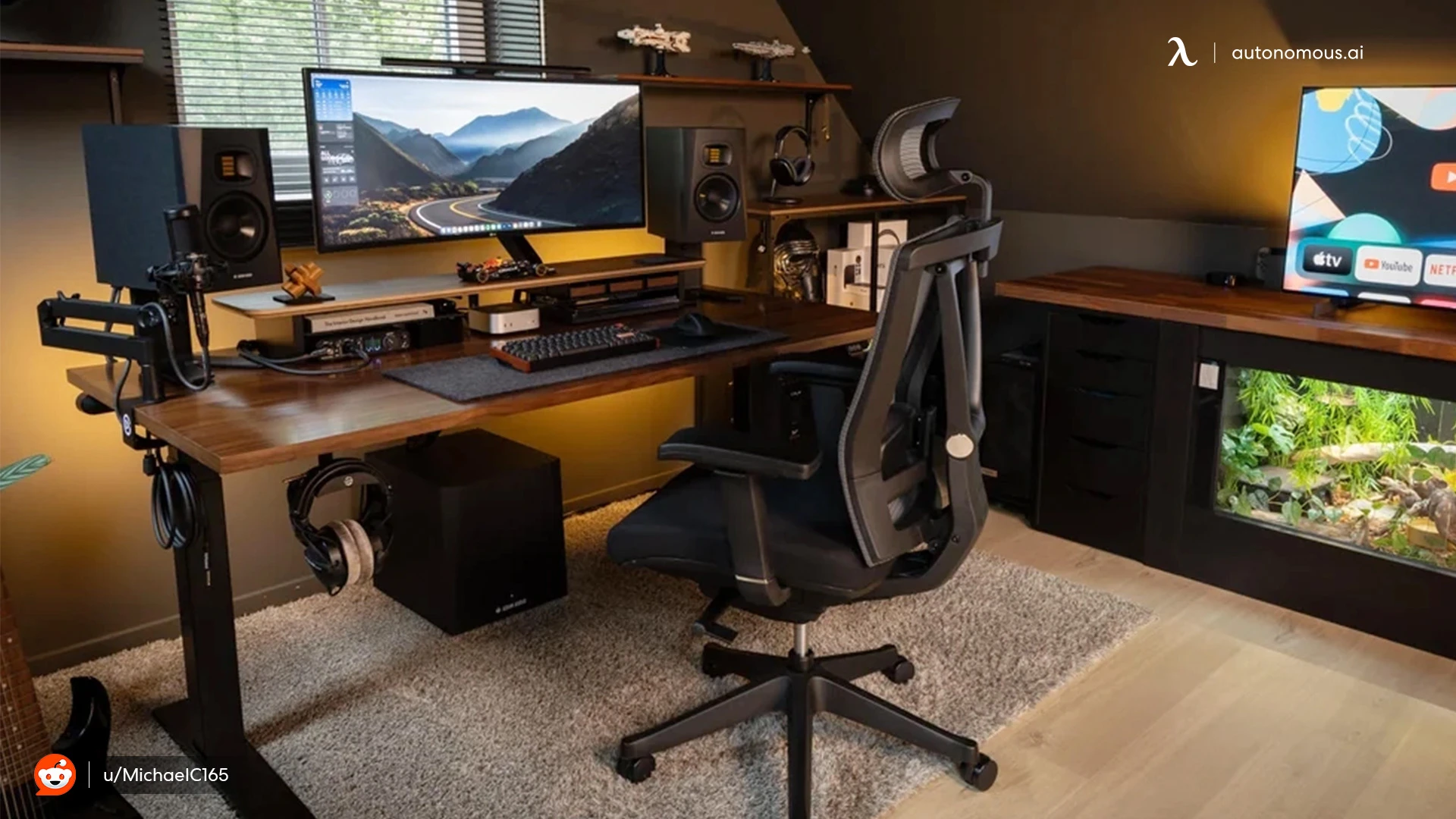
Here is how two owners describe theirs:
Desk Pro for Switching Positions Between Blocks
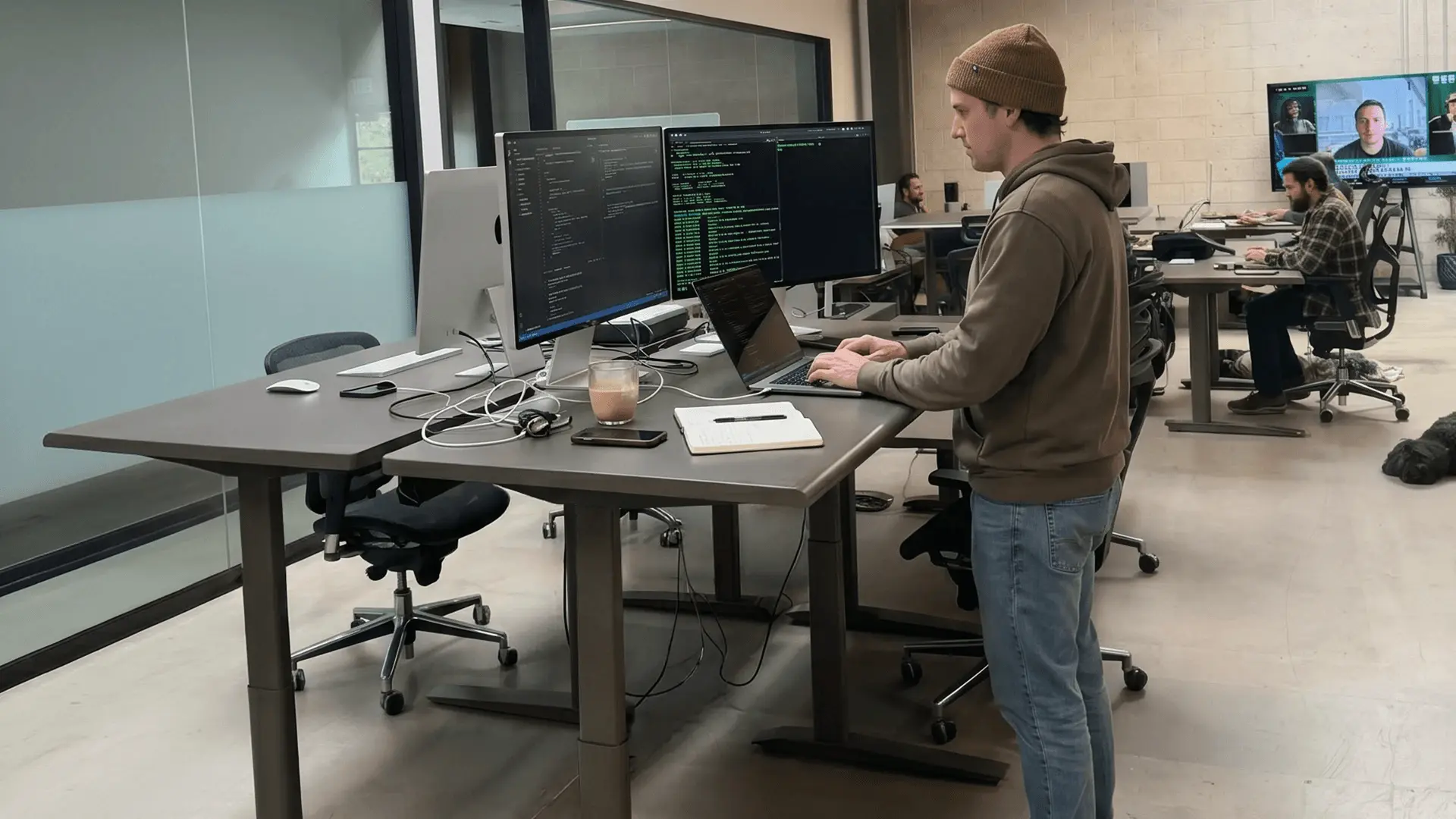
Changing position between blocks helps you reset without leaving the task, and standing desks make that a button press. The Autonomous Desk Pro runs from 29.5 to 48.5 inches with a dual motor under 30 dB, quiet enough not to break a block. The Desk Pro AI version goes from 24.25 to 53.5 inches and adds sensors for CO2, particulates, VOC and noise, with presence radar so its session readings count only the time you are at the desk.
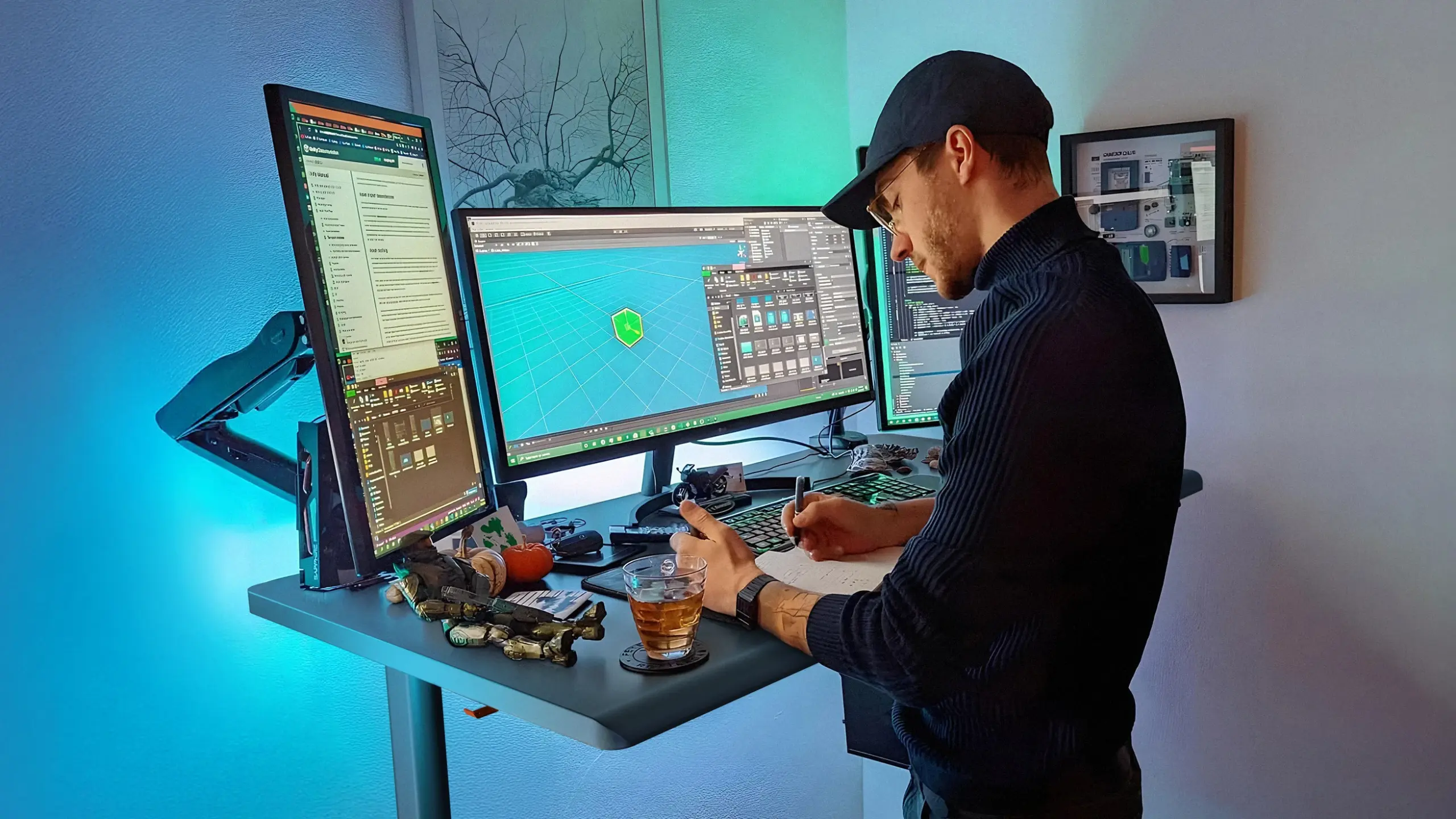
It suits people who work long sessions and want to see the room's air and their sitting time. The honest limit: the sensors are on Desk Pro AI only, and they measure the room and your time at the desk, not whether you focused. An under-desk tray for cable management keeps cords out of sight.
Why Deep Work Time Falls Apart
Most lost deep work time comes from three things: messages that pull you out, meetings that split the day into short gaps, and starting a block without a clear next step. Each has a plain fix.
- Messages: batch email and chat into two or three set times a day, and use a website blocker during blocks. These tips to improve concentration at work cover more options.
- Meetings: move them to one half of the day so the other half has room for a 90-minute block.
- No next step: end each block by writing the first action for the next one.
- Stress and low mood: if worry is what breaks your focus, mood and habit apps such as the Liven app are one option.
- Habit not built yet: the Finch self-care app tracks small daily goals, and Brainway takes a brain-training approach. Neither replaces a protected block on the calendar.
FAQs
How many hours of deep work should I do per day?
Aim for one hour of deep work a day if you are starting out, two hours once the habit holds, and no more than about four hours even with practice. Cal Newport puts the upper limit near four hours, based on research into expert performers.
How long should a deep work session be?
A deep work session should usually run 60 to 90 minutes, followed by a 10 to 20 minute break away from screens. Beginners can start with 25-minute Pomodoro blocks and add 10 to 15 minutes a week until they reach an hour.
What are the four rules of deep work?
The four rules of deep work, from Cal Newport's book, are work deeply, embrace boredom, quit social media and drain the shallows. Together they build the habit of focus, get you comfortable with boredom, cut distracting apps and shrink low-value work.
What is the 3-3-3 rule?
The 3-3-3 rule, from author Oliver Burkeman, splits the day into three hours on your most important project, three shorter urgent tasks and three maintenance jobs such as email or admin. The three-hour block is effectively your daily deep work time.
What are examples of deep work?
Examples of deep work include writing a report or chapter, designing or debugging software, building a financial model, analyzing research data and learning a hard new skill. Each needs full attention for a long stretch and produces something that is hard to copy.
What is the best time of day for deep work?
Deep work goes best when you are most alert, which for many people is the first two or three hours of the morning, before messages pile up. Night owls may do better in the evening; test both for a week and compare output.
How do I track deep work hours?
Track deep work hours by logging only blocks of 30 minutes or more on one planned task with no message checks. Write start, end, task and interruptions on a card or spreadsheet, total them weekly, and compare the hours with what you finished.
How many hours can a person concentrate in a day?
Most people can concentrate at full depth for one to four hours a day, with four as the practical ceiling for trained experts. The rest of the day can still be productive with lighter work such as email, meetings and reviews.
Conclusion
Deep work time is a small number on purpose. Start with one 60 to 90 minute block a day, grow toward two to four hours, and put the blocks at the same time so starting is automatic. Count only uninterrupted time on a planned task, and compare the hours with what you shipped each week. A quiet room, fresh air and a chair you can forget about make the hours easier to protect.
References
- Mark, Gudith and Klocke (2008): The Cost of Interrupted Work, More Speed and Stress (CHI 2008)
- Leroy (2009): Why Is It So Hard to Do My Work? The Challenge of Attention Residue When Switching Between Work Tasks
- Allen et al. (2016): Associations of Cognitive Function Scores with Carbon Dioxide, Ventilation, and VOC Exposures in Office Workers