The Real Benefits of a Standing Desk, and Its Downsides

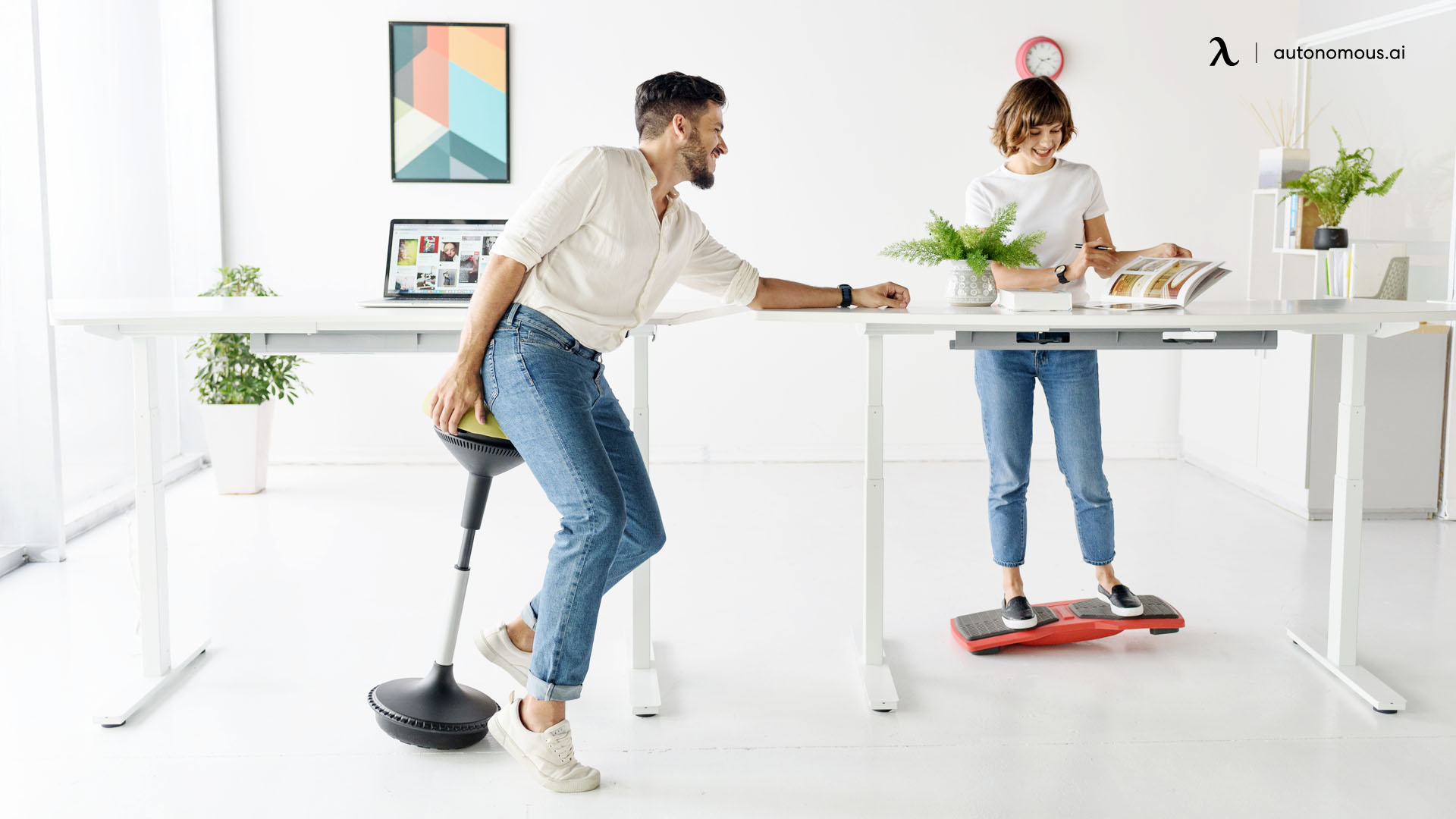
The main benefit of a standing desk is not standing, it is breaking up long stretches of sitting. Used well, a standing desk eases back and neck strain, keeps you a little more active, and makes it easy to change position through the day. Used badly, standing all day, it can cause its own aches.
The research is consistent on the point: the goal is not to stand all day, but to avoid staying in one position for too long. This guide covers the real benefits, the honest downsides, whether a standing desk is worth it, and how to use one right.
What are the benefits of a standing desk?
A standing desk helps most by giving you an easy way to stop sitting for hours at a stretch. The benefits below are real when you actually alternate sit and stand, and modest or absent when the desk just stays at one height.
Less back and neck discomfort
Switching between sitting and standing reduces the strain that builds up from holding one position, especially in the upper back and neck. A CDC workplace study found that adding sit-stand time cut self-reported upper back and neck pain over a few weeks. The gain comes from the variation, not from standing itself.
Fewer long, uninterrupted sitting blocks
This is the benefit that matters most and gets talked about least. The health risks tied to desk work come less from sitting and more from how long you sit without moving, and a standing desk makes it easy to interrupt those blocks.
A small bump in daily energy use
Standing burns a little more than sitting, though not much. It is a top-up, not a workout, and it will not replace exercise. Our guide on whether standing burns calories covers the actual numbers.
More posture awareness
A standing desk does not fix your posture on its own, but changing height often makes you adjust your screen, arms, and alignment more, which can reinforce better habits over time. A poor setup still leads to poor posture, so the desk gives you the chance to improve it, not a guarantee.
Less stiffness and better circulation
One of the first things people notice is simply feeling less stiff. Long sitting tightens the hips and lower back and slows circulation in the legs, and alternating positions helps break that pattern.
Better focus and mood
Some workplace studies report people feel more alert and engaged when they move more during the day. As with the rest, it is the movement doing the work, not the desk on its own.
Pros and cons of a standing desk
The honest picture is a set of trade-offs. A standing desk is a good tool with real limits, and knowing both sides is what makes it worth using.
Pros | Cons |
|---|---|
Makes it easy to break up long sitting | Standing too long causes leg and foot fatigue |
Eases back and neck strain through variation | Can worsen posture if the setup is wrong |
Burns slightly more energy than sitting | Not a substitute for exercise |
Builds more posture awareness over time | Prolonged static standing strains the lower back |
Reduces stiffness and helps leg circulation | Delivers little unless you build a sit-stand habit |
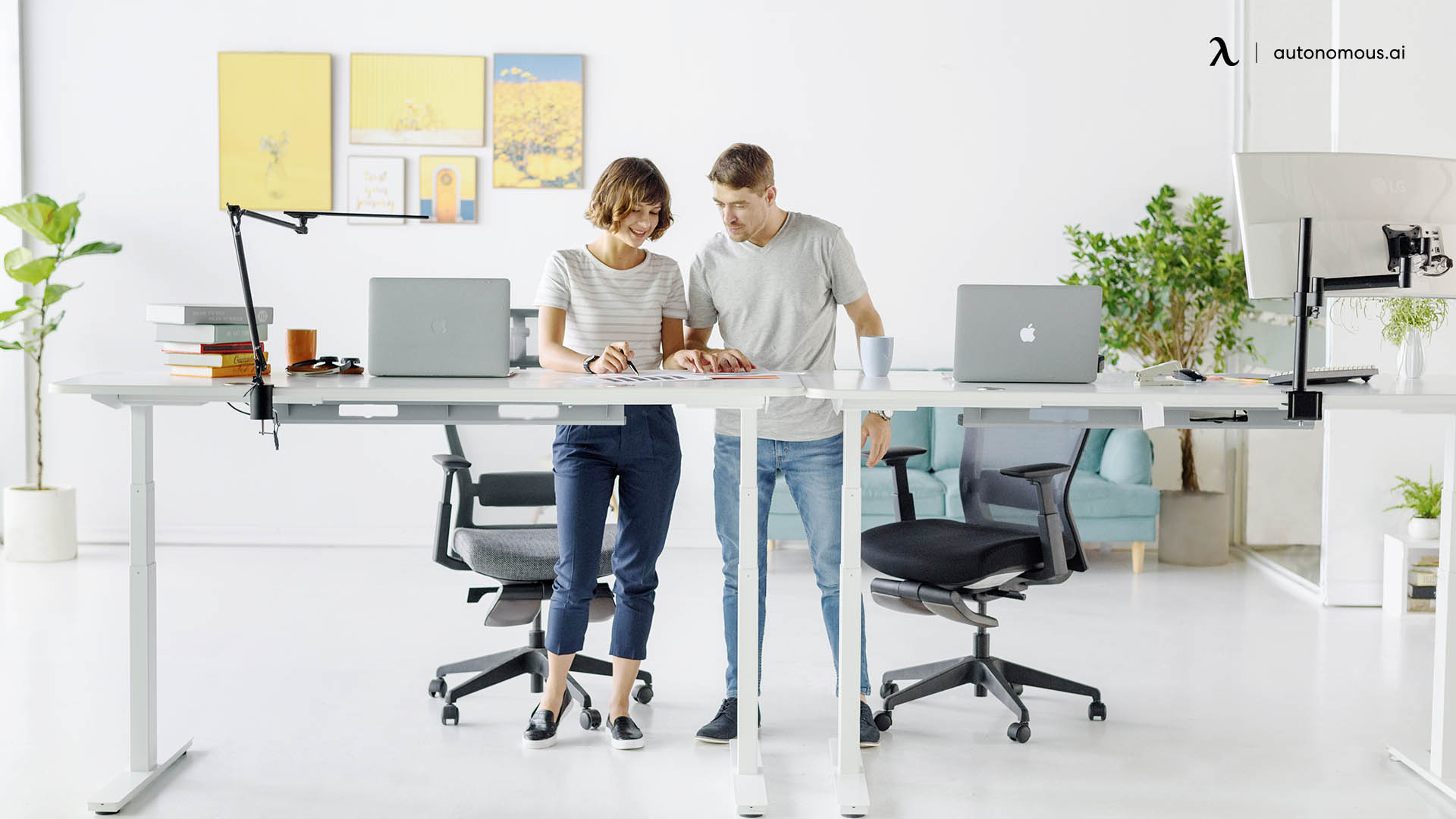
Is a standing desk bad for you?
A standing desk is not bad for you, but standing at work all day is. Prolonged static standing has its own well-documented downsides: leg and foot fatigue, sore feet, lower-back load, and, over years of occupational standing, a higher risk of circulation problems like varicose veins. None of this is a reason to avoid a standing desk; it is a reason not to treat it as a "stand all day" tool.
The fix is variation. Alternate sitting and standing, use an anti-fatigue mat, and take short breaks to move rather than locking into either position. It is also worth being clear that standing is not exercise, so it does not carry the fitness benefits of walking or a workout. Our guide on whether standing counts as exercise covers where it lands. Used with movement, a standing desk is a healthy tool; used as a way to stand rigidly for eight hours, it just trades one set of aches for another.
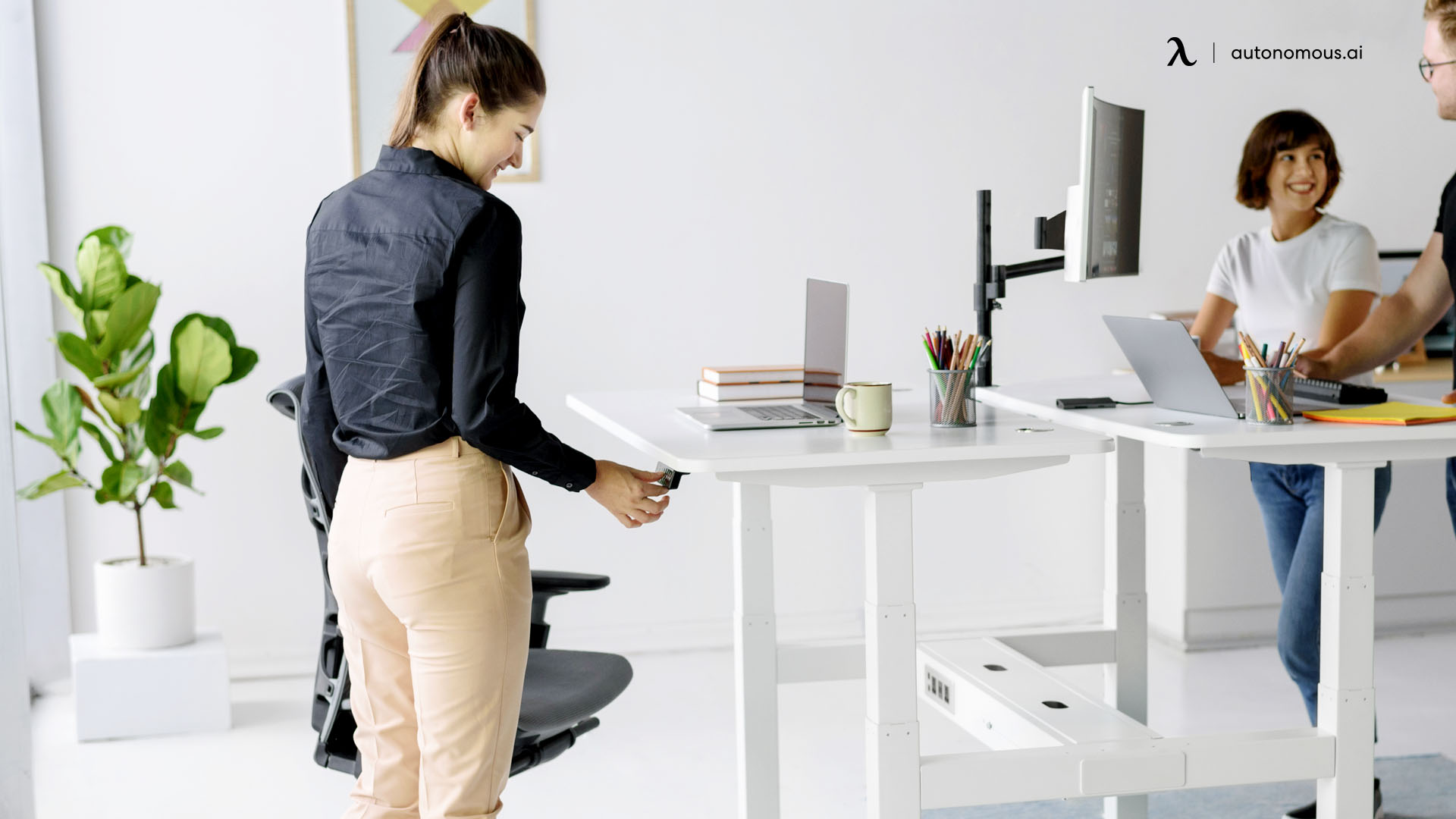
Are standing desks worth it?
A standing desk is worth it if you will actually use it to change position, and not if it ends up parked at one height. The desk does not improve your health on its own. It gives you more chances to move, and the value depends on whether those chances become habits.
This is the honest catch. Research on sit-stand desks found that simply having one does not reduce sitting time much without something that prompts the change, a reminder, a routine, or a setup that makes standing feel natural. For someone who sits all day and will build the habit, a standing desk is one of the simpler ways to cut sedentary time. For someone who buys it and forgets it, it becomes an expensive regular desk. The deciding factor is you, not the desk.
How to use a standing desk the right way
Getting the benefit of standing at work is less about standing more and more about staying out of one position. A simple routine beats good intentions:
- Switch between sitting and standing every 30 to 60 minutes rather than standing for hours.
- Keep standing sessions short, around 15 to 30 minutes, and sit back down before you get sore.
- Set your screen at eye level and elbows near 90 degrees in both positions, so neither one strains you.
- Add small movement, a short walk, calf raises, or a stretch, since movement does more than standing still.
- Use a reminder if you tend to forget, until switching becomes automatic.
Consistency matters more than perfection. A steady, comfortable sit-stand rhythm you keep up for months does far more than an ambitious standing routine you drop in a week. If you are choosing a desk, a quiet, stable standing desk with memory presets makes switching effortless, which is what keeps the habit going.
FAQs
What are the benefits of a standing desk?
A standing desk can reduce back and neck discomfort, raise your daily calorie burn slightly, build posture awareness, and make it easy to break up long sitting. The biggest benefit is not standing itself, but the extra movement and position changes it encourages through the workday.
Are standing desks good for you?
They can be, especially if they help you alternate between sitting and standing regularly. A standing desk works best when it supports movement through the day rather than replacing sitting with standing. Used to stand rigidly all day, it offers little and can cause fatigue.
Are standing desks worth it?
A standing desk is worth it if you will use it to change position often. On its own it does not improve health; it gives you more chances to move, and the value depends on whether those become habits. For someone who will build the routine, it is a simple way to cut sitting time.
Is a standing desk bad for you?
A standing desk is not bad for you, but standing at work all day is. Prolonged static standing can cause leg and foot fatigue, lower-back strain, and circulation issues over time. The healthy way to use one is to alternate sitting and standing and add movement, not to stand for hours straight.
Is it bad to use a standing desk all day?
Yes, standing at work all day is not the goal and can cause its own problems, from sore feet and legs to back and circulation strain. A balanced routine of switching every 30 to 60 minutes, with short standing sessions, is more comfortable and healthier than standing for the whole day.
Do standing desks really improve posture?
They can help, but not automatically. A standing desk lets you adjust screen height, arm position, and desk height more easily, which supports better alignment. Real improvement depends on setting it up correctly and moving regularly, since a poor setup still leads to poor posture whether sitting or standing.
Do standing desks improve circulation?
Standing improves leg circulation compared with sitting still for long periods, since sitting slows blood flow in the legs. The larger benefit, though, comes from moving regularly rather than holding any single position. Alternating sit and stand, plus short walks, does more for circulation than standing alone.
Can a standing desk replace exercise?
No. Standing is light activity, not exercise, and it burns only slightly more than sitting. It does not build fitness the way walking, cardio, or strength training does. A standing desk helps cut sedentary time, but you still need real movement and exercise for the fitness benefits.
Do standing desks help productivity?
Some workplace studies report people feel more alert and engaged when they move more during the day, and standing desks can support that. The gain comes from the movement and position changes, not the desk on its own, so productivity improves when switching positions becomes part of how you work.
Why do people stop using standing desks?
Most people stop not because the desk is bad, but because they forget to switch, stand too long and get sore, or never build the habit. Without a routine or a prompt to change position, the desk quietly gets used like the sitting desk it replaced.
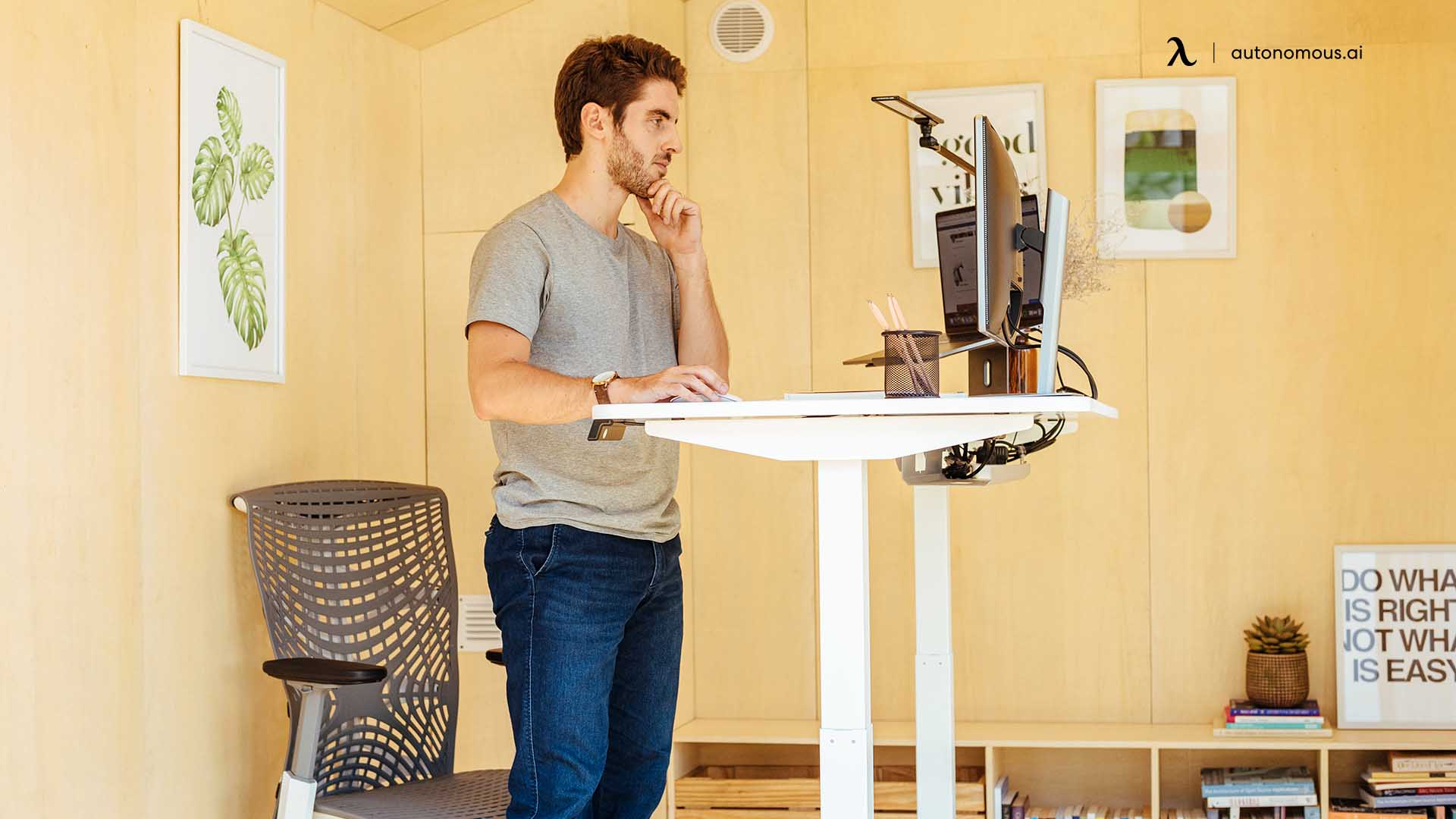
Conclusion
A standing desk is a tool, not a cure. What improves your comfort, focus, and health is not the desk itself but how often you move, and the desk simply makes moving easier. Used with a steady sit-stand rhythm and a bit of real movement, it eases stiffness, breaks up long sitting, and keeps you a little more active. Left at one height, it does almost nothing. Decide to use it, keep the switches short and regular, and it earns its place.
References
- Pronk NP, et al. Reducing occupational sitting time and improving worker health: the Take-a-Stand Project. Preventing Chronic Disease (CDC), 2012. https://www.cdc.gov/pcd/issues/2012/11_0323.htm
- Harvard Health Publishing. Stand more, burn slightly more calories. https://www.health.harvard.edu/healthy-aging-and-longevity/stand-more-burn-slightly-more-calories
- Mayo Clinic. Standing desks: benefits, risks, and best practices. https://www.mayoclinic.org/healthy-lifestyle/adult-health/expert-answers/standing-desks/faq-20058312
- Chu AHY, et al. The effectiveness of sit-stand workstations for changing sitting time. British Journal of Sports Medicine, 2016. https://bjsm.bmj.com/