Standard Desk Dimensions by Width, Depth, and Height

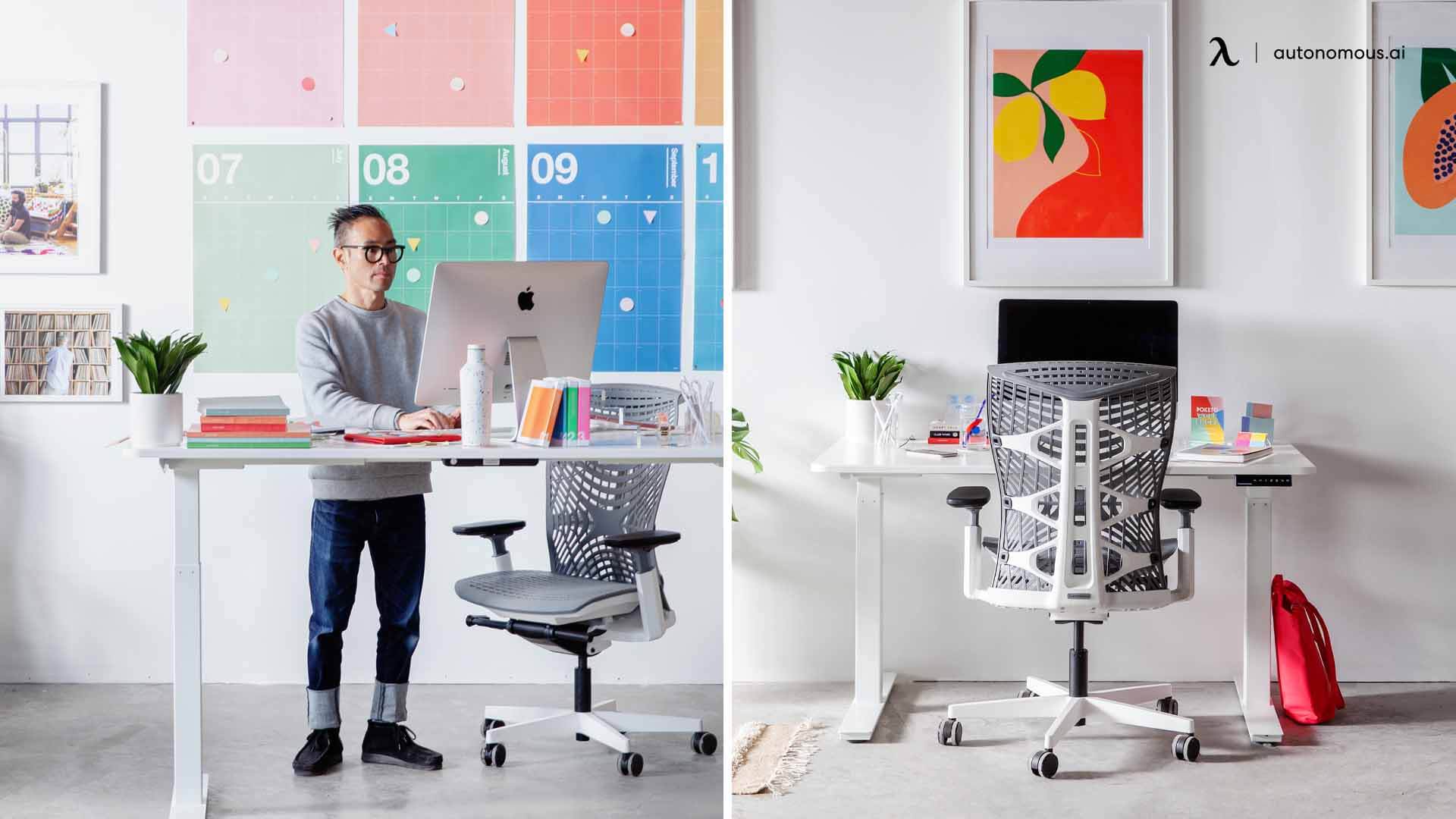
Standard desk dimensions are 48-72 in (122-183 cm) wide, 24-30 in (61-76 cm) deep, and 28-30 in (71-76 cm) tall. Most fixed-height desks land near a 29 in (74 cm) top, which fits the average seated adult when paired with an office chair.
These three numbers do most of the work. Width sets your side-to-side surface, depth sets how far back a monitor can sit, and height decides whether your elbows rest at a comfortable 90 degrees. Standard sizes hold steady across manufacturers because they track average human proportions and common equipment footprints.
Since desks are built for different jobs, the standard office desk dimension shifts by type. The table below shows the common ranges.
Standard desk dimensions by desk type
Desk dimensions vary by how the desk is used. Here are the most common types with their typical width, depth, and height.
Desk type | Width | Depth | Height | Best for |
Sitting desk | 48-72 in | 24-30 in | 28-30 in | Everyday office work |
Standing desk | 48-72 in | 24-30 in | 28-48 in (adjustable) | Sit-stand flexibility |
Built-in desk | 48-72 in | 24-30 in | 29-30 in | Custom home setups |
Writing desk | 30-60 in | 18-24 in | 28-30 in | Light work, compact spaces |
Computer / gaming desk | 48-72 in | 24-30 in | 28-30 in | Multi-monitor or gaming setups |
Executive desk | 60-72 in | 30-36 in | 28-30 in | Large offices |
Credenza desk | 60-72 in | 18-24 in | 28-30 in | Storage and secondary surface |
L-shaped desk | 60-72 in (per side) | 24-36 in | 28-30 in | Corner setups, two work zones |
Compact desk | 36-48 in | 18-24 in | 28-30 in | Apartments, dorms, students |
Two types need a closer look than a single row allows. For corner setups, the standard L-shaped desk dimensions run 60-72 in on the long side and 48-58 in on the return. For desks sized to a student's height and grade, the standard student desk dimensions scale from 36 in wide for younger kids up to 72 in for graduate work.
How wide should a desk be?
The standard desk width is 48-72 in (122-183 cm). The right width depends on how much you spread out and how many devices you run.
- Laptop only: 36-48 in (91-122 cm) is enough.
- General office work: 48-60 in (122-152 cm) balances surface and footprint.
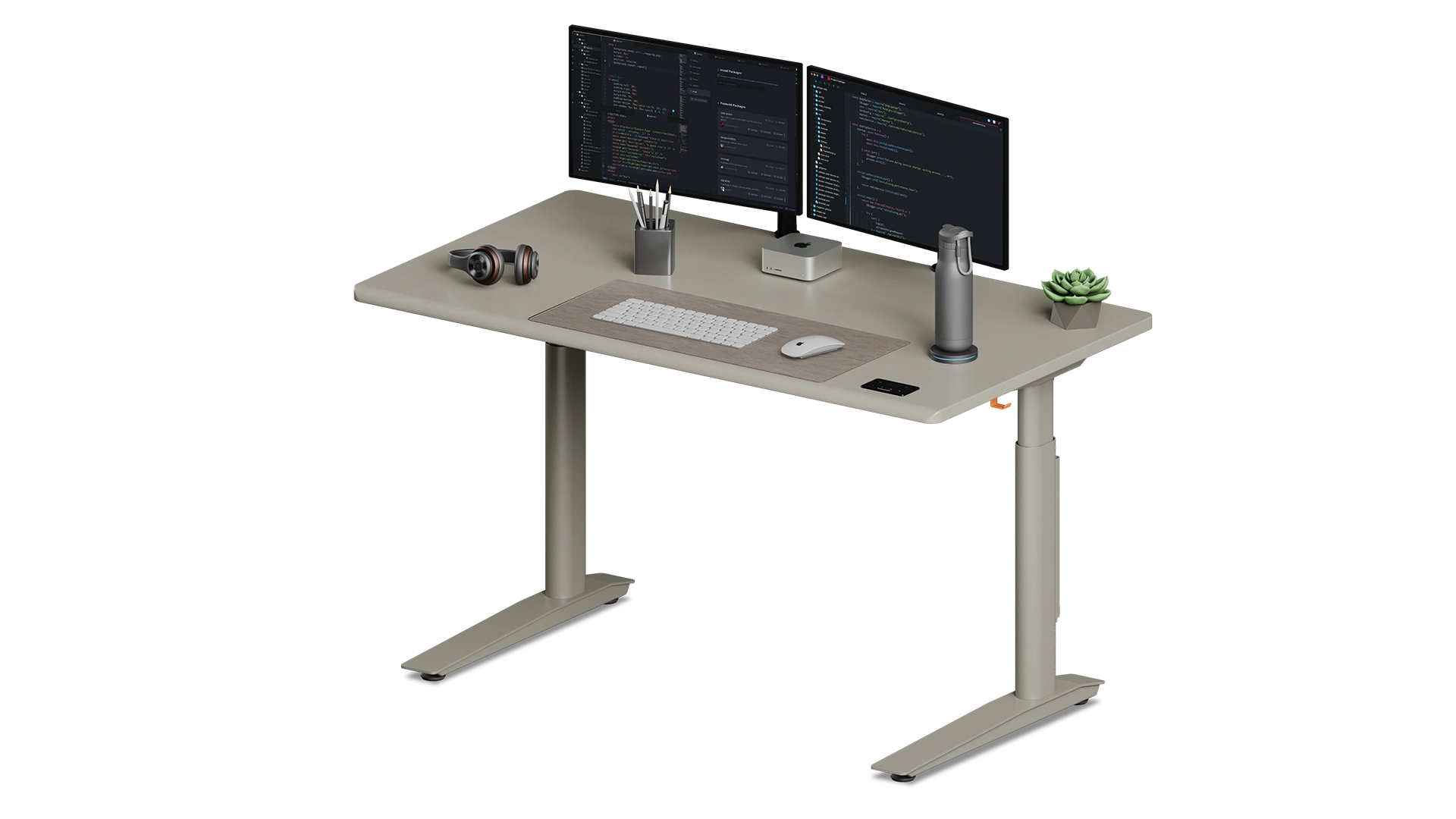
- Multi-monitor or multitasking: 60-72 in (152-183 cm) lets you keep separate zones for a screen and paperwork.
A 40 in desk works for a laptop but feels tight once you add a monitor and notes. A 70 in desk is generous for dual monitors but can dominate a small room. Match the width to your work, not to the largest desk that fits.
How deep should a desk be?
The standard desk depth is 24-30 in (61-76 cm). Depth decides how far back your monitor can sit, which directly affects eye strain.
A 24 in (61 cm) depth handles a laptop or single small monitor. For one or more full-size monitors, choose 30 in (76 cm) so screens sit at a 20-40 in (50-100 cm) viewing distance - roughly an arm's length. Below 20 in of depth, monitors crowd your eyes and there is little room for a keyboard and mouse in front of them.
What is the standard desk height?
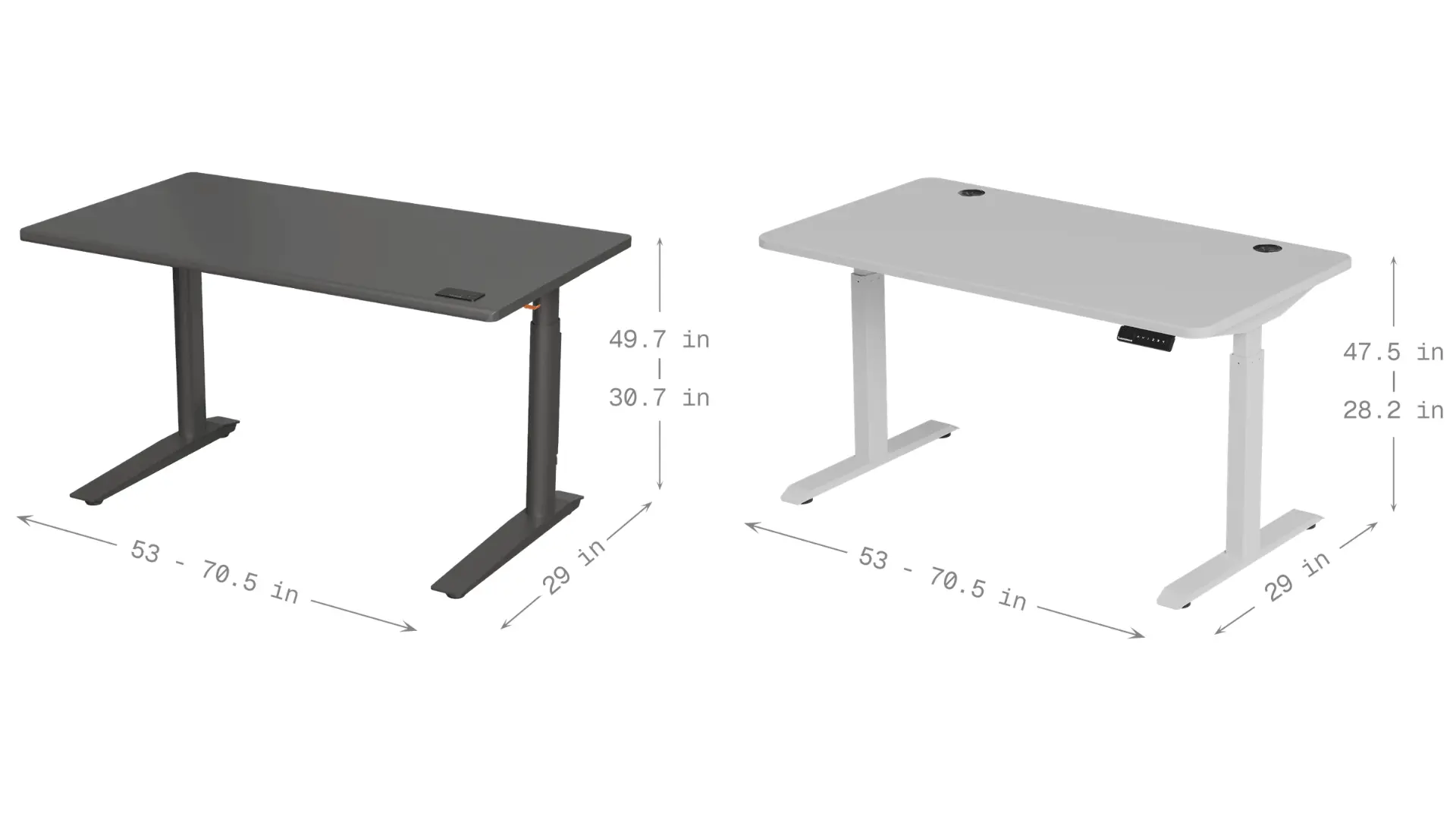
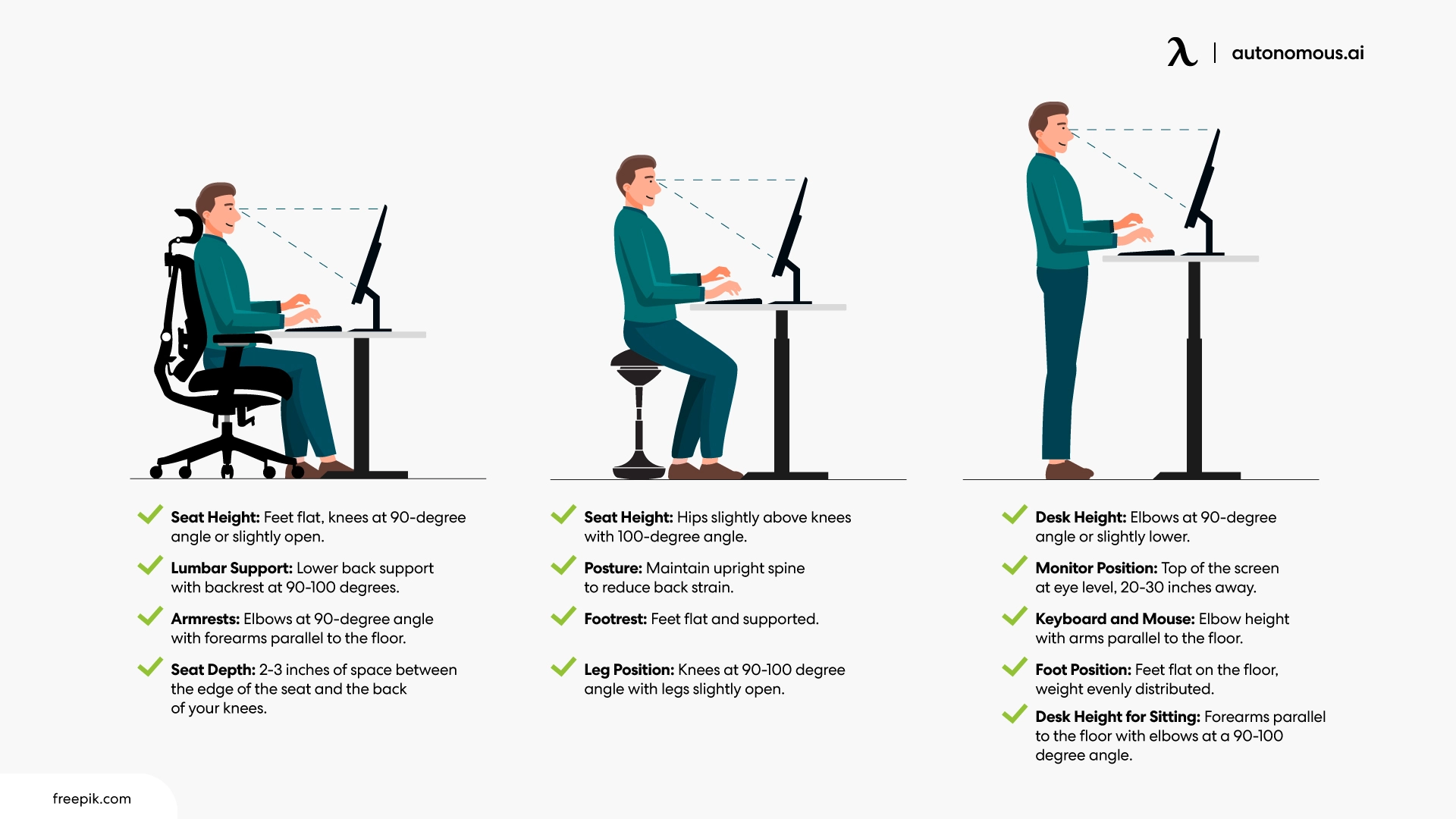
The standard desk height is 28-30 in (71-76 cm), with 29 in (74 cm) the most common. This range fits adults roughly 5'4" to 6'0" when paired with a chair set so your elbows rest at 90 degrees.
Outside that height band, a fixed desk forces a compromise. Taller users hunch down to a low surface; shorter users perch with feet off the floor or raise the chair until their knees hit the underside. The fix is either an adjustable chair plus a footrest, or a height-adjustable desk that moves to you.
How to find the right desk size for you
Standard desk dimensions are a baseline. To size a desk to your body and room, work through four checks.
Measure your seated elbow height. Sit with arms relaxed and elbows bent to 90 degrees. The floor-to-elbow distance is your target desk height. Most people land near 28-30 in.
Count your screens. A single laptop wants 18-24 in of depth; dual monitors want at least 30 in so screens sit an arm's length away.
Match width to work style. Minimal setups need 36-48 in; multitasking or executive work wants 60-72 in.
Measure the room, not just the desk. Leave 24-36 in (2-3 ft) of clearance behind your chair, and confirm drawers and doors clear. A single workstation needs roughly 50-100 sq ft of floor space to feel open.
If your desk and chair don't line up at the right height, adjust the chair first, then add a footrest. If you share the desk or sit outside the 5'4"-6'0" band, height adjustment solves the fit problem directly.
One desk size rarely fits two people
A fixed-height desk locks every user into one height. That is the single most common sizing mistake: a 29 in top is correct for an average adult and wrong for a tall partner, a shorter teen, or anyone switching between sitting and standing through the day. The standard dimension is a compromise, and a shared desk makes the compromise worse.
A height-adjustable standing desk removes the compromise. It holds the standard 48-72 in width and 24-30 in depth, but the surface moves across both sit and stand heights, so one desk fits multiple bodies and both postures.
The Autonomous Desk Pro is one example. Its top measures 53 in × 29 in (a 70.5 in Expanse top is also available), and the height adjusts from 29.5 in to 48.5 in, covering standard sitting height through standing. Its C-shaped frame drops the front crossbar that sits under most desks, so your knees clear the surface at any height. The dual-motor frame lifts 330 lb, runs under 30 dB, and carries a lifetime frame warranty. It ships from $499. Desk Pro is the desk we ship to ourselves and run through long work sessions, so the stability and load numbers come from a frame in daily use rather than a spec sheet alone.
FAQs
What is the size of a standard desk?
A standard desk is about 48-72 in (122-183 cm) wide, 24-30 in (61-76 cm) deep, and 28-30 in (71-76 cm) tall, with 29 in the most common height. This range suits most home and office setups when paired with an adjustable chair.
What is the standard desk height?
The standard desk height is 28-30 in (71-76 cm), most often 29 in (74 cm). It fits adults roughly 5'4" to 6'0" when the chair is set so elbows rest at a 90-degree angle. Taller or shorter users usually need an adjustable desk.
What is the standard desk width?
The standard desk width ranges from 48 to 72 in (122-183 cm). A 48-60 in width covers general office work, while 60-72 in suits multi-monitor or multitasking setups. Compact desks run narrower at 36-48 in.
What is the standard desk depth?
The standard desk depth is 24-30 in (61-76 cm). A 24 in depth works for a laptop, while 30 in lets a full-size monitor sit at a 20-40 in viewing distance to reduce eye strain. Below 20 in, screens crowd your eyes.
Is a 40-inch desk too small?
A 40 in desk is fine for a laptop or a compact writing setup, but it is tight for a full office desk dimension. It usually won't fit a monitor plus keyboard and notes comfortably. For multitasking, aim for at least 48 in of width.
Is a 55-inch desk too small?
A 55 in desk is mid-size and comfortable for most home offices. It fits a monitor, keyboard, and accessories with room to spare, sitting between a compact desk and a full 72 in office desk. It is a safe default for a single-monitor setup.
Is a 70-inch desk too big?
A 70 in desk is large but not too big if you run dual monitors, paperwork, or an executive setup. It can feel oversized in a small room, so confirm you have 24-36 in of clearance behind your chair and that the desk leaves walking space.
What is the standard desk size in centimeters?
A standard desk is about 120-183 cm wide, 61-76 cm deep, and 71-76 cm tall. These metric ranges match the standard office desk dimensions used in inches and apply to most sitting desks worldwide.
How much clearance do I need around a desk?
Leave 61-91 cm (24-36 in) of clearance behind your chair so you can push back and stand without hitting a wall. Confirm drawers, doors, and shelves open fully. A single workstation generally needs 50-100 sq ft of floor space.
What desk size is best for dual monitors?
For dual monitors, choose a desk at least 60 in (152 cm) wide and 30 in (76 cm) deep. The width holds two screens side by side, and the depth keeps both at an arm's-length viewing distance, which lowers eye and neck strain over long sessions.
What size desk fits a small home office?
For a small home office, a 36-48 in (91-122 cm) wide compact or writing desk fits without crowding the room. If you need more surface in a tight corner, an L-shaped desk uses the corner while keeping a smaller wall footprint.
Conclusion
Standard desk dimensions give you a reliable starting point: 48-72 in wide, 24-30 in deep, and 28-30 in tall. From there, the right width, depth, and height depend on your equipment, your body, and the room. Measure your seated elbow height, count your screens, and measure the floor space before you choose. A desk that matches all three stops being furniture you notice and becomes the surface your work runs on.