


The Best Small Home Office Chair for Tight Spaces

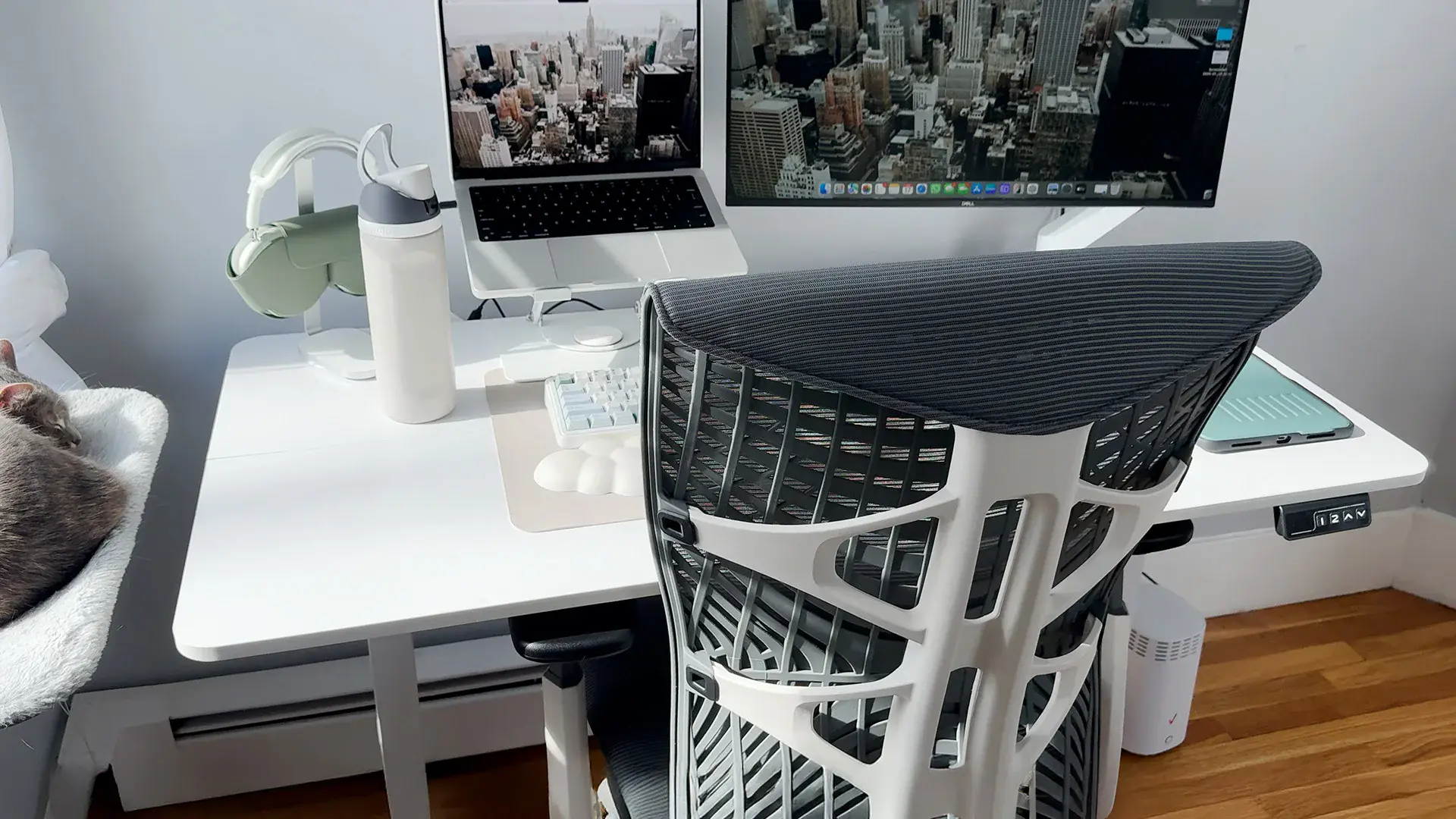
I've designed offices into the awkward corners of brownstones, the bonus space above garages, and the converted half of a one-bedroom. The constant is that the chair is the piece of furniture that most often ruins the room - too tall, too wide, too dark, too visually loud. A small home office chair has to fit under the desk, roll out without clipping the bed frame, and not visually dominate the room - while still holding up to a real 8-hour workday. The Autonomous ErgoChair Ultra 2 is the chair I keep specifying for clients in tight spaces. Here is why, and the dimensional thresholds I check against first.
What counts as a small home office chair
Most retail pages use "small" without numbers. The thresholds that actually matter in a workspace under 50 square feet:
Dimension | Small-space threshold |
Overall footprint | 28" × 28" or smaller |
Base diameter | Under 26" |
Backrest height (from seat) | Under 25" |
Total chair height (max) | Under 47" |
Chair weight | Under 40 lb |
The backrest height matters more than people expect. A 30" backrest reads visually as a piece of furniture; a 23" backrest reads as a chair. In a room where the desk is also the bedside table, that distinction decides the whole room.
A note: "small chair" and "chair for a small person" are different problems. A chair for a short user is sized for the body - lower seat height, shallower seat. A small home office chair is sized for the room - compact footprint, lower visual profile. The user can be any height. If you're searching for the first, see the office chairs for short people instead.
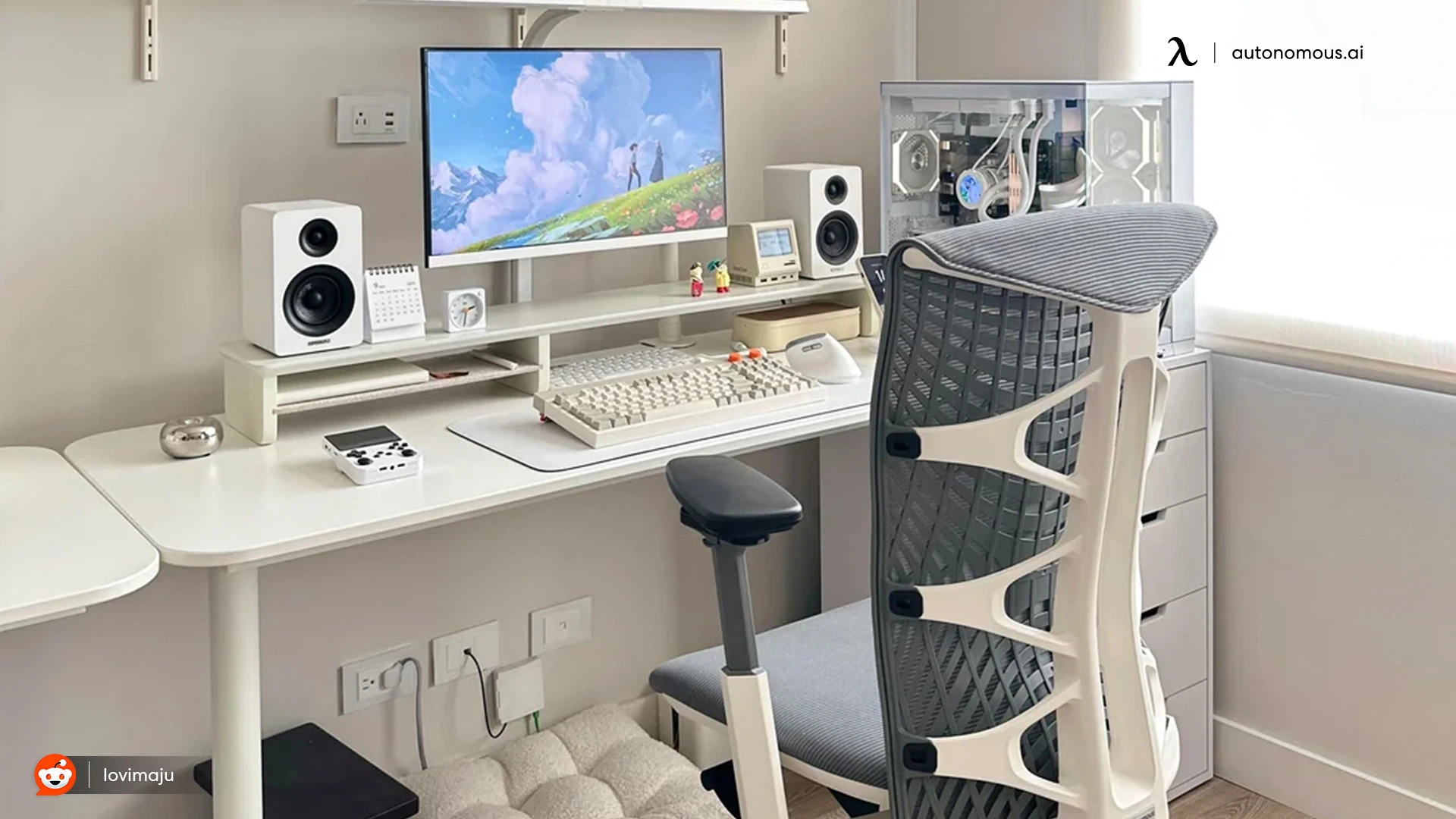
The ErgoChair Ultra 2 - why it's the small-space pick
The Autonomous ErgoChair Ultra 2 hits every threshold above without giving up the support a workday needs.
Spec | ErgoChair Ultra 2 |
Overall footprint | 28" × 28" |
Total height range | 41" – 46" |
Backrest height | 23" |
Chair weight | 36.5 lb |
Seat height | 18" – 23" |
Armrest height (from seat) | 7" – 11" |
Weight capacity | 320 lb |
Warranty | Lifetime |
Price | $499 |
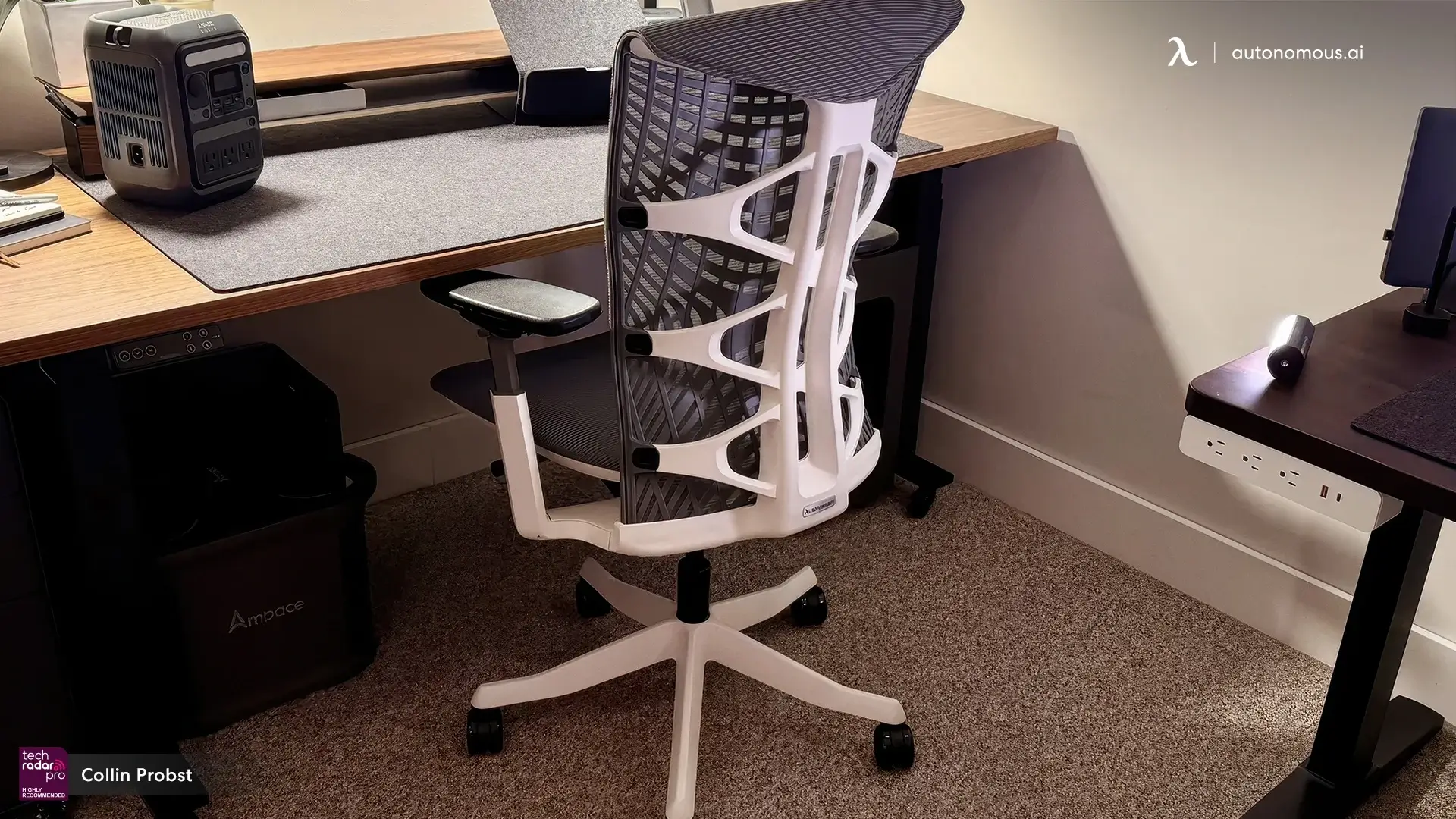
Three things make it work in a small room.
The footprint is genuinely compact.
At 28" × 28", the Ultra 2 is an inch smaller in every direction than the ErgoChair Pro. One inch sounds minor on paper. In a tight room, it's the difference between the chair fitting under the desk with the casters tucked, and the casters protruding into the walkway.
The backrest is shorter than typical.
23" from the seat, against the 28"–31" standard for ergonomic chairs. The chair reads smaller in the room without giving up the adaptive flex-frame back that supports an 8-hour day. This is the design choice I appreciate most - the chair's visual weight matches its mechanical job.
The arms drop low and pull inward.
A 7" minimum armrest height clears almost any standard desk underside, so the chair tucks fully under when not in use. The 4D adjustment also pulls the arms inward, narrowing the chair's profile when pushed in. For a workspace doubling as a guest room or a living room corner, this is what lets the chair disappear at the end of the day.
What doesn't get cut to achieve the compact size: seat construction is the four-layer TPE-webbing-and-coil-spring system, the back panel is the adaptive flex frame, the warranty is lifetime, the capacity is 320 lb. Most small-space chairs hit their footprint number by removing adjustability. The Ultra 2 doesn't, which is why I specify it instead of a generic computer chair on Amazon for clients who actually work from home.
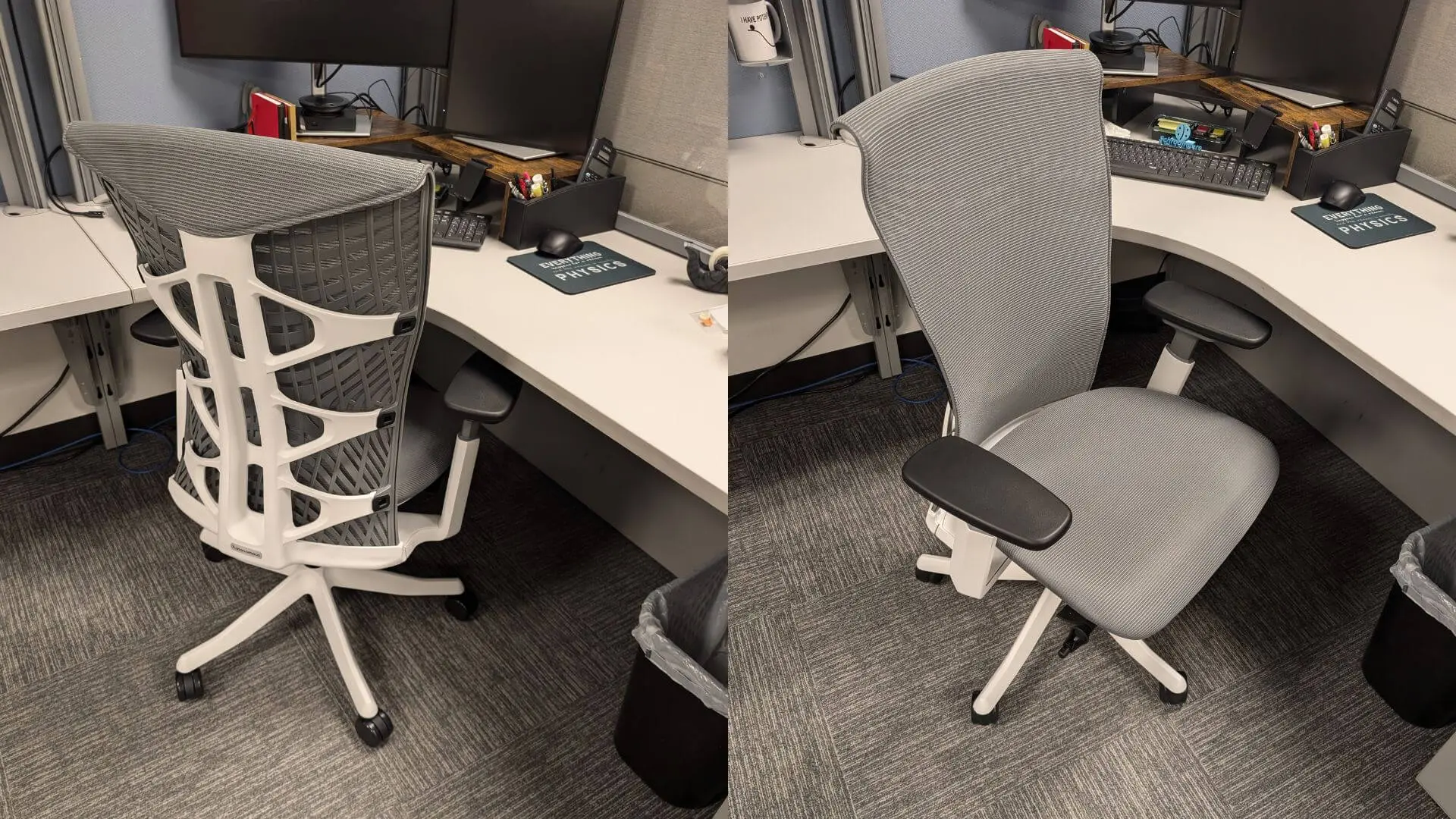
How to set it up in a tight workspace
Three measurements before the chair arrives.
Desk underside height. Measure from floor to the bottom of the desk apron. The chair's seat at minimum plus the arms at minimum must clear it. The Ultra 2 at minimums (18" seat + 7" arms = 25" arm height) clears any desk with at least 26" underside clearance - which is most of them.
Clearance behind the chair. Allow 24" behind the back of the chair for the casters to roll back as you stand. In a tight room, position the desk so that 24" lands on the open side, not against a wall. This is the single most common mistake I see in small home-office layouts.
Floor surface. The 2.56" aluminium-base casters roll cleanly on hard floors and low-pile carpet. On plush carpet, plan for a chair mat - a standard 36" × 48" mat sits cleanly under a 28" × 28" chair with proper clearance.
.webp)
FAQs
What size chair do I need for a small home office?
For workspaces under 50 sq ft, choose a chair with an overall footprint of 28" × 28" or smaller, a base diameter under 26", and a backrest under 25" from the seat. These thresholds let the chair fit under a standard desk and roll out without clipping nearby furniture.
How small is a small office chair?
A small office chair has a footprint of roughly 24" to 28" on each side, compared to 29"–32" for full-size ergonomic chairs. The base diameter and backrest height matter more than seat width for visual compactness.
Can a small home office chair still be ergonomic?
Yes. The compact footprint affects external dimensions, not seat and back construction. Look for adaptive lumbar, adjustable seat depth, and 4D arms - features that exist independently of overall size. The best ergonomic chair lineup includes compact options that don't trade adjustability for size.
What is the best chair for a studio apartment or small home office?
The ErgoChair Ultra 2 fits a small home office at a 28" × 28" footprint while keeping full ergonomic adjustability, a 23" backrest for visual compactness, and a 7" minimum arm height that clears most desks. For users prioritizing back support specifically, a posture office chair is the related read.
Should I get a small chair if I'm tall?
Yes, if your workspace is tight. The Ultra 2 adjusts to a 23" seat height and supports 320 lb capacity, so a 6'0"+ user can sit in a compact-footprint chair without giving up fit.
Bottom line
A small home office chair has to clear three thresholds: footprint under 28" × 28", backrest under 25", arms that drop below desk height. Most chairs marketed as "small" hit one and miss the others. The ErgoChair Ultra 2 hits all three while keeping the adjustability of a full-size chair - which is the reason I specify it for the small spaces I design.