The Top-Rated Office Chairs on Amazon

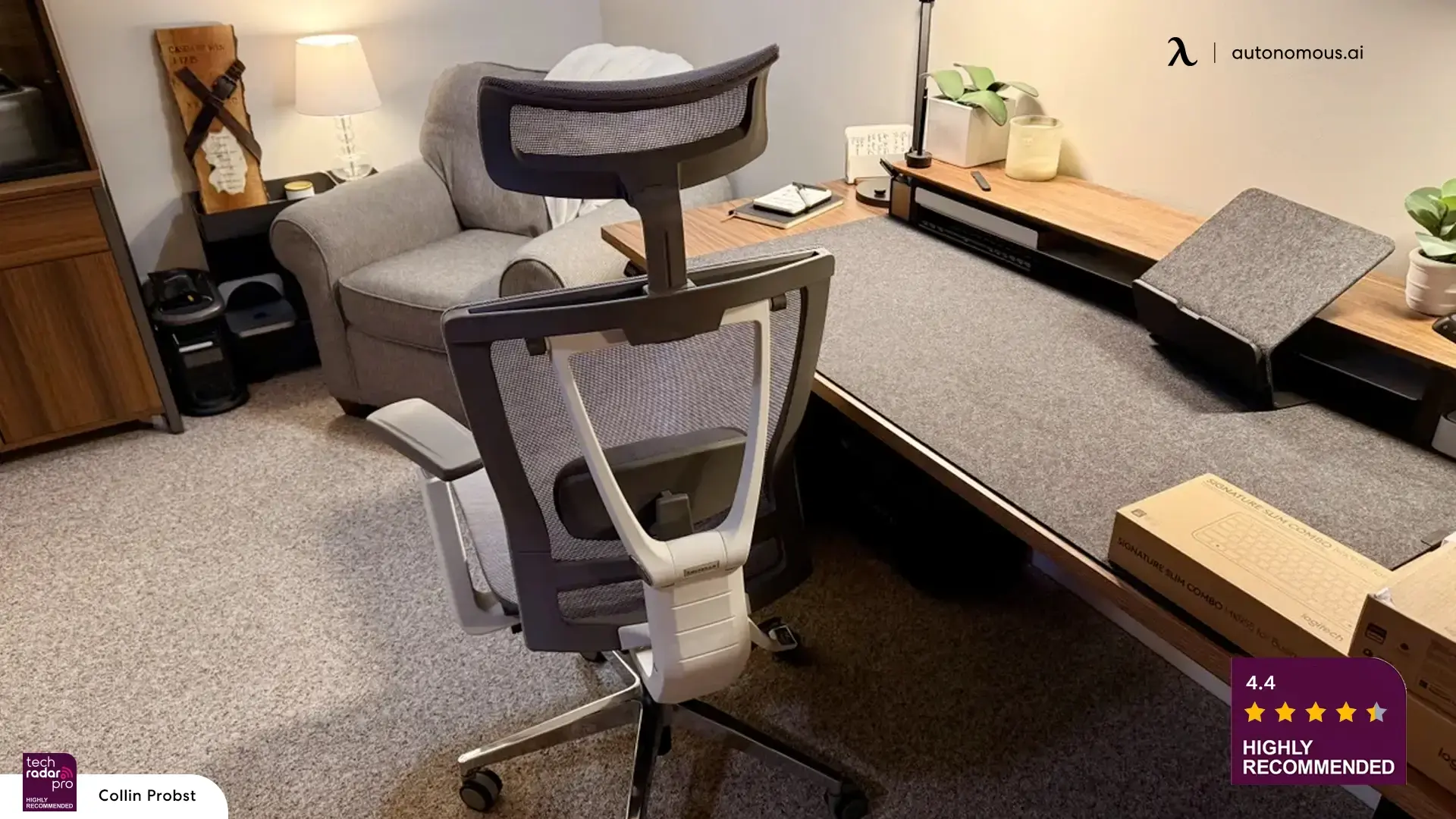
The best office chairs on Amazon span $80 basic seats to $500+ ergonomic builds. Most fall apart in the middle of that range - chairs that look ergonomic in the listing photos but skip the structural details (frame durability, lumbar adjustment range, foam density) that decide whether the chair lasts a year or five. The office chairs that hold up share three things: adjustable lumbar that actually adjusts, mesh or foam that doesn't compress within months, and a weight rating that matches the user.
This guide covers office chairs sold on Amazon - three from Autonomous and others from other brands - with verified specs and the trade-offs each makes. Shop the Autonomous Amazon store for the full Autonomous chair lineup available with Prime shipping.
Quick Comparison
Chair | Price Range | Weight Capacity |
Autonomous ErgoChair Pro | Premium (~$500–$550) | 300 lbs |
Sihoo M57 | Mid-Range (~$200–$250) | 300 lbs |
Autonomous ErgoChair Ultra 2 | Premium (~$500–$550) | 320 lbs |
HBADA E3 | Premium (~$450–$500) | 300 lbs |
HON Ignition 2.0 | Premium (~$450–$500) | 300 lbs |
Autonomous ErgoChair Core | Mid-Range (~$300–$350) | 242.5 lbs |
TRALT Office Chair | Mid-Range (~$150–$200) | 300 lbs |
CYKOV Office Chair | Mid-Range (~$240–$270) | 300 lbs |
Mimoglad High-Back | Budget (~$100–$130) | 250 lbs |
FelixKing Mesh Chair | Budget (~$110–$130) | 250 lbs |
NEO Flip-Up Chair | Budget (~$80–$100) | 250 lbs |
Amazon Basics Desk Chair | Budget (~$70–$90) | 275 lbs |
The Ergonomics Blueprint: What Health Standards Require
When looking for a chair on Amazon, it is easy to get distracted by aesthetic designs. However, federal and academic institutions emphasize that true ergonomic comfort relies on specific mechanical capabilities. According to the Occupational Safety and Health Administration (OSHA), a properly configured workstation must alleviate contact stress and awkward positions through high adjustability.
When evaluating the budget or premium chairs in this guide, keep the following core benchmarks in mind:
The 90-Degree Rule: Your hips, knees, and ankles should rest comfortably at a 90-degree angle with your feet flat on the floor. If a chair's lowest height setting doesn't allow this, it restricts essential lower-body circulation.
The Backrest Gap: Data from the University of New Hampshire indicates that a proper seat pan must leave a 2-to-4-finger gap between the front edge of the cushion and the back of your knees. A seat pan that is too deep cuts off blood flow and pulls you away from the lumbar support.
Active vs. Passive Strain: Research cited by the Cornell University Department of Ergonomics shows that sitting with poor posture can increase pressure on your spinal discs by up to 90% compared to standing. A chair must feature an active lumbar system or an adjustable recline of at least 15 degrees to dynamically distribute this load throughout the day.
The Best Amazon Office Chair Reviews
1. Autonomous ErgoChair Pro - Best Overall Ergonomics
.webp)
The Autonomous ErgoChair Pro is a highly adjustable ergonomic office chair designed to support correct posture during long, sustained typing sessions. It serves as an excellent daily driver because it targets the underlying causes of desk fatigue rather than simply offering surface-level cushioning.
The standout feature is its highly customizable core structure, offering nine distinct adjustment points including a 6-inch sliding lumbar support system and 4D armrests. Once you spend a few days dialing in the alignment, the chair effectively recedes into the background, maintaining a stable, neutral posture that minimizes lower back pressure. Its smooth synchro-tilt mechanism allows you to recline naturally without losing your postural footing or pulling away from your desk setup. While the frame feels substantial and handles up to 300 lbs reliably, smaller-framed users may find the extensive adjustment options take some time to fine-tune properly.
Best for: Remote professionals and creators requiring tailored, rigid postural discipline for 8+ hour workdays.
When purchasing on Amazon, pricing typically sits around $539 due to integrated Prime shipping fees. Buying direct from Autonomous often trims roughly $40-$50 off the top ($499 MSRP), making direct purchasing a stronger value play if you don't require Amazon's native checkout ecosystem
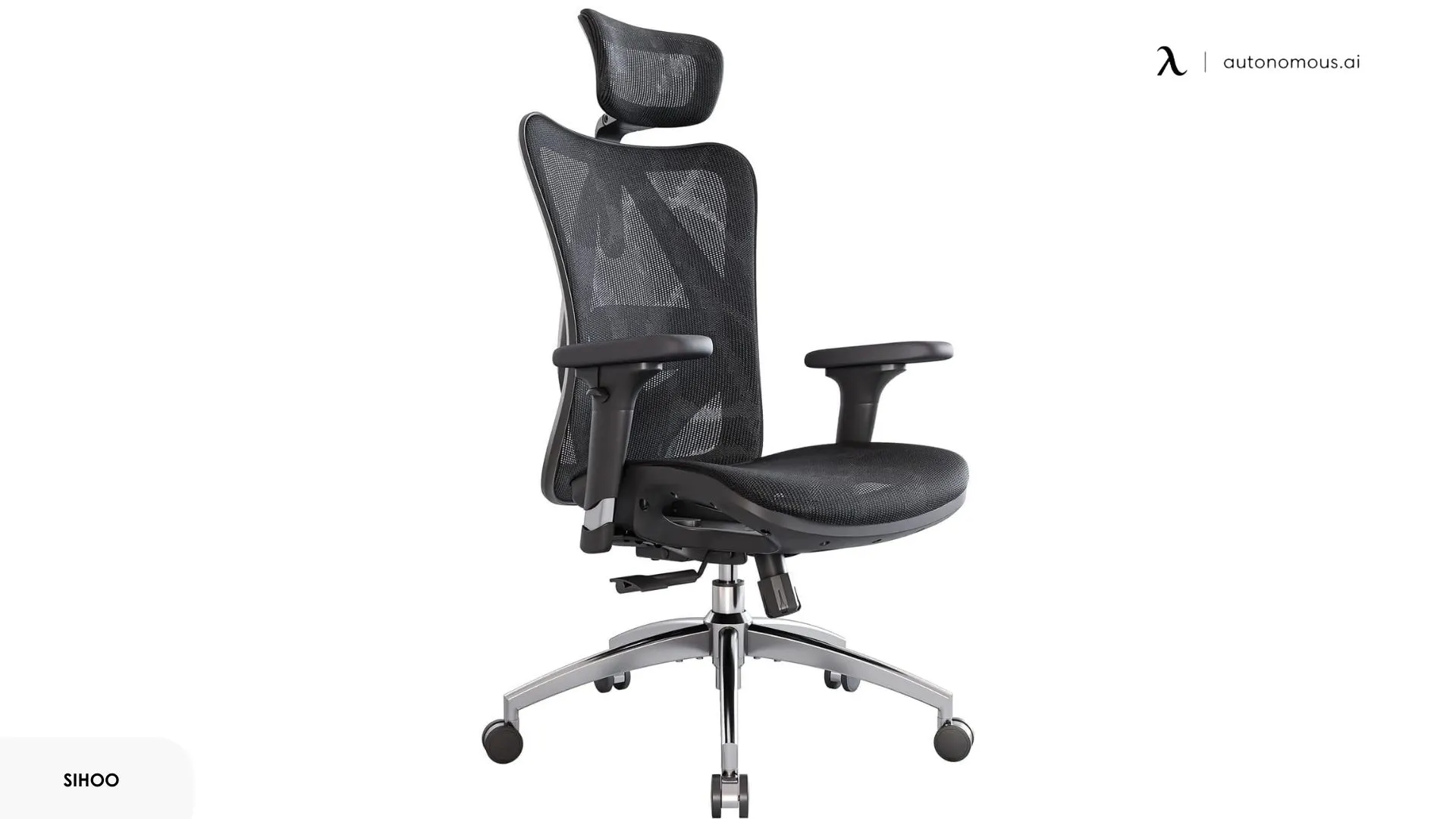
2. Sihoo M57 Mesh Office Chair - Best Value Mid-Range
The Sihoo M57 is a reliable mesh task chair that delivers predictable, mechanical support without a premium price tag. It avoids the structural downfalls common to budget seating by opting for rigid, dependable adjustment pieces that hold their position under daily strain.
Instead of relying on advanced automated mechanics, the M57 uses a highly straightforward 2D lumbar control that moves vertically and depth-wise exactly where you set it. This predictability is its greatest asset during long sessions, preventing micro-adjustments and eliminating the constant need to manually fix your posture. The full-mesh construction provides excellent airflow to keep you cool, and the 3D armrests offer great flexibility for transitioning between typing and mouse work. It lacks a luxurious, high-end glide, but it functions as a highly practical workhorse that outperforms almost anything else in its price tier.
Best for: Hybrid workers seeking a reliable, fully mesh ergonomic chair under $250.
3. Autonomous ErgoChair Ultra 2 - Best Dynamic Movement

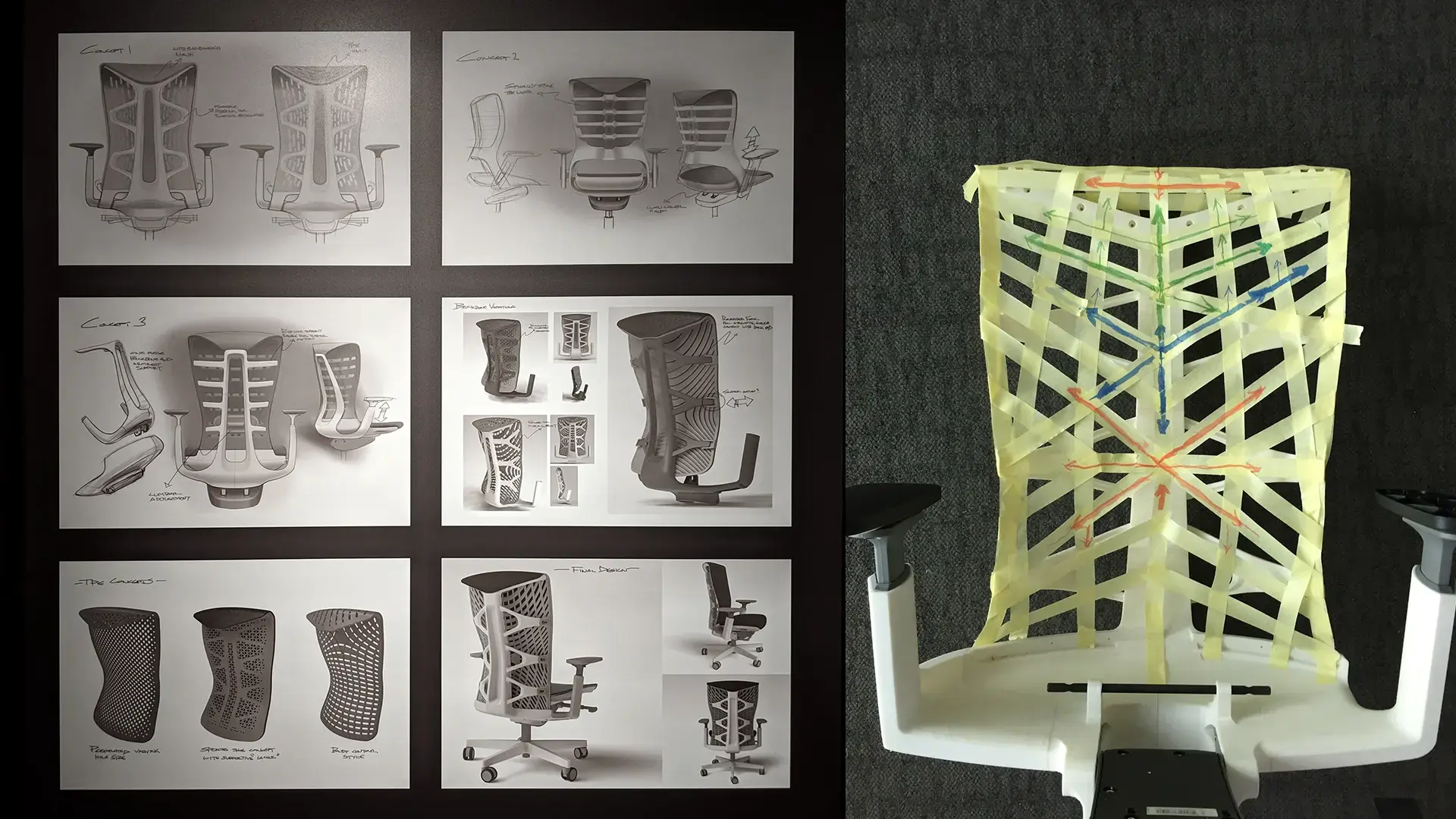
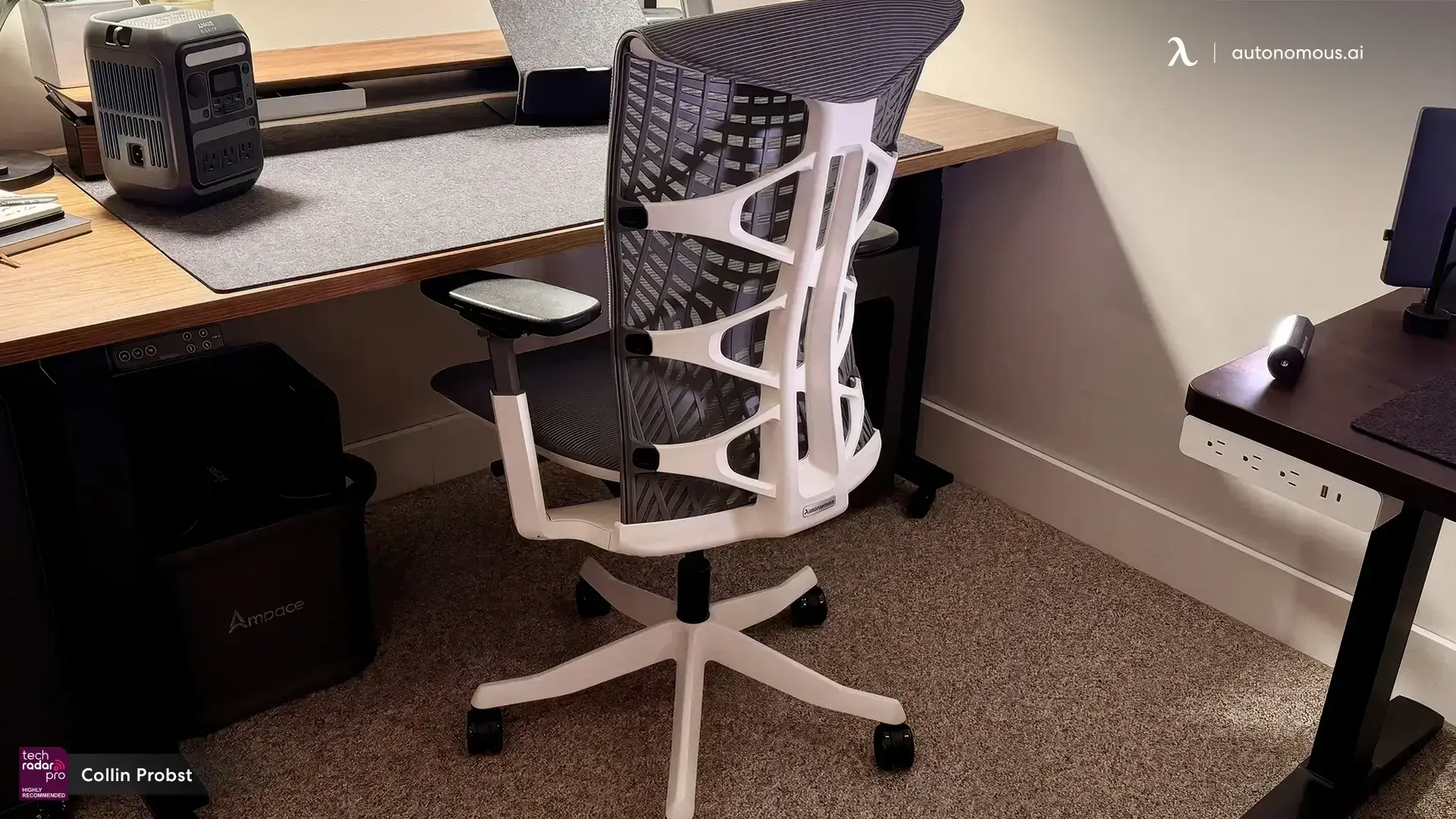
The Autonomous ErgoChair Ultra 2 is a premium frameless chair utilizing an adaptive thermoplastic elastomer (TPE) spine that flexes in real-time with human movement. It is engineered specifically for active sitters who dislike the rigid constraint of traditional ergonomic frames.
Instead of locking your body into a singular "correct" posture, the flexible TPE backrest actively follows your physical lead. If you lean forward to look closer at a screen, shift sideways to reach a notepad, or open up your posture during a call, the skeleton adapts without resisting your movement. This active flex greatly reduces evening muscle stiffness by encouraging continuous micro-movements and healthy circulation. The trade-off is structural assertiveness: if your body craves a firm, unyielding block of lumbar support to keep from slouching, the intelligent TPE backrest might feel too yielding.
Best for: Dynamic multi-taskers, designers, and founders who constantly rotate between multiple screens, physical tasks, and collaborative environments.
The Amazon pricing for the Ultra 2 balances around $592 due to third-party shipping weights, whereas going direct to the manufacturer offers it natively at $499. The roughly $90 variance makes buying direct the highly recommended route for this specific model.
4. HBADA E3 - Best Advanced Back Support
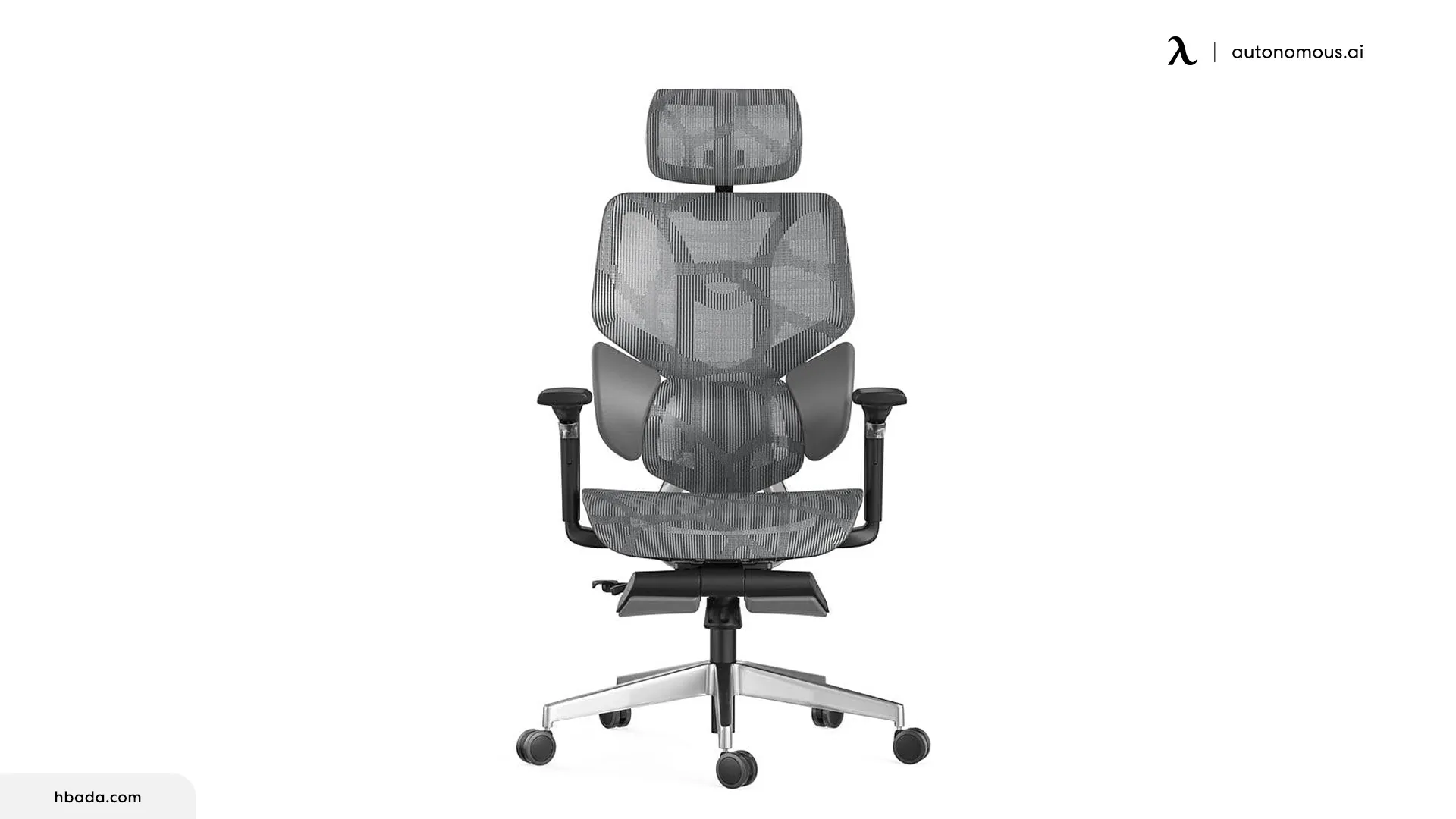
The HBADA E3 is an advanced, high-backed ergonomic chair featuring a distinctive three-zone dynamic lumbar support system. It is built for data-driven users who want to explicitly isolate and calibrate support across different areas of their spine.
The engineering behind the E3 divides back support into independent upper, mid, and lower modules that flex according to your body's leaning angle. This complex architecture handles multi-zone back fatigue beautifully, making it an excellent choice for individuals managing complex posture issues. The downside to this sophistication is a relatively steep calibration curve; the first few days feel like an ongoing tuning process rather than a relaxed sit. It is not an optimal chair for quick, mid-day adjustments, but it yields incredible results once properly locked into your personal dimensions.
Best for: Users willing to spend time calibrating a complex, highly supportive mechanical framework to combat chronic back fatigue.
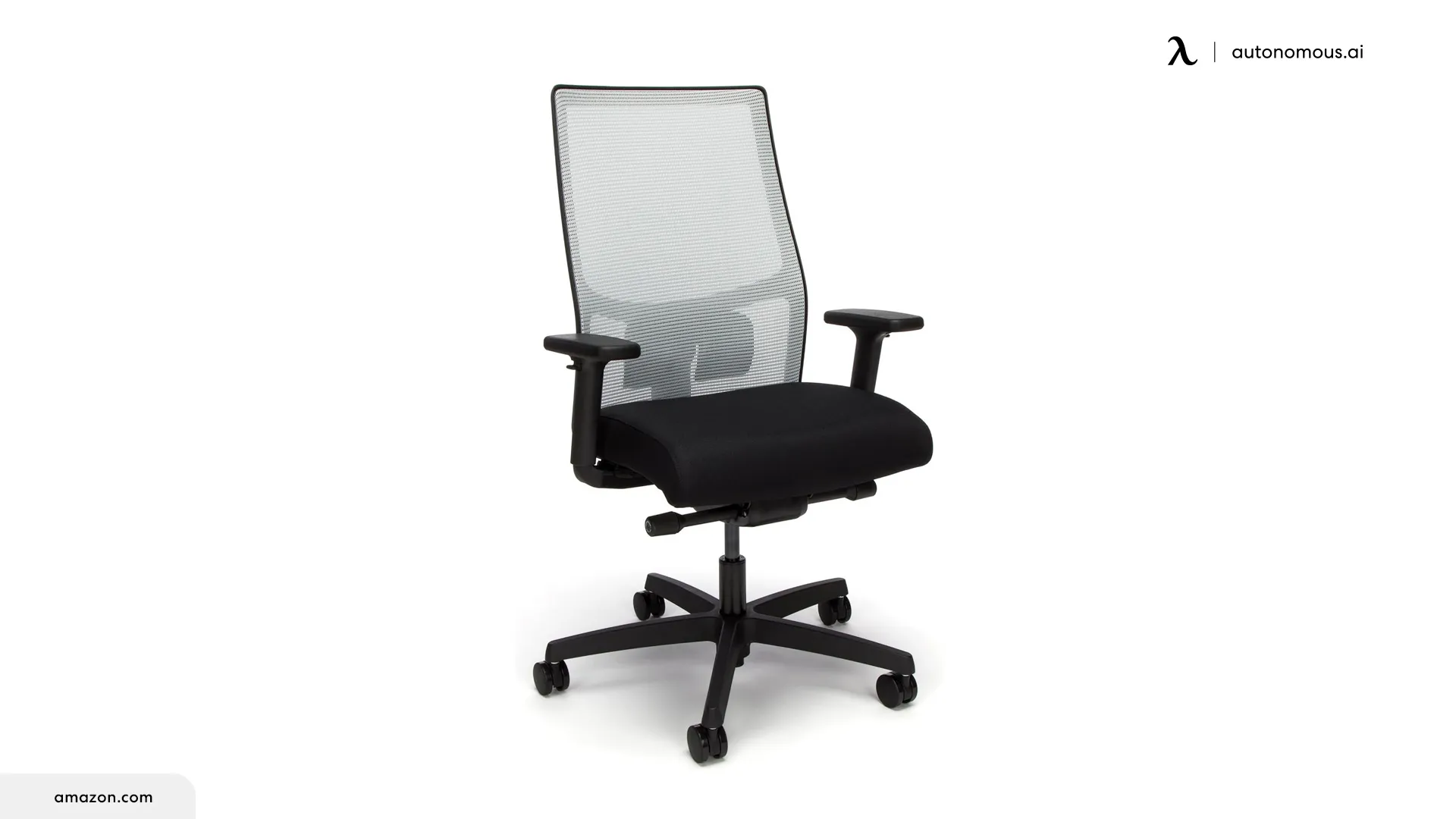
5. HON Ignition 2.0 Mid-Back Task Chair - Best Set-and-Forget
The HON Ignition 2.0 is a commercial-grade office chair built to serve as durable, corporate-style desk infrastructure. It deliberately ignores flashy aesthetic trends in favor of a universally acceptable design and a bulletproof build.
The Ignition 2.0 offers a highly predictable synchro-tilt glide and a straightforward height-adjustable lumbar pad. It does not attempt to intelligently read your mind or twist with your spine; rather, it provides a stable, firm, and reliable seat that handles years of constant use without loosening or squeaking. The seat cushion uses high-density contoured foam that balances firm support with long-term comfort, resisting sagging over time. It sits firmly in the "always good, never distracting" tier, making it an ideal choice if you simply want a high-quality product that works perfectly from day one without an adjustment learning curve.
Best for: Users looking for a durable, traditional corporate-quality task chair with a reliable domestic warranty footprint.
6. Autonomous ErgoChair Core - Best Entry-Tier Framework
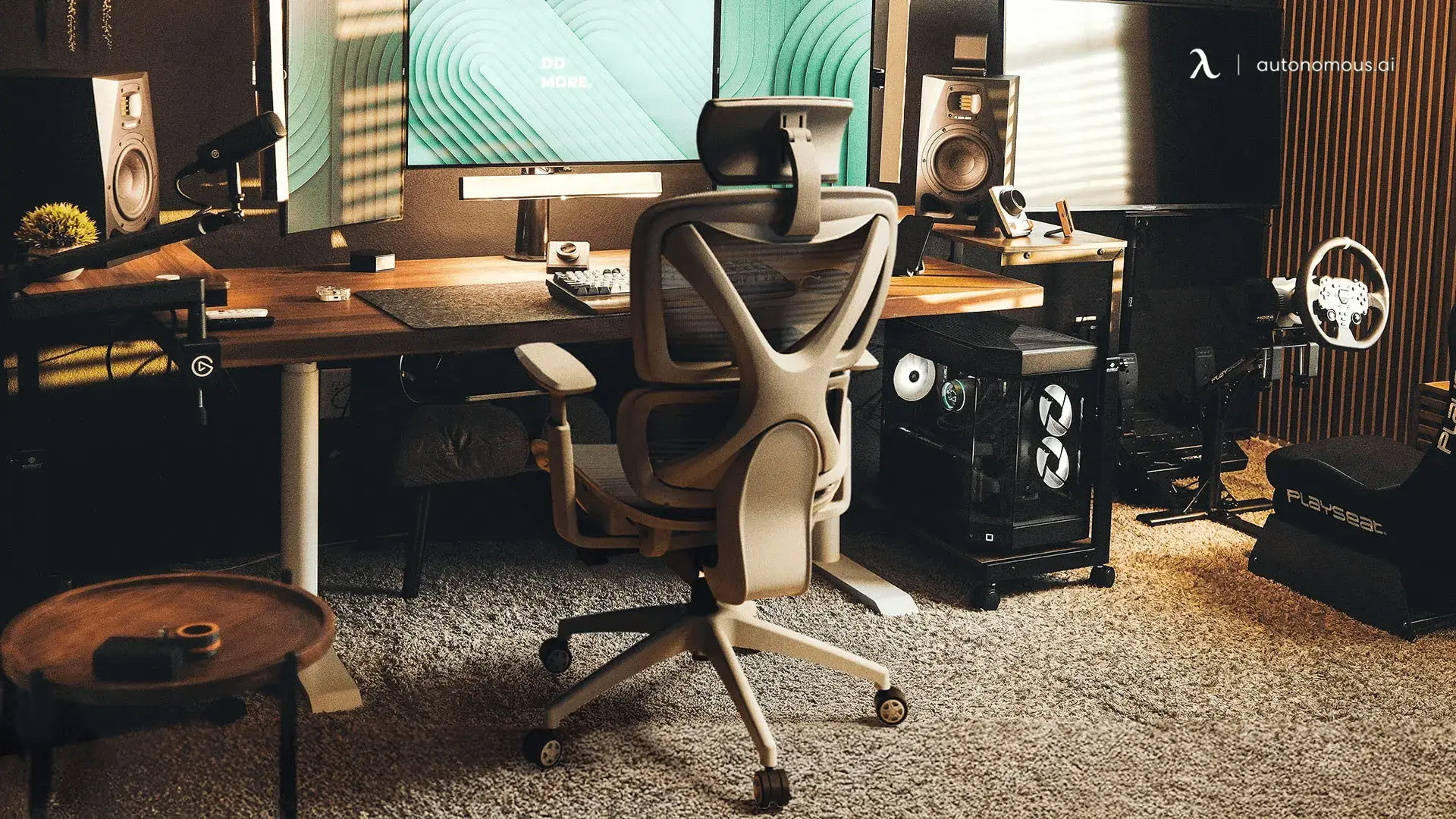
The Autonomous ErgoChair Core is an entry-tier ergonomic task chair designed to offer structural fundamentals without premium design flourishes. It focuses heavily on providing a properly manufactured foundation rather than a budget build pretending to be high-end.
The immediate tactile feel of the Core reveals a lighter frame and a narrower seat pan compared to the Pro model. It serves smaller-to-average frames exceptionally well, though broader-shouldered users or those with wider hips may feel slightly physically contained after a few consecutive hours. Its built-in lumbar support is highly functional but lean-it acts as an encouraging posture guide rather than an aggressive physical correction tool. The mechanical tilt is solid and responsive for its tier, and it includes crucial seat-depth adjustments rarely seen at this price point. However, after approximately 6 hours of continuous use, you will naturally begin shifting positions as the foam pad reminds you it is an entry-level build.
Best for: Average-framed professionals looking for verified mechanical build quality and standard ergonomic adjustments under $300.
The Core features a built-in convenience markup on Amazon, retailing around $314 to cover Prime logistics. It retails directly on the manufacturer site for $299, representing a direct savings if you choose to buy straight from the source.
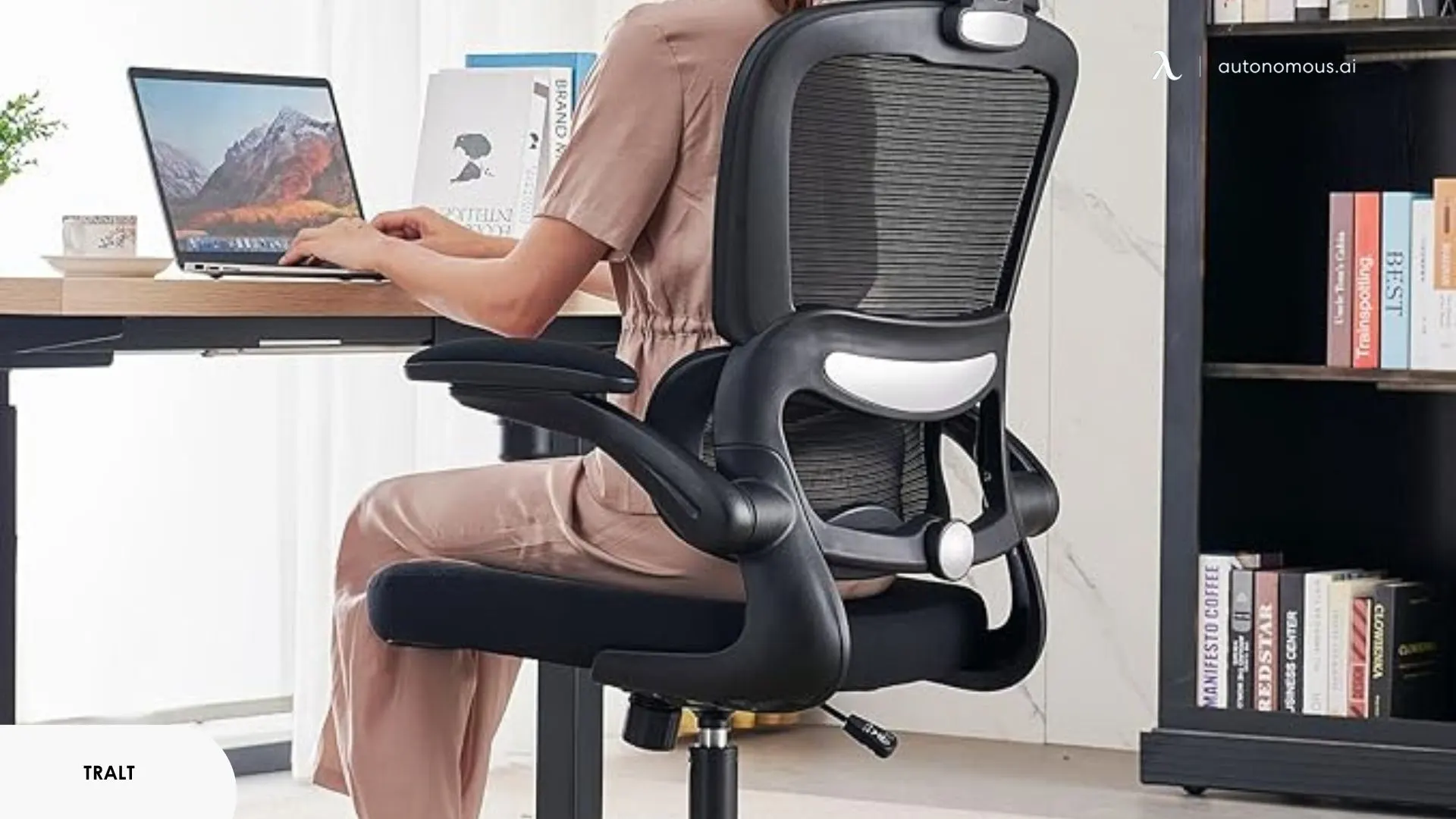
7. TRALT Office Chair - Best for Varied Tasks
The TRALT Office Chair is a multi-tasking task chair distinguished by its exceptionally versatile 3D armrests. It focuses heavily on relieving upper-body tension by allowing users to shift arm support to match changing tasks throughout the work day.
The armrests adjust up and down, slide forward and backward, and pivot inward or outward, which noticeably reduces neck and shoulder strain when alternating between typing on a keyboard and using a mouse. While the upper half of the chair excels at customization, the lower lumbar support utilizes a removable strap-bound pillow rather than a built-in mechanical dial. This configuration provides ample cushioning but offers less precision for users managing localized lower-back discomfort. The frame is sturdy, supporting up to 300 lbs, and features a breathable mesh back that handles long afternoons comfortably.
Best for: Users who switch between varied computer tasks, controller gaming, and drafting, who require dynamic arm support.
8. CYKOV Office Chair - Best for Reclining
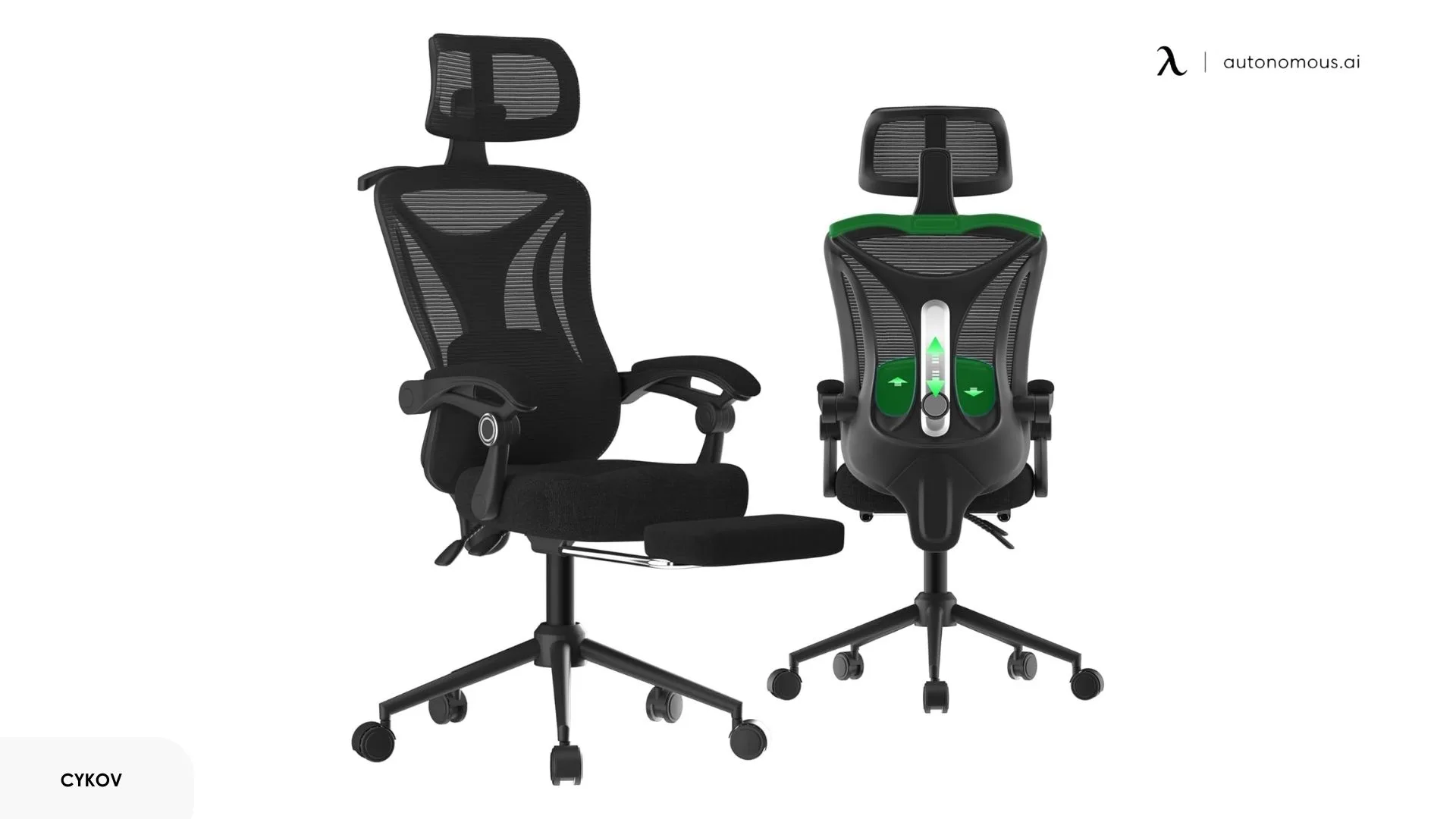
The CYKOV Office Chair is a heavy-duty mesh chair built around a multi-angle tilt mechanism and an integrated fold-out footrest. It targets individuals who like to seamlessly shift between intense, upright focus sessions and deeply reclined rest breaks.
The chair features a robust 300 lb weight capacity and a vertical lumbar adjustment system that helps hit specific pressure points along the lower spine. Its defining characteristic is the retractable footrest tucked beneath the seat cushion; however, the extension mechanism can feel a bit stubborn to deploy and occasionally catches halfway if not pulled straight out. When paired with the multi-angle locking recline and flip-up armrests, it creates a highly flexible environment for shifting your working posture.
Best for: Professionals who participate in long virtual meetings or phone calls and prefer an integrated leg rest for reclining.
9. Mimoglad Desk Chair - Best High-Back Under $150
The Mimoglad Ergonomic Desk Chair is an entry-level, high-back option that manages to squeeze genuine full-body support into a highly economical price bracket. It stands out in the budget category by extending its backrest high enough to catch the shoulder blades of average-height users.
The chair features an adjustable lumbar pillow mounted to the frame via tracking straps, which provides decent vertical flexibility compared to the completely static backs common at this price. It handles a 250 lb capacity and includes a smooth 90-to-135-degree tilt function, though engaging the locking mechanism typically requires a firm, two-handed reach. The mesh is surprisingly breathable, and the seat padding provides adequate comfort for moderate blocks of work. It lacks the heavy structural rigidity required for heavy daily use, but it works perfectly as a comfortable home office upgrade.
Best for: Students or remote workers under 6 feet tall who want an affordable high-back mesh seat for moderate daily use.
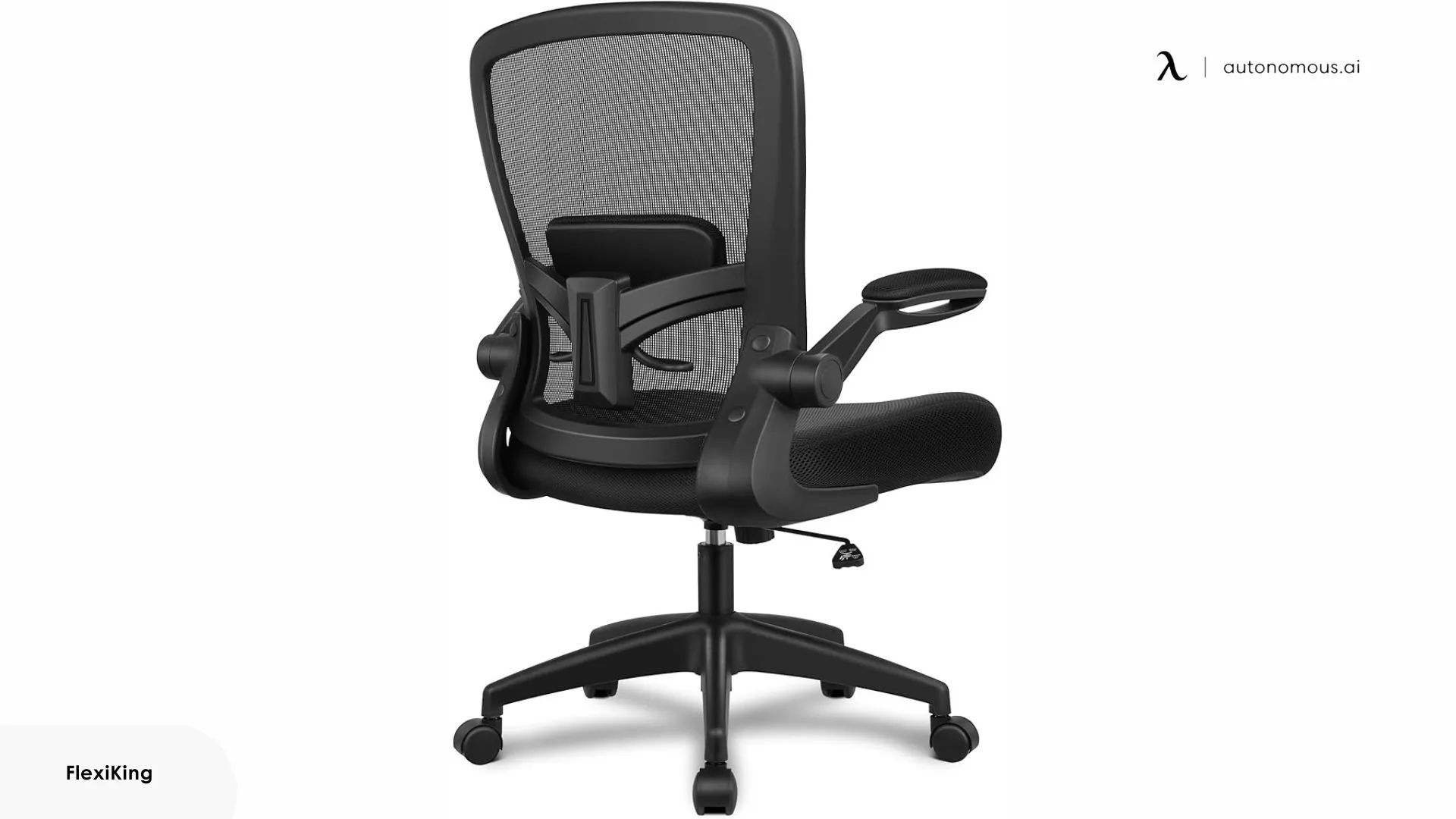
10. FelixKing Office Chair - Best for Light Daily Use
The FelixKing Office Chair is a lightweight, compact mesh task chair designed to cover basic home computing needs. It prioritizes a simple, airy aesthetic and an effortless assembly process for users on a strict budget.
Initial comfort is surprisingly high due to its flexible, lightweight frame and highly breathable mesh upholstery. However, its budget-focused design becomes apparent during long, unbroken work shifts. The lumbar pillow tends to slowly drift downward over hours of sitting, requiring manual repositioning, and the armrests are entirely fixed in place. While it lacks the advanced mechanics required to adapt to your body over an eight-hour shift, it provides clean, cooling support that outclasses standard dining chairs or basic plastic task stools.
Best for: Light home office use, study desks, or secondary workspaces where sessions rarely exceed 4 consecutive hours.
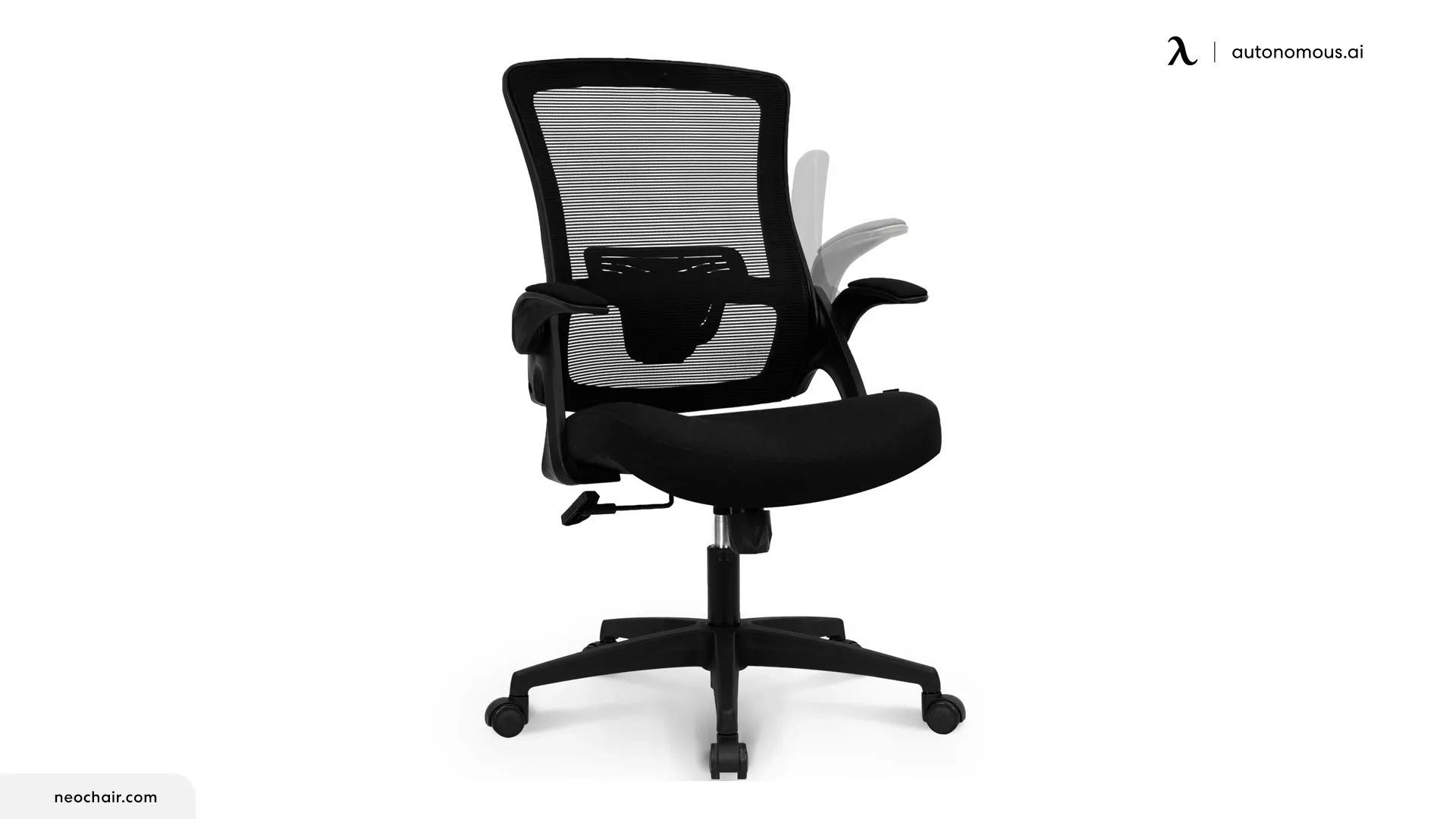
11. NEO Desk Chair - Best for Small Spaces
The NEO Office Desk Chair is a space-saving mesh seat equipped with functional flip-up armrests. It is built explicitly for tight floor plans and shared household workstations that need to clear out of the way when the workday ends.
The standout asset of this chair is its mechanical simplicity: the armrests rotate completely upright on a smooth hinge, allowing you to pull your body right up to the desk edge or slide the entire chair completely underneath low desk surfaces. The mesh back contains a pre-molded, built-in lumbar curve that cleanly hugs the lower spine of individuals between 5'8" and 6'0". Because this curve is entirely static, users outside that height range may find the support hits them uncomfortably high or low. The frame handles up to 250 lbs reliably, though the tilt mechanism can occasionally develop a slight squeak under heavy recline loads over time.
Best for: Urban apartments, small bedrooms, or minimalist desks where maximizing floor space is a top priority.
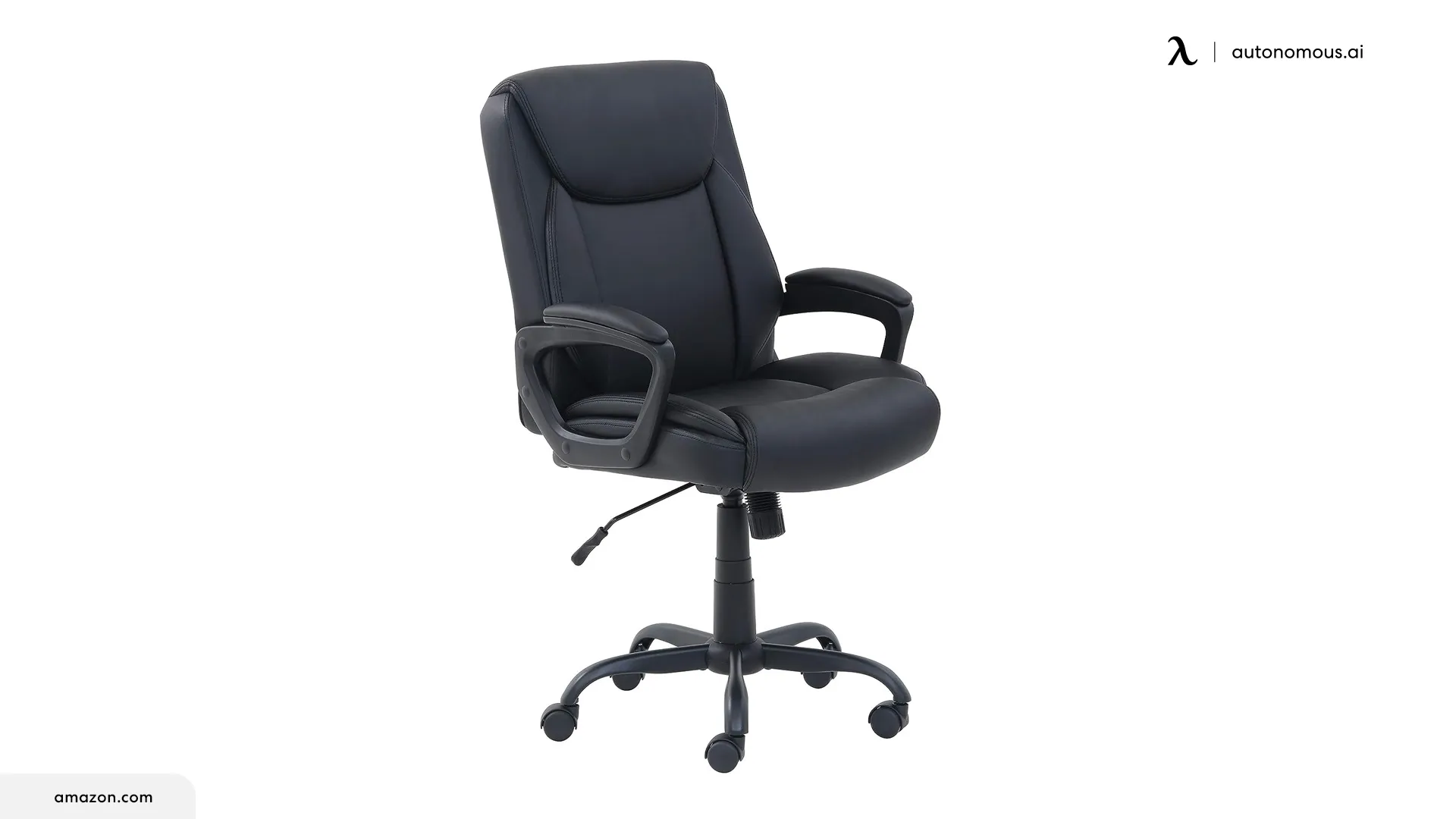
12. Amazon Basics Desk Chair - Best Absolute Baseline
The Amazon Basics Desk Chair is a stripped-down, no-frills rolling seat meant to provide basic workplace utility at the lowest possible price point. It functions as a minimal piece of office furniture rather than an active ergonomic posture system.
The chair handles short stints of administrative work, bill paying, or checking emails without issue. It features basic pneumatic height adjustments and a standard tension-controlled tilt lock, but it lacks any semblance of dedicated lumbar architecture or armrest customizability. Because there are no built-in curves or support pillows to guide your spine, your own core muscles must do the heavy lifting to maintain an upright posture. Sitting in it for more than four hours will likely lead to slouching and lower back fatigue. However, if you simply need an inexpensive, durable rolling seat for occasional desk tasks, it delivers exactly what it promises.
Best for: Casual computer users, part-time students, or budget-conscious consumers looking for an inexpensive, functional desk chair.
Frequently asked questions
What is the best office chair on Amazon?
The best office chair on Amazon is the model that matches your daily usage time, ergonomic adjustability requirements, and body support needs. For individuals working 8+ hour days, premium options like the Autonomous ErgoChair Pro provide comprehensive adjustability with a 6-inch sliding lumbar system to minimize fatigue. For users working on shorter schedules or tighter budgets, the Sihoo M57 offers excellent mid-range reliability, while the Mimoglad provides solid high-back comfort at a budget tier.
What is the best office chair on Amazon for long hours?
The best office chair on Amazon for long hours features adjustable, mechanical lumbar support, breathable mesh or high-density contoured foam, and an integrated tilt mechanism to alleviate spinal pressure. Premium selections like the Autonomous ErgoChair Pro, Autonomous Ultra 2, and the HBADA E3 are designed specifically for continuous 8-to-10-hour workdays. In the mid-range tier, the Sihoo M57 provides the necessary structural predictability to keep you comfortable through extended shifts.
What is the most comfortable office chair on Amazon?
The most comfortable office chair on Amazon depends on whether you prefer structured, posture-correcting support or a soft, adaptive feel. The Autonomous ErgoChair Pro delivers firm, intentional support across nine distinct adjustment points to keep your skeleton perfectly aligned. The Autonomous ErgoChair Ultra 2 shifts the definition of comfort toward dynamic movement, using a flexible TPE polymer back that bends and stretches with your spine. If you prefer traditional, plush cushioning, executive leather options trade away mechanical adjustments in favor of thick, memory-foam padding.
What is the best office chair on Amazon for back pain?
The best office chair on Amazon for managing back pain features an integrated, adjustable lumbar support system that can be precisely calibrated to match your spine's natural curve. The Autonomous ErgoChair Pro excels in this category due to its highly flexible 6-inch vertical sliding lumbar range. For complex, multi-zone back discomfort, the HBADA E3 utilizes an advanced three-zone dynamic backrest that isolates and relieves tension across the lower, middle, and upper spine simultaneously. Avoid budget options with loose, strap-on pillows, as they rarely offer the stable pressure distribution needed for pain relief.
Are mesh office chairs on Amazon better than leather ones?
Mesh office chairs on Amazon are generally superior for long-term ergonomics, airflow, and temperature control during extended sitting sessions. The open weave of a quality mesh back allows body heat to dissipate naturally, keeping you cool and dry throughout the day. Traditional real or faux leather executive chairs offer an appealing, plush aesthetic out of the box, but they tend to trap body heat, encourage slouching over time, and can show signs of peeling or cracking at major wear points over years of use.
How to Choose Your Amazon Seating Investment
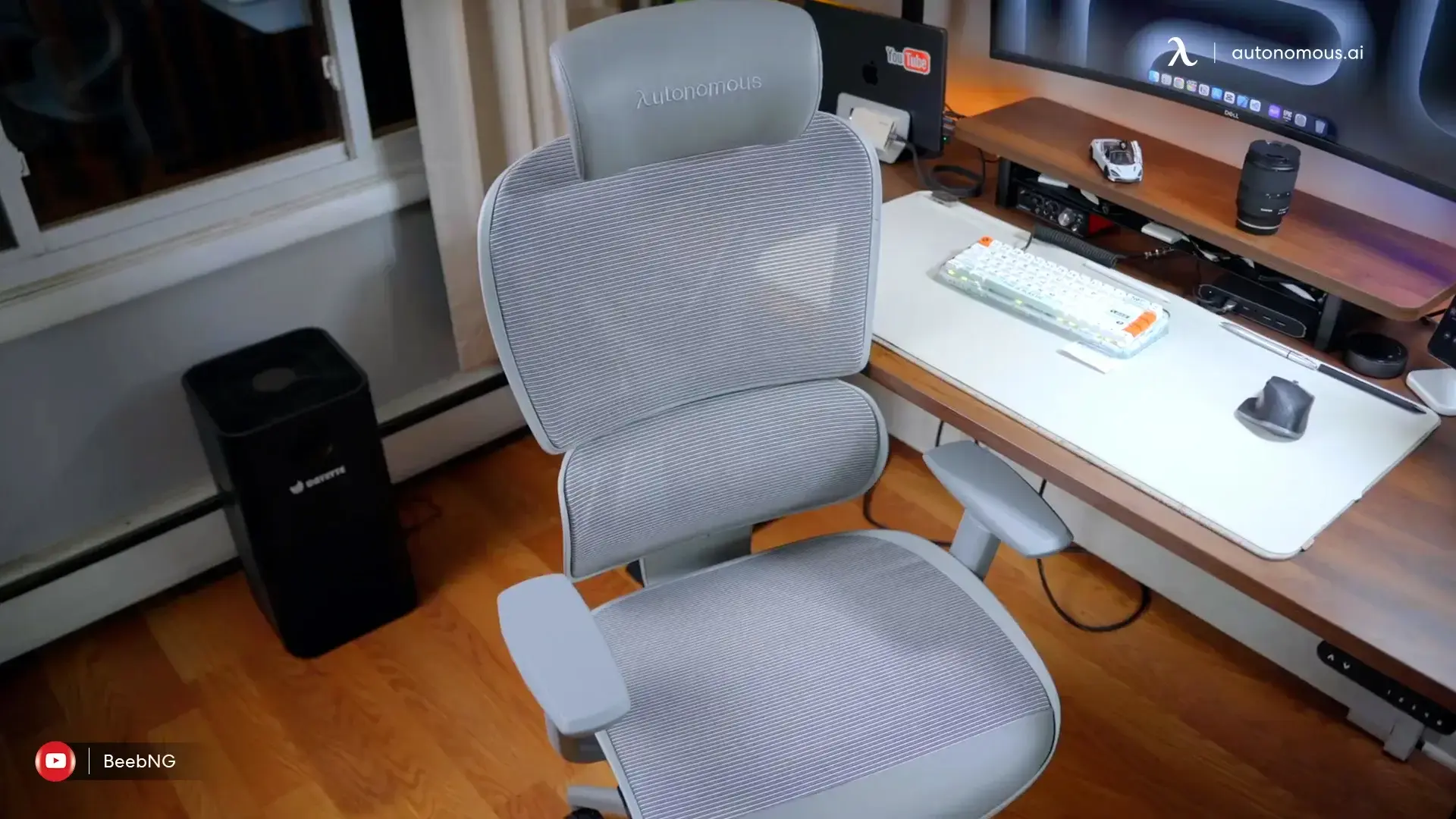
Navigating Amazon's vast office chair inventory comes down to aligning your budget with your expected weekly sitting hours. If your routine demands continuous 8-to-10-hour focus blocks, skipping premium structural mechanisms is a recipe for physical strain. Investing in a highly customizable framework like the Autonomous ErgoChair Pro or the sophisticated multi-zone architecture of the HBADA E3 pays dividends by actively preserving your spinal alignment and eliminating daily muscle fatigue.
For more moderate shifts or flexible home workstations, mid-range contenders like the Sihoo M57 provide incredible structural predictability and mechanical dependability without premium cost markups. Finally, if you are looking strictly at the budget tier under $150, options like the Mimoglad or NEO serve beautifully as space-saving, temporary seating solutions-provided you build in frequent movement breaks to offset their static backrests. Remember to look past the surface-level cushioning and prioritize the underlying frame adjustments, weight ratings, and structural warranties that ensure your chair supports you for years to come.
References
- Occupational Safety and Health Administration (OSHA): Computer Workstations - Workstation Components: Chairs Guide.
- Yale Medicine: The Physical Risks of Prolonged Sitting.
- University of New Hampshire (Environmental Health & Safety): Ergonomic Workstation Setup Guidelines.
- University of Pittsburgh (Office of Public Safety & Emergency Management): How to Choose an Ergonomic Chair.
- Mayo Clinic (Healthy Lifestyle Series): The Sedentary Lifestyle and Metabolic Risks.