The 8 Best Chairs for Lower Back Pain at Home 2026
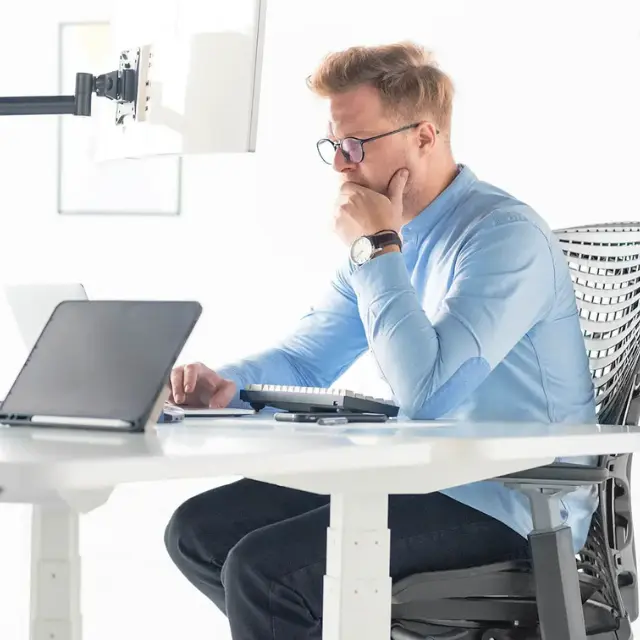
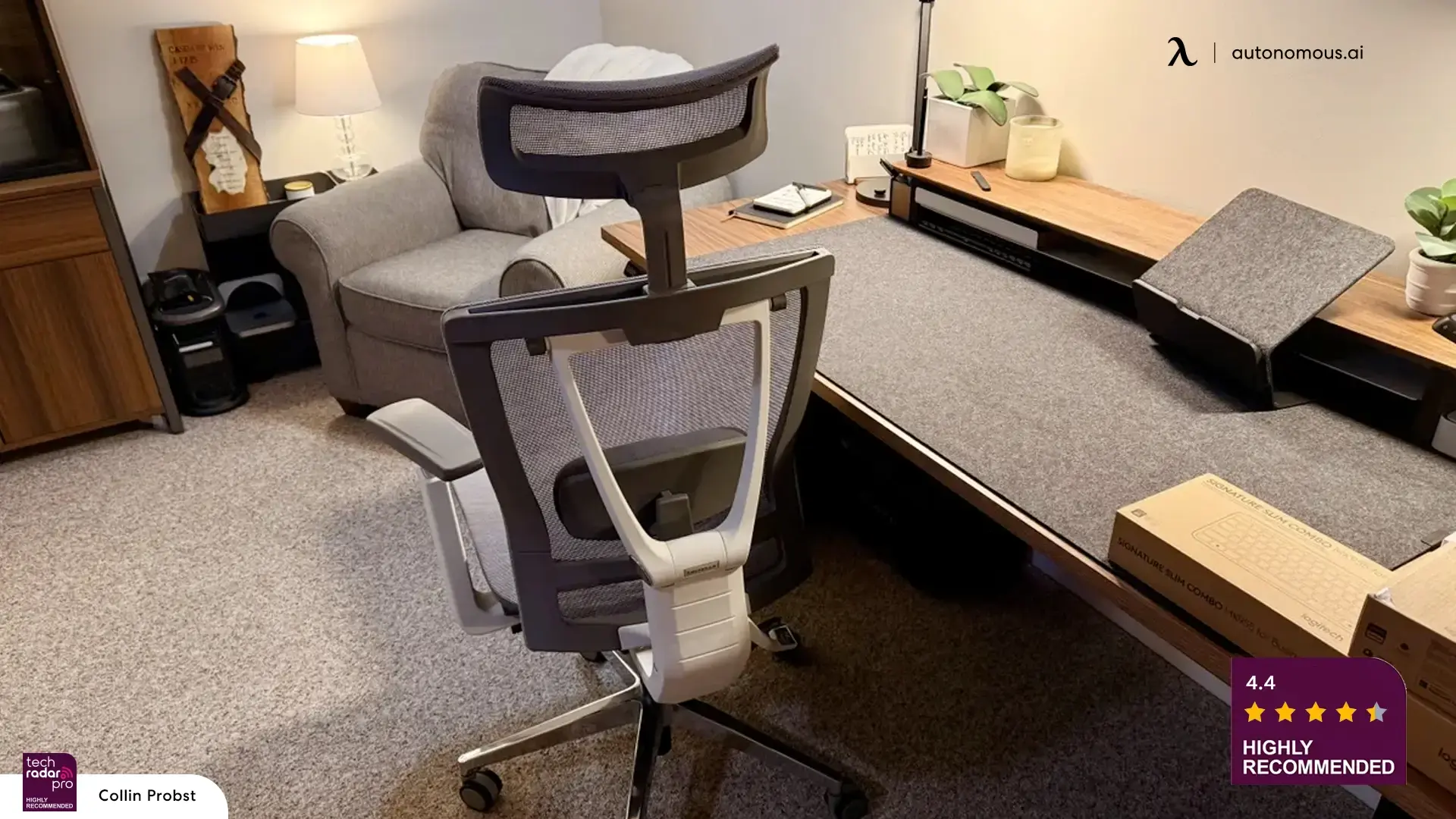
The best chair for lower back pain at home is one with adjustable lumbar support that fills the natural curve of your lower spine, a seat depth that keeps pressure off the backs of your knees, and a recline that lets you shift weight off your lower back through the day. Those three features matter more than price or brand, because lower back pain during sitting comes mostly from a chair that lets your spine slump out of its natural S-curve. This guide compares 8 chairs that handle those needs, from adjustable task chairs to reclining and lift options for older adults, so you can match one to how you actually sit.
Quick Comparison
Chair | Lumbar Support | Recline | Weight Capacity | Best For |
Autonomous ErgoChair Pro | Sliding, 6-inch range | 22°, 5 lock positions | 300 lbs | Adjustable all-day support |
Branch Verve Chair | Adjustable | Standard tilt | 275 lbs | Intuitive comfort, minimal setup |
X-Chair X-Basic DVL | Dynamic (auto) | Tilt with tension | ~250 lbs | Budget auto-adjusting lumbar |
Efomao High-Back Chair | Soft lumbar + headrest | 90°–135° | 450 lbs | Larger bodies, higher capacity |
MERLUXY Power Recliner | Contoured backrest | Powered, zero-gravity | 350 lbs | Living-room reclining relief |
Stressless Opal | Body-follow support | Powered | Varies | Premium living-room seating |
FLEXISPOT XL31 Lift Chair | Lumbar heat + massage | Powered lift + recline | 300 lbs | Elderly, easy sit-to-stand |
Polar Aurora Lift Chair | Dual heated lumbar zones | 130° recline, 45° lift | 350 lbs | Elderly, durability and stability |
Prices change periodically and vary by retailer.
The 10 Best Chairs for Lower Back Pain at Home
1. Autonomous ErgoChair Pro - Best Overall for Adjustable Support
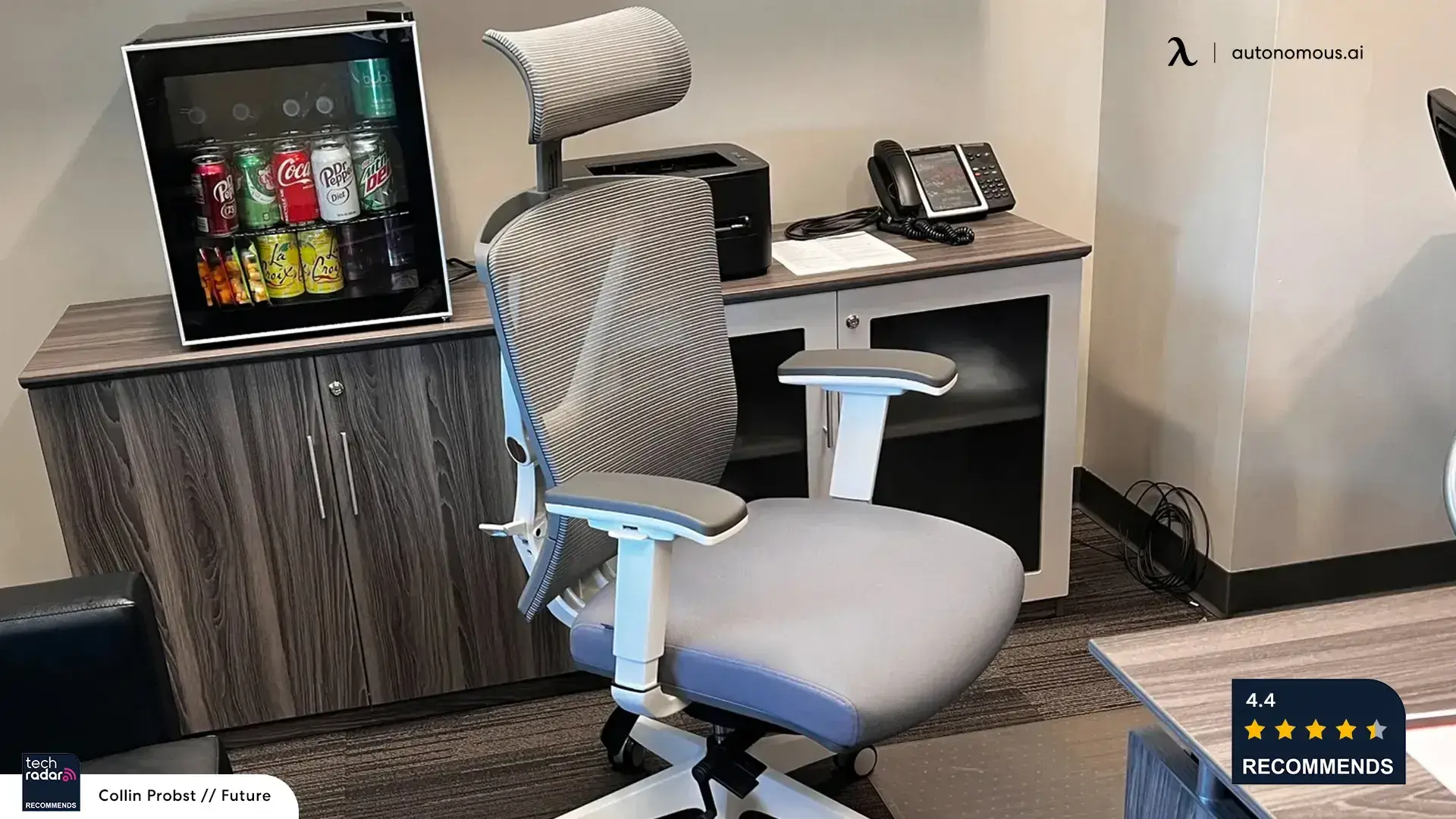
The first thing your lower back notices in the ErgoChair Pro is that the support meets you where your spine actually curves, not where a factory decided it should. The lumbar cushion slides up and down a 6-inch range, so instead of a fixed bump pressing the wrong spot, you nudge it until it fills the hollow of your lower back and the ache of sitting upright starts to ease. That single adjustment is what makes it the best all-around chair here for lower back pain.
Over a long day, the difference shows up when you shift. Lean back and the chair reclines through 22 degrees with five lockable positions, letting you park at an angle that takes the load off your lower spine for a while, and the synchro-tilt keeps your knees where they were so you don't have to reset your whole posture. The mesh back keeps air moving so you don't get the sweaty, stuck feeling of a leather chair by mid-afternoon, and the waterfall seat edge keeps the front of the seat from digging into the backs of your legs. It supports up to 300 lbs and carries a lifetime warranty, the longest on this list.
- Best for: Anyone who wants precise, adjustable lower-back support for full workdays.
- Con: The seat is firm out of the box and takes a short break-in, which suits posture but not everyone's first impression.
- Capacity: 300 lbs
- Warranty: Lifetime
2. Branch Verve Chair - Best for Intuitive Comfort
The Branch Verve is the chair that feels right the moment you sit down, without a ten-minute setup session first. The manufacturer's claim that you feel relief as soon as you sit sounds like marketing, but the ergonomic shaping does most of the work for you, and the adjustable lumbar lets you fine-tune the rest so it meets your spine's natural S-curve without pushing too hard or leaving a gap.
For someone with lower back pain who doesn't want to become an amateur ergonomics expert, that ease matters. Six adjustment points cover the basics, and the shaping is aimed at the kind of dull fatigue that creeps in over a long afternoon rather than a single dramatic feature. The curved armrests are an unusual look and take a moment to get used to, so whether they suit you is down to preference. But for buyers who want their back supported without fiddling, the Verve is a genuinely low-effort pick.
- Best for: People who want effective lumbar support with little adjustment effort.
- Con: The 275 lb capacity is on the lower side, and the fixed curved armrests can't be repositioned if they don't suit you.
- Capacity: 275 lbs
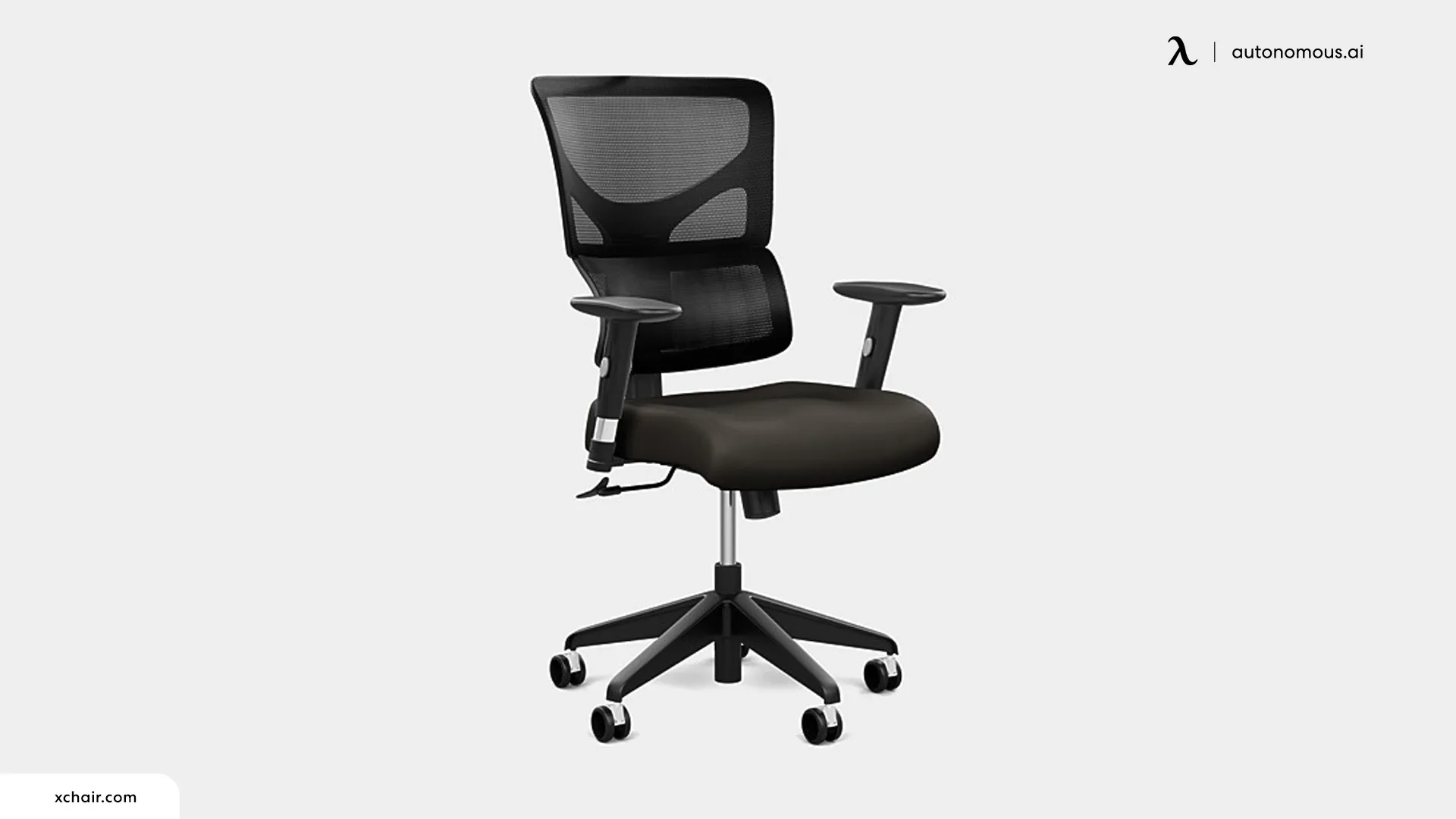
3. X-Chair X-Basic DVL - Best Budget Auto-Adjusting Lumbar
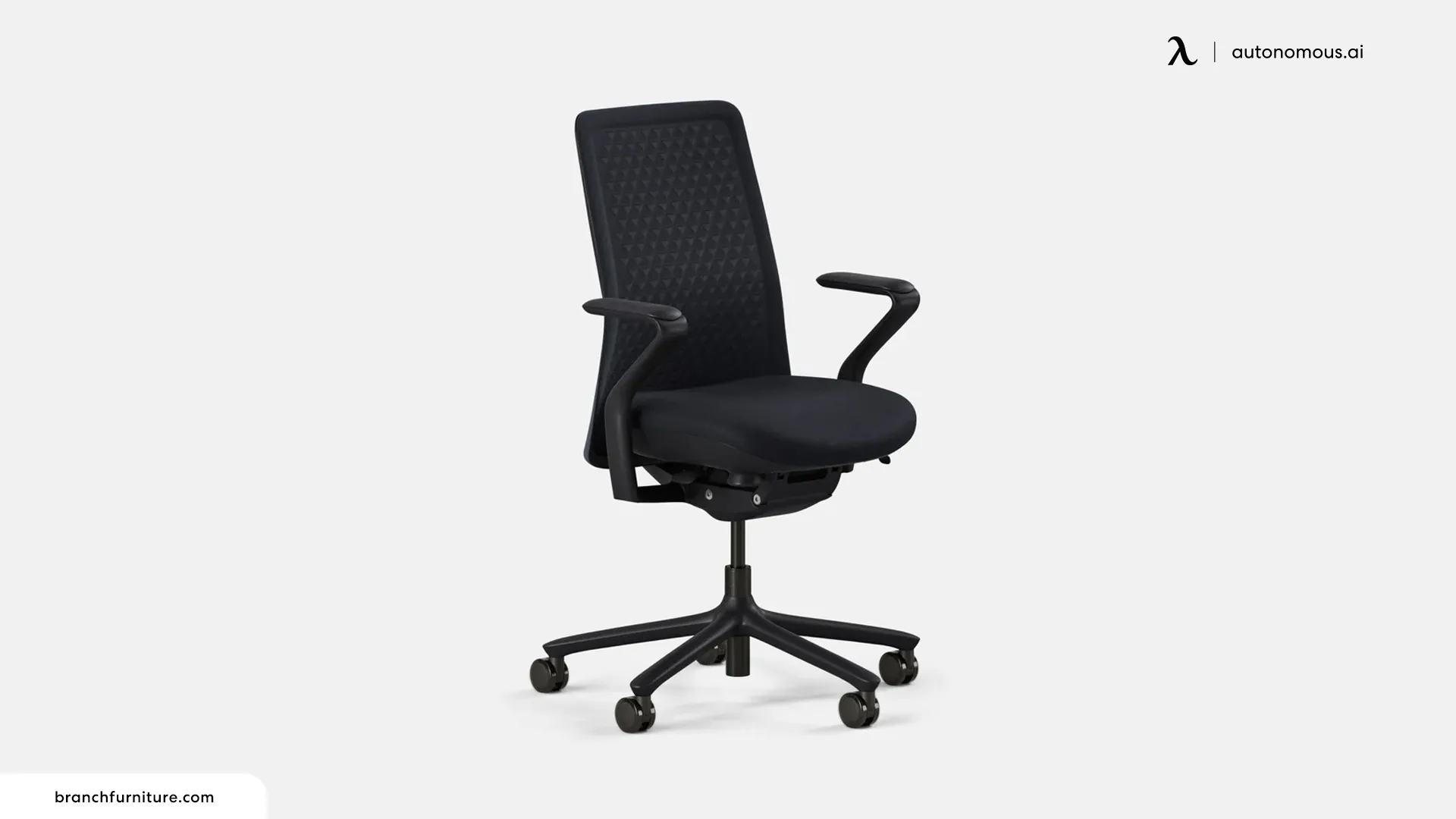
Sitting in the X-Basic DVL, you don't set the lumbar support, it finds you. The Dynamic Variable Lumbar moves with your body as you shift, so instead of reaching for a dial you're not sure how to set, the support tracks your lower back on its own. For someone new to ergonomic chairs who doesn't yet know where their lumbar support should even sit, that hands-off behavior takes the guesswork out of getting relief.
It's an honest budget chair, and the feel reflects that. You can adjust seat height and armrests, and there are optional add-ons: a heat-and-massage lumbar segment, or a version that adds cooling, both of which noticeably warm or soothe a stiff lower back. The tradeoffs you feel are that the lumbar section sits separate from the main backrest rather than blending into it, and the headrest costs extra rather than coming standard. It delivers automatic support that cheaper chairs skip, but anyone wanting a seamless, fully integrated sit may want to step up.
- Best for: Budget-conscious buyers who want automatic lumbar support.
- Con: The lumbar section sits separate from the backrest rather than integrated, and the headrest and massage functions cost extra.
- Capacity: ~250 lbs
4. Efomao High-Back Office Chair - Best for Larger Bodies
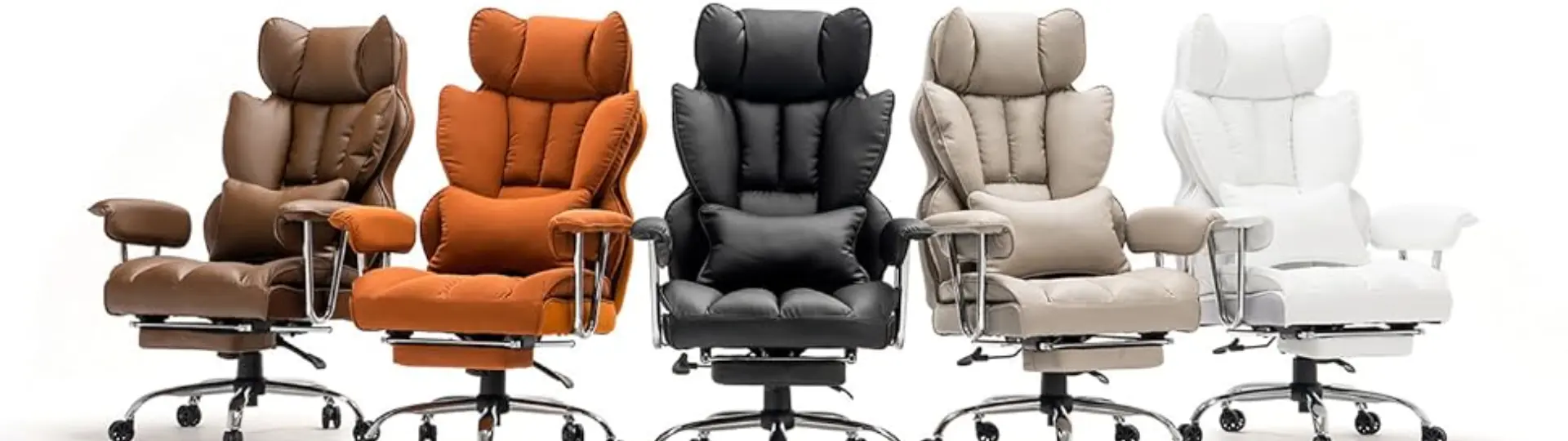
If you've ever sat in a chair that felt like it might not hold you, the Efomao is the opposite: it feels solid and roomy from the moment you settle in, with a high back that catches your neck and lower back at the same time. Rated to 450 lbs, the highest capacity here, it's built for larger bodies that need both reinforcement and space, and the saddle-shaped cushioned seat spreads your weight rather than concentrating it on one sore spot.
When your back tires, you lean back. The backrest reclines from 90° to 135° with adjustable tilt tension, and the retractable footrest lets you take the pressure off your legs and hips while you recline or sit cross-legged. Underneath the comfort, the build is genuinely sturdy: a BIFMA-certified frame, a Level 3 gas cylinder, and a high-strength metal base. For anyone who needs more capacity than a standard ergonomic chair offers without giving up recline and lumbar support, the Efomao fills that gap at a mid-range price.
- Best for: Larger individuals needing high capacity plus recline and lumbar support.
- Con: The high-back frame is bulky for smaller rooms, and the lumbar support is soft-shaped rather than precisely adjustable.
- Capacity: 450 lbs
5. MERLUXY Power Swivel Recliner - Best for Living-Room Relief
The MERLUXY is the chair you sink into at the end of the day when your lower back and hips have had enough of sitting upright. Press the button and the zero-gravity recline eases you into a position where your weight spreads out and the pressure lifts off your spine and joints, the kind of relief that's hard to get from a chair that keeps you at a desk angle.
The olive-shaped backrest curves along your spine, and the wrap-around armrests cradle you through the hips and sides so nothing feels unsupported. It's covered in stain-resistant PU leather on an aluminum alloy base and holds up to 350 lbs. This isn't a work chair, so it's best thought of as the recovery seat in your living room rather than your desk chair. If you split your day between working and resting, it pairs naturally with a task chair for the working half.
- Best for: Living-room reclining relief for the lower back and hips.
- Con: The sail-styled armrests are fixed rather than adjustable, and the leather runs warmer than mesh over long sessions.
- Capacity: 350 lbs
.webp)
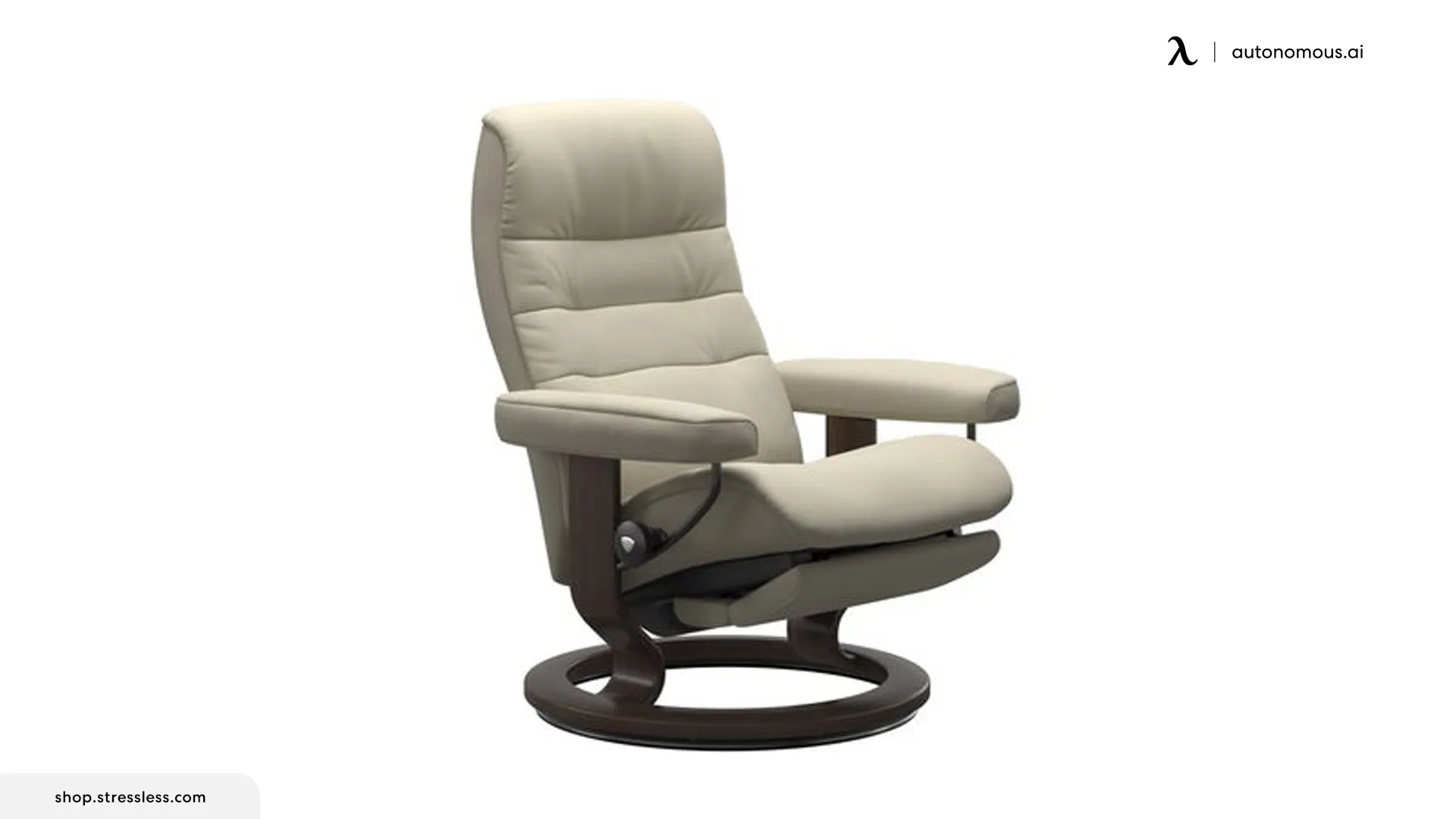
6. Stressless Opal - Best Premium Living-Room Seating
The Stressless Opal moves with you in a way most chairs don't, following your body as you shift so your lower back never has to brace against a rigid seat. Even in long sessions, that constant, quiet support is what people notice most, and it's why the back tires far less than it does in a static chair. It sits on a rounded wooden base instead of casters, and it's by far the priciest option here, positioned as a luxury seat rather than a work chair.
You move through positions with the press of a button, since the chair is fully powered, and the body-following support is its real strength for anyone whose lower back gives out in ordinary seating. The distinctive design is made for a high-end living space, and because it doesn't roll, it stays exactly where you place it. Given the price and the living-room focus, it suits one specific buyer: someone who values premium, effortless comfort over desk functionality.
- Best for: Buyers wanting premium, body-following living-room seating.
- Con: It's by far the most expensive chair here and is built for the living room, not desk work.
- Capacity: Varies by configuration
7. FLEXISPOT XL31 Power Lift Chair - Best Lift Chair for Elderly
For an older adult with lower back pain, the hardest moment often isn't sitting, it's getting back up. The FLEXISPOT XL31 solves exactly that: a quiet dual-action motor tilts the whole chair forward and eases you toward standing, so your knees, hips, and back don't have to do the heavy lifting or take the jolt that can trigger a fall. That standing assist is the whole reason a lift chair beats a task chair for this group.
While you're seated, the chair works on the pain too. Eight-point vibration massage and lumbar heat target the lower-back tension that builds over a long stretch of sitting, and high-density foam cushions on a metal frame support up to 300 lbs. The wipe-clean PU leather, built-in cup holder, and side pockets mean the things you reach for stay close, so you get up less often in the first place. For a senior managing back pain alongside limited strength or mobility, this is the most practical chair on the list.
- Best for: Elderly users who need standing assistance plus lumbar heat and support.
- Con: The PU leather can get warm over long sits, and as a recliner it isn't meant for desk work.
- Capacity: 300 lbs
.webp)
8. Polar Aurora Power Lift Chair - Best for Stability and Durability
The Polar Aurora feels planted, and for an unsteady user that confidence is half the point. When you push down on the armrests to stand, they don't wobble or compress, and the anti-rollover base stays put instead of sliding out from under you, so the whole sit-to-stand motion feels safe rather than precarious. Built on an upgraded steel frame with a Class III motor and a 350 lb capacity, it's the sturdiest of the lift chairs here.
Settle back and it reclines to 130 degrees, with a 45-degree lift assist to bring you forward again when you're ready. The dual heated lumbar zones put targeted warmth right against a chronically sore lower back, which reviewers found genuinely soothing, and eight-point vibration massage, cup holders, a side bag, and USB ports make it a comfortable base for a full day in the living room. For an older user where stability and a durable frame matter most, the Polar Aurora leans into exactly those.
- Best for: Elderly users who need maximum stability, capacity, and a durable frame.
- Con: The heavy steel frame makes it bulky and hard to reposition, and it takes up significant living-room space.
- Capacity: 350 lbs
.webp)
How to Choose a Chair for Lower Back Pain
The most important feature for lower back pain is adjustable lumbar support that can be positioned at the exact height of your lower spine, since a fixed or poorly placed lumbar pad does little to hold your back in its natural curve. Beyond that, four features determine whether a chair helps or hurts your lower back over a full day:
Adjustable lumbar support.
Look for a lumbar system that moves in height, and ideally depth, so it fills the inward curve of your lower back rather than pressing on the wrong spot. The Cleveland Clinic notes that supporting the natural inward curve of the lower back is central to reducing strain while seated.
Seat depth adjustment.
There should be a small gap between the seat's front edge and the back of your knees. Too deep and the edge cuts off circulation; too shallow and your back never reaches the lumbar support.
Recline and tilt.
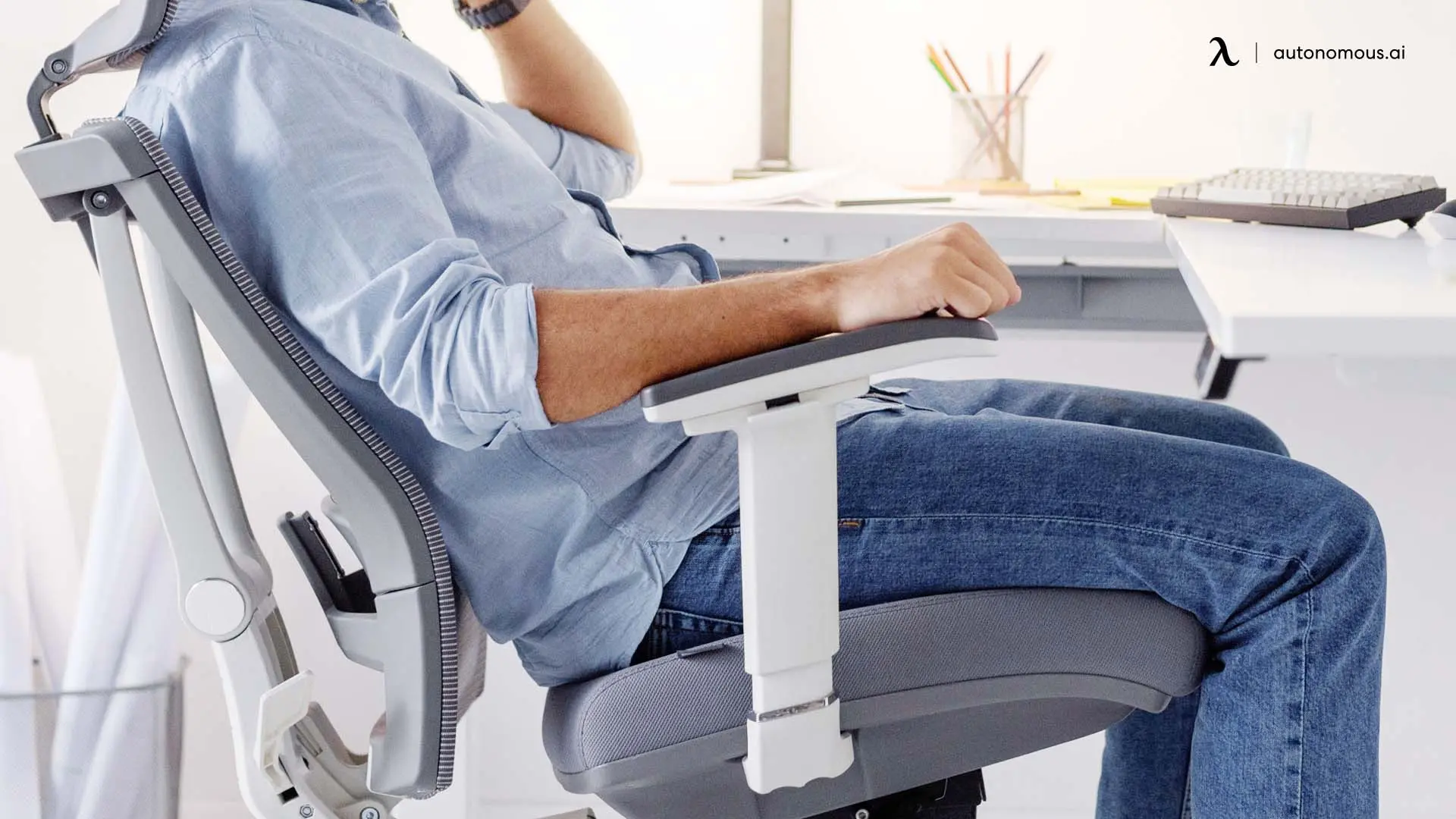
A backrest that reclines, ideally with a lock, lets you shift weight off your lower spine through the day. A range of 90° to 135° covers upright work and relaxed reclining.
Seat cushion and material.
A cushion firm enough to prevent sinking but soft enough for long sitting reduces pressure points. Breathable mesh keeps you cool; padded foam or leather adds cushioning for those who prefer it.
For anyone whose back pain is persistent, severe, or paired with numbness or leg pain, a chair is only part of the picture. See a doctor or physical therapist before assuming a new chair alone will resolve it.
Frequently Asked Questions
What is the best chair for lower back pain at home?
The best chair for lower back pain at home has adjustable lumbar support positioned at your lower spine's natural curve, an adjustable seat depth, and a recline function to shift pressure off your back. Task chairs like the Autonomous ErgoChair Pro suit desk work, while recliners suit living-room relief, so the best choice depends on where and how you sit.
How do I stop lower back pain while sitting at home?
To reduce lower back pain while sitting, use a chair that supports your spine's natural inward curve, keep your feet flat on the floor with knees near hip level, and take regular breaks to stand and move. Adjustable lumbar support, correct seat height, and a slight recline all help take pressure off the lower spine during long sitting.
What kind of chair is best for lower back and hip pain?
For combined lower back and hip pain, a chair with a contoured seat, adjustable lumbar support, and a recline or zero-gravity function works best, since it distributes weight evenly and reduces pressure on both the spine and hips. A footrest or reclining backrest further relieves hip pressure by letting you change positions through the day.
What is the best chair for elderly people with lower back pain?
The best chair for elderly people with lower back pain is often a power lift recliner, which tilts forward to ease standing while providing lumbar support, since the sit-to-stand moment is where back strain and fall risk are highest. Look for adjustable or heated lumbar support, a stable base, and a capacity that fits the user, with powered recline removing the physical effort of adjusting.
Does an office chair really help with lower back pain?
An ergonomic office chair can meaningfully reduce lower back pain caused by poor sitting posture, because adjustable lumbar support and correct seat height keep the spine in its natural position. A chair won't cure back pain from an underlying medical condition, so persistent or severe pain should be evaluated by a healthcare professional rather than treated with seating alone.
Is mesh or leather better for a chair for lower back pain?
Mesh and leather both work for lower back pain, and the choice comes down to preference: mesh stays cooler and breathes well during long sitting, while leather and padded foam offer a warmer, more cushioned feel. Lumbar support and adjustability matter far more for back pain than the seat material, so prioritize those first.
Final Words
The right chair for lower back pain at home comes down to matching adjustable lumbar support, seat depth, and recline to how you actually sit. For desk work, the Autonomous ErgoChair Pro offers the most precise adjustable support with a lifetime warranty, while the Branch Verve and X-Chair X-Basic cover intuitive and budget-friendly options. For larger bodies, the Efomao adds high capacity, and for living-room relief, the MERLUXY and Stressless recliners take pressure off the lower back and hips. For elderly users, the FLEXISPOT XL31, and Polar Aurora power lift chairs ease the sit-to-stand strain that a standard chair can't, while still supporting the lower back.
Whichever you choose, focus on the lumbar support and seat adjustability over styling or brand, since those are what keep your lower spine in its natural curve through a long day. And if back pain persists or worsens despite a supportive chair, check in with a doctor or physical therapist, since seating is only one part of managing lower back pain.