Best Reading Chairs: 7 Picks for Long Sessions & Back Support

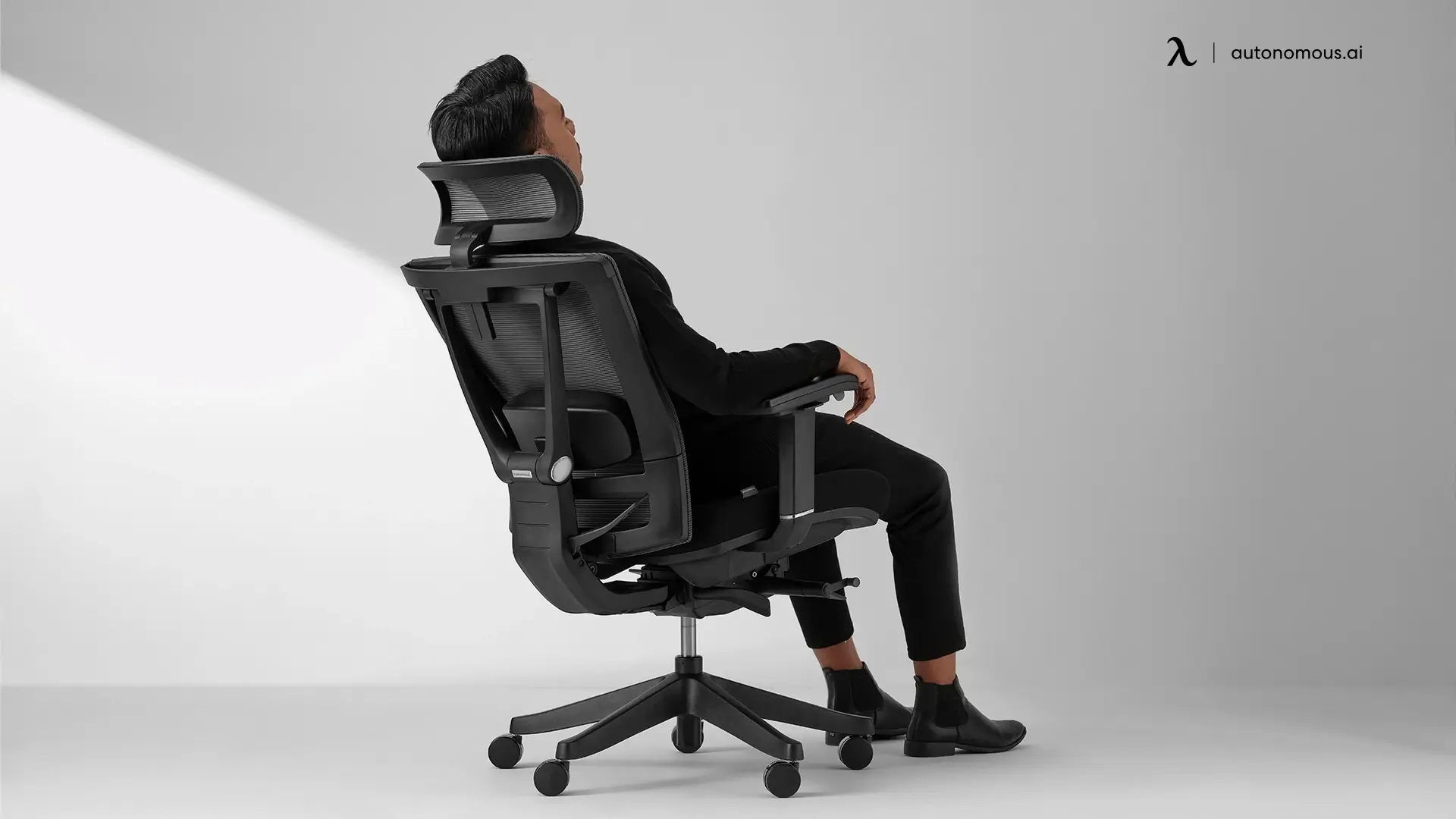
Table of Contents
Finding the best reading chairs comes down to more than style or softness. Reading places unique demands on posture, comfort, and support — especially during long sessions that can quietly strain your back, neck, and shoulders. A well-designed reading chair helps you stay upright yet relaxed, keeps your arms comfortably positioned, and remains supportive over time.
This guide explores what truly matters when choosing a chair for reading, comparing options based on comfort, space, and real-world reading habits so you can enjoy books longer, with less fatigue.
What Makes a Chair Good for Reading?
Not every comfortable chair is a good reading chair. The difference comes down to how well a chair supports extended sitting in a reclined position — something most furniture isn't actually designed for.
A dining chair keeps you upright for meals that last 30 to 45 minutes. An office chair is built for active work at a desk. A sofa encourages lounging but rarely provides targeted support. Reading chairs occupy a specific middle ground: relaxed enough to settle into a book, but structured enough to keep your body aligned over time.
Here's what separates a true reading chair from general seating.
- The Right Balance of Support and Softness
A reading chair needs to be firm enough to maintain its shape under your weight, but soft enough that you don't feel like you're perched on a park bench. When cushioning is too plush, you sink into the chair, and your spine curves forward to compensate.
The sweet spot is high-density foam or a spring system that compresses slightly under pressure but pushes back with consistent resistance. You should feel cradled, not swallowed. Quality chairs use layered cushioning — a firmer base layer for structure, topped with softer material for initial comfort.
- Contoured Support Where Your Body Needs It
Your lower back has a natural inward curve that flattens when you sit. A well-designed chair for reading achieves this through slight contouring in the backrest or strategically placed cushioning that fills the gap between your lower back and the chair.
Upper back support matters too. Your head weighs about ten to twelve pounds, and when a chair's backrest ends at your shoulder blades, your neck muscles carry that weight. Extend the backrest to mid-head level, and your entire spine works as a supported unit.
- Armrests That Actually Do Something
When positioned correctly, armrests remove surprising strain from your shoulders and neck by giving your arms somewhere to rest while holding a book or e-reader.
The key is height and width. Armrests should allow your shoulders to drop into a neutral, relaxed position — not push them up or force them forward. Width matters because narrow armrests (under three inches) don't provide enough surface area to comfortably rest your forearms during extended reading.
- A Recline Angle That Takes Pressure Off Your Spine
The 90-degree sitting position puts your full body weight directly onto your spine and the backs of your thighs. Even slight recline — just 10 to 15 degrees — redistributes that load and reduces pressure on your lower back by nearly 30 percent.
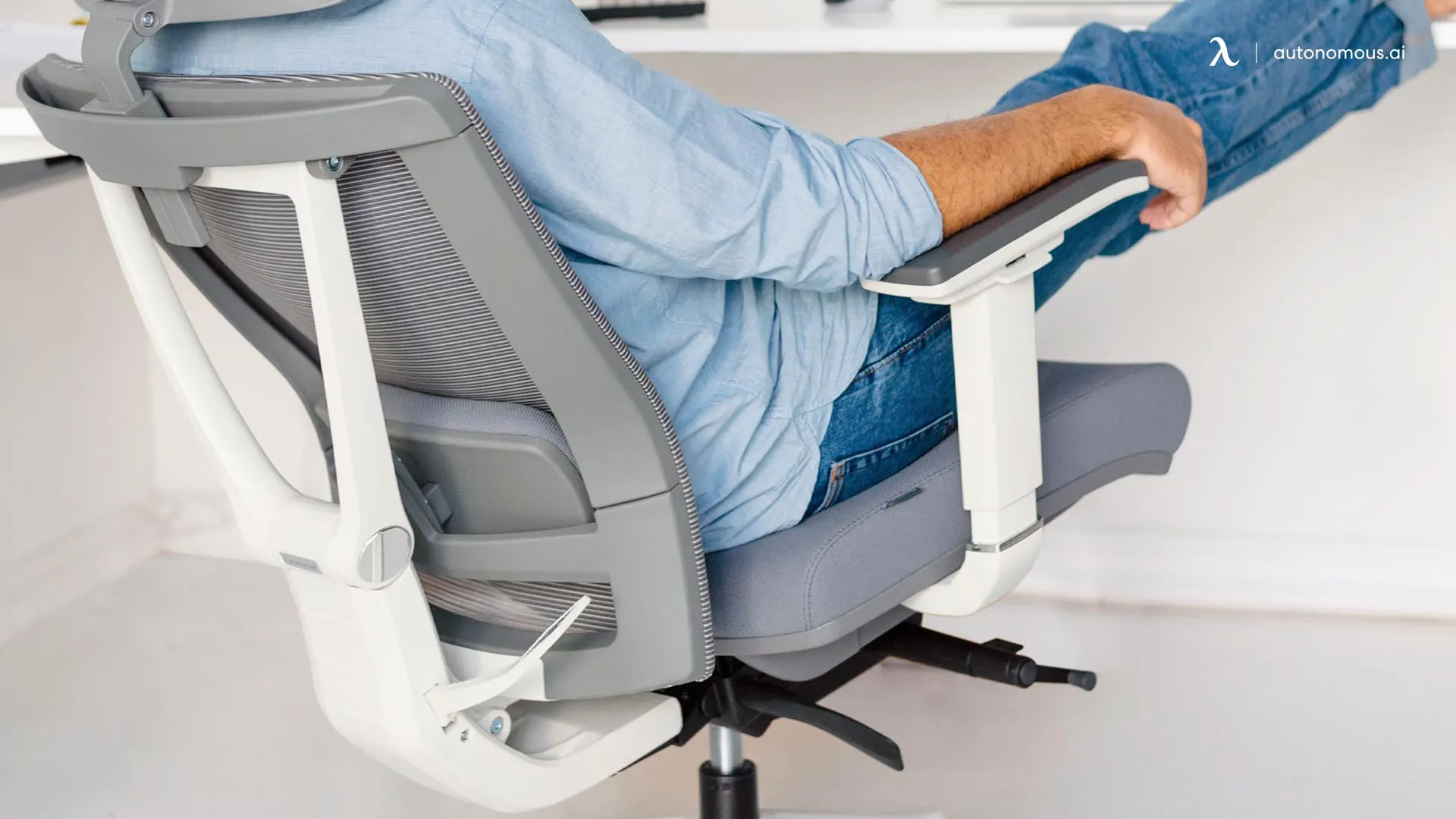
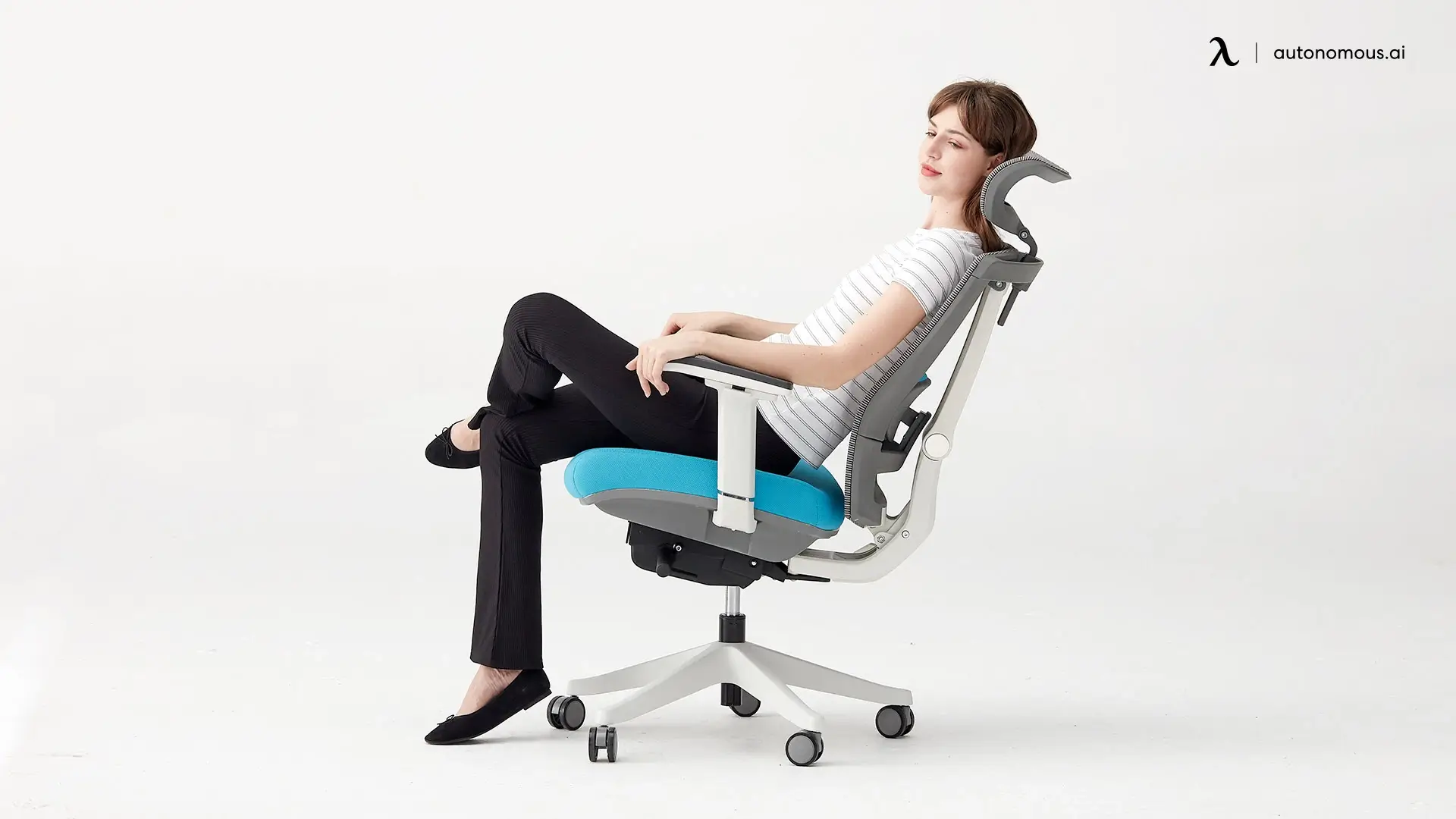
Some chairs lock into a fixed recline, which works well if that angle suits you. Others offer adjustability, which is helpful if you switch between lighter reading (slightly upright) and deep focus sessions (more reclined). For maximum flexibility, a reclining ergonomic chair allows you to lock into specific angles throughout the recline range. What doesn't work is a chair that feels like it's tipping you backward or forcing you to brace yourself to stay upright.
- Proportions That Fit Your Body and Your Space
A chair can check every technical box and still feel wrong if the proportions don't match your frame. Seat depth is the most common mismatch: too deep and you'll slouch forward to reach the backrest; too shallow and your thighs hang unsupported.
The right depth lets you sit all the way back while maintaining a small gap — about two to three inches — between the seat edge and the back of your knees. This ensures full thigh support without pressure on the backs of your legs.
The best reading chairs deliver both: enough initial softness to feel welcoming, and enough structural integrity to support long sessions. That balance is what turns a regular chair into one you'll actually use every day.
7 Best Reading Chairs for Every Space and Budget
The best reading chairs are defined by a few essential qualities, including balanced cushioning, supportive structure, and proportions that accommodate extended sitting. Beyond these fundamentals, comfort can vary widely based on design choices such as seat depth, backrest angle, and overall footprint.
The selections below are based on how each chair performs during real reading sessions, with options suited for different room sizes and price ranges — from affordable, space-efficient designs to higher-end pieces built for long-term use.
1. Article Riley 42" Lounge Chair
For long reading sessions in spacious rooms
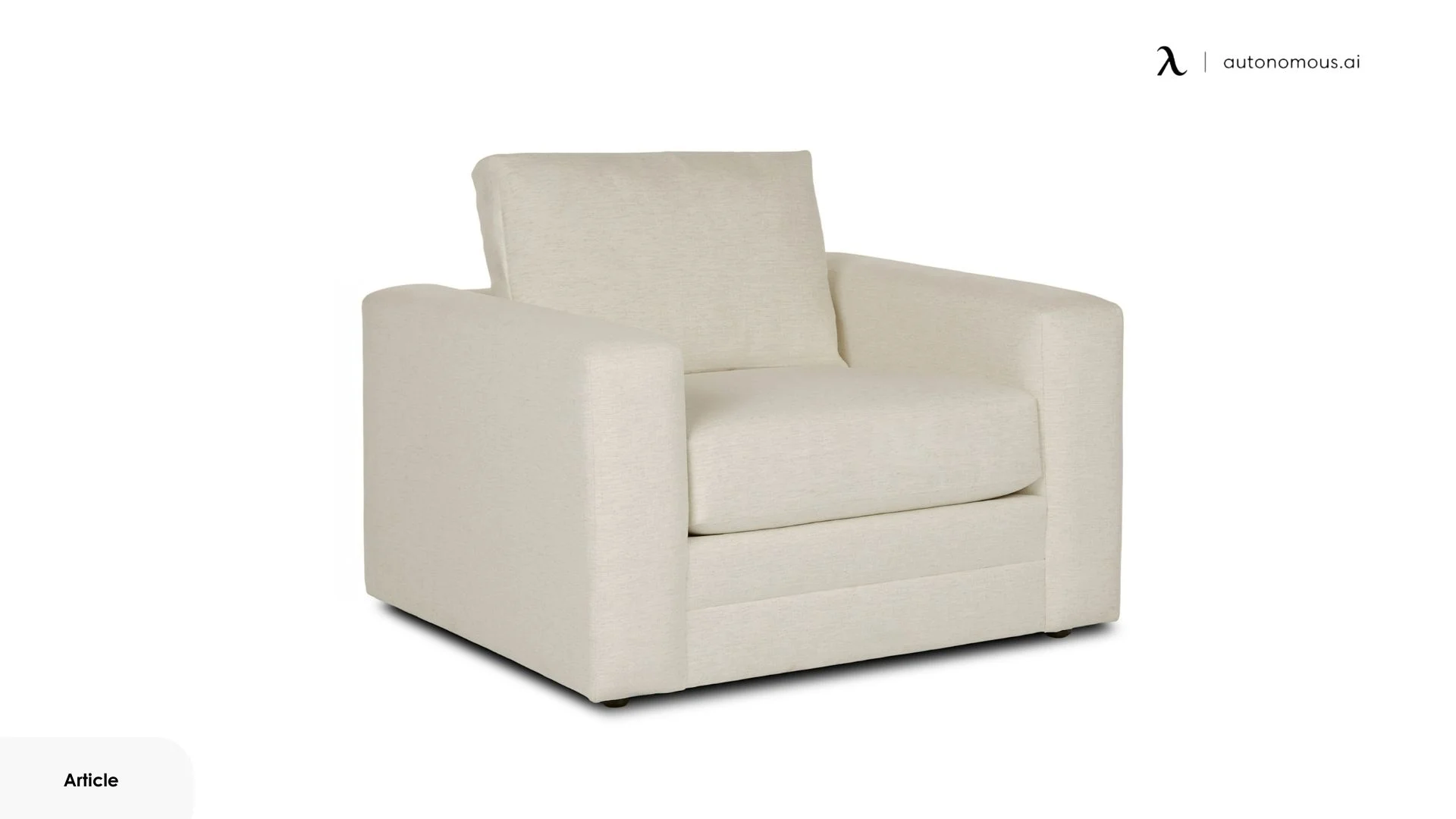
The Riley handles extended reading sessions better than most chairs for reading in this category because of how it balances seat depth with backrest angle. At 23 inches deep, there's enough room to shift positions — sitting cross-legged, tucked one foot under — without losing contact with the backrest. The fixed 110-degree recline takes pressure off your lower back without tipping you so far back that holding a book becomes awkward.
The cushioning uses high-density foam at the base with a softer top layer, which means it doesn't develop the saggy center that cheaper chairs get after a few months. After sitting for two hours, the support is still there.
The main limitation is space. At 35 inches deep, this chair needs room and won't work in tight corners or small apartments. The recline is also fixed, so if you prefer more adjustability between reading positions, this isn't it. But if you have the space and want something that holds up over years of regular use, it's a solid choice.
Best for: Long reading sessions (2+ hours), spacious living rooms or she shed libraries, readers who want durable mid-century design.
2. Hamilton Round Swivel 1.5 Seater Armchair
For readers who value flexibility and smaller spaces
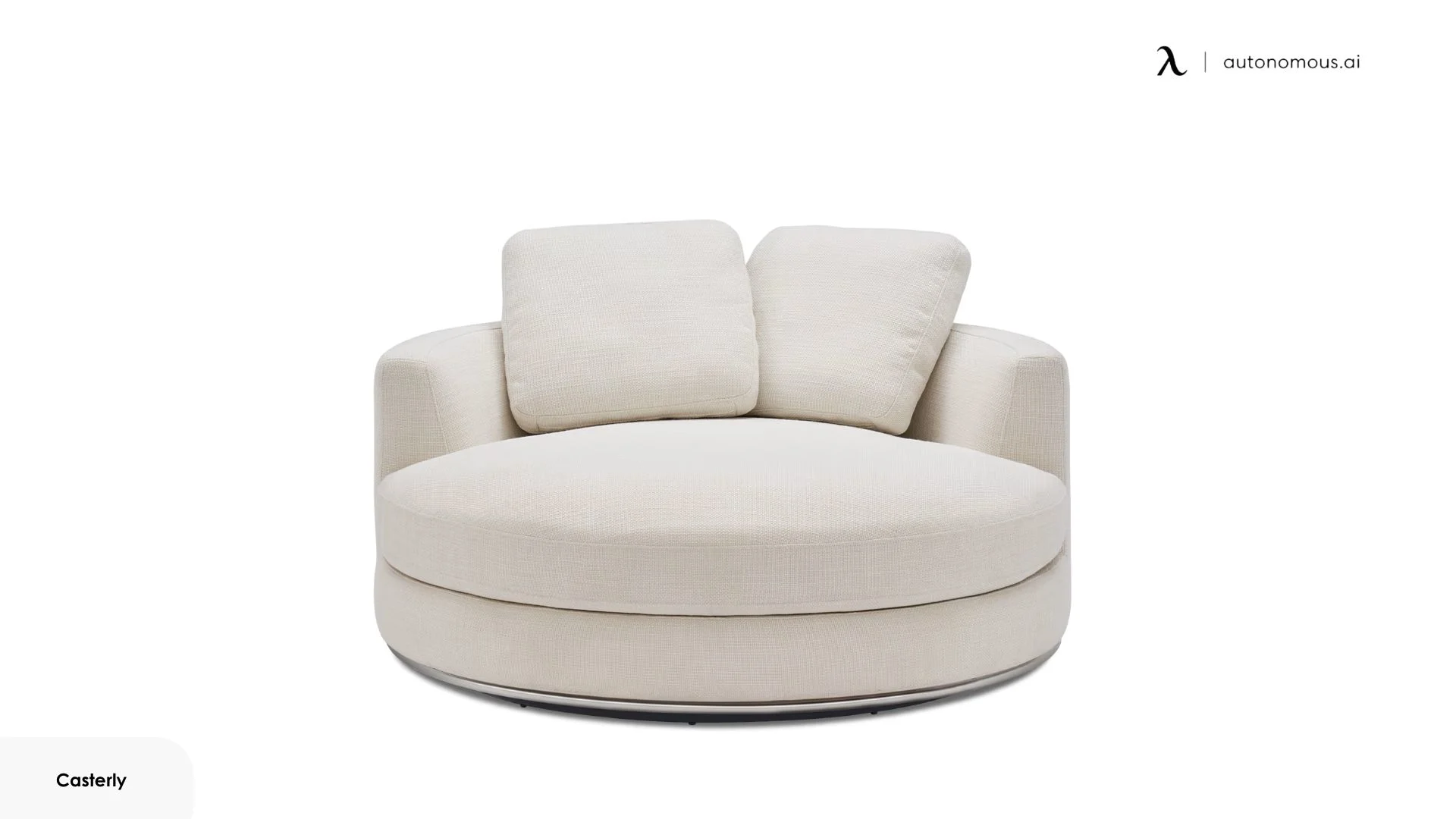
The swivel base makes more of a difference than you'd expect. Being able to rotate toward natural light during the day or pivot to face a lamp at night means you're not constantly adjusting your body to find the right angle. The 360-degree movement is smooth and silent, which keeps you from breaking focus when you need to shift. Unlike a typical swivel desk chair, its mechanism is designed for residential use, adding functionality without the office-like appearance.
At 35 inches wide, this comfy chair for reading fits comfortably in tighter spaces without feeling cramped. The rounded back and curved arms create a cocooning effect that helps with concentration, particularly in open-concept homes where visual boundaries matter. It also works well in a small cozy home library where the swivel function maximizes the use of limited space.
The 21-inch seat depth works well for average height readers, but taller individuals might find it slightly shallow for fully relaxed positions. The barrel shape also means you're somewhat locked into facing forward — this isn't a chair where you can easily sit sideways or drape your legs over the armrest.
Best for: Multi-purpose spaces, readers under 5'10", anyone who reads near windows and wants to follow natural light throughout the day.
3. Eames Lounge Chair and Ottoman
For serious readers treating furniture as long-term investment
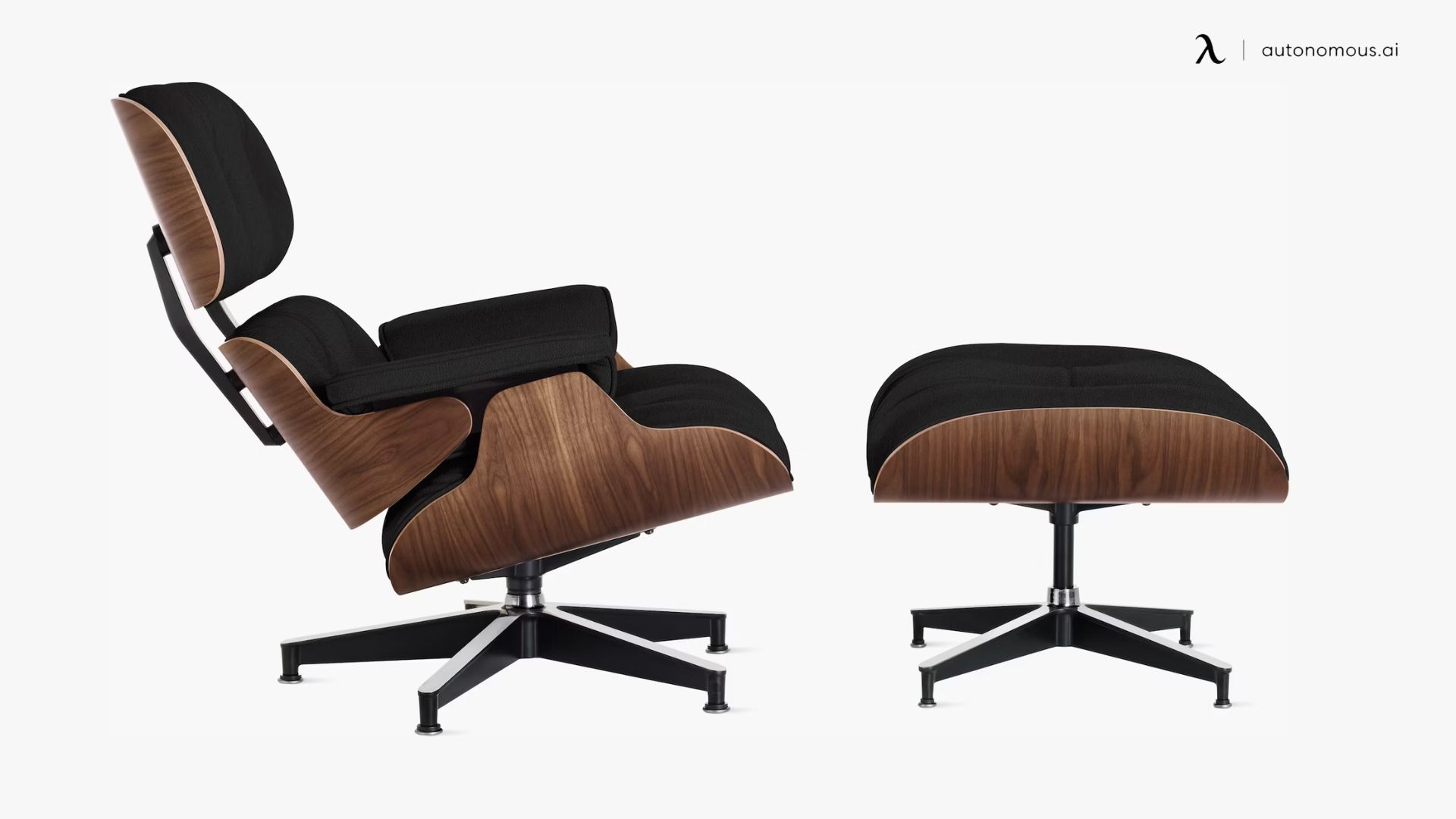
The Eames justifies its reputation through details most chairs skip. The molded plywood shell flexes slightly under your weight, creating adaptive support that responds to how you're sitting rather than forcing you into a fixed position.
Paired with the ottoman, it elevates your legs enough to reduce lower back pressure during marathon reading sessions — something you feel most noticeably after the 90-minute mark.
The leather develops patina over years, which either appeals to you or doesn't. If you want furniture that looks identical to showroom condition indefinitely, this isn't it. But if you appreciate materials that show their age gracefully, the way the leather softens and darkens in high-contact areas becomes part of the appeal.
The 15-degree recline angle is shallower than most lounge chairs, which makes it better suited for active reading, rather than fully relaxed fiction reading. The proportions also skew compact; at 33 inches in all directions, it fits surprisingly well in smaller rooms, though you'll need clearance for the ottoman.
Best for: Readers who spend 10+ hours weekly in their chair, design enthusiasts who value iconic pieces, those willing to maintain leather properly.
4. Eureka Ergonomics Alexia Comfy Soft Swivel Lounge Chair
For budget-conscious readers in multi-purpose spaces
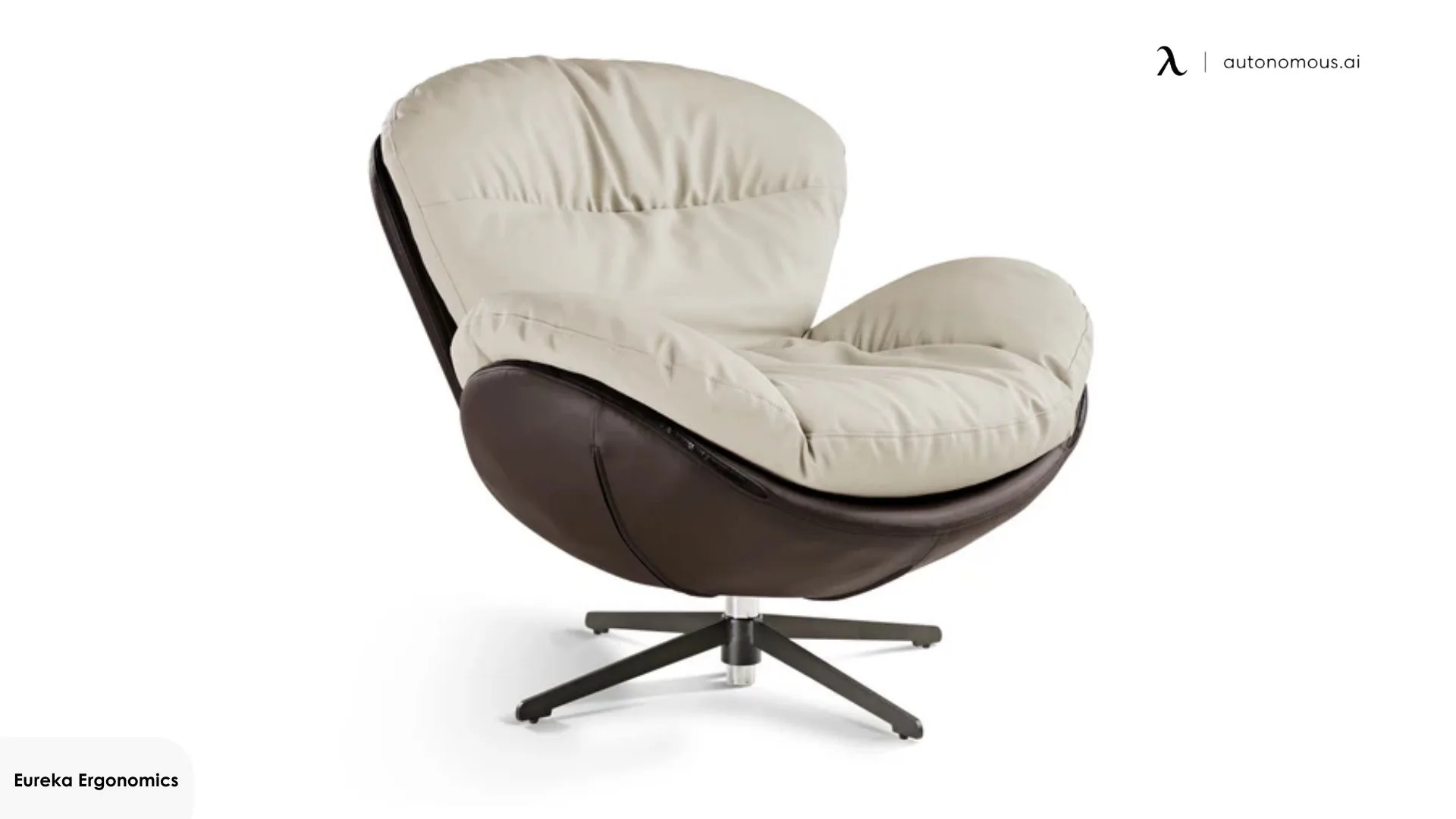
The Alexia delivers surprising comfort at this price point, largely because of its thick cushioning and supportive backrest that extends higher than most chairs under $500. The swivel base adds versatility — useful if your reading chair doubles as extra seating when guests visit or if you're working it into a small bedroom home office setup.
The plush teddy fabric feels soft against bare skin and creates a cozy, inviting look that works well in casual spaces. However, this material also shows wear faster than performance fabrics or leather.
At 31 inches wide, it fits comfortably in smaller bedrooms or apartments where a full-sized lounge chair would overwhelm the space. The 20-inch seat depth works for most people under 5'9", but taller readers might find their knees extending past the seat edge. The overall construction is lighter-duty than premium options — this is a 3 to 5 year chair, not a decade-long investment.
Best for: First apartments, spaces needing a comfy chair for reading before bed, readers on tight budgets who still want decent lower back support.
5. Rexulqo Reading Chair
For compact spaces prioritizing function over longevity
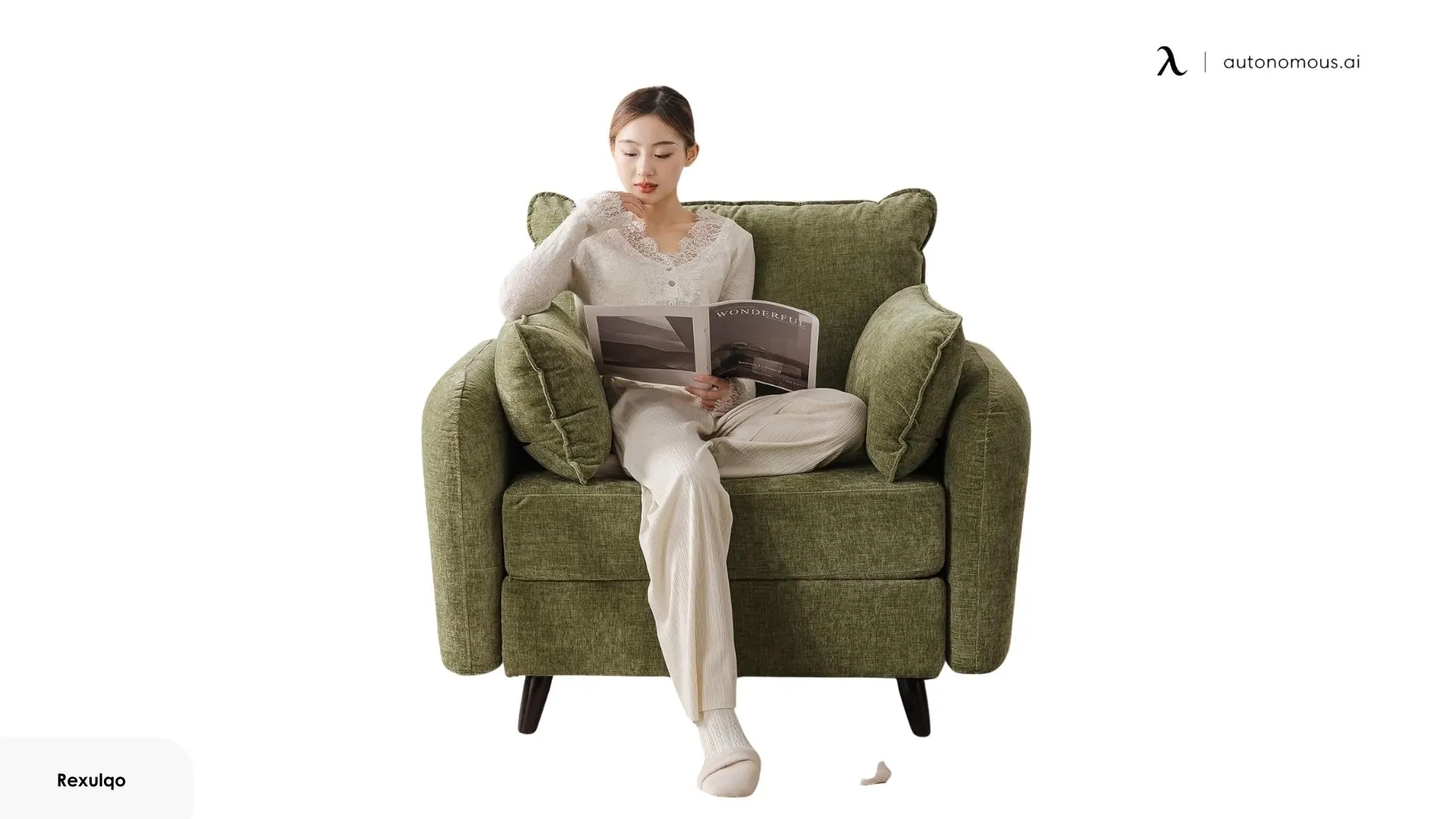
This chair solves one problem exceptionally well: fitting a functional reading chair into spaces where standard-sized furniture simply won't work. At 29 inches wide and 30 inches deep, it tucks into bedroom corners, studio apartments, or office nooks that can't accommodate full-scale lounge chairs.
The pocket spring construction gives it better resilience than foam-only chairs at similar prices. You'll notice this most during the second hour of reading—there's still some bounce rather than complete compression. The linen-blend fabric breathes better than synthetic options, which matters in smaller rooms with limited airflow.
The shallow 19-inch seat depth means this chair works best for straightforward sitting positions. If you like to curl up cross-legged or shift into alternate postures while reading, the proportions won't accommodate that easily. Think of this as purpose-built for traditional seated reading in constrained spaces.
Best for: Small apartments, office reading chairs, anyone under 5'6" who needs something that doesn't overwhelm the room visually or physically.
6. Ningering Reading Chair
For minimal budgets needing basic comfort
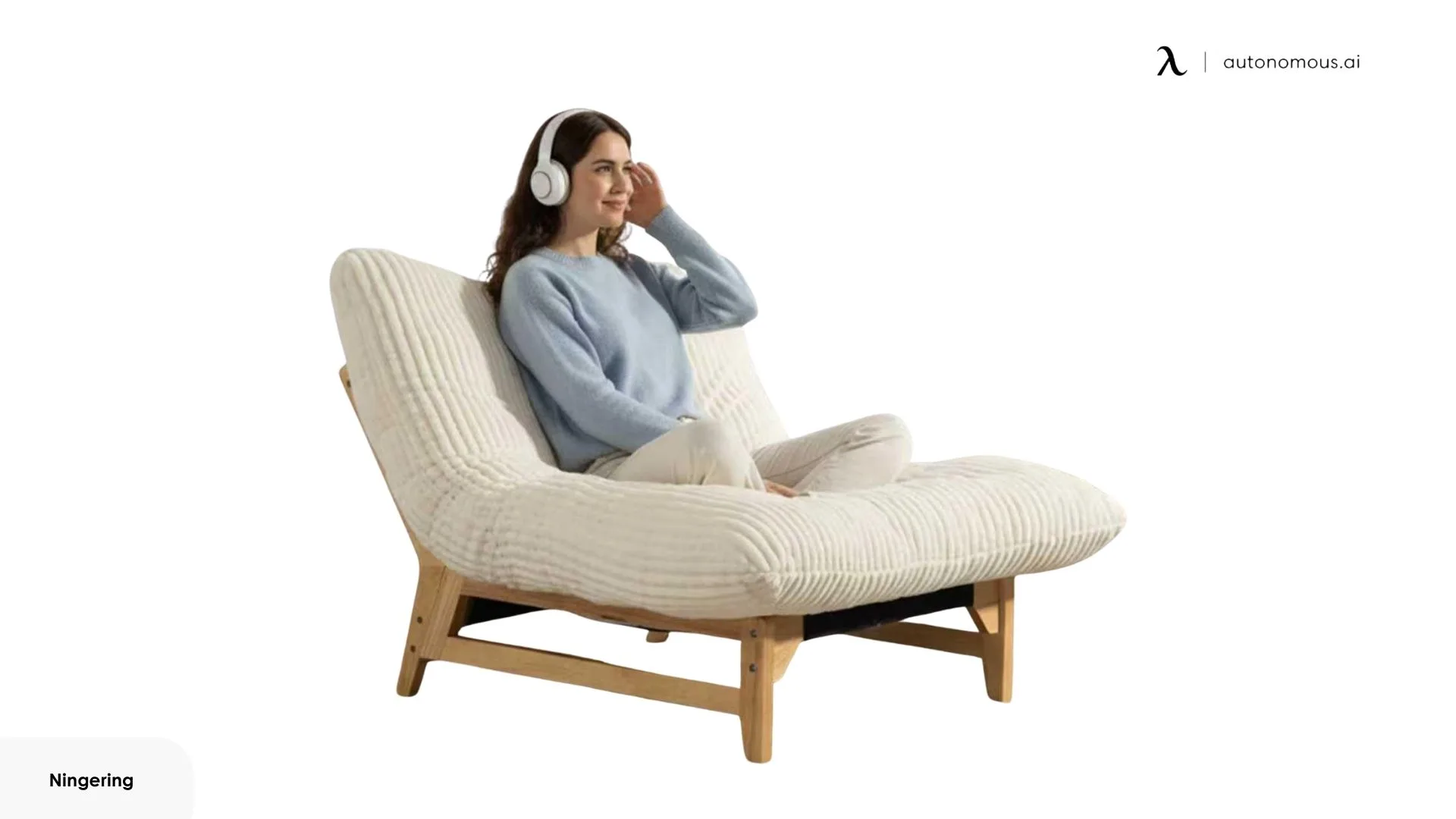
The Ningering is what you buy when you need something now, at minimal cost, that still functions as an actual reading chair rather than just accent seating. The sherpa fabric feels soft initially, and the curved back provides enough support for 30 to 45-minute reading sessions before you start noticing the underlying frame.
This chair makes sense for specific situations: you're furnishing a first apartment and can't justify $800 on seating yet, you're testing whether a dedicated chair improves your reading habits, or you need something temporary while saving for better options. The metal frame is stable enough for daily use, and assembly takes about 15 minutes.
Manage expectations around longevity. The fabric pills after a few months, the cushioning compresses noticeably within a year, and the overall structure feels its price point. But for short-term needs or casual reading habits, it serves its purpose without pretending to be something it isn't.
Best for: College housing, temporary setups, readers experimenting with a dedicated living room reading nook before committing to investment pieces.
7. CHITA Swivel Accent Chair
For readers who want modern aesthetics with practical features
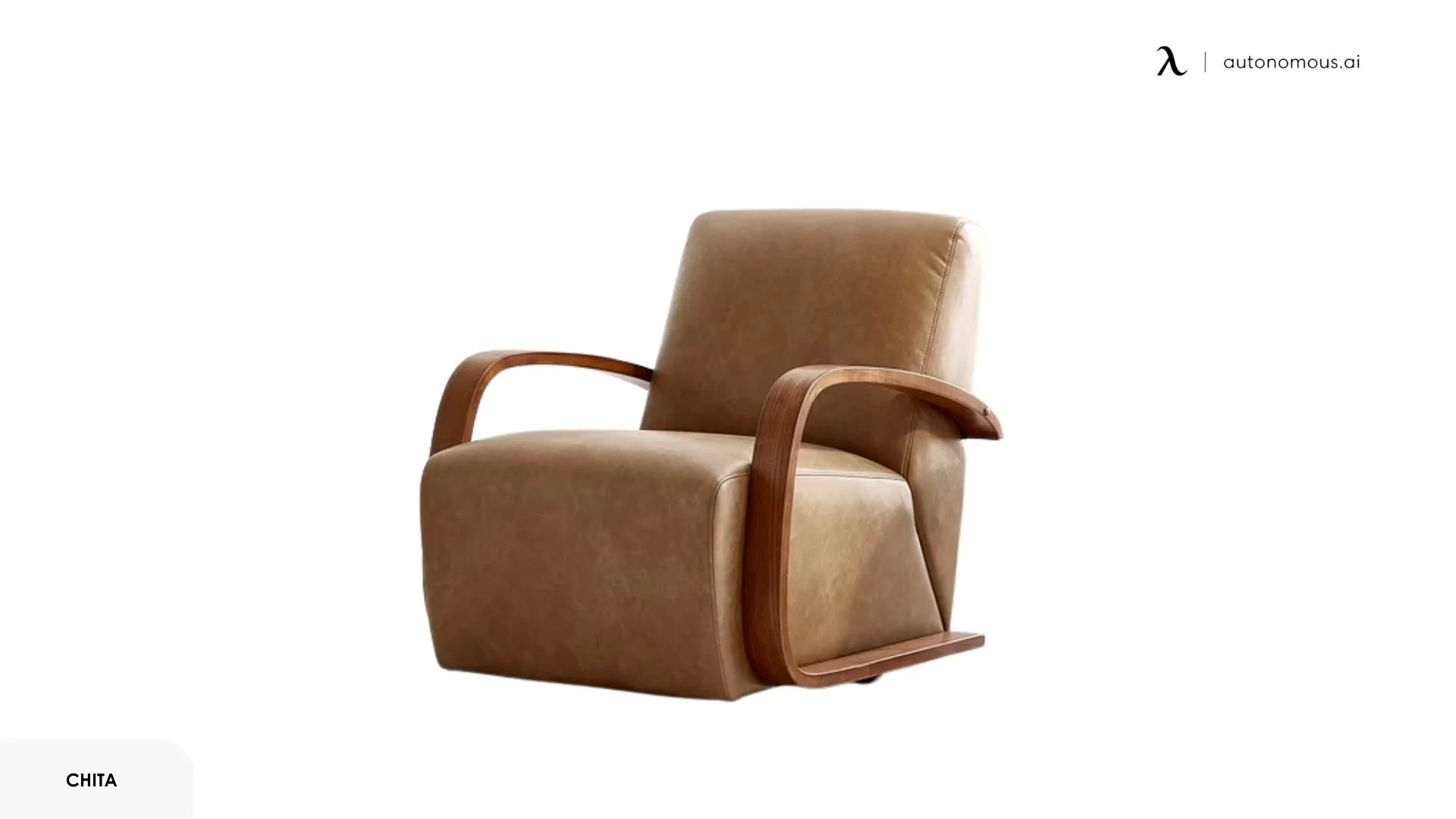
The channel-tufted backrest on this comfy chair for reading creates subtle vertical contours that guide your lower back into better alignment. It's not aggressive lumbar support, but the segmentation keeps your spine from flattening completely against the back. The overall aesthetic is contemporary — clean lines, tapered legs, velvet upholstery options — which either fits your space or doesn't.
The swivel base adds practical flexibility. You can rotate toward natural light without repositioning the entire chair, or pivot when someone enters the room without losing your page. The 21-inch seat depth works for both upright and moderately reclined reading, though it won't accommodate deeply relaxed positions or curling up sideways.
The cushioning is moderately firm, which prevents gradual sinking but also means less immediate softness than plush lounge chairs. The velvet fabric looks polished but shows water marks and requires faster attention to spills than treated performance materials. This chair functions well for readers who maintain structured sitting positions and read in 60 to 90-minute sessions rather than extended marathons.
Best for: Modern or contemporary interiors, readers who prefer firmer seating, spaces where the chair needs to serve multiple functions beyond reading.
Alternative Option: Ergonomic Reading Chairs
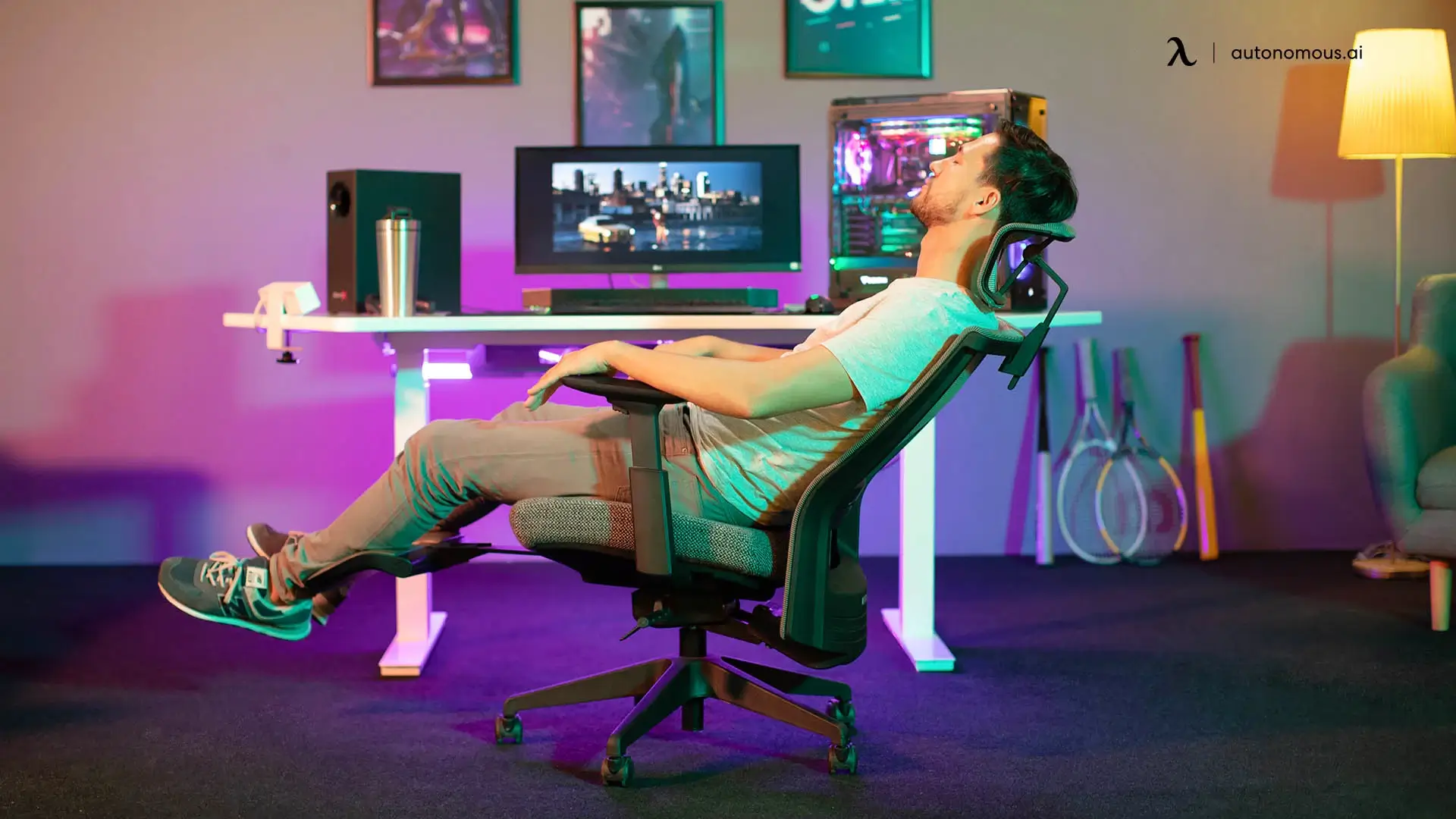
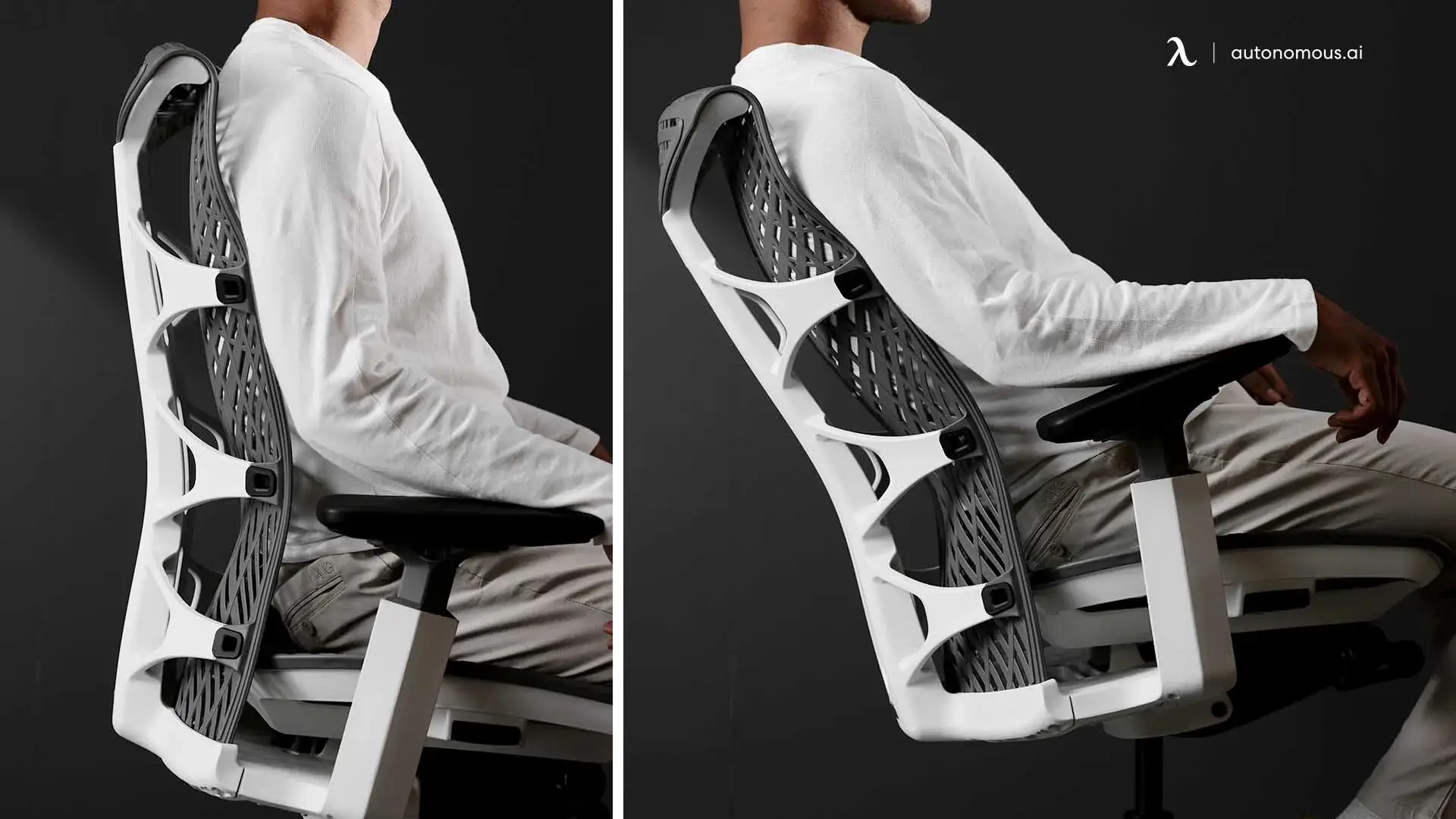
Most reading happens in lounge chairs or recliners designed for relaxation, but there's another category worth considering if you also work from home or spend significant time at a desk. Ergonomic office chairs aren't traditionally thought of as reading chairs, but they offer adjustable support that can be particularly helpful for readers who experience back discomfort or who split their time between reading and screen-based work.
These chairs prioritize function over aesthetics. They use mesh, adjustable mechanisms, and engineering-focused design rather than soft upholstery and residential styling. That makes them less suitable for living rooms or cozy reading nooks, but potentially more practical in home office setups or bedrooms where a single chair needs to serve multiple purposes.
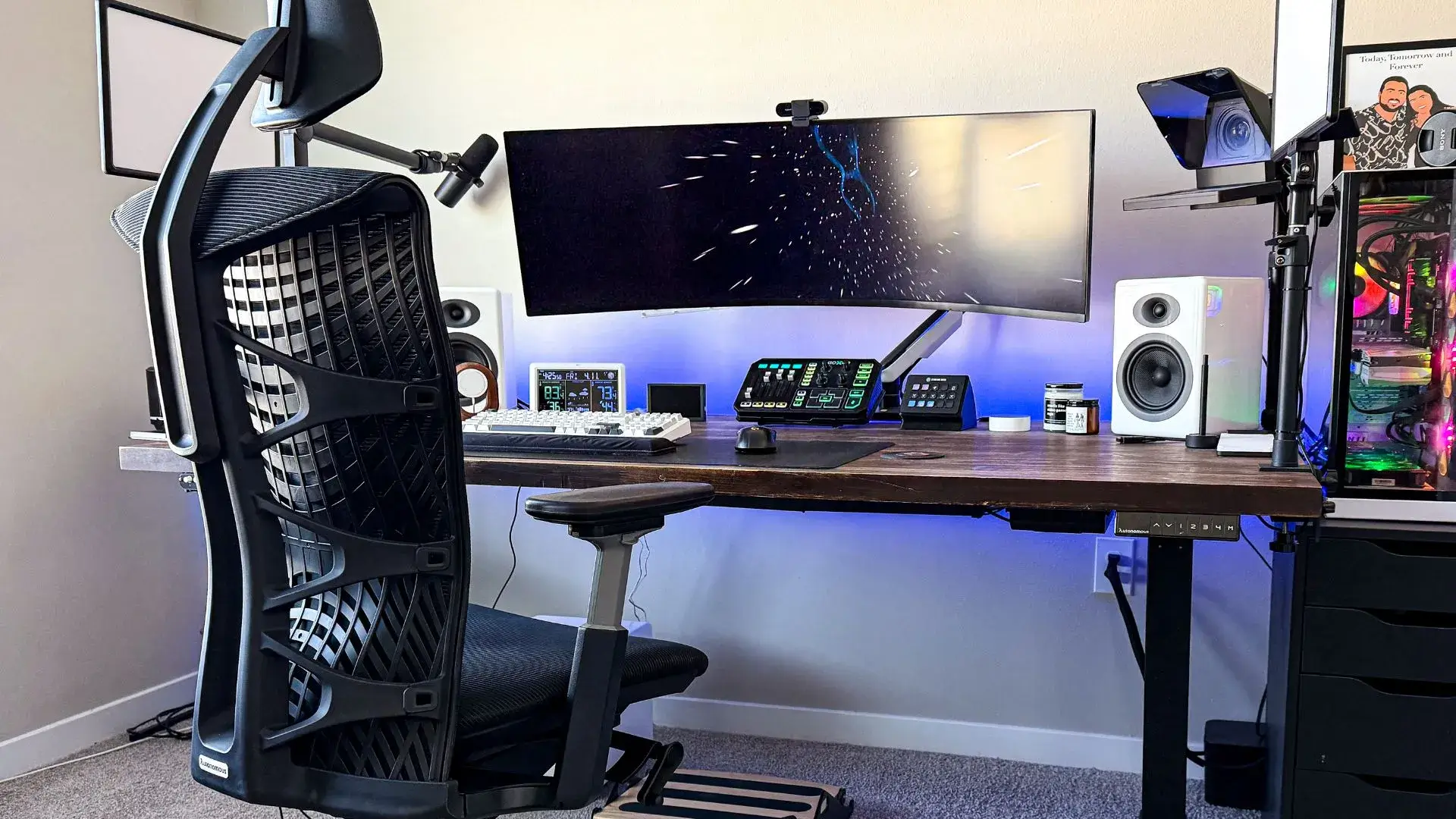
1. Autonomous ErgoChair Ultra 2
For readers prioritizing back health over traditional aesthetics
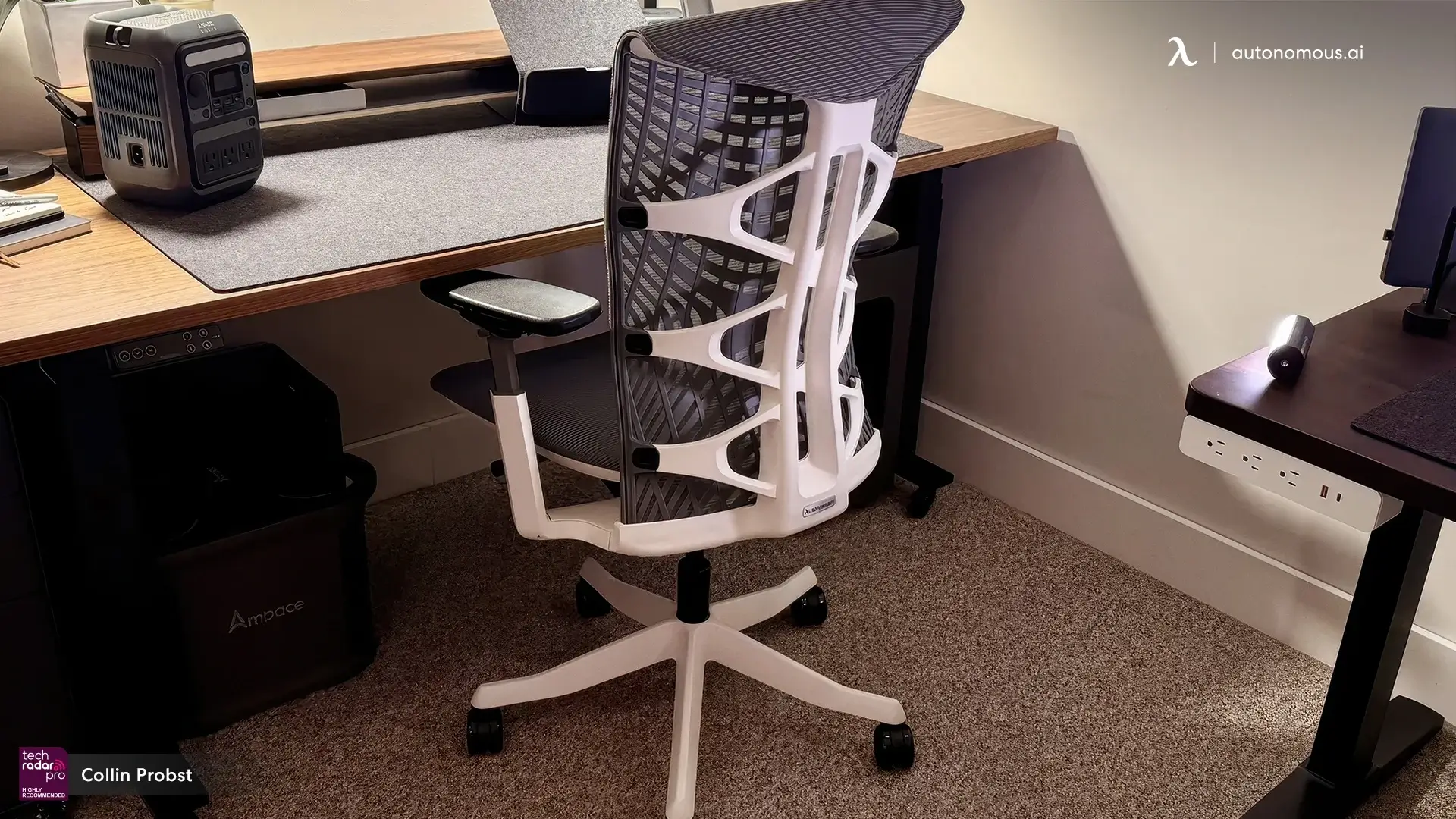
The Autonomous ErgoChair Ultra 2 takes a functional approach to extended sitting. The mesh backrest breathes better than any upholstered option, which matters during long reading sessions where heat buildup becomes distracting. The adjustable lumbar support lets you dial in the exact amount of lower back pressure you need, rather than hoping a chair's fixed curve happens to match your spine.
What makes this mesh chair viable as a reading chair — not just a desk chair — is the recline range. It extends to 25 degrees with lockable positions throughout, so you can find the angle that works for your current book and reading posture. The headrest adjusts independently, which becomes relevant when you're reclined and need neck support without craning forward.
The seat depth adjusts from 19 to 21 inches, accommodating different leg lengths without the compromises built into fixed-depth chairs. Armrests move in four directions (height, width, depth, angle), which sounds excessive until you realize how much shoulder tension comes from armrests that almost fit but don't quite.
The mesh and aluminum frame won't create the cozy reading nook feeling that upholstered chairs deliver. You're also locked into a more traditional seated position, this isn't a chair where you'll curl up sideways or tuck your legs underneath. It's engineered for active sitting, which works for some reading styles and feels restrictive for others.
Best for: Readers with chronic back pain, anyone reading 2+ hours daily who experiences discomfort in traditional chairs, home office setups where the chair serves dual purpose for work and reading.

2. Autonomous ErgoChair Pro
For readers on a budget who need adjustable support

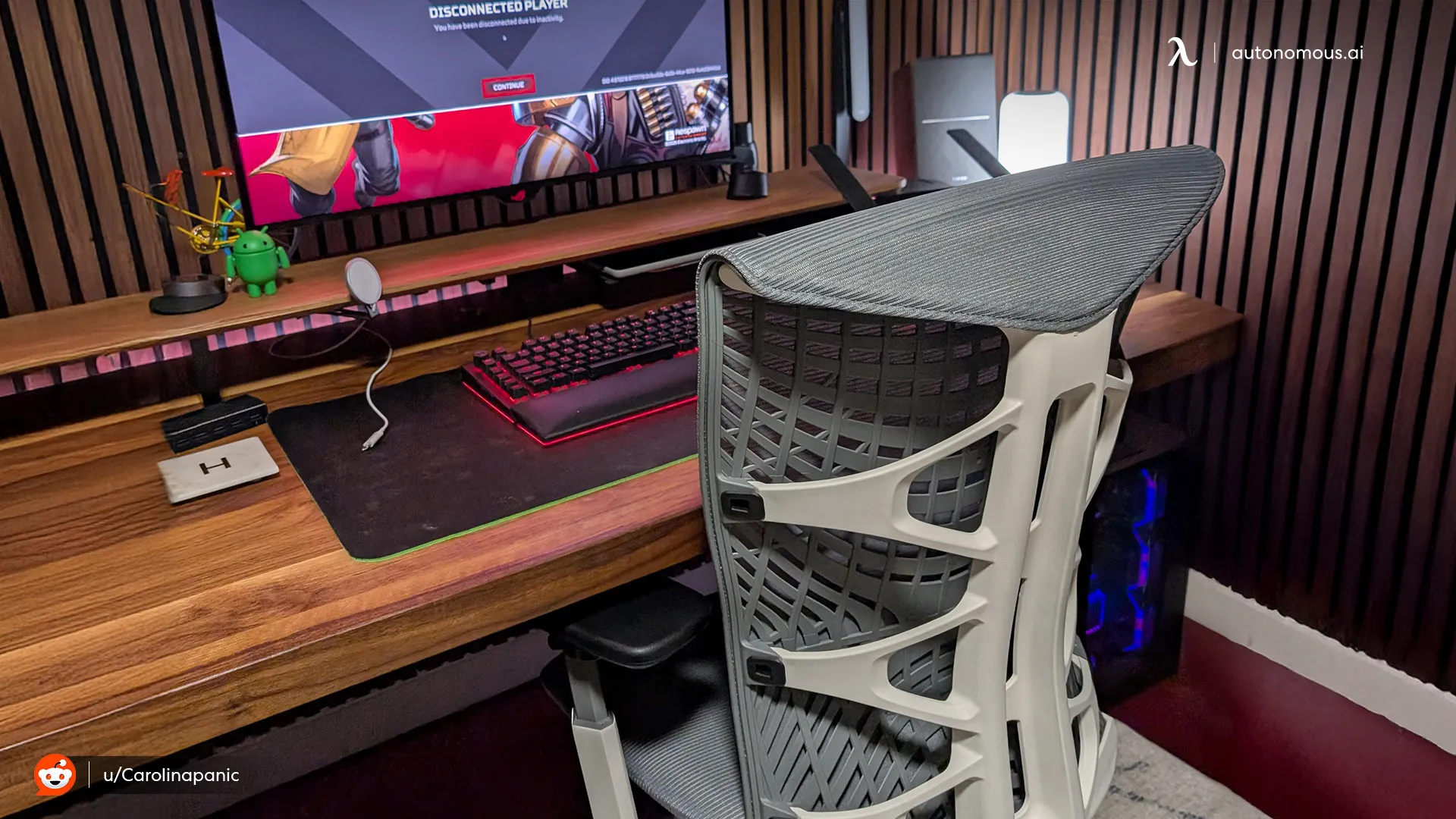
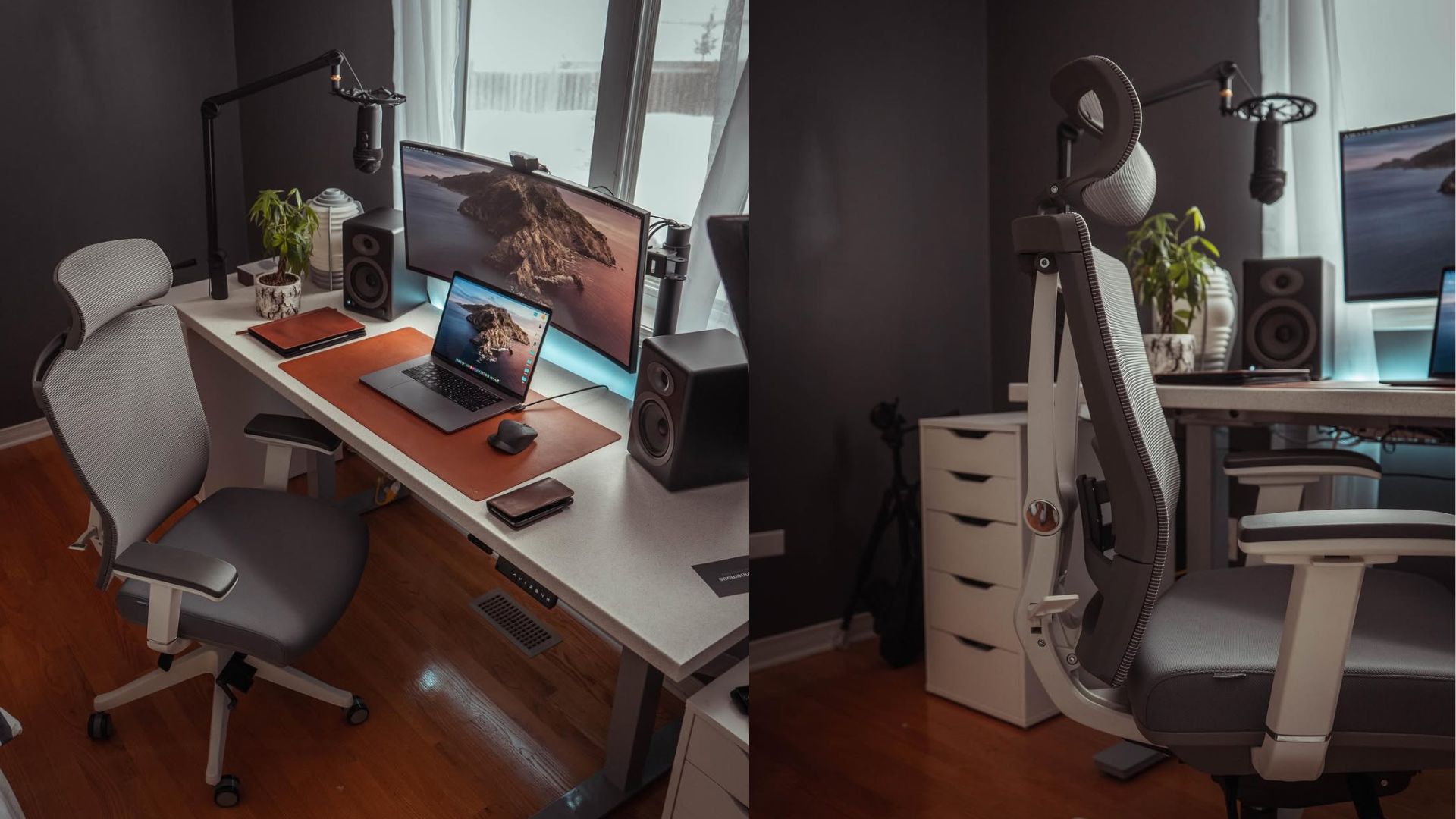
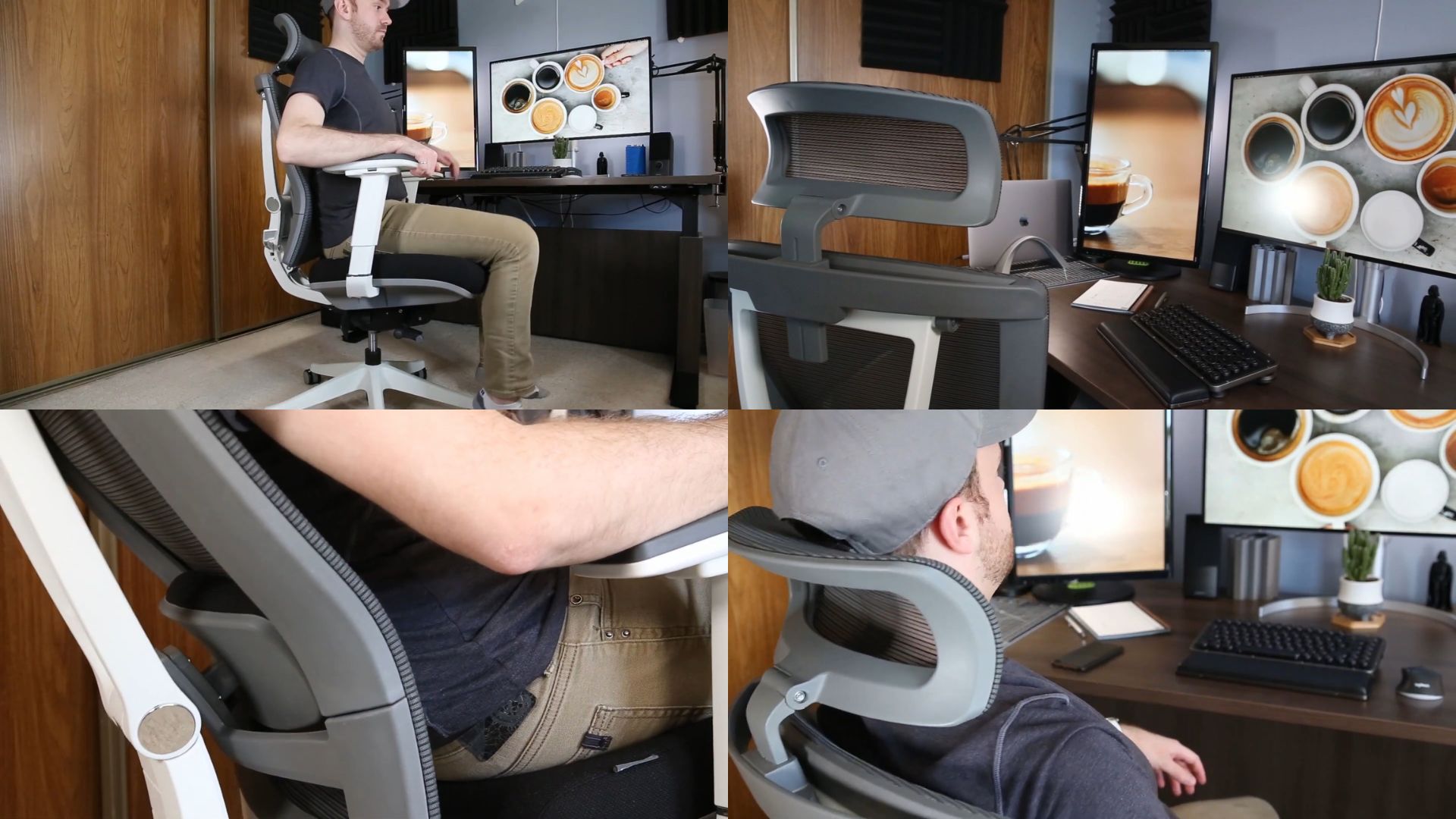
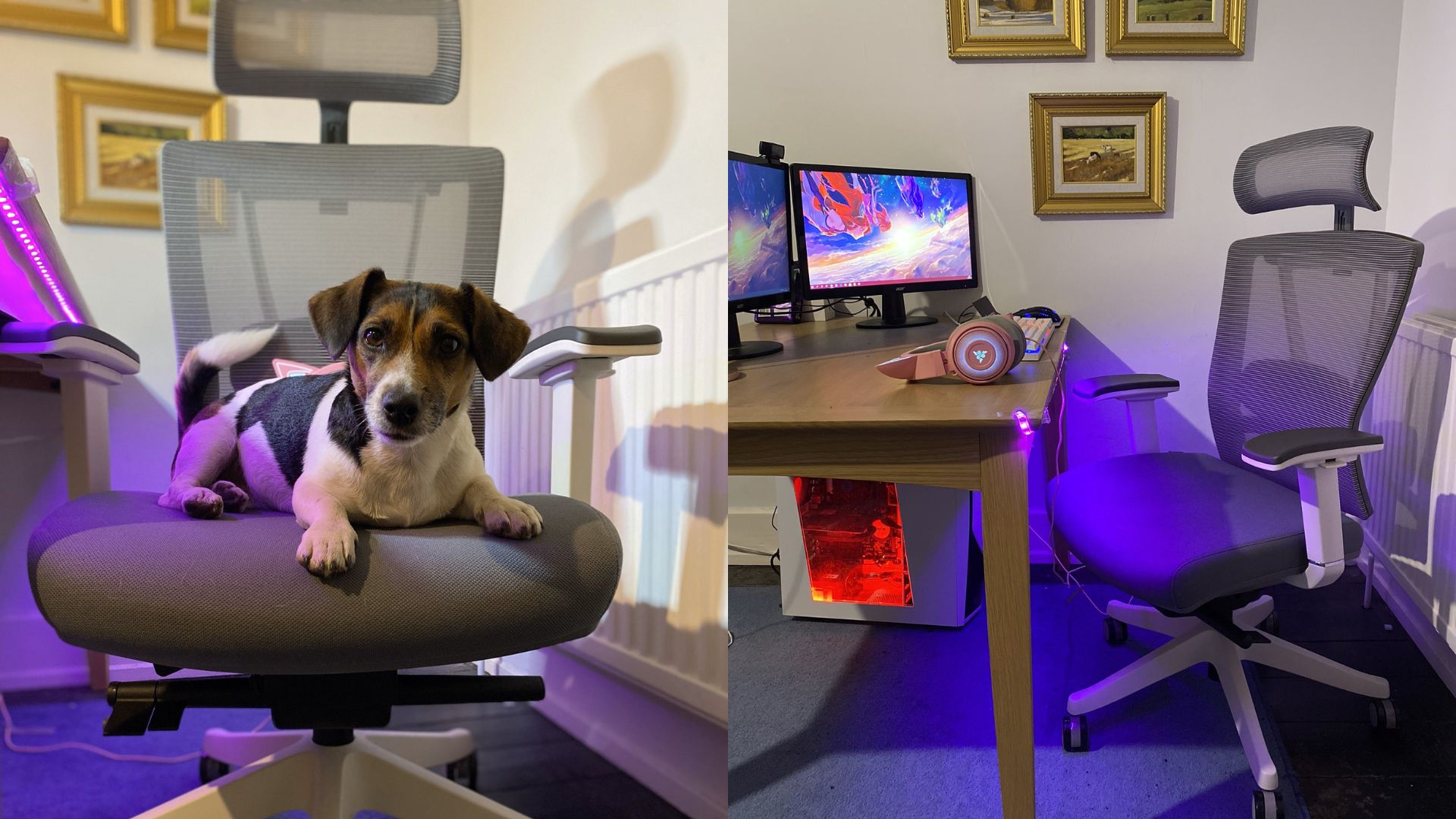
The Autonomous ErgoChair Pro gives you the core benefits of ergonomic seating without the premium price. What stands out during longer reading sessions is how the adjustable lumbar support maintains consistent pressure against your lower back. You can dial it in to match your spine's natural curve, which keeps you from gradually slouching forward the way you might in chairs with fixed backs.
The seat uses molded foam that's firmer than most lounge chairs but doesn't feel rigid. This density matters after you've been sitting for an hour or more, the cushion maintains its shape rather than compressing into a sagging center. The mesh backrest keeps air flowing, which you notice most during the second hour when upholstered chairs start feeling warm against your back.
The armrests go up and down but don't move forward, backward, or angle, which limits how precisely you can position them. But for under $400, the chair handles extended sitting without the discomfort that usually sends you looking for a different spot.
The mesh feels different from fabric or leather. It doesn't have that sink-in softness, but it also doesn't trap heat or develop worn spots where you sit most often. The look is clearly office-oriented, so this works better in a home office or study than a traditional living room. If you're already working at a desk in the same space where you read, this ergonomic chair for back pain fits naturally.
Best for: Home offices that double as reading spaces, readers dealing with minor back discomfort, anyone looking for adjustable support without spending over $600.
How to Choose the Right Reading Chair
1. Match the Chair to How You Actually Read
The best reading chair that works for someone who reads 30 minutes before bed won't necessarily work for someone settling in with a novel for three hours on Saturday afternoons. Think about your typical reading pattern: are you mostly upright and engaged, or do you prefer to recline and disappear into the book? Do you shift positions frequently, or do you find one comfortable spot and stay there?
If you're an active reader — annotating, looking things up, moving between reading and note-taking — you'll want a chair that supports proper sitting posture without feeling rigid. If reading is your way to unwind completely, prioritize deeper recline and softer cushioning that lets you settle in without thinking about your posture.
2. Consider Where the Chair Will Actually Live
A chair for reading that looks perfect in a showroom can feel completely wrong once it's in your home. Measure not just the chair's footprint, but also the space it needs to function. Swivel chairs need clearance to rotate. Recliners need space behind them unless they're specifically wall-saver designs that slide forward as they recline.
Think about traffic flow too. A chair positioned in a narrow path between rooms will feel like an obstacle, even if technically it fits. You want at least 36 inches of clearance in front for comfortable leg extension, and enough side clearance that getting in and out doesn't require maneuvering.
3. Think About Longevity Versus Flexibility
Expensive chairs aren't always better chairs, but construction quality does affect how long a chair remains comfortable. Hand-tied springs last longer than foam-only cushioning. Hardwood frames outlast particle board or metal. Full-grain leather develops patina; bonded leather peels.
That said, your life circumstances matter too. If you move frequently, a $1,500 chair becomes a logistical burden. If you're still figuring out your reading habits or your space is temporary, a mid-range option makes more sense than a long-term investment.
4. What You Can Skip
You don't need an ottoman unless you specifically want one. Many readers are perfectly comfortable without leg elevation. You don't need the most expensive option in a category, diminishing returns set in quickly once you're past mid-range pricing.
Start with the basics: proper seat depth for your height, adequate back support, cushioning that doesn't bottom out quickly, and proportions that fit your space. If you understand what makes uncomfortable chairs fail — poor lumbar support, wrong seat depth, cheap cushioning — you can avoid those pitfalls without overspending on features you won't use. Everything else is refinement.
FAQs
What is the best type of chair for reading?
The best reading chairs support a relaxed upright posture with light recline, stable back support, and usable armrests. A proper chair for reading keeps your spine aligned while reducing strain on your neck and shoulders during extended sessions.
What is the best chair for long periods of reading?
For long reading sessions, the best reading chairs use firm, resilient cushioning and consistent lumbar support that doesn’t flatten over time. A slight recline and proper seat depth help reduce pressure and prevent fatigue after an hour or more.
Are ergonomic chairs good for reading?
An ergonomic reading chair can be effective when reading for long durations or alternating between reading and desk work. Adjustable lumbar support, recline range, and armrest positioning help maintain comfort without forcing a fixed posture.
What size chair is ideal for a reading nook or bedroom?
The best reading chairs for bedroom or reading nook spaces are typically 28–34 inches wide with a seat depth that allows full back contact. The chair should fit the room without restricting movement or nearby lighting placement.
What are the best reading chairs for back pain?
The best reading chairs for back pain provide consistent lumbar support and a slight recline that reduces spinal pressure. Chairs with firm cushioning and a contoured backrest help maintain neutral alignment during longer reading sessions.
Are the best reading chairs firm or soft?
The best reading chairs tend to be moderately firm rather than overly soft. Firmer cushioning prevents sinking and helps maintain posture during extended reading sessions.
Do the best reading chairs need armrests?
Yes, most best reading chairs include armrests to reduce shoulder and neck strain while holding a book or e-reader. Properly positioned armrests allow the arms to rest without lifting the shoulders.
What seat height is best for reading chairs?
The best reading chairs typically have a seat height between 16 and 18 inches, allowing feet to rest flat on the floor. This height supports circulation and helps maintain a relaxed but upright posture.
Are recliners considered the best reading chairs?
Recliners can work as reading chairs if they offer controlled recline and proper back support. Deep or overly reclined models often cause neck strain, making them less ideal for sustained reading.
Final Thoughts
The right reading chair makes reading feel less like an activity you fit into your schedule and more like something you naturally gravitate toward. When you have a spot that supports your body properly and feels genuinely comfortable, you'll find yourself reaching for books more often.
Take the time to measure your space, think about your typical reading sessions, and prioritize what matters most — whether that's deep cushioning, compact dimensions, or long-term durability. The chairs on this list represent different approaches to the same goal: making extended reading sessions comfortable enough that you don't want to stop.