If long hours at a desk leave you shifting in your seat or feeling pressure build over time, an office chair with a cushion can make a meaningful difference. Cushioning isn’t about softness alone. The right seat balances support and comfort, helping your body stay relaxed and steady through extended work sessions.
This guide looks at ergonomic chairs that use thoughtful cushioning to reduce strain without sacrificing stability. By comparing practical designs and real comfort characteristics, the goal is to help you find a chair that feels supportive hour after hour, not just comfortable at first sight.
Benefits of an Ergonomic Office Chair with Cushion Seat
An office chair with a cushion supports sitting comfort over extended periods by managing how pressure accumulates, how the seat responds to movement, and how cushioning works with the chair's shape. The goal isn't softness for its own sake — it's sustained support that holds up across a full workday. Whether you're considering a foam cushion office chair or a gel seat cushion office chair, these core benefits apply across cushion types.
Distributes Pressure Away From Problem Areas
A structured cushion redistributes load across the seat surface instead of allowing it to concentrate at one point. This reduces stress on the sitting bones and helps prevent tailbone pain that often develops from prolonged pressure on inadequate seats. It also eliminates the "hard edge" feeling common with thin or rigid surfaces.
In a well-designed ergonomic cushion office chair — or any designed posture chair built for long sessions — pressure distribution is engineered into the foam density and seat shape rather than left to chance.
Reduced Need for Frequent Position Changes
Discomfort triggers movement. When pressure builds unevenly, the instinct is to shift, cross legs, or stand up — disrupting focus in the process. Over time, this cycle of discomfort and adjustment contributes to what's sometimes called office chair butt: the soreness and fatigue that accumulates from sitting on poorly cushioned seats.
A properly cushioned seat minimizes this buildup, allowing you to remain settled without feeling locked into place. This is one of the practical markers that separates the best seat cushion office chair options from those that only feel comfortable for the first hour.
Maintains Support Through Small Posture Shifts
Sitting is rarely static. You lean forward to read, recline slightly during a call, rotate toward a second monitor. Good cushioning responds to these micro-movements without bottoming out or losing its shape. The seat stays supportive through transitions rather than collapsing under shifted weight — a quality that becomes more noticeable the longer you sit.
Works With Seat Contouring to Prevent Thigh Compression
Cushioning doesn't operate in isolation. It works alongside seat shape to manage pressure across the full sitting surface. A supportive cushion with a waterfall edge — where the front of the seat curves downward — reduces compression behind the thighs, which can otherwise cause numbness even in chairs marketed as ergonomic. When evaluating any cushion office chair, it's worth checking how the cushion and seat geometry work together, not just how soft the padding feels.
Cushion Materials Explained: What Actually Affects Comfort
In an office chair with a cushion, material choice matters as much as seat shape. Different cushion materials respond to weight, heat, and movement in distinct ways, which directly affects how the chair feels over hours of use, not just at first sit.
Cushion Material
Feel
Heat Control
Shape Retention
Best Use Case
Memory Foam
Soft, contouring
Moderate–Low
Medium
Pressure relief, short-to-moderate sessions
Molded Foam
Firm, supportive
Moderate
High
Long daily sitting, stable support
Gel-Infused Foam
Balanced
High
Medium
Warm offices, mixed sitting styles
Standard Foam
Medium
Moderate
Low
Light or occasional use
For users who prioritize durability and consistent support, a molded foam seat cushion holds its shape better than cut foam alternatives. The molding process creates a denser, more uniform structure that resists the gradual compression common in softer foams—particularly relevant for full-time desk work where the cushion bears weight for eight or more hours daily.
Gel cushions address a different concern: heat buildup. Foam tends to trap warmth against the body, which can become uncomfortable in warmer environments or during longer sessions. Gel layers or gel-infused foam help dissipate heat more effectively, though they typically add weight to the seat and may feel less familiar to users accustomed to traditional foam.
Rather than choosing the softest option, the best seat cushion office chair matches material behavior to how long and how actively you sit. Comfort becomes more reliable when the cushion supports movement instead of yielding to it.
Top 7 Office Chairs With Cushion Built for Real Workdays
An office chair with a cushion should do more than feel comfortable at first contact. What matters is how the seat holds up as hours pass, pressure shifts, and posture changes naturally throughout the day.
In this section, each chair is examined through the lens of seat design: how the cushioning supports prolonged sitting, how it responds to small movements, and where its limitations become noticeable. The focus is on practical differences that affect daily use, helping you understand which cushion office chair designs suit long work sessions and which are better for lighter use.
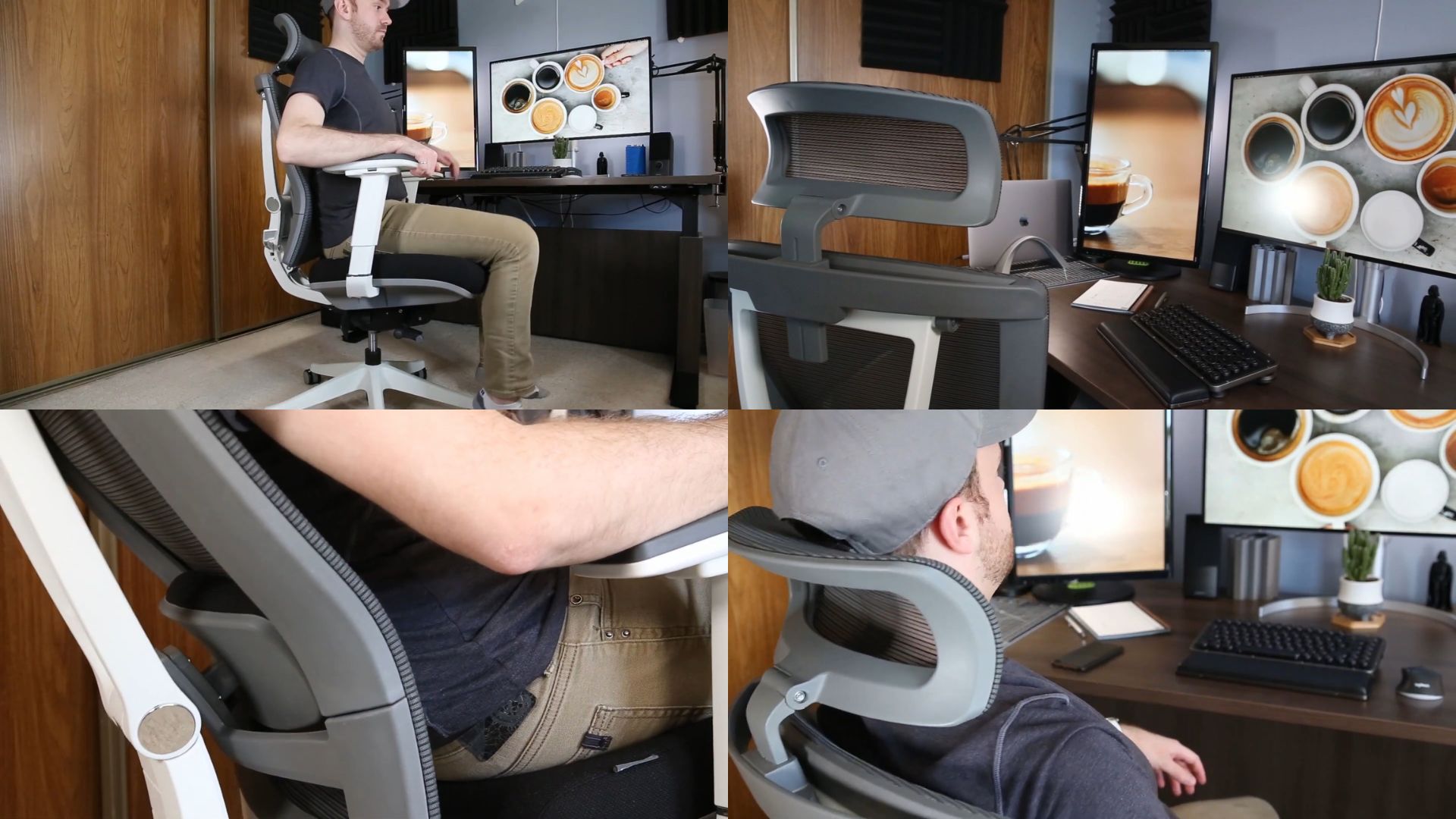
1. Autonomous ErgoChair Pro
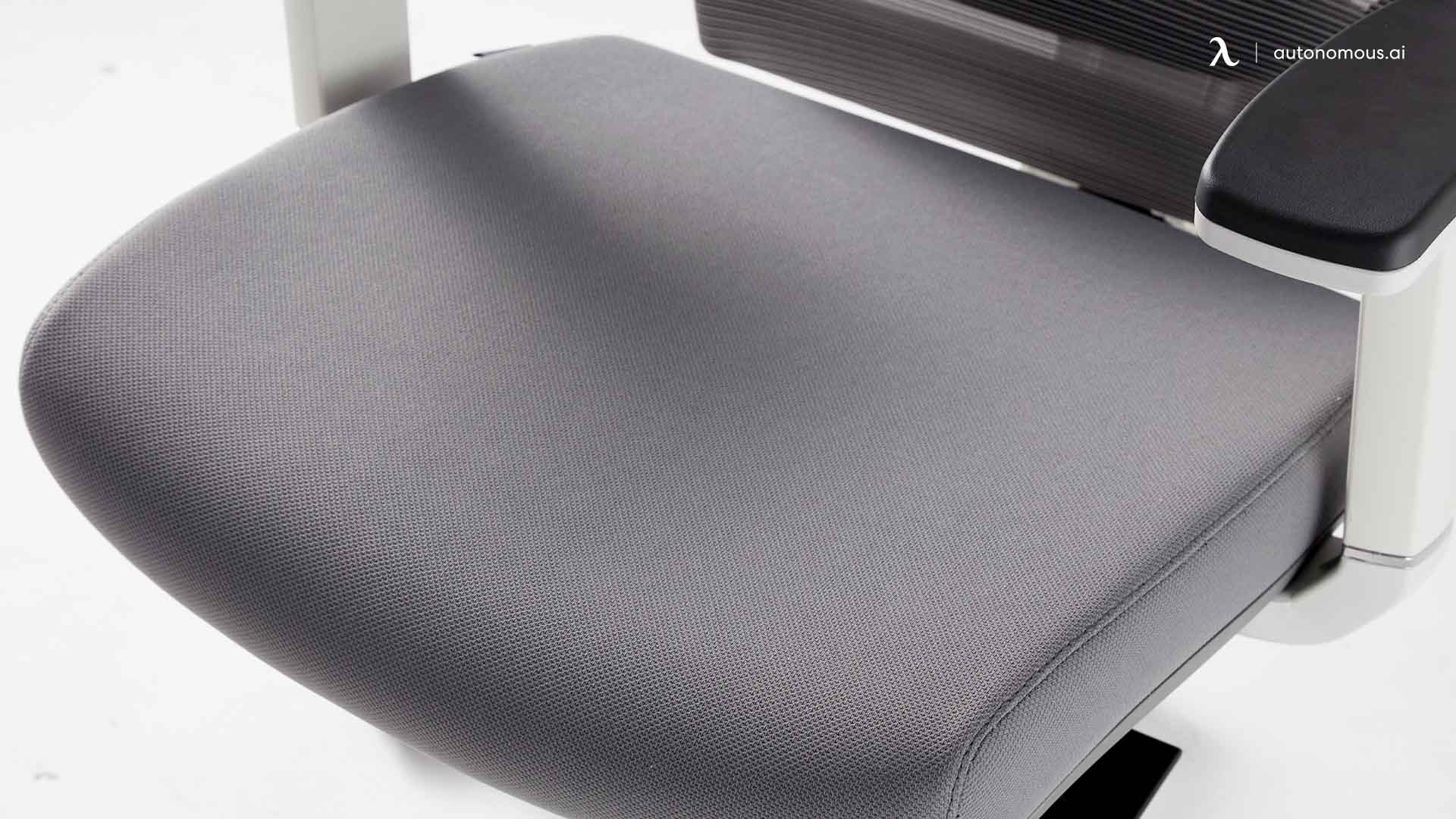
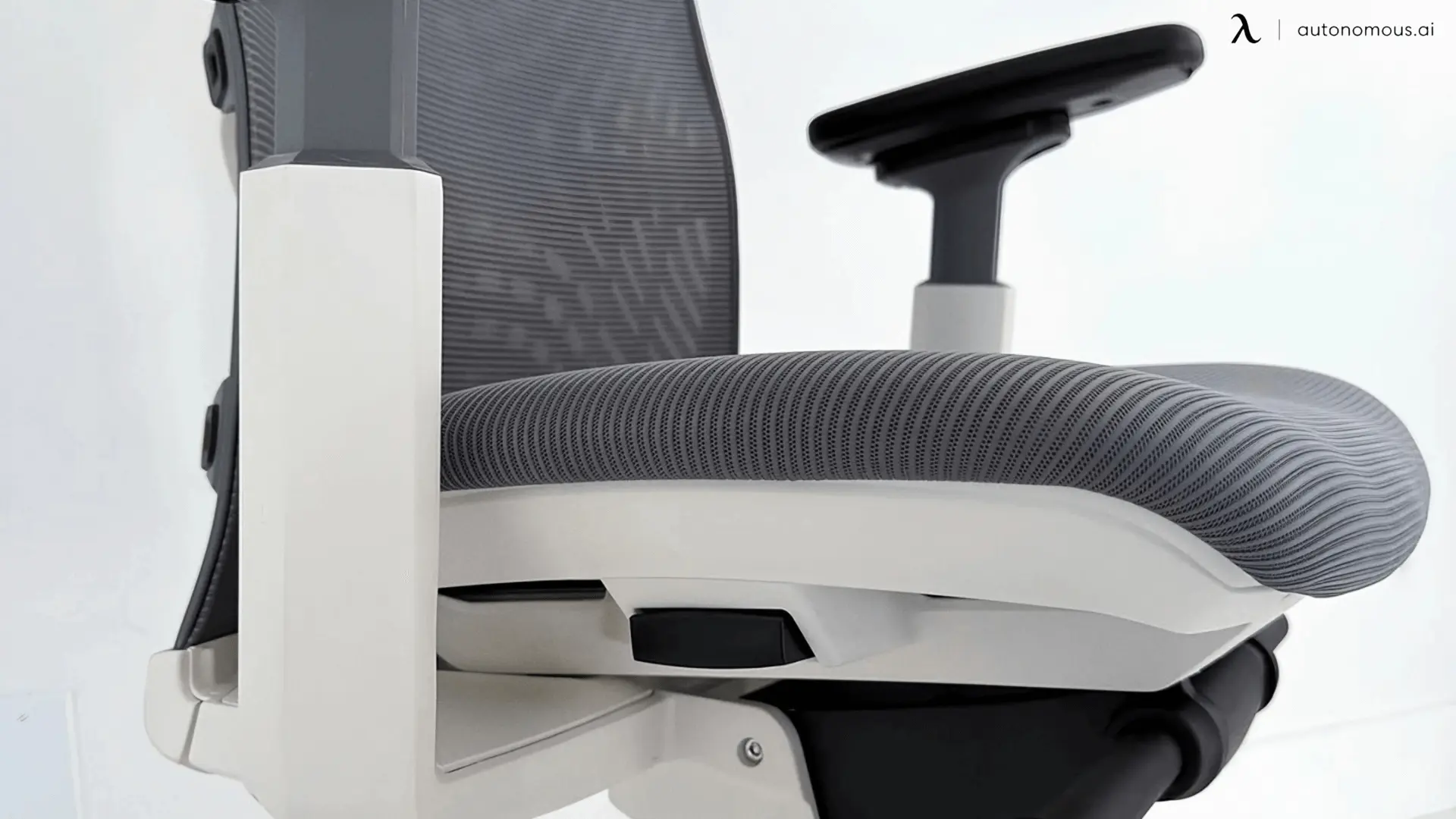
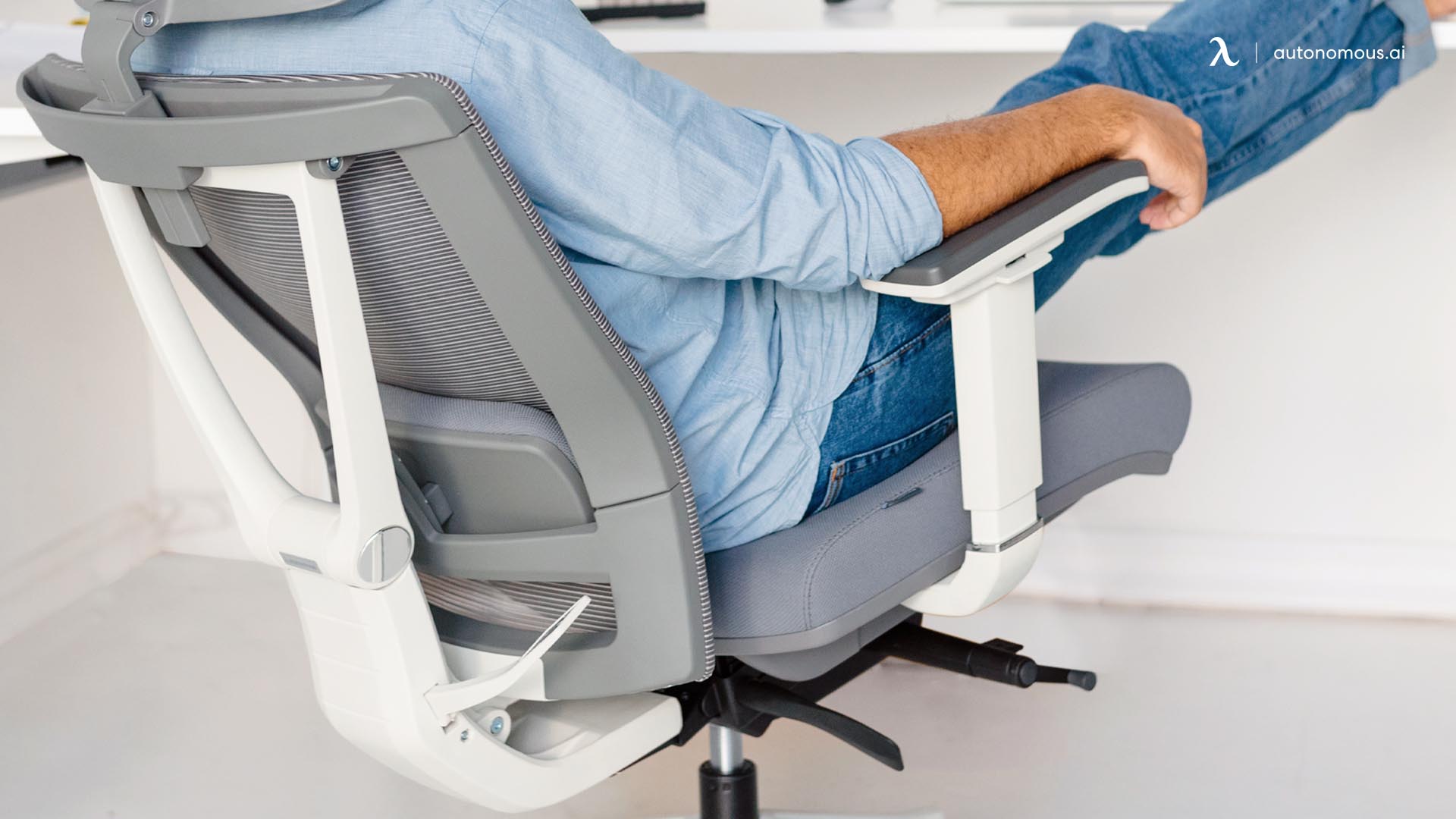
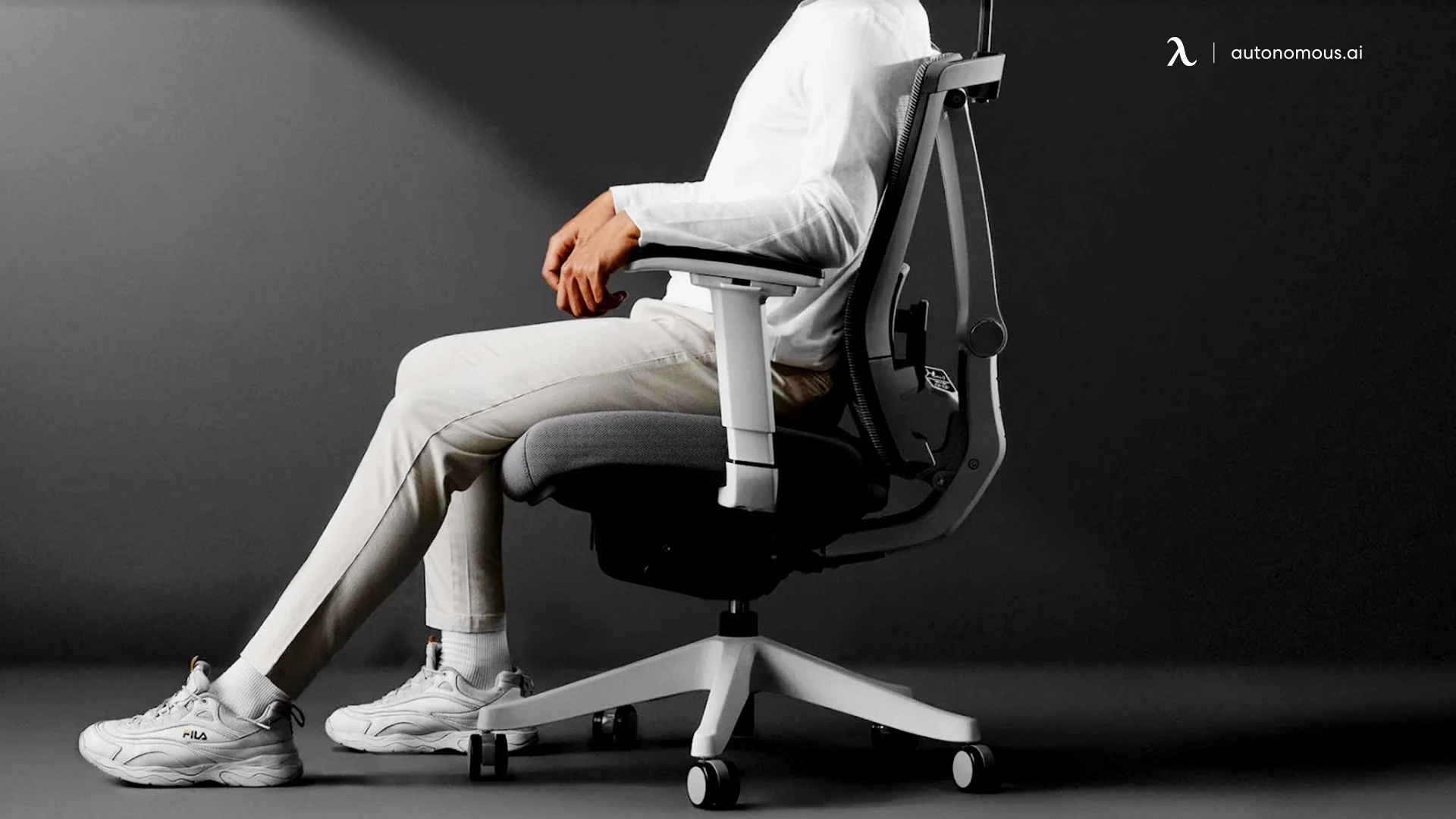
The ErgoChair Pro treats cushioning as a structural element rather than a comfort layer. Instead of aiming for a soft first impression, the seat is designed to preserve its geometry under load. In practice, this means the cushion resists gradual compression that can subtly lower your sitting height over the course of the day—a common issue with softer chairs that leads to armrest misalignment and shoulder tension.
As an ergonomic cushion office chair, its seat favors controlled firmness. The foam compresses predictably and rebounds quickly, which keeps pressure spread across the seat rather than concentrating at the tailbone. This becomes noticeable during long, uninterrupted work blocks, where the chair feels largely the same in hour six as it did in hour one. The cushioning supports micro-adjustments in posture without encouraging the kind of sinking that locks you into one position. For anyone evaluating an office chair for long hours, this kind of sustained consistency matters more than initial softness.
The trade-off is intentional. This is not a chair designed to feel plush or lounge-like, and users who associate cushioning with softness may initially find it restrained. However, for those who value consistency and positional stability in a cushion office chair, especially when desk height and arm support matter, the seat design reflects a clear priority: maintaining support integrity over time rather than delivering short-term comfort.
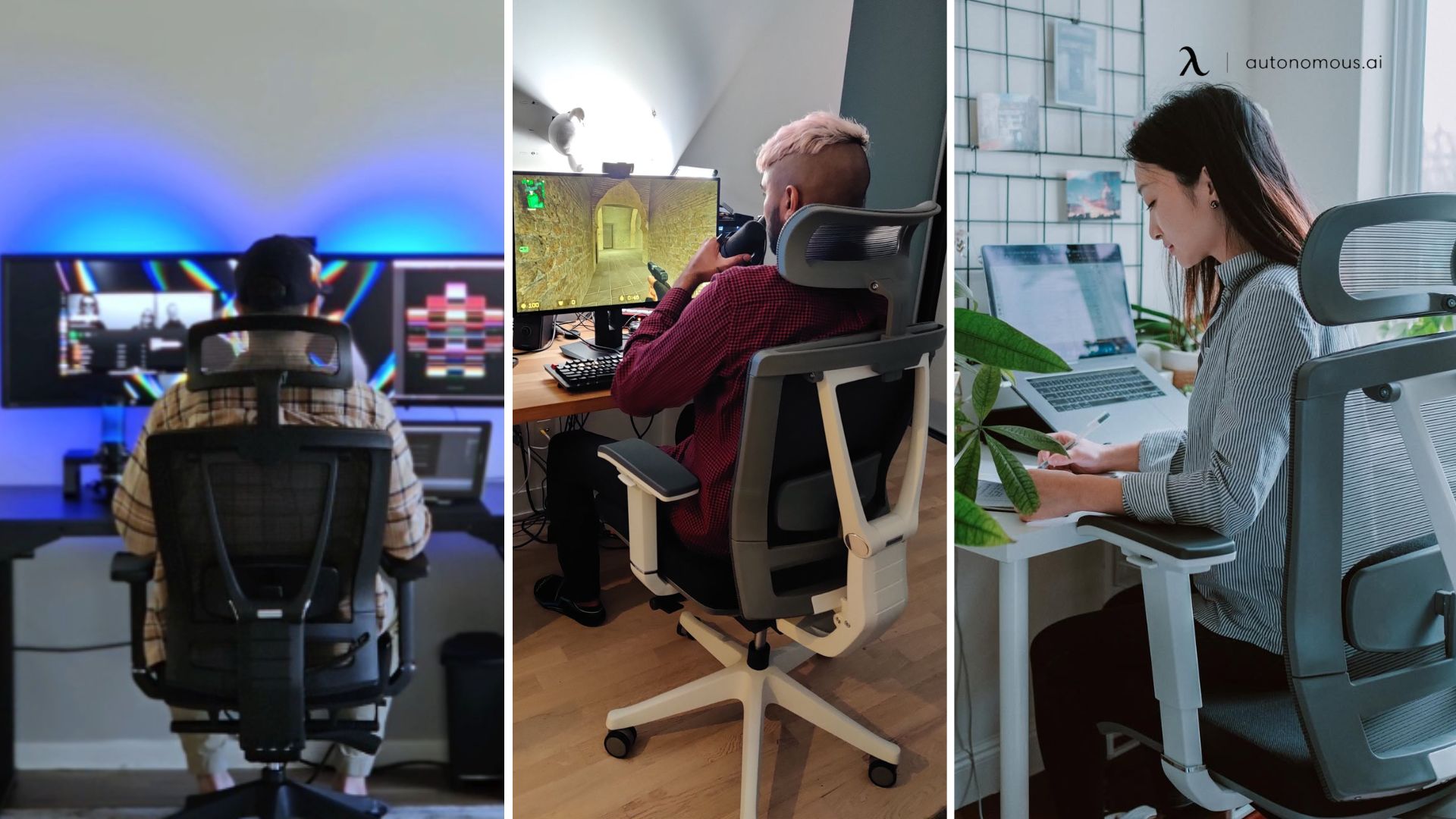
"After sitting on this thing for 6 hours straight, this thing is AMAZING. I have no back pain which is my main issue when sitting on a desk. The features this chair has are pretty awesome! I often just raise the head rest, lean all the way on it and shift my seat forward. I code like that. Pretty sweet!" - David H.
"As someone who works at a desk for 6-8 hours per day, 7 days a week, my experience with the ErgoChair over the past 3 weeks has been enough to justify a solid recommendation." - Jake R.
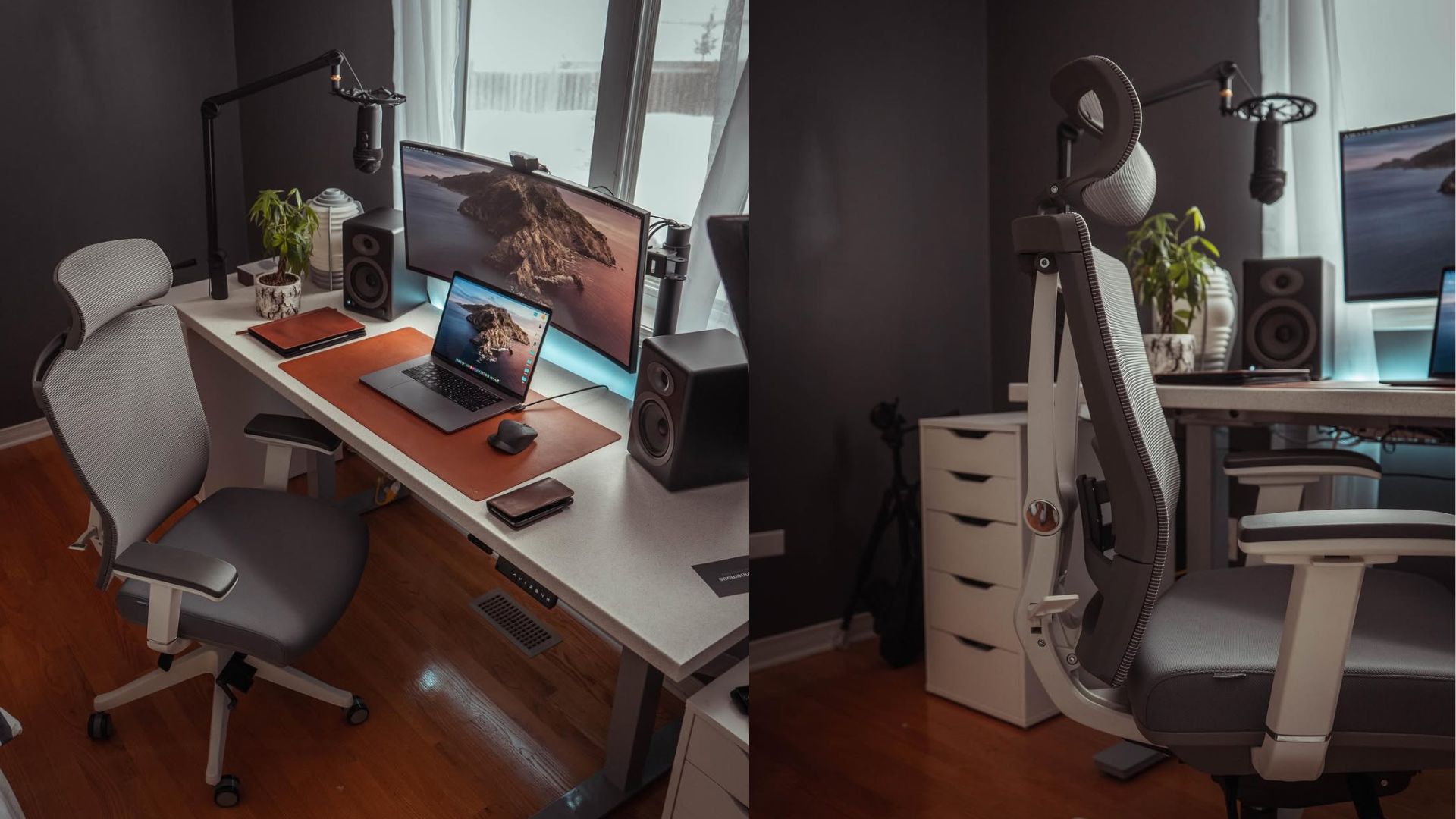
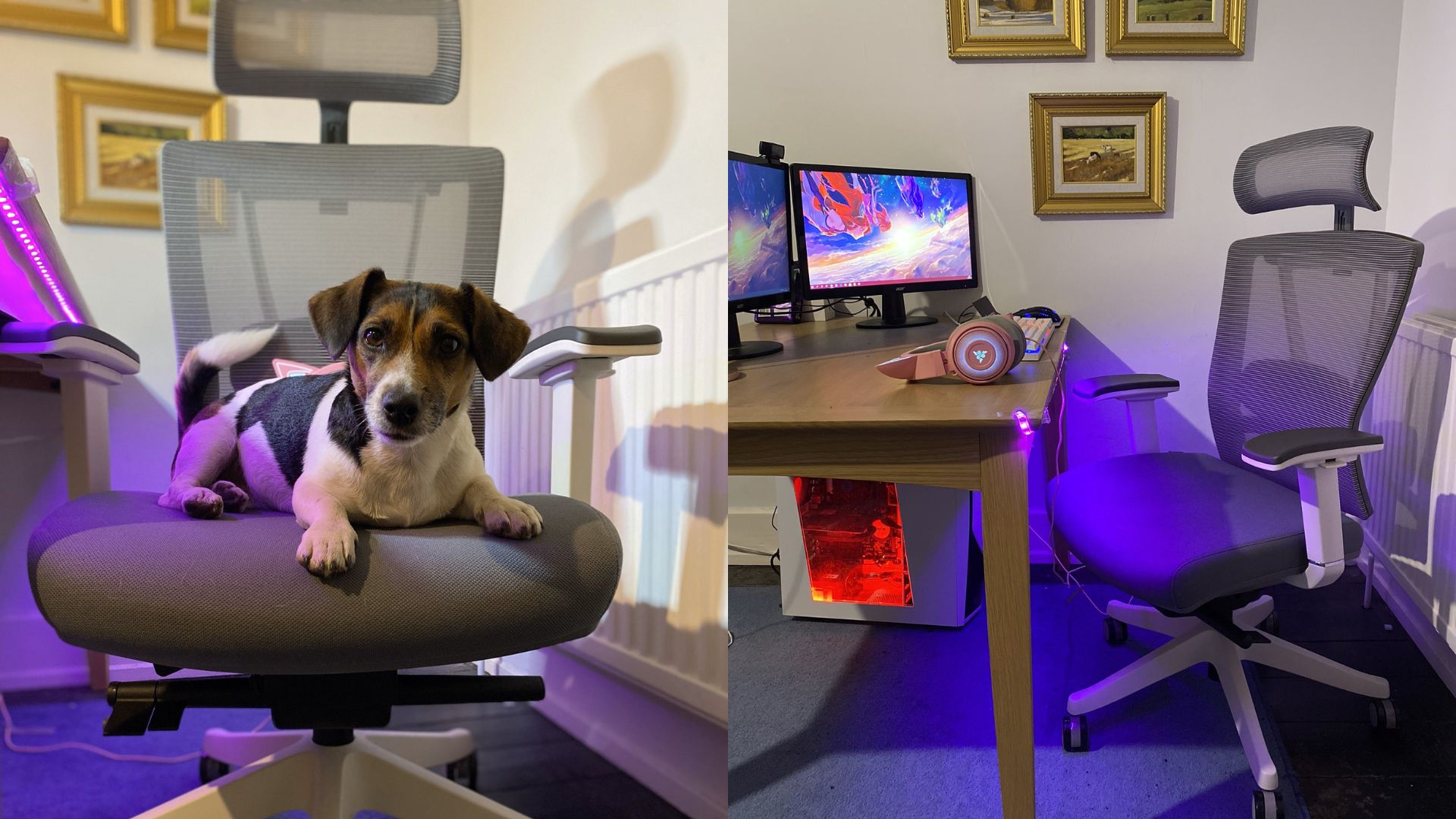
"After months of back pain, I’m so happy to have a new chair. It honestly feels like a sofa compared to my old one, I’m thrilled with it! It even has my dog’s approval! I’m also planning to get a L shaped standing desk from Autonomous soon."
- Ellie
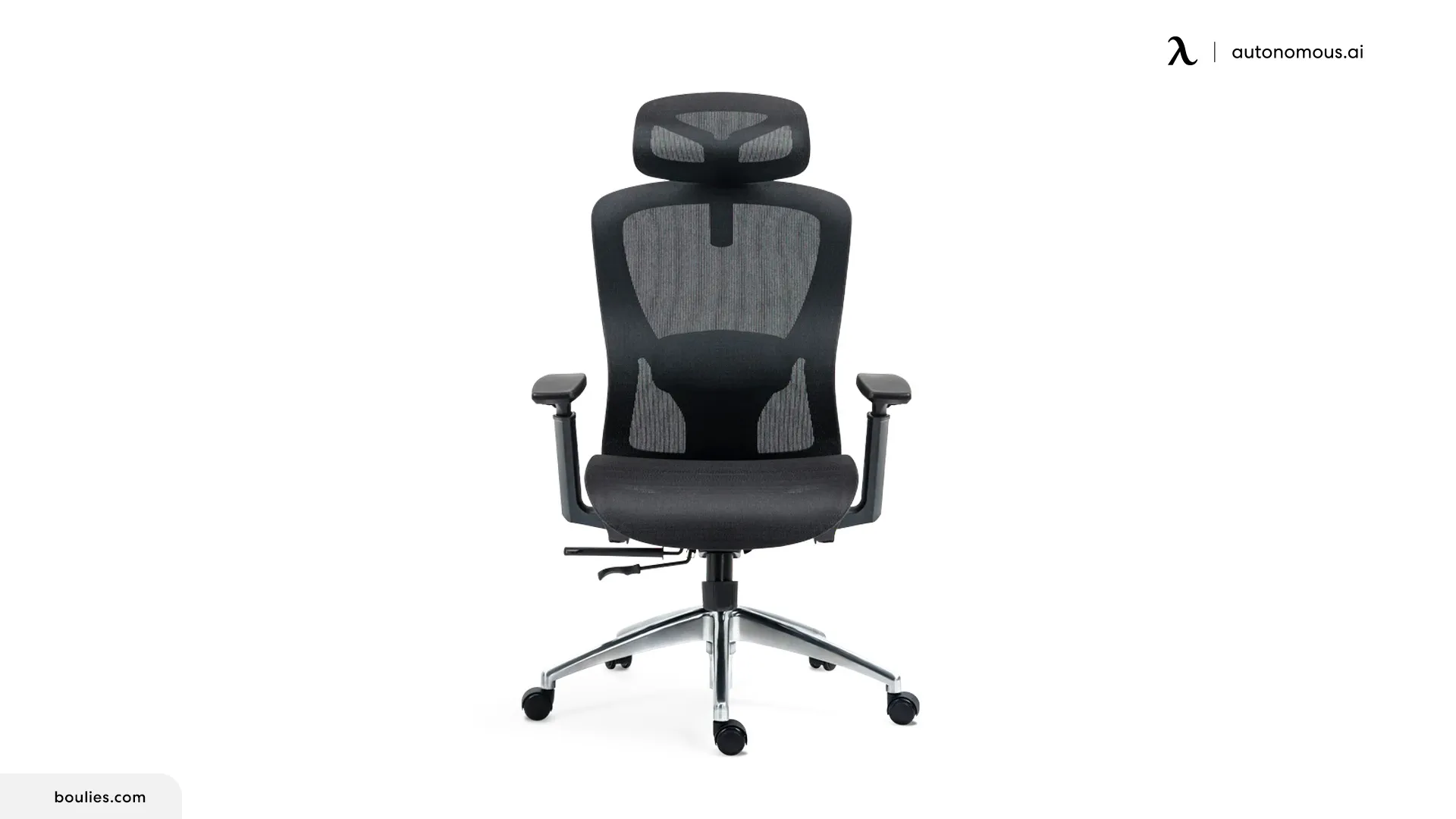
2. Boulies EP200
The EP200 approaches cushioning from a more straightforward, comfort-first perspective. Rather than tightly controlling compression, the seat leans toward a softer, more accommodating feel that prioritizes immediate comfort. As a cushion office chair, it delivers a noticeably gentler, which can feel reassuring for users coming from hard or minimally padded chairs.
The seat cushioning absorbs pressure more readily, allowing the body to settle slightly into the chair. This can be beneficial during shorter work sessions or for users who shift positions frequently, as the cushion adapts easily to movement. Compared to firmer designs, the EP200 feels less directive, placing fewer constraints on how you sit.
Over longer periods, however, the softness introduces a different dynamic. The cushion gradually compresses under sustained load, which can subtly change seat height and reduce the sense of stability over time. For users who rely on consistent alignment with their desk or armrests, this may require occasional readjustment.
This chair suits those who value a relaxed sitting experience and prefer a foam cushion office chair that emphasizes comfort over long-term rigidity. Within the broader affordable office chair category, this comfort-forward philosophy is common, but execution varies, and the EP200 leans further into softness than most.
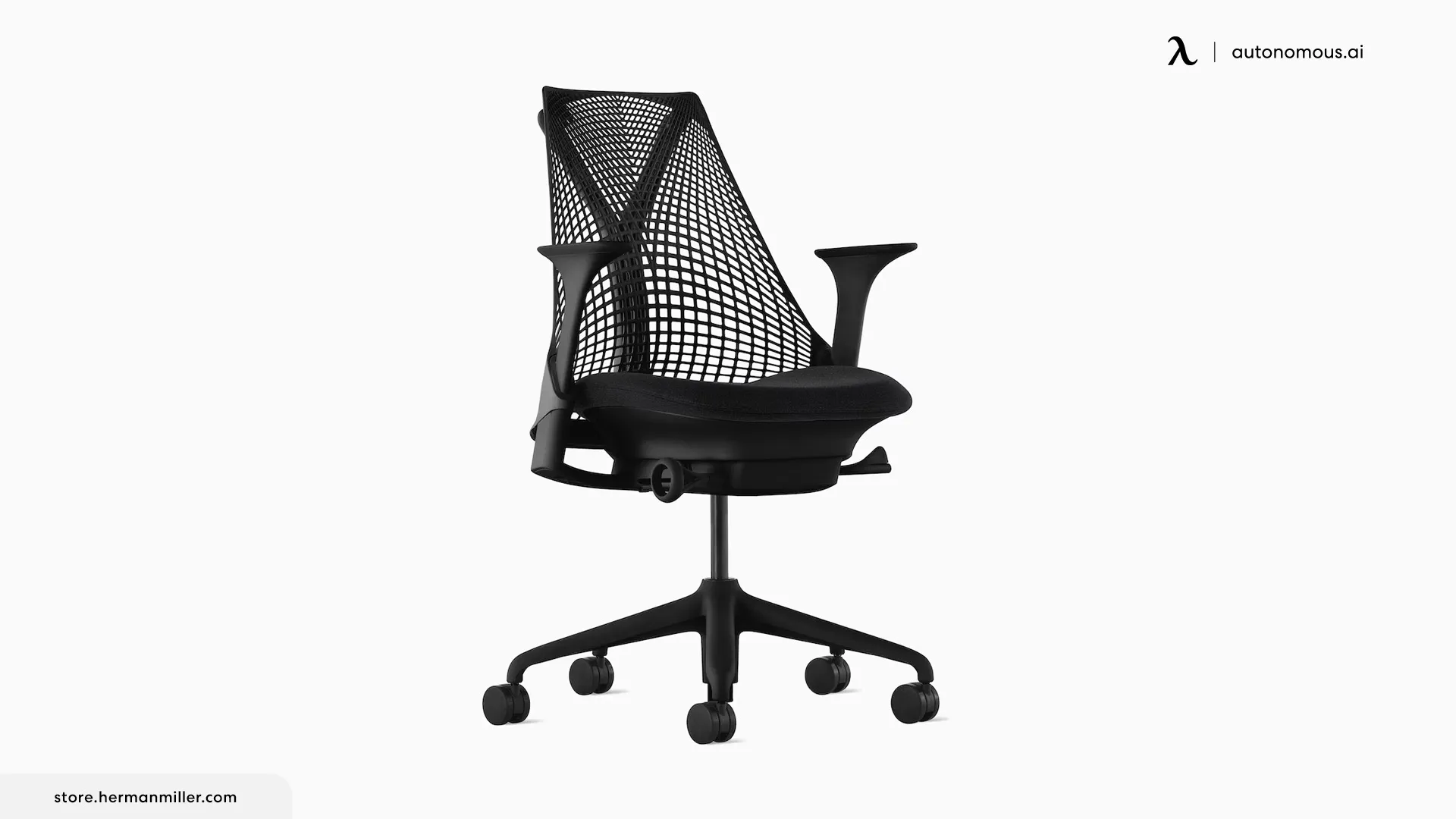
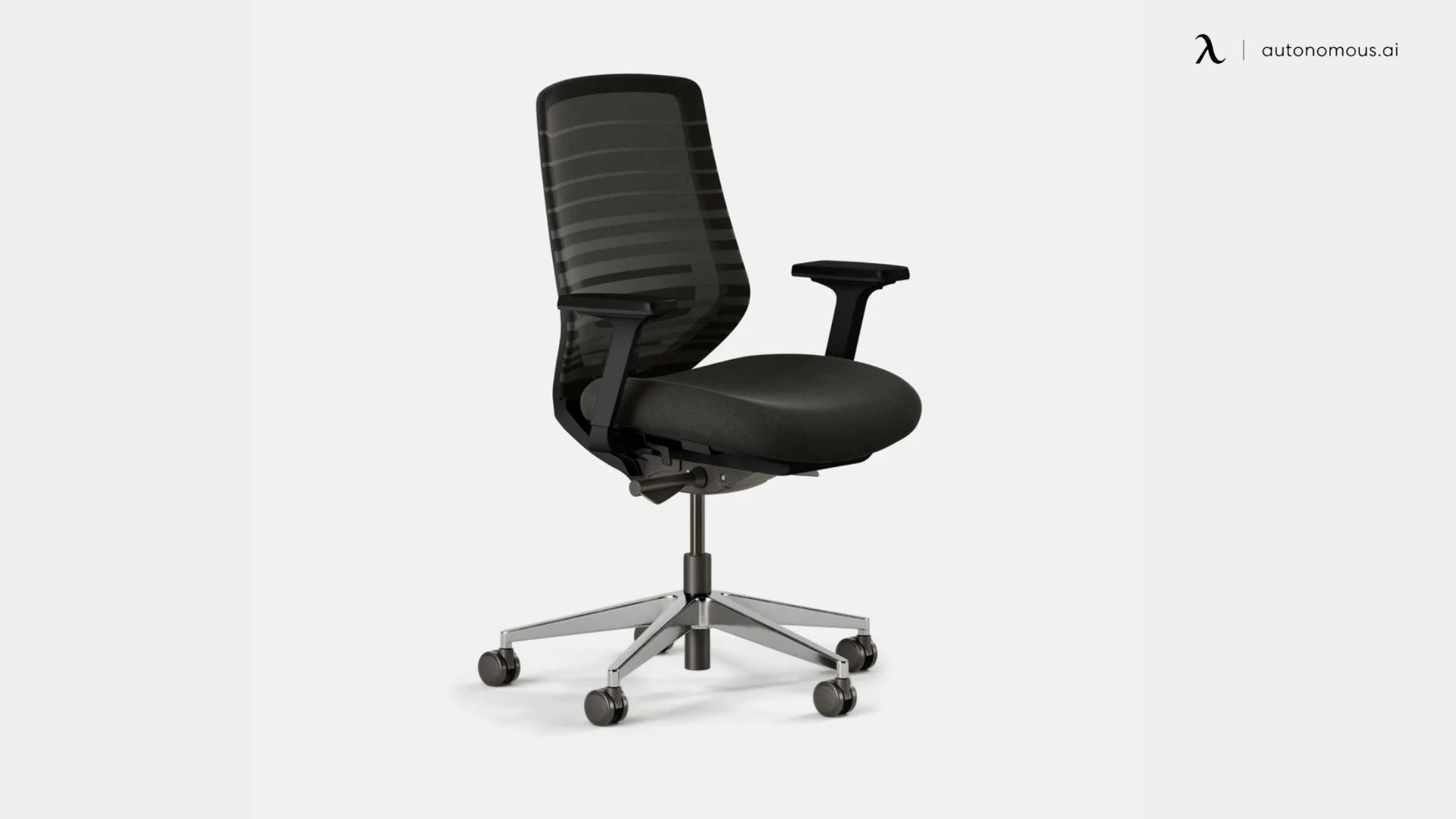
The Sayl treats the seat as one part of a larger visual and functional system. Its cushioning is intentionally thin, because the chair mostly relies on its suspension back and open frame to do work that thicker padding would interrupt. For users who run warm or work in small office desk setup, this office chair with cushion keeps airflow moving and avoids the bulk that can make smaller desks feel cramped
The seat surface is taut and responsive. It doesn't absorb pressure the way a gel seat cushion office chair might; instead, it distributes weight across a firm, even plane. This creates a feeling of being supported on the chair rather than in it — a distinction that suits users who prefer to stay light on their seat and shift often.
Where the Sayl excels is in environments where aesthetics and footprint matter as much as function. It's a chair that looks deliberate in a room, not like office furniture hiding in plain sight. Unlike an expensive office chair that justifies its cost through dense cushioning or elaborate adjustment systems, the Sayl's price reflects engineering restraint, doing more with less.
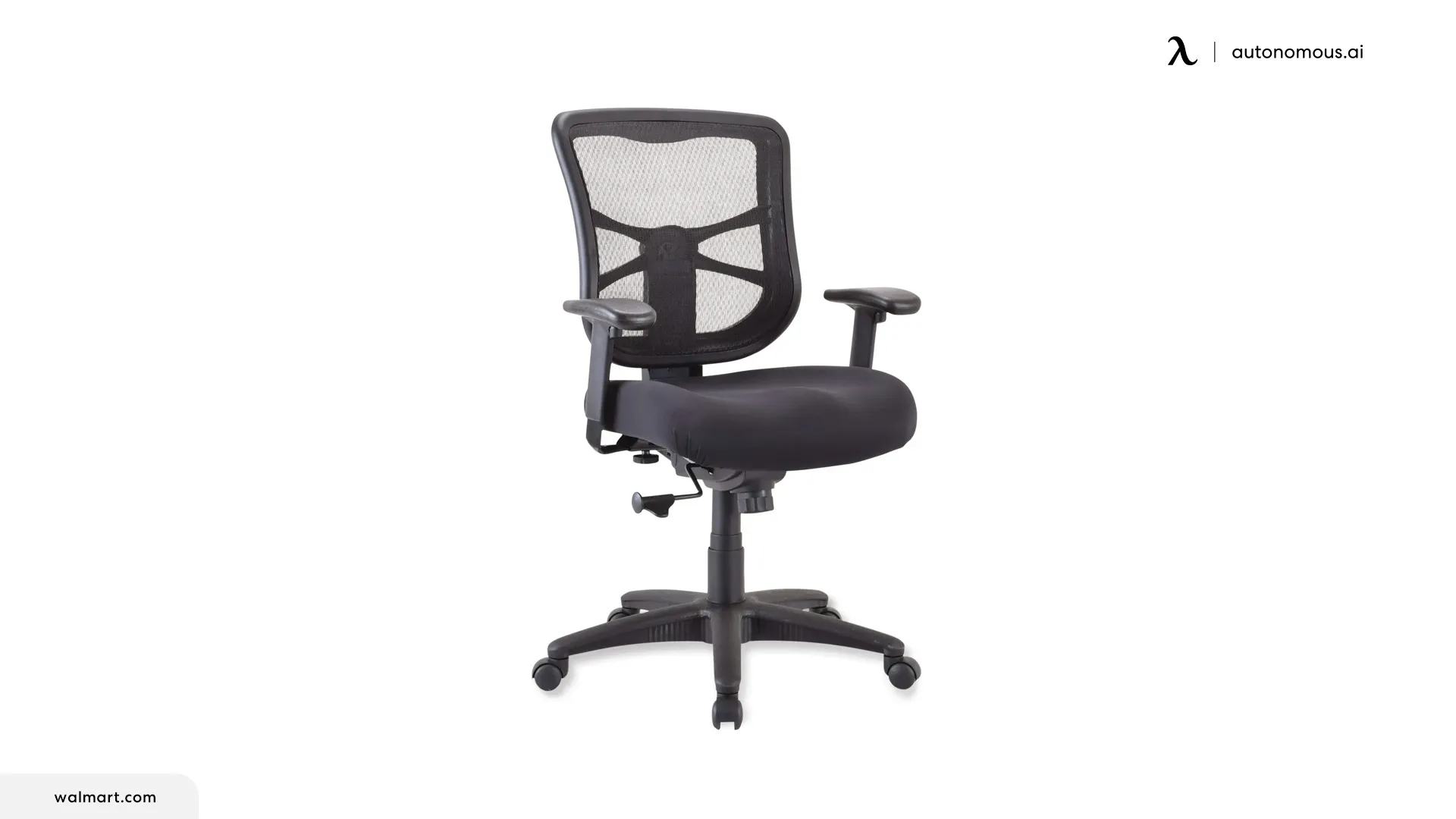
The Alera Elusion is built for consistency across users rather than customization for one. Its cushion sits in the middle range — firm enough to hold shape through a full workday, soft enough to avoid feeling rigid. In shared or rotating desk setups, this neutrality becomes practical: the chair doesn't need to be "broken in" or adjusted heavily between people. Its mid-back profile also keeps the footprint modest, a consideration that matters when shopping for a small office chair that won't overwhelm a compact workspace.
As a cushion office chair at its price point, it delivers reliability without asking much in return. The seat doesn't contour aggressively or respond to body heat the way memory foam does. Instead, it provides a stable, predictable surface that stays largely the same whether you sit for one hour or five.
This is a chair that prioritizes function over feel. It won't stand out during a showroom test, and users comparing it to a memory foam seat cushion office chair may find it plain. But in practice, that plainness translates to durability and low maintenance, qualities that matter more in high-turnover environments than a memorable first impression.
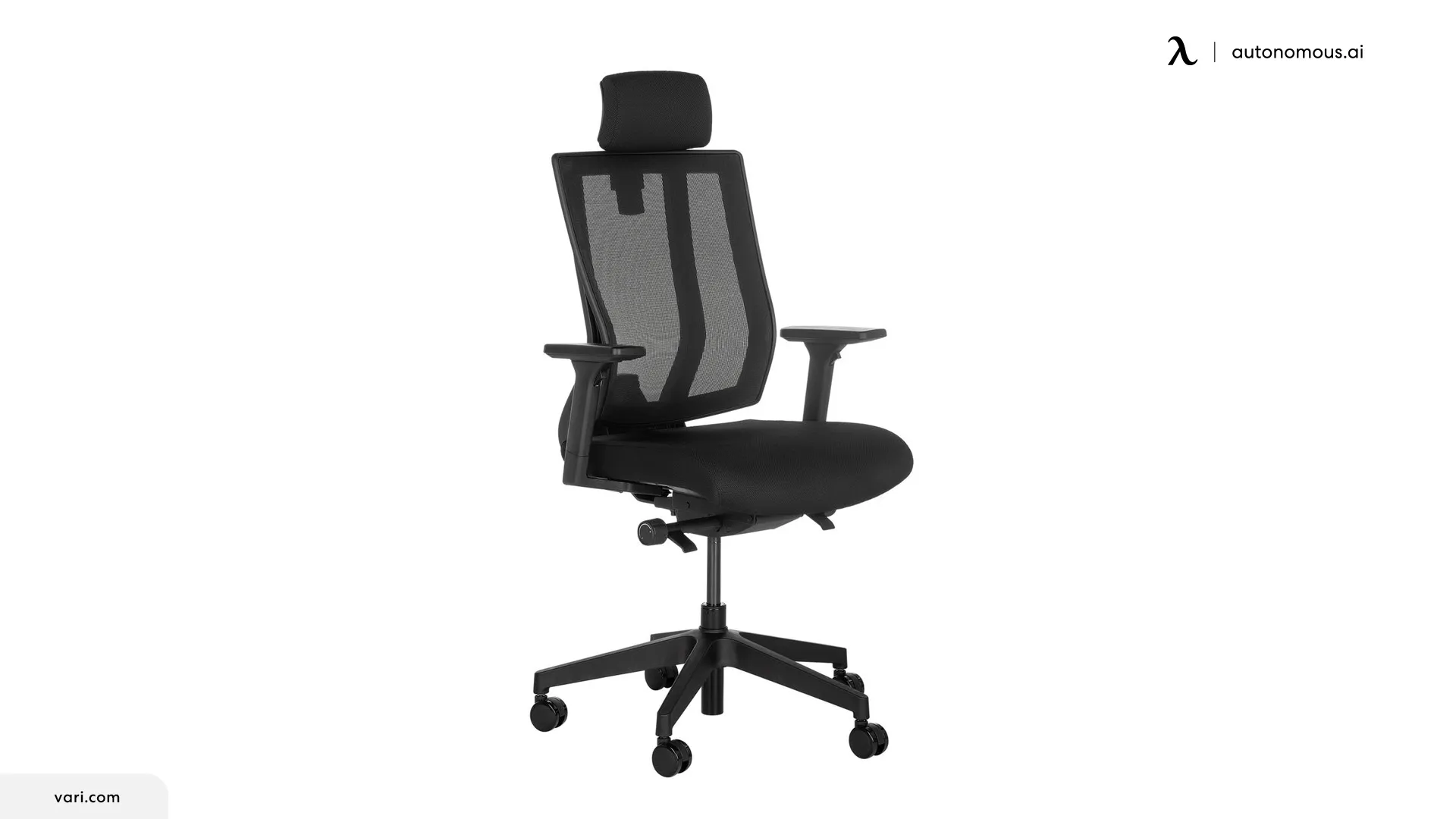
The Vari Task Chair is designed around movement, not stillness. Its seat cushion is moderate in density and flat in profile, unremarkable on its own, but intentionally so. The chair assumes you won't stay in one position for long, and the cushioning reflects that: it supports transitions rather than locking you into a single posture.
Where some ergonomic cushion office chairs optimize for sustained deep sitting, this chair accommodates the rhythm of a less predictable workday. It doesn't recline as deeply as a dedicated reclining office chair, but offers enough range to shift between working postures without committing to a full lean-back. The cushion doesn't fight these shifts. It stays neutral, letting the chair's adjustment range (seat height, tilt tension, headrest position) do the heavier lifting.
Users who sit still for long stretches may find the seat underwhelming compared to a foam cushion office chair with more contouring. But for those whose work involves frequent repositioning, or who simply get restless sitting the same way for hours, the chair's cushion makes sense as part of a system built for variability, not as a standalone comfort feature.
The seat cushion isn't layered with multiple foam densities or marketed around proprietary materials — it's a straightforward medium-firm surface designed to work without requiring much thought.
The foam has a subtle contour that suggests positioning rather than enforcing it. As an office chair with cushion designed primarily for home workspaces, the seat aims for broad compatibility: enough give to remain comfortable over several hours, enough resistance to maintain its shape and height throughout the day.
The seat arrives ready to use without extensive configuration. For users who find excessive options overwhelming — or who simply don't want to spend time dialing in settings — this approach has appeal. The mesh back fits this utilitarian mindset, though it's a matter of preference; some users gravitate toward fabric office chairs for their softer hand feel and warmer aesthetic in home offices.
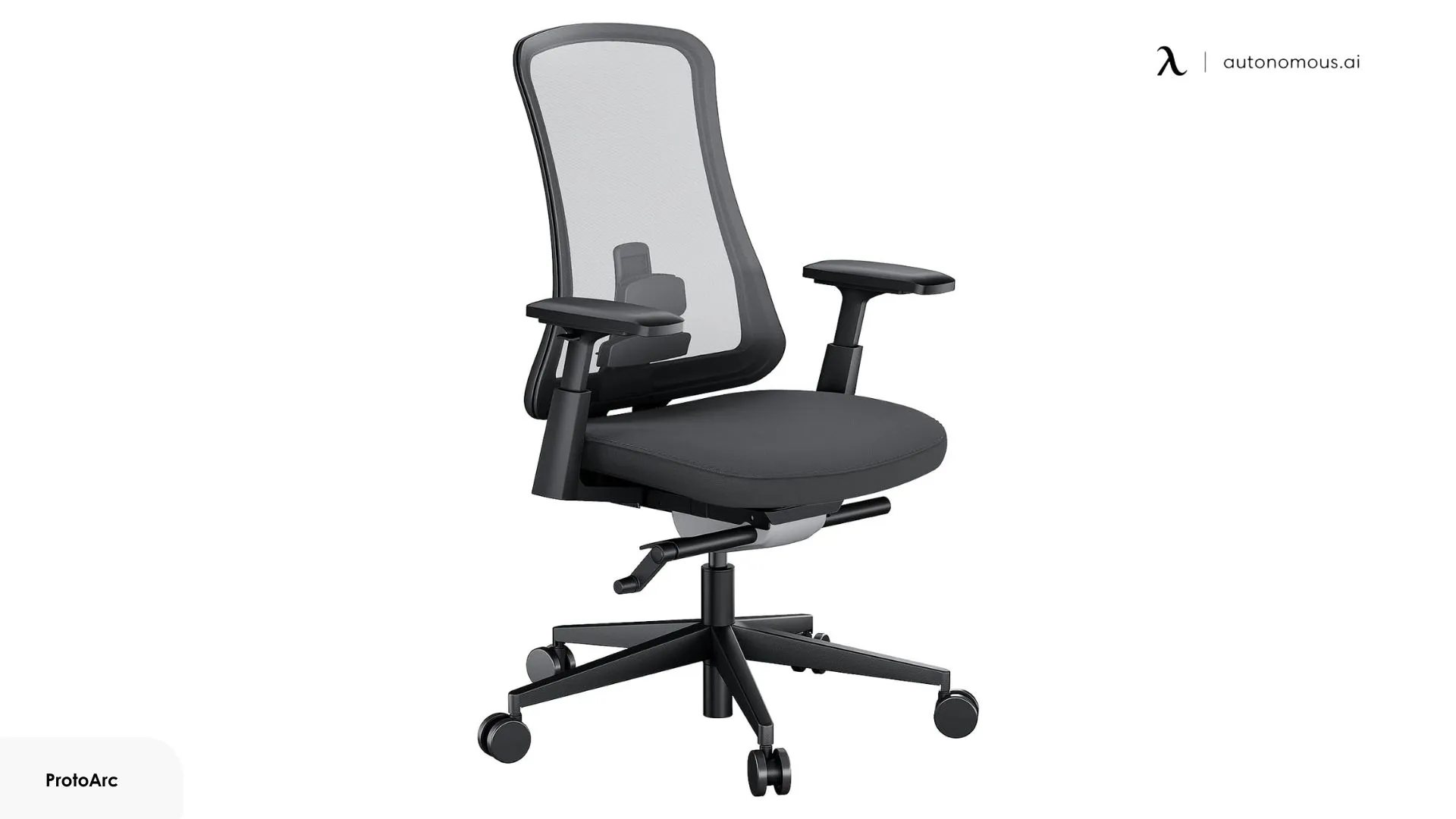
The ProtoArc takes a density-forward approach to cushioning. The seat is noticeably thick, with layered foam that creates a fuller sitting experience than most chairs in its price range attempt. Rather than streamlining features to hit a budget, the chair includes more, thicker padding, a wider seat, a waterfall edge intended to reduce pressure behind the knees. The generous seat width puts it in the extra wide office chair territory, which benefits users who find standard seat dimensions restrictive.
As a cushion office chair, the ProtoArc will feel immediately different to users coming from flat or lightly padded seating. The cushion absorbs pressure readily and provides a softer landing than firmer ergonomic alternatives.
The longer-term picture is less certain. Thicker foam at lower price points often compresses faster under sustained daily use, and the seat may lose some of its initial loft over months of heavy use. Users seeking an ergonomic cushion office chair with proven durability may want to weigh this against the upfront comfort.
How to Choose the Right Office Chair With a Cushion?
Choosing an office chair with a cushion is less about finding the softest seat and more about matching the chair’s design to how you actually work. The following considerations focus on decision points that tend to matter after the novelty of a new chair wears off.
Start With How You Sit, Not How Long
Instead of counting hours, pay attention to how you sit. If you stay relatively still, a more structured cushion can help maintain balance and alignment. If your sitting posture changes often — leaning forward, swiveling, or shifting weight — a cushion office chair with a more forgiving surface may feel less restrictive.
Pay Attention to Seat Shape Before Cushion Type
Seat width, depth, and edge design often influence comfort more than the cushion material itself. A well-shaped seat with moderate padding can feel more comfortable than a poorly shaped seat with thicker foam. This is especially important for avoiding pressure behind the thighs or a floating feeling at the edge of the seat.
Match Cushion Material to Sensitivity, Not Hype
Materials such as memory foam or gel-infused padding can feel appealing, but they respond differently to weight and temperature. A memory foam seat cushion office chair may suit users sensitive to pressure points, while a foam cushion office chair with higher density may feel more stable for general desk work. The best cushion office chair is the one whose material behavior aligns with your comfort thresholds, not marketing labels.
Consider How the Cushion Works With Adjustments
Cushioning does not exist in isolation. Seat height, tilt tension, and armrest positioning all interact with how the cushion feels. A chair that allows fine adjustment can make a simpler cushion feel more supportive, while limited adjustability can exaggerate the weaknesses of even premium padding.
FAQs
What is the most comfortable office chair cushion?
The most comfortable office chair with cushion balances pressure relief and support rather than relying on softness alone. High-density foam or layered cushioning tends to feel more consistent over time than overly plush seats that compress quickly.
Is an office chair with a cushion good for long hours of sitting?
Yes, an office chair with a cushion can reduce pressure on the hips and thighs during extended sitting. Comfort depends on cushion density and seat shape, not just thickness, so long-hour users often prefer moderate firmness over soft padding.
Are cushioned office chairs better than mesh office chairs?
A cushioned office chair offers a softer seating surface, while mesh chairs provide firmer support and better airflow. The better option depends on pressure sensitivity, temperature preference, and how much structure you want from the seat.
What cushion material is best for an office chair with a cushion?
High-density foam is often the most reliable option for an office chair with cushion because it maintains shape over time. Memory foam and gel-infused cushions can improve pressure relief but may retain heat or feel less stable for some users.
Can an office chair with a cushion be too soft?
Yes, an office chair with a cushion that is too soft can cause the body to sink unevenly, leading to discomfort or poor alignment. A supportive cushion should compress gradually without collapsing under body weight.
Should I buy a cushion office chair or add a seat cushion?
A full office chair with cushion is better when the original seat lacks support or structure. A removable seat cushion works best as a short-term solution when the chair underneath already fits well.
How often should I replace my office chair cushion?
Most cushion seats last 2 to 5 years, depending on material quality and daily use. Signs it may need replacement include visible flattening, uneven support, or discomfort that persists even after adjusting the chair.
Can I add extra padding to my cushion seat?
Yes. A removable seat cushion can add comfort if the original seat feels too firm. However, extra padding may raise seat height or affect posture, so it should not interfere with the chair’s adjustability or overall balance.
Are cushion seat chairs better than non-cushioned ones?
Cushioned office chairs provide a softer sitting surface and can reduce pressure on the hips and thighs. Non-cushioned chairs, such as mesh seats, may feel firmer but offer better airflow. The better option depends on comfort preference, sensitivity to pressure, and sitting habits.
Conclusion
An office chair with a cushion is not defined by how soft it feels at first contact, but by how well the seat supports your body across different postures, materials, and daily routines. Cushion design influences stability, pressure distribution, and how the chair works with its adjustment system, all of which matter more than thickness alone, though thick cushion office chairs remain a reasonable choice when immediate pressure relief is the priority.
The same principles extend beyond standard office seating. A cushion for gaming chairs involves similar trade-offs around foam density, heat retention, and durability across long sessions. And for users with persistent discomfort, an orthopedic cushion for chair use targets specific pressure points that general-purpose office cushioning isn't shaped to address.
By understanding how cushioning behaves and where trade-offs exist, it becomes easier to choose a chair that fits the way you work rather than one that simply feels comfortable for a moment.