Autonomous vs FLEXISPOT Desk: Desk Pro vs E6 MAX

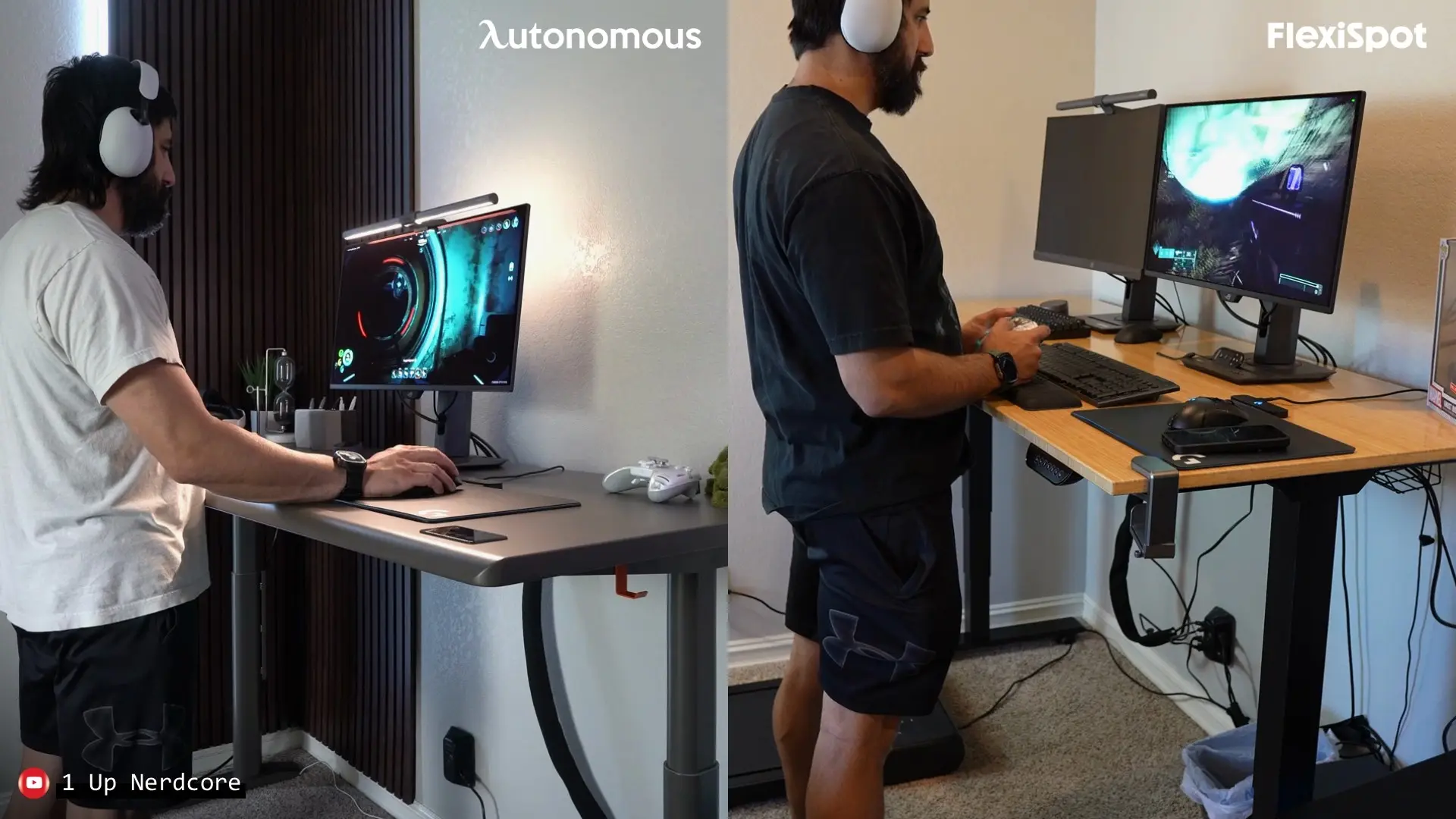
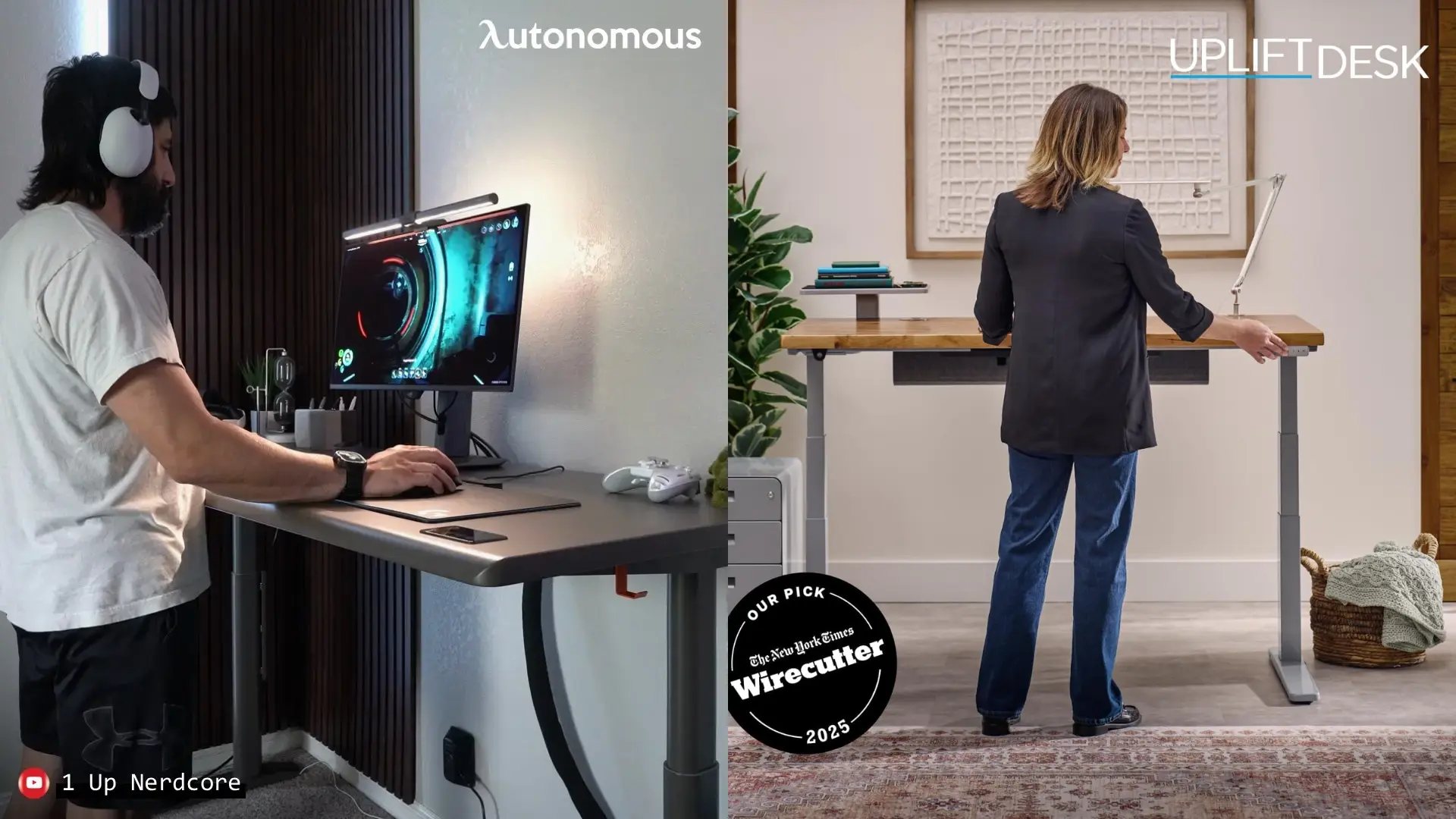
You have two tabs open: the Autonomous Desk Pro and the FLEXISPOT E6 MAX. On paper they look almost identical, both lifting 330 pounds on dual motors. So the Autonomous vs FLEXISPOT desk decision comes down to the details a headline spec hides: how low the desk drops, what the top is made of, how quiet the motors are, whether power is built in, and what the warranty covers. This guide compares both on what changes daily use, and which desk fits which buyer.
Sit-stand desks earn their keep because breaking up long sitting matters. Research on office workers found that alternating sitting and standing through the day reduced discomfort and fatigue without hurting productivity.1
Quick verdict
For most developers and heavy-gear setups, the Autonomous Desk Pro is the stronger pick: quieter, a longer frame warranty, built-in power and cable management, and a 3-stage option that reaches higher than the E6 MAX. The FLEXISPOT E6 MAX still wins where it counts, dropping lower for short users and offering solid wood, casters, more sizes, and a lower price. Lean Autonomous if you sit average height or taller and want the quietest, most integrated desk; lean FLEXISPOT if you are short, want real wood, or want to spend less.
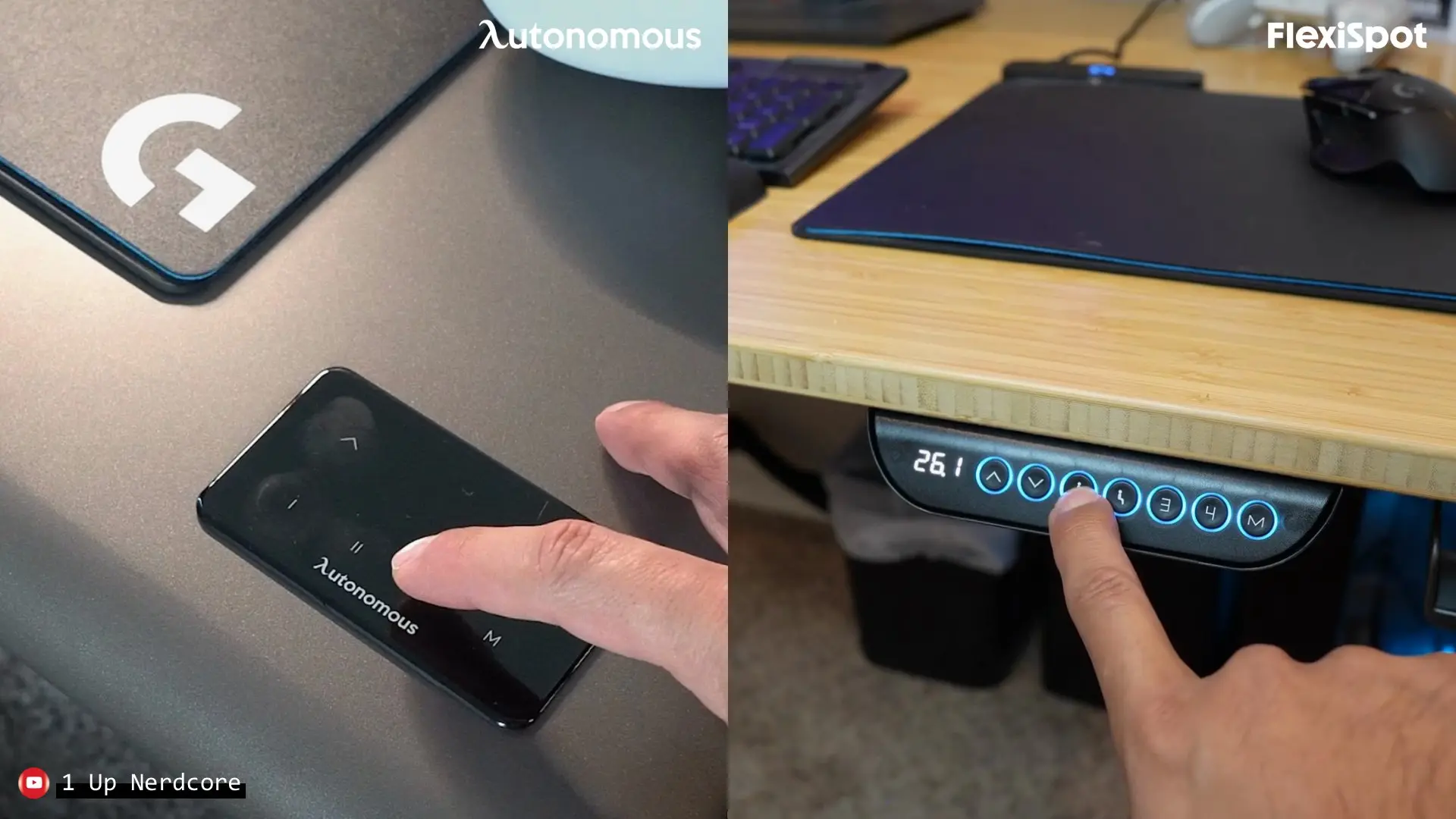
Desk Pro vs E6 MAX: full spec comparison
Spec | Autonomous Desk Pro | FLEXISPOT E6 MAX |
Price | $499 | $440 |
Weight capacity | 330 lbs | 330 lbs |
Noise | <30 dB | <50 dB |
Height range | 29.5"-48.5" | 24.4"-50" |
Frame warranty | Lifetime | 10 years |
Casters | ✗ | ✓ |
Cable management | ✓ | ✓ |
Anti-collision | ✓ | ✓ |
Motor | Dual | Dual |
Top material | HDF, powder-coated | Solid / FSC wood |
Sizes | 2 | Many, 48" to 78" |
Open hardware | ✓ | ✗ |
The capacity tie is real, so both are built for loaded workstations. The give-and-take is in the ticks: Autonomous builds in power and opens its hardware, FLEXISPOT adds casters and far more sizes. The rest of the differences are below.
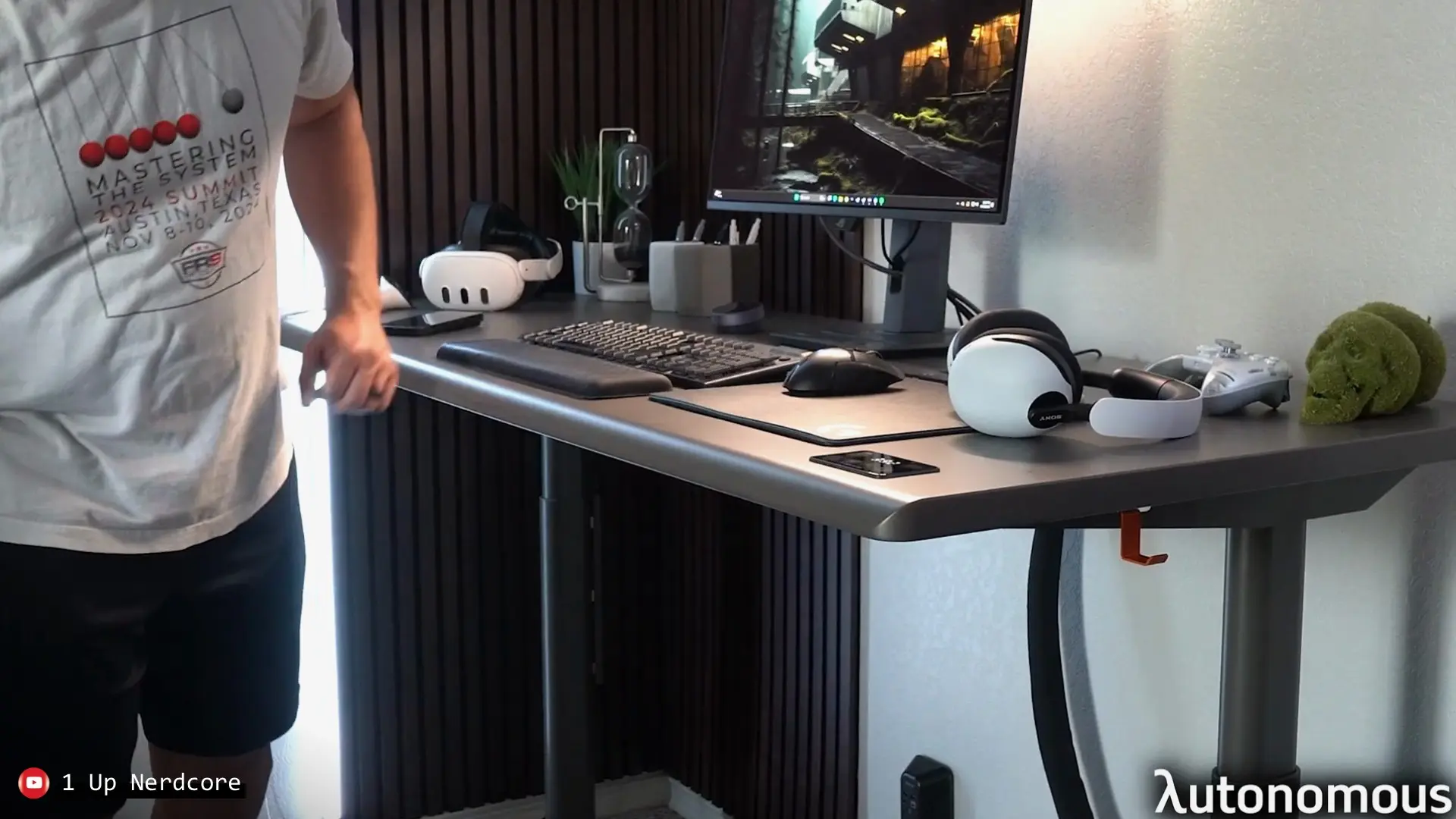
Stability: does either wobble at full height?
Wobble at full height comes from frame design, not the weight rating. A tall, narrow leg with a weak joint shakes when you lean on it, even if it can lift 330 pounds. This is the most common complaint about budget standing desks.
The Autonomous Desk Pro uses a C-frame that removes the front crossbar, with an oval leg cross-section that spreads stress through the wall of the steel rather than one weld point. It is bench-tested to 50,000 lift cycles. The FLEXISPOT E6 MAX takes the traditional route, a three-stage inverted leg with double steel tubing that adds rigidity by overlapping more material as the desk rises.
Both approaches are sound. As a rule, the smaller the desktop, the steadier either desk feels:
a 78-inch E6 MAX top will show more flex than a 53-inch Desk Pro top simply because of the span.
Size your top to your space and neither should shake at typing pressure.
Height range: who each desk actually fits
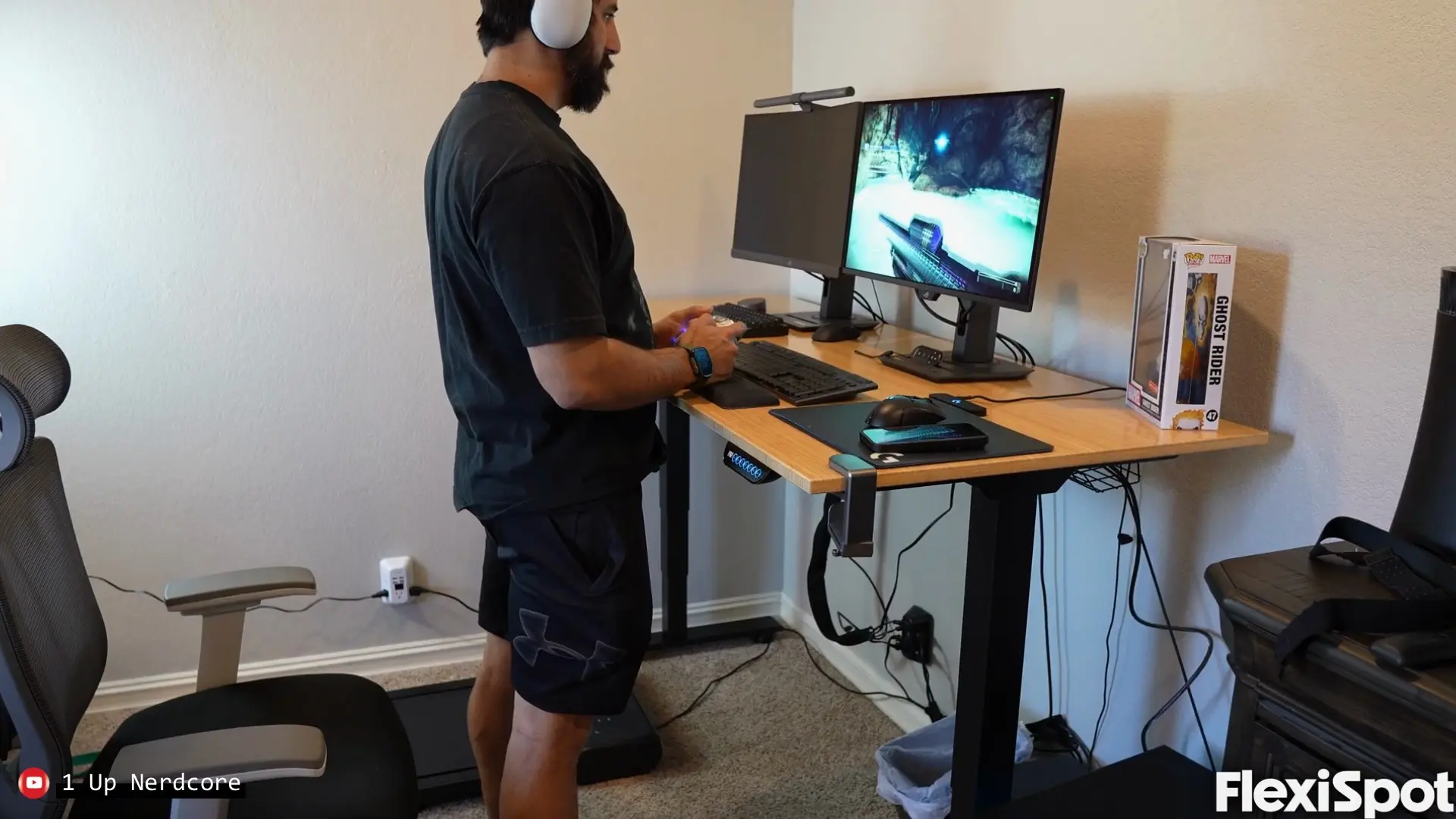
The two desks do not cover the same range, and this is the clearest reason to pick one over the other. The FLEXISPOT E6 MAX drops to 24.4", while the standard Autonomous Desk Pro floors at 29.5". That five-inch gap decides the short end.
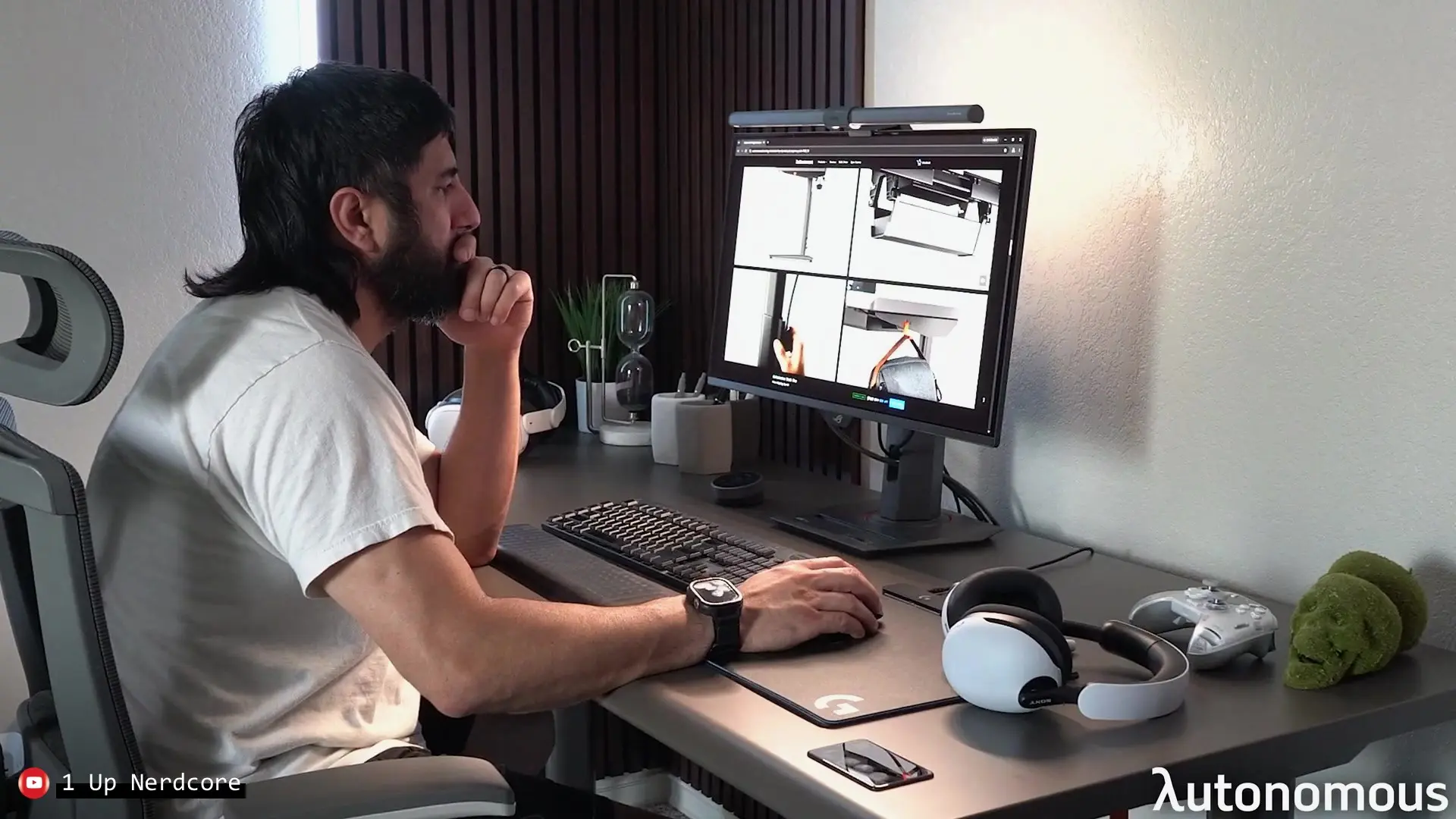
- Under about 5'4", or if you like a low seated position, the E6 MAX reaches a sitting height the standard Desk Pro cannot.
- At the tall end, the standard Desk Pro (48.5") and the E6 MAX (50") are close, but the 3-stage Desk Pro reaches 52.7", higher than the E6 MAX, so Autonomous can win tall users outright.
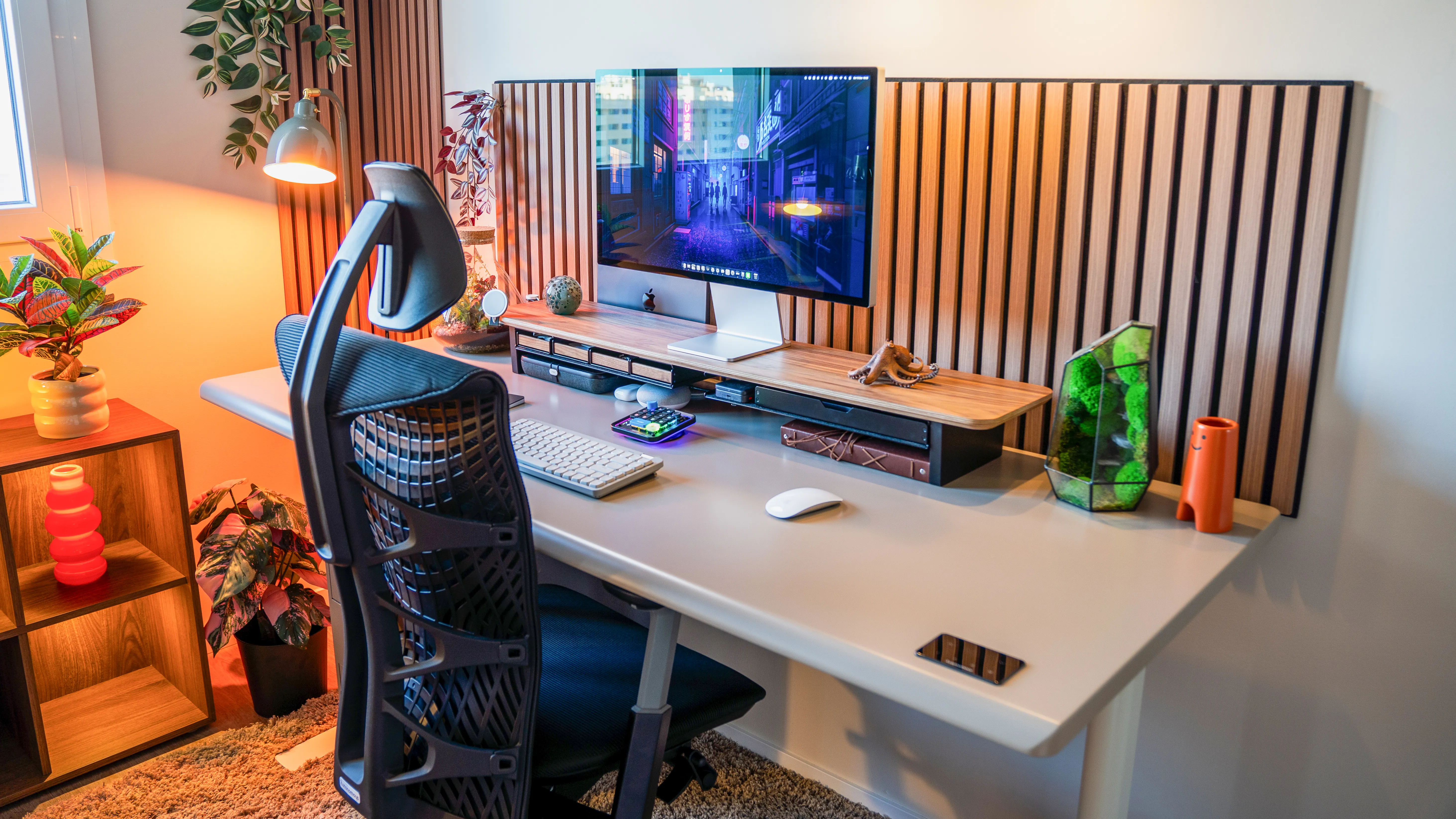
So this part of the decision is about who sits at the desk. Work out your ergonomic desk height, then match it to the low end if you are short or the high end if you are tall.
Desktop material: HDF vs solid wood
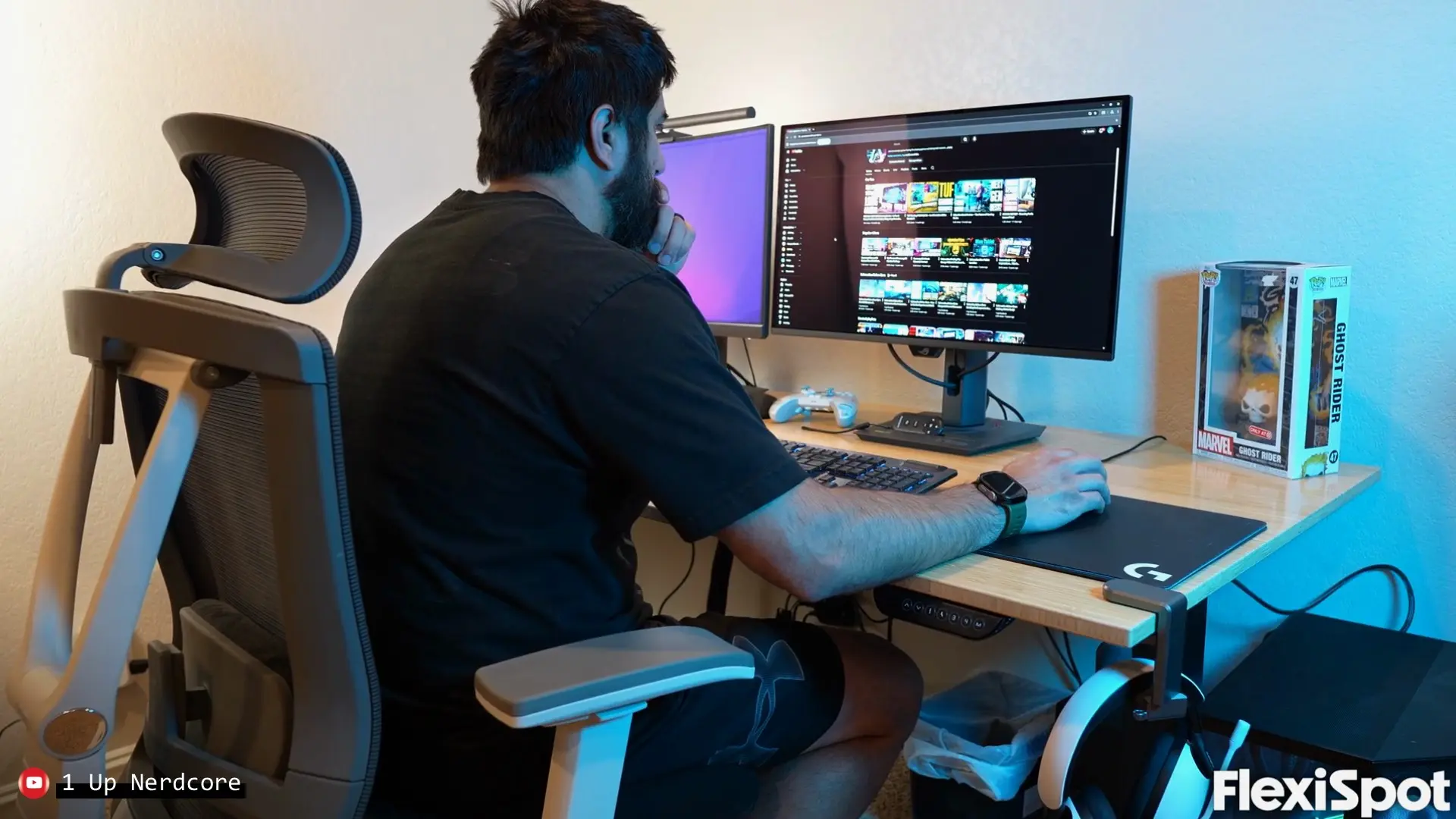
The two tops are made differently, and neither is simply better. The Autonomous Desk Pro's HDF top is sealed with Interpon 700 epoxy-polyester powder, and Autonomous publishes the test data behind it. Against a standard liquid paint on the same board, the powder coat measured:
- 20% more scratch resistance and 50% more impact resistance
- Five times slower UV fade and five times longer before corrosion
- Near-zero VOC off-gassing, tested under 0.5 mg/L formaldehyde
The result is a flat, sealed surface with a curved 34 mm front edge that keeps a sharp corner off your wrists, where the edges do not chip and spills wipe clean.
The FLEXISPOT E6 MAX goes the other way, with solid, FSC-certified wood for a standing desk in walnut, maple, bamboo, and more. Real wood brings natural grain, refinishability, and a look many buyers prefer, though it varies plank to plank and costs more in some finishes.
Want an engineered surface with tested durability? The Desk Pro.
Want real wood you can sand and refinish? The E6 MAX.
Cable management and power
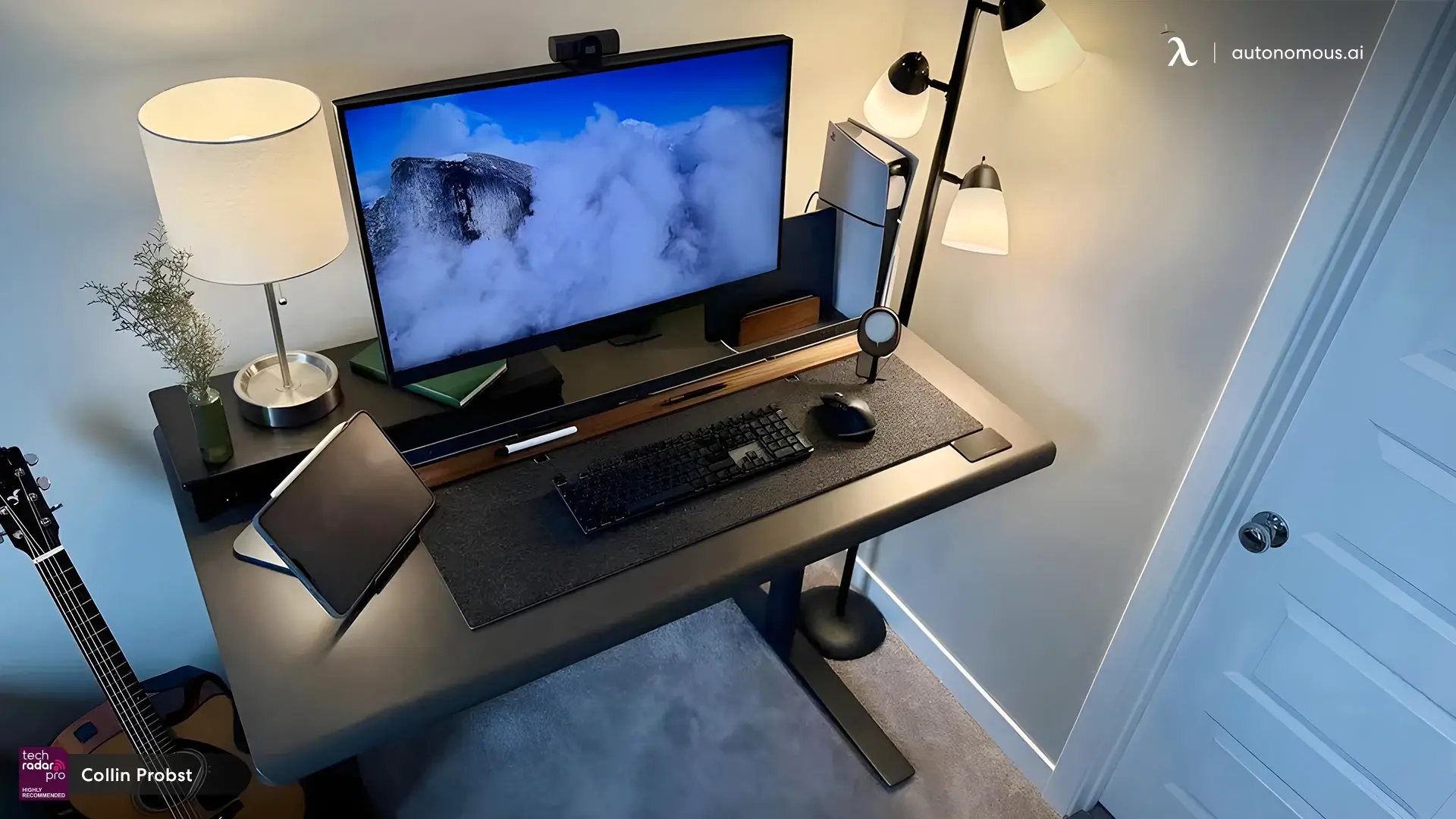
The Autonomous Desk Pro builds power into the desk; the E6 MAX manages cables but not power. The Desk Pro ships with a full kit under the top:
- A power strip mounted in the frame, so one cable runs to the wall
- A tray, comb, winder, and clips to route and hide the rest
The FLEXISPOT E6 MAX includes cable management too, which tidies wires well, but it has no built-in outlet, so you add your own standing desk power strip.
If you want power at the desk without an aftermarket part, the Desk Pro has it.
Noise and motors in daily use
Both are dual-motor standing desks, but the Autonomous Desk Pro is the quieter of the two. The Desk Pro runs under 30 dB; the E6 MAX runs under 50 dB. In practice, under 30 dB is close to a whisper, while 50 dB sits near a quiet conversation. If you take calls, record, stream, or share a room, the lower figure is worth noticing every time the desk moves. For a solo office where no one hears it, the difference is minor.
Warranty: what's covered and for how long
The frame warranties tell you how each company rates its own hardware. The Autonomous Desk Pro carries a lifetime warranty on the frame and two years on the top. The FLEXISPOT E6 MAX carries a 10-year warranty on the frame and two years on the control panel and electronics.
Both are strong by category standards. The lifetime frame coverage is the more confident claim on the structural steel, while FLEXISPOT folds the motor explicitly into its decade of coverage. Read each as a signal that both makers expect the frame to outlast the desktop.
Price and value
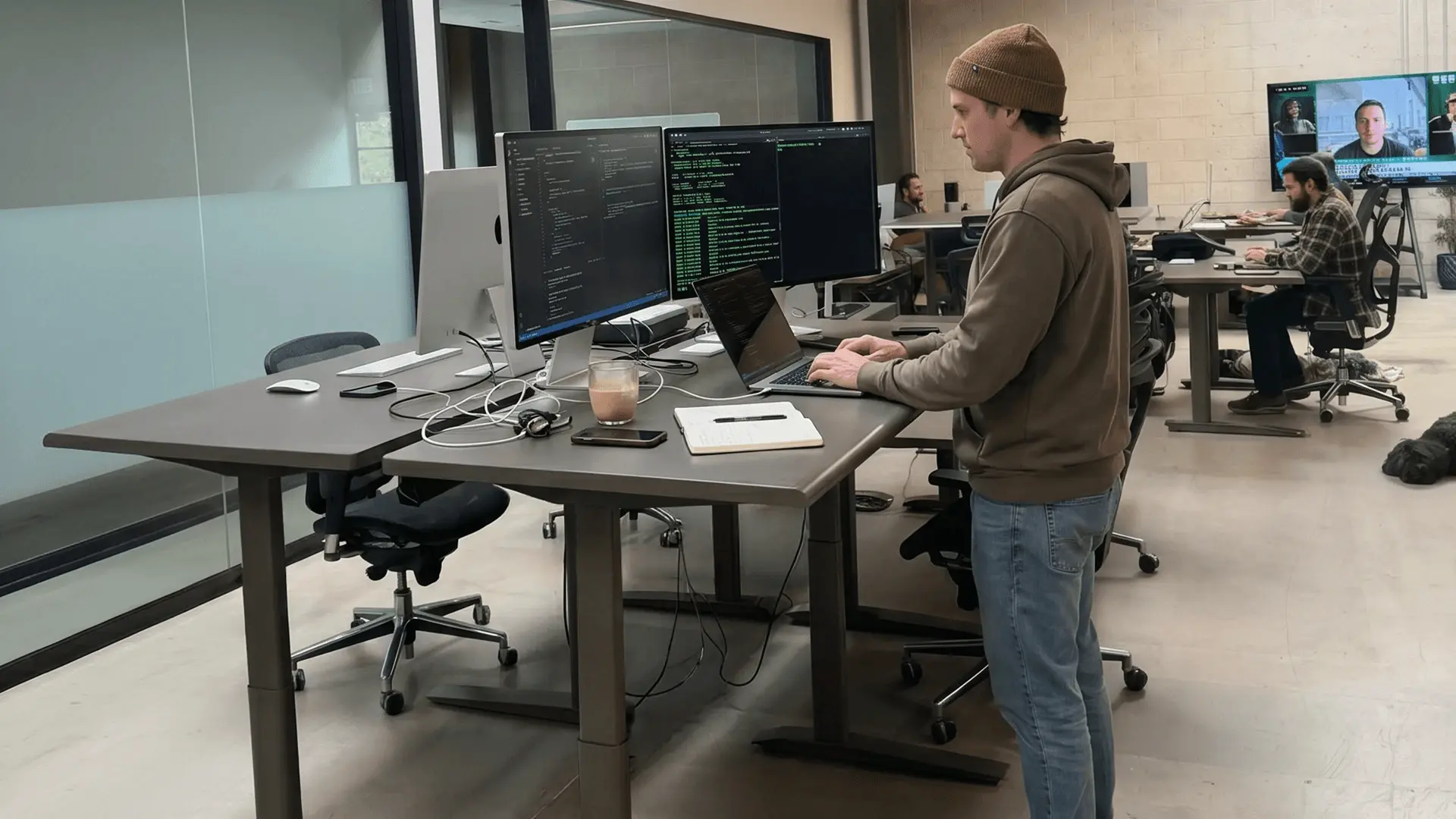
Value here is about what you give up, not just the sticker. Treat any single number as a snapshot, since both brands run frequent promotions.
Desk | Price | Notes |
Autonomous Desk Pro | $499 | Bulk pricing from $435; use code BLOGFIRST5 for 5% more off |
FLEXISPOT E6 MAX | $440 | Solid-wood and larger tops priced higher |
At similar configurations the two land close. The Desk Pro's value case is the lifetime warranty, the quieter motors, the built-in power, and the BIFMA-certified build. The E6 MAX's value case is choice: more sizes, solid-wood options, included casters, and a lower entry price. Neither is overpriced; you are paying for different priorities.
Which should you buy?
The right pick depends on how you work and how tall you are.
Choose the Autonomous Desk Pro if you sit average height or taller, run a heavy multi-monitor or tower setup, want the quietest desk with power built in, or value a lifetime warranty and open hardware. It is the steadier, quieter, more integrated desk for long focus sessions.
Choose the FLEXISPOT E6 MAX if you are shorter and need a sub-25-inch seated height, want a genuine solid-wood top, need an unusual desktop size, or want built-in casters and a lower entry price.
Either way, the health case for switching is well established: reviews of the research recommend moving more and sitting less across the workday.2 The desk that wins the Autonomous vs FLEXISPOT desk debate for you is the one you will keep adjusting.
FAQs
Is Autonomous or FLEXISPOT the better standing desk?
Neither wins across the board. The Autonomous Desk Pro wins on noise, warranty, built-in power, and tall reach with its 3-stage option, while the FLEXISPOT E6 MAX wins on lower height, solid-wood tops, casters, and size variety. Your height and setup decide it. Both lift 330 lbs.
What is the difference between Autonomous and FLEXISPOT desks?
The main differences are height, top material, power, and noise. The E6 MAX drops lower (24.4" vs 29.5") and offers solid FSC wood and casters, while the Desk Pro is quieter (<30 dB), builds a power outlet into the frame, uses a sealed HDF top, and carries a lifetime frame warranty.
Which standing desk is quieter, Autonomous or FLEXISPOT?
The Autonomous Desk Pro is quieter, running under 30 dB versus under 50 dB on the FLEXISPOT E6 MAX. The gap is noticeable in shared rooms or on calls, and minor in a solo office. Both are quiet during the few seconds a height change takes.
How tall and short can each desk go?
The FLEXISPOT E6 MAX adjusts from 24.4" to 50", and the standard Autonomous Desk Pro from 29.5" to 48.5". The E6 MAX suits shorter users, while the 3-stage Desk Pro reaches 52.7", higher than the E6 MAX, for taller users. Match the range to your height.
Which desk has built-in power outlets?
The Autonomous Desk Pro has a power strip built into the frame, so one cable runs to the wall. The FLEXISPOT E6 MAX includes cable management but no built-in outlet, so you add your own power strip. Both route cables cleanly under the top.
Which desk has the better warranty?
The Autonomous Desk Pro carries a lifetime frame warranty with two years on the top, while the FLEXISPOT E6 MAX carries a 10-year frame warranty with two years on electronics. Both are strong; Autonomous is more generous on the frame, and FLEXISPOT names the motor in its coverage.
Is the Autonomous Desk Pro top real wood?
The Desk Pro top is HDF, an engineered wood sealed with a low-emission powder finish and tested under 0.5 mg/L formaldehyde. The FLEXISPOT E6 MAX offers solid, FSC-certified wood tops if you want natural grain you can refinish. Neither is simply better; they suit different tastes.
Conclusion
The Autonomous Desk Pro and FLEXISPOT E6 MAX are two capable standing desks that tie on capacity and split on everything else. The Desk Pro is quieter, warrantied for life on the frame, builds in power and cable management, opens its hardware, and reaches higher with its 3-stage option.
The E6 MAX drops lower for short users, comes in solid wood, includes casters, offers more sizes, and costs a little less. Decide by your height, your room, and whether you want an integrated desk or the widest choice, then confirm current options on each product page. The best standing desks tested and reviewed roundup compares both against the wider field.
References
- Effect of Using a Sit-Stand Desk on Ratings of Discomfort, Fatigue, and Sleepiness. Journal of Physical Activity and Health, via NCBI/PMC. https://pmc.ncbi.nlm.nih.gov/articles/PMC6982465/
- Ergonomics and the standing desk. Work, via PubMed (NLM); summarizes the move-more, sit-less guidance. https://pubmed.ncbi.nlm.nih.gov/29865102/