How Qwen Compares to the Other Leading AI Models

Qwen is Alibaba's family of open-weight AI models, and its main advantage over Claude, GPT, and Gemini is that you can download and run it yourself, while its main rivals among open models are DeepSeek, Llama, and Mistral. Choosing between them comes down to a few things: open weights versus a closed API, licensing, cost, and where each model is strongest. This guide compares Qwen against the models people weigh it against most, so you can pick the right one for your use case.
What Qwen is, in brief
Qwen is a series of open-weight large language and multimodal models from Alibaba's Qwen team, covering text, vision, audio, and code. The current generation centers on the Qwen3 family, with the Qwen3-Max flagship pushing into trillion-parameter scale and long context, and it has become one of the most downloaded open model families in the world.
The reason it comes up in so many comparisons is its combination of open weights, permissive licensing on most variants, strong coding and multilingual performance, and a size range from small edge models to large flagships. That mix is exactly what puts it head to head with both the closed Western leaders and the other open models.
How Qwen compares at a glance
The table sums up Qwen against the models it is most often compared with, on the points that decide most choices. Details follow by group.
Model | Origin | Weights | Strengths |
|---|---|---|---|
Qwen | Alibaba, China | Open, mostly Apache 2.0 | Coding, multilingual, broad family |
DeepSeek | DeepSeek, China | Open, MIT | Reasoning, coding, cost-efficient |
Claude | Anthropic, US | Closed | Reasoning, coding, long context |
GPT / ChatGPT | OpenAI, US | Closed | General-purpose, large ecosystem |
Gemini | Google, US | Closed | Multimodal, very long context |
Llama | Meta, US | Open, community license | Western open standard, ecosystem |
Mistral | Mistral, France | Open, Apache 2.0 | Efficient, strong smaller models |
Qwen versus the closed models: Claude, GPT, and Gemini
The core difference between Qwen and Claude, GPT, or Gemini is open versus closed: Qwen ships its weights so you can self-host, while the others are available only through their providers' APIs. That single fact drives most of the trade-offs.
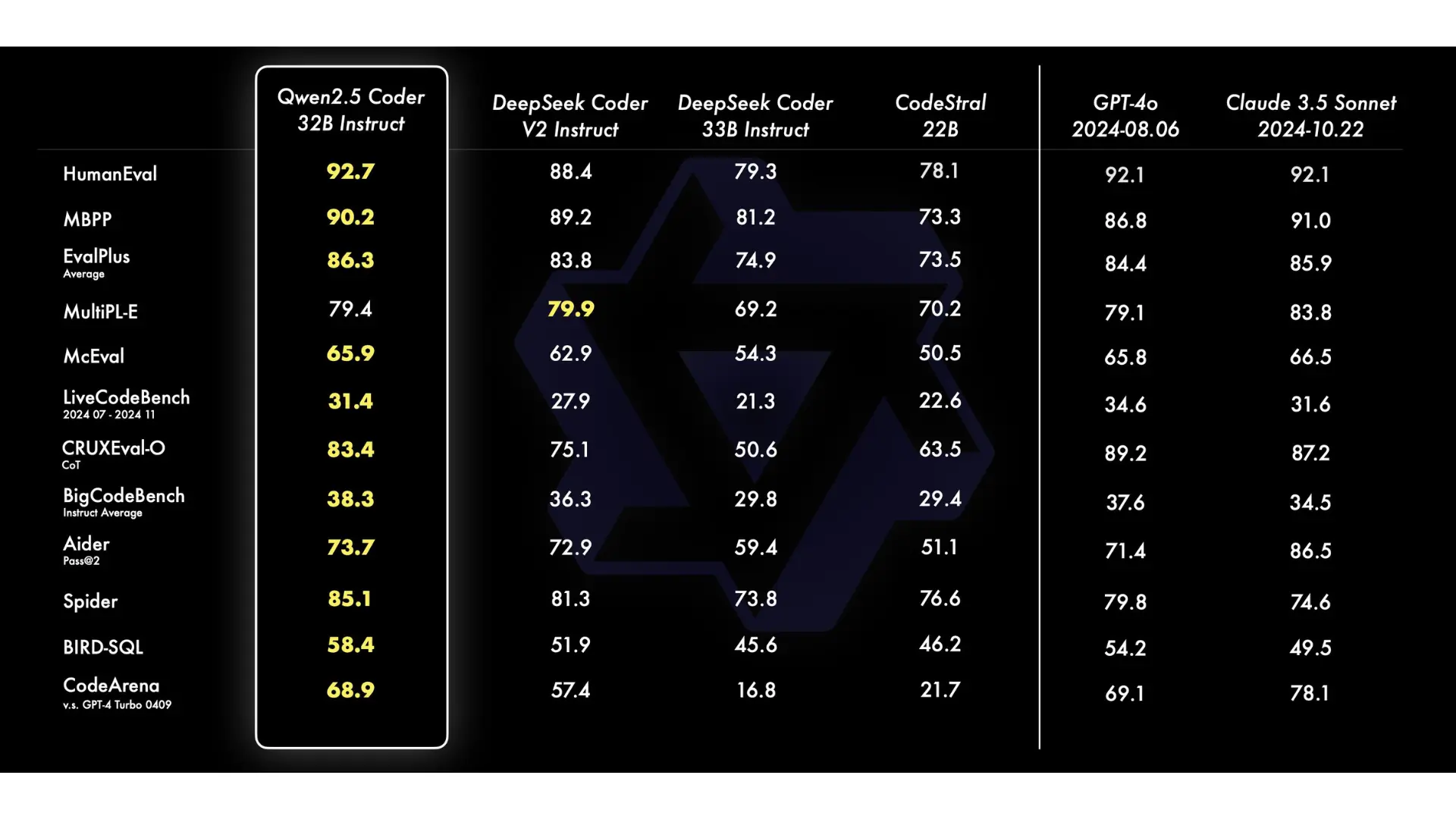
Claude is a strong point of comparison for coding and complex reasoning, with a large context window, and GPT leads on general-purpose breadth and ecosystem, while Gemini is built around multimodal input and very long context inside Google's stack. All three are closed, so you send data to their servers and pay per token.
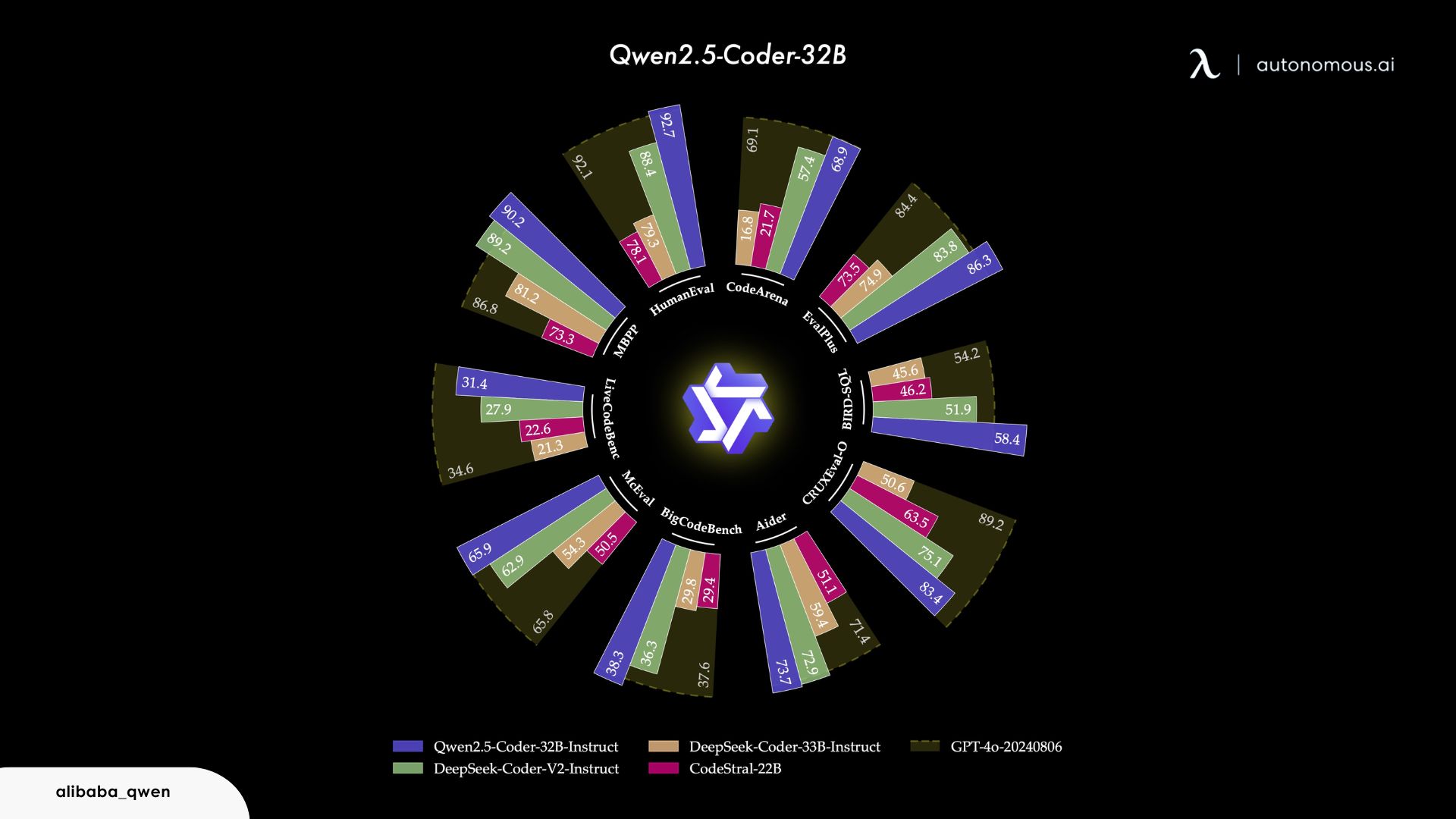
Qwen trades some top-end polish on the hardest reasoning tasks for control: you can run it on your own hardware, keep data in-house, and avoid per-token bills, which matters most at volume or where privacy is a hard requirement. For a single high-stakes reasoning task, a top closed model may still edge it. For cost, control, and privacy at scale, open Qwen is the reason people switch.
Qwen versus the open models: Llama, Mistral, and Gemma
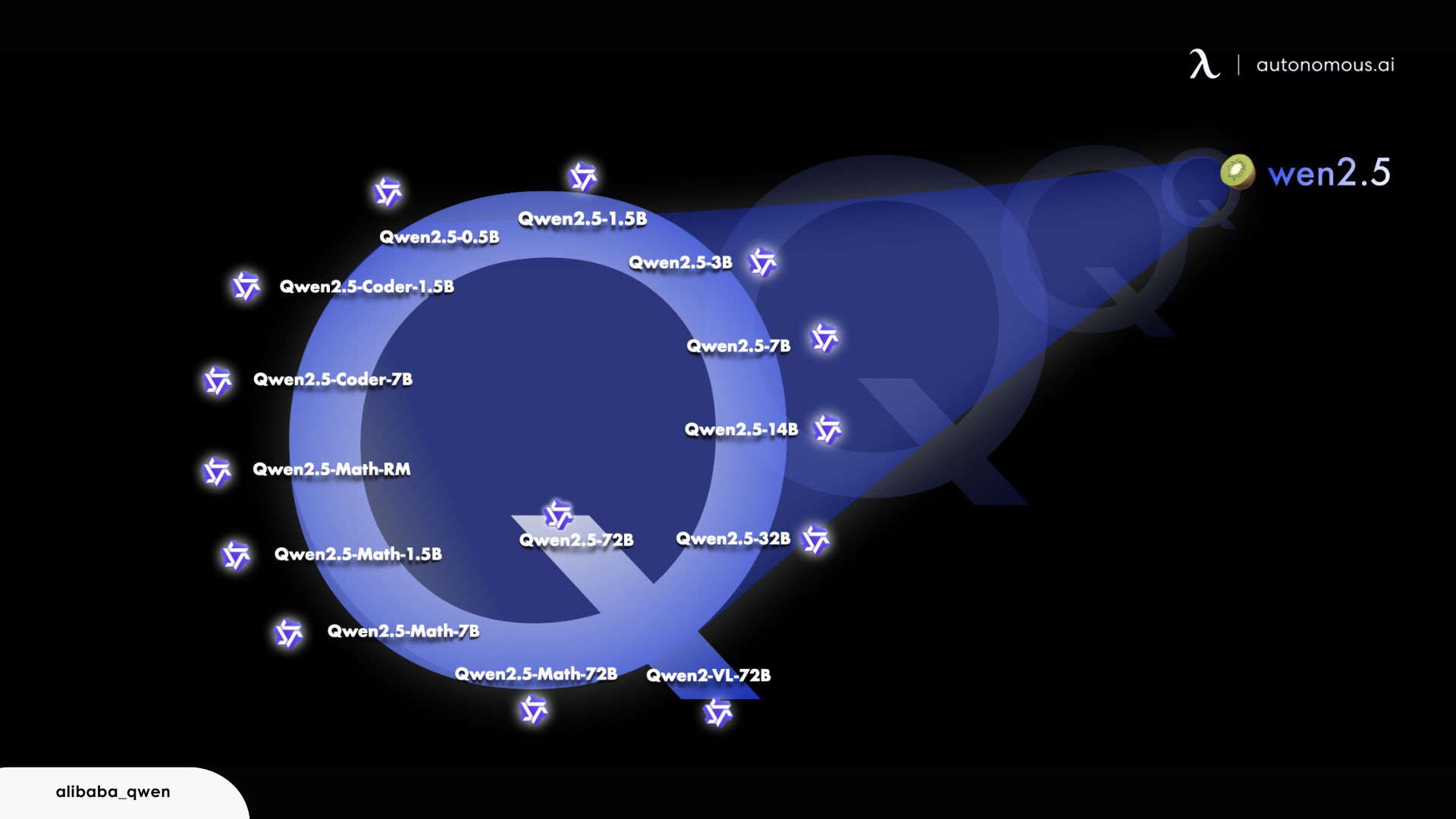
Among open models, Qwen competes most directly with Llama, Mistral, and Gemma, and its edge is breadth and multilingual strength. Qwen has surpassed Llama in cumulative open-model downloads, offers a wider family across vision, audio, and code, and tends to lead on multilingual and coding tasks.
Llama remains the Western open standard with a deep tooling ecosystem and strong English performance, so it is a safe default where that ecosystem matters. Mistral, from France, focuses on efficient, capable smaller models under a clean Apache 2.0 license, which suits lightweight European deployments. Gemma is Google's line of small open models for on-device and low-resource use. All four are self-hostable, so the choice is less about open versus closed and more about which model's strengths and sizes match your workload.
Qwen versus the Chinese open models: DeepSeek, Kimi, and GLM
Qwen's closest rivals are the other Chinese open models, DeepSeek, Kimi, and GLM, which compete on similar open-weight, cost-efficient terms. Here the differences are about specialization rather than open versus closed.
DeepSeek is known for strong reasoning and coding at low cost, and is often the first alternative developers test against Qwen. Kimi, from Moonshot, focuses on very long context and agentic tasks. GLM, from Zhipu, has built a reputation for agentic and coding workloads. Qwen's advantage in this group is breadth and consistency across a full model family and size range, so it works as a general default while the others can win on a specific axis like reasoning cost or context length.
Qwen Code versus coding CLIs
Separately from the models, Qwen Code is a command-line coding tool, and it is compared with CLIs like Claude Code and OpenCode rather than with models directly. This is a different question: it is about the agentic coding workflow and tooling, not the underlying model's quality.
Qwen Code's draw is that it can run against open Qwen models, including ones you self-host, so you are not locked to a single provider's CLI or billing. Claude Code is tightly integrated with its provider's models and is strong on polished agentic coding, while OpenCode is model-agnostic and open. If you want an open, self-hostable coding loop, a Qwen-based CLI fits; if you want the most polished managed experience, a provider CLI may suit better.
Running Qwen on your own hardware
The practical payoff of Qwen being open is that you can run it yourself, which none of the closed models allow. Small Qwen models run on a single consumer GPU, while the larger flagships need serious VRAM, so hardware is the deciding factor once you commit to self-hosting.
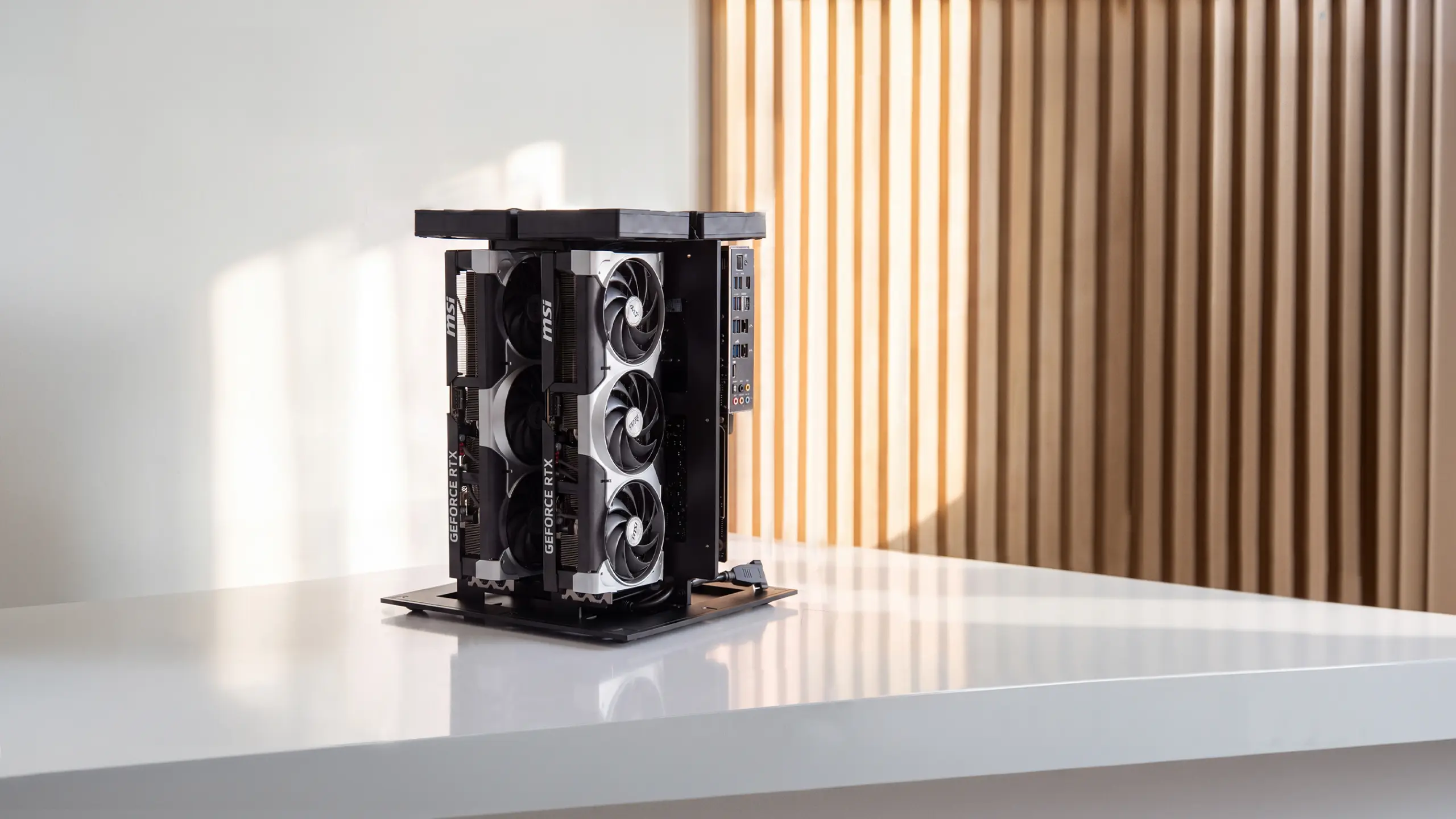
For running the larger Qwen models continuously, or serving a team, a machine built to run open models locally, such as the Autonomous Computer, keeps prompts, data, and models on your own hardware with no API bill or rate limits. For light experimentation, a consumer GPU is enough to start, and for occasional use a hosted API is simpler. The point is that with an open model like Qwen, that choice is yours to make.
Frequently asked questions
Is Qwen better than ChatGPT?
Neither is strictly better; they suit different needs. ChatGPT leads on general-purpose breadth, ecosystem, and polish as a closed product, while Qwen is open-weight, so you can self-host it, keep data private, and avoid per-token costs. For control and cost at scale, Qwen wins; for a managed all-in-one tool, ChatGPT is simpler.
Qwen versus DeepSeek, which is better?
Both are strong Chinese open models with different emphases. DeepSeek is known for reasoning and coding at low cost, while Qwen offers a broader family across text, vision, audio, and code with strong multilingual support. DeepSeek can win on reasoning cost; Qwen is the more versatile general default across a wider range of tasks.
How does Qwen compare to Claude?
The main difference is open versus closed. Claude is a closed model strong at complex reasoning, coding, and long context, accessed through an API. Qwen is open-weight, so you can run it on your own hardware, keep data in-house, and avoid per-token bills. Claude may edge the hardest reasoning; Qwen wins on control and cost.
Is Qwen better than Llama?
Qwen and Llama are both open, and Qwen has overtaken Llama in cumulative downloads. Qwen tends to lead on multilingual and coding tasks and offers a broader model family, while Llama has a deep Western tooling ecosystem and strong English performance. The better choice depends on your language needs and which ecosystem you already use.
Is Qwen open source?
Most Qwen models are open-weight, released under permissive licenses like Apache 2.0, so you can download, run, and fine-tune them yourself. A few specific sizes carry different terms, so check the model card before commercial use. This openness is the main practical difference between Qwen and closed models like Claude, GPT, and Gemini.
Which Qwen competitor is best for self-hosting?
All the open options, Qwen, DeepSeek, Llama, and Mistral, can be self-hosted, unlike closed Claude, GPT, or Gemini. Qwen is a strong default for its breadth and multilingual strength, DeepSeek for reasoning cost, Llama for its ecosystem, and Mistral for efficient smaller models. The best pick depends on your task and hardware.
Conclusion
Qwen stands out among leading AI models because it pairs competitive quality with open weights, which is what separates it from closed models like Claude, GPT, and Gemini and puts it ahead of many open rivals on breadth. Against the closed leaders, Qwen trades a little top-end polish for control, privacy, and cost.
Against open models like Llama, Mistral, DeepSeek, Kimi, and GLM, it competes on family breadth and multilingual strength. If self-hosting and cost matter, Qwen is usually the model to start with, and because it is open, running it your way is the whole point.