Nvidia Employee Benefits and Perks 2026


Nvidia employee benefits are built around equity, not a traditional bonus - quarterly RSUs and one of the most generous stock purchase plans in tech do the heavy lifting. If you're evaluating an Nvidia offer, that changes how you read the numbers, because a package with no annual bonus can still out-earn one that has a big one, depending on the stock. This guide covers Nvidia employee benefits as they stand in 2026: RSUs, the ESPP and its two-year lookback, the 401(k) match, health coverage, and the perks worth knowing before you join.
What are Nvidia's main employee benefits?
Nvidia's main employee benefits are equity-heavy: quarterly-vesting RSUs, a discounted Employee Stock Purchase Plan, a 401(k) match, and strong health coverage. Nvidia's own benefits page describes its ESPP as "among the most generous in industry," and employee comp leans on stock rather than cash bonuses.
Benefit | What it offers |
RSUs | Restricted stock units that vest quarterly (taxed as income at vest) |
ESPP | 15% discount with a 2-year lookback, 4 purchase periods |
401(k) match | Dollar-for-dollar up to $6,000, then 50% on the next $11,000 |
HSA | Employer contribution up to ~$3,000/year |
Health | Medical/dental/vision, mental health, Stanford Health Navigator |
Plan terms and limits change year to year - confirm current details through Nvidia's benefits portal.
How Nvidia's ESPP works (the standout benefit)
Nvidia's Employee Stock Purchase Plan lets employees buy Nvidia stock at a 15% discount with a two-year lookback - the feature that makes it stand out. You can contribute 1–25% of salary via payroll deduction, up to the $25,000 annual share limit. Your offering price is set on the first trading day after your enrollment month and holds for up to two years, across four purchase periods. Each purchase applies the 15% discount to the lower of your offering price or the closing price on that purchase date. Because the lookback locks in a low starting price for up to 24 months, participants can come out ahead even if the stock moves sideways - which is why advisors often call it one of the most mathematically efficient benefits Nvidia offers.
Nvidia RSUs and how they vest
Nvidia RSUs are restricted stock units that vest quarterly and are taxed as ordinary income at each vesting date. Because vesting happens four times a year, RSUs create frequent taxable events, and Nvidia typically withholds shares to cover part of the tax. For employees, the common planning approach is to treat vested RSUs as income - often selling on vest to fund cash flow and other tax-advantaged accounts - rather than holding by default and building up concentrated exposure to a single stock.
Nvidia's 401(k) match and retirement options
Nvidia's 401(k) match is dollar-for-dollar on the first portion of contributions and 50% on the next tier - commonly a full match up to $6,000, then 50% up to an additional $11,000 - and the match is immediately vested. The plan also supports the Mega Backdoor Roth strategy, allowing after-tax contributions and in-plan Roth conversions up to the overall annual limit, which higher earners use to build tax-free retirement savings on top of the standard 401(k).
Nvidia health, HSA, and wellbeing perks
Nvidia's health benefits include comprehensive medical, dental, and vision plans, mental-health support, and the Stanford Health Navigator program, which gives employees access to medical guidance from leading institutions. For those on a high-deductible plan, Nvidia contributes up to about $3,000 a year to an HSA, which doubles as a tax-advantaged long-term investment account. Time-off perks include quarterly "FreeDays," and employees frequently cite the onsite amenities at Nvidia's Voyager campus.
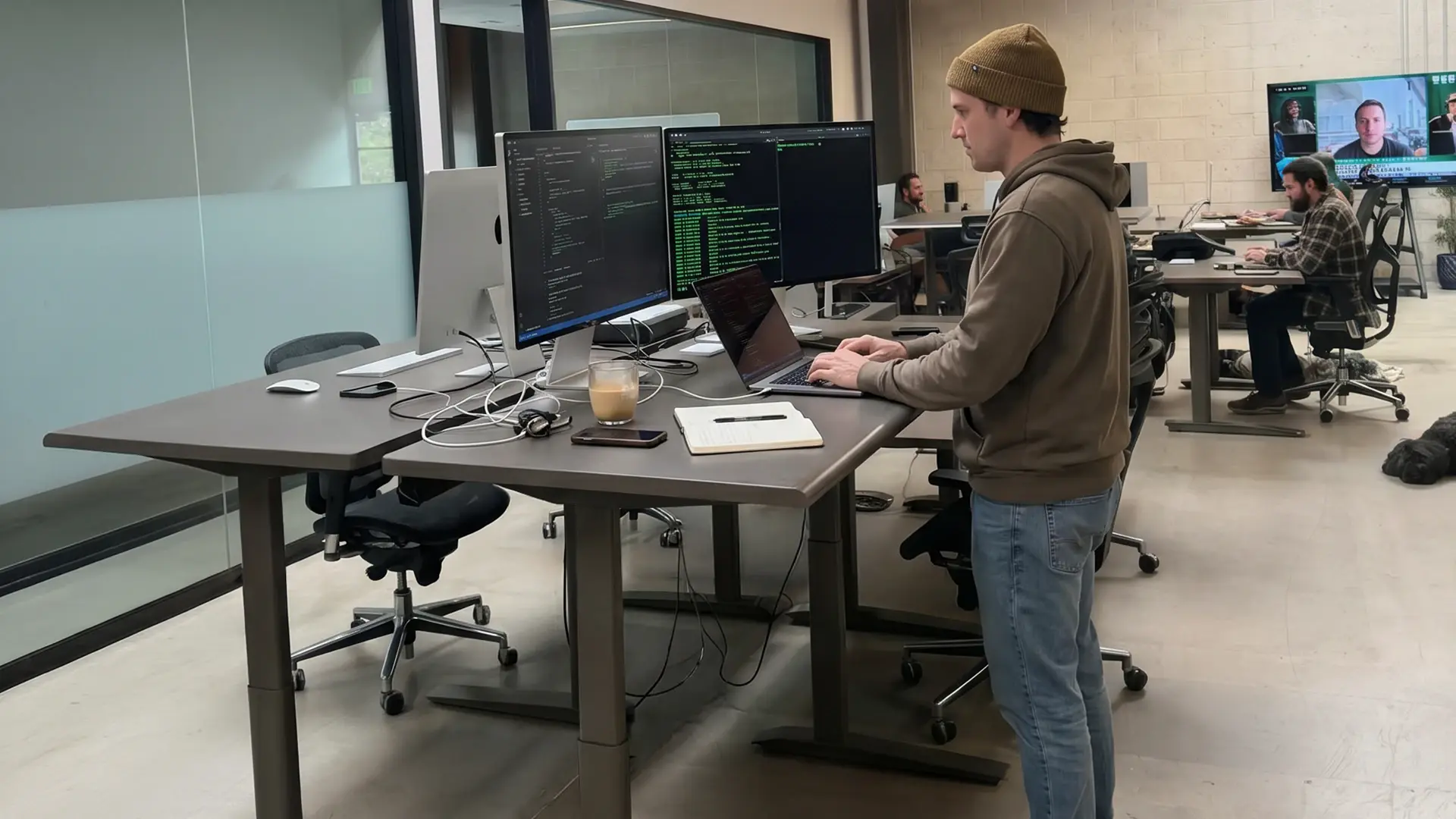
The home-desk piece Nvidia's perks don't cover
Nvidia's benefits build wealth, but the intense, long-session pace they reward is hard on the body, and much of that work happens at a home desk. For long focus blocks, the office chair is the variable that matters most. Autonomous's ErgoChair Pro is designed to be set once and left alone: nine adjustment points, a lumbar support sliding across a 6-inch range, an Italian Donati synchro-tilt through 22 degrees with five lock positions, and a mesh back rated to 300 lbs and built for 12-hour sessions.
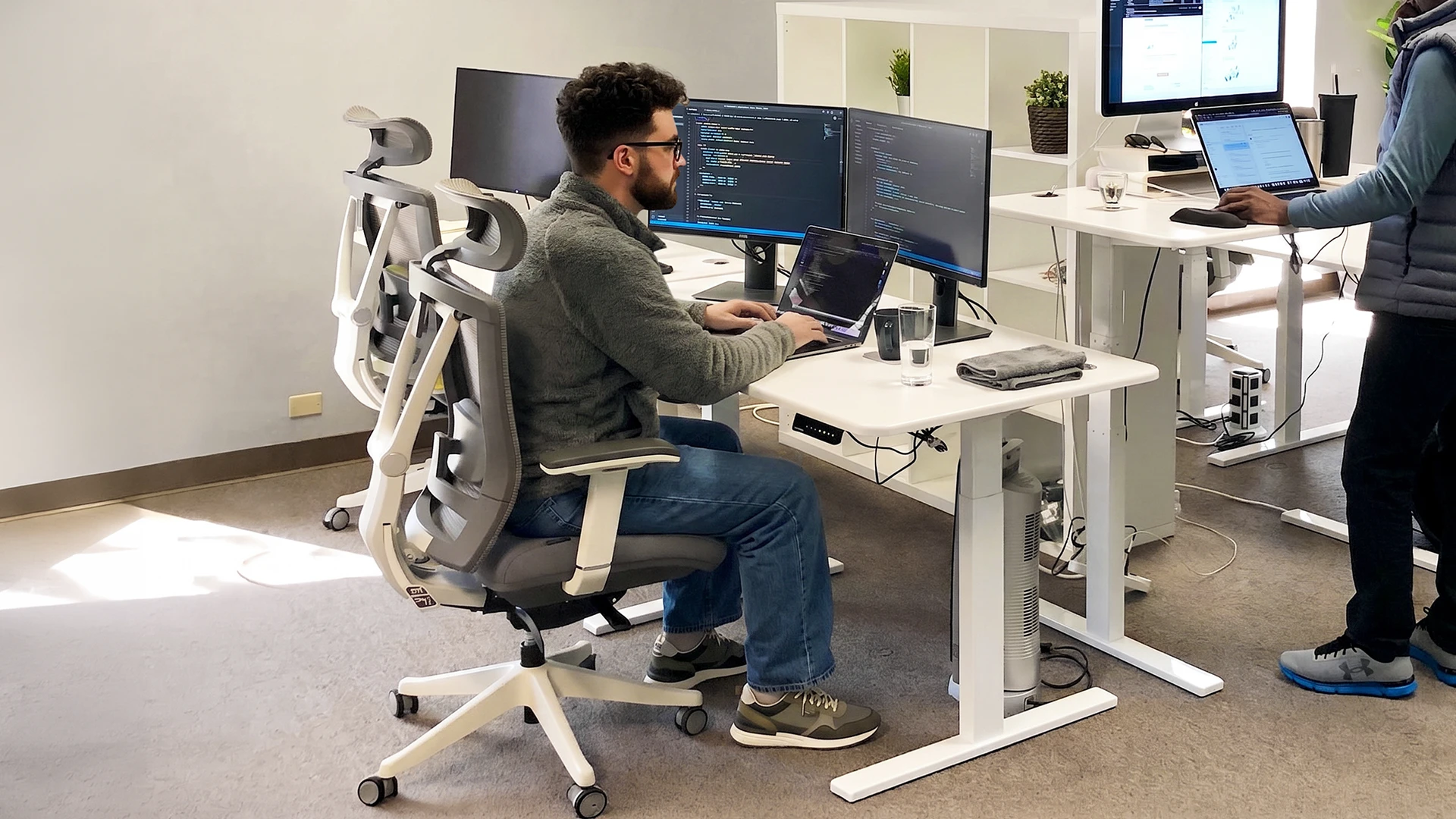
If you're a team lead outfitting a cluster of engineering desks rather than buying for yourself, Autonomous applies automatic volume pricing on bulk orders at three or more units, and individual buyers can use code BLOGFIRST5 for an extra discount at checkout. A well-supported setup handles the fatigue side of deep work that an equity package won't.

Frequently Asked Questions
What are Nvidia's employee benefits?
Nvidia employee benefits include quarterly-vesting RSUs, an Employee Stock Purchase Plan with a 15% discount and two-year lookback, a 401(k) match, HSA contributions, and comprehensive health coverage. Compensation leans heavily on equity rather than cash bonuses.
Do Nvidia employees get stock?
Yes, Nvidia employees receive stock primarily through quarterly-vesting RSUs, and can buy additional shares at a discount through the ESPP. RSUs are the main ongoing equity vehicle, taxed as income when they vest.
How does the Nvidia ESPP work?
The Nvidia ESPP lets employees contribute 1–25% of salary to buy stock at a 15% discount, with a two-year lookback across four purchase periods. The discount applies to the lower of the offering price or the purchase-date price, up to a $25,000 annual limit.
What is Nvidia's 401(k) match?
Nvidia's 401(k) match is commonly dollar-for-dollar up to $6,000, then 50% on the next $11,000 of contributions, and it vests immediately. The plan also supports the Mega Backdoor Roth strategy for additional after-tax savings.
Does Nvidia contribute to an HSA?
Yes, for employees on a high-deductible health plan, Nvidia contributes up to about $3,000 a year to a Health Savings Account. The HSA offers triple tax advantages and can be invested for the long term.
Does Nvidia offer an annual bonus?
Nvidia's compensation leans on equity rather than a traditional annual cash bonus, which some employees note when comparing offers. RSUs and the ESPP are meant to deliver the upside a bonus would elsewhere.
How are Nvidia RSUs taxed?
Nvidia RSUs are taxed as ordinary income when they vest, which happens quarterly. Nvidia typically withholds shares to cover part of the tax, and any later gain or loss after vesting is a capital gain or loss.
What health benefits does Nvidia provide?
Nvidia provides medical, dental, and vision plans, mental-health support, and the Stanford Health Navigator program for access to leading medical institutions. HSA contributions and wellness perks add to the package.
Is Nvidia's ESPP better than other tech companies'?
Nvidia's ESPP is considered top-tier because of its 15% discount combined with a two-year lookback, which few employers offer. That structure can produce strong returns even in a flat market, though it carries single-stock concentration risk.
How should I prioritize Nvidia's benefits?
Advisors commonly suggest capturing the full 401(k) match first, then funding the HSA and Mega Backdoor Roth, then the ESPP, while selling vested RSUs to diversify. The right order depends on your cash flow and existing Nvidia stock exposure.
Conclusion
Nvidia employee benefits are a wealth-building engine built on equity: quarterly RSUs, a 15% ESPP with a rare two-year lookback, a solid 401(k) match with Mega Backdoor Roth support, and strong health coverage with a meaningful HSA contribution. The tradeoff is that much of your pay rides on the stock and there's no traditional annual bonus, so the package can feel less predictable. Because plan terms change yearly and equity carries real concentration risk, confirm current details in Nvidia's portal and plan around the volatility rather than assuming today's numbers hold.
References
- Nvidia Benefits - ESPP (official): https://www.nvidia.com/en-us/benefits/money/espp/
- Nvidia - Employee Benefits, Perks, Salaries (official): https://www.nvidia.com/en-us/about-nvidia/benefits/