7 Creative Office Cubicle Alternatives for Modern Workspaces

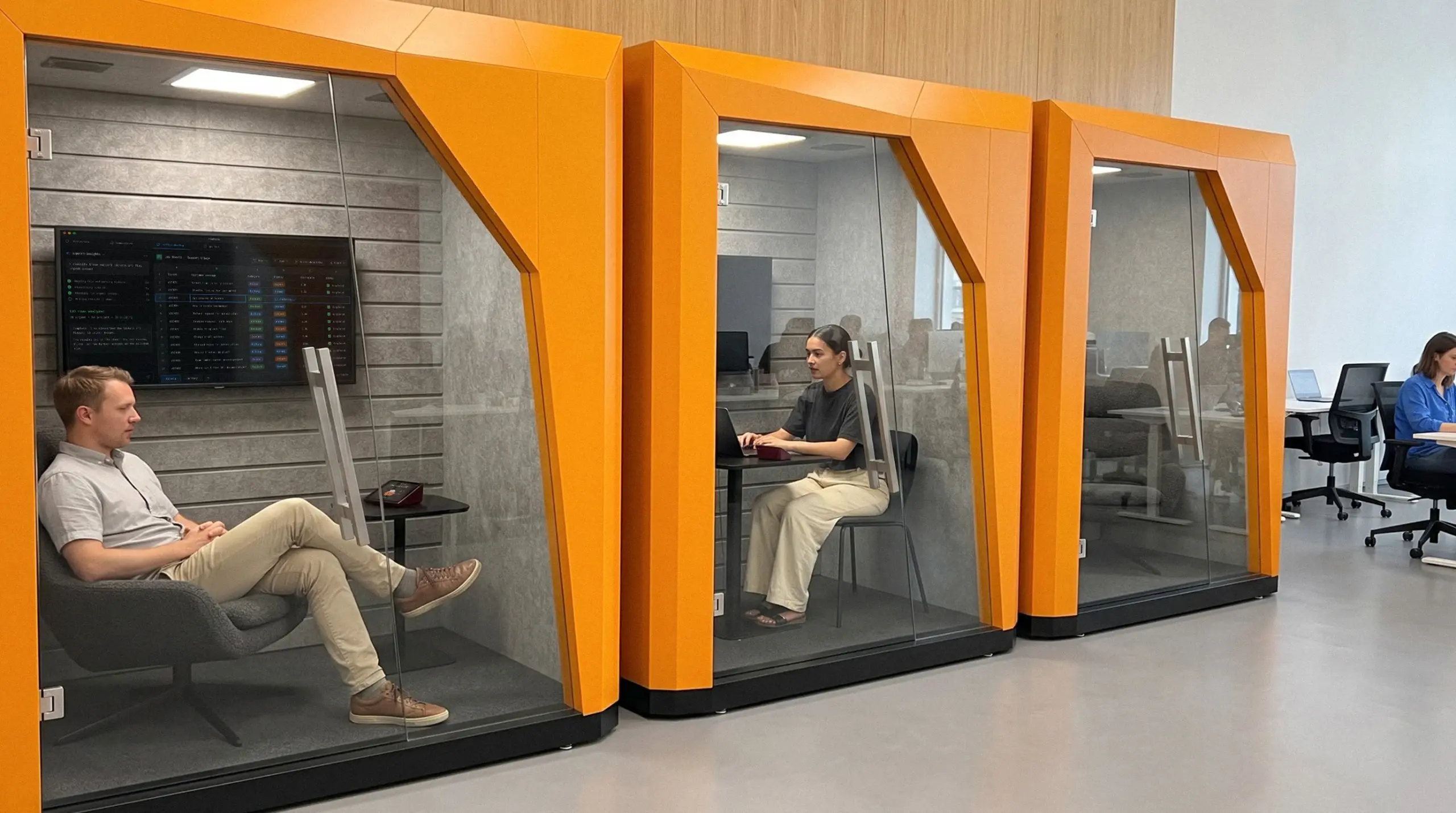
The main office cubicle alternatives are open-plan workspaces, modular workstations, bench desking, private pods, standing desks, lounge areas and collaborative zones, and most offices mix several so people can switch between quiet work and teamwork. The traditional cubicle is losing ground as companies redesign for collaboration, flexibility and hybrid schedules.
If you’re exploring office cubicle alternatives or looking for office cubicle hacks to update your space, the sections below compare each option’s features, benefits, challenges and best fit. Small adjustments can also improve the cubicles you already have.
For inspiration, these office cubicle decor ideas can refresh your cubicle’s style and make it a better place to work.
Why Consider Alternatives to Cubicles?
While cubicles offer a degree of privacy and organization, they also come with limitations:
- Lack of Collaboration: Traditional cubicles can isolate employees, reducing opportunities for teamwork.
- Inflexibility: Fixed structures can’t adapt to changing office needs or layouts.
- Uninspiring Design: The uniformity of cubicles may stifle creativity and employee satisfaction.
By choosing office cubicle options that favor openness, comfort, and adaptability, you can make your workspace more productive and engaging.
Top Office Cubicle Alternatives
1. Open-Plan Workspaces
Open-plan layouts remove barriers and put employees in a shared space where they can collaborate freely. Instead of isolating workers in individual cubicles, this design favors teamwork and transparency, making it a popular alternative for modern offices.
- Features: Open-plan offices include large, shared desks, minimal dividers, and communal spaces that promote interaction and collaboration. For inspiration, explore these open office design ideas to create a dynamic and engaging setup.
- Benefits: This layout encourages communication, supports teamwork, and promotes inclusivity within the workplace. Employees feel more connected and collaborative.
- Challenges: Noise and distractions are common drawbacks in open-plan designs. Soundproofing materials or designated quiet zones help people keep their focus.
- Good For: Open-plan workspaces suit creative industries, startups, and roles that require frequent brainstorming or team-based projects.
For a spacious, modern look, consider the open ceiling concept. This trend exposes structural elements like beams and ductwork, giving the office an industrial and expansive feel.
2. Modular Workstations
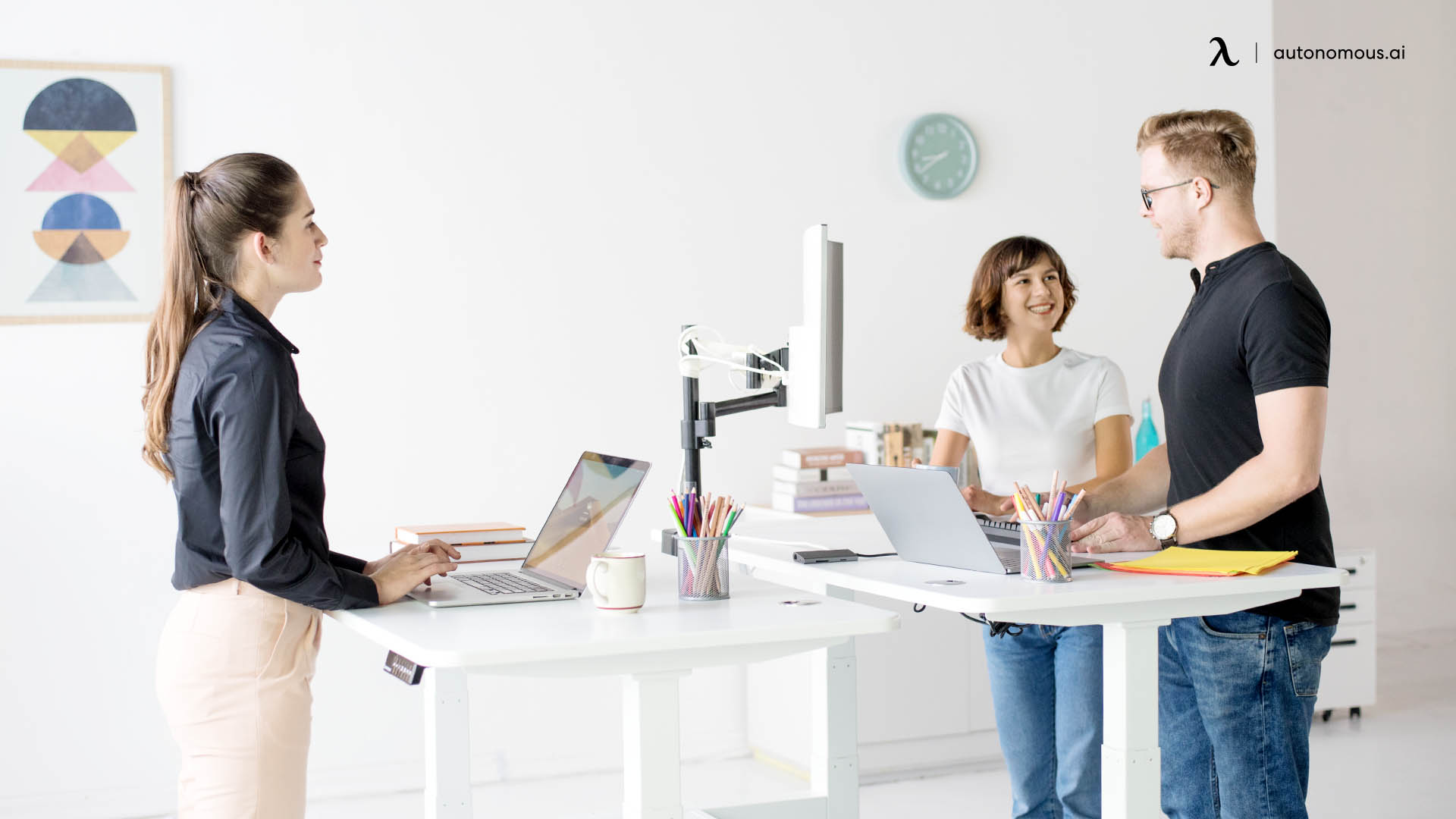
Modular workstations combine the structure of traditional cubicles with the added benefit of flexibility. They are built from movable components that can be reconfigured as needs change, so a business can adapt quickly.
- Features: Modular workstations often include adjustable panels, reconfigurable desks, and customizable layouts. Teams can set up workspaces that match their tasks and preferences. This overview of modular office cubicles covers more options.
- Benefits: Modular workstations adapt well to businesses that are growing or shifting team dynamics. They allow offices to scale operations, reorganize layouts, or accommodate hybrid work setups with ease.
- Challenges: While modular workstations offer long-term value, the upfront cost of quality furniture may be higher than for traditional cubicles. Their durability and flexibility often make up for it.
- Good For: These workstations suit growing businesses, hybrid work environments, and teams with varying workflows, because the workspace can change along with the organization.
Modular workstations strike a balance between practicality and flexibility, offering a scalable solution for businesses that care about both function and modern design.
3. Bench Desking
Bench desking involves shared work surfaces that maximize space efficiency and foster collaboration. These are typically long, continuous desks with multiple seating areas.
- Features: Minimalistic design with shared workstations, sometimes paired with desk dividers for semi-privacy.
- Benefits: Saves space, reduces costs, and encourages a sense of community.
- Challenges: Limited personal storage and potential for crowding.
- Good For: Small teams, tech companies, and offices prioritizing a clean, modern look.
4. Private Pods
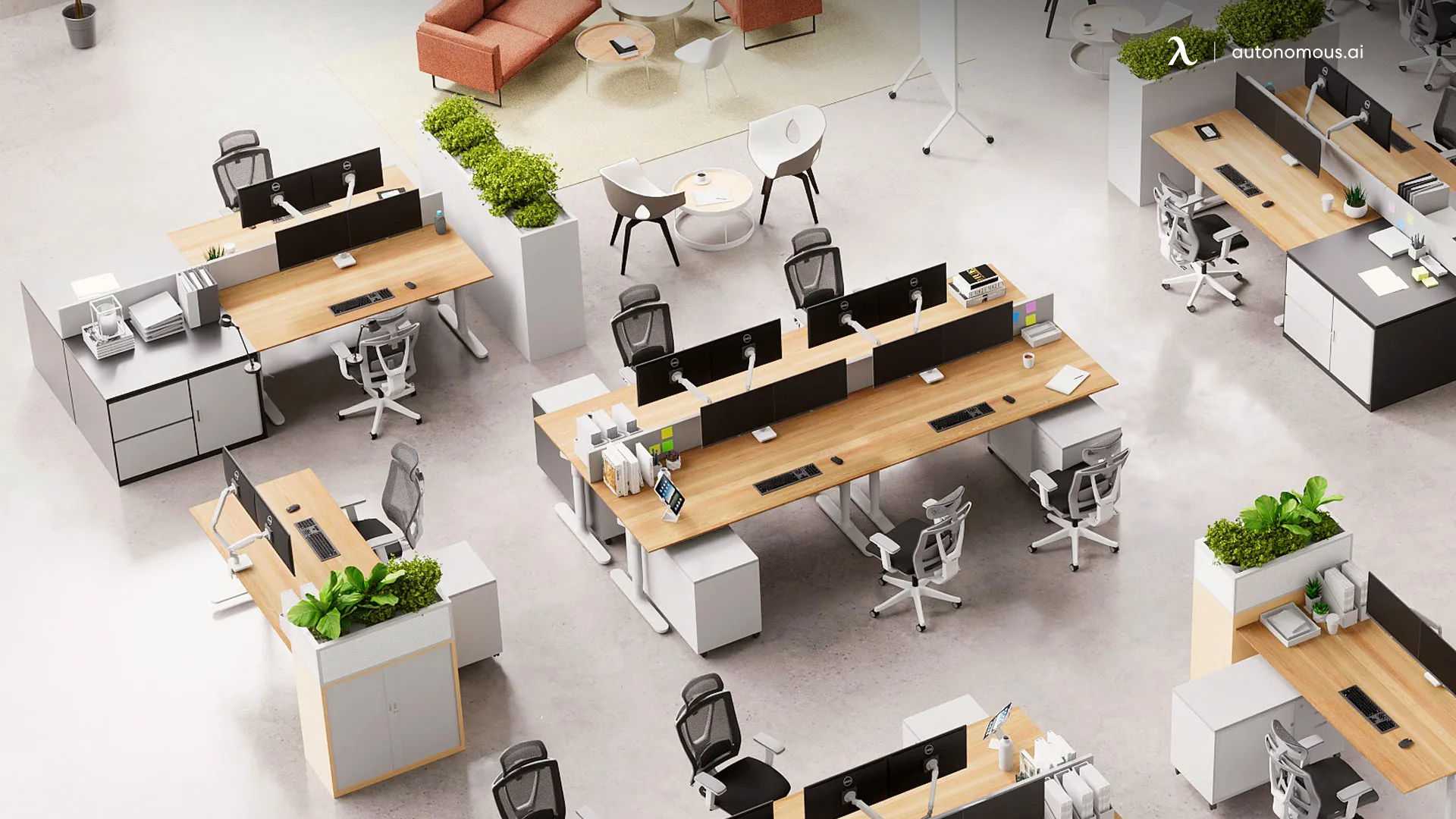
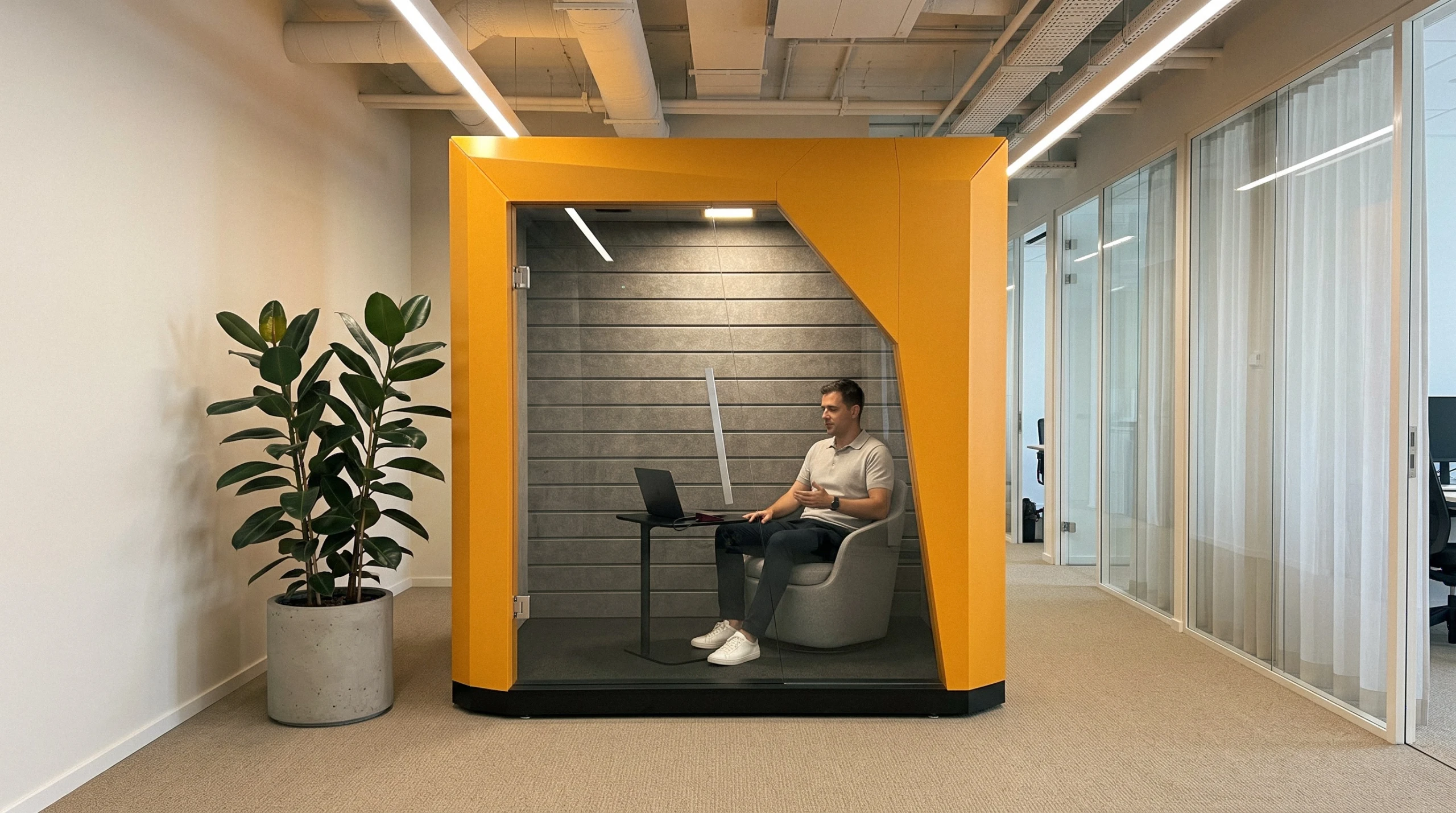
Private pods are small, enclosed spaces designed for individual work or private meetings. They provide an escape from the distractions of open offices.
- Features: Soundproof walls, built-in desks, and comfortable seating. Some models include lighting and ventilation systems.
- Benefits: Offers privacy and focus while still being compact and space-efficient.
- Challenges: High initial cost for quality pods; limited to one or two users per pod.
- Good For: Large offices with open layouts, remote meeting spaces, and focused individual work.
Spaceship is the Autonomous private pod for this role: an indoor, one-person room for calls, video meetings and focus work that stands on the office floor. It has a 10 mm glass door with a full seal, felt walls and ceiling, 30 dB of speech reduction (a preliminary figure), and two roof vents that run all the time. Inside are two outlets, USB-C PD 100 W and Ethernet.
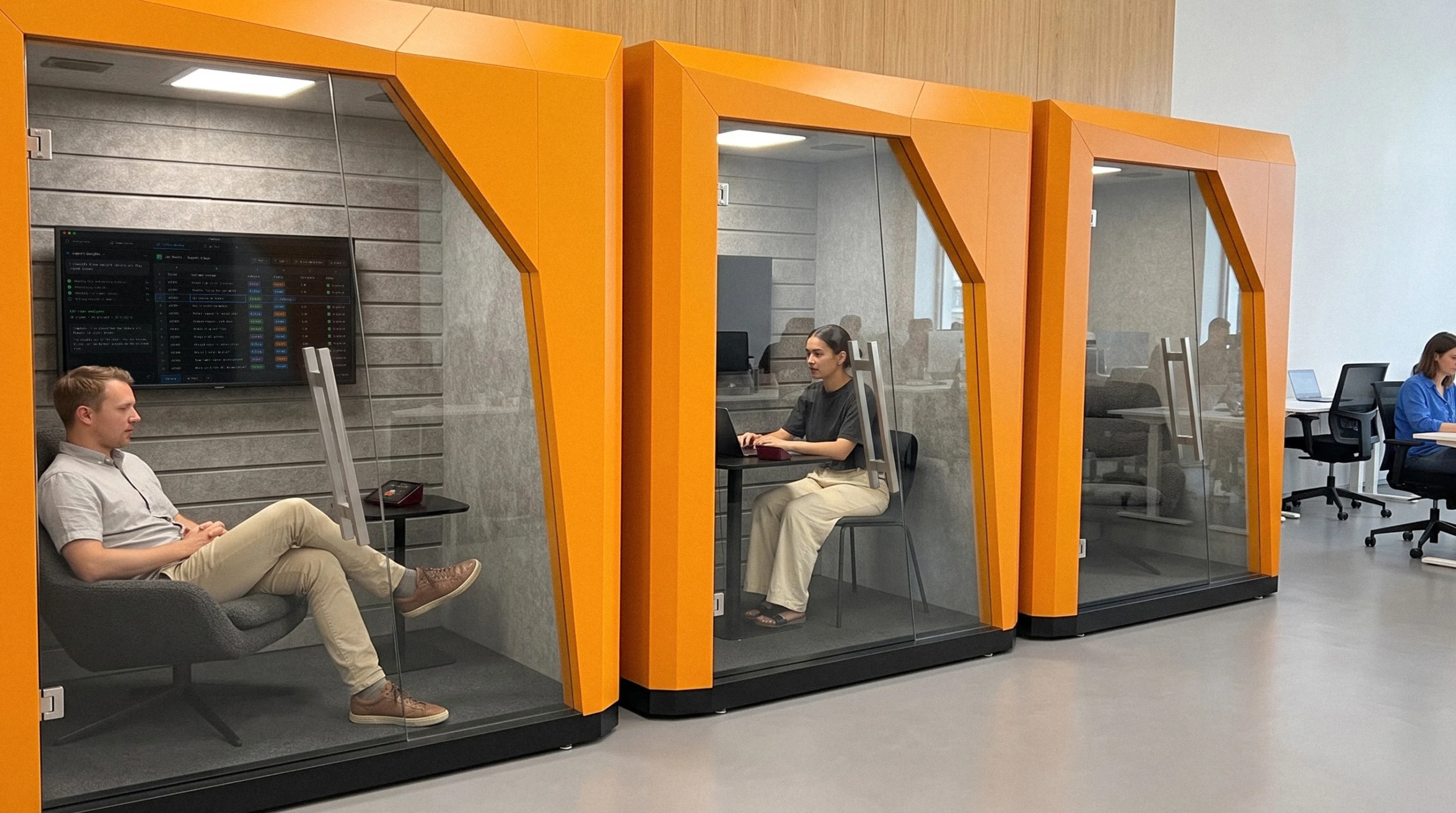
It holds one person, or two for a short sync, so it adds quiet rooms to an open layout rather than replacing every desk. It weighs about 950 lb and arrives flat-packed; two people assemble it on site in a day.
5. Standing Desks
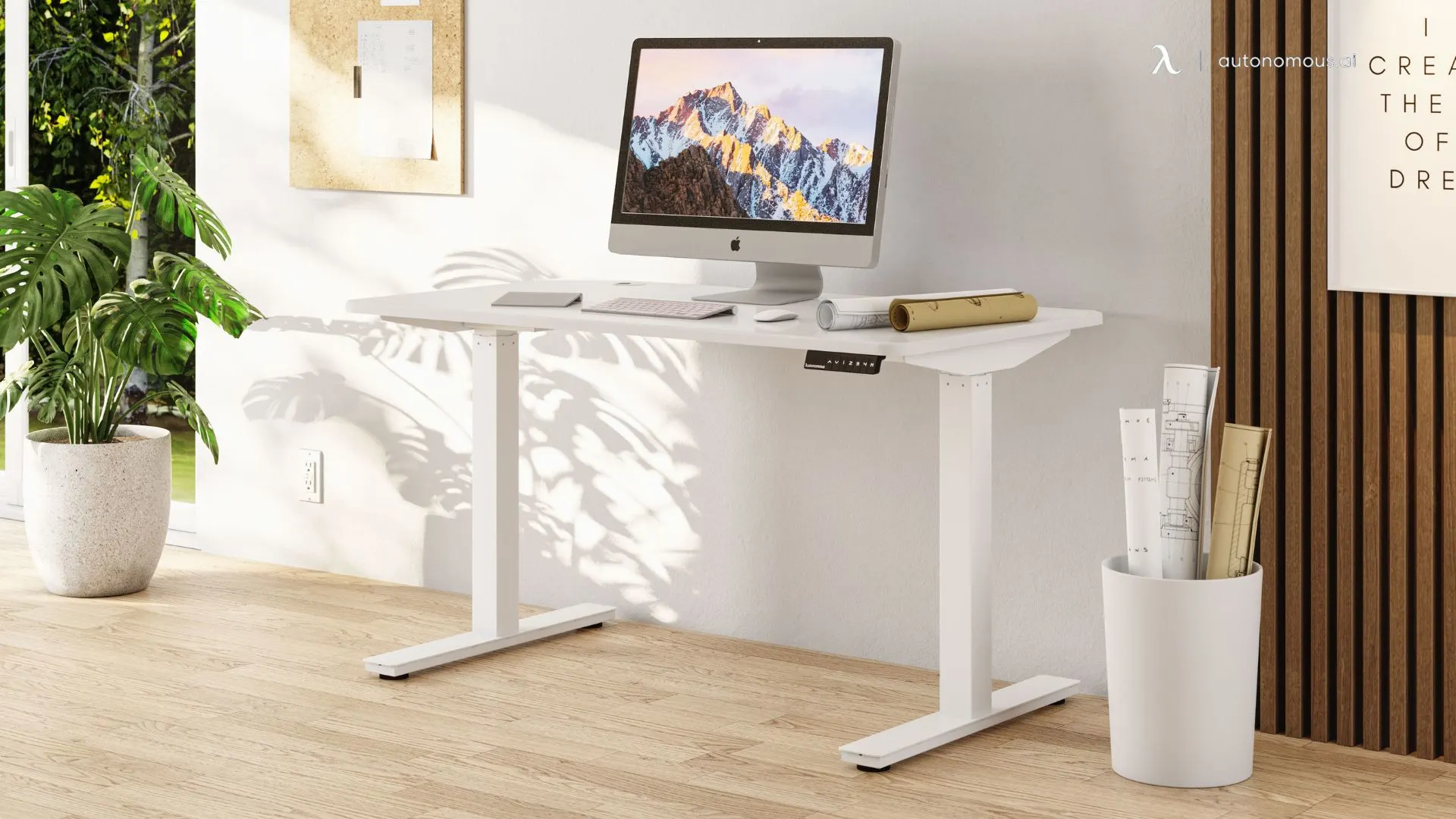
Standing desks let employees alternate between sitting and standing. They’re often equipped with adjustable heights to accommodate different preferences.
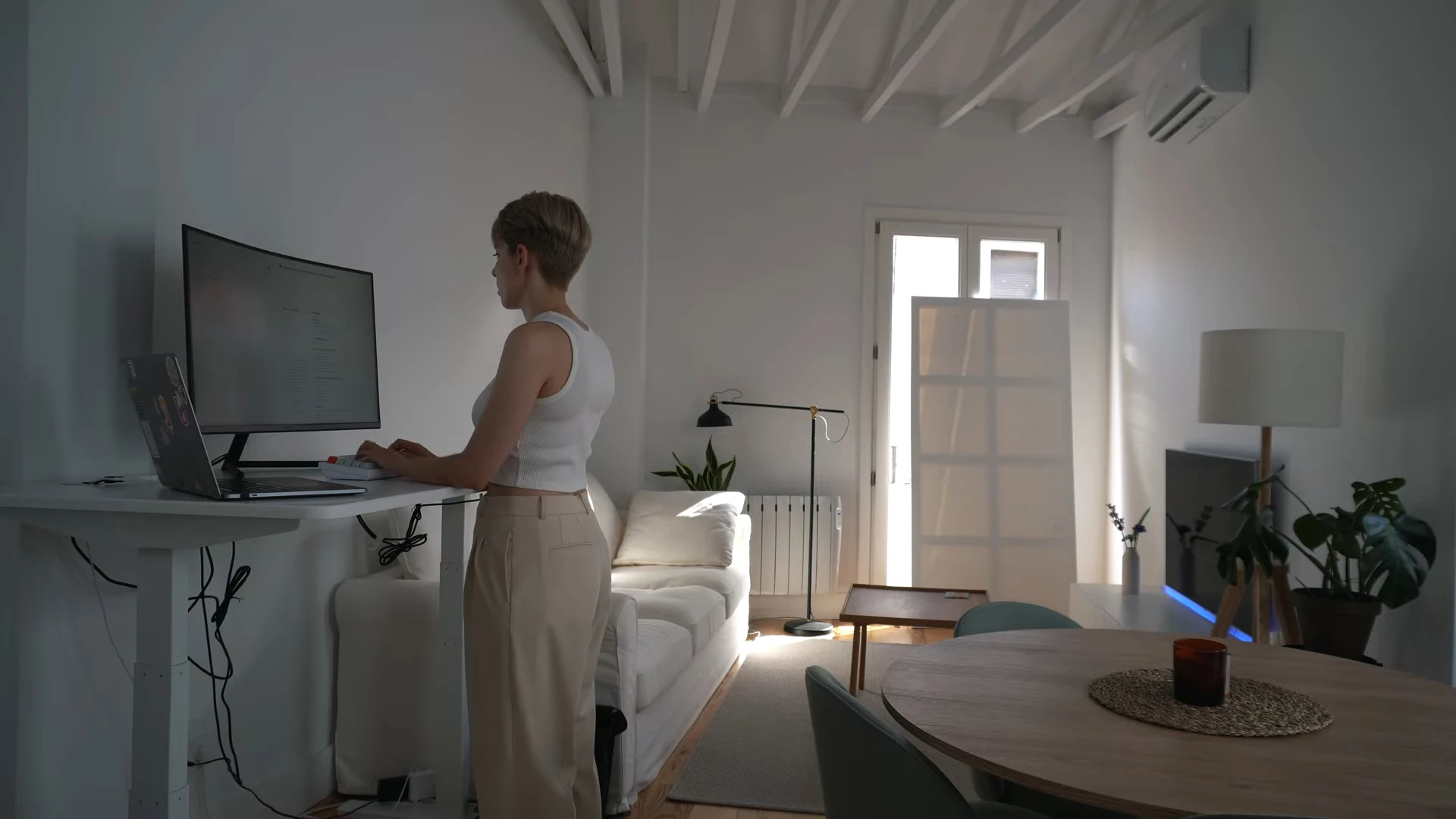

- Features: Height-adjustable mechanisms, spacious surfaces, and ergonomic designs.
- Benefits: Promotes movement, reduces sedentary behavior, and improves posture.
- Challenges: May not suit employees who prefer sitting for long hours; initial investment can be high.
- Good For: Health-conscious workplaces, remote workers, and roles involving computer-intensive tasks.
6. Lounge Areas
Lounge areas replace traditional desks with comfortable seating, like sofas, armchairs, and coffee tables. These spaces encourage relaxation and informal discussions.
- Features: Plush seating, casual layouts, and inviting decor.
- Benefits: Supports creativity and brainstorming, and offers a break from rigid desk setups.
- Challenges: Not suitable for tasks requiring ergonomic desk setups.
- Good For: Creative brainstorming, informal meetings, and break areas.
7. Collaborative Zones
Collaborative zones are open spaces equipped with tools and furniture designed for teamwork. They often include whiteboards, shared tables, and flexible seating arrangements.
- Features: Mobile furniture, writable surfaces, and multimedia capabilities.
- Benefits: Encourages idea-sharing and collective problem-solving.
- Challenges: May disrupt employees who require a quieter workspace nearby.
- Good For: Team projects, strategy sessions, and brainstorming workshops.
Factors to Consider When Choosing Office Cubicle Options
Choosing the right office cubicle alternatives comes down to four factors: office size, employee needs, budget and brand identity.
Start by assessing the size of your office. The layout you select should use the available space well without causing overcrowding. A well-planned design supports productivity and keeps the space comfortable. For guidance, review the average size of an office cubicle to determine the right dimensions for your setup.
Next, consider employee needs. Strike a balance between privacy and collaboration. Some employees need quieter spaces to focus, while others work best in open, team-oriented areas. Workstations that serve both lead to higher satisfaction and efficiency. Feng Shui office cubicle principles can also make spaces feel calmer and more comfortable.
Budget is another significant consideration. Look for cost-effective options, such as modular furniture or refurbished pieces, which provide functionality and style without exceeding your financial limits. These alternatives often offer good value for the money.
Lastly, reflect on how the workspace design aligns with your brand identity. Your furniture and layout should represent your company’s culture and values, leaving a cohesive and professional impression on both employees and visitors. A thoughtfully designed workspace supports morale and teamwork and shapes how visitors see your business.
Office Cubicle Hacks for Enhanced Functionality
If you cannot fully move away from cubicles, small adjustments make a real difference. These office cubicle hacks are practical, affordable ways to improve functionality and comfort in traditional setups.
One effective hack is a height-adjustable desk converter. It lets employees alternate between sitting and standing throughout the day, which adds movement and reduces the strain of prolonged sitting.
Another practical upgrade is the use of wall-mounted organizers or magnetic boards. These solutions make use of vertical space and keep desks clutter-free. Task lighting helps too: proper lighting reduces eye strain and makes long work sessions easier.
To make cubicles more inviting and personal, consider small yet meaningful touches. Plants, artwork, or family photos can turn a bland cubicle into a space people like working in. Options like cubicle plants add greenery, which also improves air quality and promotes well-being.
For creative ways to update your workspace, look at modern office cubicle decor for trendy ideas or opt for minimalist cubicle decor for a sleek and uncluttered aesthetic. Want something more playful? Cute office cubicle decor ideas can add fun and personality to your space.
For budget-friendly options, turn to small office cubicle decoration ideas. These ideas show how even a modest spend can refresh your cubicle. And for practical tools and accessories, explore cubicle essentials to improve functionality and organization.
Pros and Cons of Office Cubicle Alternatives
| Pros | Cons |
|---|---|
| Increased Collaboration and Communication: Open layouts encourage teamwork and idea sharing. | Potential Noise Distractions: Open spaces can be noisy without proper sound management. |
| Flexibility: Modular setups adapt to changing office needs and team sizes. | Reduced Privacy: Alternatives like open workspaces may lack personal space. |
| Higher Employee Satisfaction: Modern designs create inviting and comfortable environments. | Initial Transition Costs: Switching to new layouts or furniture may require significant investment. |
| Space Optimization: Options like standing desks and bench desking make better use of available space. | Adjustment Period: Employees may need time to adapt to new layouts or workflows. |
| Health and Well-being: Features like standing desks reduce sedentary behavior. | Not Always Suitable for All Roles: Highly focused tasks may still require private setups. |
To address these challenges, make sure alternative setups include noise management solutions and options for individual-focused work.
FAQs
What can I use instead of office cubicles?
Instead of cubicles, offices use open-plan seating, modular workstations, bench desks, private pods, standing desks, lounge areas and collaborative zones. Most mix two or three: open or bench seating for daily work, plus enclosed pods or rooms for calls and focus.
What are innovative office cubicles?
Innovative office cubicles are modern takes on the cubicle, such as modular panels you can reconfigure, height-adjustable desks with acoustic dividers, and enclosed one-person pods with their own door, lighting and ventilation. They keep some privacy without the fixed rows of a classic cubicle farm.
What are temporary office cubicles?
Temporary office cubicles are freestanding partitions, desk-mounted screens or mobile acoustic panels that create workstations without construction. They suit short leases, growing teams and event spaces, because you can set them up, move them or remove them in hours rather than weeks.
How do you add privacy without cubicles?
Add privacy without cubicles by mixing desk dividers, acoustic panels and planters for visual separation with enclosed spaces for sound. Phone booths, private pods or small meeting rooms give people a door to close for calls and confidential conversations.
Are open offices better than cubicles?
Open offices are not automatically better than cubicles. They help teamwork and use space well, but they add noise and reduce privacy, so focus-heavy roles often do worse in them. A mix of open seating and quiet enclosed spaces usually works better than either alone.
Conclusion
Cubicle alternatives give you more ways to modernize your office than a straight swap to open plan. Whether you choose modular workstations, standing desks, or private pods, there are office cubicle options to suit most business needs.
For those sticking with traditional cubicles, small changes through office cubicle hacks can make a real difference. If you put flexibility, function and employee well-being first, the workspace will support both focus and teamwork.