Standing Desk vs Sitting Desk: Which Should You Use?

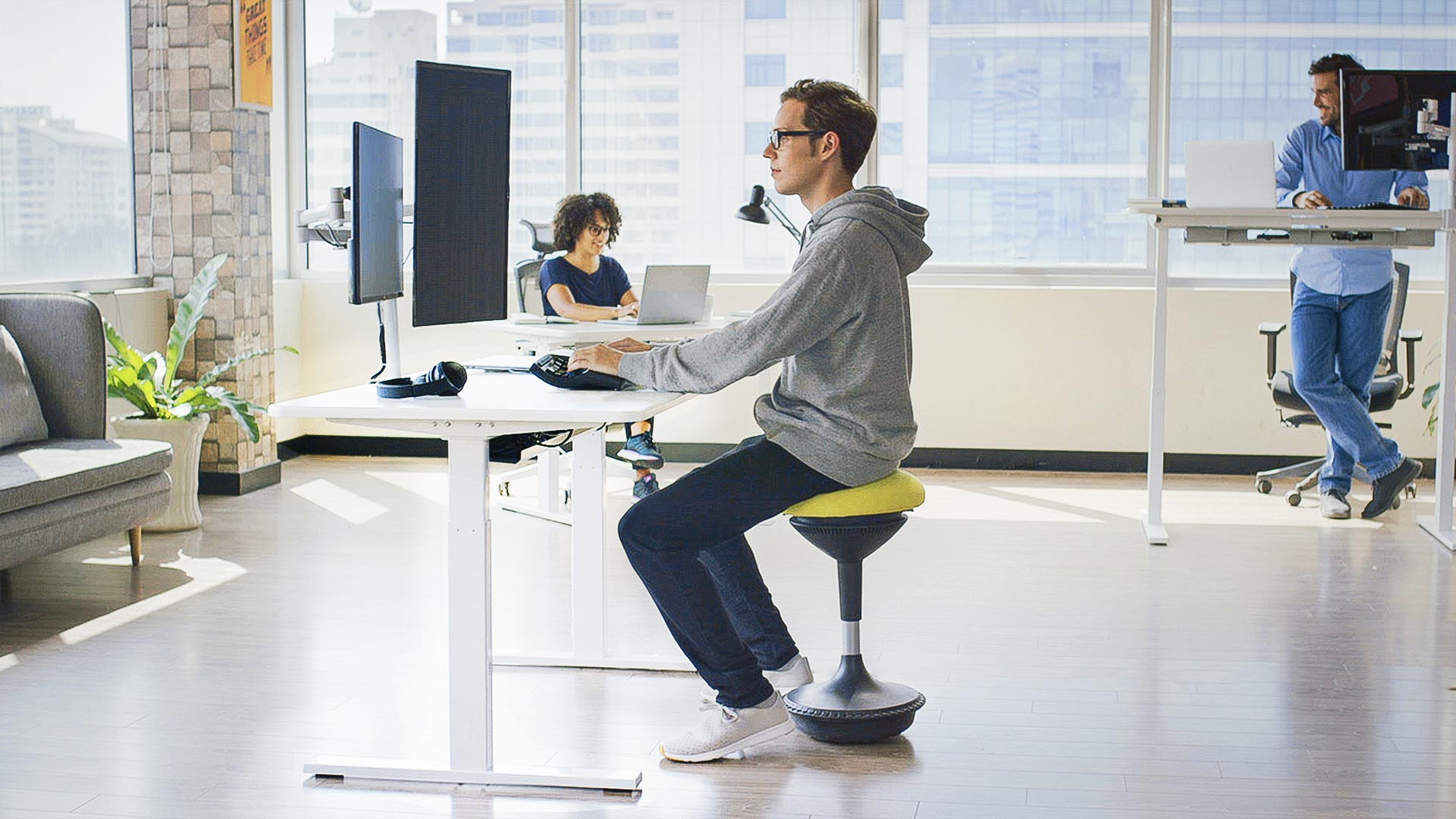
A standing desk edges out a sitting desk for most people at work, but only because it lets you do both. The real problem with a plain sitting desk is that it locks you into one position for hours, and the real advantage of a standing desk is that it makes switching easy. Neither standing all day nor sitting all day is the goal. This guide compares the two desks on the things that actually decide it: adjustability, health, cost, and space, so you can pick the one that fits how you work.
Standing desk vs sitting desk at a glance
The table below sums up the trade-offs. The detail sections after it focus on the desk itself, since that is what you are actually choosing between.
Factor | Standing desk | Sitting desk |
|---|---|---|
Height | Adjustable, sit or stand, needs a mat for long standing | One fixed height, paired with a chair |
Movement | Easy to switch position through the day | Locks you into sitting |
Health | Breaks up sitting, burns a little more energy | Comfortable, but long sitting adds risk |
Adjustability | Motorized presets and a wide height range | Fixed, simple, static |
Cost | Higher upfront, budget models exist | Cheaper and widely available |
Space | Compact, cable trays fit the frame | May need more room for chair and accessories |
What is the difference between a standing desk and a sitting desk?
The core difference is height adjustment. A sitting desk has one fixed height built for a chair, while a standing desk, more accurately a sit-stand desk, raises and lowers so you can work seated or standing and switch between the two.
That single feature changes how you use the desk. A fixed sitting desk is simple and stable, but it commits you to sitting for the whole day. A sit-stand desk gives you a choice at any moment, which is why the comparison is less "sitting vs standing" and more "one position vs the ability to change." For working at a desk all day, the ability to change is the feature that matters most.
Adjustability and features
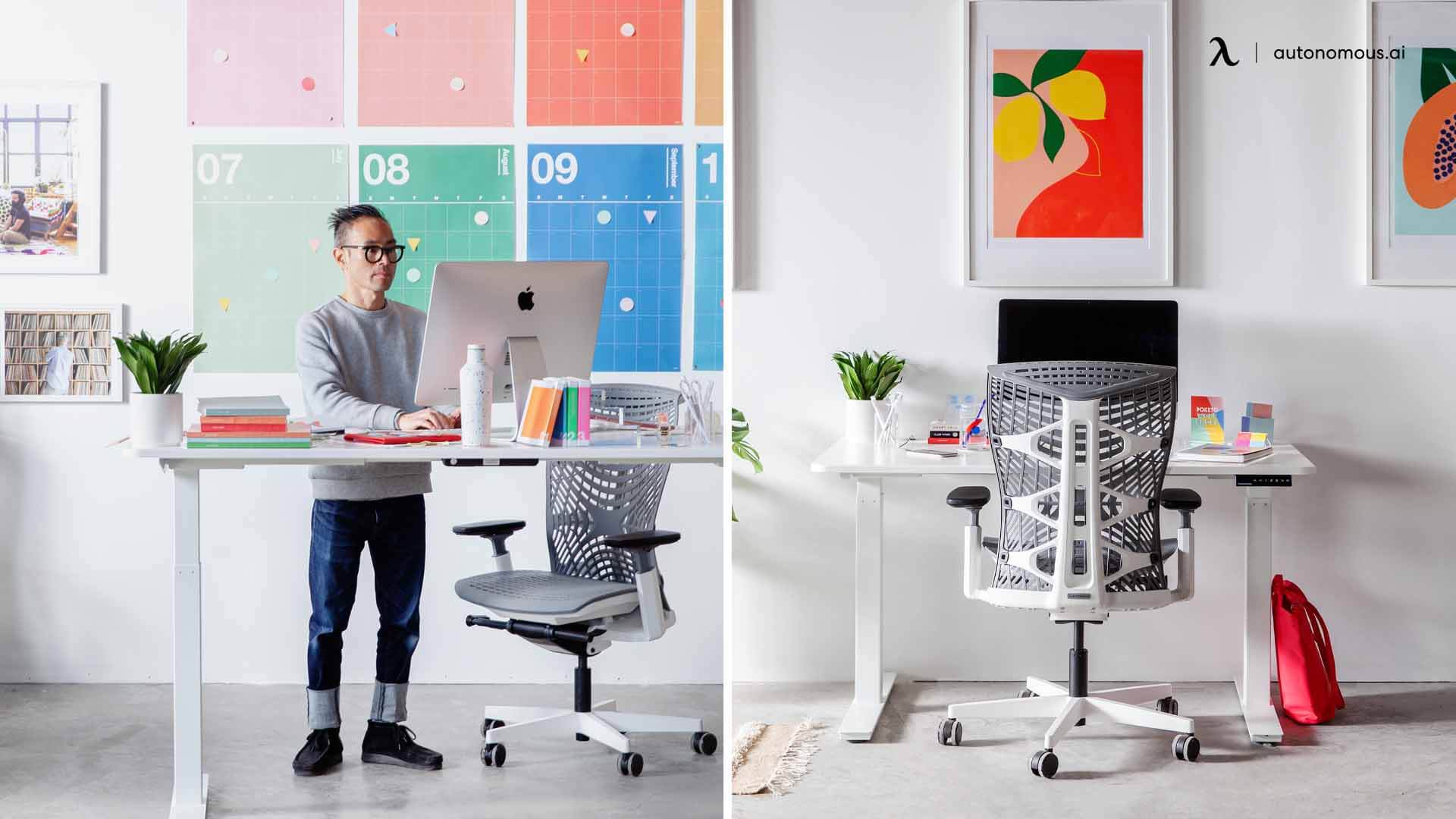
Adjustability is where a standing desk clearly leads, and it is the main reason to pay more for one. A motorized sit-stand desk moves through a wide height range at the touch of a button, and programmable presets let you save your seated and standing heights so switching takes one press. Dual-motor frames raise and lower faster and more evenly, and anti-collision sensors stop the top if it meets an obstacle.
A sitting desk offers none of this. It is one height, chosen once, which suits a consistent routine but nothing else. If your work varies through the day, or more than one person uses the desk, the adjustability of a sit-stand model is worth the extra cost. Budget manual crank models exist if you want the height range without the motor. Getting the height right matters either way, and how high a standing desk should be differs between sitting and standing.
Health: sitting vs standing at work
Neither desk is healthy on its own; how you use it decides that. A sitting desk is comfortable for focused work, but long unbroken sitting is linked to higher risk of back pain, weight gain, and heart problems, which is why sitting all day is the real issue. A standing desk does not fix that by itself, but it makes it easy to break up sitting, which is the part that helps.
The gains from standing are modest and often overstated. It burns only a little more than sitting, and it is not exercise, so it will not replace movement or a workout. How much standing burns calories comes to a small number, and the benefits of a standing desk cover the full health picture and its limits. The healthiest setup with either desk is the same: change position and move often.
Productivity and energy
Many people feel more alert when they alternate sitting and standing, since standing can ease the mid-afternoon slump and prompt small movements that keep energy up. A sitting desk is better for tasks that need long, still concentration and fine motor control, where standing can get tiring.
In practice this is not a reason to pick one desk over the other so much as a reason to want both. A sit-stand desk lets you sit for deep focus and stand to reset, which is why it suits a varied workday better than a fixed desk that only does one of those well.
Cost and value
A sitting desk wins on price. Traditional desks are cheaper and everywhere, while a motorized sit-stand desk costs more upfront. The gap has narrowed, though, and budget sit-stand models are widely available, so the decision is less about affordability than about whether you will use the height feature.
The value question is simple: a standing desk is worth the extra only if you actually switch positions. Used that way, it earns its cost over years of easier movement. Left at one height, it is an expensive sitting desk. Whether a standing desk is worth it comes down to your habits more than the price.
Space and setup
A sit-stand desk is often more compact and integrates cleanly with under-desk accessories, since a cable tray or a power strip can bolt to the frame and move with the top. A sitting desk can need more room once you add an ergonomic chair and accessories around it.
Setup differs too. A sitting desk is ready as soon as it is built, while a standing desk needs its heights set for both sitting and standing, plus an anti-fatigue mat if you stand for long stretches. Neither is hard, but the sit-stand desk rewards a few minutes spent dialing it in. A full standing desk setup covers doing that for both positions.
Which desk should you choose?
Choose a sit-stand desk if you sit for most of the day and want an easy way to break that up, if more than one person uses the desk, or if your work shifts between focused and active stretches. It is the better default for a full workday because it does both jobs.
Choose a fixed sitting desk if your budget is tight, your routine is consistent and comfortable, or you already build movement into your day another way and do not need the height feature. And whichever you pick, the healthiest habit is the same: do not stay in one position for hours. A good standing desk with memory presets makes that easy, but a sitting desk plus regular breaks works too.
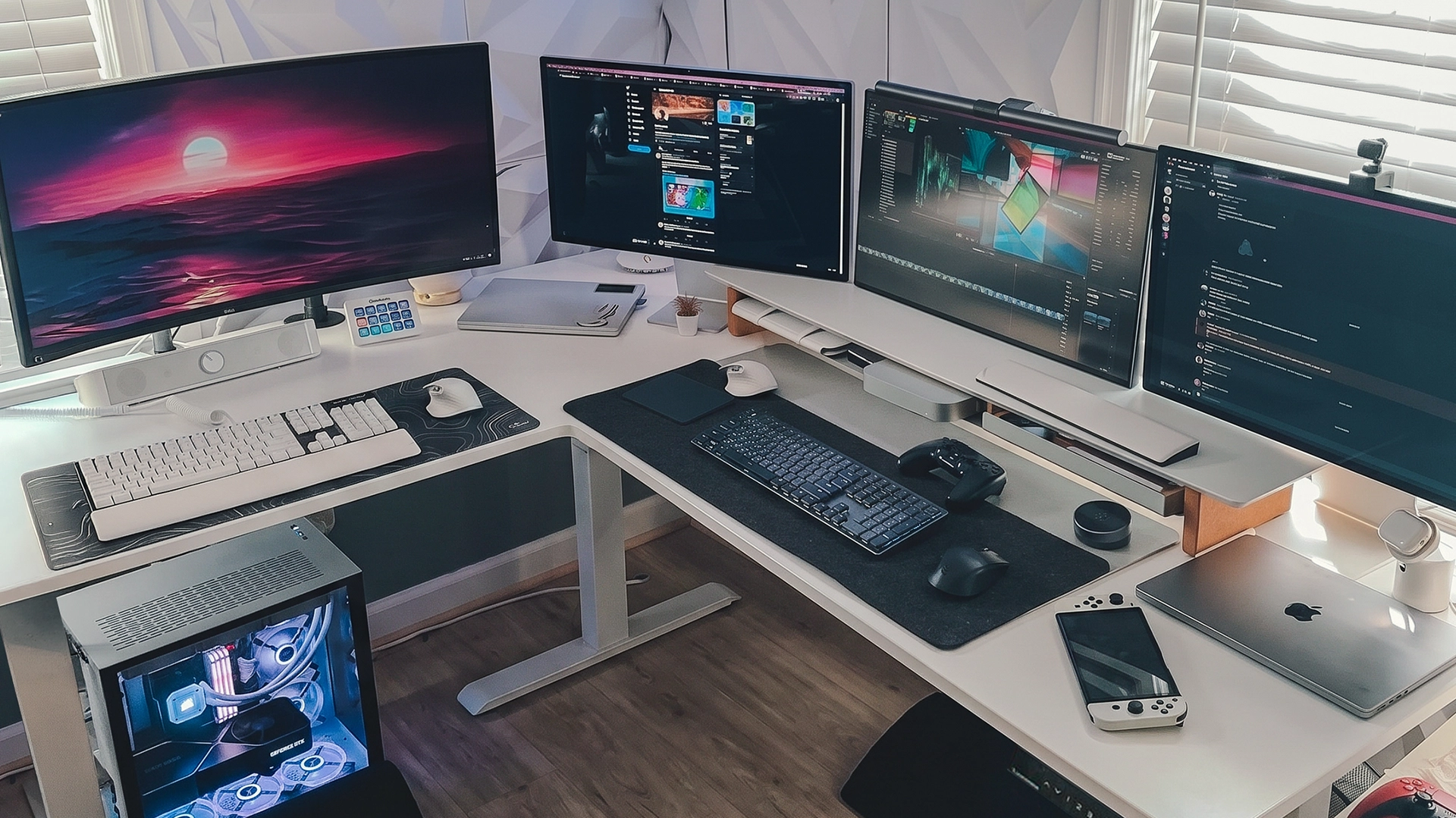
.webp)
FAQs
Is a standing desk better than a sitting desk?
For most people at work, yes, but mainly because a sit-stand desk lets you do both. Standing has modest benefits, sitting is comfortable for focus, and the healthiest approach is alternating. A standing desk makes that easy; a fixed sitting desk locks you into one position all day.
Is standing at work better than sitting?
Standing is a little better than sitting because it burns slightly more energy and breaks up inactivity, but standing all day has its own downsides like leg fatigue. The best answer is not one or the other, but switching between them, which is exactly what a sit-stand desk is for.
What are the benefits of standing vs sitting at work?
Standing burns a little more energy, eases the strain of holding one position, and keeps you more lightly active. Sitting is more comfortable and stable for deep-focus tasks. The real benefit comes from having both options and changing between them through the day rather than committing to either.
Is it bad to use a standing desk all day?
Yes, standing all day is not the goal and can cause sore legs and feet, back strain, and circulation issues. A sit-stand desk is meant for alternating, not for standing rigidly for eight hours. Switch every 30 to 60 minutes and use an anti-fatigue mat to stay comfortable.
How often should you switch between sitting and standing?
A common target is to switch every 30 to 60 minutes, with standing sessions of about 15 to 30 minutes. Breaking the day into short intervals is more comfortable and sustainable than long stretches of either sitting or standing, and it delivers most of the benefit.
Is a standing desk worth the extra cost?
A standing desk is worth it if you will use the height feature to change position regularly. For someone who sits all day and will build the habit, the long-term ease of movement justifies the cost. If it ends up parked at one height, a cheaper sitting desk would have done the same job.
Conclusion
The choice between a standing desk and a sitting desk comes down to one feature: the ability to change position. A sitting desk is cheaper and simpler, but it holds you in one posture all day.
A sit-stand desk costs more and needs a few minutes to set up, but it lets you sit for focus and stand to reset, which fits a full workday better. Pick the sit-stand desk if you will actually use it, keep your position changes short and regular, and either desk becomes a healthier place to work.
References
- Mayo Clinic. Standing desks: benefits, risks, and best practices. https://www.mayoclinic.org/healthy-lifestyle/adult-health/expert-answers/standing-desks/faq-20058312
- Pronk NP, et al. Reducing occupational sitting time and improving worker health: the Take-a-Stand Project. Preventing Chronic Disease (CDC), 2012. https://www.cdc.gov/pcd/issues/2012/11_0323.htm