ErgoChair Pro
Black Friday price.
Built for 12-hour sessions.
10 Benefits of Walking on a Treadmill for Health, Weight & Fitness


The benefits of walking on a treadmill start with one number: the CDC asks adults for 150 minutes of moderate activity a week, and brisk walking counts. Thirty minutes on a treadmill five days a week hits that target, and the treadmill takes weather, daylight and uneven pavement out of the excuse list. Below are 10 benefits, with CDC and NHS figures where they apply, what changes with speed, incline and session length, and how many calories a 30-minute walk burns at two common paces.
Is a 30-Minute Walk Good for You?
Yes, a 30-minute walk is good for you if the pace is brisk and you do it most days. The CDC guideline for adults is 150 minutes of moderate activity a week, and it gives the example of 30 minutes a day, five days a week.
Brisk means 2.5 miles per hour or faster by the CDC's measure; the NHS puts a brisk walk at about 3 mph. You do not need a heart rate monitor to check it. If you can talk but cannot sing along to a song, you are in the moderate zone.
A slow 30-minute stroll still beats sitting, but it may not count toward the 150 minutes. On a treadmill this is easy to fix: set the belt to 2.5 to 3 mph and run the talk test in the first five minutes.
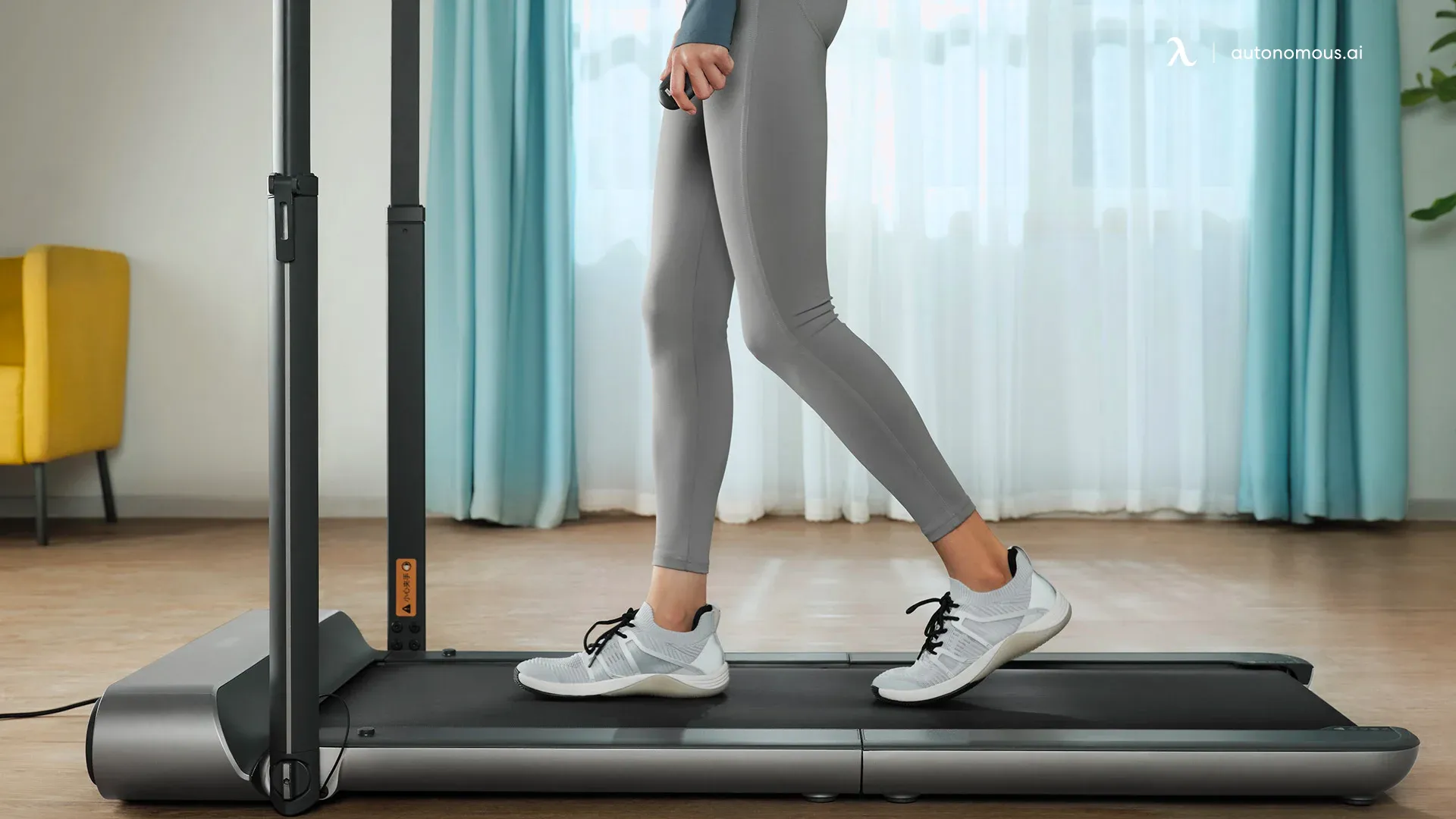
Benefits of Walking on a Treadmill
1. Improves Overall Cardiovascular Health
Walking on a treadmill raises your heart rate at a pace you control, which is the kind of work that protects the heart over years. The CDC says at least 150 minutes a week of moderate activity puts you at lower risk of heart disease and stroke, and the NHS adds that brisk walking can make your heart healthier.
2. Supports Weight Loss and Fat Burning
A treadmill walk burns calories you can measure, which makes it easier to plan around food. Harvard Health lists about 133 calories for a 155-pound person walking 3.5 mph for 30 minutes, and about 175 at 4 mph.
That is not a lot on its own. Weight changes when what you burn beats what you eat over weeks, so a treadmill walk is one part of your daily calorie expenditure, and using a treadmill for weight loss works best next to a steady diet.
3. Low-Impact and Joint-Friendly Exercise
Brisk walking sits first on the CDC's list of joint-friendly activities that put little or no stress on the joints. Compared with running, each step lands with one foot always on the belt, so there is no flight phase to absorb.
That makes treadmill walking a reasonable starting point for beginners, older adults and people coming back after a break. It is also the base of a low-impact indoor walking workout you can do in a small room. If you are recovering from an injury, ask your doctor or physical therapist what speed and incline to start with.
4. Encourages Daily Movement and Consistency
Short daily walks count. The NHS says a brisk 10-minute daily walk has health benefits and counts toward the 150 weekly minutes, so three 10-minute treadmill walks do the same job as one 30-minute block.
5. Improves Mental Health and Reduces Stress
Some brain benefits show up the same day. The CDC notes that a session of moderate-to-vigorous activity can reduce short-term feelings of anxiety in adults, and that regular activity lowers the risk of depression and anxiety and helps you sleep better.
A treadmill helps here mostly by removing friction. When it is dark at 6 p.m. or raining, a walk for your mental well-being still happens.
6. Helps Regulate Blood Sugar Levels
For people with diabetes, the CDC says physical activity helps manage blood sugar levels and lowers the risk of heart disease. Its practical tip fits a treadmill well: start with a 10-minute walk after dinner and build up slowly.
The CDC also suggests checking your blood sugar before and after a walk, since the reading afterward is likely to be lower. For people without diabetes, regular activity lowers the risk of developing type 2 diabetes. If you take insulin or other glucose-lowering medicine, agree on a plan with your doctor first.
7. Builds Endurance Without Overtraining
Walking builds stamina, the NHS says. Add time before speed: build from 20 to 30 minutes first, then raise the pace once 30 minutes feels easy on the talk test.
8. Helps Balance and Mobility With Age
The CDC says regular physical activity can prevent or delay many of the health problems that seem to come with age, and it recommends balance work for older adults. Its examples include walking heel-to-toe and standing up from a chair.
A treadmill handles the walking part. Balance drills are safer on the floor beside it, not on a moving belt. While you walk, stand tall with your eyes forward rather than on the console.
9. Flexible Intensity for All Fitness Levels
Speed and incline change the workload without changing machines. A beginner can start at 2.5 mph flat, while a fit walker can hold 4 mph and add a few percent of incline for more effort at the same speed.
10. Convenient and Weather-Independent
A treadmill takes rain, heat, ice, early sunsets and unsafe sidewalks out of the decision, so a missed walk has fewer excuses behind it.
If the workday is the real barrier, a walking pad can sit under a height-adjustable desk so you walk slowly through calls or email. The desk has to rise high enough for your standing height plus the deck of the pad, so compare the height range of standing desks for treadmill use with your pad before buying. Keep the belt at an easy pace while typing.
Benefits by Walking Style and Duration
Speed, incline and extra load each change what a treadmill walk does for you. Here is how the four common styles compare.
| Style | Typical setting | What it adds | The catch |
|---|---|---|---|
| Slow walking | Under 2.5 mph, flat | Easy movement on rest days or after a long sit | May not count as moderate activity |
| Speed walking | 3 to 4 mph, flat | Moderate intensity; more calories per minute | Stride gets choppy if the belt is too fast |
| Incline walking | 2.5 to 3.5 mph, a few percent incline | More effort without speeding up | Harder on calves at first; build up slowly |
| Walking with weights | Light hand weights, flat | Small extra load | Can change your gait; start light |
Slow walking on a treadmill keeps you moving when your legs need a break. Below 2.5 mph it is light activity by the CDC's measure, so treat it as a bonus on top of your brisk minutes, not a swap.
Speed walking on a treadmill is where most of the benefits above come from. Start from an average treadmill speed that passes the talk test, and raise it in small steps once that pace feels easy.
Walking on a treadmill with an incline, or walking uphill on a treadmill, raises effort without the extra speed, and that extra effort at a walking pace is where most incline walking benefits come from. Let go of the rails when you can: leaning on them takes away much of what the hill adds.
Walking on a treadmill with weights is the one to approach with caution. Light hand weights add a little work. Any weight that changes your natural stride or arm swing can strain the joints, so start light and stop if your gait feels off.
Benefits by Time Commitment
Total weekly minutes matter more than the length of any one walk. Here is how three daily habits add up against the CDC's 150-minute target.
| Daily walk | Days a week | Weekly minutes | Against the 150-minute goal |
|---|---|---|---|
| 20 minutes | 7 | 140 | Just short; add one longer walk |
| 30 minutes | 5 | 150 | Meets it |
| 1 hour | 5 | 300 | Double the minimum; the CDC says more activity brings more benefits |
Walking 20 minutes a day on a treadmill suits busy days. Done every day at a brisk pace it lands close to the weekly goal, and the NHS counts even 10 minutes.
Walking 30 minutes a day on a treadmill is the simplest way to meet the guideline. Harvard Health's calorie table gives a sense of the energy side for 30 minutes:
| Pace (30 minutes) | 125 lb | 155 lb | 185 lb |
|---|---|---|---|
| 3.5 mph (17 min/mile) | 107 | 133 | 159 |
| 4 mph (15 min/mile) | 135 | 175 | 189 |
These are averages from calorie calculators; your own burn depends on your weight, fitness and any incline.
Walking 1 hour a day on a treadmill doubles the minutes and roughly doubles the calories in the table. It fits people with a weight-loss goal, and people who set a daily step goal instead of minutes when deciding how much walking per day is right for them can count the treadmill steps toward it. Split it into two 30-minute walks if one hour feels long.
If you only have 30 minutes but want more challenge, structured routines such as the 12-3-30 treadmill workout (12% incline, 3 mph, 30 minutes) raise the effort through incline instead of time.
FAQs
Is walking on a treadmill good for you?
Yes. Brisk treadmill walking is moderate activity, and 150 minutes a week of it lowers the risk of heart disease, stroke and type 2 diabetes according to the CDC. The treadmill adds a steady surface and a set pace, so it is easier to keep the habit when the weather turns.
What are the health benefits of walking on a treadmill?
The main benefits are a healthier heart, lower risk of type 2 diabetes, help with weight control, less short-term anxiety and better sleep. Brisk walking is also joint-friendly by the CDC's list, which makes it one of the easier ways for beginners and older adults to reach 150 minutes a week.
Are there benefits of walking on a treadmill every day?
Yes. Walking every day spreads the 150 weekly minutes into small blocks, about 21 minutes a day. The NHS says even a brisk 10-minute daily walk counts. A daily slot is also easier to remember than a weekly target, which helps the habit stick.
What are the benefits of walking on a treadmill with an incline?
Incline makes each minute harder without making you go faster. That lets you reach moderate effort at a walking pace, which suits people who do not want to jog. Start with a few percent of incline, keep your hands off the rails and build up over several weeks to spare your calves.
What are the benefits of walking on a treadmill for 1 hour?
One hour a day, five days a week, gives you 300 minutes, double the CDC minimum, and the CDC says going beyond 150 minutes brings more benefits. It also burns roughly twice the calories of a 30-minute walk at the same pace. Split it into two sessions if needed.
What are the benefits of walking 30 minutes a day on a treadmill?
Thirty minutes a day, five days a week, meets the CDC's 150-minute guideline on its own. At 3.5 mph, a 155-pound person burns about 133 calories per session, per Harvard Health. It is long enough to count and short enough to fit before work or at lunch.
Is slow walking on a treadmill still beneficial?
Yes, but it does less. Walking under 2.5 mph is light activity, so it helps you move more and break up sitting without counting fully toward the 150 brisk minutes. Use slow walks for rest days or for walking at a desk, and keep a few brisk sessions each week.
Is it bad to hold onto the treadmill when walking?
Holding the rails for balance is fine, especially on the first few walks or at a steep incline. Gripping hard or leaning back on them is the problem: it takes weight off your legs, cuts the effort and pulls your shoulders forward. Slow the belt until you can walk hands-free.
What are the benefits of reverse walking on a treadmill?
Reverse walking is mainly a way to vary a routine, and public health guidance does not single out benefits for it. If you try it, keep the belt very slow, flat and hold the rails. Skip it if you have balance problems, and ask a physical therapist before using it for rehab.
Can walking on a treadmill help you lose belly fat?
It can help, but not by targeting the belly. Walking burns calories across the whole body, and fat loss happens when you burn more than you eat over time. Pair regular brisk walks with steady eating habits and judge progress over months, not days.
What is the 5-4-3-2-1 treadmill method?
It is an interval walk or jog built on shrinking blocks: five minutes at one pace, then four, three, two and one minute, at rising intensity. The format keeps a short session varied, and you can scale each block to your own walking pace.
Conclusion
A brisk treadmill walk of 30 minutes, five days a week, meets the CDC guideline, and that single habit delivers most of the benefits of walking on a treadmill listed here. Pace matters more than gear: aim for 2.5 to 3 mph or faster, check it with the talk test, and add incline or time once that feels easy.
References
- CDC: Adult Activity, An Overview
- CDC: Benefits of Physical Activity
- CDC: Measuring Physical Activity Intensity
- CDC: About Physical Activity and Arthritis
- CDC: Get Active (diabetes)
- CDC: Older Adult Activity
- NHS: Walking for health
- Harvard Health: Calories burned in 30 minutes for people of three different weights

Desk Pro
Black Friday price.
So 12 hours isn’t 12 hours sitting.