10 Best Garden Office Pods in California 2026
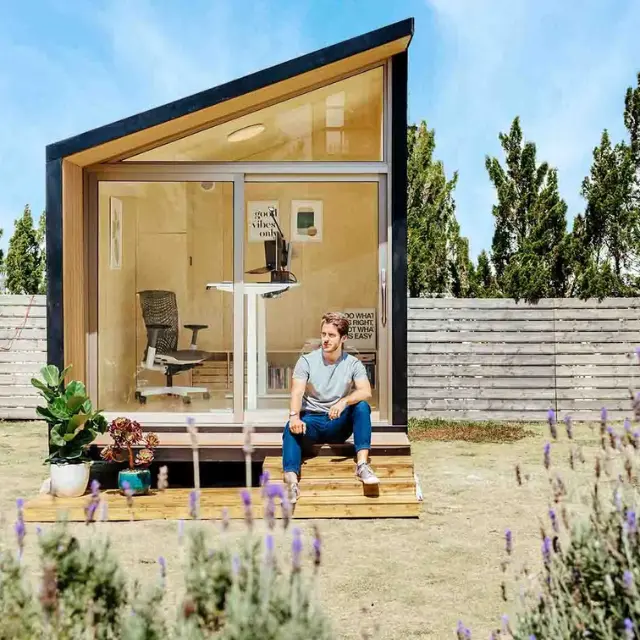

A backyard office pod in California gives you a separate workroom without expanding the main house. The difficult part is not finding an attractive prefab studio. It is checking which units fit your lot, what is included in the quoted price, and whether the city will treat your proposed use as a permit-exempt accessory structure.
This guide compares 10 outdoor garden office pods, including compact prefab rooms, customizable studios and higher-spec workspaces. The first three come from the Autonomous backyard office, with published footprints and equipment lists. Other options are included for different budgets, installation preferences and site conditions. Indoor phone booths are a separate category.
Quick comparison
| Office pod | Approx. footprint | Best fit | Listed starting price |
|---|---|---|---|
| Autonomous MetroPod | 80 sq ft | Small city yards | $18,900 |
| Autonomous WorkPod | 102 sq ft | Full-time solo office | $20,900 |
| Autonomous StudioPod | 105 sq ft | Flexible studio / natural light | $22,900 |
| Okopod OKO120 | ~120 sq ft | California-built customization | $32,858* |
| Honomobo MOBO | 96-104 sq ft | Modern glass-forward office | $31,552* |
| Studio Home Signature | 80-240 sq ft | Panelized DIY / custom finish | $14,579+ shell* |
| Modern Shed | Custom sizes | Design-to-lot flexibility | Quote required |
| Mini Office The Twelve | 96 sq ft footprint | Compact finished studio | $26,450 kit* |
| Thinktanks Backyard Pod XL | ~52 sq ft external | Compact acoustic focus space | $28,995* |
| LiveLarge L-Space | Ask for exact footprint | Integrated smart-room features | $34,990 promotion* |
Do backyard office pods need a permit in California?
Under the 2025 California Building Standards Code, effective January 1, 2026, a qualifying one-story detached accessory structure of 120 square feet or less may be exempt from a building permit. But a home-office pod is not automatically permit-free: its intended use, setbacks, wildfire rules, local amendments, electrical work and HVAC can change the approvals required. The familiar shed exemption is not blanket approval for a wired office.
For example, Santa Clara specifies permits for new electrical circuits even in smaller sheds. Downey likewise requires separate trade permits and a location plot plan. In Foster City, changing a shed into office use with heating or cooling may trigger review beyond a simple storage-shed exemption.
- Confirm permitted use. Ask whether a conditioned backyard workroom qualifies as an accessory structure at your address.
- Confirm footprint and placement. Ask how size is measured, which setbacks apply and whether the site is in a WUI/fire or historic district.
- Describe every utility. State whether the pod is plugged into an existing outdoor receptacle, permanently wired, equipped with HVAC, or connected to water or sewer.
- Get the answer before ordering. Request written guidance for the proposed model, foundation and location; ask separately about HOA restrictions.
Do not assume adding a bed, bathroom or kitchen is a minor upgrade. Sleeping or independent dwelling use can trigger different occupancy, ADU and permit rules. The pod seller cannot replace the local authority’s determination.
The 10 best garden office pods for California backyards
These are not ranked by the cheapest advertised price. Each model earns its position based on a distinct practical use case. Specifications refer to the named models; confirm current California delivery and installation coverage, selected configuration and complete quote before paying a deposit.
1. Autonomous MetroPod, best for a compact city backyard
The Autonomous MetroPod is an 80-square-foot prefab office intended for a single desk and modest equipment footprint. Its 7.25-foot ceiling, glass entry and side glazing make it a practical way to create a dedicated work zone without turning the whole yard into an extension. Built-in power, lighting and an Ethernet point reduce interior outfitting work; four adjustable feet accommodate supported ground conditions.

When comparing a compact pod with small backyard office sheds, MetroPod is worth examining if access paths and available yard area are tight. The trade-off is limited room for a second workstation, storage or exercise equipment. Its published 65-90°F insulation comfort band is not active heating or cooling; plan climate control if the local weather exceeds that range.
| Pros | Cons |
|---|---|
|
|
2. Autonomous WorkPod, best for a full-time backyard office
The Autonomous WorkPod offers 102 square feet and a sloped interior ceiling that rises from approximately 6.8 to 9.3 feet. With roughly the floor area of a 10x10 office shed, the room accommodates a conventional desk, task chair and storage; the higher ceiling avoids the feel of a low, compact booth. A ventilator, multiple outlets and two Ethernet ports are useful for remote meetings, software work and multi-device setups.
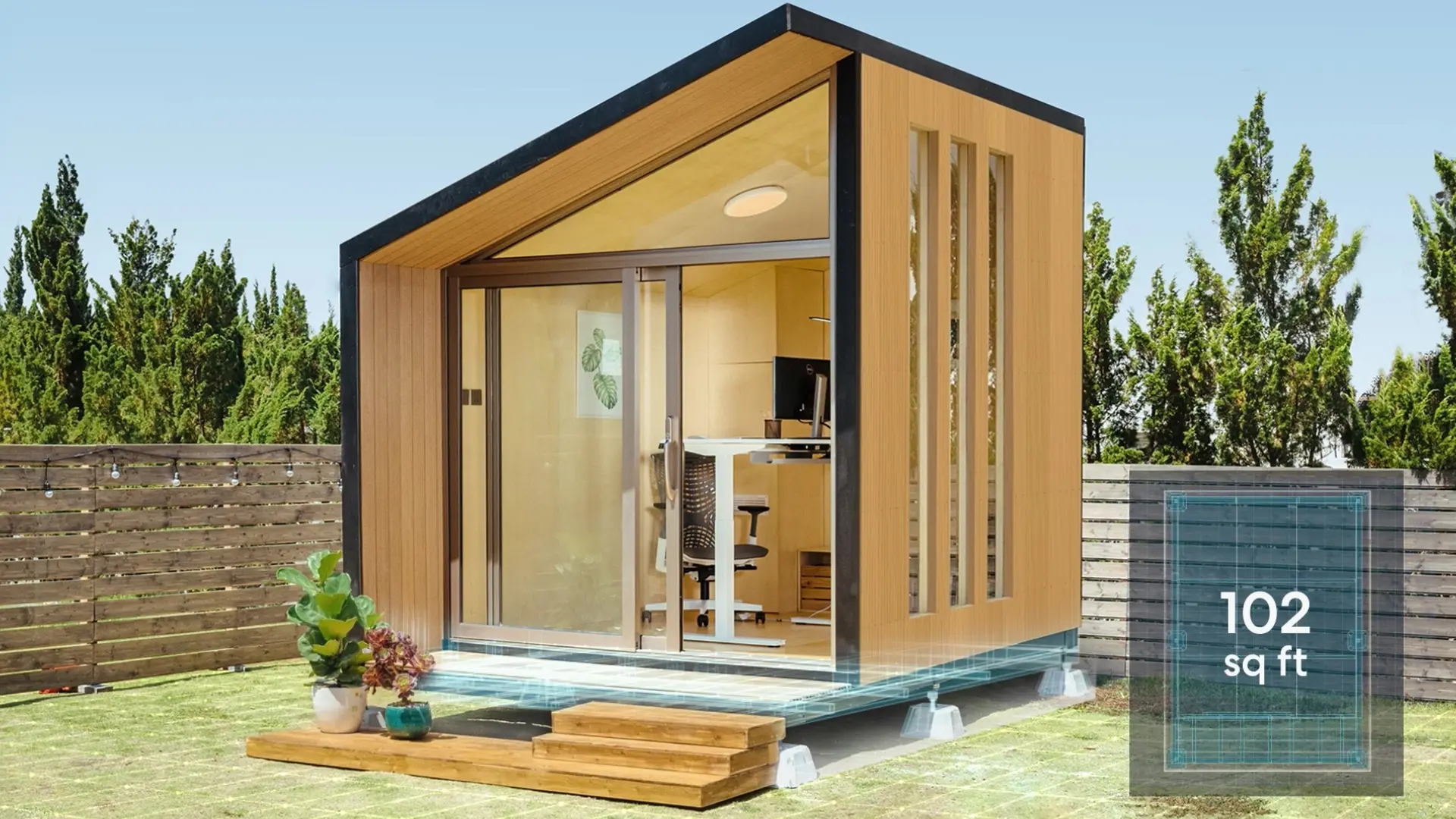
Its distinct advantage for technical buyers is upgrade flexibility: current configurations advertise solar, Starlink and optional computer hardware. These are selectable options, not standard equipment on every unit. The roof, power system and external placement still need site-specific review in California, especially for heat, wind and wildfire requirements.
| Pros | Cons |
|---|---|
|
|
3. Autonomous StudioPod, best for a bright multi-use studio
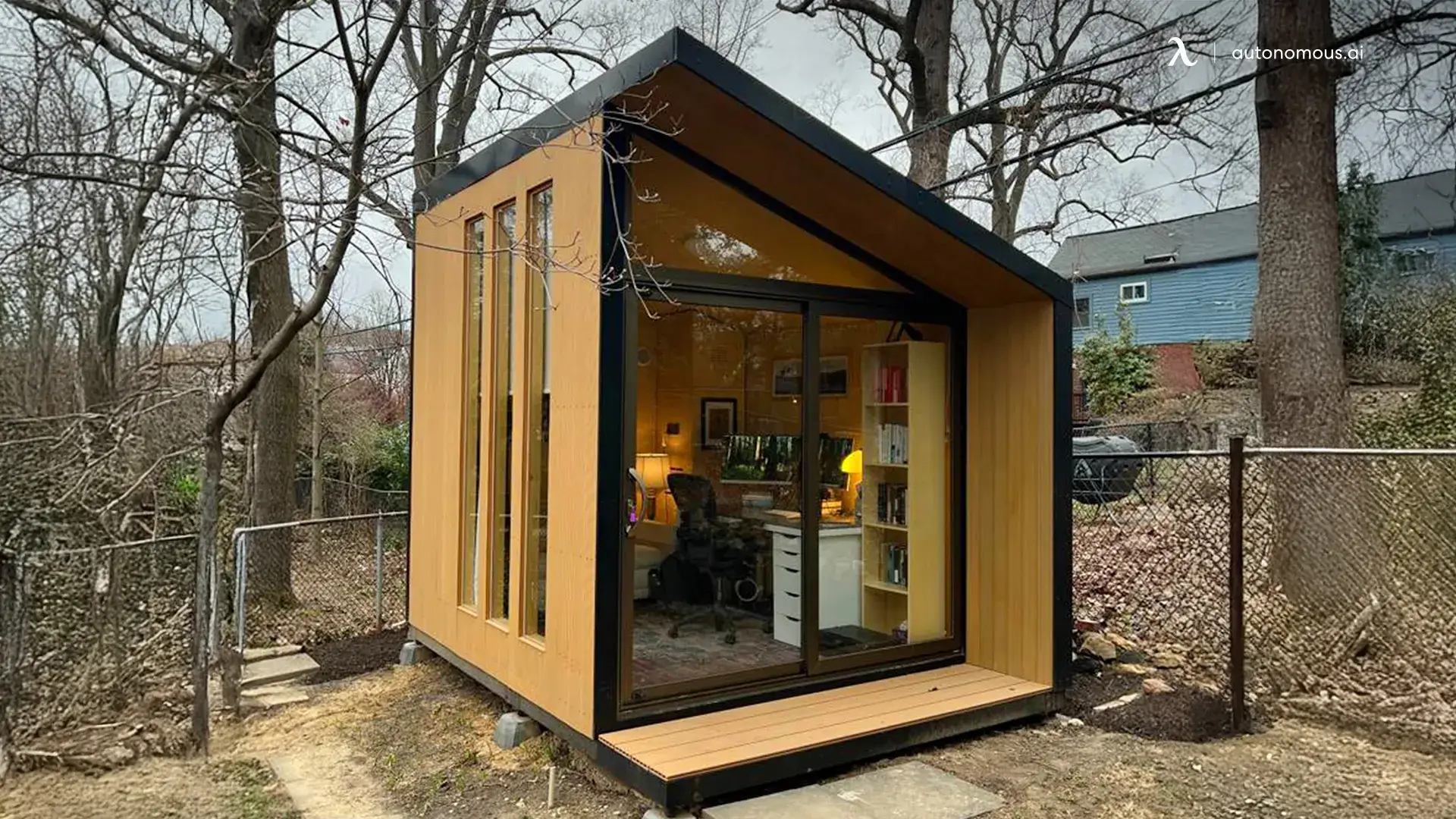
The Autonomous StudioPod offers a 105-square-foot backyard room that can serve as an office or a backyard art studio. Its six insulation layers, 7.25-foot ceiling, five wall outlets and four ceiling lights make it more flexible than a basic one-desk office. The glass-heavy layout also allows more daylight into the space.

The more open glazing is a design decision, not an acoustic upgrade. Compared with a more enclosed WorkPod, additional glass can make strong sun, privacy and sound isolation more difficult to manage. For a recording-heavy use case, compare actual acoustic construction and consider window shading rather than assuming any pod is soundproof.
| Pros | Cons |
|---|---|
|
|
4. Okopod OKO120, best California-built customizable design
Okopod OKO120 is a 120-square-foot backyard office made by an Anaheim-based company, with panels assembled on-site rather than a single oversized box lowered over the house. That makes it worth comparing for California homes with narrow side access. The maker describes California installation coverage from the Bay Area through Los Angeles and San Diego; access still needs to be checked for the exact property.
Customization is the real distinction. Buyers can choose cladding, window placement and styles, flooring, and electrical fittings. The published standard specification includes an 8-foot sliding door, insulated construction, a birch-plywood interior, laminate flooring, four double sockets, lighting and an internet point. These are concrete inclusions to compare with an unfinished shell. Heating is not included as standard, so the climate plan matters for inland California summers.
Price comparisons require particular care. Okopod describes delivery as included in one part of its OKO120 product page, but its detailed exclusions say delivery is quoted by location. Installation, groundworks, sales tax, the mains electrical connection and any heating upgrade also need confirmation. Request one itemized California-address quote. Its 120-square-foot footprint should be checked against the local jurisdiction’s measurement rules before relying on any permit-exemption language.

| Pros | Cons |
|---|---|
|
|
5. Honomobo MOBO, best architectural glass-forward pod
Honomobo MOBO is a moveable prefab backyard office offered in MOBO 1 and MOBO 2 variants, published at approximately 96-104 square feet. MOBO 1 has a full-height glazed end; MOBO 2 adds a second glass wall. The appeal is architectural: you get a clean-lined room that visually connects to the garden without ordering a much larger residential modular unit.
The manufacturer promotes a plug-in setup after placement. That is a convenience claim about the product concept, not confirmation that any outdoor outlet or wiring arrangement is acceptable at a California address. Honomobo lists extra insulation and heating/cooling as upgrade choices, so compare the actual configuration and cooling options for an outdoor shed rather than assuming every MOBO arrives ready for year-round work in the Central Valley or a cold mountain town.
The large glazed walls are also the main fit question. They offer daylight and an open feeling, but a west-facing installation may create screen glare or extra heat unless shading, glazing and HVAC are planned together. Ask for the exact door orientation, electrical needs, site-access method and installed quote. The manufacturer’s “generally exempt” wording should not replace local approval for a conditioned office.

| Pros | Cons |
|---|---|
|
|
6. Studio Home Signature, best configurable prefab shell
Studio Home Signature is a panelized backyard studio kit, not a finished turnkey office. The manufacturer lists footprints from 80 to 240 square feet, so a California buyer can choose a small workroom or a larger custom studio without changing product families. Standard construction includes 2-by-4 framing, Zip System weatherproof wall panels, Galvalume roofing, low-E transom windows and a fiberglass entry door.
The difference between its packages is more important than the advertised starting price. A shell covers the structure; an optional Finished Interior Package adds R-15 wall and R-21 roof insulation, flooring, electrical components and a subpanel. Finished drywall is tied to the professional installation package. That makes the model appealing to a capable DIY builder or a homeowner with a preferred contractor, but the full cost to build a studio shed must include labor, utilities and finishes before comparing it with a delivered, ready-to-work pod.
Signature kits arrive flat-packed, with DIY instructions or access to a third-party installer network. The installer can quote foundation, grading, steps and other site work separately. For a California property, verify who is responsible for permit drawings, utility connection, final electrical inspection and the finished interior. This is a flexible route, not necessarily the fastest one.

| Pros | Cons |
|---|---|
|
|
7. Modern Shed, best for a custom lot-specific backyard office
Modern Shed is best approached as a configurable backyard building project rather than one standardized pod. The company makes prefabricated wall and floor panels to suit the property, with choices in exterior finish, windows and structure. That can be valuable when the side yard is too narrow for a completed module or the desk must face a particular direction to avoid glare.
The floor system is a meaningful technical differentiator. Modern Shed describes pressure-treated, ground-contact-rated components and pier-supported installations, rather than assuming every site needs a poured slab. The company also documents wall, floor and roof insulation options, with selections that can be adjusted for local climate and permit requirements. These details deserve attention in coastal moisture, inland heat and uneven California yards.
Customization introduces more project management. Modern Shed does not publish one universal price list; projects are quoted after design, and site engineering can lead to repricing. The company says it does not itself employ installers, so unloading, permits, electrical trenching, assembly and interior finishes fall to the chosen contractor or owner. Its approach can produce a well-matched space, but it needs a written scope and a realistic timeline.

| Pros | Cons |
|---|---|
|
|
8. Mini Office The Twelve, best compact finished pod with upgrade options
Mini Office The Twelve is a purpose-built workroom with a 12-by-8-foot exterior footprint (96 sq ft), but its published usable interior is about 72.5 square feet. That distinction matters: a roomy desk, storage and an office chair must fit the interior, not the exterior dimension used in the product name. It is offered as a flat-pack kit or a fully prebuilt option.
The Twelve includes more of the daily-work infrastructure than a simple insulated shell: the manufacturer lists double-glazed openings, 12 outlets (including one outside), four USB ports, a smart keypad lock, LED lighting, insulation and acoustic wall/ceiling finishes. A smart heater is included, while air conditioning is an extra. For a remote worker on frequent calls, it is worth comparing these specific inclusions with the final fitted cost of a DIY studio.
Prebuilt versus flat-pack is the buying decision. A prebuilt room simplifies on-site assembly only if the delivery route and unloading equipment can accommodate it; a kit can suit tighter access but adds assembly. The supplier lists a short lead-time estimate, which is not a guaranteed California installation date. Check the interior layout, HVAC add-ons, unloading, foundation and electric connection before placing an order.

| Pros | Cons |
|---|---|
|
|
9. Thinktanks Backyard Pod XL, best compact acoustically focused pod
Thinktanks Backyard Office Pod XL is a compact private workroom with external dimensions around 86.6 by 86.2 inches, giving a footprint near 52 square feet. It is much smaller than the 100-120-square-foot studios elsewhere in this list. The benefit is a contained, already-equipped space for calls and computer work when the backyard cannot accommodate a wider room.
Its equipment package is relatively specific: the manufacturer lists air conditioning, power outlets, USB-A/USB-C charging, Ethernet, LED lighting, a motion sensor and laminated glazing. Thinktanks also publishes a speech-level reduction figure of 31.5 dB (DS,A) for the backyard office pod. That acoustic metric is useful, but it is not a promise that all outdoor sounds disappear or that the product is suitable for sound-sensitive recording in every location.
Installation logistics may be the deciding factor. Thinktanks lists a net weight around 1,830 lbs, so placement requires more than a level patch of grass; the foundation/support method, truck or lifting access and site conditions need to be confirmed. The manufacturer also indicates an approximately 8-10-week delivery window for this product. This is the small, infrastructure-heavy option, not an inexpensive substitute for a full backyard studio.

| Pros | Cons |
|---|---|
|
|
10. LiveLarge L-Space, best integrated smart-room option
LiveLarge L-Space targets buyers who want a finished outdoor smart room, not only a desk behind a door. The California-focused vendor lists heating/cooling, ventilation, motorized blackout curtains, ambient lighting, Bose speakers, a short-throw projector and a built-in network and control system. Its appeal is a single space that changes between work, media and downtime without accumulating separate add-on devices.
The work use case is credible when the buyer actually needs the technology: the manufacturer describes cable, wireless and Starlink networking provisions along with HDMI/audio inputs, voice-driven room control and monitoring of indoor air. For frequent presentations, video calls or mixed creative use, those integrated systems may save separate procurement. For a solo laptop worker, most of that equipment may sit idle while adding complexity to maintain.
The vendor’s listed package includes standard delivery, installation and foundation, but excludes taxes and additional site work. Another product page states availability is currently limited to the Bay Area and Los Angeles, so California-wide delivery should not be assumed. Confirm the precise footprint and written installed scope; the current main page does not provide an easily verifiable 120-square-foot measurement. Local permit requirements still apply despite the seller’s simplified installation messaging.
| Pros | Cons |
|---|---|
|
|
How to choose a garden office pod in California
Start with the property, not the product photo. A smaller pod that clears your gate and complies with local rules can be a better purchase than a larger unit that needs expensive site work.
- Measure your placement envelope. Record lot setbacks, drain paths, fences, overhead lines, tree roots and usable interior space, not just the catalog footprint.
- Choose for your work. A single monitor, desk and chair may fit an 80 sq ft pod; storage, video production or a second workstation need more floor area. A 10x12 office shed offers a nominal 120 sq ft footprint, but finished interior dimensions still matter.
- Check the climate package. Coastal fog, inland summer heat and WUI fire exposure create different envelope and HVAC requirements.
- Plan utilities and networking. Separate a factory pre-wired interior from a legal power source and a reliable internet link; request the electrical load sheet.
- Compare written all-in quotes. Include delivery, assembly, site preparation, taxes, permits, labor and options before ranking products by price. For budget prefab office sheds, include the work needed to convert a shell into a usable room.
If the central concern is year-round thermal comfort, compare insulated garden office construction before deciding whether a basic kit or finished pod makes financial sense.
Backyard office pod versus indoor acoustic booth versus ADU
| Type | Primary use | What changes the buying decision |
|---|---|---|
| Outdoor prefab office pod | Separate workroom in the yard | Weatherproofing, site access, utilities and permits |
| Indoor acoustic booth | Calls or focus inside an existing building | Ventilation, indoor acoustic rating and occupant clearance |
| ADU / dwelling | Residential living or sleeping use | Dwelling classification, full code review and utilities |
An outdoor pod is not automatically an ADU because it has insulation or furniture. Conversely, adding permanent residential features can change the legal use. For a comparison of use cases and size, choosing a pod for a backyard should be based on the room you actually need.

FAQs
What is a garden office pod?
A garden office pod is a detached, usually prefabricated workroom placed in a yard. It differs from a basic shed through workspace features such as insulation, lighting and power provisions. It is not automatically a legal dwelling or an exempt building.
Do backyard office pods need permits in California?
Possibly. A small detached accessory structure may qualify for a building-permit exemption, but the proposed office use, electrical work, HVAC, setbacks and local rules can still require approval. Confirm the exact property and model with the city or county.
Is a prefab office pod under 120 square feet permit-free?
Not necessarily. The familiar 120-square-foot exemption generally refers to qualifying accessory structures, not every wired home office. Jurisdictions may require electrical or mechanical permits and can regulate use, location, height and wildfire construction.
How much does a backyard office pod cost in California?
Office pod cost depends on whether the quote covers only a shell or a usable finished room. Compare pod, delivery, foundation, electrical work, installation, climate control, taxes and permits together. Base prices alone can be misleading.
Can an outdoor office pod be used year-round?
Yes, when the insulation, weather sealing and heating or cooling match the local conditions. An advertised insulation comfort range is not an active temperature-control guarantee. Check summer heat and winter temperatures at your exact property.
Can I put a garden office pod on grass or gravel?
Some pods have manufacturer-designed leveling feet for supported ground surfaces, but soil stability, drainage, wind exposure and local foundation requirements still matter. Follow the exact installation drawing and site assessment, not a generic claim that every yard needs no foundation.
Are garden office pods soundproof?
Most are sound-insulated rather than completely soundproof. Performance depends on wall construction, doors, glass, ventilation openings and installation. Ask for a tested acoustic rating if calls or recording in a noisy neighborhood are a main reason to buy.
Can I put a bathroom in a backyard office pod?
Adding a bathroom to a backyard office shed changes the plumbing and utility scope, and may trigger additional permits or ADU rules. A garden office marketed as an accessory structure should not be assumed to qualify for bathroom installation without code review.
Which prefab office pod is best for a small California yard?
Start with the available lot width, access route and setbacks. Autonomous MetroPod has an 80-square-foot footprint, while some other manufacturers offer smaller or customizable sizes. Confirm delivery access and the clear interior dimensions before ordering.
What is the difference between a prefab office shed and an ADU?
A prefab office shed is intended for workspace or accessory use. An ADU is a legally permitted dwelling subject to residential requirements. Adding a bed alone does not determine classification; planned occupancy and installed features require review by local authorities.
Bottom line
For a California backyard, the right office pod is the one that fits the lot, the way you work and the complete project budget. MetroPod is the compact Autonomous option, WorkPod offers a more dedicated daily office, and StudioPod prioritizes flexible use. Competitor models add custom finishes, acoustic focus or integrated smart-room systems.
Before comparing the price of any two pods, ask for the exact footprint, interior dimensions, local permit requirements, energy and internet plan, and a full installation quote. A documented project scope is a better buying signal than a blanket “permit-free” promise.

References
- California Building Standards Commission - 2025 Title 24 Code (effective 2026)
- City of Santa Clara - Building Permit Information
- City of Downey - Building and Safety FAQs
- Foster City - Permit 101 Q&A
- Okopod - Backyard Pods in California
- Honomobo - MOBO
- Studio Home - Signature
- Modern Shed - Backyard Offices
- Mini Office - The Twelve
- Thinktanks - Backyard Office Pod XL
- LiveLarge - L-Space
- Okopod - OKO120 model specification and exclusions: Manufacturer documentation
- Thinktanks - Acoustic test information: Manufacturer documentation
- LiveLarge - California availability details: Manufacturer documentation