


10 Best Ergonomic Office Chairs With Headrest 2025

Table of Contents
- Top 10 Ergonomic Office Chairs with Headrest
- 1. Autonomous ErgoChair Core
- 2. Autonomous ErgoChair Pro
- 3. Ticova Ergonomic Office Chair
- 4. SIHOO M18 Ergonomic Office Chair
- 5. Autonomous ErgoChair Ultra 2
- 6. Logicfox Ergonomic Office Chair Pro
- 7. HBADA E3 Air Ergonomic Office Chair
- 8. Branch Aire Chair
- 9. Ebern Designs Yepez Ergonomic Office Chair
- 10. Eureka Ergonomic Serene Alto
- What Matters Most in an Ergonomic Office Chair With Headrest
- How to Position Your Headrest Correctly
- FAQs
- Conclusion
Neck pain from prolonged sitting affects millions of office workers, often resulting from inadequate head and cervical support. The best ergonomic office chair with headrest addresses this issue by providing proper alignment for your head, neck, and spine during extended work sessions.
A quality headrest reduces strain on cervical vertebrae, prevents forward head posture, and supports natural spinal curves. This guide examines top-performing ergonomic chairs with integrated headrest systems, covering essential features, proper positioning techniques, and key considerations to help you select a chair that genuinely supports your neck health and work comfort.
Top 10 Ergonomic Office Chairs with Headrest
Neck pain from desk work often stems from inadequate head support. These chairs were tested for headrest adjustability, neck alignment, and comfort during extended use. Each best office chair with headrest on this list addresses specific ergonomic needs across different budgets and work styles.
- A Quick Glance:
Product | Headrest Adjustability | Support Focus | Best For |
Autonomous ErgoChair Core | Height, angle | Balanced ergonomic | Everyday work at an accessible price |
Autonomous ErgoChair Pro | Height, angle, depth | Precision neck support | Long workdays with posture changes |
Ticova Ergonomic Office Chair | Height, angle (flip-up) | Flexible, optional support | Shared use or on-demand headrest |
SIHOO M18 Ergonomic Office Chair | Height | Cervical contour | Users sensitive to flat headrests |
Autonomous ErgoChair Ultra 2 | Height, angle | Comfort-first | Long seated sessions and meetings |
Logicfox Ergonomic Office Chair Pro | Height, angle | Upright posture | Focused, task-driven work |
HBADA E3 Air Ergonomic Office Chair | Height, angle | Movement-adaptive | Dynamic work with frequent shifts |
Branch Aire Chair | Height, angle | Neutral ergonomic | Minimalist home offices |
Ebern Designs Yepez | Height, angle | Simple ergonomic | Everyday home office use |
Eureka Ergonomic Serene Alto | Integrated | Relaxed, high-back | Reclined or low-pressure work |
1. Autonomous ErgoChair Core
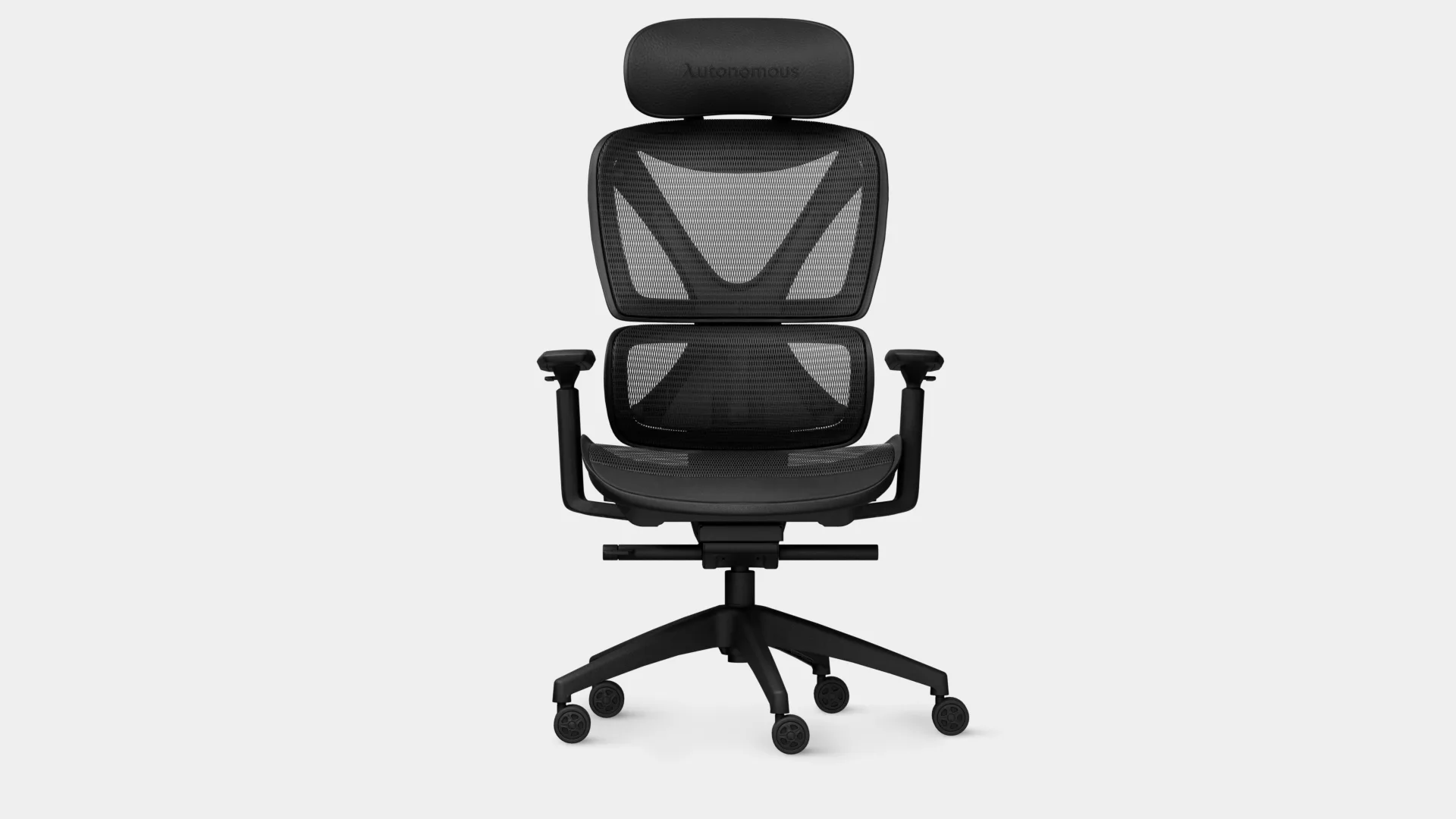
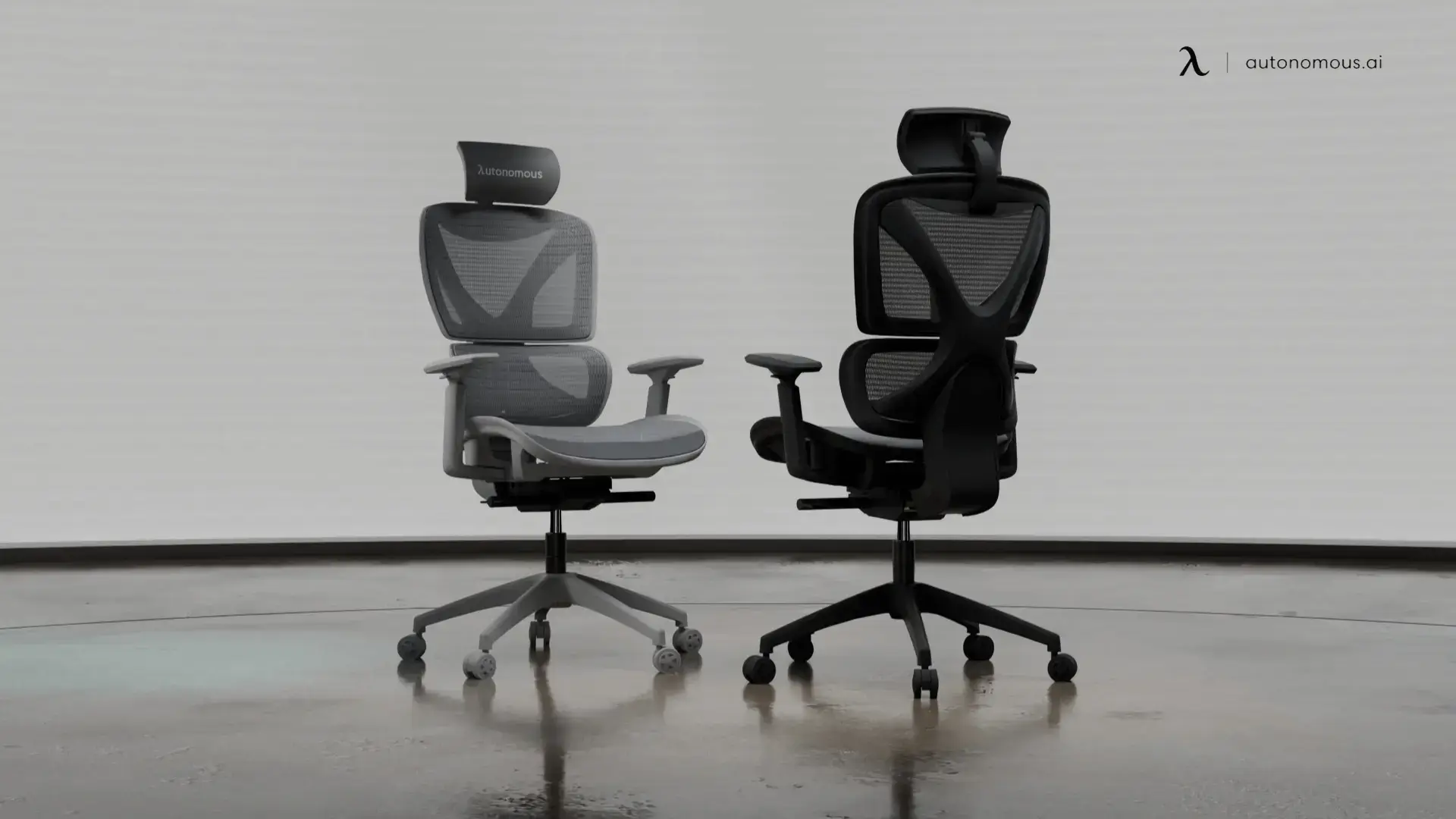
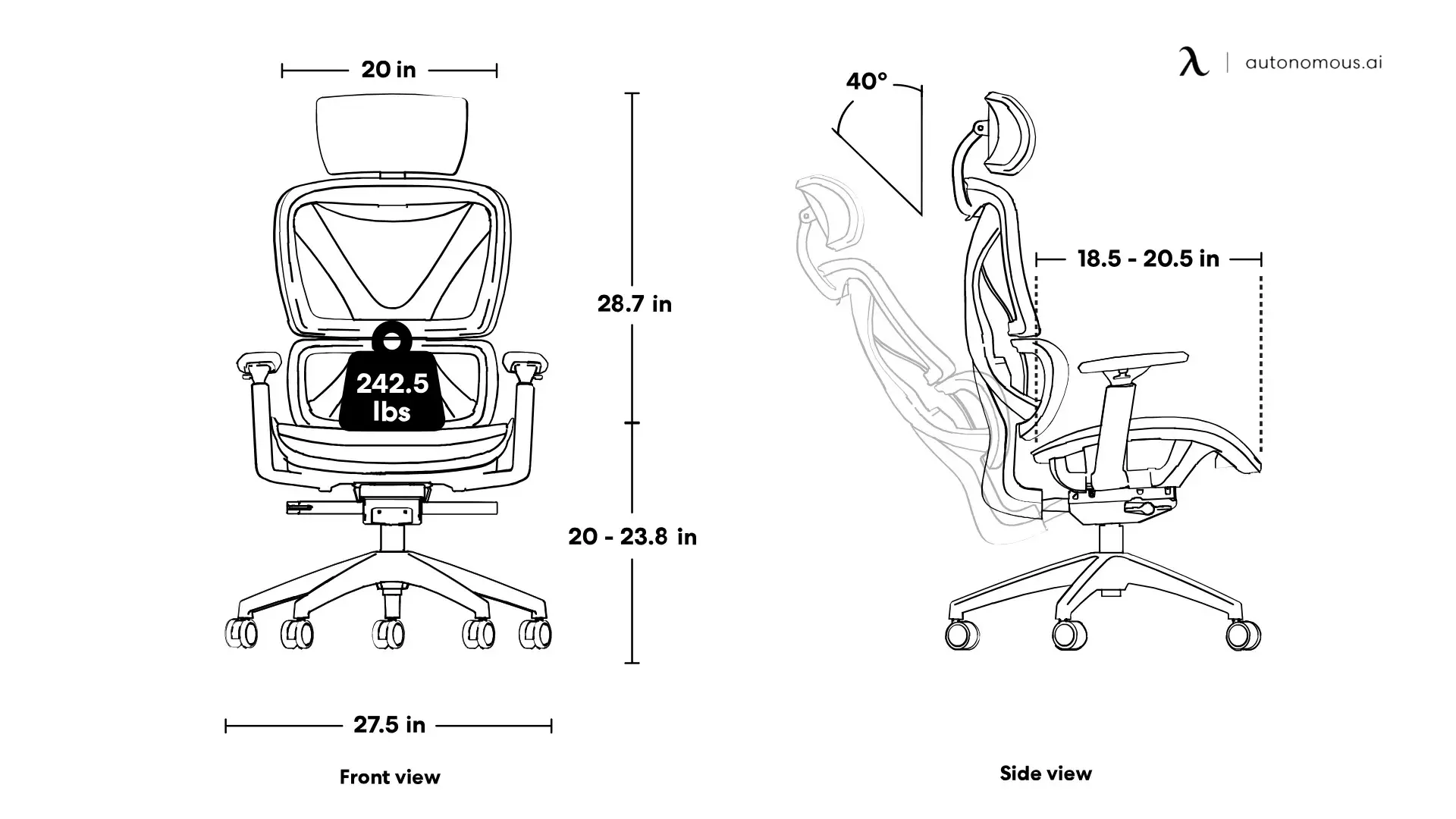
The ErgoChair Core provides essential ergonomic support at an accessible price point, with a headrest designed for straightforward adjustability. Unlike fixed headrests that force awkward positioning, this design allows tool-free adjustments throughout the day, essential when switching between focused work and reclined thinking. The cushioned surface maintains consistent support without creating pressure points, and the headrest remains effective whether sitting upright or leaning back at 120 degrees.
The independently adjustable backrest allows the headrest to stay aligned with your neck during recline, rather than losing contact as you lean back. Combined with adjustable lumbar support, this mesh chair provides continuous support from the lower back through the neck, making it a strong option for those seeking the most comfortable office chair with headrest for mixed work styles.
Best for: Users seeking reliable neck support without premium pricing, particularly those new to ergonomic seating.
Consideration: The headrest's range suits average to slightly above-average heights; taller users may find limited upward adjustment.
2. Autonomous ErgoChair Pro
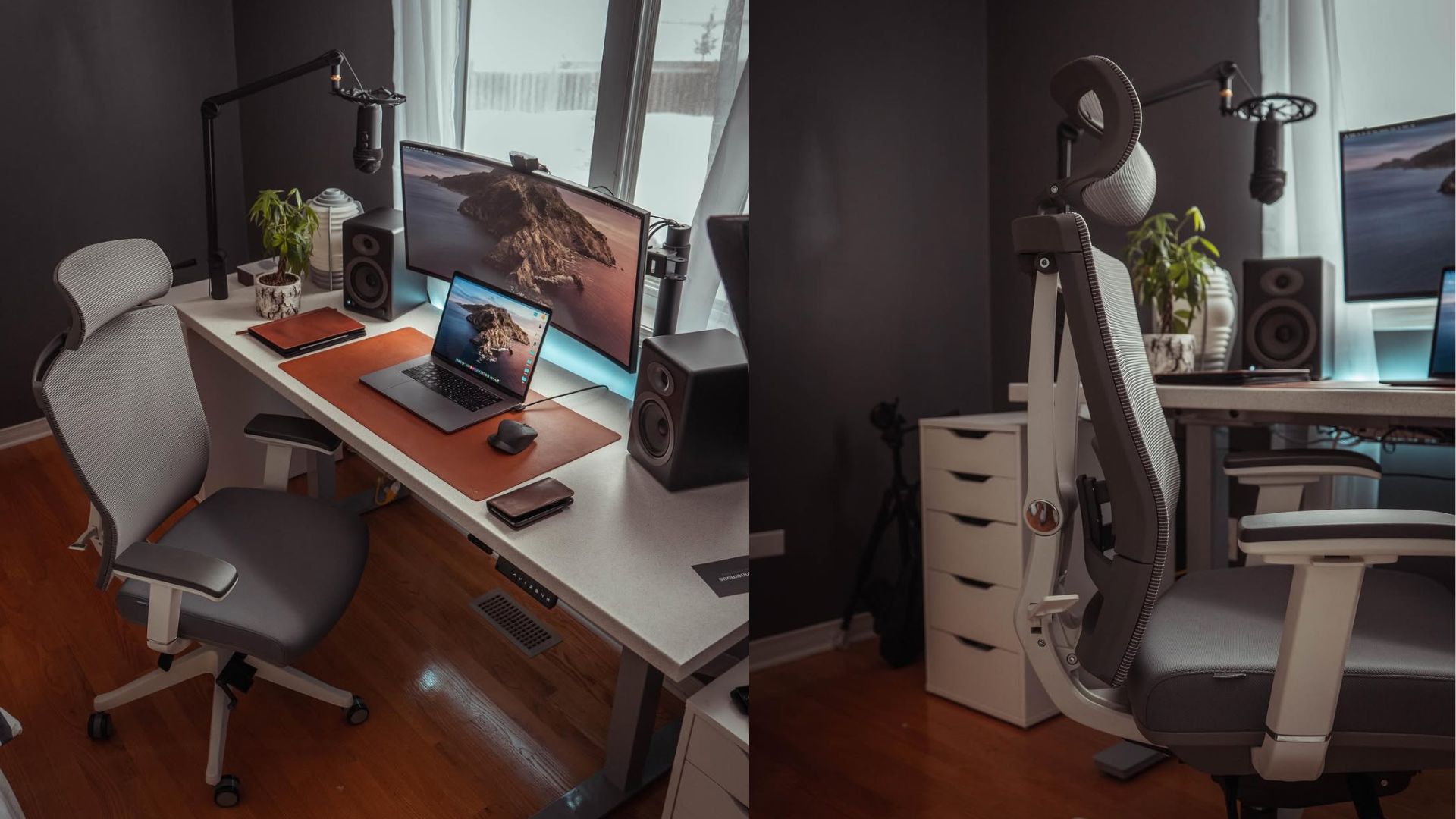
The ErgoChair Pro is one of the best ergonomic office chairs with headrest for users who experience discomfort from prolonged sitting and need support that adapts to changing postures. As an ergonomic chair for back pain, it combines adjustable neck support with independently controlled lumbar support to address strain that can build up across the spine during long workdays.
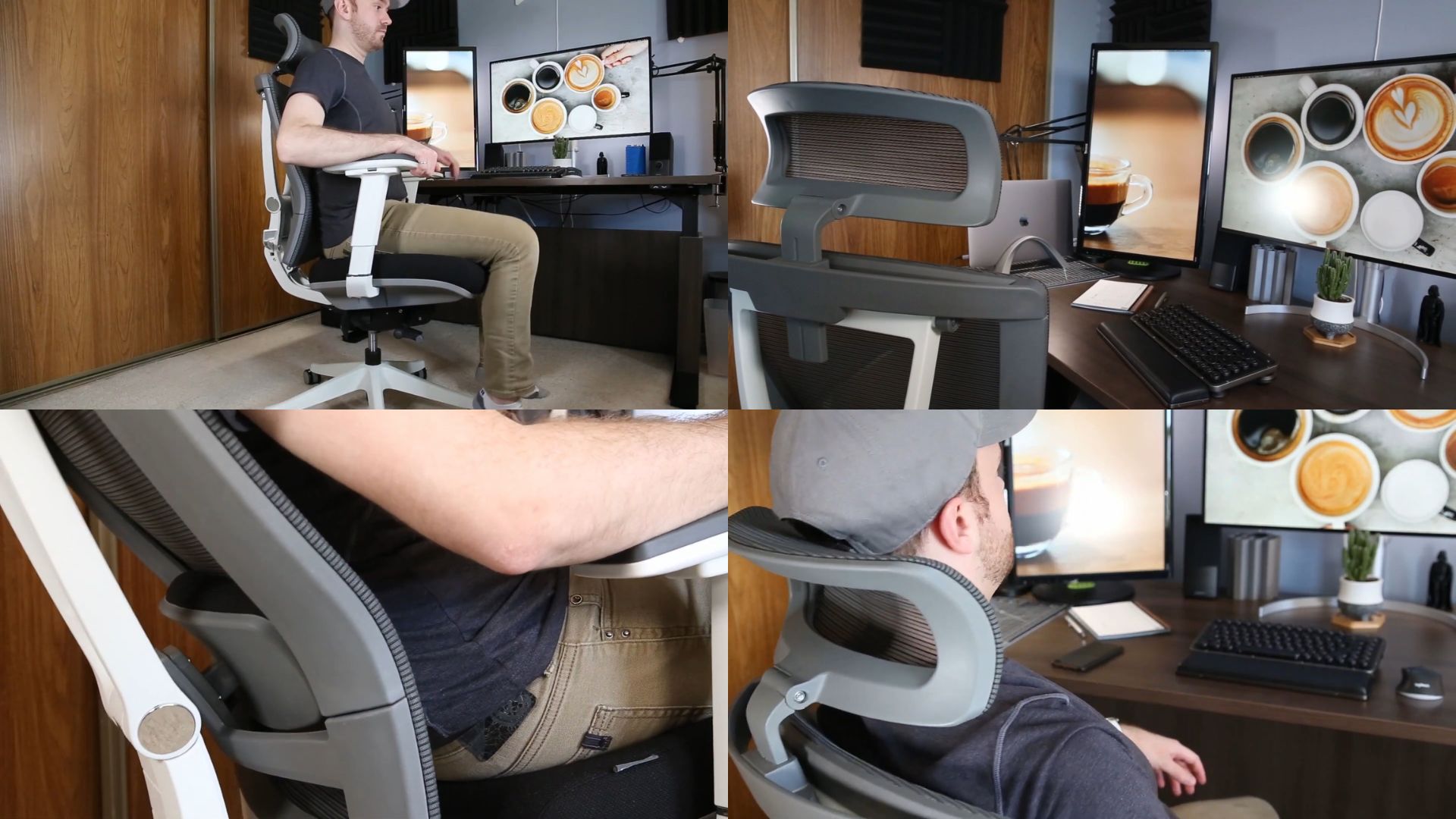
Its headrest features three-way adjustability, height, angle, and depth, allowing you to position support precisely for different neck lengths and sitting postures. The depth adjustment is especially valuable, as it lets the headrest move forward to support the head without forcing a backward lean. This forward positioning maintains neck support during intensive tasks like reading documents or coding, where users naturally sit more upright.
The chair's independent backrest recline means the headrest angle can be set separately from the seat position—a feature that became essential when switching between focused morning work and afternoon review sessions. Lumbar support adjusts independently as well, creating a customizable support system from lower back through neck.
Best for: Users who frequently shift between task-focused upright work and relaxed reclined positions, requiring adaptable neck support throughout the day.
Consideration: The multiple adjustment points require initial setup time to find optimal positioning, but this investment pays off in long-term comfort.

3. Ticova Ergonomic Office Chair
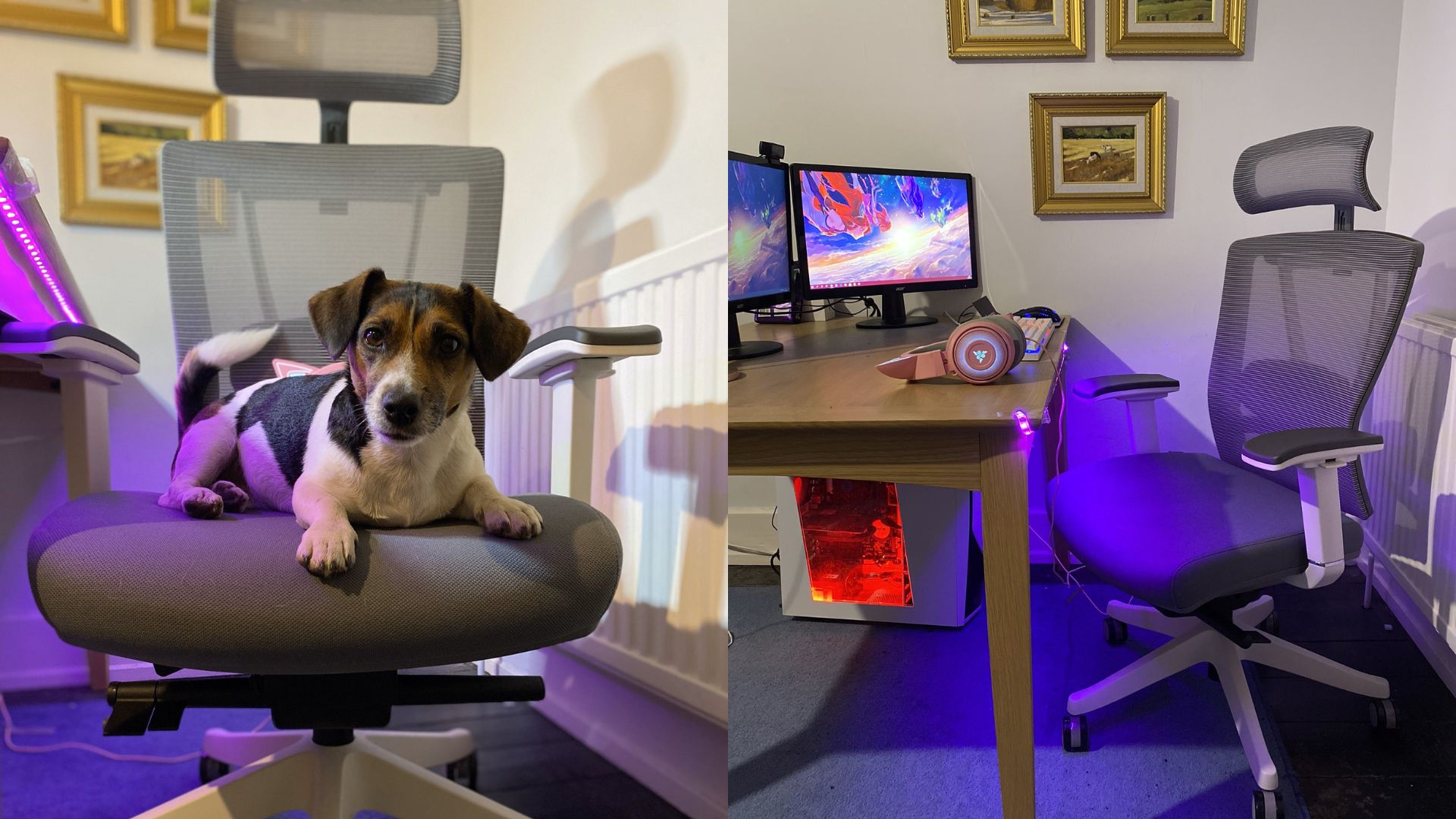
This model’s headrest features a flip-up mechanism that repositions out of the way when unneeded, a practical solution for users who don't want constant head contact. This flexibility also makes it relevant for those considering a reclining office chair, where head and neck support may only be needed in certain positions rather than throughout the entire workday.
When deployed, the headrest adjusts across approximately 3 inches of vertical travel, covering a reasonable height range for most users between 5'4" and 6'3". The angle adjustment provides adequate positioning for both neutral and slightly reclined postures, though the range feels somewhat limited compared to chairs with more extensive adjustment systems.
The headrest padding sits on the firmer side, which maintains consistent support during testing without the gradual compression that softer materials exhibit. This firmness worked well for sustained neck stability, though it may feel less immediately comfortable than plush alternatives.
Best for: Users who want the flexibility to work with or without headrest contact, or households where multiple people use the same chair.
Consideration: The firmer padding and moderate adjustment range suit straightforward neck support needs rather than highly customized positioning.
4. SIHOO M18 Ergonomic Office Chair
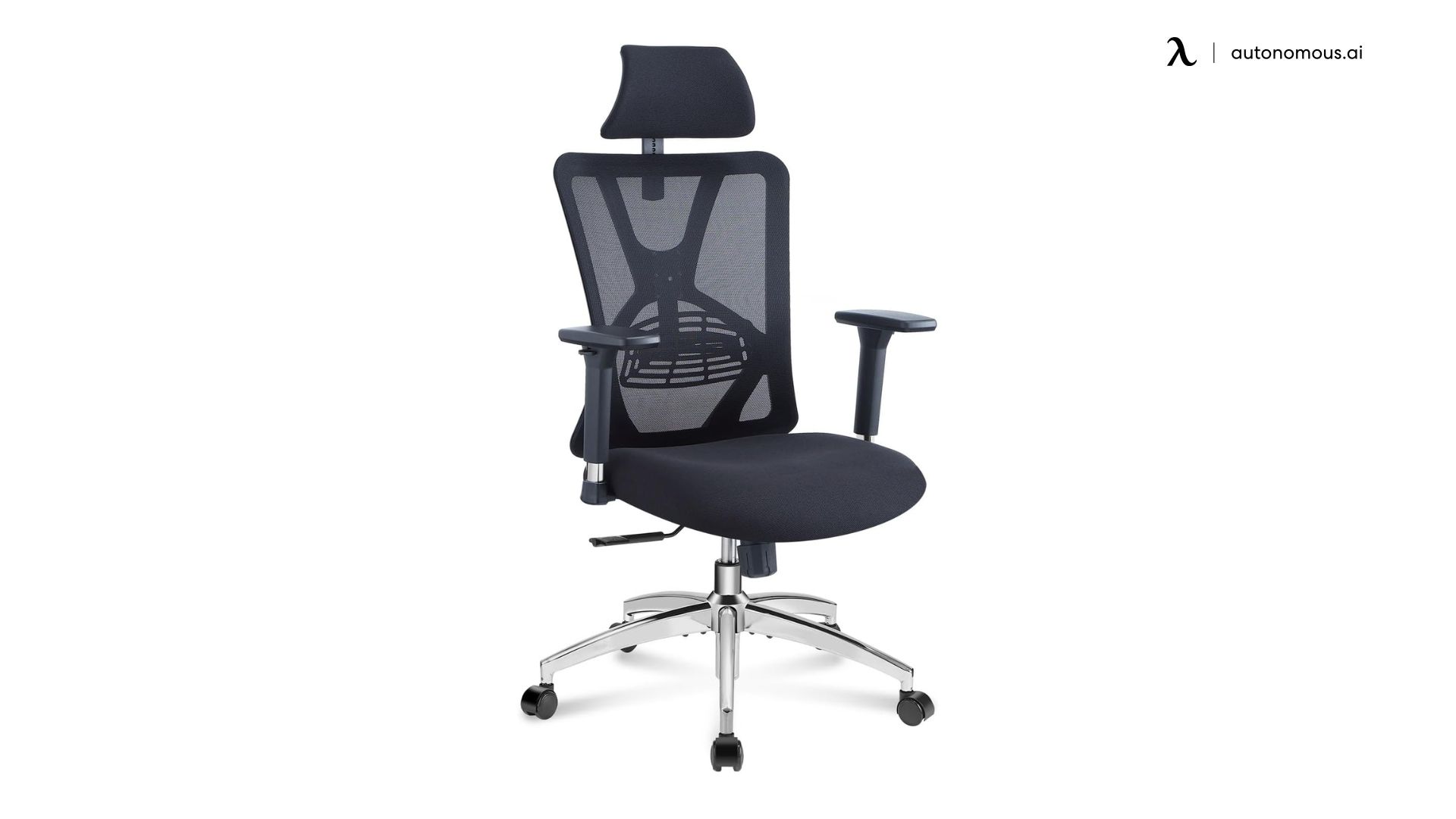
The M18 model approaches headrest design with a focus on cervical contour—the headrest curves inward at its center, creating targeted support for the natural hollow at the base of the skull. This design can be especially relevant for users who don’t require the broader proportions of a big and tall office chair, but still want anatomically shaped neck support that feels precise rather than oversized This contouring prevents the flat-contact pressure that can develop during extended recline, distributing support across a broader area.
What makes this best ergonomic office chair with neck support noteworthy is the headrest's responsive give, it compresses slightly under pressure without collapsing, similar to memory foam's initial resistance. This balance between support and adaptability kept the neck comfortably positioned during both active work and reclined breaks. The mesh headrest surface stays consistently cool, though the material feels slightly coarser than premium mesh alternatives.
Best for: Users seeking anatomically contoured neck support, particularly those who experience discomfort with flat-surface headrests.
Consideration: The textured mesh may feel less refined than smoother materials, though functionality remains unaffected.
5. Autonomous ErgoChair Ultra 2
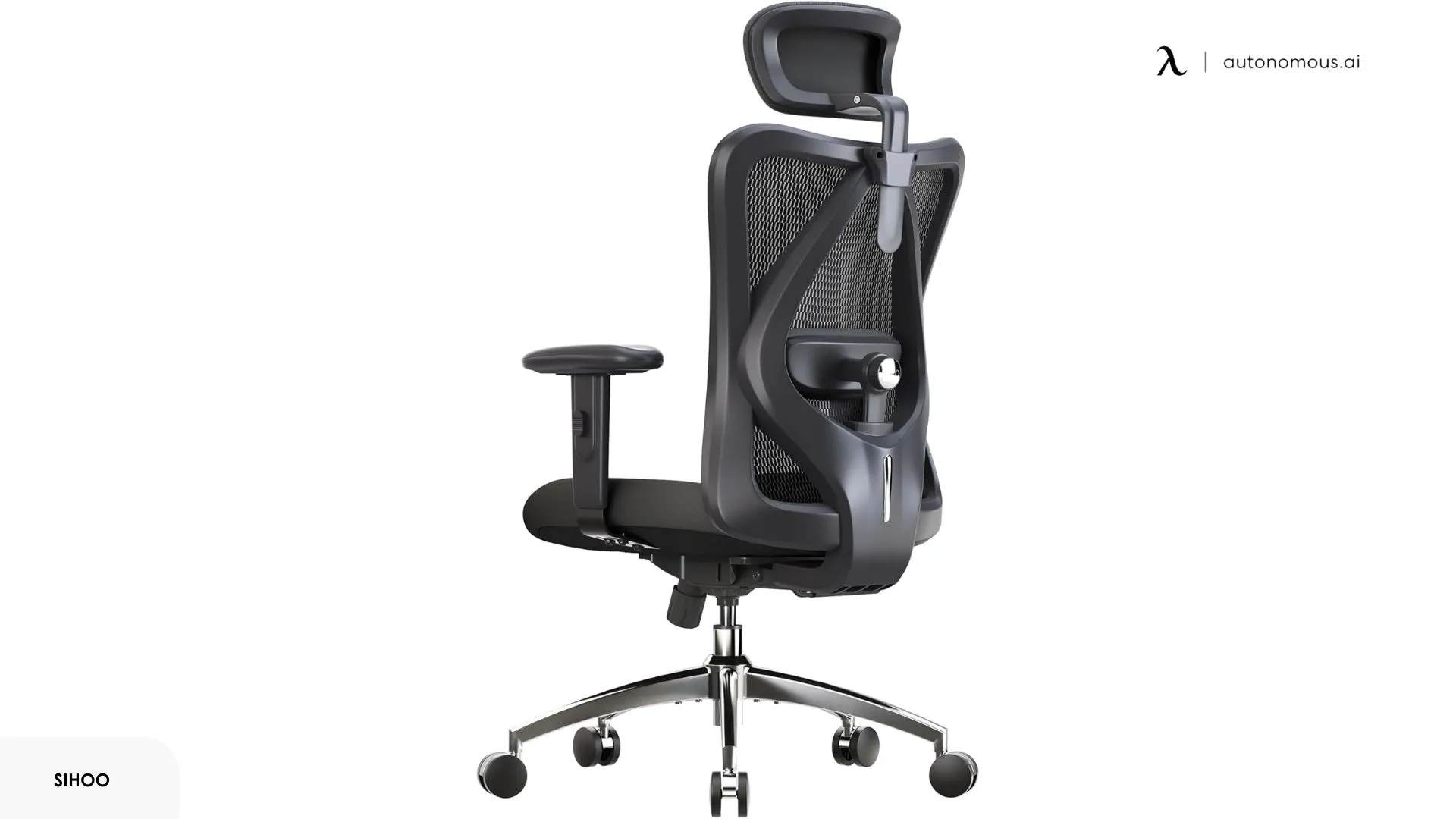
The ErgoChair Ultra 2 takes a comfort-first approach, making it a strong candidate for those looking for the most comfortable office chair with headrest rather than maximum adjustability. Its headrest is generously padded and softly contoured, designed to support the neck in a relaxed, natural position without requiring frequent fine-tuning. Instead of encouraging constant micro-adjustments, the headrest works best when set once and used consistently throughout the day.
The cushioning provides even pressure distribution across the neck and upper shoulders, which helps reduce stiffness during long seated sessions. This makes the ErgoChair Ultra 2 appealing as the office chair for long hours who value plush comfort and steady support over technical customization. During upright work, the headrest stays unobtrusive, while in a reclined position it offers a stable resting surface for the head without feeling rigid.
Best for: Users who spend long, uninterrupted hours seated and want steady neck support that feels comfortable and consistent without frequent repositioning.
Consideration: The headrest offers fewer fine-tuning options than more technical models, which may limit fit precision for users with very specific neck positioning preferences.

6. Logicfox Ergonomic Office Chair Pro
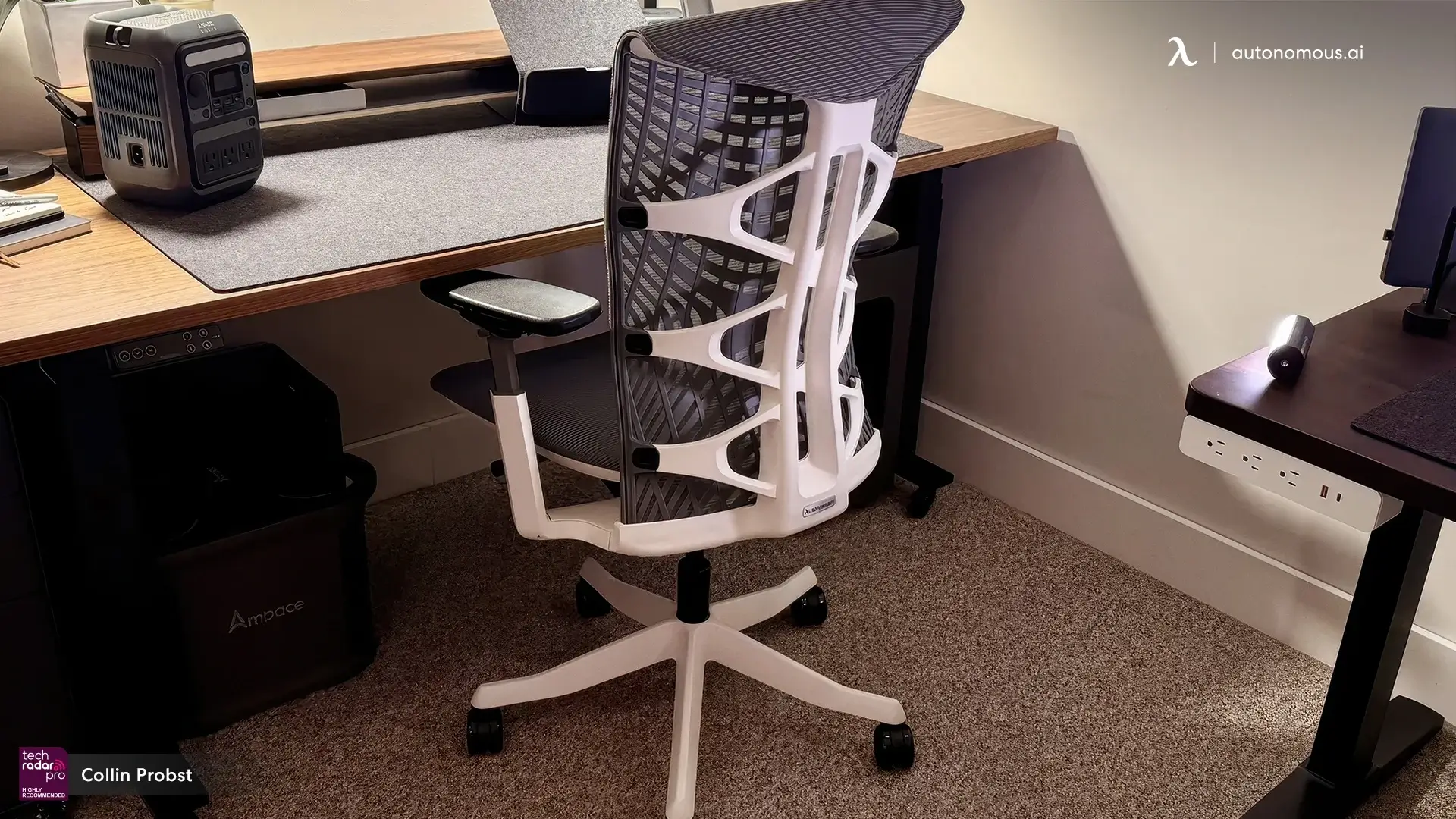
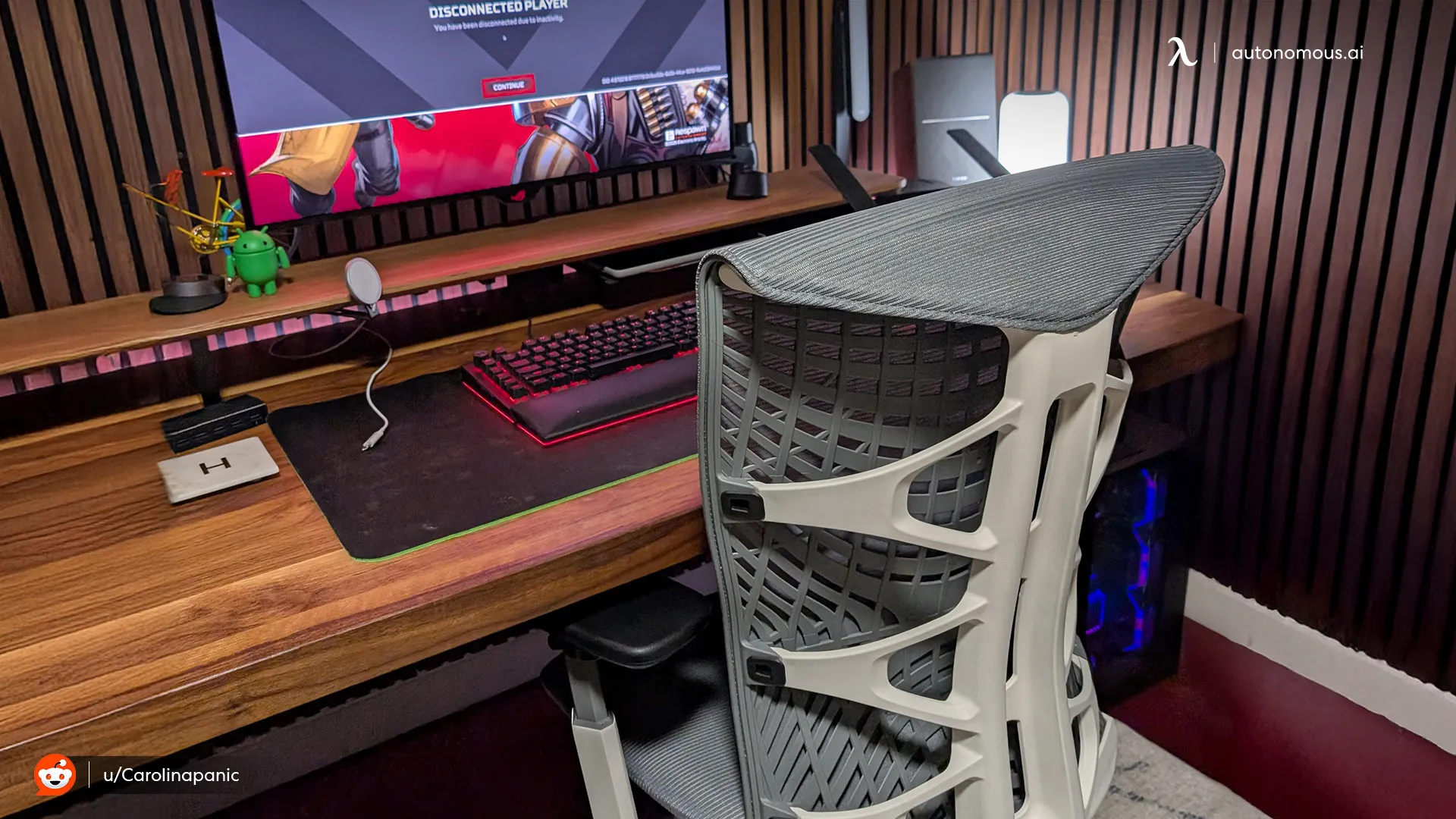
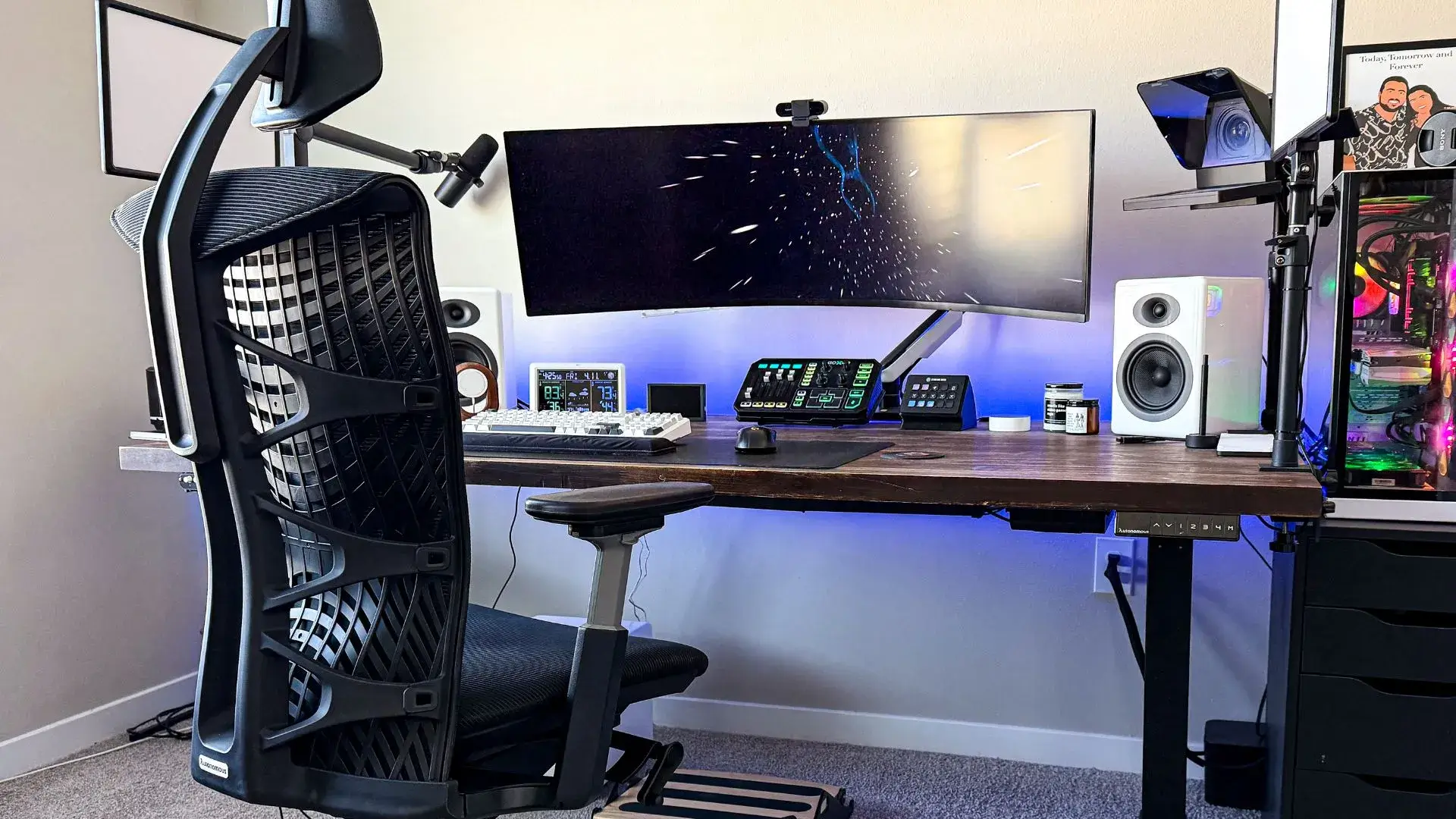
The Logicfox Ergonomic Office Chair Pro focuses on structure and stability, appealing to users who want an ergonomic setup that feels supportive rather than cushioned. Its design aligns closely with the expectations of a high-back office chair, where upper-back and neck support play a central role in maintaining posture during upright work.
The headrest surface uses a ribbed mesh pattern that creates slight texture against the head, not uncomfortable, but noticeably different from smooth-surface alternatives. During testing, this texture didn't cause irritation but provided tactile feedback about head placement. The chair's lumbar support positions slightly higher than average, which worked well with the headrest to create aligned support through the entire spine. The synchronized recline mechanism maintained headrest contact through various angles, though the resistance felt slightly stiff initially before loosening with use.
Best for: Users who work primarily in an upright posture, such as analysts, designers, or writers, and want a structured best office chair with headrest that reinforces proper neck alignment during focused tasks.
Consideration: The firmer feel and limited headrest adjustability may feel restrictive for users who prefer frequent reclining or softer, more relaxed neck support.
(2).jpg)
7. HBADA E3 Air Ergonomic Office Chair
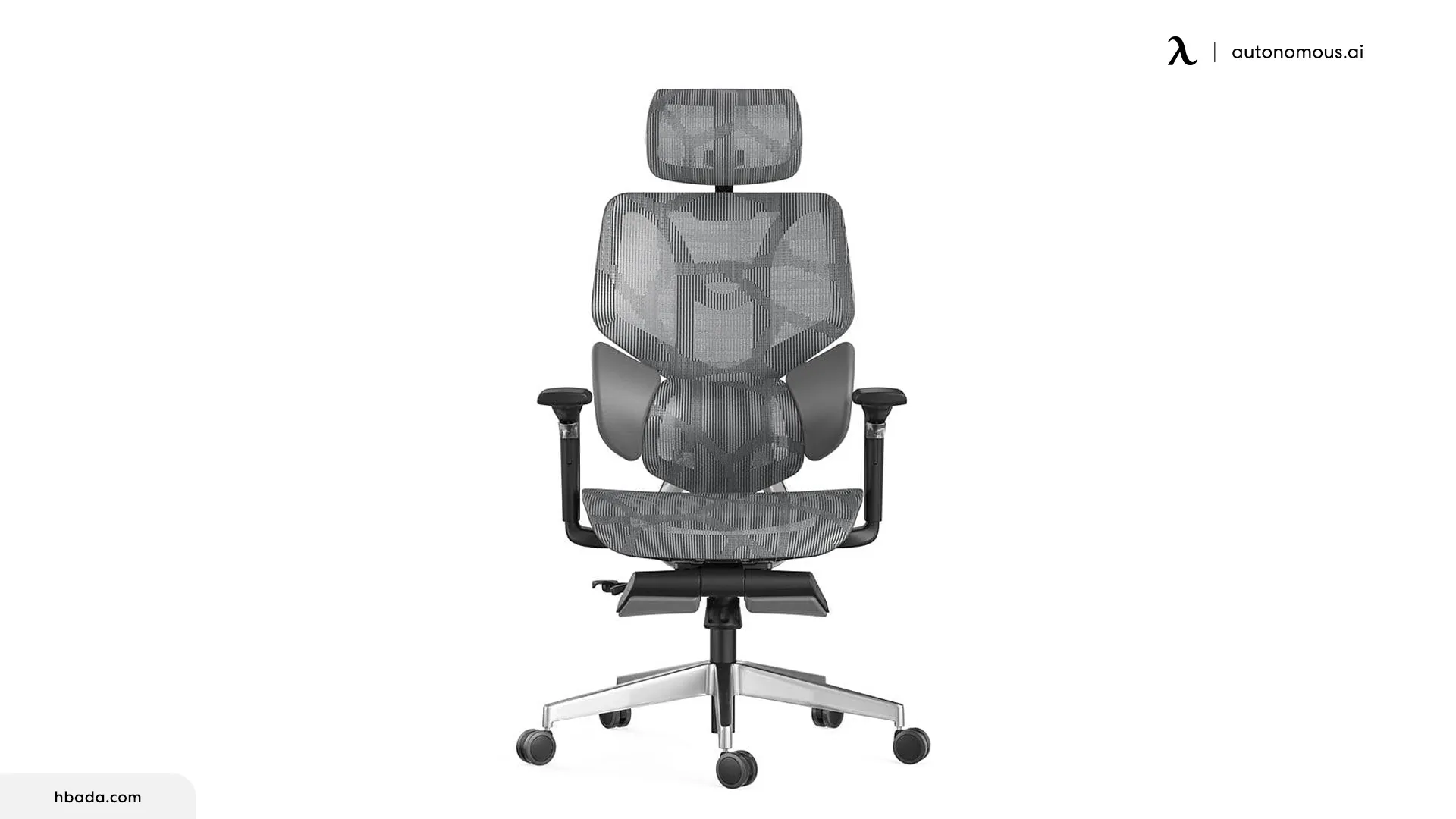
The E2 is designed with simplicity and visual lightness in mind, making it a good entry point for users exploring whether a best ergonomic office chair with headrest fits their daily routine. Unlike a heavy-duty office chair, which prioritizes reinforced frames and higher load capacity, the E2 focuses on a slim, modern profile with an integrated headrest that keeps the overall design clean and lightweight.
Rather than emphasizing advanced customization, the headrest provides consistent neck support for everyday tasks such as writing, browsing, or short work sessions. It supports the neck in upright positions without feeling bulky or intrusive. With its lighter build and space-conscious proportions, HBADA functions as the best ergonomic chair with headrest for casual or moderate use, where ease of placement and clean aesthetics matter as much as support.
Best for: Students, renters, or remote workers setting up compact home office setups who want a visually minimal best office chair with headrest that fits neatly into smaller rooms.
Consideration: The simplified headrest and lighter structure may feel insufficient for users who need firm neck support during long, uninterrupted workdays.
8. Branch Aire Chair
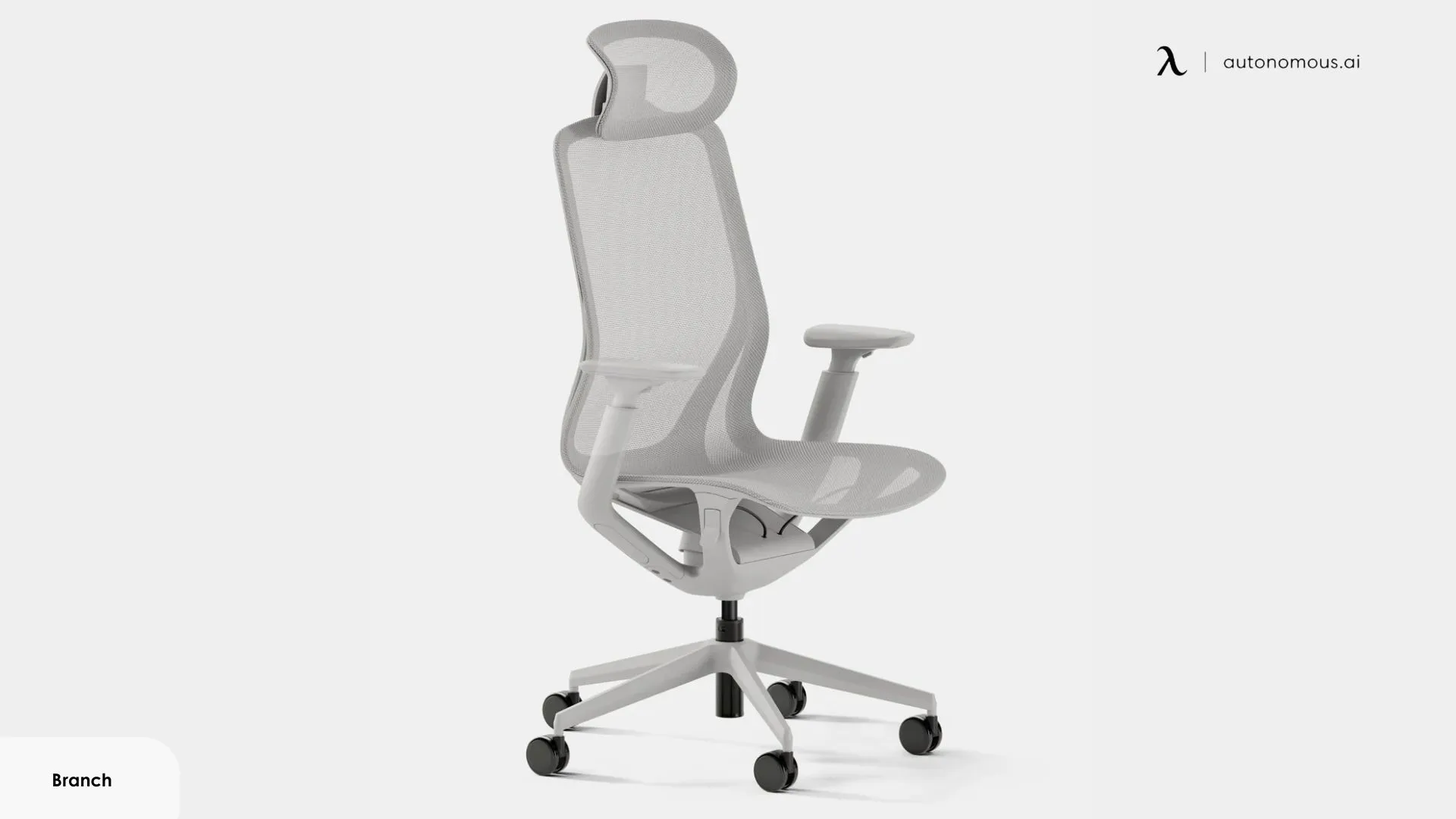
This office chair with headrest blends ergonomic support with design-forward styling, making it a compelling option for users who want the best ergonomic office chair with headrest that looks as considered as it feels. Its design emphasizes visual lightness paired with purposeful ergonomics, allowing the chair to blend naturally into minimalist desk setups without sacrificing neck support.
The headrest width focuses support directly at the neck rather than cradling the entire head, which worked well during upright sitting but felt less secure in deep recline. The recline mechanism maintained decent headrest contact through moderate angles, though full recline pushed alignment slightly off. The overall design suits users who want functional neck support without prominent mechanical features.
Best for: Design-conscious professionals, creatives, or remote workers who want a visually refined chair that balances comfort, style, and everyday usability.
Consideration: Users seeking highly technical neck positioning or firm, corrective support may prefer chairs with more advanced headrest adjustability.
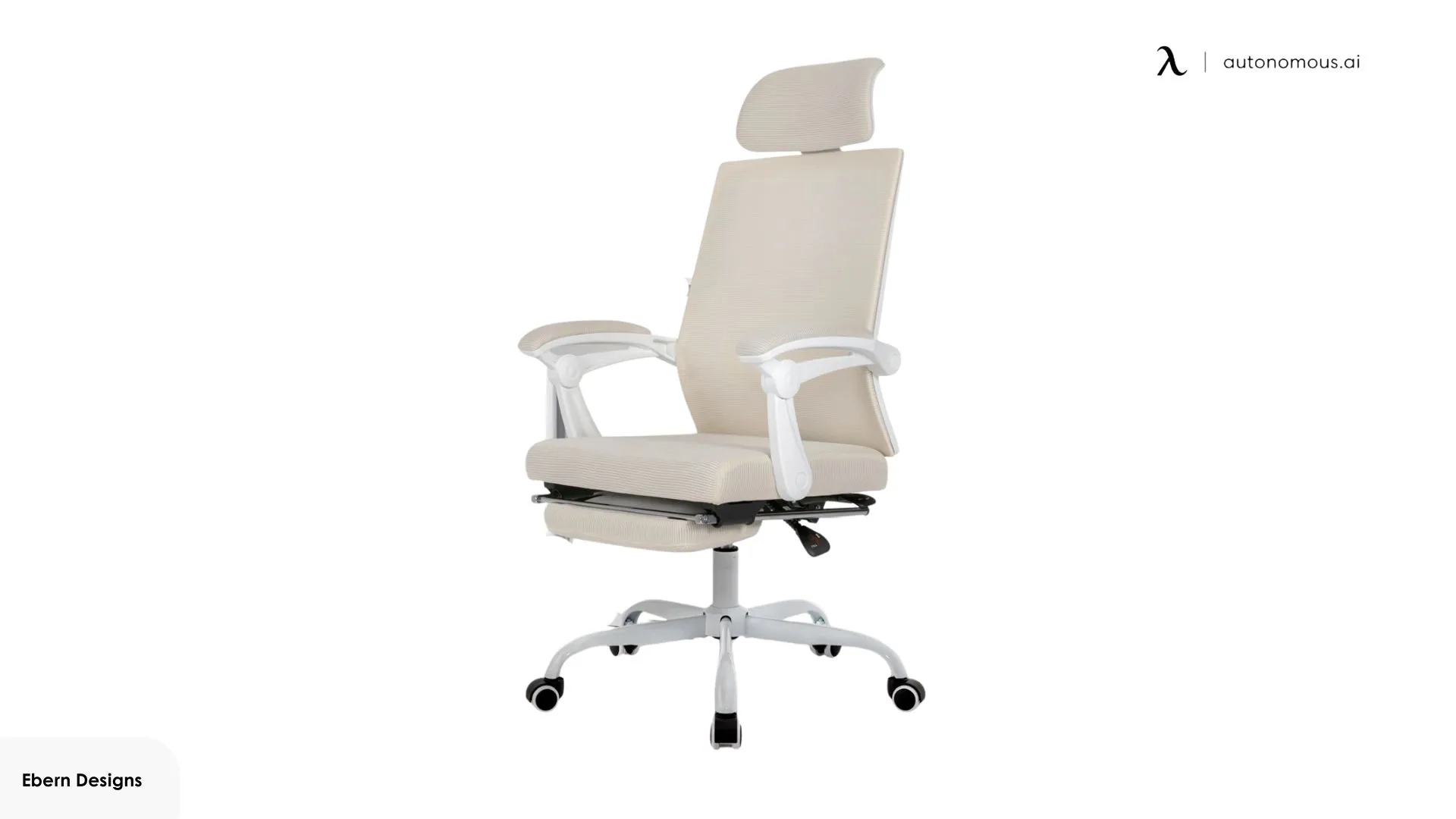
9. Ebern Designs Yepez Ergonomic Office Chair
The Yepez is positioned as a practical, no-frills option for users looking for the best ergonomic office chair with headrest that focuses on everyday comfort and affordability. Its design centers on breathable mesh and a straightforward adjustment system, making it approachable for users who want ergonomic benefits without a steep learning curve.
The headrest offers basic height and angle adjustment, providing reliable neck support during upright sitting and light recline. Instead of emphasizing extended recline, as seen with an office chair with footrest, the Yepez focuses on upright comfort for daily desk work.
Best for: Home office users, students, or remote workers seeking a straightforward office chair with headrest for regular daily tasks without complex adjustments.
Consideration: The limited headrest customization and lighter build may not suit users who need advanced neck positioning or premium long-session support.
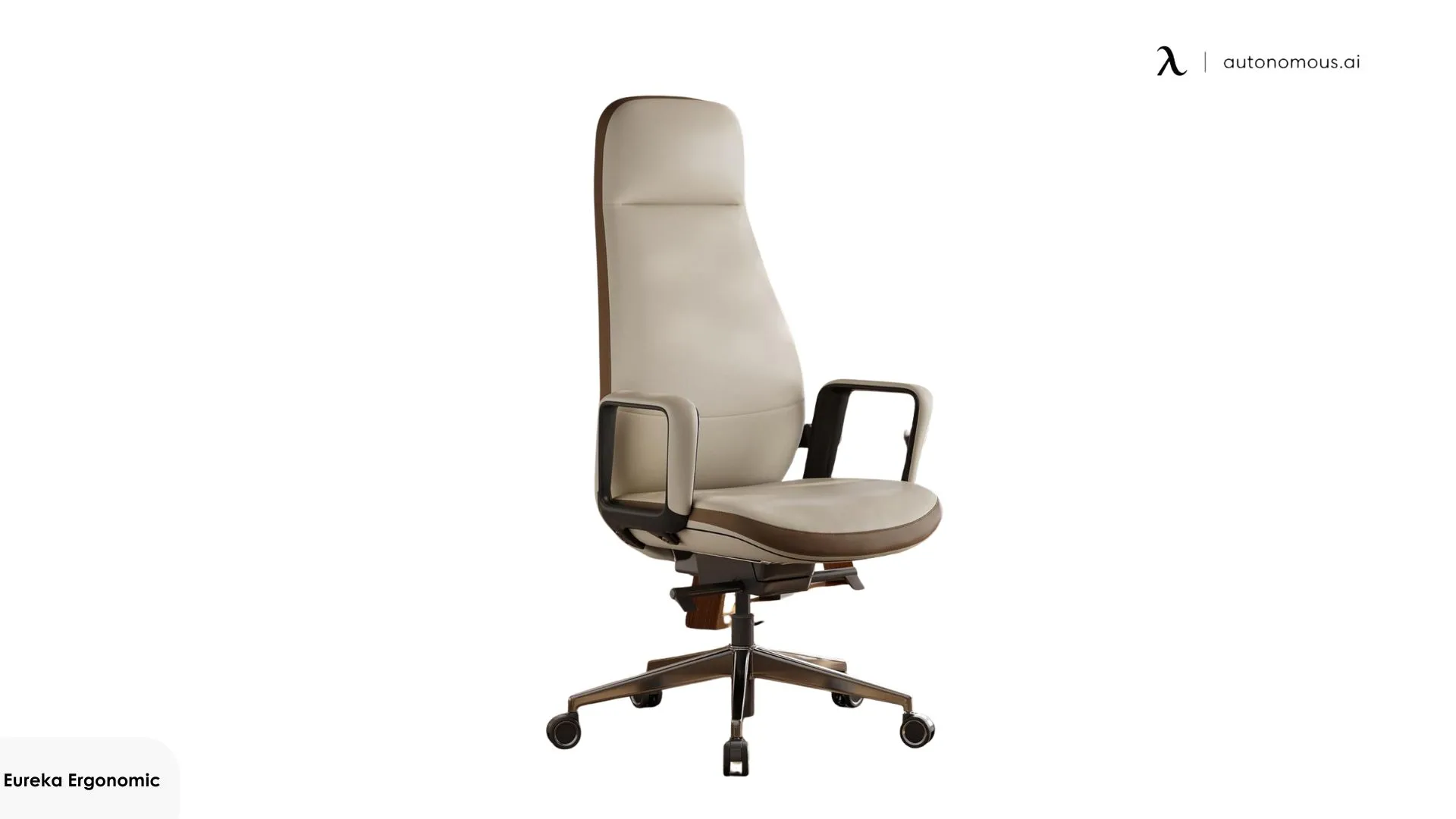
10. Eureka Ergonomic Serene Alto
The Eureka Ergonomic Serene Alto stands out by prioritizing a relaxed seating experience, making it a unique entry among the best ergonomic office chairs with headrest. Its high-back design integrates the headrest seamlessly into the chair’s silhouette, offering continuous support for the upper back, neck, and head without a segmented feel. This creates a more lounge-like posture compared to task-focused executive office chairs.
The headrest provides broad, even support rather than targeted adjustment, which works well for users who naturally lean back while working or taking breaks. Instead of emphasizing precision fitting, the Serene Alto focuses on comfort flow, allowing the neck to remain supported during extended recline or casual work sessions.
Best for: Users who prefer a relaxed, reclined seating style and want a visually elegant ergonomic chair with headrest for home offices or creative spaces.
Consideration: The limited adjustability may not provide enough precision for users who need upright, task-focused neck support throughout the workday.
What Matters Most in an Ergonomic Office Chair With Headrest
Choosing the best ergonomic office chair with headrest comes down to a few critical features that directly affect neck comfort and daily usability. Rather than focusing on long feature lists, the points below highlight what truly matters for this type of chair.
- Headrest Adjustability
A headrest should adapt to your neck position, not force your posture to change. At minimum, height and angle adjustment are essential so the headrest can align with the natural curve of your neck. Chairs with depth adjustment offer added flexibility by allowing the headrest to move closer to the head during upright work. Without proper adjustability, even a well-padded headrest can become uncomfortable over time.
- Neck Support During Upright Work
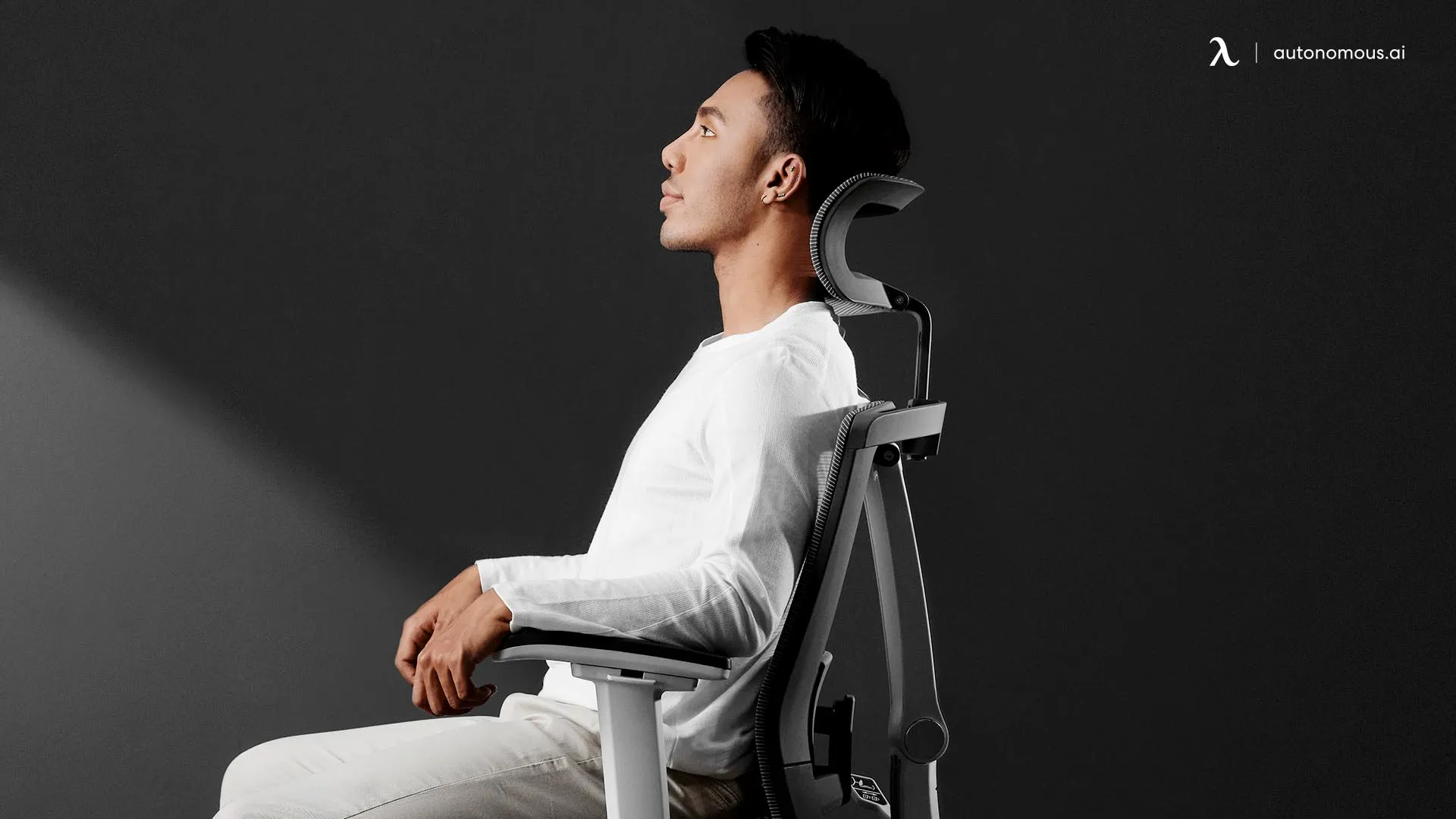
The best ergonomic office chairs with neck support provide gentle contact even when you’re sitting upright. This is especially important for users who spend long hours typing, reading, or working at a monitor. A well-designed headrest helps maintain neutral neck alignment and reduces forward head strain, rather than only functioning when you lean back.
- Support While Reclining
Recline is where many headrests fall short. When you lean back, the headrest should stay aligned with your neck instead of losing contact. Chairs that maintain consistent support through recline transitions are better suited for users who alternate between focused work and relaxed thinking or break periods throughout the day.
- Long-Term Comfort
Comfort should be judged over hours, not minutes. The most comfortable office chair with headrest distributes pressure evenly across the neck and upper shoulders without collapsing or creating hot spots. Breathable chair materials and supportive padding matter more than initial softness, especially for extended work sessions.
When evaluating the best office chair with headrest, focus on adjustability, upright neck support, recline compatibility, and long-term comfort. These core elements determine whether a headrest truly improves your workday or simply becomes another unused feature.
How to Position Your Headrest Correctly
Even the best ergonomic office chair with a headrest can fall short if the headrest isn’t positioned properly. A few intentional adjustments can significantly improve neck comfort and posture throughout the day.
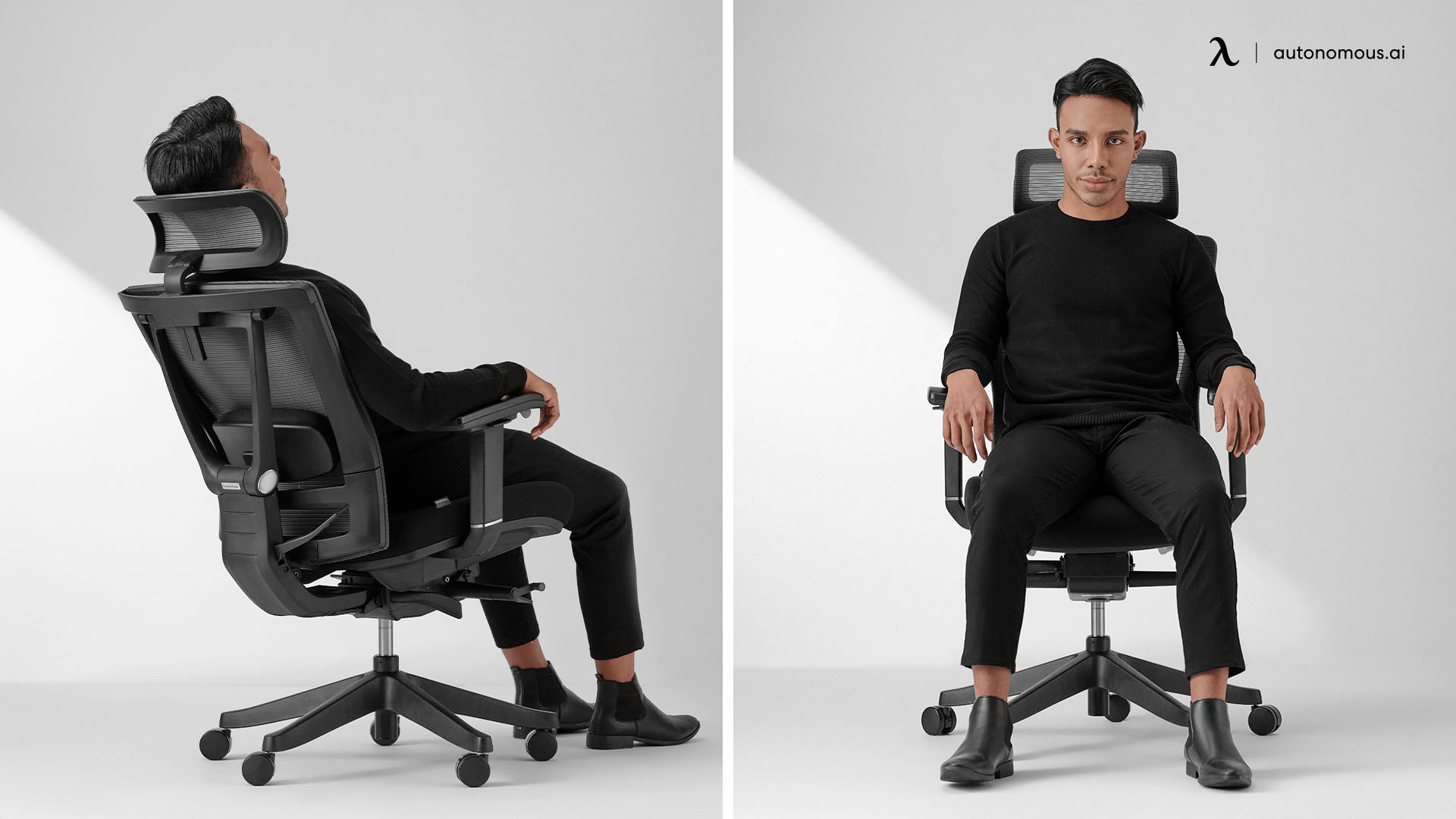
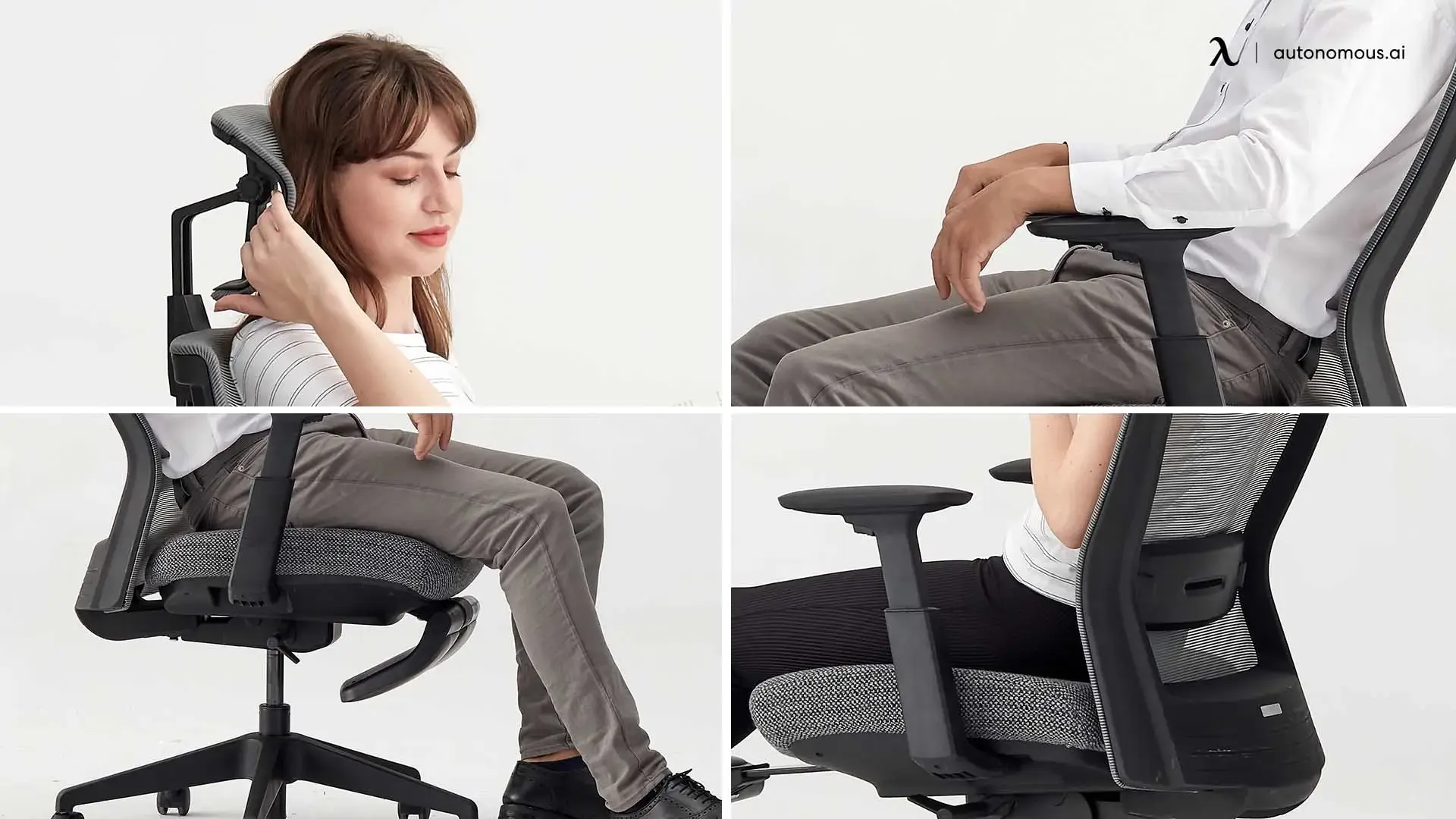
Begin by setting the headrest height so it supports the base of your skull rather than the middle of your head. When sitting upright, your head should feel lightly supported without being pushed forward. Proper height helps maintain natural neck alignment and prevents unnecessary tension.
Next, adjust the angle to follow the natural curve of your neck. The headrest should feel like an extension of the chair, not a separate surface. During focused work, aim for gentle contact; when reclining, the support should remain consistent without forcing your head into a fixed position.
If depth adjustment is available, move the headrest forward just enough to meet your head while you sit upright. This can be especially helpful for users who spend long hours at a desk and want steady neck support without leaning back.
Finally, reassess your setup after a full work session. The most comfortable office chair with headrest is one you don’t have to think about—supportive when needed and unobtrusive when not. Small refinements over time ensure your headrest works with your posture, not against it.
FAQs
What is the best ergonomic office chair with a headrest?
The best ergonomic office chair with headrest offers adjustable neck support, maintains alignment in upright sitting, and stays supportive when reclining. Chairs with height and angle adjustment are best suited for long daily use.
Is an office chair with a headrest good for neck pain?
Yes, an office chair with a properly positioned headrest can help reduce neck pain by supporting neutral alignment and easing muscle strain. It’s most effective when the headrest supports the base of the skull rather than pushing the head forward.
What makes the best ergonomic office chair with neck support?
The best ergonomic office chair with neck support combines adjustable headrest positioning with proper lumbar support. Together, they create continuous support from the lower back through the neck.
What is the most comfortable office chair with a headrest for all-day use?
The most comfortable office chair with headrest balances supportive cushioning with stable neck alignment. Comfort comes from even pressure distribution rather than overly soft padding.
Should I get an office chair with a headrest?
You should get an office chair with a headrest if you work long hours at a desk, experience neck or upper-back fatigue, or regularly recline while working. A properly adjusted headrest helps maintain neutral neck alignment, reduces muscle strain, and provides support that standard office chairs without headrests often lack.
What type of headrest is best for an ergonomic office chair?
Adjustable headrests that allow height and angle changes are best for ergonomic office chairs. Depth adjustment is a bonus, as it helps maintain neck support without forcing a reclined posture.
Can an ergonomic chair with a headrest improve posture?
An ergonomic chair with headrest can improve posture by supporting the neck and discouraging slouching. Proper setup is essential to ensure the headrest works with your posture rather than against it.
Is a mesh office chair with a headrest good for long hours?
A mesh office chair with headrest can be ideal for long hours because it improves airflow and reduces heat buildup. Comfort depends on whether the headrest maintains consistent support over time.
Conclusion
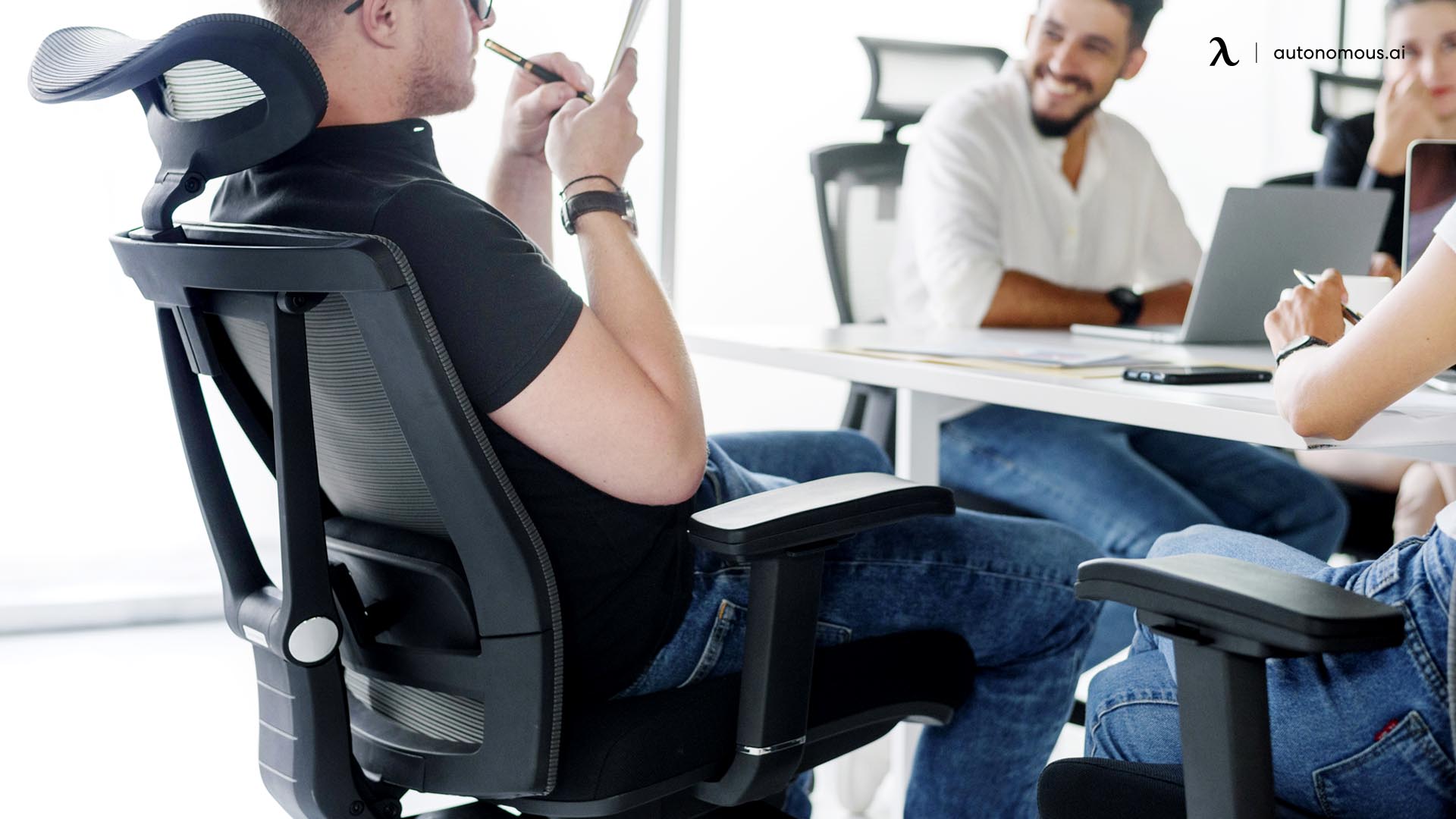
Finding the best ergonomic office chair with a headrest comes down to how well it supports your neck in real working conditions, not just how many features it lists. A good headrest should help maintain neutral alignment when sitting upright, stay supportive during recline, and feel comfortable over long hours without constant adjustment. When paired with good habits to fix neck pain, the right chair can play a meaningful role in reducing everyday strain.
The chairs in this guide reflect different priorities, precision adjustability, comfort-focused support, structured posture, or space-conscious design, so the right choice depends on how you work, how often you move, and what kind of neck support you prefer. While no single chair fits everyone, combining the right seating with a thoughtful desk setup for neck pain prevention helps create a workspace that supports both comfort and long-term posture health.