4-Monitor Setup for Trading: How to Build It Right


Table of Contents
A 4 monitor setup for trading can make your day feel calmer because everything has a clear “home” on screen. The goal isn’t just more screens - it’s faster scanning, fewer tab switches, and fewer mistakes when you’re placing or managing trades, especially in a home trading setup.
But most people build a 4 monitor trading setup and end up with neck strain, messy cables, and screens that don’t match their workflow. This guide walks you through the right order to build it so your setup feels stable, readable, and easy to use, building on the essentials of a 4 monitor setup.
How to Choose a 4 Monitor Layout for Trading
Choosing the right layout is the fastest way to upgrade your 4 monitor setup for trading. It changes how easy it is to scan charts, how much neck strain you get, and how stable your mount feels - so your 4 monitor trading setup can feel smooth instead of overwhelming.
Below are the most practical layouts traders use, plus who each one is best for.
Layout | What it looks like | Best for | Pros | Watch-outs |
2×2 grid | Two on bottom, two on top | Most traders, mixed workflows | Balanced scanning, easy to mount, compact | Top row can be too high on shallow desks |
3+1 | Three across + one above or vertical side | Execution + scanning | Main screens stay low, strong “primary row” | Needs a wider desk, alignment can be tricky |
4 in a row | All four side-by-side | Wide desks, minimal vertical movement | No looking up, clean workflow | Requires an extra long L-shaped desk and more head turns |
1 over 3 | One centered above, three on bottom | Chart-first traders | Keeps one “overview” screen always visible | Top screen must stay low to avoid neck strain |
If you want the best 4 monitor setup for trading, choose the layout that keeps your primary screens at eye level and pushes “support screens” higher or to the side.
Quick pick by desk size
- Normal desk width: start with 2×2
- Wider desk: choose 3+1
- Very wide desk: consider 4 in a row
- Chart-first workflow: consider 1 over 3
Your layout choice also affects 4 monitor trading setup cost because it determines your mount style (quad stand vs dual arms) and how sturdy your mounting hardware needs to be.

What Goes on Each Monitor
Best if you’re placing frequent orders and managing positions actively.
Monitor 1 Execution and positions (main screen)
- Order entry / trade ticket
- Positions + P&L
- Risk controls (max loss, sizing rules)
- Hotkeys panel if your platform supports it
Many traders rely on a powerful FX trading platform that allows them to monitor execution and positions from a single main screen.
Monitor 2 Primary charts
- Your main chart layout (1–2 timeframes)
- Key levels, volume, VWAP, moving averages (whatever you actually use)
- One “focus symbol” view
Monitor 3 Scanners watchlists and tape
- Top gainers/losers scanner
- Your watchlist
- Level 2 / time & sales (if relevant to your strategy)
- Alerts
Monitor 4 News calendar and notes
- Real-time news feed
- Economic calendar / earnings calendar
- Journal notes checklist
- Post-trade screenshots folder (optional)
Desktop vs Laptop Setup
1. Desktop PC (simplest path)
A desktop is usually the most straightforward 4 monitor trading computer setup because a dedicated GPU often supports 4 displays directly.
What to check:
- Your GPU supports 4 simultaneous displays
- You have enough physical ports (commonly DisplayPort/HDMI)
- Your monitors match those ports (or you have the right cables)
If you’re building the best 4 monitor setup for trading with minimal troubleshooting, a desktop with a GPU that has 4 outputs is typically the cleanest option.
2. Laptop (possible but more “rules”)
A laptop-based 4 monitor trading setup depends on your USB-C/Thunderbolt capabilities and whether your dock supports multi-display output. A 4 monitor setup with a laptop has a good breakdown of the common limitations and workarounds.
What to check:
- Your laptop’s USB-C/Thunderbolt port supports video output (DisplayPort Alt Mode / Thunderbolt). How to connect a laptop to monitor covers the basics.
- Your dock explicitly supports 4 external monitors for your laptop + operating system
- Your setup supports the resolutions you want (4×1080p is easier than 4×1440p)
This matters a lot for 4 screen trading setup price planning because docks that truly support four external displays can cost more than expected.
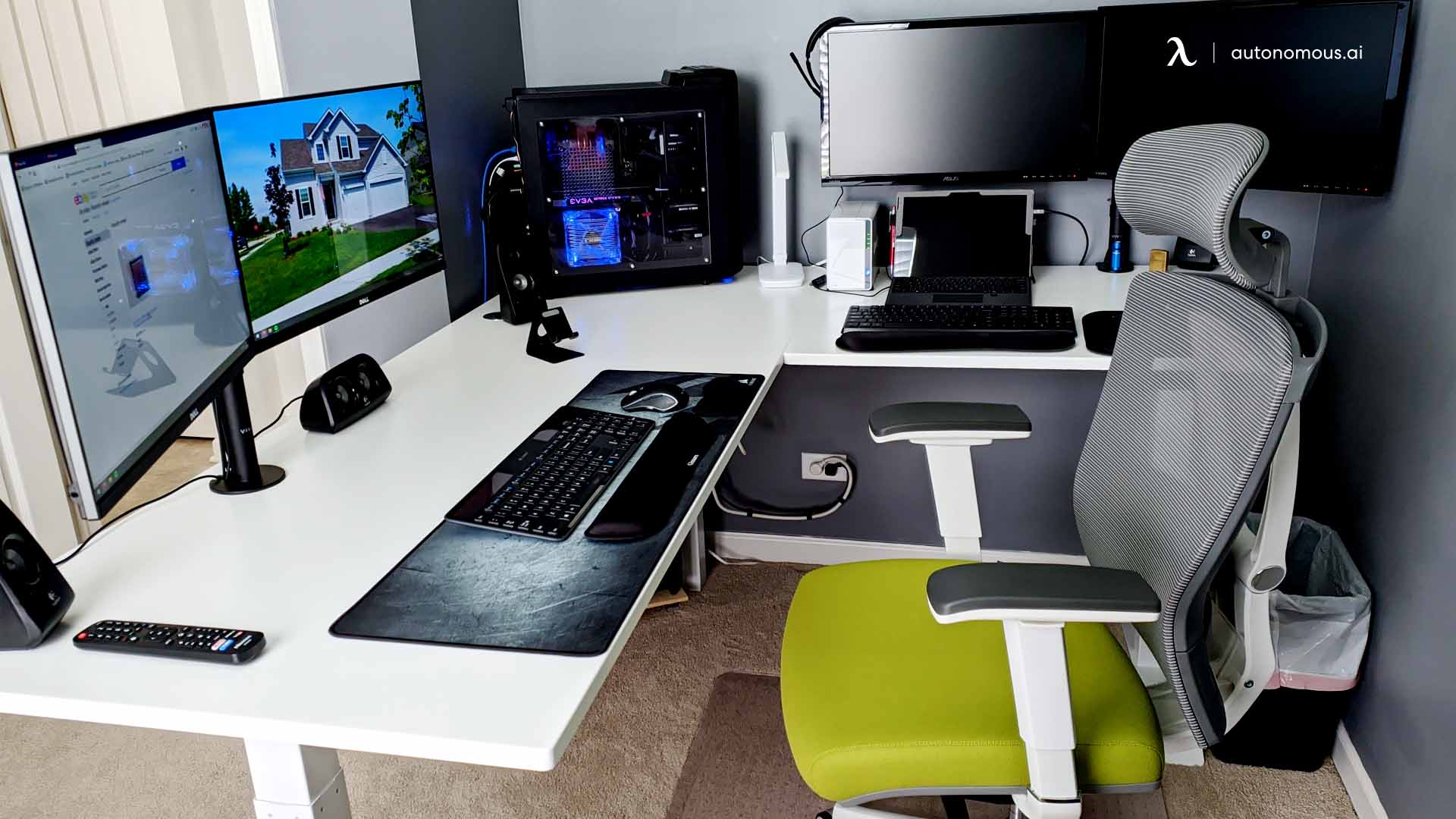
How to Connect 4 Monitors Without Flicker
For a 4 monitor trading setup, the simplest rule is:
- 4 monitors = 4 video outputs
- Prefer DisplayPort when possible because it’s commonly more reliable for multi-monitor setups; the tradeoffs between ports and adapters are summarized in different types of monitor connections.
- Use HDMI if your GPU/monitors are HDMI-based
Quick checklist:
- Count outputs on your GPU (desktop) or on your dock (laptop).
- Match your cables to those ports so you’re not forced into a chain of adapters; choosing the correct cable type upfront is usually cheaper than troubleshooting later, which is why cable to connect laptop to monitor fits naturally into the planning step.
- Avoid stacking adapters whenever possible - too many adapters can cause flicker or “monitor not detected” issues, and the most common root causes are covered in laptop not recognizing monitor.
If you trade on a laptop:
- USB-C/Thunderbolt docks: cleanest setup, but the dock must explicitly support 4 external displays for your laptop + OS.
- DisplayLink docks: can help you reach four screens when your laptop can’t natively support it, but it adds drivers and one more point of failure.
Simple rule: If your laptop supports fewer monitors natively, DisplayLink may get you to a 4 screen trading setup - just don’t expect it to be as “set-and-forget” as a desktop GPU with four outputs.

Desk Depth and Monitor Positioning for Trading Comfort
A good 4 monitor setup for trading isn’t just “all screens close.” It’s about distance, angles, and keeping your main viewing zone natural.
- Keep the center screens directly in front of you, with your “primary” screens in the middle two (for a 4-in-a-row layout) or bottom-center (for a 2×2 grid).
- Angle side screens slightly inward so your eyes rotate more than your neck. For some workflows, a vertical monitor setup can also reduce side-to-side head turns.
- If you stack monitors, tilt the top screens downward and keep them as “glance” screens; a stacked monitor setup only works when the top row isn’t forcing your chin up.
- Your mount affects how easily you can dial in angles and stability; monitor arm vs stand is a helpful comparison when deciding between flexibility and simplicity.
- Set the height first, then fine-tune tilt and distance - proper monitor height keeps your main screen from drifting too high over time.
If your desk is shallow, avoid pushing the top row too high. That’s the most common ergonomic failure in a 4 monitor trading setup. If you’re building a permanent station, a how to wall mount a monitor approach can free up desk depth.
Best choice | When to pick it | Why it works | Watch-outs |
Quad stand | 2×2 layout, you want simple + clean | Easy setup, tidy cables | Cheap models wobble, less fine adjustment |
Two dual arms | 3+1 layout, comfort is priority | Best ergonomics + adjustability | Costs more, takes longer to align |
Freestanding stand | Can’t clamp or drill | Works on most desks | Uses desk space, stability varies |
Wall mount | Permanent trading station | Most stable, frees desk | Hard to move, not renter-friendly |
4-Screen Trading Setup Price
A realistic 4 screen trading setup price is mostly driven by monitor tier and mount stability. When you’re budgeting, make sure you’re comparing sizes correctly - monitor size is measured diagonally, not by width, which is why measuring a computer monitor can help when you’re picking screen sizes for your desk.
1. Budget Build Under $750
Typical total: $450–$750 (if your computer already supports 4 monitors)
- Monitors (4× 24-inch 1080p): ~$300–$480
- Quad stand (entry-level): ~$80–$130
- Cables + power + small cable tools: ~$30–$60
Best for: new traders, smaller desks, and anyone who wants a practical 4 screen trading setup without overspending.
2. Balanced Build $900 to $1,800
Typical total: $900–$1,800 (if your computer already supports 4 monitors)
- Monitors (4× 27-inch 1440p): ~$720–$1,400
- Mounting (choose one): Two dual monitor arms (~$200–$400 total) or a sturdier quad stand (~$150–$400)
- Cables + cable management: ~$40–$80
Best for: most people building the best 4 monitor setup for trading who want a clean workflow and long-session comfort.
If you’re deciding whether the upgrade to 27-inch is worth it for readability and spacing, 24 vs 27 inch monitor maps closely to the tradeoffs you’ll feel in a four-screen desk.
3. Pro Build Premium Setup
Typical total: $2,300–$5,500+ (depends heavily on monitor tier + mount quality)
- Monitors (4× premium 4K and/or OLED): ~$1,600–$3,600
- Premium mounts/arrays: ~$500–$1,800+
- Cables + power + cleaner routing: ~$60–$150
Best for: traders who want premium clarity, a rock-solid mount, and a setup that stays comfortable for years (panel choice matters most here, OLED vs IPS monitor).
4. Add-on Costs That Can Change Your Total Fast
Bigger screens: if you’re considering 32-inch or 34-inch displays, desk depth and mounting requirements change quickly; 32 vs 34 inch monitor comparison breaks down the practical differences.
If you trade on a laptop: plan roughly $125–$360+ for a dock that truly supports four external monitors.
If your desktop can’t drive 4 displays: plan roughly $200–$300+ for a basic GPU upgrade, depending on resolution goals.

FAQs
Is a 4 monitor setup for trading worth it?
Yes if you actively manage trades, scan for setups, or track news and levels at the same time. A 4 monitor setup for trading reduces tab switching and helps you keep execution, charts, and scanners visible without clutter.
What is the best 4 monitor setup for trading?
The best 4 monitor setup for trading is the one that keeps your main screens at eye level, uses a stable mount, and gives each monitor a single job (execution, charts, scanners, news/notes). Get those right first - then choose a layout that fits your desk and trading style.
What is the best layout for a 4 screen trading setup?
For most desks, the 2×2 grid is the most balanced layout. If you want your primary row lower and more execution-focused, a 3+1 layout often feels more natural, especially on wider desks.
Can a laptop run a 4 monitor trading setup?
Sometimes, but you must confirm multi-display support before buying anything. A laptop-based 4 monitor trading setup usually requires a dock that supports four external monitors and the right USB-C/Thunderbolt features, otherwise you may be limited to fewer screens.
Do I need a dedicated GPU for a 4 monitor trading computer setup?
A dedicated GPU makes a 4 monitor trading computer setup much simpler because it often supports four displays directly with stable drivers. Some systems can run four monitors without a strong GPU, but you still need enough display outputs and reliable support for four simultaneous screens.
How much does a 4 monitor trading setup cost?
Most setups fall into three ranges if your computer already supports four monitors: $450–$750 for a budget build, $900–$1,800 for a balanced build, and $2,300–$5,500+ for a premium build. If you trade on a laptop, a dock that truly supports four external displays often adds $125–$360+, and if your desktop can’t drive four displays, a basic GPU upgrade is commonly $200–$300+.
What mount is best for a 4 monitor trading setup?
For many traders, two dual monitor arms offer the best adjustability and alignment, especially if you want a 3+1 layout. A quality quad stand is also great for a clean 2×2 grid, but avoid ultra-cheap stands that wobble.
What monitors are best for a 4 monitor trading setup?
For most traders, the safest pick is four matching 24-inch 1080p monitors (budget) or four matching 27-inch 1440p monitors (best balance of space and clarity). Choose a simple, matte IPS-style display for comfortable long sessions, and prioritize consistency (same size and resolution) over “premium” features.
What is the best way to set up 4 monitors for trading workflow?
Start by placing execution and your primary chart in the center, then put scanners/watchlists to the side and news/calendar on the top or far side. This workflow-focused approach is what turns a basic 4 monitor trading setup into a clean, efficient system.
Conclusion
A 4 monitor setup for trading works best when you build it in the right order: choose a layout that fits your desk, confirm your computer can drive four displays, then lock in a stable mount and assign each screen a clear job. That’s how a 4 monitor trading setup becomes faster and calmer instead of cluttered.
To get the best 4 monitor setup for trading, keep your primary screens at eye level, use the top screen only for “glance” info, and aim for consistency across all four displays so your workflow feels seamless. Dialing in posture and screen height matters just as much as the gear - standing desk ergonomics and ergonomic desk setup cover the fundamentals.
Once the layout and ergonomics are right, your 4 monitor trading computer setup becomes easy to maintain - and your 4 monitor trading setup cost stays under control because you’re buying with a plan, not guessing. If you’re scaling up desk space for a multi-screen workstation, the sizing considerations in a standing desk for 3 monitors translate well to four screens, and wider surfaces like a long standing desk or an extra large standing desk can make the setup feel less cramped.