How to Become and Succeed as a Digital Nomad in 2026

Becoming a digital nomad in 2026 comes down to four things in order: income you can earn from anywhere, the legal right to stay where you go, a setup light enough to move, and systems that keep your work running when you're offline or asleep. The lifestyle is more accessible than it was five years ago, but the people who last aren't the ones with the best photos. They're the ones who treated it like a job with a moving office. Here's how to build it so it holds up.
What the digital nomad lifestyle actually is
The digital nomad lifestyle means earning a location-independent income while living in different places, rather than taking a long vacation. That distinction matters, because the failure mode is treating travel as the point and work as the interruption. The nomads who sustain it flip that: work is the foundation that funds the freedom, and everything else is built to protect the work.
It's also less glamorous day to day than the feed suggests. It's time zones, unreliable Wi-Fi, visa runs, and the discipline to open your laptop when a city is calling. Knowing that going in is the first success factor.
Step 1: Build income you can earn from anywhere
Location-independent income is the non-negotiable first step, and it comes in three broad shapes. Remote employment is the most stable: a salaried job you're allowed to do from anywhere (check the "anywhere" part with HR, since many "remote" roles are country-locked for tax reasons). Freelancing and contracting - writing, design, development, marketing - trades stability for flexibility and is the most common on-ramp. Running your own business or product is the highest-ceiling and highest-effort path.
Whichever you pick, prove it works before you leave. Land the clients, bank a few months of runway, and run your normal life on the income for a while. The road is the wrong place to discover your income doesn't hold.
Step 2: Handle visas, taxes, and the legal side
The legal layer is where romantic plans meet reality, so treat it early. Over 60 countries now offer dedicated digital nomad visas that let you stay legally for six months to a couple of years while working for foreign clients - a major shift from the old tourist-visa gray area. Research the specific requirements (income thresholds, health insurance, proof of remote work) for your target countries before booking anything.
Taxes are the part people ignore and regret. You generally still owe tax somewhere, and your home country's rules on residency and foreign income don't disappear because you left. Specialized filing tools like Expatfile make managing U.S. tax obligations from abroad far less overwhelming, but it is always wise to talk to an accountant who understands cross-border remote work before your first year ends, not after.
Step 3: Keep your setup light and resilient
Your gear is your office, so it has to be minimal and redundant. The core is a reliable laptop, a way to get online anywhere (a strong phone plan with a local eSIM, plus a backup hotspot), noise-canceling headphones, and a power setup that handles any outlet. Redundancy is the theme: two ways online, backups of everything in the cloud, and nothing you can't replace on the road.
Security is equally vital on untrusted networks-using a reliable Mac VPN keeps your device protected, while a top-rated VPN for Spain ensures secure, unrestricted access if you choose to work from southern Europe. If you are traveling as a group, managing sensitive credentials across locations is simple when utilizing a centralized password manager for teams.
Pack for the work first and the lifestyle second. The camera drone is optional; the second way to get online is not.
Step 4: Build systems that run while you sleep
This is the step that separates surviving from thriving, and it's the one most guides skip. When your clients or team are eight hours ahead, your workday and theirs barely overlap, so the nomads who don't burn out are the ones who make their work asynchronous - clear written updates, scheduled sends, and tasks that move forward without them sitting at the keyboard.
Automation is the force multiplier here. The more of your routine work that runs on its own - inbox triage, follow-ups, monitoring, a morning digest of what happened overnight - the more of your day belongs to you instead of your screen. A personal AI assistant is one way to do that, and for nomads with a home base or a long-stay apartment, a dedicated device is worth knowing about.
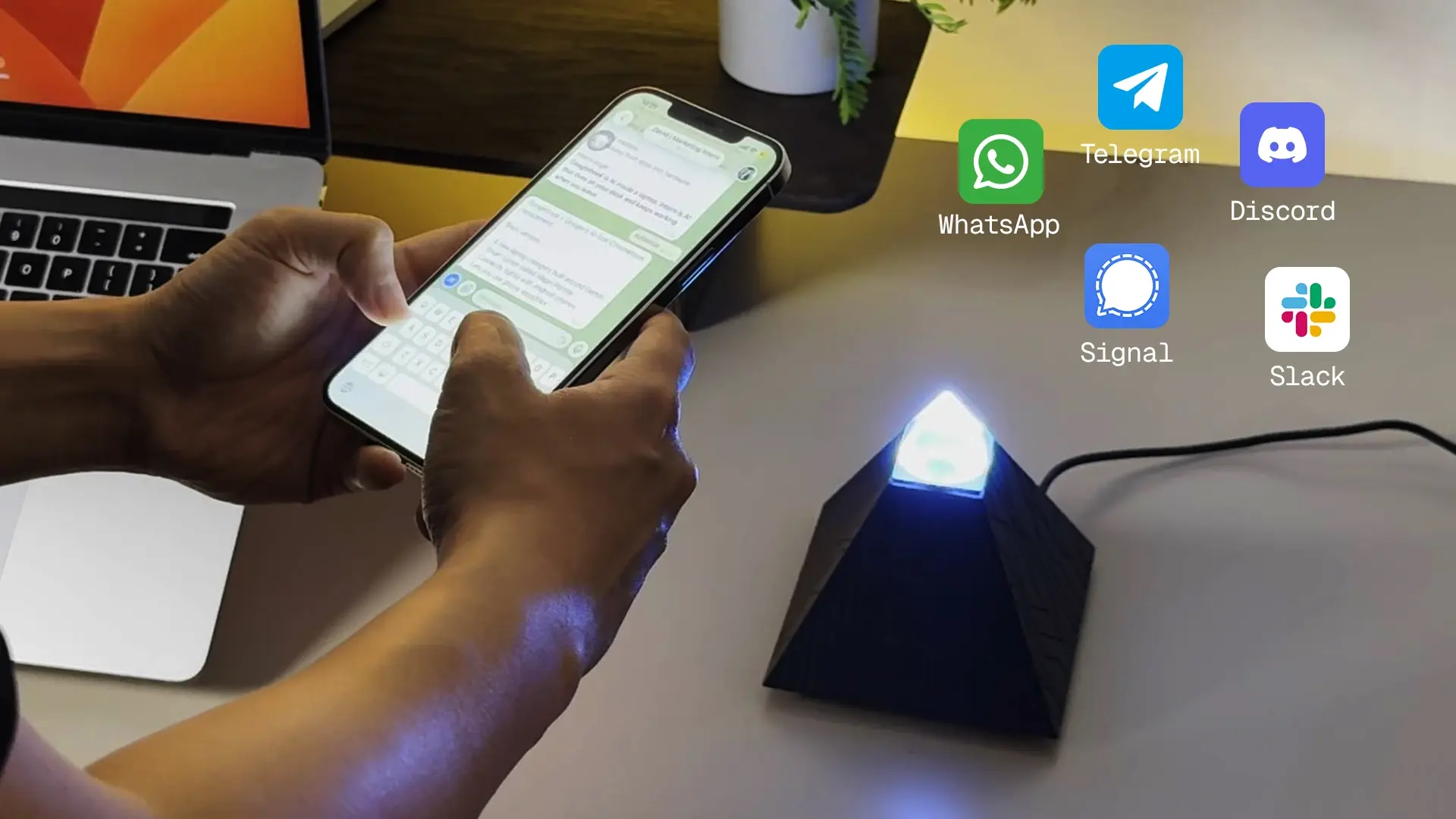
The Autonomous Intern is a small always-on unit you leave at your base, plugged into power and Wi-Fi, and reach from your phone through Telegram, Slack, or Discord. You text it a task and it handles your inbox, DMs, and GitHub issues while your laptop sleeps - which, across time zones, is exactly when the work you're not awake for piles up. It runs an AI agent (OpenClaw or Hermes), keeps your credentials on the device rather than a vendor cloud, and answers by text or voice. The honest limits, so you can judge the fit: it needs a fixed spot with power and reliable internet, so it suits nomads who settle somewhere for weeks or months, not the traveler changing countries every few days; and while the device is a one-time cost, the AI models it runs use tokens (a free daily allowance, then a plan or your own keys). It's a home-base teammate, not a carry-on.
- One-time always-on device; delegate work from your chat apps.
- Needs power and Wi-Fi at a base.
- Model tokens separate.
Step 5: Protect against burnout and isolation
The two things that end nomad runs early are loneliness and burnout, and both are predictable enough to plan for. Move slower than you think you should - a month per place beats a week, for both work rhythm and real connection. Build routine anchors (a regular gym, a coworking space, a weekly call home) so your life has structure the scenery doesn't provide. And use coliving or nomad communities to solve the isolation that hits around month three.

FAQs
How do you become a digital nomad?
Build a location-independent income and prove it works, sort out the visa and tax situation for where you're going, get a light and redundant tech setup, and put systems in place so work runs asynchronously. Then start slow, ideally somewhere easy for a first stint.
How much money do you need to start?
Aim for three to six months of living expenses saved before you leave, plus a proven income stream. Costs vary hugely by destination - Southeast Asia and parts of Latin America stretch a budget far further than Western Europe.
Do digital nomads pay taxes?
Usually yes, somewhere. Leaving your home country doesn't automatically end your tax obligations there, and some nomad visas have their own rules. Consult a cross-border tax professional in your first year rather than guessing.
What jobs work best for digital nomads?
Anything fully remote and deliverable online: software development, writing, design, marketing, consulting, and online business. The best fit is work judged by output rather than hours at a desk.
How do nomads handle different time zones?
By working asynchronously - written updates, scheduled messages, and automating routine tasks so work progresses while they're offline. Choosing destinations with manageable overlap to key clients also helps.
Conclusion
Becoming a digital nomad in 2026 is less about the leap and more about the scaffolding: income you've proven, a legal way to stay, a setup that travels, and systems that keep working when you're not. Build those, move slowly, and protect against the isolation that ends most runs, and the lifestyle stops being a gamble and becomes a sustainable way to work. The freedom is real; it just belongs to the people who engineer for it.