Soundproof Office Pods: How Much Noise They Block

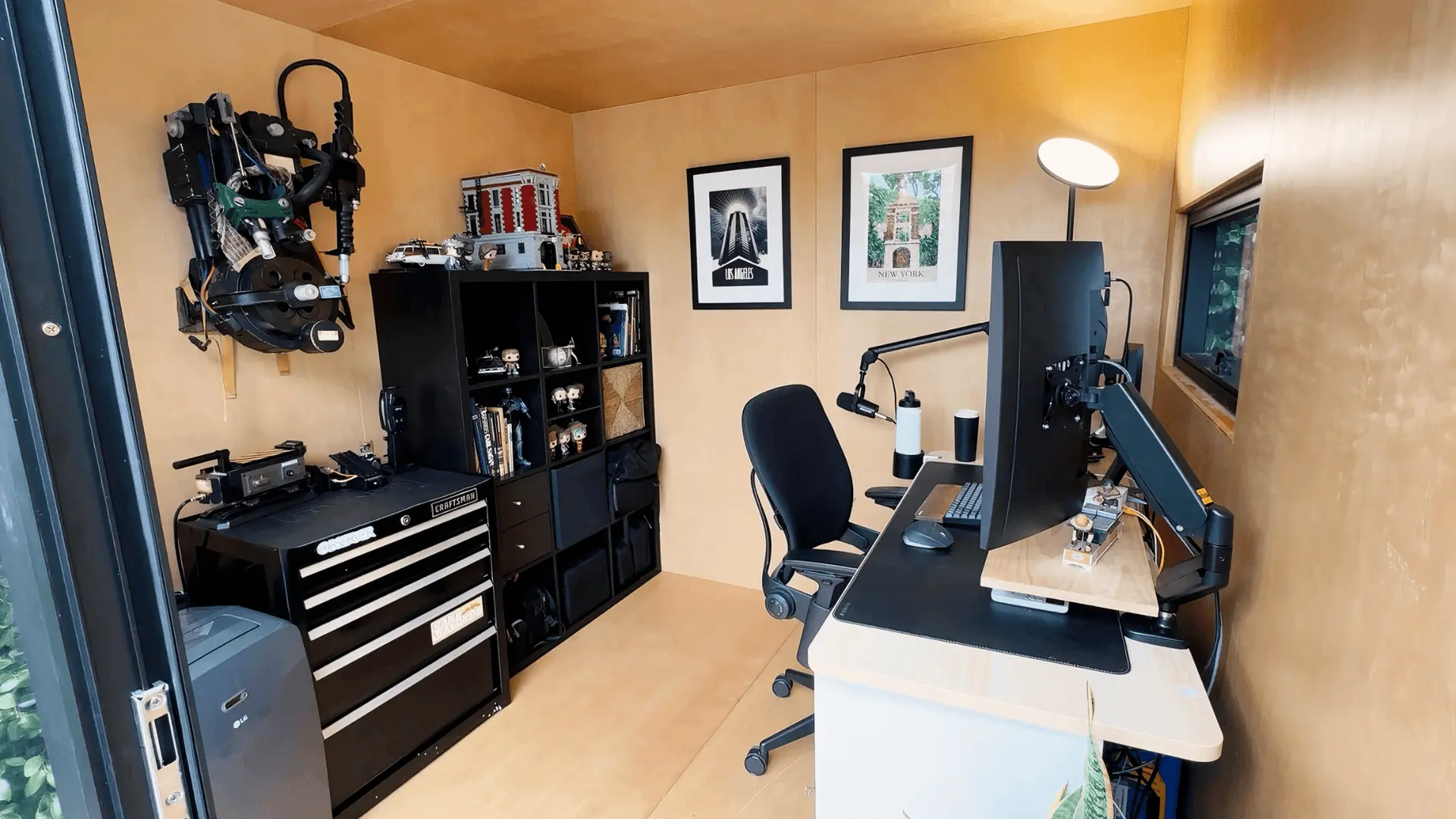
A soundproof office pod is a fully enclosed workspace designed to reduce the noise that passes in and out, giving you privacy and quiet inside a busy environment. It differs from an open booth by sealing the space: noise-blocking walls, a gasketed door, controlled ventilation, and acoustic glass. The level of quiet is measured by Sound Transmission Class, or STC - a rating of how much sound a structure stops. The higher the STC, the more noise it blocks, which is the number to compare when shopping.
How soundproof are office pods?
Most quality soundproof office pods achieve an STC of about 30 to 35. In practical terms, an STC of 30 means loud speech nearby is audible but muffled, and an STC of 35 means it drops to a faint murmur you can work through. That range is enough to handle the noise that breaks focus in a home or open office: conversations, phone calls, a television, and general background activity. It is not a recording studio - very loud, close sounds still register faintly - but for calls and deep work, STC 30-35 is the level that makes a real difference. When you compare two pods, insist on a published STC figure rather than a vague "soundproof" label, since a tested number is the only way to judge one against another.
What makes an office pod soundproof?
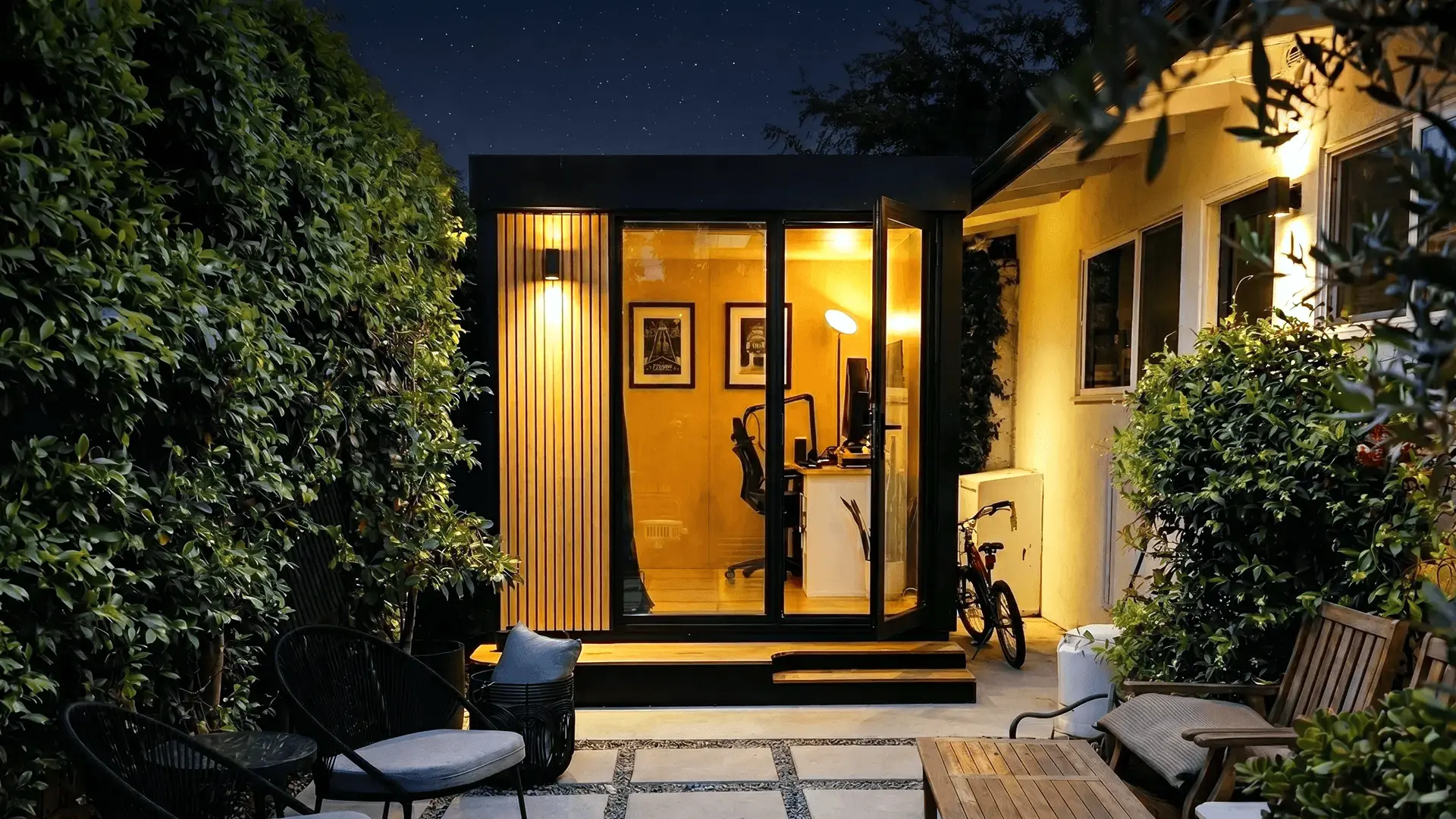
A pod is soundproof because of how it is sealed, not just what it is insulated with. Four elements do the work:
- Multi-layer walls that add mass and break the path sound travels through, rather than a single thin panel.
- Double-glazed glass, since glass is usually the weakest acoustic point; two panes with a gap cut far more noise than one.
- A gasketed, tight-fitting door, because a gap around a door leaks more sound than any wall surface.
- Quiet ventilation, so the airflow path does not become an open channel for noise.
A pod can have thick walls and still leak sound through a loose door or a single-pane window, so the seal matters as much as the insulation.
Soundproof office pod for home: booth or separate pod?
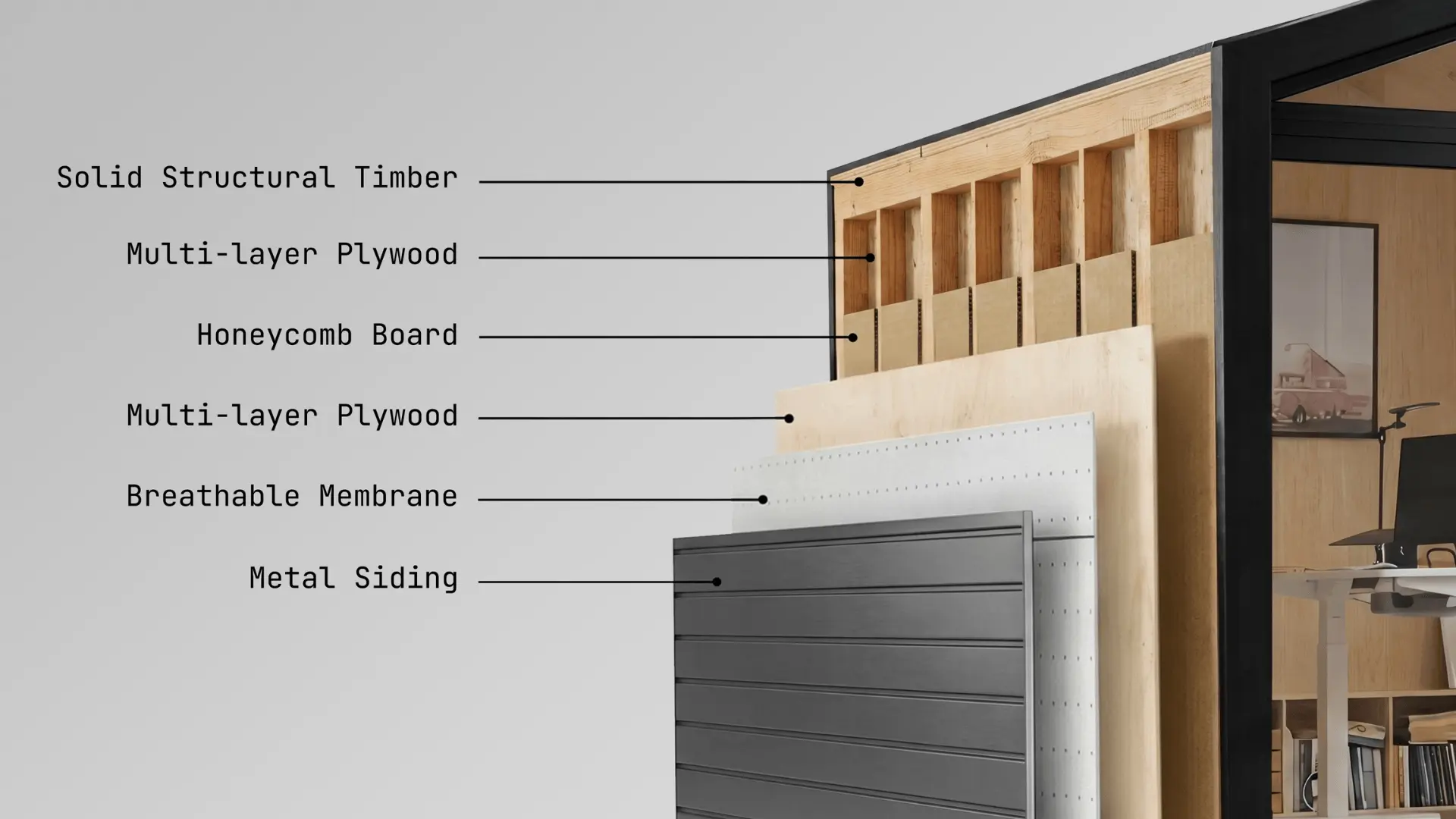
For a home, the most effective soundproofing is distance plus a sealed structure, which points to a separate pod over an indoor booth. An indoor soundproof booth reduces noise within a room and helps in a shared space, but you are still inside the house with its foot traffic, deliveries, and family noise. A separate, sealed outdoor pod removes you from that entirely, then adds insulated walls and acoustic glass on top. That combination - physical separation and a sealed shell - is why a backyard pod is the quieter answer for a soundproof pod for home office use, even at the same STC as a booth. If your only space is indoors, a portable office pod booth is the realistic match; if you have a yard, separation wins.
Which Autonomous WorkPod is most soundproof
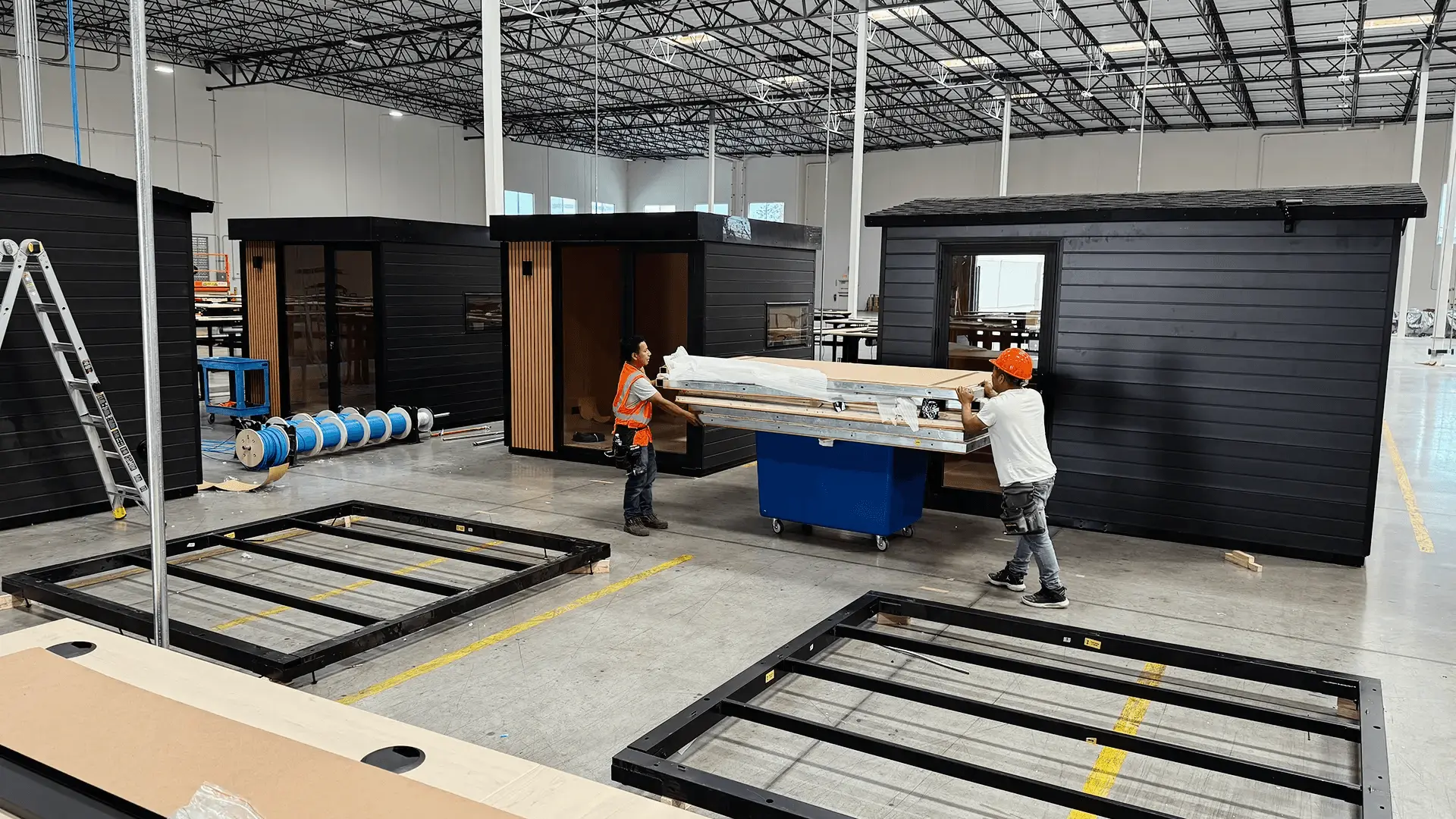
Among the three Autonomous WorkPod models, the Pro is the most soundproof, because acoustic performance tracks how much solid insulated wall a pod has versus how much glass. All three share the same multi-layer wall and double-glazed glass; what changes is the ratio of wall to glass and the insulation grade.
Model | Size | Soundproof home fit |
80 sq ft | Mostly solid walls with a glass door - good call-and-focus isolation in a compact shell | |
102 sq ft | The best soundproofing pick: the most solid insulated wall area and the premium insulation package | |
105 sq ft | The largest and brightest, but three glass walls make it the least isolated of the three |
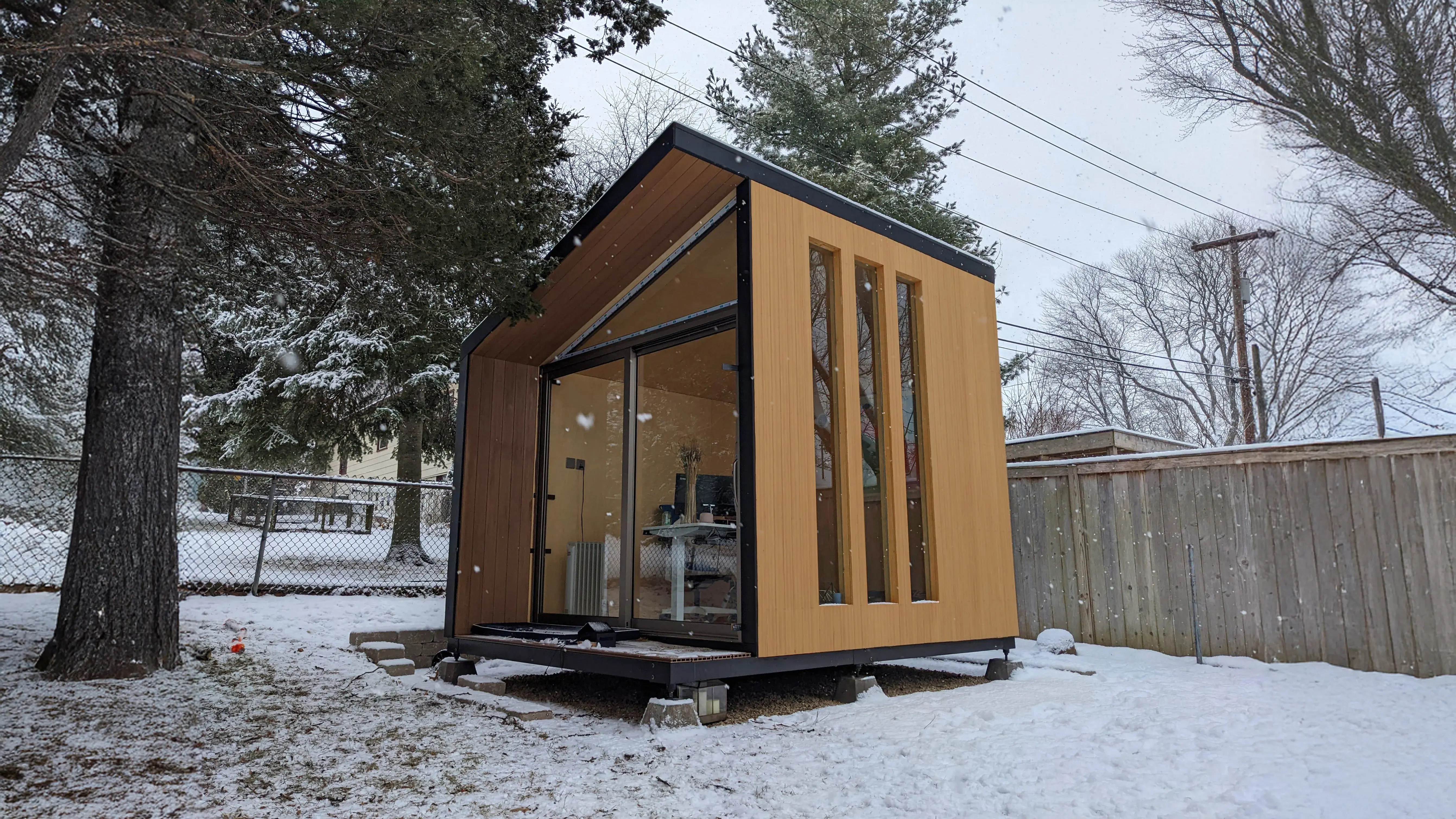
Autonomous MetroPod - most solid shell, lighter insulation
At 80 sq ft, the Autonomous MetroPod has the least glass of the three - only a door and a window - so very little weak surface, which makes the compact shell quieter than its size suggests. Its standard insulation (rated 65–90°F, upgradeable) is lighter than the Pro's premium package, so the walls damp a little less. It suits a single-person office where calls and focus outweigh floor space.
.webp)
Autonomous WorkPod Pro - best for soundproofing
At 102 sq ft, the Autonomous WorkPod Pro has the most solid insulated wall area of the three and carries the premium insulation package rated 45–100°F, a denser wall buildup than the Core's standard insulation. Glass is limited to the front, so the weakest acoustic surface stays small, and the built-in bookshelf adds mass against an interior wall while breaking up reflections. For calls, meetings, and focused work, it blocks the most.
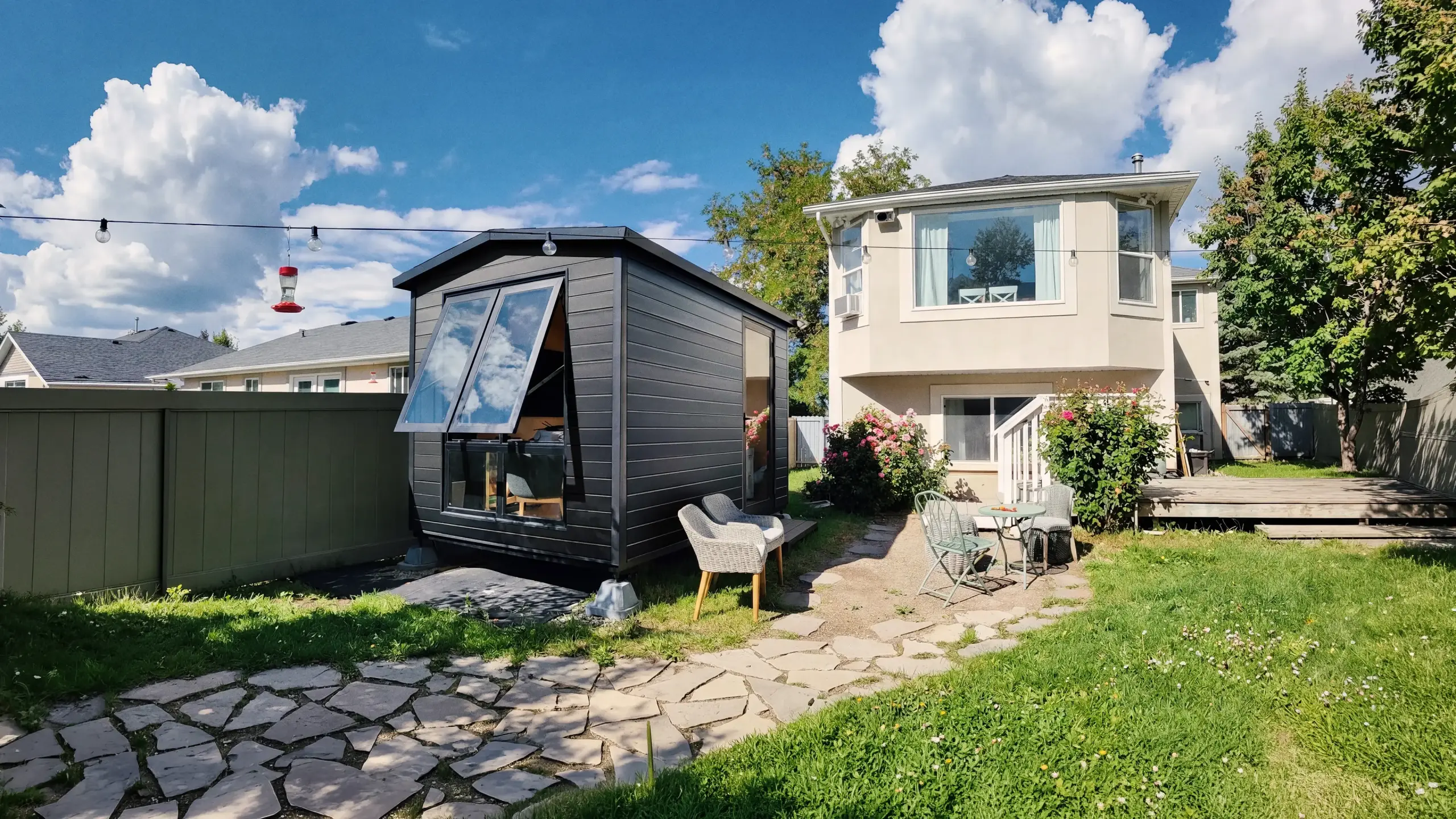
Autonomous WorkPod Versatile - most light, least isolation
At 105 sq ft, the Autonomous WorkPod Versatile carries the same premium insulation as the Pro but three full glass walls. Glass blocks less sound than insulated wall even when double-glazed, so the large glass area makes it the least isolated of the three despite the highest price. Choose it for openness and light, and add heavy curtains or interior acoustic treatment if you also need quiet.
How to soundproof an office pod
If you already own a pod, you can improve its soundproofing by sealing gaps first and then adding mass to the weakest surfaces, in that order, because air leaks waste more sound than thin walls do. The work splits into two jobs that often get confused: blocking sound from passing through, which is done with mass and sealing, and absorbing echo inside, which is done with panels. Blocking keeps noise out and your calls private; absorbing only cleans up the sound within the room. Most of your effort and budget should go to blocking.
Work through these in order of cost and impact:
Step 1: Seal every gap.
Weatherstrip the door, add a door sweep, and seal around cable and vent penetrations with acoustic sealant. A gap the width of a pencil leaks more sound than an entire wall, so this is the cheapest step with the biggest first gain.
Step 2: Fix the door.
After gaps, the door is usually the weakest surface. Replace a hollow door with a solid-core one, or fit a heavy seal kit and a threshold gasket so it closes tight against the frame.
Step 3: Treat the glass.
Glass leaks more sound than insulated wall. Add secondary glazing or a removable acoustic insert over a single-pane window; heavy floor-length curtains are a cheaper partial fix that also cut interior echo.
Step 4: Add mass to the walls.
Layer mass-loaded vinyl over the existing wall, then a sheet of drywall on top. For a bigger gain, mount the drywall on resilient channel to decouple it, which stops vibration carrying straight through.
Step 5: Damp the floor and ceiling.
A dense rug over an acoustic underlay cuts footstep and impact noise, and a thin ceiling benefits from an added mass layer the same way the walls do.
Step 6: Quiet the ventilation.
Fit an acoustic baffle or a short duct silencer so the airflow path does not become an open channel for sound, which is a common reason a sealed pod still leaks.
Step 7: Absorb the inside last.
Acoustic panels on the walls reduce echo and make calls clearer, but they do not block sound from leaving. Add them after the blocking steps, never instead of them.
Set realistic expectations: a retrofit typically lifts a pod a few STC points, enough to turn noticeable speech into a muffled background, but it will not match a purpose-built studio. Start with sealing and the door, judge the difference, and only add wall mass if you still need more.
FAQs
What is a soundproof office pod?
A soundproof office pod is a fully enclosed workspace built to block noise in and out, using sealed multi-layer walls, acoustic glass, a tight door, and quiet ventilation. It gives privacy and focus inside a busy home or open office.
How soundproof are office pods?
Most quality soundproof office pods reach an STC of about 30 to 35. That muffles voices, phones, and general office noise to a faint background, enough for calls and deep work, though not full studio-grade silence against very loud, close sounds.
What is a good STC rating for a soundproof office pod?
An STC of 30 to 35 is the practical target for a soundproof office pod. At STC 30 nearby loud speech is muffled; at STC 35 it drops to a faint murmur. Higher ratings cost more and matter mainly for professional audio work.
What makes an office pod soundproof?
Sealing makes a pod soundproof, not insulation alone. Multi-layer walls add mass, double-glazed glass cuts noise through the weakest surface, a gasketed door stops leaks, and quiet ventilation keeps airflow from becoming a sound channel.
What is the best soundproof office pod for a home?
For a home, a separate sealed pod is the most effective, because distance from the household removes noise an indoor booth cannot. The Autonomous WorkPod pairs that separation with insulated walls and double-glazed glass.
Is a soundproof office pod good for video calls?
Yes, an STC 30-35 pod is well suited to video calls, keeping household and office noise out of your microphone and your meetings private. A tight door seal and double glazing matter most for call clarity.
Are soundproof office pods completely silent?
No, no office pod is completely silent. An STC of 30-35 muffles most everyday noise to a faint background, but very loud or close sounds still register. Full silence would require studio-grade isolation and interior acoustic treatment.
Do soundproof office pods need ventilation?
Yes, and the ventilation has to be quiet and designed not to leak sound. A good pod moves fresh air through a baffled path so the airflow does not open an acoustic gap that undoes the walls.
How much does a soundproof office pod cost?
Indoor soundproof booths run about $4,500-$9,000. A separate soundproof pod for a home office costs more for the full structure; the Autonomous WorkPod line runs $15,900-$19,900 as of June 2026.
Can you make a soundproof office pod quieter?
Yes, add interior acoustic panels, a denser door gasket, and rugs or soft furnishings to absorb reflections. These help most for recording or music; for calls and focus, a sealed STC 30-35 pod is usually enough as built.
How to choose
A soundproof office pod earns its place when household or office noise is breaking your focus or leaking into calls. For most people, an STC of 30 to 35 is the level that matters - enough to muffle voices, phones, and background activity to a faint murmur, without paying for studio-grade isolation you will not use. Judge any pod on a published STC figure, the door seal, and the glass, since a loose door or single pane undoes good walls.
For a home, separation does what no single spec can: a sealed pod set apart from the house removes the noise an indoor booth only dampens. Among the Autonomous WorkPods, the Pro is the strongest soundproofing choice, pairing the most solid insulated wall area with the premium insulation package, while the glass-walled Versatile trades isolation for light. And if you already own a pod, you can close most of the gap yourself by sealing leaks and the door first, then adding mass where you still need it.