12 Garage Gym Ideas and Layouts for Small or Two-Car Garages

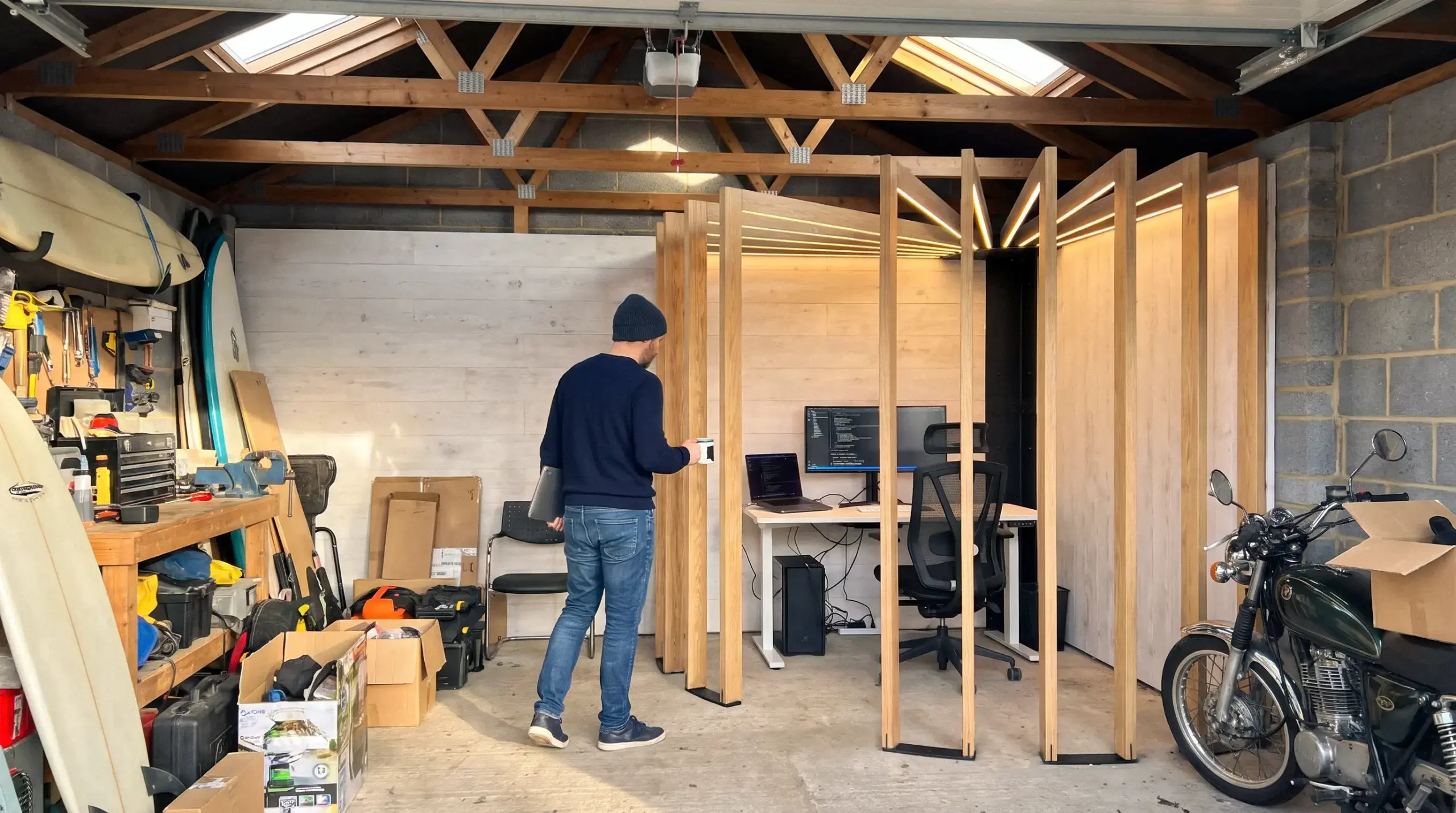
Good garage gym ideas start with the room, not the equipment. That means a rubber floor over the concrete, clear height under the open garage door for presses and pull-ups, a plan for heat and cold, and a layout that still lets the car park. Get those right and a squat stand, a bench and a few dumbbells cover most strength training.
The catch is space: a standard barbell is over 7 feet long, and at least one treadmill maker asks for 8 feet of clear floor behind its machine.
This guide covers what every garage gym needs, what to measure first, 12 ideas for half, one-car and two-car garages, budget tiers, safety, workout ideas, a desk corner beside the gym, and when a backyard gym pod is the better fit.
What every garage gym needs
Every garage gym needs five things before the first barbell: a floor that protects the slab, clear height for the lifts you plan, airflow, good light, and somewhere to put the gear away.
- Floor: rubber mats or tiles over the concrete, thick enough for dropped dumbbells.
- Height: measured with the garage door open, not to the ceiling.
- Airflow: an open door and a fan at minimum; insulation and heating or cooling if you train year-round.
- Light: bright LED fixtures, not just the bulb on the door opener.
- Storage: wall racks, shelves or cabinets, so plates and bars are never in the walkway.
A garage gym is not a garage conversion. The door, the slab and often the car stay, so the space is still a garage. A finished bedroom or office is a bigger project with its own permit path, covered in our guide on converting a garage to living space. A new circuit or a mini-split for the gym may still need a permit where you live, so ask your building department before you hire the work.
Garage gym layout: what to measure first
Three numbers decide most garage gym layouts: the clear height under the open door, the width a barbell needs, and the length a treadmill needs behind it. Measure them before you buy, because a rack or treadmill that does not fit is expensive to send back.
| What you plan to do | Space it needs | How to check it |
|---|---|---|
| Barbell lifts in a rack | A standard men's Olympic bar is 2.2 m (about 7.2 ft) long. Add about 18 in. at each end to load plates: roughly 10 ft of width. | Tape a 10 ft line on the floor where the rack will stand. |
| Treadmill | ProForm's manual asks for at least 8 ft clear behind the treadmill and 2 ft on each side. | Add 8 ft to the treadmill's listed length and 4 ft to its width. |
| Overhead press | Your full reach with arms locked, plus the bar or dumbbells above your hands. | Press a broomstick overhead in that spot and measure from the floor to the top of the stick. |
| Pull-ups | A bar high enough for a straight-arm hang, plus room for your head when your chin clears the bar. | Measure bar height, then add the distance from your chin to the top of your head and a few inches. |
| Parking the car | Room to open the doors fully and walk past without brushing the rack or plates. | Park, open both front doors, and tape the floor at the door edges. |
Garage gym layout ideas by garage size
The right garage gym ideas depend on the car: keep it parked and the gym takes one side or the back wall; move it out and the garage can be split into zones.
1. Half-garage gym that keeps the car inside
A half-garage gym puts every piece of gear along one side wall or the back wall and leaves the rest of the floor for the car. It works when the bulky pieces fold or roll: a wall-mounted rack that folds flat, a bench on wheels, and plates on wall pegs instead of on a plate tree in the walkway.
Tape the car's footprint on the floor so the gear never creeps into it. Switch the engine off as soon as the car is parked and never warm it up inside while you train (the safety section explains why). Keep loaded bars and plate storage clear of the car doors.
2. One-car garage gym along the back wall
A one-car garage fits a full strength setup when the rack goes against the back wall and everything else lines the side walls. Set the rack so the bar runs parallel to the back wall. That uses the garage's width for the 10 feet of bar and loading room and leaves the depth for a bench, dumbbells and a strip of open floor.
Keep cardio near the door, where the open door brings in the most air. If the bay is narrow, a squat stand or a fold-away rack (idea 9) takes less floor than a full four-post rack.
3. Two-car garage gym with separate zones
A two-car garage gives you room for zones: one bay for barbell work and one for cardio, conditioning and open floor. Put the rack in the bay with the clearest ceiling, usually away from the opener rail, and lay a lifting platform or the thickest mats there.
Use the second bay for a bike, rower or treadmill, a kettlebell area and floor space for mobility work. If one car still needs to park, the second bay becomes its space and the layout works like idea 1 with more room.
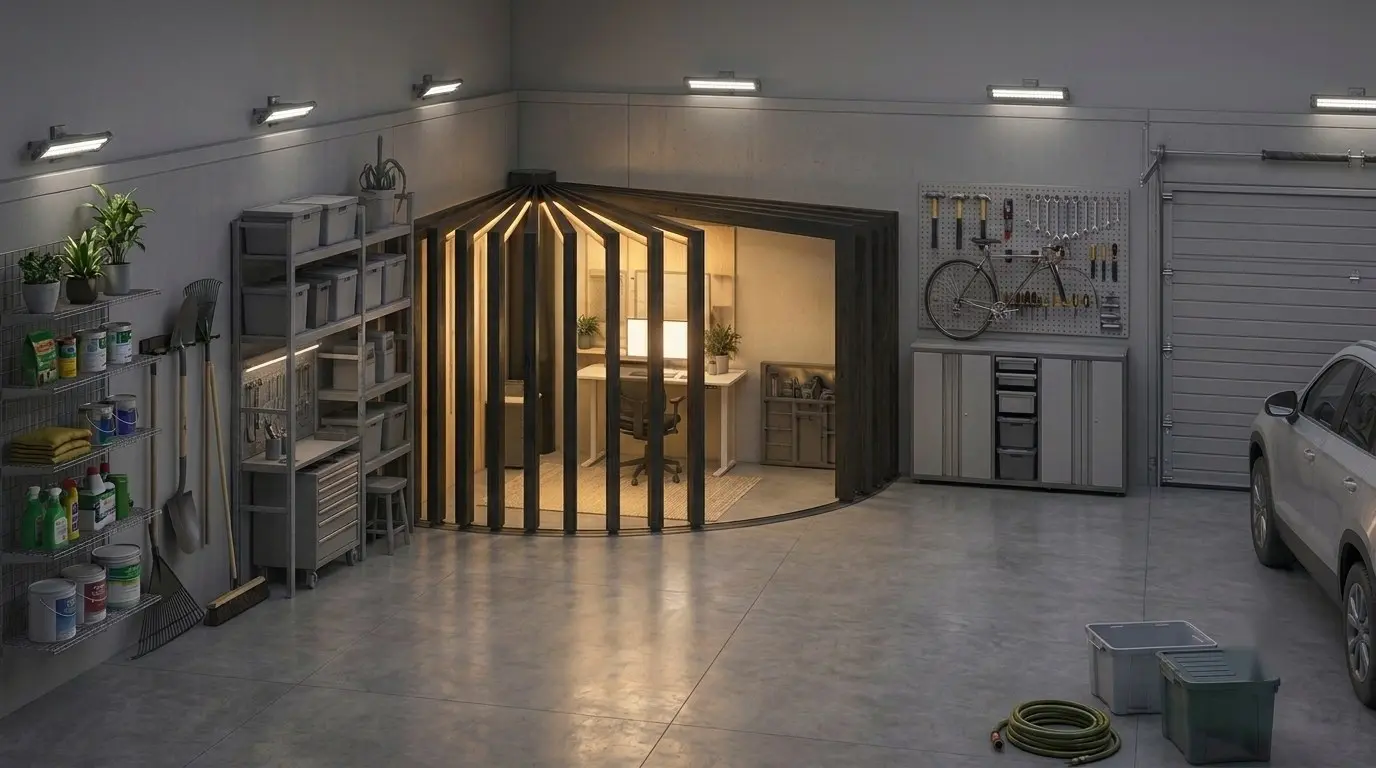
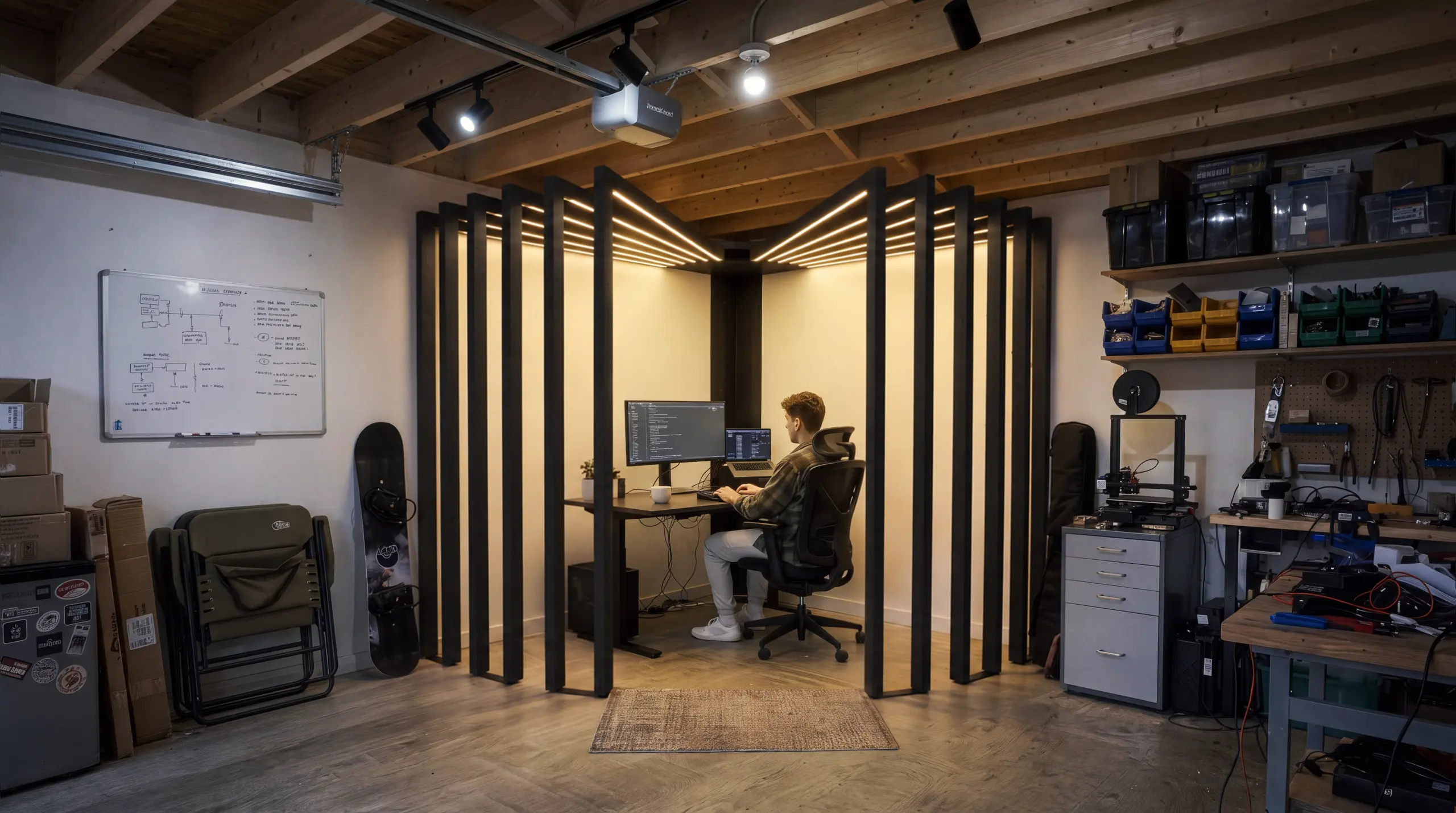
If the garage also has to hold a desk, give it a back corner away from the rack. A GaragePod work corner (covered further down) fits there and leaves the other bay free for the car or for cardio.
Garage gym ideas for the floor, height, climate and light
The floor comes first, then height, climate and light, and these upgrades change how the garage feels more than any single piece of equipment.
4. Rubber flooring over bare concrete
Rubber flooring protects the slab from dropped weights, quiets the room and grips better than sealed or epoxy-coated concrete. In a small garage gym, interlocking rubber tiles are easy to cut around posts and pull up when you move. Under a rack or for deadlifts, heavy 3/4-inch rubber stall mats, commonly sold in 4 by 6 foot sheets, hold up better.
Thin EVA foam tiles suit stretching and yoga, not heavy weights. Garage slabs can hold moisture, so lift one mat after a humid week. If the concrete underneath is damp, leave gaps at the edges for air or run a dehumidifier.
5. Plan overhead work around the garage door
Do overhead presses and pull-ups where the open door and the opener rail are not above you. Use the broomstick check from the measuring table in that exact spot. If the only spot with enough height is in the door's path, press seated or half-kneeling. Do pull-ups on a bar mounted to the back wall or a ceiling joist instead of on top of the rack.
If no spot outside the door's path is tall enough, a garage door installer can fit a high-lift track or a wall-mounted (jackshaft) opener to clear the ceiling. Before you mount a pull-up bar overhead, find the joists and follow the bar maker's mounting instructions. Drywall alone will not hold a person's weight.
6. Insulation, ventilation and climate control
Insulate first, then heat or cool, because heat and cold move easily through an uninsulated garage door and walls. Start with an insulation kit for the garage door and a new bottom seal, then insulate the walls if the studs are open.
For air, an open door and a floor fan are the minimum. For year-round training, the U.S. Department of Energy notes that ductless mini-split heat pumps can be installed in homes or additions without ducts and can heat or cool individual rooms. That suits a single space like a garage gym. In humid climates, a dehumidifier also keeps rust off bars and plates.
7. Bright LED lighting without glare
Several diffused LED fixtures spread across the ceiling light a garage gym far better than the single opener bulb most garages start with. Keep fixtures out of your line of sight when you lie on the bench, or you will press while staring into a light.
The check is simple: lie on the bench under the bar and look up. If a bare fixture is in view, move the bench or the light.
8. Mirror, screen and sound for guided workouts
A wall mirror, a screen for classes and a speaker turn a bare garage into a room you want to train in. Mount the mirror on a side wall so you can glance at your form without twisting under a load, and keep it out of the bar's path. Shatter-resistant acrylic mirrors are the safer choice near weights.
A TV or tablet mount gives you follow-along classes and interval timers. If the garage is not climate-controlled, check the screen's operating temperature range in its manual. Garage gym decor can stay practical: a whiteboard for logging lifts, hooks for chalk and towels, and posters on the wall you face between sets.
Small garage gym ideas and hacks for storage and gear
In a small garage gym, everything that can fold, hang or stack should.
9. Fold-away rack and wall-mounted pull-up bar
A fold-away rack bolts to the wall and swings flat when you are done, which gives a one-car or half garage its floor back. A wall-mounted pull-up bar does the same for pulling work. Both put real load on the wall, so mount them into studs or masonry with the hardware the maker specifies.
10. Compact strength gear: squat stand, hex dumbbells and plates
A squat stand with a pull-up bar, a set of hex dumbbells and a stack of weight plates cover squats, presses, rows, pulls and carries in a small footprint. A squat stand takes less floor than a full rack; add spotter arms so you can fail a rep safely when you train alone.
Hex dumbbells have flat sides, so they do not roll across the floor when you set them down. Rubber-coated plates are quieter and easier on the floor than bare iron, and plates with grip holes double as handles for carries. If floor space is very tight, adjustable dumbbells replace a whole rack of fixed ones, the same space-for-speed trade you make with most compact home gym equipment.
11. A cardio corner that folds or stands up
Pick cardio gear that folds or stands on end: a folding exercise bike, a rower that stores upright or a jump rope takes far less floor than a fixed treadmill. A bike or rower with a battery console also has fewer parts to worry about in a cold, dusty garage than a motorized treadmill.
Check the treadmill manual before you put one in the garage. ProForm's manual for its PFTL59721.0 treadmill, for one, says: "Keep the treadmill indoors, away from moisture and dust. Do not put the treadmill in a garage or covered patio, or near water." The same manual asks for 8 feet of clearance behind the treadmill and a UL 1449 listed surge suppressor rated for 120 volts and 15 amps.
If your treadmill's manual has a similar line, ask the maker how garage use affects the warranty before you buy.
12. Wall storage, cabinets and shelves
Wall storage keeps a small garage gym safe to move around in: plates on wall pegs, bars in a vertical holder, bands on a pegboard, and small gear in cabinets and on shelves. Keep the heaviest items low, anchor tall shelves to studs, and leave a clear path from the door to the rack.
Store paint, fuel and garden chemicals on the far side of the garage from where you train. A closed cabinet also keeps chalk dust off the car and tools.
Garage gym equipment by budget tier
Spend on the floor first, then on the bar, rack and plates, and leave climate control for last unless the garage is unusable in summer or winter. Prices swing widely between new and used gear, so price your own list; the tiers below describe what each level adds.
| Tier | What it adds | What it suits |
|---|---|---|
| Starter | Rubber tiles or mats, adjustable or hex dumbbells, resistance bands, a jump rope, a floor fan | Full-body training 2 to 3 days a week in a corner, with the car still parked |
| Mid | Squat stand or fold-away rack with pull-up bar and spotter arms, barbell, plates, adjustable bench, wall storage, LED lights | Barbell strength training in a half or one-car garage |
| Full | Garage door and wall insulation, mini-split or heater, dehumidifier, a cardio machine, lifting platform, mirror and screen | Year-round training in a hot or cold climate, or a two-car garage gym |
Climate control and any new circuit are contractor jobs, so get quotes before you set the gear budget.
Garage gym safety: training alone, car exhaust and heat
The main garage gym risks are heavy lifts without safeties, car exhaust, heat, and a treadmill within reach of children, and each has a simple check. If you are new to exercise or have a health condition, talk to your doctor before starting a new program.
- Training alone: set the rack's safety arms or pins just below the bottom of your lowest rep, use collars on the bar, and start light enough to control every rep before adding weight.
- Car exhaust: the CDC says never to run a car or truck inside a garage attached to a house, even with the garage door open. Park, switch off and let the air clear before you start.
- Carbon monoxide alarm: the CDC recommends battery-operated or battery back-up CO detectors near every sleeping area. If the garage also holds a gas water heater or furnace, an extra detector where you train is a cheap check.
- Heat: train in the cooler part of the day, take breaks and drink fluids. The CDC lists muscle cramping, unusually heavy sweating, shortness of breath, dizziness, headaches, weakness and nausea as symptoms of heat-related illness. Stop and cool down if they start, and get medical care if they do not ease.
- Treadmills and children: ProForm's manual says to keep children under 16 and pets away from the treadmill at all times, and to remove the key, switch it off and unplug it whenever it is not in use. In a shared garage, use it only in a room children cannot enter.
- Power: ProForm's manual says to plug the treadmill into a UL 1449 surge suppressor and keep everything but low-power devices like phone chargers off that circuit. In a garage, check what else shares it (freezer, opener, heater).
Garage gym workout ideas
A garage gym workout plan only needs to meet the basics: the CDC says adults need 150 minutes of moderate-intensity activity a week plus at least 2 days of muscle-strengthening work for the legs, hips, back, abdomen, chest, shoulders and arms. The American College of Sports Medicine's 2026 guidelines make the same point: training all major muscle groups at least twice a week matters more than a complex plan.
A simple week in a garage gym:
- Day A, full body: squat, overhead or dumbbell press, bent-over row, farmer's carry.
- Day B, full body: deadlift or kettlebell swing, bench press or push-up, pull-up or band pulldown, split squat.
- Cardio, 2 to 3 days: bike intervals, rowing or brisk walks that add up to the weekly minutes.
- Busy days: a 15-minute dumbbell circuit or mobility work on the mat.
- Recovery: a foam roller, and a massage gun if you want one, for sore legs after squat days.
If you work at a desk all day, short movement breaks add to the weekly total too, and these office gym ideas fit between meetings.
Half garage gym, half office: a GaragePod work corner
A GaragePod gives a garage gym a desk corner: an 87 by 87 inch corner kit with a built-in light, leaving the rest of the garage for the rack, the mats and often the car. In a one-car garage the 87 inch square and a rack rarely leave room for the car too, so this fits a two-car garage or a car-free bay best. It is a workspace, not gym equipment. GaragePod is an Autonomous product, and the specs here come from its product page, not from independent testing.
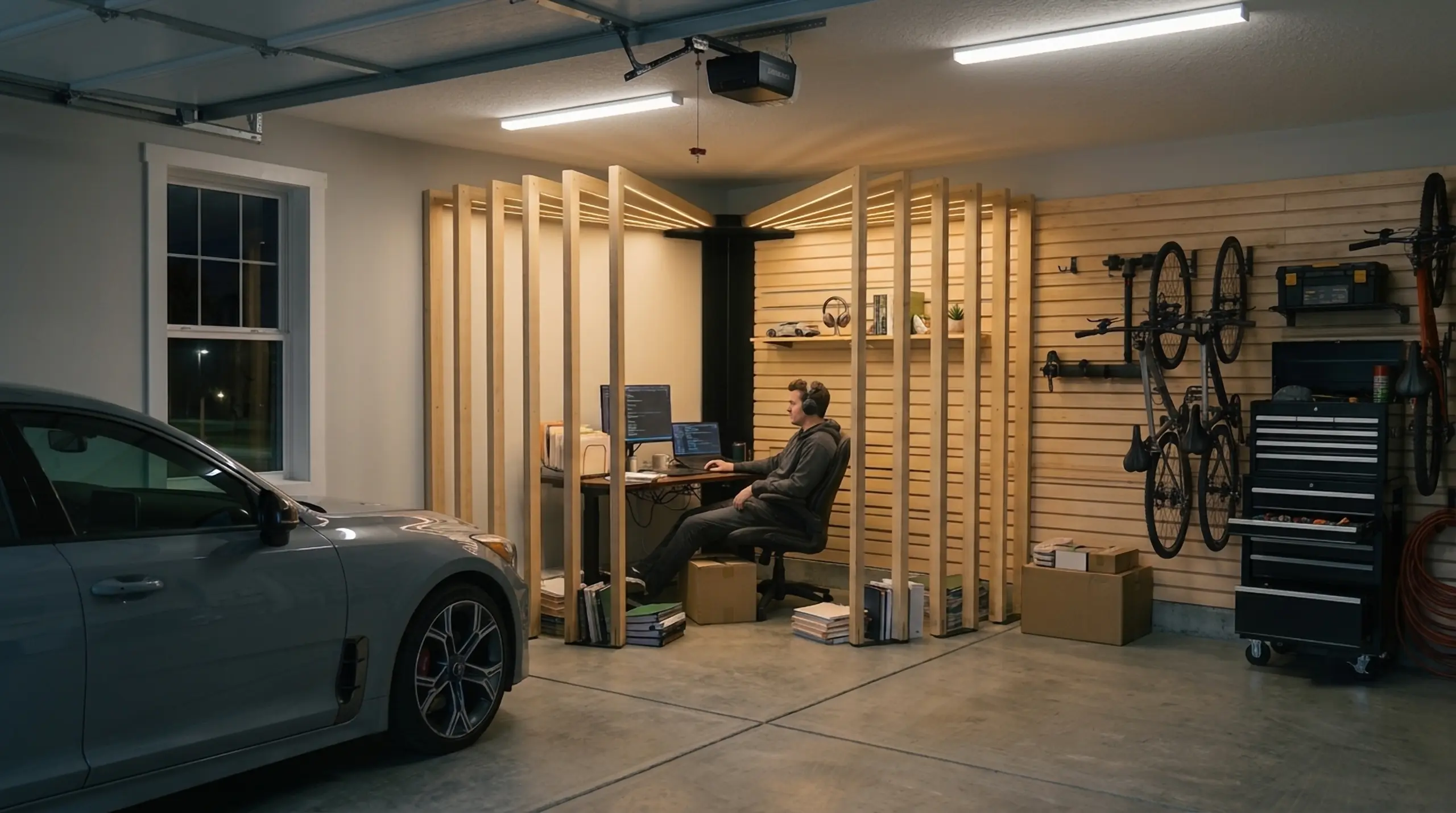
Put it in the corner farthest from the rack and outside the garage door's path. Before you order, tape an 87 inch square on the floor next to the car's footprint (idea 1) and the 10 ft barbell line from the measuring table. Then check that the corner has 87 inches of clear height under any door track, opener rail or shelf, and that the desk sits outside the path of the bar and any rolling plates.
The kit is a black steel column, hub and curved floor rail with about 12 wood arms, stainless hinges, brackets and bolts, and leveling feet. LED strips built into the wood arms light the corner, and the kit plugs into an outlet. Autonomous lists self-assembly in 4 steps and 2 to 4 hours, and since the kit is freestanding and modular, it comes apart if you move.
The kit alone has no desk or chair. Furniture comes only with the paid Solo Setup (Desk Pro and ErgoChair Ultra 2) or Corner Setup (Desk 2 L-Shape and ErgoChair Ultra 2), priced in the pod table below. Autonomous lists a 1-year warranty on the frame and hardware and a lifetime warranty on the Desk Pro and ErgoChair Ultra 2.
The honest limits: GaragePod is an open slat corner, not an enclosed or insulated room, and it is not soundproof. The slats let light and air through, so the desk shares the gym's temperature, chalk dust and noise, and the garage still needs heat, light and power (ideas 6 and 7) for year-round work. It is not a legal dwelling or bedroom. Autonomous lists no load rating for the arms, so do not anchor bands, a pull-up bar or hooks to them.
When a backyard gym pod makes more sense than the garage
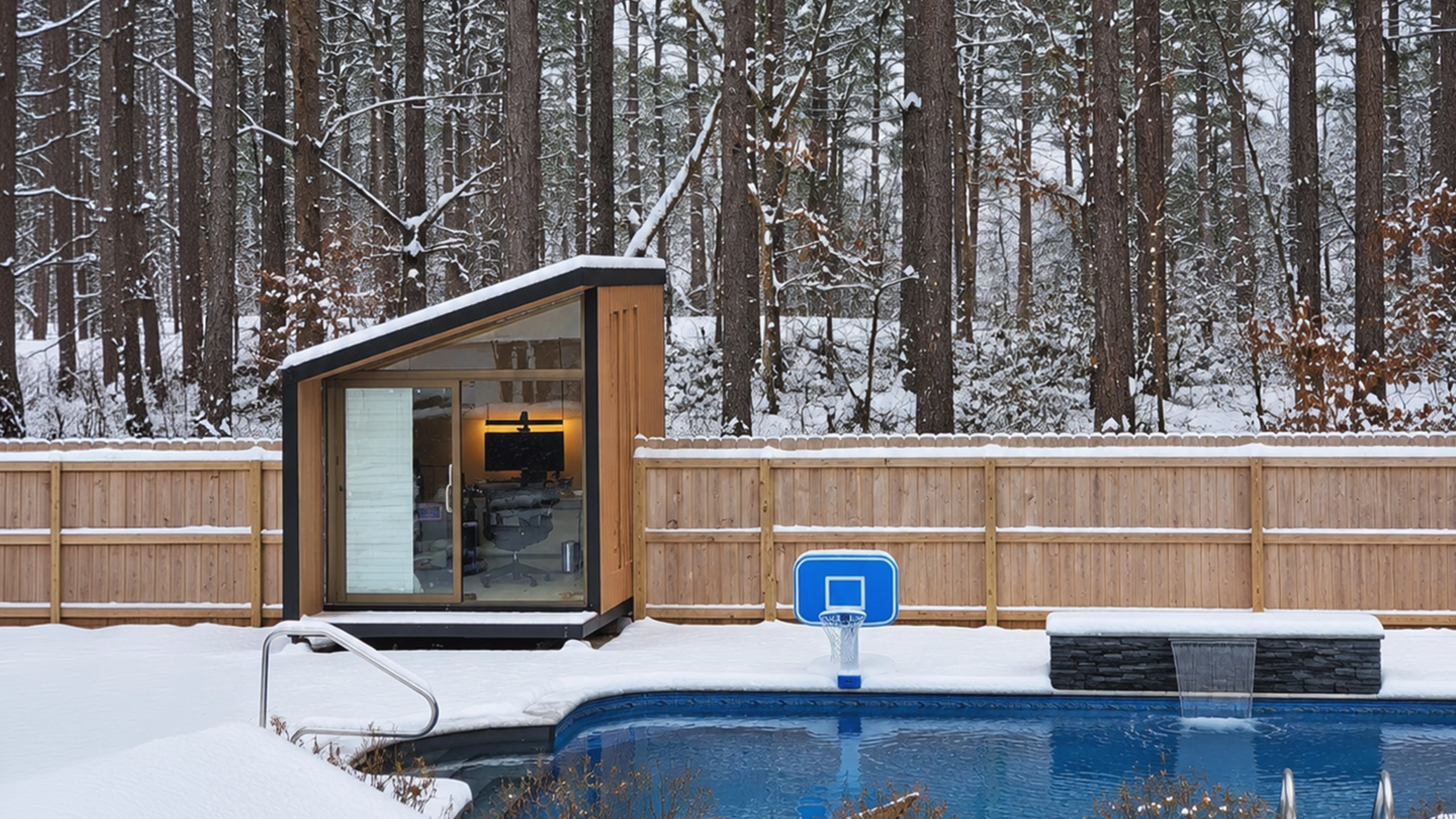
A backyard gym pod makes sense when the garage has to stay a garage: the car parks there, the ceiling is too low under the door track, or the room is too hot or cold to fix for a reasonable price. It is a separate, insulated backyard gym shed that leaves the garage alone.
Autonomous sells three backyard pods, and two of them fit a gym. Everything in this section is an Autonomous product, and the specs come from the product pages, not from independent testing.
StudioPod as an empty room for a home gym
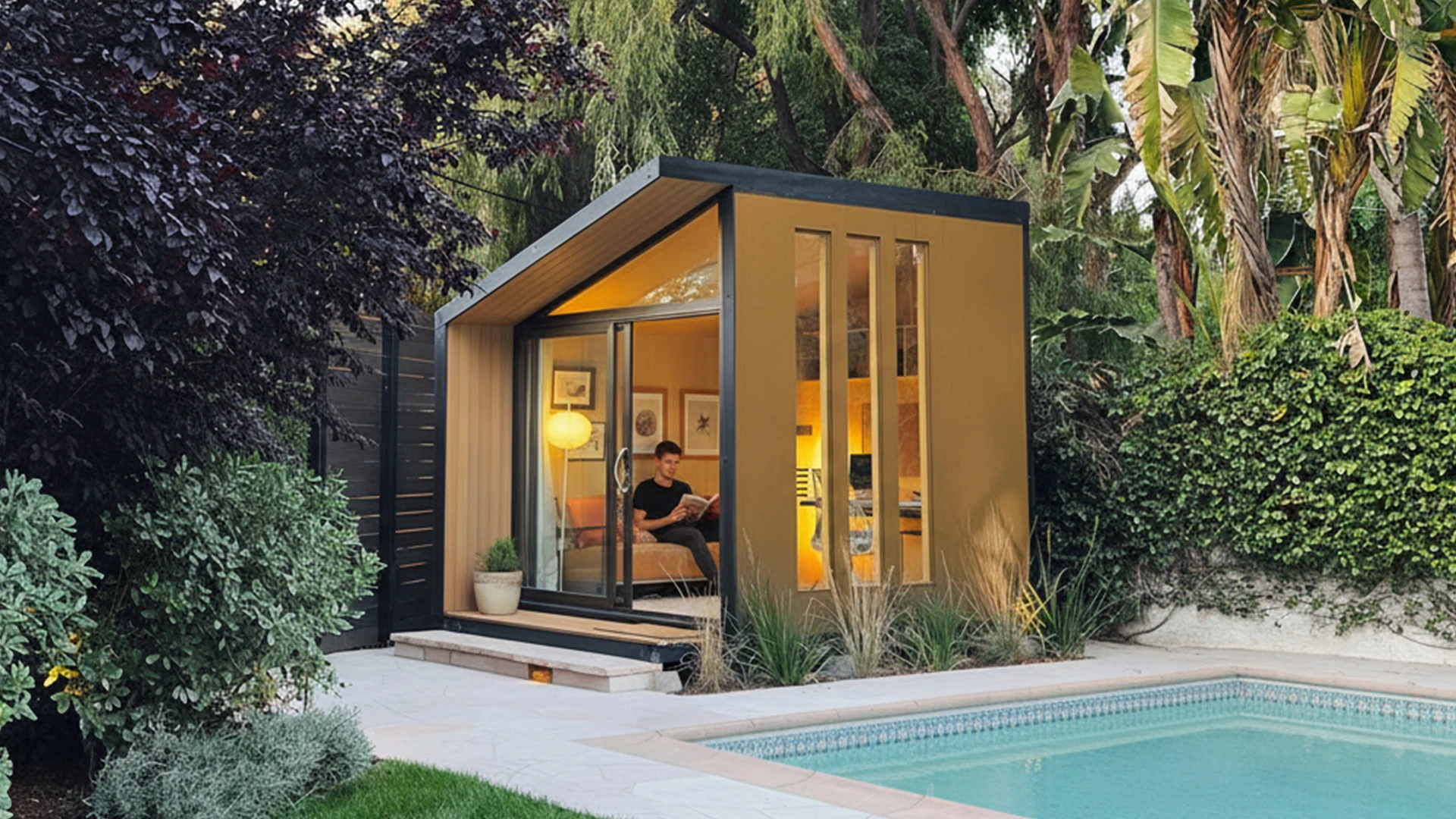
The StudioPod is a 105 sq ft backyard room that ships without furniture apart from a closet and a small bookshelf, so you bring the rack, bench and mats. It has a flat 7.25-foot ceiling, hinged windows that open for air, six insulated layers with a 45 to 100°F comfort range, 5 wall outlets, 4 ceiling lights and a ventilator. Autonomous lists 1 to 2 days of installation and says it sits below the permit threshold in most US cities.
It suits dumbbell, kettlebell, bodyweight, bike and mobility training, plus a squat stand that is shorter than the ceiling. The honest limits: at 7.25 feet (87 inches), standing barbell presses and pull-ups will not fit for many adults, so run the broomstick check first. Insulation holds temperature but does not heat or cool, so plan a mini-split or portable AC.

Wall fixtures under 20 lb are fine, but Autonomous asks you to get the stud and wiring layout before mounting anything. A pull-up bar is far over that limit once you hang from it. Autonomous does not publish a rating for dropped weights on the floor, so use thick mats and lower weights under control. Confirm the interior dimensions with Autonomous before planning a treadmill: a 6 ft treadmill plus 8 ft behind it needs about 14 ft of length.

WorkPod with a sloped ceiling for overhead work
The WorkPod is a 102 sq ft pod with a sloped ceiling that rises from 6.8 feet on the low side to 9.3 feet on the high side. That high side gives more room for overhead work than the 7.25-foot flat ceilings of the other two pods. It has 2 wall outlets, 1 floor outlet, 1 ceiling light, a ventilator and a built-in bookshelf, with the same six insulated layers and 45 to 100°F comfort range.
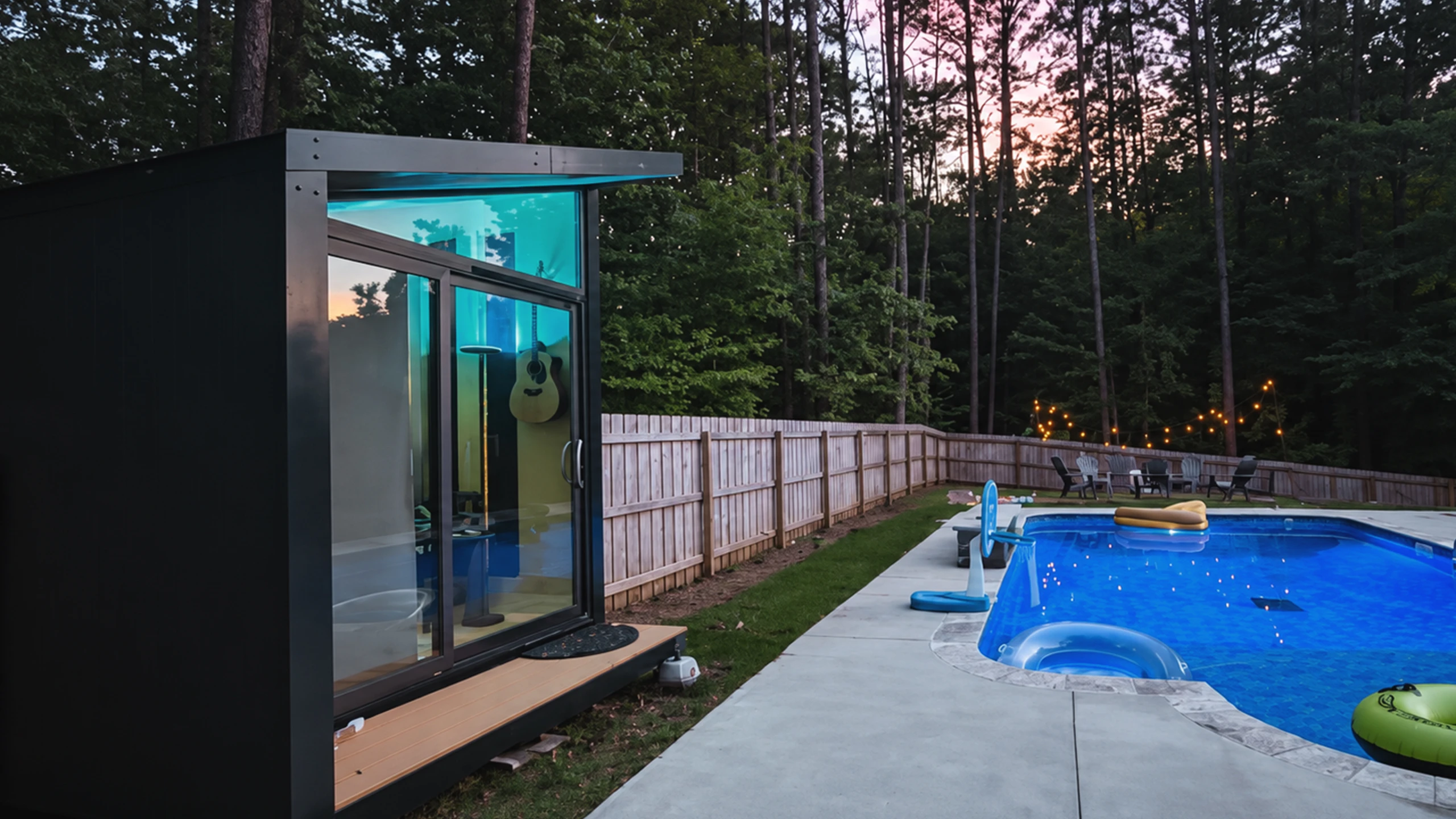
It suits someone who wants a gym that also works as a quiet office. The limits: the 6.8-foot low side suits a bench or a bike, not presses, and it has fewer outlets and lights than the StudioPod. Autonomous recommends a mini-split for hot climates; a portable AC must fit within 22 x 20 x 88 inches with a 5.9-inch exhaust duct.

| Spec | StudioPod | WorkPod | MetroPod | GaragePod |
|---|---|---|---|---|
| Where it goes | Backyard | Backyard | Backyard | Inside the garage, one corner |
| Floor area | 105 sq ft | 102 sq ft | 80 sq ft | 87 x 87 in footprint, open corner |
| Ceiling height | 7.25 ft, flat | 6.8 to 9.3 ft, sloped | 7.25 ft, flat | 87 in overall height |
| Electrical | 5 outlets, 4 lights, ventilator | 3 outlets, 1 light, ventilator | 2 outlets, 1 light | Built-in LED strips along the arms (plugs in) |
| Comfort range | 45 to 100°F | 45 to 100°F | 65 to 90°F | Not insulated (open slats) |
| Structural capacity | 2.9 tons | 2.9 tons | 2.3 tons | Not listed |
| Install time | 1 to 2 days | 1 to 2 days | 1 to 2 days | 2 to 4 hours, self-assembly |
| Warranty | 1 year | 1 year | 1 year | 1 year (frame and hardware) |
| Price from | $22,900 | $20,900 | $18,900 | $3,999 early bird (list $4,999) |
Prices change periodically; check the product page.
Permit rules still vary by city, county and HOA, so confirm with your local office before ordering. If you would rather adapt a shed you already have, turning a garden shed into a gym raises the same floor, height and insulation questions as a garage.
Other makers' garden gym pods vary a lot in ceiling height and insulation, so compare those two numbers first.
FAQs
Can a StudioPod be used as a home gym?
Yes. The StudioPod ships as a 105 sq ft room with no furniture apart from a closet and small bookshelf, 5 outlets, a ventilator and a 45 to 100°F insulated comfort range. Its flat 7.25-foot ceiling suits dumbbells, bikes and floor work better than standing barbell presses, so measure your reach first.
Can I put a gym in my garage?
Yes. Most garages can hold a gym once the concrete is covered with rubber and you have checked the clear height under the open door. Keeping the door and slab avoids a full conversion, though a new circuit or a mini-split may still need a permit where you live.
What does every garage gym need?
Every garage gym needs a rubber floor over the concrete, enough clear height for your lifts, airflow, good lighting and wall storage. For equipment, a squat stand or rack with safeties, a barbell, plates, a bench and dumbbells cover most strength training.
How do I make a good garage gym?
Make a good garage gym by measuring first: clear height with the door open, about 10 feet of width for a barbell, and clearance behind any treadmill. Then lay rubber flooring, add light and airflow, and buy gear in the order you will use it.
Is it OK to put a treadmill in a garage?
Check your treadmill's manual first, because some makers say no. ProForm's manual tells owners to keep the treadmill indoors, away from moisture and dust, and not in a garage. If your manual allows it, keep the garage dry and climate-controlled and leave 8 feet clear behind it.
How much ceiling height do I need for a garage gym?
You need your full reach with a bar locked out overhead, plus head room above any pull-up bar, measured under the open garage door. There is no single number because reach varies by person. Pressing a broomstick overhead in the spot gives you your number in seconds.
Can I keep my car in a garage gym?
Yes, if the gear lives on one side or the back wall and folds or hangs when you are done. Tape the car's footprint on the floor, keep plates away from the doors, and never run the engine inside an attached garage, even with the door open.
What are good workout ideas for a garage gym?
Good garage gym workouts are two or three full-body strength days built on squats, hinges, presses, rows and carries. Add bike or rowing sessions until the week reaches CDC's 150 minutes of moderate activity, alongside at least two strength days.
How do I set up a small garage gym without wasting money?
Buy in order: flooring, then adjustable or hex dumbbells and bands, then a fold-away rack or squat stand with a pull-up bar. Measure height and width before each purchase, and skip bulky machines until you know you will use them every week.
Final thoughts on garage gym ideas
The garage gym ideas that last are built around measurements: height under the open door, about 10 feet for a barbell and a lane for the car. Lay rubber first and buy the gear you will use twice a week.
References
- Centers for Disease Control and Prevention: Adult Activity: An Overview
- Centers for Disease Control and Prevention: Carbon Monoxide (CO) Poisoning Basics
- Centers for Disease Control and Prevention: About Heat and Your Health
- U.S. Department of Energy: Energy Saver Guide (2022)
- American College of Sports Medicine: 2026 Resistance Training Guidelines
- ProForm: Treadmill User's Manual, model PFTL59721.0