7 Best Therapist Office Chairs for You and Your Clients

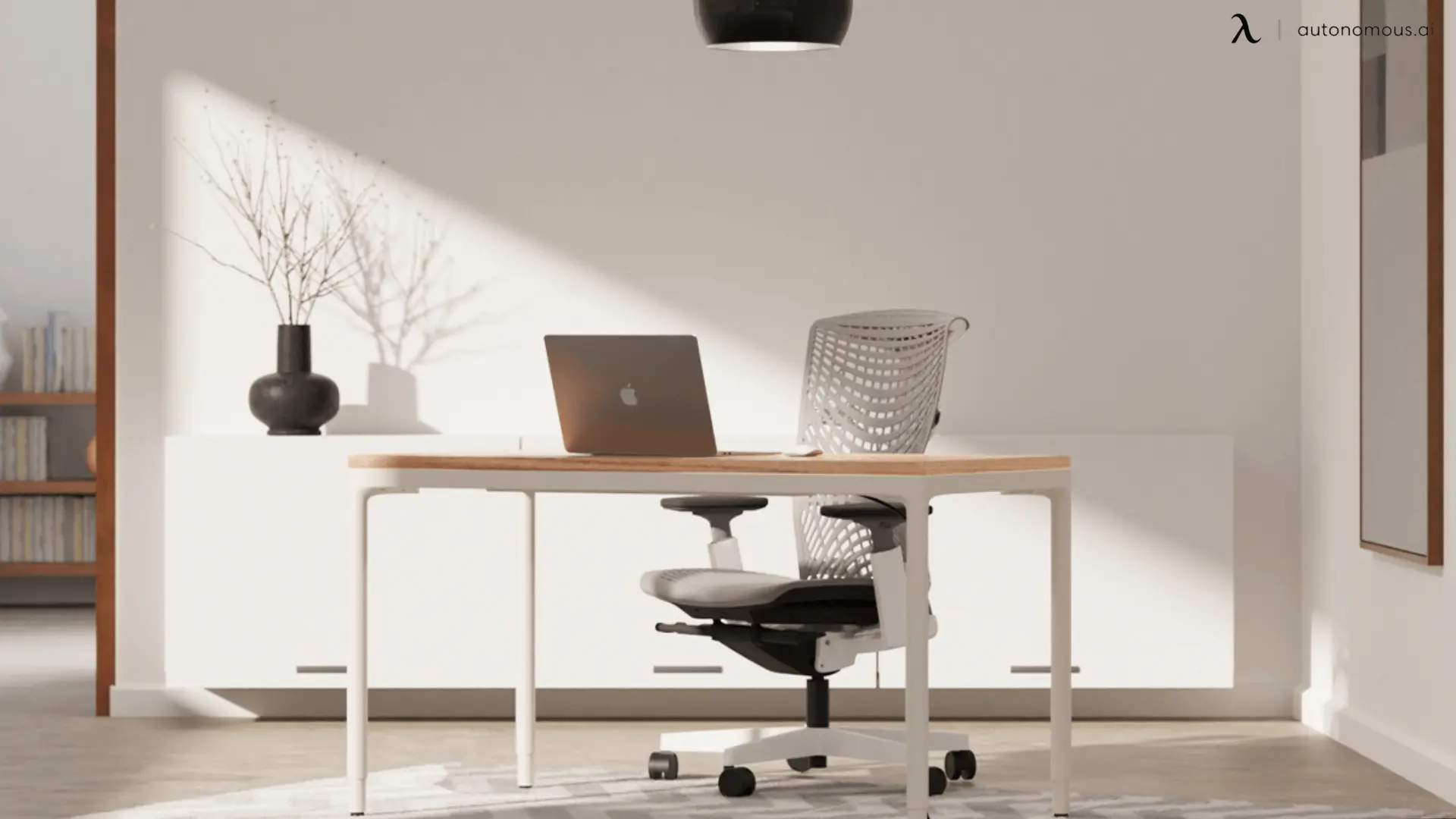
A therapist chair has to keep you upright and supported through six to eight 50-minute sessions a day, stay quiet when you shift, and look calm enough that the room does not feel like a corporate office. For most counselors, the Autonomous ErgoChair Pro covers that: a lumbar pad you can slide to your lower back, a fabric-covered foam seat option, and a seat that drops to 18.5 inches, within half an inch of the client chair we pair it with below.
The catch is that a therapy room has two seats. This guide covers 5 chairs for you, 2 chairs for clients, and how to set both at the same eye level. It is written for counseling and psychotherapy offices; massage therapists need a stool or treatment chair, which is a different product.
Therapist office chairs compared
The ErgoChair Pro is the all-round pick for a therapist's own seat, the Corjan suits a warmer living-room look, and the VINGLI is the client chair that sits closest in height to the Pro. The table lists each chair's role, seat height, recline and list price.
| Chair | Seat for | Best for | Seat height | Recline | List price | Warranty |
|---|---|---|---|---|---|---|
| Autonomous ErgoChair Pro | Therapist | Back support you can set, full caseload | 18.5 to 22 in | 22°, locks in 5 positions | $499 | Lifetime |
| Corjan Mid-Century Executive Chair | Therapist | A warmer, less corporate look | 19.75 to 23.75 in | Center tilt with lock | $299.99 | Not stated |
| Autonomous ErgoChair Ultra 2 | Therapist | Moving a lot in the seat, up to 320 lb | 18 to 23 in | 25° | $449 ($499 Plus with headrest) | Lifetime |
| Herman Miller Embody | Therapist | A large budget, low client chairs | 16 to 20.5 in | Not listed | $2,380 | 12 years |
| Autonomous ErgoChair Core | Therapist | A tighter budget, deep lean-back between sessions | 20 to 23.8 in | 40° tilt | $299 | 2 years |
| VINGLI Accent Chair | Client | Small rooms, up to 380 lb | 18.1 in (fixed) | None | $169.99 | Not stated |
| George Oliver Elizabeth Armchair | Client | A wood-frame room, shorter clients | 16.1 in (fixed) | None | $185.99 | Full warranty |
Best chairs for therapists: your own seat
Your own chair works hardest: a full caseload turns it into an 8 hour office chair, so it gets most of the budget. The five below are ordered by how well they fit a day of upright, attentive sitting, with one honest limit each.
Autonomous ErgoChair Pro: for back support through a full caseload
The ErgoChair Pro suits a therapist who sits upright most of the day and wants to place lower-back support exactly. It is built as an office chair for long hours: the lumbar pad slides over a 6-inch range, and Autonomous lists 9 adjustment points, including seat depth (19 to 21.5 inches), 3D armrests (11 to 14 inches high), tilt tension and a headrest.
The backrest locks in 5 positions across a 22-degree range, so you can hold it upright during a session and lean back between clients. For a therapy room, the seat option matters: the Pro comes with a high-density foam cushion under polyester fabric or a cool mesh seat, and the foam seat looks softer than an all-mesh chair. It holds 300 lb, carries a lifetime warranty and has 4.6 stars from 3,396 reviews.
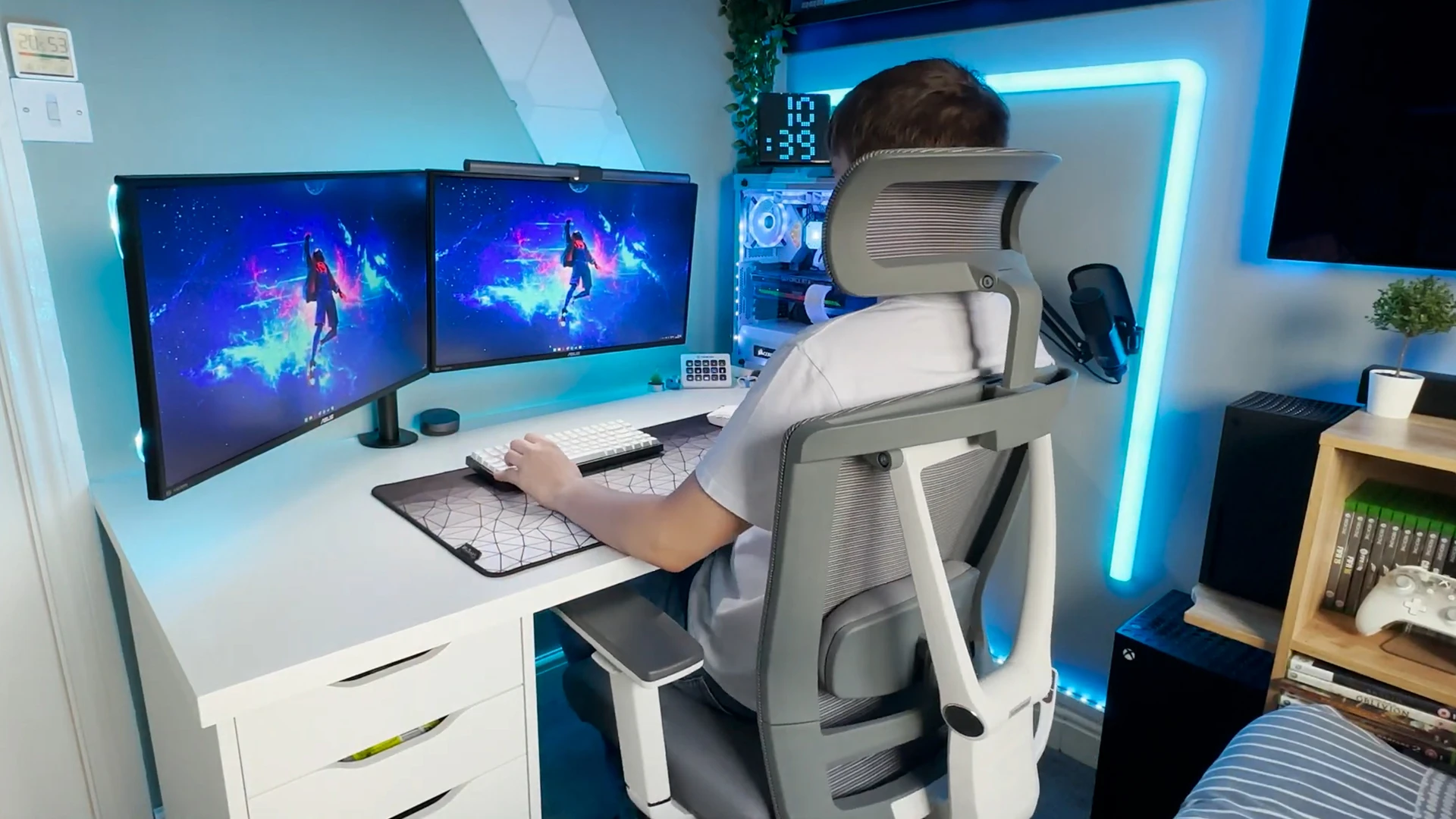
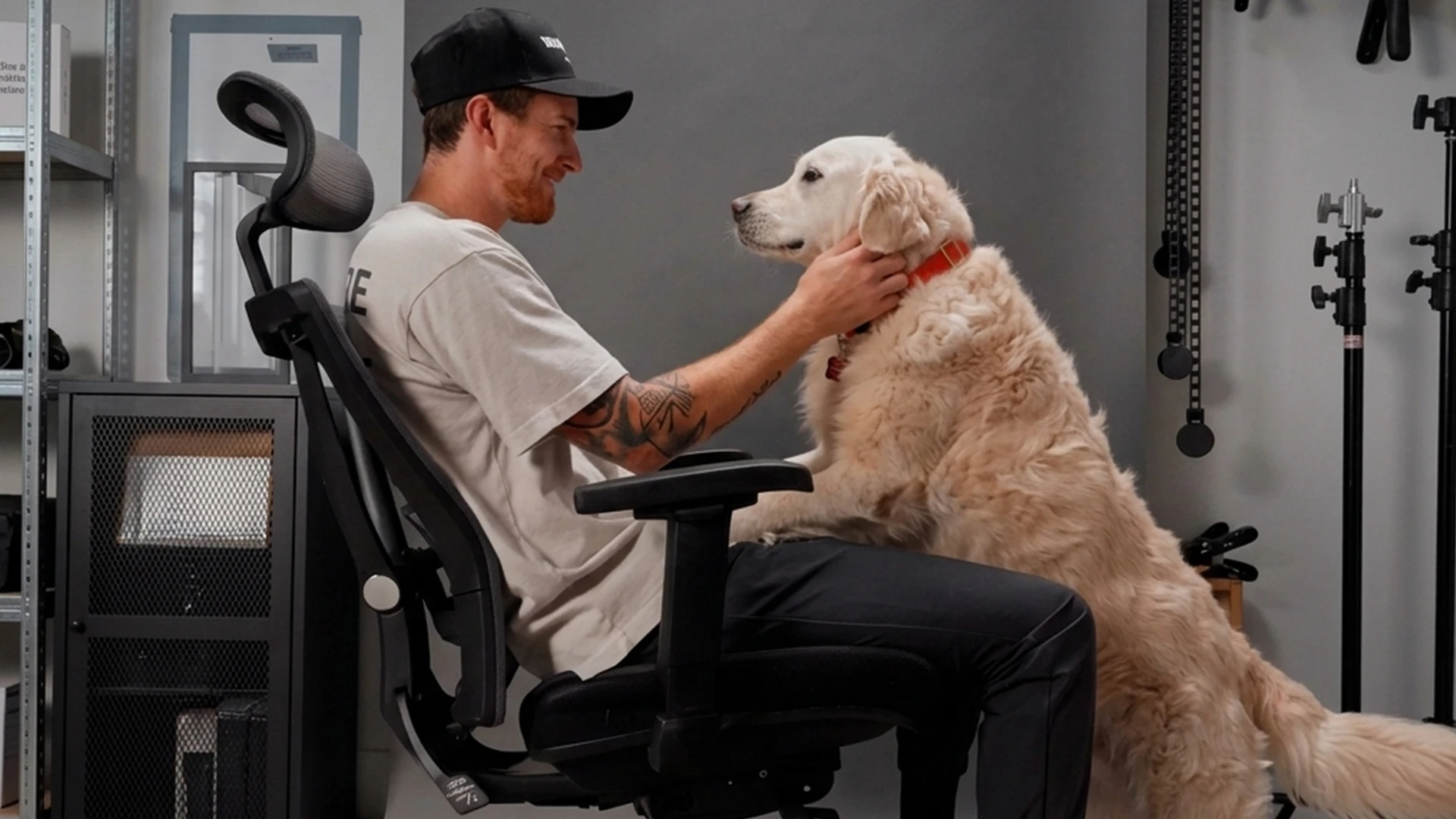
One honest limit: owners report that the armrests lock for height but not for slide or swivel, and the seat tops out at 22 inches, which can be low for very tall therapists. The mesh back also reads more like office furniture than a fabric armchair, so it suits a modern room better than a living-room style one.
Corjan Mid-Century Executive Chair: for a warmer, less corporate look
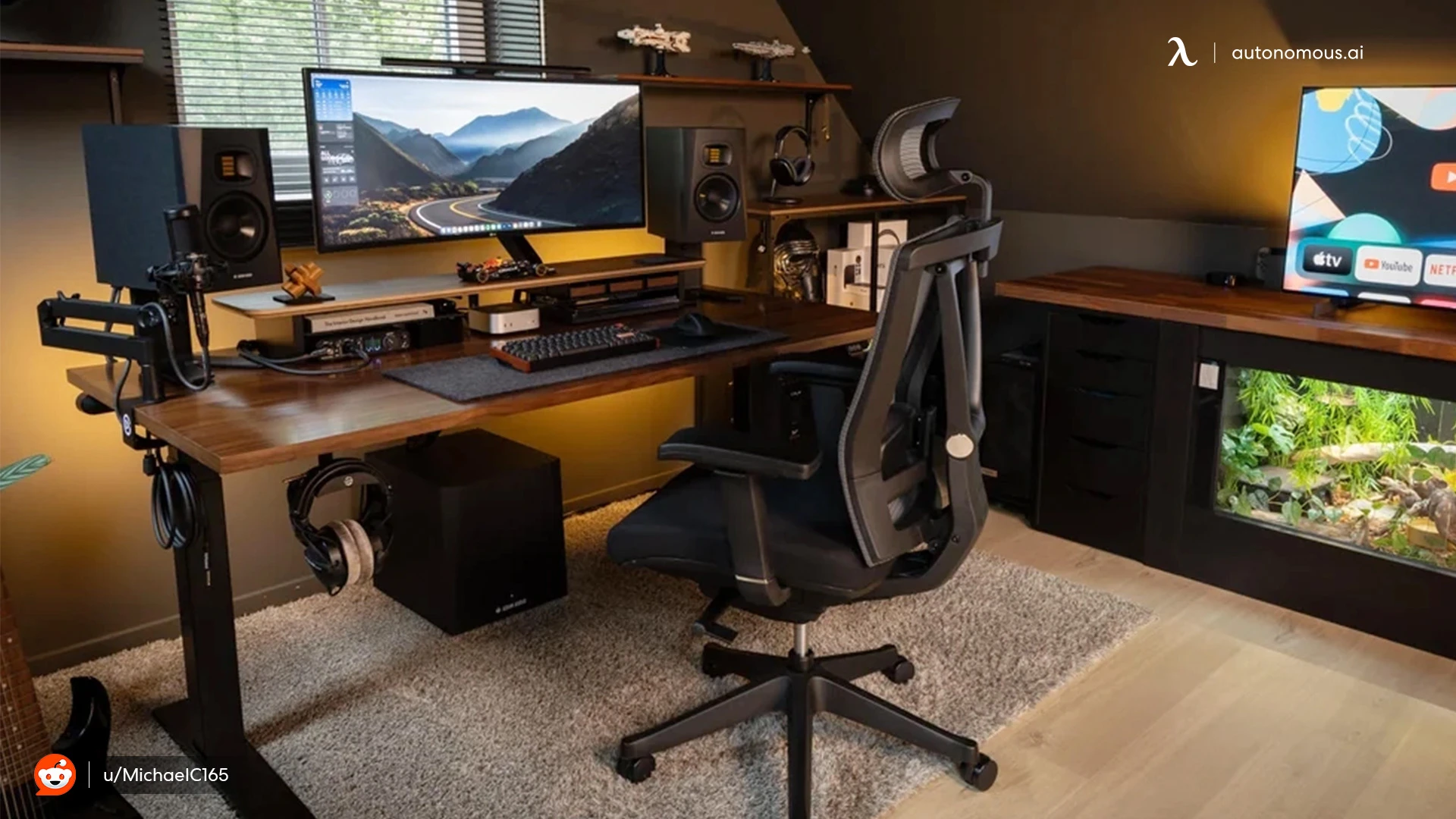
The Corjan Mid-Century Executive Chair from Brayden Studio suits a therapist who wants a chair that looks like furniture rather than office equipment. Wayfair lists a gas-lift seat from 19.75 to 23.75 inches, a center tilt with a lock, a headrest, arms and lumbar support. It lists at $299.99 and has 4.6 stars from 1,719 reviews.
The trade-off is tuning. Wayfair does not describe the lumbar support as adjustable, and it states no weight capacity or warranty. If your back needs more than a comfortable shape, compare it with the ergonomic chairs that let you move the lumbar and seat depth.

Autonomous ErgoChair Ultra 2: for therapists who shift position often
The ErgoChair Ultra 2 suits a therapist who moves around in the seat and would rather the chair follow than reach for knobs. Instead of a lumbar dial, its flex-frame back bends with your spine, the seat has 4 layers with 62 pressure nodes, and the backrest reclines 25 degrees with tilt tension. The Plus version adds a headrest.
Autonomous rates it to 320 lb, the highest of the Autonomous chairs here, with a lifetime warranty and 4.5 stars from 377 reviews. The limit is that it has no adjustable lumbar: if you need support placed at one exact height, the Pro fits better. The mesh back also looks more office than living room.

Herman Miller Embody: for a large budget and a long warranty
The Herman Miller Embody suits a practice that wants a long warranty and can spend several times what the other chairs cost. Herman Miller lists it at $2,380 with a 12-year warranty and a Backfit adjustment that shapes the backrest to your spine. Its seat runs from 16 to 20.5 inches, the lowest of the therapist chairs here, with 15 to 18 inches of seat depth and a 300 lb rating.
The limit is cost per room. The Corjan plus two VINGLI client chairs come to about $640 at list price, roughly a quarter of one Embody. If that budget is out of reach, an affordable office chair with a sliding lumbar covers most of the same daily needs.

Autonomous ErgoChair Core: for a tighter budget
The ErgoChair Core suits a therapist on a tighter budget who also wants a deep lean-back between sessions. Its dual X-shaped backrest follows the curve of the spine without a sliding lumbar, and the back tilts 40 degrees, which Autonomous lists as a 130-degree reclining office chair. The headrest, 3D armrests, seat depth and seat height all adjust. It has 4.1 stars from 50 reviews.
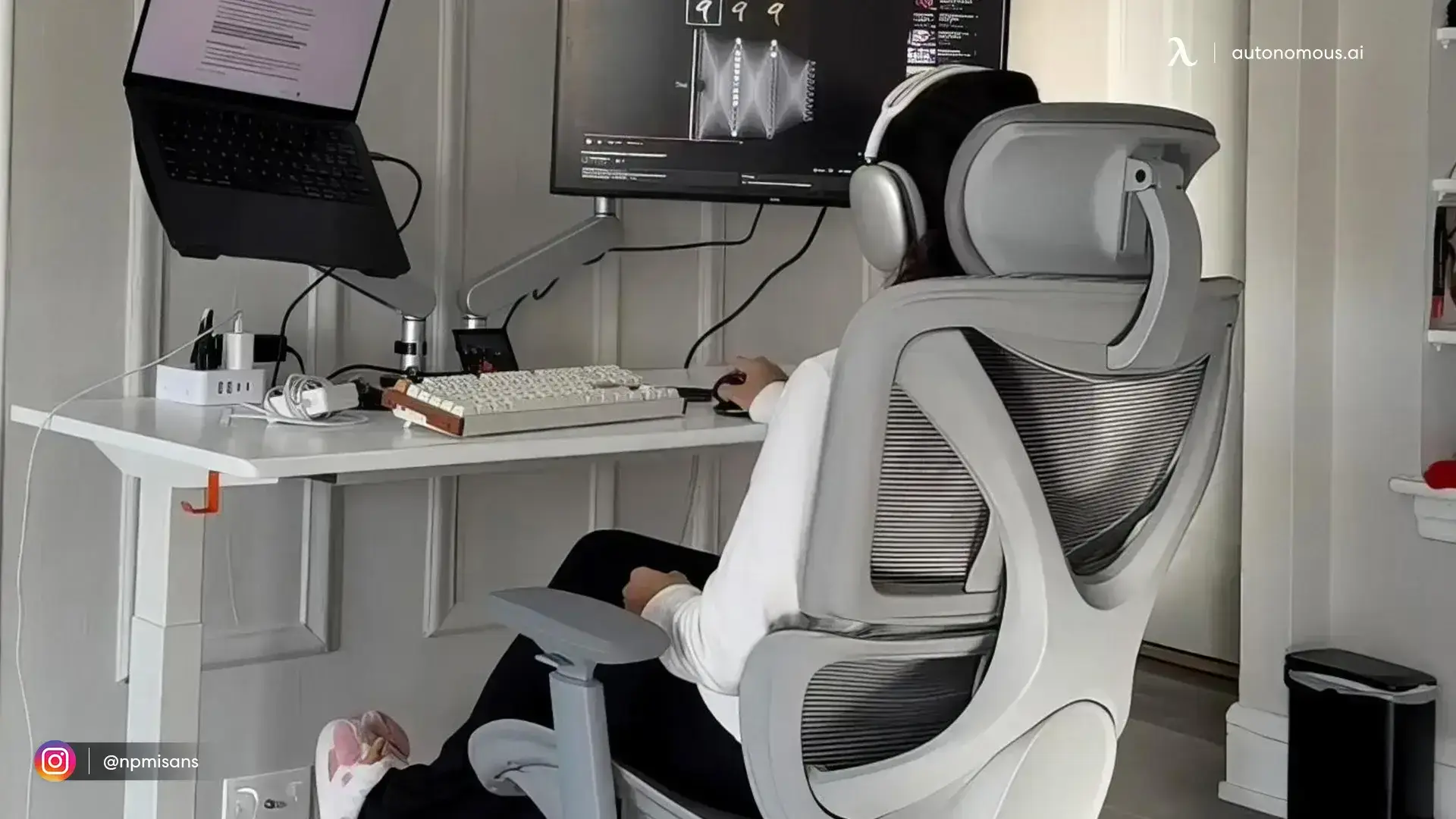
Two limits matter in a therapy room. It holds 242.5 lb, lower than the other Autonomous chairs here (300 to 320 lb), and it carries a 2-year warranty instead of lifetime. Its seat also starts at 20 inches, so you sit at least 1.9 inches above a VINGLI client and 3.9 inches above an Elizabeth client.

Chairs for therapy office clients
A client chair should be upholstered, steady and close to your seat height, with arms to rest on and no wheels, so the client can settle without the chair moving. The two below are still sold with their sizes listed.
VINGLI Accent Chair: for small rooms and a high weight limit
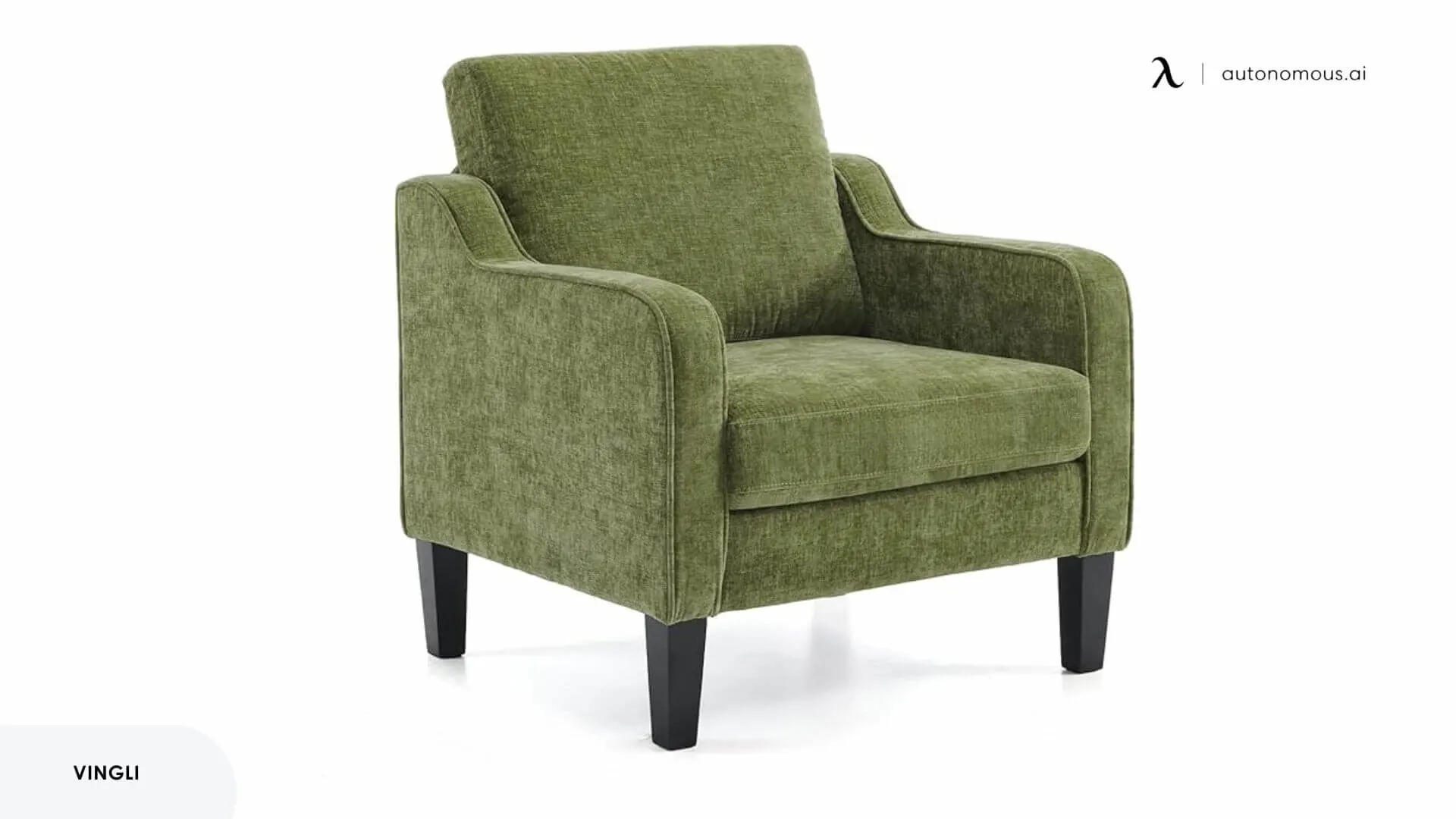
The VINGLI Accent Chair suits a compact office: it takes 29.9 by 30.7 inches of floor and stands 33 inches tall. The seat is 22.8 inches wide, 20 inches deep and 18.1 inches high, built on pocket coils and foam, and Amazon lists a 380 lb capacity, more than any task chair in this guide. It does not recline, lists at $169.99 and has 4.2 stars from 833 reviews.
The limit is back height. The back rises about 15 inches above the seat, so it supports the lower and middle back but not the shoulders or head of a client who likes to lean back.
George Oliver Elizabeth Armchair: for a wood-frame, mid-century room
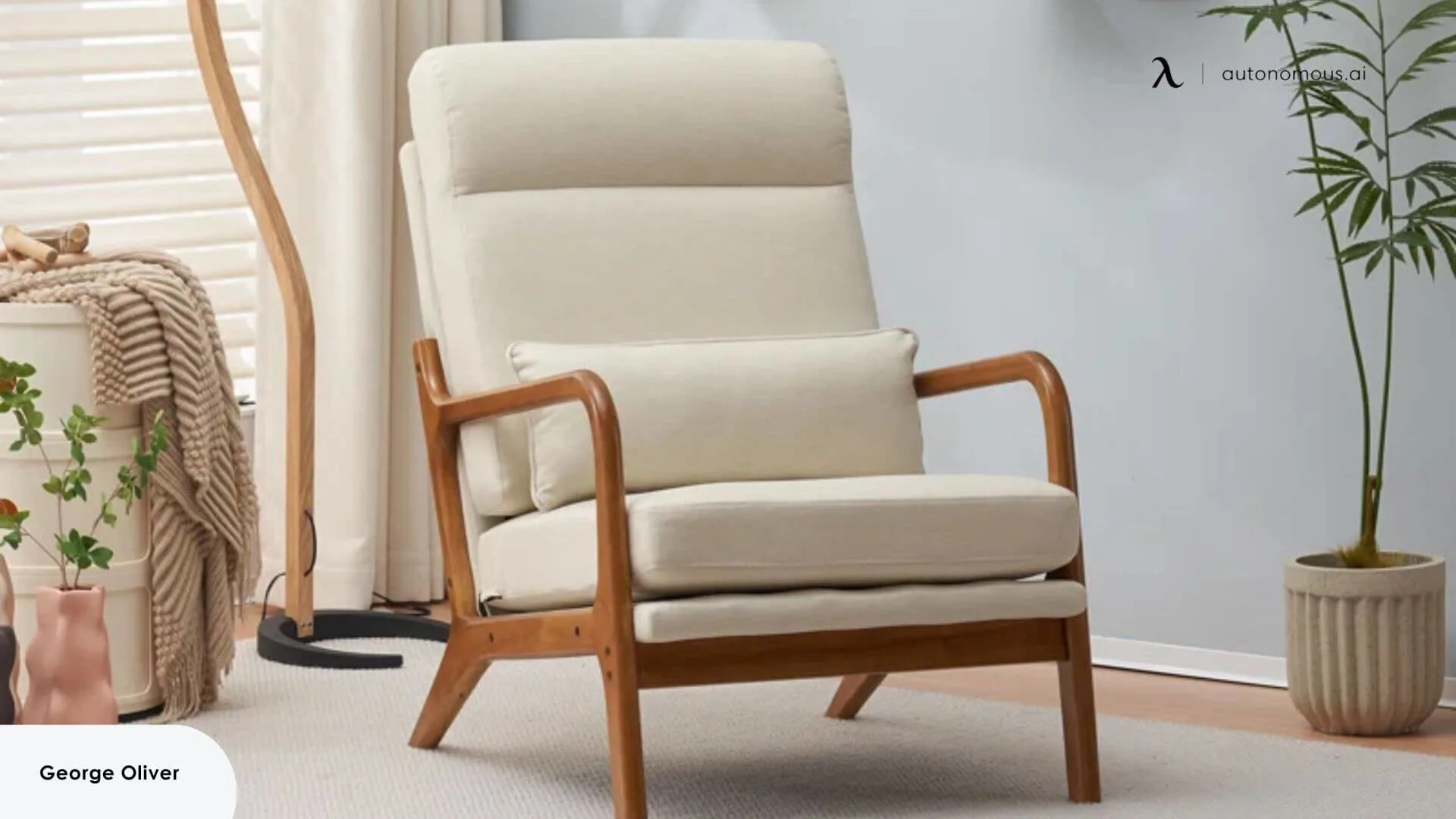
The George Oliver Elizabeth 25.6'' W Solid Wood Armchair with Lumbar Support, listed on Wayfair as the Lemley until recently, suits a room with warm wood tones. It pairs a solid oak frame with linen-covered foam cushions and a lumbar pillow, holds 330 lb, and stands 36.6 inches tall. Wayfair lists a full warranty that also covers commercial use, which matters in a practice. It lists at $185.99 and has 4.6 stars from 2,121 reviews.
The limit is a low seat. At 16.1 inches it sits 2 inches below the VINGLI, which can leave taller clients with their knees above their hips, and only one therapist chair in this guide comes down far enough to meet it. At 25.6 inches wide it is also about 4 inches narrower than the VINGLI, which helps in a tight room but leaves less space for larger clients.
How to match your chair to the client's seat height
Set your chair so your eyes and the client's land at about the same level, starting with the two seat heights within an inch of each other. A therapist who sits several inches higher looks down at the client for the whole hour, which works against the equal footing most therapists want in the room.
Seat height is the easy part to compare, because office chairs adjust and accent chairs do not. Here is how the therapist chairs above line up against the two client chairs, the VINGLI at 18.1 inches and the Elizabeth at 16.1 inches:
| Therapist chair | Seat height range | With VINGLI (18.1 in) | With Elizabeth (16.1 in) |
|---|---|---|---|
| Herman Miller Embody | 16 to 20.5 in | Matches | Matches |
| ErgoChair Ultra 2 | 18 to 23 in | Matches | 1.9 in higher at lowest |
| ErgoChair Pro | 18.5 to 22 in | 0.4 in higher at lowest | 2.4 in higher at lowest |
| Corjan Mid-Century Executive Chair | 19.75 to 23.75 in | 1.65 in higher at lowest | 3.65 in higher at lowest |
| ErgoChair Core | 20 to 23.8 in | 1.9 in higher at lowest | 3.9 in higher at lowest |
The VINGLI pairs with every therapist chair here within 2 inches, and the Ultra 2 and Embody can match it exactly.
The Elizabeth is the harder pair. Its 16.1-inch seat puts the client below your eye line with every chair except the Embody, which comes down to 16 inches. With the Pro or Ultra 2 you sit about 2 inches higher; with the Corjan or Core, closer to 4. If you like the Elizabeth's look but use one of those chairs, pick the VINGLI or another client seat near 18 inches instead.
Matching seats is only a start. A coil-and-foam accent chair sinks more under weight than a firm task seat, and torso length varies, so two people on equal seats can still sit at different eye heights. Your own posture also has a floor: Cornell's ergonomics guidance puts the front of the knees level with or slightly below the hips, with feet flat on the floor. That is the same rule behind the right chair height at a desk.
Check it in five minutes:
- Measure the client chair from the floor to the top of the front edge of the cushion, with nobody sitting in it.
- Set your chair to the same height and sit down with your back against the backrest.
- Ask a colleague to sit in the client chair and look across at you. If your eyes sit clearly higher, lower your chair a notch.
- Check your knees. If matching the client chair pushes your knees above your hips, choose a taller client chair rather than sinking your own seat.
How to choose a therapist chair
Choose a therapist chair on back support you can set, a quiet base, an upright posture you can hold without effort, and a cover you can clean. Look and price come after those, because a chair that hurts by the fourth session costs more than it saves.
- Back support you can place: CCOHS recommends a backrest that adjusts up and down and gives firm lumbar support. On their product pages, only the ErgoChair Pro and ErgoChair Mesh among Autonomous chairs list a lumbar you can move; fixed shapes like the Core's X-frame or the Ultra 2's flex back suit people they happen to fit. More options are in our list of office chairs with spine support.
- A quiet base: CCOHS advises soft casters on hard floors and hard casters on carpet, and brakes where a chair should stay put. A rug under your chair stops both rolling noise and drift during a session.
- Upright without locking all day: a recline lock helps you hold an attentive posture in session, but Cornell's guidance notes that locking the backrest in one position all the time is not beneficial. Unlock it with firm tension between clients so your back moves.
- Armrests that let your shoulders drop: arms at the height of your relaxed elbows let your hands rest open instead of folding across your body. Height adjustment matters more than width; see how an office chair with adjustable arms sets up.
- A cover you can clean: Cornell notes that vinyl wipes clean but does not breathe, while cloth is harder to clean and holds heat. Mesh breathes but looks more like office furniture; fabric office chairs look warmer. Compare the common seat materials on cleaning before you pick one.
- A seat that lasts one session and more: Cornell suggests checking that a seat still feels comfortable after 60 to 120 minutes. One 50-minute session plus notes falls right in that window.
Test the chair through a full day of sessions within the return window. Autonomous offers free 30-day returns on these chairs (flash-sale items excepted), which is long enough to hear any click when you lean back and to feel the seat by the last client.
Color counts too. Muted office chair colors shape how the room feels as much as the frame does.
How to arrange therapist and client chairs
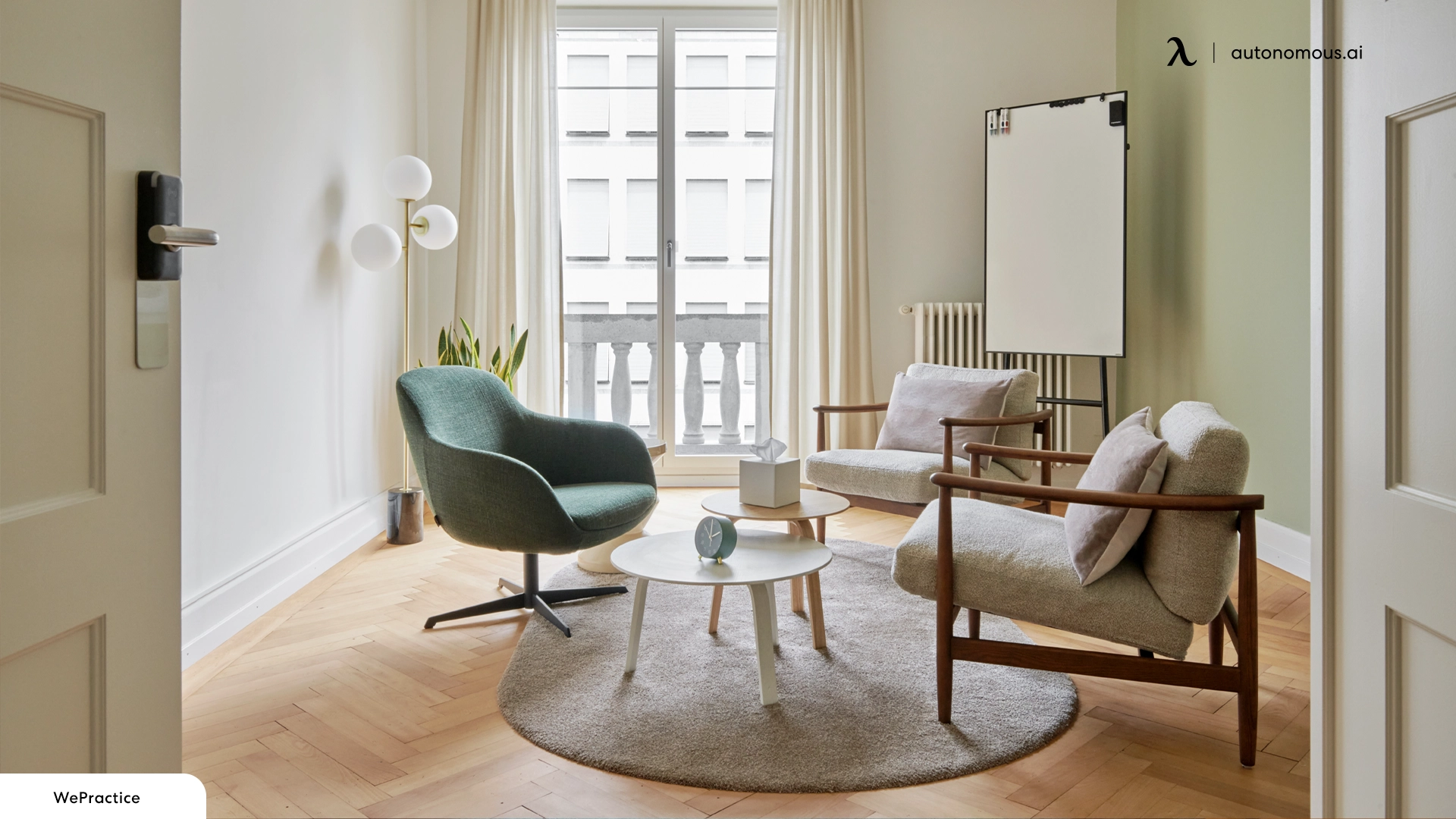
Place the two chairs at a slight angle rather than straight on, close enough to talk at a normal volume and far enough apart that your knees cannot touch when you both lean forward. The angle lets a client look away to think without turning in the seat.
- Clock: put it where you can see it over the client's shoulder, so you never turn to check the time.
- Side table: keep tissues and water within the client's reach, not yours, with room for one of the low-care desk plants if you want some green.
- Rug: one under both chairs quiets casters and makes the seating area read as its own zone.
- Desk: if you write notes between sessions, keep the desk out of the line between the two chairs and set it up as an ergonomic workstation.
Lighting, plants and wall color carry the rest of the room, and our therapist office decor ideas cover them. For a softer feel, see the guide to calming and welcoming therapy office decor.
FAQs
What is the best chair for a therapist?
The best chair for a therapist is an adjustable task chair with lumbar support you can place, a backrest that locks upright, and a quiet base. The ErgoChair Pro fits most therapists here; the Corjan suits a softer look, and the Embody suits a large budget.
What chairs do therapists use in their office?
Most therapists use an ergonomic office chair or an executive-style swivel chair for themselves and an upholstered accent or lounge chair for clients. The therapist's seat adjusts for long days, while the client's seat is chosen for comfort, stability and a calm look.
Should a therapist's chair be the same height as the client's?
Yes, a therapist's chair should sit at about the same eye level as the client's. Start by setting your seat within an inch of the client chair's seat height, then check eye level with someone in the client chair, because soft cushions sink and torsos differ.
Is mesh or upholstered better for a therapist chair?
Upholstered seats look warmer and suit a therapy room, while mesh breathes better through a long day. A common middle path is a mesh back with a fabric-covered foam seat, which the ErgoChair Pro offers. Client chairs are usually fully upholstered.
Can a reclining chair work in a therapist's office?
A reclining chair works in a therapist's office if it locks upright during sessions. Recline between clients to rest your back. For clients, a fixed accent chair is the usual choice, because a recliner changes their eye level and posture mid-session.
How much does a good therapist chair cost?
A good therapist chair in this guide lists from about $300, with the Corjan at $299.99, up to $2,380 for the Herman Miller Embody; the comparison table shows each pick. The two client accent chairs list at $169.99 and $185.99.
What is the most comfortable therapist chair?
The most comfortable therapist chair is the one that fits your body: feet flat, a small gap behind the knees and lumbar support at your lower back. Chairs with adjustable seat depth and lumbar, like the ErgoChair Pro, fit the widest range of people.
How should chairs be arranged in a therapist's office?
Chairs in a therapist's office should face each other at a slight angle, not straight on, so the client can look away to think. Set them close enough to talk at a normal volume but far enough apart that knees cannot touch, and keep the desk out of the line between them.
Conclusion
A good therapist chair holds you upright through a full caseload, stays quiet and sits at the client's eye level. Start with your own seat, the ErgoChair Pro for most people, then pick a client chair whose seat height you can match. Get the pair right once and the room does the rest.