Office White Noise Benefits and Side Effects Explained

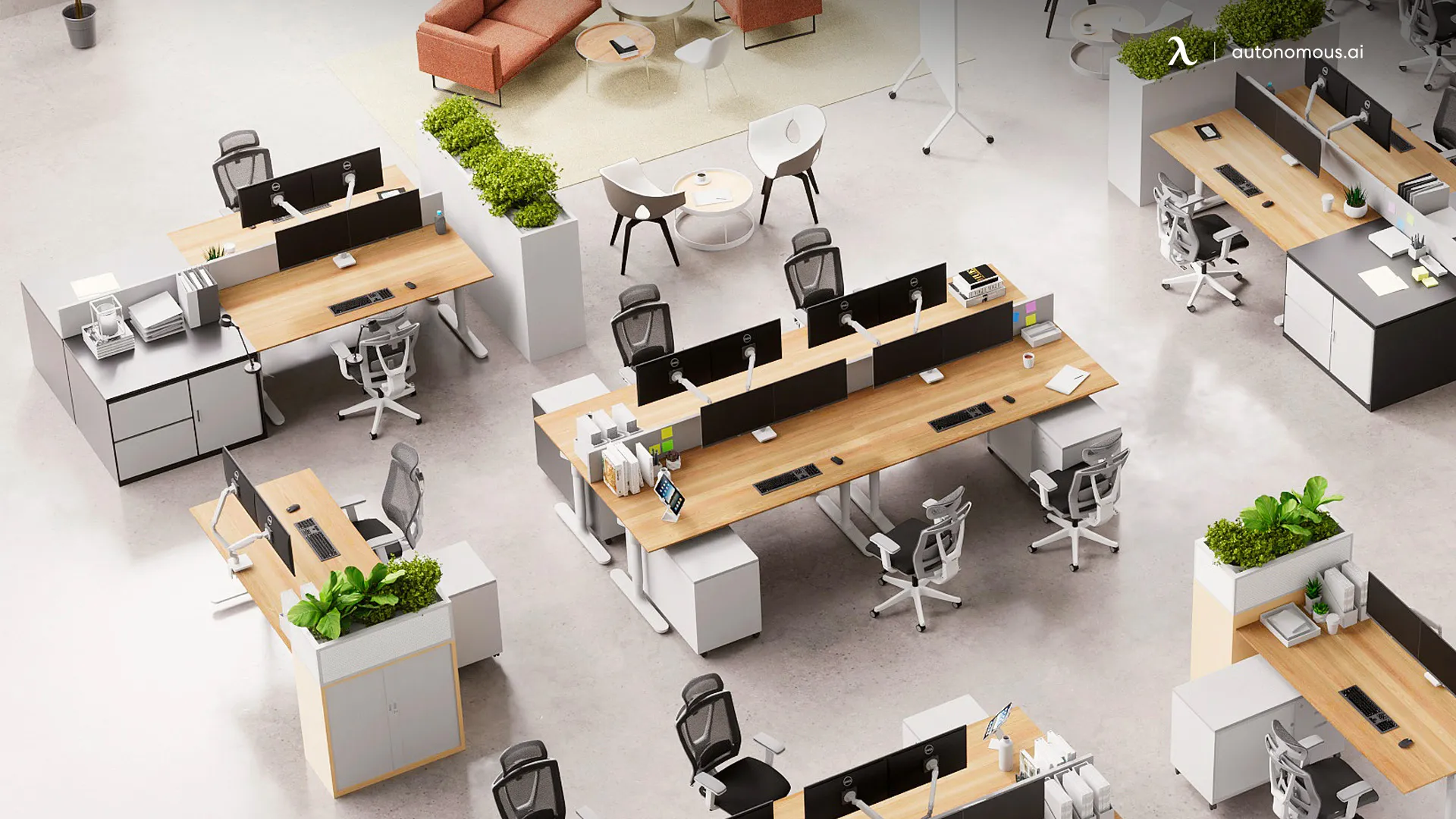
Office white noise is a steady, low background sound, from ceiling speakers, a desktop machine or an app, that makes nearby conversations harder to understand so they distract less. Most building systems use tuned sound masking rather than raw white noise, and the US General Services Administration (GSA) recommends 45 to 48 dBA for open-plan areas. The catch: it covers speech, it does not stop it, and at those levels its side effects are annoyance when set too loud and harder listening for people with hearing loss, not hearing damage.
Below: how it works, which noise to pick, placement, side effects, and what to add when masking falls short.
How Does a White Noise Machine Work in an Office?
A white noise machine works in an office by raising the steady background level just enough that the words in nearby speech blend into it. You still hear that someone is talking, but you can no longer follow the words, and speech you cannot follow is much easier to ignore.
That is why a quiet office can be more distracting than a busy one. GSA's Sound Matters guide says most open workspaces are "simply too quiet," so every call and laugh stands out against the silence. A low, even sound shrinks that contrast.
Masking only works at the right level. GSA's targets for electronic sound masking are:
- Open-plan workspace: 45 to 48 dBA, tuned to each zone.
- Private offices: 40 to 42 dBA.
Check it with people, not just a number. Stand at your desk while two colleagues talk at the next one. If you can follow their words, the level is too low or the coverage has a gap. If the hiss itself is what you notice, it is too loud.
White Noise vs Pink Noise vs Sound Masking for Office Privacy
For office privacy, sound masking tuned to the speech range works better than flat white noise, because it covers voices at a level people stop noticing. GSA defines sound masking as background sound "matched to the spectrum of human speech." Flat white noise spreads the same energy into high pitches, so it sounds like hiss at the volume needed to cover a voice.
| Sound | What it is | How it sounds | Office use |
|---|---|---|---|
| White noise | Equal energy at every frequency | Bright hiss, like TV static | Desktop machines and apps; can sound harsh at masking levels |
| Pink noise | Equal energy per octave, so it gets softer as pitch rises | Softer, like steady rain | Personal focus sound; easier to live with all day |
| Brown noise | Energy drops even faster toward high pitch | Deep rumble, like distant surf | Personal listening; covers less of the range where consonants sit |
| Sound masking | A spectrum shaped to human speech, set by an installer | Soft, like airflow from a vent | Building systems for open plans, private offices and corridors |
Many desktop machines offer white, pink and brown settings plus fan sounds. Pick the setting by the check above: the one that hides the next desk's words at the lowest volume wins.
Types of Office White Noise Systems
Office white noise comes in three forms: building-wide sound masking, desktop machines, and apps or websites played through speakers or headphones. GSA's guide lists all three and says the right one depends on how much of the floor needs cover.
Ceiling Sound Masking Systems for Office Buildings
A ceiling system hides small speakers above the tiles or in an open ceiling and feeds them a masking signal by zone. An installer measures and tunes each zone, and some systems change level by time of day. This is the only option that gives even cover across an open office or a whole floor of an office building.
Desktop White Noise Machines
Desktop machines, often sold as white noise generators, are small office gadgets that cover one desk, one doorway or one small room. They suit a private office, a therapist's door or a home office with thin walls.
A single unit cannot cover an open floor, and comparing a few office noise machines by sound options and timer settings is worth the time before buying.
White Noise Apps and Websites
Apps and free white noise websites give one person their own masking at no cost. GSA calls this personal masking and suggests it for the few people who are more sensitive to noise than the rest of the floor. Through headphones, keep the volume low; covering a voice in the room does not need loud sound in your ears.
Benefits of White Noise in the Office
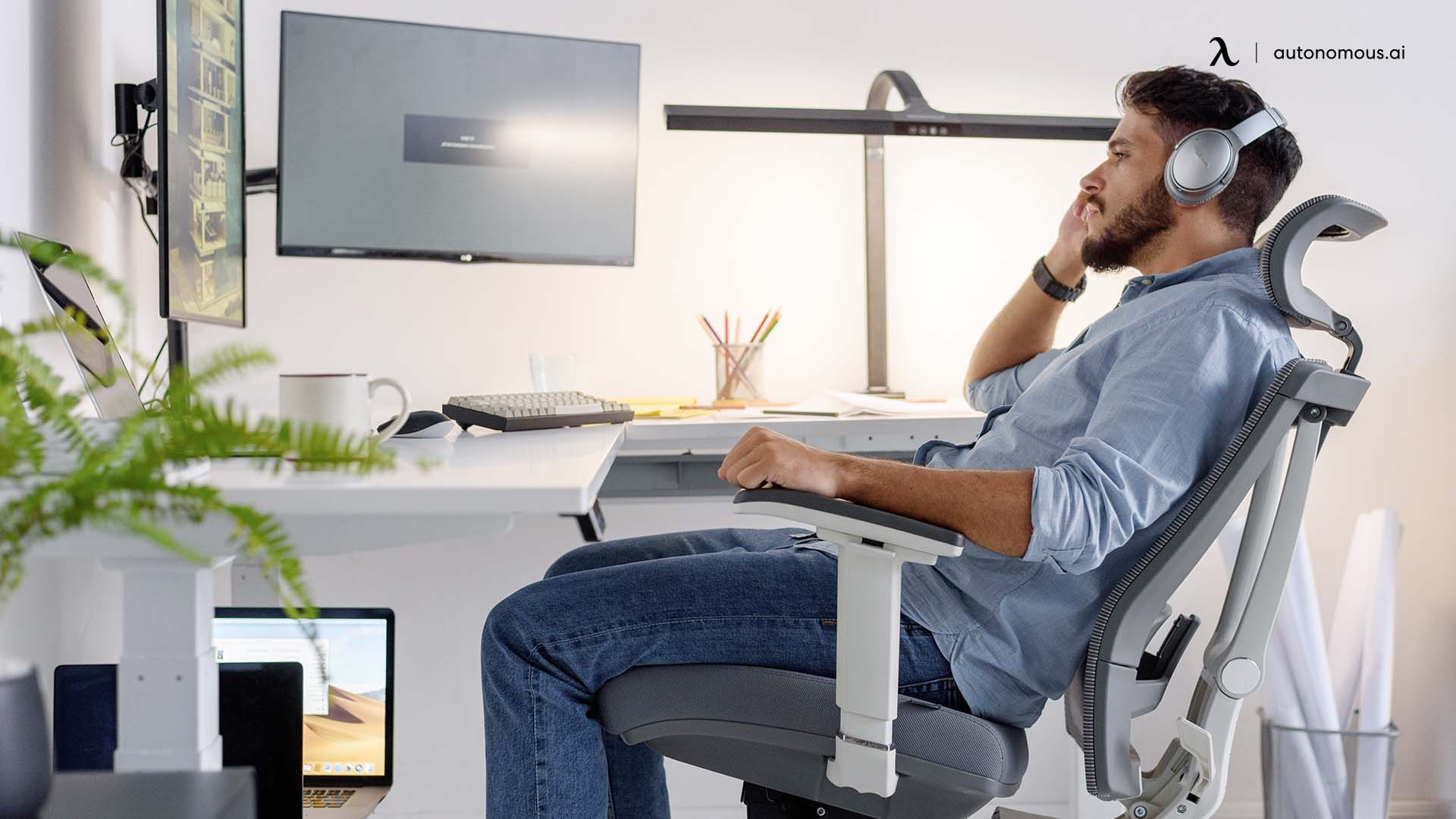
The main benefit of white noise in an office is speech privacy: people nearby hear that you are talking but not what you say. The other gains follow from the same effect.
Speech Privacy for Calls and Client Conversations
Some conversations should stay with the people in them, like a client's numbers, an HR talk or a patient's history. Masking makes those words hard to follow from a few desks away, which matters most where a slip could break a contract or a privacy rule.
Fewer Distractions and Better Focus
Speech you can understand is the hardest office sound to ignore, so masking it helps concentration at work more than a quiet room does. The effect differs by person. In a 2010 study of 51 school pupils, with white noise played at 78 dB, far louder than office masking, white noise improved recall for inattentive pupils and made it worse for attentive ones.
Claims that white noise makes people more creative or more productive by itself go further than the evidence. The gain comes from fewer interruptions.
A Calmer Background for Some People
A steady sound replaces sudden ones, and a door slam or a ringtone startles less against a constant background. People who already use white noise to sleep often find the same sound easy to work with.
White Noise in Office Side Effects
The main side effects of white noise in an office are annoyance when it is too loud, harder listening for people with hearing loss, and a debate about constant noise and the hearing system. At GSA's levels, hearing damage is not one of them.
Too Loud and It Becomes the Distraction
Masking set too loud turns into the noise people complain about. Staff raise their voices to talk over it, which defeats the point. If people mention the hiss, turn it down until they stop noticing it, then run the two-colleague check again.
Hearing Safety at Masking Levels
Office masking at 45 to 48 dBA sits far below the 85 dBA that NIOSH sets as its recommended limit averaged over an eight-hour workday. The risk shows up with headphones turned up to cover a loud room, not with a tuned ceiling system.
To check a room, NIOSH offers a free Sound Level Meter app for iOS. Measure the average level (LAeq) at a desk with the masking on and compare it with the targets above.
The Debate About White Noise and the Brain
A 2018 review in JAMA Otolaryngology argued that long exposure to unstructured noise can change how the hearing pathway in the brain works. It concluded that white noise should be avoided as a tinnitus treatment. Its authors point to other therapies that train the brain instead.
The review is about tinnitus sound therapy, often played for hours through headphones and earbuds. It does not test office masking at GSA's levels. If you have tinnitus, ask an audiologist before you add constant noise to your day.
Hearing Loss, Sensitivity and Reliance
Masking can make speech harder to follow for people who are hard of hearing. GSA notes that the US Access Board has no guidance on how masking sound affects access for people who are hard of hearing or blind, so ask your team before you install it.
Some people also come to rely on the sound and find it hard to focus without it. Give everyone a way out: a quiet room, a lower zone, or the option to switch a desktop unit off.
Where to Put a White Noise Machine in an Office
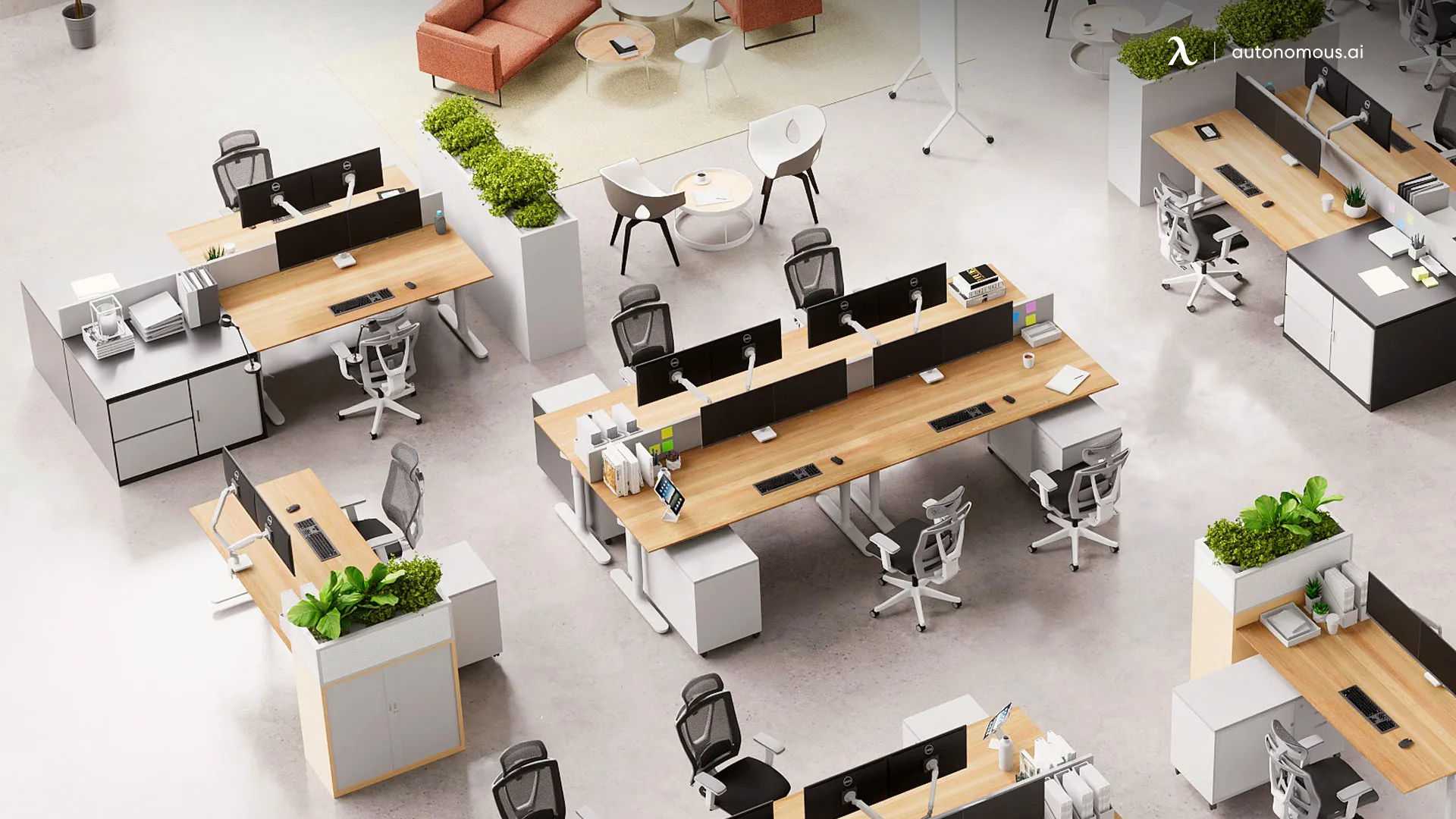
Put a white noise machine between the people talking and the people who should not hear them, not next to your own ear. Masking covers speech at the listener's position, so place it where the sound travels.
- Private office: outside the door or at the gap under it, facing the hallway, so words leaking out are covered.
- Open-plan desk: on the edge of the desk facing the neighbors. For a whole floor, use a ceiling system; one box cannot cover it.
- Meeting room: in the corridor outside, not inside the room with the speakers.
- Avoid: corners, the floor under a desk and spots behind furniture, which muffle the sound, and anywhere it points straight at your head.
Then set the level with the meter app: 45 to 48 dBA at the listening spot in an open plan, 40 to 42 dBA in a private office. Move the unit before you turn it up.
When White Noise Is Not Enough
White noise is not enough when a conversation must not be heard at all, when the room echoes, or when the noise is loud and close. Masking covers speech; it does not absorb or block it. GSA's order of fixes is "absorb, block, cover": treat surfaces first, then walls and doors, and add masking last.
Acoustic Panels for Echo
Hard walls, glass and bare floors bounce speech around, so it carries farther and sounds louder. Acoustic panels for the office soak up that echo. GSA's open-plan spec calls for panels rated NRC 0.8 or higher on 25% of the walls. Panels make masking work better, but they do not stop sound passing through a wall.
Noise-Canceling Headphones for Your Own Focus
Noise-canceling headphones cut steady low sound, like air handling, better than they cut voices. They help you focus, but they do nothing for the privacy of your own calls, because the people next to you still hear you.
A Closed Room for Calls
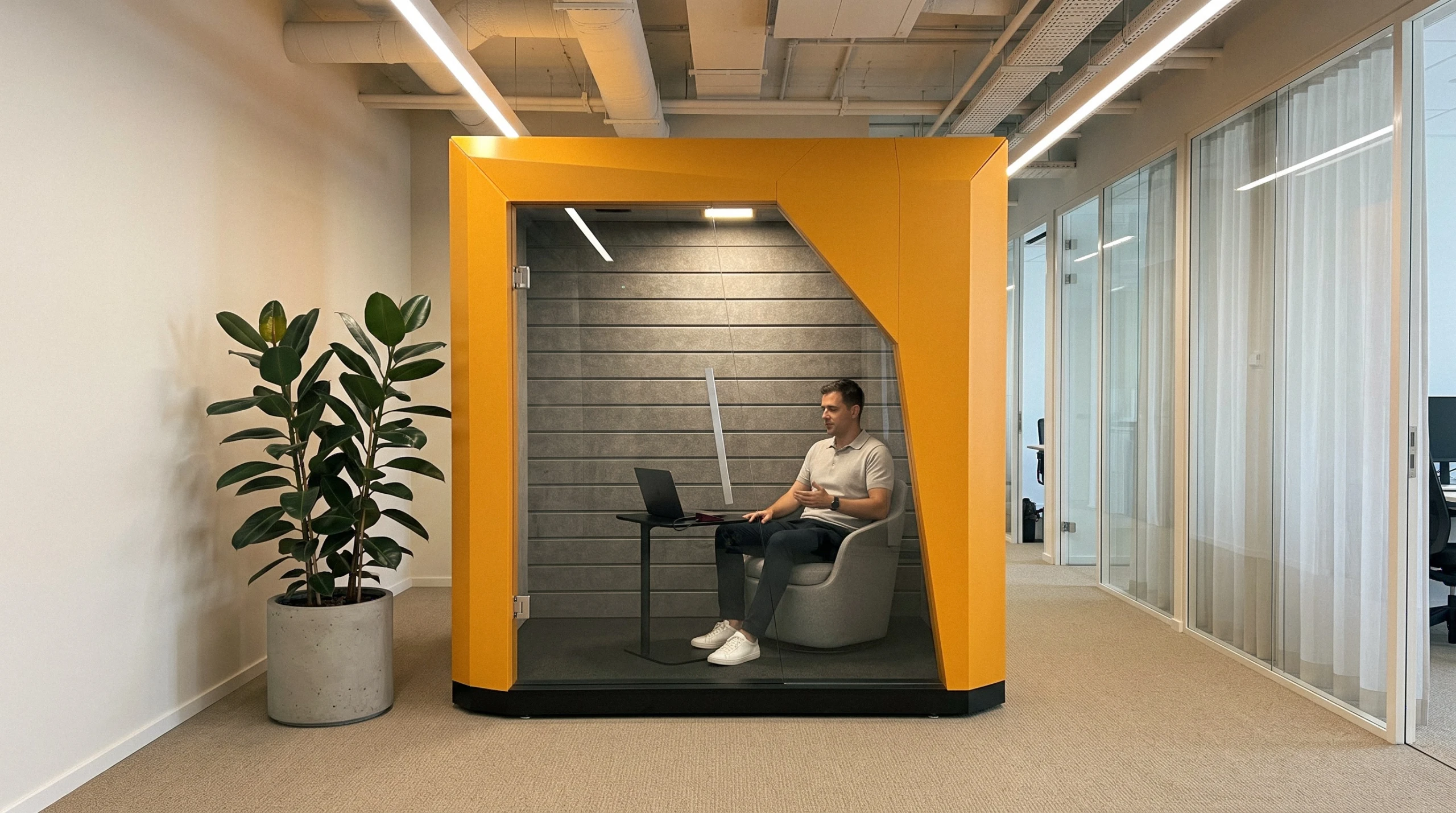
For calls nobody should overhear, you need a wall and a door, which is why many offices add soundproof office pods next to their masking. Spaceship is Autonomous's one-person indoor pod. Autonomous lists 30 dB of speech reduction, marked preliminary. It is not silent: two roof fans always run, at 32 dB(A) at full speed. It is built around a lounge chair and a laptop table (sold separately), not a desk.
FAQs
Why do they play white noise in offices?
Offices play white noise to make nearby conversations hard to understand. Most open offices are quiet enough that every call stands out, so a low, steady sound hides the words, protects privacy and cuts the distraction of speech you can follow without stopping it.
What color noise is best for office privacy?
Sound masking shaped to the speech range is best for office privacy. Among plain noise colors, pink noise sounds softer than white at the same masking effect, while brown noise covers less of the high range where consonants sit. Pick whichever hides nearby words at the lowest volume.
How loud should white noise be in an office?
White noise in an office should sit at 45 to 48 dBA in open-plan areas and 40 to 42 dBA in private offices, the GSA targets. If people notice the hiss, it is too loud; if you can follow the next desk's conversation, it is too quiet.
Is white noise in the office bad for you?
White noise in the office is not a hearing risk at normal masking levels, which sit far below NIOSH's 85 dBA eight-hour limit. The real downsides are annoyance when it is too loud, harder listening for people with hearing loss, and debated concerns for people with tinnitus.
Can white noise stop coworkers from hearing my calls?
White noise cannot stop coworkers from hearing your calls; it only makes the words harder to follow at a distance. People close to you will still understand you. For calls that must stay private, use a closed room, a sealed office or an office pod.
Is it healthy to listen to white noise all night?
There is little direct evidence either way on adults playing low white noise all night. A 2018 review argued that long exposure to unstructured noise, even at safe volumes, can change how the brain processes sound, so keep it low, away from your head, on a timer, and ask an audiologist if you have tinnitus.
Does white noise help you focus at work?
White noise helps some people focus at work and bothers others. It hides speech you would otherwise follow, which helps, but a 2010 study found the same noise helped inattentive pupils and hurt attentive ones. Try it for a week at a low level before you decide.
Conclusion
Office white noise works by hiding the words in nearby speech, not by removing sound. Set it to GSA's levels, place it between the talkers and the listeners, check it with real conversations, and give people a way to opt out. Where echo or private calls are the problem, add panels and a closed room first; masking is the last layer, not the only one.
References
- US General Services Administration, Sound Matters: How to Achieve Acoustic Comfort in the Contemporary Office
- NIOSH, About Noise and Hearing Loss Prevention (recommended exposure limit)
- NIOSH, Sound Level Meter App
- Attarha M, Bigelow J, Merzenich MM. Unintended Consequences of White Noise Therapy for Tinnitus. JAMA Otolaryngology, 2018
- Söderlund GB et al. The effects of background white noise on memory performance in inattentive school children. Behavioral and Brain Functions, 2010