The 5 Best Standing Desks for Short People in 2026

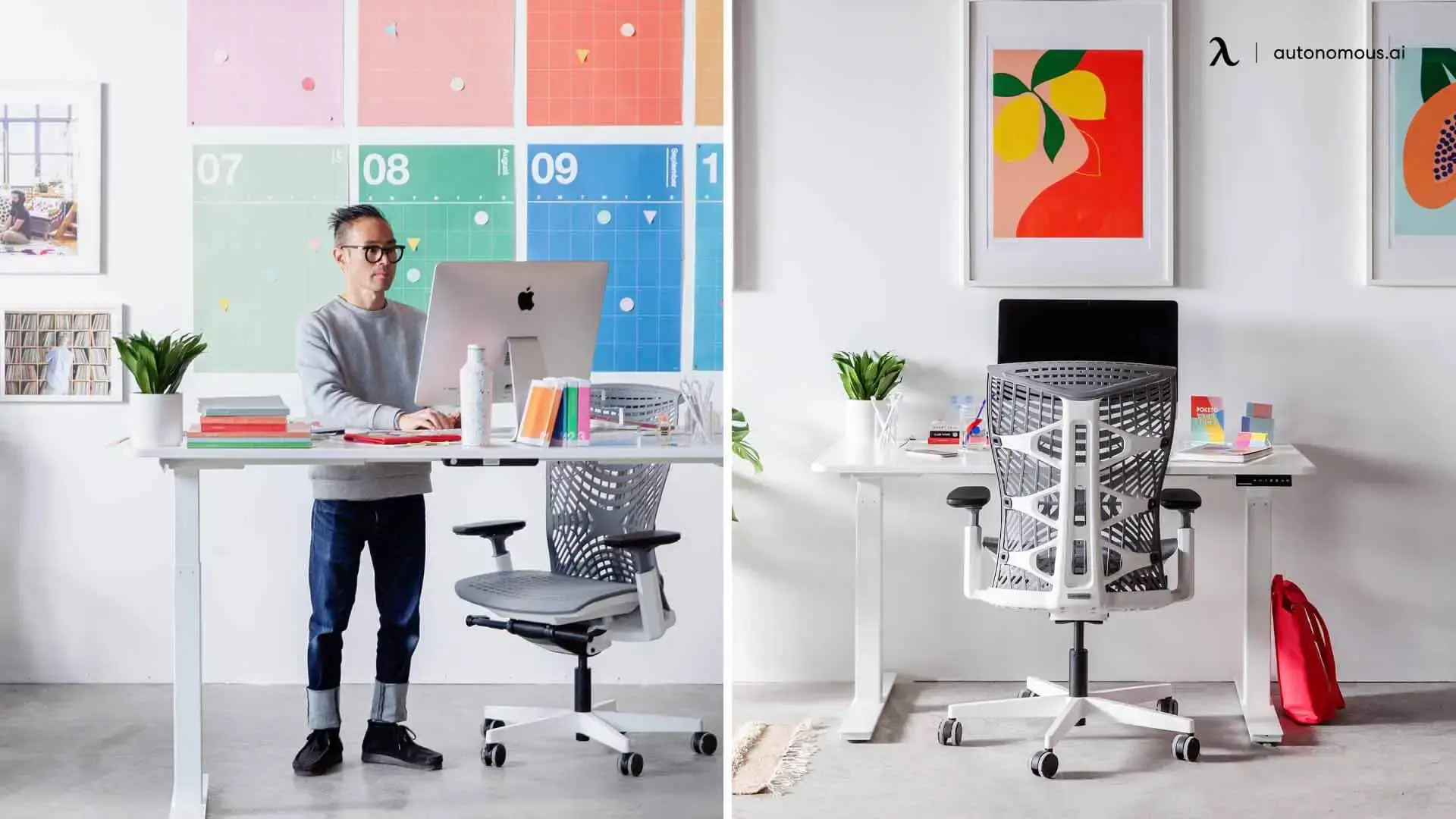
I am 5'2", and I have spent years hunched at desks built for taller people. The spec that matters most in a standing desk for short people is the lowest height with the desktop on, not the frame-only number that spec sheets usually list, which runs about an inch lower than what you actually type at. Standard desks bottom out around 28 to 29 inches.
For a short person that is still too high sitting down, so your shoulders creep up and your feet leave the floor. So I judge these desks by a single number, the minimum height measured at the typing surface. Below are the five desks I would actually put a short person at, how low each one really goes, and how to get any of them down to your height.
One honest note up front: even the lowest desk here is often still a touch high for anyone under 5 feet, so the real fix is a low desk plus a footrest and the right chair, not chasing the lowest number alone.
Quick comparison
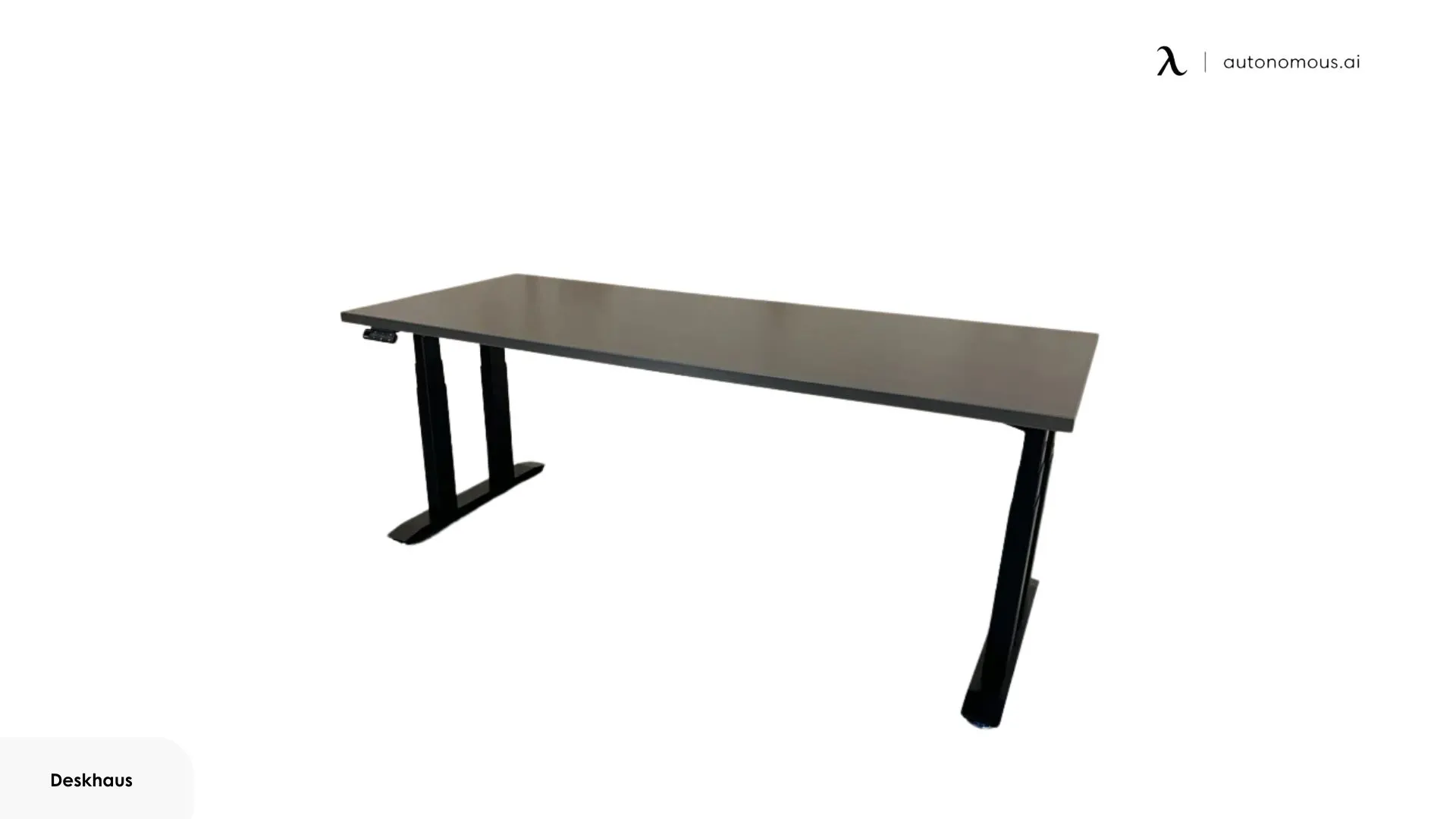
"Fits down to" is the shortest user who can sit comfortably with feet flat and no footrest. Add a keyboard tray to drop your hands about 3 inches below the desk's minimum.
Ergonofis Sway | Desky Dual Mini | Deskhaus Apex Pro | |||
Best for | Value | Design | Shortest users | Small spaces | Stability |
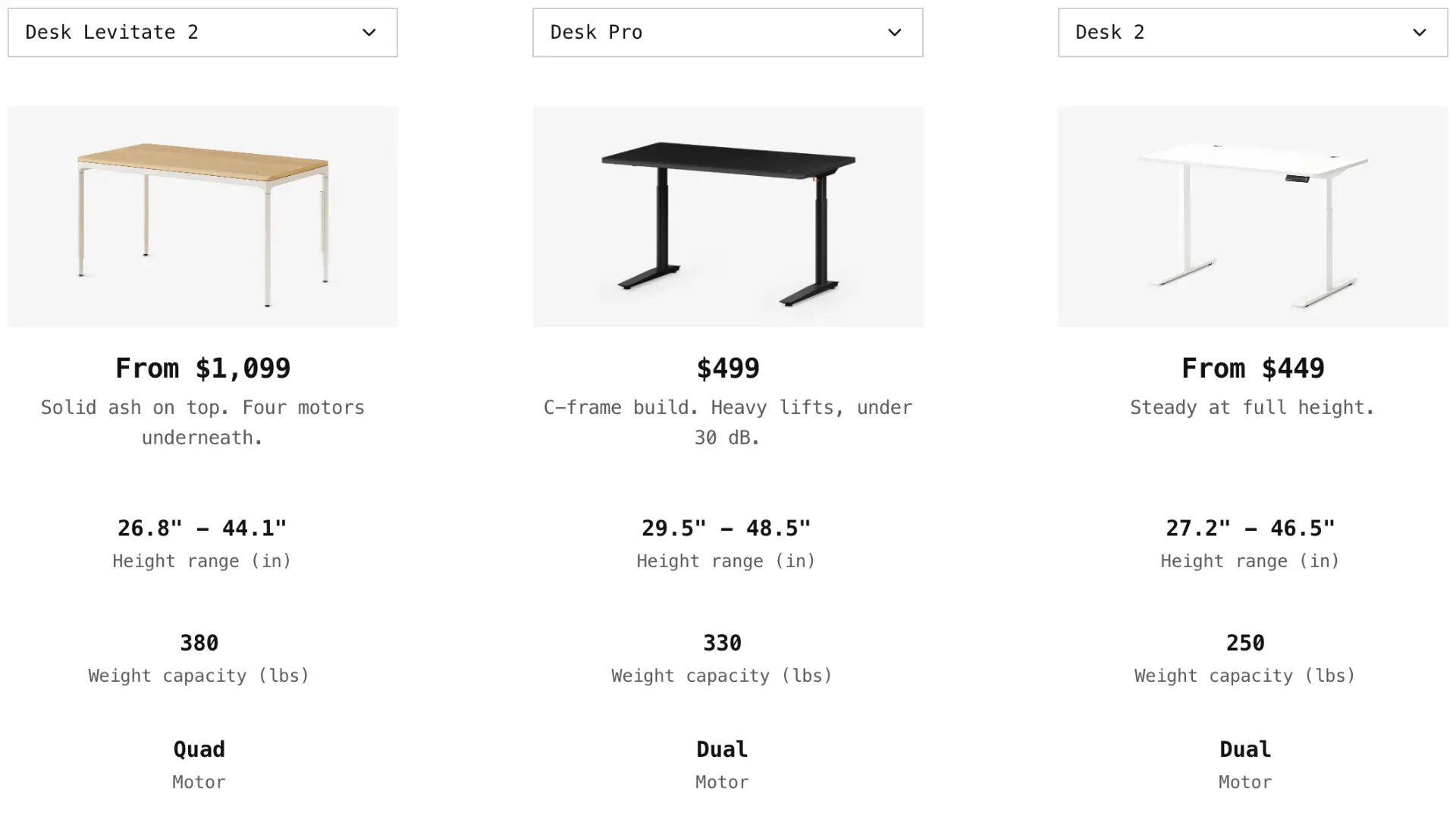
Lowest height | 27.2" | 26.8" | 22" | 23.6" | 22.5" |
Fits down to | 5'7" | 5'6" | 4'11" | 5'1" | 5'0" |
Capacity | 250 lbs | 380 lbs | 360 lbs | 330 lbs | 600 lbs |
Warranty | 10 yr | 10 yr | 10 yr | 10 yr | 20 yr |
Price | $449 | $1,099 | $1,631 | $629 | $925 frame |

Two ways to get a standing desk low enough
There are two honest ways for a short person to reach a comfortable typing height, and only one of them is about the desk alone.
The first route is a desk that drops to 22 to 24 inches on its own, like the three specialist desks further down. The second is a reliable desk that goes reasonably low, paired with a keyboard tray that sits your keyboard about 3 inches below the surface, plus a footrest.
The second route is worth knowing because the desks that drop lowest are not cheap. The specialist desks here run from $629 to over $1,600, and each comes with a trade, whether that is a frame sold on its own, a premium for solid wood, or hit-or-miss support. A dependable desk from the table above plus a standing desk with a keyboard tray gets your hands just as low for far less, which is the route I would point most short people to first.
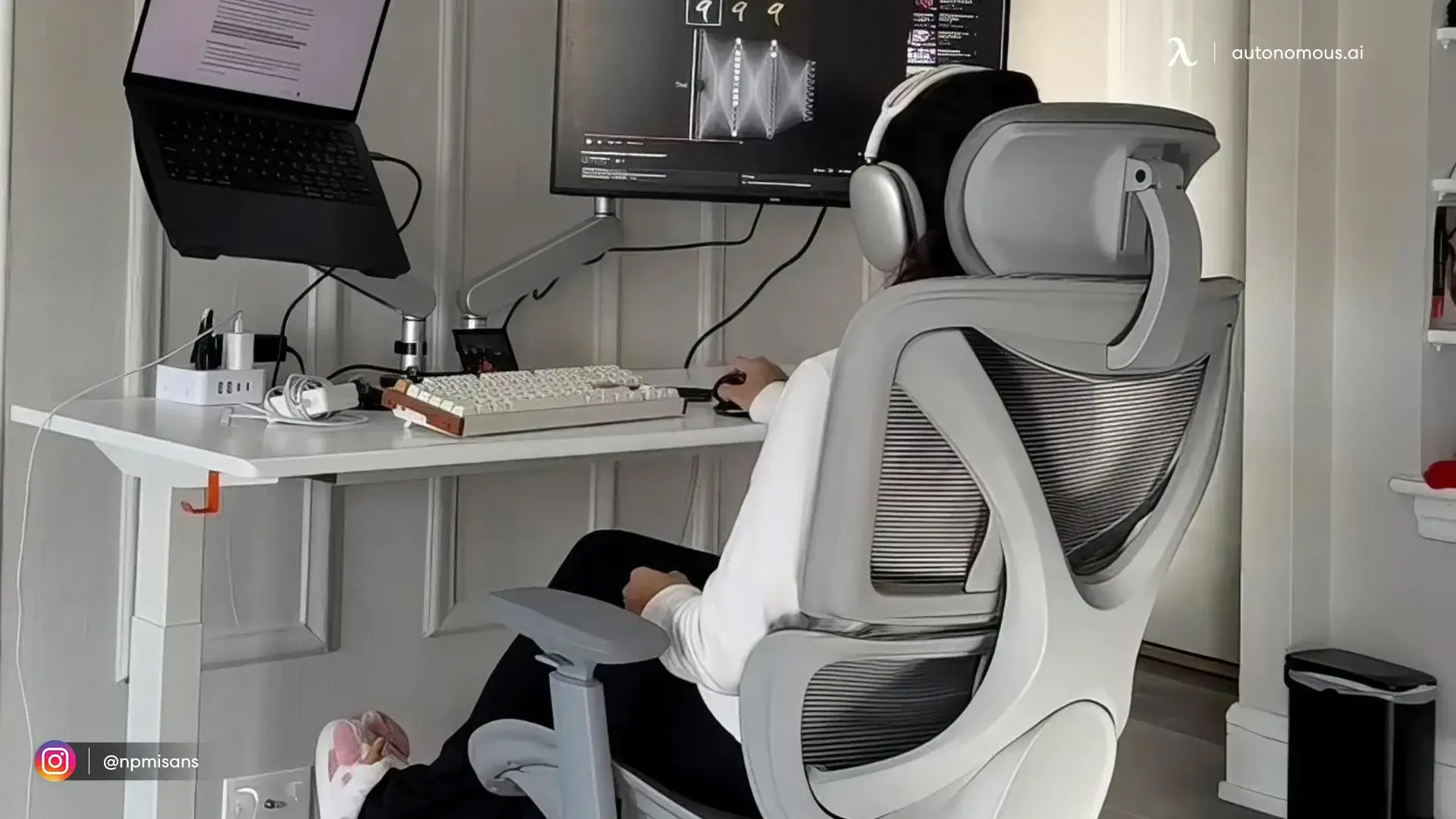
The standing desks I would actually put a short person at
The best standing desk for a short person is the one whose lowest setting, with or without a keyboard tray, matches your seated elbow height, so you can type with your shoulders relaxed and your feet flat. These five range from value desks that pair with a tray to specialist desks that drop low enough on their own.
1. Autonomous Desk 2 - Best value for short people
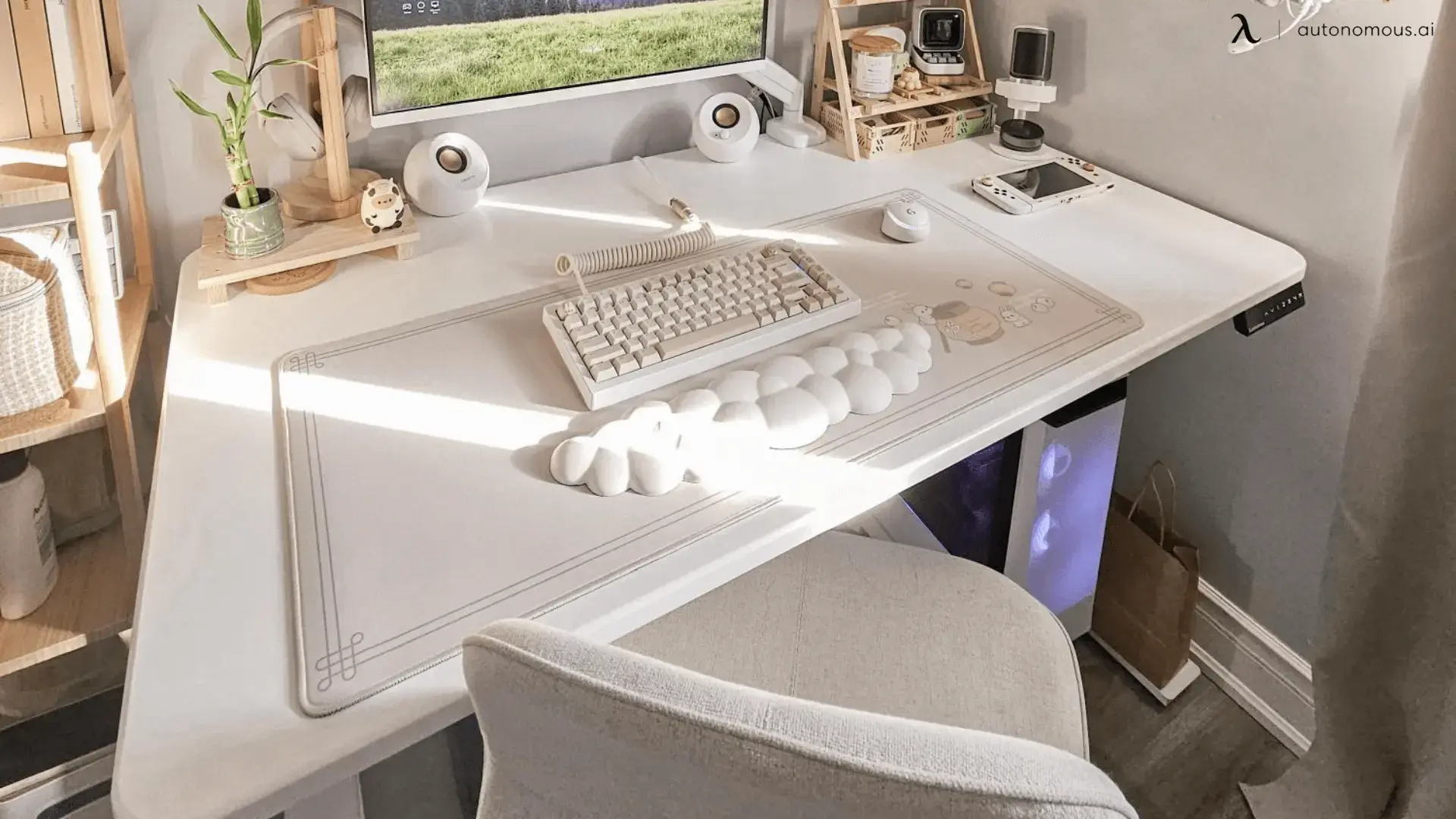
The Autonomous Desk 2 is the desk I recommend when reliability and price matter more than reaching the lowest height on its own, and it is the value route for short people. On its own it drops to 27.2 inches, which fits a short person from about 5'7" up. Add a keyboard tray, though, and your hands sit near 24 inches, a real 5'2" typing height, for a fraction of what the specialist desks cost.
Specs:
- lowest height 27.2", or about 24" with a keyboard tray
- capacity 250 lbs
- dual motor, 1.1"/sec, 4 presets
- anti-collision, FSC-certified wood top
- 10-year frame warranty
At 5'2" I run mine at its lowest with a keyboard tray and a footrest, and it is comfortable all day. The desk itself is genuinely solid, holding two monitors and a laptop without any wobble when I lean on it, and it is the same frame Autonomous has shipped since 2015, so it is a known quantity.
The tops come in bamboo and oak with a rounded front edge that keeps the corner off your wrists.
It is the desk I would try first, since it costs so much less than going low the hard way.
Pros
- Reaches a true short-person height with an inexpensive keyboard tray
- Steady under a full monitor-and-laptop load, with a proven frame
- Ten-year frame warranty and wrist-friendly wood tops
Keep in mind
- On its own it is the highest minimum here, so plan on a keyboard tray or footrest under about 5'6"
2. Autonomous Desk Levitate 2 - Best design and lowest Autonomous
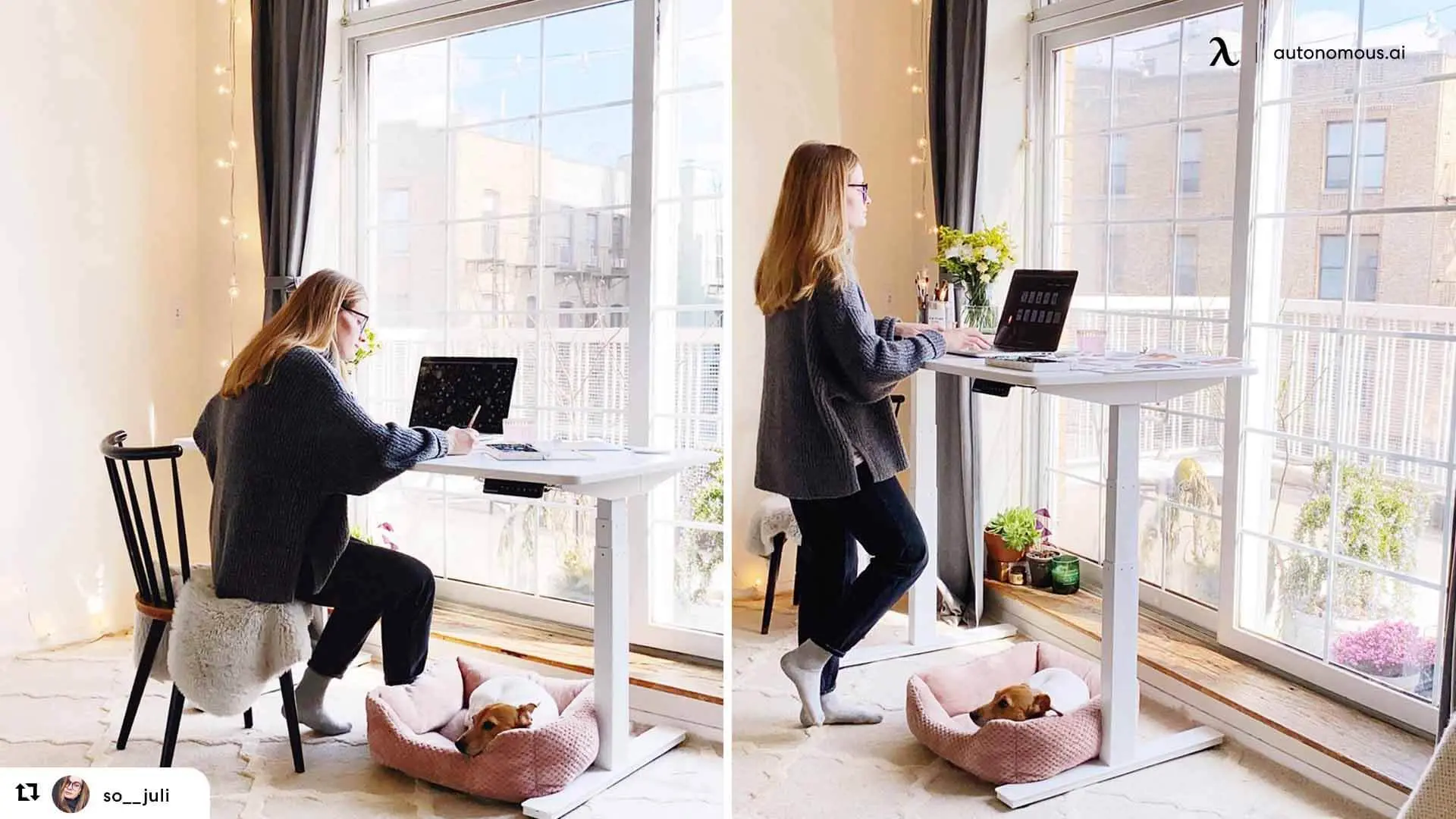
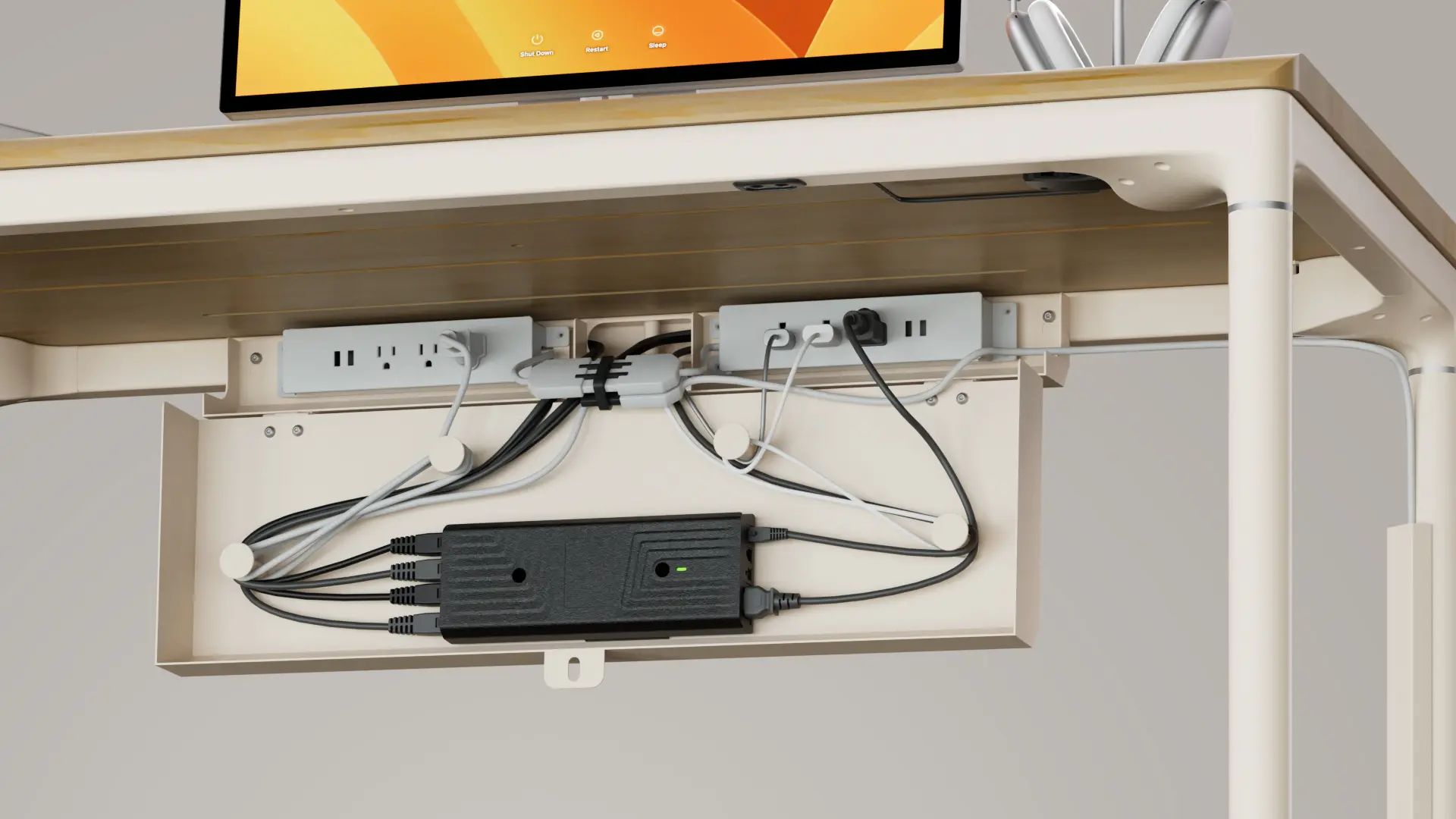
The Desk Levitate 2 is the Autonomous standing desk that drops lowest, to 26.8 inches, and the one I would pick for a short person who wants the desk to look like furniture. Its low 44.1-inch maximum is a non-issue for short users, since a 5-foot person stands at around 37 inches anyway.
3b463479-3290-404c-ad1d-6853ec654e71.jpg)
Specs:
- lowest height 26.8", or about 24" with a keyboard tray
- capacity 380 lbs
- quad motor, 1.25"/sec
- solid ash wood surface
- 10-year frame warranty
Four legs and four motors make it the steadiest Autonomous desk, and the solid ash top is a real step up from laminate, warm and dense under your hands. For a short person it fits from about 5'6" on its own, or lower with a keyboard tray, and the four-leg base means no crossbar in the way of your knees when the desk is down low.
It is the most expensive Autonomous option here, so it earns its place on looks, build, and stability rather than price. If a beautiful standing desk that also goes reasonably low is the goal, this is the one.
Pros
- The lowest-dropping Autonomous desk, at 26.8 inches
- Solid ash top and a rock-steady quad-motor base
- Four legs mean no crossbar near your knees at low height
Keep in mind
- The premium price is the trade for the solid wood and four-motor build
3. Ergonofis Sway - Best for the shortest users
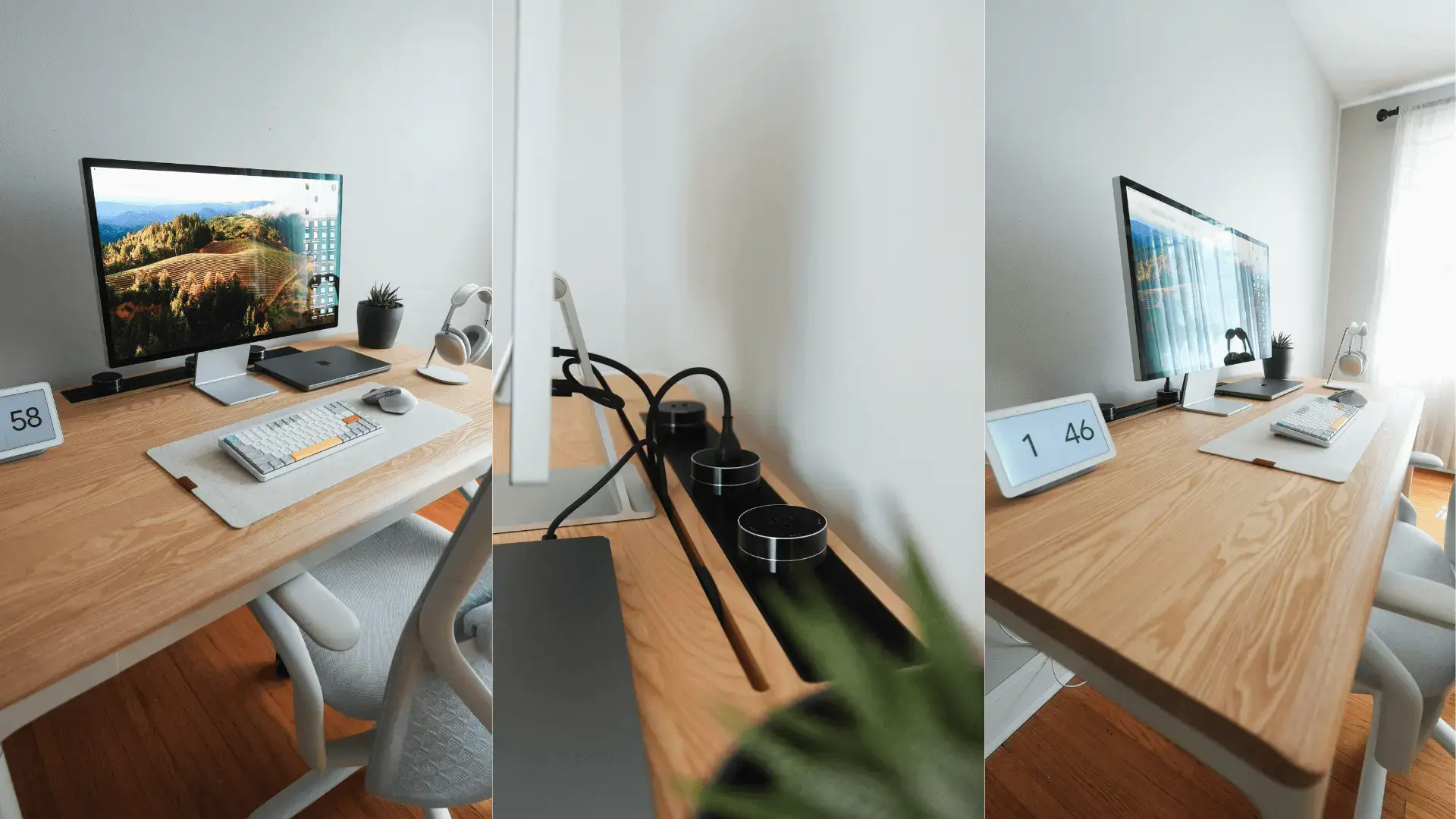
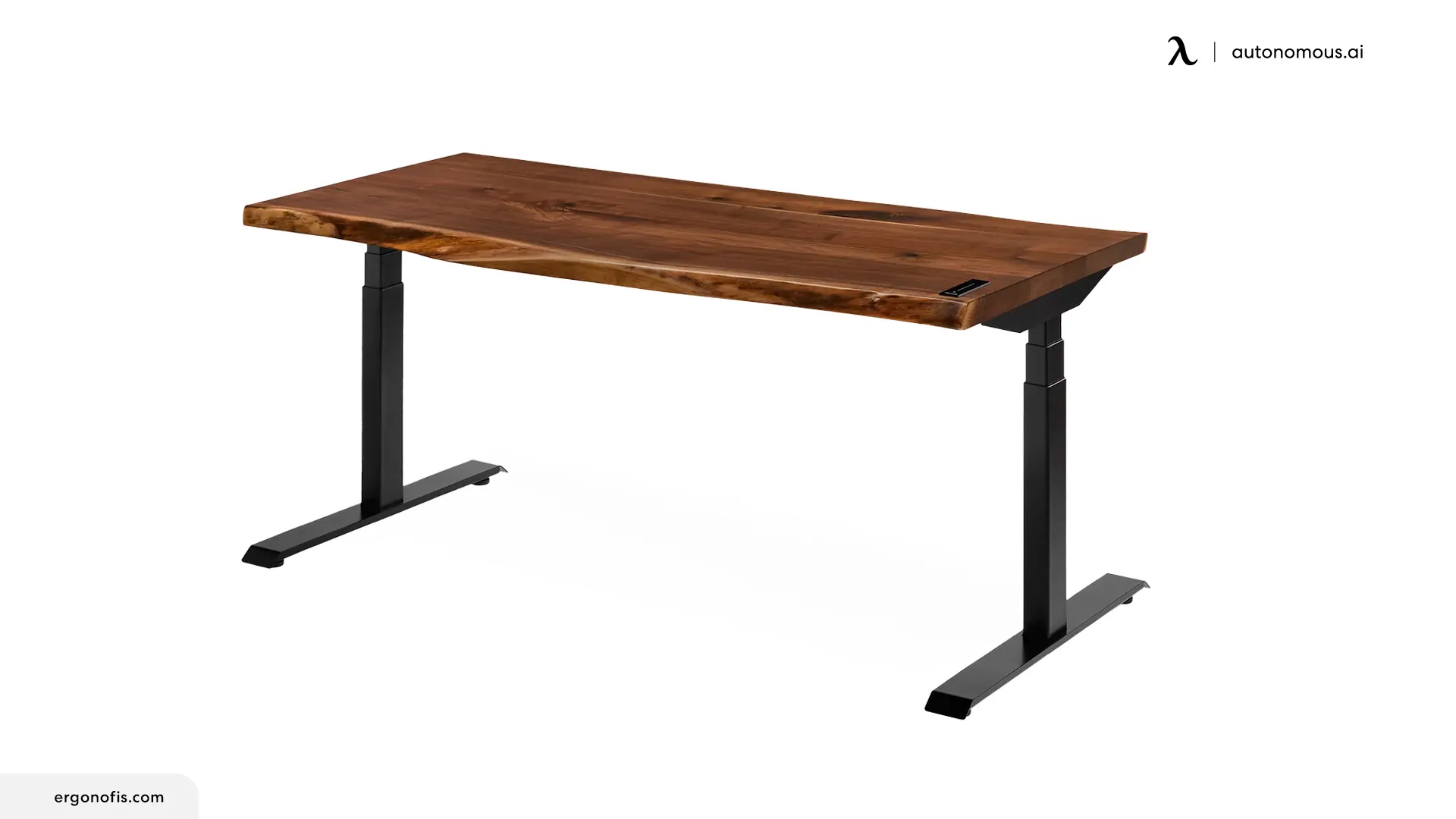
The Ergonofis Sway drops to 22 inches, the lowest here, which makes it the desk I would point a genuinely petite user to, down to around 4'11" with feet flat and no tray. It is a solid-wood, design-forward desk handcrafted in Canada, so you pay for looks as much as for the low frame.
Specs:
- lowest height 22" with a 1.25-inch top
- capacity 360 lbs
- dual motor, swipe-to-adjust controls
- solid wood top, anti-collision, under 40 dB
- 10-year frame warranty, 1-year top
The 22-inch minimum is genuinely rare, and it is what lets a 5-foot person sit at it with a normal chair and no footrest. Owners who are tall report no sway even at full height, so it is steady as well as low.
The catches are the price and the top warranty. It usually runs past $1,600, several times a value desk plus a keyboard tray, and the solid wood top carries only a one-year warranty against a ten-year frame. If the lowest possible height and a furniture-grade top are your priorities and budget is not, it is the best fit here.
Pros
- The lowest minimum on this list at 22 inches
- Handcrafted solid wood top, quiet and stable even at full height
- Fits down to roughly 4'11" with no footrest or tray
Cons
- Premium price, usually past $1,600
- The solid wood top is warranted for only one year
4. Desky Dual Mini - Best for small spaces
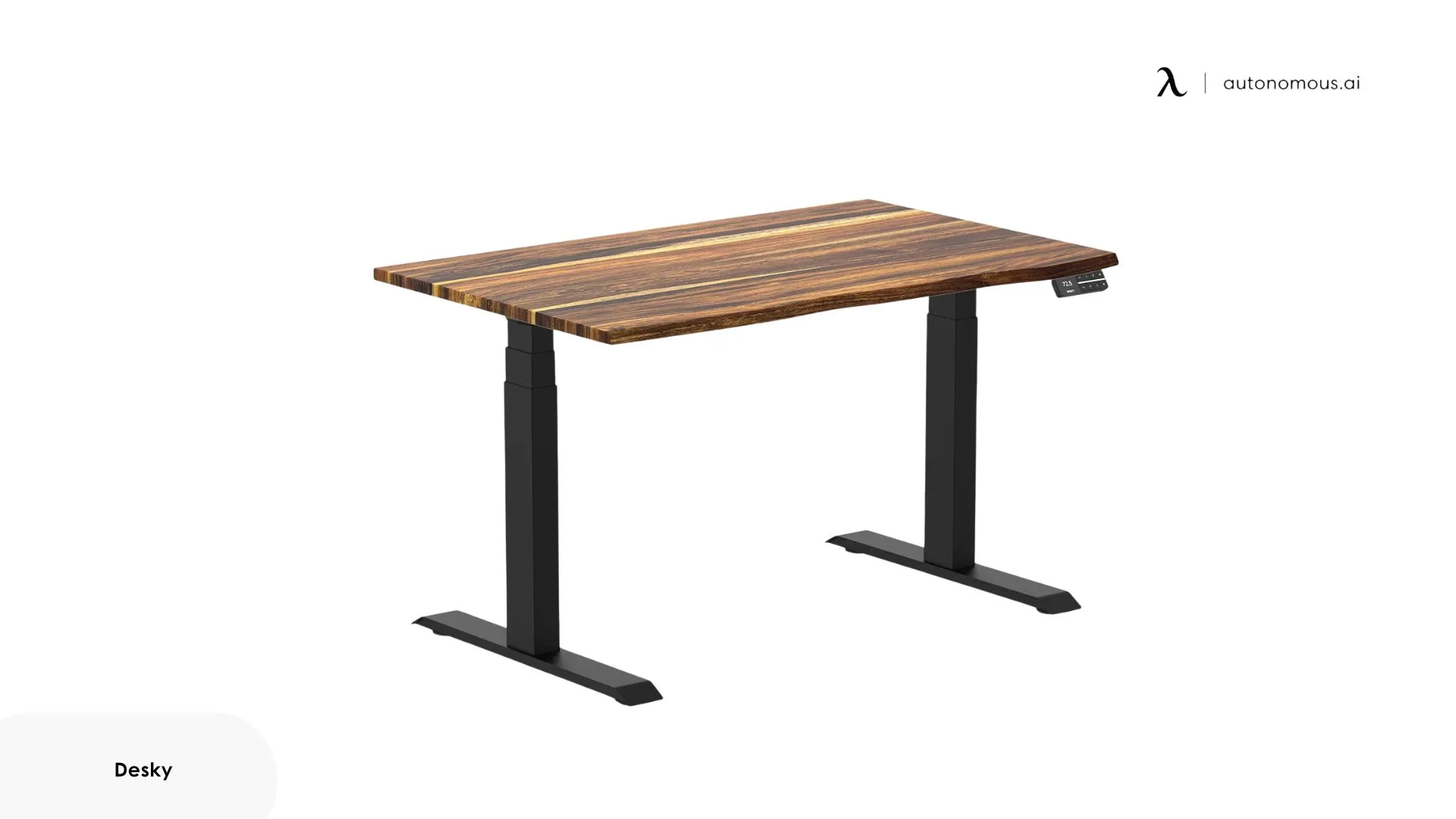
The Desky Dual Mini pairs a low 23.6-inch minimum with a compact 40-by-24-inch top, so it is the desk I would choose for a short person in a small home office or a study nook. It is purpose-built to be small without feeling flimsy.
Specs:
- lowest height 23.6"
- capacity up to 330 lbs
- dual motor, 3-stage legs, 1.6"/sec, 4 presets
- black or white melamine top
- 10-year frame warranty, 5-year top
The three-stage legs let a compact desk still drop to 23.6 inches while staying steady, and the small footprint fits where a full-size desk will not. For a short person that combination is ideal, a low surface that does not swallow a small room, and the warranty is one of the best here.
Two honest cautions. It starts at $619, more than a value desk and tray together, and some buyers report tops arriving damaged with a returns process that can be slow, though the company does send replacements. If a compact low desk is what you need, it is a strong pick, just save your packaging.
Pros
- Low 23.6-inch minimum in a genuinely compact footprint
- Comprehensive warranty on frame, motors, and top
- Three-stage legs stay steady even at the lowest setting
Cons
- Priced above a value desk paired with a keyboard tray
- Some buyers report shipping damage and slow returns
5. Deskhaus Apex Pro - Best stability at low height
The Deskhaus Apex Pro drops to about 22.5 inches and is the sturdiest desk here by a wide margin, so it is the one I would pick for a short person running heavy gear. It is one of the sturdiest four-leg standing desks made, a four-motor frame rated to 600 pounds and backed by a 20-year warranty, made in Michigan.
Specs:
- lowest height about 22.5" with a 1-inch top
- capacity 600 lbs
- four-leg, four-motor frame, 1.5"/sec
- gyroscope anti-collision, 20-year frame warranty
- sold as a frame, you add a top
Standing desks are usually steadiest at their lowest setting, and this one is a tank at any height, which matters if you load it with monitors and a tower. Owners routinely call it the most solid desk they have used.
The catches are cost and effort. The frame alone runs around $925, and you order or supply your own top, so the finished desk lands in four figures and is heavy to move. Shipping can run past the stated lead time, and support gets mixed reviews. It is overkill for a laptop and one screen, but if you want a desk that goes low and never wobbles, nothing else here is close.
Pros
- Drops to about 22.5 inches and stays rock-solid at every height
- 600-pound capacity with a 20-year frame warranty
- American-made with responsive four-motor adjustment
Cons
- Sold as a frame only, so the finished desk costs four figures
- Shipping delays and mixed support reports from some buyers
How to choose a standing desk for short people
The two numbers that decide fit are the desk's lowest typing-surface height and your seated elbow height. If the desk cannot drop to about your seated elbow height on its own, a keyboard tray makes up the last few inches by mounting your keyboard below the surface. Match those two numbers first, then everything else is secondary.
Your height | What to look for |
Under 5'0" | A desk that drops to 22" (Ergonofis, Deskhaus) |
5'0" to 5'3" | 22" to 24" on its own (Desky, Deskhaus), or a value desk plus a tray |
5'3" to 5'6" | 24" to 26" (Levitate 2), or the Desk 2 with a tray |
5'6" to 5'9" | 26" to 28" (Desk 2, Levitate 2) |
Then set it up for your body, because the right desk at the wrong height still leaves you sore:
- Lower the desk to its minimum, then raise your chair until your elbows meet the surface at about 90 degrees.
- If your feet no longer sit flat, add a footrest rather than leaving them to dangle, which cuts off circulation.
- Set the monitor so the top third is at eye level, and keep your most-used items close so you are not reaching.
Your chair matters as much as the desk for a short person, and the right petite office chairs solve the other half of the setup.
FAQs
What is the lowest standing desk height?
The lowest standing desks reach about 22 inches at the typing surface, such as the Ergonofis Sway and the Deskhaus Apex Pro. Most standard desks only drop to 28 to 29 inches, which is too high for a short person to sit at comfortably with feet flat on the floor.
What standing desk height is best for a 5-foot person?
For a 5-foot person, look for a desk that drops to about 22 to 23 inches at the typing surface, so you can sit with feet flat and elbows near 90 degrees. If a desk bottoms out higher, a keyboard tray and a footrest can bridge a few inches of the gap.
Can a keyboard tray make a standing desk low enough for a short person?
Yes, a keyboard tray usually mounts your keyboard about 3 inches below the desktop, which is often enough to make a mid-height desk work for a short person. A desk that bottoms out at 27 inches puts your hands near 24 inches with a tray, a comfortable height for someone around 5'2".
Do standing desks go low enough for short people?
Most standing desks do not go low enough for short people on their own, since the majority start at 28 to 29 inches. A smaller group drops to 22 to 24 inches, and any reasonably low desk can reach short-person height once you add a keyboard tray below the surface.
Are standing desks good for short people?
Standing desks are good for short people as long as the surface, or a keyboard tray under it, drops to your seated elbow height, which a fixed-height desk cannot do. Being able to lower the desk for sitting and raise it for standing is exactly what spares a short person the shoulder and neck strain of a too-tall desk.
Is a desk converter a good option for a short person?
A desk converter is usually a poor option for a short person, because it raises your keyboard and monitor above your existing desk, making the setup taller, not lower. Since the whole problem for short users is desks sitting too high, a low desk or a keyboard tray is almost always the better fix.
Bottom line
If you are short and sore at your desk, the problem is not your posture, it is a desk built for someone taller. Check one number first, the lowest height at the typing surface, then match it to your seated elbow height.
From there you have two honest routes. The Ergonofis Sway, Desky Dual Mini, and Deskhaus Apex Pro drop low enough on their own, but they start at $629 and climb past $1,600. The best standing desk for short people is often the cheaper path most people should try first: a reliable Autonomous Desk 2 or Levitate 2 with a keyboard tray and a footrest, which reaches the same height for less. Add the right ergonomic chair, and the mid-afternoon ache usually goes with it.
References
- Occupational Safety and Health Administration (OSHA). Computer Workstations eTool: Good Working Positions. https://www.osha.gov/etools/computer-workstations/positions
- Cornell University Ergonomics Web. Office Ergonomics Guidelines. https://ergo.human.cornell.edu/
- Centers for Disease Control and Prevention. Physical Activity and Reducing Sedentary Time. https://www.cdc.gov/physical-activity/