


Corporate Office Design Ideas That Supports How Teams Work

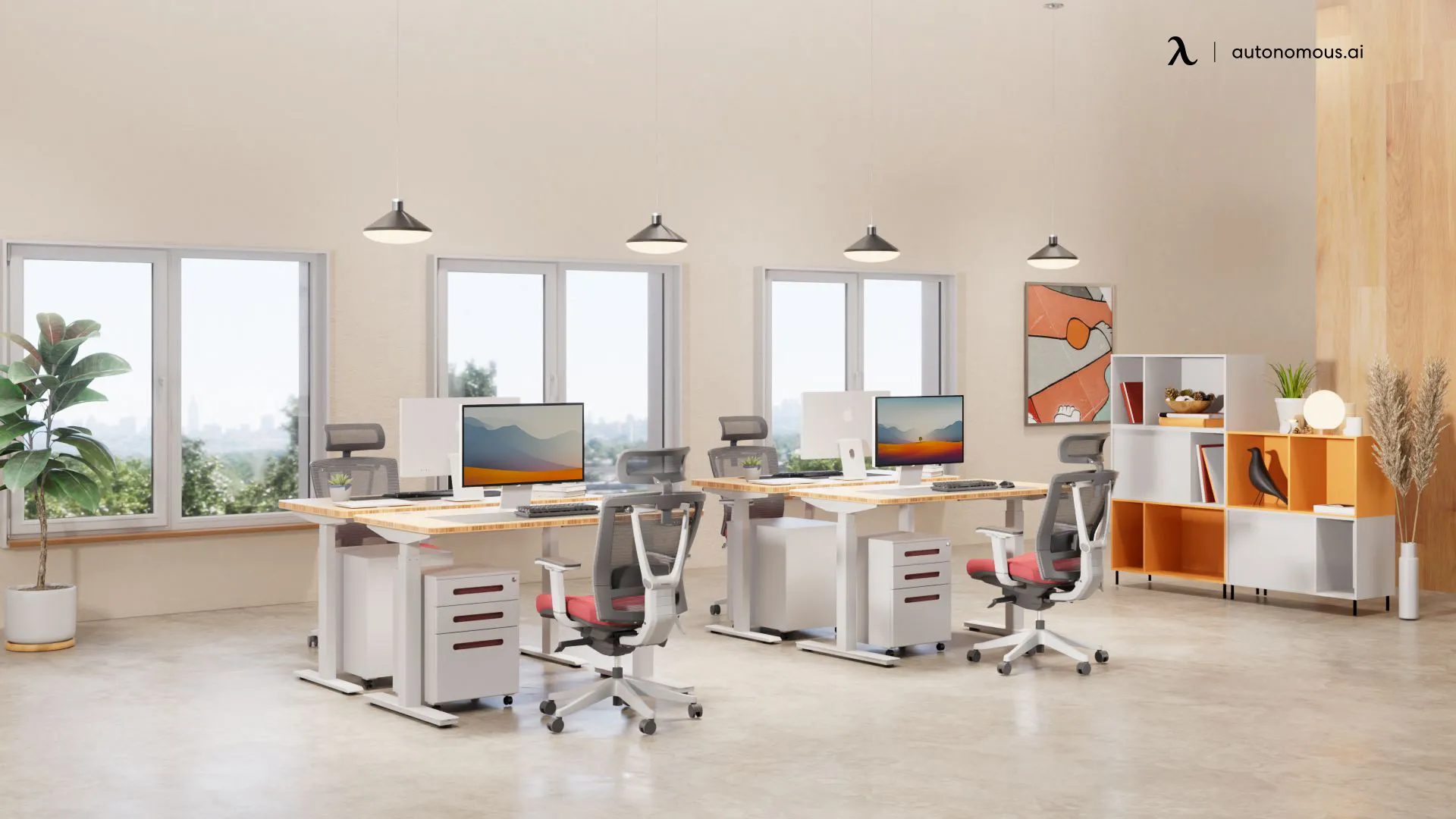
Table of Contents
Corporate office design plays a critical role in how people work, collaborate, and feel throughout the day. A well-designed office supports productivity, encourages interaction, and reflects a company’s culture without getting in the way of daily tasks.
As workstyles continue to evolve, corporate office design must balance flexibility, comfort, and functionality to meet real business needs. This guide explores practical ideas and core principles that help create workspaces where teams can perform better, stay engaged, and work more comfortably over time.
Why Corporate Office Design Matters
Corporate office design directly influences how people work, interact, and perform throughout the day. For business leaders, it is not simply about creating a visually appealing space, but about shaping an environment that supports productivity, collaboration, and long-term growth.
- The workspace supports consistency and focus
A well-considered company office design supports consistency and focus throughout the workday. When the environment aligns with how work is expected to happen, employees are less likely to experience friction caused by discomfort, distractions, or poorly planned spaces. Over time, these factors influence overall efficiency and the ability of teams to maintain steady performance.
- Employee perception is shaped by the work environment
Corporate office design contributes to how employees perceive their workplace. Elements such as space, comfort, and visual clarity shape day-to-day experience and can influence satisfaction and long-term retention. A modern corporate office signals that the organization is intentional about how people work, rather than treating the office as an afterthought
- Office design communicates values externally
Beyond internal experience, modern office design reflects how a company presents itself. Visitors, partners, and new hires often form impressions based on the workspace before any conversation takes place. How to decorate a corporate office, how space is organized, and how work areas are defined all communicate priorities and values in a direct, visible way.
- Thoughtful design supports long-term stability
From a strategic standpoint, modern corporate office design represents a long-term commitment rather than a short-term upgrade. Offices that are planned with care, drawing on sustainable office design principles, are better positioned to support growth, adapt to changing work models, and remain functional over time.
Understanding why corporate office design matters sets the foundation for action. The next step is translating these principles into practical corporate office design ideas that can be applied to real workspaces, turning strategy into environments that truly support how teams work.
Key Elements of Corporate Office Design
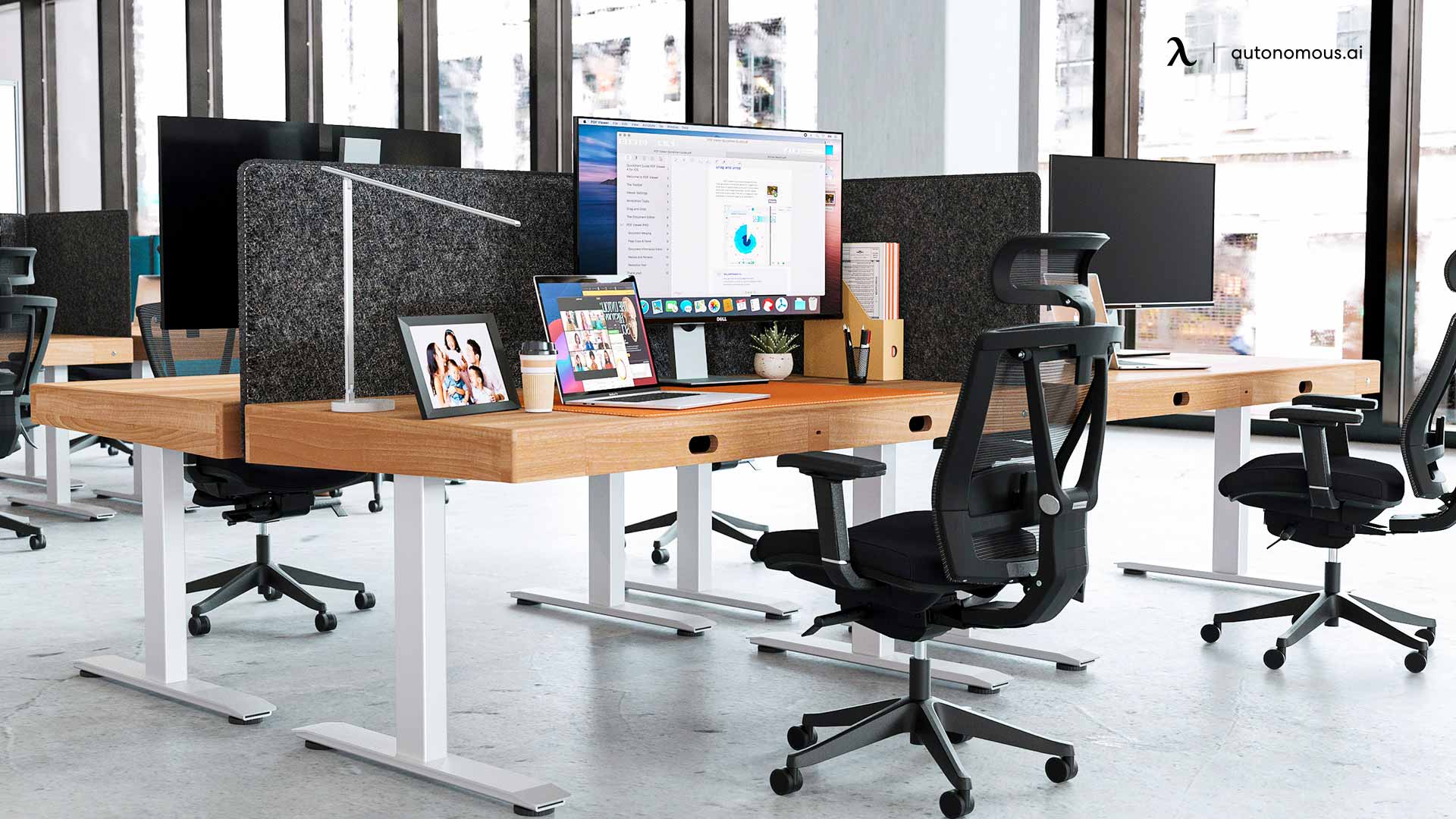
Effective corporate office design is built on a set of core elements that shape how the workspace functions day to day. These elements are not decorative on their own, but structural in nature. When they are planned well, the office feels coherent, usable, and easier to manage over time.
1. Layout and Spatial Structure
Layout determines how people move through the office and how different activities relate to one another. A clear spatial structure helps separate work areas without relying on constant barriers or signage. Circulation paths, shared spaces, and work zones should feel intentional, making it easy for employees and visitors to understand how the office is organized.
Rather than maximizing density, effective layout focuses on proportion and flow. This becomes especially important in small executive office design, where limited space still needs to support privacy, authority, and daily functionality. Spaces that are sized appropriately for their use tend to feel calmer and more functional, even when the office is active.
2. Interior Design and Material Choices
Materials and finishes influence how the office feels on a daily basis. Corporate office interior design benefits from consistency, using a limited palette of materials and paint colors for office spaces to create visual continuity across different areas. This helps prevent the space from feeling fragmented as teams grow or change.
Durability is equally important. Surfaces, flooring, and furnishings that hold up over time reduce maintenance demands and preserve the office’s overall quality. Thoughtful material choices support long-term use without drawing attention away from work.
3. Furniture and Workspace Setup
Furniture plays a central role in how comfortable and usable the office feels. A practical corporate office desk setup supports posture, movement, and access to tools without dominating the space. Choices such as minimalist desks or a small desk with drawers help maintain functionality while keeping the workspace visually balanced and appropriately scaled for the tasks being performed.
Consistency in furniture design also helps maintain visual order. When workstations and shared furniture follow a common logic, the office feels more structured and easier to navigate.
4. Lighting and Visual Comfort
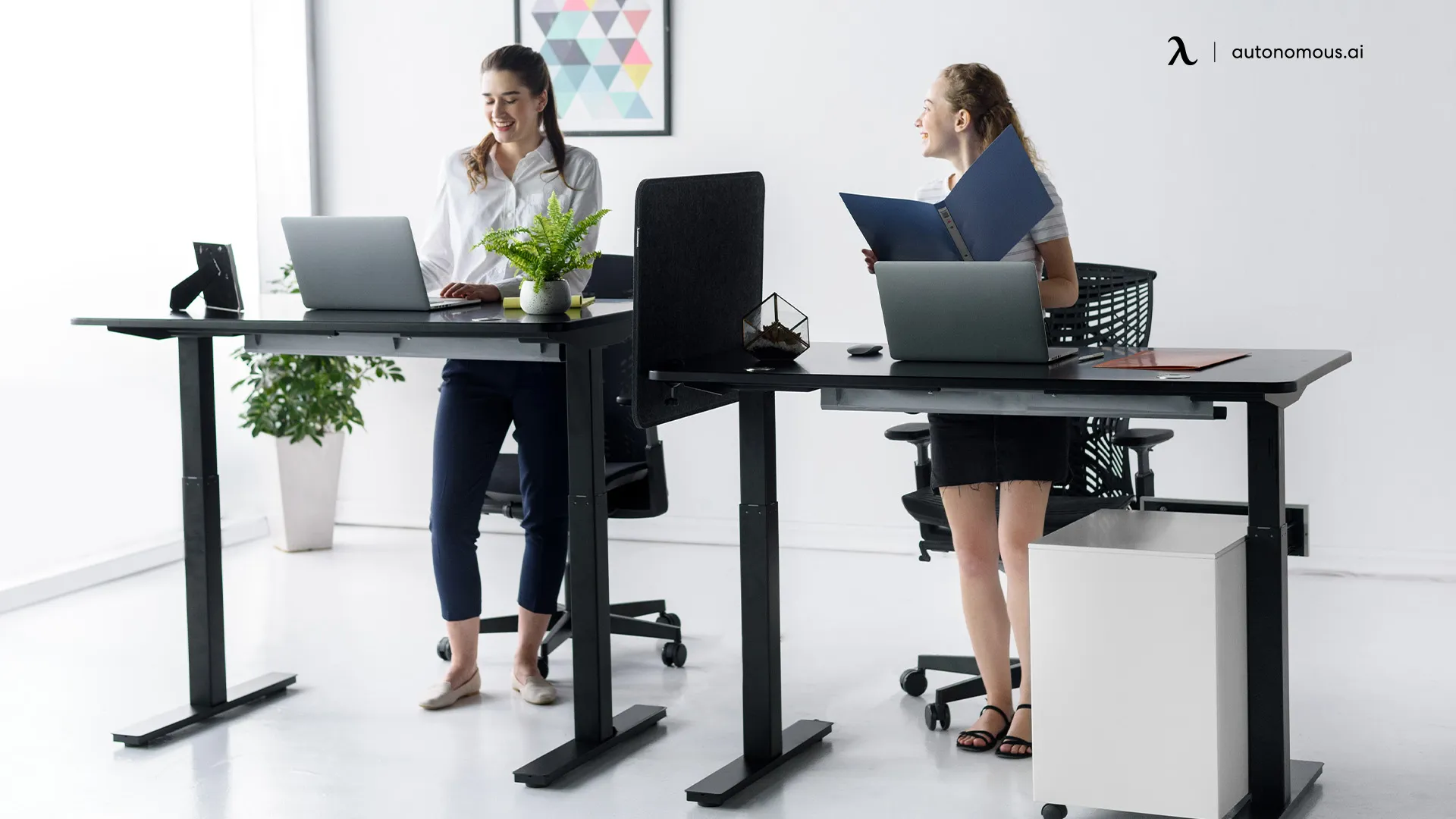
Lighting affects visibility, focus, and how spaces are perceived throughout the day. Well-designed offices balance natural and artificial light so work areas remain usable under different conditions. Even, well-distributed lighting helps prevent eye strain and keeps the environment visually stable.
Lighting decisions should support the function of each area without creating sharp contrasts or unnecessary emphasis. When lighting is planned carefully, it fades into the background and supports work without distraction.
5. Technology Integration
Technology is most effective when it is seamlessly integrated into the environment. Screens, power access, and connectivity should be available where needed without cluttering the workspace. Clean cable management and discreet infrastructure help keep the office visually clear and easier to maintain.
Rather than adding technology as an afterthought, integrating it into the layout and furniture from the start improves usability and reduces friction in daily operations.
6. Acoustics and Environmental Control
Sound management contributes to overall comfort and usability. While acoustic solutions may not be immediately visible, they play a role in how the office feels during periods of activity. Managing noise through materials, surfaces, and spatial planning helps maintain balance without isolating teams.
Environmental control works best when it supports different activities quietly and consistently, allowing the office to remain functional under varying conditions.
8 Corporate Office Design Ideas
Turning strategy into space requires practical decisions that reflect how people actually work. The following corporate office design ideas focus on shaping the overall work environment rather than individual features.
Each idea supports productivity, culture, and employee wellbeing in subtle ways, helping organizations create offices that function smoothly while remaining adaptable over time.
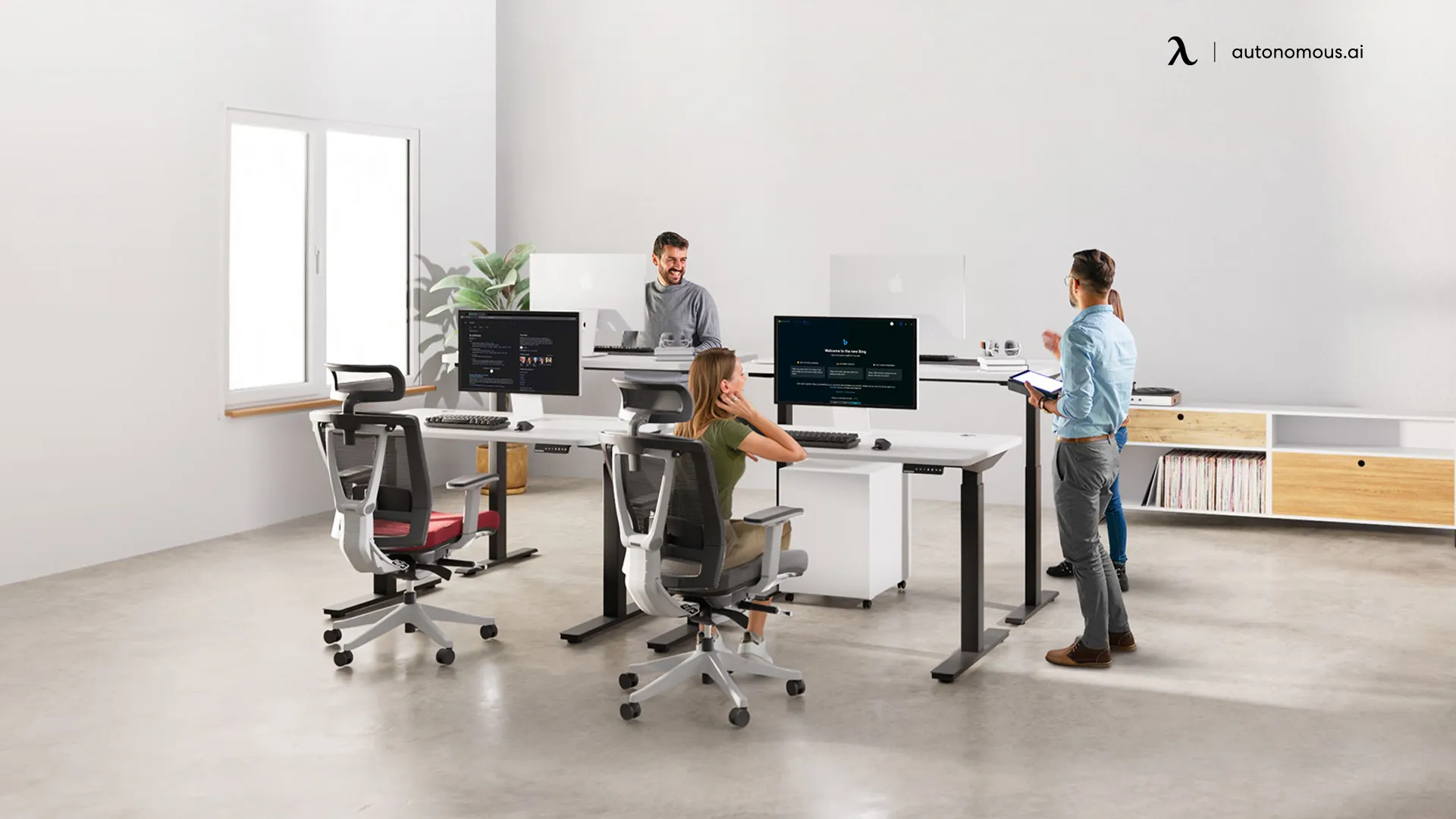
1. Open Collaboration Areas
Open collaboration areas are shared spaces designed specifically for informal teamwork and quick discussions. In practice, these areas are often placed near team zones or central walkways, making them easy to access without interrupting focused work areas.
Rather than being enclosed or hidden, the layout encourages people to gather naturally for short conversations, brainstorming sessions, or spontaneous check-ins, without the need to book a meeting room. Open sightlines, exposed materials, and simple structural elements, features typical of modern industrial office design, help keep these spaces visually accessible and connected to the surrounding work areas.
Within a broader corporate office layout, open collaboration areas work best when clearly defined but not isolated. They create a natural place for teams to connect while keeping focused work zones undisturbed. As part of a company office design, these areas support collaboration by making it visible, accessible, and easy to engage in throughout the day.
2. Private Focus Zones
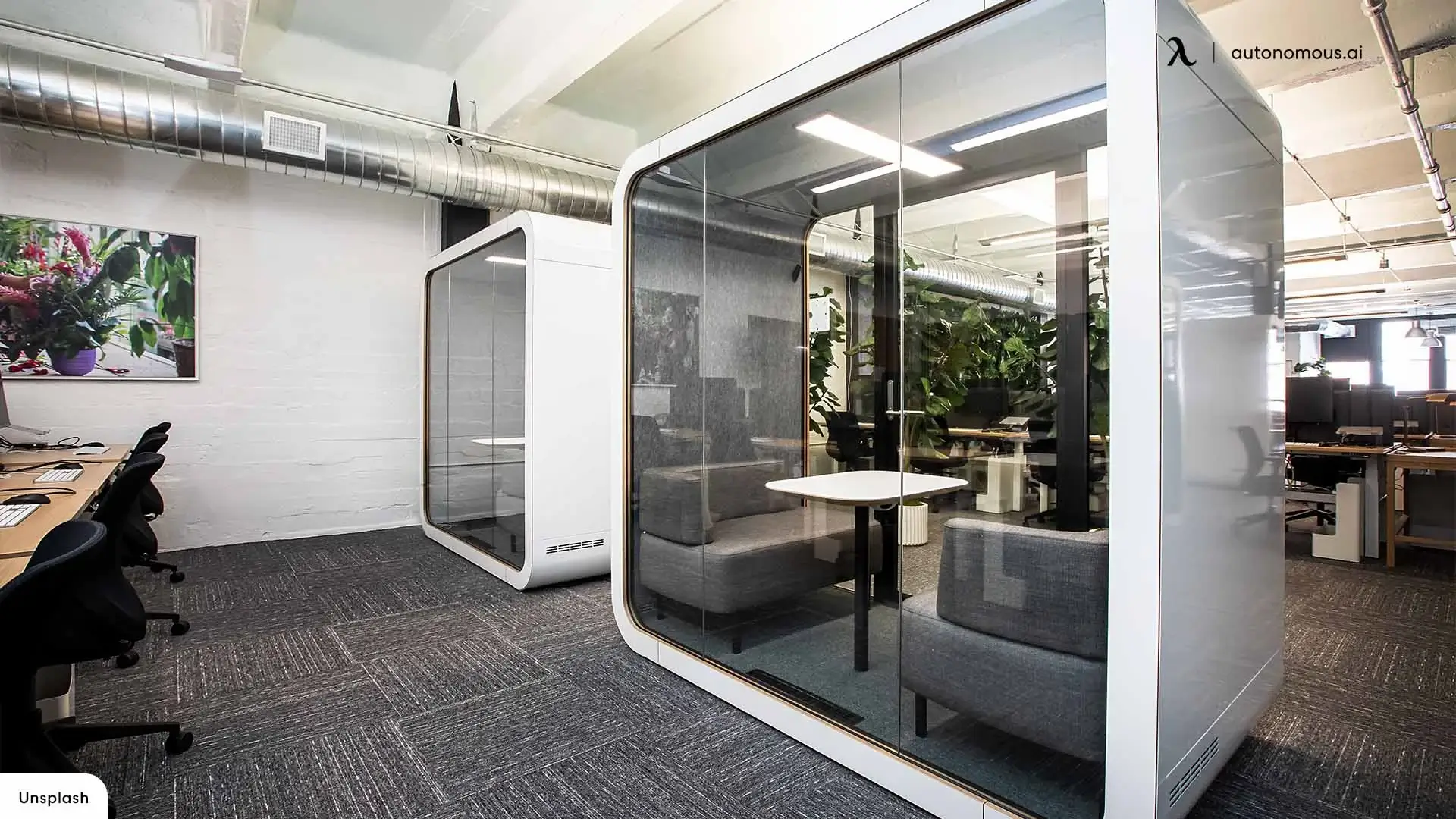
Private focus zones are designated areas within a corporate office that support uninterrupted, individual work. Unlike open collaboration spaces, these zones are intentionally placed away from high-traffic areas, offering a quieter setting for tasks that require concentration, analysis, or sustained attention.
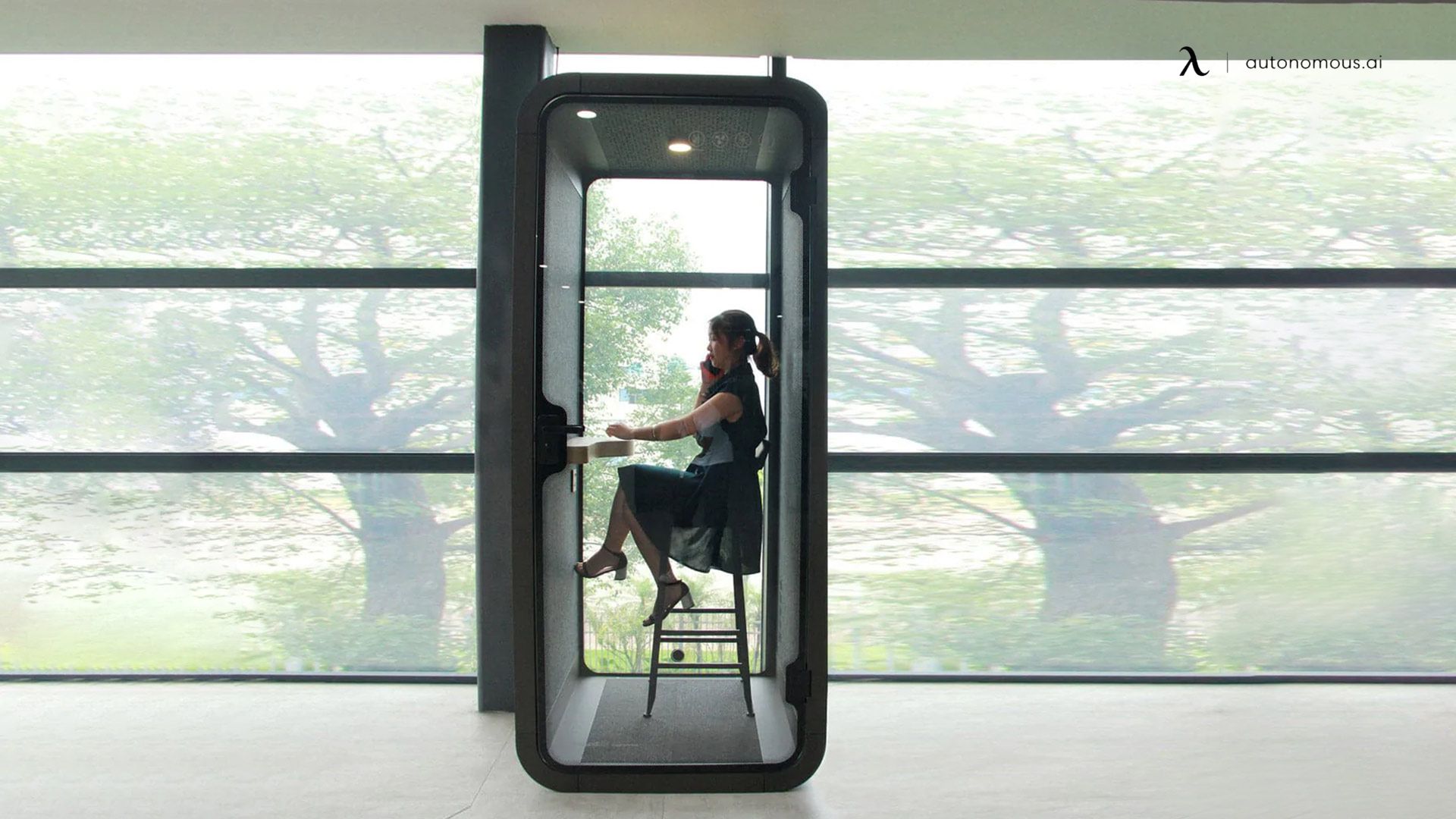
These zones often take the form of small enclosed rooms, semi-enclosed soundproof office pods, or dedicated quiet sections within the floor plan. The design typically emphasizes acoustic separation, neutral finishes, and minimal visual distractions, allowing employees to settle into focused work without constant interruptions.
As part of a well-balanced corporate office interior design, private focus zones provide structure to the overall workspace. Their presence adds balance to corporate office interior design, ensuring that quiet work has a dedicated place without isolating it from the rest of the workplace. This clarity helps the office function as a cohesive environment rather than a single, uniform space.
3. Flexible Workstations
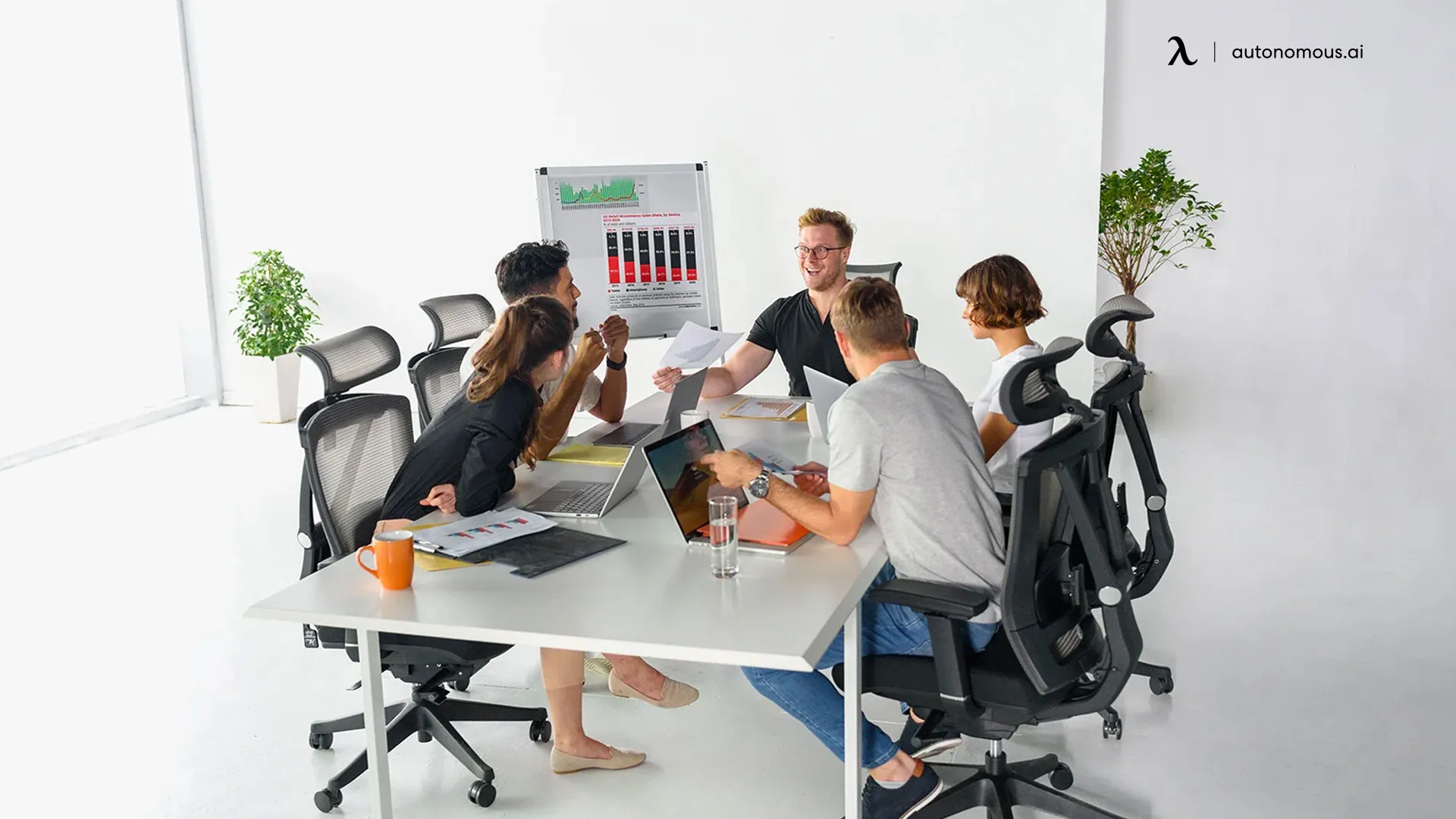
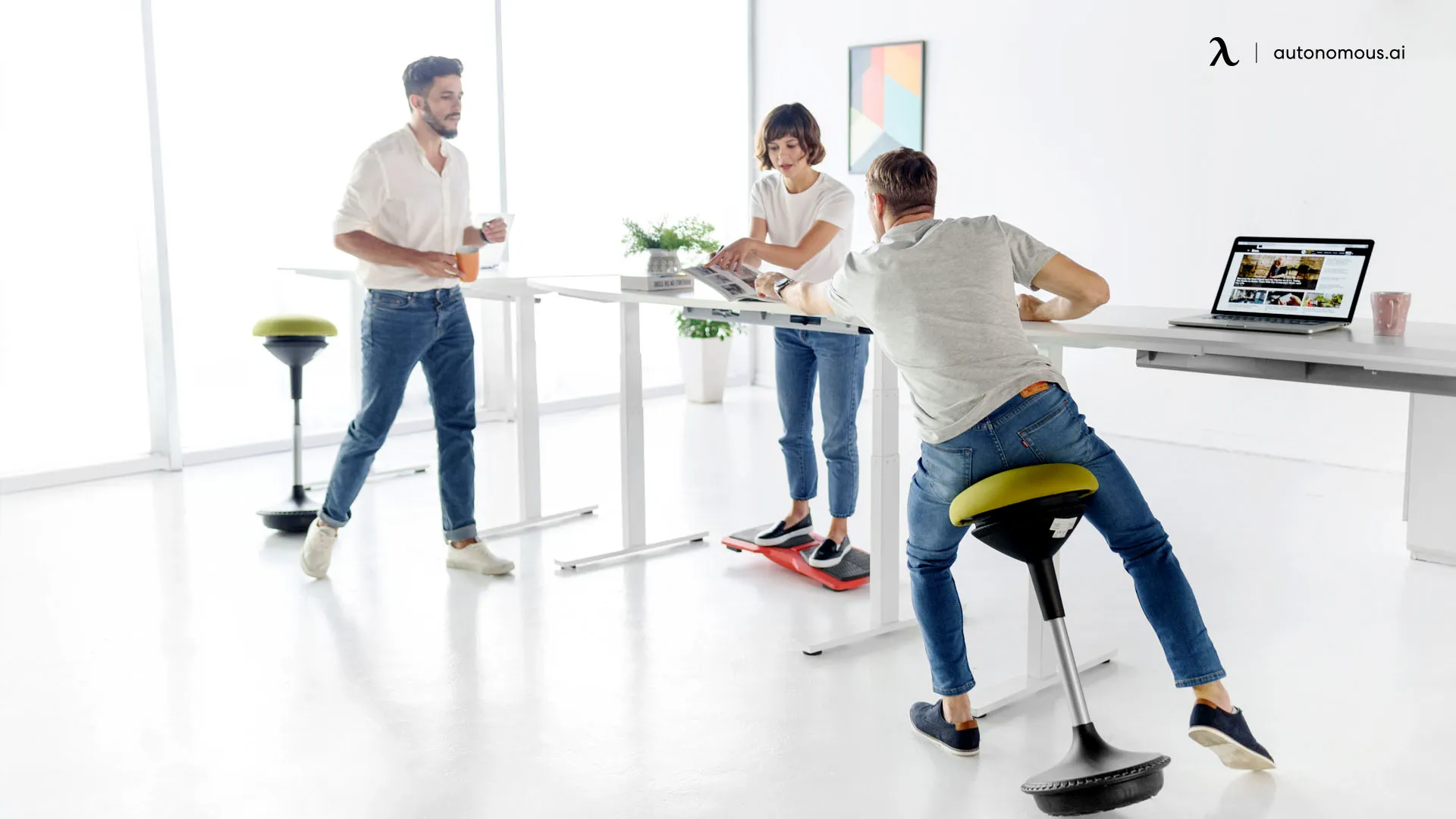
Not every task requires the same setup, and flexible work environments acknowledge that reality. Instead of locking the corporate office into fixed layouts, this approach allows spaces to shift as work changes throughout the day or week.
A space may support individual work in the morning, small group discussions in the afternoon, and project reviews later in the day. This type of flexibility is especially relevant in small business office design, where limited space often needs to support multiple activities without relying on permanent partitions or fixed arrangements.
From a planning perspective, flexible work environments reduce dependence on assigned seating and rigid room usage. Within a corporate office layout, they make it easier to respond to new team structures, evolving workflows, or growth without disrupting the entire office. As part of company office design, flexibility helps the workspace stay relevant and usable over time, rather than becoming outdated as needs change.
4. Wellness-Focused Spaces
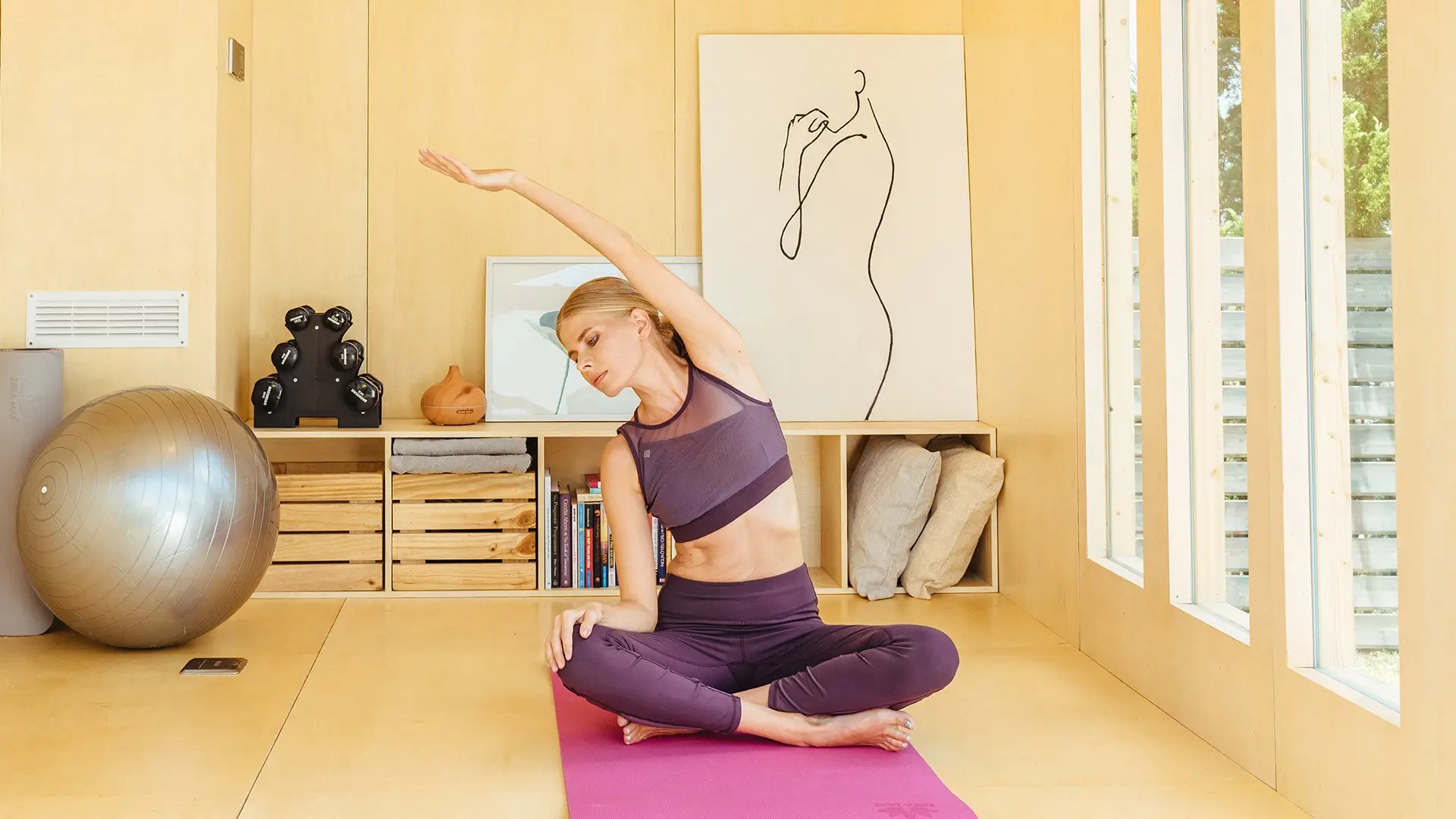
Workdays are rarely linear. Energy levels rise and fall, and employees often need short moments to reset before returning to their tasks. Wellness-focused spaces are designed to support these pauses, giving people room to step away without leaving the office entirely.
These spaces are typically quieter and more relaxed than the surrounding work areas. Instead of screens and workstations, they may include comfortable office chair, softer lighting, creating a calmer atmosphere that encourages brief rest, stretching, or reflection. The intention is not to remove people from work, but to help them return to it more refreshed.
Within the broader office environment, wellness-focused spaces introduce a healthier rhythm to the day. Their presence acknowledges that sustained performance depends on balance, making them a natural part of a modern corporate office rather than an added perk.
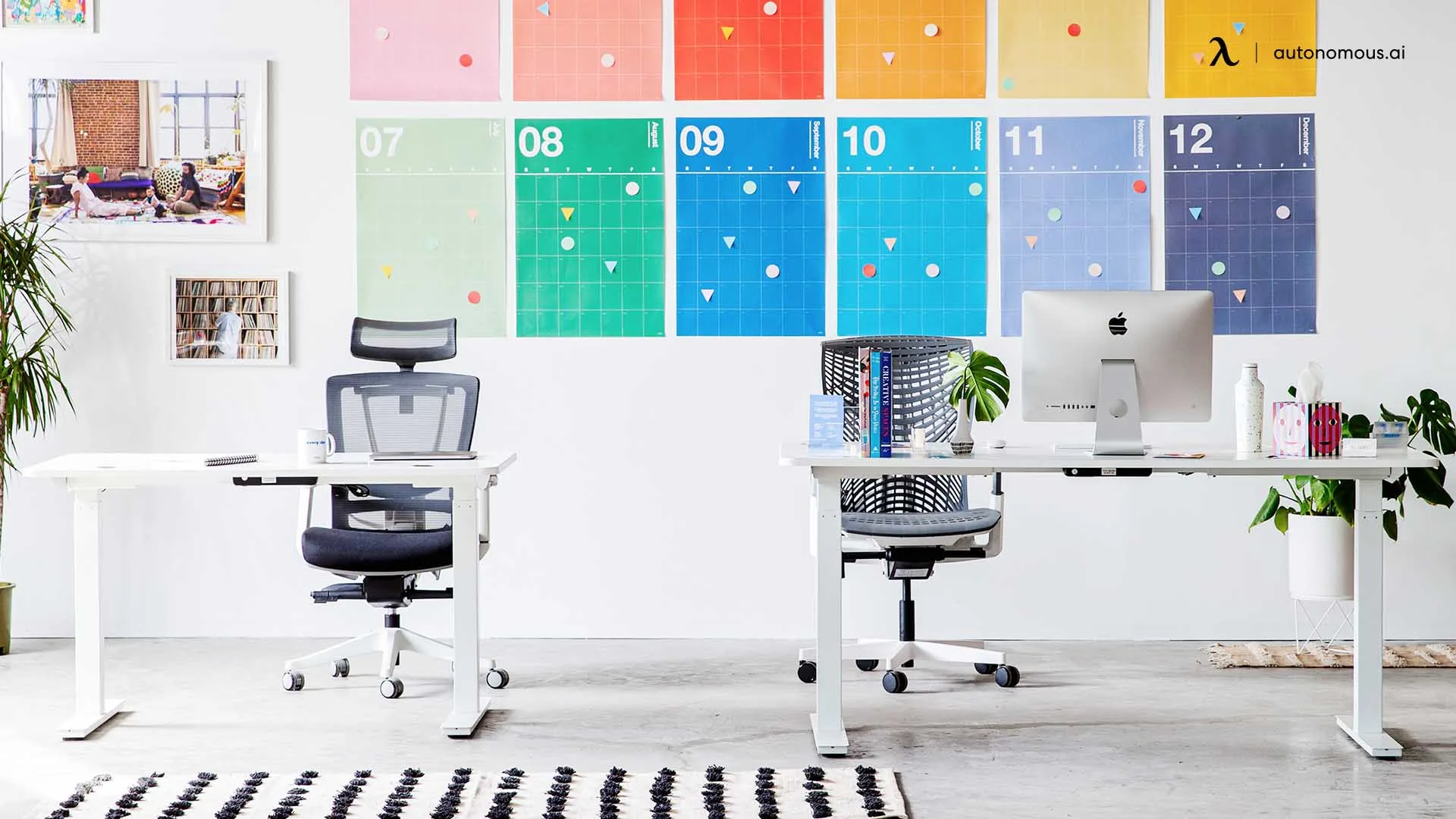
5. Branded Spaces
An office is often one of the most visible expressions of a company’s identity. Branded and culture-driven spaces translate values, tone, and purpose into the physical environment, making them part of everyday experience rather than abstract ideas.
Rather than relying on logos or messaging alone, this approach uses consistent materials, colors, and design details to reflect how the company works and what it values. Visual elements are typically subtle and integrated, such as color accents, materials, or graphics that align with the company’s character without overwhelming the space.
When these elements are applied with restraint and proportion, as in modern classic office design, the space communicates identity without feeling dated or overly decorative. It helps employees and visitors experience the company’s identity through space itself, reinforcing alignment and intention without requiring explanation.
6. Biophilic Transitions Between Work Areas
Instead of dividing the office into clearly labeled zones, biophilic transitions use natural changes in the environment to guide how spaces are used. This approach draws from biophilic office design, where light, materials, and spatial rhythm help define different work areas without relying on walls or signage.
In practice, focused work areas might sit closer to greenery, textured surfaces, or softer daylight, creating a quieter and more contained atmosphere. Collaborative areas feel lighter and more open, with higher ceilings, broader sightlines, or stronger natural light. Pathways between these areas often widen or narrow gradually, helping people sense when they are moving from one type of space to another.
By using natural transitions instead of sharp boundaries, the office becomes easier to understand at a glance. People adjust their behavior instinctively based on where they are, allowing different work activities to coexist without relying on rules or visual clutter.
7. Long-Term Adaptability Without Reconfiguration
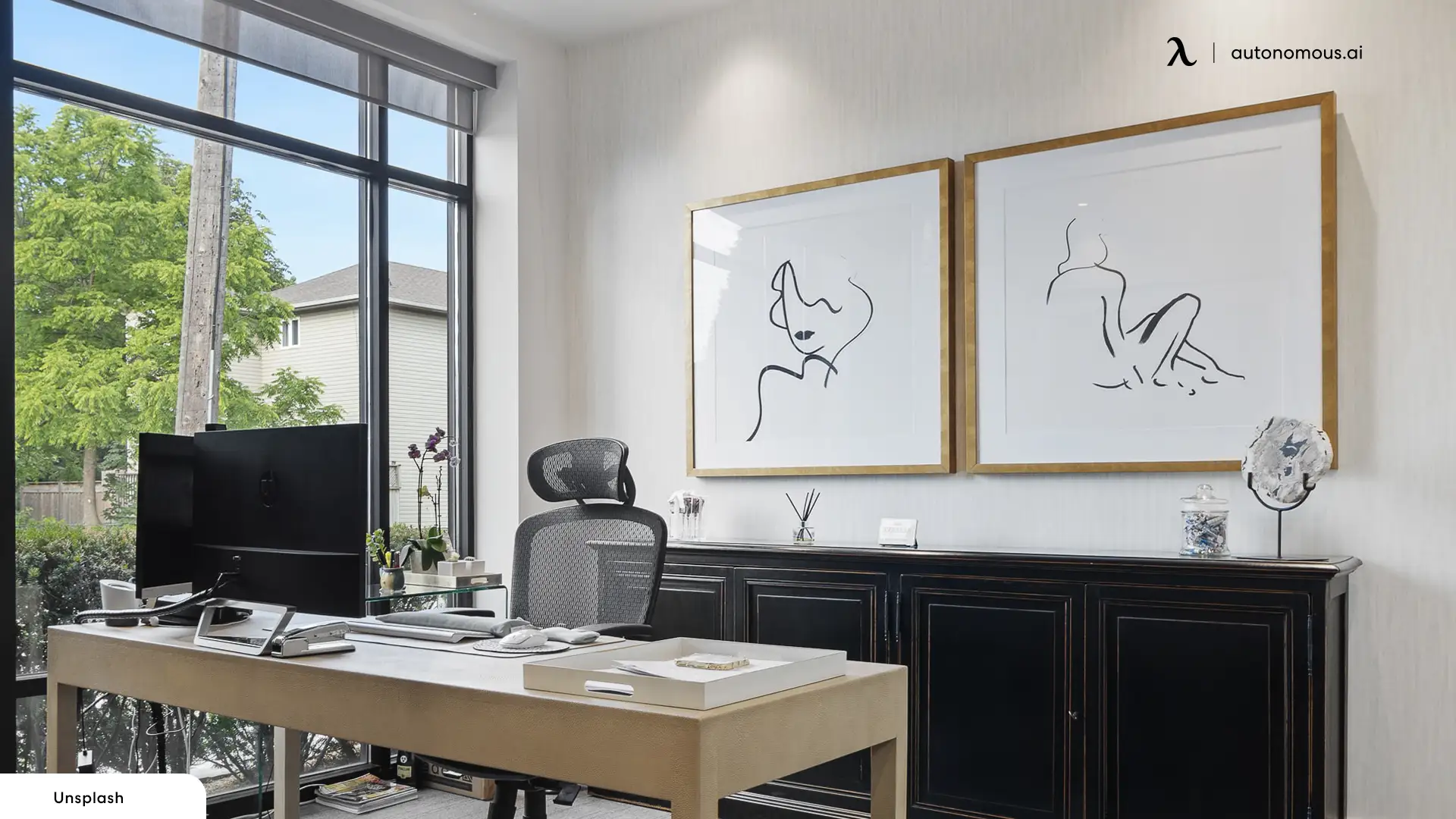
Offices are often designed around current teams, tools, or trends, which can limit how well the space performs over time. Long-term adaptability takes a different approach by prioritizing decisions that remain effective even as work patterns change.
This means avoiding layouts that depend on specific team sizes or fixed functions. Spaces are planned with balanced proportions, circulation is kept straightforward, and core elements are designed to accommodate change without requiring structural updates. Instead of reacting to change, the office is prepared for it.
By focusing on durability and restraint at the planning stage, the workspace remains usable as the organization evolves. Adaptability is achieved through foresight, not ongoing reconfiguration.
8. Visual Simplicity and Reduced Clutter
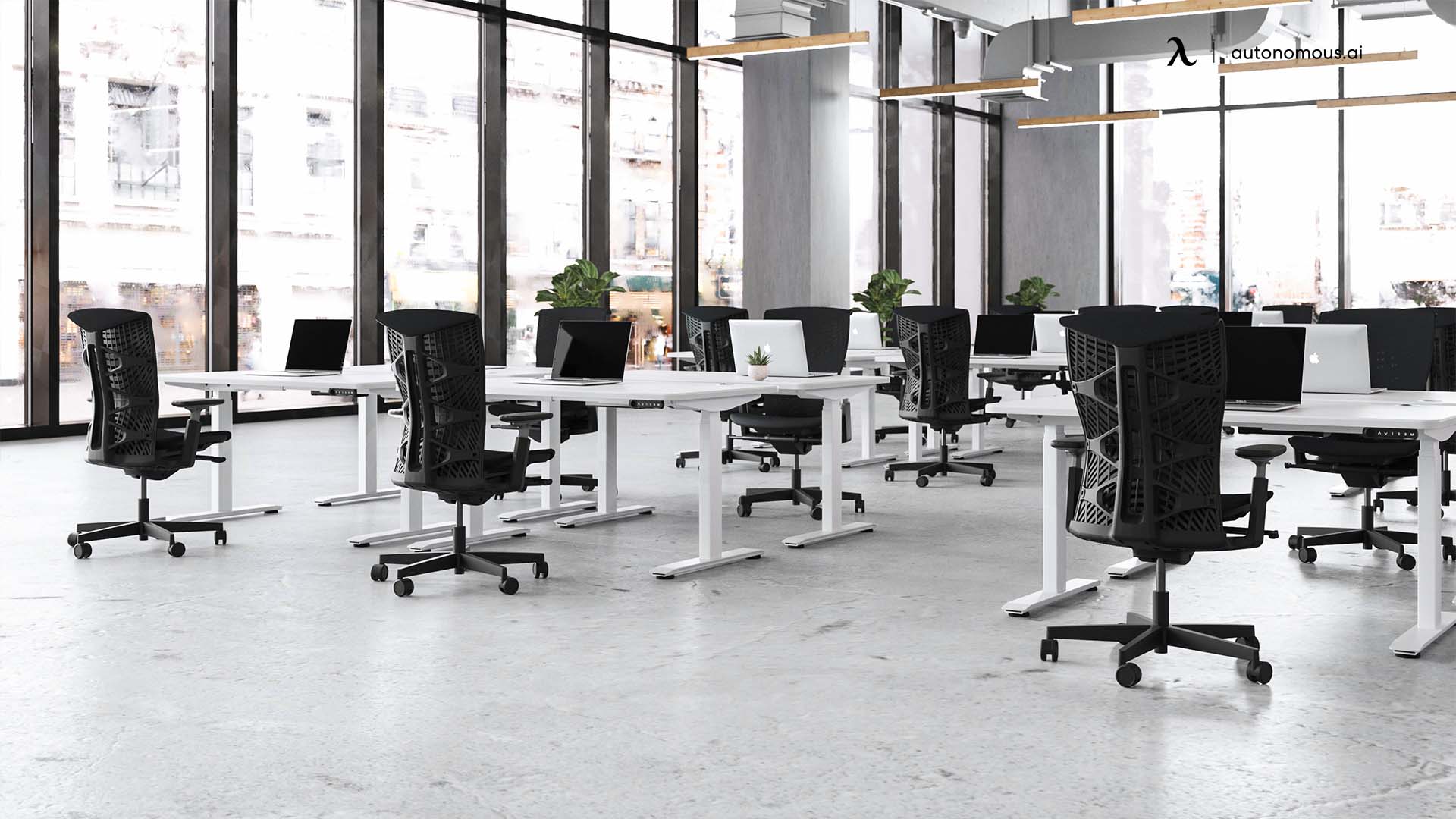
An office can feel overwhelming even when it is well organized. Visual simplicity focuses on reducing unnecessary visual information so the workspace feels easier to process at a glance.
This limits competing materials, colors, and exposed elements across the office. Storage is integrated rather than added on, and surfaces are kept intentionally clear, reflecting the restraint typical of minimalist office design. By reducing visual clutter, the office becomes calmer and more predictable to navigate. Simplicity supports focus and clarity at an environmental level, without dictating how people work or personalize their space.
Together, these ideas show how corporate office design can shape the overall work environment in practical, lasting ways. Rather than relying on individual features or trends, they focus on how space functions as a whole and how it supports people over time.
Ergonomics in Corporate Office Design
Ergonomic principles ensure that corporate office design supports people consistently across the workspace. Rather than focusing on individual preferences, effective ergonomics establishes a baseline that fits most employees and allows for quick adjustment when needed.
- Fit comes before features
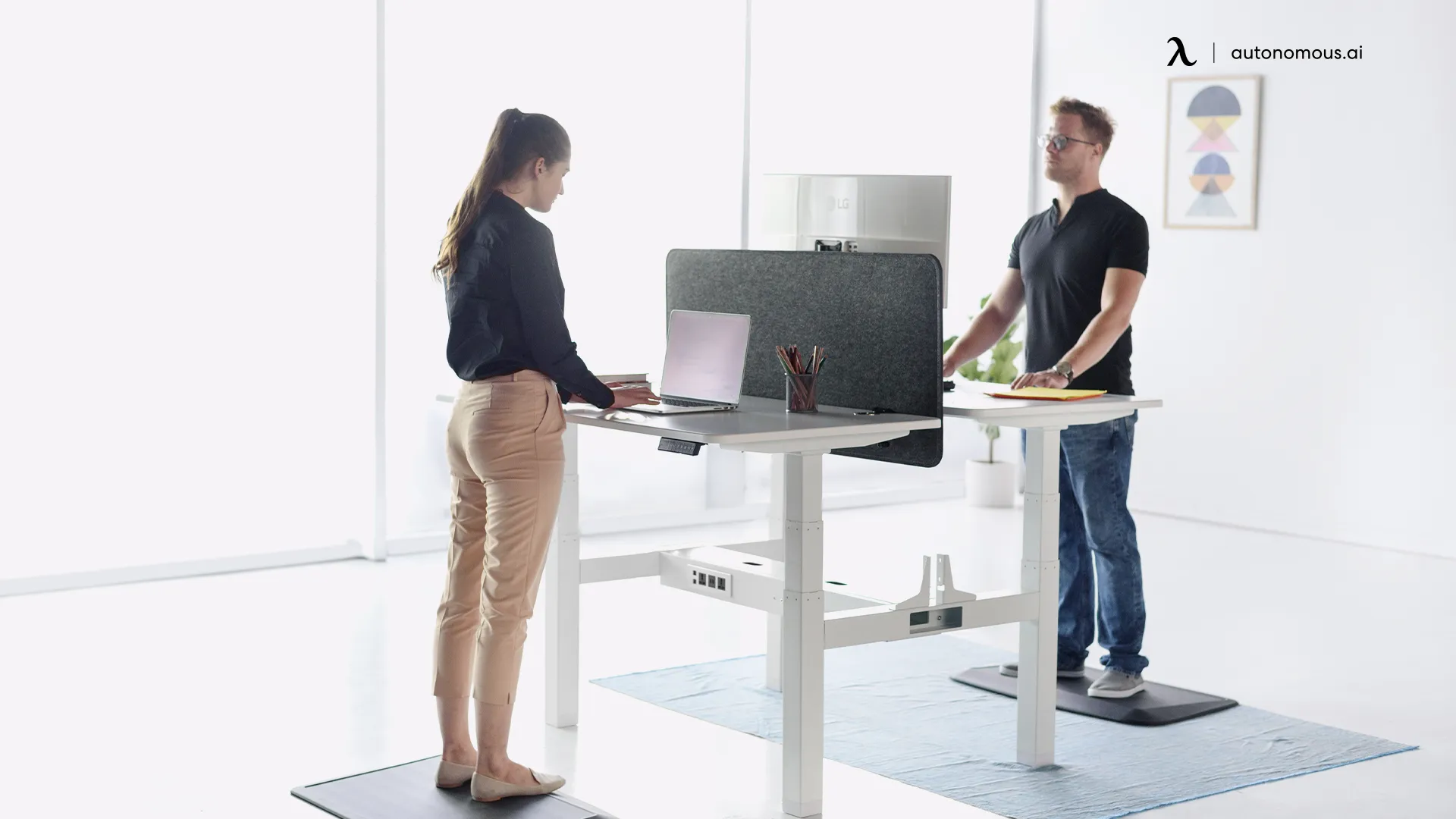
A functional ergonomic setup prioritizes alignment over added features. Work surfaces, screens, and input devices should support neutral posture so employees can work without unnecessary strain or constant adjustment.
- A repeatable corporate office desk setup standard
Ergonomics works best when the office has a consistent setup standard that employees can follow without assistance. This doesn’t require a long policy; it requires clear defaults:
- screen placement that supports neutral head and neck position
- keyboard and mouse placement that supports relaxed shoulders and wrists
- ergonomic desk height and chair height ranges that work across different users
- enough space under and around the workstation to change posture easily
This is the most practical way to make ergonomics scalable across teams without turning it into a one-off adjustment process.
- Movement is part of the setup
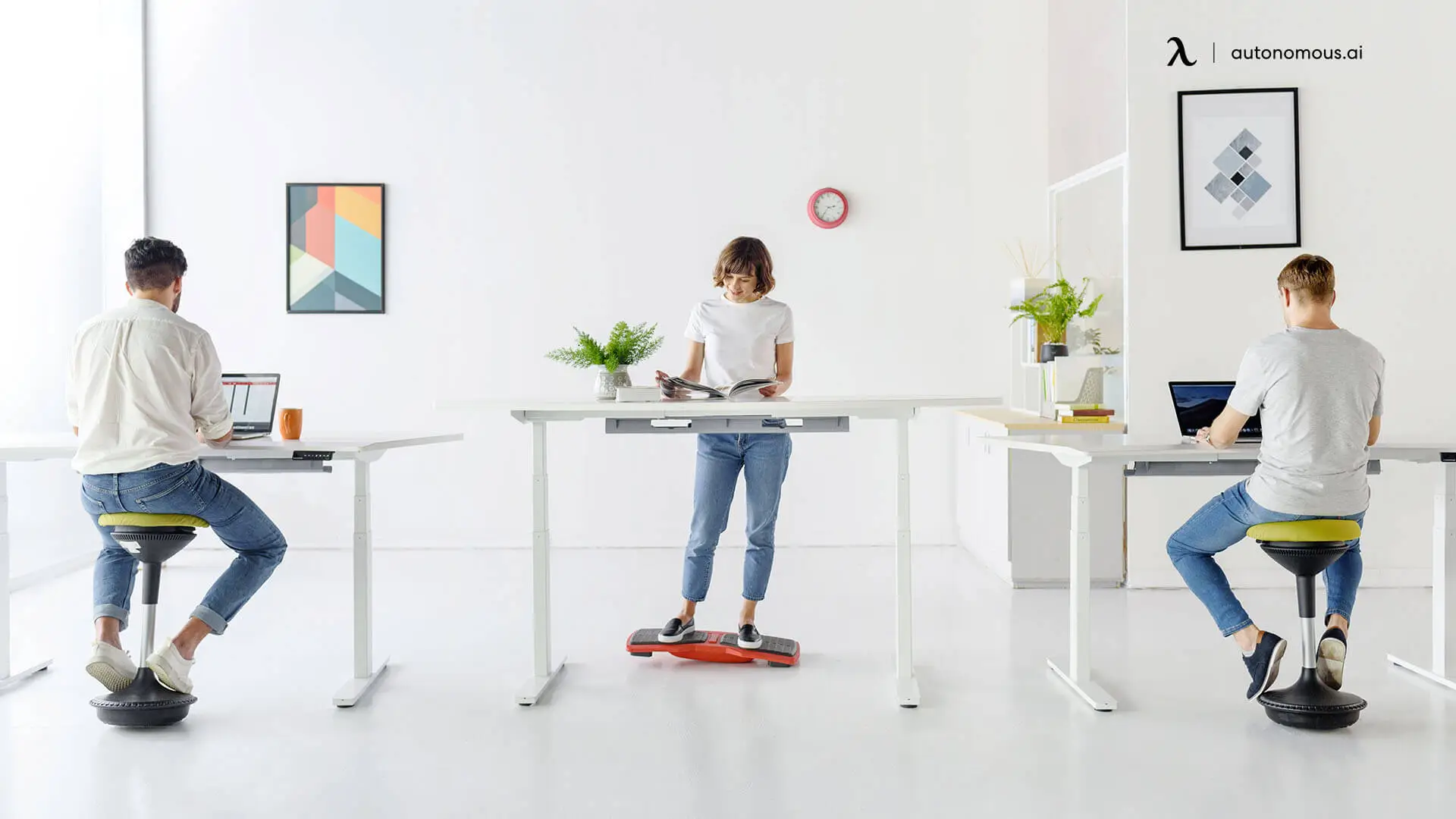
Ergonomics is not only about sitting correctly; it’s also about reducing static posture. Workstations should support small posture changes throughout the day, shifting position, standing periodically at a standing desk, or taking brief breaks, without disrupting the work environment.
- Make ergonomics maintainable
Ergonomics should be easy to sustain over time. Simple reset guidelines, consistent workstation components, and clear adjustment support help keep the office functional as teams and seating change.
FAQs
What makes a good corporate office design?
Good corporate office design is clear, functional, and adaptable. It balances collaboration and focus, uses space efficiently, and aligns with how people actually work rather than relying on trends alone.
What is the best corporate office layout for modern teams?
The best corporate office layout supports multiple work modes, including collaboration, focused work, and informal interaction. Clear zoning and intuitive flow help teams use the space effectively without constant disruption.
How should a corporate office be designed for long-term use?
Corporate office design for long-term use prioritizes durable decisions, neutral layouts, and adaptable structures. Avoiding overly specific or trend-driven choices helps the office remain functional as teams and work patterns evolve.
How do you plan corporate office design ideas effectively?
Effective corporate office design ideas start with understanding daily workflows and space constraints. Planning should focus on how areas are used, how people move through the office, and how different functions interact.
How does corporate office design support company culture?
Corporate office design makes company culture visible through space, layout, and visual consistency. How areas are organized and how to decorate a corporate office often communicate values more clearly than written statements.
How much does corporate office design typically cost?
The cost of corporate office design varies based on size, scope, and level of customization. Focusing on clear structure and long-term adaptability can help control costs and reduce the need for frequent updates.
What are common mistakes in corporate office design?
Common corporate office design mistakes include prioritizing appearance over function, unclear zoning, and inflexible layouts. These issues often lead to inefficiency, distraction, and frequent redesigns.
How can corporate office design improve employee wellbeing?
Corporate office design supports employee wellbeing by reducing friction, improving comfort, and creating predictable work environments. Thoughtful planning helps employees work more comfortably without relying on constant change or added complexity.
Conclusion
Corporate office design is most effective when it is approached as a system rather than a collection of individual features. Thoughtful planning helps create work environments that support daily operations, reflect company values, and remain functional as needs evolve.
By focusing on clear structure, adaptable spaces, and consistent fundamentals, organizations can design offices that work well over time. When design decisions are grounded in how people actually use the space, the office becomes easier to manage, more comfortable to work in, and better aligned with long-term goals.
This approach allows corporate office design to support performance and stability without relying on constant change or short-term solutions.