Pool House Kits in California: Requirements, Costs and Permits
Table of Contents
Pool house kits are becoming a popular upgrade for California homeowners who want to get more out of their backyard, offering a practical way to add usable space without committing to a full home expansion, similar to other backyard house options designed for flexible outdoor living. However, building a pool house in California is not as simple as ordering a kit and placing it beside the pool, as local zoning laws, permit requirements, and construction costs vary widely across cities and counties, especially when a structure begins to overlap with a backyard ADU or follows regulations similar to building an ADU in California, making it essential to understand the rules upfront to plan confidently and avoid costly mistakes.
What Counts as a Pool House in California
In California, the term “pool house” is not always clearly defined in building codes and is usually classified as an accessory structure, with regulations based on how the space is used.
A basic pool house is typically a detached structure used for:
- Changing clothes
- Pool equipment or towel storage
- Shade and lounging
- Entertaining near the pool
Once features such as plumbing, a bathroom, a kitchen, or sleeping space are added, the structure may be reclassified and regulated more like residential units commonly seen in prefab homes in California.
In some jurisdictions, this reclassification aligns a pool house with rules applied to container homes in California or prefab granny flats in California, which triggers stricter zoning requirements, higher permit fees, and additional inspections.
Structures designed for work or daily use, such as a backyard office pod in California, may also follow similar permitting logic when utilities or long-term occupancy are involved.
Pool House vs Shed vs Cabana vs ADU
Structure Type | Primary Purpose | Enclosed Space | Utilities Allowed | Permit Requirements (CA) | Typical Cost Range | Best For |
Storage only | Fully enclosed | No | Often not required if under local size limits | Low | Tools, pool equipment, basic backyard storage | |
Shade, lounging, poolside seating | Open or semi-enclosed | Rare | Sometimes required depending on size and roofing | Low to mid | Poolside relaxation without full enclosure | |
Pool House | Changing room, storage, entertaining | Fully enclosed | Limited (electric often allowed; plumbing triggers permits) | Usually required | Mid to high | Functional poolside space without full living use |
Full living space | Fully enclosed | Yes (plumbing, kitchen, HVAC) | Always required | High | Guest housing, rental income, long-term use |
Do You Need a Permit to Build a Pool House in California?
In most cases, yes. California generally requires permits for structures that are:
- Permanently installed
- Larger than a minimum square footage threshold
- Connected to electrical, plumbing, or HVAC systems
Some cities allow very small accessory structures without permits, but these exemptions vary widely and are often misunderstood. Even when a building permit is not required, zoning rules still apply, including setbacks, height limits, and lot coverage. Homeowners often confuse these rules with broader housing regulations governed by California ADU law or general California building permits, which operate under different standards.
1. When a Permit Is Required
You will almost always need a building permit if your pool house includes:
- Electrical wiring or lighting
- Plumbing or a bathroom
- A permanent foundation
- Enclosed walls and roofing
Adding utilities is a common trigger. For example, running power to a pool house follows similar rules to running electricity to a shed and almost always requires permits and inspections.
2. Local Enforcement and City-Specific Rules
Permit requirements are enforced at the city or county level, not statewide. As a result:
- Rules in Los Angeles differ from Sacramento or San Diego
- Setbacks, size limits, and review timelines vary significantly
In Los Angeles, pool houses that exceed basic accessory limits may be reviewed under frameworks similar to Los Angeles ADU rules or even junior ADU guidelines. Structures used for work or daily occupancy can face similar scrutiny to a backyard office shed in Los Angeles.
In other cities, such as San Diego or Sacramento, permitting logic often aligns with how prefab ADUs in San Diego or ADUs in Sacramento are reviewed once utilities or enclosed space are involved.
Why Skipping Permits Is Risky
Unpermitted pool houses can create long-term problems, including fines, forced removal, or complications during resale. These risks mirror issues commonly seen with unpermitted ADUs or attempts to build an ADU without a permit. If a pool house crosses regulatory thresholds, homeowners are often required to retroactively follow steps similar to getting an ADU permit.
3. Pool Safety and Setback Rules
California has strict pool safety laws. Any structure near a pool must respect fencing requirements, access restrictions, and minimum distances from the water. Local fire codes may also impose additional setbacks, especially in wildfire-prone areas.
Zoning and Local Building Codes You Must Check
1. Zoning Classification
Confirm that your lot allows detached accessory structures in your zoning district, as most residential zones in California do, but with limits that vary by city and county.
Key questions to verify:
- Are detached accessory structures permitted?
- Is there a limit on the number of accessory structures allowed on the property, similar to restrictions discussed in how many sheds you can have on your property in California?
- Are pool houses treated differently from sheds or garages under local zoning codes?
If the structure includes plumbing or sleeping space, many cities will reclassify it closer to an Accessory Dwelling Unit (ADU), which brings it under rules aligned with California granny flat law and triggers different zoning requirements, higher fees, and additional review.
2. Setback Requirements
Setbacks are the most common cause of permit rejection.
Typical California setback requirements and standards (varies by city):
- Side and rear setbacks: 3–5 ft minimum
- Distance from pool edge: must maintain required pool safety clearances
- Corner lots: larger setbacks often required
Structures built too close to fences or property lines usually fail review.
3. Size Limits
Most cities cap accessory structures by square footage.
Common thresholds:
- ≤120 sq ft: sometimes exempt from permits if no utilities
- 120–400 sq ft: allowed with permits in most residential zones
- Above local limits: may require design review or be denied
These size caps are often much smaller than what is allowed for full residential units, such as those outlined in how big an ADU can be in California, which follow a different regulatory framework.
It’s also important to note that accessory structures are reviewed cumulatively. Existing sheds, garages, or backyard structures may already count toward your maximum allowable size, similar to how limits are evaluated for tiny house dimensions or common she shed sizes under local zoning rules.
4. Height Restrictions
Accessory structures such as pool houses are typically limited to:
- 10–12 feet maximum height, depending on local zoning
- Pitched roofs may be allowed slightly more height than flat roofs
Height limits are measured from grade to the highest roof point and are enforced strictly. Exceeding the allowed height often triggers discretionary review or denial, regardless of interior dimensions or standard ceiling height considerations.
5. Utilities and Reclassification Risk
Utilities change how the structure is regulated.
- Electrical: permitted with inspection under California ADU electrical requirements.
- Plumbing or bathroom: commonly triggers habitable classification under ADU bathroom requirements.
- Kitchen or sleeping area: usually results in the structure being treated as an ADU, with requirements that may include compliance with ADU solar requirements in California.
If your goal is a true pool house (not an ADU), most cities expect no plumbing.
6. Fire and Wildfire Code (WUI Areas)
If your property is in a Wildland–Urban Interface (WUI) zone:
- Fire-resistant siding and roofing required
- Ember-resistant vents may be mandatory
- Clearance from vegetation enforced
Prefab kits must comply; exemptions are rare.
7. HOA and CC&Rs
HOA rules can be stricter than city zoning.
Check for:
- Restrictions on detached buildings, which may apply even when structures resemble a detached ADU.
- Height or visibility limits that affect placement and roof design
- Exterior requirements covering paint, finishes, and materials, including shed paint colors, exterior shed wall materials, and approved shed materials.
Some HOAs also reference construction standards similar to those used for tiny house materials when reviewing detached structures.
City-issued permits do not override HOA approvals.
How Much Does a Pool House Kit Cost in California?
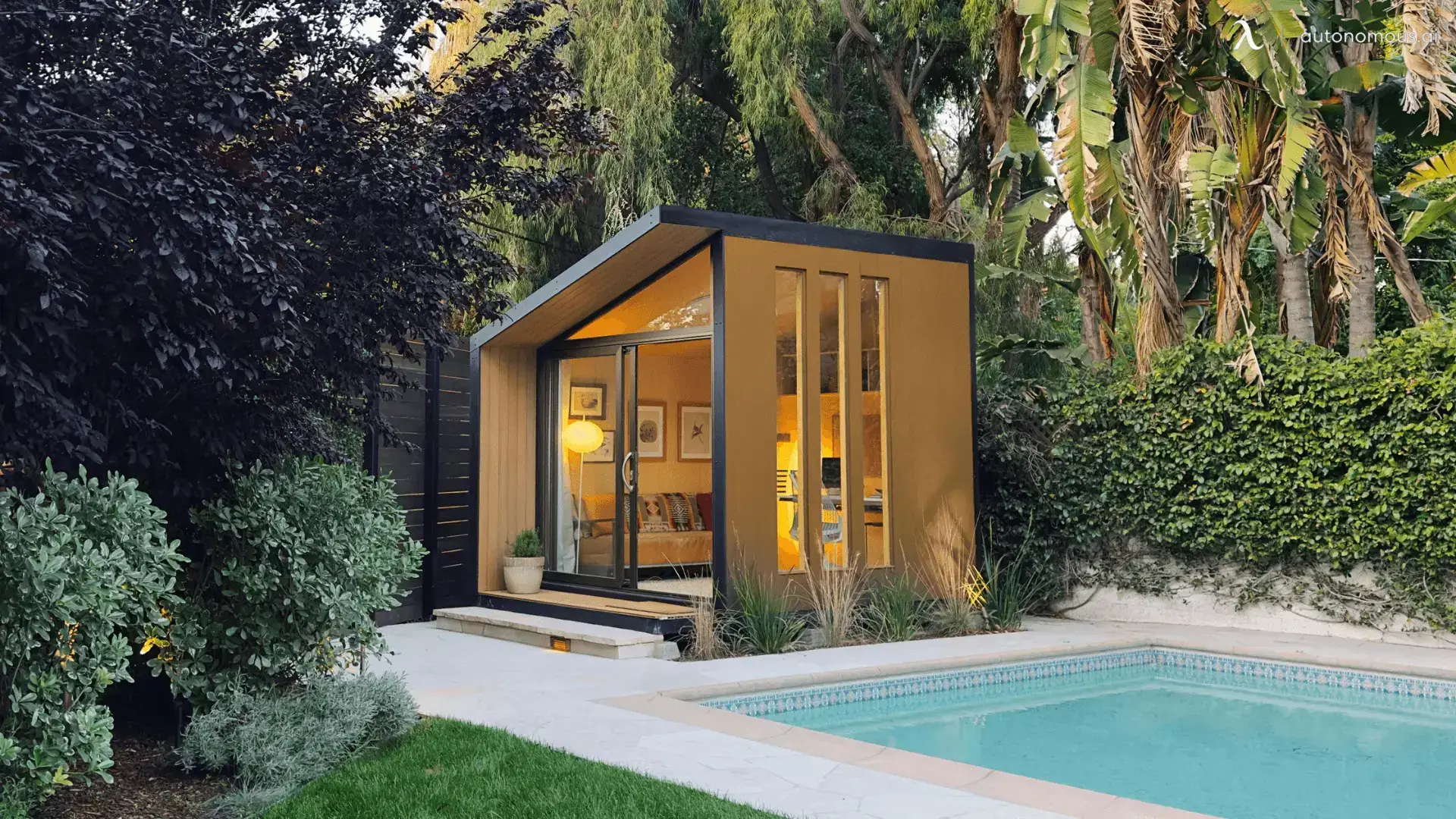
In California, the cost of a pool house kit refers only to the prefabricated structure itself and does not include permits, foundation, utilities, or labor. Pricing varies mainly by size, material quality, and level of prefabrication, with kits often chosen by homeowners looking for pool house ideas on a budget before considering more regulated options.
Compared to full residential units, pool house kits remain significantly less expensive than projects governed by ADU costs in California, which are subject to additional fees, reviews, and long-term obligations such as ADU impact fees in California or eligibility considerations like ADU tax deductions in California.
Pool House Kit Type | Typical Size | What’s Included | Kit Price (CA) |
Entry-level wood kit | 80–120 sq ft | Basic framing, roof structure | $2,000–$4,500 |
Standard pool house kit | 120–200 sq ft | Framing, siding panels, doors, windows | $5,000–$9,000 |
Upgraded wood kit | 200–300 sq ft | Thicker framing, improved siding, roof system | $9,000–$15,000 |
Prefab pool house shell | 200–400 sq ft | Factory-built panels, finished exterior, windows | $15,000–$30,000 |
Custom high-end kit | 300–500 sq ft | Engineered design, premium materials | $30,000–$45,000 |
Step-by-Step: How to Build a Pool House in California
- Confirm zoning rules and permit requirements
- Define the intended use and features
- Choose a kit or prefab pool house option that fits regulations, including DIY pool shed ideas if applicable
- Submit plans for approval
- Prepare the site and foundation
- Assemble or install the structure
- Complete inspections and final approvals
Skipping steps early in this process often leads to delays or costly redesigns later.
A pool house kit is a strong option if you want a functional backyard space without the cost and complexity of a full ADU. It works best for recreational use, seasonal storage, and entertaining.
If your goals include rental income, guest housing, or long-term living space, an ADU may be the better investment despite higher upfront costs.
Final Thoughts
Building a pool house in California can significantly enhance how you use your backyard, but success depends on understanding local regulations and true costs before you start. Pool house kits offer convenience and speed, but they are not a shortcut around permits or zoning rules.
Start with research, talk to your local planning department early, and choose a kit that aligns with California’s unique building environment. Planning correctly upfront ensures your pool house adds value, not stress, to your home.