The Best Upper Back Support for Your Office Chair

.webp)
Upper back support for an office chair targets the thoracic zone - the stretch of spine between your lumbar curve and your shoulder blades - which a lumbar pad never reaches. If your lower back feels fine but tightness builds across your shoulders or at the base of your neck by mid-afternoon, that’s the tell: the problem is your mid-back rounding forward, not your lower back. The fix is a support that contacts the upper back, or a backrest tall enough to reach the shoulder blades. Below are four upper-back supports compared, the symptoms that mean you need one, and the point where a cushion stops being enough and a taller office chair is the smarter move.
What upper back support does - and why lumbar isn’t enough
Most ergonomic support is built around the lumbar zone because the lower back carries the most load when you sit. But the thoracic spine - your mid-back - is a separate problem. Hours of reaching for a keyboard pull the shoulders forward and round the mid-back, and because that zone is less mobile than the lower back, it stiffens. The Cleveland Clinic notes that when the thoracic area becomes rigid from sitting and hunching, the neck and lower back compensate - which is why mid-back strain so often surfaces as neck tension and headaches rather than pain where it actually starts. A better lumbar pad does nothing for this. You need contact higher up the spine, at or near the shoulder blades, to stop the rounding at its source.
Signs you need upper back support (not just lumbar)
Use where and when the discomfort appears to tell the zones apart before you buy anything.
- Location: tightness between or above the shoulder blades, across the top of the shoulders, or at the base of the skull - not the lower back - points to the thoracic zone.
- Timing: it builds during focused, forward-reaching work and eases when you stand or roll your shoulders back.
- What doesn’t help: adjusting or adding lumbar support changes nothing, because the support sits below where the problem is.
If that matches you, an upper-back support or a taller backrest is the right tool. If the ache is genuinely in the lower back, start with lumbar placement instead.
The 4 best upper back supports for an office chair
Support | How it reaches the upper back | Best for |
Kensington SmartFit Conform | 17.2" tall; 4 independent springs flex toward the shoulder blades | Shifting posture; taller coverage |
Fellowes Professional Series | Two-tier: separate mid-spine panel + lumbar section | Discomfort across multiple zones |
Cushion Lab Extra Dense (S-shape) | Upper wings hold the shoulders back; multi-region contour | Shoulders rounding forward |
QUTOOL Full-Back Wedge | Broad full-height mesh contact, lower to upper back | Larger frames; flat backrests |
1. Kensington SmartFit Conform - best for a moving posture
At 17.2 inches tall it reaches well past the lumbar zone toward the shoulder blades, and its four independent springs flex separately, so the support articulates with you as you shift rather than holding one fixed shape. A color-coded SmartFit height chart helps you set it to your frame, the fabric is removable and washable, and it straps to almost any standard chair. This is the pick if you rarely sit still.
Honest note: It’s spring-based, not plush - if you want the cushioned feel of memory foam, this will feel firmer and more mechanical.
2. Fellowes Professional Series - best for multi-zone discomfort
Instead of one contoured pad, this splits support into two independent zones - a mid-spine panel and a lower lumbar section - so it fits spines that don’t match a single-curve mold. That two-tier design catches the mid-back that a standard lumbar pillow leaves unsupported. At about 2 inches deep it won’t shove you forward, and antimicrobial fabric suits shared desks.
Honest note: It’s firm and structured rather than cozy; people who want soft, plush contact will find it too clinical.
3. Cushion Lab Extra Dense (S-shape) - best for rounding shoulders
Its S-shaped profile mirrors the spine: the lower section supports the lumbar curve while upper wings gently hold your shoulders back, which is exactly the corrective input for a mid-back that collapses forward after a few hours. A gel-lined strap keeps it anchored and the dense foam holds shape over long sessions.
Honest note: This is corrective, not cushiony - it repositions your torso, so expect an adjustment period rather than instant softness.
4. QUTOOL Full-Back Wedge - best for broad coverage
Larger than a standard cushion, it creates a broad surface that keeps your whole back - lower through upper - in contact with the chair, which suits bigger frames or flat, unsupportive backrests. High-density memory foam holds shape and dual straps anchor it on wider chairs.
Honest note: Full-coverage dense foam traps heat; if you run warm, expect to notice it after an hour or two despite the mesh cover.
When a cushion isn’t enough: size up to a high-back chair
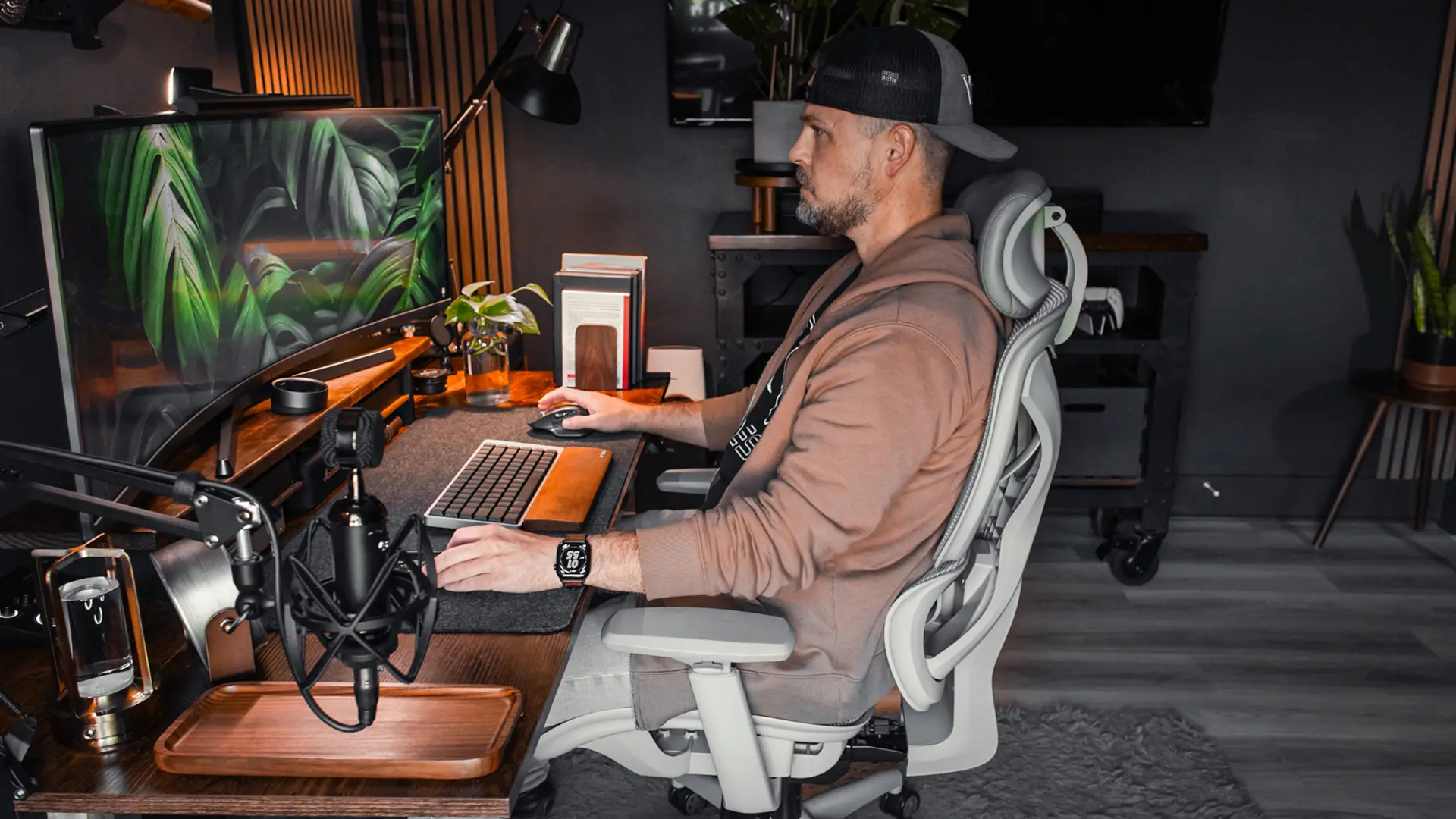
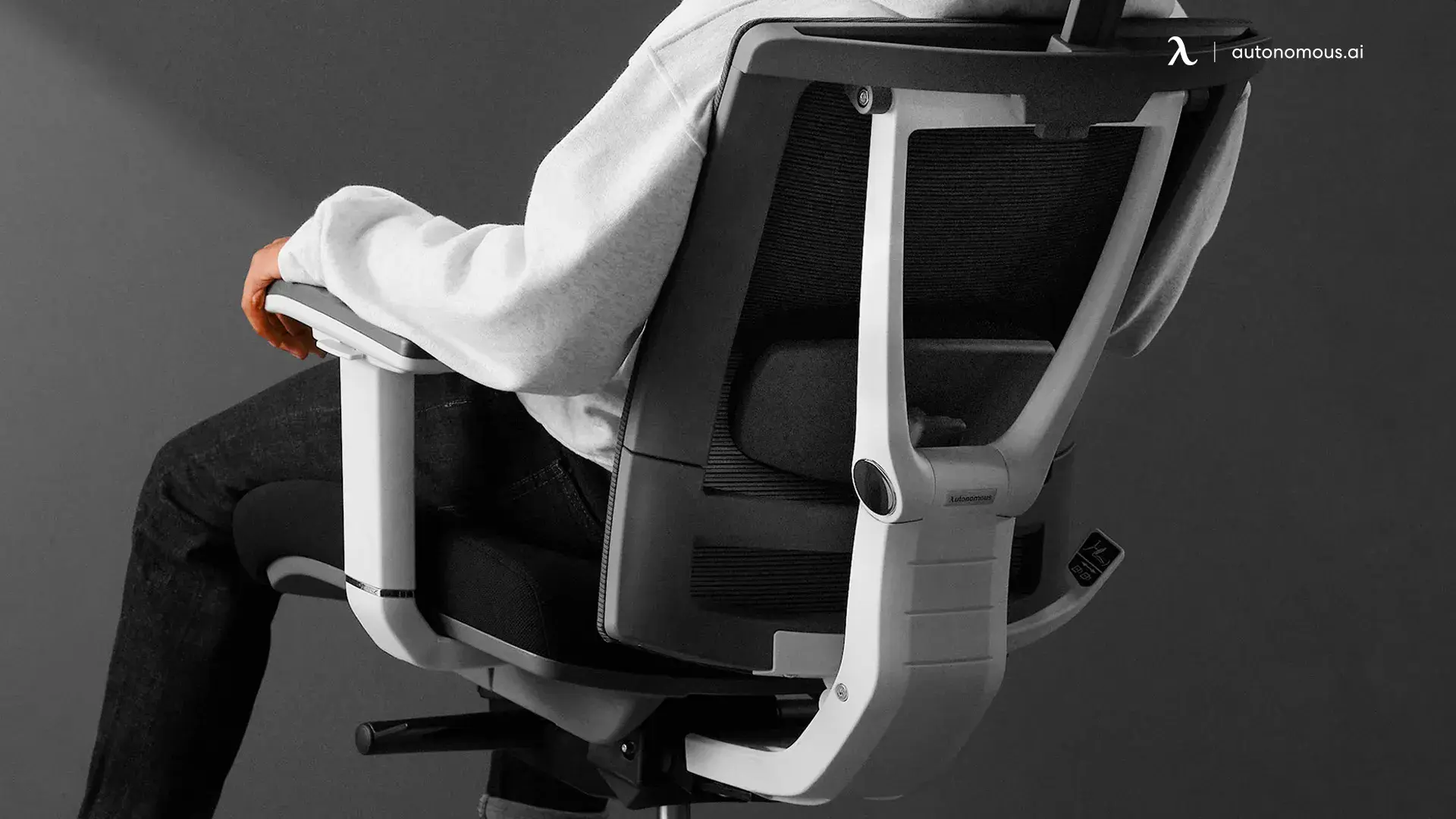
Here’s the honest limit, because it saves you buying two things: a support cushion helps when your chair is otherwise good but leaves the mid-back unsupported. If your backrest ends at or below the shoulder blades, no cushion fully fixes that - the backrest itself provides no thoracic contact when you sit upright, so you’re strapping support onto a surface that isn’t there.
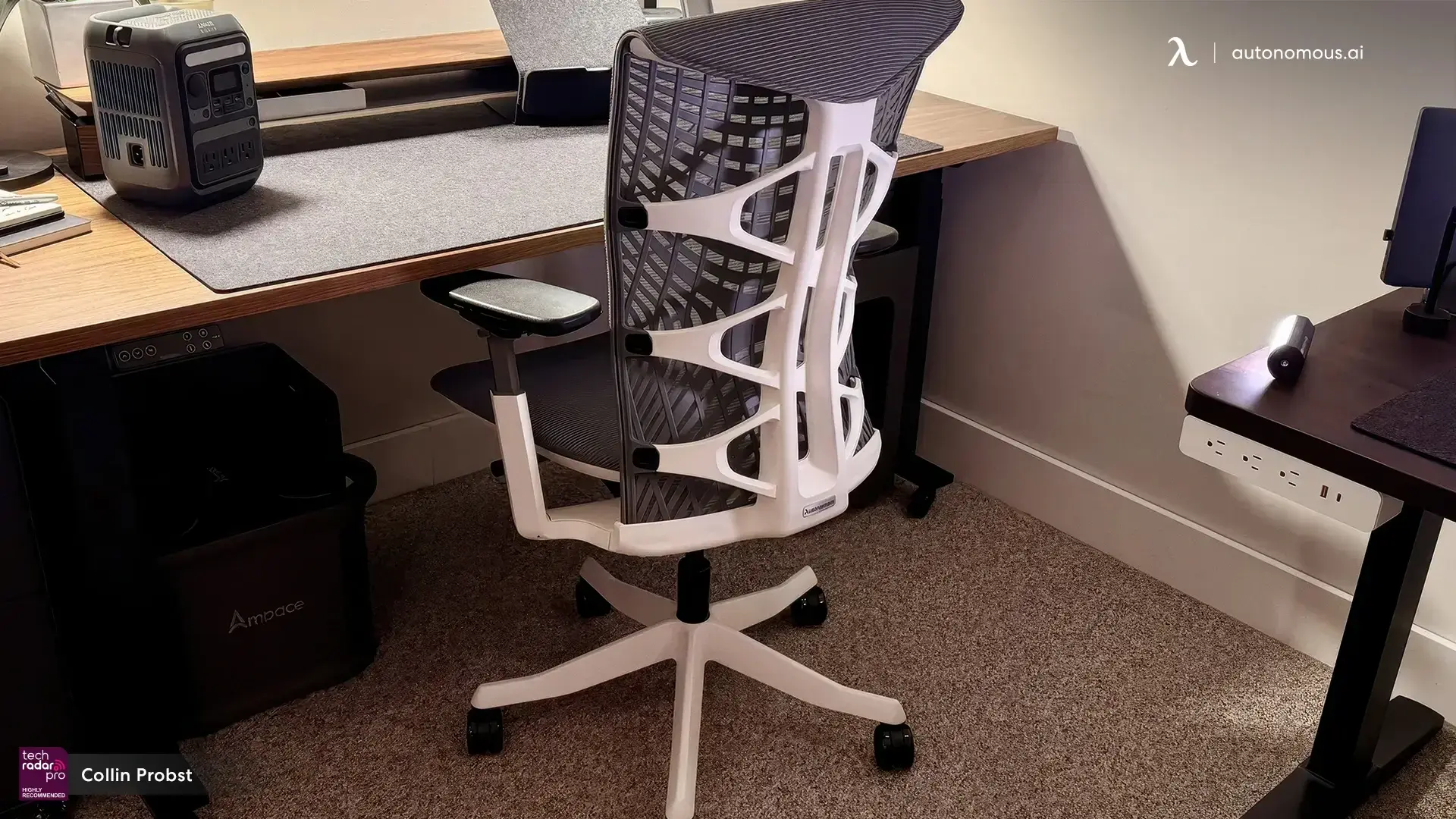
At that point a high-back office chair whose backrest reaches the upper shoulder blades, ideally with a surface that flexes as you move, is the better long-term call. The Autonomous ErgoChair Pro’s high-back mesh, for instance, reaches the upper shoulder-blade region so it makes contact with the mid-back during upright work, and the lumbarless ErgoChair Ultra 2 flexes across the whole spine rather than supporting one fixed point.
.webp)

How to set up upper back support (and posture habits that help)
A support works best alongside a setup that stops the rounding in the first place. Three habits do most of the work, and they’re backed by the research.
Raise your monitor.
Set the top of the screen at eye level so you’re not craning forward - clinical guidance links a low monitor to increased neck flexion, which drags the mid-back with it.
Set the support at the shoulder blades.
Position an upper-back cushion so its contact point sits at or just below the shoulder blades, not down at the lumbar curve, or it won’t address the thoracic zone at all.
Move every half hour.
Standing for about 90 seconds every 30 minutes reduced perceived mid-back pain by roughly a third in randomized trials - the single most effective habit here. Add a doorway chest stretch or shoulder-blade squeeze when you’re up.
Frequently asked questions
What is the best upper back support for an office chair?
The best upper back support reaches above the lumbar zone to the mid-back and shoulder blades. Spring-panel or two-tier designs like the Kensington SmartFit Conform or Fellowes Professional Series cover the upper back better than a lumbar-only pad.
How is upper back support different from lumbar support?
Lumbar support holds the lower spine’s inward curve; upper back support keeps the mid-back and shoulders from rounding forward. They cover different zones, and many desk workers need both.
Why does my upper back hurt at my desk?
Forward reaching rounds the mid-back over hours, and because the thoracic spine stiffens, the neck and lower back compensate - so the tension often surfaces at the shoulders and neck. Contacting the upper back and raising your monitor addresses the cause.
Can a cushion fix upper back pain from sitting?
A taller support cushion helps if your chair is otherwise good but leaves the mid-back unsupported. If your backrest is too short to reach the shoulder blades, a high-back chair is the better fix.
Do I need a high-back chair for upper back support?
Only if your current backrest ends below the shoulder blades. A high-back chair provides thoracic contact a short backrest can’t; otherwise a support cushion set at the right height may be enough.
Where should upper back support sit on the chair?
At or just below the shoulder blades, higher than a lumbar pad. If it sits down at the lower back, it’s supporting the wrong zone and won’t relieve mid-back or shoulder tension.
Conclusion: choosing upper back support that actually works
The best upper back support for an office chair is the one that reaches the zone a lumbar pad can’t - the mid-back and shoulder blades where desk-work rounding actually starts. Match it to your pattern: the Kensington SmartFit for a posture that shifts all day, the Fellowes two-tier for discomfort spanning several zones, the Cushion Lab S-shape to hold rounding shoulders back, and the QUTOOL wedge for broad, full-back coverage. Set whichever you choose at the shoulder blades, not the lumbar curve, and pair it with a monitor at eye level.
Just know the honest boundary: a cushion strengthens a chair that’s good but flat - it can’t manufacture support where the backrest ends. If your backrest stops below the shoulder blades, the lasting fix is a high-back chair that reaches the mid-back, such as the Autonomous ErgoChair Pro or the flex-frame ErgoChair Ultra 2. And whatever you sit in, stand and move every half hour - it does more for your upper back than any single cushion.
References
- Cleveland Clinic - Upper Back Pain (Thoracic Pain): causes and posture. my.clevelandclinic.org
- Kensington - SmartFit Conform Back Rest product specifications. kensington.com
- National Institute of Neurological Disorders and Stroke - Back Pain. ninds.nih.gov
- Mayo Clinic - Office ergonomics: Your how-to guide (monitor and posture). mayoclinic.org