Standing Desk Leg Covers to Buy or DIY and How to Hide Legs

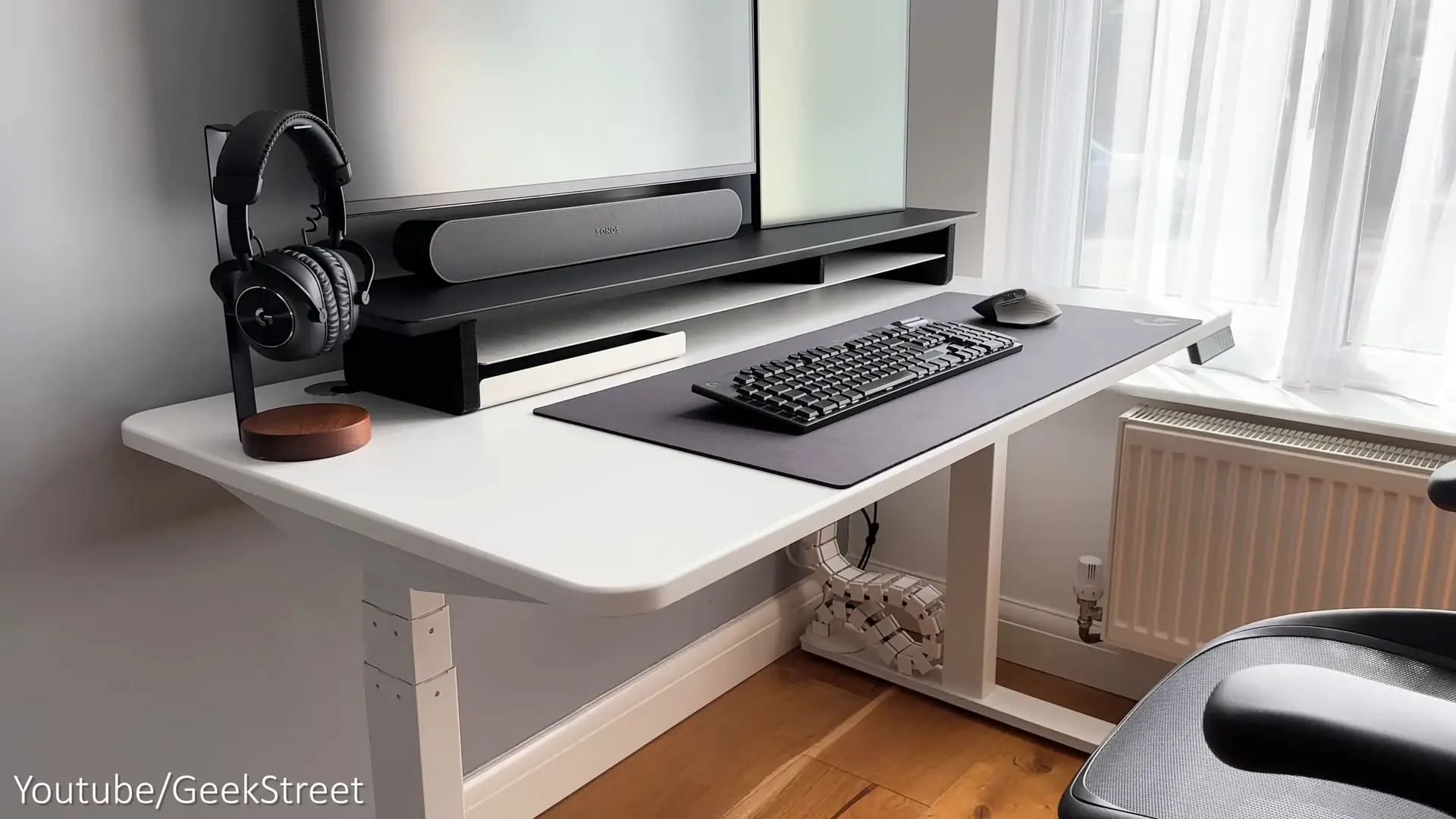
Standing desk leg covers are sleeves, wraps or decorative bases that hide the metal columns of an electric desk, and they only work if the moving part of each leg can still slide freely. That rule is why fitted covers are rare. Search Amazon for standing desk leg covers and most results are chair-leg floor protectors and under-desk privacy panels. This guide covers the few covers you can buy, ways to hide the legs without a cover, DIY covers that survive height changes, and what to measure first.
What kinds of standing desk leg covers are there?
There are four kinds of standing desk leg covers: fitted bases that box in the bottom of each leg, fabric sleeves, leg-mounted cable covers, and under-desk panels that hide the legs from the front. Only the first two cover the metal itself.
- Fitted bases: a wood or lacquered box that sits around the lowest stage of each leg. Rove Concepts sells one; most others are DIY builds.
- Fabric sleeves: stretch fabric with a zip or hook-and-loop seam, usually handmade or from Etsy sellers.
- Cable channels and spines: they attach to a leg and hide the cords running down it. The leg stays visible.
- Under-desk panels: a fabric skirt or laminate modesty panel across the front. It hides the legs from one side and needs no fit at all.
Floor protectors and feet pads also show up under "leg covers", but they protect the floor, not the look. If what you want is comfort underfoot, that is a job for anti-fatigue mats, not covers.
The clip shows why fit matters: each leg of a dual-motor frame like the Autonomous Desk 2 has a stage that slides out of another every time you are raising and lowering the desk.
Will a leg cover stop a standing desk from moving?
A leg cover will not stop a standing desk from moving as long as it covers only the part of the leg that no other stage slides over. Anything that touches a moving stage can rub, scrape the paint or bunch up.
Which part that is depends on which end of your leg is wider, so check before you buy or build anything:
- Widest tube at the floor: the bottom section stays still while narrower stages rise out of its top. A fitted base around it works.
- Widest tube at the top (an inverted column): the upper tube slides down over the lower one when you sit. A base cover can collide with it at low heights, so a sleeve or a panel is the safer choice.
Fabric sleeves have a different problem. Sized for sitting height, a sleeve pulls tight when the desk rises; sized for standing height, it bunches at the floor. Stretch fabric, or a sleeve that stops at the joint, avoids both.
Rove Concepts publishes the fit limits for its Athena base. Here they are next to the Autonomous Desk 2 frame:
| Check | Rove Athena base needs | Autonomous Desk 2 frame |
|---|---|---|
| Foot length | Under 70 cm | 23.6 in (60 cm) |
| Height at lowest | Leg at least 65 cm (25.6 in) | Whole frame 27.2 in, without the top |
The verdict: the Desk 2 foot is within Rove's length limit, but the rest is unconfirmed. The 27.2-inch figure measures the whole frame, not the leg, and the leg size and foot width are not published, so measure all three before ordering. The base is 24.6 inches tall, which also limits how low the desk can go.
Standing desk leg covers you can buy
Few products are made to cover a telescoping leg, and the clearest one on sale is the Rove Concepts Athena base. The other three hide what surrounds the legs: the front view and the cords that run down them.
| Product | What it hides | Fits | Price |
|---|---|---|---|
| Rove Concepts Athena Standing Desk Base | Bottom 24.6 in of both legs | Legs under 10 x 10 cm | $923 regular |
| VIVO Under Desk Cable Management Sleeve, 60" | Legs and cords, front view | Desks with a 60 in front edge | $39.99 |
| Ultimate Setup Magnetic Cable Spine, 133 cm | Cords from desk to floor | Steel legs | $49.90 |
| UPLIFT Magnetic Cable Channel | Cords along one leg | UPLIFT 50 or 60 mm legs | $29 |
Rove Concepts Athena Standing Desk Base: a fitted cover for the lower legs
The Athena base is a pair of fluted pedestals that slide over the lower part of an electric desk's legs. Rove Concepts lists it in alabaster lacquer or ebony MDF, 33 by 10.4 by 24.6 inches, for legs under 10 by 10 cm with at least 65 cm of leg height.
This suits someone who wants the desk to read as furniture in a living room. One honest limit: it costs more than most complete standing desks, and Rove asks you to measure first because it does not fit every frame.

VIVO Under Desk Cable Management Sleeve: hides the legs from the front
Despite the name, the VIVO sleeve is a 60-inch fabric desk skirt that hangs from the front edge of the desktop. VIVO lists two top slots for cords and mesh pockets with hook-and-loop straps, and it mounts with two screws.
It moves with the desktop, so height changes are not an issue. This suits a desk that faces into a room. The limit: it hides nothing from the sides, and it needs two screws in the underside of the top.

Ultimate Setup Magnetic Cable Spine: covers the cords that run down a leg
A cable spine is a chain of segments that carries cords from the desktop to the floor and bends as the desk moves. The Ultimate Setup spine is 133 cm (52.4 in) long, can be shortened, and holds to the leg with magnets.
Check its length against your top height when standing: a Desk 2 frame tops out at 46.5 inches without the top, which leaves room to spare. The limit: magnets need a steel leg, and the leg itself stays in view.

UPLIFT Magnetic Cable Channel: a slim cover on the back of one leg
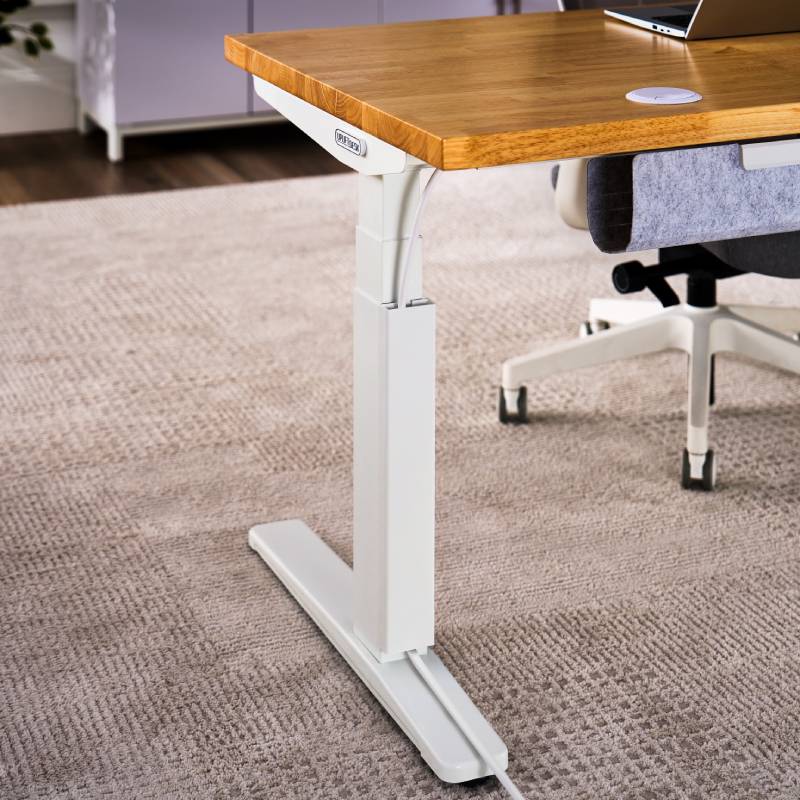
The UPLIFT channel is an ABS plastic cover that snaps magnetically onto the back of a leg and holds four or more power cords. UPLIFT sells it in a 50 mm size for its V1, V2 and V3 Essential frames and a 60 mm size for V3 and V2-Commercial legs.
It suits a desk seen from behind or the side. The limit: it is sized for UPLIFT legs, so measure your leg width against 50 or 60 mm first.
How to hide standing desk legs without a cover
The cheapest way to hide standing desk legs is to make them blend in or block the view: match the frame color to the wall or top, place the desk so furniture hides the legs, and clear the cables that draw the eye to them.
- Match the frame: a white frame against a white wall almost disappears. When you pick a standing desk frame, choose the color for the room, not the showroom.
- Pick a frame shape that shows less leg: a C-frame sets the columns toward the back edge, so the front view is mostly open space. The trade-offs are in our C-frame vs. T-frame comparison.
- Block the view: put the desk behind a sofa or low credenza, or pick a standing desk with shelves that fill the space beside the legs.
- Swap the legs: if you built your own desk, adjustable desk legs come in finishes that suit a room better than raw steel.
- Clear the cables: a power strip and loose cords make bare legs look worse. Lift both off the floor.
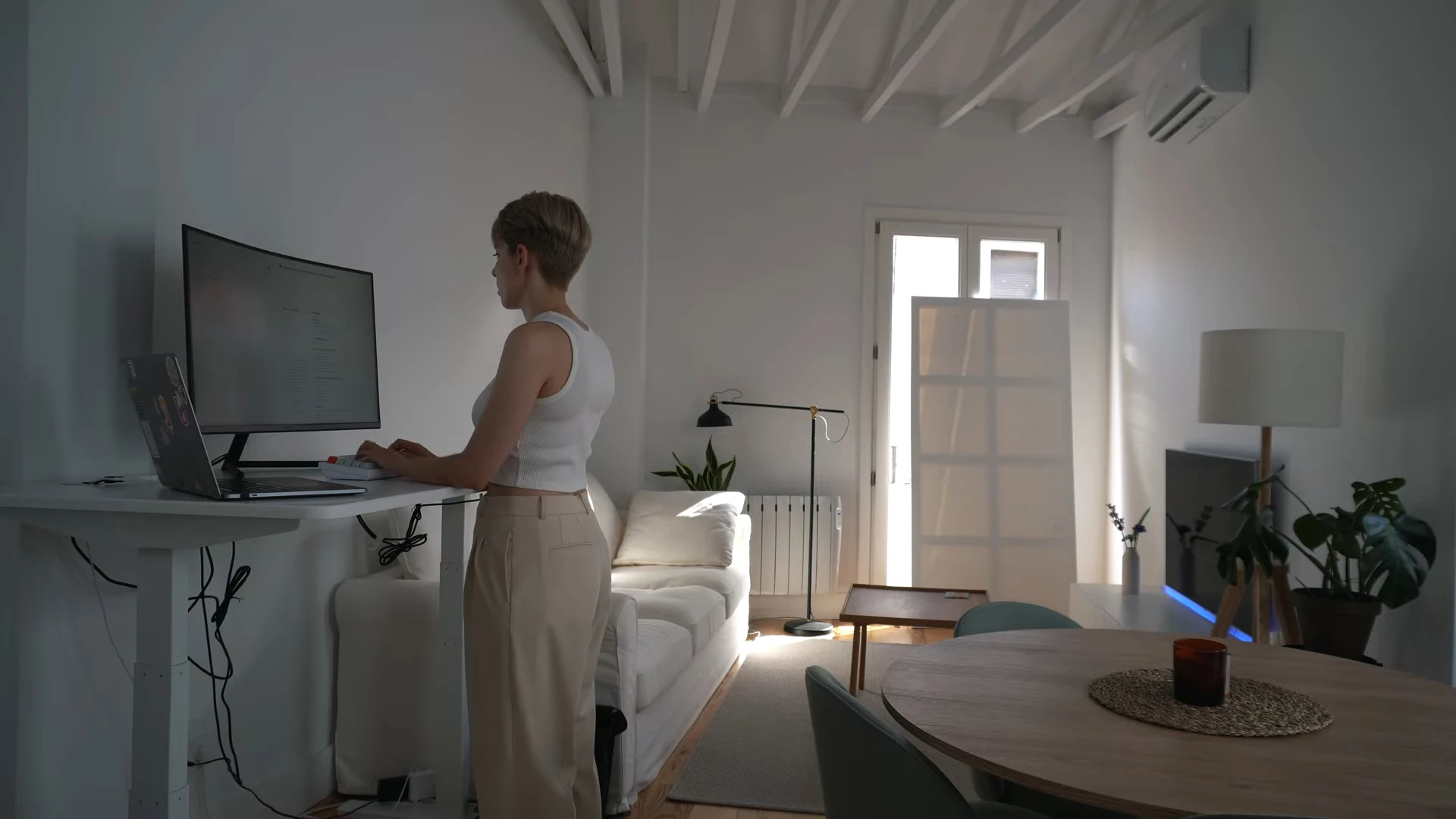

The Autonomous Desk 2 frame comes in white or black, so you can match it to a light or dark wall instead of covering it.

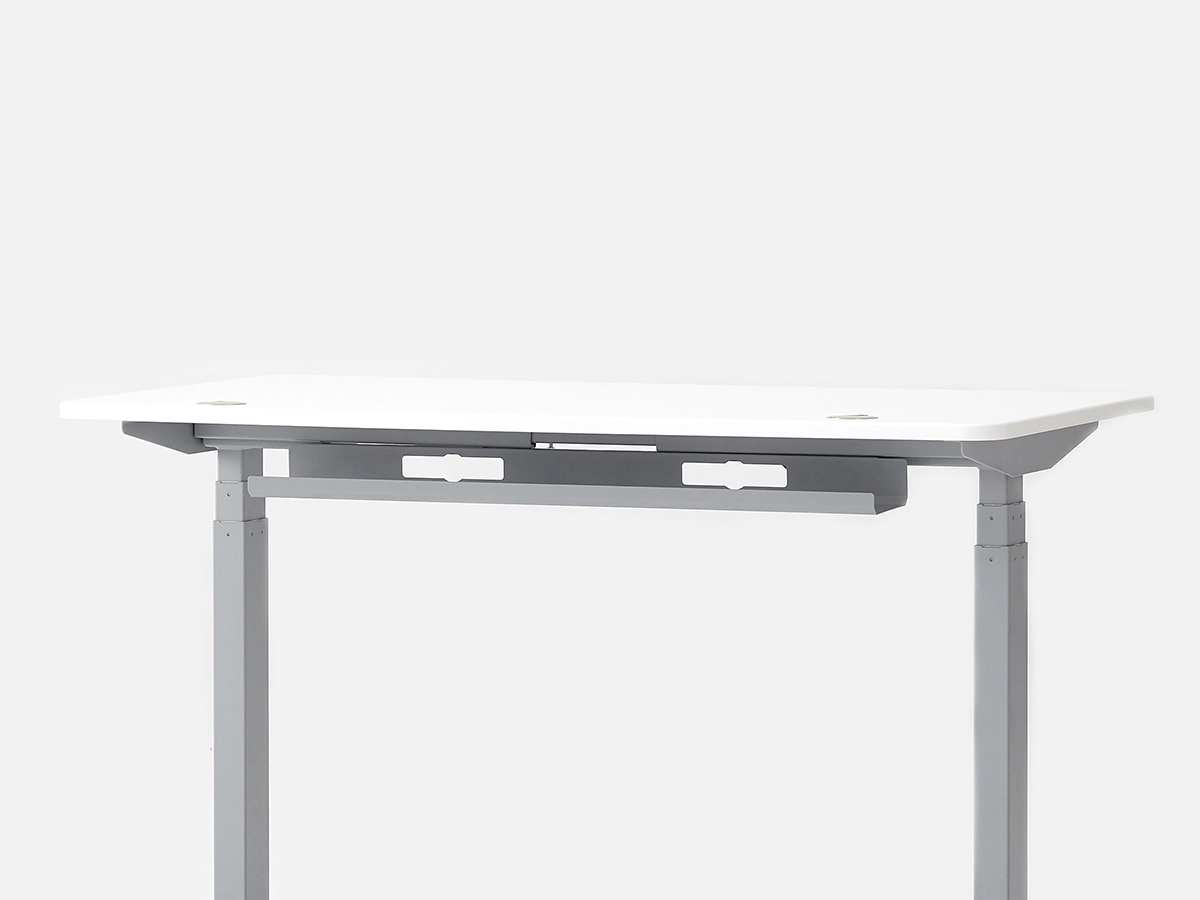
For Autonomous frames, the Autonomous Cable Tray does the cable part. It is a steel tray, 35.4 inches wide, that mounts under the desktop without drilling and holds a power strip plus cords up to 35 lbs. It comes free with the Autonomous Desk 2 L-Shaped and Desk Core and is an add-on for the Desk 2. It hides cables, not legs, and it does not fit partner-collab frames.
| Autonomous product | What it hides | List price |
|---|---|---|
| Autonomous Cable Tray | Power strip and cords under the top | $49 |
DIY standing desk leg covers that survive height changes
DIY standing desk leg covers last when they cover only the part of the leg that no other stage slides over. On a column that is widest at the floor, that is the bottom stage; on an inverted column, stick to a stretch sleeve or a front panel. Anything glued or painted onto a moving stage will rub at the joint and wear through.
| DIY method | Effort | Survives height changes? |
|---|---|---|
| Vinyl wrap (wood grain, marble) | Low | Yes, on the bottom stage only |
| Stretch fabric slipcover | Low to medium | Yes, if it stretches or stops at the joint |
| Wood or plywood box | High | Yes, sized to the bottom stage |
| Slatted or perforated panels | Medium | Yes, fixed to the feet or box |
| Paint | Medium | Bottom stage only; paint rubs off moving stages |
Vinyl wrap is the fastest change. Clean the steel, wrap the bottom stage from the foot up, and trim at the joint so the next stage slides past without catching.
Fabric slipcovers are the most common aesthetic leg covers for a standing desk in a living room. Use stretch fabric with a hook-and-loop seam so it comes off for washing, cut to the bottom stage rather than the full leg.
A wood box is the DIY version of the Rove base: two plywood plates per leg with a cut-out for the column, 2x4 uprights and flexible pole wrap around them. Set your sitting height before you measure, because the box limits how low the desk goes.

Panels and paint: perforated metal or wood slats fixed to the feet turn the frame into part of the room, a common look in engineer desk decor setups. Never fix a panel to a moving stage, and paint only the fixed section.
The same rule holds after converting an existing desk to a standing desk: cover what stays still and leave the lifting parts bare.
What to measure before you buy or build a leg cover
Measure the bottom stage of one leg, the frame height at its lowest and highest settings, and the foot before you buy or build any leg cover. Those numbers decide whether a cover fits and whether the desk still moves.
- Leg cross-section: width and depth of the bottom stage. Rove's base, for example, needs under 10 x 10 cm.
- Which tube is widest: at the floor or at the top, as covered above.
- Height at both ends: the bottom stage at the lowest setting sets the tallest cover, and the frame at its highest sets the length of any sleeve or spine. A tall standing desk needs longer cable runs than a standard one.
- Foot length and shape: a box or base has to clear the foot. The Desk 2 foot is 23.6 inches long.
- Number of legs: an L-shaped desk usually has three legs, and four-leg standing desks need four covers.
- Motor and sensors: keep covers off the motor housing and any vents. A cover that drags on a moving stage can trip anti-collision and stop the desk mid-move.
- Cable route: note which leg the motor and keypad cables run down, so the cover leaves them a path.
Run the desk from lowest to highest once with the cover on and listen for rubbing at the joint, a check that works on adjustable desks of any brand.
FAQs
Can you put covers on standing desk legs?
Yes, you can put covers on standing desk legs if the cover sits only on the part no other stage slides over. On a column widest at the floor, that is the bottom stage. On an inverted column, where the top tube slides down, use a stretch sleeve or a front panel.
Do leg covers stop a standing desk from going up and down?
Leg covers do not stop a standing desk from moving when they stay off the moving stages. A cover that touches a sliding stage can scrape the paint, bunch up or trip the anti-collision sensor. Run the desk through its full range once after fitting any cover.
Does IKEA sell standing desk leg covers?
No, IKEA's US catalog does not list leg covers for its sit-stand desks such as MITTZON or IDÅSEN. It sells cable organizers instead, like the FÖRSÄSONG cable management tray. To cover IKEA desk legs, use a stretch fabric sleeve, vinyl wrap or a DIY box sized to the part of the leg that stays still.
Are standing desk leg covers on Amazon universal?
Most standing desk leg covers on Amazon are not covers for the column at all. The results are mainly chair-leg floor protectors and under-desk privacy panels. Panels fit almost any desk because they attach to the top; anything that wraps the leg needs your measurements checked first.
How do you hide standing desk legs cheaply?
The cheapest way to hide standing desk legs is to place the desk so furniture blocks the view, or hang a fabric panel across the front. Vinyl wrap on the part of the leg that stays still costs little too. Matching the frame color to the wall makes the legs far less visible.
How do you hide cables on a standing desk?
Hide cables on a standing desk with an under-desk tray for the power strip and a spine or sleeve for the cords that drop to the floor. Leave enough slack for the highest setting, and keep cords outside any leg cover so they never catch on a moving stage.
Do leg covers work on L-shaped standing desks?
Yes, leg covers work on L-shaped standing desks, but you need one per leg, usually three. Each leg follows the same rule: cover only the part no other stage slides over. Check the feet too: the Desk 2 L-Shaped foot is 27.5 inches long, versus 23.6 inches on the Desk 2.
Conclusion
Standing desk leg covers come down to one rule: cover the part of the leg that stays still. Buy a fitted base if your frame matches its limits, use a panel or cable spine to hide what surrounds the legs, or build a wrap for that fixed section. The same approach works on a small standing desk in a bedroom corner.
If your setup uses a standing desk converter instead, there are no legs to hide, only the cables.