


Best Ergonomic Office Chairs for Petite Women (5 ft)

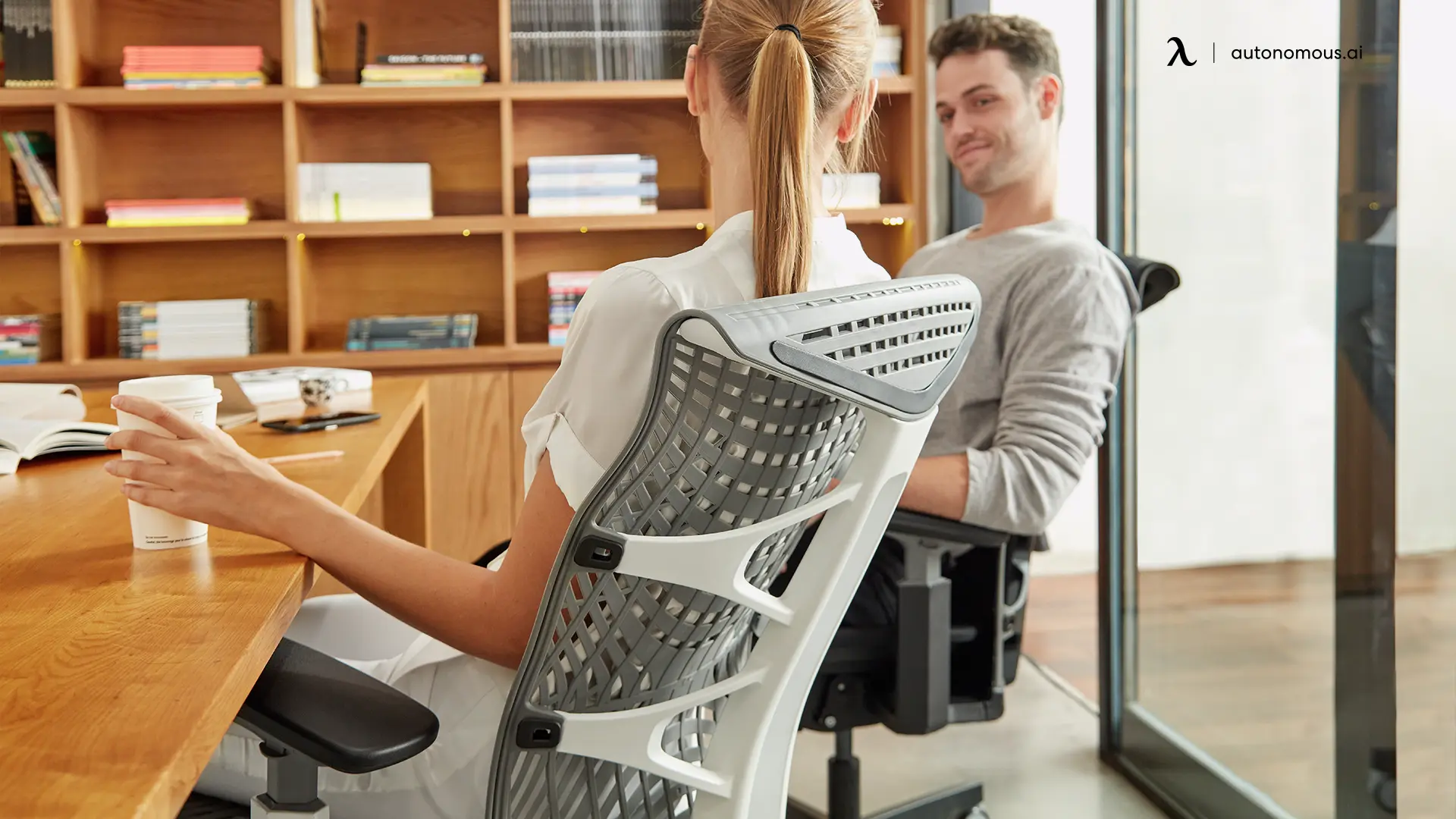
I am 5'1", and for years no office chair fit me: the seat sat too high, my feet dangled, and the lumbar hit my shoulder blades, not my lower back. If you are a petite woman around 5 feet, you know it. I write ergonomics for Autonomous, and the fix is simpler than it feels: the ergonomic office chair that fits a petite woman is the one that adjusts to her, and the ErgoChair line adjusts more than most, paired with a footrest to bring your feet flat. Below, I match each ErgoChair to how a petite woman sits.
What a 5-foot frame actually needs
Four things decide whether any of these chairs fits a petite woman, and they matter more than the seat-height number on the page.
Lumbar position comes first. A shorter torso means the lumbar support needs to sit lower than a standard chair places it, or the chair should flex to your whole spine so there is no fixed point to land wrong. Arm width and height come next, because narrow shoulders need the pads to come in and down, not just up. Seat depth matters because a shorter thigh needs the seat to shorten so the front edge does not press into the backs of your knees. And seat height decides your footrest, since every chair here will need one under about 5'3" to get your feet flat.
Match yourself to those four, then pick by the one you most need to solve.
.webp)
The Autonomous line at a glance
Chair | Best for a petite woman | Min seat height | Price* |
Placing lumbar on a shorter waist | 18.5" | $499 | |
Narrow shoulders, whole-spine flex | 18" | $449 | |
All-mesh with a headrest that fits | 18.5" | $499 | |
Flex-frame plus a headrest | 18" | $499 | |
The budget pick for a lighter frame | 20" | $279 |
*Prices change periodically and sales are common. Check the current price before buying.
The best Autonomous chairs for a petite woman
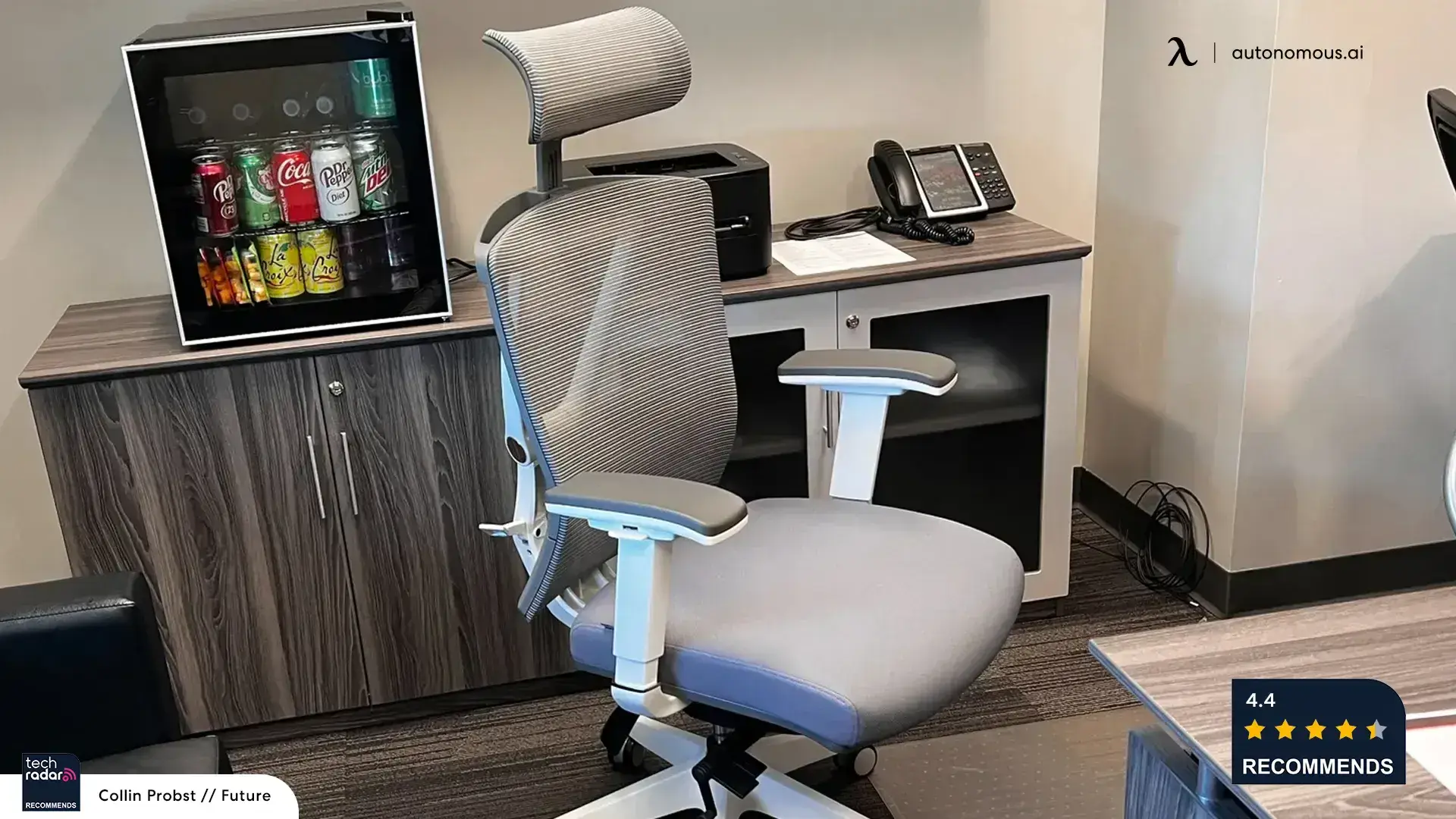
1. ErgoChair Pro, for placing lumbar on a shorter waist
Specs:
- Seat height 18.5-22"
- Seat depth 19-21.5" (adjustable)
- 3D armrests 11-14"
- Sliding lumbar support with a 6" vertical range
- Adjustable headrest
- 9 adjustment points
- 300 lb
- Lifetime frame warranty
If lower-back pain is the issue, the ErgoChair Pro is where I would start. It is an ergonomic chair with adjustable lumbar support whose pad travels a full 6 inches, which is the fix for the problem most petite women have: a standard lumbar is built for a taller torso, so it presses into the mid-back instead of the lower spine, where a proper posture office chair supports you. On the ErgoChair Pro you drop the pad to meet your actual waist, then it holds there. It also adds an adjustable headrest for calls and a seat depth that shortens for a shorter thigh. The catch is the seat starts at 18.5 inches, so under about 5'3" you will want a footrest, and the 3D arms bottom out at 11 inches, higher than the ErgoChair Ultra 2's, so very narrow shoulders may prefer that chair instead.
.webp)
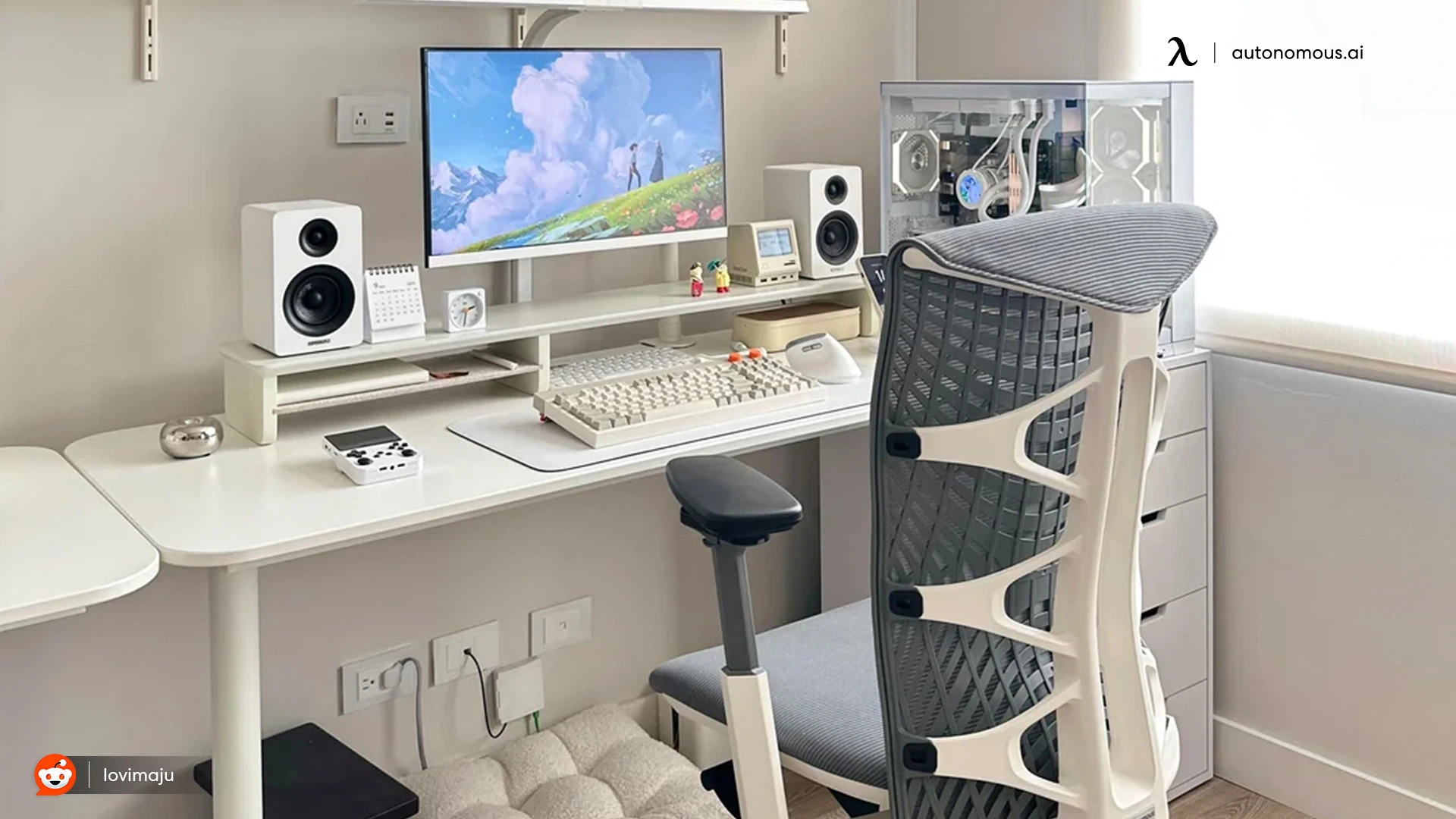
2. ErgoChair Ultra 2, for narrow shoulders and a back that moves
Specs:
- Seat height 18-23"
- Seat depth 18-20.5" (adjustable)
- 4D armrests 7-11"
- Lumbarless flex-frame over 62 pressure nodes
- Aluminium base
- 320 lb
- Lifetime frame warranty
The ErgoChair Ultra 2 is the pick if your shoulders are narrow or a fixed lumbar has hurt you before. Its 4D arms drop to 7 inches above the seat and pull inward, the lowest and closest in the Autonomous line, so your shoulders relax instead of reaching up and out for the pads. Instead of a lumbar pad it uses a lumbarless flex-frame that supports your whole spine and moves as you shift, so there is no fixed bump to land in the wrong spot on a short torso. Its seat starts at 18 inches, the lowest here, though still footrest territory under about 5'2". The one thing it lacks is a headrest, so if you want head support on long calls, look at the ErgoChair Ultra 2 Plus below.
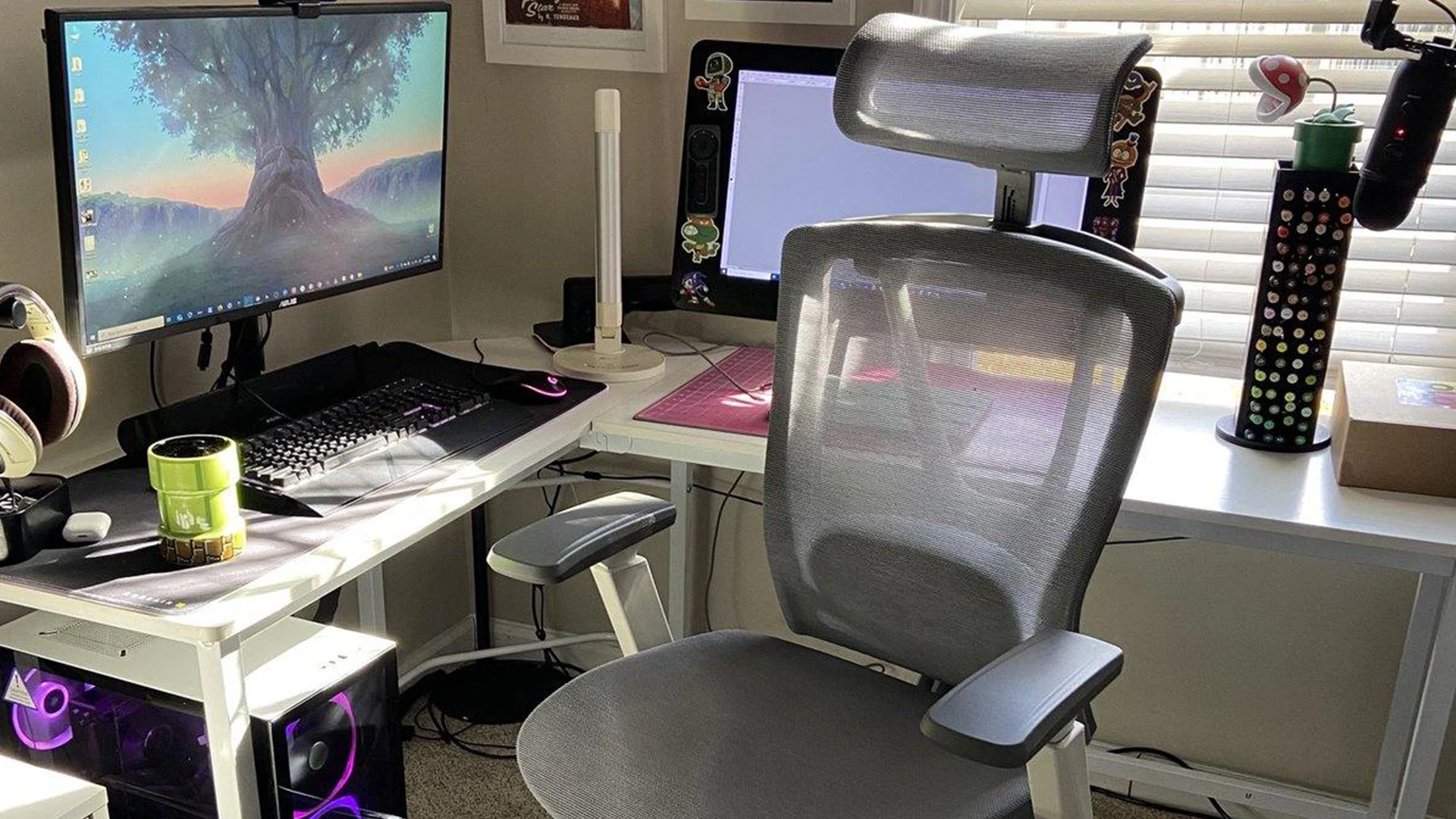
3. ErgoChair Mesh, for all-mesh with a headrest that fits
Specs:
- Seat height 18.5-21.5"
- Seat depth 18-20" (adjustable)
- 3D armrests
- Sliding lumbar cushion
- Adjustable headrest included
- German mesh back
- 300 lb
- Lifetime frame warranty
The ErgoChair Mesh is the most complete fit for a petite woman who wants a headrest and a cool, breathable back. Its German mesh vents heat over long days. It is one of the few mesh office chairs with a headrest that drops low enough for a shorter neck rather than perching above it, and among mesh office chairs with lumbar support it pairs a sliding cushion with seat-depth adjustment, so you can place support and shorten the seat to your frame. It sits in the same footrest range as the ErgoChair Pro at 18.5 inches. If the Aeron-style all-mesh feel is what you want but you also want a headrest and a lower price, this is the mesh chair to get.
4. ErgoChair Ultra 2 Plus, for flex-frame support plus a headrest
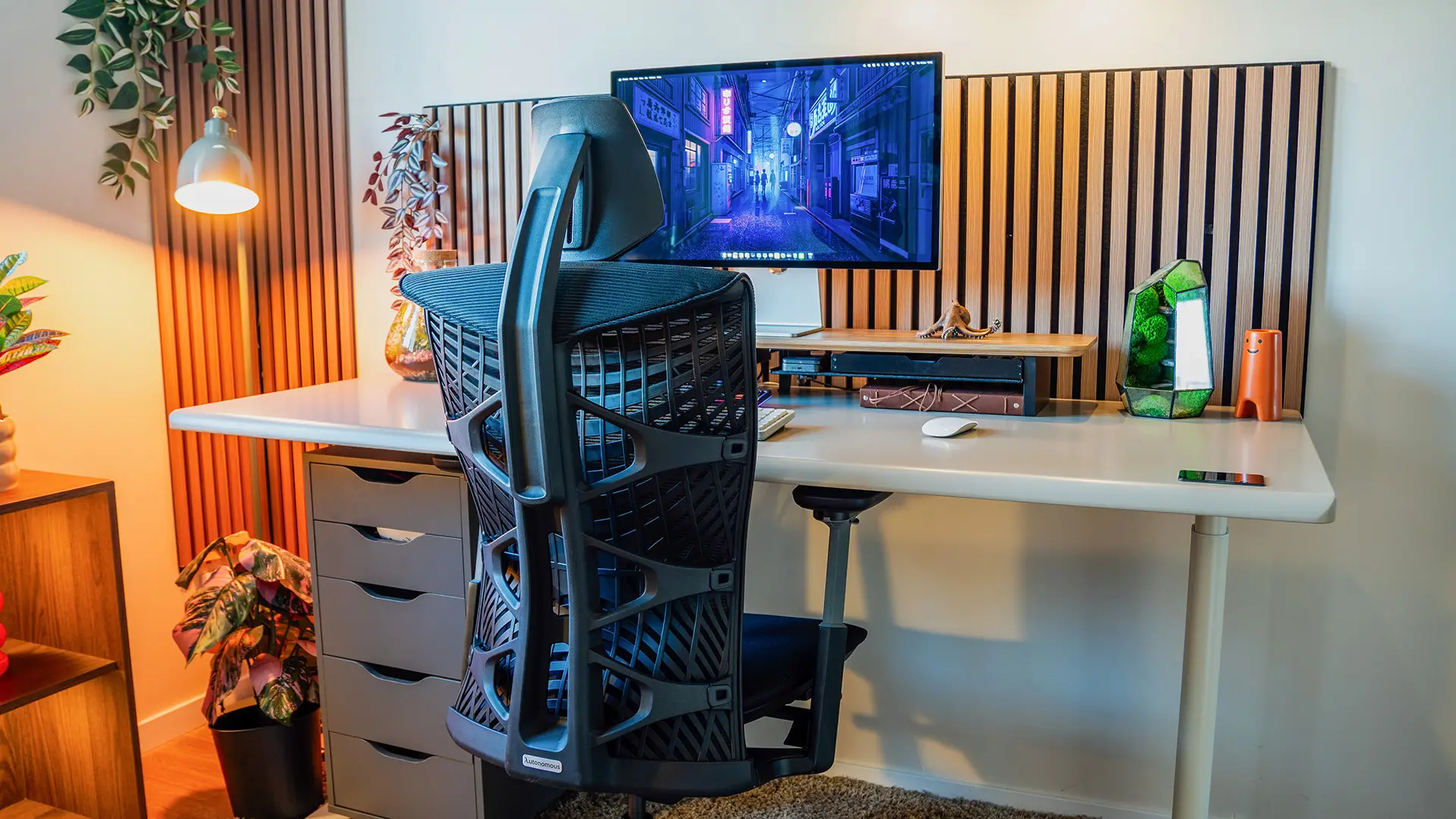
Specs:
- Seat height 18-23"
- Seat depth 18-20.5" (adjustable)
- 4D armrests 7-11"
- Lumbarless flex-frame
- Adjustable headrest
- 330 lb
- Lifetime frame warranty
The ErgoChair Ultra 2 Plus is the ErgoChair Ultra 2 turned into a high-back chair with a headrest, and for a petite woman that combination is the sweet spot if you take a lot of calls. You get the same low, inward 4D arms and the same whole-spine flex-frame that suits narrow shoulders and a moving back, plus head and neck support that a standard headrest cannot give a shorter frame. It carries the highest weight rating in the line at 330 pounds and the same lifetime frame warranty. It costs more than the base ErgoChair Ultra 2, so it is worth it specifically when you want an office chair with adjustable headrest.
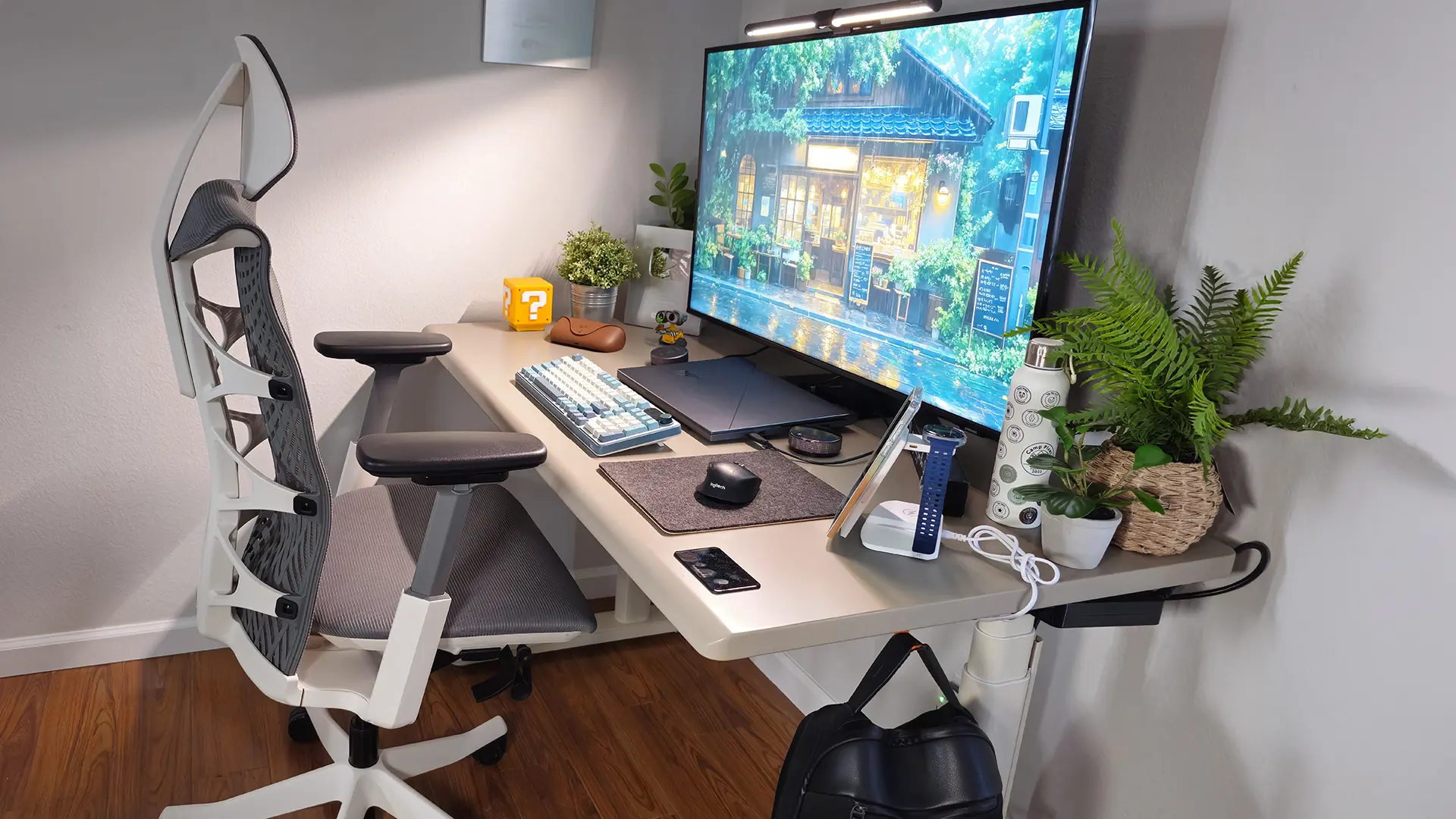
5. ErgoChair Core, the budget pick for a lighter frame
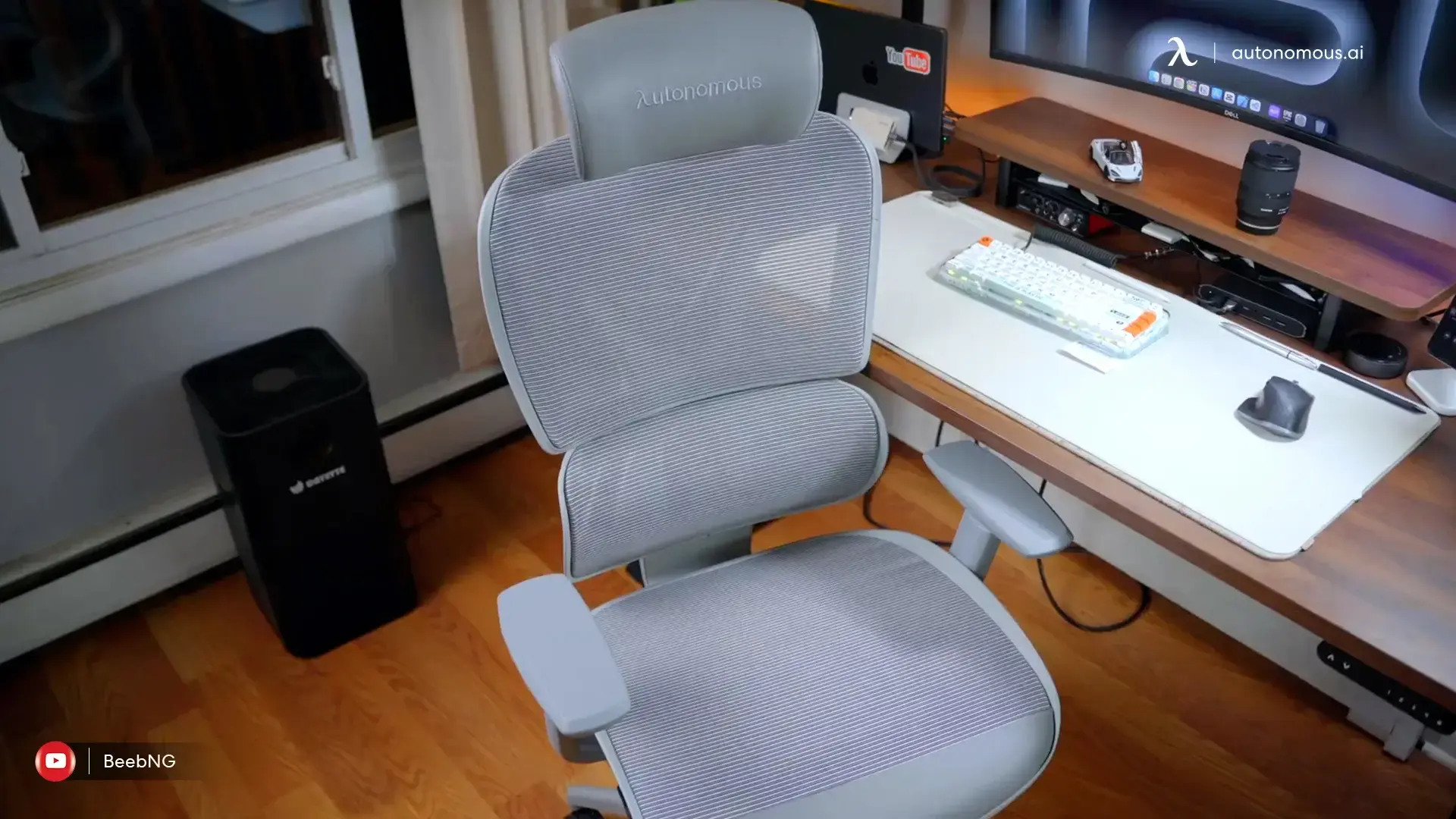
Specs:
- Seat height 20-23.8"
- Seat depth 18.5-20.5" (adjustable)
- 3D armrests 10.5-13.5"
- Passive dual backrest
- Adjustable headrest
- Breathable mesh
- 242.5 lb
- 2-year warranty
The ErgoChair Core is the one to consider when budget is the constraint, for a student who wants the best office chair for college students, a second workspace, or a lighter petite frame. It has a breathable mesh back, a headrest, 3D arms, and a dual backrest that follows your spine's S-curve, and as one of the best budget office chairs in the line, it comes in well under the others. Two honest catches for a petite woman, though. Its seat starts at 20 inches, the highest in the line, so it needs the biggest footrest of any chair here to get a 5-foot frame's feet flat. And the dual backrest is passive, meaning there is no lumbar you can position, so if lower-back placement is your main problem, the ErgoChair Pro or ErgoChair Mesh will serve you better. It also carries a 2-year warranty rather than the lifetime coverage on the others.
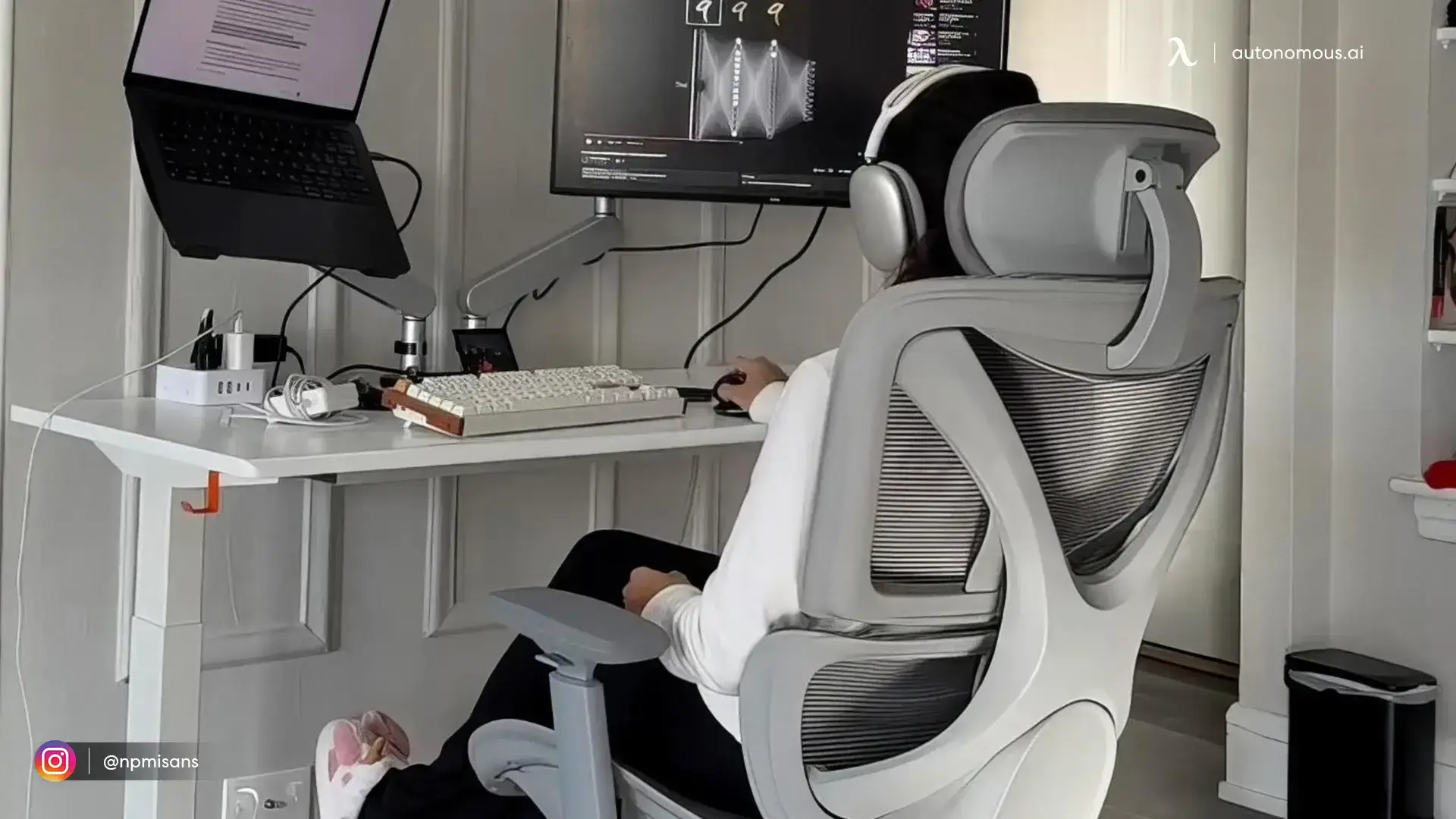
At a purchase step, the code BLOGFIRST5 takes an extra 5% off.
How to set any of them up for a 5-foot frame
Buying the right chair is half the job; setup is the other half, and it is the part most petite women skip. Work through it in order:
- Set the seat height. Lower it as far as it goes. If your feet still do not rest flat, add a footrest rather than letting them dangle, since dangling feet push the front edge into your thighs. Aim for feet flat, knees near a right angle.
- Shorten the seat depth until the front edge sits an inch or two from the backs of your knees.
- Set the lumbar. On the ErgoChair Pro or ErgoChair Mesh, slide it down to the curve of your lower back, not your mid-back. On the ErgoChair Ultra 2 and ErgoChair Ultra 2 Plus, the flex-frame does this for you.
- Bring the arms in and down until your shoulders drop and your forearms rest level with the desk.
- Check the desk. A low seat usually means a standard 30-inch desk is too tall, which pulls your shoulders back up. Lower the desk if it adjusts, or add a keyboard tray.
For a fuller comparison against non-Autonomous options, our guide to petite office chairs for short people puts these chairs next to the Aeron, Steelcase, and purpose-built petite brands.
How to choose
Pick by the problem you most need to solve, then add a footrest and lower your desk, because a 5-foot frame needs both.
If your main issue is | The chair to choose |
Lower-back pain | ErgoChair Pro or ErgoChair Mesh, so you can place the lumbar low |
Narrow shoulders, or a fixed lumbar has hurt you | ErgoChair Ultra 2, or ErgoChair Ultra 2 Plus if you also want a headrest |
All-mesh with a headrest and a cooling back | ErgoChair Mesh |
A tight budget or a lighter frame | ErgoChair Core, paired with a good footrest |
.webp)
FAQs
What is the best Autonomous chair for a petite woman?
It depends on your main problem. For lower-back pain, the ErgoChair Pro slides the lumbar down to a shorter waist. For narrow shoulders, the ErgoChair Ultra 2's arms drop to 7 inches and pull in. For an all-mesh chair with a headrest, the ErgoChair Mesh fits best. All need a footrest under about 5'3".
Do Autonomous chairs fit a woman who is 5 feet tall?
Yes, with a footrest. None has a truly petite seat height, since they start at 18 to 20 inches, but they adjust seat depth, lumbar, and arm width to a small frame, and a footrest brings your feet flat. That combination fits a 5-foot woman better than a low but rigid chair.
Which chair is best for a petite woman with back pain?
The ErgoChair Pro, because its lumbar slides down 6 inches so support lands on your lower back instead of your mid-back, the usual cause of back pain in a shorter torso. The ErgoChair Mesh does the same with a sliding lumbar cushion. The ErgoChair Ultra 2's flex-frame is a good alternative if a fixed pad has bothered you.
Which Autonomous chairs come with a headrest?
The ErgoChair Mesh, the ErgoChair Ultra 2 Plus, and the ErgoChair Core include a headrest, and the ErgoChair Pro offers an adjustable one. The base ErgoChair Ultra 2 does not, so choose the Plus if you want the flex-frame with head support. For a petite woman, a headrest that adjusts low enough for a shorter neck matters more than simply having one.
Are Autonomous chairs HSA or FSA eligible?
Yes. The chairs qualify through Truemed with a letter of medical necessity from your doctor, which works out to roughly 30% in pre-tax savings. Eligibility and paperwork vary by plan and by chair, so confirm with your plan administrator before you place the order.
Do I really need a footrest?
For most women around 5 feet, yes. Because every chair here starts at 18 inches or higher, a footrest is what brings your feet flat and stops the seat edge from pressing into your thighs. Set the seat for your hips first, then the footrest for your feet.
Bottom line
The best ergonomic office chair for a petite woman is not the one with the lowest seat, it is the one that adjusts to a 5-foot frame and lets you place support where your body actually needs it. Choose the ErgoChair Pro to set lumbar on a shorter waist, the ErgoChair Ultra 2 or ErgoChair Ultra 2 Plus for narrow shoulders and whole-spine flex, the ErgoChair Mesh for an all-mesh chair with a headrest, or the ErgoChair Core to spend the least. Then add a footrest and lower your desk, and a chair that was never built petite will finally fit like it was.
References
- Autonomous Engineering. Human-form innovation (flex-frame backrest) and chair ergonomics research. autonomous.ai/engineering
- Occupational Safety and Health Administration (OSHA). Computer Workstations eTool: Chair. https://www.osha.gov/etools/computer-workstations/components/chairs
- Cornell University Ergonomics Web. Office Ergonomics Guidelines. https://ergo.human.cornell.edu/