All You Need To Know About Different Keyboard Sizes & Layouts

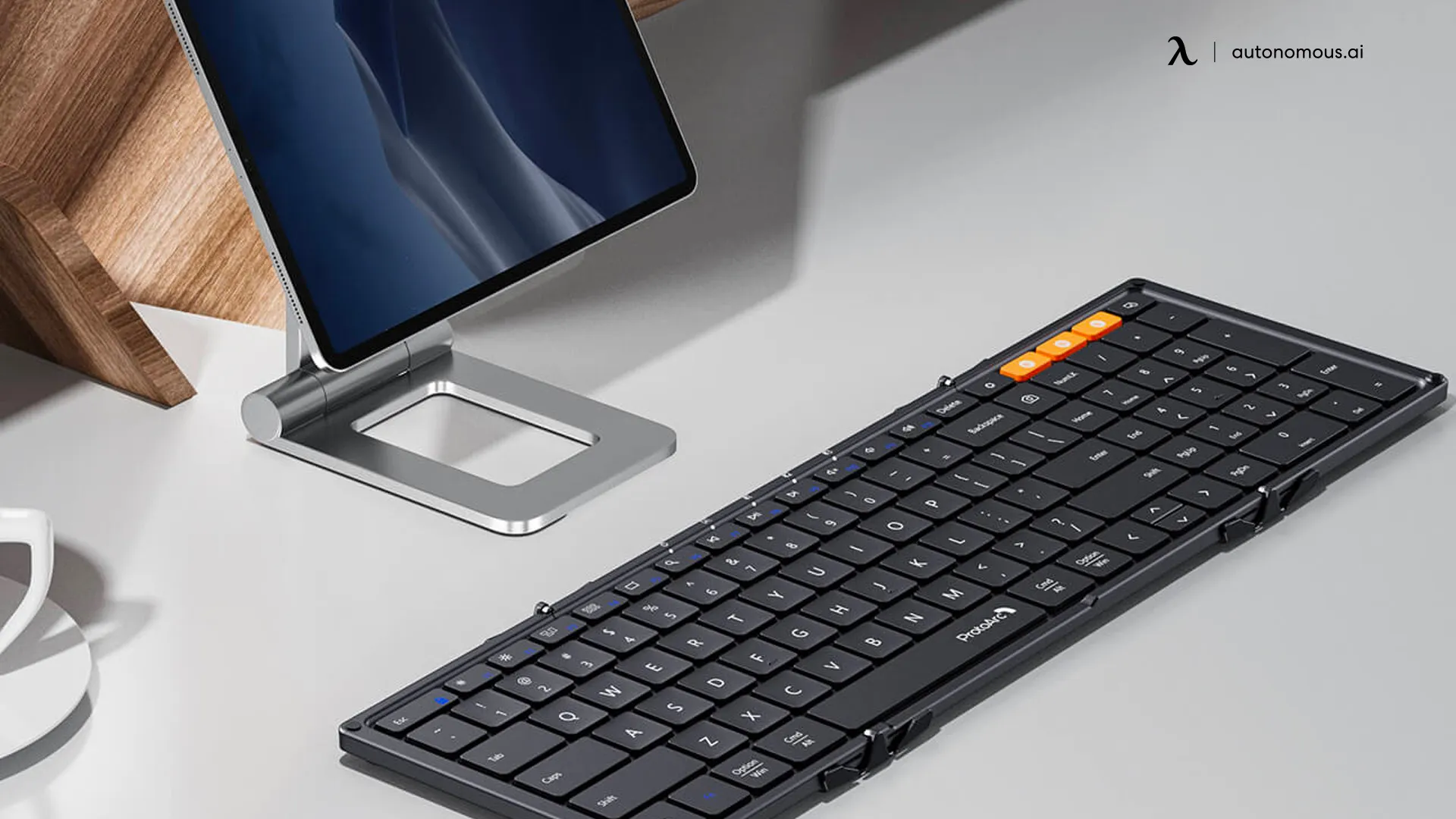
Table of Contents
Did you know a wrong keyboard selection can lead to many serious injuries in office workers and gamers? Keyboards are often ignored accessories with all types considered similar. But as a matter of fact, there are multiple types of keyboards designed to fit each job and end-use. Each is vital in defining the user's efficiency, from different keyboard layouts and sizes to materials, layout, design, and construction.
And this is why modern office ergonomics focuses on an ergonomic keyboard for work and gaming. The ergonomics of a keyboard are helpful because it minimizes strain on the user, prevents any work-related injuries, and ensures there are no uncomfortable hand positions while working. This might not seem too important, but someone suffering from poor health due to bad keyboard usage will realize the benefits of an ergonomic keyboard.
However, as much as ergonomics and safety are concerned for a keyboard user, the types of keyboard layouts, sizes and layouts also play an equally important role. Hence in this article, you will find all the different types of standard keyboard sizes and layouts so you can make an informed decision.
1. What is Keyboard Size?
You might have often heard of the different computer keyboard layouts and sizes. But what exactly refers to keyboard size? To break it down, keyboard size refers to the physical size of the keyboard, which is directly affected by the number of keys present on the keyboard. A keyboard with a greater number of keys will have a bigger size; similarly, a small keyboard will have lesser keys. But another factor that impacts modern keyboard size is the keyboard layout. Some keyboard layouts are more compact, with keys closer to each other. Below are some common work and gaming keyboard layout types and sizes you will come across on a routine basis.
1.1. Full-Size Keyboard
The most common and probably the keyboard you and I are currently using. And just because it is common doesn't mean there is no better option than this. The size and feel are familiar, but many people settle for better options because the full size is too bigger or inaccurate for fast typing response. 100-keyboards have completely laid out function keys, arrow keys, navigation, and Numpad, as well as identify keys. This type of keyboard is useful for people who need the use of all types of keys, including alphabets and numbers.
1.2. TKL Keyboard
Also known as 80%, the TKL keyboard is the Tenkeyless keyboard. This one is a default option for gamers and people who don't have much to do with numbers. Just without the Numpad, the TKL keyboard is a full-sized keyboard with 88 keys. The separated allow cluster allows navigation, and getting used to this layout is pretty straightforward.
1.3. 75 Keyboard Layout
A 75-keyboard layout is just a version ahead of the TKL keyboard with several keys minus 4 and eliminating the 2 navigation and pause keys. The row cluster is changed to be next to the CTRL key, and this computer keyboard size looks compact and feels compact, with keys being closer to each other. However, the functions are not compromised compared to the TKL keyboard, so you can pick the 75 keyboards if you are searching for a more compact shape.
1.4. 60 Keyboard Layout
The 60-keyboard layout is a column lesser in width as compared to the 65-keyboard layout. This keyboard does not have arrow keys, numpad, navigation keys and not even the function row.
Streamers have popularized the 60-keyboard layout. Given that this was the first tiny keyboard, 60 percent keyboard layouts are rather prevalent. Get a 60% keyboard if you're more interested in the neat appearance or space-saving features of the small design. If you frequently use the F or arrow keys, I recommend skipping the 60%.
1.5. 50 Keyboard Layout
The 50% arrangement is highly distinctive and uncommon, entering the realm of bespoke keyboards. The 50% layout is essentially the same width or broader than the 60% layout; however, in addition to losing the number row and function row, as well as the Numpad, navigation keys, and arrows, it also adds a macro column to the left of the keyboard.
The 50% decrease adds some special functionality by providing a macro column while saving a complete row of keyboard height. If you want something novel and different and a small form factor with some macro capabilities, get a 50% keyboard. However, the 50-gaming keyboard size layout is not the best fit if you often need the number row.
2. Keyboard Layouts
Your keyboard’s layout determines how safely, smoothly, and quickly you type. Some of you might be aware of the different keyboard layouts you can make and how you can have a safe typing experience by choosing the right keyboard layout.
Have you encountered a different-looking keyboard that doesn't match your childhood memories? No, they are not from outer space, but different layouts of keyboards have been common for a long time. Although most of you would be aware of the QWERTY layout because every other laptop and PC has it, you might not know that certain other keyboard layout types exist as well. Selecting a different full size keyboard layout can revolutionize your typing experience.
If you have decided which keyboard size is right for you, you must know more about the full keyboard layout as well. Each keyboard layout serves a different purpose and has unique functionality. We have shared their details below to help you have a better understanding. So, let's jump on to their details.
2.1. QWERTY Keyboard
The most common type of keyboard layout and probably the only one most of us recognize. In the 1870s, the first typing layout was created. This arrangement was intended to be slow and ineffective so that typewriters wouldn't jam from being used too quickly. This is achieved by spacing vowels and other frequently used characters widely apart and avoiding placing many of the most popular letters on the home row.

2.2. Dvorak Layout
The keyboard's layout places all but the letter U on the home row of the most frequently used consonants and vowels to be quick and effective.
The Dvorak arrangement also places the first and second most often used letters in the English language, E and T, on the middle finger, which is the longest finger. Additionally, the most frequent punctuation is located just above the left-hand's home row, which has been found to have benefits for typists who use this keyboard layout.
2.3. Unconventional Keyboards
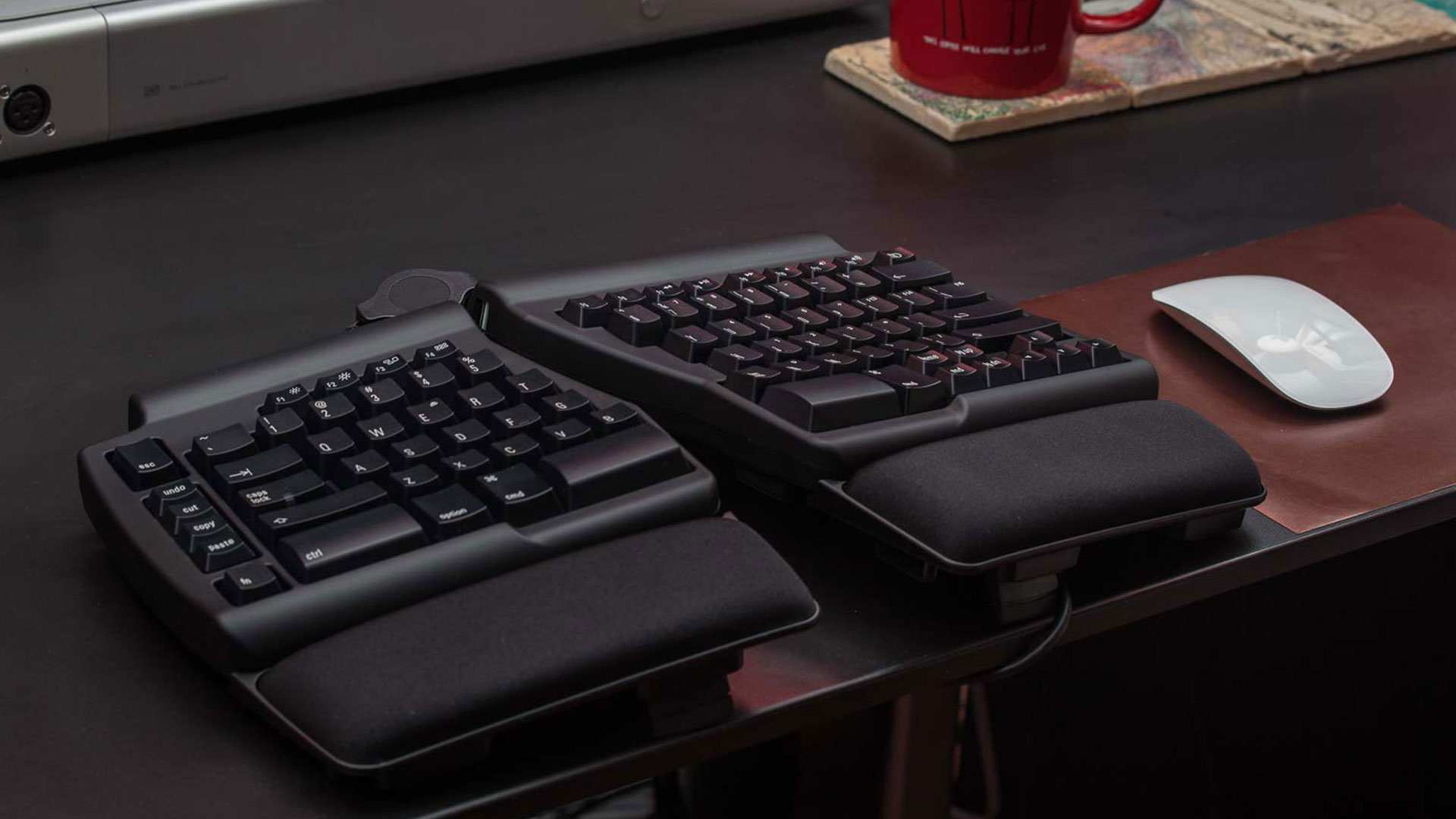
Unconventional keyboard layouts are not classified by size, and this is what names them as being unconventional. The keyboards in this category are ergonomic split mechanical keyboards, an ortholinear keyboard, or the macropod.
Split keyboards divide in half to form an ergonomic separation between the left and right hands of the keyboards, so there is no slouching or shrugging on the shoulders. These types of keyboards are common as ergonomic programming keyboards. Ortholinear keyboards have varying column heights and are useful for people with wrist pain or carpal tunnel history. Lastly, a macropod is a smaller keyboard used as an added accessory to a regular keyboard.
2.4. Colemak Layout
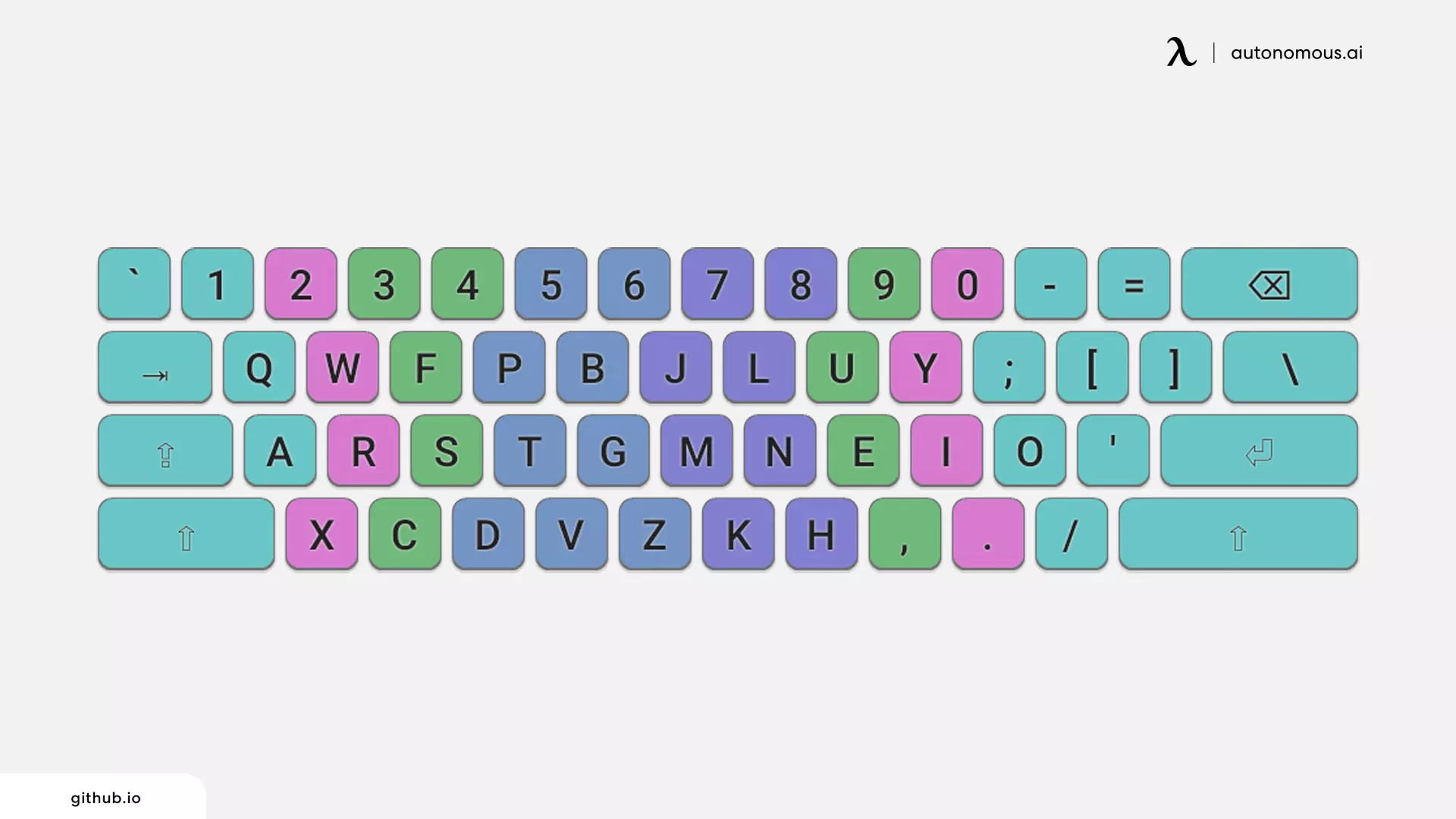
Colemak Layout is one of the newest layouts in the market that Shei Coleman invented in 2006. If you compare it with the Dvorak layout, it is an upgrade to that. If you know the Dvorak layout already, you will know that it had the O, E, and U keys in the home row. Coleman has changed this layout a bit and replaced O with R, E with S, and U with T to make typing experience more efficient.
The right-hand side keys also have a few placement changes compared to the Dvorak layout. For instance, you find N in place of H, E in place of T, I in place of N, and O in place of S. One thing unique about this layout is that you will find the I key in the home row for the first time here.
In most cases, like in Windows 11 users' scenario, you will need a third-party application to reconfigure your keyboard with the Colemak layout. However, the procedure is smoother for Mac users.
2.5. AZERTY Layout
The AZERTY Layout is quite famous in Europe and Asia, especially the countries where French is the mode of communication. Although its layout is quite similar to QWERTY keyboards, there are some little changes here. The makers have replaced the Q key with A and W with Z. That's how it got the name AZERTY instead of QWERTY.
It also has a few changes in the right-hand side key set. You will find the semicolon key in place of M. One other difference is in the number row. If you are a QWERTY keyboard user, you would have predominantly used the top numerical key row for entering numbers and pressing the shift key to get the desired symbol on each key.
If you look at the AZERTY layout, you will have to press the shift key to get the numbers, as the top keys are predominantly for accents and symbols. Overall, it can be a useful keyboard layout if you are typing French instead of English.
2.6. Maltron Layout
Maltron Layout is one of those keyboard layout types that the makers have designed to meet the ergonomic requirement of a keyboard. Suppose you compare the traditional full size keyboard layout with the Maltron layout. In that case, you will notice that the Maltron features different rectangular groupings of keys instead of one single key group.
There is a number pad in the middle and two square-shaped groups of letter keys. You will find A, N, S, I, and F in the home row key of the left-side group, while D, T, H, O, and R are in the right-side letter group. Overall, this keyboard has a layout similar to split keyboards.
2.7. QWERTZ Layout
Like AZERTY, QWERTZ is also one of those different keyboard layouts that are quite similar to QWERTY keyboards but has a few changes. People living in Central Europe, especially those who speak the German language, usually use the QWERTZ keyboard. Albeit you may find QWERTZ commonly in Germany, the Czech Republic, Austria, etc., the keyboard layout types may vary from country to country.
2.8. JCUKEN Layout
JCUKEN Layout is completely different from the QWERTY layout. You will find it commonly in Slavic countries such as Russia, where people use the Cyrillic alphabet instead of Latin-based English. In simple terms, the JCUKEN layout is the default layout for Russian keyboards. Its home row contains F, Y, W, A, P, R, O, L, D, and V.
3. FAQs
Since you now have a better know-how about the different keyboard layouts now, here are the answers to some questions that people commonly have about keyboard layout types.
Why is the keyboard layout QWERTY?
The QWERTY layout was first introduced in typewriters to lessen the jamming occurrence. If typists typed too fast, their keyboards' keys used to get jammed. However, the QWERTY keyboard reduced the typing speed and lessened the instances of mechanical keys getting jammed. Since they are the oldest keyboard layouts, people have used them ever since.
How to change keyboard layout Windows 11?
If you have added a keyboard layout in your Windows 11, you must go to the keyboard layout option in the taskbar and select the keyboard layout that you desire to use. A simpler way of shifting between different keyboard layouts is to press the Windows key and the spacebar together.
What keyboard layout should I use?
Although the QWERTY keyboard is the oldest layout people commonly use, the Dvorak keyboard is the best one for people looking forward to having an ergonomic typing experience. Certain estimates have shown that you are more than 60 percent faster while typing on Dvorak keyboards.
What is the standard keyboard layout?
The QWERTY keyboard is the standard keyboard layout that you will find on most of the keyboards featuring Latin-based English alphabets. It is also one of the oldest keyboard layouts that typists first used in typewriters.
What is the fastest keyboard layout?
Dvorak layout has proved itself to be the fastest keyboard layout as per multiple tests. So, people who wish to increase their typing speed may think of going for keyboards with a Dvorak layout.
Does a keyboard layout matter?
Yes, your keyboard layout greatly affects the way you type and your typing speed and defines your safety while typing. The right layout will lessen the chances of wrist injuries and help you become more efficient.