8 Best Office Chairs for Tall Men Over 6'0" (2026)

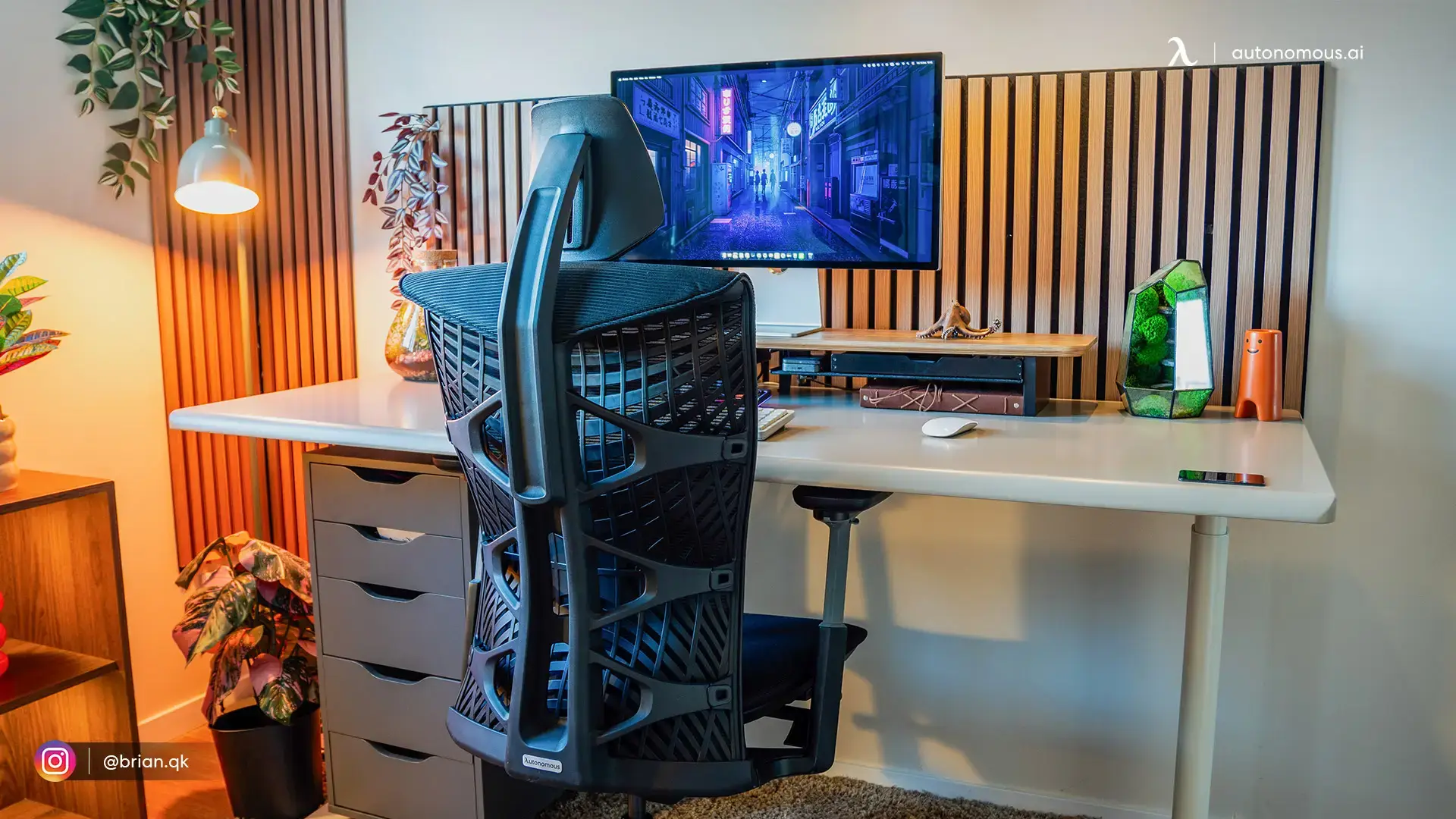
Table of Contents
- Key Features That Actually Matter In the Best Office Chairs for Tall Men
- Top 8 Ergonomic Office Chairs for Tall Person
- 1. Autonomous ErgoChair Ultra 2
- 2. Staples Hyken XL Ergonomic Fabric Swivel Big & Tall Chair
- 3. IKEA MARKUS Office Chair (Large)
- 4. Wonder Comfort Ergonomic High Executive Chair
- 5. BestGlory Office Desk Chair
- 6. La-Z-Boy Bellamy Executive Office Chair
- 7. Eureka Ergonomic Royal, Microfiber Leather Executive Office Chair
- 8. Office Star Products Space Seating 63 Series Executive Chair
- How to Choose the Right Office Chair for Your Height
- FAQs
- Conclusion
Most office chairs are designed for people between 5'4" and 5'10". If you're 6 feet or taller, you've probably felt the mismatch — knees sitting too high, backrest ending mid-spine, lumbar support hitting the wrong spot.
This guide focuses on finding the right office chair for tall men based on dimensions, not weight ratings. Because being tall doesn't necessarily mean needing a heavy-duty chair — it means needing an ergonomic chair that's actually long enough to support your frame properly. Here's what to look for, and eight options worth considering.
Key Features That Actually Matter In the Best Office Chairs for Tall Men
Finding the right desk chair for tall men comes down to a handful of measurements. These are what separate a chair that fits from one that just claims to.
- Seat height:
This is the most common failure point. Standard office chairs typically max out around 18–19 inches. For someone 6'2" or taller, that's not high enough to keep knees at a comfortable 90-degree angle with feet flat on the floor.
When the seat is too low, your knees sit higher than your hips. This tilts your pelvis backward, flattens your lower spine, and puts sustained pressure on the lumbar region — the kind which builds into stiffness by afternoon.
A seat height range extending to at least 20–22 inches gives taller users room to adjust properly. Some chairs offer upgraded gas cylinders specifically for this purpose — worth checking if you're over 6'3". When seated correctly, your thighs should be roughly parallel to the floor, with feet resting flat.
- Seat depth:
While seat height gets most of the attention, seat depth is equally important — and far more often overlooked. This measurement refers to the length of the seat pan from the backrest to the front edge, and it directly affects how well your thighs are supported.
A seat depth between 19–22 inches works for most tall men, though a chair with an adjustable seat slider is ideal. This lets you fine-tune the fit based on your actual leg length rather than guessing from a spec sheet.
- Backrest height:
Once the seat fits properly, the next priority is making sure the backrest actually supports your full spine. A backrest that ends at the mid-back might work for average-height users, but for tall men, it leaves the upper back and shoulders with nothing to rest against.
For a comfortable office chair for tall person use, the backrest should extend to at least the shoulder blades. That typically means 24–26 inches for users between 6'0" and 6'3", and 26–30 inches for those 6'4" and above. Chairs with integrated headrests offer additional cervical support, which becomes especially useful during reclined positions.
- Lumbar position:
Most office chairs include some form of lumbar support, but proper lumbar support placement matters more than presence. On taller torsos, the natural inward curve of the lower spine sits higher than average. A fixed lumbar pad designed for someone 5'8" will land too low on a 6'2" frame, providing little support where it's actually needed.
The solution is lumbar support that adjusts vertically, not just in and out. Being able to raise the support to meet your spine's natural curve keeps the lower back in a neutral, sustainable position. Some chairs offer a floating lumbar system that moves with your posture — a useful feature if you tend to shift between upright and reclined throughout the day.
- Armrest height:
With the seat and back dialed in, armrests become the next checkpoint. Low armrests force your shoulders into a slight shrug. No armrests at all encourage leaning to one side. Neither is sustainable over long hours, and both create tension that accumulates in the neck and upper back. For tall men, especially those with longer arms, armrests need to be high enough to let the shoulders rest in a neutral, relaxed position. Elbows should bend at roughly 90 degrees, with forearms parallel to the desk surface.
- Headrest:
Finally, there's the headrest, often dismissed as optional, and for average-height users, it sometimes is. But for tall men, a properly positioned headrest can meaningfully reduce neck strain, especially during reclined work or long calls.
Without head support, the natural tendency is to push the head forward toward the screen. Over hours, this forward head posture creates tension through the neck and upper traps. An office chair with an adjustable headrest that reaches the base of your skull makes a noticeable difference. Angle adjustment helps too, letting you set the support for upright focus or a deeper recline depending on the task.
Top 8 Ergonomic Office Chairs for Tall Person
The chairs below were selected based on how well their dimensions suit taller frames, not just by weight capacity or "big and tall" labeling. Each one offers either the seat height range, seat depth, or backrest length that tall men typically need, along with enough adjustability to fine-tune the fit.
1. Autonomous ErgoChair Ultra 2
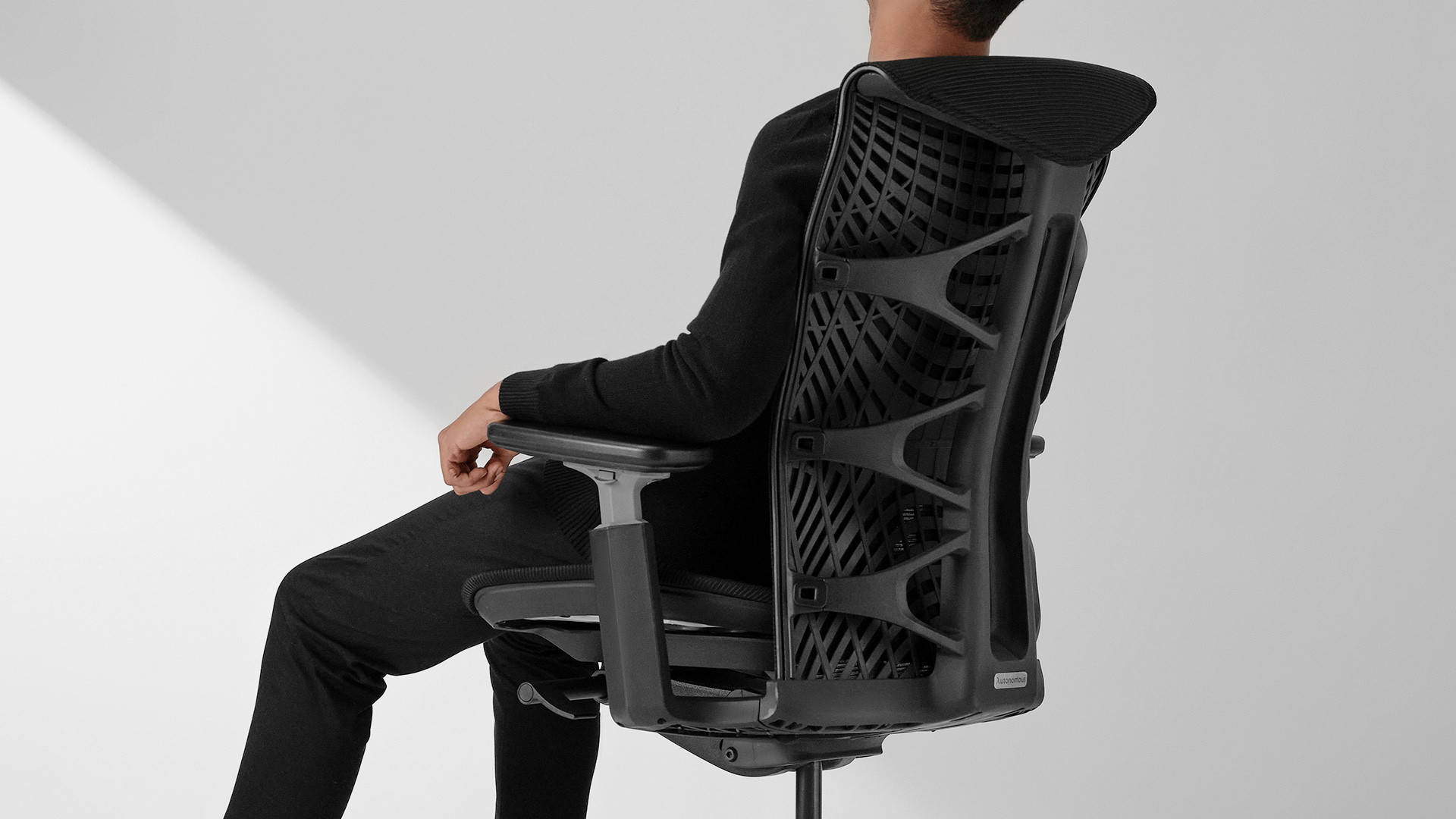
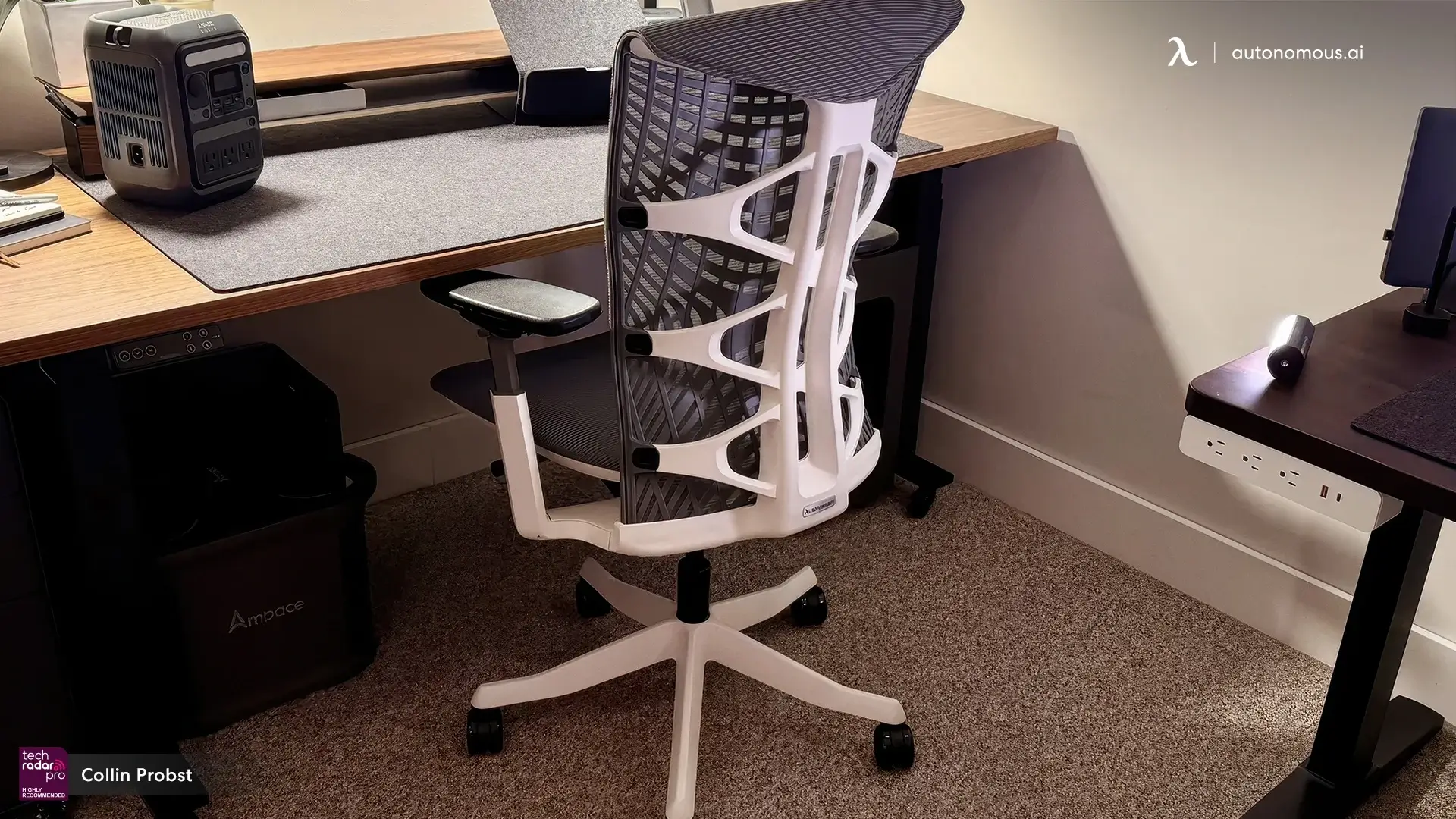
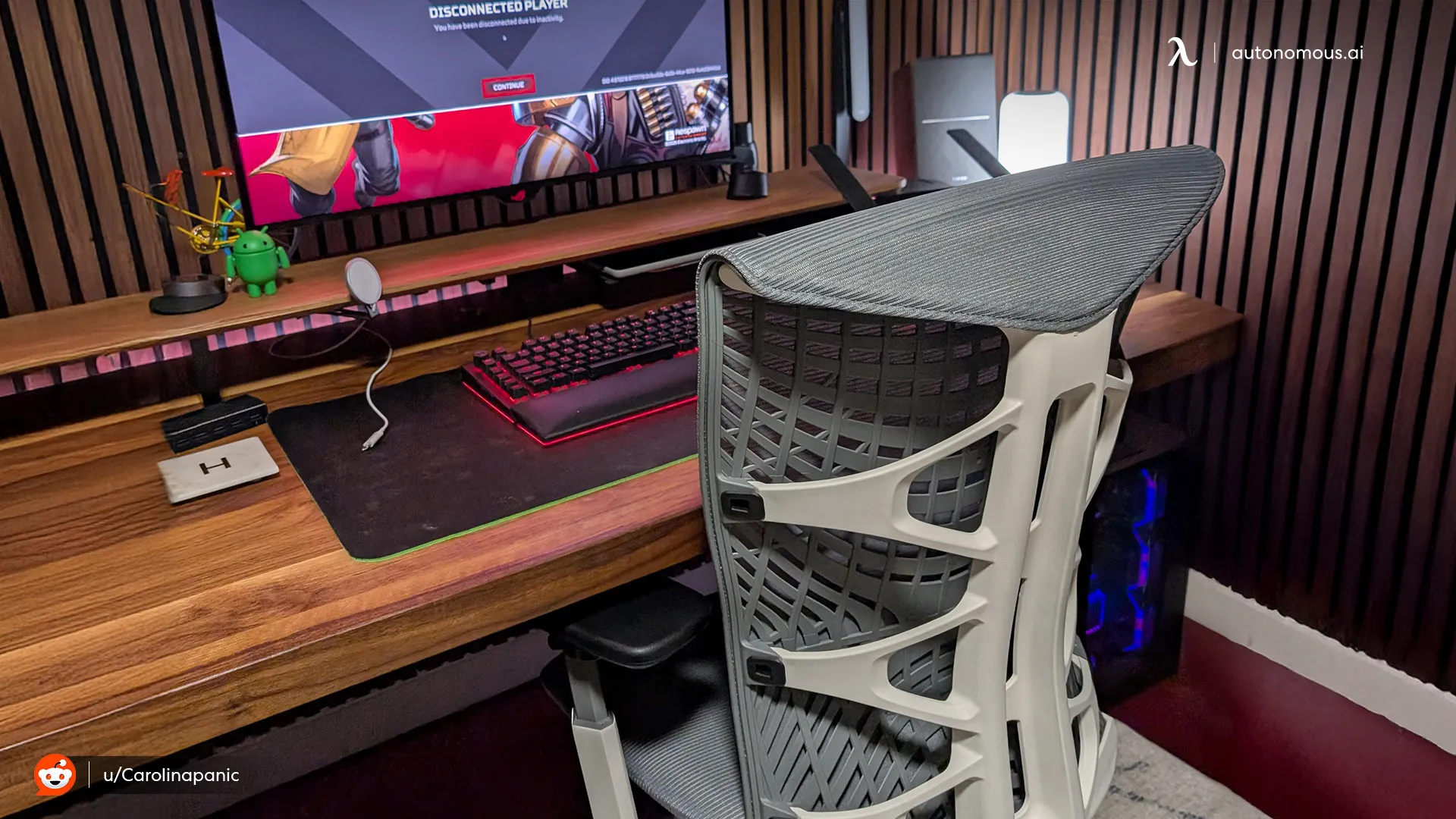
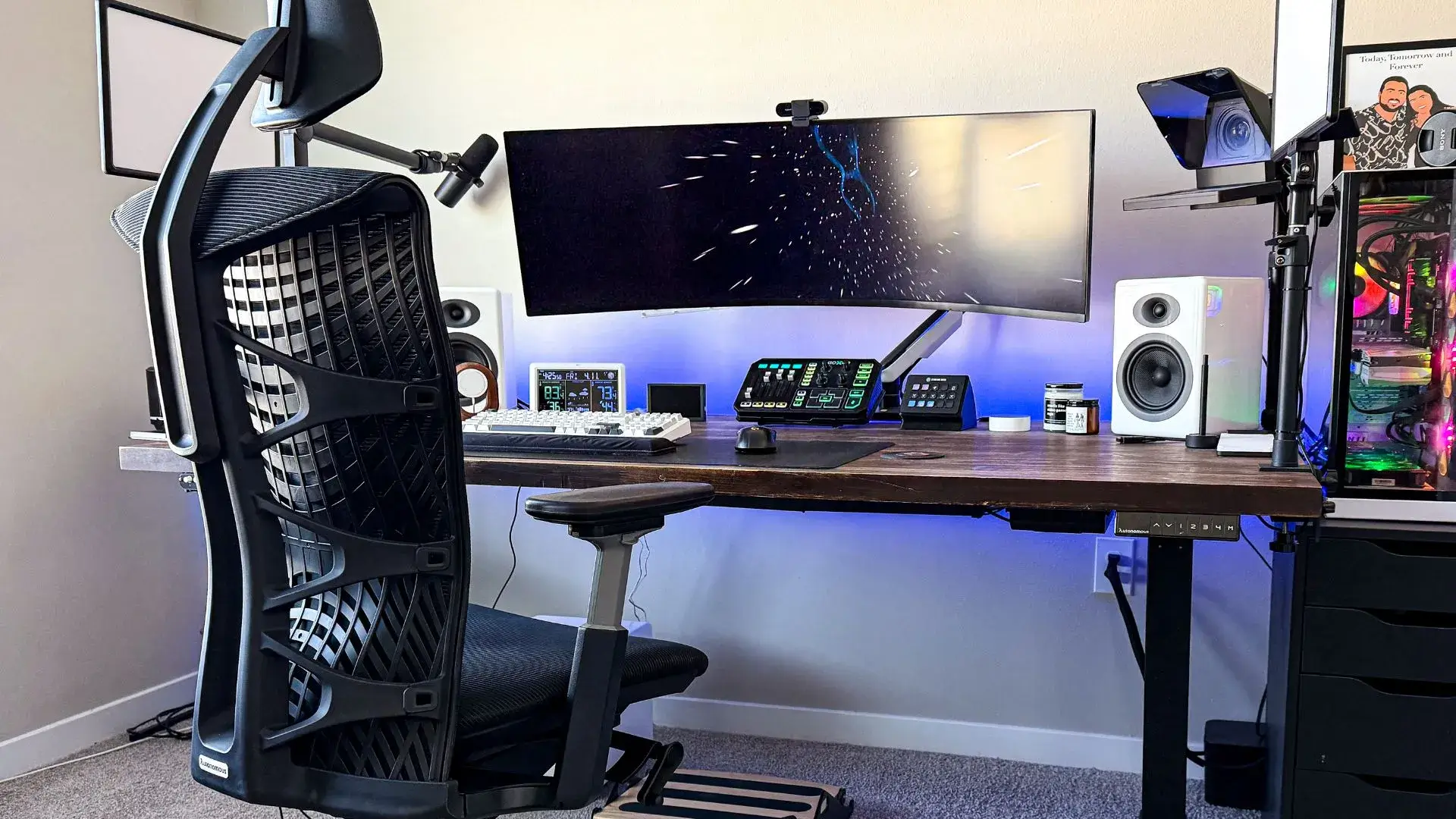
The Autonomous ErgoChair Ultra 2 fits those over 6 feet better than most ergonomic chairs in its price range, largely because of its seat height. It adjusts from 18 to 23 inches — a wider range than typical — which gives enough clearance to keep knees at a proper angle without feet hovering above the floor. For anyone who's had to choose between sitting too low or perching awkwardly, that extra headroom makes a noticeable difference.
Seat depth adjusts between 18 and 20.5 inches, accommodating longer thighs without the front edge cutting into the back of the knees. This is one of the more important specs for an ergonomic office chair for tall person use, and this high-back office chair handles it well. The adjustment is smooth enough to dial in during the first few days and forget about afterward.
Its 4-layer seat cushion distributes weight more evenly across the hips and sit bones, helping reduce numbness that can show up after a few hours on thinner padding. The backrest uses a flexible rib design that moves with posture shifts, maintaining contact with the mid and upper back as you lean or recline. That said, the lumbar support sits in a fixed position. The placement works well for users up to around 6'3", where the curve aligns naturally with the lower spine.
At 320 lbs capacity, the Ultra 2 is built for tall-and-medium frames rather than heavy-duty use. It suits those prioritizing dimensional fit and adaptive back support over maximum load rating — a practical choice for tall men who want an office chair for long hours that actually matches their proportions rather than just claiming to.

2. Staples Hyken XL Ergonomic Fabric Swivel Big & Tall Chair
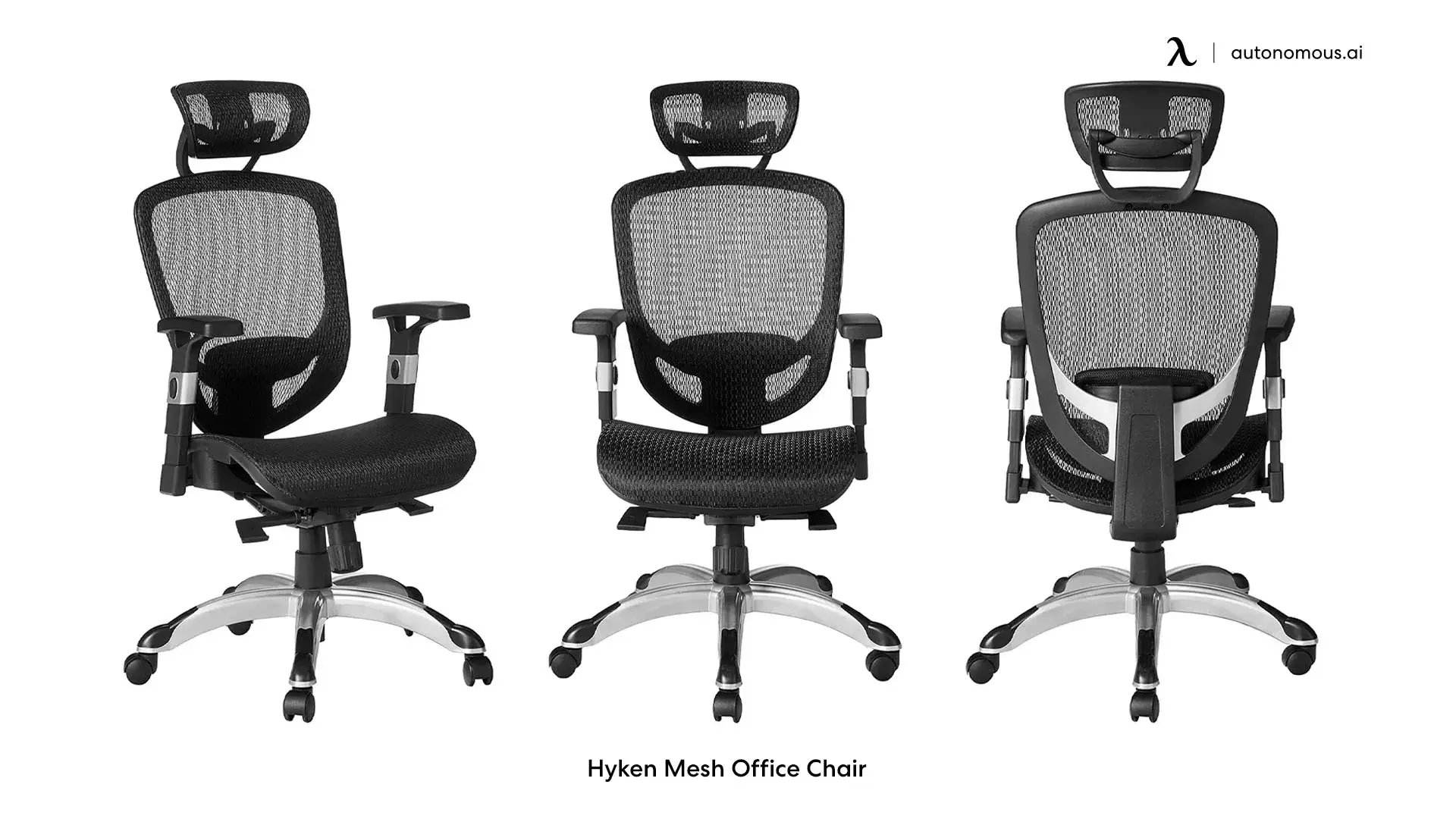
The Hyken XL offers more adjustment points than most chairs at its price, including seat depth and lumbar height — two features that matter most for tall users and are still uncommon under $500.
Adjustable seat depth lets you extend the seat pan to support longer thighs without the front edge digging into the back of the knees. It's a practical feature, though the range isn't published clearly in the specs, worth testing if possible. The lumbar support moves up and down independently, which helps position it closer to where taller torsos actually need it.
The seat uses layered foam over coil springs rather than flat padding. This creates a firmer base that resists compression better over time, though it also means the chair doesn't have the initial plushness some users expect.
Armrests adjust in three directions — height, angle, and depth — but not width. For taller users who also have broader shoulders, the fixed armrest spacing may feel narrow. The headrest is an optional add-on and pivots for angle, though its height range is limited.
The frame is bulkier than mesh chair designs, and the overall look leans functional rather than minimal. At 400 lbs capacity with a 5-year warranty, it falls into heavy-duty office chair territory — though tall users on the leaner side may find the proportions more generous than necessary.
3. IKEA MARKUS Office Chair (Large)
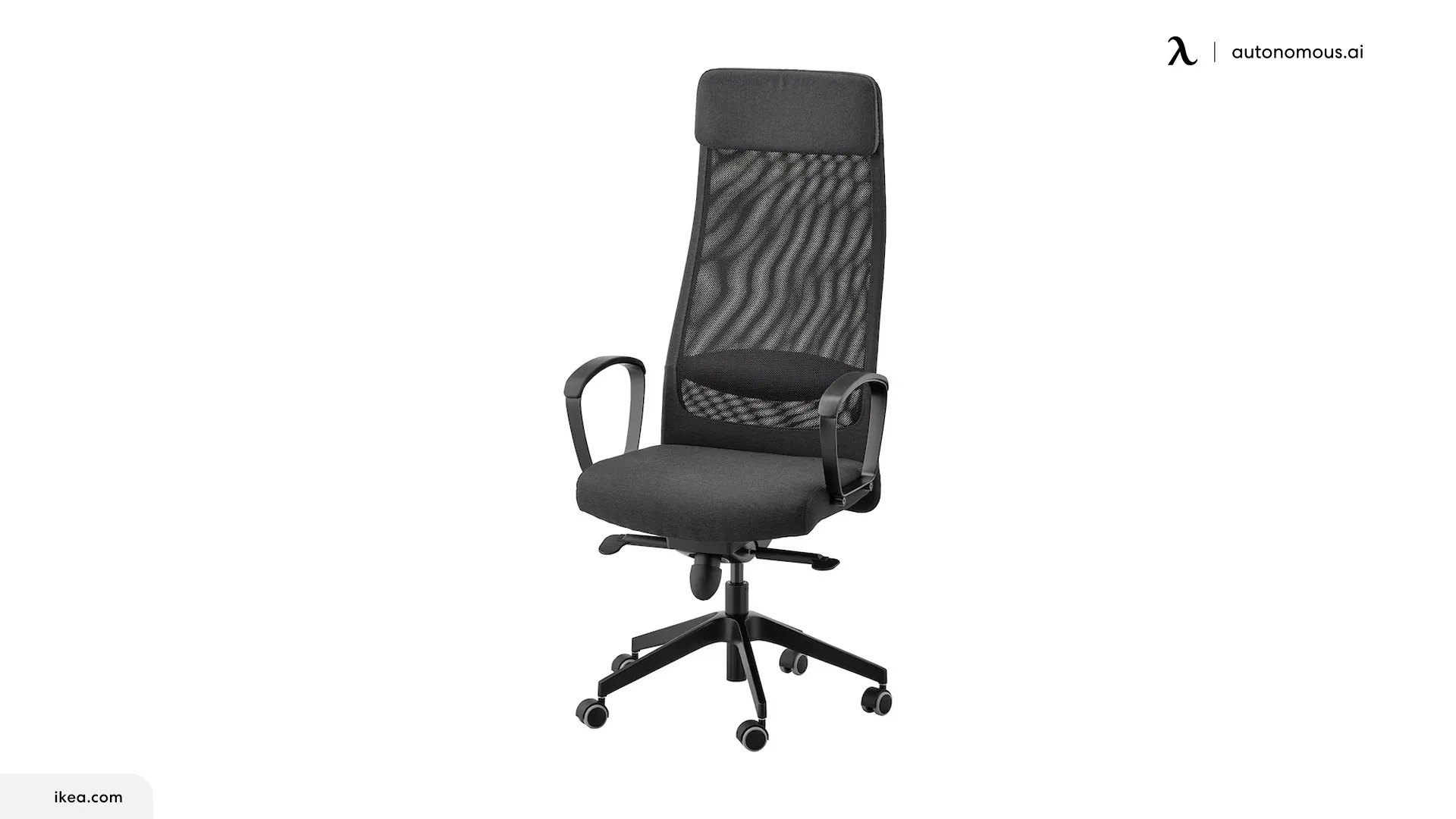
The MARKUS takes a simpler approach than most ergonomic office chairs for tall people. Instead of heavy adjustability, it relies on fixed dimensions that happen to suit many taller frames reasonably well.
The Large version adds a wider seat and longer cushion specifically to address the fit issues taller users experienced with the original. Seat height on the Large adjusts from 18.5 to nearly 23 inches, which covers the range most users between 6'0" and 6'4" need — though anyone requiring an office chair with 24-inch seat height will find this falls just short. Seat depth is fixed around 18.5 inches, adequate for average-length thighs but potentially short for those with longer legs.
The backrest is tall enough to support the upper back and includes a built-in headrest, but neither the headrest nor lumbar support adjusts. If the lumbar curve doesn’t match your lower back, you’ll likely need an external cushion. Armrests are also fixed, which can create desk clearance issues for some setups.
At 242 lbs capacity, it works best for tall users on the leaner side. It's straightforward — high back, mesh ventilation, minimal adjustments.
4. Wonder Comfort Ergonomic High Executive Chair
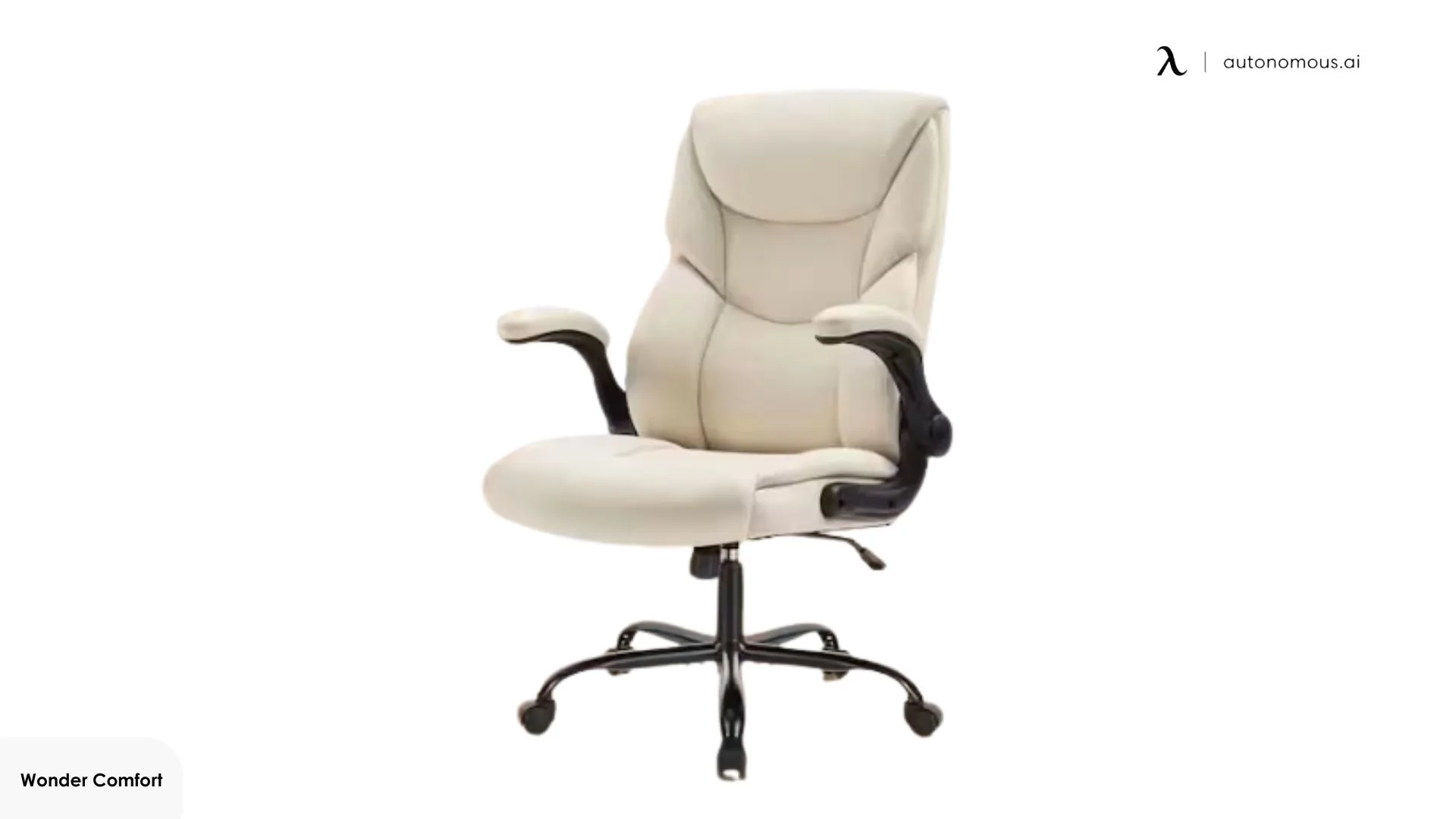
This comfortable office chair for tall people is positioned as a budget-friendly option with features usually seen on pricier chairs: an adjustable headrest, adjustable lumbar support, and flip-up armrests — uncommon under $150.
For tall users, the high-back design provides shoulder coverage, and the headrest can be raised or lowered to better match torso length — helpful for anyone who typically finds headrests sitting too low on budget chairs. Lumbar support adjusts vertically and includes a supplemental lumbar pillow, allowing support to sit higher on the spine — closer to where it actually contacts on longer torsos. The flip-up armrests are a practical feature for sliding the chair under a desk or sitting cross-legged, but they don't adjust for height or width. Seat depth is fixed at roughly 19 inches, which may feel limiting for longer thighs.
This one targets tall users who want an affordable office chair. The 250 lb capacity keeps it in lighter-to-medium build territory, but you get more adjustability than you'd expect at this price.
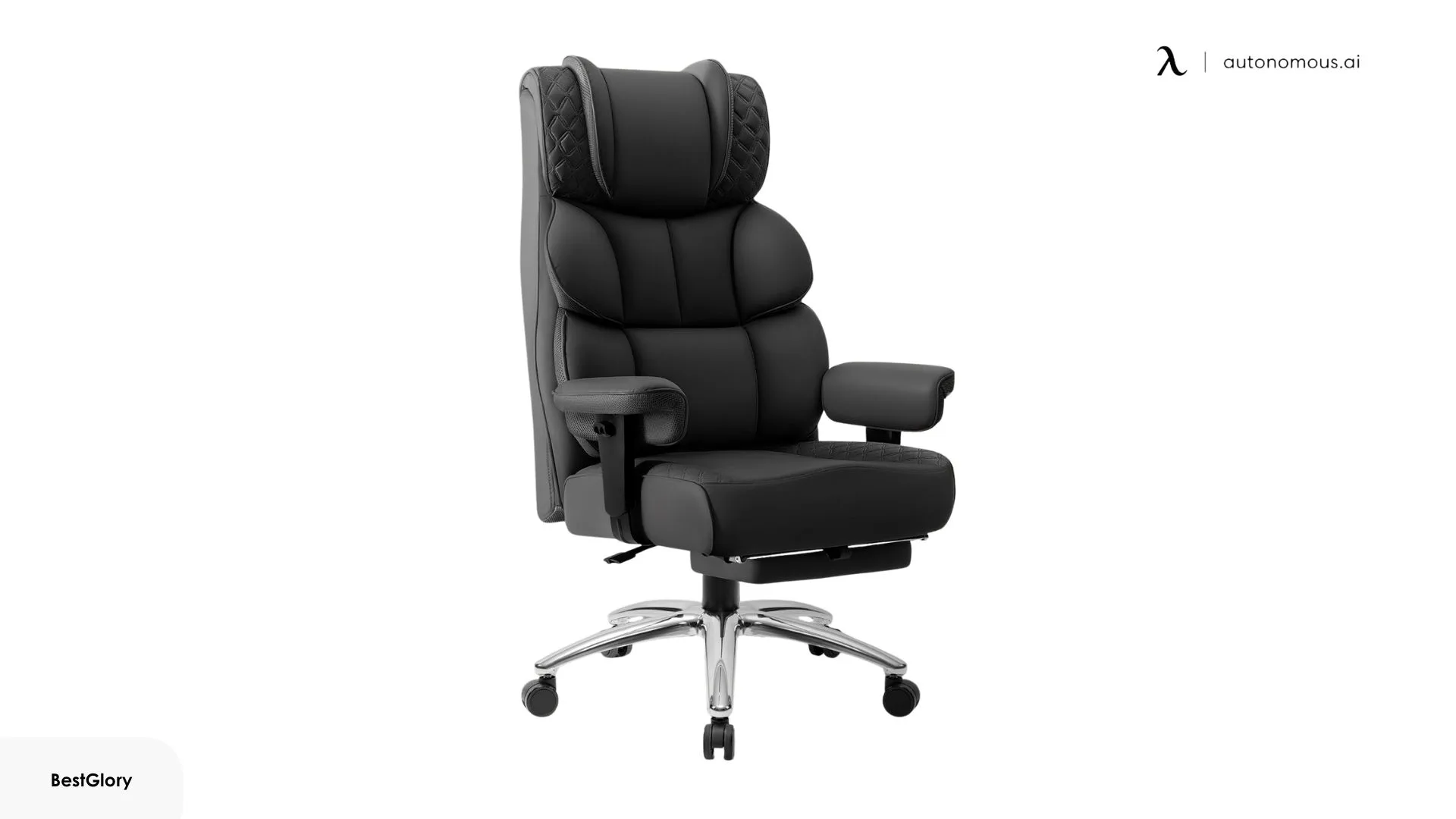
5. BestGlory Office Desk Chair
The BestGlory takes a comfort-first approach rather than an ergonomics-first one. It's built around cushioning and relaxation features — padded faux leather, a retractable footrest, deep recline — rather than the precise adjustability that defines most ergonomic office chairs for tall people.
The seat uses high-density foam plus 20 independent springs, which helps reduce the “flattening” that cheaper padding can develop over time — a durability concern shared with many plus size office chair options.. The recline suits users who like to lean back during calls or take short breaks in-chair, and the footrest supports that relaxation-forward setup (better for occasional use than sustained working posture).
The headrest adjusts for height, which helps accommodate different torso lengths. Combined with the S-curve lumbar built into the backrest, the upper body support covers more range than many executive-style chairs in this category. However, the lumbar itself doesn't adjust — its position is fixed within the backrest curve, so fit depends on how your spine aligns with the built-in shape.
For users in the 6'0" to 6'3" range who want a comfortable executive chair for mixed work and relaxation, it delivers on that promise.
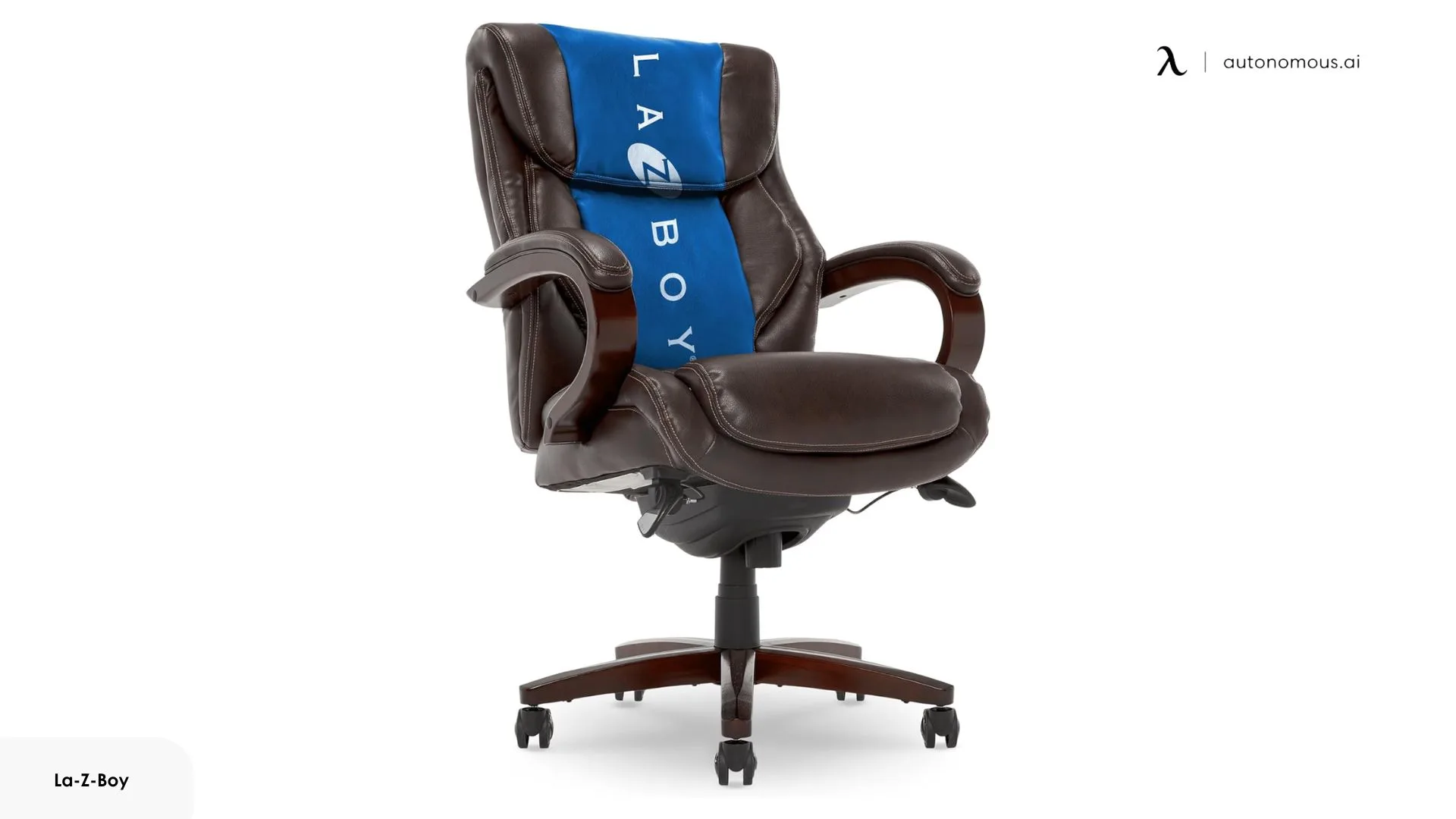
6. La-Z-Boy Bellamy Executive Office Chair
This is a desk chair for tall men built around cushioned comfort and traditional executive styling rather than ergonomic precision. The sit feel is softer and more "recliner-like" than most task chairs , a common trait across the executive office chair category, which appeals to users who find mesh too firm.
A firmer layer at the back of the seat provides support where weight concentrates, while a softer layer at the front allows for flexibility. The result is a sitting experience closer to a living room recliner than a task chair. For those who find mesh seats too firm or foam seats too flat, this layered approach offers a middle ground.
Seat dimensions work reasonably well for taller frames — 20 inches deep with a 21-inch width, and height adjusting from 20 to 22.5 inches. The waterfall seat edge curves downward at the front, reducing pressure on the underside of the thighs.
The backrest includes a contoured lumbar zone and padded headrest, but neither adjusts. If the lumbar curve matches your body, it feels supportive; if not, you can’t reposition it.
At roughly 250–275 lbs capacity depending on the model, it's still a better match for medium builds than heavy ones. comfort leans plush over supportive, which works for shorter sessions.
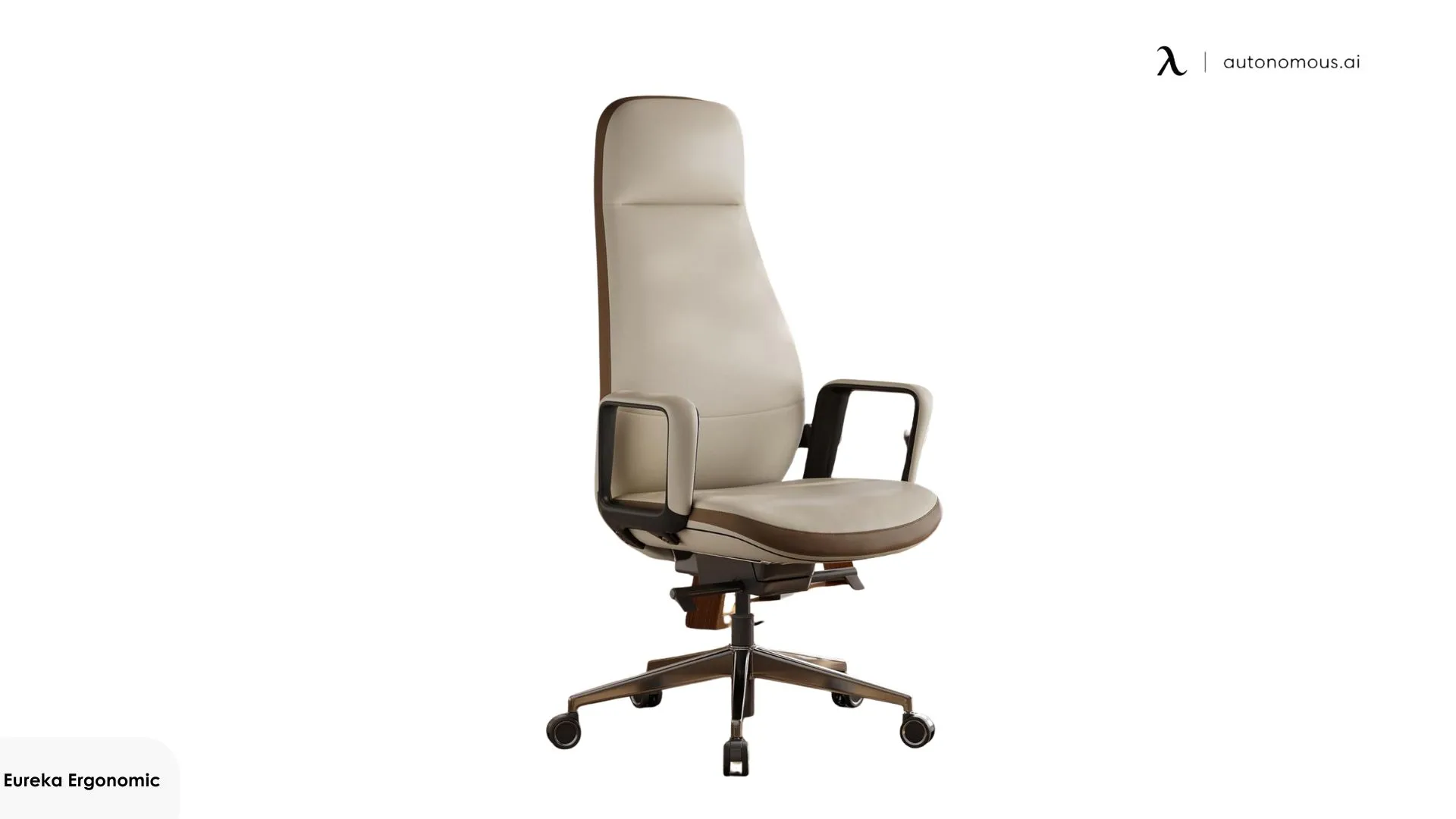
7. Eureka Ergonomic Royal, Microfiber Leather Executive Office Chair
Where most office chairs prioritize adjustment mechanisms and mesh panels, the Royal on a modern minimalist executive look — clean, understated, and more at home in a contemporary office.
The microfiber leather sets it apart from traditional executive chairs like the La-Z-Boy Bellamy. It's softer to the touch and more durable than budget faux leather, though still warmer than mesh during extended sessions. Users who prefer natural materials over synthetics typically gravitate toward genuine leather office chairs instead.
Seat height adjusts from roughly 19 to 22 inches, with a 20-inch seat depth — dimensions that work for users up to around 6'3". Unlike most executive chairs where headrests are fixed or absent entirely, this one adjusts vertically — useful for accommodating longer torsos without forcing the entire chair to compensate. The backrest reclines with a limited rocking function, though the armrests remain fixed and integrated into the frame.
There's no dedicated lumbar adjustment either. The backrest has a subtle contour that works for some spine shapes and misses for others. For users who rely on repositioning lumbar support throughout the day, this limits the chair's adaptability.
At 300–350 lbs capacity, the Royal handles a broader range of builds than many executive chairs. It suits users who want the best ergonomic office chair for a tall person without the utilitarian look of mesh big and tall office chairs.
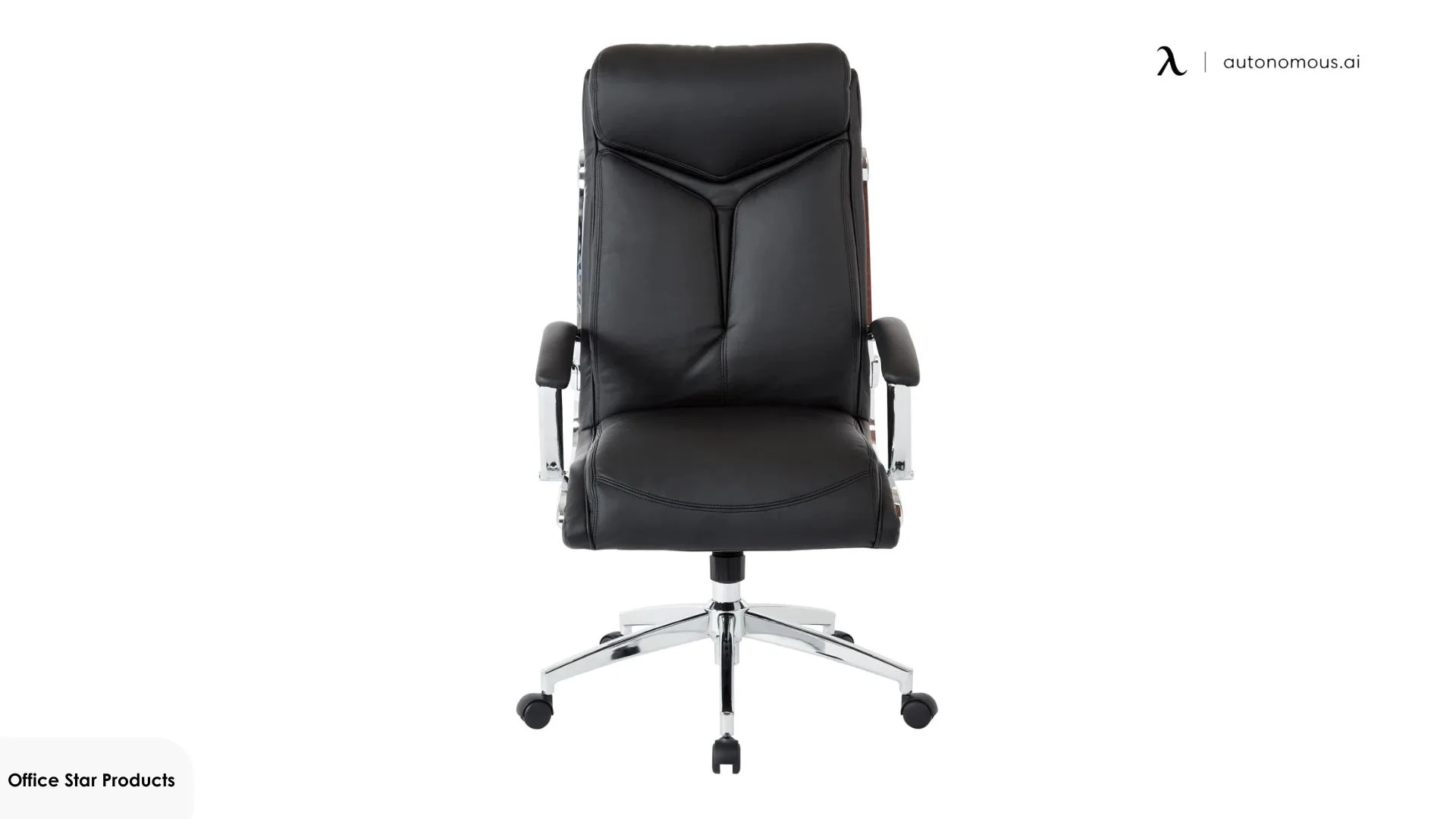
8. Office Star Products Space Seating 63 Series Executive Chair
Most chairs on this list were designed with home offices in mind. This option is a contract-grade chair — the kind purchased by facilities managers outfitting corporate offices, call centers, and shared workspaces where chairs face constant use by rotating users.
Adjustability covers the essentials without overcomplicating. Seat height ranges from about 20.75 to 23.25 inches — higher than many chairs in this list, which benefits those in the 6'2" to 6'5" range. The mid-pivot knee tilt shifts the pivot point forward, allowing recline without lifting feet off the floor. Adjustable lumbar support, height-adjustable arms, and an adjustable headrest round out the controls. Nothing exotic, but everything is functional.
The 22-inch seat width and depth accommodate larger frames, and the 400 lb weight capacity handles builds that most executive chairs exclude. For an office chair for tall men who also happen to be tall and heavy, this is one of the few options that genuinely fits both dimensions.
The trade-off is aesthetics. The 63 Series looks institutional, gunmetal finish, no-frills silhouette, practical rather than polished. But for users who prioritize long-term reliability over appearance, and who sit for full workdays rather than a few hours, it delivers where it counts.
How to Choose the Right Office Chair for Your Height
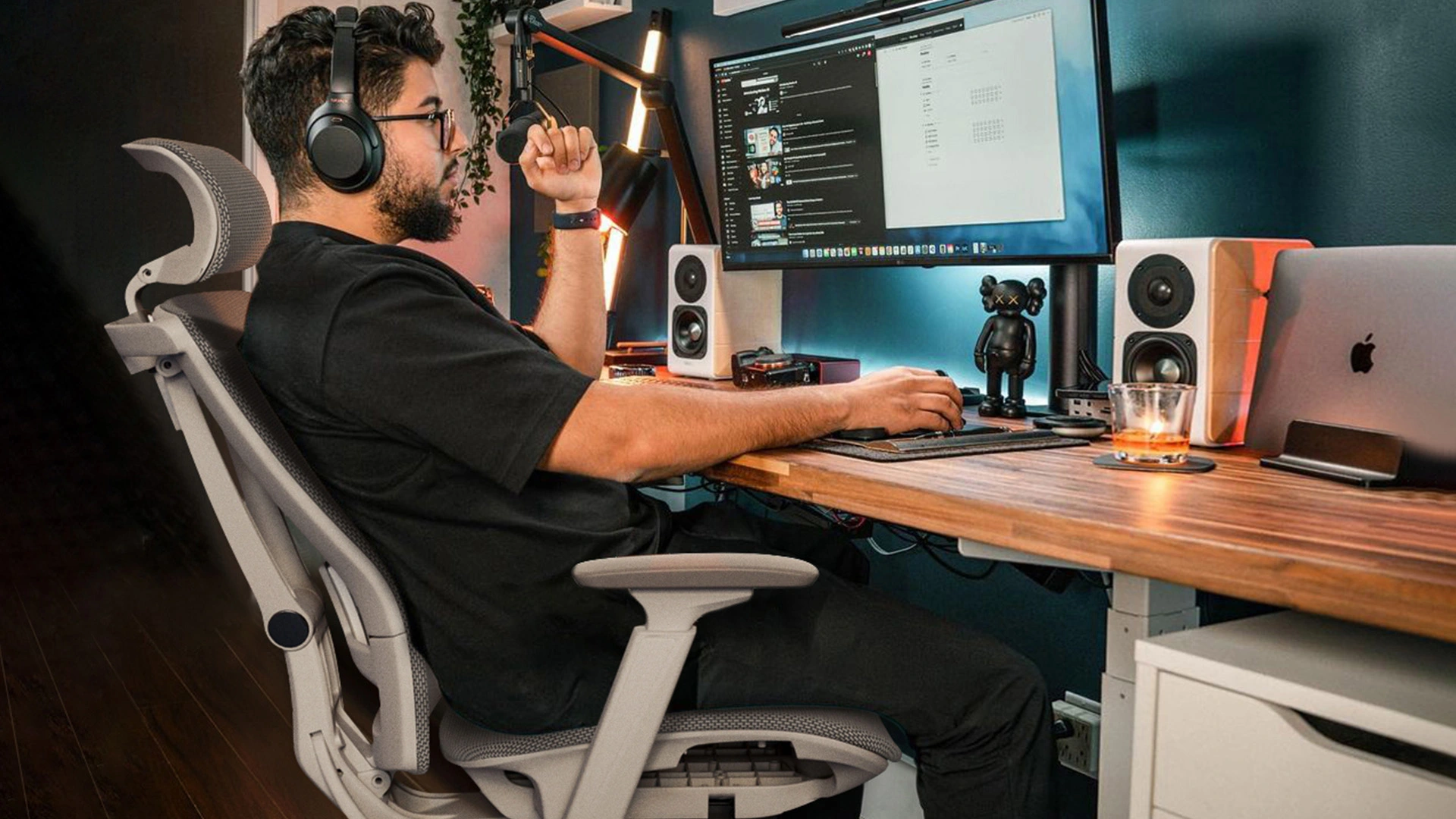
Finding the best office chair for tall men that fit isn't complicated, but it does require paying attention to a few things most shoppers overlook. The process below walks through how to match a chair to your body — and flags the common missteps that lead to regret.
- Match Dimensions to Your Body
A chair labeled "for tall users" may still fall short on the specs that matter. The label doesn't guarantee adequate seat height, sufficient seat depth, or a backrest that reaches your shoulders. The same mismatch happens in reverse, a petite office chair for short people exists for the same reason standard sizing fails at both ends of the spectrum.
Use the height-to-spec table as a filter. If you're 6'3", prioritize chairs with seat height extending past 21 inches, seat depth around 20 inches or adjustable, and a backrest that clears 24 inches. Avoid chairs that max out at your requirements, look for ones with room to adjust.
- Prioritize Adjustability Over Fixed "Tall" Dimensions
Some chairs advertise tall-friendly dimensions but lock everything in place. A high backrest, deep seat, or lumbar curve that can't be repositioned limits your options.
Fixed chair dimensions work only if they happen to match your body. Adjustability creates flexibility, room to fine-tune the fit as preferences, tasks, or users change. At minimum, look for adjustable seat height, adjustable lumbar height (not just depth), and adjustable armrest height. Seat depth adjustment is valuable but less common. Headrest adjustment matters for anyone over 6'2" who wants neck support during recline.
- Test the 90-90-90 Rule
Sit with your back against the backrest and adjust the seat height until your feet rest flat on the floor, knees bent at roughly 90 degrees. Your hips should also be at about 90 degrees — thighs parallel to the floor, not sloping down or angled up.
Check that the seat depth leaves 2–3 fingers of space between the seat edge and the back of your knees. If the edge presses into your legs, the seat is too deep. If your thighs hang off the front, it's too shallow.
Finally, check lumbar contact. The support should press gently into the curve of your lower spine, not your mid-back, not your upper glutes.
- Consider How You Actually Sit
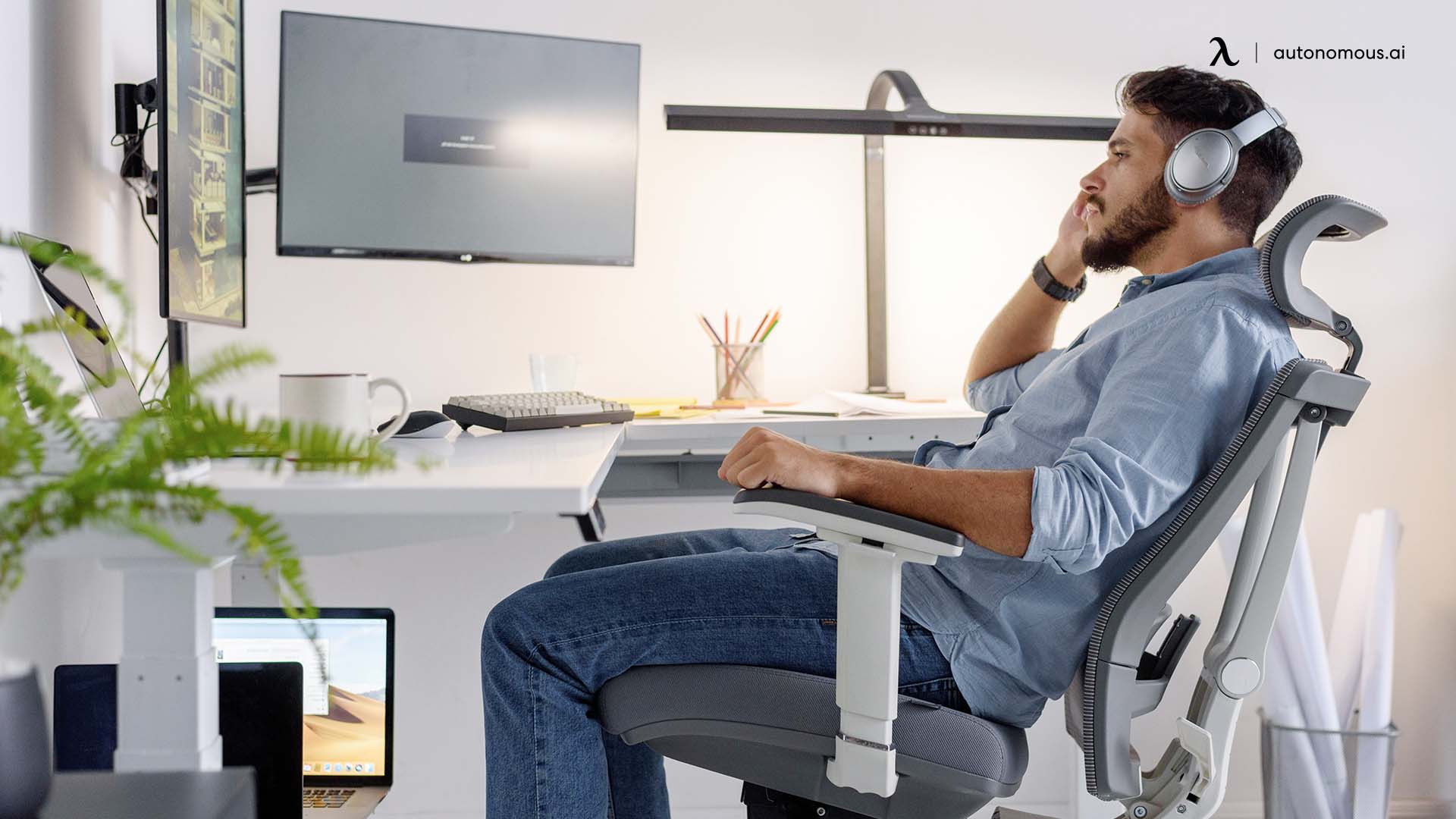
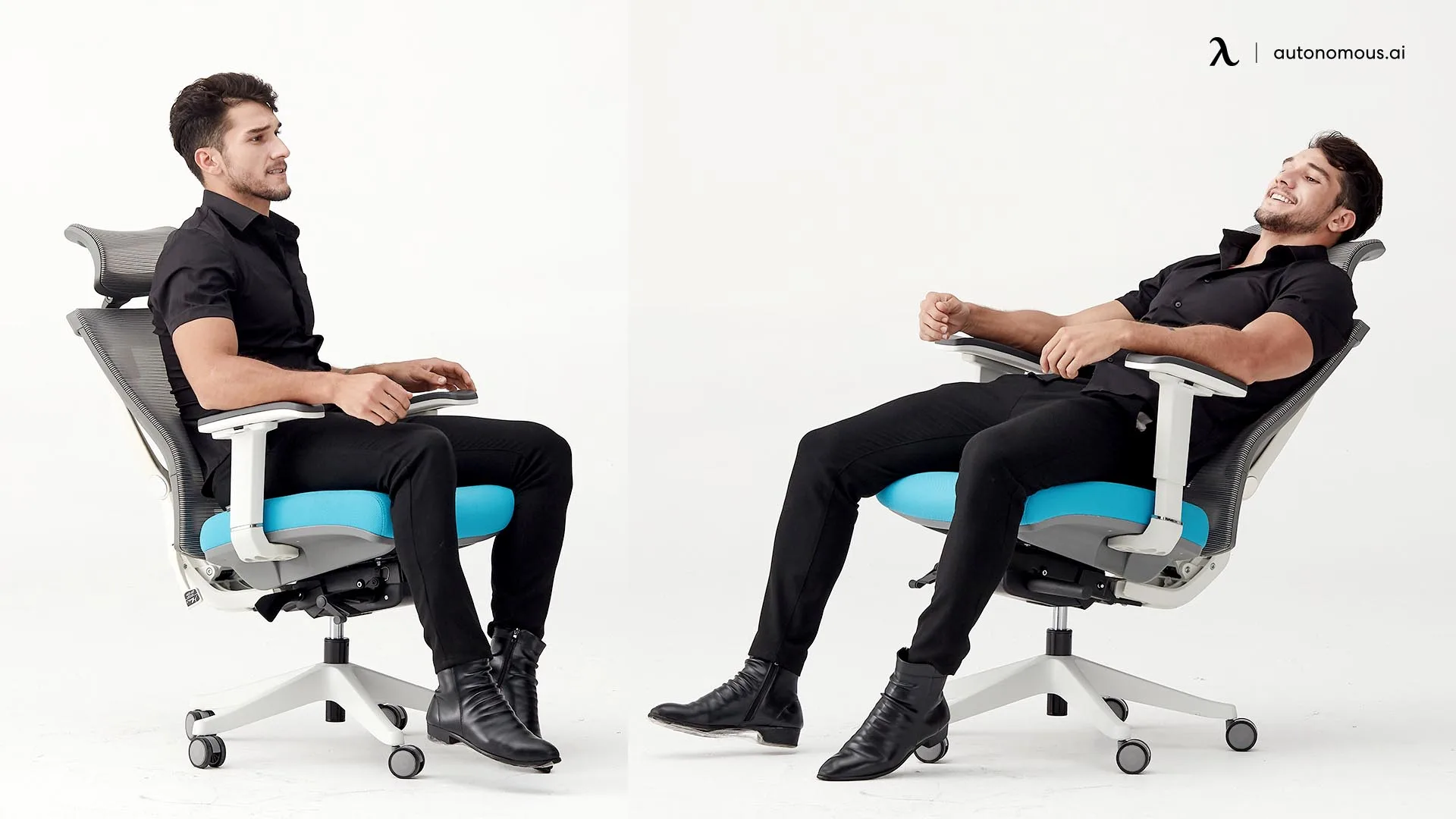
Specs assume a standard upright posture. But most people shift throughout the day, leaning forward, reclining during calls, or crossing legs. If you recline often, recline range and tilt lock matter more than for someone who sits upright. If you cross your legs, a wider seat and flip-up armrests help.
The trap is buying for an idealized version of how you think you should sit, rather than how you actually do. A chair that's perfect for textbook posture but uncomfortable for your real habits won't get used correctly, and won't help.
- Weight Capacity Isn't Just About Weight
Weight ratings indicate frame strength and component durability. A 250 lb user in a 275 lb rated chair is technically within spec but leaves no safety margin and accelerates wear on cushions, gas cylinders, and tilt mechanisms.
For longevity, choose chairs rated at least 50–100 lbs above your body weight. This isn't about safety, it's about ensuring the chair holds up over years of daily use rather than compressing, sinking, or loosening after months.
FAQs
What is the best office chair for tall men?
The best office chair for tall men is one that offers a high seat height range, sufficient seat depth, and a tall backrest. Chairs that allow seat height to reach 22–23 inches or higher and provide adjustable support tend to fit taller frames more naturally.
What height is considered tall when buying an office chair for tall men?
In office chair sizing, men 6 feet (183 cm) and above are generally considered tall. At this height, standard office chairs often fall short in seat height or seat depth, leading to poor leg and back support.
What features should an office chair for tall men have?
An office chair for tall men should prioritize seat height range, seat depth adjustment, and backrest height. Adjustable lumbar support and headrests are also helpful for taller torsos, especially during long workdays.
Are “big and tall” chairs always good office chairs for tall men?
Not always. Many big and tall chairs focus on weight capacity rather than proper proportions, resulting in wide seats but shallow depth or low backrests. A true office chair for tall men should be dimensionally scaled, not just reinforced.
Is seat height or seat depth more important in an office chair for tall men?
Both matter, but seat depth is often overlooked and just as important. Tall men need enough seat depth to support the thighs without pressing into the back of the knees, while seat height ensures proper foot placement on the floor.
What seat height is ideal in an office chair for tall men?
Most tall men need an office chair with a seat height range that tops out between 22 and 23.5 inches. This allows feet to rest flat while keeping knees at a healthy angle without raising the desk too high.
What is the best office chair for tall men with long legs?
Tall men with long legs should look for chairs with adjustable seat depth or a deeper seat pan (19–21 inches). Without enough depth, thigh support is reduced, leading to pressure points and discomfort.
Is weight capacity important when choosing an office chair for tall men?
Weight capacity matters for durability, but it doesn’t guarantee proper fit. An office chair for tall men should first meet height and depth requirements, then match weight capacity as needed.
Conclusion
Finding the right office chair for tall men isn't about buying the biggest or most expensive model available — even a big and tall office chair 550 lbs can miss the mark if the dimensions don't align. It comes down to whether the chair's dimensions and adjustment range actually match a taller body — especially seat height, seat depth, and backrest length. When those fundamentals are off, even premium chairs can feel uncomfortable within hours.
The chairs in this list take different approaches to solving that problem. Some focus on precise ergonomic adjustment found in a dedicated posture chair, others prioritize comfort or executive styling, and a few aim to deliver tall-friendly features at a lower price point. What matters most is understanding which trade-offs you're willing to accept — flexibility versus simplicity, long-hour task support versus relaxed seating.