DIY Pool Shed Ideas for Any Backyard and Budget
.webp)
Table of Contents
DIY pool shed ideas are popular because they offer a flexible, affordable way to add functional space near a pool without committing to a full pool house. A well-planned DIY pool shed can handle storage, changing, shade, or even entertaining, while staying small enough to build on a budget and customize over time. This guide walks through practical pool shed ideas, layout options, costs, and planning considerations to help you build a DIY pool shed that actually fits how you use your backyard.
What Is a DIY Pool Shed?
A DIY pool shed is a small, self-built structure located near a pool and designed for pool-related use rather than full-time living. Unlike prefabricated pool houses, a DIY pool shed is typically built from standard materials using basic construction methods, allowing homeowners to control cost, size, and layout.
Most DIY pool sheds are used for:
- Pool equipment and towel storage
- Changing clothes
- Shaded seating or short breaks
- Light entertaining
A DIY pool shed is different from a full pool house because it usually avoids plumbing, kitchens, and sleeping areas. This keeps the structure simpler, cheaper, and easier to manage from a planning standpoint.
Popular DIY Pool Shed Ideas
DIY pool sheds can take many forms depending on space, budget, and skill level. Below are the most common and practical layouts homeowners build.
1. Simple Pool Storage Shed
This is the most basic and budget-friendly option. A simple pool storage shed focuses entirely on function, not comfort.
Common features include:
- Shelving for pool chemicals and tools
- Hooks for towels and floats
- Lockable doors for safety
These sheds are usually compact and easy to build with standard lumber or converted garden shed kits.
2. DIY Pool Changing Room Shed
A changing room shed adds privacy without major complexity. This type of DIY pool shed is often just a single enclosed space with ventilation.
Typical elements:
- Bench or built-in seating
- Wall hooks or small cubbies
- Louvered vents or high windows
This is a popular upgrade from a storage-only shed and still remains relatively easy to build.
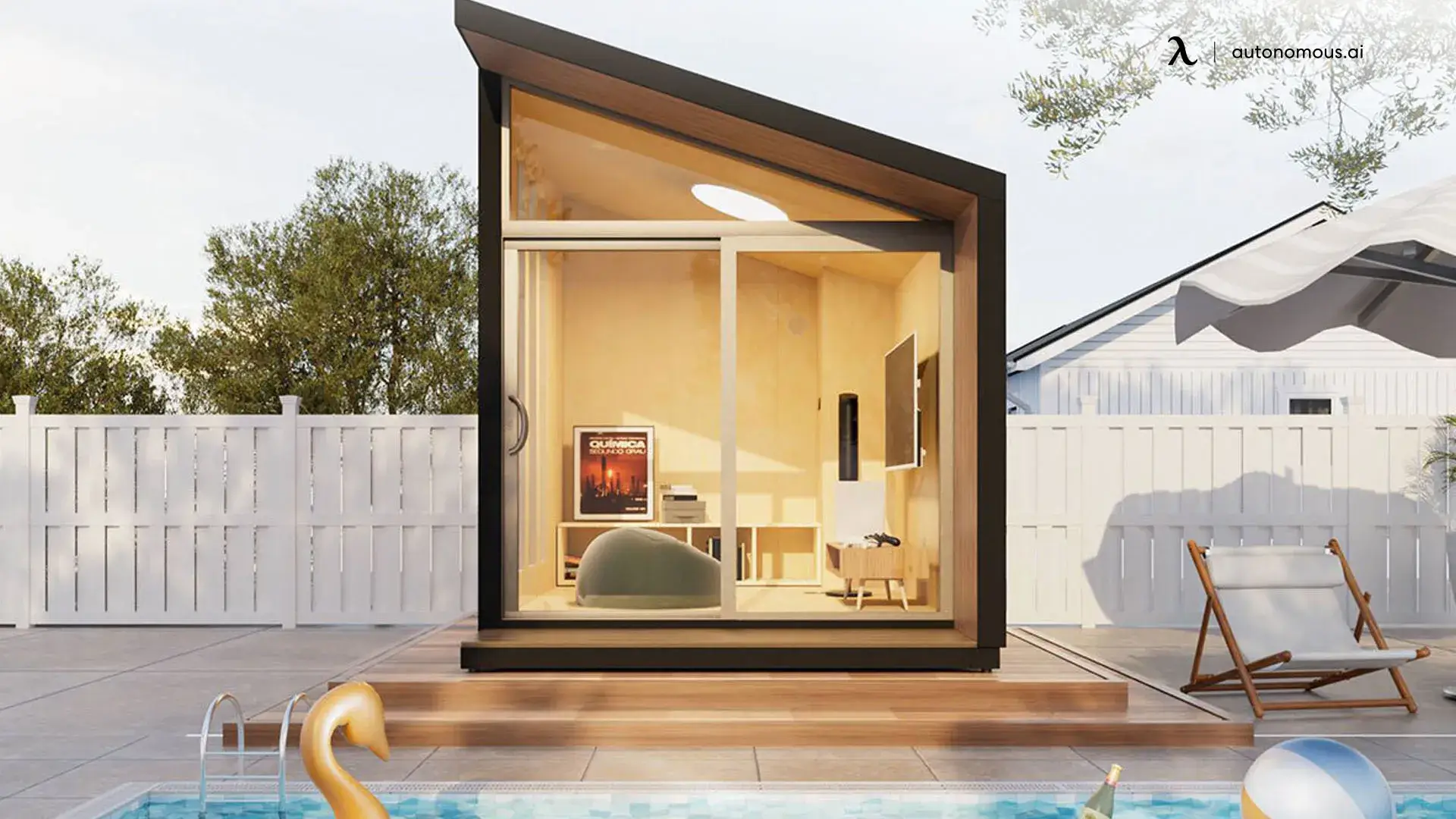
3. DIY Pool Shed With Seating Area
This design blends shed utility with light comfort. It often includes partial walls or wide openings to allow airflow.
Design considerations:
- Covered roof for shade
- Open front or sliding doors
- Simple furniture or built-in benches
While still a shed, this layout starts to resemble a small DIY pool house shed without crossing into full construction complexity.
4. DIY Pool Shed With Bar
A bar-focused DIY pool shed is built for entertaining. Most homeowners keep it simple to avoid plumbing.
Common features:
- Countertop or fold-down bar
- Shelving for drinks and supplies
- Electrical outlets for lighting or a mini fridge
Dry bars are much easier to build and manage than wet bars in a DIY setup.
5. DIY Pool Shed With Outdoor Shower
Outdoor showers are often attached to or partially enclosed by a pool shed. Many designs use privacy screens instead of full walls.
Key planning points:
- Drainage and water runoff
- Weather-resistant materials
- Privacy without full enclosure
This option works well in warm climates and keeps sand and chlorine out of the house.
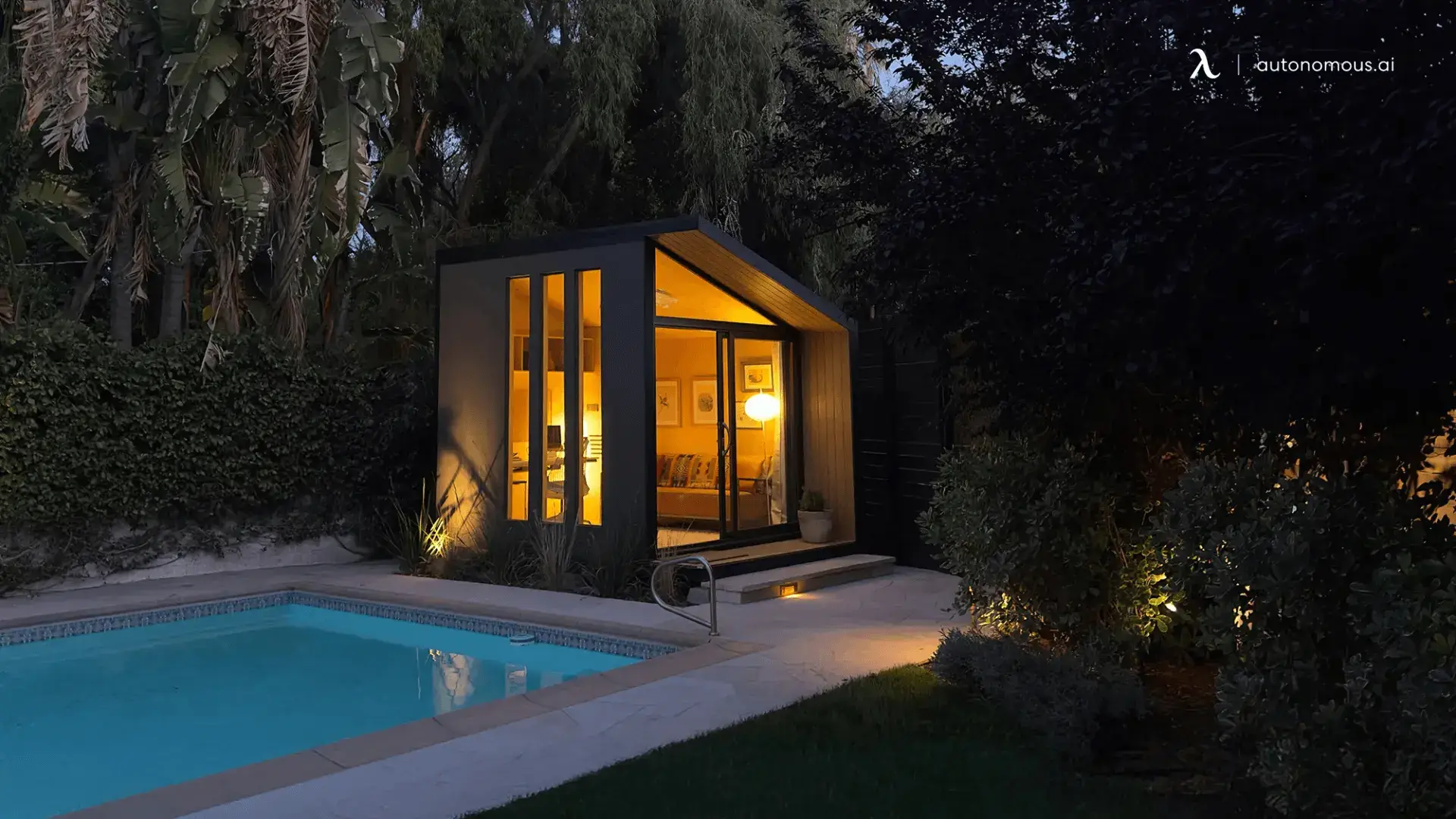
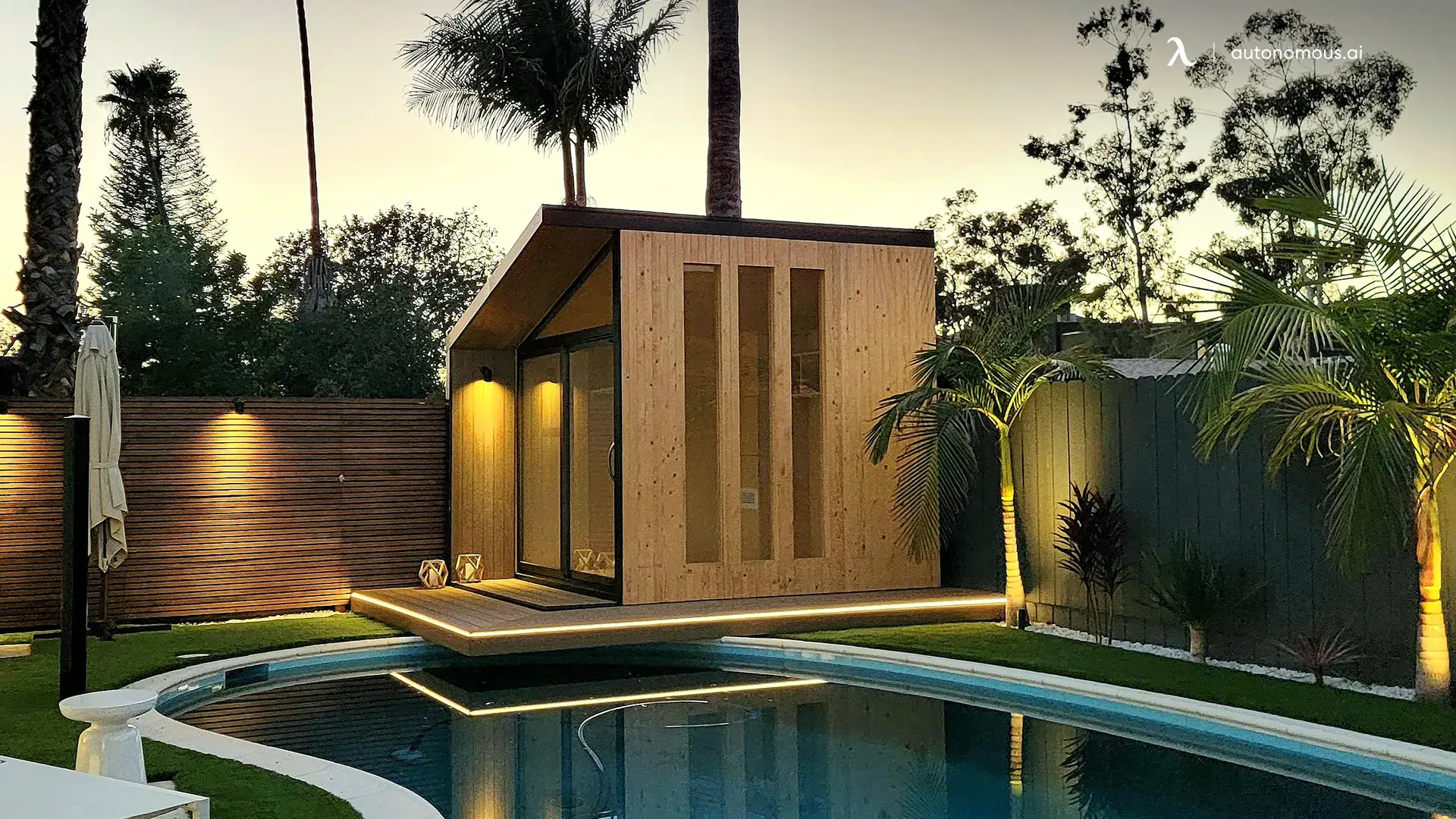
6. Modern DIY Pool Shed Design
Modern DIY pool sheds focus on clean lines and minimal materials rather than size.
Common traits:
- Flat or low-slope roofs
- Natural wood or dark finishes
- Large doors or windows
These sheds often look simple but require more attention to detail during construction.
7. Small DIY Pool Shed Ideas
Small pool sheds maximize efficiency and are easier to build without advanced skills.
Typical characteristics:
- Under 100 square feet
- Single-purpose layouts
- Minimal materials and finishes
Small sheds are ideal for first-time DIY builders.
DIY Pool Shed Materials and Build Options
Choosing the right shed materials affects cost, durability, and how difficult the build will be. Most DIY pool sheds are built using one of the options below.
Wood framing is the most common choice for a DIY pool shed. It’s affordable, easy to modify, and widely supported by tutorials and plans. Pressure-treated lumber is often used for framing near pools to handle moisture.
Converted shed kits are another popular route. These start as basic garden sheds and are upgraded with doors, windows, or finished shed house interiors. This approach reduces framing work while still allowing customization.
Metal or steel sheds are lower maintenance and quicker to assemble but harder to customize. They work best for storage-focused pool sheds rather than seating or changing rooms.
Hybrid builds combine prefab shells with DIY interior work. This option balances speed with flexibility but typically costs more than a fully DIY build.
How Much Does a DIY Pool Shed Cost?
DIY pool shed costs vary widely based on size, materials, and features, but most projects fall into clear budget ranges.
Build Type | Typical Size | DIY Cost Range |
Basic storage shed | 60–100 sq ft | $1,000–$3,000 |
Changing room shed | 80–120 sq ft | $2,000–$5,000 |
Shed with seating | 120–160 sq ft | $3,000–$7,000 |
Shed with bar or shower | 120–200 sq ft | $5,000–$10,000 |
Modern DIY pool house shed | 160–240 sq ft | $7,000–$15,000 |
At the low end, costs are driven mostly by framing lumber, roofing, and basic siding. Choosing budget-friendly exterior materials, such as the cheapest siding options for sheds, helps keep total spend down.
As sheds grow larger or more finished, pricing begins to resemble other backyard projects. For example, a higher-end DIY pool shed may overlap with the cost range seen in a she shed build or even approach what homeowners spend on a studio shed.
Permits and Rules to Know Before You Build
Many DIY pool sheds can be built without permits, but this depends on local regulations and how the structure is used. Size, permanence, and utilities are the main factors that determine whether permits are required.
Permits are commonly required when:
- The shed exceeds local size thresholds
- Electrical or plumbing is installed
- The structure is permanently anchored to the ground
- Walls and roofing create a fully enclosed space
Utilities are a frequent trigger for review. Homeowners often discover that running electricity to a shed may require a permit, even when the shed itself is small.
As a structure becomes more enclosed or functional, it may begin to follow permitting paths similar to other accessory residential units. In those situations, understanding broader processes like how to get an ADU permit can help clarify documentation and approval expectations.
It’s also useful to understand how jurisdictions evaluate structures categorized as ADUs without permits, as local rules differ on disclosure, retroactive approval, and compliance pathways.
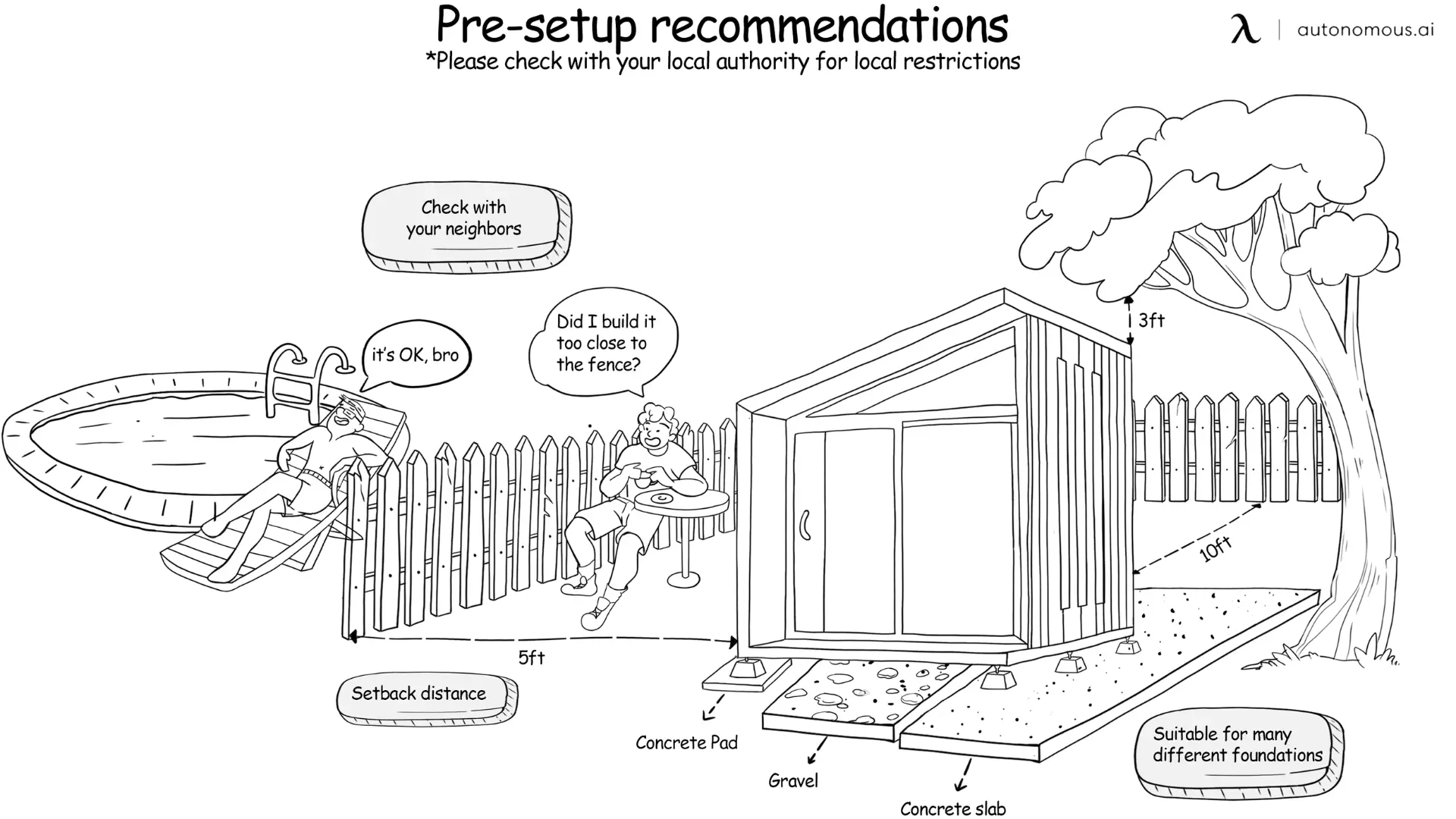
Even when a building permit isn’t required, zoning rules still apply. Setbacks, height limits, and lot coverage can restrict where and how a DIY pool shed is built. Checking local requirements early helps avoid redesigns or adjustments later.
DIY Pool Shed vs Prefab Pool Shed
Aspect | DIY Pool Shed | Prefab Pool Shed |
Cost | Lower upfront | Higher upfront |
Build time | Longer | Faster |
Customization | High | Limited |
Skill required | Moderate | Low |
Flexibility | Very high | Fixed designs |
DIY pool sheds work best for hands-on homeowners who want control and savings. Prefab sheds appeal to those prioritizing speed and simplicity.
Frequently Asked Questions
What is the best location for a DIY pool shed?
The best location is close enough to the pool for convenience but far enough to meet setback and safety requirements. Flat ground with good drainage is ideal.
What size DIY pool shed is easiest to build?
Sheds under 100 square feet are the easiest to build, require fewer materials, and are more likely to avoid complex permitting.
Can a DIY pool shed be built on gravel instead of concrete?
Yes. Many DIY pool sheds use gravel or paver bases, which reduce cost and simplify installation compared to concrete slabs.
What roofing material works best for a pool shed?
Metal roofing and asphalt shingles are common choices due to durability, moisture resistance, and ease of installation.
How do you ventilate a DIY pool shed properly?
Ventilation can be handled with louvered vents, high windows, or partial wall openings to reduce moisture buildup.
Can a DIY pool shed be used year-round?
It can, but year-round use requires insulation, weather sealing, and sometimes heating, which increases cost and complexity.
What materials last longest near a pool?
Pressure-treated wood, composite panels, and corrosion-resistant fasteners perform best in humid, chlorinated environments.
How long does it take to build a DIY pool shed?
Most DIY pool sheds take between one weekend and two weeks to build, depending on size, design, and experience level.
Is it cheaper to build or buy a pool shed?
Building is usually cheaper if you have tools and time, while prefab sheds cost more upfront but save labor.
Can a DIY pool shed increase property value?
Yes. A well-built, code-compliant pool shed can improve usability and visual appeal, which may contribute to resale value.
Conclusion
DIY pool shed ideas offer a flexible and affordable way to improve how you use your pool area. Whether you’re building a simple storage shed or a more comfortable DIY pool house shed, success comes down to thoughtful planning, realistic budgeting, and choosing a layout that fits your needs. By keeping the structure simple and focused on pool-related use, a DIY pool shed can deliver long-term value without unnecessary complexity.