Prefab Pool House: Costs, Designs and What to Know
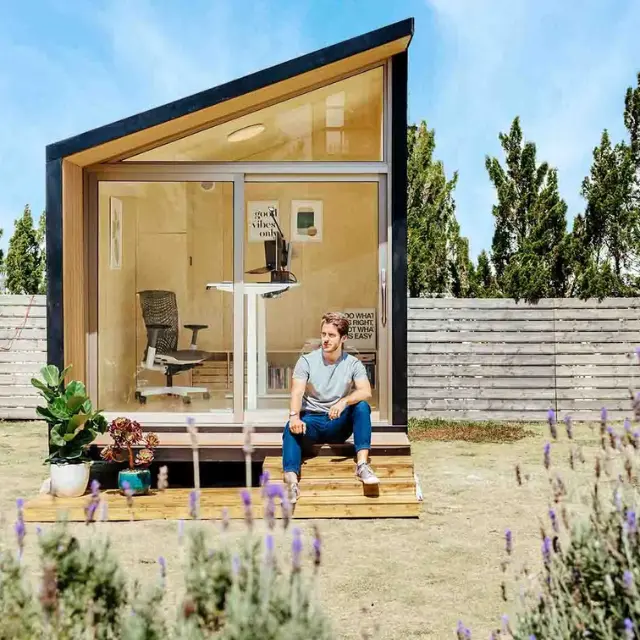
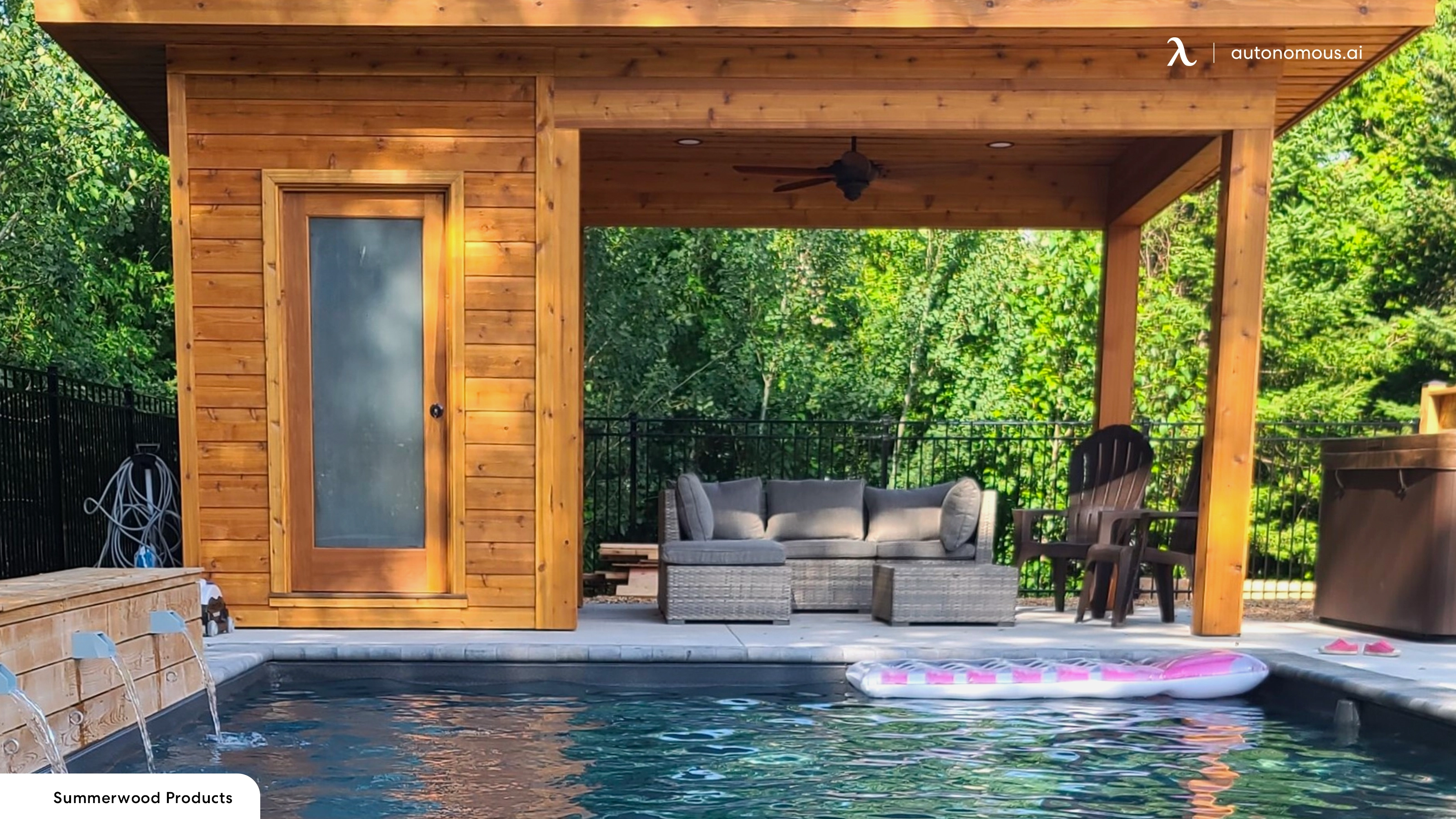
Table of Contents
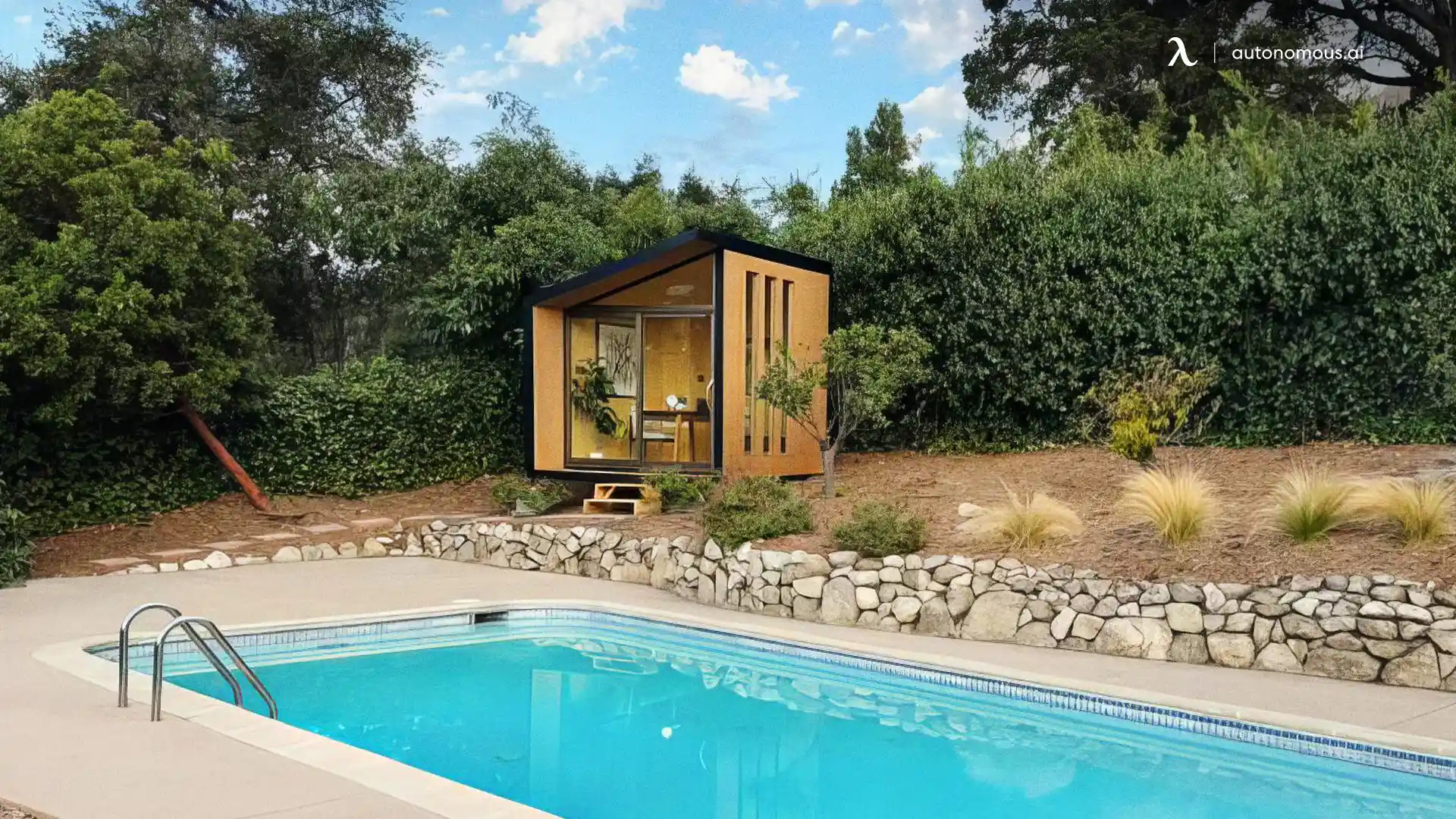
A prefab pool house is a factory-built structure designed to be installed near a pool with less on-site construction than a traditional build. Instead of framing everything in your backyard, most of the structure is manufactured off-site and delivered as panels or modules, then assembled on a prepared foundation. Homeowners often choose prefab options for faster timelines, predictable pricing, and cleaner installation compared to fully custom construction.
Prefab pool houses range from simple shed-style enclosures to fully finished spaces with bathrooms, bars, or sleeping areas. Because these features affect zoning and permitting, prefab pool houses sit in a gray area between recreational structures and regulated housing. Understanding where a prefab pool house fits on that spectrum is essential before choosing a design, budget, or layout.
What Comes With a Prefab Pool House Kit
A prefab pool house kit typically includes the structural components manufactured in a controlled factory environment and shipped to the site for assembly. What you receive depends heavily on the level of prefabrication.
Most prefab pool house kits include:
- Pre-built wall panels or modular sections
- Roof structure and exterior roofing materials
- Doors and windows (varies by package)
- Exterior finishes or cladding
- Assembly documentation and layout drawings
What prefab pool house kits almost never include:
- Foundation or concrete slab
- Electrical, plumbing, or HVAC systems
- Interior finishes such as flooring or drywall
- Permits, plan review, or installation labor
Popular Prefab Pool House Layout Options
Prefab pool houses are offered in a wide range of layouts, but most designs fall into a few common categories. The layout you choose directly affects cost, permitting, and how the structure is regulated.
1. Prefab Pool House Shed
A prefab pool house shed is the simplest and most permit-friendly option. These structures are usually compact, enclosed, and designed for seasonal or recreational use rather than long-term occupancy.
They are commonly used for:
- Changing clothes
- Storing pool equipment or towels
- Providing shade or a quiet seating area
Because they are small and usually built without utilities, prefab pool house sheds are often easier to approve and faster to install. Many designs overlap in size and construction with a cheap prefab office shed or a prefab she shed, making this layout a popular choice for homeowners who want function without triggering additional zoning review.
2. Modern Prefab Pool House Design
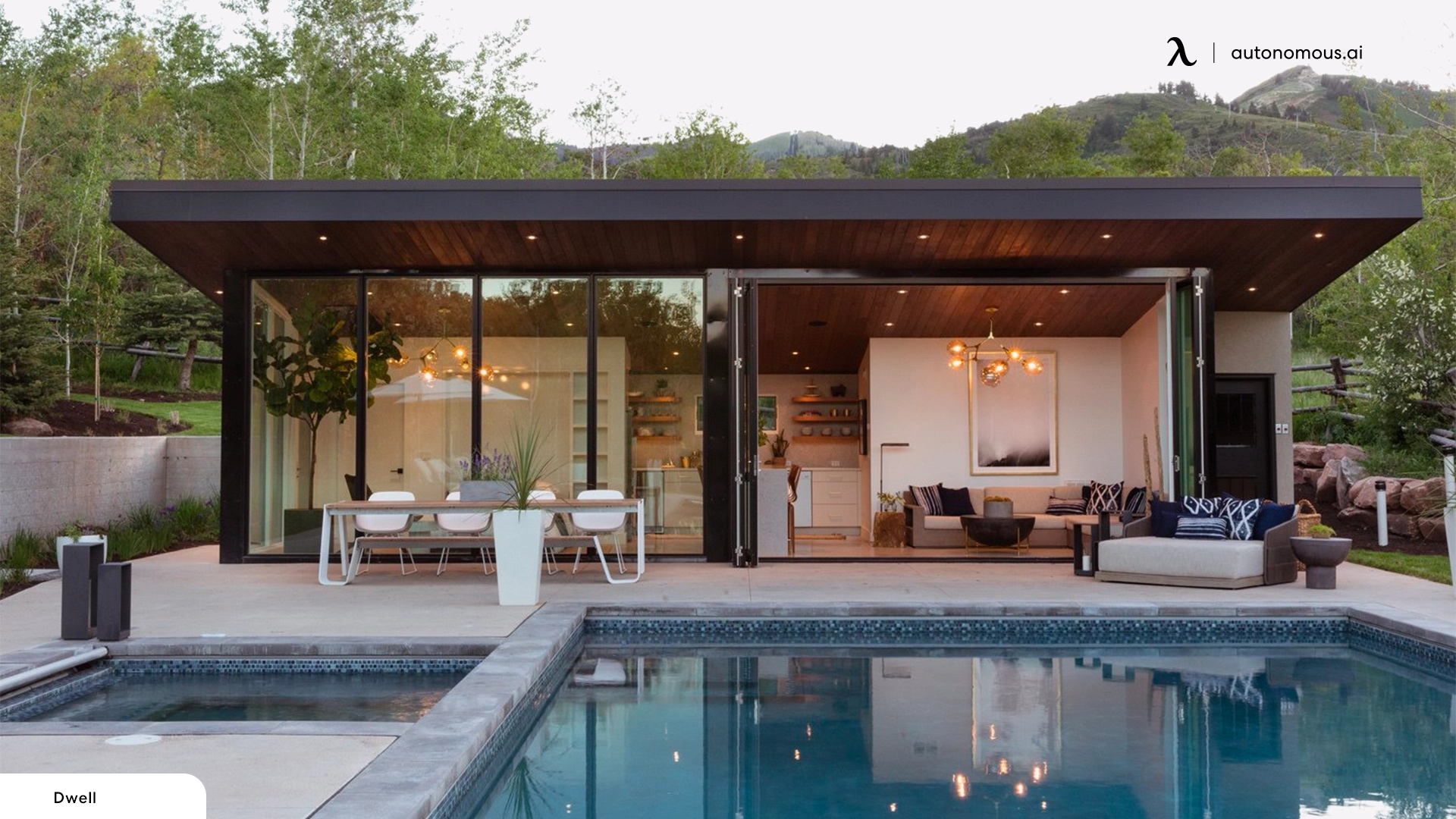
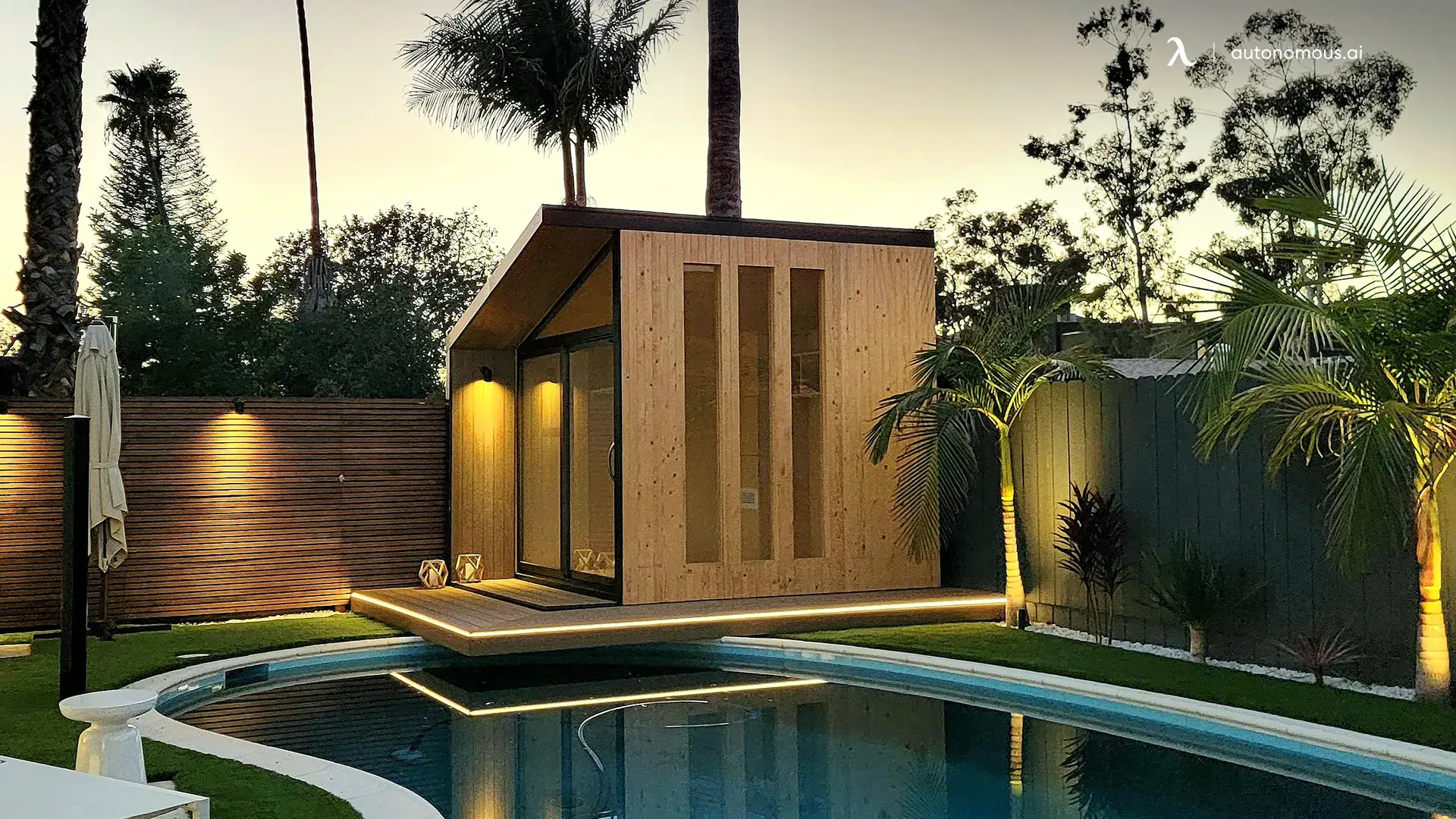
A modern prefab pool house emphasizes clean lines, minimalist materials, and indoor–outdoor flow. These designs often feature flat or low-slope roofs, large windows, sliding doors, and simple exterior finishes.
Modern designs tend to:
- Cost more than shed-style structures
- Require closer review for height and setbacks
- Emphasize aesthetics over storage
While visually striking, modern prefab pool houses must still comply with accessory structure rules, particularly as glazing, roof height, or footprint increases. Many designs align closely with the scale and appearance of a prefab studio shed, which places greater focus on design and finishes than utility.
3. Prefab Pool House With Bathroom
Adding a bathroom significantly changes how a prefab pool house is reviewed. Once plumbing is introduced, many jurisdictions begin treating the structure as potentially habitable, even if no kitchen is included.
A prefab pool house with a bathroom typically requires:
- Full building and plumbing permits
- Sewer or septic connection approval, similar to requirements outlined for ADU sewer connections
- Additional inspections during and after construction
Because of these requirements, this layout often follows regulatory standards closer to those applied to a prefab ADU with a bathroom. Some homeowners explore alternative water setups inspired by tiny house off-grid water systems, but approval depends heavily on local code enforcement.
This option is popular for improving guest convenience, but it is also the point where costs and review timelines increase noticeably.
4. Prefab Pool House With Bar
A prefab pool house with a bar is built for entertaining rather than living. These layouts typically include counters, built-in cabinetry, refrigeration, and dedicated electrical outlets.
Key distinctions:
- A dry bar may avoid plumbing requirements
- A wet bar usually triggers plumbing permits
- Electrical loads must be reviewed and approved
Bar-focused prefab pool houses often follow design patterns similar to a DIY outdoor bar with a roof or a dedicated bar shed, where the emphasis is social use rather than habitation.
Electrical planning is a critical factor. Designs commonly overlap with standards used for office sheds with electricity or a she shed with electricity, and power installation must follow rules similar to those outlined in how to run power to a shed and whether a permit is required to run electricity to a shed.
Once sinks, permanent appliances, or higher-capacity electrical systems are added, the project begins to move closer to residential review standards, increasing both cost and approval complexity.
5. Prefab Pool House With Bedroom
A prefab pool house with a bedroom is the most regulated layout. Sleeping space almost always signals long-term occupancy, even if the structure is marketed as a pool house.
In many jurisdictions, this layout:
- Triggers ADU-style review
- Requires fire separation and egress compliance
- May require energy and solar compliance
From a planning perspective, this type of project is often reviewed similarly to adding a bedroom to a house, where life-safety standards and long-term use are assumed. Even designs inspired by casual outdoor bedroom ideas are typically subject to the same scrutiny once a dedicated sleeping area is defined.
Energy requirements also become more complex. Some homeowners consider supplemental solutions such as a solar heater for a shed or a solar-powered fan for a shed to manage comfort without full HVAC systems.
As power demands increase, planning often extends to system sizing, similar to evaluating how much solar power a shed needs or exploring setups used with solar panels for a tiny house.
Homeowners choosing this layout should expect a regulatory and design process much closer to that of a small dwelling unit than a simple accessory structure.
Prefab Pool House Cost Breakdown
The cost of a prefab pool house depends mainly on square footage and finish level, not location. Prices below reflect typical manufacturer pricing for prefab units before permits and site work.
Prefab Pool House Structure Prices
Size Range | Typical Layout | Prefab Price |
80–120 sq ft | Shed or changing room | $5,000 – $10,000 |
120–200 sq ft | Lounge or storage | $10,000 – $18,000 |
200–300 sq ft | Finished pool house | $18,000 – $30,000 |
300–400 sq ft | Multi-room layout | $30,000 – $45,000 |
400–500 sq ft | Bedroom-capable layout | $45,000 – $65,000 |
Smaller prefab units often overlap in scale and cost with builds inspired by DIY pool shed ideas, while still offering the consistency and speed of factory construction.
Feature-Based Price Adders
Feature | Typical Cost Increase |
Insulation package | +$1,500 – $4,000 |
Large windows or sliding doors | +$2,500 – $7,000 |
Electrical package | +$2,500 – $6,000 |
Bathroom (toilet + sink) | +$8,000 – $15,000 |
Shower | +$4,000 – $8,000 |
Wet bar | +$5,000 – $10,000 |
Bedroom configuration | +$8,000 – $15,000 |
Typical Total Installed Cost (All-In)
Configuration | Total Cost |
Small prefab pool house (no utilities) | $12,000 – $22,000 |
Mid-size prefab pool house (electric) | $22,000 – $40,000 |
Prefab pool house with bathroom | $40,000 – $65,000 |
Prefab pool house with bedroom | $55,000 – $85,000 |
Homeowners aiming for cost efficiency often compare prefab options against pool house ideas on a budget before deciding how far to upgrade finishes.
As features are added, prefab pool house pricing can begin to overlap with other backyard building options. At larger sizes or higher finish levels, costs approach those associated with ADU construction costs or understanding how much it costs to build a studio in the backyard.
Similarly, converting an existing structure instead of buying prefab may seem appealing, but shed-to-house conversion costs often exceed expectations once utilities and code compliance are factored in.
Prefab Pool House vs Prefab Pool House Kit
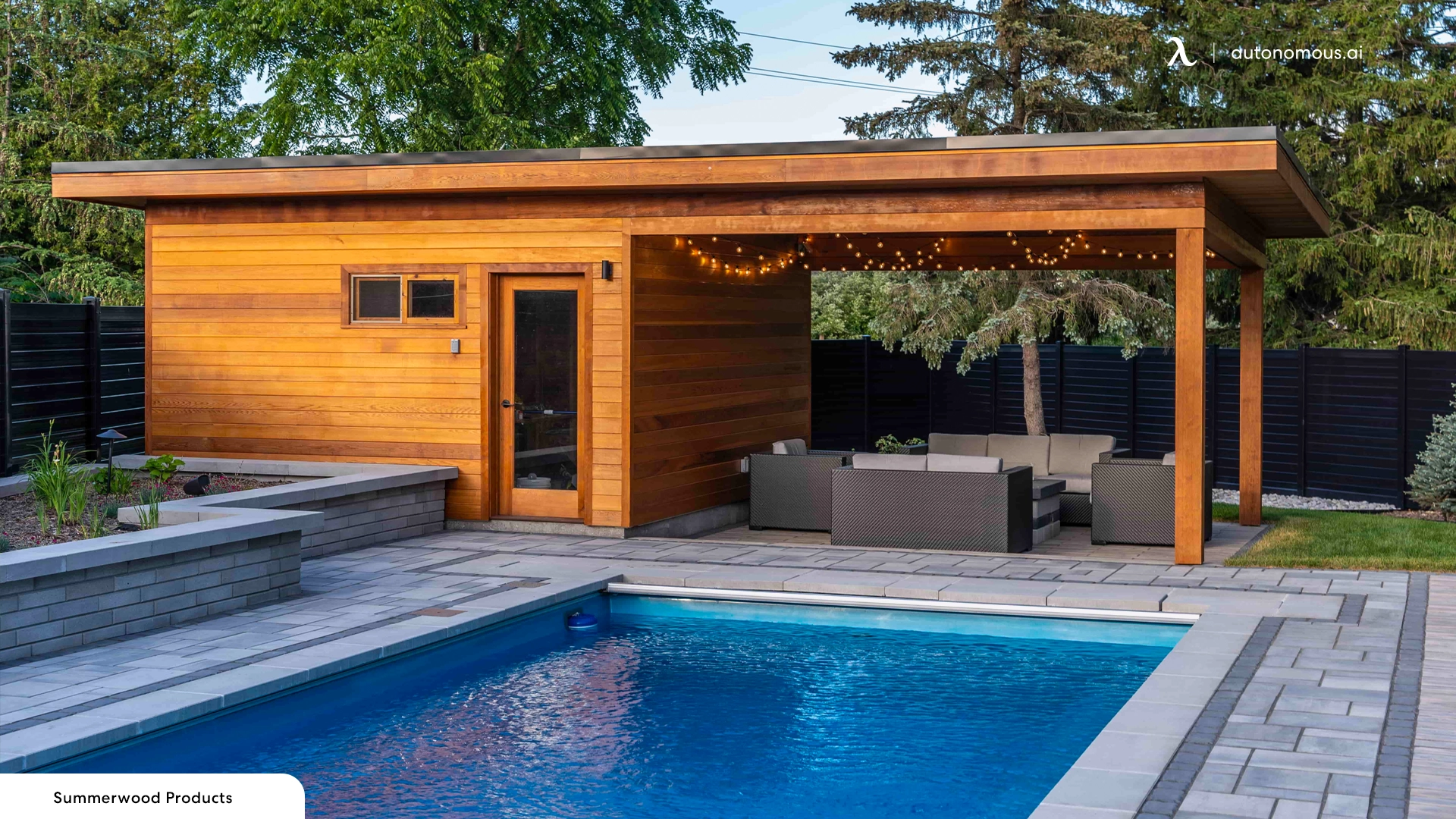
Although the terms are often used interchangeably, a prefab pool house and a prefab pool house kit are not the same product. The difference affects price, timeline, labor, and risk.
Aspect | Prefab Pool House | Prefab Pool House Kit |
How it’s built | Factory-built panels or modules | Flat-packed, site-assembled |
On-site work | Minimal assembly | Full assembly required |
Finish level | Exterior often finished | Mostly structural only |
Labor required | Lower | Higher |
Timeline | Faster, predictable | Slower, contractor-dependent |
Price range | Higher upfront | Lower upfront |
Customization | Limited | Moderate |
Choose a prefab pool house if speed, finish quality, and predictability matter more than upfront savings. Choose a prefab pool house kit if flexibility, lower initial cost, and hands-on involvement are priorities.
Pros and Cons of Prefab Pool Houses
Pros
- Faster build timeline than custom construction
- More predictable pricing than site-built projects
- Factory-controlled quality and consistency
- Reduced on-site disruption
- Cleaner, modern design options
Cons
- Higher upfront cost than kits
- Limited customization once manufacturing begins
- Shipping and crane access may be required
- Utilities significantly increase total cost
- Bedrooms or bathrooms increase regulation
Frequently Asked Questions
How much does a prefab pool house cost?
Prefab pool house structures typically range from $5,000 to $65,000, depending on size, finish level, and whether features like bathrooms, bars, or bedrooms are included. Installed totals are higher once foundation, utilities, and labor are added.
What’s the difference between a prefab pool house and a prefab pool house kit?
A prefab pool house is largely built off-site and delivered as panels or modules, while a prefab pool house kit is flat-packed and assembled entirely on site. Prefab units cost more upfront but install faster and with less labor.
Can a prefab pool house have a bathroom?
Yes, but adding a bathroom significantly increases cost and regulatory review. Plumbing typically shifts the structure toward habitable classification and requires full permits and inspections.
Can a prefab pool house have a bedroom?
Yes, but a bedroom almost always triggers residential or ADU-style regulations. This adds fire, egress, energy, and utility requirements and raises overall cost.
Do prefab pool houses need permits?
In most cases, yes. Permits are commonly required for permanent structures, larger footprints, enclosed walls, and any electrical or plumbing work.
Is a prefab pool house cheaper than an ADU?
Yes, when it remains a recreational structure without plumbing or sleeping space. Once bathrooms or bedrooms are added, costs and requirements can approach ADU-level projects.
How long does it take to install a prefab pool house?
Factory production often takes 6–12 weeks, with on-site installation ranging from a few days to two weeks, depending on size and complexity.
Conclusion
A prefab pool house is a practical solution for homeowners who want a faster, more predictable way to add functional poolside space without committing to full custom construction. Shed-style and lounge-focused designs offer the best balance of cost and simplicity, while bathrooms, bars, and bedrooms add convenience but quickly increase price and regulation.
The key to choosing the right prefab pool house is understanding how layout decisions affect cost, permits, and long-term flexibility. When kept within accessory-structure limits, prefab pool houses deliver speed and efficiency. When pushed toward residential use, they begin to resemble larger housing projects in both complexity and expense.