How to Use AI to Generate Images: Prompts and Tips
You use an AI tool to generate images by writing a structured prompt that names the subject, style, lighting, and framing, then refining the result. The biggest factor in image quality is not the tool, it is the prompt: a clear, layered description gives far better results than a few loose words. This guide covers a prompt formula that works across tools, worked examples, common mistakes, and how to choose the right tool for a project.
The structured prompt formula
A strong AI image prompt stacks four to six elements in order, rather than naming a subject alone. Models read your words literally, so each element you add gives the AI another anchor to lock onto. Build a prompt from these parts:
- Subject: the main thing, a concrete noun (a person, a car, a building), not an abstract idea
- Setting: where it is and what surrounds it
- Style: photorealistic, illustration, oil painting, 3D render
- Lighting: soft window light, golden hour, studio lighting
- Camera or lens: wide shot, 85mm portrait, close-up
- Aspect ratio: square, portrait, or wide
A detailed prompt of 30 to 50 words consistently beats a three-word one, because it removes the guesswork the model would otherwise fill with defaults. Keep the elements in a natural order and you steer composition, color, and mood instead of leaving them to chance.
A worked example
The difference between a weak and a strong prompt is easiest to see side by side. A vague prompt like "a product photo of sunglasses" leaves almost everything to the model.
A structured version gives the AI a full brief: "a professional product photo of black sunglasses on a white background, soft studio lighting with no harsh shadows, slight 30-degree angle, sharp focus, photorealistic, for e-commerce." The second prompt names the subject, background, lighting, angle, and style, so it lands close to a usable result on the first try. Start structured, then adjust the parts that missed.
The same brief-style prompting works for marketing images, and for finished ad creatives with copy and branding on top, a dedicated AI ad generator builds on the same idea.
Tips for better results
Beyond the formula, a few habits reliably improve AI-generated images. These come up again and again from people who generate at volume:
- Use concrete nouns as the subject, since abstract ideas like "joy" or "freedom" give vague results
- Name the lighting and camera angle, which do more for realism than adjectives like "beautiful"
- Reuse a fixed style description across images to keep a consistent look for a set
- Generate several variations of a prompt, then pick and refine, rather than expecting one perfect image
- Save the exact wording of prompts that work, since small changes in phrasing shift the output
For photorealism specifically, describe physical detail, a lens type, surface texture, natural light, rather than piling on words like "ultra-realistic," which models handle poorly.
Common mistakes to avoid
Most disappointing AI images come from a handful of avoidable mistakes. Knowing them saves a lot of wasted generations:
- Prompts that are too short or vague, leaving the model to guess
- Abstract subjects instead of concrete nouns
- Over-editing a result until it looks artificial
- Ignoring the background, which the model will fill randomly if you do not describe it
- Expecting one prompt to be perfect instead of iterating
Managing expectations matters too. AI tools still struggle with some requests, like very intricate detail or precise text, so a few passes are normal. When a generator keeps missing a shot, a platform that pairs a stock library with AI image generation as DepositPhotos gives licensed, ready-made alternatives to fall back on.
How to choose the right AI image tool
The right AI image tool depends on your purpose, skill level, and budget, not on which one is most popular. A few questions narrow it down quickly:
- Purpose: text-to-image, photo editing, or design layouts each point to different tools
- Ease of use: beginner-friendly hosted apps, or advanced tools with more control
- Pricing: a free tier for experimenting, or a paid plan for volume and quality
- Output control: automated one-click tools, or ones that let you fine-tune every element
Some tools also specialize rather than doing everything. If your work is slide decks, an AI presentation generator builds visuals laid out for slides rather than standalone images, which is worth knowing before you settle on a general tool.
Generating privately, with no limits
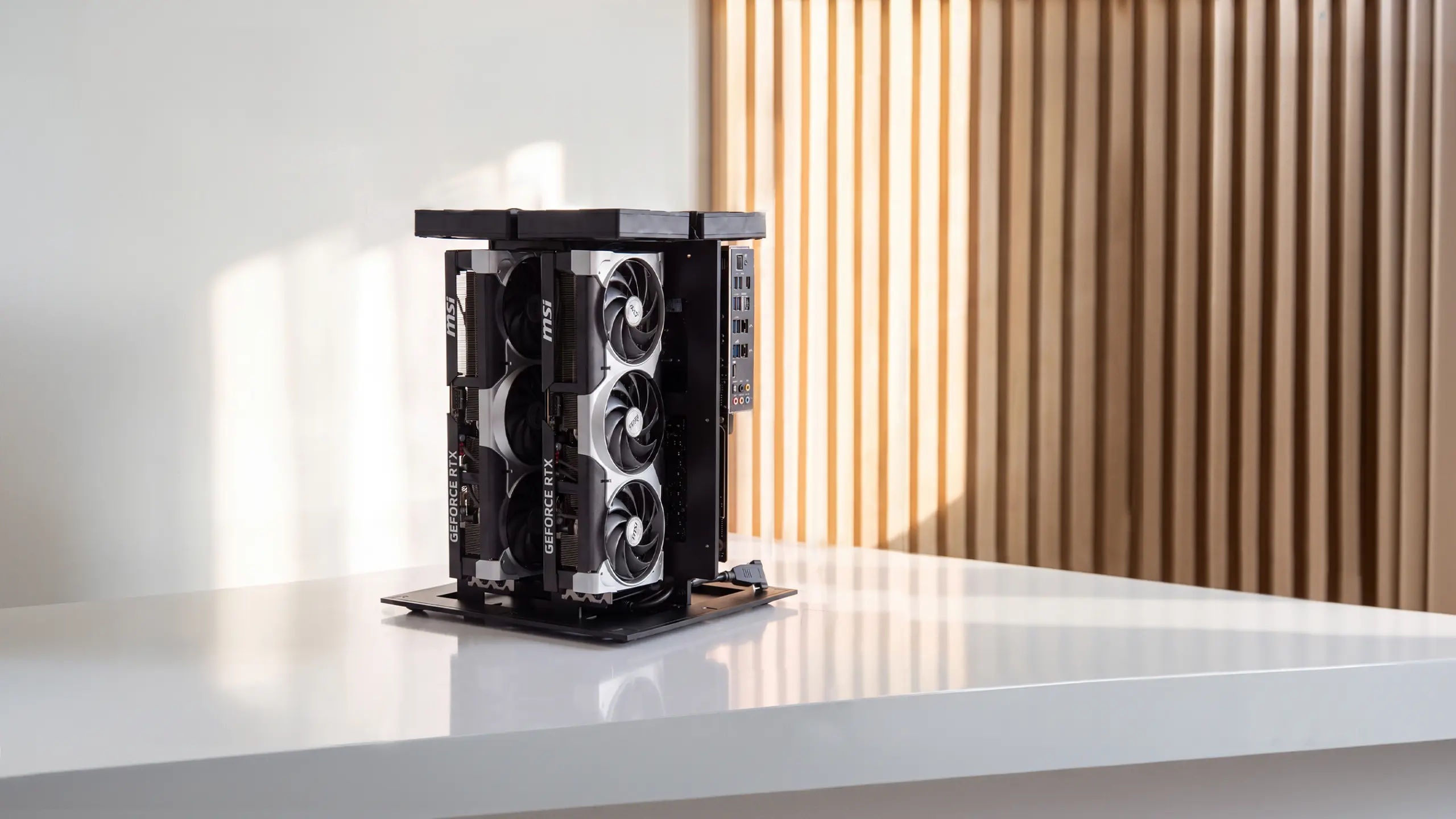
If you want unlimited generation with full privacy, running an open model locally keeps every prompt and image on your own machine. Open models like FLUX and Stable Diffusion run on your own GPU with no per-image cost and no content filter, and a mainstream consumer card handles everyday use. For heavy or continuous work, a machine built for it, such as the Autonomous Computer, removes the memory ceiling. For occasional use, a hosted free tool is simpler.
Frequently asked questions
How do you write a good AI image prompt?
Write a good AI image prompt by stacking a concrete subject, setting, style, lighting, camera angle, and aspect ratio into one clear description. A detailed prompt of 30 to 50 words gives far better results than a few words, because the model reads your words literally and fills anything you leave out with defaults.
Why are my AI images low quality?
AI images usually come out poorly because the prompt is too short or vague, uses an abstract subject, or ignores the background and lighting. Add concrete detail, name the lighting and camera angle, and describe the setting. Then generate several variations and refine, rather than expecting one prompt to be perfect.
Are AI-generated images copyrighted?
Most AI-generated images are treated as machine-generated, and rights depend on the tool's terms. Some platforms grant commercial use, others restrict free output or add a watermark. Always check the licensing terms of the specific tool before using an image commercially, since policies vary widely between platforms.
Can AI tools generate images with text in them?
Yes, though results vary by tool. Newer models like Google's Nano Banana and open models like FLUX render legible text well, while many older tools struggle. For text in an image, state the exact words in quotes, keep them short, and say where they should sit in the frame.
How do I get consistent results from an AI image generator?
Get consistent results by reusing a fixed style description across images, keeping the same aspect ratio, and changing only the subject. Saving the exact wording of prompts that work, and the seed number where the tool offers one, also helps you reproduce a look across a set of images.
How do I choose which AI image tool to use?
Choose an AI image tool based on your purpose, skill level, and budget. Decide whether you need text-to-image, photo editing, or design layouts, then match that to a beginner-friendly hosted app or a more advanced tool. Start with a free tier to test quality before committing to a paid plan.
Conclusion
Using an AI tool to generate images well comes down to the prompt: name the subject, style, lighting, and framing clearly, and refine from there. A structured prompt of 30 to 50 words beats a vague one every time, and avoiding a few common mistakes gets you usable results faster. Start with one of the best free AI photo generators, use its free tier, and let the prompt do the work.
References
- LetsEnhance, AI image prompt guide, letsenhance.io
- DataCamp, AI image generation tutorials, datacamp.com
- Hugging Face, open image model documentation, huggingface.co