5 Best Meditation Chairs for Every Sitting Style
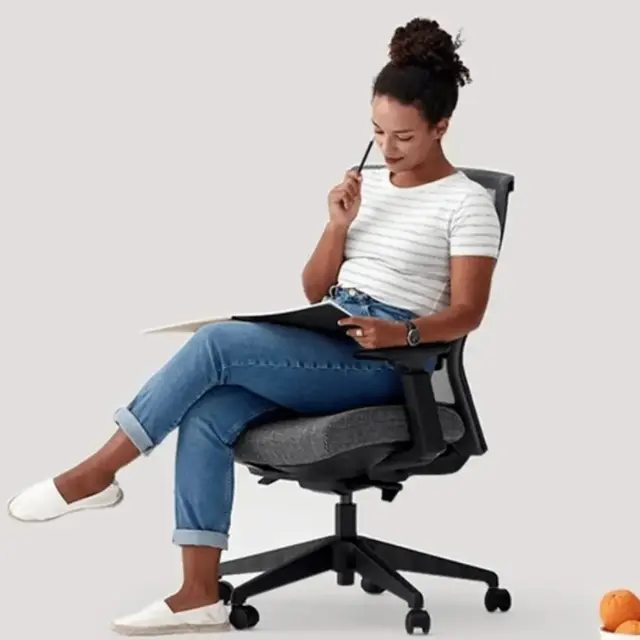
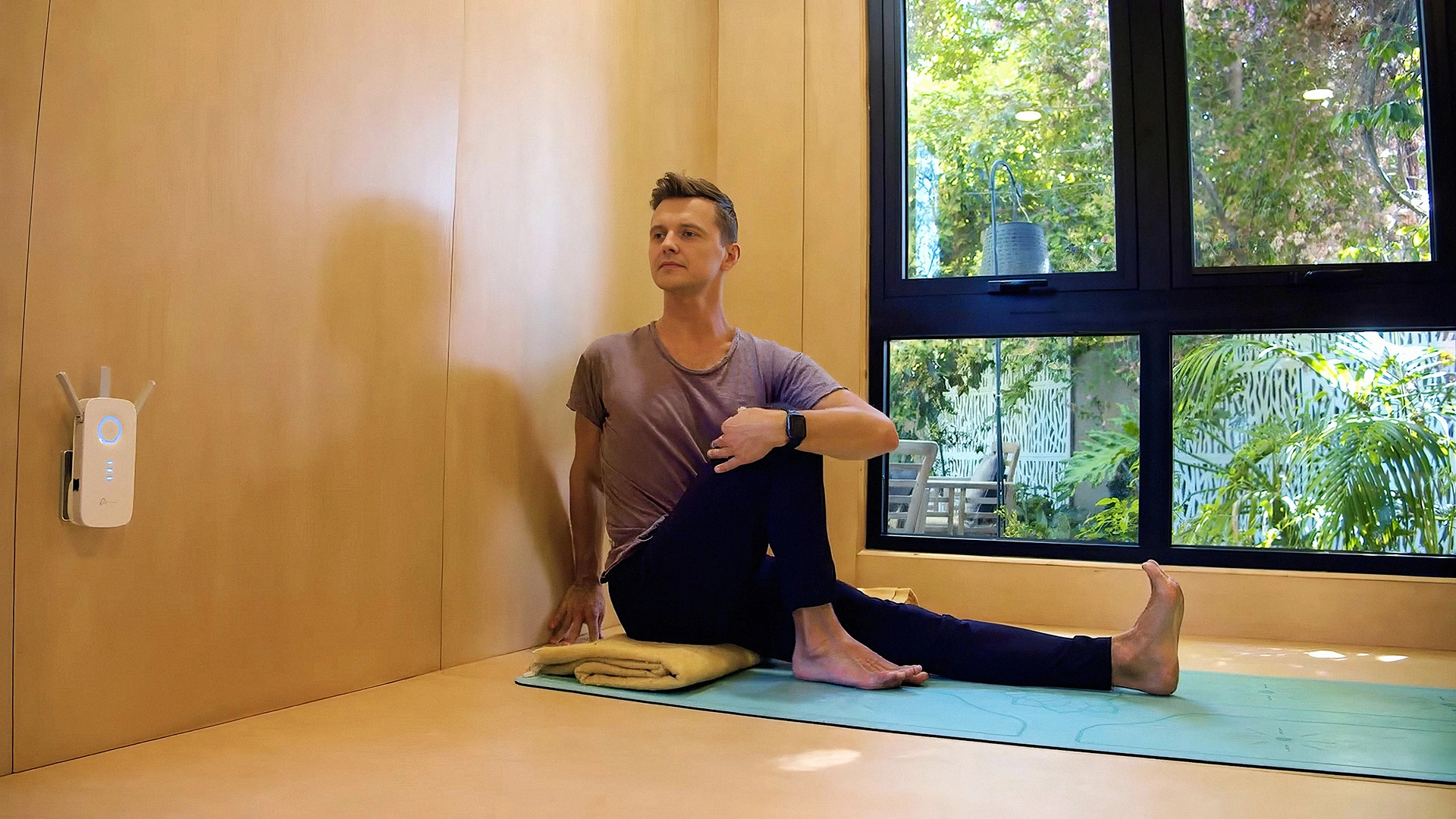
Table of Contents
If you’ve ever cut a session short because your legs went numb or your back started to ache, a meditation chair can make the difference between enduring stillness and settling into it. The right seat supports a more upright posture, eases pressure on knees and hips, and helps you stay steady without constant shifting.
This guide focuses on practical fit, how different designs feel, what features matter most, and how to choose one that suits your body and space, whether you meditate daily or just getting started.
What Is a Meditation Chair?
A meditation chair is a seat designed to support an upright, relaxed posture during extended sitting. What separates it from a regular office chair or cushion is the intent: every element, seat angle, height, firmness, back support, exists to help you sit comfortably without slouching or straining. The goal is simple: remove physical distractions so you can focus on the practice itself.
These chairs work best for people who find traditional floor sitting uncomfortable or unsustainable. For those whose lower back starts aching after a few minutes, a meditation chair with back support keeps the spine aligned without constant muscular effort. An elevated or angled seat works well for tight hips, opening the hip joint so sitting in cross-legged positions don't feel so forced. And for anyone whose knees or legs tend to go numb mid-session, raising the hips above the knees, or switching to a kneeling design, relieves that pressure. In short, a meditation chair bridges the gap between wanting to sit longer and actually being able to.
- Types of Meditation Chairs:
Not all meditation chairs look or function the same. The right type depends on your preferred sitting position and where you plan to use it.
Type | How you sit | Best for |
Floor meditation chair | criss cross chair with arms or legs extended, low to the ground | Grounded sitting with added back support |
Kneeling bench (seiza bench) | Kneeling, shins tucked under an angled seat | Reducing knee and ankle strain in kneeling posture |
Ergonomic meditation chair | Upright, feet flat on the floor, full back support | Home or office use when floor sitting isn't accessible |
Folding / portable meditation chair | Varies by design—floor or kneeling style | Travel, retreats, or small spaces needing easy storage |
Some designs blend categories, a floor chair with back support, for instance, or a folding bench that supports both kneeling and cross-legged positions. The following section breaks down specific picks across styles, so you can match a chair to your body and routine.
5 Best Meditation Chairs for 2026
Each chair below was selected based on the support it provides, how well it fits different sitting styles, and whether it holds up over longer sessions. There's no single "best" meditation chair, what works depends on your body, your space, and how you prefer to sit.
- A Quick Glance:
Meditation Chair | Type | Sitting Position | Back Support |
Pipersong | Desk-height with footstool | Cross-legged, kneeling, squatting | Short, rigid |
Mindful & Modern Pro | Floor, foldable | Cross-legged, legs extended | 5-position adjustable |
Ungloo Portable with Backrest | Floor, modular | Cross-legged | Fixed 90° panel + leg wedges |
Sattva Gen. 2 | Floor, fixed | Cross-legged, feet below knees | Straight, fixed |
YogaKargha Wooden | Floor, fixed | Cross-legged (padmasana, sukhasana) | Tall, adjustable angle |
1. Pipersong Meditation Chair
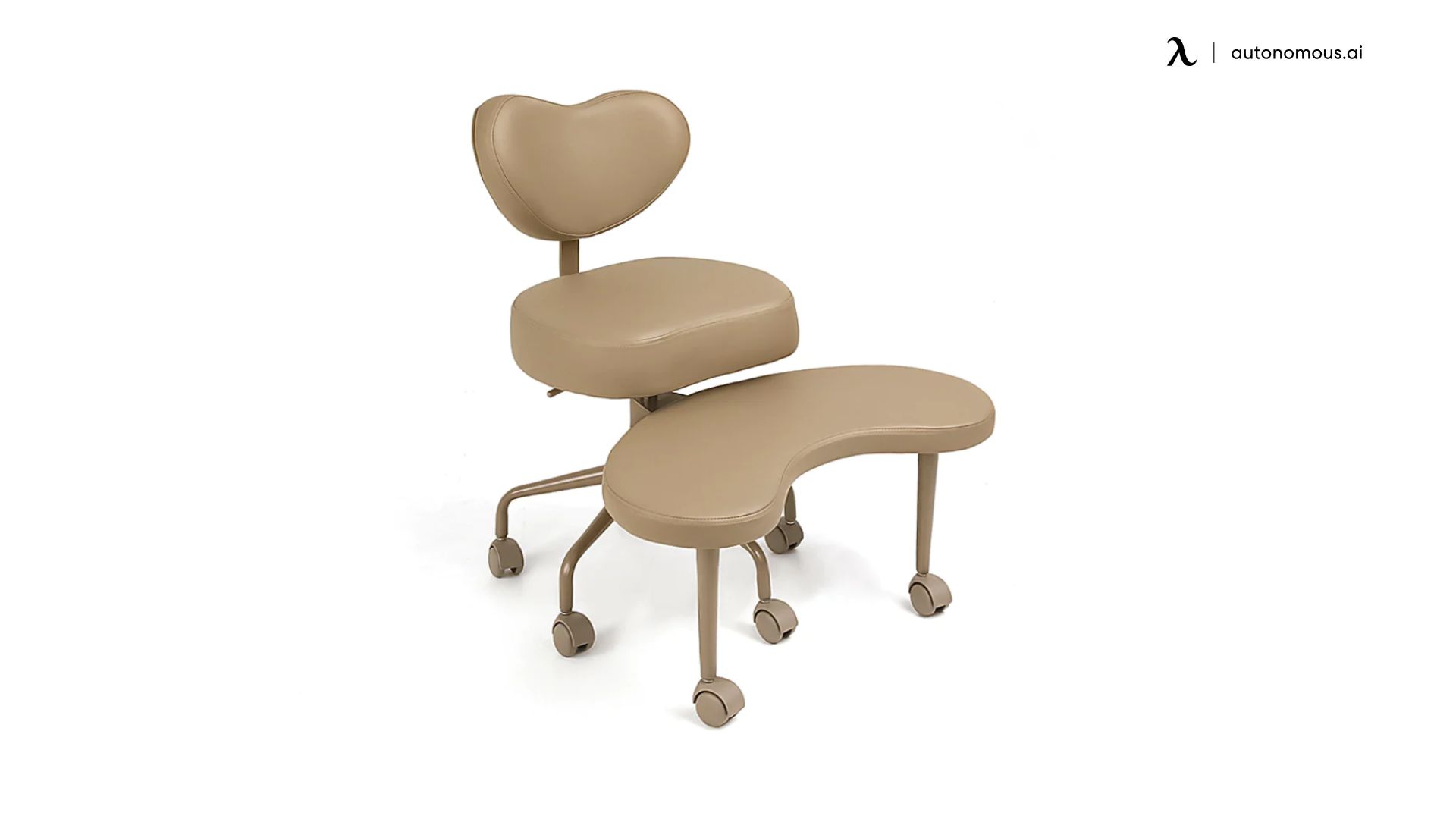
The Pipersong is a desk-height chair with an attached 360° swivel footstool. Unlike a floor meditation chair, it sits at standard office height, adjustable from 19.7" to 23.7", and rolls on casters. The design accommodates cross-legged sitting, kneeling, squatting, or one-leg-up postures while you work at a desk.
The backrest is short and rigid, enough to keep you from collapsing backward, but not designed for lumbar support. The footstool can't be detached, which means the chair has a larger footprint than most office chairs. If you need to tuck it under a desk when not in use, that won't work here.
For those who fidget in conventional office seating or prefer sitting cross-legged while working, the Pipersong offers a rare combination: meditation-friendly postures at desk height. It fits desks between 29" and 35" tall and supports up to 250 lbs. As an office meditation chair, it bridges two categories that don't usually overlap. As an office meditation chair, it bridges two categories that don't usually overlap, meditation-style sitting and everyday desk comfort, similar to what people look for in an ADHD office chair.
Best for: Desk-based work, fidgety sitters, cross-legged office posture
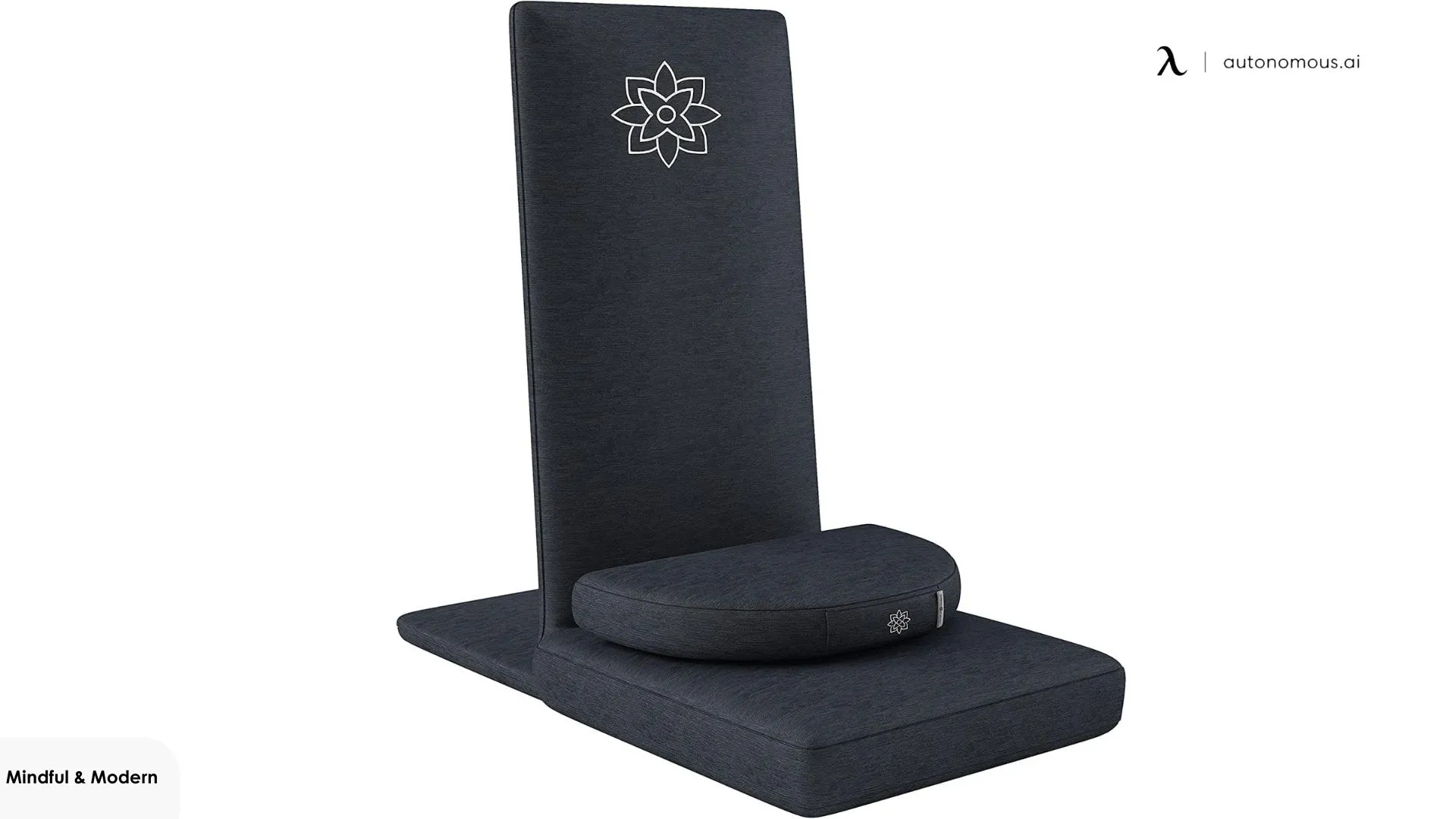
2. Mindful & Modern Pro Meditation Chair
The Mindful & Modern Pro is a folding meditation chair with a 26-inch backrest. The backrest adjusts across five positions, up to 90°, allowing you to find an angle that supports your spine without forcing a rigid upright posture.
The height covers most of the spine, which helps if you tend to round your shoulders or fatigue during longer sits. A half-moon buckwheat cushion comes included, adding elevation and firmness under your hips. The backrest does its job: it keeps your spine upright without requiring you to engage your core the entire session. For meditators whose back fatigues before their mind settles, that support matters.
The downside is there's nothing here for your hips or knees. If your main discomfort comes from tight hips or leg numbness rather than back fatigue, you'll need additional props. The Holland velvet cover is soft but not removable for washing, and some users report the padding compresses after extended use.
Best for: Back fatigue, longer sessions, those who need spinal support, limited storage space
3. Ungloo Portable Meditation Chair with Backrest
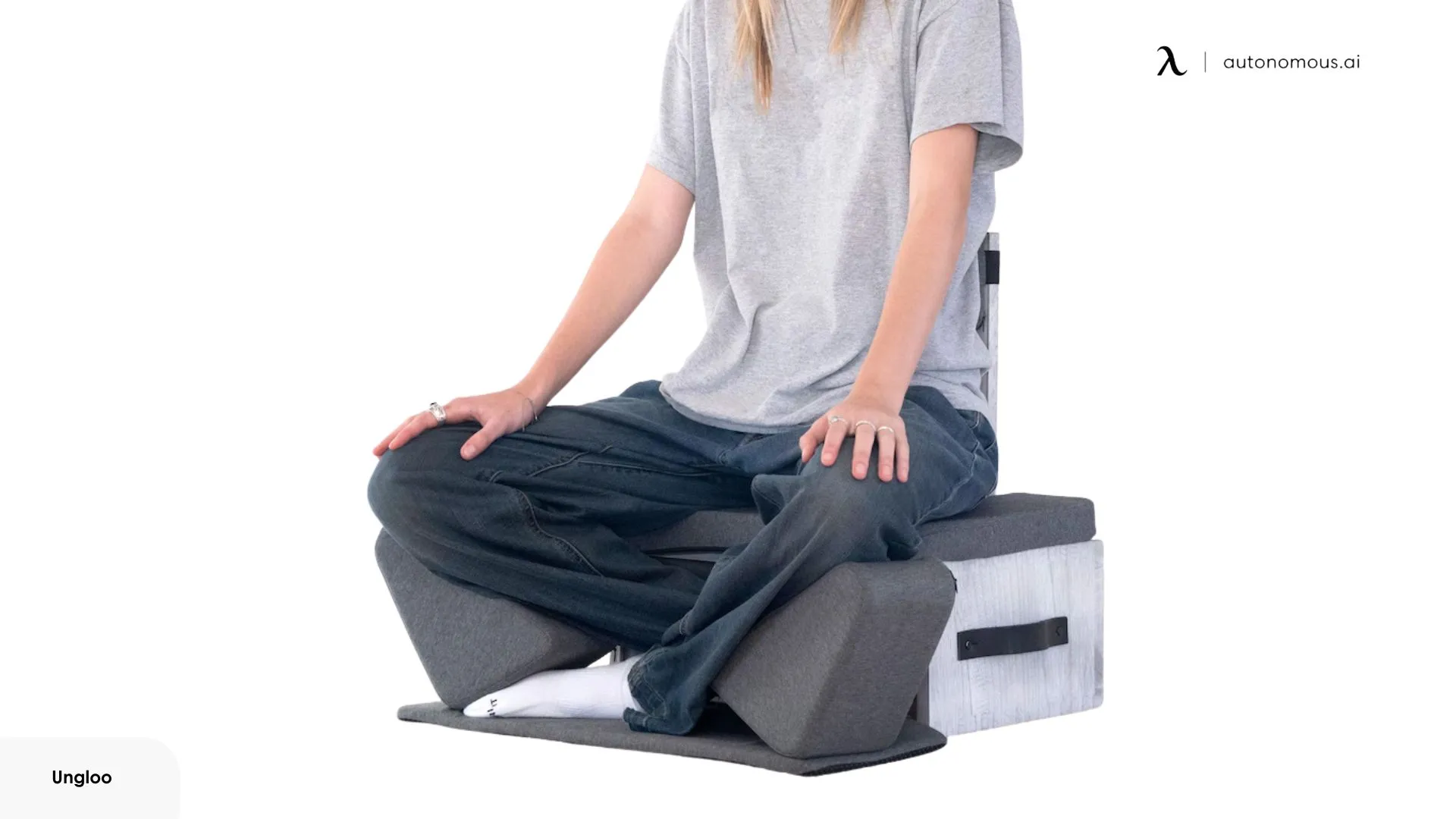
The Ungloo is a modular floor meditation chair built around a paulownia wood box. The box itself serves as the seat, and the front panel detaches to become the backrest. Inside, you'll find two EVA foam wedges for hip and knee support, plus an NBR foam floor pad that cushions your feet and ankles.
The elevated seat lifts your hips a few inches off the ground. For those who find standard floor sitting too compressed or hard on the joints, this added height can make cross-legged postures more accessible. The paulownia wood frame is the same material used in surfboards and skis, lightweight but sturdy. The trade-off is setup. If you want something you can drop onto and start sitting, the Ungloo requires a bit more assembly each time, even if it's quick.
Best for: Outdoor practice, travel, meditators who need hip and knee support
4. Sattva Gen. 2 Meditation Chair
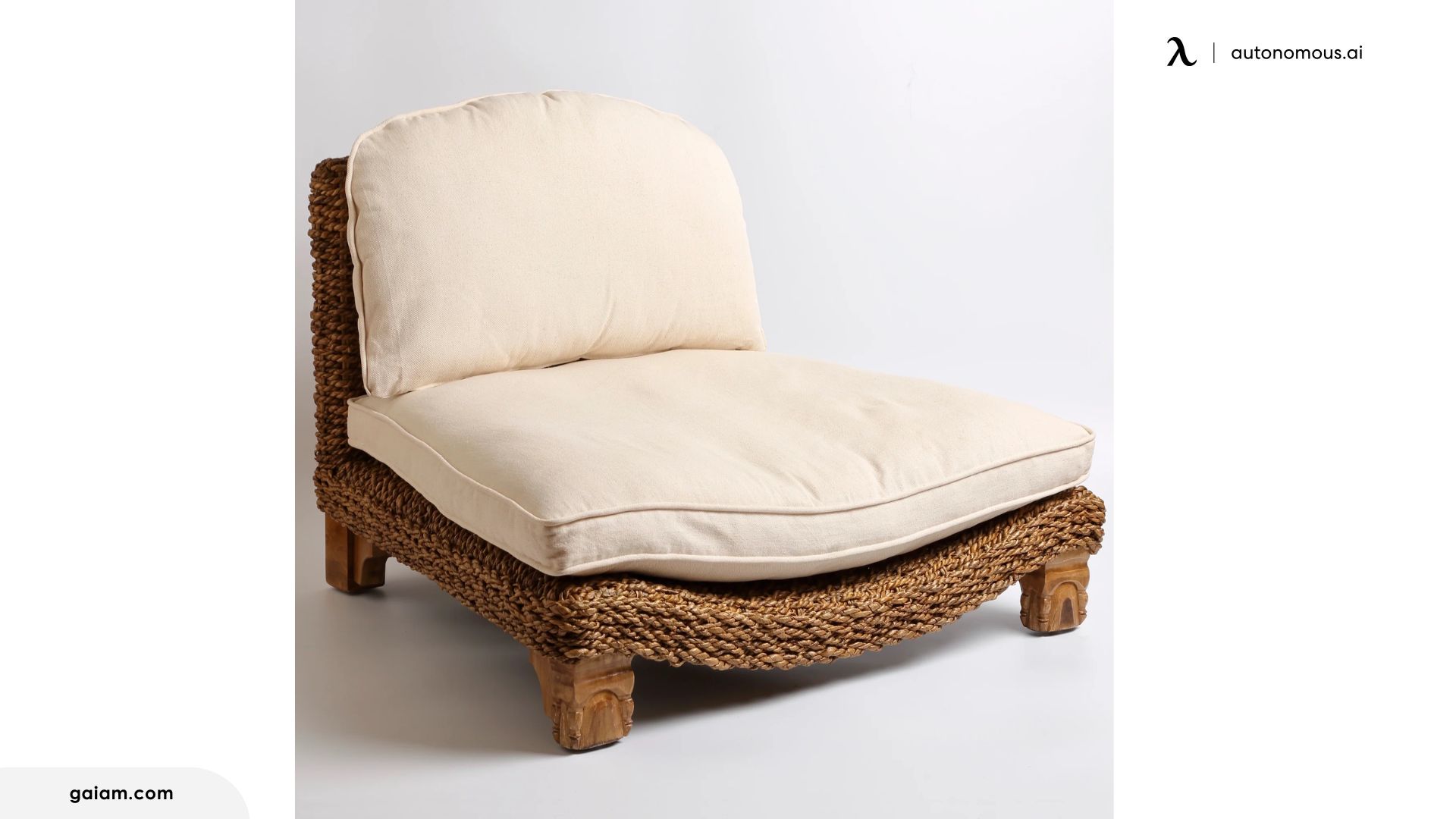
The Sattva Gen. 2 is a floor meditation chair made from hand-carved mango wood and woven seagrass. The seat has a subtle contour, dipping about 3 inches from the sides to the center, which allows your feet to rest below your knees without pressing into a flat edge. The backrest is straight and fixed, with no adjustment mechanism.
Cushions are filled with kapok, a plant-based fiber firmer than cotton batting. Kapok holds its shape over time, which suits long-term daily use. The cotton covers are removable and come in several color options. The armless design leaves room for cross-legged sitting without obstruction, a comfortable option for those who practice sitting Indian style during meditation.
This comfortable meditation chair is built for a dedicated space. It looks like furniture, not gear. The craftsmanship is evident, each piece is made by artisans in Java using sustainable mango wood and water-based finishes.
Best for: Dedicated meditation spaces, those who value natural materials and craftsmanship
5. YogaKargha Wooden Meditation Chair
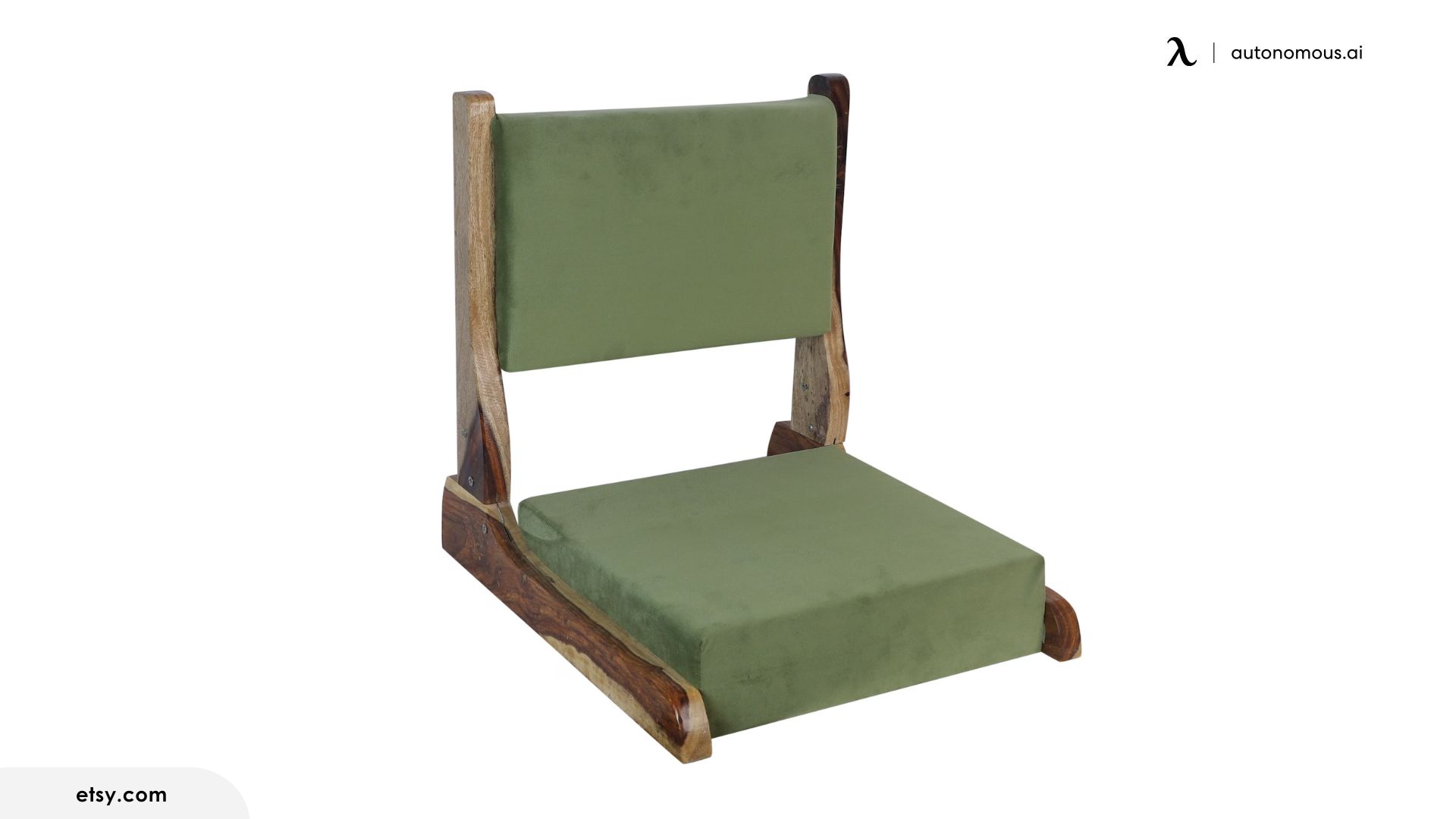
The YogaKargha is a floor meditation chair based on the Japanese zaisu design—a legless seat with a tall backrest, built for sitting close to the ground. The frame is constructed from pine or Indian rosewood, depending on the version. A removable wooden knob lets you adjust the backrest angle: lock it upright for seated meditation, or tilt it back for reading or relaxation.
This adjustable meditation chair supports traditional postures like padmasana and sukhasana while keeping the spine aligned. The seat and backrest come cushioned with firm padding. Fabric colors vary by production batch. Each chair is handcrafted in India, so expect slight variations in wood grain and finish between units.
The firm cushioning provides structure rather than softness. If you're used to plush padding, the seat may feel hard at first. Over longer sessions, the firmness tends to hold up better than softer foams that bottom out. The chair also doubles as a reading seat or laptop table base, making it a comfortable meditation chair for multi-use spaces.
Because of the weight and size, this chair stays where you put it. It's not designed for travel or frequent repositioning.
Best for: Home practice, multi-use floor gaming chair, those who prefer firm support and handcrafted furniture
How to Choose the Right Meditation Chair
Meditation chairs vary in height, structure, and support, and what works for one person may not work for another. The right choice depends on how you sit, where your body tends to struggle, and how much space you have. This section breaks down the key factors to consider before purchasing.
- Match your sitting style
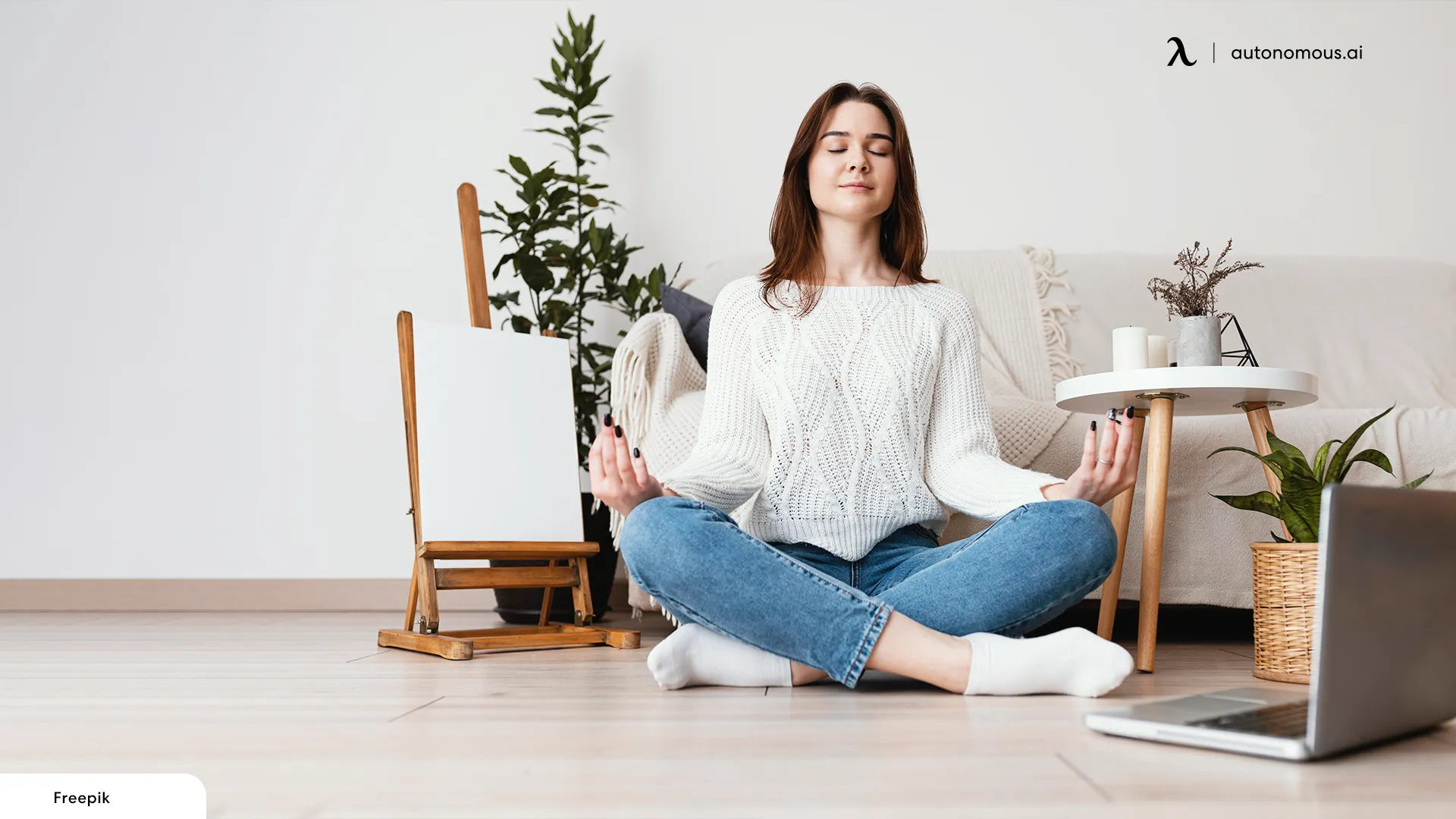
Your preferred sitting position shapes which meditation chair will feel natural. Cross-legged sitters generally need a wide, low seat with firm cushioning—narrow bases force the knees to hang off the edges, which strains the hips over time. A floor meditation chair with a flat or slightly contoured surface suits this posture well, and pairs naturally with a floor desk workstation for those who prefer ground-level sitting throughout the day.
If you sit with feet flat on the ground, look for an elevated seat with a stable base and full backrest; without adequate height, the lower back tends to round. For those who shift between postures during a session, an adjustable meditation chair or modular floor system offers flexibility without interrupting your practice.
- Match your main discomfort
Lower back fatigue is the most common reason people move from cushions to chairs. A meditation chair with back support, particularly one with a backrest taller than 20 inches, keeps the spine aligned without constant muscular effort.
Knee pain and leg numbness often stem from sitting too low, so a seat that positions hips above knees reduces joint compression. Tailbone pressure builds when cushioning is too soft or the seat is flat, firmer foam and contoured designs help distribute weight away from the coccyx. If restlessness pulls you out of practice, a comfortable meditation chair that allows movement, such as an ergonomic meditation chair with a swivel base, may help you settle without fighting your body.
- Size and fit
Meditation chairs are not one-size-fits-all, and manufacturers don't always specify who their chairs fit best. Seat height determines your hip-to-knee relationship, when seated, your hips should rest slightly above your knees; too low and the knees rise toward the chest, too high and the legs dangle without grounding.
Seat width matters most for cross-legged sitting, where both knees need enough surface area to rest without hanging off the edges. Weight capacity affects stability and cushion durability over time; if you're near the upper limit, look for a chair rated at least 20–30 lbs above your body weight.
A Dual-Purpose Alternative: One Chair for Work and Meditation
Not everyone wants a separate piece of furniture for meditation. If you work from home and meditate in the same space, or if floor sitting doesn't suit your body, an ergonomic office chair can serve both purposes. The key is finding one that supports upright posture, allows stillness without discomfort, and doesn't lock you into a single position.
Most office chairs prioritize task-based movement, rolling, swiveling, leaning forward to type. A meditation-friendly office chair needs different qualities: stable support for sitting still, adjustable lumbar that holds the lower back without pushing, and a recline that lets you settle into a relaxed but upright posture.
- Autonomous ErgoChair Pro
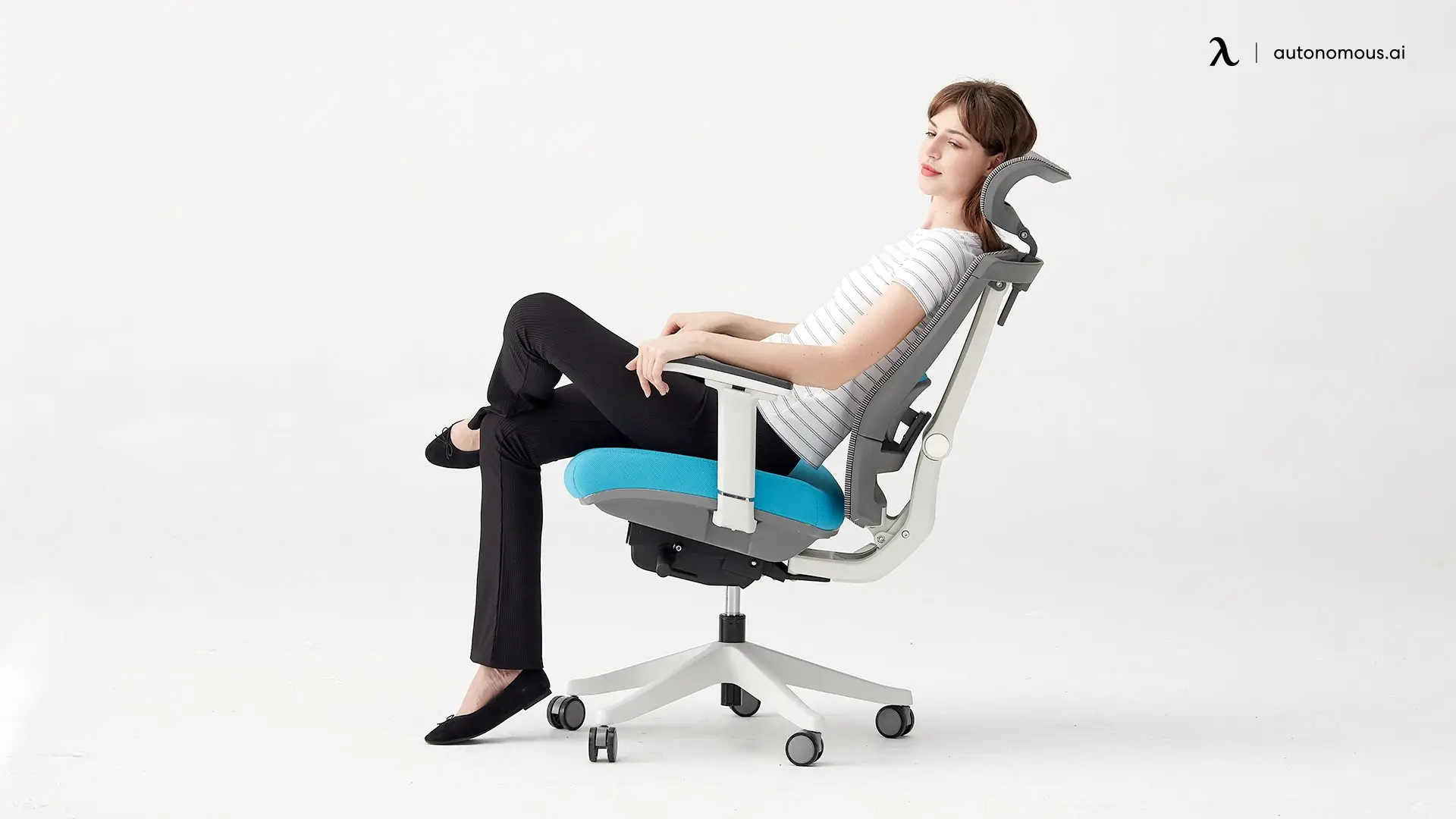
The ErgoChair Pro is an ergonomic office chair that doubles as a meditation seat for those who prefer elevated sitting over floor-based practice. Three features make it particularly useful for meditation: adjustable lumbar support that holds the lower back in a neutral position, a 5-position recline (up to 20°) that allows you to settle into stillness without slumping, and a headrest with 45° of tilt that supports the neck during eyes-closed sitting.
The backrest is breathable mesh rather than foam, which prevents heat buildup during longer sessions. The memory foam seat cushion has contoured edges that reduce pressure on the thighs, helpful when sitting still for 20 minutes or more.
This office chair for posture won't replicate the grounded feeling of a floor meditation chair. But for those whose bodies prefer chair-height sitting, or who want one seat for both work and practice, it serves both purposes without compromise.

FAQs
Are meditation chairs worth it?
A meditation chair is worth it if floor sitting feels uncomfortable or unsustainable, especially when back fatigue, tight hips, or leg numbness ends your session early. It’s meant to bridge the gap between wanting to sit longer and being able to.
What is the best meditation chair for most people?
The best meditation chair is the one that matches how you naturally sit and where you feel strain first. Prioritize stability, a supportive sitting angle, and a fit that keeps your posture tall without feeling rigid.
What height should a meditation chair be?
A meditation chair height is “right” when it lets your hips feel open and your spine stack comfortably without slumping. Many people aim for a setup where the knees aren’t forced high and the pelvis doesn’t tuck under.
How do I choose a comfortable meditation chair?
A comfortable meditation chair should feel stable, supportive, and firm enough to prevent sinking over time. Comfort is less about softness and more about staying aligned without strain during the full length of a session.
Is an adjustable meditation chair better than a fixed one?
An adjustable meditation chair can be better if you’re still figuring out your ideal posture or you switch positions often. Adjustability helps you fine-tune comfort, but a stable fixed chair can work just as well if it fits you.
Is an ergonomic meditation chair good for back pain?
An ergonomic meditation chair can help if it supports a neutral posture and reduces the effort needed to sit upright. If pain is persistent or worsening, it’s best to check with a qualified professional rather than relying on seating alone.
Is a folding meditation chair a good option?
A folding meditation chair is a good option if you need easy storage or want to keep your space flexible. The main trade-off is that some folding designs feel less stable than heavier, non-folding models.
Can an office meditation chair work for meditation at a desk?
An office meditation chair can work well if it supports upright posture and lets you adjust your position without cutting off circulation. The key is choosing a design that stays stable at desk height and doesn’t encourage slouching.
Conclusion
The right meditation chair depends on how you sit, where your body struggles, and how you plan to use it. There's no universal best—only what fits your practice.
A chair that solves your main limitation, back fatigue, hip tightness, knee pain, or lack of portability, will do more for your practice than one with the longest feature list. Comfort during stillness matters more than adjustability you won't use. And a chair that fits your space and routine is one you'll actually sit in.
Start with your body. Choose accordingly. Once your setup feels right, building a consistent practice becomes easier—whether at home or through simple meditation exercises during the workday.