7 Best Cross-Legged and Criss-Cross Office Chairs for 2026
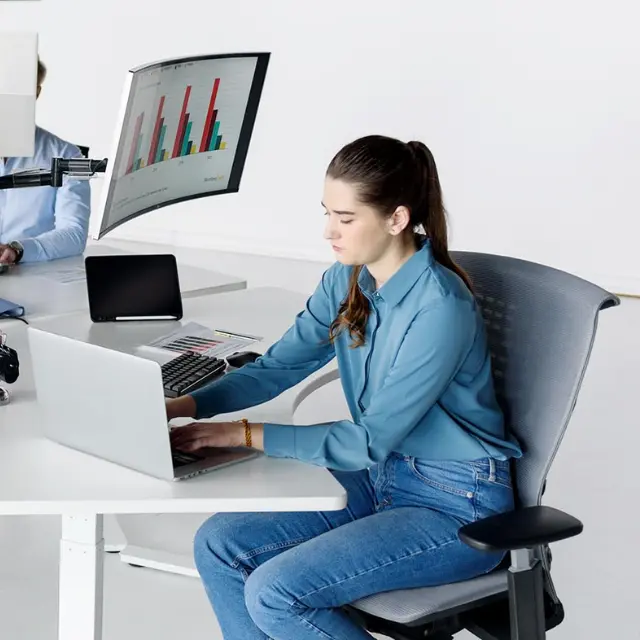
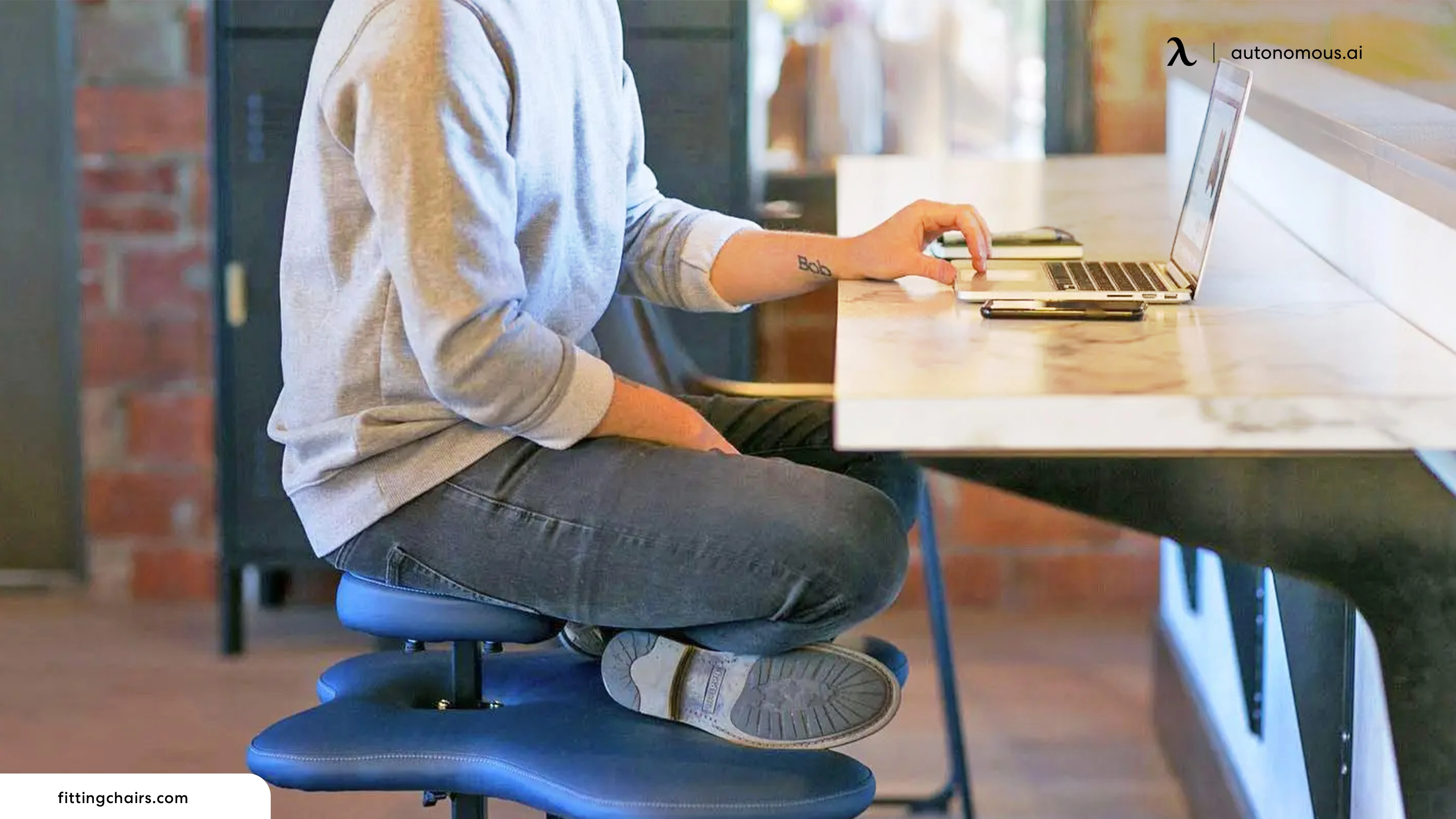
For part-time crossing, the best criss cross office chair is a full ergonomic chair such as the Autonomous ErgoChair Pro or ErgoChair Mesh, while full-tuck days call for a wide armless seat or a multi-level chair with a leg rest. The catch: chairs with the most leg room give up most of the back support, and a 19-inch task seat suits ankle-over-knee better than a deep tuck. Below are seven cross-legged office chairs with listed sizes, capacity and prices, plus a measuring check that tells you which kind you need.
7 Best Cross-Legged Office Chairs at a Glance
Two Autonomous task chairs cover part-time crossing on a full workday, two wide armless chairs under $70 cover full-tuck days, and three multi-level chairs cover kneeling, squatting and switching positions. The order follows how much of a full workday each chair supports: task chairs with adjustable lumbar first, then wide armless seats, then multi-level seats. The first two are Autonomous chairs, which we sell; their specs come from our product pages, and the rest come from Amazon and brand listings.
| Chair | Seat (as listed) | Wheels | Armrests | Capacity | Best for | Price |
|---|---|---|---|---|---|---|
| Autonomous ErgoChair Pro | 19" W x 19" L, depth 19-21.5" | 5 casters | Adjustable, 11-14" above seat | 300 lb | Ankle-over-knee on a full workday | $499 |
| Autonomous ErgoChair Mesh | 19" W x 19" L, depth 18-20" | 5 casters | 3D (slide, side to side, pivot), 11-14" above seat | 300 lb | Part-time crossing in a warm room | $499 |
| PUKAMI Criss Cross Chair | Widened seat; overall 28.3" W x 20.3" D | No, rubber feet | None | Gas lift rated 350 lb | A full tuck in one fixed spot | $69.99 |
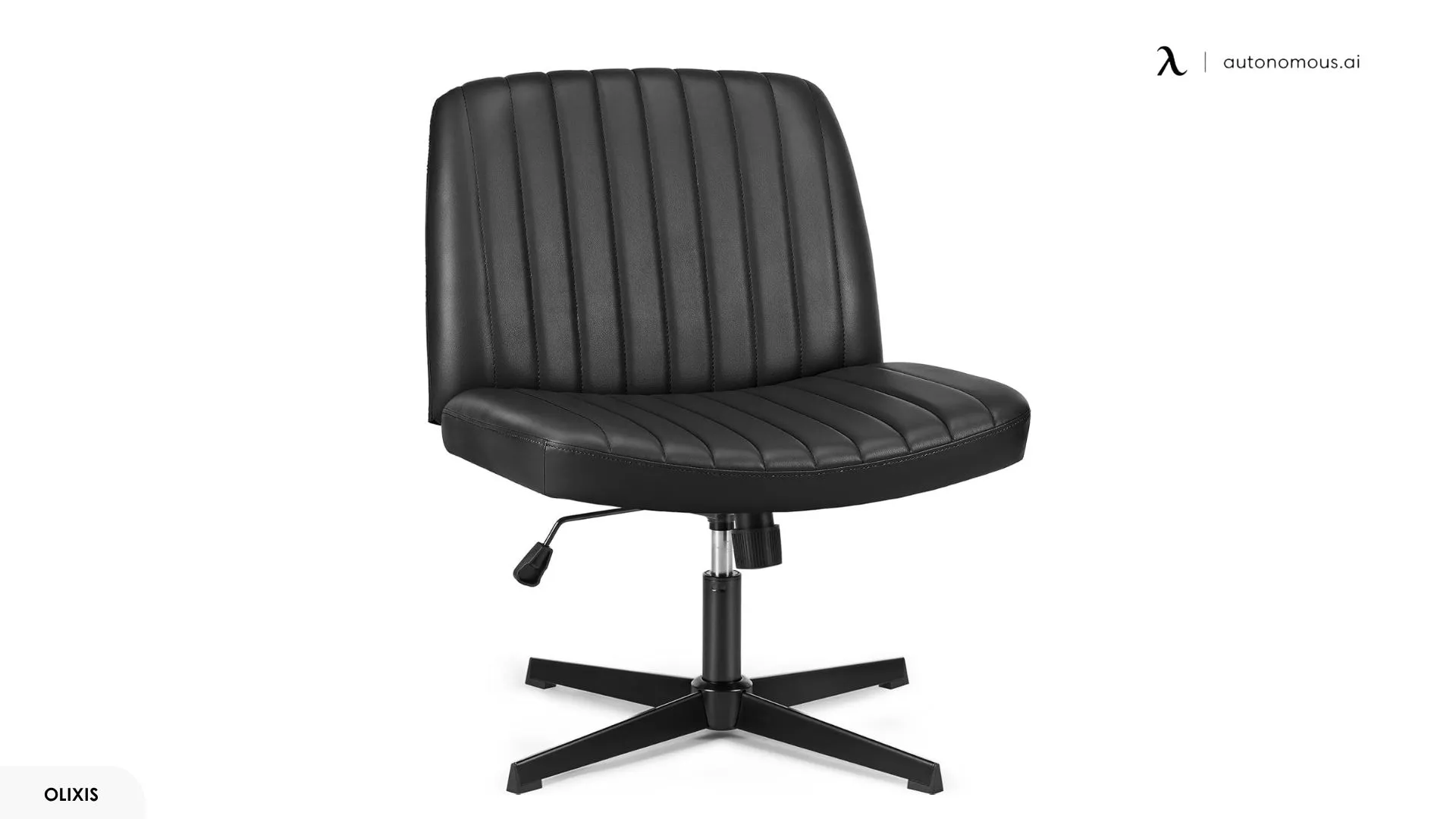
| OLIXIS Criss Cross Chair | Wide, deep seat; overall 25.59" W x 26.38" D | Casters or foot pads (both included) | None | 300 lb | A full tuck, rolling or fixed | $69.98 |
| VIVO CHAIR-CL02B | Swivel seat over a leg rest; seat height 18.5-22" | 5 casters | None listed | 220 lb | Cross-legged, kneeling and squatting at a normal desk | $119.99 |
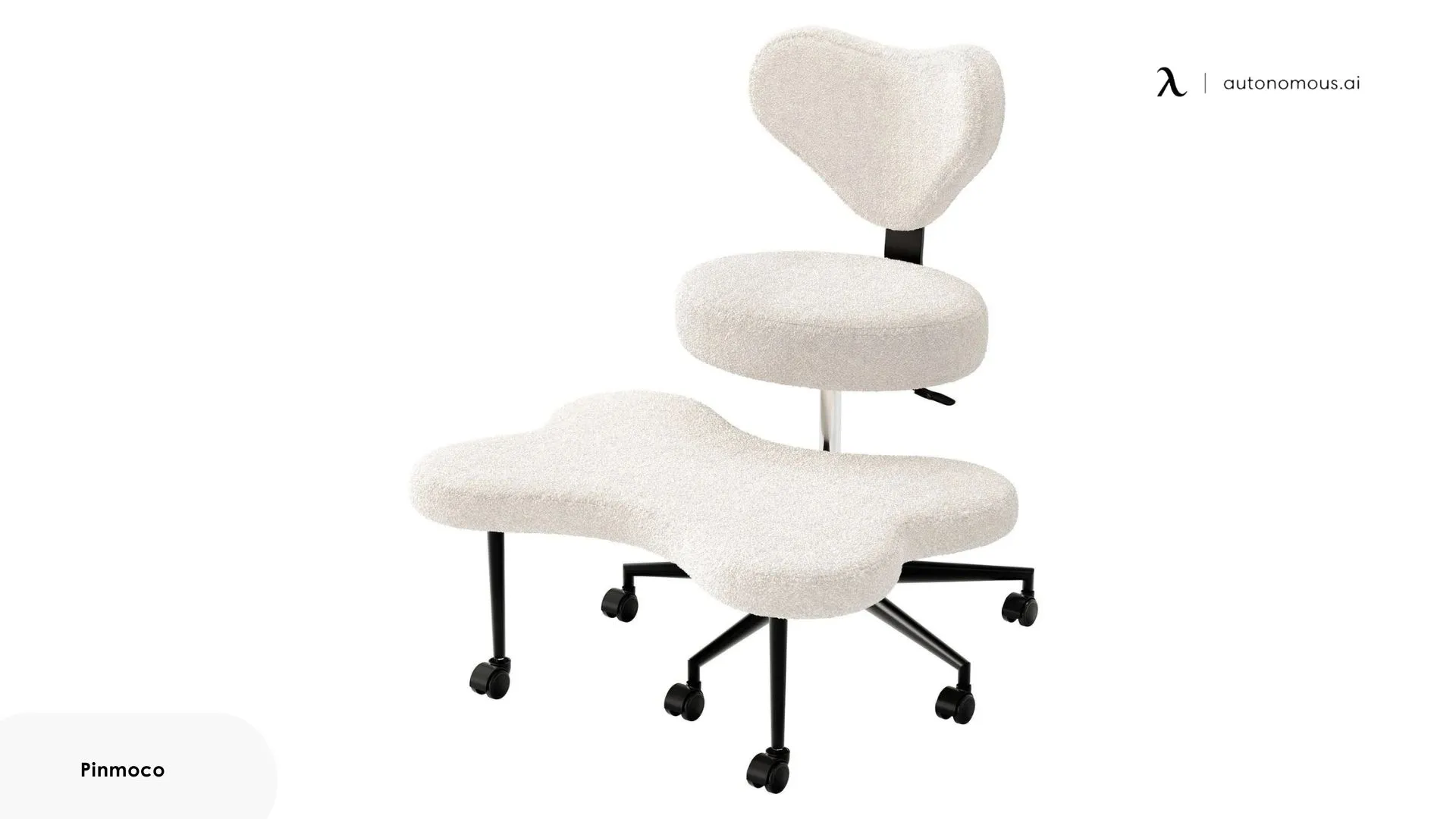
| Pinmoco Ergonomic Cross Legged Chair | 4" cushion over a 31.5" x 20.5" footstool; height 33.9-38.6" overall | 5 casters | None listed | 385 lb | The largest platform for switching positions | $119.04 |
| Pipersong Meditation Chair Plus | Not listed (size chart image only) | Not listed | None; the Meditation Armchair has adjustable arms | Not listed | All-day cross-legged, squatting and kneeling | $249 sale ($349 regular) |
Prices are list prices on the brand site or Amazon and change periodically; competitor prices and ratings move often, so check the listing before you buy.
Which Chair Fits Your Sitting Style?
Your sitting style decides the seat you need: ankle-over-knee fits on a 19-inch task seat, a full tuck needs a seat wider than your folded knees, and kneeling or squatting needs a second level under the seat. Most people mix styles, so pick for the one you hold longest.
- Ankle over knee: one foot rests on the opposite thigh and the other stays on the floor or tucks under. This fits on the ErgoChair Pro or Mesh, and you keep adjustable lumbar for the hours you sit normally.
- Full tuck: both feet sit under the opposite thighs and both knees spread wide. This is where a 19-inch seat runs out; the PUKAMI and OLIXIS give you more width but little back support.
- Kneel, squat or switch often: you change positions every few minutes. A multi-level chair like the VIVO CL02B, Pinmoco or Pipersong gives your legs a second surface below the seat.
The two-minute check: sit on the floor in your usual tuck and measure across from the outside of one knee to the outside of the other. Compare that number with the chair's seat width, not its overall width. A listing's overall width includes the base and frame, so it is the most the seat can be, never the seat itself. If your knee span is wider than the seat, your knees will hang over the edge or land on the armrests.
Two more checks take a tape measure and a minute. First, tuck on your current chair and measure how high your raised knee sits above the seat, then compare it with the armrest range (11 to 14 inches above the seat on the ErgoChair Pro and Mesh).
Second, check seat depth: in a tuck your feet need room in front of your hips while your back still reaches the backrest. If you are shorter and your back already misses the backrest, look at petite office chairs with shallower seats before a deep criss-cross seat.
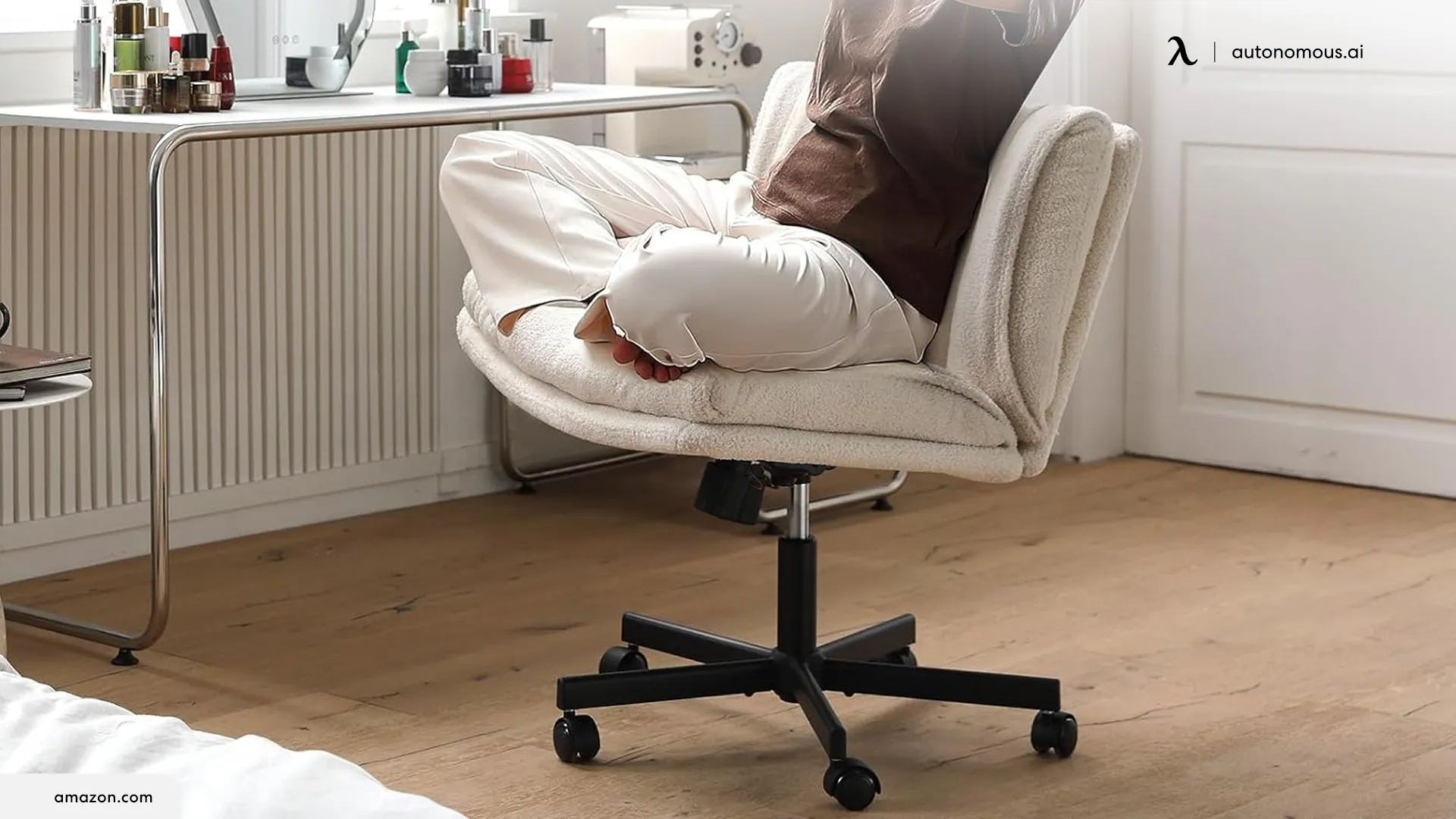
Reviewing the 7 Best Cross-Legged Office Chairs
The best cross-legged office chair for a full workday is a task chair you can fold one leg on, and the best one for all-day tucking is a wide armless or multi-level seat. The first two below are conventional ergonomic chairs that accommodate crossing; the other five are built around it. Both groups work; they solve different problems.
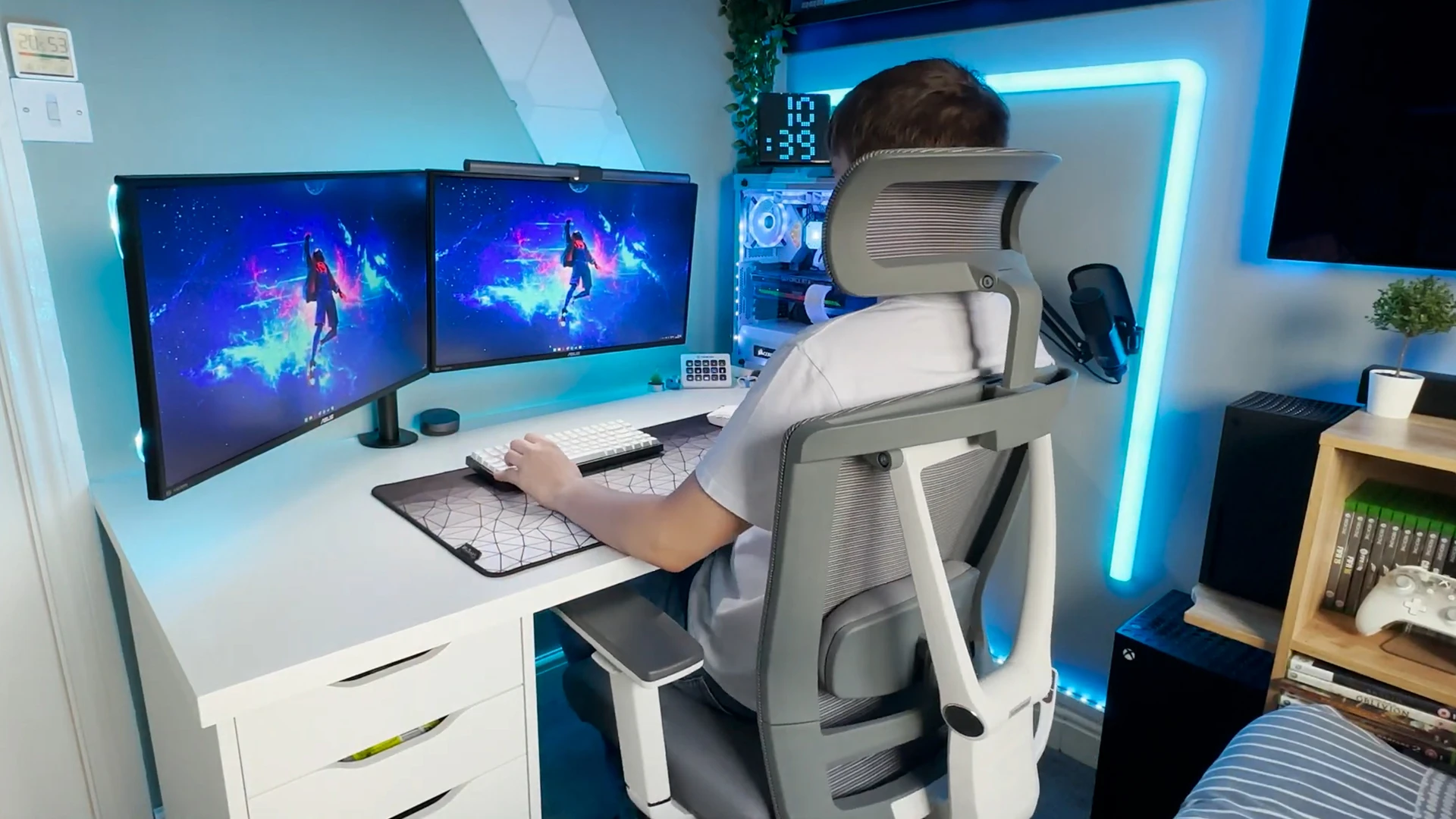
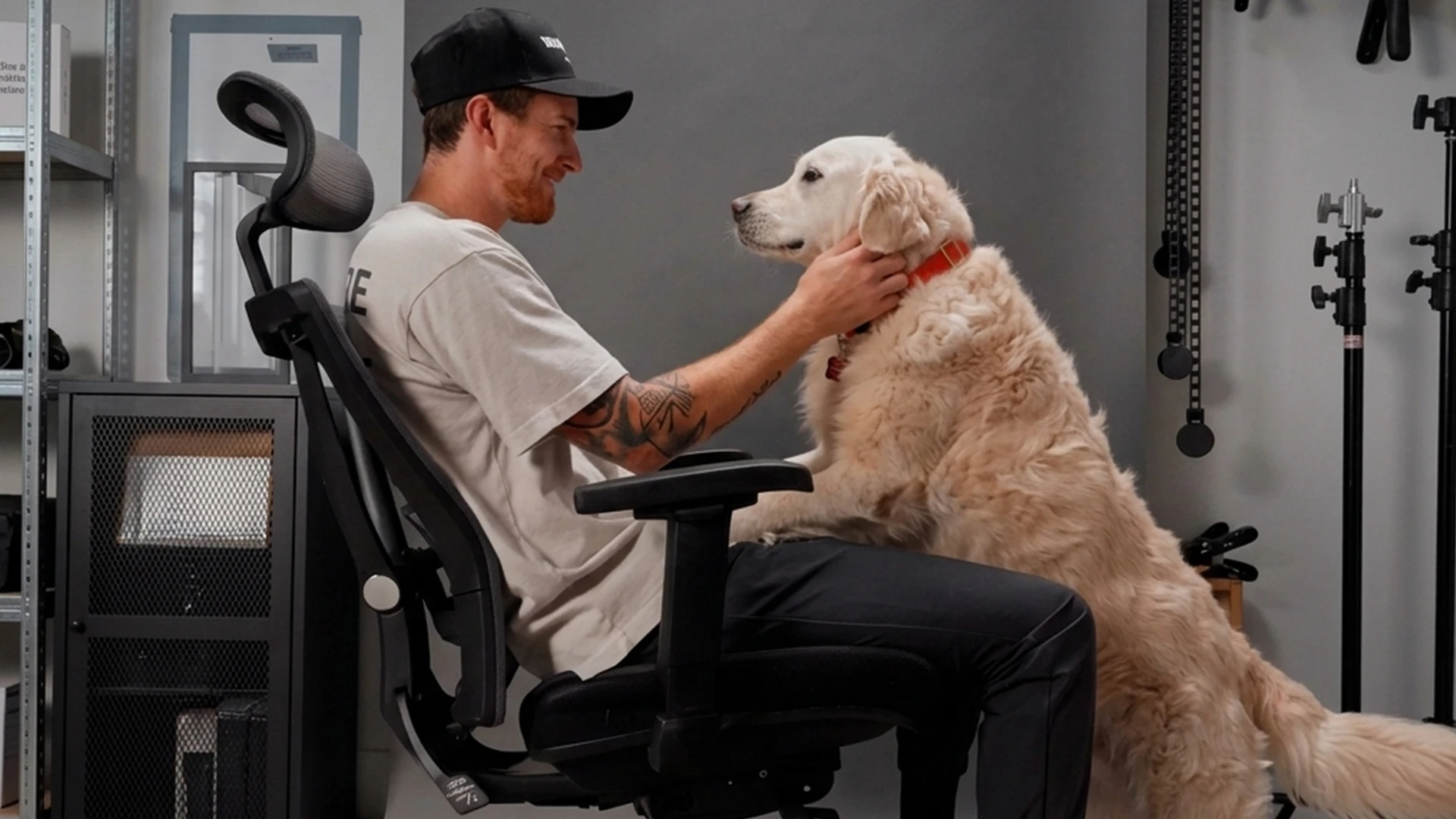
1. Autonomous ErgoChair Pro: for ankle-over-knee on a full workday
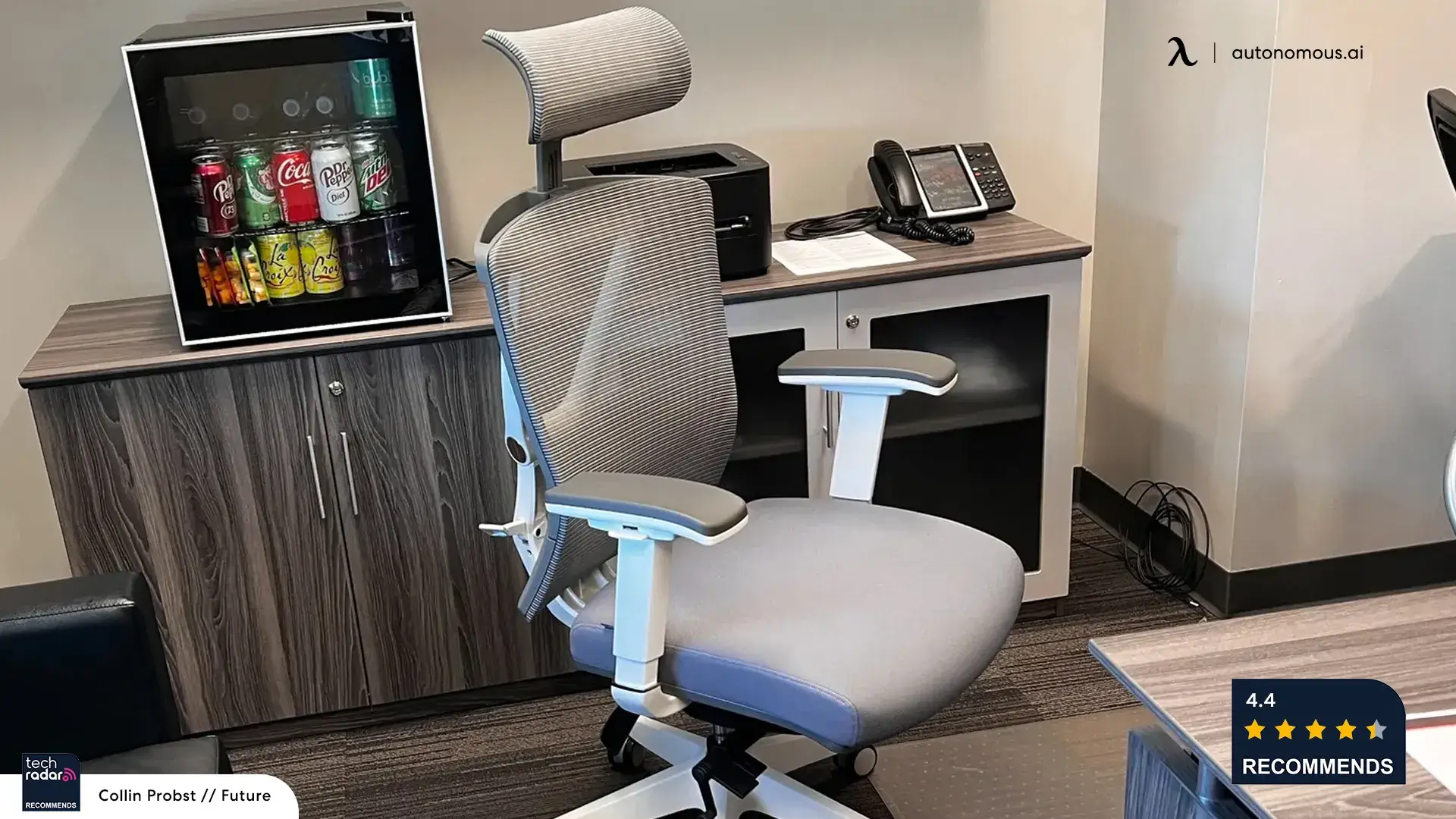
The ErgoChair Pro suits someone who sits in a normal posture most of the day and folds one leg up for stretches of it. The seat is 19 inches wide and 19 inches long, depth adjusts from 19 to 21.5 inches, and seat height runs 18.5 to 22 inches. Autonomous lists 9 adjustment points, a lumbar pad that slides 6 inches, and a synchro-tilt that reclines 22 degrees and locks in 5 positions.
Two details matter for crossing. The seat comes in high-density foam or cool mesh, and Autonomous describes the foam as firm on purpose; a foam seat has no hard frame edge under a folded ankle, which a mesh seat can have. Lock the recline upright before you fold your legs, so the back does not tip under your shifted weight.
One honest limit: owners report the armrests lock only for height, not for slide or swivel. For crossing that cuts both ways, since the arms are easy to push aside but do not stay where you set them. The 19-inch width also feels tight for a deep full tuck on a larger frame.
| Pros | Cons |
|---|---|
| Foam seat option has no hard frame edge under folded ankles | 19-inch seat is tight for a deep full tuck |
| Depth slides 19-21.5 inches to give a tucked foot more room | Owners report the arms lock for height only, not slide or swivel |
| Adjustable lumbar, 22-degree recline that locks upright, 300 lb capacity | Firm foam by design, not a soft lounge seat |
2. Autonomous ErgoChair Mesh: for part-time crossing in a warm room

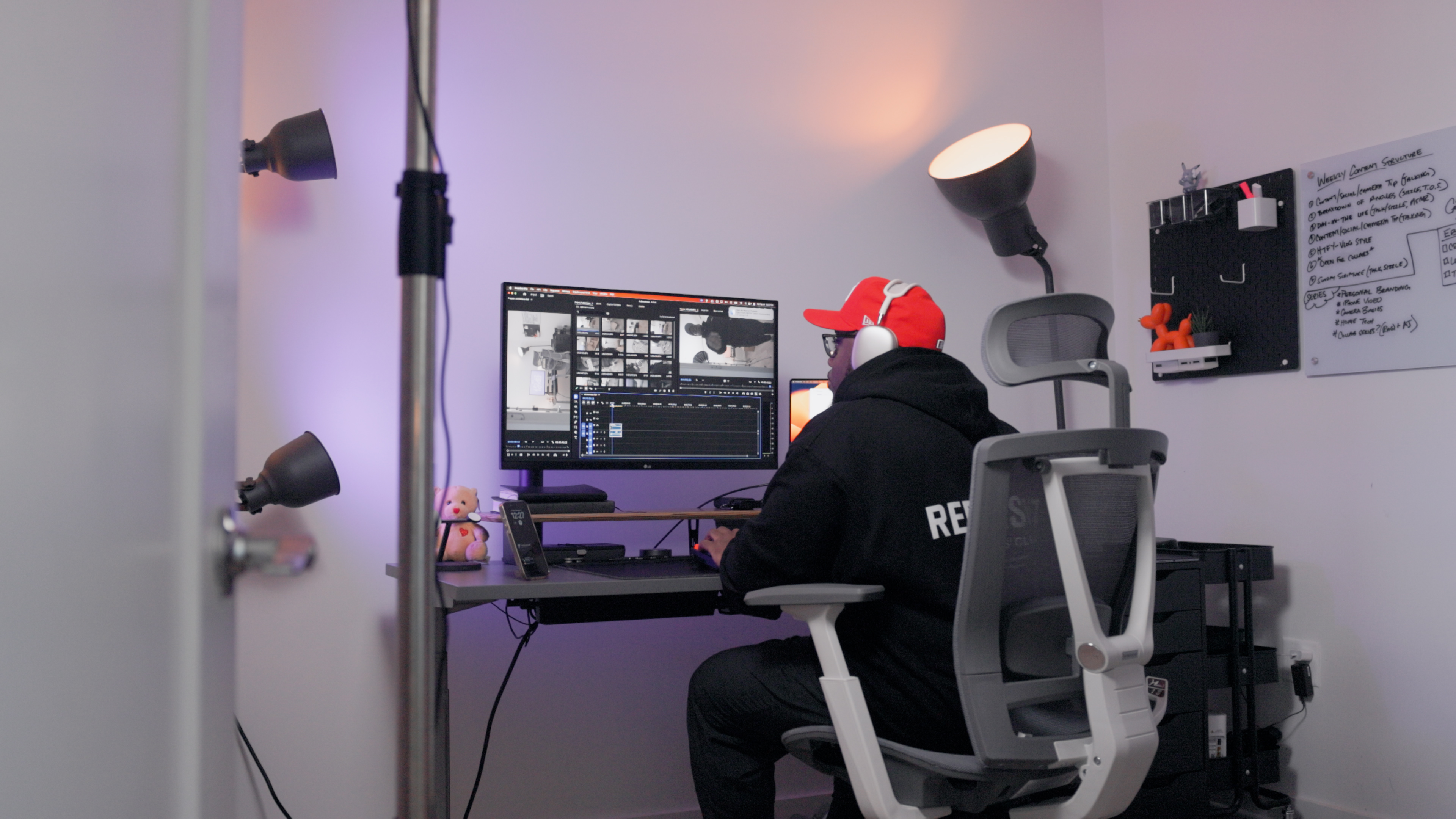
The ErgoChair Mesh suits someone who crosses their legs for part of the day and runs warm. It shares the Pro's 19 by 19-inch seat, with depth from 18 to 20 inches and height from 18.5 to 21.5 inches, but the seat and back are German mesh (72% polyester, 28% polyamide). Autonomous says the mesh is made to keep heat and moisture from building up, even in a room without AC.
The armrests are the useful part for crossing. Autonomous lists 3D arms that move front to back, side to side and pivot, set 11 to 14 inches above the seat, so you can swing one out of a raised knee's way. The recline locks in 5 positions, the lumbar cushion adjusts, and the listed fit range is 5'0" to 6'2".
The limit is the seat itself. A mesh seat is held by a frame, and in a full tuck your ankles and the sides of your feet rest near that edge. If you sit tucked more than ankle-over-knee, the Pro with the foam seat is the better Autonomous choice.
| Pros | Cons |
|---|---|
| Mesh seat and back stay cooler in a warm room | A mesh seat has a frame edge your ankles can find in a tuck |
| 3D arms slide and pivot out of a raised knee's way | 19-inch seat suits ankle-over-knee more than a full tuck |
| Adjustable lumbar, 5 recline locks, lifetime warranty | Seat height tops out at 21.5 inches |


3. PUKAMI Criss Cross Chair: a fixed wide seat on a budget
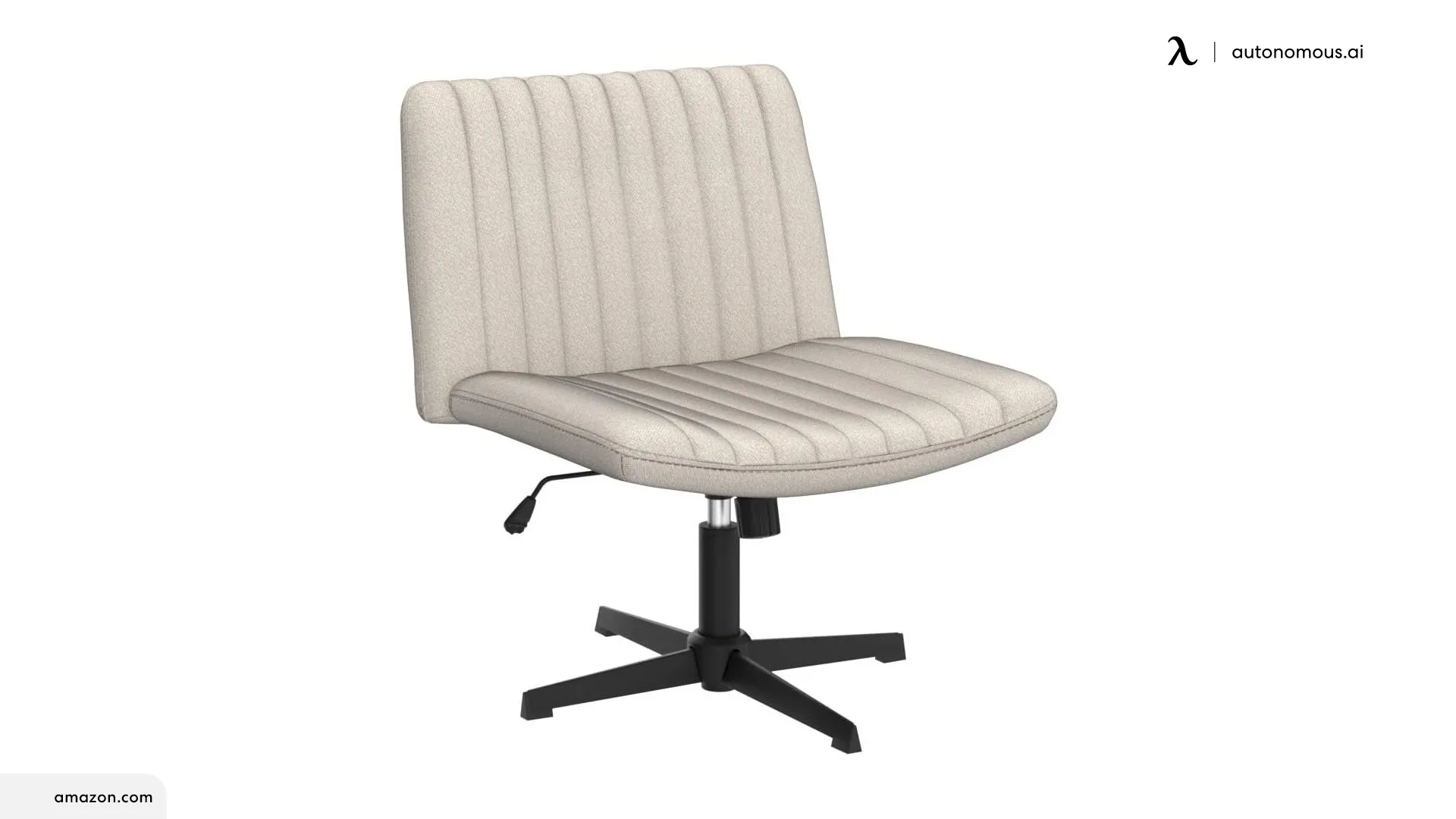
The PUKAMI is a $69.99 armless chair with a widened seat and no wheels, which suits someone who wants a full tuck in one spot. It stands on an aluminium cross base with rubber feet, the cushion is high-resilience foam under twill fabric, and the Class 3 gas lift is rated to 350 lb. Amazon shows 4.4 stars from 3,213 ratings.
The listing gives the overall size as 28.3 inches wide by 20.3 inches deep, which is the ceiling for the seat, not the seat width. Without casters it stays put while you shift your weight into a tuck, but you lift it to move it. No lumbar adjustment is listed, so treat it as a part-time criss-cross chair rather than an 8-hour office chair.
| Pros | Cons |
|---|---|
| Wide armless seat for a full tuck | Only the overall size is listed, not the seat width |
| No wheels, so it stays put while you shift | No lumbar adjustment and no arms for typing |
| Class 3 gas lift rated to 350 lb | You lift it to move it |
4. OLIXIS Criss Cross Chair: a wide seat with wheels or without
The OLIXIS is a $69.98 armless chair that ships with both 5 casters and 5 foot pads, so you choose rolling or fixed after it arrives. The seat is wide and deep with high-density foam, and the chair adjusts in height, swivels 360 degrees and has tilt tension. Capacity is 300 lb, and Amazon shows 4.6 stars from 2,227 ratings.
Its overall size is listed as 25.59 inches wide by 26.38 inches deep, so the seat is no wider than about 25.6 inches, still well beyond a 19-inch task seat. Set the tilt tension firm before you tuck, so the back does not rock under you. If you want it to roll, our guide to the cross-legged office chair with wheels compares more rolling options.
| Pros | Cons |
|---|---|
| Casters and foot pads both in the box | No adjustable lumbar and no arms |
| Wide, deep foam seat for a full tuck | Seat width not listed apart from the 25.59-inch overall width |
| 300 lb capacity and 360-degree swivel | Tilt needs firm tension before you fold your legs |
5. VIVO CHAIR-CL02B: a multi-level seat with a leg rest
The VIVO CHAIR-CL02B is a $119.99 multi-level chair built for cross-legged, kneeling and squatting positions; VIVO also shows a $179.99 compare price. The seat swivels 360 degrees over a leg rest, the tilt and backrest adjust, and it rolls on 5 casters.
Its seat height runs 18.5 to 22 inches, the same range as the ErgoChair Pro, so it sits at a normal desk without changes. The limit is capacity: VIVO lists 220 lb, the lowest here, and no armrests are listed. It suits someone who wants the Pipersong-style seat over a leg rest for less, and who is well under that weight.
| Pros | Cons |
|---|---|
| Seat plus leg rest for cross-legged, kneeling and squatting | 220 lb capacity, the lowest in this list |
| 18.5-22 inch seat height matches a standard task chair | No lumbar adjustment listed |
| Adjustable tilt and backrest, 5 casters | Seat and leg rest sizes not given on the listing we checked |
6. Pinmoco Ergonomic Cross Legged Chair: the largest footstool platform
The Pinmoco is a $119.04 multi-level chair with a crescent backrest, a 4-inch seat cushion and a 31.5 by 20.5-inch footstool that rotates 360 degrees. That platform lets you move between a tuck, kneeling and feet-down without leaving the chair. It comes in teddy velvet or PU leather and rolls on 5 casters.
Amazon lists support up to 385 lb, the highest capacity here, and an overall height range of 33.9 to 38.6 inches; no armrests are listed. The seat height on its own is not given, so check where the seat lands against your desk before you order. It also has 103 ratings at 4.3 stars, a much smaller sample than the PUKAMI or OLIXIS.
| Pros | Cons |
|---|---|
| Largest platform here, a 31.5 by 20.5-inch footstool | Seat height not listed, only the overall height |
| Listed capacity up to 385 lb, the highest here | Only 103 ratings so far |
| 4-inch cushion in teddy velvet or PU leather | Crescent backrest is contact, not adjustable lumbar |
7. Pipersong Meditation Chair Plus: the multi-position chair the dupes are measured against
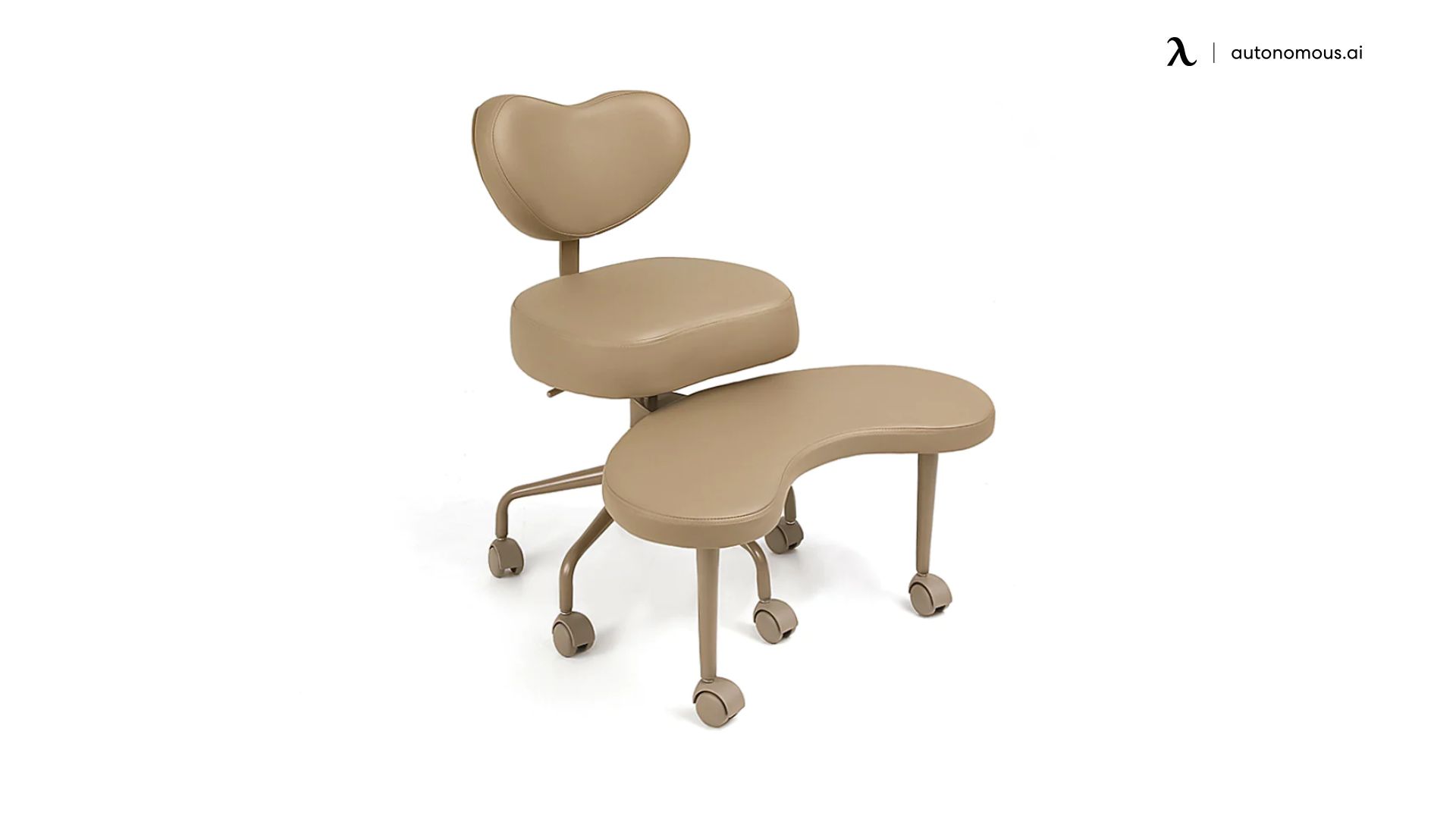
The Pipersong Meditation Chair Plus is $249 on sale ($349 regular) and shows 4.7 stars from 347 reviews on its page. Pipersong builds it for cross-legged, squatting and kneeling positions, with a height-adjustable backrest. The Meditation Armchair adds adjustable armrests and a back cushion for $439 on sale ($479 regular).
Pipersong lists the seat size only in an image chart on the page, so check that chart against your knee span before you order. If you want a wide seat rather than two levels, its separate Criss Cross Chair has an extra-large seat rated to 350 lb, from $279.
One of the customer quotes on Pipersong's own site sums up the trade-off: "The only thing it isn't good for is sitting/leaning back." The design is built around changing positions, not reclining. Pipersong also sells a Cross-Legged Footrest for any chair; if that lower level is all you want, read whether a criss-cross chair with a footrest is worth it for work before paying for a full chair.
| Pros | Cons |
|---|---|
| Built around cross-legged, squatting and kneeling | A customer on Pipersong's own site says it is not for leaning back |
| Armchair version adds adjustable arms and a back cushion | Even on sale, about twice the price of the VIVO or Pinmoco |
| 4.7 stars from 347 reviews on its page | Seat size and capacity not listed in text |
Cheaper Pipersong Alternatives and Dupes
The VIVO CL02B and the Pinmoco are the closest cheaper alternatives to the Pipersong Meditation Chair: both put a seat above a second level for your legs, and both list under $125, against $249 on sale ($349 regular) for the Pipersong Meditation Chair Plus. What they give up is spelled out below.
| Alternative | What matches the Pipersong | What it gives up |
|---|---|---|
| VIVO CHAIR-CL02B ($119.99) | Swivel seat over a leg rest; cross-legged, kneeling, squatting | 220 lb capacity; no arms listed |
| Pinmoco ($119.04) | Seat over a 31.5 by 20.5-inch rotating footstool | Seat height not listed; 103 ratings; no arms listed |
| PUKAMI or OLIXIS (under $70) | Room for a full tuck | No second level for your legs; wide seat only |
If you want one chair for tucking and for long upright stretches, none of the three replaces a task chair with adjustable lumbar. In that case the ErgoChair Pro or Mesh plus a separate footrest is the other route.
What Actually Matters for Cross-Legged Comfort
Seat width matters most for cross-legged comfort, then armrest clearance, the seat edge and fabric, and a recline that holds upright. Check these in that order.
- Seat width, not overall width: compare your knee span from the two-minute check with the listed seat width. Many criss cross chair listings only give the overall size, which is the upper limit for the seat.
- Armrests: armless chairs leave the most room. If you also type for hours, look for arms that slide, pivot or swing out, like a cross-legged office chair with adjustable arms.
- Seat edge: a foam or upholstered seat has no hard frame for your ankles to find. A mesh seat stretched on a frame can press where your feet rest in a tuck.
- Fabric grip: fabric, twill and teddy velvet hold crossed legs in place. PU leather wipes clean but lets legs slide, more so when warm.
- Recline that locks: a back that rocks under shifted weight feels unstable in a tuck. Lock it upright or set the tension firm first.
- Back support: wide armless and multi-level chairs give contact, not adjustable lumbar. If you rarely lean back at all, a backless office chair is another option, with its own trade-offs.
Is Sitting Cross-Legged at Your Desk Bad for Posture?
Sitting cross-legged is not automatically bad for posture; the bigger risk is holding any one position for hours. A 2020 study of 60 adults found that crossing one leg over the other on a chair tilted the pelvis and slouched the trunk more than upright sitting, and the slouch was larger in people with low back pain (Jung et al., 2020).
At the same time, a 2019 viewpoint in the Journal of Orthopaedic & Sports Physical Therapy notes there is no strong evidence that spinal pain is caused by sitting "incorrectly" (Slater et al., 2019). So the useful answer is variety: switch positions through the day, unfold when a foot tingles or goes numb, and stand up between long stretches. If numbness lasts after you move, see a clinician.
Whether sitting criss-cross is bad for you over the long term depends on how long you hold it and how often you change. Crossing your legs is often your body asking for a change from one fixed position, so a chair with room to move suits the habit better than fighting it.
If the sitting itself hurts rather than the leg position, a seat that reduces pressure on the tailbone and buttocks matters more than the seat width.
FAQs
What is the best office chair to sit cross legged in?
The best office chair to sit cross legged in depends on how long you stay folded. For ankle-over-knee a few times a day, a task chair with a 19-inch seat and movable arms works. For a full tuck most of the day, pick a wide armless seat or a multi-level chair with a leg rest.
What is the most comfortable criss-cross chair?
The most comfortable criss-cross chair is the one whose seat is wider than your folded knees and whose fabric grips your legs. Measure your knee span in a floor tuck first. Then choose foam or upholstered seats over mesh on a hard frame, and arms that move or no arms at all.
Why do I sit cross-legged on chairs?
Most people sit cross-legged on chairs because it lets them shift weight and move after holding one position for a while, or because it feels comfortable. Short stretches are fine. It becomes a problem mainly when you hold it for hours without changing position.
What is the ADHD chair called?
There is no single chair called the ADHD chair. People use the name for criss cross chairs, multi-level chairs with a leg rest, wobble stools and other active-sitting seats that let you move and change positions. No chair treats ADHD; these chairs give fidgety sitters more room to move.
Is sitting cross-legged bad for you?
Sitting cross-legged is not bad for you in short stretches. In a 2020 lab study, crossing one leg over the other tilted the pelvis and slouched the trunk more than upright sitting, more so in people with low back pain. Switch positions through the day and unfold when a foot tingles; see a clinician if numbness lasts.
Can you sit cross-legged in a regular office chair?
Yes, you can sit cross-legged in a regular office or desk chair if the seat is wide enough for your knee span and the armrests move out of the way. Ankle-over-knee usually fits on a 19-inch seat. A full tuck usually needs a wider armless seat.
Are criss cross chairs good for long hours?
Criss cross chairs are good for long hours of folded sitting but weak for long hours of upright work, since most have no adjustable lumbar or arms. If you split your day between both, a task chair you can cross your legs on covers more of it.
What size office chair do I need to sit cross legged?
You need a seat at least as wide as your knee span in a full tuck. Sit on the floor, fold your legs the way you do at your desk and measure outside knee to outside knee. Compare that with the listed seat width, not the chair's overall width.
What is the best Pipersong meditation chair alternative?
The VIVO CL02B and the Pinmoco are the closest cheaper Pipersong alternatives, since both put a seat above a second level for your legs. The VIVO caps at 220 lb, and the Pinmoco lists 385 lb but not its seat height, so check your weight and desk height first.
Which chair is best for long sitting in an office?
A chair with adjustable lumbar, seat depth and height, armrests and a recline that locks is best for long office sitting. If you also cross your legs, add a flat seat with a padded edge and arms that slide or pivot away from your knees.
Bottom Line: Which Cross-Legged Office Chair to Buy
Buy for the position you hold longest. If you cross ankle over knee and still sit upright for most of the day, a task chair with adjustable lumbar and movable arms, like the ErgoChair Pro with the foam seat, covers both. If you tuck fully for hours, a wide armless seat costs less and gives more room, and a multi-level chair adds a place for your legs. Measure your knee span before you order any of them.
References
- Jung KS, Jung JH, In TS. The Effects of Cross-Legged Sitting on the Trunk and Pelvic Angles and Gluteal Pressure in People with and without Low Back Pain. International Journal of Environmental Research and Public Health. 2020;17(13):4621.
- Slater D, Korakakis V, O'Sullivan P, Nolan D, O'Sullivan K. "Sit Up Straight": Time to Re-evaluate. Journal of Orthopaedic & Sports Physical Therapy. 2019;49(8):562-564.