Best Direction to Work in Office For Sharp Focus
.webp)
Table of Contents
In a shared workplace, the direction to work influences more than mood — it shapes how visible, approachable, and grounded you feel among teammates. Unlike a home office setup where comfort and calm take the lead, the office brings movement, interaction, and communication flow into the picture.
The way you face can support natural eye contact with colleagues, help you anticipate conversations, and give you a steady sense of awareness in a busier environment. Choosing where to sit isn’t just about preference — it’s about creating a position that supports focus, confidence, and smooth day-to-day teamwork.
Why Your Desk Orientation Matters In A Workplace Setting
In a professional environment, where you face affects the way you think, interact, and show up. A desk isn’t just a surface to work on — it becomes part of how you communicate with people around you and how others read your presence.
In open layouts, collaborative floors, and spaces shaped by modern office design, your orientation plays a quiet but powerful role in how settled, aware, and engaged you feel throughout the day. When paired with elements that support a productive work environment, it becomes a subtle anchor that focuses your attention and strengthens your presence.
- Supports natural visibility and presence
Facing the room helps you stay visually connected to what's happening. People see you focused and engaged, and you see others without needing to turn or adjust constantly. It reinforces a presence that feels involved and steady rather than hidden or closed off.
- Reduces surprise interruptions and startle moments
In a shared office, someone walking up from behind, tapping your shoulder, or suddenly appearing beside your screen can throw your attention off. Facing the space or entry point helps you anticipate interactions, which keeps your nervous system calmer and your focus more stable.
- Encourages open body language and team connection
The way you face naturally influences posture and eye contact. Sitting in a direction that opens you to the room makes collaboration feel effortless — from quick questions to spontaneous problem-solving. The right orientation signals approachability without you needing to try.
- Reinforces professionalism and role clarity
How you position yourself says something without you speaking. People tend to associate a visible, grounded seat with accountability and readiness. In a workplace where perception matters, desk direction supports a quiet sense of authority and grounded confidence.
- Helps your brain settle in a shared energy space
Unlike working alone at home, the office carries ambient motion, sound, and social energy. When your desk faces a direction that gives you awareness and visual stability, it creates a mental “base” — a spot where your thoughts can land, even when things are moving around you.
Best Directions To Face In An Office Environment
Within a shared workplace, the ideal direction to work helps you stay tuned into the room without feeling overstimulated. Unlike a home setup, where quiet focus is the priority, a professional setting brings movement, hierarchy, communication flow, and team awareness into play. Direction becomes less about personal comfort alone and more about balancing clarity, approachability, and professional presence — ideas that also appear in updated approaches to office Feng Shui 2025, where awareness, flow, and spatial intention are central themes.
1. North — Analytical Clarity And Composed Focus
North is traditionally tied to stillness and thoughtful processing. In an office, this orientation supports deep work and reduces emotional swings during complex tasks. This direction works particularly well in structured setups like a cubicle layout, where reduced distractions and defined boundaries help reinforce clarity and task flow.
Works well for roles that require:
- precision and analytical thinking
- data decisions or financial work
- operational consistency
North-oriented desks often fit those who need fewer mood fluctuations and more “quiet strength” during a busy day.
2. East — Steady Momentum And Mental Refresh
Facing east is traditionally associated with renewal and motivation. In an office, this translates into a gentle forward-moving energy — helpful for days filled with deadlines or task cycles. It can be especially grounding in compact setups like a 10x12 office layout, where intentional positioning keeps your pace natural.
People in east-facing positions often feel a subtle sense of structure, making it easier to start, continue, and complete work without losing rhythm.
Works well for roles that need:
- task execution and follow-through
- consistent pace across the workday
- mental refresh at the start of the day
It supports a “start clear, keep going” mindset — ideal in environments where momentum matters more than intensity.
3. Northeast — Planning, Foresight, And Structured Clarity
Northeast blends focus with perspective, aligning with roles that balance detail with direction. It allows space for structured thinking and long-range planning, which aligns with principles often referenced in Feng Shui office desk setups.
Well-suited for roles like:
- product, planning, or project coordination
- research and development
- team leads bridging hands-on work and vision
It supports mental space — not just for today’s tasks, but for where things are heading.
4. Northwest — Leadership Presence And Confident Direction
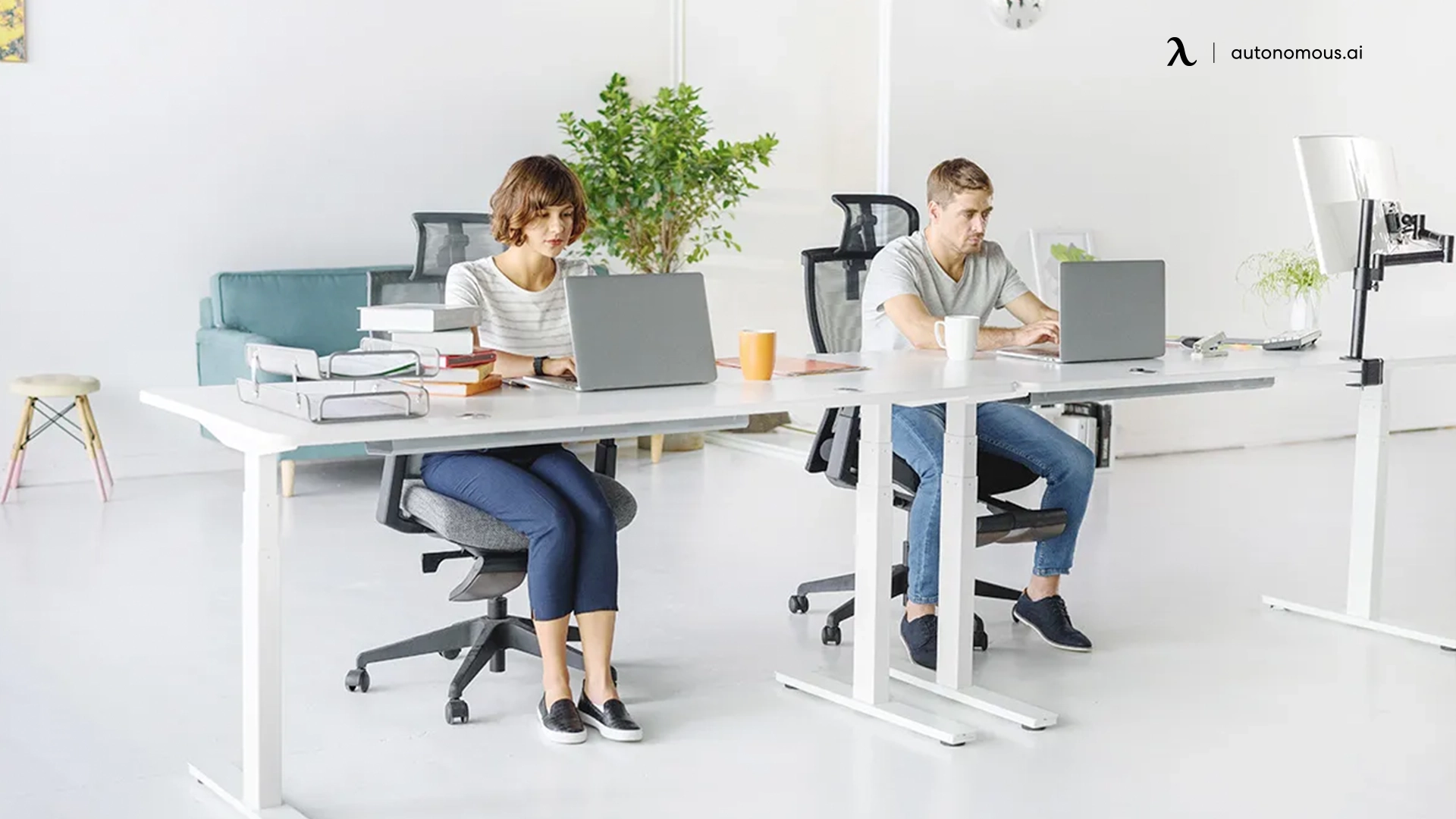
Northwest has long been connected with guidance and structured authority. In modern offices, this orientation subtly reinforces leadership qualities — not dominance, but grounded presence. It helps you stay attuned to team movement without feeling disrupted by it.
Ideal for roles involving:
- decision-making and coordination
- mentorship or team oversight
- facilitating cross-department communication
This direction supports people who guide, coordinate, and move information through the organization smoothly.

The Right Direction To Work In An Open-Plan Office
Open-plan offices bring energy and movement — conversations, quick questions, footsteps, shifting sounds, and shared attention. In this environment, the direction to work shapes how grounded or overwhelmed you feel in a space that never really stops moving. The goal isn’t perfect control — it’s finding a position where your awareness and attention work with the room instead of fighting it.
- Angle your seat for shared awareness, not direct exposure
In team-centered workplaces, sitting in a straight line with hallways or rows often leads to constant scanning. A small angle — just enough to see movement without staring at it — creates awareness without overload. It’s a subtle shift that helps you feel settled in a space built for motion.
- Use natural visual anchors to steady your attention
In shared areas, you don’t always get a wall or window to frame your view. Instead, find stability with small anchors — a desk plant on the desk edge, a monitor positioned to center your gaze, a soft divider, or even a low shelf. Anchors support a steady mental pace in a fluid environment.
- Stay visually connected without feeling on display
Open-plan layouts can make people feel exposed. Positioning yourself where you can see who approaches — without sitting directly center stage — helps you relax. You’re aware enough to feel in control, but still tucked into the flow rather than spotlighted by it.
- Choose distance over perfection when possible
If you can choose your seat, sitting slightly away from the busiest entrances or printer zones creates quiet without complete isolation. A bit of distance buffers your nervous system, giving your mind a natural rhythm — awake, connected, but not pulled in every direction.
Desk Placements To Avoid In An Office
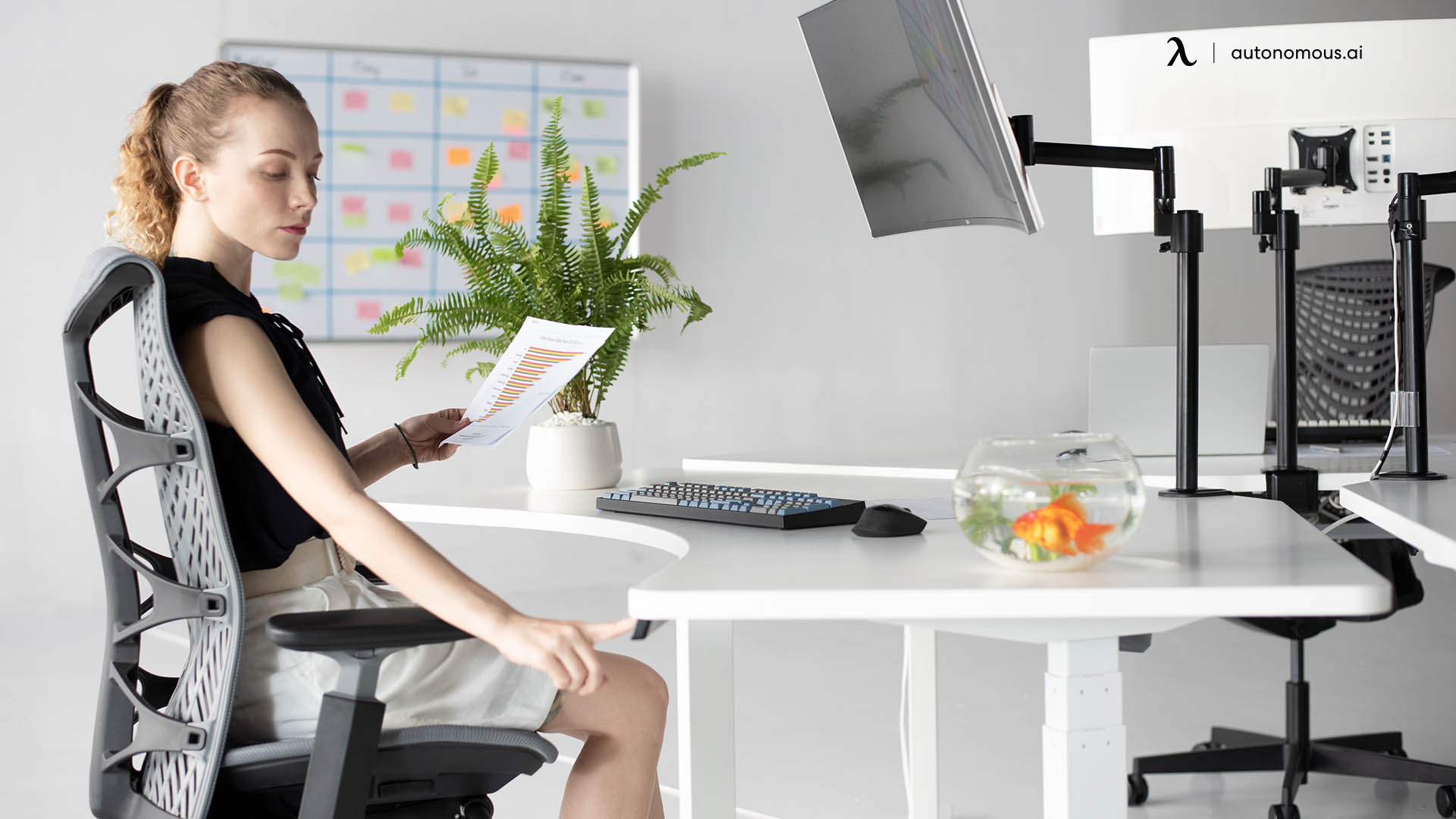
The right direction to work in an office isn’t only about where you face — it’s also about what not to face. Shared environments introduce social dynamics, visibility expectations, and constant motion, all of which influence attention and comfort. These placements don’t “break” productivity, but they quietly drain energy across the day and make it harder to hold your presence in the workspace with ease.
- Directly facing a heavy-traffic corridor
Sitting in full view of a main walkway turns your focus outward. Every movement becomes a subtle cue for your brain to track, even when you’re trying to concentrate. A slight desk pivot or shifting your monitor angle can soften the constant pull toward motion.
- Seated with loud communal areas directly behind you
Break rooms, printer hubs, and glass-walled meeting rooms introduce unpredictable energy. When these sit behind you, your attention splits — part of your awareness stays on the task, part monitors the space you can’t fully see. If the layout forces this, use visual boundary cues like a plant or shelf to remind your brain that your space has definition.
- Facing a team cluster without shared task flow
Staring into a pod of coworkers who are collaborating on something unrelated to you creates mental spillover — your energy drifts into their pace instead of your own. Orient slightly toward a neutral plane so you stay accessible, but not mentally braided into conversations that aren’t yours.
- Positioned where your screen becomes a “public display”
Some seats make your screen visible to anyone walking behind or past you. While nothing may be confidential, the sensation of being watched — even casually — alters posture and tension. Adjusting desk direction or placing your office chair at a soft angle keeps your screen yours and reduces that subtle self-monitoring instinct.
Directly against a wall without visual balance
Some offices naturally place desks against walls, but facing one too closely can create a boxed-in feeling and reduce creative openness. It can limit environmental awareness and make concentration feel rigid, especially during long workdays. A subtle shift — such as rotating slightly toward the room or incorporating soft visual anchors like artwork or plants — can help, and considerations around a desk against the wall are echoed in workplace Feng Shui discussions as well.
Organizing Your Desk To Support Your Direction To Work
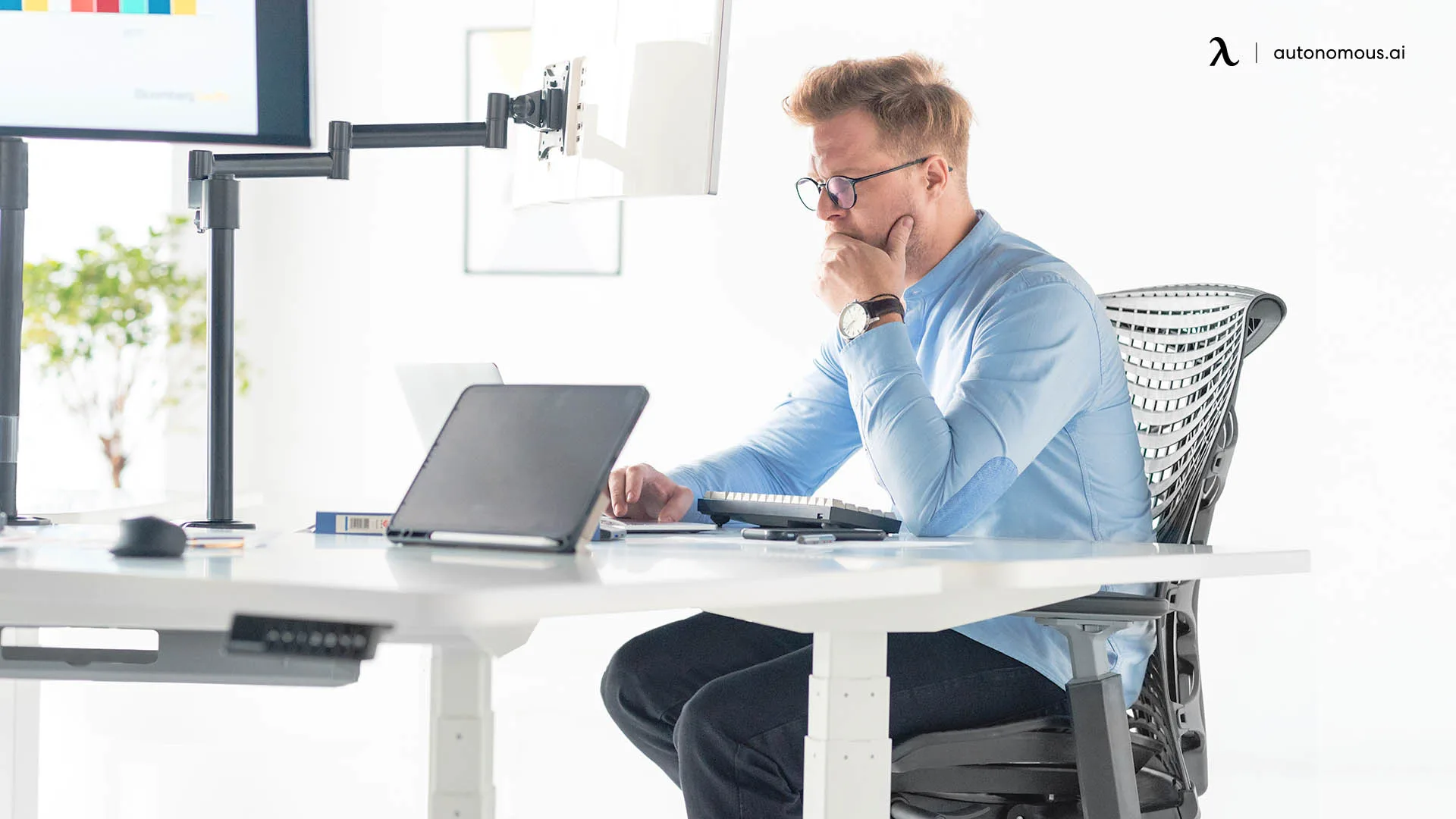
Once you’ve chosen your direction to work, the way you organize your desk helps reinforce that orientation. In an office, organization isn’t just aesthetics — it shapes how confidently you sit in the room, how approachable you feel to others, and how easily your attention returns to your work when the environment moves around you.
- Keep your primary tools in your forward line of sight
Whatever direction you face, place your main monitor, notebook, or task board in your direct view. This anchors your attention forward rather than letting your eyes drift across the room. When the most important work lives straight ahead, your focus stays anchored too.
- Create a soft edge facing outward
Office desks often sit in open space, so use a small object — a plant, framed quote, or subtle desk organizer — to create a gentle boundary between your work zone and the movement around you. It’s not a barricade; it’s a quiet reminder that you have a defined work bubble within shared space.
- Reserve side space for quick-collab items
In workplaces, you rarely work in isolation. Keep pens, sticky notes, reference docs, and other important office accessories on your dominant-hand side so you can pivot briefly for quick participation without fully leaving your personal direction to work. This keeps you open to the team without surrendering your focus.
- Avoid stacking objects in your direct sightline
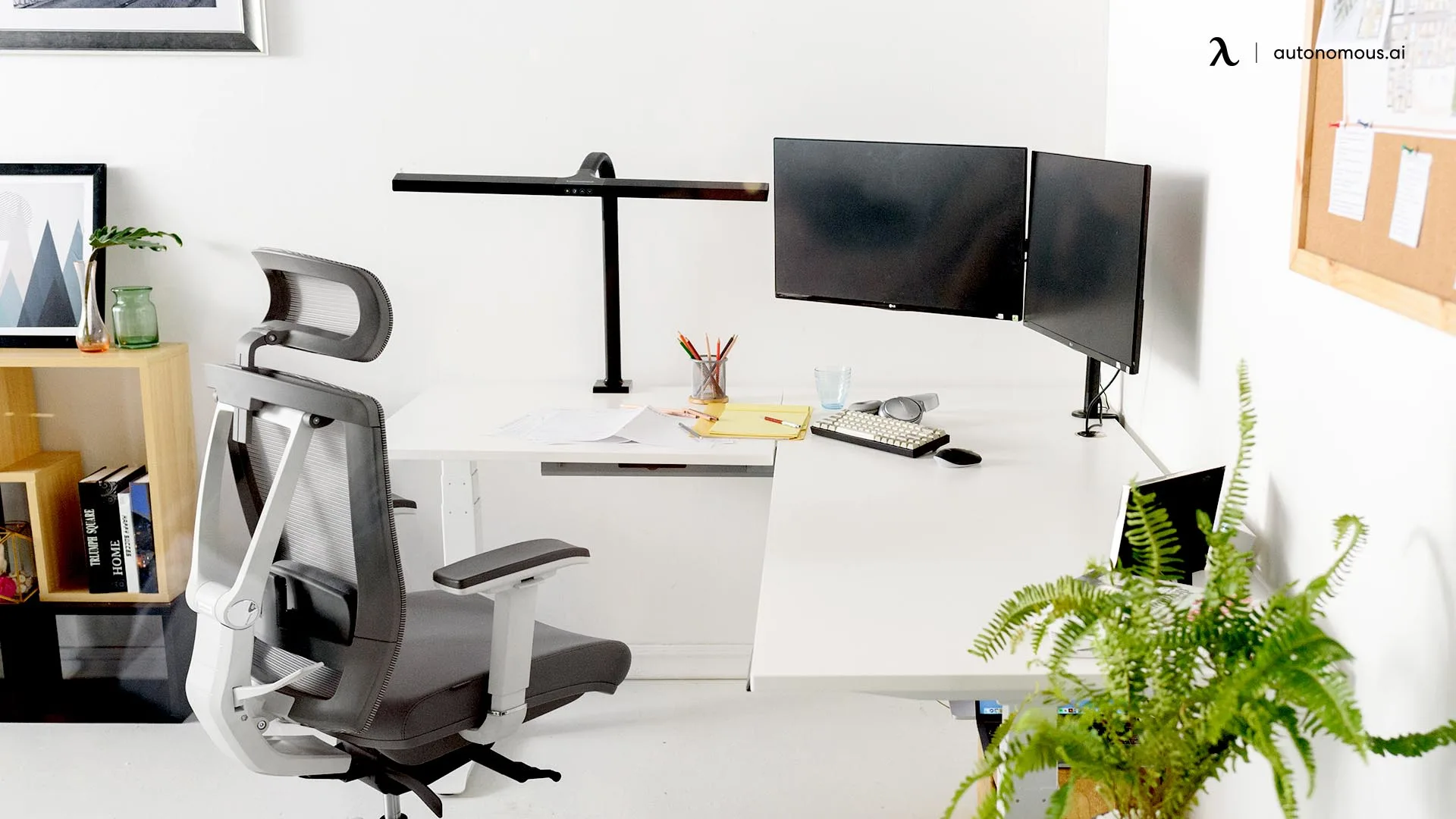
Files, snacks, cables, and personal items stacked in front of you can dull clarity and make a balanced direction feel cluttered. Clean, hidden routing solutions like cable management help keep your visual path clear, creating smoother focus lines and a lighter atmosphere around your screen.
- Shape subtle desk zones to guide your attention
Instead of thinking in piles or rows, think in zones: the area directly in front of you for deep-focus tools, your dominant side for quick-access items, and the far side for supportive but less urgent objects. A sit-stand desk or setups inspired by height-adjustable corner desk ideas make this zoning feel intuitive — encouraging you to shift posture while keeping your direction clear and your workflow flowing instead of collapsing into clutter.
FAQs
1. What is the best direction to face in an office?
The best direction to face in an office is one that lets you see the room and stay aware of people approaching, often toward the entry or open space. This creates comfort, awareness, and natural professional presence.
2. Does the direction to work affect productivity in an office?
Yes, your direction to work in an office can affect focus, alertness, and how you respond to social movement. Facing the right way helps you stay present without being startled or distracted.
3. Which direction is ideal to work in the office according to Feng Shui?
Traditional guidance often suggests facing east, north, or northeast in an office to support clarity, discipline, and strategic thinking. These directions align with awareness and balanced energy in shared work environments.
4. Is it okay to face a wall at work?
Facing a wall can limit awareness and create a closed-in feeling in a busy office. If space forces this setup, soften the wall with a plant, art, or vertical organization to create breathing room and visual stability.
5. What direction to work best in an open-plan office?
In open-plan offices, slightly angling your desk so you can see movement without being directly in front of it works best. This keeps you aware but not overstimulated.
6. Can the direction to work impact stress levels at the office?
Yes, the direction you face can influence how alert or tense you feel. Seeing the room reduces subconscious scanning and lowers nervous system strain in shared, active environments.
7. How do I find my ideal direction to work if my desk can’t move?
Shift your monitor or chair, create soft visual boundaries, and adjust lighting to support the angle you have. Even small adjustments can change how grounded and in-control you feel at your desk.
Conclusion
The direction to work isn’t only about where you sit — it quietly shapes how you participate in a shared space, how steady your attention feels, and how naturally you connect with the people around you. In workplaces with movement, conversations, and shifting priorities, orientation becomes part of your presence and focus, not just your posture.
This idea pairs with how many remote workers consider the best direction to face when working at home, showing that orientation matters no matter the setting — but the goals shift slightly: awareness and connection in shared spaces, calm and consistency in personal ones.
The most supportive desk direction gives you awareness without tension, privacy without disconnecting, and visibility that feels balanced instead of exposed. Whether you choose an east-facing setup for momentum, a northward position for clarity, or simply angle your seat toward the room’s natural flow, the aim is the same: a space where your thoughts land easily and your attention holds steady.
When your direction complements your role and your environment, your workspace becomes more than a surface — it becomes a grounding point in a busy setting. Small choices about where you face can reduce strain, soften distraction, and help your day unfold with more ease, clarity, and quiet confidence.