


10 Best Back Supports for Office Chair for All-Day Comfort

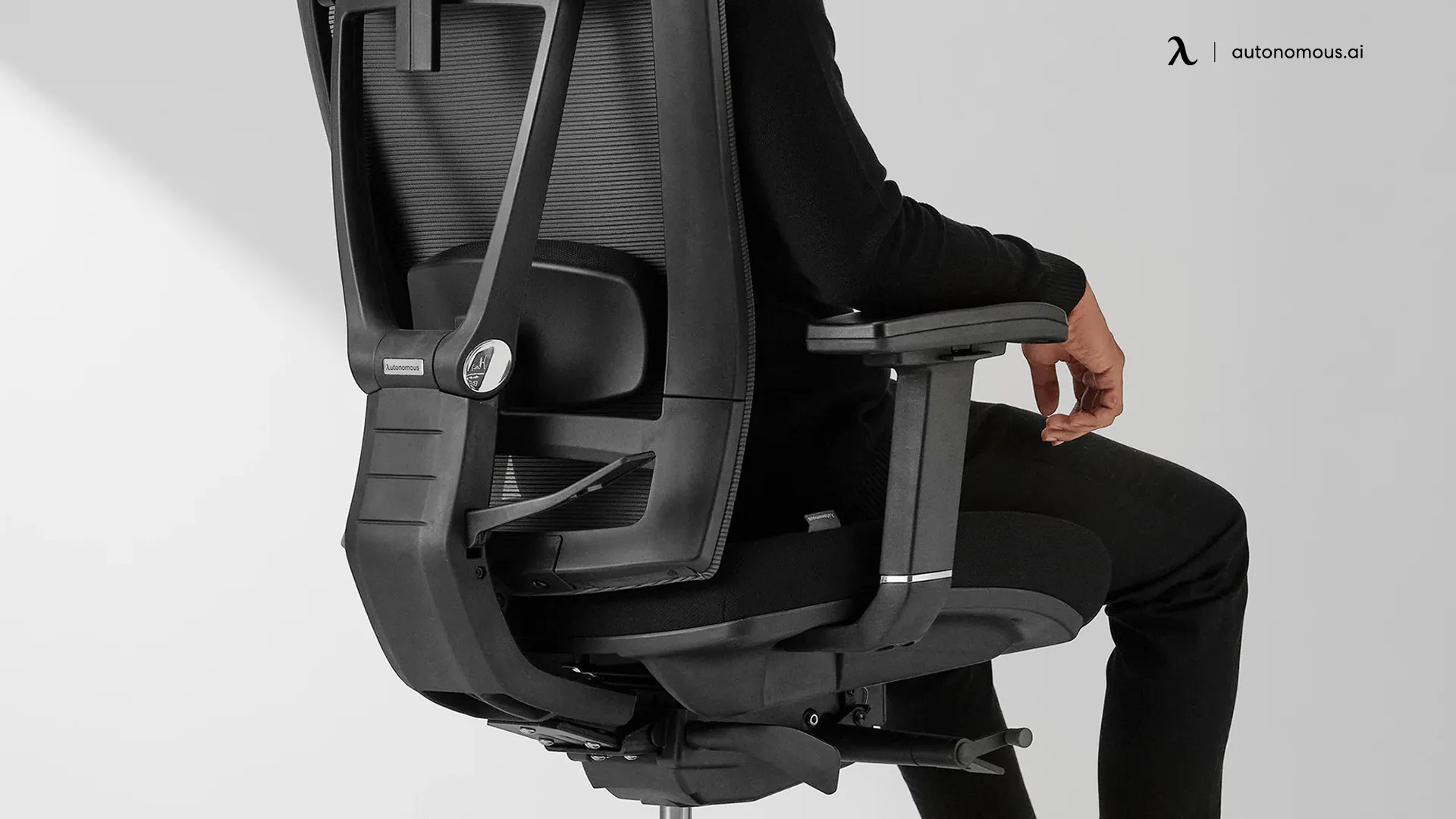
Table of Contents
- Why Office Chairs Often Fail to Support the Back Properly
- Back Support for Different Back Zones
- 7 Best Back Support Pillows for Office Chairs
- 1. Mount-It! ErgoActive Lumbar Support Pillow
- 2. DMI Lumbar Support Pillow for Chair
- 3. Cushion Lab Extra Dense Lumbar Pillow
- 4. Qutool Lumbar Support Pillow for Office Chair
- 5. Samsonite Ergonomic Lumbar Support Pillow
- 6. Vaunn Medical Lumbar Back Support Cushion
- 7. Fellowes Professional Series Back Support
- 8. Everlasting Comfort The Original Lumbar Support Pillow
- 9. Kensington SmartFit Conform Back Rest
- 10. OPTP The Original McKenzie SuperRoll
- How to Choose the Right Back Support for Your Office Chair
- Common Mistakes That Make Back Support For Office Chairs Ineffective
- FAQs
- Conclusion
Spending hours at a desk places continuous strain on the spine, especially when an office chair lacks proper support. Maintaining a healthy sitting posture depends less on finding a single perfect product and more on understanding how your back is actually supported while seated.
Different areas of the spine respond differently to prolonged sitting, and the right support can help reduce discomfort, encourage healthier posture, and make long workdays feel more manageable. This guide breaks down how the best back support for an office chair works, where it matters most, and how to choose an option that fits your body and daily routine.
Why Office Chairs Often Fail to Support the Back Properly
Modern office chairs are far more advanced than they once were, and many now include adjustable lumbar support designed to improve seated comfort. However, effective back support depends on more than built-in features alone.
Most lumbar systems focus on a narrow section of the lower back, while the spine functions as a connected structure that changes position throughout the day. Subtle shifts in posture, such as leaning forward during focused tasks or prolonged sitting periods without movement, can reduce how well a chair’s support aligns with the body. In addition, differences in height, torso length, and sitting habits mean that even adjustable designs may not fully address individual support needs over long work sessions.
Back Support for Different Back Zones
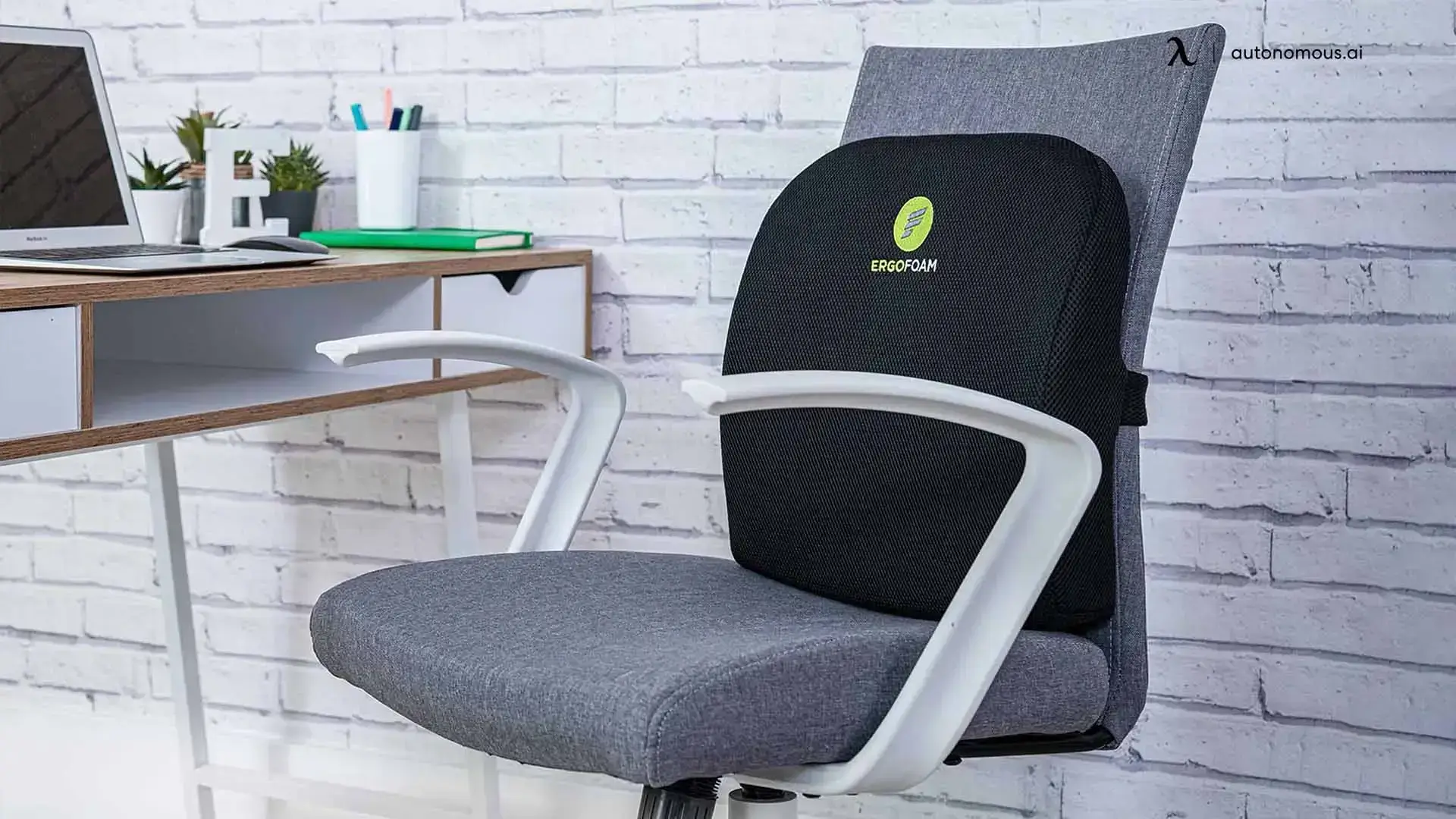
Choosing the best back support for office chair use starts with knowing where your discomfort actually originates. The spine functions as a connected system, but different types of back pain develop depending on which zone bears the most strain during desk work.
1. Lower Back (Lumbar Area)
The lumbar region maintains the spine's natural inward curve. When unsupported, this curve flattens, the pelvis tilts backward, and pressure concentrates on the lower vertebrae. A well-placed lumbar support office chair cushion stabilizes the pelvis and lets the upper body stack naturally above it, reducing cumulative strain over long sessions rather than just masking discomfort.
2. Mid-Back Support
Between the lumbar curve and the shoulder blades sits a transition zone that often gets overlooked. Hours of forward reaching and subtle desk movements load this area quietly. Without mid-back contact, the lower spine compensates for what the upper body can't stabilize on its own. Proper support here distributes that load and prevents the creeping fatigue that builds toward the end of day.
3. Upper Back and Shoulder Area
Rounded shoulders and forward head posture rarely start at the neck—they originate from an unsupported upper back. When this zone lacks contact, the chest tightens, shoulders roll inward, and tension migrates up toward the neck. The upper back support for office chair setups works less as a corrective brace and more as a positional cue, encouraging openness without restricting movement.
4. Full-Back Support Considerations
Posture isn't static. It shifts subtly throughout the day as focus drifts, energy dips, and tasks change. Full-back solutions work best when they move with those shifts rather than fighting them—offering continuous contact across zones without locking the spine into a single position. For uninterrupted workdays, this adaptability matters more than rigid correction.
7 Best Back Support Pillows for Office Chairs
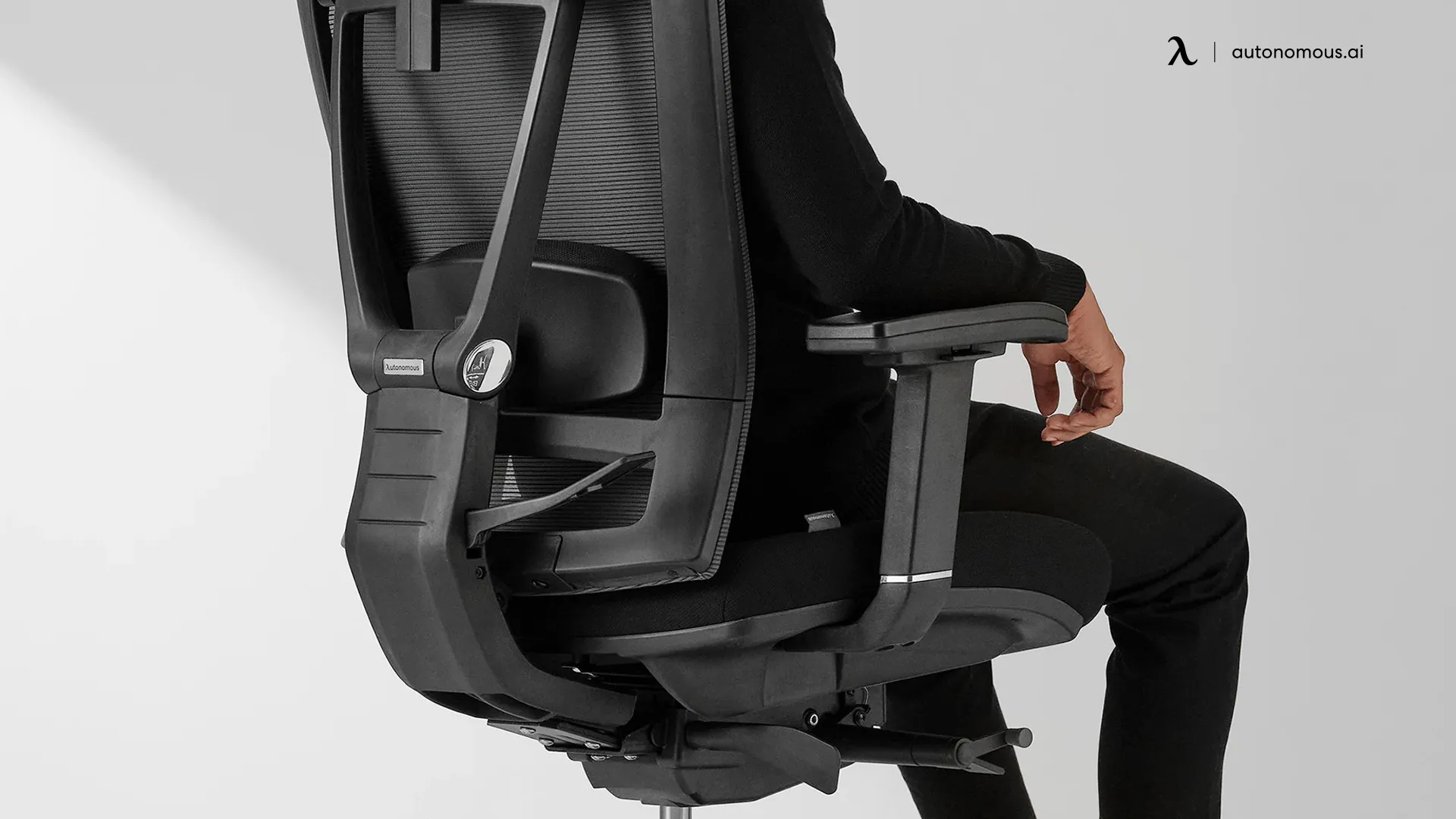
What separates the best back support cushion for office chair use from a mediocre one often comes down to how well it matches your specific pain point, not how many reviews it has. The products below vary in firmness, coverage zone, and how they respond to movement. Each targets specific zones and responds to movement in its own way. Knowing what your back actually needs makes the difference between a cushion that helps and one that ends up in a drawer.
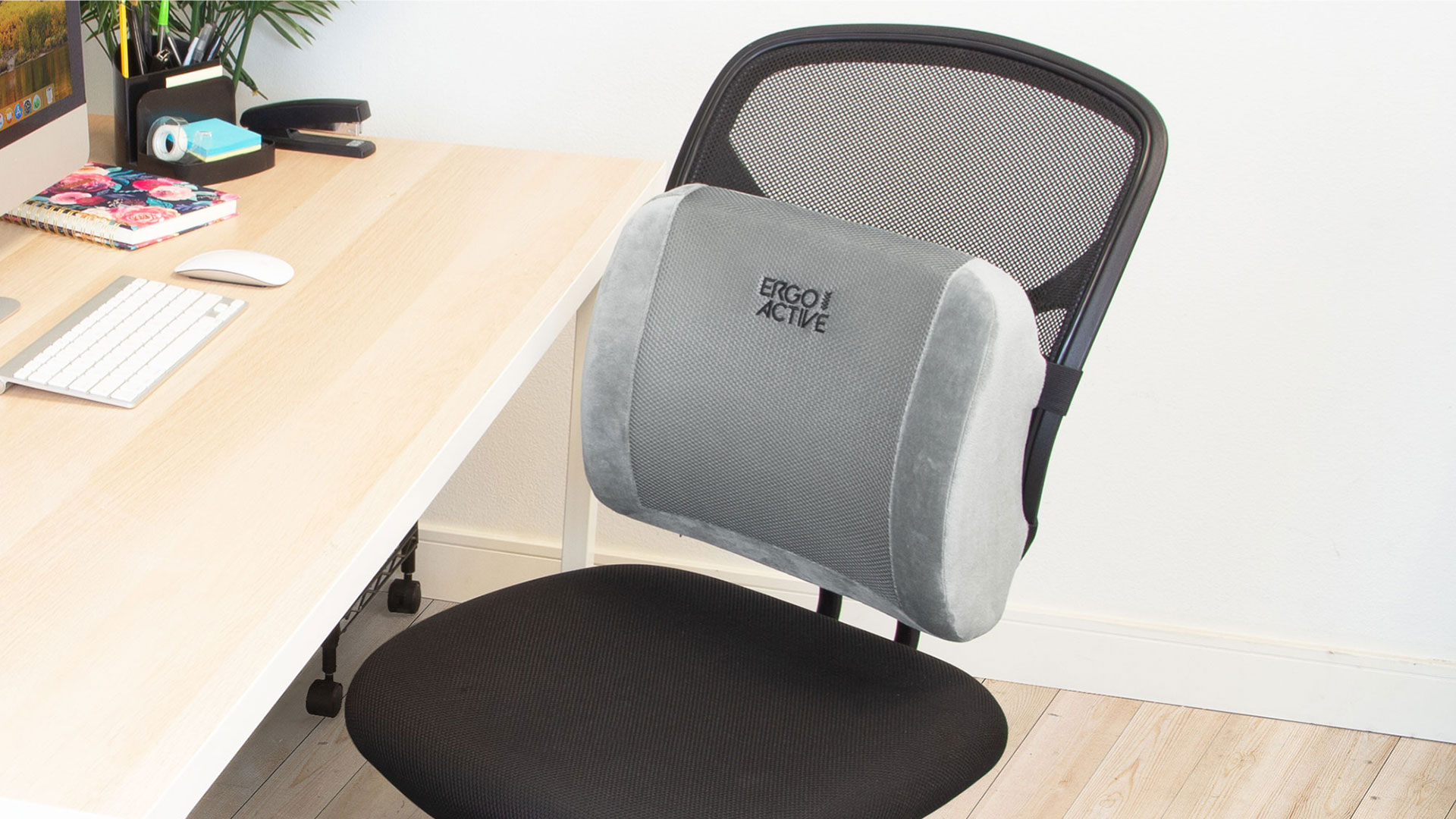
1. Mount-It! ErgoActive Lumbar Support Pillow
This back support pillow for office chair uses high-density memory foam rather than the softer varieties found in cheaper cushions. When you first sit against it, the foam pushes back with firm resistance. It takes about 30 seconds to respond to your body heat and start contouring to your lumbar curve. Once it does, the pressure redistributes.
The sensation is subtle but noticeable. Your pelvis tilts slightly forward, which naturally stacks your vertebrae into better alignment. Instead of your lower back muscles doing the work of holding your spine upright, the cushion takes over. That familiar end-of-day tension starts to fade. It's also removable and machine-washable, which extends the product's usable life.
Best for: People who want reliable lower back support cushion for office chair use without paying premium prices. Good entry point for those new to lumbar support.
Skip if: Your pain originates higher up, between the shoulder blades or around the thoracic spine. This cushion targets the lower back only and won't reach upper back tension points.
2. DMI Lumbar Support Pillow for Chair
Memory foam gets all the attention, but it's not the right choice for everyone. Some people need immediate pushback, support that's there the moment they sit down, not 30 seconds later after the foam warms up and molds.
DMI uses molded contoured foam instead. Support is immediate. Sit down, and it's already pushing back against your lumbar spine. A composite board insert behind the foam prevents collapse, so the pressure stays consistent whether you've been seated five minutes or five hours. At 14 × 13 inches, this lower back support cushion for office chairs is compact enough to work on chairs that already have some contouring. The slimmer 5-inch depth won't crowd you forward.
Best for: People who prefer firm, immediate support over slow-conforming foam. Also a solid pick for anyone who switches between multiple chairs throughout the day, the lightweight build makes it easy to carry.
Skip if: You want that gradual, body-hugging sensation of memory foam, or you need a cushion with more depth to fill a larger gap in your chair.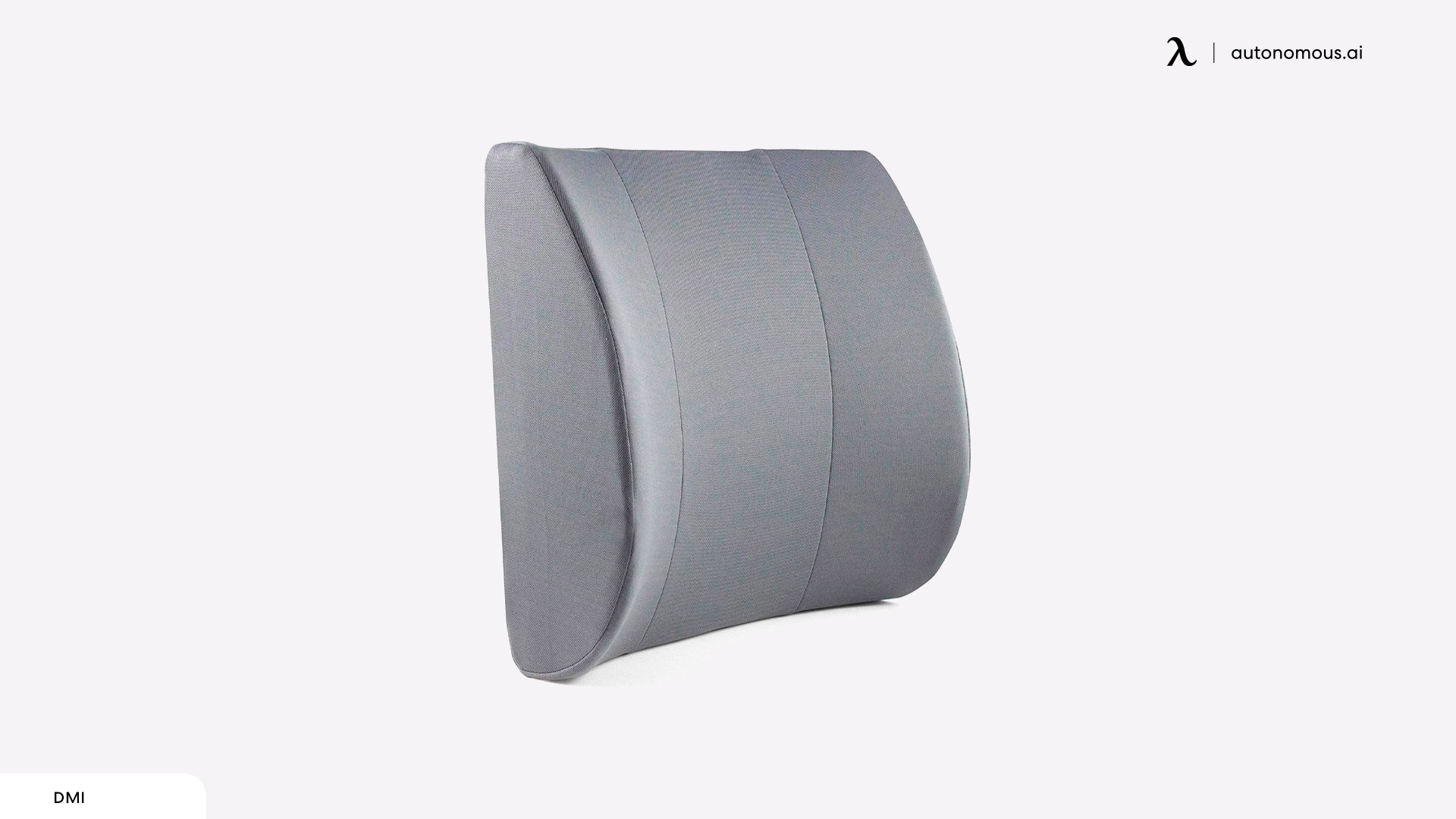
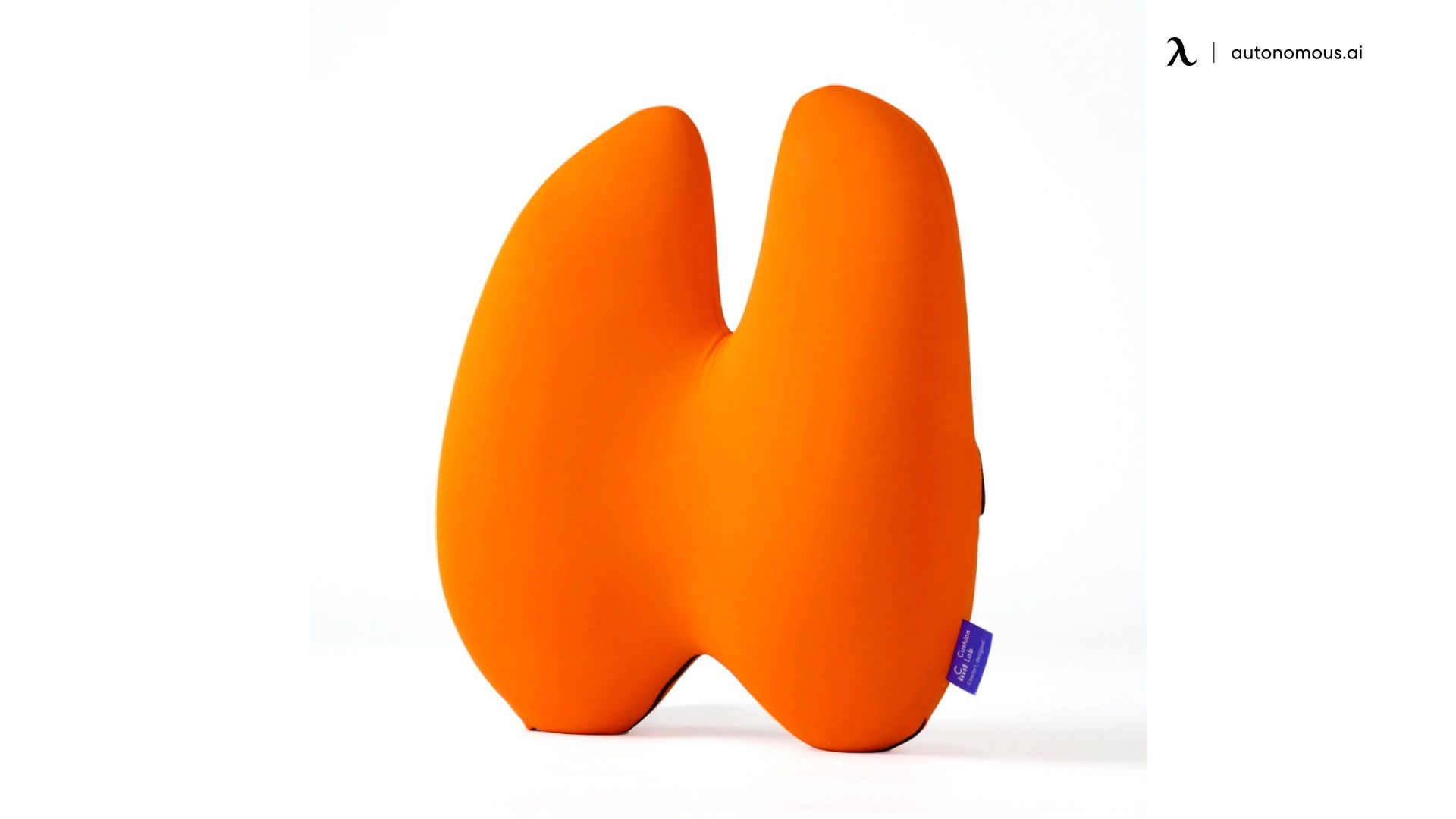
3. Cushion Lab Extra Dense Lumbar Pillow
Back discomfort rarely stays in one spot, tension in the lower back pulls on muscles higher up. This lumbar back support for the office chair addresses this with a multi-region design that covers the lower, mid, and upper-mid back in one contoured surface, rather than isolating just the lumbar curve.
The S-shaped profile mirrors natural spinal alignment. Lean into it, and the lower section supports the lordotic curve while upper wings prevent your shoulders from rounding forward. It doesn't just fill a gap, it repositions your entire torso. A gel-lined strap keeps everything locked in place, and the recycled polyester cover breathes well during long sessions.
Best for: People whose discomfort radiates beyond the lower back, or anyone whose posture collapses through the mid-spine after a few hours.
Skip if: You want soft, immediate comfort. This is corrective support, not cushioned relief.
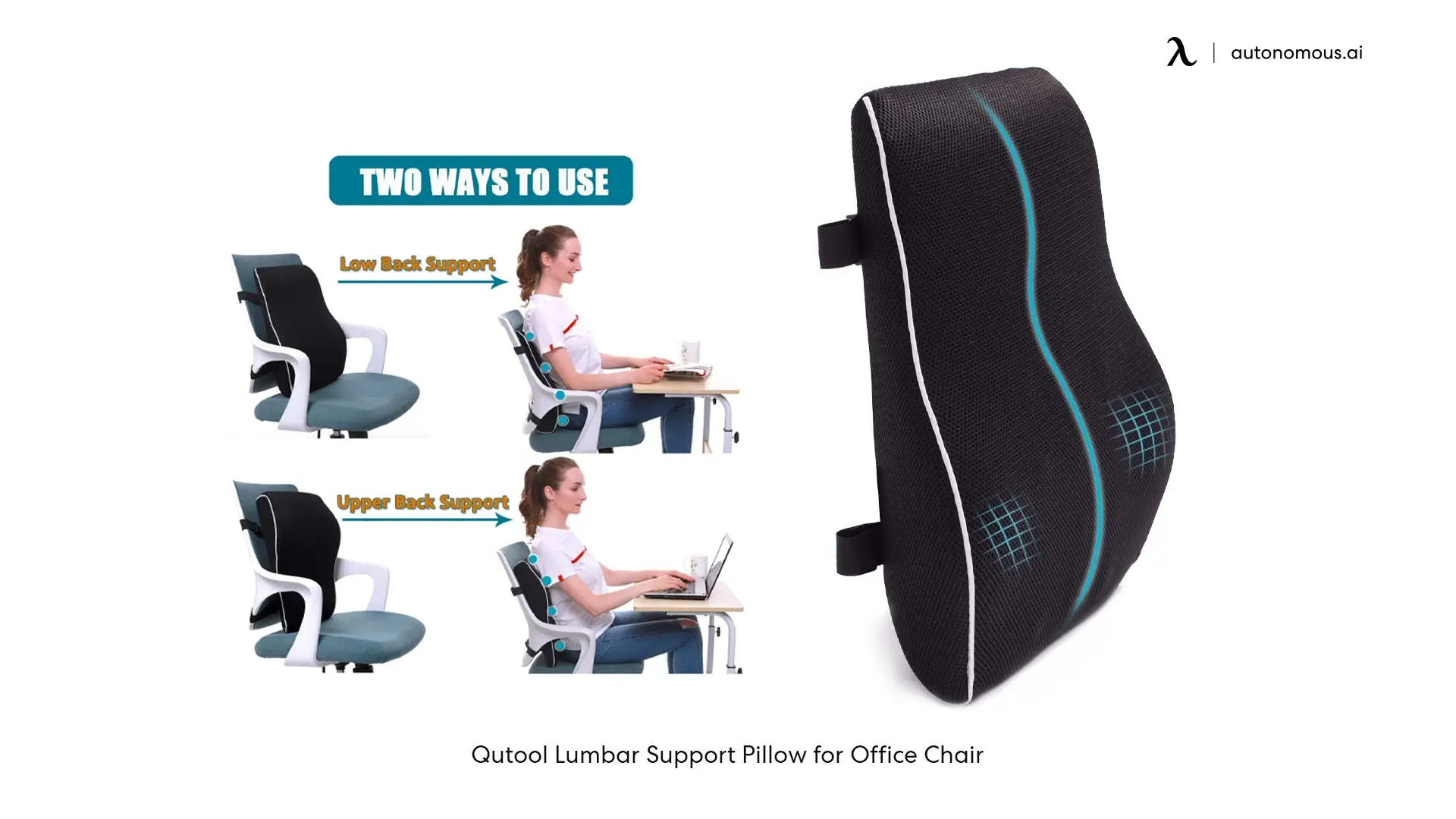
4. Qutool Lumbar Support Pillow for Office Chair
At 18 × 15.5 inches, the QUTOOL is shaped more like a wedge backrest than a traditional lumbar back support for office chair use. Instead of targeting just the lower curve, it creates a broad surface that keeps your entire back in contact with the chair.
Textured bumps across the surface provide light pressure point feedback—not a massage, but enough tactile awareness to discourage slouching. The high-density memory foam holds shape over time without going flat, and dual straps with extension options keep it anchored on larger chairs.
The trade-off is heat retention. Dense foam plus full-back coverage traps warmth more than slimmer lower back support cushion for office chair alternatives. The mesh cover helps, but if you run hot, expect to notice it after an hour or two.
Best for: People who want full-back coverage rather than isolated lower back support for office chair use. Good for larger body frames or oversized chairs.
Skip if: You overheat easily, or you prefer a compact cushion that doesn't change the feel of your chair dramatically.
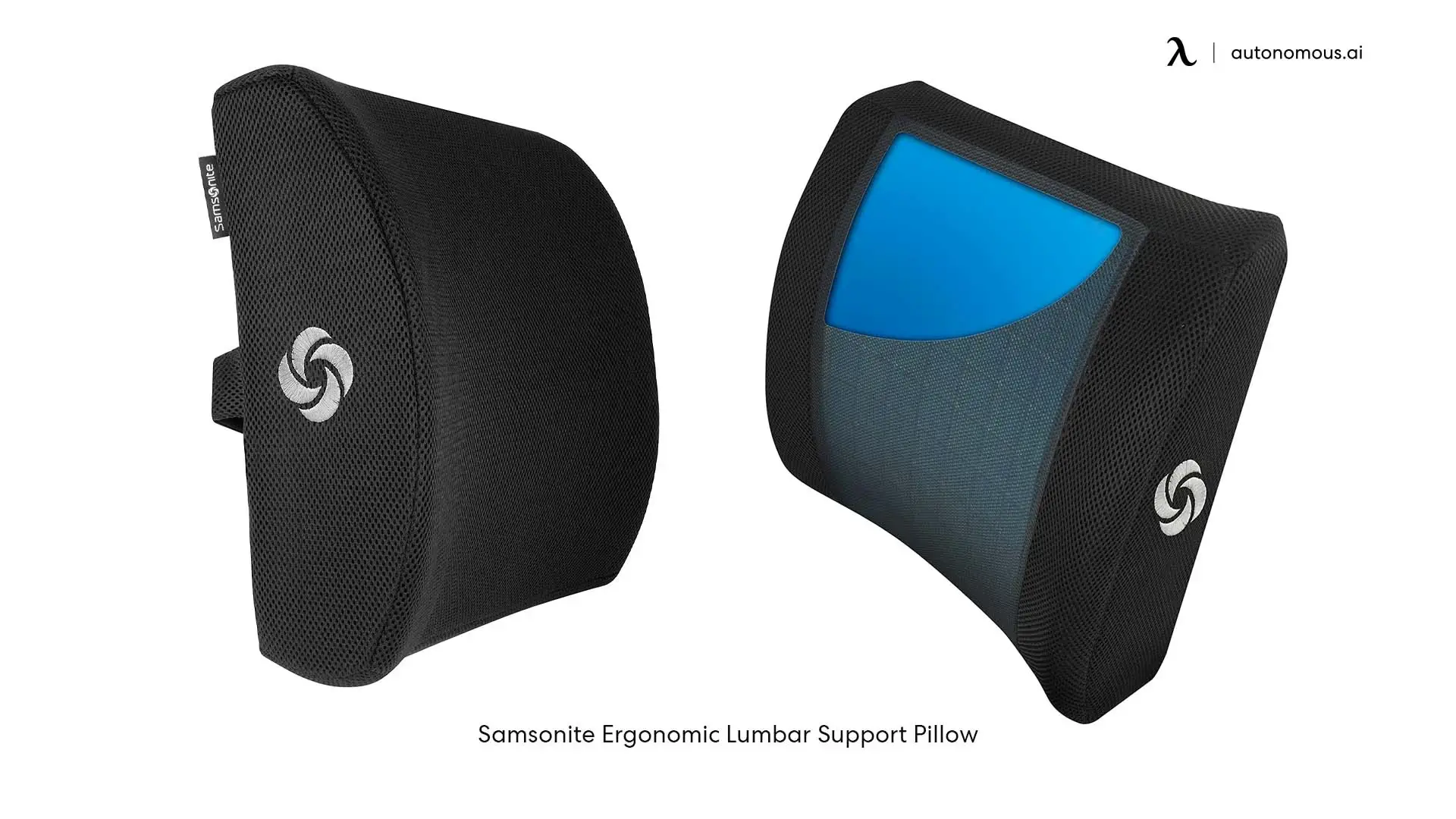
5. Samsonite Ergonomic Lumbar Support Pillow
At 13.5" × 14" × 4.5" with a single-clip adjustable strap, this back support pillow for office chairs is designed to move between office chairs, car seats, and airplane seats without fuss. The lightweight build and quick-release installation make transitions effortless.
The memory foam is firm enough to hold shape over time, but soft enough to feel comfortable within minutes. The ergonomic curve follows the lower spine's natural shape, gently guiding posture without aggressive correction. A breathable mesh cover keeps heat manageable and zips off for easy washing.
One thing to note: the 4.5" depth can push shorter users forward in car seats where space is limited. Test the fit before committing to long drives.
Best for: Anyone who needs one best lower back support for office chair, car, and travel without carrying multiple cushions.
Skip if: Your car seat doesn't recline far enough to accommodate the added depth.
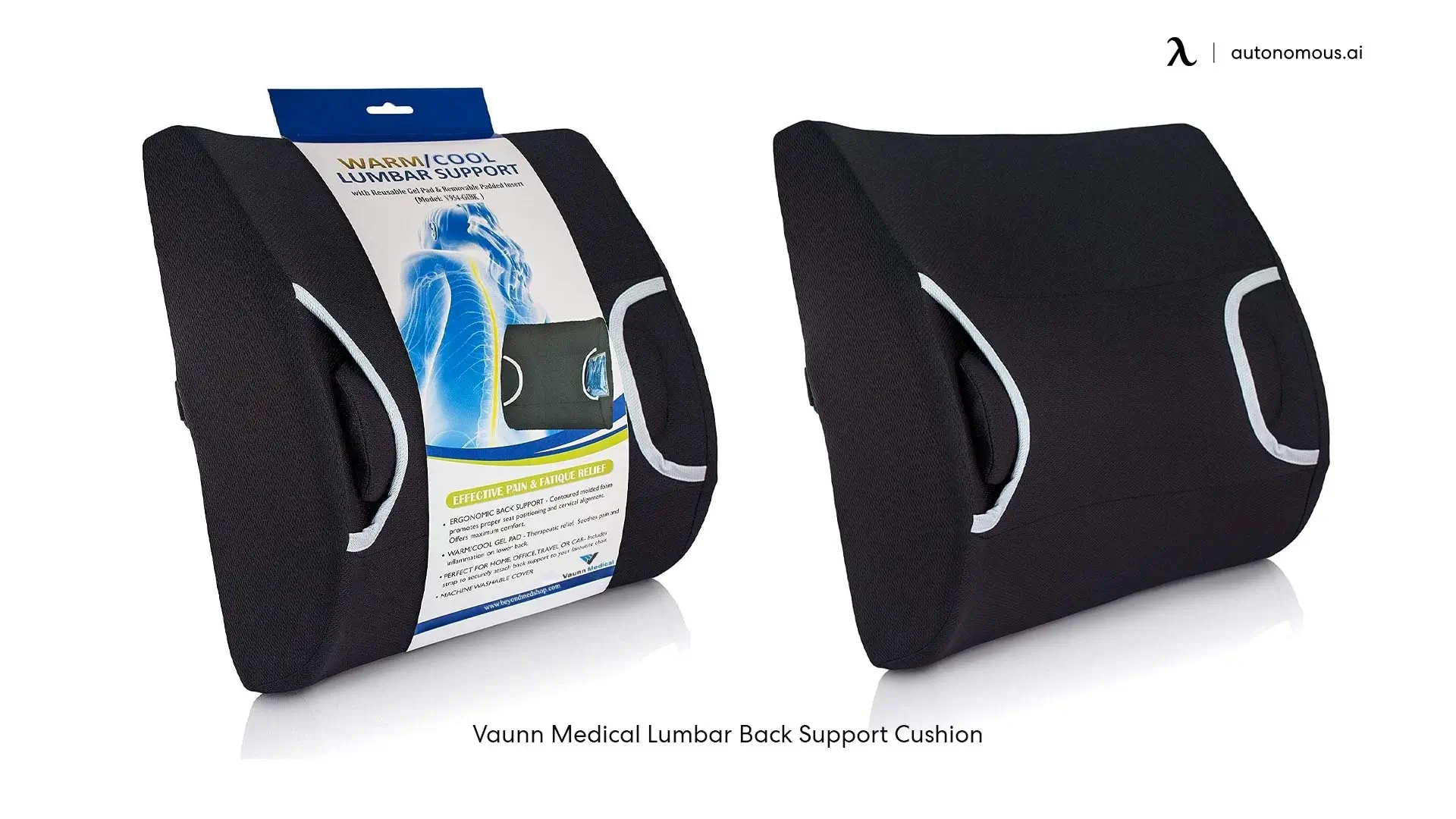
6. Vaunn Medical Lumbar Back Support Cushion
Some back discomfort responds better to temperature than pressure alone. The Vaunn Medical cushion includes a removable gel pad that can be heated in the microwave or chilled in the freezer—a feature that turns a standard back support pillow for office chair use into something closer to therapeutic relief.
The cushion itself uses contoured molded foam with an optional firm insert. Without the insert, it provides softer, more adaptive support. With it, the cushion firms up for those who need stronger resistance against slouching. This modularity makes it easier to dial in the right feeling without buying multiple products.
Best for: Lower back fatigue combined with muscle stiffness or soreness. The warm/cool option adds a therapeutic layer most cushions lack.
Skip if: You only need structural support. Without the gel pad, it's fairly standard.
7. Fellowes Professional Series Back Support
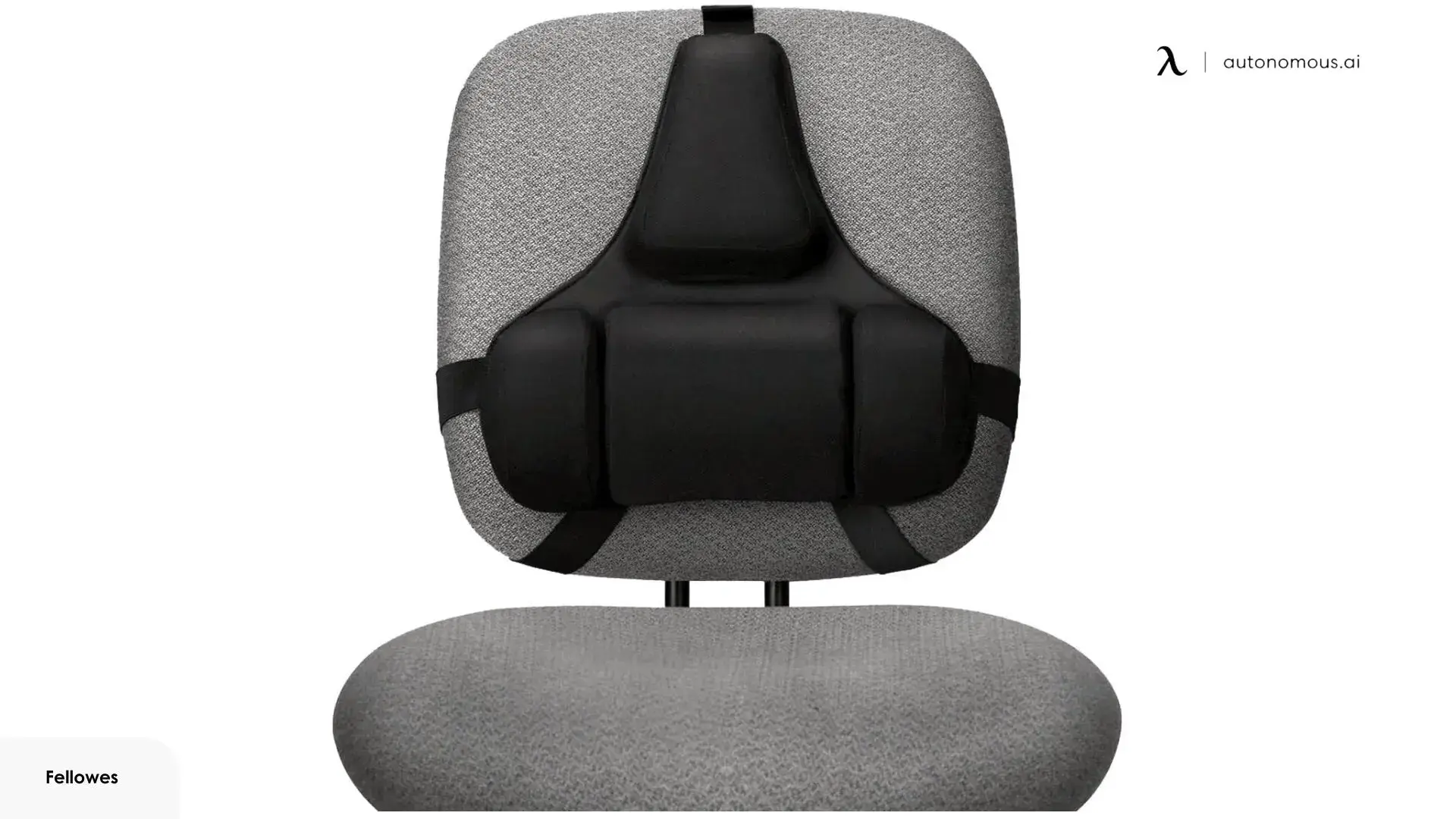
Instead of one contoured cushion, this design splits support into two separate zones, a mid-spinal panel and a lower lumbar section with three foam segments. Each zone works independently, which means the cushion adapts to spines that don't fit neatly into a single-curve mold.
That two-tier structure solves a problem most people don't realize they have until they try a standard lumbar pillow. This mesh back support for the office chair that hits the lower back perfectly might leave the mid-spine unsupported, allowing the upper body to round forward over time. The profile is notably slim at just 2 inches deep. It won't push you forward in your seat the way thicker cushions can. For chairs that already have some contouring, this works as a subtle enhancement rather than a complete override.
Microban antimicrobial treatment in the fabric is a practical touch for shared workspaces or anyone conscious about hygiene over long-term use.
Best for: Office workers who need neck and back support for office chair setups, particularly those whose discomfort spans multiple spinal regions rather than just the lower curve.
Skip if: You prefer a plush, cushioned feel. This is firmer and more structured, functional rather than cozy.
8. Everlasting Comfort The Original Lumbar Support Pillow
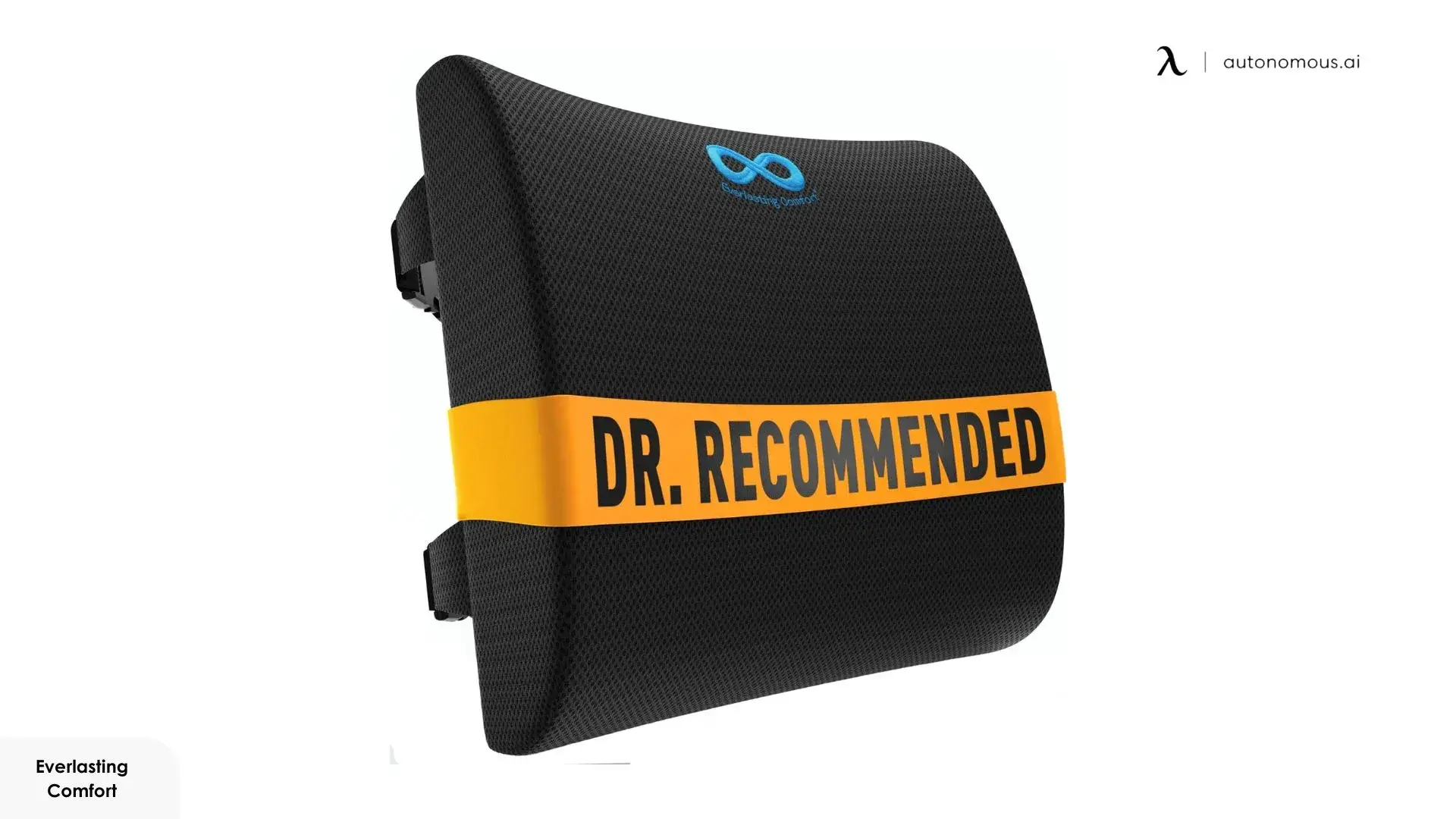
This lumbar support office chair cushion sells in high volume for a simple reason: it doesn't ask much of the user. No break-in period, no learning curve. You strap it to your chair, sit down, and the memory foam responds to your body heat and weight within seconds. For people who just want lower back support for office chair use without researching foam densities or ergonomic theory, that immediacy matters.
The foam strikes a balance between soft and supportive. It compresses enough to feel comfortable but doesn't bottom out under sustained pressure. After a full workday, it rebounds to its original shape overnight. This consistency is where cheaper memory foam cushions tend to fail, they feel fine for the first few weeks, then gradually flatten into uselessness.
The downside is depth. Four inches of projection works if your chair has a flat back, but it overcorrects on seats that already have some lumbar curve built in. In a car seat, it can push you uncomfortably close to the steering wheel.
Best for: People who want reliable back support without fussing over details. Travels easily between office, home, and car.
Skip if: Your chair already has lumbar contouring—adding more curve on top of existing curve creates pressure rather than relieving it.
9. Kensington SmartFit Conform Back Rest
The Kensington takes a mechanical approach for the mesh back support for office chair. Four independent springs sit behind ventilated panels, each one responding separately to pressure and movement.
The taller profile extends coverage from the lower back up toward the shoulder blades. This makes it a strong option for best upper back support for office chair setups—useful for anyone who notices their shoulders rounding forward after a few hours, even with a lumbar cushion in place.
Best for: People who shift positions frequently and want ergonomic back support for office chair use that moves with them.
Skip if: Your chair has a shallow seat, or you prefer the cushioned feel of memory foam over a spring-based system.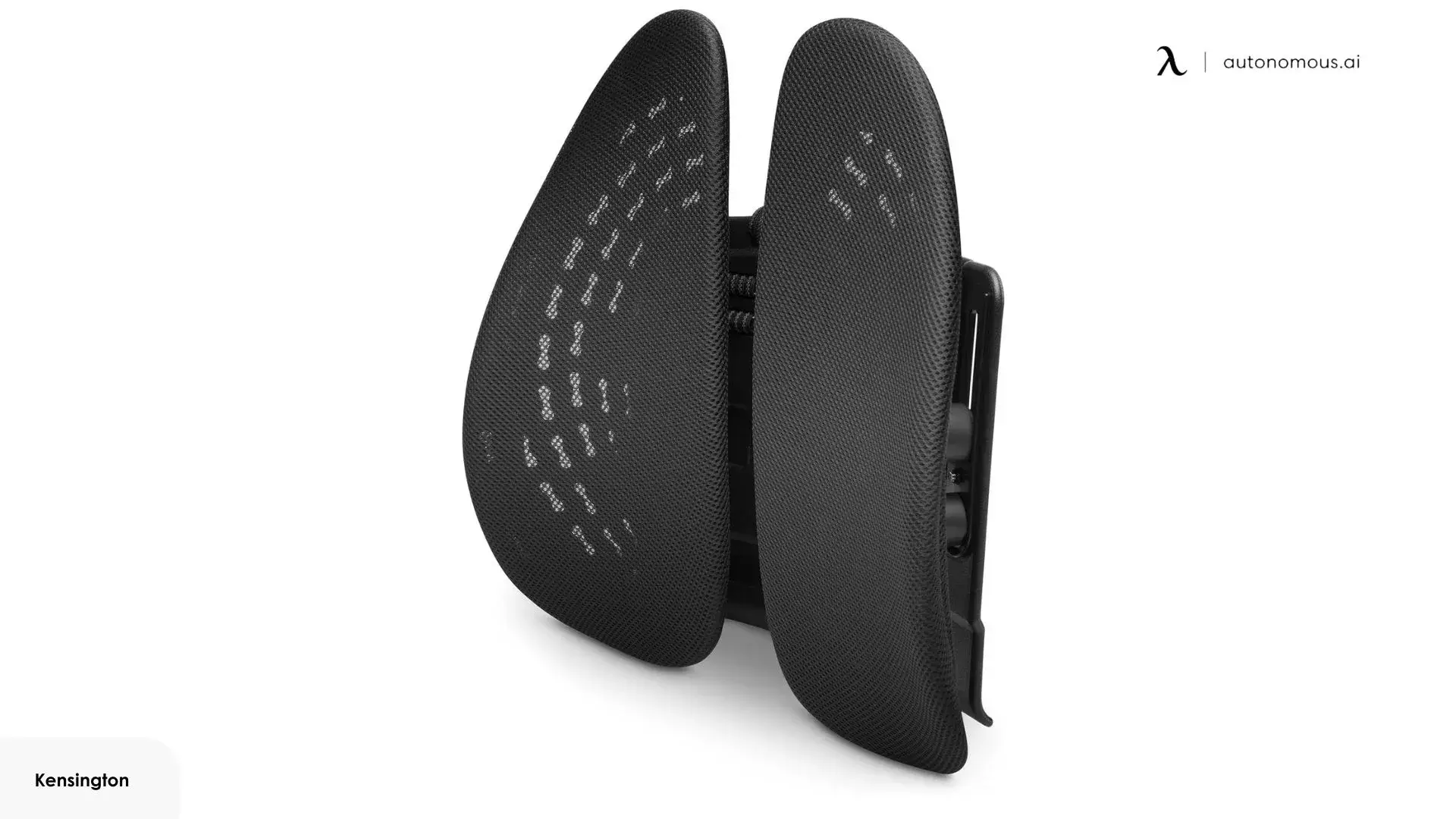
10. OPTP The Original McKenzie SuperRoll
Unlike full-coverage cushions, the SuperRoll is a compact cylinder (16" × 6" × 2") that targets only the lumbar curve. It doesn't try to support your mid-back or shoulders. It does one thing: fill the gap between your lower spine and the chair back to maintain lordosis. For people dealing with back support for office chairs for lower back pain specifically, this precision matters more than broad coverage.
No mid-back coverage, no shoulder support. Just precise, focused contact where lower back pain actually originates. The pre-compressed foam holds firm, and beveled edges sit flush against bucket seats and contoured chairs where bulkier cushions won't fit.
Best for: People who know their pain is lumbar-specific and want targeted back support for the office chair for lower back pain without affecting the rest of their seating position.
Skip if: You need broader coverage or prefer cushioned comfort over clinical precision.
How to Choose the Right Back Support for Your Office Chair
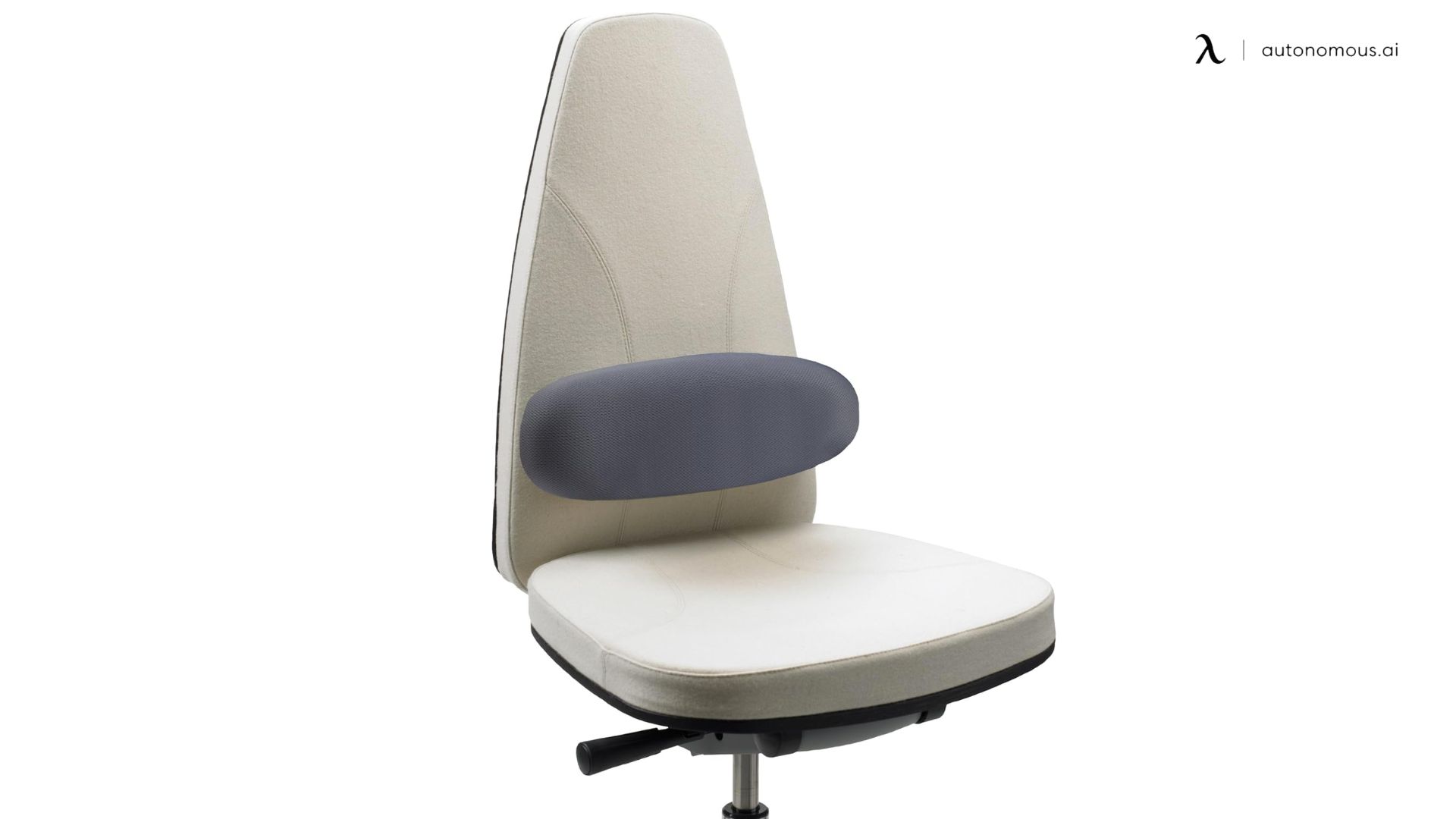
Choosing the best back support for office chair use starts with understanding what your current chair does—and does not—do for your body. Back support works best when it fills a specific gap rather than attempting to correct everything at once.
- Start With How Your Back Meets the Chair
Pay attention to where your back loses contact during the day. Some chairs leave a gap at the lower spine, while others feel flat or overly rigid across the back. The goal of added support is not to push the spine into position, but to restore consistent contact where it naturally disappears. For persistent discomfort, orthopedic back support for chairs may offer more targeted relief than standard cushions. This simple observation often matters more than firmness or material.
- Consider How Long Support Needs to Stay Effective
Support that feels comfortable for short sessions may not hold up over several hours. As muscles fatigue, the body relies more on external support to maintain alignment. If discomfort builds gradually, look for structured solutions rather than a soft back support pillow for an office chair as the day goes on.
- Match Support to Movement, Not Just Posture
Office work rarely involves sitting still. Leaning forward, shifting weight, or briefly reclining all change how support interacts with the back. Rigid designs tend to work best when posture stays consistent, while more flexible or breathable structures accommodate frequent movement without becoming intrusive.
Common Mistakes That Make Back Support For Office Chairs Ineffective
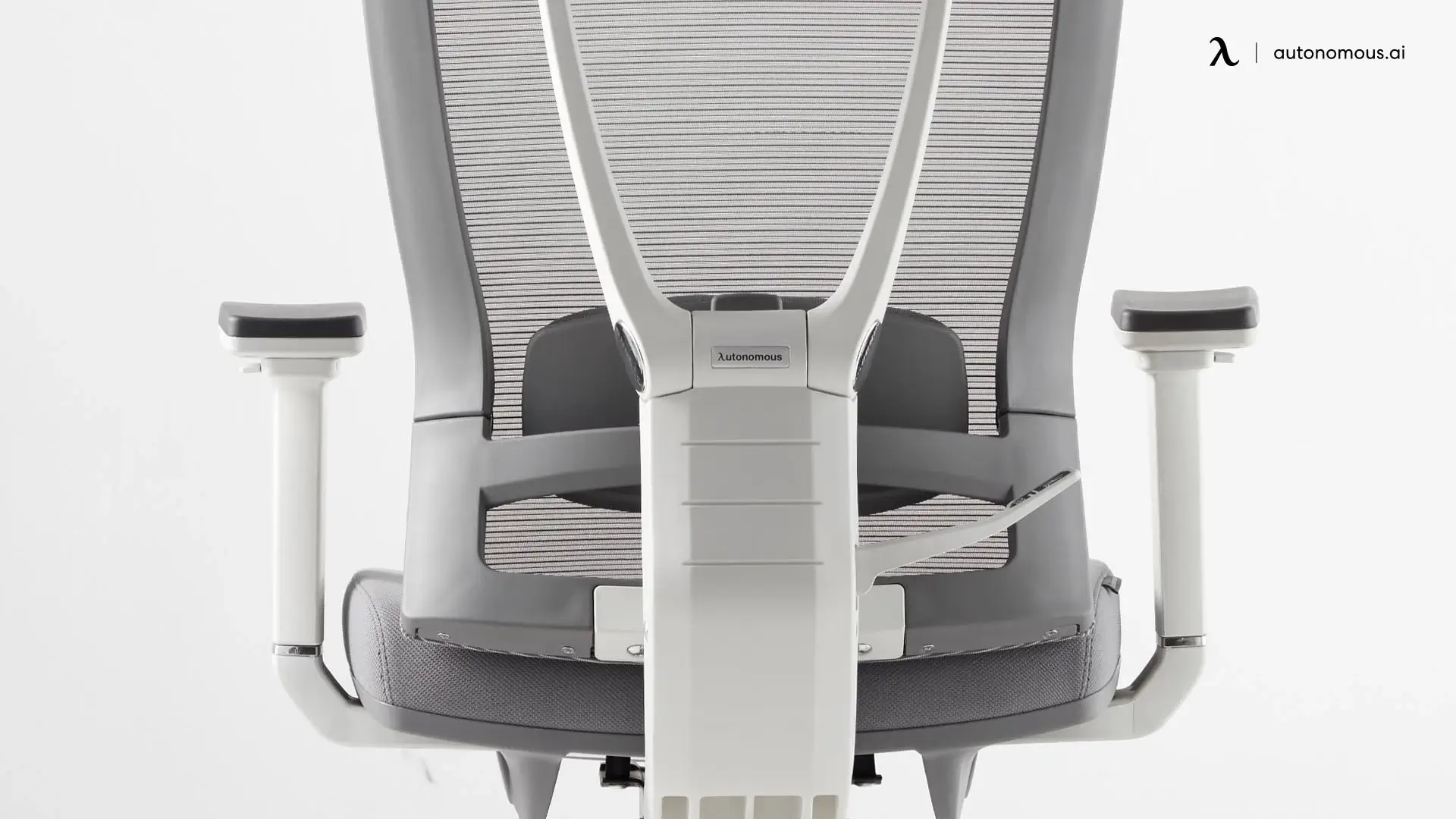
Even the best back support for office chair use can underperform when it doesn’t align with how the body actually sits and moves. These issues often explain why support feels helpful at first, then gradually stops working.
- Treating placement as fixed rather than functional
Lumbar support is not about hitting a precise spot once, it’s about maintaining contact as posture subtly shifts. Understanding where should lumbar support be helps avoid a common mistake: positioning the cushion too high or too low. In either case, a lumbar support office chair cushion may still touch the back but no longer support the spine's natural curve, increasing strain instead of reducing it.
- Confusing initial comfort with sustained support
Soft cushioning can feel pleasant at first contact, but as body weight settles, compression reduces its ability to carry load. Over time, this shifts effort back to the lower back muscles, which is why discomfort often appears later in the day rather than immediately.
- Expecting back support to correct unrelated setup issues
Back support works within the limits of the surrounding environment. If desk height, screen position, or seating distance encourage constant leaning or neck strain, support becomes reactive rather than helpful. In these cases, discomfort persists even with well-designed support in place.
- Overlooking how posture changes throughout the day
Few people sit the same way from morning to evening. As focus deepens or fatigue sets in, posture naturally changes. Support that only works in one position can lose effectiveness without obvious warning, leading to the impression that it “stopped helping” when the real issue is reduced contact.
Understanding these limitations helps set realistic expectations and makes ergonomic back support for the office chair a more reliable part of daily sitting, rather than a temporary fix.
FAQs
What is the best lumbar support for an office chair?
The best lumbar support for an office chair is one that maintains the natural curve of the lower spine without flattening over time or forcing posture. Well-structured options like the Mount-It! ErgoActive Lumbar Pillow or the C Cushion Lab Extra Dense Lumbar Pillow are often effective because they provide consistent support during long sitting sessions.
How do I support my back in an office chair?
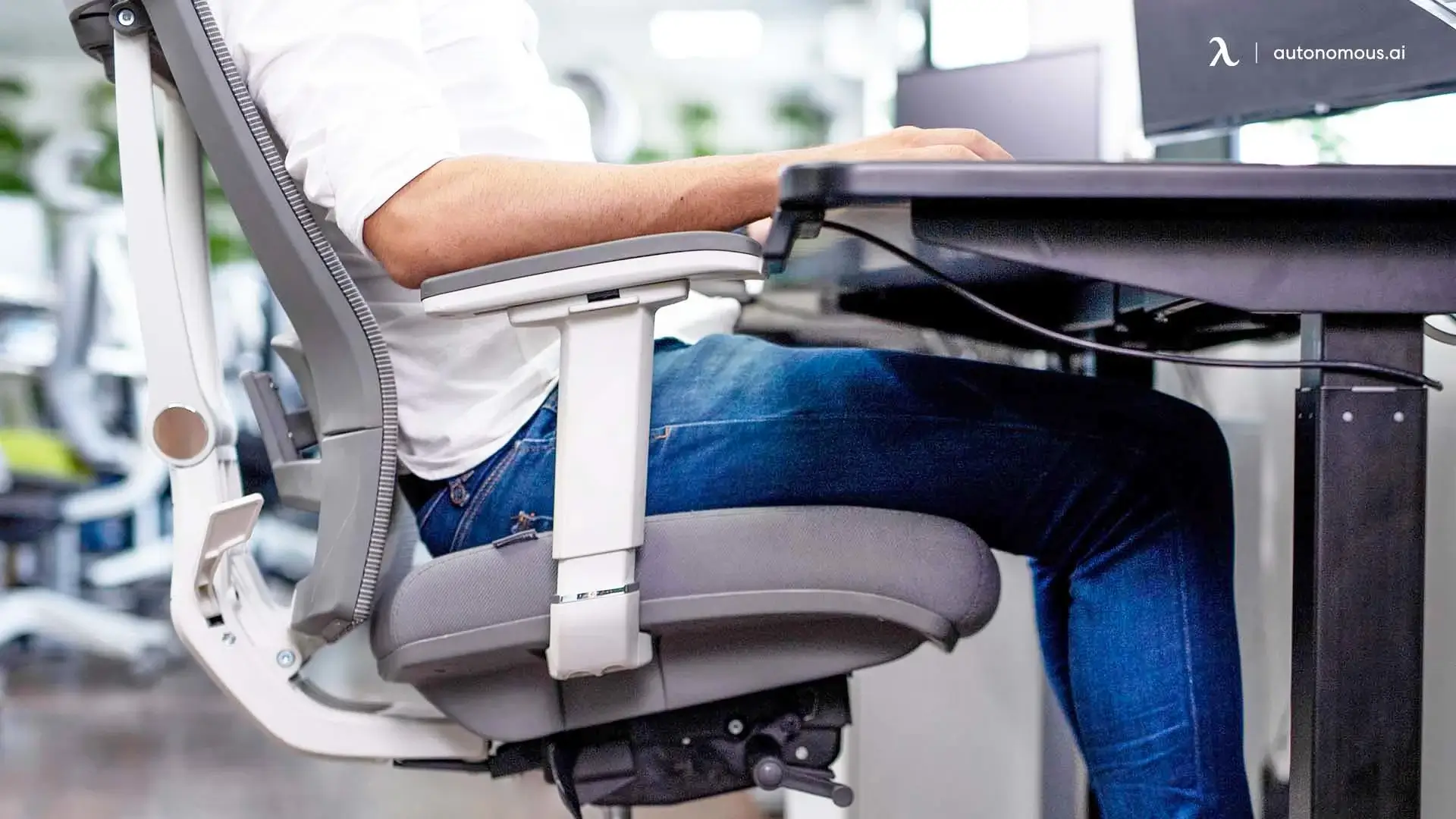
Supporting your back starts with maintaining consistent contact between your lower spine and the chair. Use back support that fills gaps in the lumbar area, adjust your chair and screen height to avoid leaning forward, and allow for natural movement throughout the day.
What is the best support for lower back pain while sitting?
The best support for lower back pain while sitting is one that reduces muscular strain by stabilizing the lumbar curve over time. Support that holds its shape and adapts to long sitting sessions tends to be more effective than soft cushioning alone. Proper placement and overall workspace alignment are just as important as the support itself.
What is the best back support for office chair use if I sit all day?
For all-day sitting, the best back support for office chair use is one that maintains its shape and support over time. Designs that balance firmness and adaptability help reduce fatigue as muscles tire throughout the workday.
Can back support pillows improve posture in an office chair?
Back support pillows can help improve posture by maintaining spinal alignment and reducing slouching. However, they work best as a posture aid rather than a complete solution for poor workstation setup.
Do ergonomic office chairs still need back support?
Even ergonomic office chairs may benefit from additional back support depending on body shape, posture habits, and sitting duration. Built-in support does not always align perfectly with every user’s lower back.
Is mesh back support for an office chair better than a cushion?
Mesh back support for an office chair offers flexibility and airflow, making it comfortable for longer sitting periods. Cushions provide more structure, which may be preferable for users needing stronger lumbar reinforcement.
What type of back support is best for working from home?
The best back support for an office chair use at home is one that adapts well to non-ergonomic seating and varied sitting habits. Versatile support that balances comfort and alignment tends to work best in home office setups.
Conclusion
Back pain from sitting is rarely solved by the most expensive option or the highest-rated cushion. It comes down to fit, matching support to where your body actually needs it.
A cushion that works for lower back fatigue won't help someone whose shoulders round forward by 3pm. A firm, corrective design might be exactly right for one person and completely wrong for another who needs softer, adaptive contact. The best back support for office chair setups is the one that addresses your specific discomfort, not someone else's.
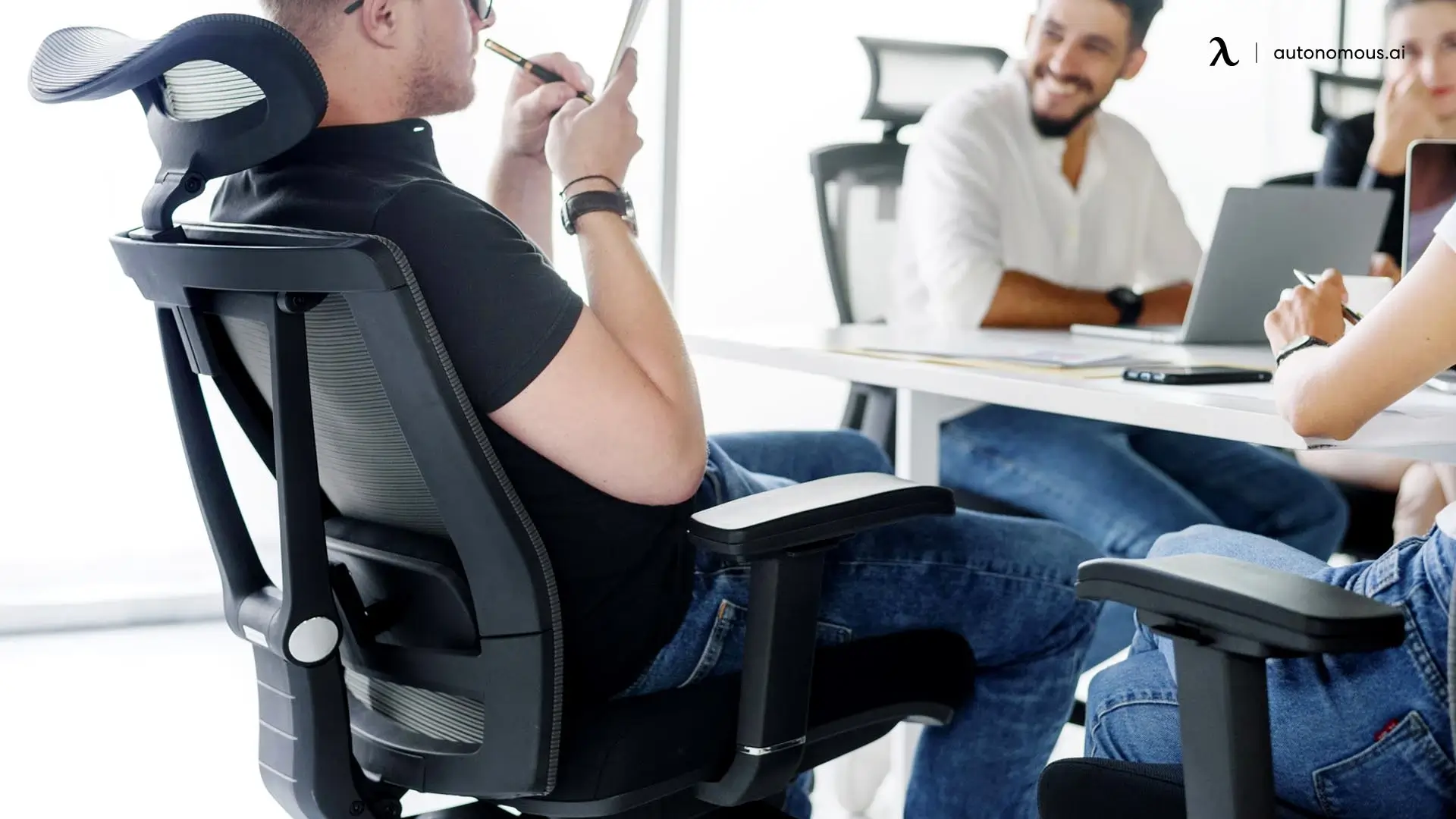
What matters most is this: does the support maintain contact as your posture shifts throughout the day? Does it reduce strain without forcing you into a rigid position? If the answer is yes, it's doing its job, regardless of price point or brand reputation.
Pair it with a proper office chair with adjustable lumbar support, a desk at the right height, and occasional breaks to stand and move. Back support is one piece of a larger system. Get that system right, and long hours at a desk become far more manageable.