Saddle Seat at Work: How to Find the Right Fit for You

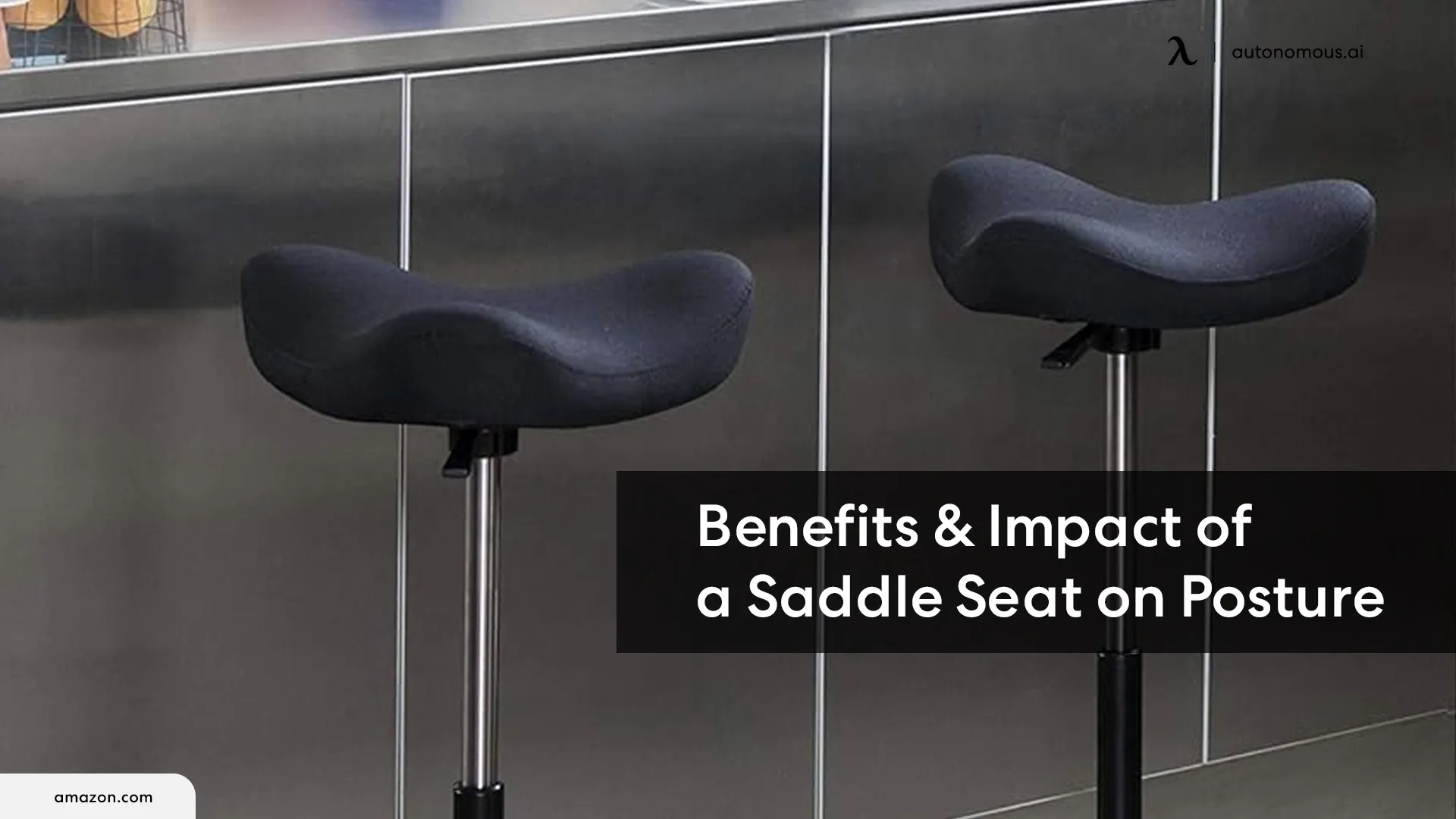
Table of Contents
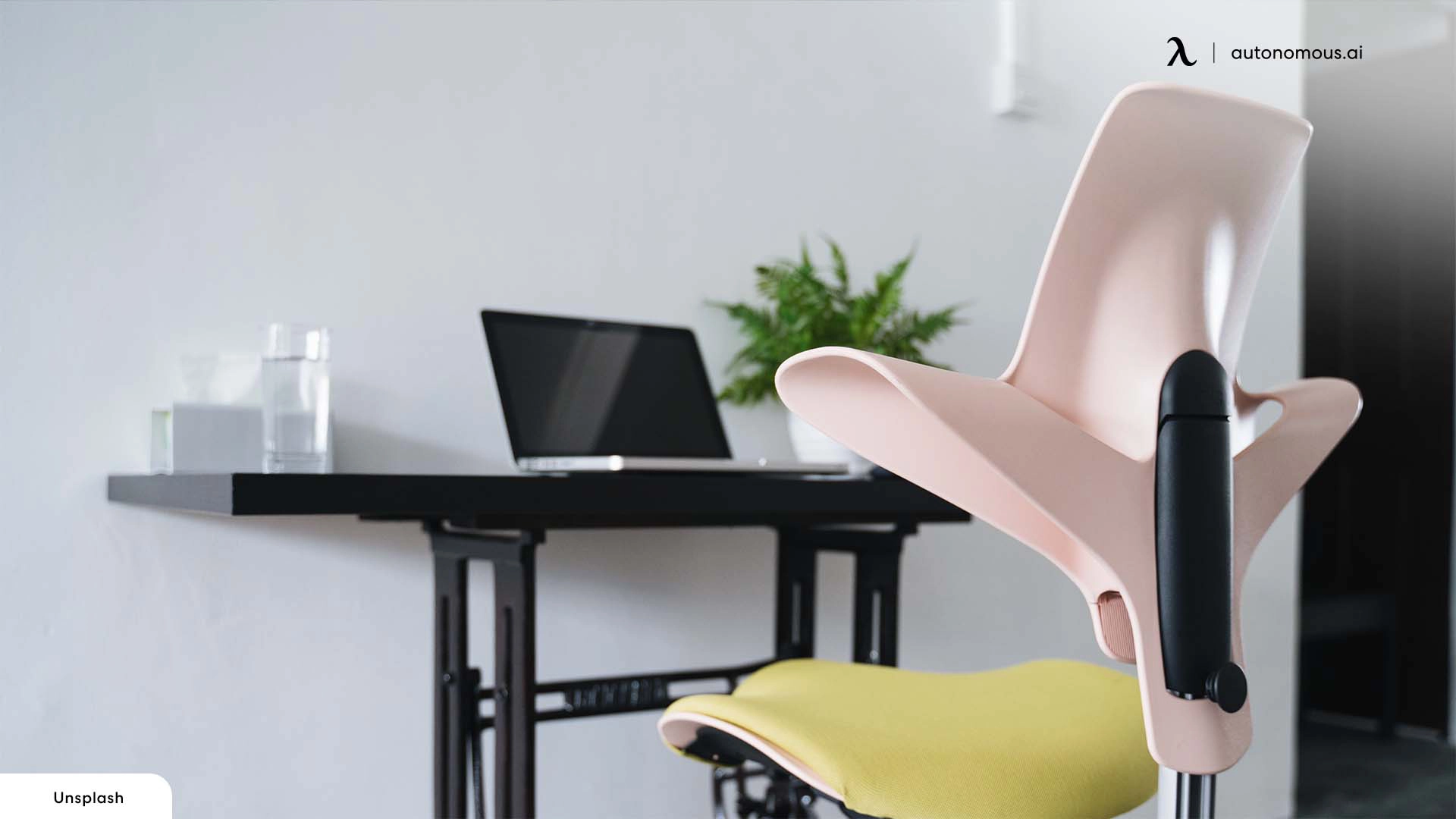
A saddle seat is shaped like a riding saddle, and it’s used in work settings where people sit upright and move often. This guide explains what a saddle seat is, why some people find it more supportive than a standard office chair, and what feels different when you first switch.
You’ll also see the key differences between saddle stools and saddle chairs, plus a simple set of criteria to help you choose the right option for your body, your work style, and how long you sit each day.
What Is a Saddle Seat?
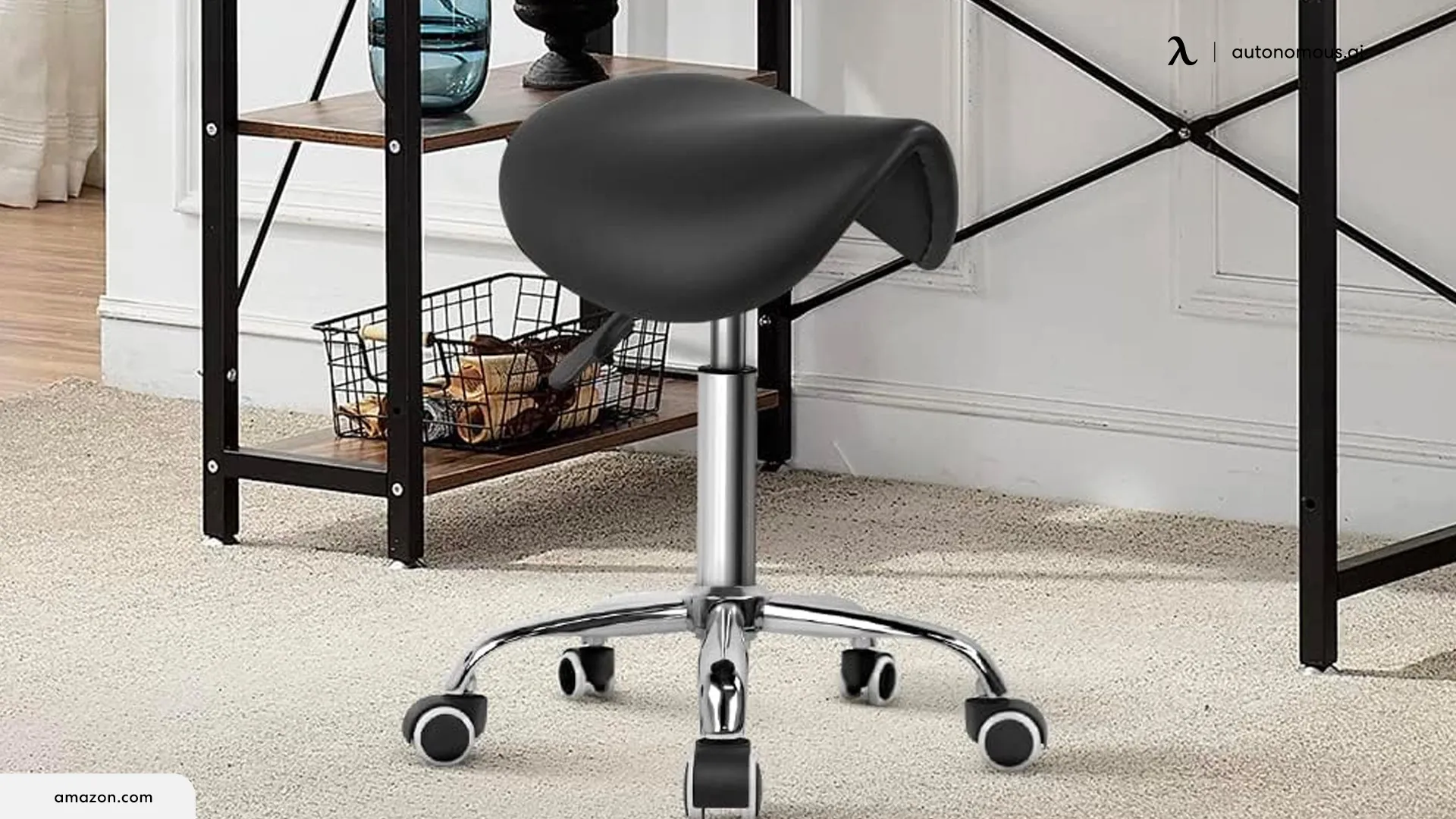
A saddle seat changes the relationship between your hips and your chair. Instead of a flat surface that lets you sink back, you sit on a gently raised center with two sloped sides—similar to how you'd sit on a horse. That shape tilts the pelvis slightly forward, opens the hip angle, and stacks the spine in a way that supports proper sitting posture without forcing a fixed position.
It's less about comfort in the traditional sense and more about staying engaged. The design suits work where you're active at your desk: typing, designing, clinical tasks, or rotating between tools and screens throughout the day.
You'll find saddle seating across dental offices, tattoo studios, hair salons, laboratories, and increasingly in home office setups where people want something that encourages movement rather than passive sitting.
The main variations (and what they’re best for)
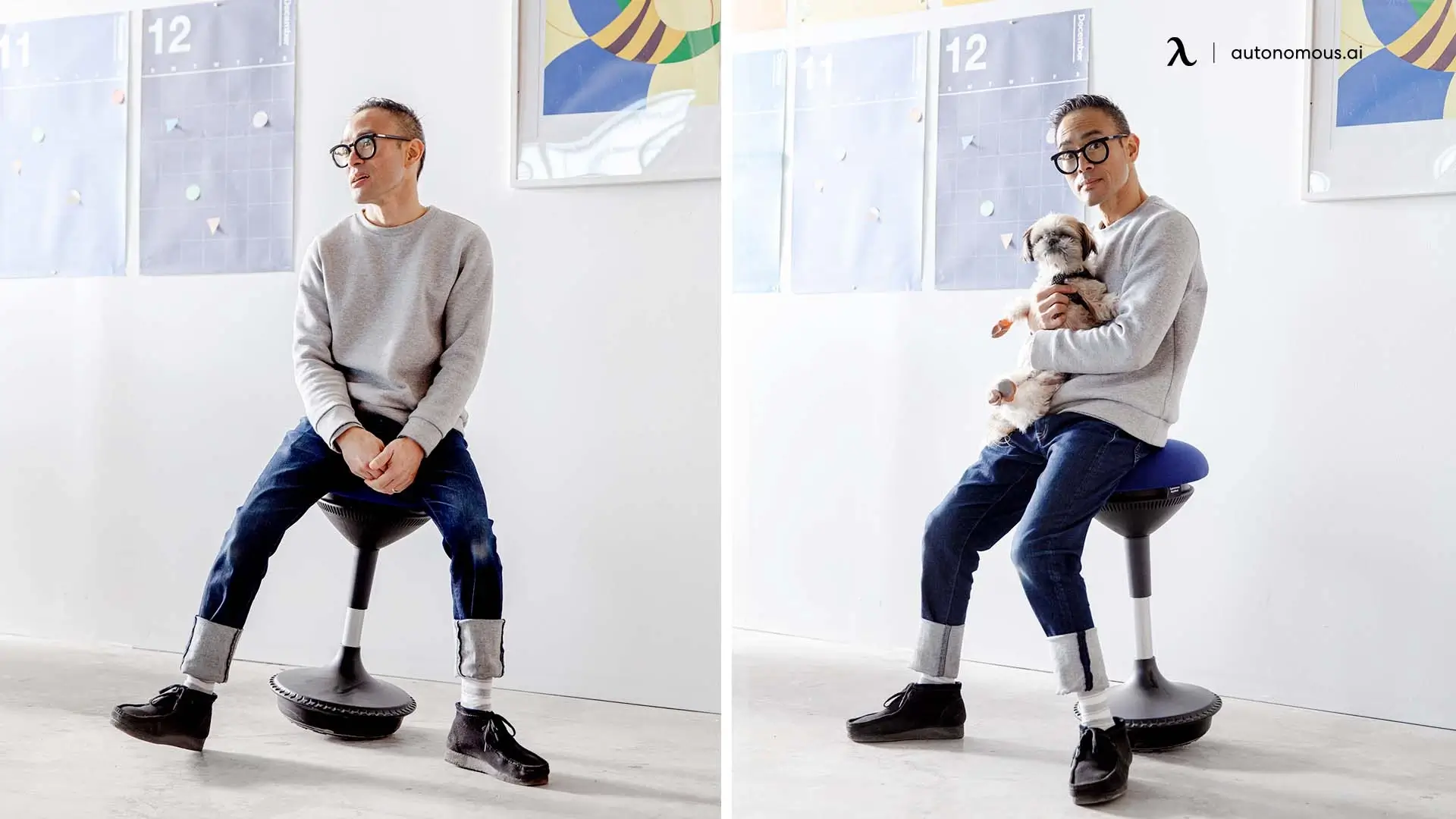
- Saddle stool: no backrest, easiest to pivot and roll around. Best when you need frequent reach and quick repositioning.
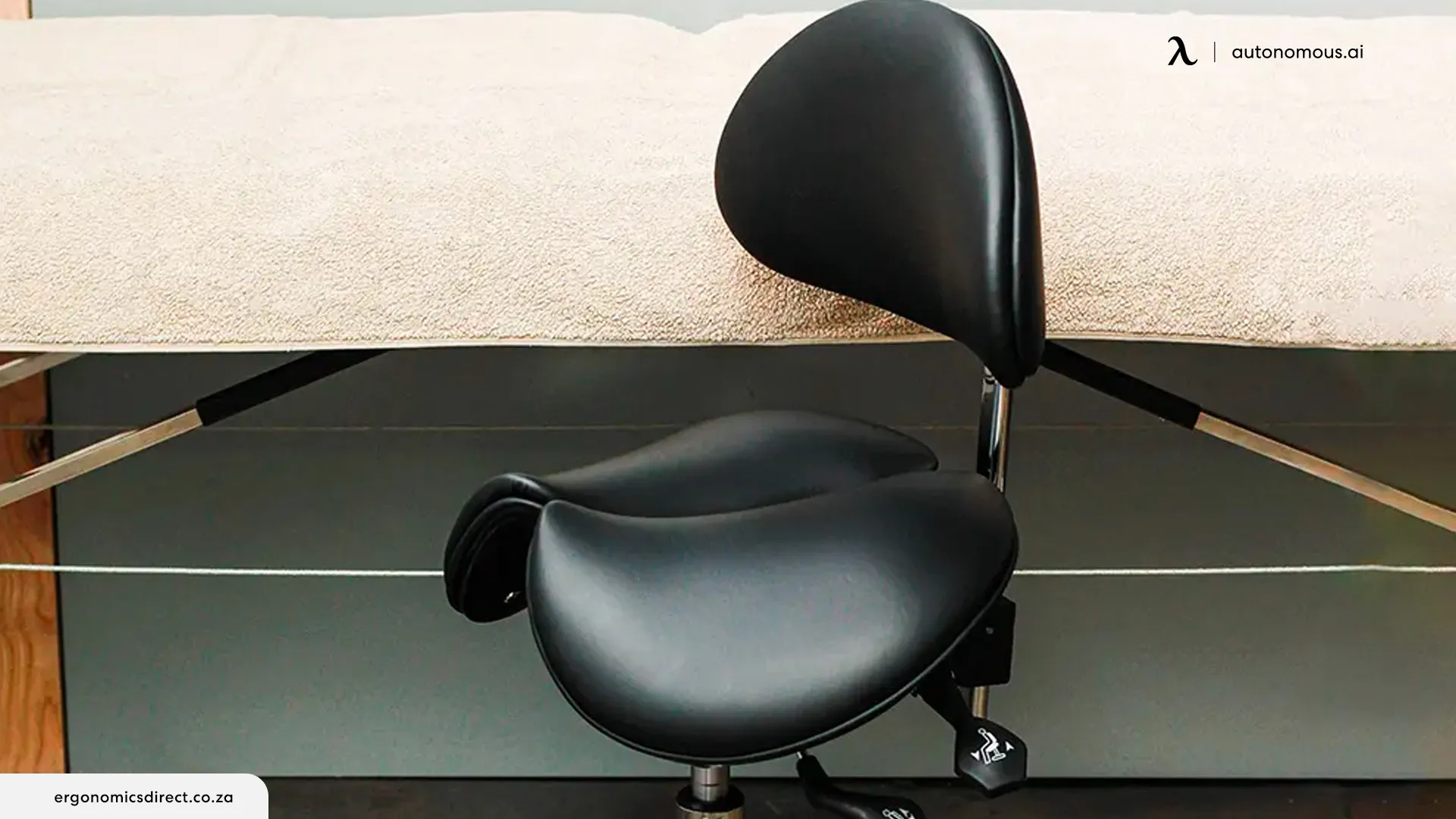
- Saddle chair: includes a backrest (sometimes small). Better when you want occasional support during longer sessions.
- Split saddle: a divided seat that can reduce pressure for some people and improve fit, especially if a one-piece saddle feels too “narrow” or intense.
- Tilting saddle: the seat angle can tip slightly, which changes how much you’re encouraged to stay forward and active while working.
Benefits of a Saddle Seat
A saddle seat is most helpful when your work keeps you upright and “in the zone”, typing, editing, designing, clinical tasks, or moving between tools. The benefits aren’t magic; they come from practical changes in how your body behaves during real work.
- Posture that holds without effort
Standard chairs make slumping the path of least resistance. A saddle seat reverses that default: the shape itself encourages your torso to stay upright, so you spend less energy fighting gravity and less time catching yourself mid-slouch three hours into a project.
- Reduced forward lean and shoulder tension
Sitting slightly higher brings your work surface closer to your natural hand position. That tighter operating radius means less hunching toward screens, less one-shoulder shrugging toward a mouse, and fewer of the micro-compensations that accumulate into neck and upper back tightness by end of day. For those already managing forward leaning posture, the open hip angle of a saddle seat can reinforce corrective habits rather than working against them.
- Movement that happens naturally
Some chairs punish repositioning, you have to consciously sit up, scoot back, start over. An ergonomic saddle chair treats movement as the default. Pivoting to a side monitor, rolling to grab something, shifting weight from one side to the other—these feel like continuations of sitting rather than interruptions. The design supports the broader principle of learning to stay active at your desk through equipment that accommodates motion rather than restricting it.
- Faster transitions for mobile work
If your workflow involves rotating between screens, reaching for tools, or moving between a primary desk and a side surface, you're not climbing out of a deep bucket seat every time. This explains the popularity in studios, clinics, and salons where "seated" and "moving" blur together. The key is matching the seat to your work style: the saddle seat chair tends to shine when you’re doing engaged work, not when you’re trying to lean back and relax.
Downsides and Trade-Offs To Know
A saddle seat can be a great fit for the right person and task, but it also has a very specific “feel.” Understanding the trade-offs upfront helps you avoid the common reasons people give up on it too quickly.
- Comfort can depend heavily on seat shape, not just cushioning
With a saddle design, the slopes do more than “support”, they decide where pressure goes. If the seat is too narrow, the edges can feel sharp and distracting. If it’s too wide, your legs may push outward uncomfortably and you’ll feel like you’re straddling the chair instead of sitting on it. This is why two saddle seats that look similar can feel completely different in real life.
- Height and foot support become non-negotiable
A saddle seat often works best at a slightly higher sitting position. If your feet can’t rest solidly (on the floor or a foot ring), your body compensates, usually through bracing with your hips or tensing your lower back. That “it’s hurting me” feeling is often not the saddle concept itself, but a setup where the height range or workstation pairing doesn’t match your body.
- It doesn't replace relaxation seating
Saddle design is built for active, forward-oriented work. If your day includes long reading blocks, video calls where you'd naturally lean back, or any task where you want to recline, you'll feel the absence of passive support. Some users keep a saddle seat for focused work and a traditional chair for everything else.
- The adaptation curve is real (and it’s usually predictable)
Many new users feel unfamiliar fatigue in the hips, glutes, and inner thighs during the first days because the position encourages different stabilizing muscles to stay “online.” That doesn’t automatically mean it’s wrong for you, but it’s a sign to start with shorter sessions and pay attention to fit. If discomfort is sharp, localized, or worsening, that’s usually a fit issue (width, slope, height), not just “getting used to it.”
- People with certain preferences often dislike it
If you prefer to sit cross-legged, tuck one leg under, or change leg positions a lot, saddle seating can feel restrictive. And if your work is mostly keyboard-heavy for long blocks, some users simply prefer the stability of a traditional seat pan and a more supportive backrest.
A simple way to think about it: a saddle seat rewards good fit and active sitting, but it’s less forgiving when the seat size, height range, or your work style doesn’t match.
Who Should (and Shouldn't) Buy a Saddle Seat
Understanding fit before purchase prevents returns and abandoned equipment. The following profiles clarify where saddle seating delivers value and where it creates friction.
1. Best For
- Clinical and technical professionals:
Dentists, hygienists, surgeons, veterinarians, tattoo artists, and laboratory technicians benefit from the unrestricted rotation and forward positioning that saddle stools provide. The design originated in these fields for practical reasons.
- Creative professionals with physical workflows:
Illustrators, architects, audio engineers, and video editors who move between drawing surfaces, control panels, and monitors find the mobility advantageous. A saddle chair accommodates both focused work and frequent repositioning without the constraints of armrests and deep seat pans.
- Desk workers experiencing postural fatigue:
Those who notice consistent slumping, lower back compression, or end-of-day stiffness in traditional chairs may find relief in the open hip angle and upright positioning a saddle seat encourages.
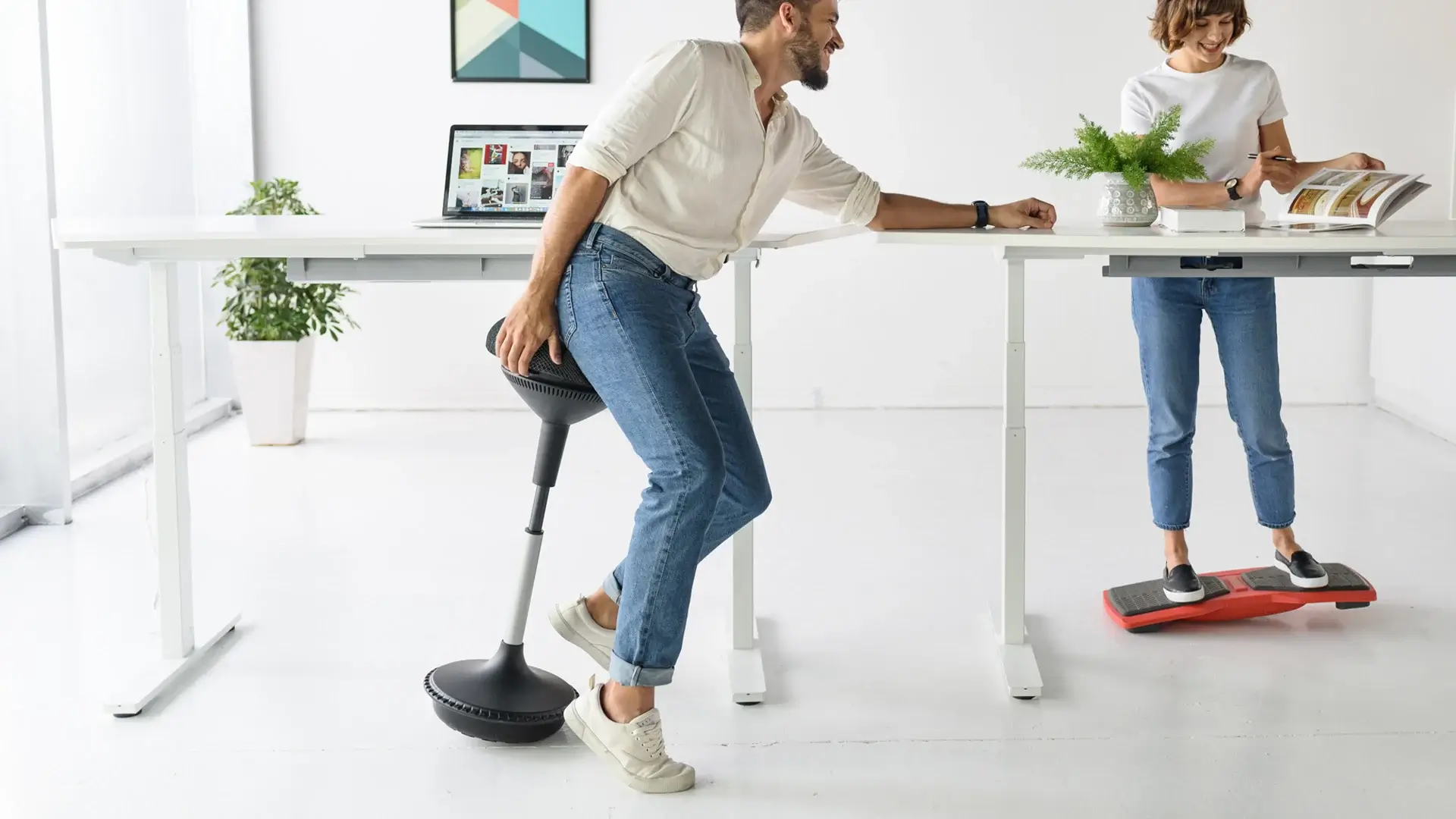
- Users of standing desks seeking a seated alternative:
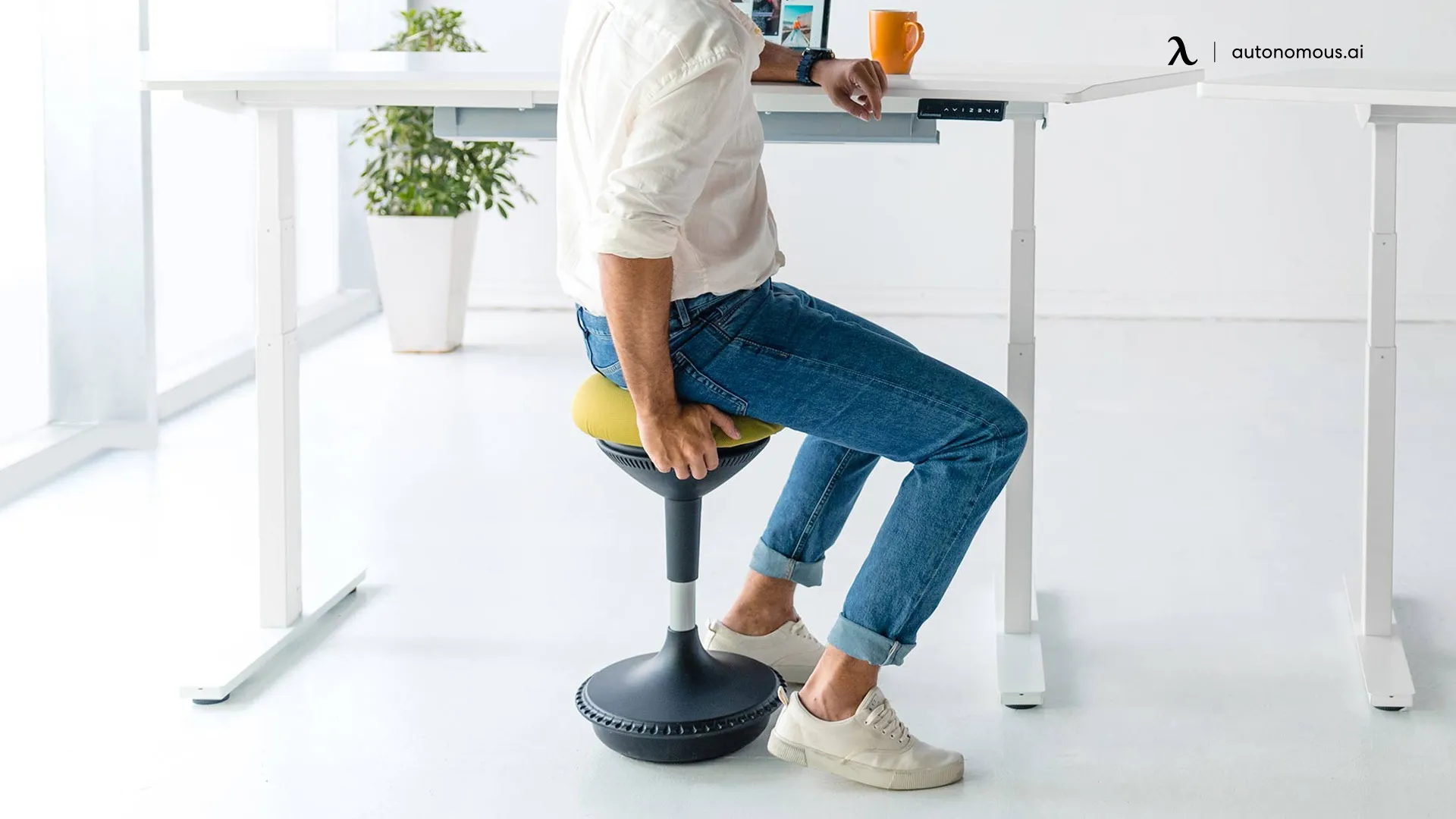
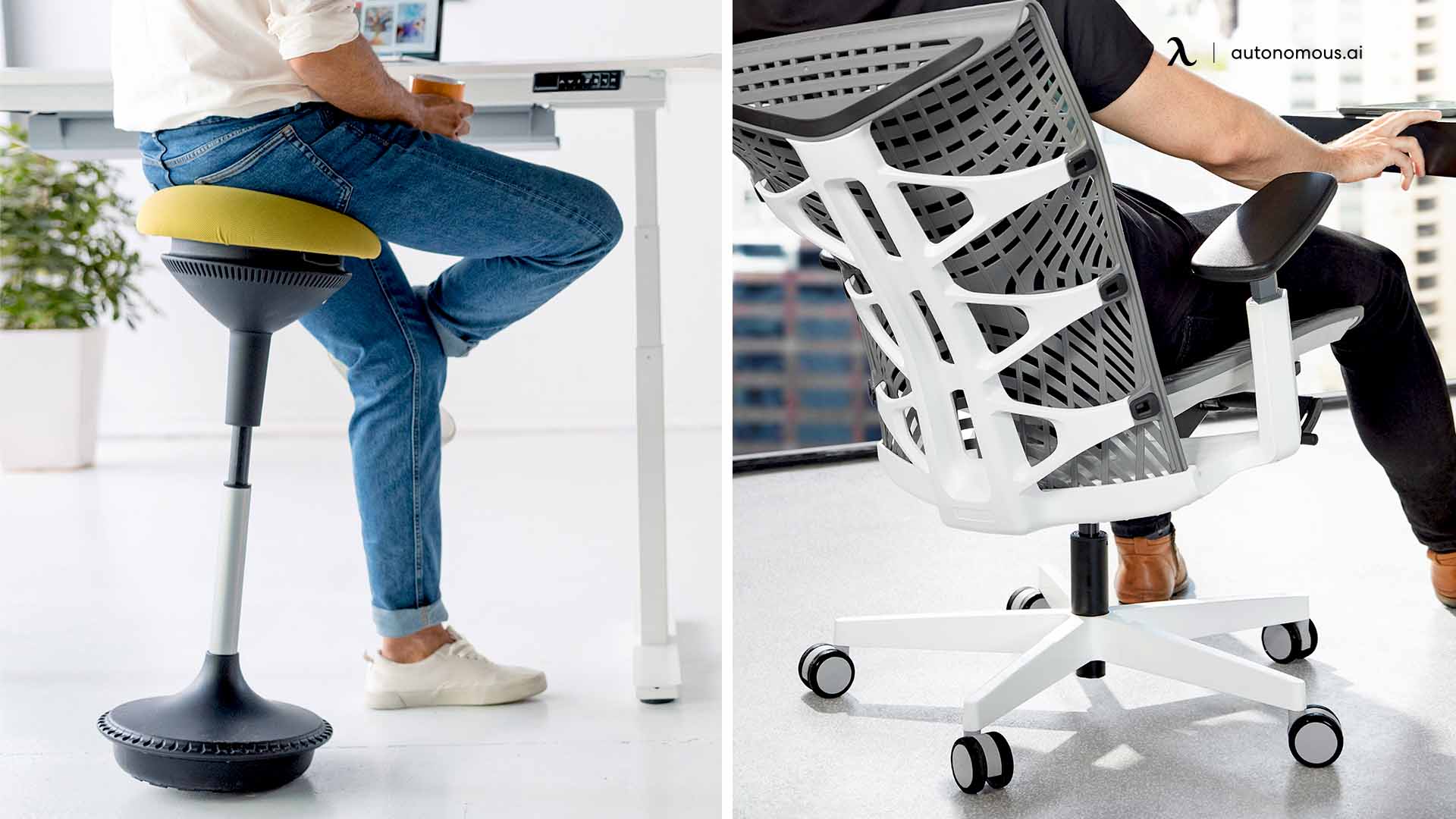
An office saddle chair pairs effectively with height-adjustable desks, offering an active chair option that maintains similar hip positioning to standing rather than the full postural shift a conventional chair requires.
2. Who Shouldn’t Use
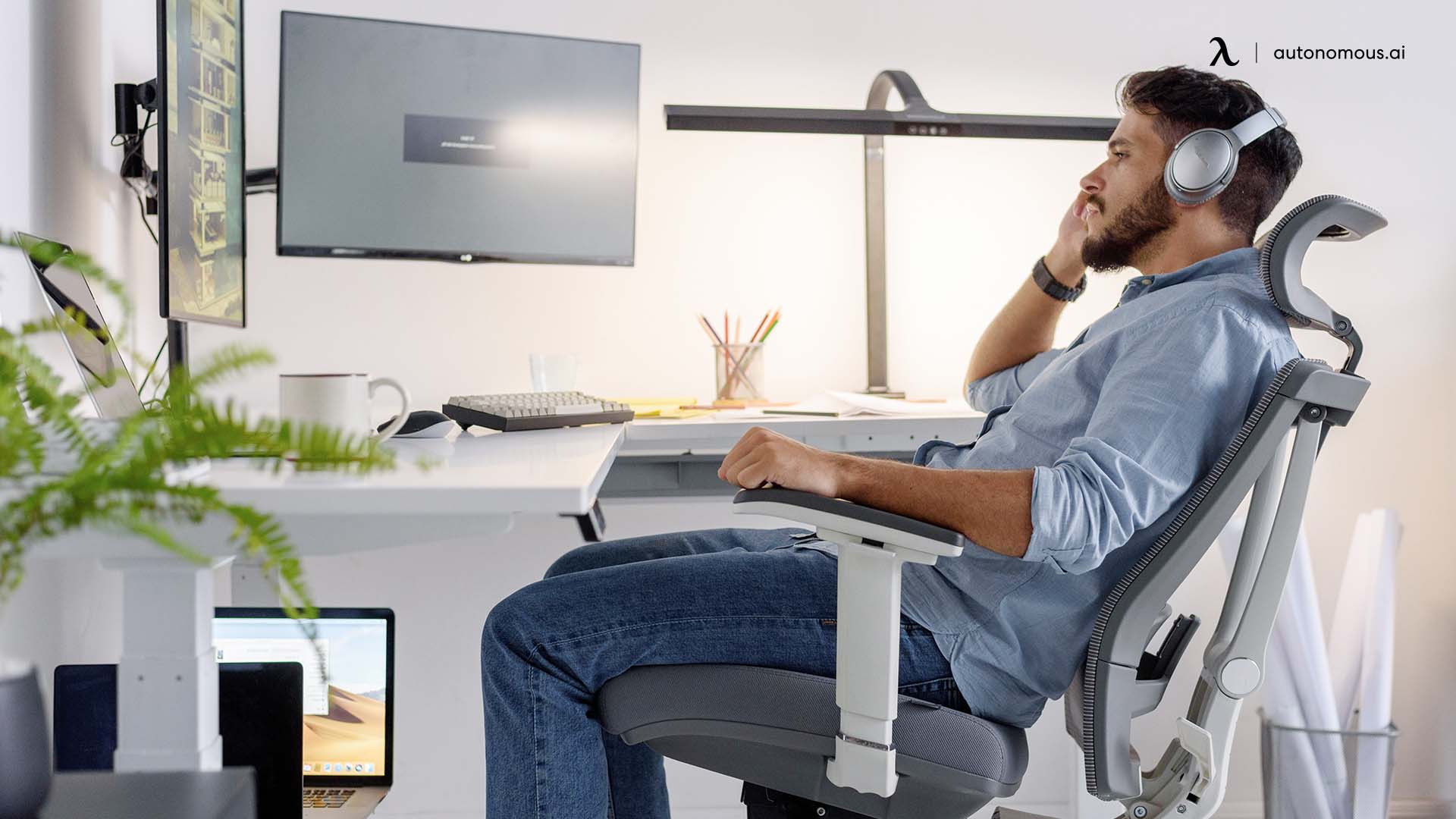
- Those requiring extended passive rest:
Work involving long reading sessions, video conferences with natural reclining, or tasks performed in a relaxed posture will conflict with the active positioning saddle seating demands. These users are better served by office chairs for long hours designed with sustained support in mind.
- Users with specific lower-body conditions:
Certain hip, pelvic floor, or inner thigh sensitivities may be aggravated by the saddle shape. Consultation with a healthcare provider is advisable for those with existing conditions in these areas.
- Habitual cross-legged or asymmetrical sitters:
The saddle design assumes a specific leg orientation. Users who frequently tuck one leg under, sit cross-legged, or shift into unconventional positions will find the shape restrictive.
- Those unwilling to adjust workstation height:
A saddle seat typically requires a higher desk surface or an adjustable-height desk to function correctly. Users with fixed-height desks that cannot accommodate elevated seating will struggle to achieve proper positioning.
Saddle Stool vs. Saddle Chair
The distinction matters more than product photos suggest. One prioritizes freedom of movement; the other adds recovery moments for prolonged sitting sessions.
Feature | Saddle Stool | Saddle Chair |
Back support | None | Light lumbar touchpoint |
Best for | Hands-on tasks, frequent repositioning | Desk-focused work with occasional pauses |
Mobility | Maximum—pivot, roll, rotate freely | Slightly anchored by backrest |
Session length | Excels in shorter, active bursts | Sustains longer stretches more comfortably |
Learning curve | Faster for naturally active sitters | Easier transition from standard chairs |
Footprint | Compact, tucks away easily | Slightly larger due to backrest |
If your day involves rolling between stations, reaching for tools, or turning constantly, an ergonomic stool usually fits the workflow better. If you do deep work at a desk and want occasional support—especially during reading, calls, or pauses—a saddle chair can make a saddle seat feel more livable over a full workday.
How to Choose The Best Saddle Seat
A saddle seat can feel supportive or distracting depending on a few design details that aren’t obvious in photos. Instead of starting with “features”, start with fit, then choose options that match how you actually work.
1. Choose The Right Seat Width
Width determines whether a saddle seat feels naturally stable or constantly distracting. If it’s too narrow, the edges can feel sharp or “pinchy,” especially once you’ve been sitting for a while. If it’s too wide, your legs may be pushed outward and you can end up feeling like you’re straddling the seat instead of being supported by it. The sweet spot lets your sit bones rest naturally without pressure concentrating at the edges.
If you’re between sizes or you know you’re pressure-sensitive, a split saddle is often easier to live with because it can reduce that concentrated edge pressure.
2. Check Height Range Right
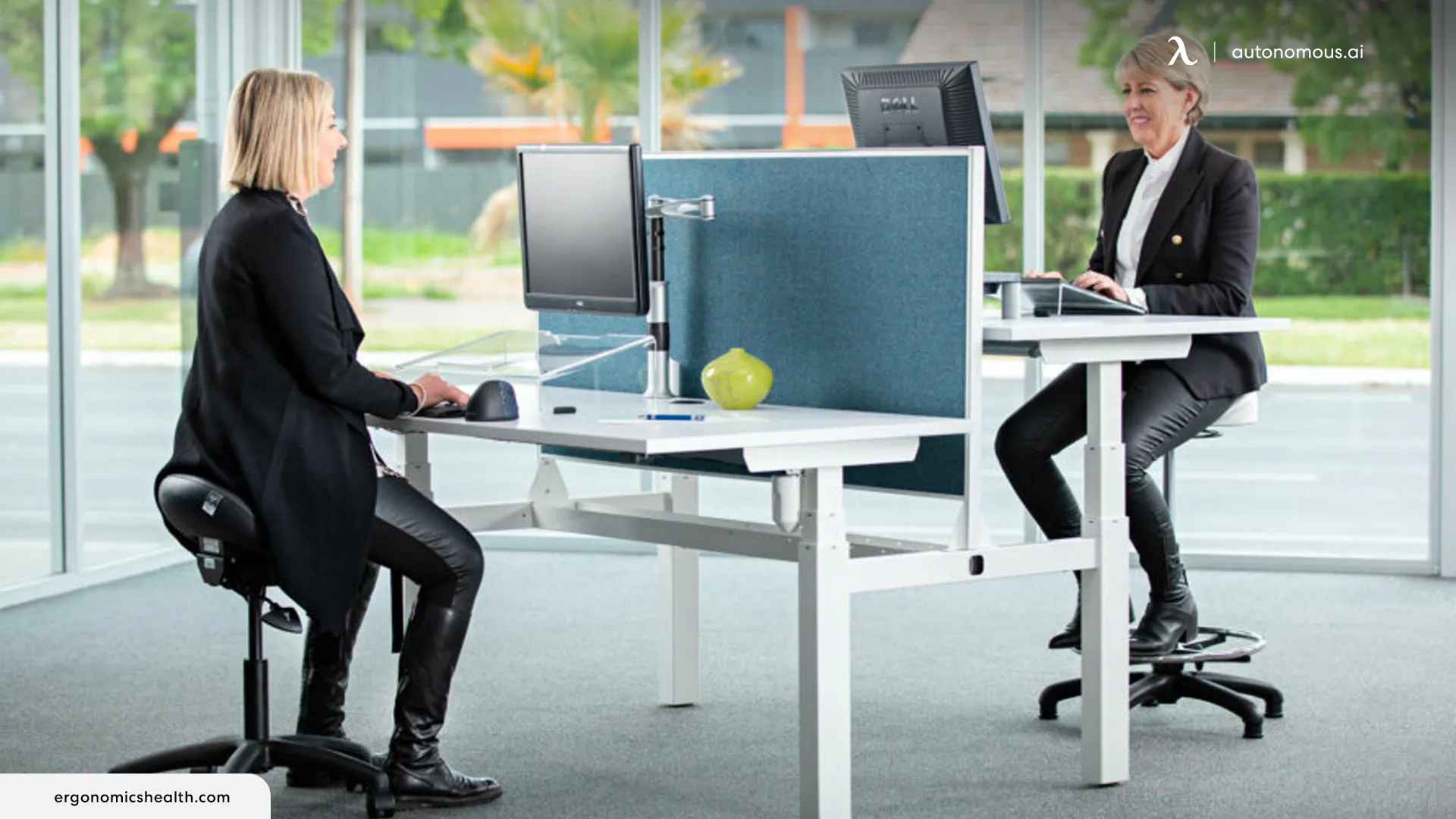
Here's where an office saddle chair diverges from conventional seating: it typically sits higher. Your hips should rest above your knees at a gentle downward slope—this is what unlocks the posture benefits. Before buying, measure your desk height and inseam, then verify the adjustment range actually covers your needs.
A seat that maxes out too low forces you to hunch or perch forward searching for leverage. One that can't drop low enough leaves you bracing through your legs. Pair this consideration with your workstation setup, particularly if you use an adjustable standing desk that shifts throughout the day.
3. Choose Your Support Level
This isn't about more support being better—it's about matching your work rhythm. Dentists, artists, and lab workers often prefer a pure saddle stool: nothing behind them, full freedom to rotate and lean into tasks. The absence of a backrest isn't a limitation; it's a feature that keeps you mobile.
Longer analytical work tells a different story. Reading, reviewing, or taking calls can benefit from a small lumbar touchpoint, somewhere to briefly reset without fully reclining. Think of it less as back support and more as a momentary anchor.
4. Fixed Seat vs. Tilting Mechanism
Tilting seats reward people who already move instinctively, the kind who shift weight, cross ankles, and never sit the same way twice. The mechanism follows these micro-adjustments rather than fighting them.
But tilt isn't universally better. If you prefer a planted, predictable base, or you're transitioning from years of standard chairs, a fixed saddle seat chair offers a simpler learning curve. You can always upgrade to tilt later once you've developed a feel for what your body actually wants.
5. Base Stability and Caster Choice
The seat gets all the attention, but the base determines whether you feel grounded or like you're balancing on a barstool. A five-star base with proper weight distribution prevents that subtle wobble that creeps into cheaper designs.
Casters deserve more thought than they usually get. Hard floors plus slick casters equals involuntary drifting—annoying when you're trying to focus. Carpet-friendly wheels on hard surfaces create the same problem in reverse: too much resistance, jerky movements. Match the casters to your floor, or look for dual-surface wheels if your workspace varies.
6. Materials and Firmness
Softness is overrated. A plush saddle seat feels inviting for the first twenty minutes, then your pelvis sinks and the posture benefits vanish. Firmer surfaces maintain the seat's contour and keep your weight distributed where it should be.
Material breathability matters more than most product photos suggest, especially in small office desk setup or warm climates. Mesh and performance fabrics wick heat; vinyl and bonded leather trap it. If you're someone who runs warm, prioritize airflow over aesthetics.
FAQs
Are saddle chairs good for posture?
A saddle chair can encourage a more upright sitting position by opening the hip angle and supporting a more neutral pelvis compared with slouching on a flat seat. The effect depends on fit and setup, but the “open angle” posture is a core reason people choose saddle seating.
Can saddle chairs be used all day?
A saddle chair can be used for extended work, but comfort depends on matching height and tilt to your workstation and taking regular posture changes. Many users do best when they mix longer sitting blocks with short standing or movement breaks.
Do saddle stools need a backrest?
A saddle stool doesn’t need a backrest, but a backrest can help if you sit in longer blocks and want brief “recovery” moments. Backless options favor mobility; backrest models favor endurance.
What height should a saddle chair be?
A common setup goal is an open hip angle (often described as roughly 135° at the hips and knees) with your feet firmly supported. If the saddle chair is too high or too low, you’re more likely to brace, slide forward, or slump.
Do you need a higher desk with a saddle seat?
Often, yes, because a saddle seat typically positions you higher than a standard office chair. If the desk stays low, your shoulders may elevate or your upper back may round forward to reach the keyboard and mouse.
Can a saddle chair help sciatica?
Some ergonomics sources describe a “perching” posture (often used with saddle chairs) as potentially helpful for keeping the spine in a more neutral alignment during sitting. Sciatica has many causes, so it’s best to treat this as a comfort experiment—and check with a clinician if symptoms are persistent or worsening.
Who should use a saddle seat?
A saddle seat is commonly used for hands-on work where you reposition often—think clinics, salons, labs, studios, and task-focused workstations. It tends to suit people who want mobility and an engaged sitting posture more than a reclined lounging feel.
Why does my saddle seat feel uncomfortable or hard?
A saddle seat can feel firm because the shape concentrates support differently than a flat cushion. Discomfort is often linked to fit (seat width/slope) or setup (height/foot support) rather than the concept itself.
How long does it take to get used to a saddle seat?
For a saddle seat, some people feel comfortable within a few days, while others take a couple of weeks, especially if they switch from long-term slouched sitting. A gradual ramp-up is commonly recommended by saddle seating brands and ergonomics sellers.
Conclusion
A saddle seat suits work that demands upright positioning, hands-on engagement, and frequent movement—particularly for those who find traditional chairs encourage sinking and slumping over time. It represents one approach among many office chair alternatives, positioned at the active end of the sitting spectrum. Those weighing other active seating formats may find the saddle chair vs. kneeling chair comparison useful as well.
Selection should prioritize fit over features: seat width, height range, and preferred support level determine long-term comfort more than additional mechanisms. Those considering backrest-free formats will find similar principles apply across backless office chair designs generally.
If you’re deciding between a saddle stool and saddle chair, let your work rhythm guide you, mobility-first vs longer sitting blocks with occasional back support. This follows the same logic behind the broader stool vs. chair distinction. With the right match, saddle seating functions less as posture correction and more as a setup that naturally supports better work habits.