5 Best Office Chairs for Herniated Discs
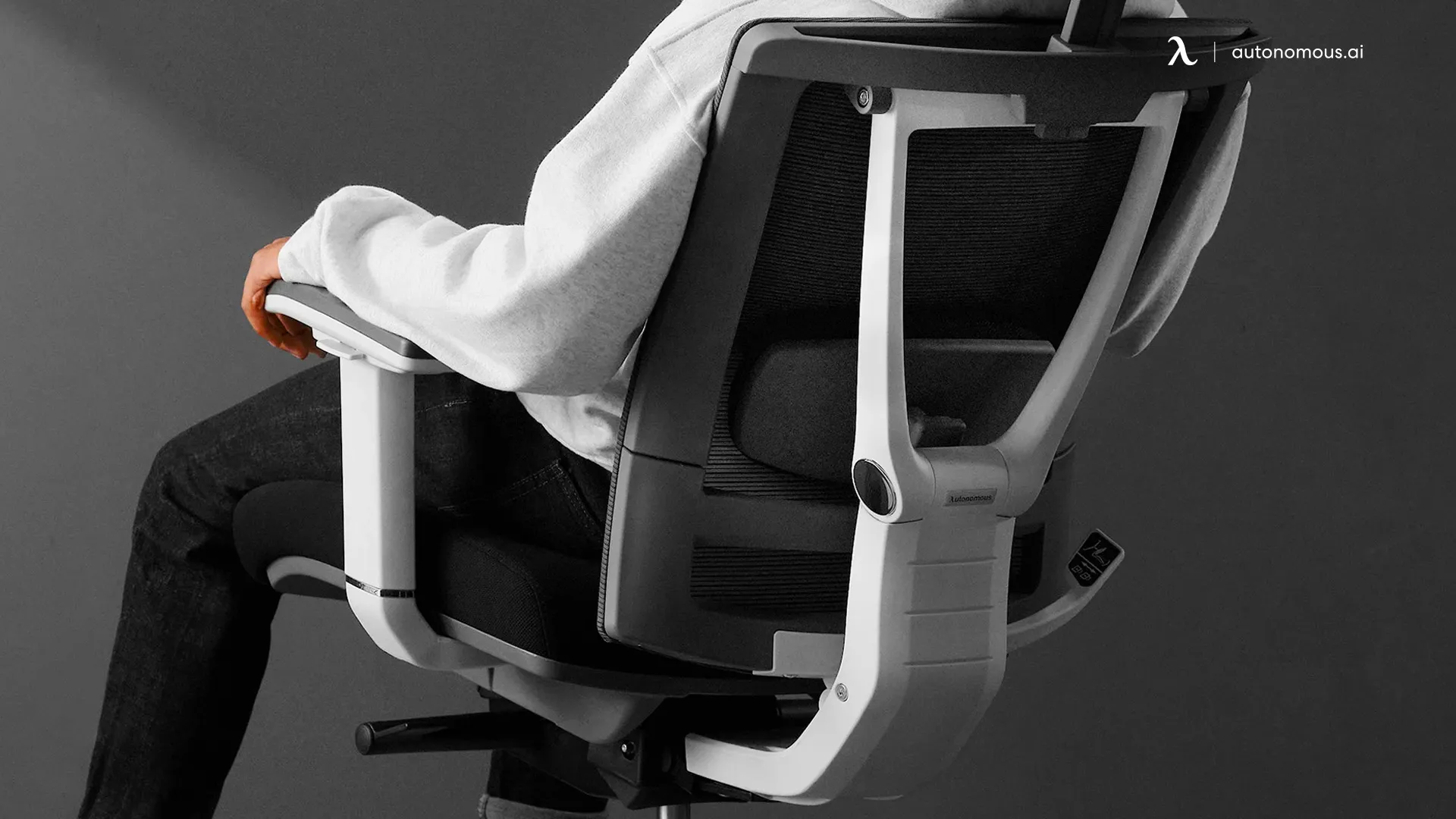
Table of Contents
Prolonged sitting with a spinal condition can make even routine work uncomfortable. Finding the best chair for herniated disc pain isn’t about luxury or design — it’s about reducing pressure on the lower back, supporting proper posture, and staying comfortable throughout the day.
The right ergonomic chair won’t treat the condition, but it can play a meaningful role in minimizing strain and improving how you feel while seated. This guide highlights carefully selected chairs and explains which support features matter most, so you can make a more confident, well-informed choice for daily use.
What to Look for in a Chair for a Herniated Disc
When dealing with a herniated disc, your chair becomes a critical tool for managing pain and preventing further damage. The best chair for herniated disc support isn't about luxury features or premium price tags — it's about biomechanics that reduce spinal load and maintain proper alignment during extended sitting.
- Lumbar Support: Gentle Reinforcement Over Rigid Pressure
Disc-related discomfort requires careful lumbar reinforcement. Aggressive support pads found in many "orthopedic" chairs can worsen pain by forcing unnatural spinal curves.
A good office chair with adjustable lumbar support that gently fills the natural curve of your lower spine without pushing it forward. This flexible approach allows you to fine-tune position throughout the day and accommodates your body's changing needs.
- Seat Depth: Supporting Proper Pelvic Position
Seat depth influences how your pelvis positions itself against the backrest. When a seat pan extends too far forward, it can make it difficult to use the backrest properly without pressure behind your knees.
Ergonomic chairs for herniated disc relief provide depth adjustment (typically 2-4 inches of range), enabling full backrest contact while preventing pressure behind your knees. This seemingly minor feature significantly impacts weight distribution and pelvic stability.
- Dynamic Recline: The Benefits of Movement
Research indicates that varying positions throughout the day benefits spinal health. A 2023 review in PeerJ analyzing intradiscal pressure measurements found that relaxed, reclined postures can reduce spinal load by 50-60% compared to upright sitting.
A quality disc chair incorporates a recline mechanism with adjustable tension, allowing you to shift your position throughout your workday. This variation can help reduce sustained pressure on any single area and may provide periods of relief during long work sessions.
- Seat Cushion Firmness: Balance Between Comfort and Support
While plush cushioning may feel inviting initially, excessively soft materials can compress significantly over time, potentially allowing your pelvis to sink and shift your sitting posture.
The best chair for herniated disc typically features moderate-firmness foam that provides enough support to maintain positioning while still offering reasonable comfort. This sustained stability prevents the postural degradation that occurs with cushion breakdown.
- Armrest Adjustability: Reducing Compensatory Strain
Inadequate arm support triggers compensatory movements — leaning, rotating, shoulder hiking — that transmit additional strain to your lower back. 4D adjustable armrests (height, width, depth, angle) let your shoulders settle naturally, effectively offloading your spine and preventing the upper body tension that compounds lumbar disc stress.
Best Chairs for Herniated Disc Pain
Not all ergonomic chairs address disc-related discomfort in the same way. Some focus on posture correction, others on movement, and a few are designed to manage how pressure builds over time while sitting.
These chairs below were selected because they approach herniated disc pain from different angles — supporting alignment, reducing static load, or allowing controlled movement — so users can choose based on how their discomfort shows up during a typical workday.
- A Quick Glance:
Chair | When It Fits Best | Support Style | Role in Disc Management |
Anthros Chair | Long, upright desk work | Pelvis-first alignment | Limits posture collapse over time |
Herman Miller Aeron | Extended sitting with pressure buildup | Weight distribution + lumbar | Reduces localized lumbar load |
Autonomous ErgoChair Pro | Workdays with changing comfort needs | User-controlled adjustments | Adapts as discomfort fluctuates |
Ergohuman Executive Chair | Full days of uninterrupted sitting | Continuous back + neck contact | Slows fatigue accumulation |
CoreChair Active Chair | Short seated intervals | Controlled seat movement | Complementary, not primary |
1. Anthros Chair
Best for: Desk workers experiencing progressive discomfort during 4+ hour sitting sessions
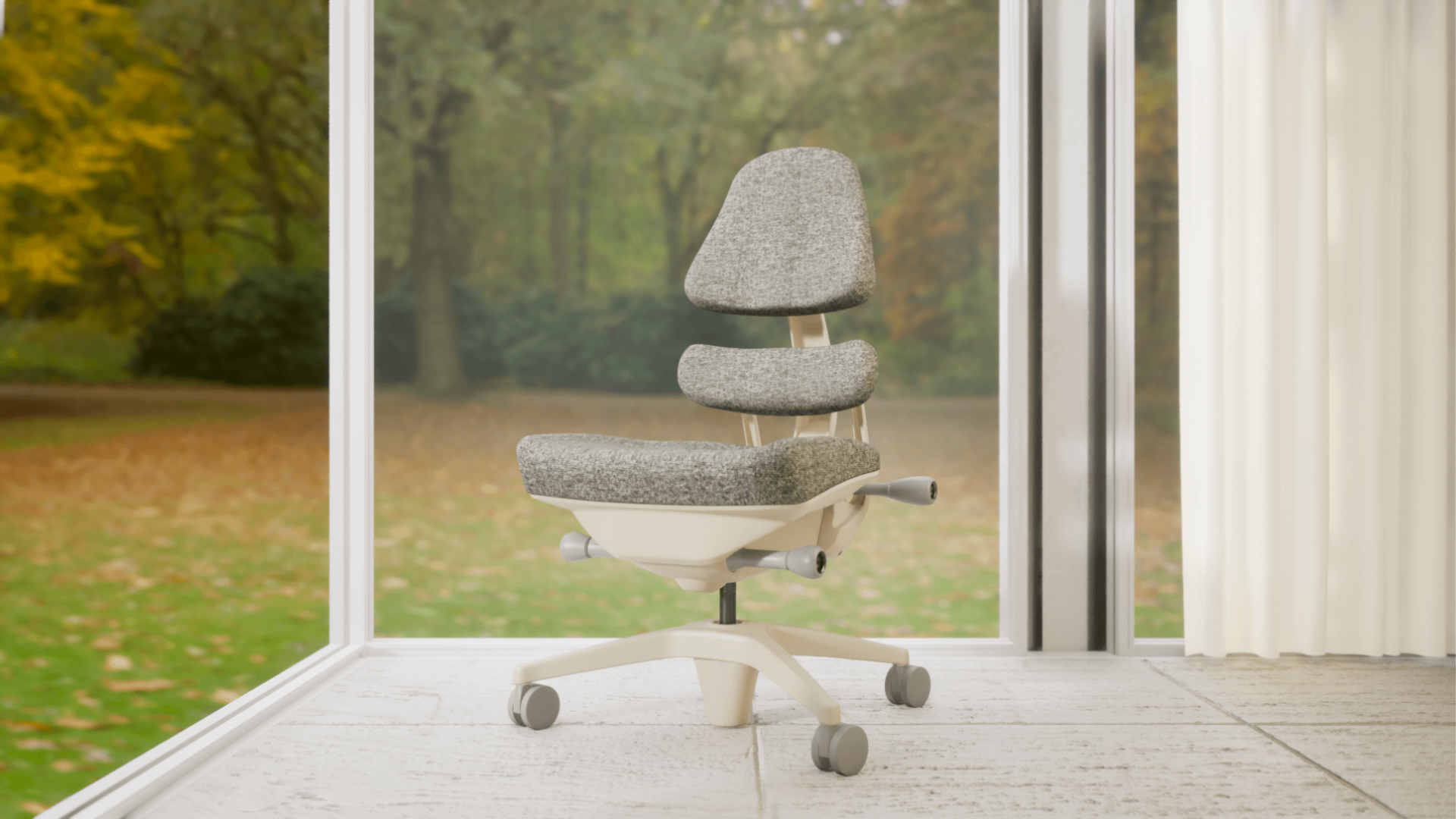
This disc chair addresses a specific herniated disc challenge: postural collapse during extended sitting. Rather than compensating for poor posture with aggressive lumbar padding, it uses a dual-support back panel that locks your pelvis and lower spine into coordinated alignment, preventing the gradual postural drift that typically occurs as concentration deepens and body awareness fades.
This matters specifically for disc issues because of how the chair addresses posterior pelvic rotation — the technical term for that familiar slouch that creeps in unnoticed during focused work. When your pelvis tilts backward, your lumbar spine flattens and disc pressure concentrates on the posterior annulus, exactly where most herniations occur. For those who consistently find their pain absent at 10 AM but present by 2 PM, this passive maintenance of alignment often proves more valuable than active lumbar support that requires ongoing positional adjustment.
Practically speaking, the chair provides 16" to 21" of seat height range, 95° to 110° of back angle variation, and three-dimensional armrest positioning. The seat platform uses high-compression foam intentionally — there's no memory foam layer to accommodate gradual sinking. This creates a consistently firm surface that some users initially perceive as uncomfortable, particularly those transitioning from plush executive office chairs.
The structural rigidity that maintains alignment also limits postural flexibility, making this chair poorly suited for work requiring frequent position changes — video calls, dual monitors, or varied tasks. It's a specialist tool for sustained desk work, not an all-purpose solution.
Who should skip this:
Users who prefer soft, cushioned seating, those who frequently shift between multiple sitting positions throughout the day, or anyone whose work style involves regular postural variety rather than extended focus periods at a desk.
2. Herman Miller Aeron
Best for: Users who experience increasing disc pressure during prolonged upright sitting
.webp)
The chair’s suspension mesh system addresses a specific herniated disc challenge that foam-based chairs often worsen: localized pressure concentration. Traditional foam creates contact points where pressure concentrates as the material compresses throughout the day. This mesh instead suspends body weight across a flexible membrane, spreading load across a broader surface area rather than allowing it to focus on specific lumbar regions.
The lumbar system provides separate adjustment for sacral and lumbar support. Unlike single-pad lumbar systems that push primarily against the mid-back, this dual-zone design addresses pelvic positioning at its base while supporting the lumbar curve above. This approach aligns more closely with how a well-designed posture chair supports spinal alignment without forcing the lower back into a fixed position.
The synchronized tilt mechanism links seat and backrest movement proportionally, maintaining relatively consistent spinal angles during recline. This differs from chairs where the seat remains fixed while only the back moves, which can flatten the lumbar curve during position changes.
In daily use, the Aeron feels stable and responsive rather than soft. This makes it easier to maintain a consistent sitting position without gradual sinking, which can otherwise lead to pelvic tilt and uneven disc loading over time.
Who should skip this:
Users wanting immediate soft cushioning, those outside the 5 '2" - 6' 4" height range where size options work optimally, or anyone working within a sub-$1,000 budget
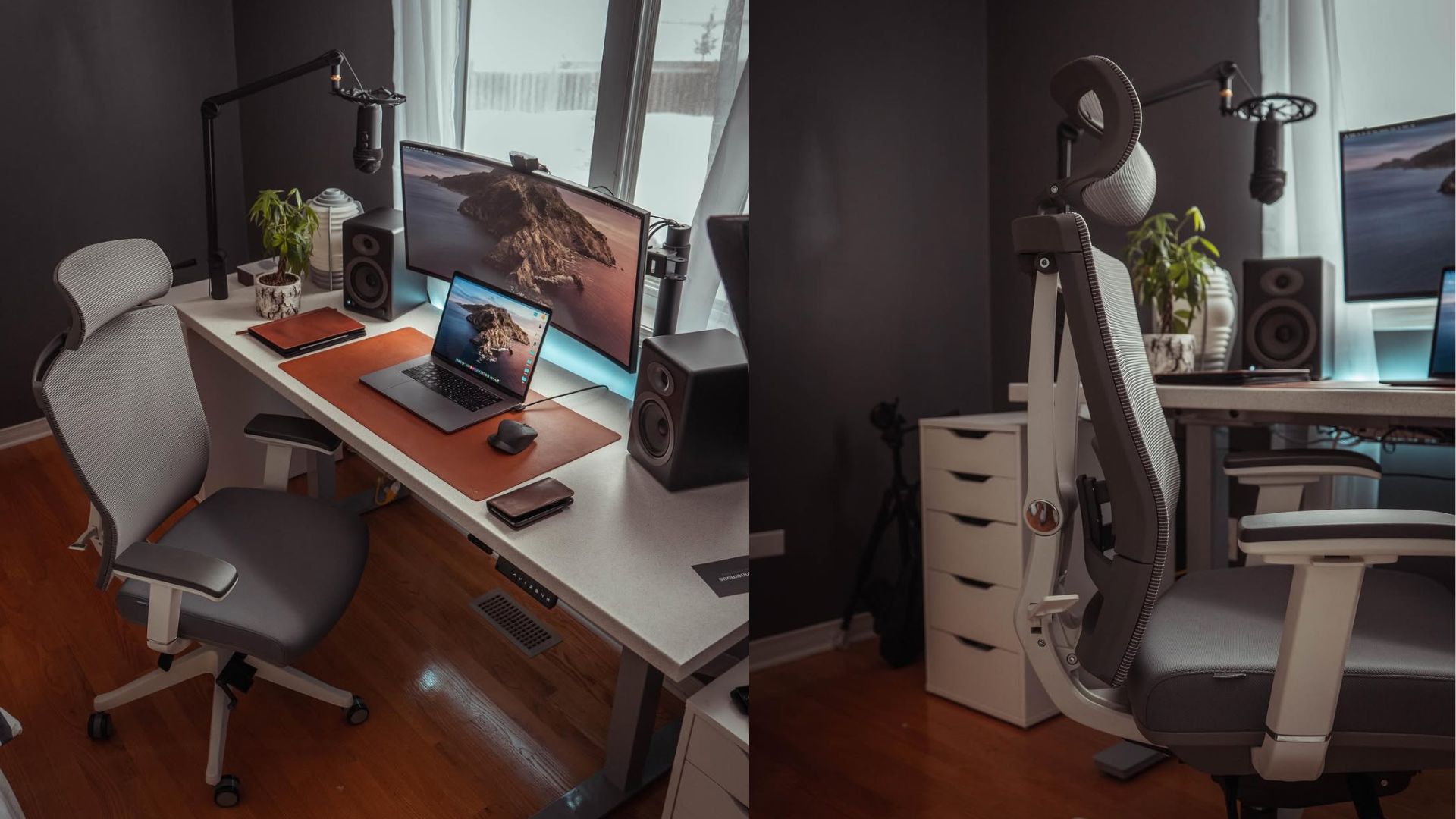
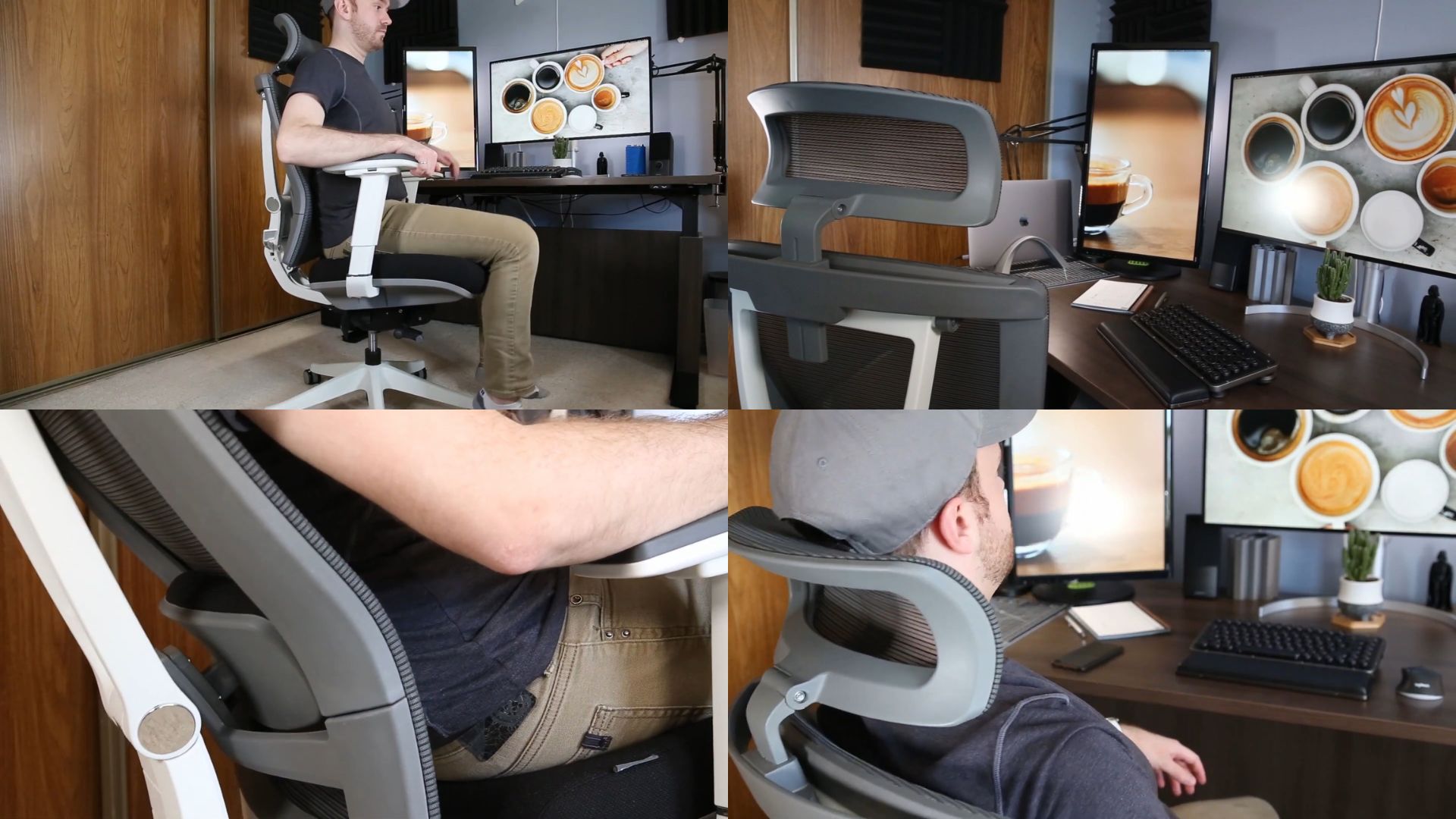
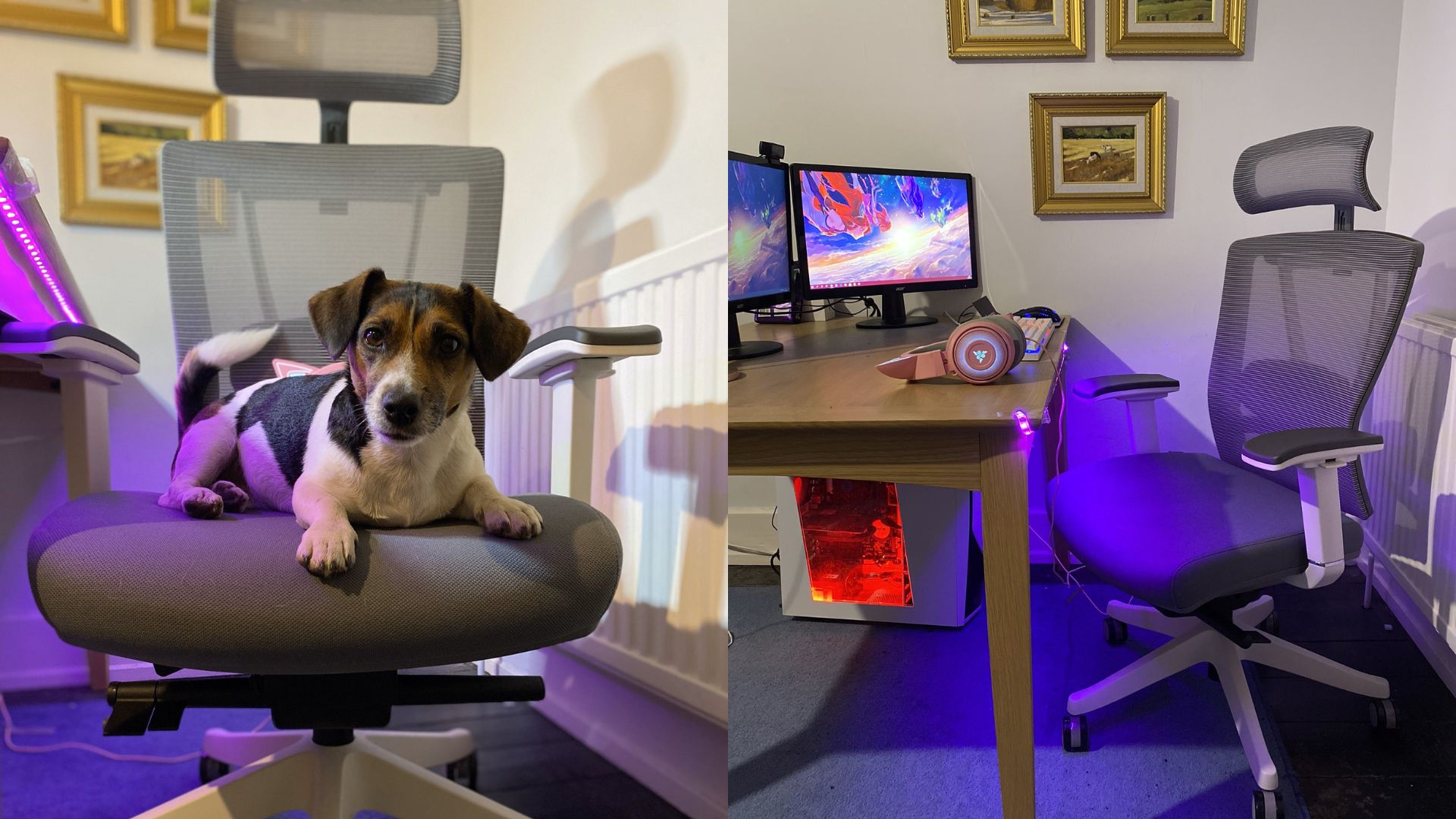
3. Autonomous ErgoChair Pro
Best for: Desk workers who rely on adjustability to manage daily, fluctuating disc discomfort

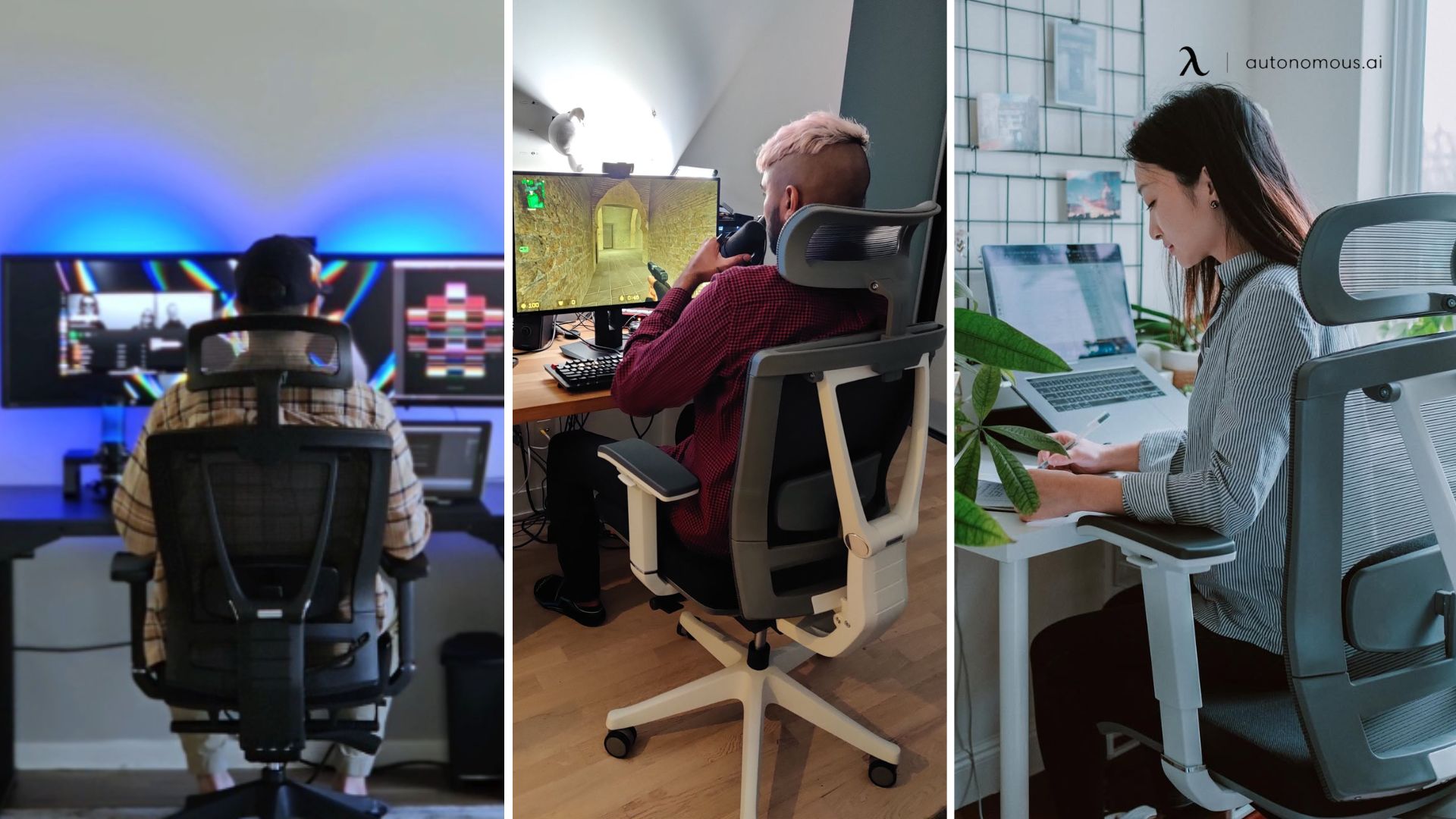
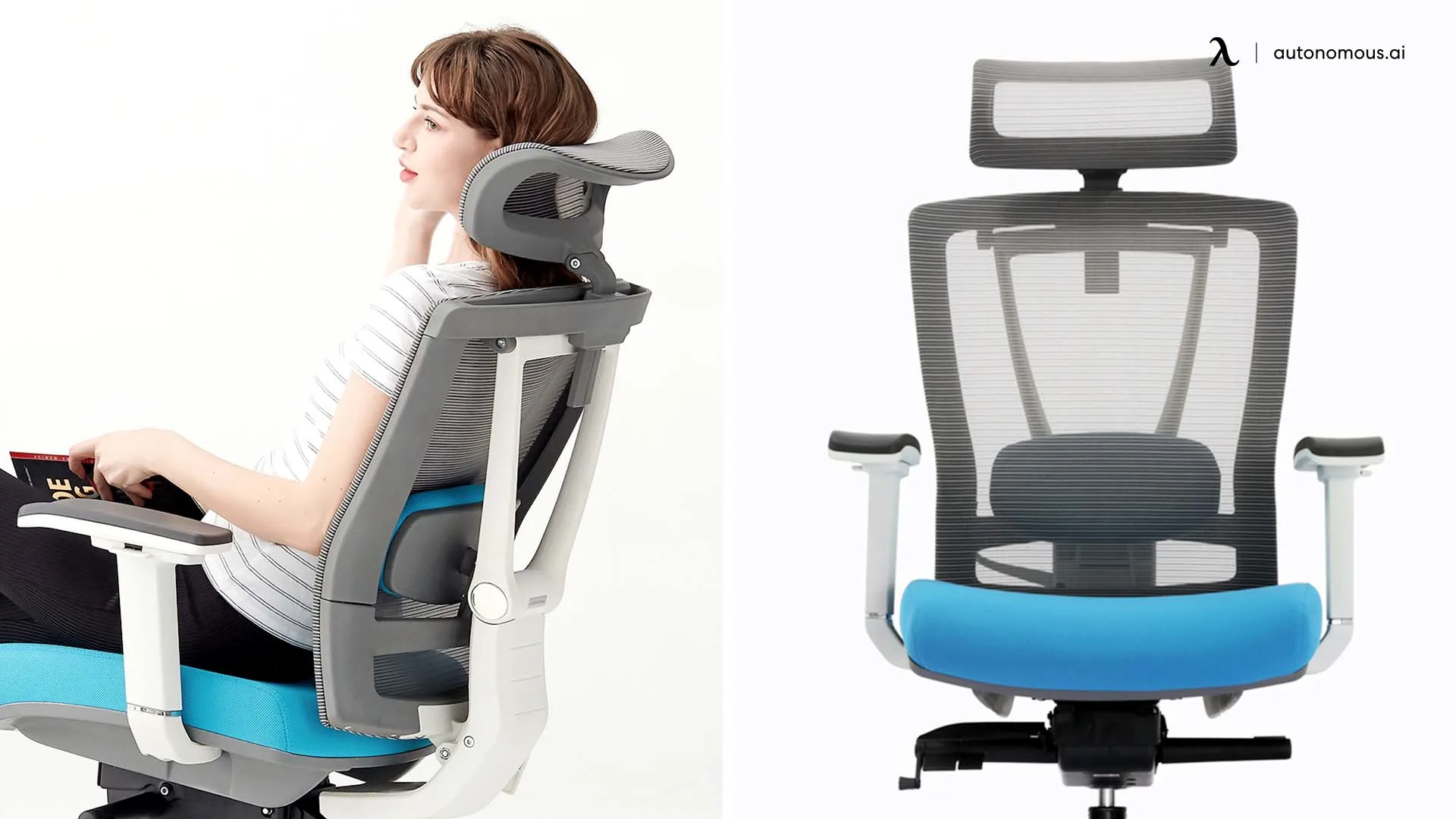
Disc-related discomfort rarely remains constant — inflammation levels, activity patterns, and even time of day affect what positions feel tolerable. The Autonomous ErgoChair Pro addresses this variability through multiple adjustment options: the lumbar cushion adjusts for both height and depth to match spinal curvature, seat depth ranges from 19" to 21.5" to accommodate different leg lengths, the headrest tilts and adjusts vertically for neck positioning, and armrests modify in height, depth, and angle.
This range allows users to modify their setup as symptoms shift throughout the day, rather than committing to a single configuration that may only suit morning comfort levels.
The practical application for disc management centers on pressure redistribution. When one position becomes uncomfortable after 60-90 minutes — a common pattern with herniated discs — users can modify lumbar depth to shift contact points, adjust seat tilt to alter pelvic angle, or change recline tension to vary spinal loading without leaving their desk.
Because this ergonomic chair for back pain places responsibility on the user to adjust and adapt their setup, it may feel less supportive to those who prefer a chair that enforces posture automatically or requires minimal input.
Who should skip this:
Users wanting immediate out-of-box comfort without configuration or anyone preferring structured postural guidance over self-directed adjustment.
4. Ergohuman Executive Chair with Headrest
Best for: Users whose disc pain compounds with muscle fatigue during marathon desk sessions
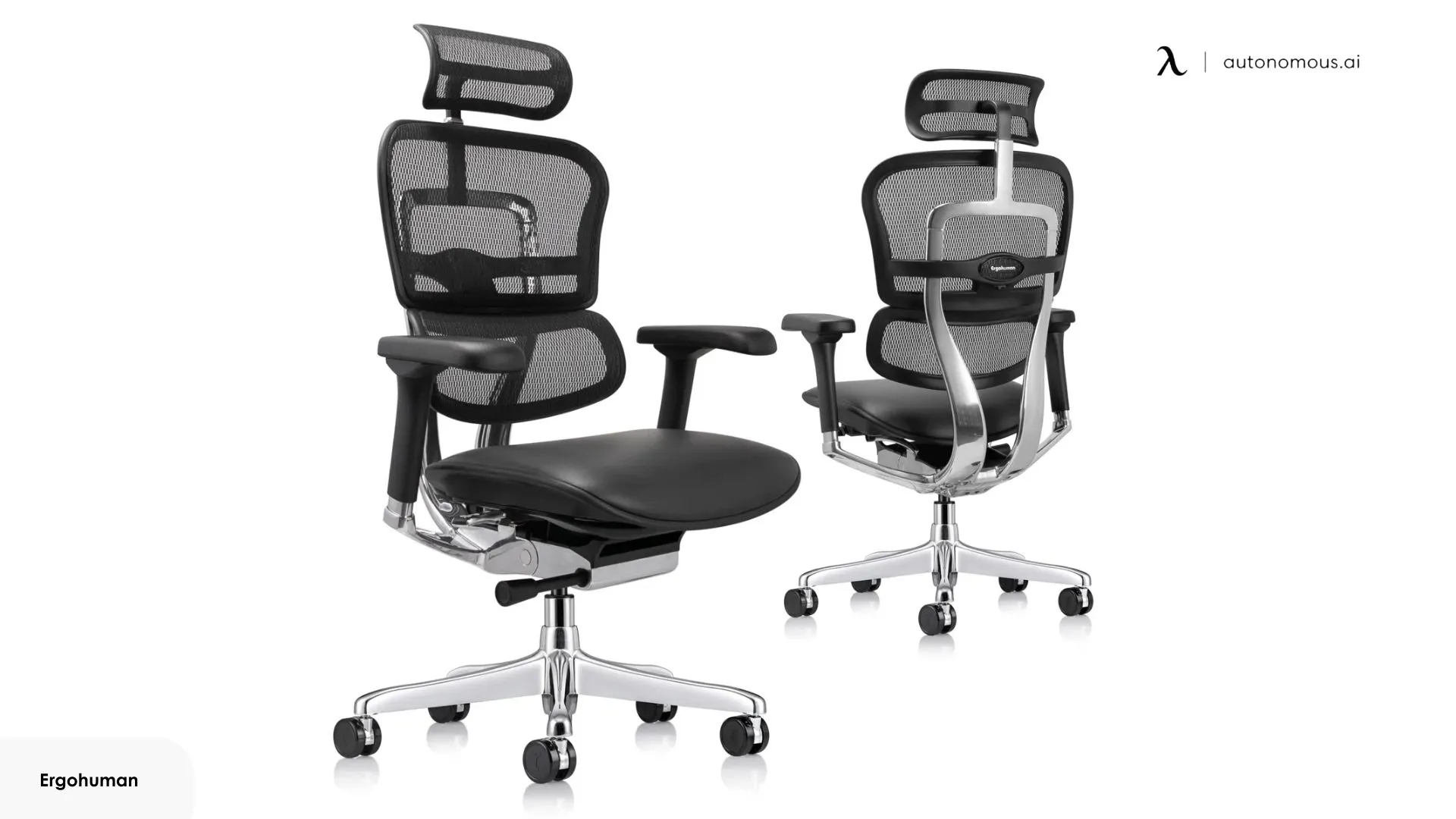
Herniated disc discomfort doesn’t always present as immediate pain. For some people, it appears slowly as sitting time adds up — through general fatigue, stiffness, or a sense that the back becomes harder to hold upright late in the day. This ergonomic chair for herniated discs tends to align with this pattern rather than acute or position-sensitive pain.
The chair supports the body across extended seated hours through a full-height mesh backrest with 6-way adjustable lumbar support. While the headrest tilts and slides to remove cervical weight that would otherwise transfer downward through fatiguing muscles. When you recline, the synchro-tilt mechanism moves the seat and backrest proportionally — your spine maintains its curve rather than collapsing into the flat-back position that spikes disc pressure in chairs where only the backrest moves.
However, this chair is not intended for active sitting, frequent recline adjustments, or short, movement-heavy work sessions. Its role is limited to providing steady support during prolonged desk work, and its suitability depends largely on whether static sitting aligns with how a user’s disc discomfort behaves.
Who should skip this:
Anyone whose work involves frequent standing intervals, dynamic positioning, or want affordable options.
5. CoreChair
Best for: Situational option for users who need brief relief from static sitting, not a primary work chair
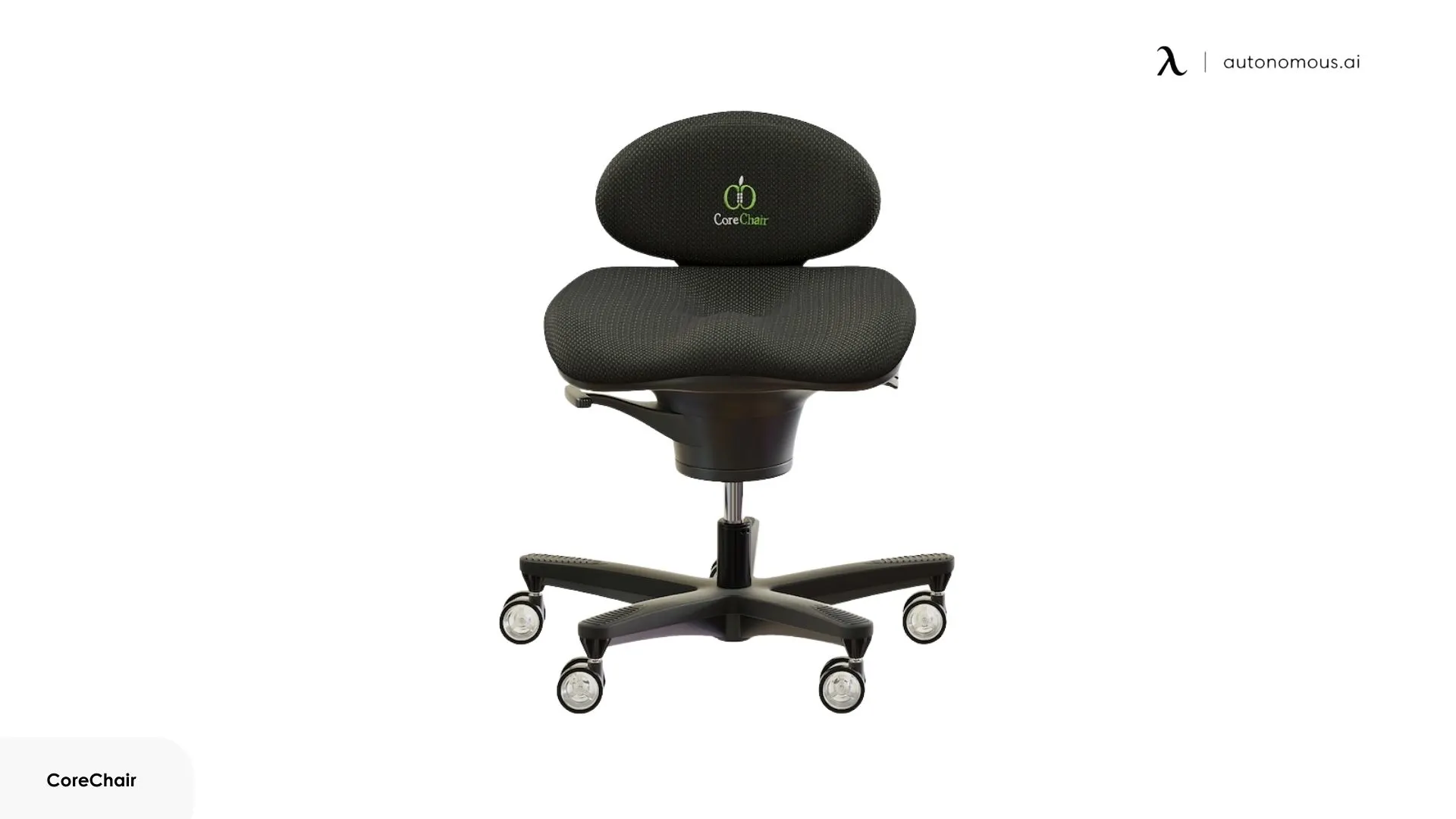
This chair fits a narrower role in managing herniated disc discomfort. It is not designed to provide continuous back support or to replace a conventional ergonomic task chair. Instead, it addresses a specific problem some users experience: discomfort that builds when sitting remains completely still for too long.
Rather than supporting the spine in a fixed position, the chair allows controlled movement at the seat. This encourages subtle shifts in pelvic position while seated, which can help interrupt prolonged spinal loading. For some users, these small changes are enough to reduce the sense of pressure that develops during static sitting, especially during shorter work blocks or focused tasks.
Because the CoreChair relies on active engagement rather than passive support, it tends to work best as a complementary option. Users may switch to it for part of the day — between standing intervals or when a traditional chair begins to feel restrictive — rather than using it continuously. In contrast to an 8-hour office chair designed for uninterrupted sitting, the CoreChair is better suited to shorter, intentional use within a more dynamic work routine.
Who should skip this:
Users with acute symptoms, low sitting tolerance, or a preference for recline and full back contact may find it less suitable as a primary seating solution.
How to Sit Properly with a Herniated Disc
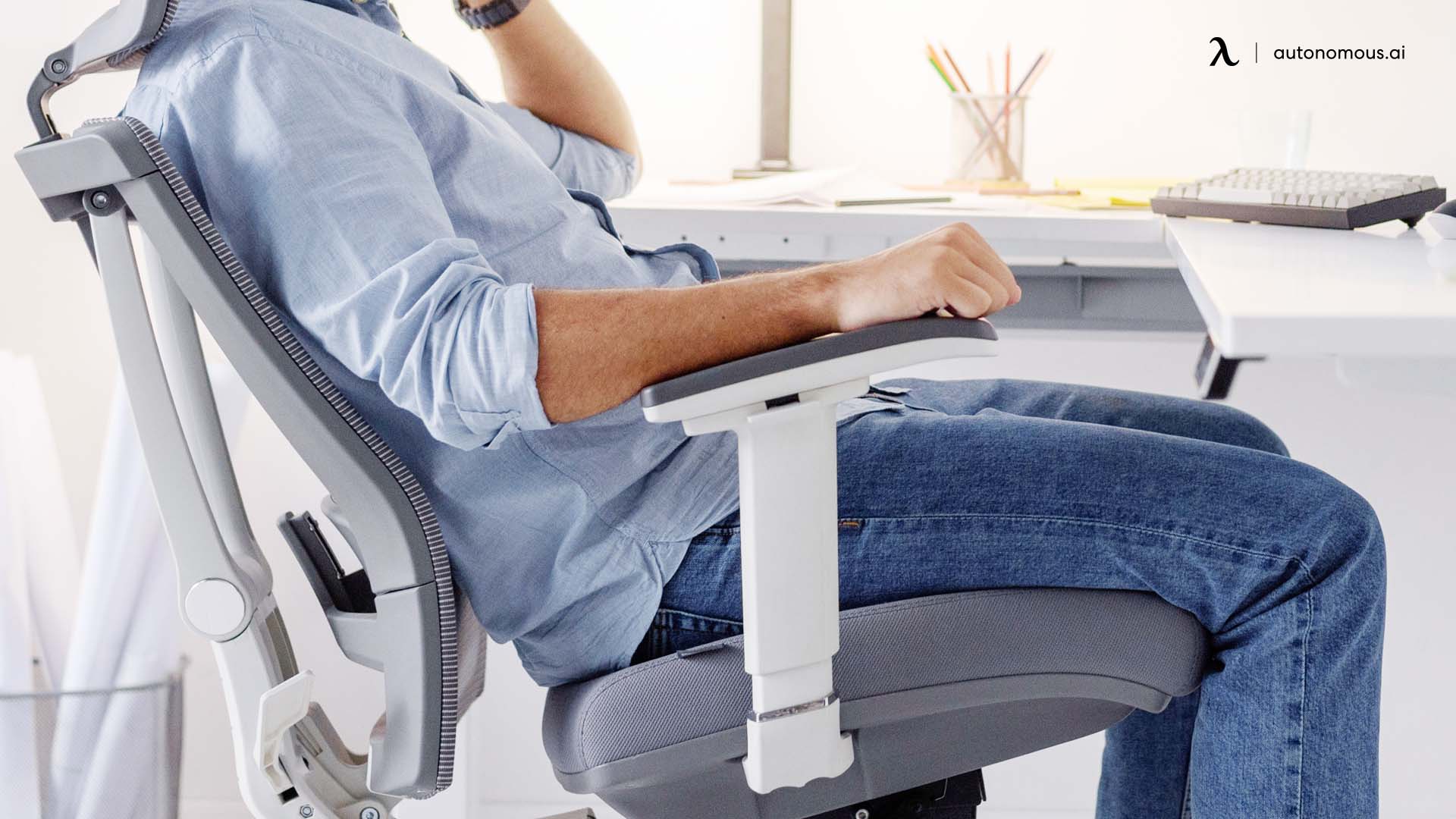
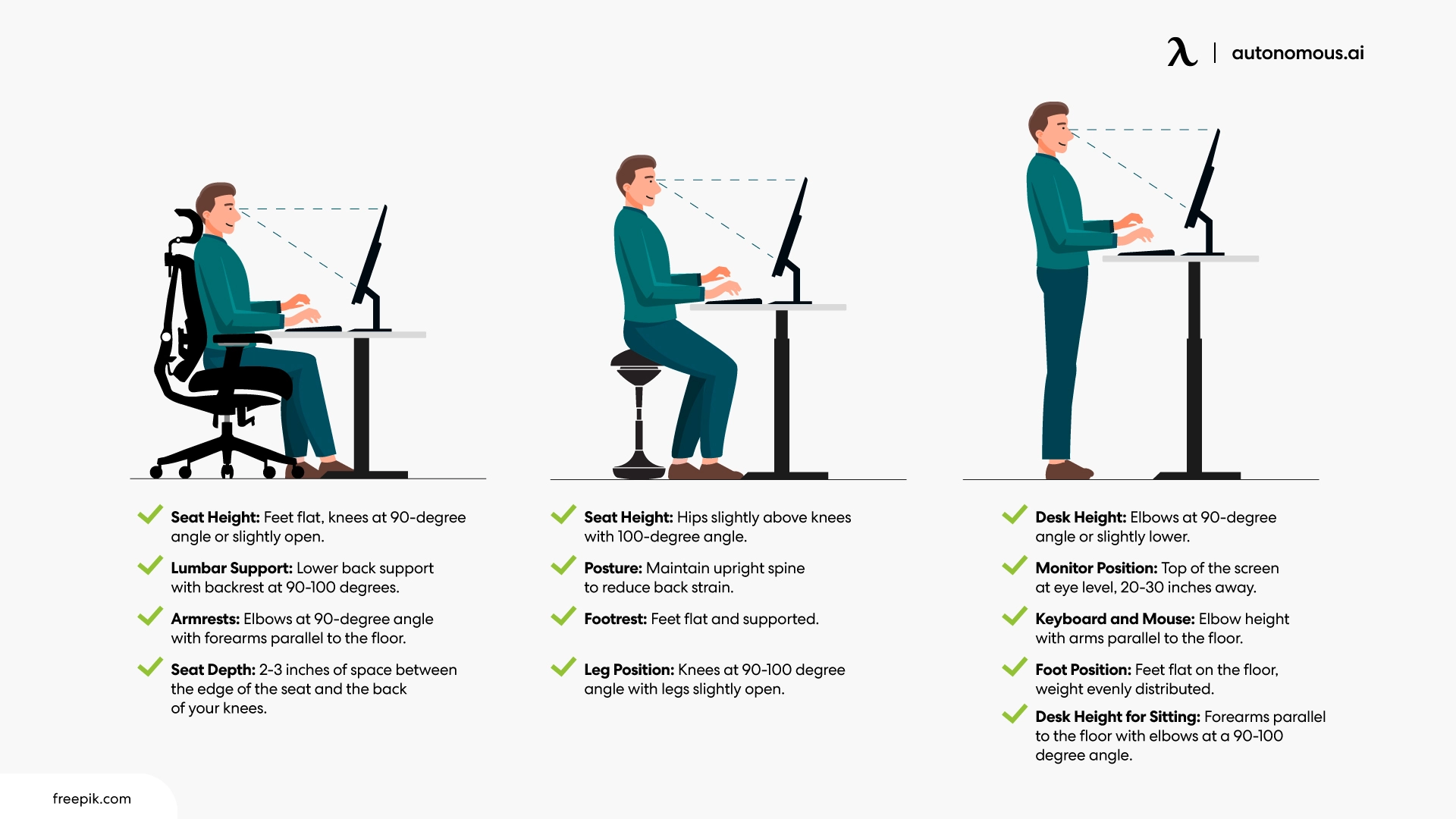
Even with the best chair for herniated disc support, how you sit still plays a meaningful role in managing discomfort during the workday. Small setup choices tend to matter more than dramatic posture corrections.
- Seat height relative to hip angle:
Set the seat so your knees sit slightly below hip level when feet rest flat on the floor. This anterior pelvic tilt (hips higher than knees) maintains lumbar lordosis passively — your spine curves correctly without active muscle engagement.
When knees rise above hips, the pelvis rotates backward, flattening the lumbar curve and shifting disc pressure posteriorly where herniations typically occur. If your feet dangle, use a footrest rather than lowering the seat into hip flexion.
- Lumbar contact zone:
The lumbar support should contact your lower back at belt level, not mid-back. Press your hand against your lower spine while standing — you'll feel the inward curve between your ribs and pelvis. That's where support belongs. If you feel a pressure point rather than distributed contact, the pad is either too prominent or positioned too high. Proper lumbar support placement fills the gap without pushing your spine forward.
- Recline mechanics:
90-degree sitting position concentrates load on lumbar discs continuously. A 100-110° recline redistributes some weight to the backrest while keeping your arms functional for keyboard work. The test: you shouldn't need to engage your core muscles to hold position — the backrest should carry enough load that you could relax your torso muscles without collapsing forward.
- Movement patterns that matter:
Shifting weight from one sit bone to the other every 15-20 minutes, adjusting recline angle slightly, or standing for 60-90 seconds per hour provides more disc relief than ambitious stretching routines you'll abandon by Wednesday. The goal is breaking static load, not achieving exercise targets.
Common Mistakes When Choosing a Chair for Disc Pain
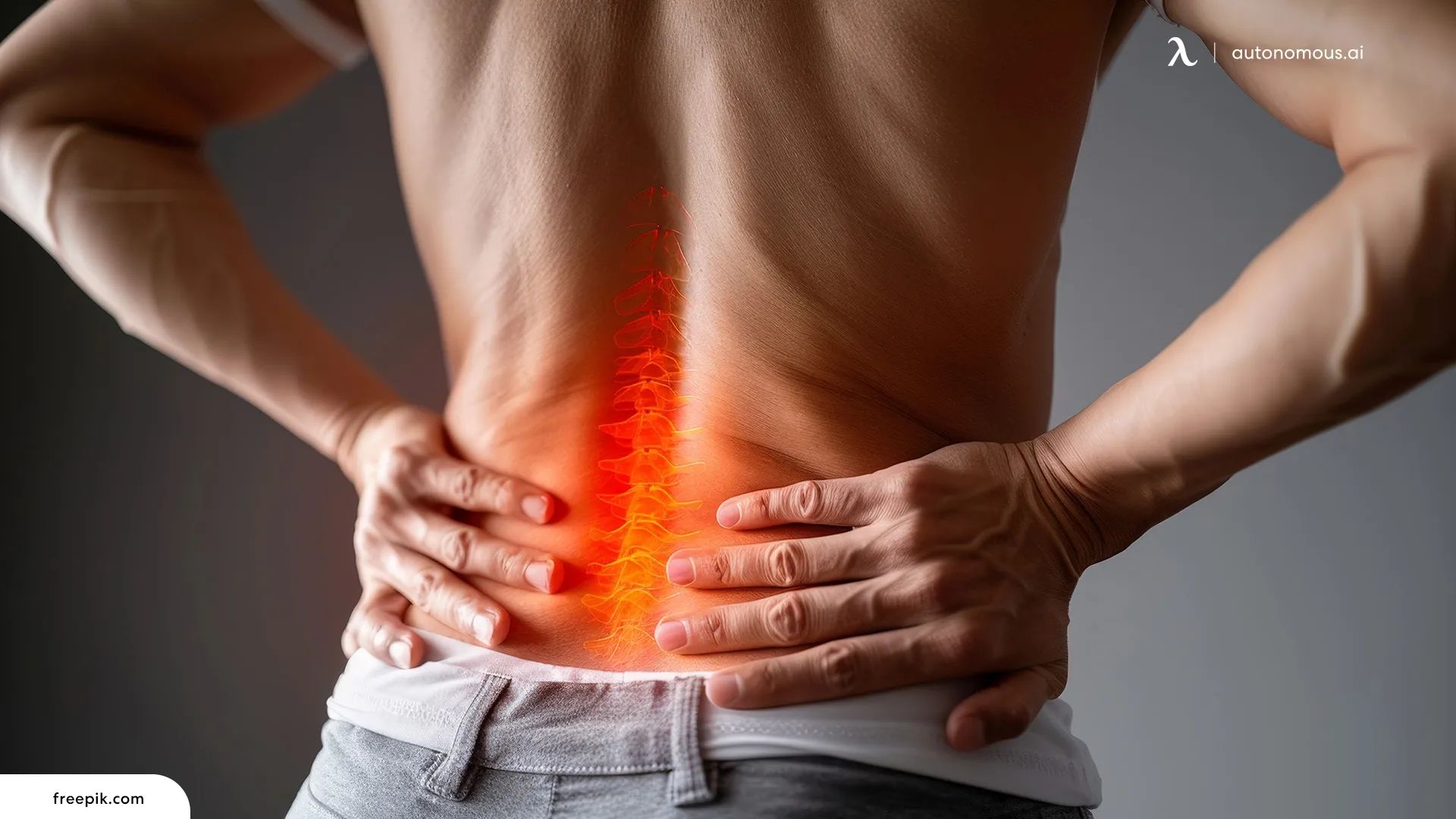
Many chairs marketed for back health miss the mark when it comes to disc-related discomfort. Understanding common pitfalls can prevent unnecessary frustration.
- Assuming firmer lumbar support is better
Aggressive lumbar bulges create focal pressure — one hard contact point pushing into your spine. This concentrates load rather than distributing it, often aggravating disc sensitivity. Effective lumbar support fills the natural curve with surface contact, not a knuckle pressing into vertebrae. If you can pinpoint exactly where the lumbar pad touches, it's likely too prominent.
- Fixed seat depth creating forced compromise
When seat depth doesn't adjust, you choose between full back support (legs dangling or knees compressed) or proper leg positioning (gap behind your lower back). This gap eliminates lumbar support, forcing your spine to hold its own curve through muscular effort that fails after 90-120 minutes. Adjustable depth (typically 2-4 inches of range) lets you achieve both backrest contact and proper knee clearance simultaneously.
- Gaming chair aesthetics over biomechanics
Racing-style bucket seats, fixed lumbar pillows, and aggressive side bolsters work against neutral spinal positioning. The bucket shape forces lateral pelvic tilt, fixed pillows can't accommodate individual lumbar curves, and thick cushioning compresses unpredictably throughout the day. Gaming chairs optimize for visual impact and short sessions, not the stable geometry required for managing disc issues during work hours.
FAQs
What is the best chair for herniated disc pain?
The best chair for herniated disc pain is one that helps manage spinal load through proper lumbar support, stable seating, and controlled recline. It should support alignment without forcing posture or concentrating pressure in one area.
Is an ergonomic chair good for a herniated disc?
An ergonomic chair for herniated disc use can be helpful if it allows lumbar positioning, seat depth adjustment, and slight recline. These features help reduce prolonged disc compression during extended sitting.
How best to sit with a herniated disc?
To sit comfortably with a herniated disc, keep your feet flat on the floor, knees level with or slightly below your hips, and your lower back supported. A slight recline and regular posture changes help reduce prolonged disc loading.
What features should the best office chair for herniated discs have?
The best office chair for herniated disc discomfort typically includes adjustable lumbar support, seat depth control, and a stable recline mechanism. These features help manage pressure buildup rather than relying on soft cushioning alone.
Can the wrong office chair make a herniated disc worse?
Yes, an office chair for herniated disc pain that lacks proper support or encourages slouching can increase discomfort over time. Chairs that are too soft, too rigid, or poorly adjusted may contribute to uneven spinal loading.
Should lumbar support be firm or soft for a herniated disc?
Lumbar support should feel supportive without being aggressive. Overly firm lumbar pads can create pressure points, while adjustable, moderate support is usually more tolerable for disc-related discomfort.
Are recliners good for herniated discs?
Recliners can feel comfortable for short periods, but most are not designed for desk work or sustained posture support. For working hours, an office chair with controlled recline is usually more practical than a fully reclined seat.
Are gaming chairs good as an office chair for herniated disc pain?
Most gaming chairs are not ideal as an office chair for herniated disc use. Fixed lumbar pillows, bucket-style seats, and limited adjustability can conflict with the needs of disc-related support.
Is seat depth adjustment important in a chair for a herniated disc?
Yes, seat depth adjustment is important because it allows proper thigh support while keeping the lower back in contact with the backrest. Without it, users may slouch or tilt the pelvis backward.
Can a disc chair replace medical treatment for a herniated disc?
No, a disc chair or ergonomic office chair does not treat a herniated disc. It can help manage sitting-related discomfort, but medical guidance is still necessary for diagnosis and treatment.
Bottom Line
Living with a herniated disc doesn’t mean sitting has to be avoided altogether, but it does require more intention. The best chair for herniated disc support is one that matches how discomfort develops during your workday—whether that’s pressure building from prolonged sitting, fatigue from maintaining posture, or sensitivity to static positions. No single chair works for every situation, and comfort often comes from how well support, adjustability, and sitting habits work together.
For some users, incorporating alternative seating — such as active chairs used in short intervals — can complement a traditional ergonomic setup by reducing time spent in one fixed position. Choosing carefully, setting the chair up correctly, and taking regular breaks can make seated work more manageable. While an office chair won’t address the underlying condition, the right setup can reduce unnecessary strain and help you stay focused and comfortable throughout the day.