6 Work From Home Exercises to Stay Active Without Disrupting Work

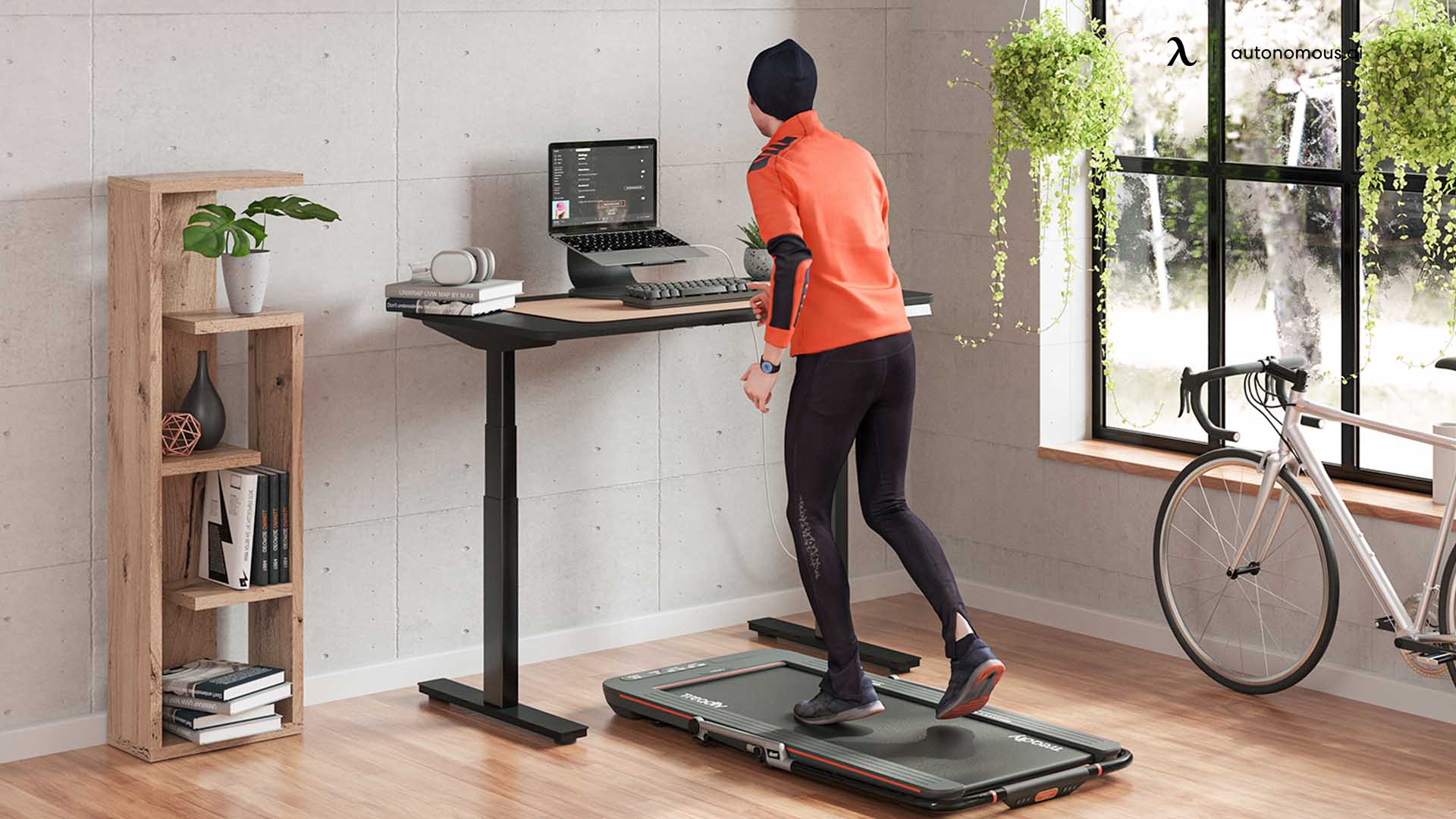
Table of Contents
Working from home changes how movement fits into the day. Without commute-related activity or incidental walking, long periods of sitting become more common and can contribute to back pain from sitting too long. Exercise therefore needs to be intentional but flexible. The most effective approach isn’t choosing a single type of workout, but combining different forms of movement throughout the day, with active sitting playing a role alongside structured exercise, depending on time, energy, and workload.
Work From Home Exercises and Workouts (What to Do)
1. Short movement breaks during the workday
These are brief bouts of activity - often two to five minutes - used to break up long sitting periods. They’re easy to repeat throughout the day and fit naturally into a work from home exercise during break. While they don’t burn many calories per session, they reduce stiffness, improve circulation, and help maintain focus over long work hours.
Short movement breaks often involve alternating between sitting and standing, especially when using a sit stand desk set up at an ergonomic standing position. Even modest posture changes can make a difference over time, as shown by comparisons of calories burned standing vs sitting across a typical workday.
These breaks also help address common side effects of prolonged sitting, including preventing feet swelling while sitting at desk. Repeated movement, rather than intensity, is what allows people to burn calories while working without adding fatigue.
Common movement options during these breaks include:
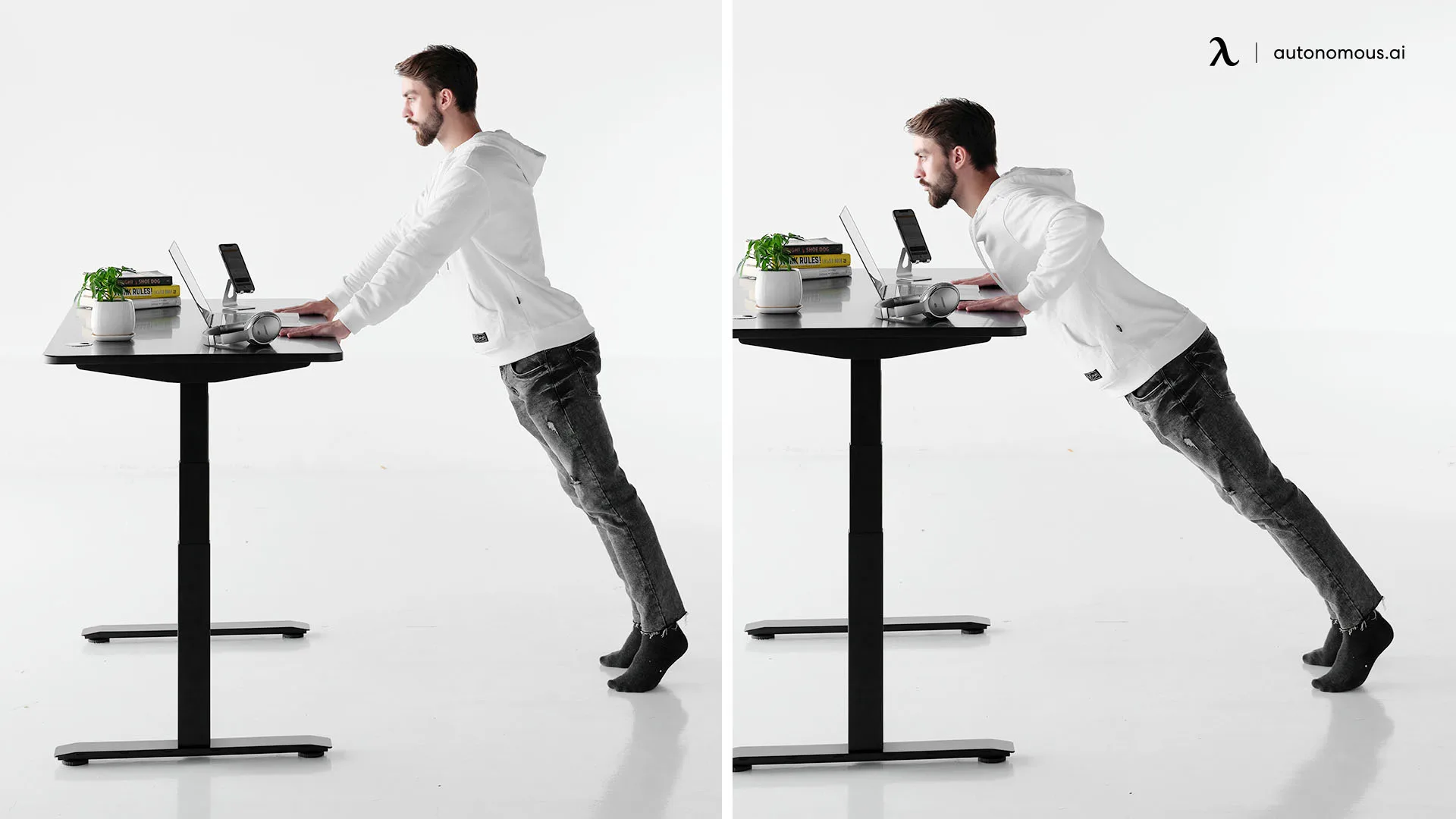
- Standing-based movements adapted from standing desk exercises
- Balance and stability work drawn from balance board exercises
Together, these short movement breaks support physical comfort and steady energy, making them one of the easiest ways to stay active during a work-from-home day.
2. Chair-based exercises at your workspace
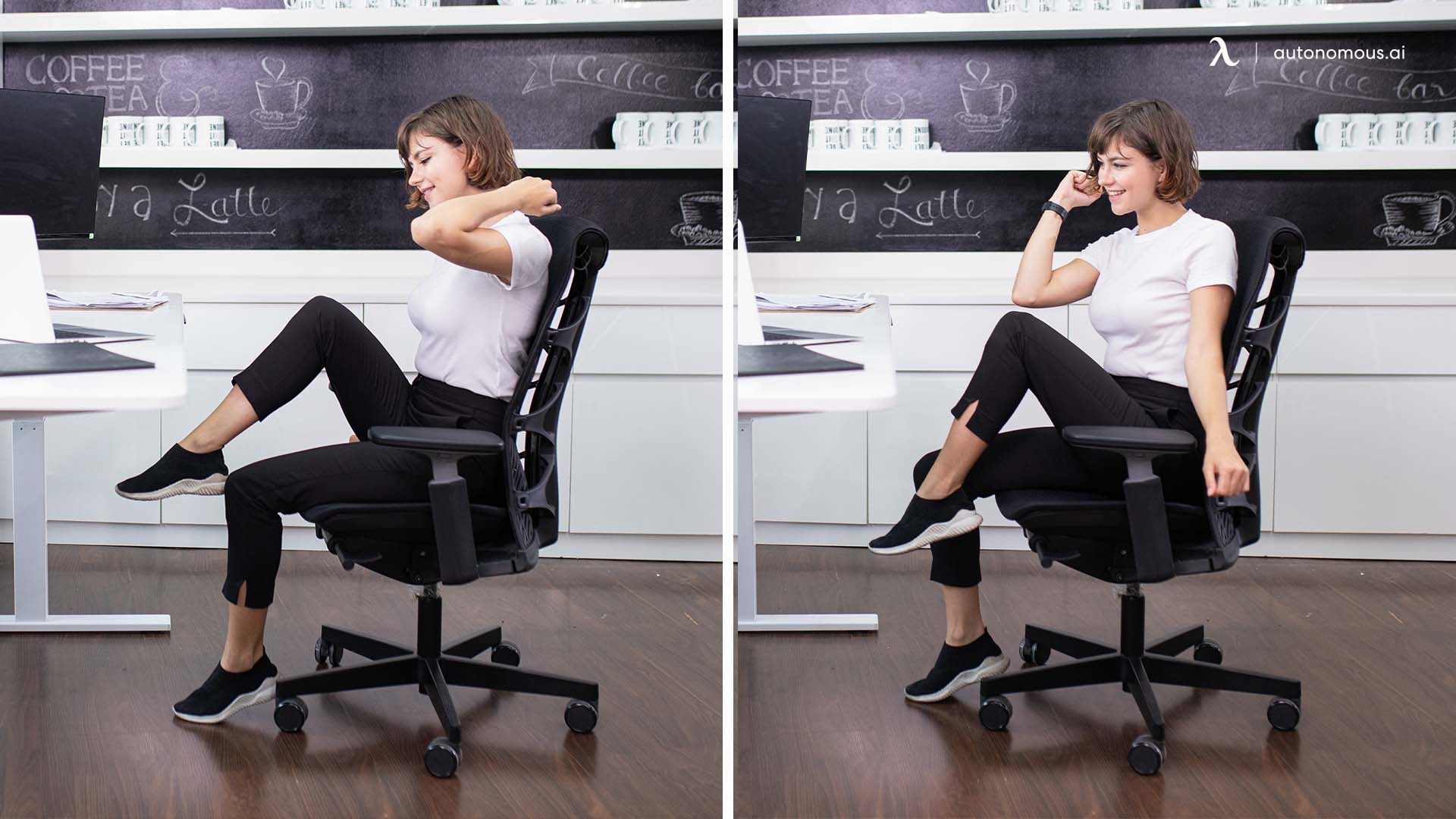
When stepping away from your desk isn’t practical, seated movement provides a low-friction way to stay active. Chair-based exercises can be done without changing location, clothing, or workflow, making them especially useful during long work blocks.
Basic movements often come from office chair exercises and focus on maintaining circulation, muscle engagement, and posture awareness while seated. These may include leg extensions, seated marches, isometric core engagement, resistance-band pulls, and controlled upper-body movements.
Depending on the area you want to target, chair-based exercises can be adapted to different needs:
- Core-focused movements similar to chair exercises for belly fat
- Shoulder, chest, and arm work drawn from upper body chair exercises
- Lower-body activation based on chair exercises for legs
Seated exercise is also commonly used for accessibility and recovery. Variations inspired by chair exercises for seniors emphasize controlled range of motion and joint comfort, while slower, flow-based movements like chair yoga exercises for weight loss focus on mobility and breathing rather than intensity. For broader calorie-burn goals, formats similar to chair exercises to lose weight rely on repetition and consistency rather than exertion.
Chair-based movement can also relieve discomfort caused by prolonged sitting. Gentle mobility work, including seated lower back stretches and targeted sitting sciatica stretches, helps reduce stiffness and supports spinal comfort during extended desk work.
3. Low-impact cardio you can do at home
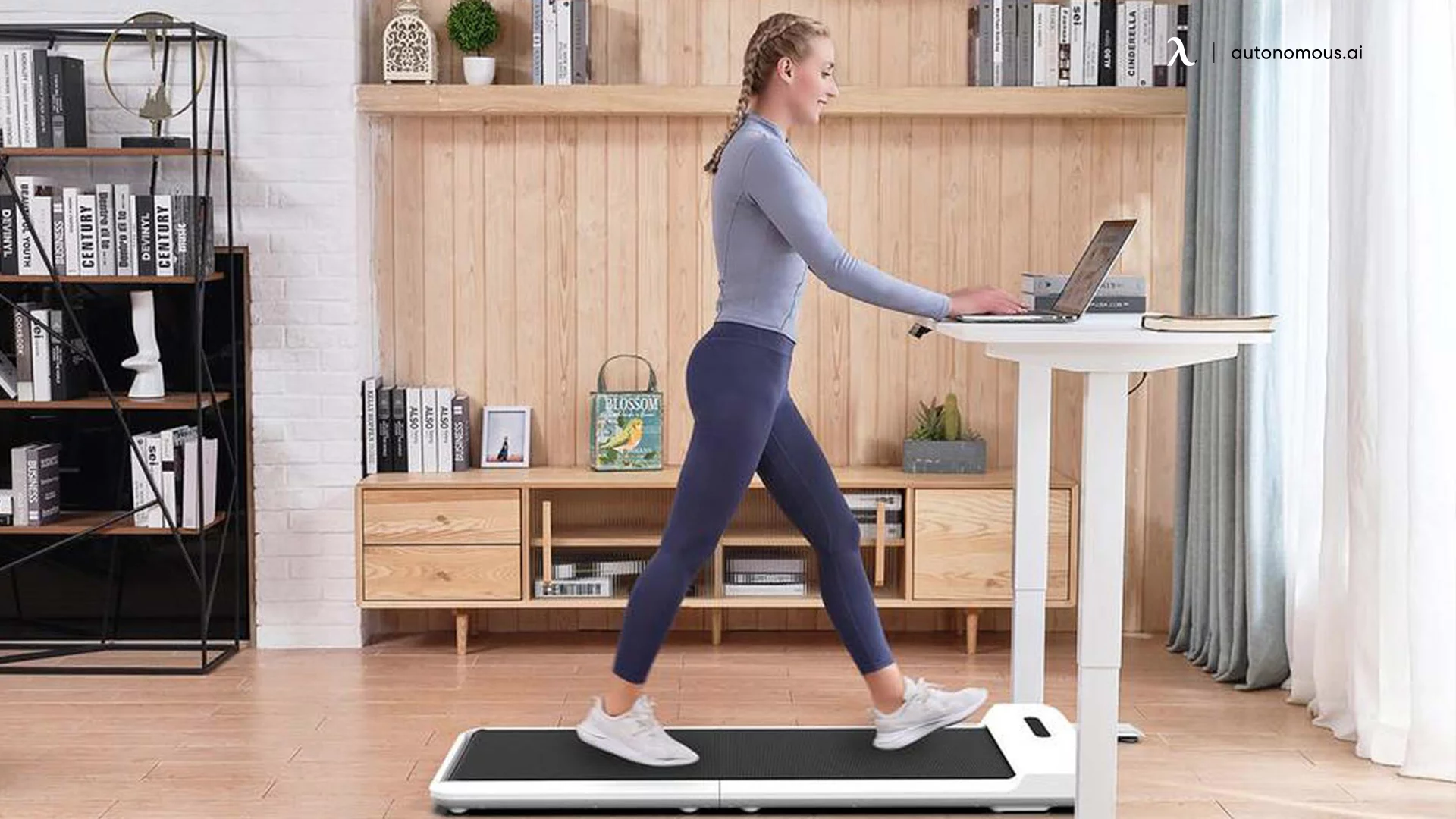
Low-impact cardio raises your heart rate while keeping joint stress low, which makes it practical for regular use during work-from-home days. This type of training supports cardiovascular fitness and daily calorie burn without creating the recovery demands associated with high-impact exercise.
Step-based and guided cardio movements deliver steady cardiovascular effort with reduced impact, which stairmaster vs running and stepper vs elliptical explain through differences in motion patterns and joint loading. These formats prioritize controlled movement and sustained output over speed or jumping.
Routines focused on low impact cardio at home fit easily into short breaks or longer sessions, usually lasting between five minutes and half an hour. Repeating these workouts across the week builds endurance and supports consistent activity without pushing fatigue too far.
4. Brief workouts during work hours
Some people benefit from setting aside a short, defined workout window during the workday. These 10–20 minute sessions combine bodyweight strength and light cardio, allowing physical activity to fit into work hours without breaking concentration. This structure supports a focused workout during work from home while keeping transitions minimal.
Criss cross exercise works well in this context because it elevates heart rate quickly within a short time frame. The 10-3-30 treadmill provides a steady, time-bound cardio format that aligns well with predictable workday breaks.
This approach works best when the schedule allows consistency, letting short workouts integrate into the workday rather than compete with it.
5. Strength-focused home workouts
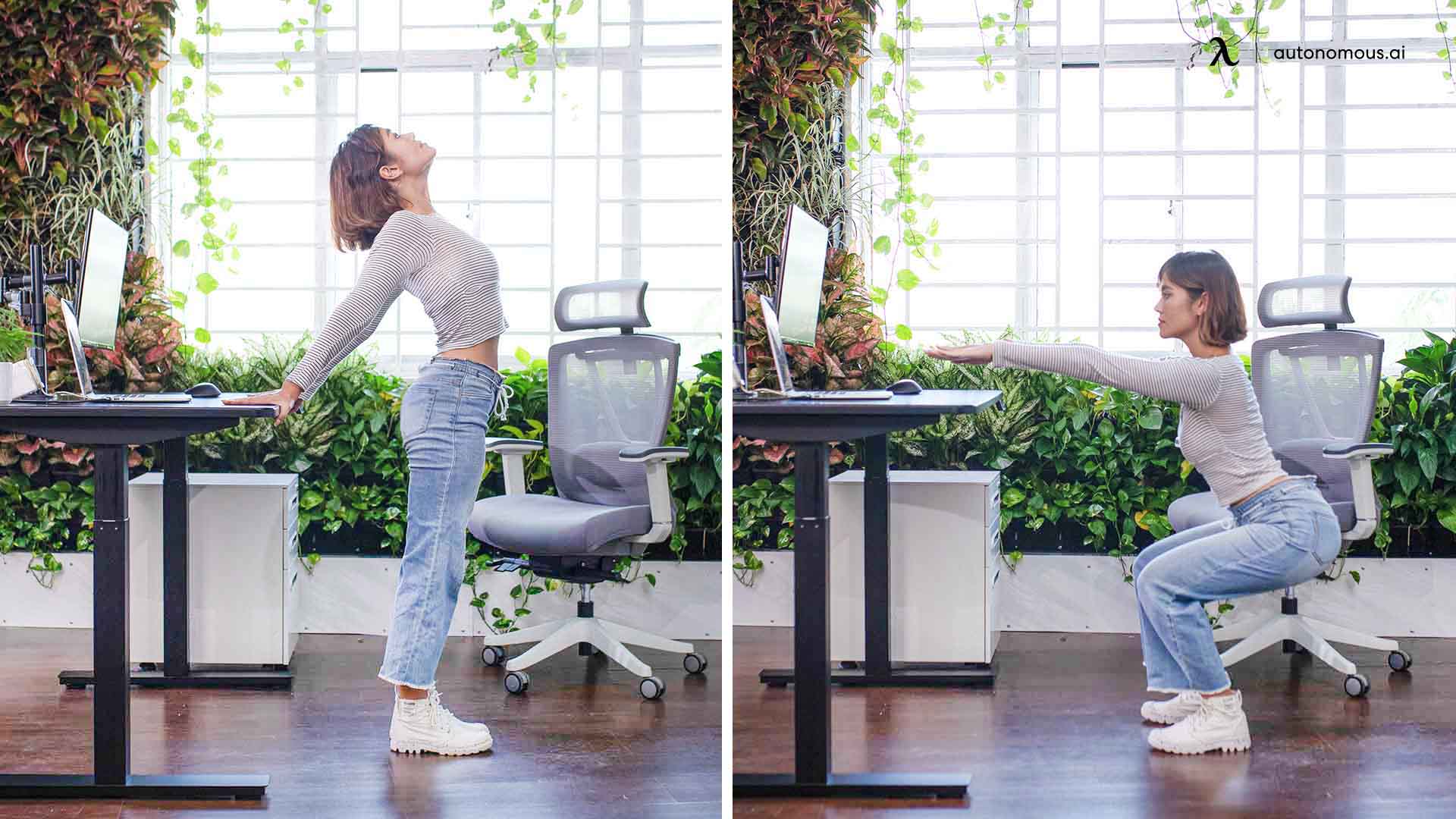
Strength training forms the foundation of many work from home workouts because it preserves muscle engagement and structural support when daily movement is limited. These sessions train major muscle groups through bodyweight movements, dumbbells, or resistance bands and typically run once per day or several times per week.
Chair exercises for men address strength development when space, equipment, or mobility limits standing workouts, allowing strength work to continue without relying on traditional gym setups. Over time, consistent strength training supports posture, joint stability, and long-term physical resilience in a home-based work routine.
6. Dedicated workouts outside core work time
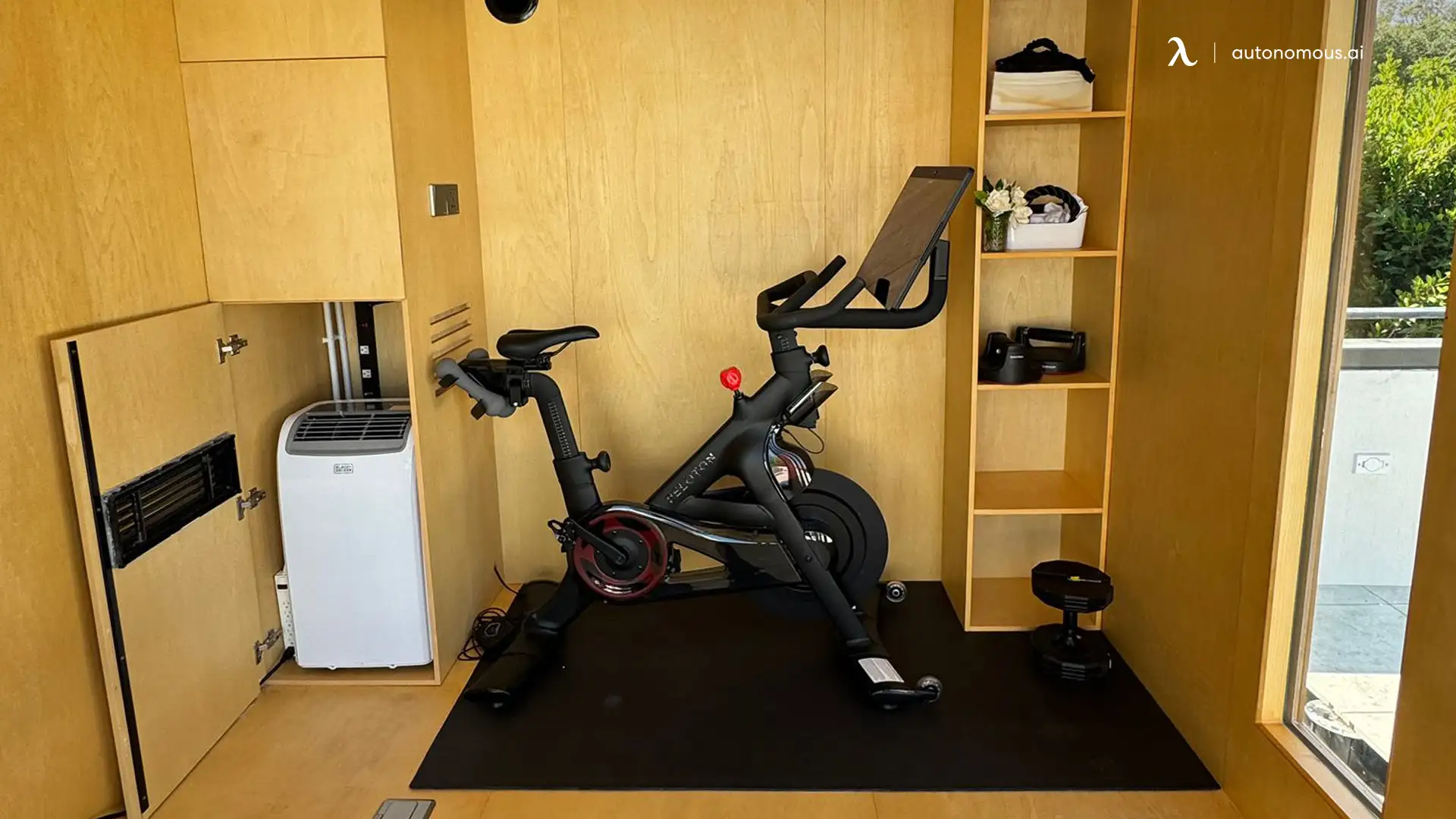
Dedicated workouts take place before work, after hours, or on lighter workdays, giving exercise a clear boundary separate from job demands. This structure suits people who prefer uninterrupted training time and want to focus fully on performance rather than fitting movement between tasks. Although this approach offers less flexibility, it supports higher intensity and more predictable progression.
Stairmaster workout for weight loss emphasizes sustained effort and controlled intensity, making it effective for longer, focused sessions. Stationary bike workout plan supports structured progression across fitness levels while keeping impact low, which helps maintain consistency over time.
How to Build a Sustainable Work-From-Home Exercise System
Step 1: Choose Where Exercise Fits in Your Day
Most people benefit from mixing movement into work hours and reserving structured workouts for times when focus and energy peak. Gym before or after work shapes how consistently people train, especially in a work-from-home routine where boundaries between work and exercise blur.
Exercise Pattern | When It Happens | Purpose | Best For |
Movement breaks | Between tasks or meetings | Reduce stiffness, maintain energy | Long workdays, frequent sitting |
Short workouts | Midday or flexible work gaps | Efficient activity without fatigue | Variable schedules |
Structured workouts | Before or after work | Strength and cardio progression | People who prefer routine |
Recovery sessions | Low-energy or rest days | Mobility and soreness management | High sitting volume |
Step 2: Build a Simple Weekly Structure
Rather than assigning exact times, anchor exercise to patterns in your week. This approach supports a repeatable work from home workout routine without rigid scheduling.
Day Type | Example Focus |
High workload day | Movement breaks + light mobility |
Moderate workload day | Short workout or low-impact cardio |
Low workload day | Full strength or cardio session |
Recovery-focused day | Walking and mobility only |
This structure naturally forms a work from home workout plan that adapts as work intensity changes.
Step 3: Create a Flexible Workout Schedule
A work from home workout schedule works best when it can shift without breaking. Instead of fixed times, use time windows.
Time Window | Exercise Option |
Morning | Structured workout or walk |
Midday | Short workout or movement break |
Late afternoon | Mobility or light cardio |
After work | Strength or cardio session |
This allows exercise to move with your calendar rather than against it.
Step 4: Apply Simple Consistency Rules
A few practical work from home exercise tips help keep the system sustainable:
- Prioritize repeatability over intensity
- Use short sessions on busy days instead of skipping
- Rotate effort levels to manage fatigue
- Adjust weekly, not daily
The most effective way to get exercise when working from home is not chasing perfect routines, but building a system that survives real workloads and changing schedules.
.webp)
FAQs
How can I exercise while working from home?
You can exercise while working from home by using short movement breaks, chair-based exercises, or brief workouts during the day. These approaches reduce sitting time without requiring long workout sessions.
What are the best exercises to do at home while working?
The best options include walking, light cardio, bodyweight strength exercises, and mobility work. These exercises require little space and can be adjusted to fit different energy levels and schedules.
Are short exercise breaks during work actually effective?
Yes. Short exercise breaks improve circulation, reduce stiffness, and help maintain focus when repeated throughout the day. Over time, these small sessions add meaningful activity without causing fatigue.
How often should I exercise when working from home?
Most people benefit from daily movement combined with structured workouts 3–5 times per week. Consistency matters more than duration or intensity.
Is walking enough exercise if I work from home?
Walking can be enough for general health, especially when done consistently. Adding light strength or mobility work improves balance and long-term joint health.
Can I work out during work hours?
Yes, many people successfully fit 10–20 minute workouts into work hours. Short, focused sessions are easier to maintain than longer workouts on busy days.
What’s the best time to exercise when working from home?
The best time is when you can be consistent. Some people prefer mornings, while others do better with midday breaks or after-work sessions.
How do I stay active during long work-from-home days?
Breaking up sitting with movement every 30–60 minutes helps. Walking, stretching, or light exercises during breaks keeps activity levels up without disrupting work.
Do I need a workout schedule when working from home?
A flexible schedule helps maintain consistency but doesn’t need fixed times. Many people use time windows or workload-based planning instead.
How much exercise is enough when working remotely?
For general health, 200–400 calories of daily activity is often sufficient. Higher amounts may support fitness or weight goals when recovery is managed.
Are home workouts as effective as gym workouts?
Home workouts can be just as effective when they include strength, cardio, and progression. Effectiveness depends more on consistency than location.
What’s the easiest way to start exercising while working from home?
Start with short movement breaks and low-effort exercises. Building the habit first makes it easier to add structured workouts later.
Conclusion
Working from home doesn’t require choosing between productivity and movement. Exercise can happen in short breaks, brief workouts, or dedicated sessions - often all three. The most effective approach is the one that fits how you work, adapts to busy days, and stays repeatable week to week. Consistency matters more than duration, intensity, or perfection.