7 Best Quiet Office Chairs That Don’t Distract Your Work

A quiet office chair makes a bigger difference than most people expect: a squeak on recline, a click as you shift, or a rattle as you roll chips away at concentration, and on a call it is worse. The catch is that most chairs feel silent when new and then develop squeaks within a year, and that comes down to how the chair was built, not how you use it, since noise control has to be engineered into the structure from the start. Below are seven quiet office chairs that hold up, what keeps each one silent, and how to keep any chair noise-free over time.
What makes an office chair quiet, and why most are not
A quiet office chair earns the label by controlling four noise sources that every chair has:
The moving parts. Tilt mechanisms, recline systems, and pivot joints move thousands of times a day. When they are cheap, loosely fitted, or undamped, friction turns into an audible click or squeak with even small posture changes. A quality mechanism with tight tolerances stays silent for years.
The frame and materials. Lower-grade metal and rigid plastic amplify vibration as the chair ages. Reinforced frames, tighter tolerances, and enclosed components keep contact noise down.
The casters. Rolling noise is the most overlooked. Hard plastic casters rattle and scrape on hardwood and tile; softer polyurethane wheels absorb the vibration and roll silently.
The seat construction. Foam compresses and rubs against the seat pan and frame over time, which is a common source of creak. Mesh and webbing-and-spring seats avoid that friction entirely.
The chairs that stay quiet manage all four. The ones that do not usually fail at the tilt mechanism or the casters first.
The 7 best quiet office chairs at a glance
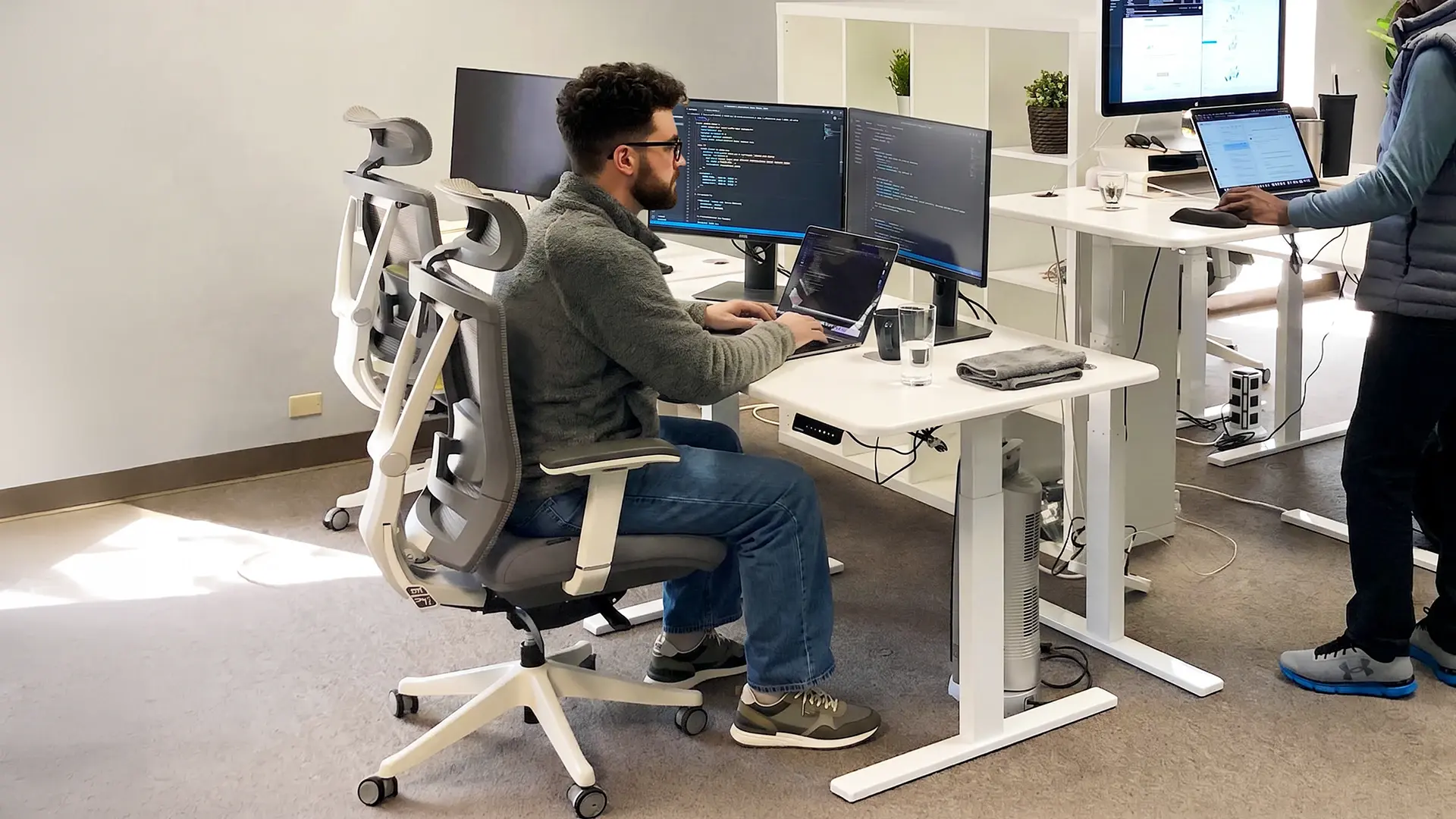
ErgoChair Pro | ErgoChair Core | Staples Hyken | Branch | ErgoChair Ultra 2 | Hinomi H2 Pro | IKEA Markus | |
Why it stays quiet | Donati tilt, captive lumbar | Fewer moving parts | All-mesh, no foam | Clean build, when new | One-piece flex-frame | Rigid frame | Minimal mechanism |
Best for | Adjustable, composed | On a budget | Lightweight desk work | Minimalist offices | Active sitters | Firm, grounded | Simple setups |
The 7 best quiet office chairs
Each pick is judged on how it controls those four noise sources: its mechanism, frame, seat, and how it ages. Noise limits are called out honestly.
1. Autonomous ErgoChair Pro, best for composed, adjustable quiet
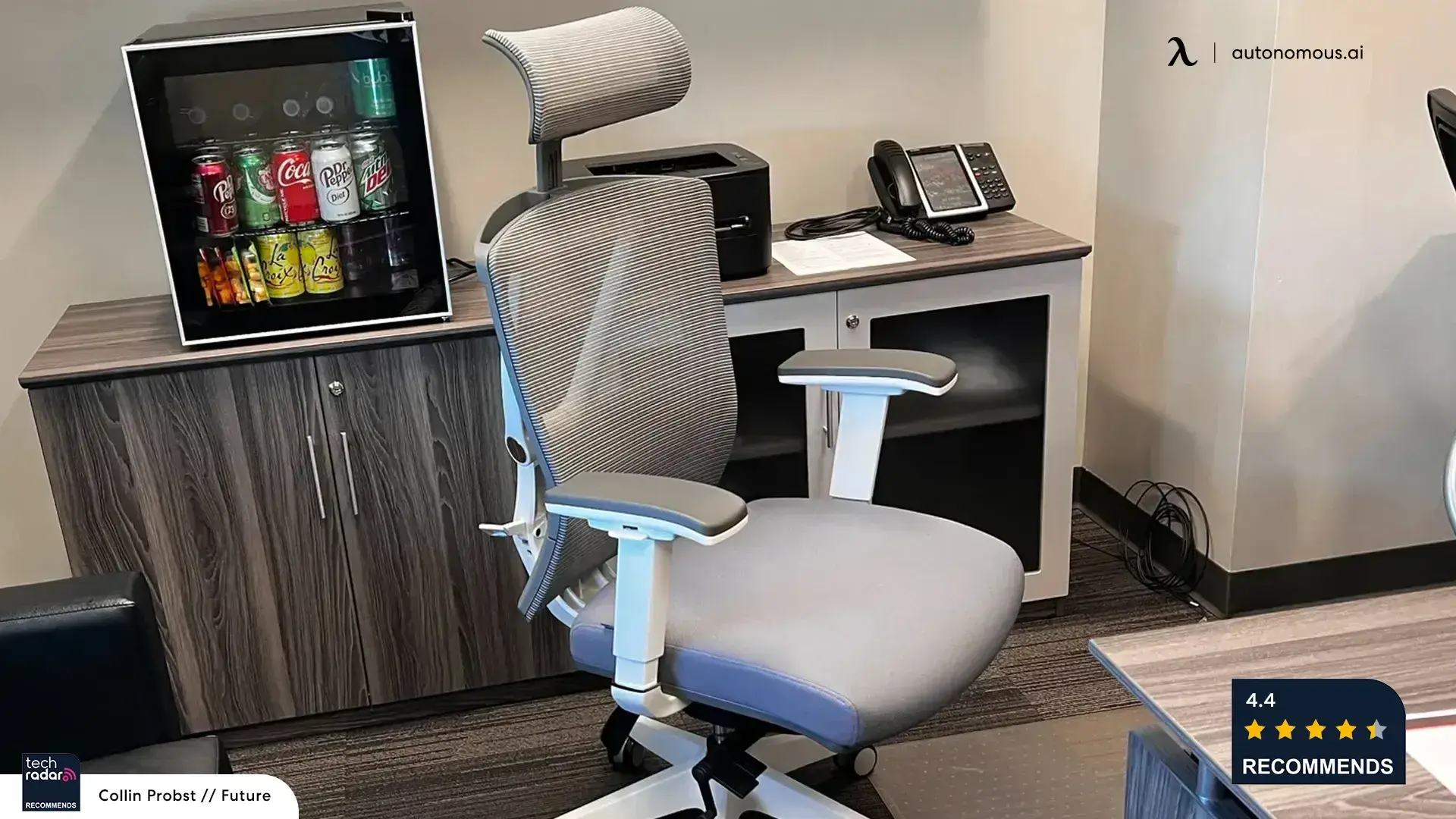
The ErgoChair Pro stays quiet where it matters most on an office chair, the recline, and it holds that silence for years because the quiet is engineered into the mechanism rather than added on.
What keeps it quiet:
- Italian Donati synchro-tilt rated to 100,000 cycles, so reclining glides instead of developing click-clack, and it locks at five points without a loose-stop creak.
- Lumbar slides on a captive track, not a loose clip, so it holds position without rattling as you shift.
- Seat depth and 3D arms move on tracked axes, so setup changes stay silent.
- Welded steel frame with tight tolerances, so there is no flex-creak under your weight.
The only likely noise source is the casters on hard floors; swap to soft polyurethane wheels and it rolls almost silently. With a lifetime frame warranty, a mechanism that ever does squeak is a covered replacement, not a new chair.
Best for: a highly adjustable chair that stays composed and silent through years of daily use.
Keep in mind: the armrest pads are on the thinner side, so hard elbow-leaners may want more padding.
2. Autonomous ErgoChair Core, best quiet on a budget
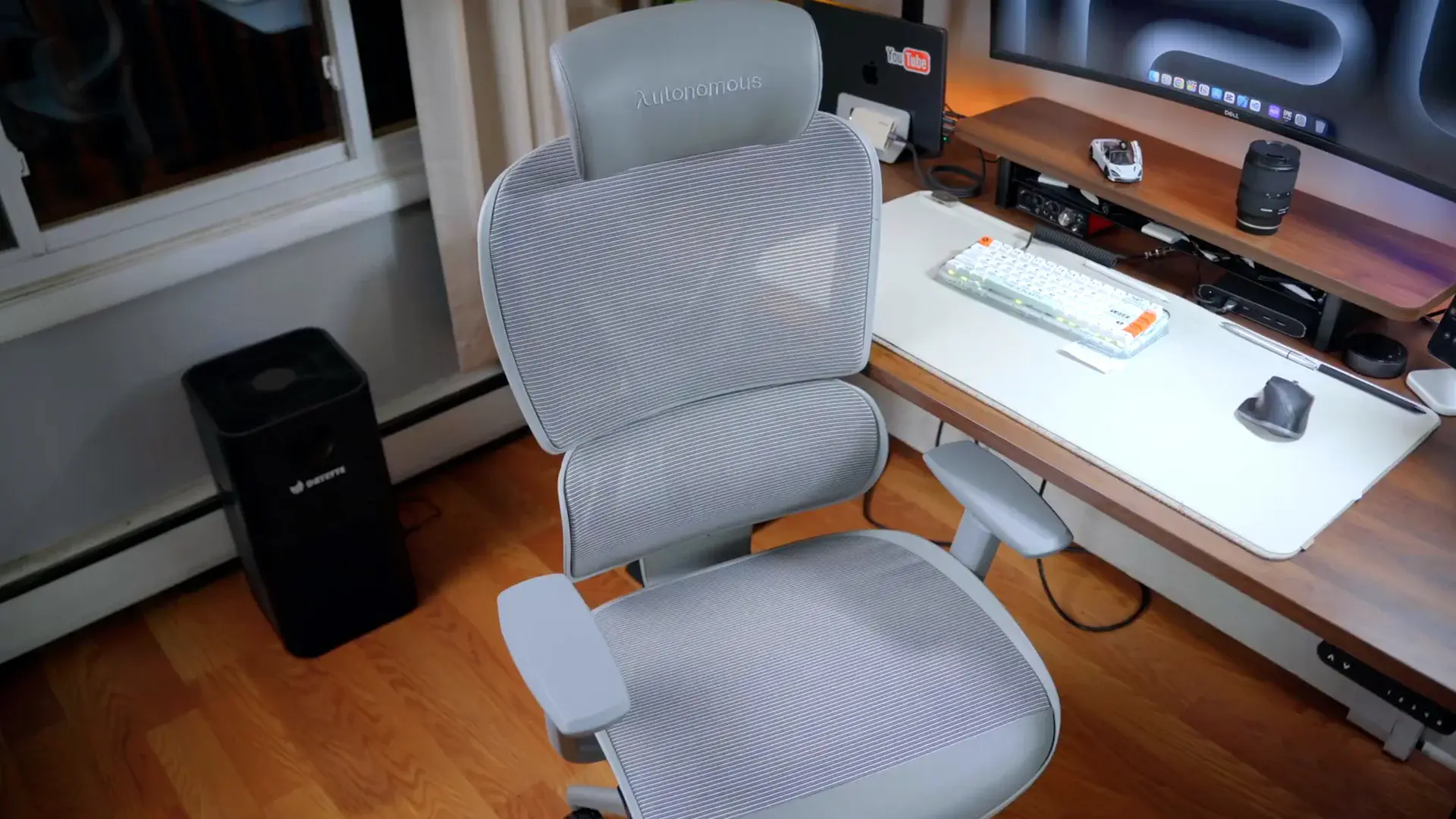
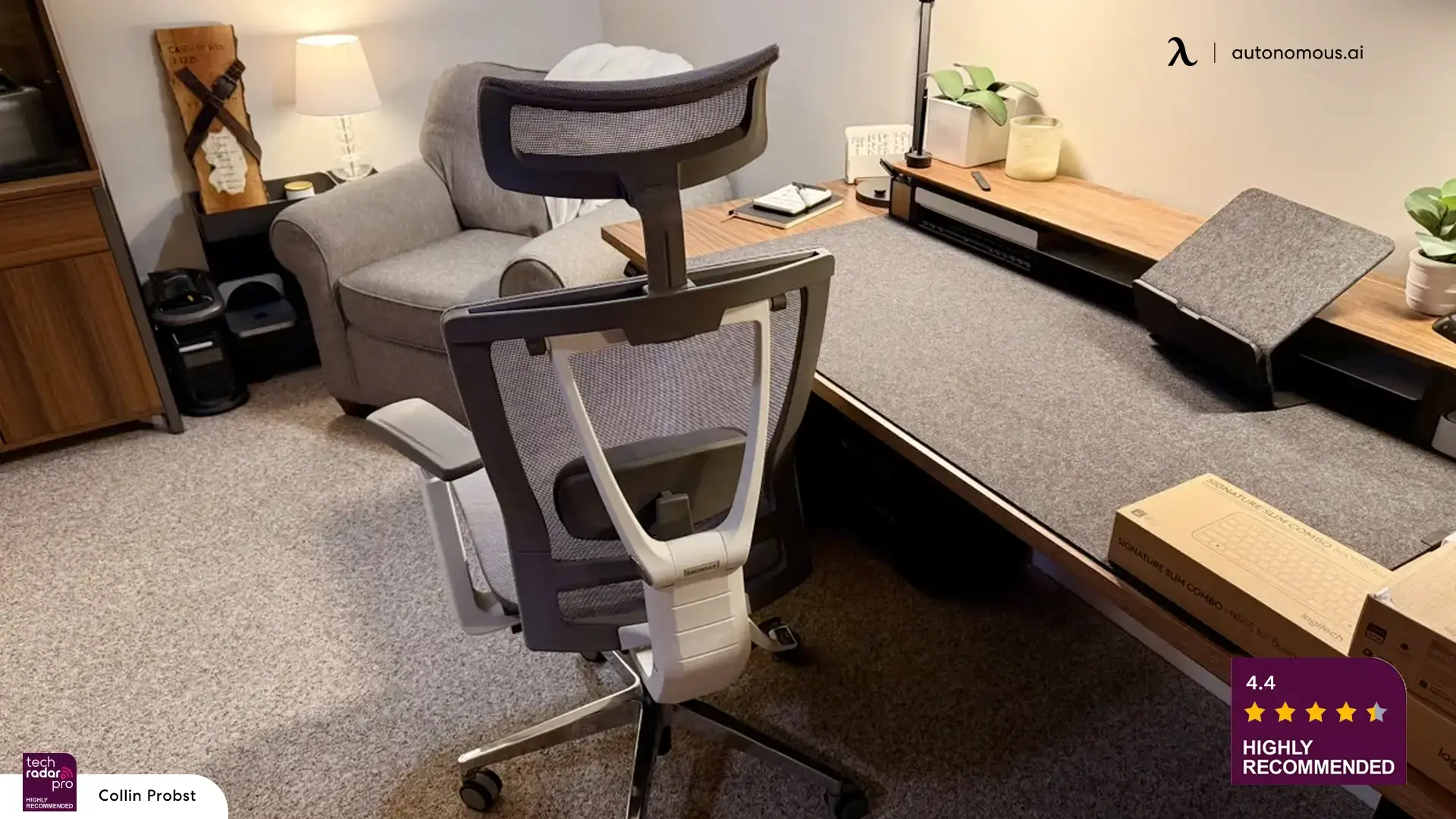
The ErgoChair Core stays quiet through simplicity, an underrated strategy for a silent chair: fewer mechanisms means fewer places to loosen and squeak over time.
What keeps it quiet:
- Fewer moving parts than a fully-loaded ergonomic chair.
- A passive dual backrest that flexes without a lumbar pad or track to rattle.
- PU-covered contact points that damp friction instead of plastic rubbing plastic.
- A breathable mesh back, with no foam to compress and creak against the frame.
In daily use it feels stable and predictable through the movements most people make: sitting upright, leaning back, rolling a short distance, pulling forward to type. It is backed by a two-year warranty.
Best for: a dependable, low-noise chair for everyday work, a second desk, or a first ergonomic chair.
Keep in mind: the back curve is fixed rather than positional, so if you need to place lumbar exactly, the Pro is the better fit.
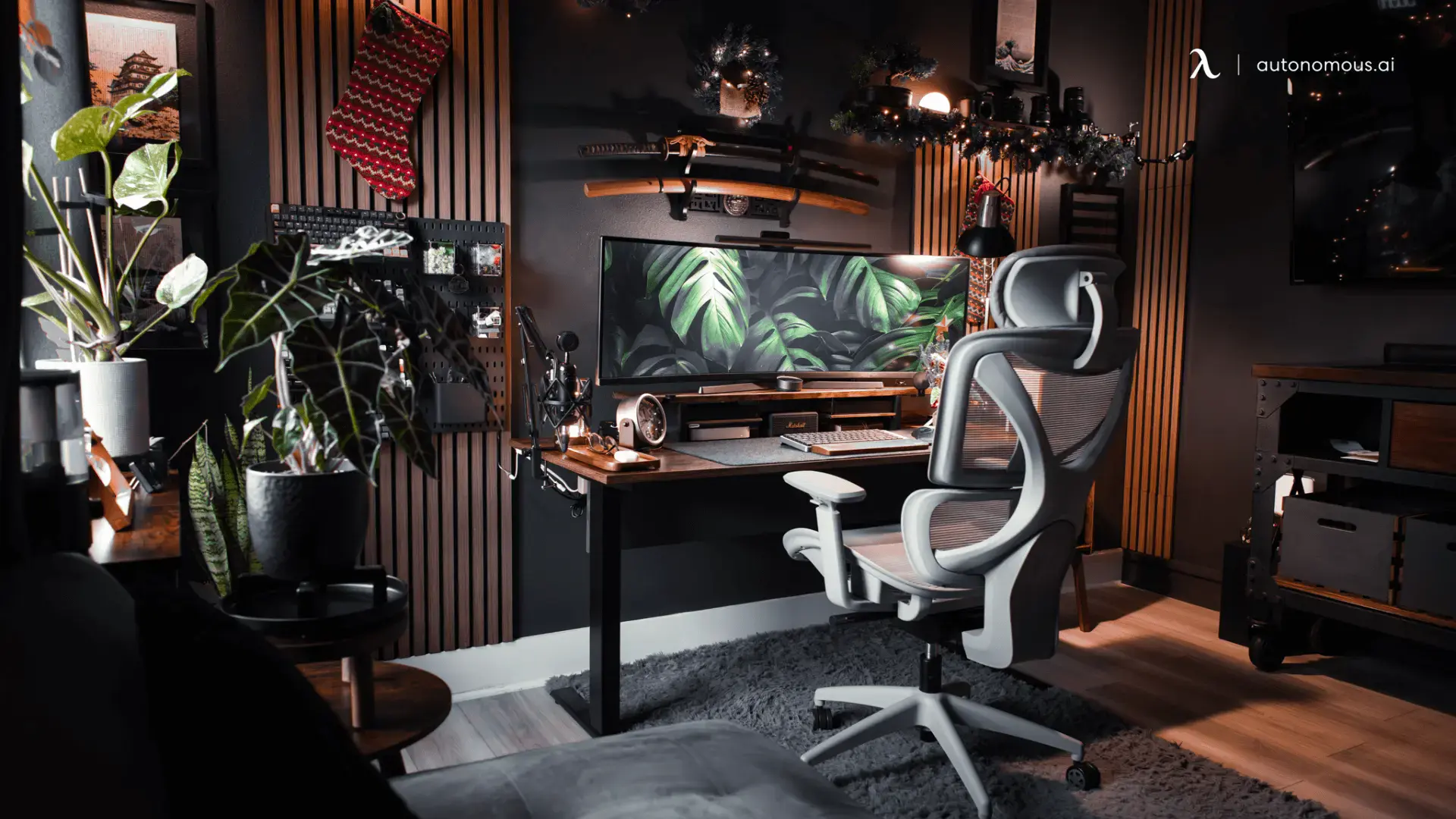
3. Staples Hyken Mesh Task Chair, best lightweight mesh
The Hyken avoids two noise sources at once, foam compression and a heavy frame, which keeps everyday movement subtle and light.
Pros:
- All-mesh seat and back, so nothing compresses or creaks.
- Light frame that puts less strain on the joints.
- Around $139, the value pick here.
Cons:
- Plastic-heavy build; the tilt can squeak within a year, though a drop of silicone fixes it.
- Not built for frequent, aggressive reclining.
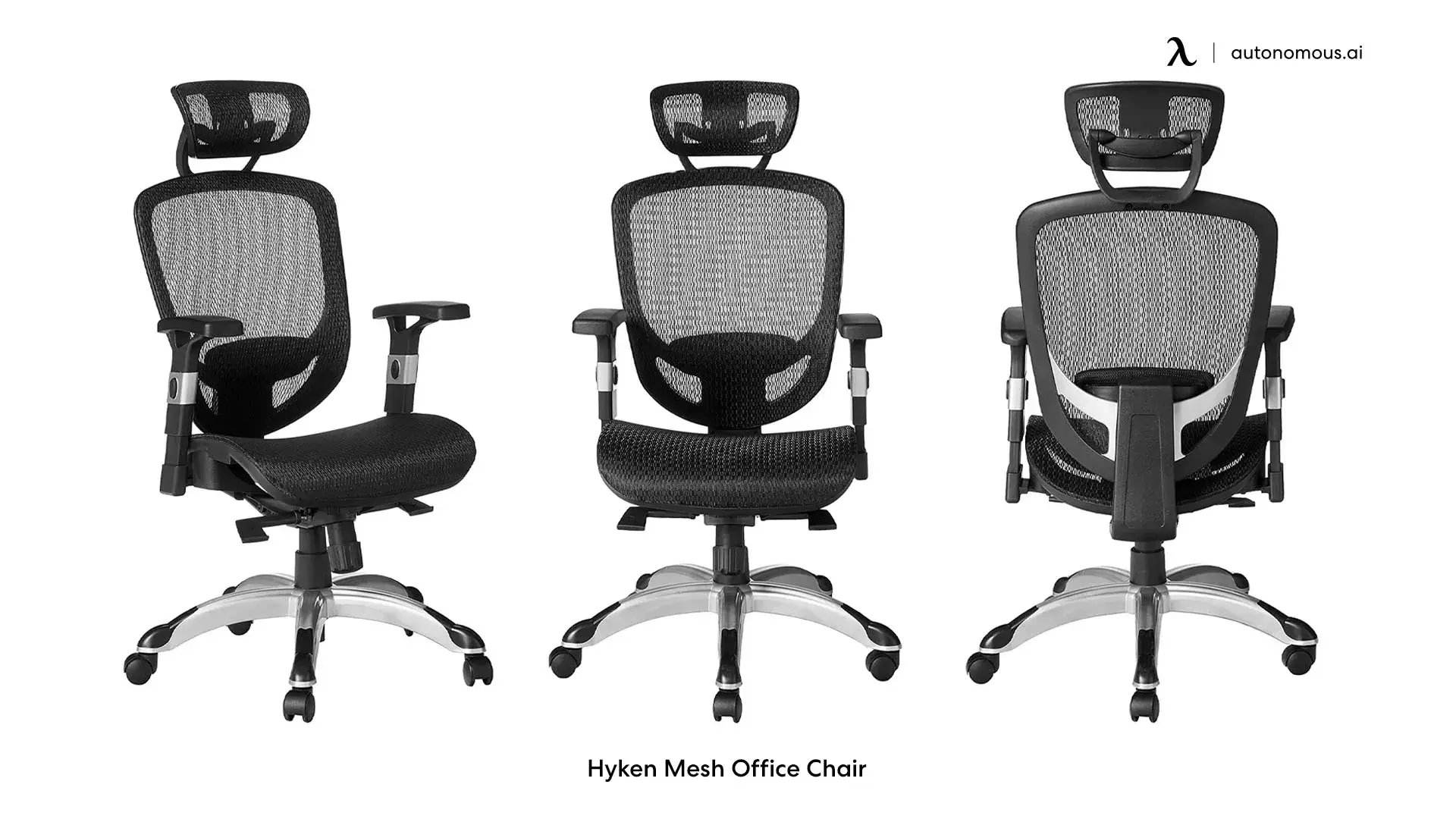
4. Branch Ergonomic Chair, best for minimalist spaces
Visually calm with clean lines, the Branch feels composed when new, though its long-term silence is less certain.
Pros:
- Clean, minimalist design that reads as calm in a workspace.
- Straightforward adjustments; quiet during upright work.
Cons:
- Owners report creaking as it ages, even with routine tightening.
- Not the safest pick if long-term silence is the priority. Around $389.
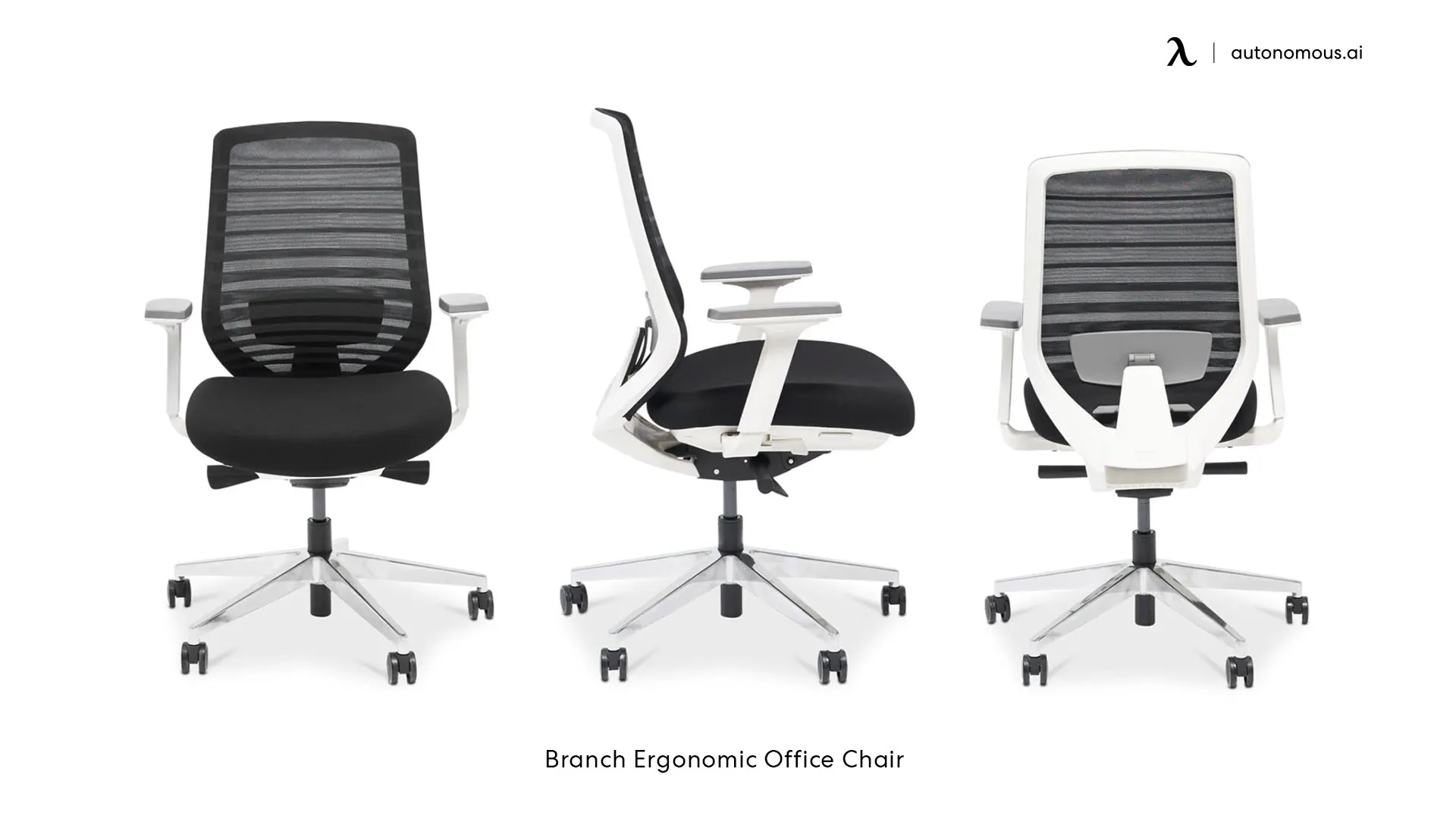
5. Autonomous ErgoChair Ultra 2, best for active sitters
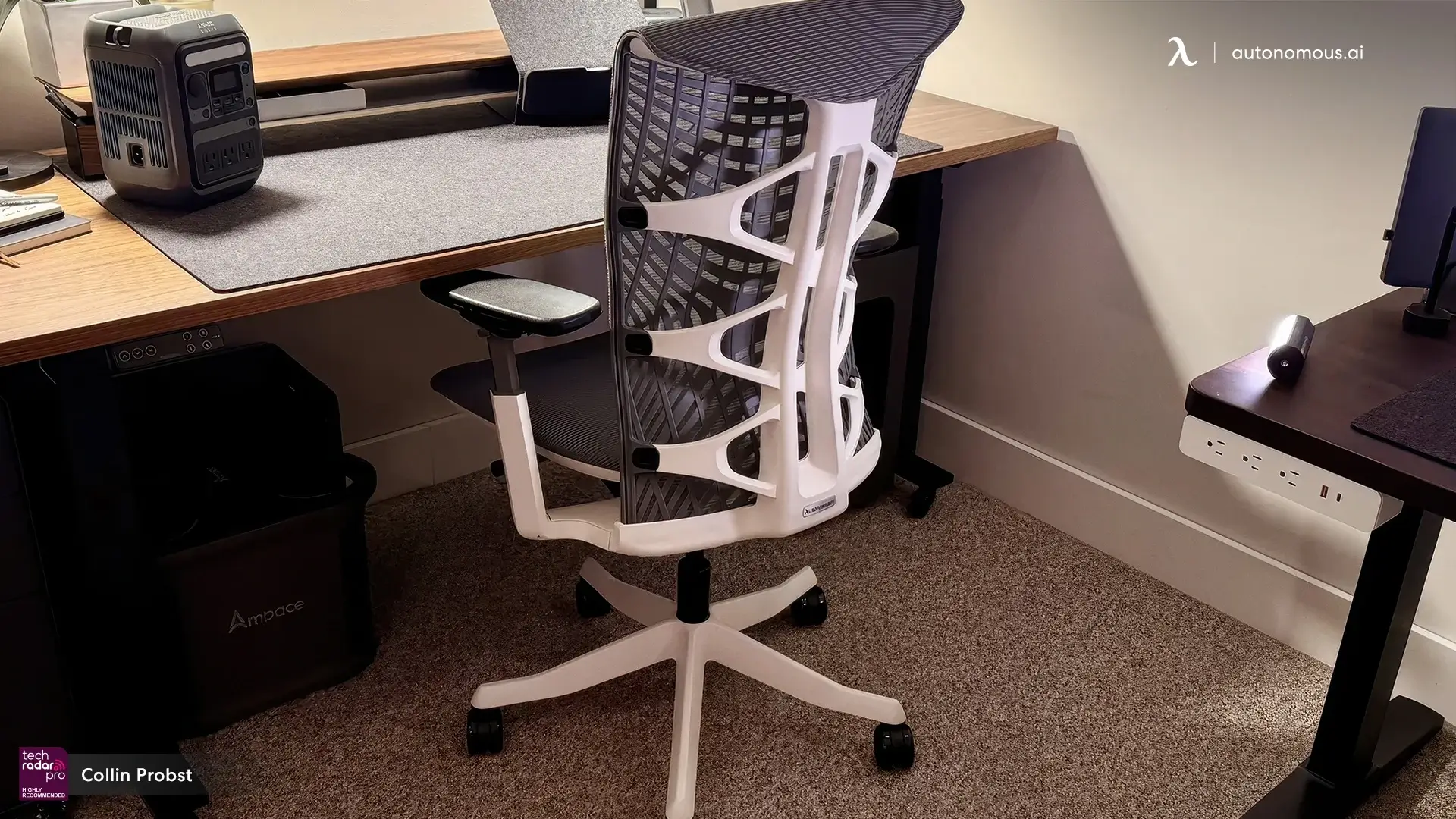
The ErgoChair Ultra 2 removes most noise sources by design, so the more you move, the more it pulls ahead of chairs with mechanical lumbar systems, since movement is what makes those systems talk.
What keeps it quiet:
- A lumberless flex-frame that moves as one piece across 62 pressure nodes, with no lumbar pad to shift or click.
- A four-layer webbing-and-spring seat, so no block of foam creaks against the pan.
- An aluminium base that resists the flex-creak plastic bases develop with age.
Because it is more integrated, it rewards a proper setup and the occasional bolt check. It carries the same lifetime frame warranty as the Pro, so long-term silence is backed by coverage. The base model has no headrest; the Ultra 2 Plus adds one.
Best for: active sitters who move and recline often, and anyone who runs warm, since the mesh and webbing breathe.
Keep in mind: the seat starts at 18 inches, so users under about 5 foot 2 will want a footrest to sit with feet flat.
6. Hinomi H2 Pro Ergonomic Office Chair, best firm and grounded
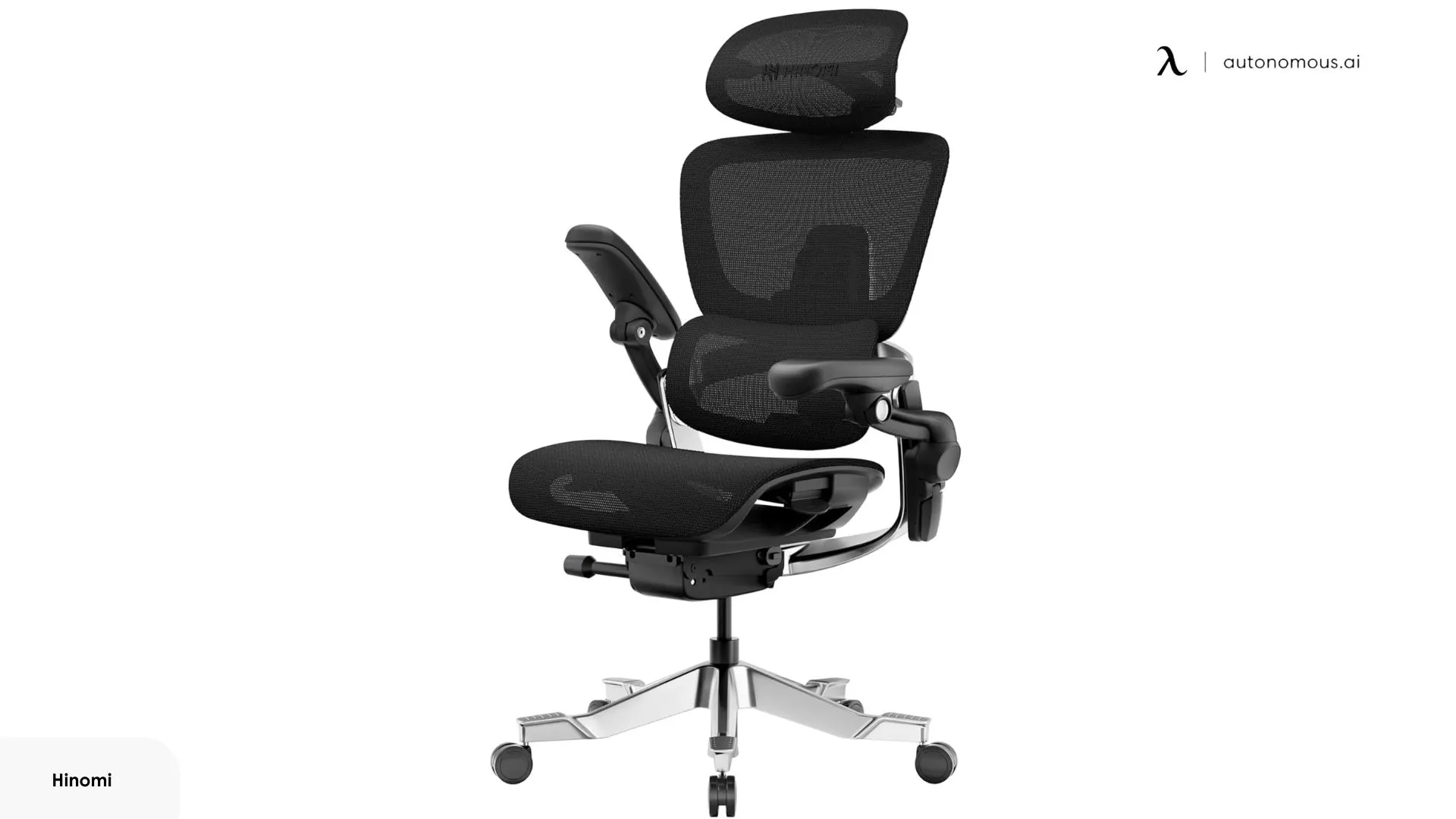
The H2 Pro feels solid the moment you sit down, and its quiet comes from structure rather than softness.
Pros:
- Rigid frame limits side-to-side movement and vibration.
- Firm support holds posture; the mechanisms engage cleanly and stay put.
Cons:
- Assertive rather than forgiving, so not for people who want cushioning.
- Premium price, around $759.
7. IKEA Markus Office Chair, best simple and familiar
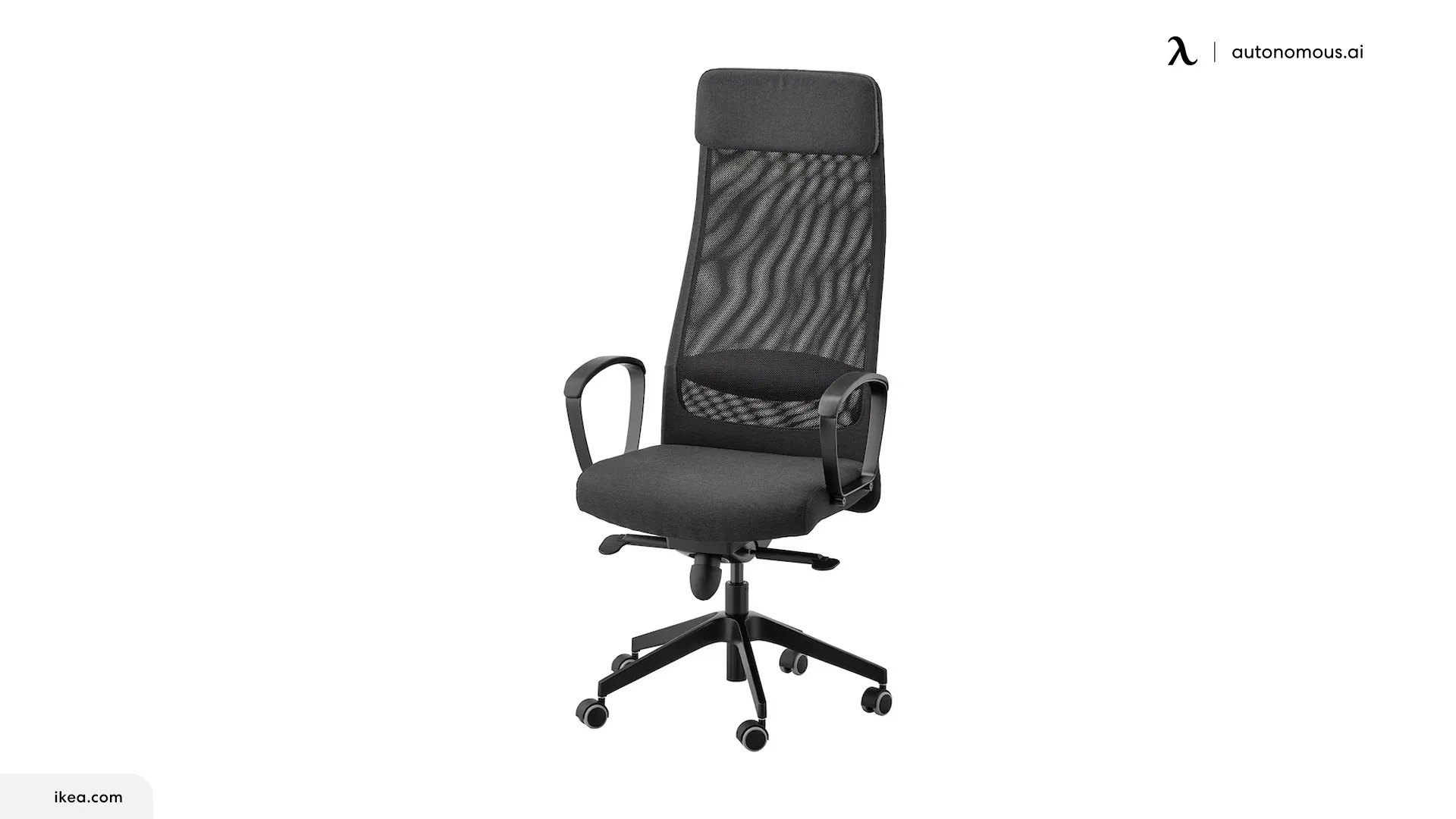
Like the Core, the Markus stays quiet through simplicity, with little to interact with and little to work loose.
Pros:
- Basic tilt, tall supportive back, minimal controls; steady when new.
- Widely available, around $300.
Cons:
- Well known to develop tilt or rocking squeaks with frequent leaning.
- Occasional tightening and lubrication become part of ownership.
How to keep any office chair quiet over time
Most chair noise develops slowly as parts settle and materials age. A little prevention keeps a quiet chair quiet.
Tighten the fasteners periodically, especially around the recline mechanism and seat connections, but do not over-tighten, since a rigid joint can squeak as much as a loose one. Aim for secure, not forced.
Watch for changes in feel. Uneven recline or rougher rolling shows up before the noise does, so addressing friction early stops the squeak from arriving.
Keep the moving parts clean. Dust collects around joints and casters, so wipe them down and apply a little silicone spray or dry lubricant to the tilt mechanism, wheels, and metal contact points every few months.
Match your casters to your floor. Hard surfaces amplify vibration, so soft polyurethane wheels or a stable mat cut both rolling noise and long-term stress on the frame. If your chair already squeaks, our guide on how to fix a squeaky chair walks through each source.
FAQs
What is the quietest office chair?
The quietest office chairs control noise at the mechanism, frame, seat, and casters at once. A quality tilt mechanism, a mesh or webbing seat that will not compress, a reinforced frame, and soft casters keep a chair silent. Among these picks, the ErgoChair Pro and Ultra 2 stay quietest through years of daily use.
Why do office chairs squeak or make noise?
Office chairs squeak when moving parts loosen, materials rub together, foam compresses, or dust builds up in the mechanism. The most common sources are the tilt mechanism and the gas cylinder, followed by loose bolts and hard casters. Most squeaks are fixable with tightening and a little lubricant.
How do I stop my office chair from squeaking?
Stop an office chair from squeaking by tightening all bolts in a crisscross pattern, applying silicone spray or dry lubricant to the tilt mechanism and gas cylinder, and clearing dust from the casters. If the noise persists after that, the tilt mechanism or gas cylinder may be worn and need replacing.
Are mesh office chairs quieter than cushioned ones?
Mesh chairs are often quieter because they avoid the foam compression and fabric creak that develop in cushioned seats. That said, overall quietness still depends on frame stability and the tilt mechanism, so a well-built cushioned chair can stay silent while a cheap mesh one squeaks.
Do quiet office chairs stay silent over time?
The best ones do, but only with light maintenance. A chair engineered with tight tolerances and a quality mechanism stays quiet for years, while cheaper builds develop noise within a year. Tightening fasteners and lubricating the mechanism every few months keeps almost any chair from squeaking.
Is a quiet office chair worth it for working from home?
For home offices, a silent office chair makes a real difference on calls and during focused work, especially in shared living spaces. Reduced squeak, click, and rolling noise helps you hold concentration and keeps a more professional sound on video meetings.
Conclusion
A quiet office chair should disappear into your workday, holding steady as you shift, recline, and roll without ever competing for your attention. The chairs here get there in different ways: the ErgoChair Pro through a smooth, high-cycle tilt mechanism, the Ultra 2 through a one-piece flex-frame that has almost nothing to squeak, and the simpler picks through having fewer parts to loosen. Whichever you choose, match the casters to your floor and give the mechanism a little maintenance a few times a year, and the chair will stay silent long after a cheaper one would have started to creak.