Small Garden Office Ideas for Garden Office Rooms That Work

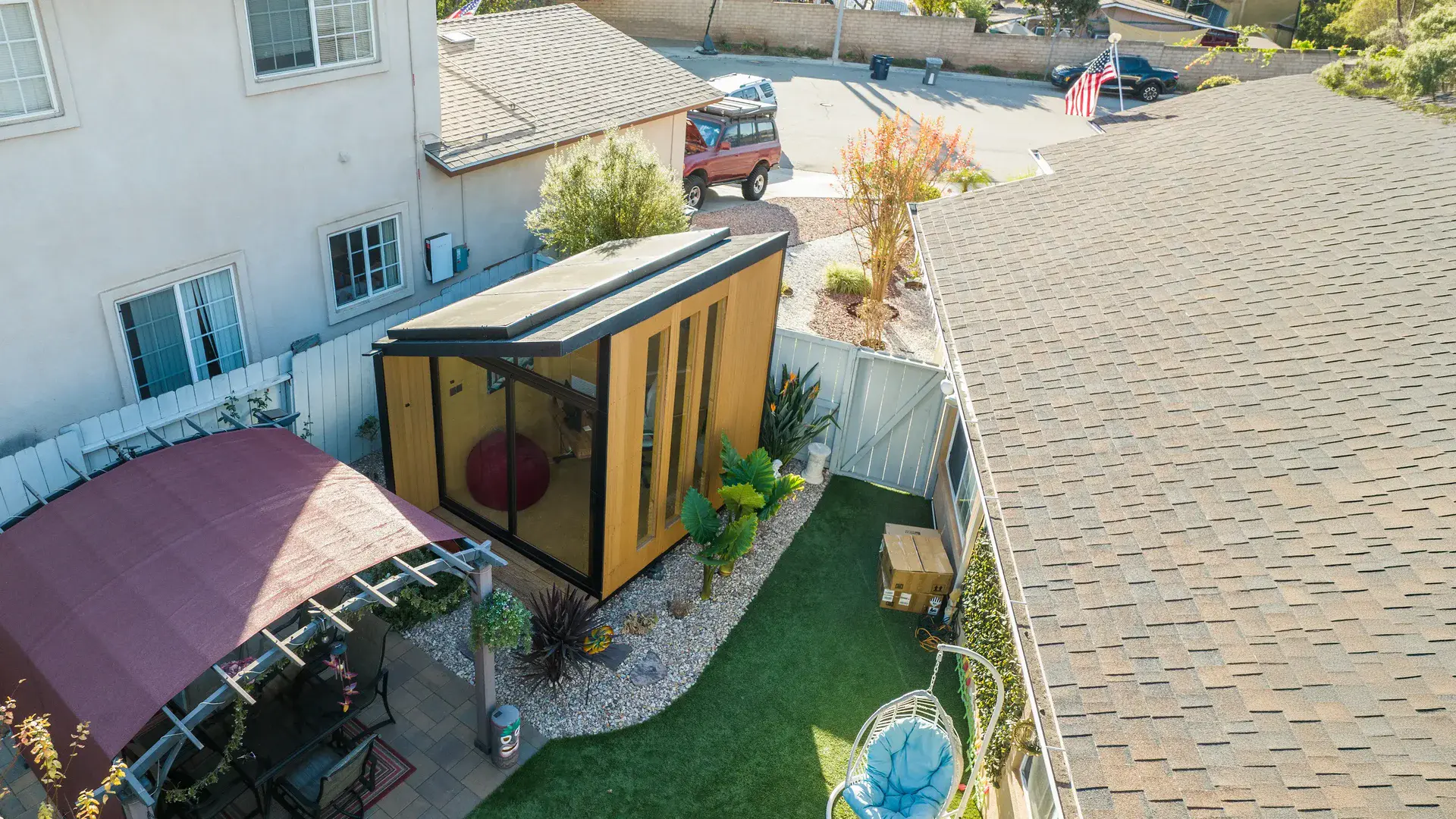
A small garden office is a detached garden office room of about 80 to 120 sq ft, with space for one desk, one chair and a shelf, away from the noise of the house. The fastest route is a finished pod that goes up in one to two days; a converted shed or kit costs less up front but leaves insulation, wiring and sometimes a permit to you. Below are 12 ideas for a small US yard, then the size, power, climate and permit checks.
On permits: many US areas need no building permit for a one-story detached structure of 200 sq ft or less, some set the limit at 120 sq ft, and wiring can need its own permit, so check local rules. For cost, the shed, kit and pod routes are compared in the table further down.
12 small garden office ideas that fit a small yard
Start with WorkPod if you want a full-time office by next season, MetroPod if your yard is tight, and StudioPod if the room will do more than one job. The other nine ideas trade money for your own time and trades. Here is how the three Autonomous pods compare; every spec sits on the Autonomous pods comparison page.
| Pod | Size | Door and windows | List price |
|---|---|---|---|
| WorkPod | 102 sq ft | Glass door, 3 side windows | $20,900 |
| MetroPod | 80 sq ft | Glass door, 1 window | $18,900 |
| StudioPod | 105 sq ft | Glass door, 2 hinged windows | $22,900 |
1. WorkPod: a finished garden office room in one to two days
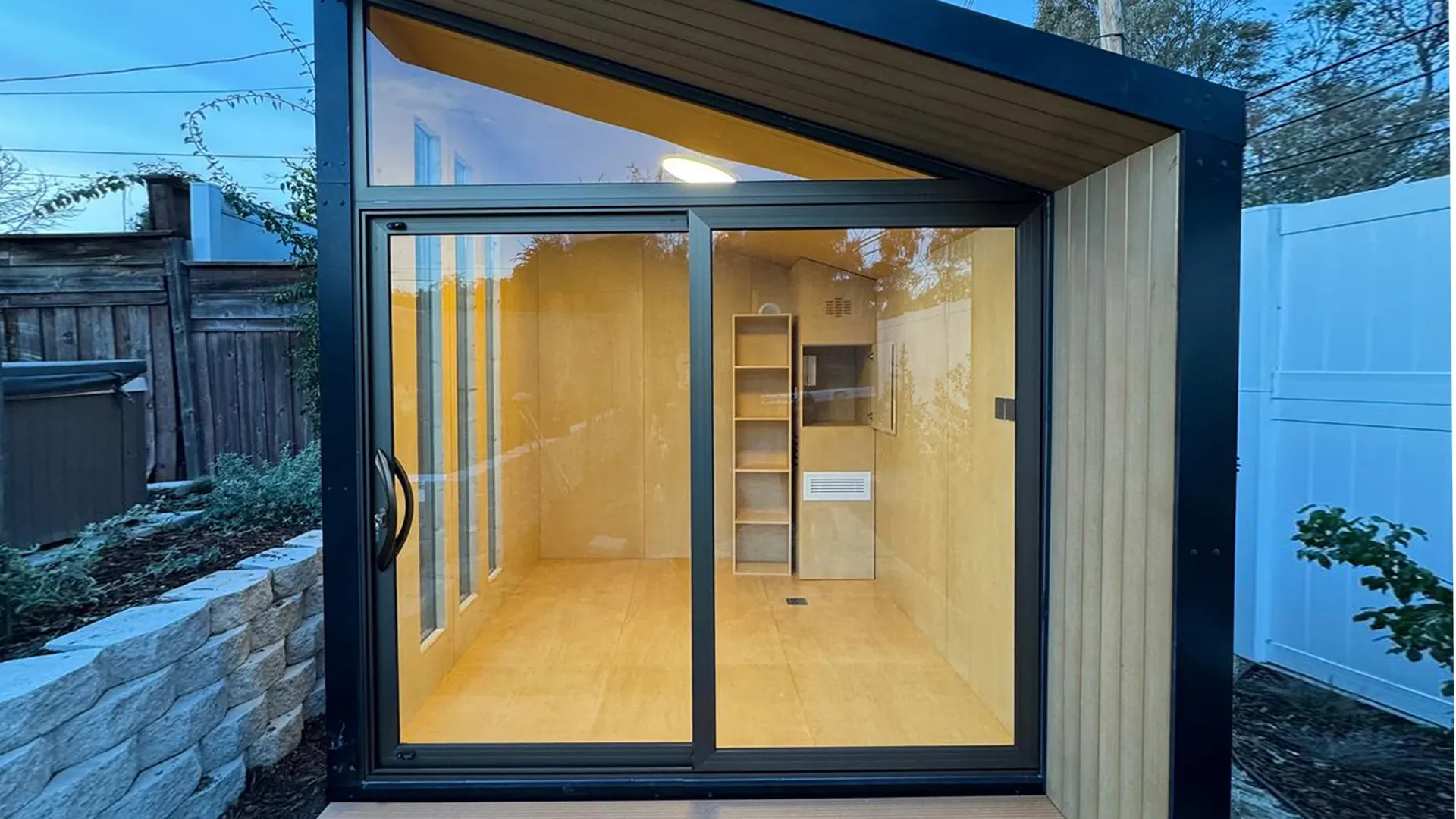
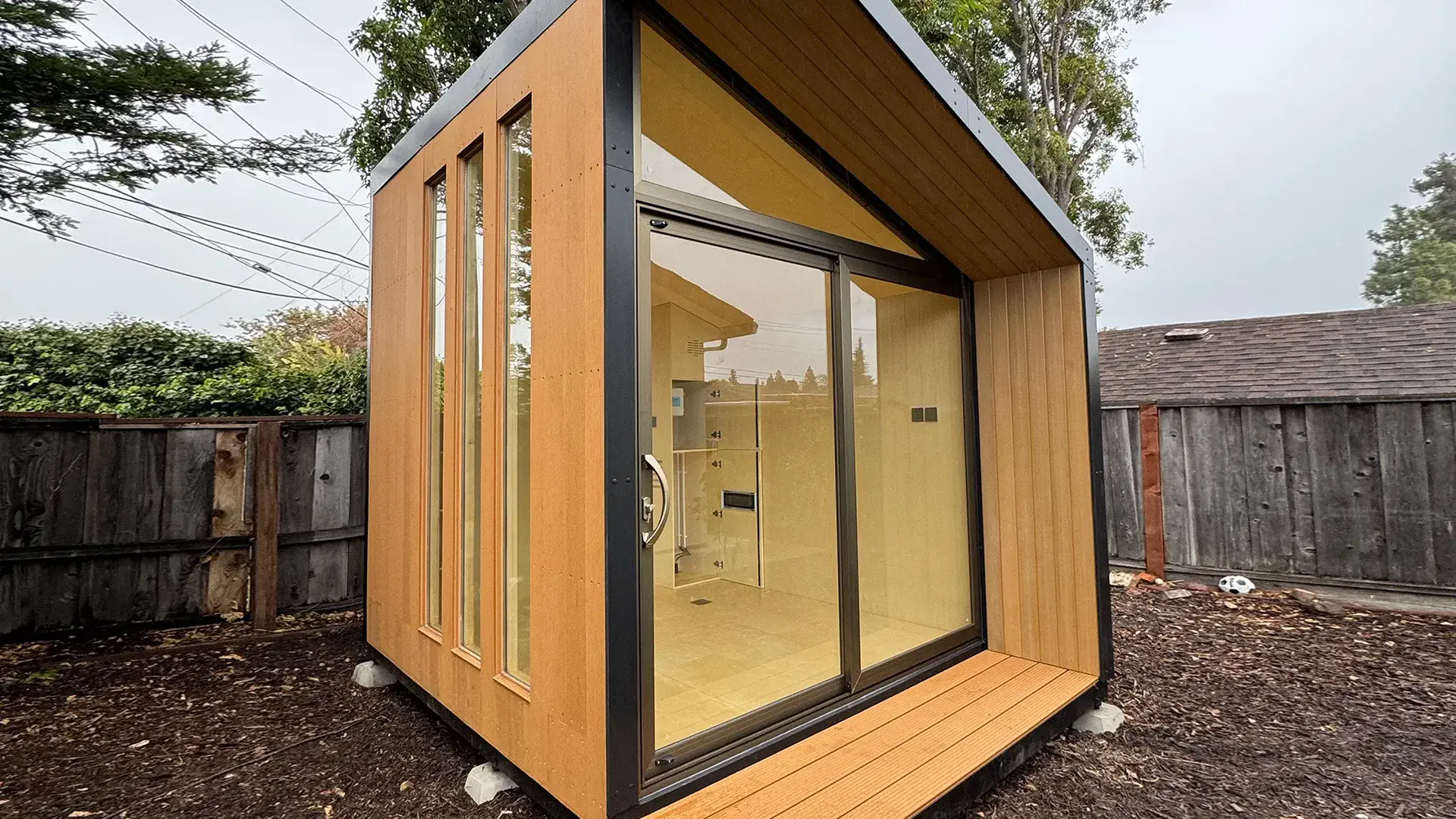
WorkPod is a 102 sq ft backyard office pod that arrives pre-wired and goes up in about 1 to 1.5 days with a pro crew, or 2 to 3 days if you build it yourself with two or three people. It has a full-height glass door, three vertical side windows (on the left or right, your choice) and a sloped ceiling that runs from 6.8 ft to 9.3 ft.
The walls use six insulated layers rated for a 45 to 100°F comfort range. Inside you get two wall outlets, a floor outlet, a ceiling light, a ventilator and a bookshelf. It stands on six adjustable feet on grass, gravel or concrete, so there is no slab to pour.
It suits someone who works from home most days and wants the office done, not a project. Solar and a Starlink kit are options, which matters if running a cable across the yard is hard.
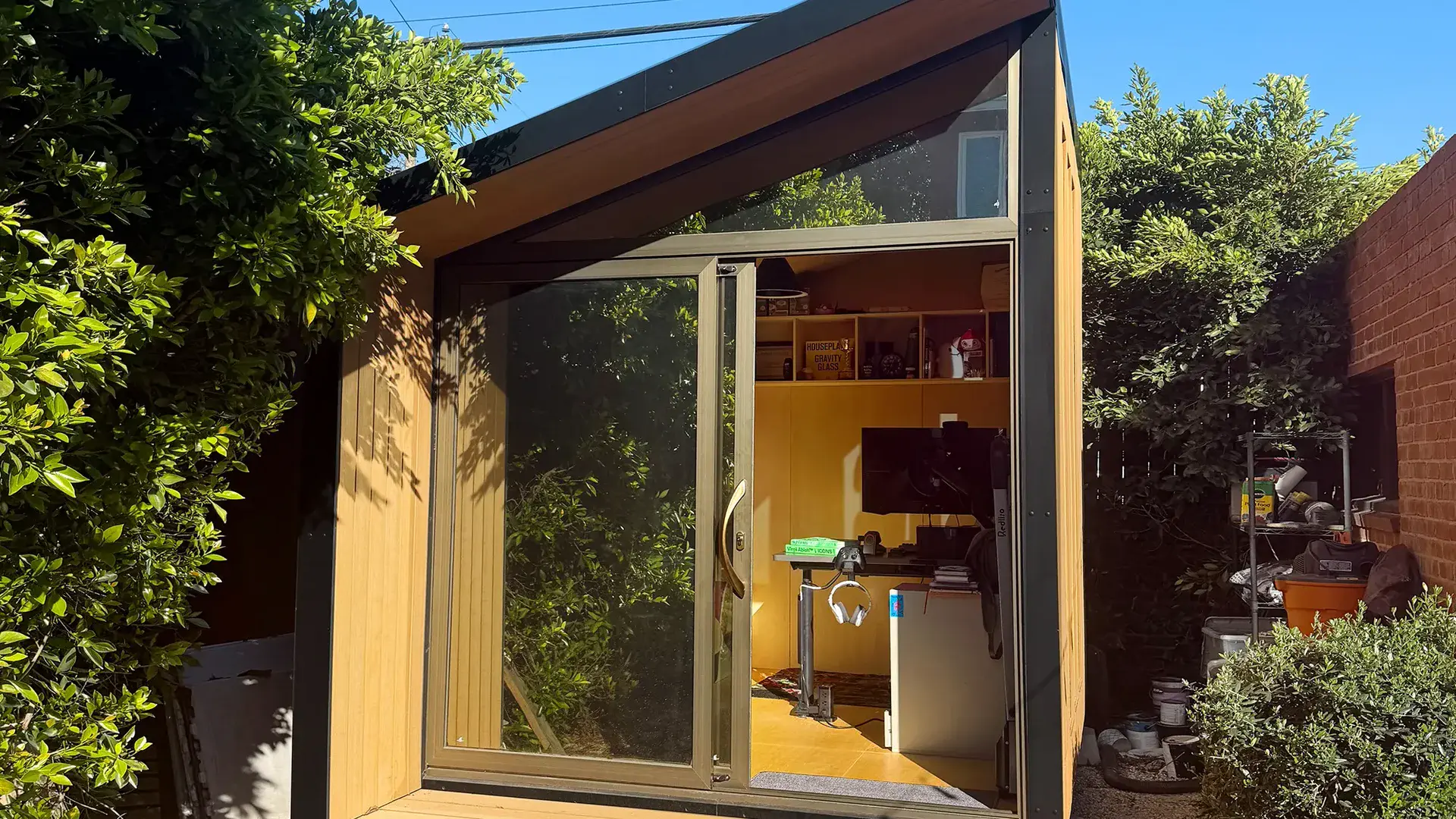
One honest limit: the low side of the ceiling is 6.8 ft, so put a standing desk under the high side. Autonomous describes its pods as sound-insulated rather than fully soundproof, so add acoustic panels if you record audio.

2. MetroPod: a mini office pod for a tight yard
MetroPod is an 80 sq ft mini office pod built for small city yards, with a full-height glass door, one window and a 7.25 ft flat ceiling. It needs no slab or digging and stands on four adjustable feet, which helps on a narrow strip beside the house.
It has two outlets, a ceiling light and an Ethernet port, and the wiring runs inside the walls. It suits one person who wants a tiny backyard office for focused work and has little yard to spare.
One honest limit: its five-layer walls are rated for 65 to 90°F, the narrowest range of the three, so budget for a heater or A/C in a cold or hot climate. It has no solar option, so it needs the power line to the house.
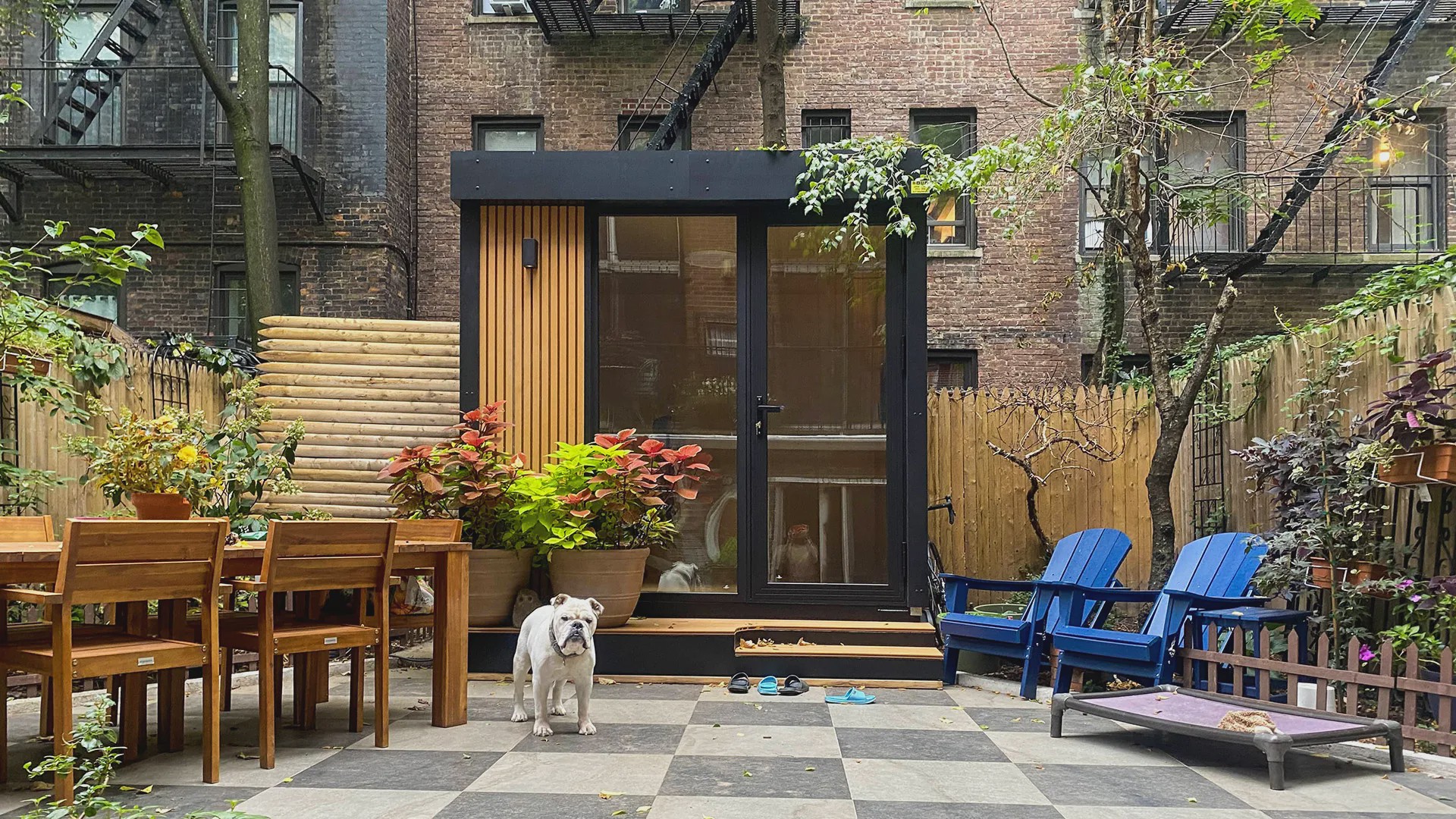
3. StudioPod: one garden room for work and everything else
StudioPod is a 105 sq ft room that comes empty on purpose, so it can be an office now and a gym, music room or guest space later. It has a glass door, hinged windows that open, a 7.25 ft ceiling, five outlets, four ceiling lights, a ventilator and two Ethernet ports.

It uses the same six-layer walls and 45 to 100°F range as WorkPod, and its solar option uses four 460 W panels. It suits a household that wants one backyard room for any use instead of an office only.
One honest limit: it is only 3 sq ft larger than WorkPod, so choose it for the extra outlets, lights and opening windows, not for space. You also furnish it from scratch.
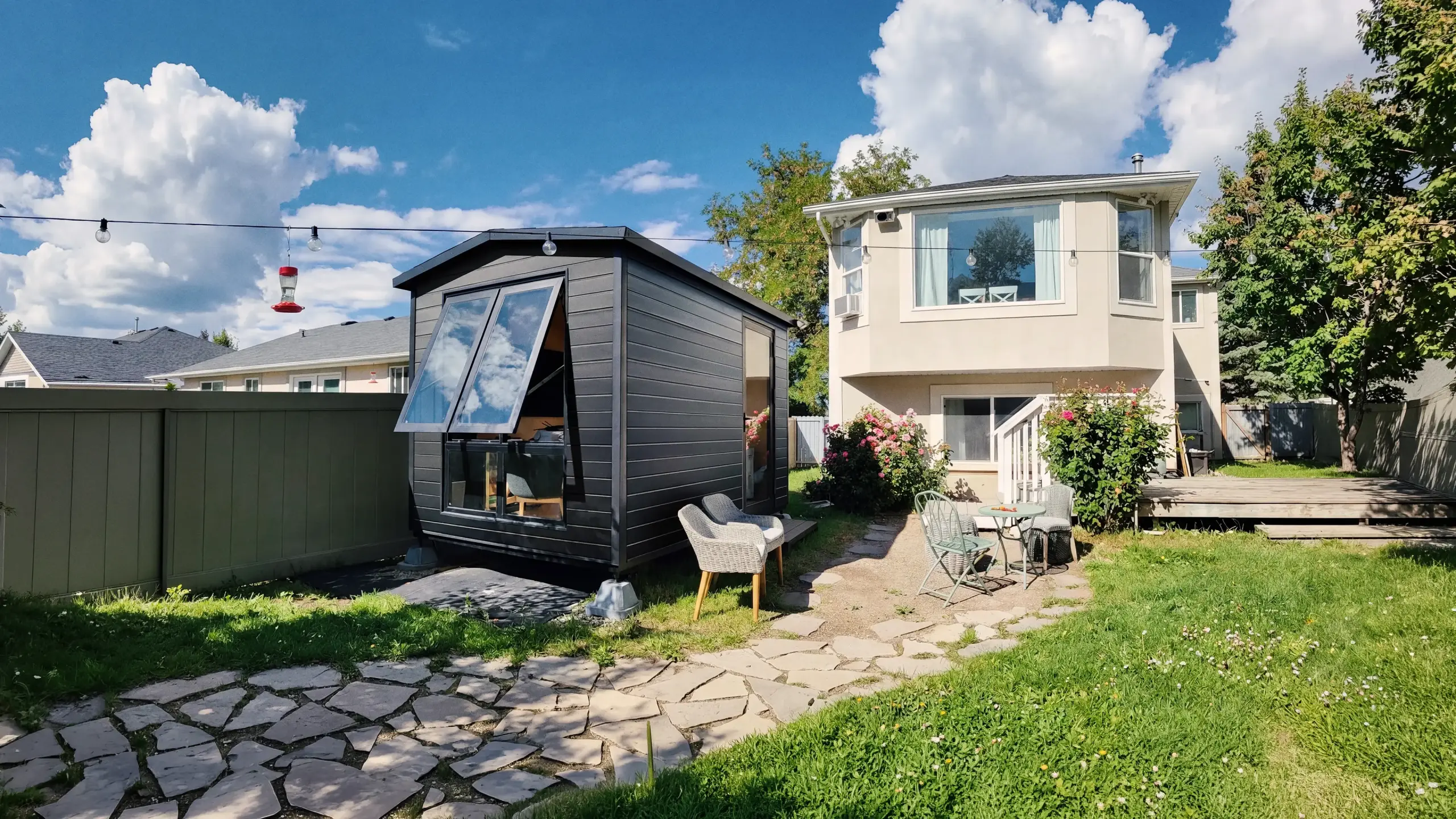
4. Convert the shed you already have
Converting an existing shed is the cheapest small garden office if the shell is sound, dry and big enough for a desk. The work is insulation in the walls, floor and roof, an electrician to run power, an interior lining and usually a bigger window.
Check the floor first: if it flexes or sits on bare soil, fix that before anything else. If the shed is too far gone, compare finished outdoor office sheds instead.
The same steps apply to garage office conversions. In Los Angeles, a garage-to-ADU conversion is the larger version of this route.
5. Cheap garden office: a kit you finish yourself
A shed kit is the cheapest new-build route, but the price usually covers the shell, not a working office. Westview, for example, lists its garden office kits from 10x10 ft, starting at $7,999, and notes that insulation isn't included and that power is run by a licensed electrician.
Kits suit someone who can assemble panels with a helper and is happy to hire out the wiring. Prefab shed kits and prefab she sheds show the range of styles.
A pallet build costs less again, but most of the work goes into weatherproofing and insulation. Read our DIY garden office pod guide before you start.
6. Insulated timber cabin for year-round work
A small timber cabin works all year only if the walls, floor and roof are insulated and the gaps are sealed. Wood looks at home in a garden, but bare cladding alone runs hot in summer and cold in winter.
Plan the layers before you buy: our guide to shed insulation covers materials, and the insulated garden office pod guide covers the full build.
A cabin is hard to move once it is built. If you may move house in a few years, portable office cabins are the safer bet.
7. Glass-fronted garden room for daylight
A glass front makes a small room feel larger and gives you daylight to work by, at the cost of heat gain and glare. Face the glass away from the afternoon sun if you can, or plan blinds from the start.
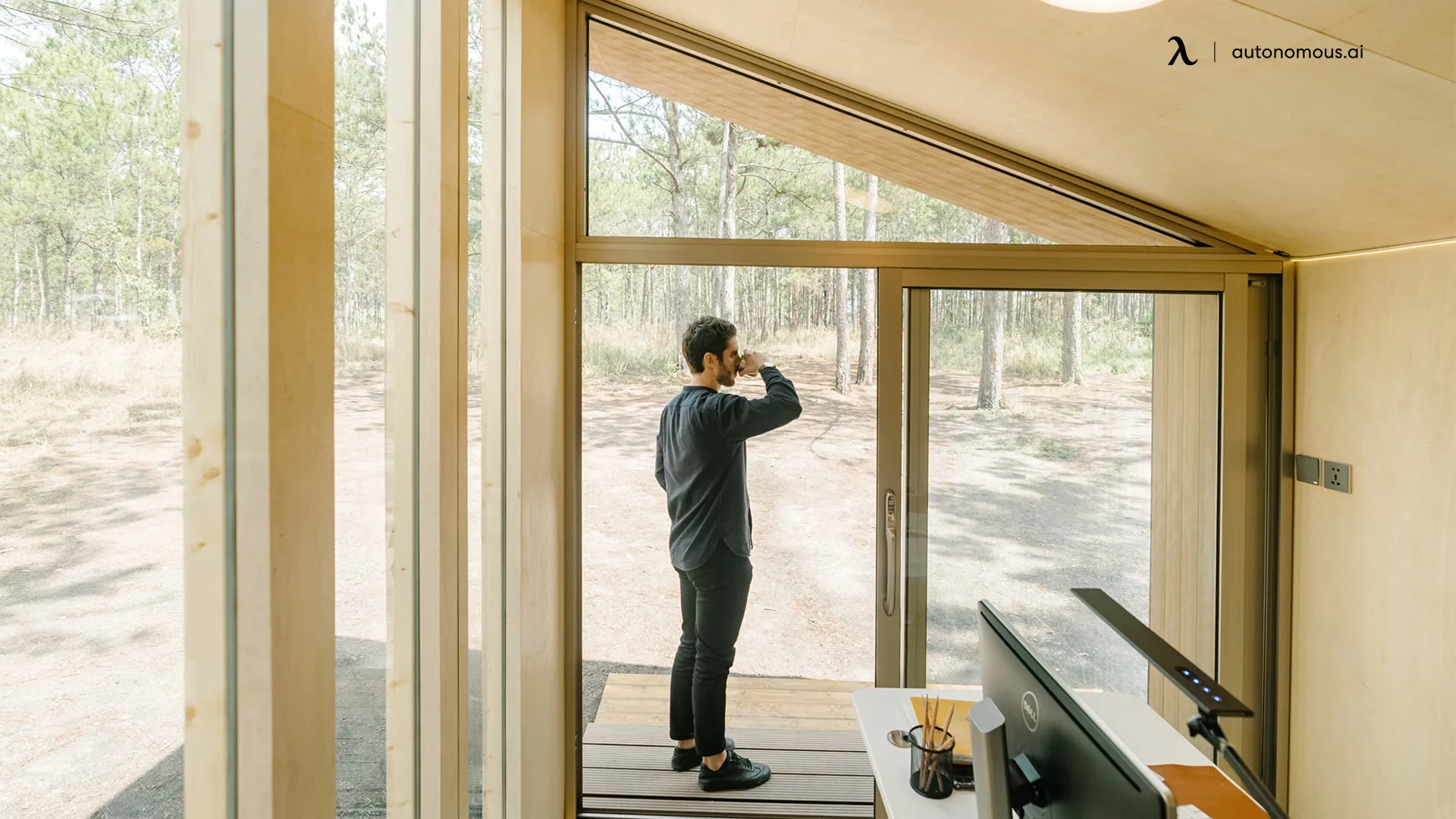
Put the desk side-on to the glass rather than facing it, so the screen does not compete with the view. Our list of prefab home offices shows more glass-heavy designs.
8. Shipping container office
A container office is strong and weathertight, but steel walls need serious insulation and condensation control before anyone can work inside. The smallest common containers are long and narrow, so check that a crane or truck can reach your yard.
It suits someone who wants an industrial look and has open access from the street. Behind a narrow side gate, it is the hardest idea here to deliver.
9. Office plus storage in one small room
A dual-use room puts the desk on one side and shelves or tool storage on the other, which suits a yard that only has space for one building. Keep the storage on the wall behind you, not beside the desk, so the work side stays clear.
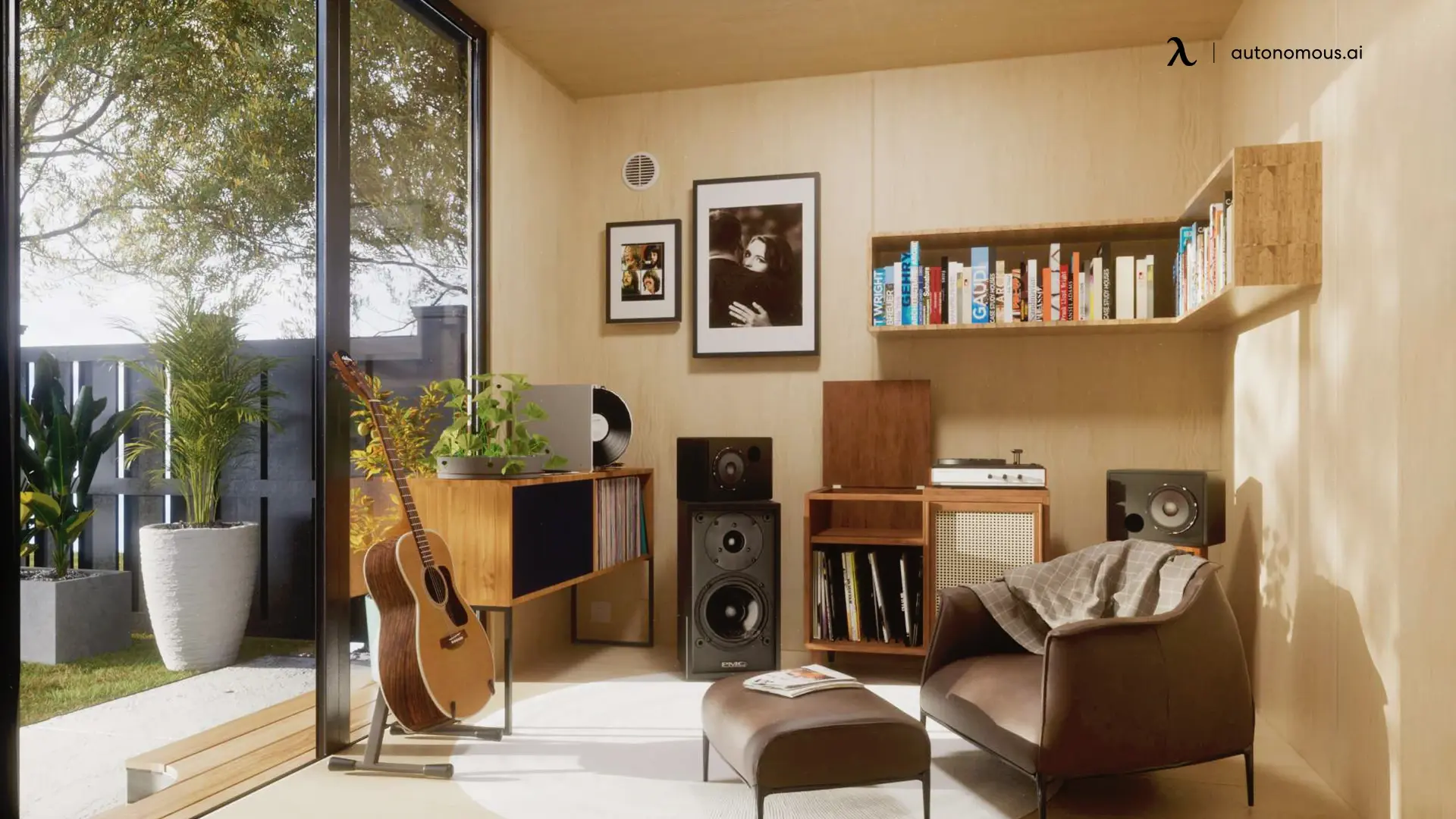
Go up before you go out: wall shelves and a high shelf over the door add storage without floor area. For a bigger budget, a prefab ADU with a loft stacks storage above the desk.
10. Greenhouse office among the plants
A greenhouse office is bright and green, but it is the hardest idea here to keep at a working temperature and humidity. Glass and polycarbonate let heat in fast and out fast, and plants add moisture that laptops do not like.
Shade cloth, cross-ventilation and a dehumidifier make it usable; a solar dehumidifier avoids running another cable. It suits mild climates and part-time work better than a full workday.
11. Under-pergola outdoor office nook
A pergola nook is the cheapest outside office space on this list: a roof for shade, a weatherproof table and an outdoor outlet. It works only in fair weather, so treat it as a second spot for calls and reading rather than your main office.
Add roll-down side screens for wind and glare, and keep the laptop out of direct sun. If you want something closed that you can move around the yard, look at a shed on wheels or portable office pods.
12. Solar-powered garden office
A solar-powered garden office skips the trench and cable to the house, which helps when the office sits far from your electrical panel. WorkPod's solar option uses three 430 W panels with a 10.2 kWh battery and makes up to 6 kWh a day; StudioPod's uses four 460 W panels and makes up to 8 kWh.

Both systems need the total load kept under 3,000 W, so check your heater or A/C wattage first. For a DIY shed, size your own system with our DIY solar power for sheds guide.
Low-draw add-ons help too: a solar fan for sheds moves air in summer, and a solar heater for a shed takes the edge off winter mornings.
How big does a small garden office need to be?
A small garden office for one person needs about 80 sq ft for a desk, a chair and a shelf; go to 100 sq ft or more for a second seat, storage or a standing desk you step back from. That is also the range the UK makers start at: Forest Garden lists its smallest garden office at 254 cm wide by 290 cm deep, about 79 sq ft.

Ceiling height matters as much as floor area in a small room. MetroPod and StudioPod have a 7.25 ft ceiling, and WorkPod's slopes from 6.8 ft to 9.3 ft, which makes its 102 sq ft feel larger.
Check it before you choose a size. Mark the footprint on the ground with string, set your desk and chair inside, sit down and push the chair back as if to stand. If the chair crosses the line, you need the next size up. Keep the 120 and 200 sq ft marks in mind too, because that is where many permit exemptions stop.
What to check before you build or buy a small outdoor office
Five checks decide whether a small outdoor office works on your lot: ground, power and internet, climate, permits and delivery access. Run them before you pay for anything, because one failed check can rule out a whole route.
Ground and site
Every route needs solid, level, well-drained ground. Autonomous pods sit on concrete, brick, gravel or grass and level on adjustable feet that handle up to a 5° slope, so they skip the slab. Westview's kits need a hard, level surface at least 3 inches larger than the building on every side.
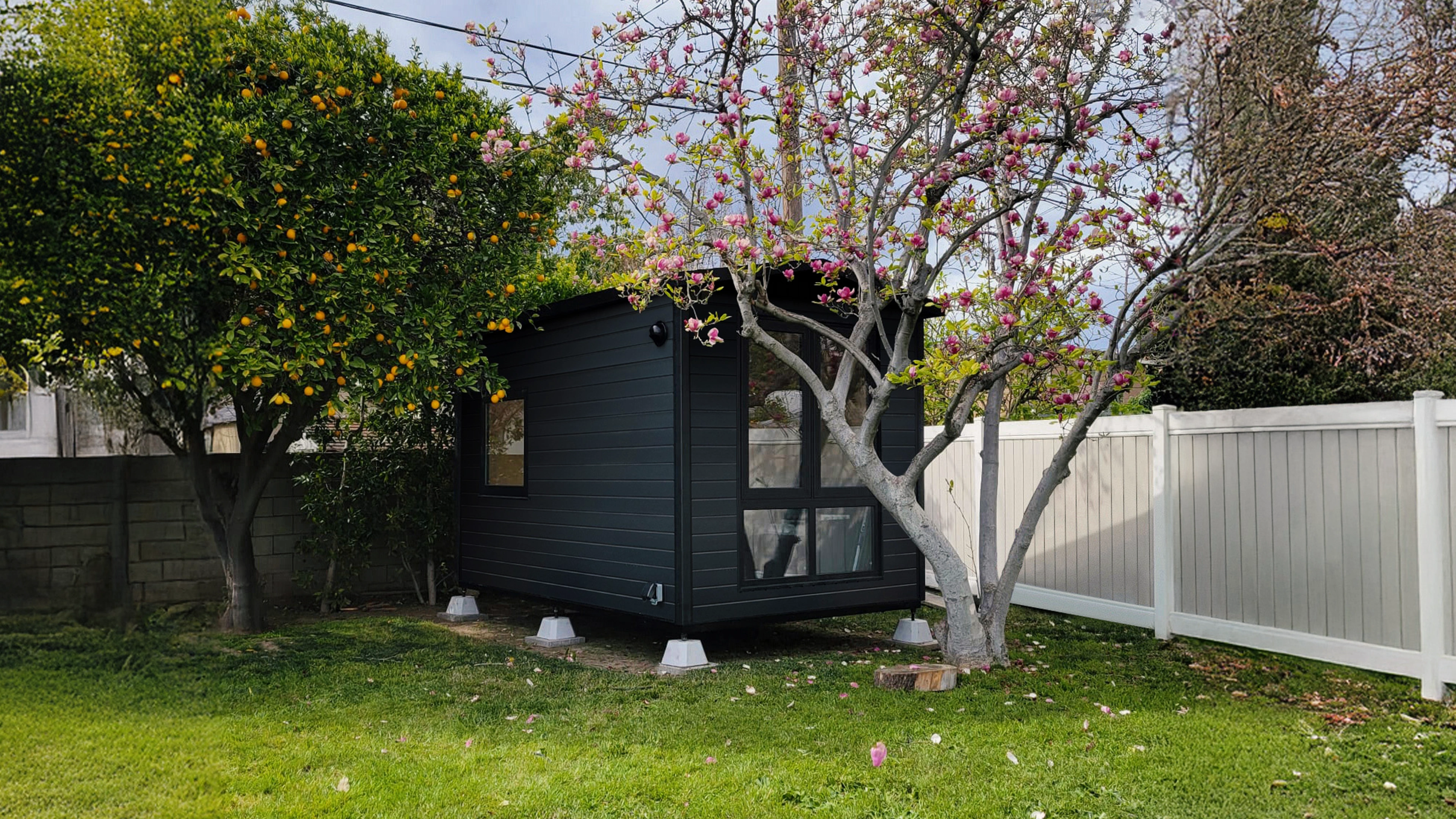
Run a string with a line level across the spot and measure the drop. Then check for buried lines, tree roots and standing water after rain before you commit to the spot.
Power and internet
Most garden offices run on one power cable from the house, so the distance to your panel sets part of the cost. Autonomous pods take a single outdoor cable, include a 66 ft cable with connectors and work best on a 20A dedicated circuit. If your panel has no spare 20A circuit, adding one is an electrician's job and may need an electrical permit. A shed or kit needs an electrician too, and in Sacramento County, adding wiring to a permit-exempt shed needs its own permit.
For internet, walk your phone to the spot and run a speed test. If the house Wi-Fi drops off, use a mesh system, a point-to-point wireless bridge or an Ethernet cable; MetroPod has one Ethernet port and WorkPod and StudioPod have two. WorkPod can also be ordered with a Starlink kit that Autonomous lists at 100 Mbps.
Insulation and year-round comfort
A garden office stays usable all year only if its insulation matches your climate and you add heating or cooling for the extremes. Insulation slows heat; it does not make it. WorkPod and StudioPod list six insulated layers and a 45 to 100°F range, and MetroPod lists five layers and 65 to 90°F.
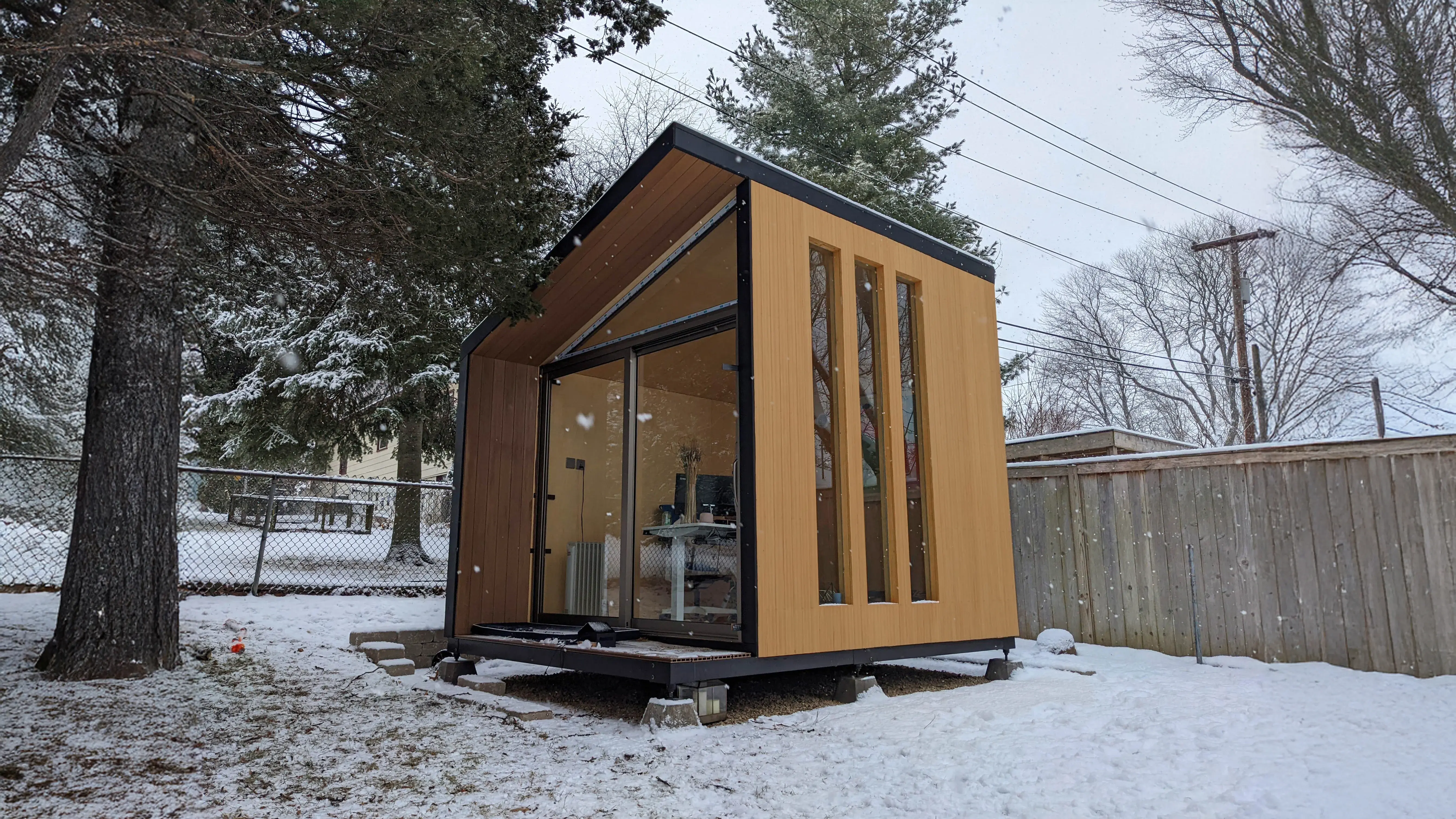
For a shed or kit you insulate yourself, use the climate tables: ENERGY STAR recommends floor insulation from R13 in the warmest US zone to R38 in the coldest. For pods, WorkPod takes a portable A/C up to 22 x 20 x 88 inches, and Autonomous recommends a mini-split in hot climates. Look up your average winter low and summer high, and if either falls outside the range, budget heat or A/C from day one.
Permits, setbacks and HOA rules
A one-story detached structure of 200 sq ft or less is exempt from a building permit under the model residential code (IRC R105.2), but many cities set a lower limit or add conditions. Sacramento County is a good example of how the details bite.
There, a detached structure of 120 sq ft or less is exempt, but adding electrical or plumbing needs a separate permit, and an exempt structure cannot be lived in. Between 120 and 200 sq ft, a structure stays exempt only if it meets an extra condition, such as not being fully enclosed or meeting fire separation rules. A closed-in office in that range is not exempt by default.
Setbacks apply even without a permit: in the same county, an exempt structure stays 6 ft from the house and 3 ft from other buildings. Autonomous says its pods sit below the permit threshold in most US cities, since they are under 120 sq ft, need no permanent foundation and plug in rather than hardwire; check local rules all the same. Email your building department the floor area, exterior height and wiring plan, and send your HOA the same details.
Delivery and access
Measure the narrowest point between the street and the spot, usually a side gate, before you order anything. Autonomous pods arrive flat-packed in three crates on one truck, and backyard delivery is free when a clear path at least 9 ft wide reaches the spot; a narrower path or stairs adds a long-carry fee.
Westview's kits also arrive in a crate, and home delivery costs extra. Containers and big cabins need a clear run for a truck or crane.
Shed, kit or finished pod: what each small garden office route takes
A converted shed costs the least in cash and the most in your time; a finished pod costs the most up front and is usable within days. The table below compares the work, not the price, since the price depends on what each option leaves out.
| Route | Work you take on | Time to usable | Best for |
|---|---|---|---|
| Convert a shed | Insulate, line, add windows, hire an electrician | As long as your trades take | A sound shed and a tight budget |
| Shed kit | Assemble with a helper, then insulate and wire | Assembly plus finishing jobs | Confident DIYers |
| Finished pod | Level ground, run one cable (an electrician if you need a new circuit) | 1 to 2 days to install | Working outside by next season |
| Room addition | Hire a contractor, plans, permits, foundation | The longest | A bigger room or living space |
Whatever you compare, list what the price leaves out. For Autonomous pods that is site prep, heating or cooling and furniture; check at checkout what Pro install covers. For kits it is usually insulation, wiring and delivery. For a backyard room addition, it is plans and permits on top of the build.
If an office inside the house would do, an indoor office pod or one of these privacy pods costs far less than any garden build.
Our breakdown of office pod prices covers the wider market.
FAQs
What is the smallest garden office?
The smallest practical garden office is about 80 sq ft, enough for one desk, a chair and a shelf. Forest Garden's smallest model measures about 79 sq ft, and Autonomous's MetroPod is 80 sq ft. Below that, a desk fits, but you lose room to push the chair back.
Is a garden office a good idea?
A garden office is a good idea if you work from home most days and have no spare room to convert. It separates work from the house. It only works if you plan insulation, heating or cooling, power and internet before you build, since those decide whether you can use it in January and July.
How much is a small garden office?
A small garden office starts at $7,999 for a shell kit such as Westview's 10x10 ft model, before insulation, wiring and delivery. A finished, insulated and wired pod costs more. The table near the top of this page lists those list prices.
How much does it cost to build a small office in a backyard?
Building a small backyard office costs the shell plus insulation, an electrician, an interior lining, a pad and any permit fees; with a kit, the shell alone starts at $7,999 (Westview). Get a local quote for each extra before comparing a DIY build with a kit or a finished pod.
Do you need a permit for a garden office?
Often not for the structure if it stays under your local size limit, usually 120 or 200 sq ft, but wiring can need an electrical permit and setbacks still apply. Autonomous says its pods sit below the permit threshold in most US cities; check local rules with your building department and HOA.
Can you use a garden office all year?
Yes, if the walls, floor and roof are insulated for your climate and you add heating or cooling for the extremes. Insulation keeps temperatures stable but does not heat or cool. Check the rated comfort range against your local winter low and summer high.
How do you get power and internet to a garden office?
Most garden offices take one power cable from the house on a dedicated circuit, run by an electrician for a shed or plugged in for a pre-wired pod. For internet, use a mesh Wi-Fi system, a wireless bridge, an Ethernet cable or satellite. Solar can replace the power cable.
How long does a garden office take to set up?
A finished pod takes about 1 to 1.5 days with a pro crew or 2 to 3 days DIY with two or three people. A kit takes its assembly time plus insulation and wiring, and a converted shed takes as long as the trades you book.
Conclusion
A small garden office works when it fits one person comfortably, stays warm and cool enough for your climate, and has power, internet and a clear permit answer. Pick the route by how soon you need it. A converted shed or kit saves money if you have the time and trades; a finished pod like WorkPod gets you working outside within days. Run the five checks first, then choose.