Prefab Office Pods to Set Up a Modular Backyard Office
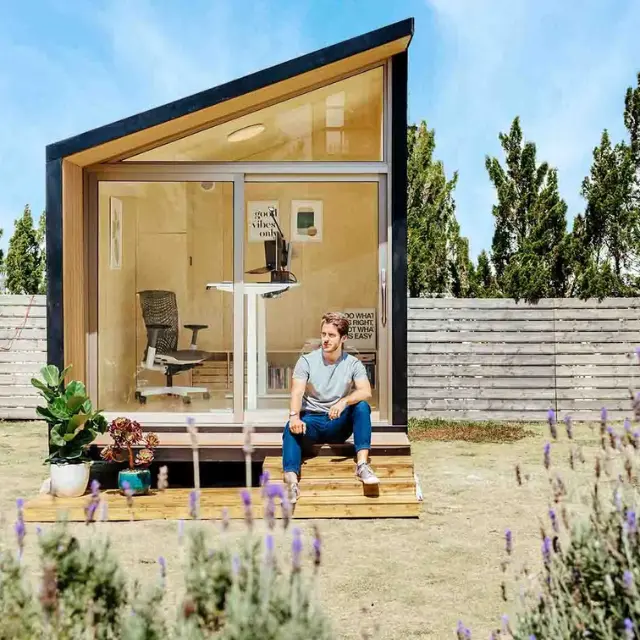
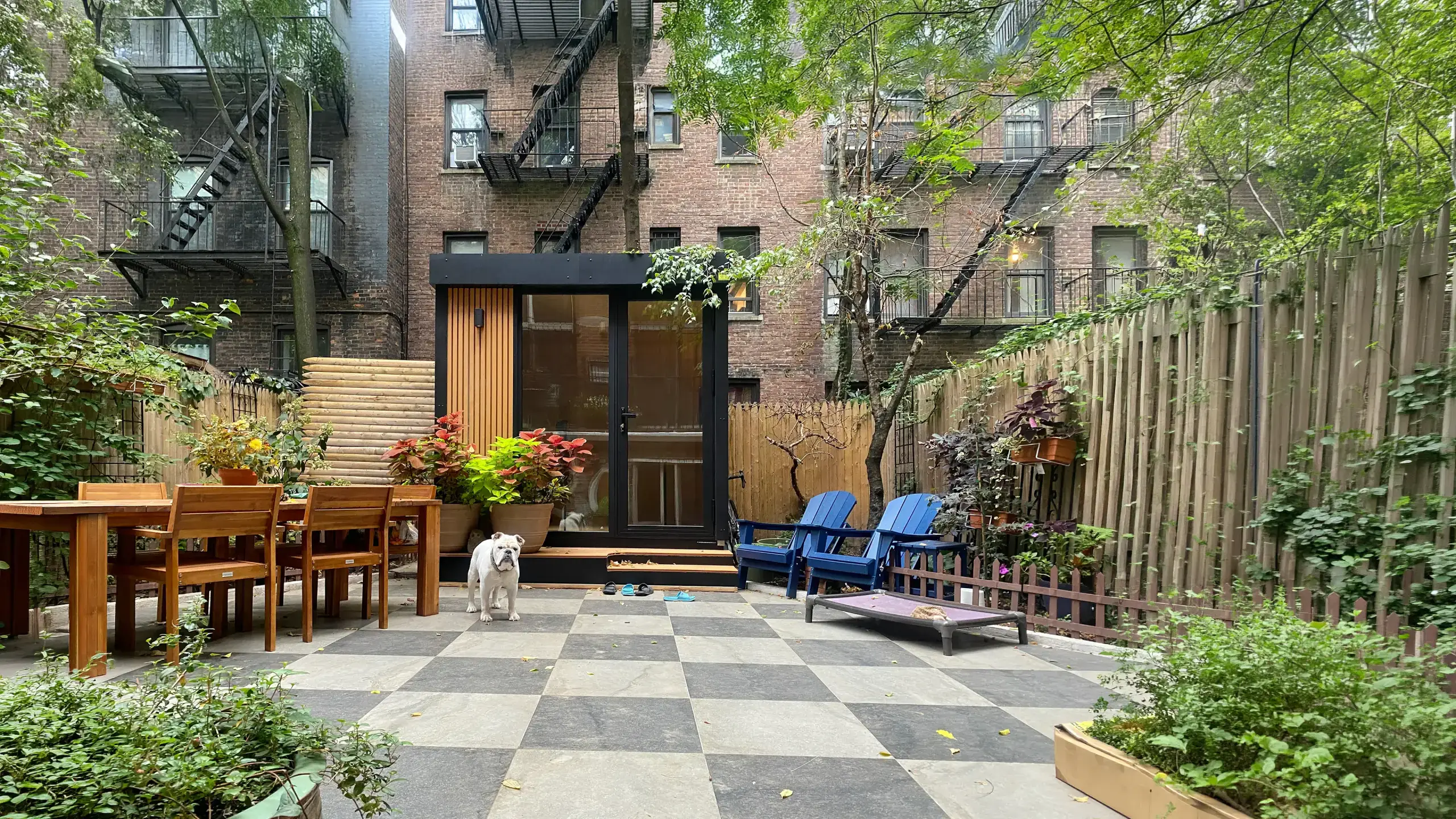
A prefab office pod is a small backyard office built from factory-made panels or modules and assembled on your lot in days. It works as a prefab home office: a separate, insulated room for work without framing a shed or adding onto the house. The catch is that list prices cover very different things: some modular office pods arrive pre-wired and stand on adjustable feet, while others leave out the groundwork, installation, heating and the electrician. This guide covers the checks, the hidden costs and six options.
Prefab office pods at a glance
The six prefab backyard office pods below range from 80 to 120 sq ft, and their starting prices run from $17,702 to $27,219 before add-ons, with one turnkey build at $40,600. Price per square foot looks like a fair way to compare them, but it only works once you know what each price includes. The last column is the part most listings keep in the small print.
| Pod | Listed size | Starting price | Per sq ft | Setup | Not in the list price |
|---|---|---|---|---|---|
| Autonomous MetroPod | 80 sq ft | $18,900 | About $236 | 1-2 days, DIY or pro install | Furniture, heater or A/C, power line to the house |
| Autonomous WorkPod | 102 sq ft | $20,900 | About $205 | 1-2 days, DIY or pro install | Most furniture (one bookshelf included), A/C, power line unless you add solar |
| Autonomous StudioPod | 105 sq ft | $22,900 | About $218 | 1-2 days, DIY or pro install | All furniture, A/C, power line unless you add solar |
| Studio Home Signature 80 | 80 sq ft | $17,702 | About $221 | Flat-packed kit, DIY or installer network | Installation and site work; painted drywall interior comes with pro install |
| Kanga Modern 10x12 Kwik Room | 120 sq ft | $18,900 shell kit; $40,600 turnkey | About $158 shell; $338 turnkey | 8-12 weeks delivered and installed | Shell kit: interior finish and installation; turnkey and installed shell in Texas only |
| Okopod OKO80 | 80 sq ft | $27,219 | About $340 | Local contractor installs | Groundwork, installation, heating, electrical hookup |
Prices change periodically; check the product page.
Read the table from right to left: a low price per square foot on a bare shell is not a cheaper office. Every spec for the Autonomous backyard pods sits on one comparison page.
What prefab and modular mean for a backyard office
Prefab means the walls, floor and roof are made in a factory and arrive ready to assemble, so the work on your lot is assembly rather than framing. A stick-built shed is cut, framed and finished on site instead.
Modular, strictly, means whole box sections built in a factory and set in place, but pod makers use "modular office pods" and "outdoor modular office" loosely. Studio Home, Kanga Room Systems and Okopod all describe panel systems that go together on site. Autonomous ships its pods pre-wired, and owners report they arrive in packages and go up in one to two days.
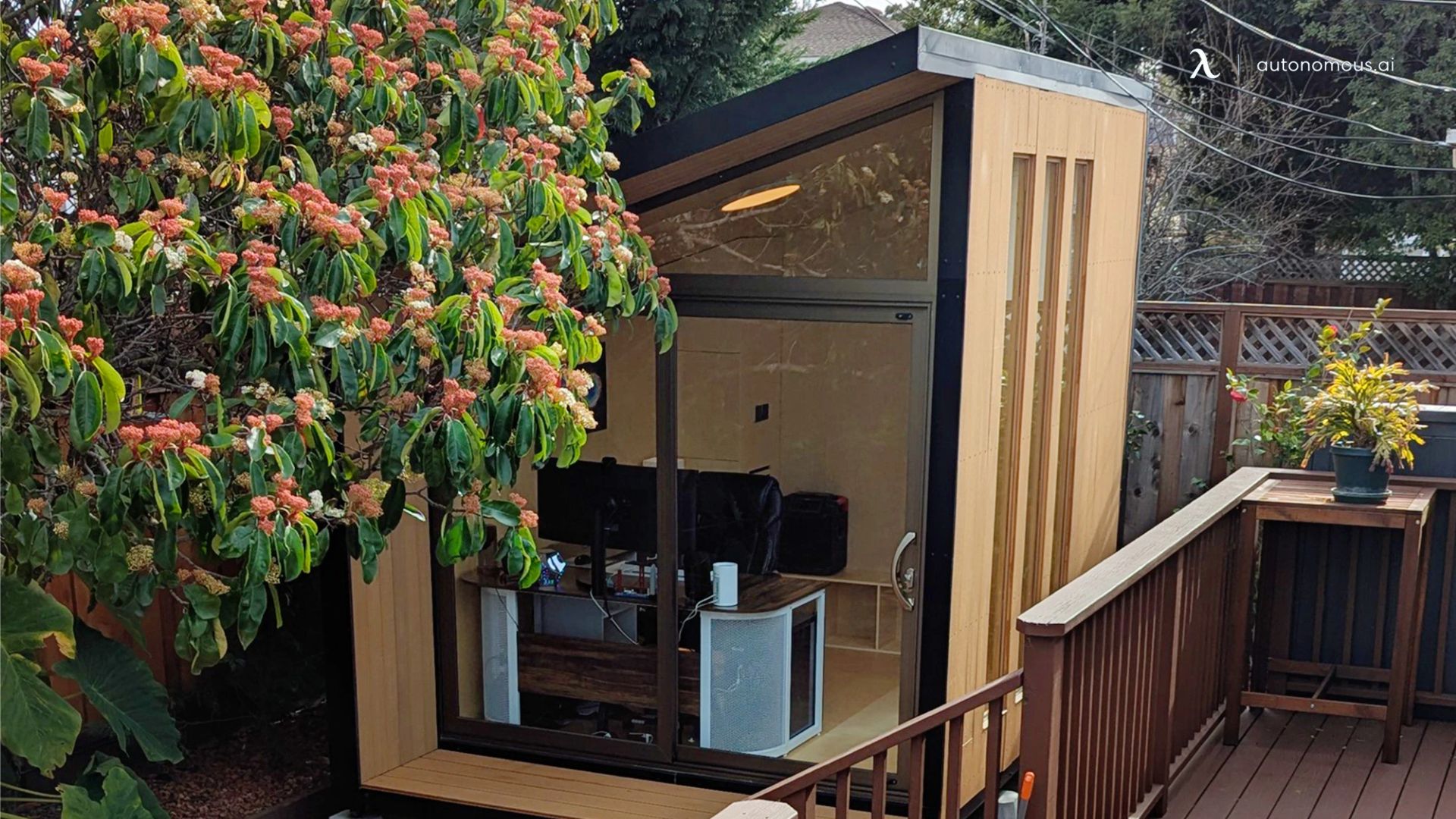
A prefab office pod is also not a modular home. Homes built to live in follow a separate approval path.
Prefab office pod vs shed, garage conversion or room addition
A prefab office pod sits between a shed and an addition: it is finished and insulated like a room, installs like a kit, and is often sized to stay under local permit limits.
| Option | What you get | Permit picture | Main catch |
|---|---|---|---|
| Prefab office pod | A finished, insulated room built from factory panels | Often sized under local exemption limits; wiring may still need a permit | Prices include very different things |
| Prefab or DIY office shed | A cheaper shell, often without insulation or wiring | Small storage sheds are often exempt, but adding electrical can need a permit | You add insulation, wiring, windows and heating or cooling |
| Garage conversion | A room inside a structure you already own | Treat it as a remodel and ask your building department | You lose parking or storage, and an attached garage still picks up noise from the house |
| Room addition | Part of the house, sharing its heat and power | Building permit and plans | Longest timeline, contractor-led, with foundation work |
The shed route looks cheaper until you price the finishing, even for sheds styled like a modern backyard studio. To finish a shell yourself, start with our budget prefab office sheds.
If you only work outside on good days, simpler outdoor workspace ideas or a cheap garden office pod may be enough.
What a prefab office pod really costs
A prefab office pod costs its list price plus whatever the maker leaves out, and those exclusions can add thousands. Kanga's own price list shows the gap. Its 120 sq ft Modern Kwik Room is $18,900 as a shell kit and $40,600 as a turnkey build in Texas, so the finished room costs more than twice the shell.
Go through these lines for every pod you compare:
- Installation: Studio Home lists its price "+ installation", and Okopod's installation is done by a local contractor outside the base price. Autonomous offers DIY or Pro install as an option on each pod page.
- Ground and foundation: Okopod's groundwork for its Jack Pad foundation is done by your contractor, and it notes local rules may require concrete. Autonomous pods need no slab and stand on adjustable feet on grass, gravel or concrete.
- Power hookup: Okopod says the electrician's connection typically costs about $1,000 to $2,000. Autonomous pods run on one power line to the house, and the solar option on WorkPod and StudioPod skips that line.
- Heating and cooling: Okopod pods come without heating. Autonomous pods are HVAC-ready, but the A/C unit is yours to buy.
- Interior and furniture: Kanga's shell kit has no finished interior, and Studio Home's painted drywall comes with professional installation. Autonomous pods arrive finished inside, but furniture is not included (WorkPod comes with one bookshelf).
- Permits and fees: these depend on your city and your plans for wiring, so no maker can quote them.
Ask every seller for a written list of what the price excludes, then get a local quote for each line before you compare totals. For indoor booths and other pod types, our breakdown of office pod prices covers the rest of the market.
What to check before you buy a prefab office pod
Six checks decide whether a prefab outdoor office works on your lot: size, ground, permits, power, climate and access. Do them in that order, since an early fail rules a pod out.
Size for how you work
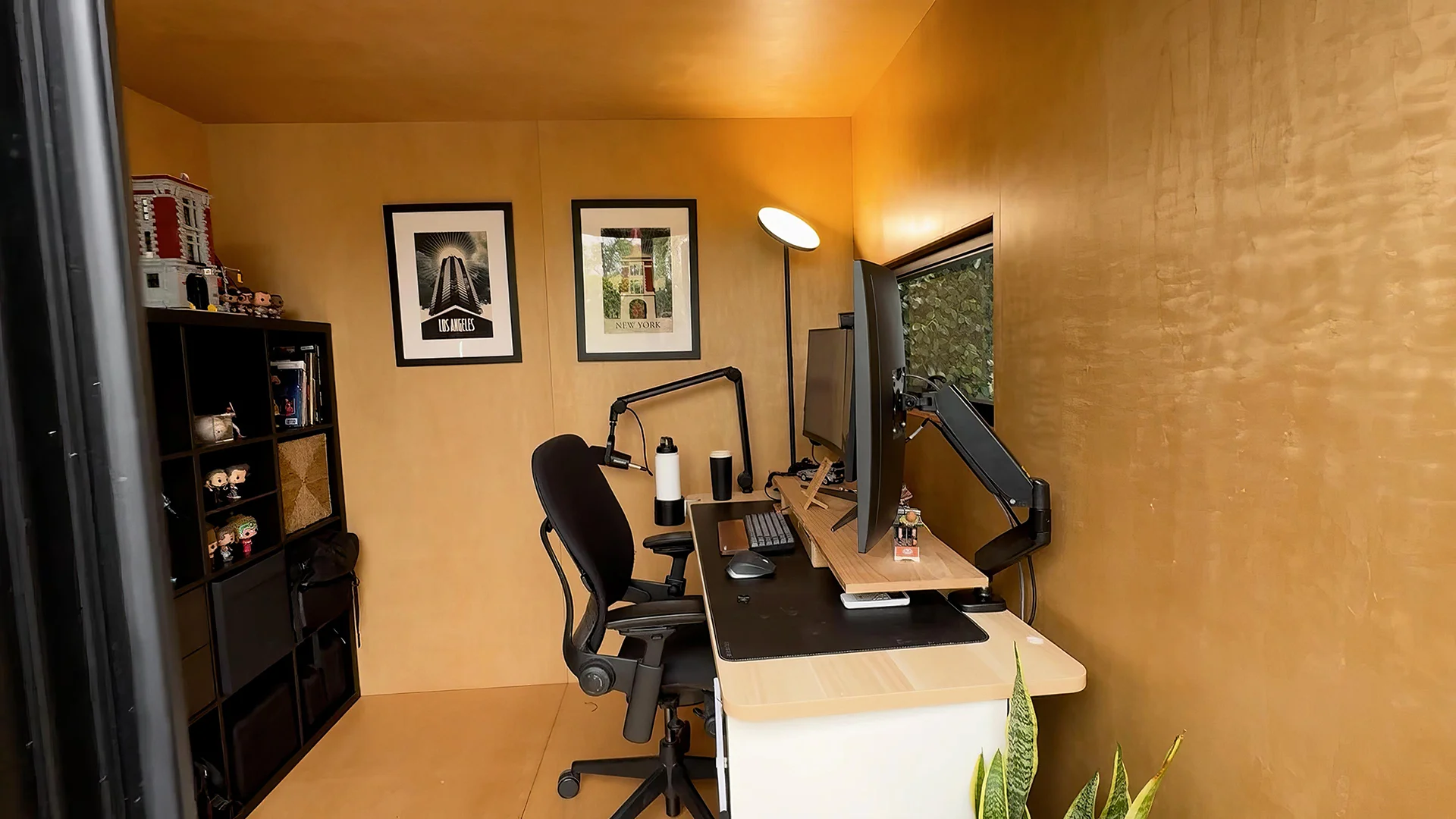
An 80 sq ft pod fits one person at a desk; go to 100 sq ft or more if you want a second seat, a couch or room to step back from a standing desk. Owners of the 80 sq ft MetroPod report it fits a desk, a chair and some essentials without feeling cramped.
Ceiling height matters as much as floor area in a small room. MetroPod and StudioPod list 7.25 ft, and WorkPod's sloped roof gives 6.8 ft on the low side and 9.3 ft on the high side.
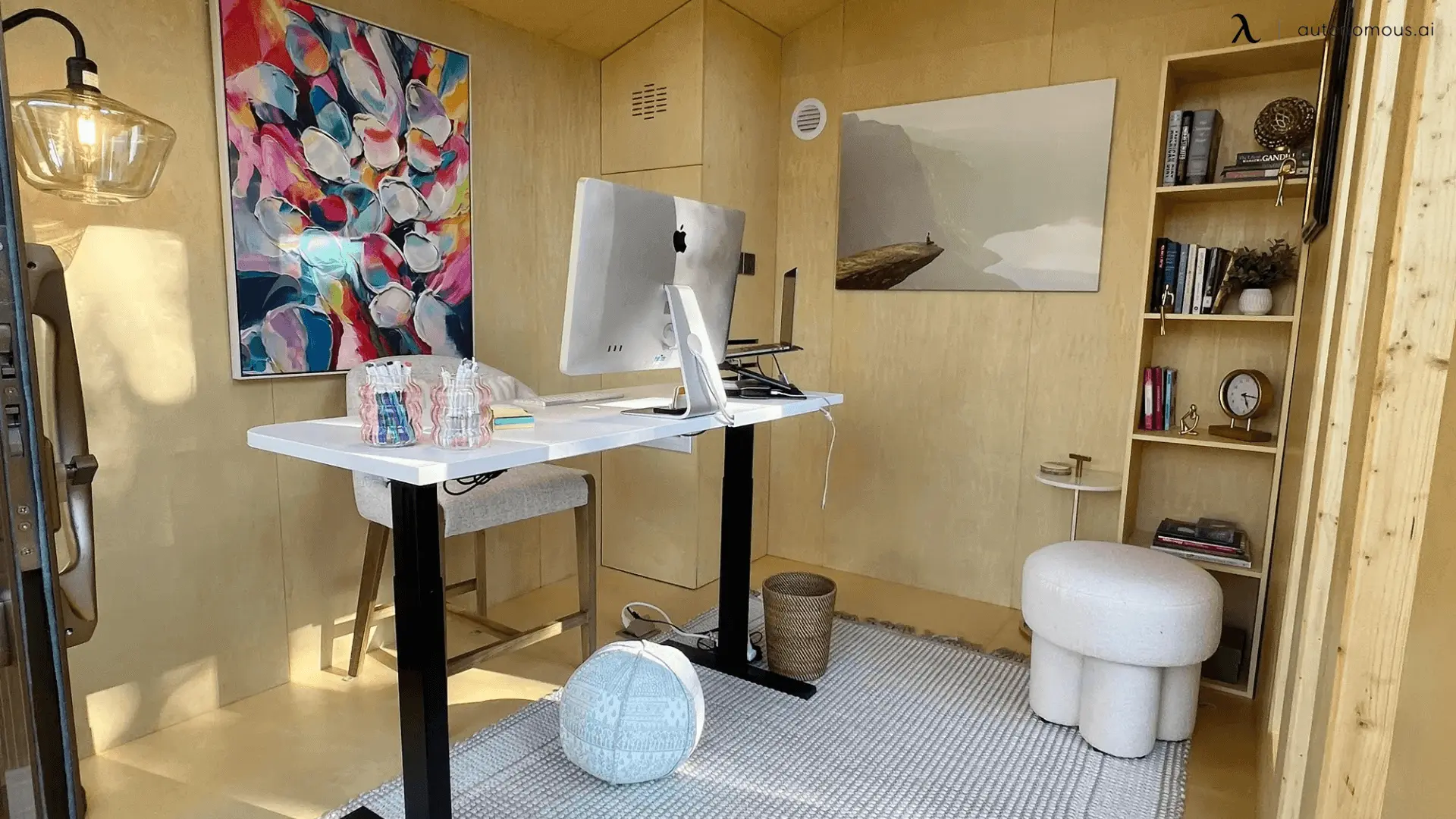
Check it before you order: mark the footprint on the ground with string and set your desk and chair inside it. Each Autonomous pod page also has an AR view that places the pod in your yard from a phone.
Foundation and site prep
Many prefab office pods need no concrete slab, but they still need a stable, roughly level spot. Autonomous pods stand on adjustable feet (4 on MetroPod, 6 on WorkPod and StudioPod) that work on grass, gravel or concrete.
Autonomous lists a 5° slope capacity, but the feet themselves adjust over about 4.5 inches (8.4 to 12.9). Run a string with a line level across the spot and measure the drop over the pod's length. If it is more than a few inches, ask Autonomous or a builder whether you need blocks or some grading first.
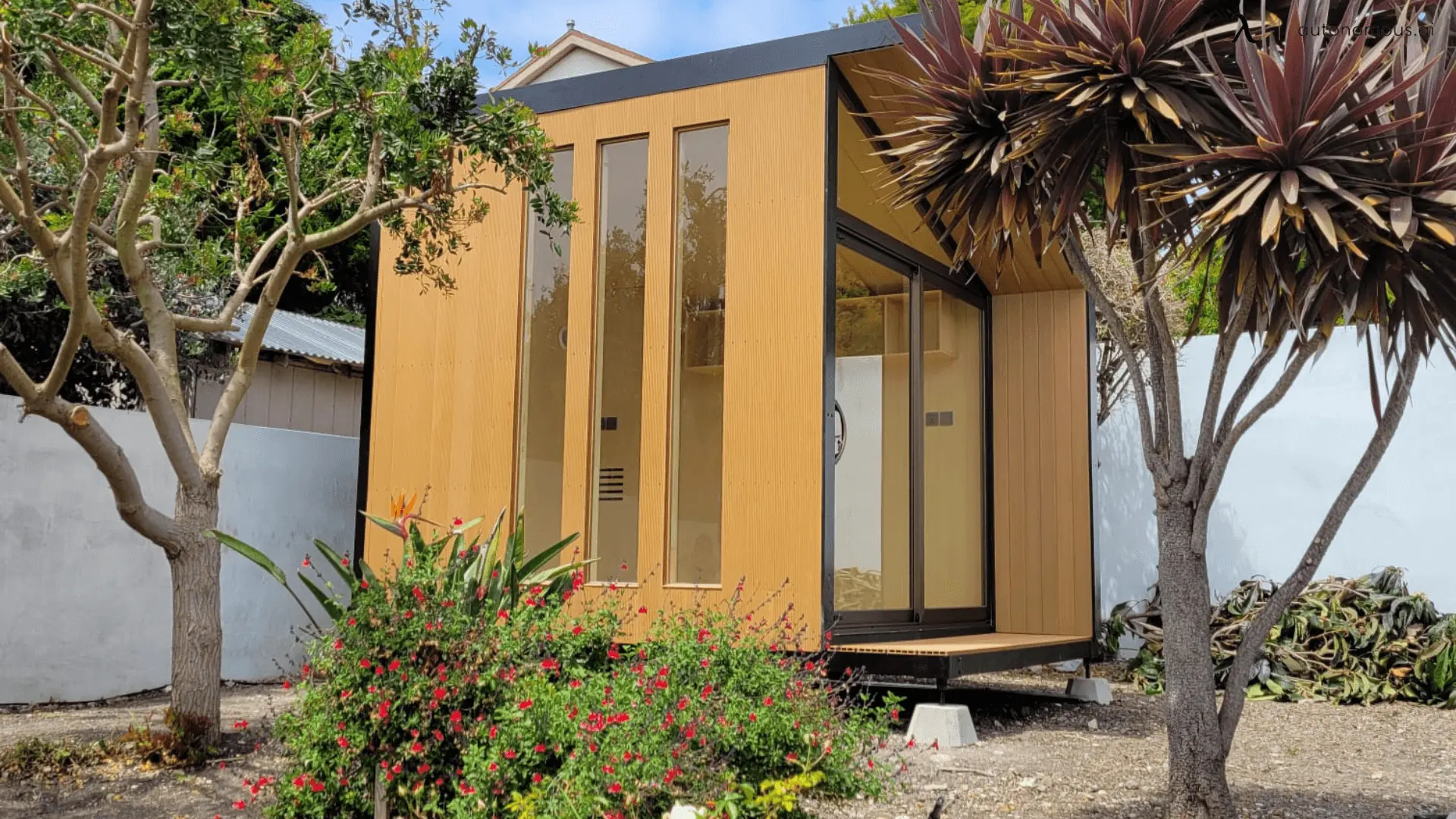
Okopod's Jack Pad base is prepared by your own contractor, and Studio Home's installers quote site work separately. Check for buried lines, tree roots and drainage before you pick the spot.
Permits, setbacks and HOA rules
A small detached structure is often exempt from a building permit, but wiring it can still need one. Sacramento County, for example, exempts detached structures of 120 sq ft or less but requires a separate permit once electrical or plumbing is added. It also bars living in exempt structures (Sacramento County GI-20).
Setbacks still apply to exempt structures. In the same county, a structure under 9 ft tall may sit on the property line, while one of 9 to 12 ft must sit 5 ft back. Every structure stays 6 ft from the house.
Autonomous says its pods sit below the permit threshold in most US cities, and Kanga and Studio Home say similar things about their smaller models while telling buyers to check locally.
Check it with one email to your building department: give the floor area, exterior height and wiring plan, and ask about a building permit, an electrical permit and setbacks. Get the exterior height from the seller, since WorkPod's ceiling alone reaches 9.3 ft inside. Send your HOA the same details.
Power and internet
Most prefab office pods run on one power line from the house, so the distance from your panel to the pod sets part of the cost. Autonomous pods take a single cable with the wiring inside the walls, and all three have an Ethernet port; outlet counts are in each pick below.
WorkPod and StudioPod can skip the line with a solar option. WorkPod's three 430 W panels and 10.2 kWh battery make up to 6 kWh a day, and StudioPod's four 460 W panels make up to 8 kWh. Autonomous puts a typical WorkPod load of two monitors, a laptop, the light and ventilation at a few hundred watts.
For internet, walk your phone to the spot and run a speed test before you order. If the house Wi-Fi does not reach, run Ethernet with the power line or use satellite. WorkPod can be ordered with a Starlink kit that Autonomous lists at 100 Mbps and 25 to 60 ms latency. Our list of office sheds with electricity has more wired options.
Insulation and climate range
A pod is usable all year only if its insulation and your heating or cooling match your local temperatures. Autonomous lists a comfort range of 45 to 100°F for WorkPod and StudioPod, which use six insulated layers, and 65 to 90°F for the five-layer MetroPod.
Look up your area's average winter low and summer high. If either falls outside the listed range, budget for a heater or A/C from day one. WorkPod takes a portable A/C up to 22 x 20 x 88 inches with a 5.9-inch exhaust duct, and Autonomous recommends a mini-split for hot climates. Okopod specifies insulation by climate zone but includes no heating.
Assembly, timeline and delivery access
Autonomous pods go up in one to two days, either by you or by a pro installer. One MetroPod owner reports building about 80% of it himself by following the directions. Autonomous also lists local builders in 18 states who handle permit guidance, ground leveling and installation.
Other makers quote longer from order to finished room. Kanga says most of its backyard offices are delivered and installed within 8 to 12 weeks, and Studio Home ships a flat-packed kit for you or its installer network to assemble.
Measure the narrowest point between the street and the spot, usually a gate or a side yard, and ask the seller for the largest package size. One owner reports getting a MetroPod from the door to a small New York City backyard without trouble, but other owners report shipping arriving later than planned, so leave slack in your schedule.
Prefab backyard office pods worth a look
The six pods below run Autonomous first, smallest to largest, then three market examples with prices read on the makers' own pages. Our roundup of outdoor office pods has a longer list, and our list of garden office pods in California covers makers in that state.
MetroPod for a small city yard
MetroPod is Autonomous's smallest pod: 80 sq ft with a full-height glass door and one window, built to fit a city lot. It has five insulated layers, 5/16-inch tempered glass, four adjustable feet rated for 2.3 tons, two outlets and a ceiling light.
It suits one person who needs a quiet room and has little yard to spare. Furniture is not included, so plan for an electric standing desk and chair that fit the footprint.
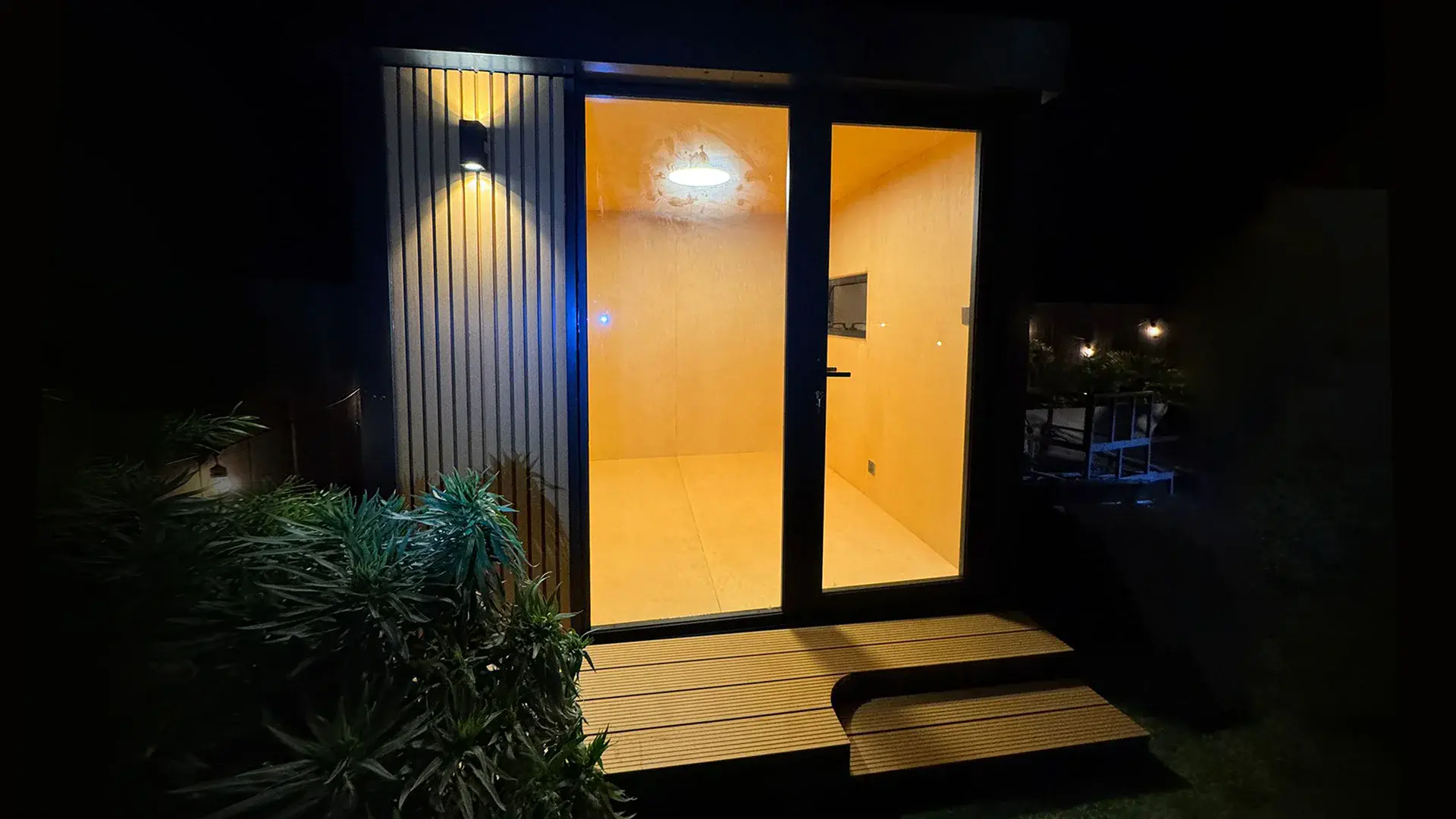
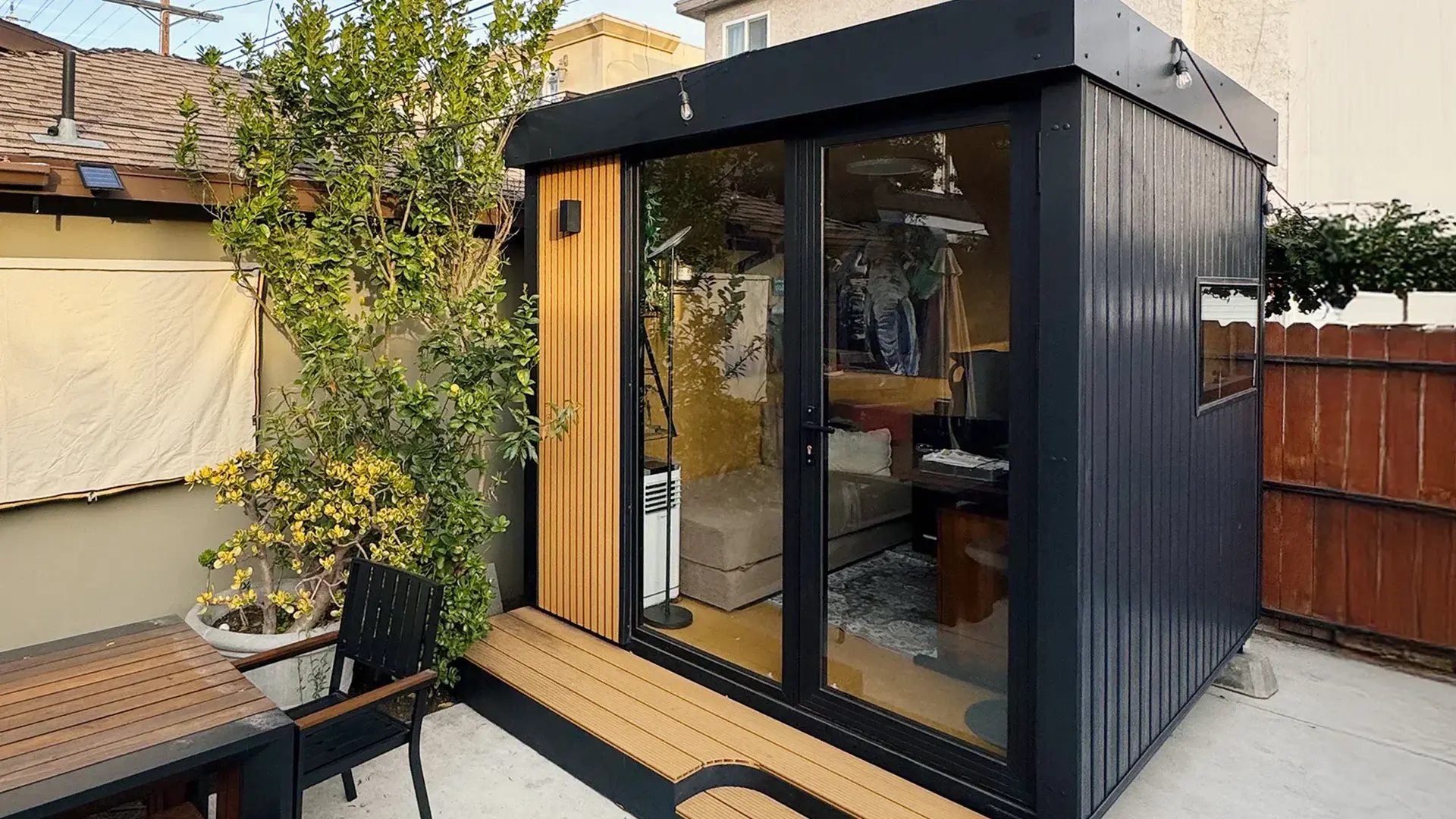
One honest limit: MetroPod's 65 to 90°F comfort range is the narrowest of the three, so plan a heater or A/C in colder or hotter climates. It also has no solar option, so it needs the power line to the house.

WorkPod for a full-time backyard office
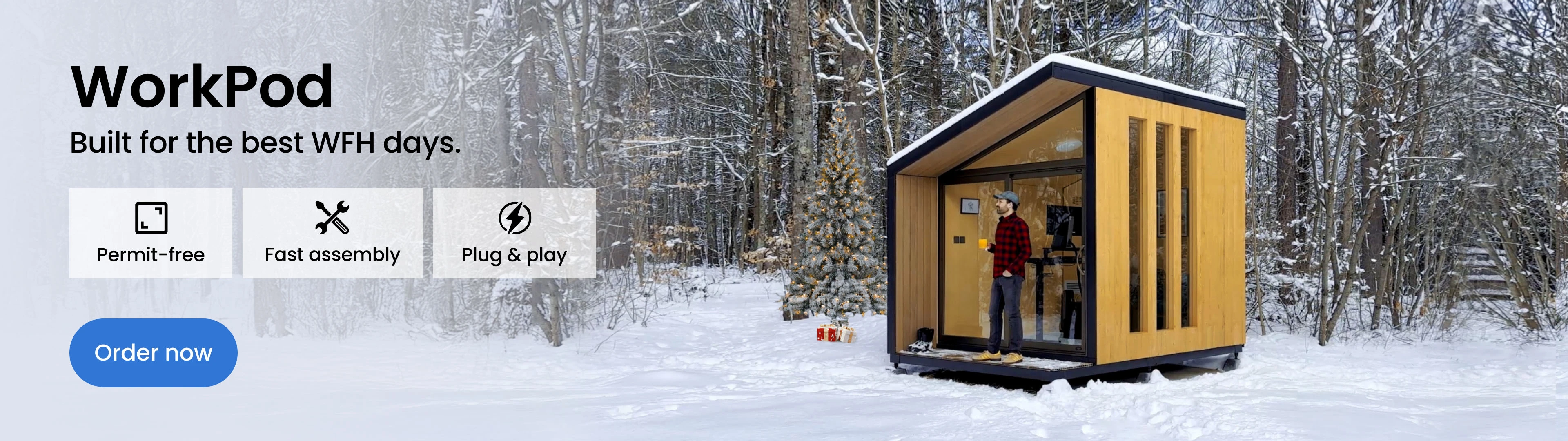
WorkPod is a 102 sq ft outdoor office pod with a sloped roof, a full-height glass door and three vertical side windows placed to cut screen glare. It has six insulated layers, a 45 to 100°F comfort range, six adjustable feet rated for 2.9 tons, three outlets, a light, a ventilator and one bookshelf.
It suits someone who works from the yard every day and wants the option to run it off-grid. It can be ordered with solar, a Starlink kit, or an Autonomous Computer 2 with two RTX 5090 cards for running AI models on site. With 161 reviews, it is also the most reviewed of the three.
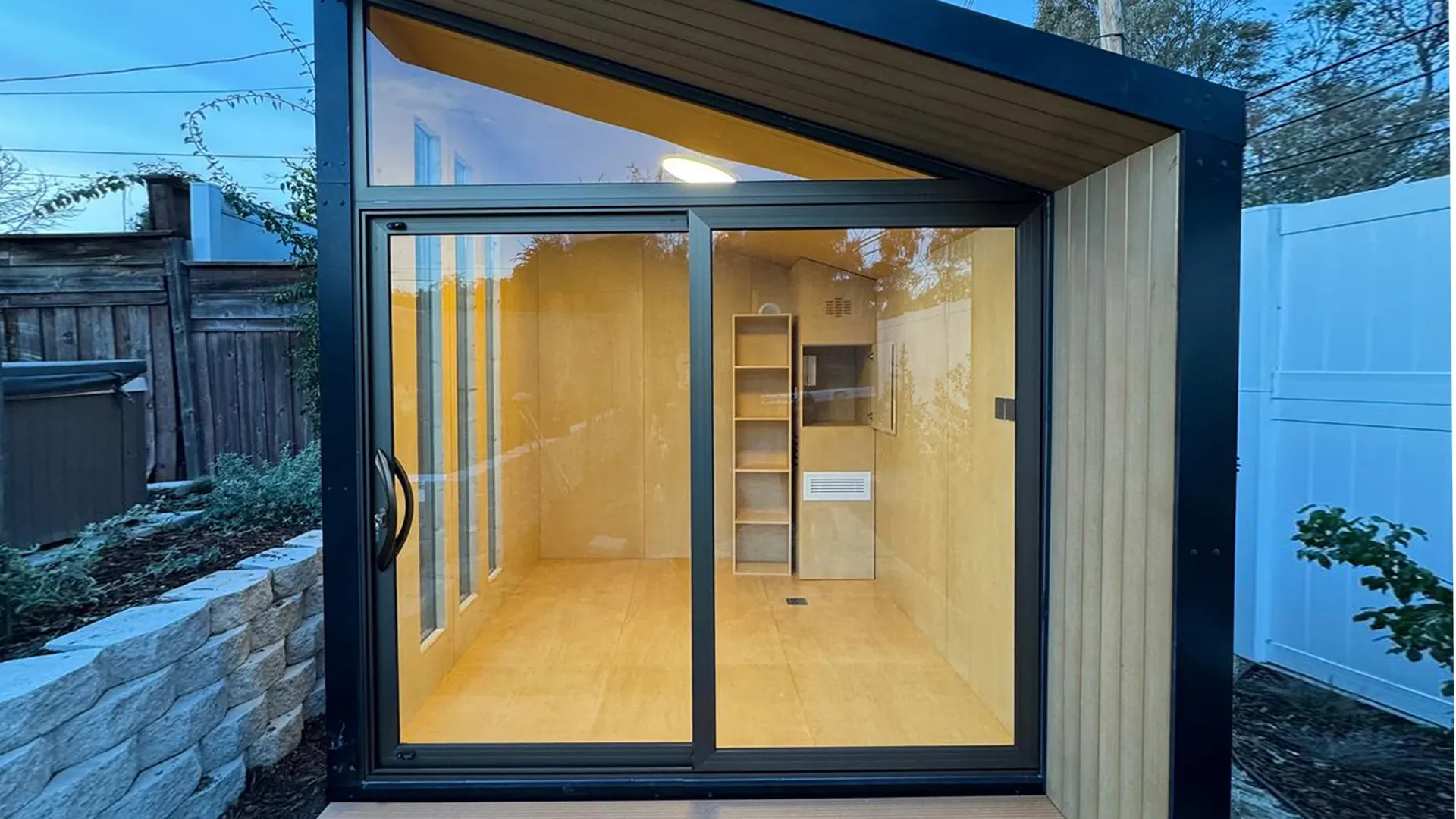
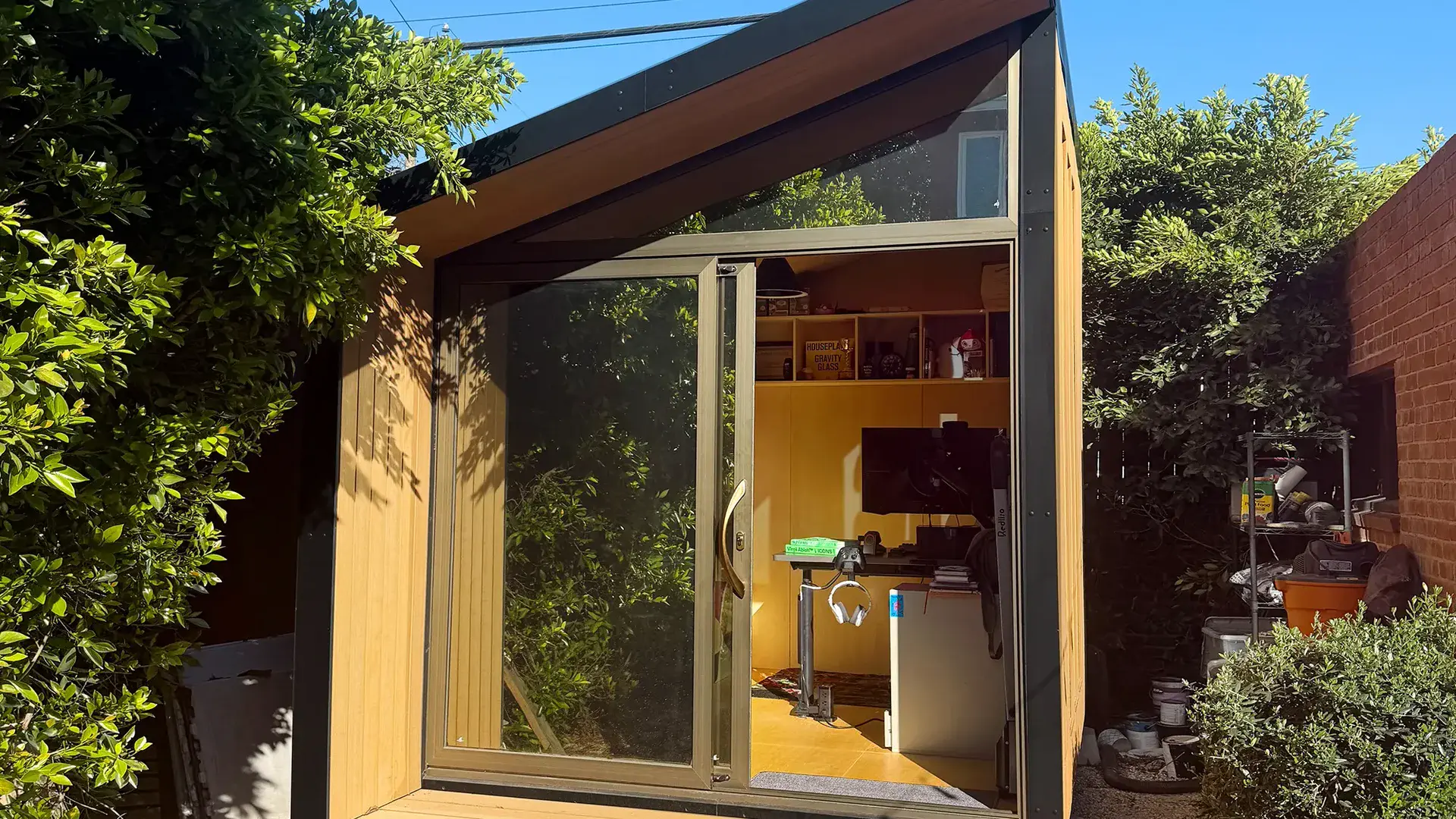
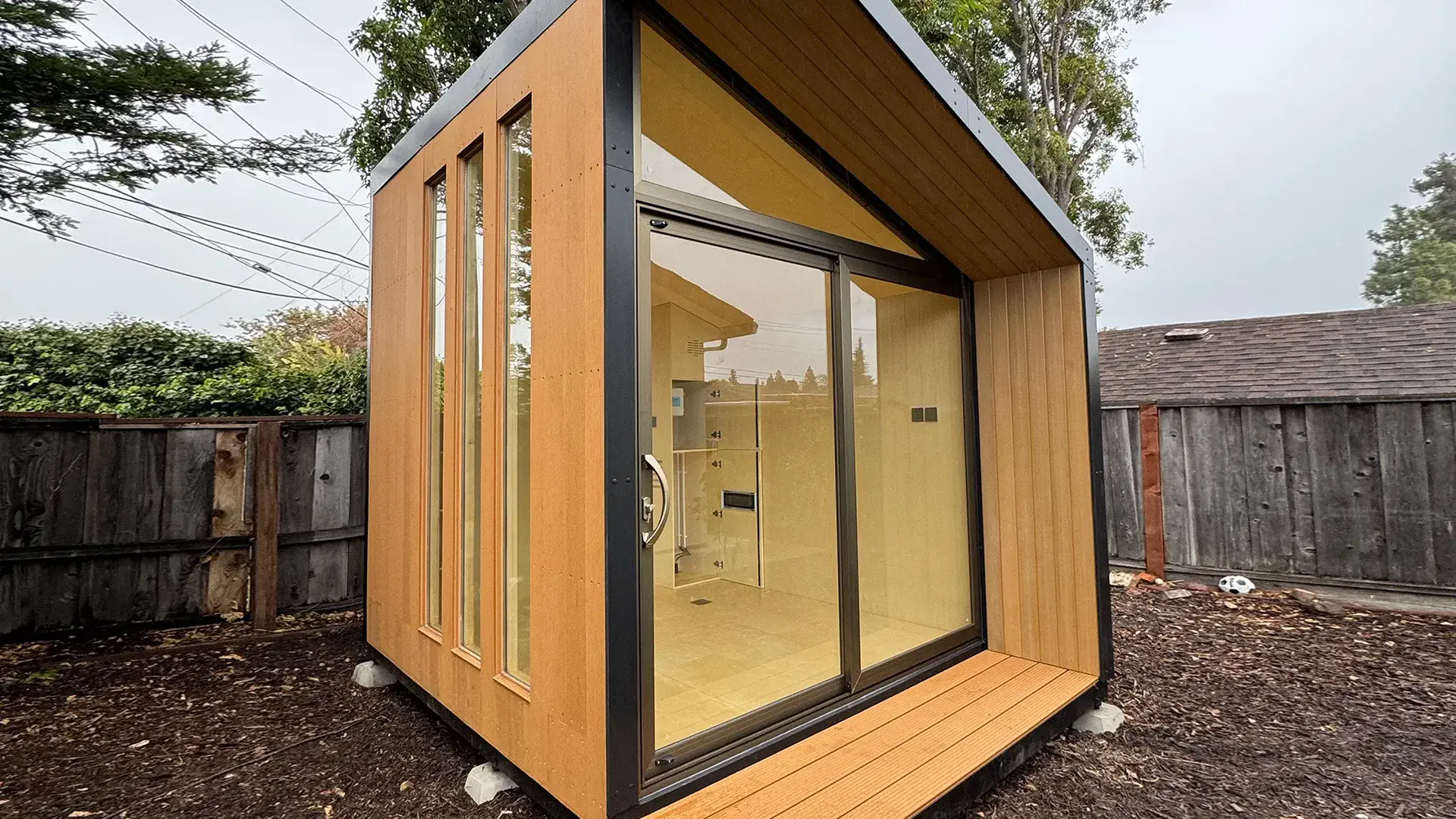
One honest limit: the low side of the sloped ceiling is 6.8 ft, so place a standing desk under the high side. The warranty on materials and workmanship is 1 year, the same as the other two pods.
StudioPod for a room with more than one job
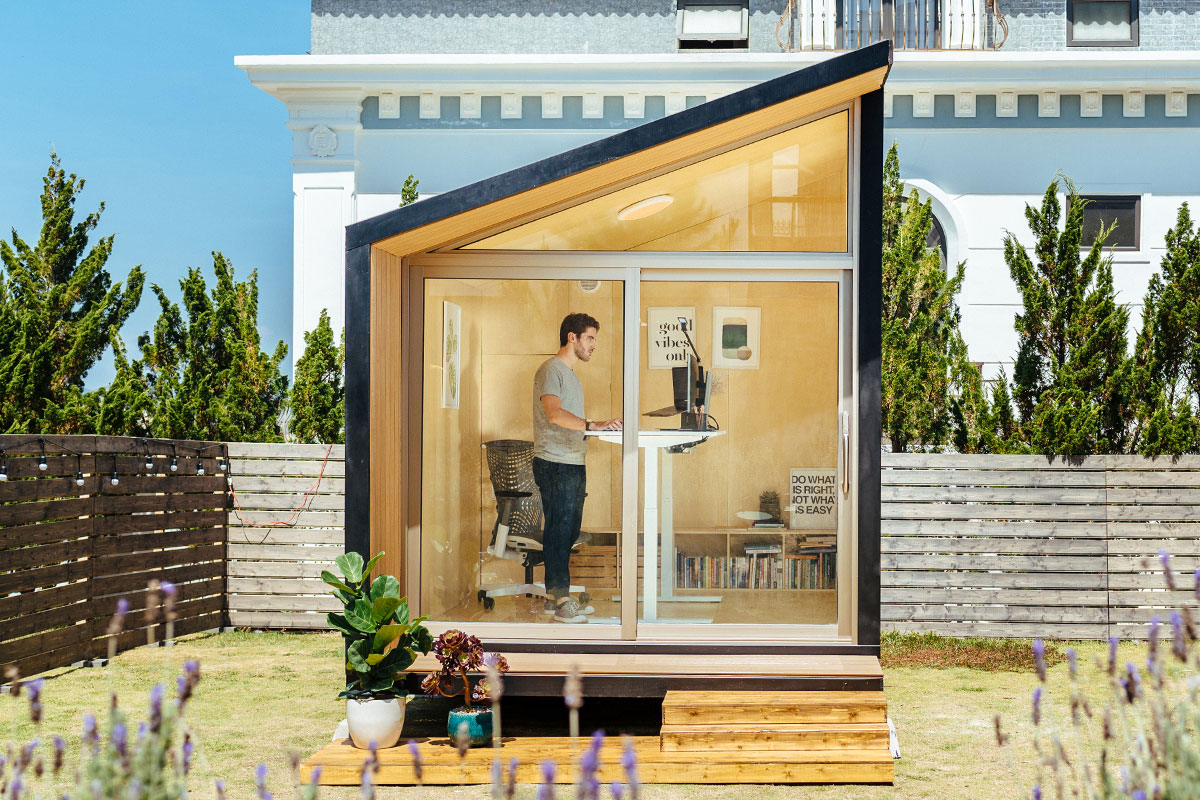
StudioPod is a 105 sq ft room with a 7.25 ft ceiling, a glass door and two hinged windows that open for air. It has six insulated layers, a 45 to 100°F comfort range, five outlets, four ceiling lights, a ventilator and two Ethernet ports, and it takes a solar option with four 460 W panels.
It comes empty on purpose, so it suits someone who wants an office by day and a gym, studio or hobby room later. You furnish it yourself, from a desk and an ErgoChair Ultra 2 to a rack or a sofa.
One honest limit: it is only 3 sq ft larger than WorkPod, so pick StudioPod for the extra outlets, lights and opening windows rather than for space.
Studio Home Signature for a kit you size yourself
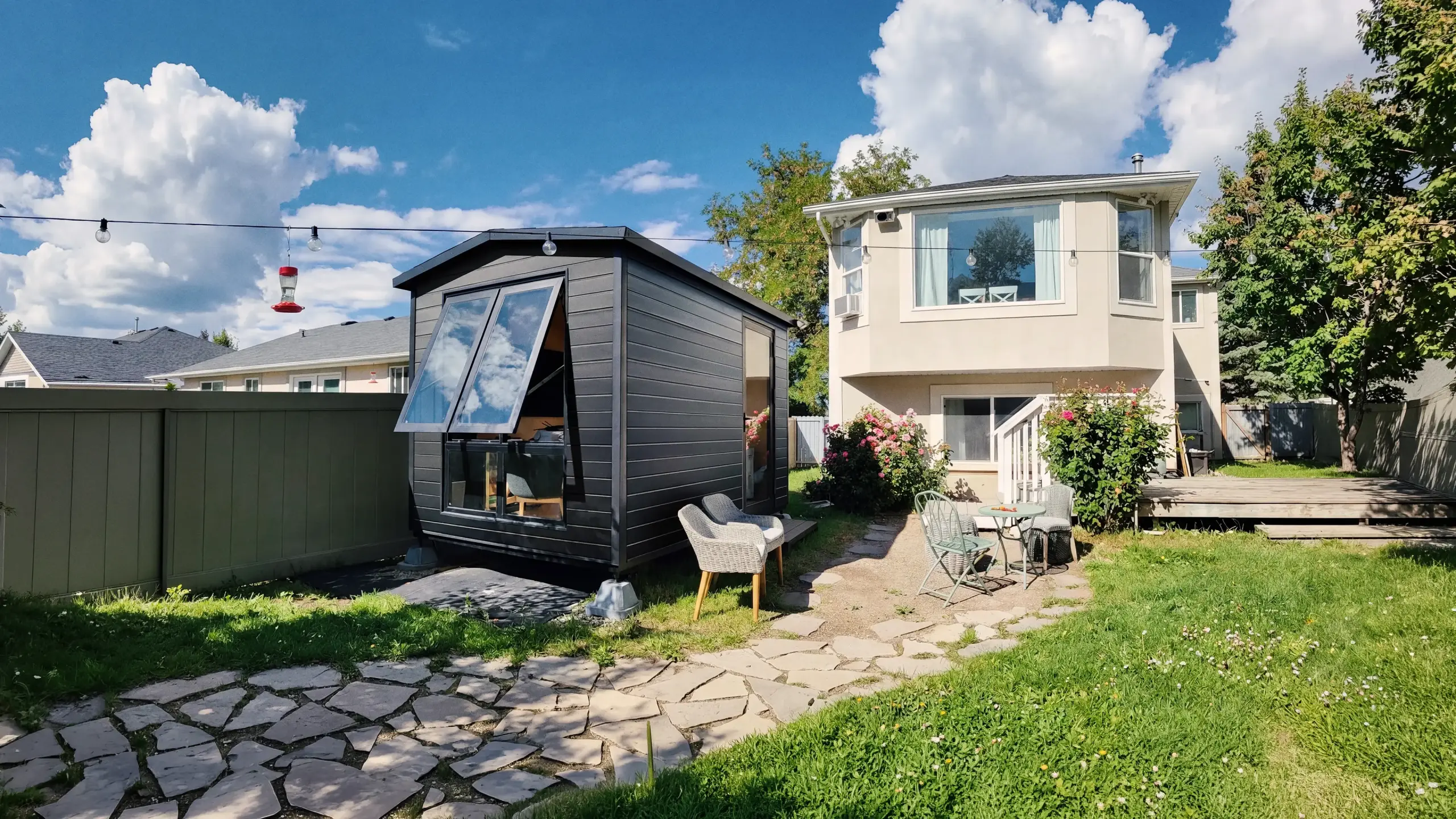
Studio Home (the old studioshed.com address now points to it) sells the Signature line in 13 sizes from 80 to 240 sq ft, with the Signature 80 starting at $17,702 plus installation. It ships as a flat-packed panel kit, and you assemble it yourself with the company's training tools or hire its installer network.
It suits someone who wants more size choices than a fixed pod. The honest limit is that installation and site work are extra, the painted drywall interior comes only with professional installation, and permitting is on you.
Kanga Kwik Room for Texas buyers who want turnkey
Kanga Room Systems, based in Waco, Texas, lists its Modern 10x12 Kwik Room at 120 sq ft for $18,900 as a shell kit, $24,700 as an installed shell and $40,600 turnkey. The shell kit includes the structure, siding and trim and ships across the continental US.
It suits Texas buyers who want one company to deliver a finished room, or experienced builders elsewhere who want a larger shell. The honest limit is that the installed and turnkey options are Texas only, and Kanga quotes 8 to 12 weeks to deliver and install.
Okopod OKO80 for a finished pod with style options
Okopod lists the OKO80 at 80 sq ft from $27,219, including delivery and an 8 ft double-glazed sliding door. Insulation is specified for your climate zone, and the electrics package has 4 spotlights, 4 double sockets and an internet point. It comes in Classic, Porch and Single Pitch styles.
It suits someone who wants to choose cladding, flooring and roof style. The honest limit is that it has the highest price per square foot here and leaves out groundwork, installation, heating and the electrical hookup.
Looking for indoor modular office pods instead?
Many searches for modular office pods are for indoor booths that sit inside an office or a spare room, which is a different product from a backyard pod. Our guide to privacy pods and booths covers those.
For a quiet room inside the house, our picks of soundproof office pods compare quieter booths.
The home office pod guide also covers Autonomous's 38 sq ft indoor Spaceship.
FAQs
How much does a prefab office pod cost?
The 80 to 120 sq ft pods compared here list between about $17,700 and $27,200 before add-ons, and turnkey builds can pass $40,000. Installation, groundwork, the power hookup and heating or cooling may be extra, so compare what each price includes, not only the number.
Are prefab office pods worth it?
A prefab office pod is worth it if you work from home most days and have no spare room to convert. It costs more than a bare shed but needs far less finishing work, and it goes up faster than a room addition. Price the exclusions before you decide.
Do you need a permit for a prefab office pod?
Often not for the structure itself if it stays under your area's size limit (usually 120 or 200 sq ft, depending on the local code), but wiring can still need an electrical permit and setbacks still apply. Autonomous says its pods sit below the permit threshold in most US cities. Confirm with your building department.
Does a prefab office pod need a foundation?
Not always a concrete slab. Autonomous pods stand on adjustable leveling feet on grass, gravel or concrete, and Autonomous lists up to a 5° slope capacity, while Okopod uses a Jack Pad base prepared by a local contractor. Some local codes still require concrete.
How long does it take to install a prefab office pod?
Autonomous pods take one to two days to assemble, by you or a pro installer. Other makers quote longer from order to finish: Kanga Room Systems says most of its backyard offices are delivered and installed within 8 to 12 weeks. Site prep and permits add time.
Can you use a prefab office pod all year?
Yes, if its insulation and your heating or cooling match your climate. Autonomous lists a 45 to 100°F comfort range for WorkPod and StudioPod and 65 to 90°F for MetroPod. Outside that range, add a heater, a portable A/C or a mini-split.
What is the difference between prefab and modular office pods?
Prefab means built in a factory and assembled on site. Modular strictly means whole factory-built sections set in place, but pod makers use the two words loosely. For a backyard office, what matters is the site work, the install time and what the price includes.
What are the best office pods for home use?
The best office pod for home use depends on where it goes. For a backyard, an 80 sq ft pod fits one person in a small yard, and 100 sq ft or more suits a daily office with room for a second seat. Inside the house, an indoor booth is the better fit.
Can you live in a prefab office pod?
Not as a legal home in most cases. Permit-exempt structures generally cannot be used for living, as Sacramento County's rules state, and none of the three Autonomous spec sheets lists plumbing. A dwelling or ADU needs its own permits and utilities.
Conclusion
A prefab office pod adds a separate, insulated workroom to your yard without a stick-built construction project, as long as you compare what each price includes rather than the sticker alone. Check size, ground, permits, power, climate and access in that order. Then choose the pod that clears all six. For most one-person offices, that comes down to MetroPod for a small yard, WorkPod for a daily office, or StudioPod for a room with more than one job.