


8 Best ADHD Office Chairs for Adults Tested (2026)

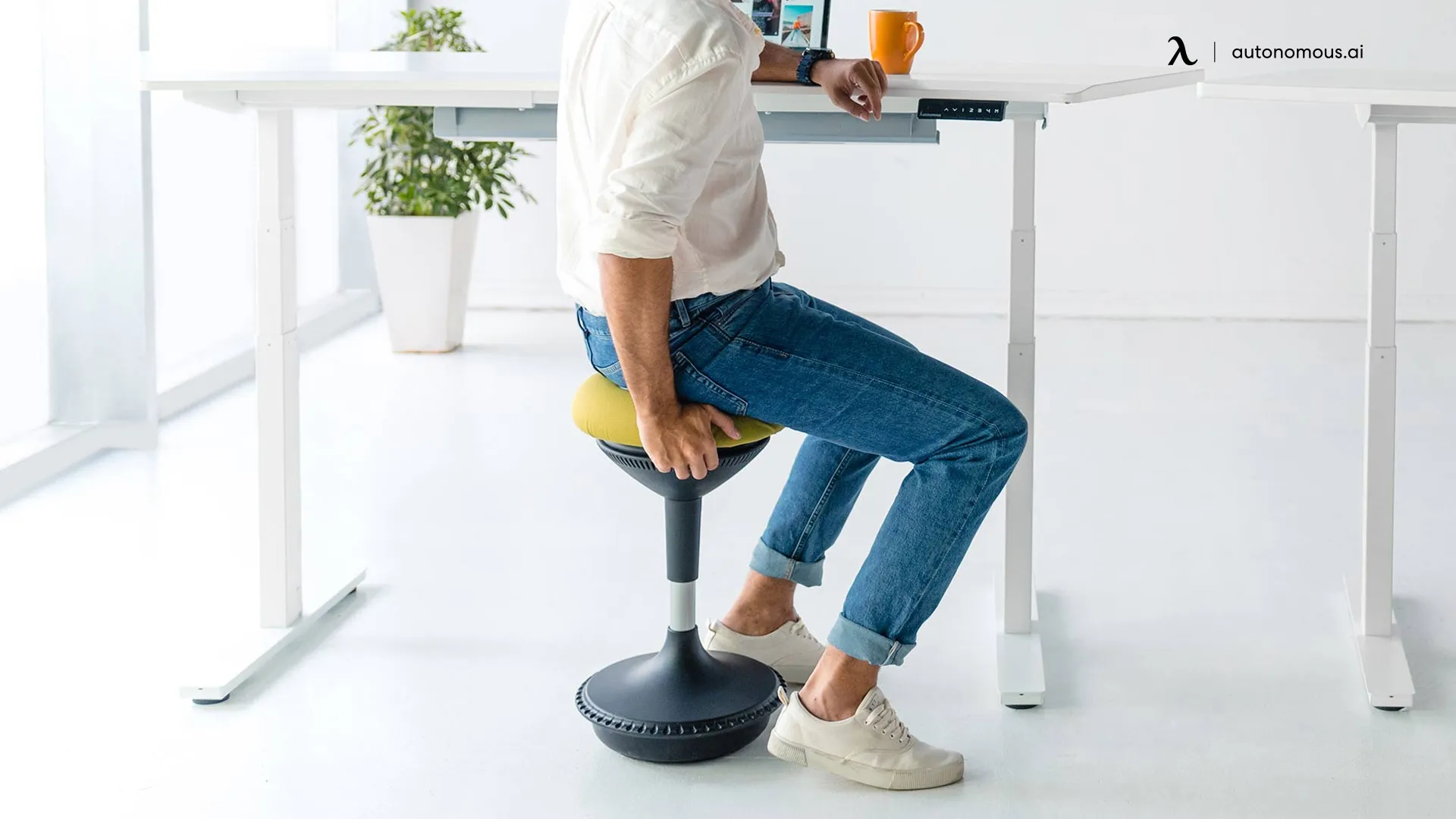
Table of Contents
Do you struggle with Attention Deficit Hyperactivity Disorder (ADHD)? This neurodevelopmental disorder can bring several challenges, including difficulty with sitting still to stay focused and concentrated. Many people pay attention to the symptoms and potential treatments to overcome them, but the truth is that there’s something that most people don’t even consider: the use of an ADHD desk chair.
The chair that people living with ADHD use can have a big impact on how well they manage their symptoms. That’s why it’s essential to choose the right one. Do you know how to do it? Here’s all the information you need to pick the best option and enjoy all its benefits.
What Is An ADHD-Friendly Office Chair?
This condition, which can affect millions of individuals around the world, makes it challenging to focus and sit still to complete tasks, especially if people have to engage in long-term activities. Its presentation can vary significantly, with different types of ADHD in adults displaying unique patterns of attention, activity, and impulse control. As a result, it often leads to challenges related to ADHD affecting work performance.
However, many brands have designed chairs that offer comfort to people with ADHD and can help them increase their productivity when working or studying for an exam.
Although many of these look like typical ergonomic chairs, they’re mostly designed to increase comfort and concentration. Therefore, these chairs have multiple features and additions that promote better posture and make it easier to focus by eliminating the need to shift positions or fidget in the seat.
Some of the features that the best office chairs for ADHD have include padded and breathable seats, armrests, adjustable heights, lumbar support, and more. Additionally, they’re designed to provide the right amount of support to the neck, back, and arms.
- The Importance Of An ADHD Office Chair
The right ADHD office chair for adults can transform how you manage symptoms throughout the workday. These chairs combine ergonomic support with movement-friendly features that promote proper sitting posture, reduce restlessness, and help you stay engaged longer — boosting concentration while preventing fatigue and discomfort.
Key features like adjustable armrests and lumbar support alleviate strain on your spine and muscles, while swivel bases let you move and fidget naturally without leaving your seat. Many models include footrests or footplates that create a stable, grounded sitting position, helping you feel more focused and in control.
Whether you're working, studying, or tackling long projects, the best ADHD chair creates an environment where you can concentrate better and stay on task with less physical discomfort.
Features To Look For In An ADHD Office Chair For Adults
Choosing the best office chair for ADHD means finding one that supports your body while letting you move naturally. Here are the key features to prioritize:
- Ergonomics
A good ergonomic ADHD chair supports your body's alignment without feeling restrictive. Look for adjustable height, proper lumbar support, and a contoured backrest that follows your spine's natural curve. Well-positioned armrests reduce neck and shoulder strain, helping you stay comfortable longer.
- Material Quality
An ADHD-friendly office chair should also be made of high-quality materials, as this has a huge impact on its durability and strength. Durable construction ensures long-term comfort and support. Breathable, easy-to-clean upholstery prevents overheating and reduces distractions.
- Range of Motion
The best ADHD chair for adults should offer a full range of motion to adjust their ADHD sitting positions as needed. Look for tilt, swivel, and recline functions that let you shift positions without breaking focus. Synchronized tilt mechanisms create smoother, more natural movement.
- User-Friendly Adjustments
Quick, intuitive controls make customization simple. Choose an ADHD computer chair with clearly labeled levers or buttons for adjusting seat height, armrest position, and backrest angle. Pre-set ergonomic settings can help first-time users find a comfortable starting point.
- Sensory Stimulation Options
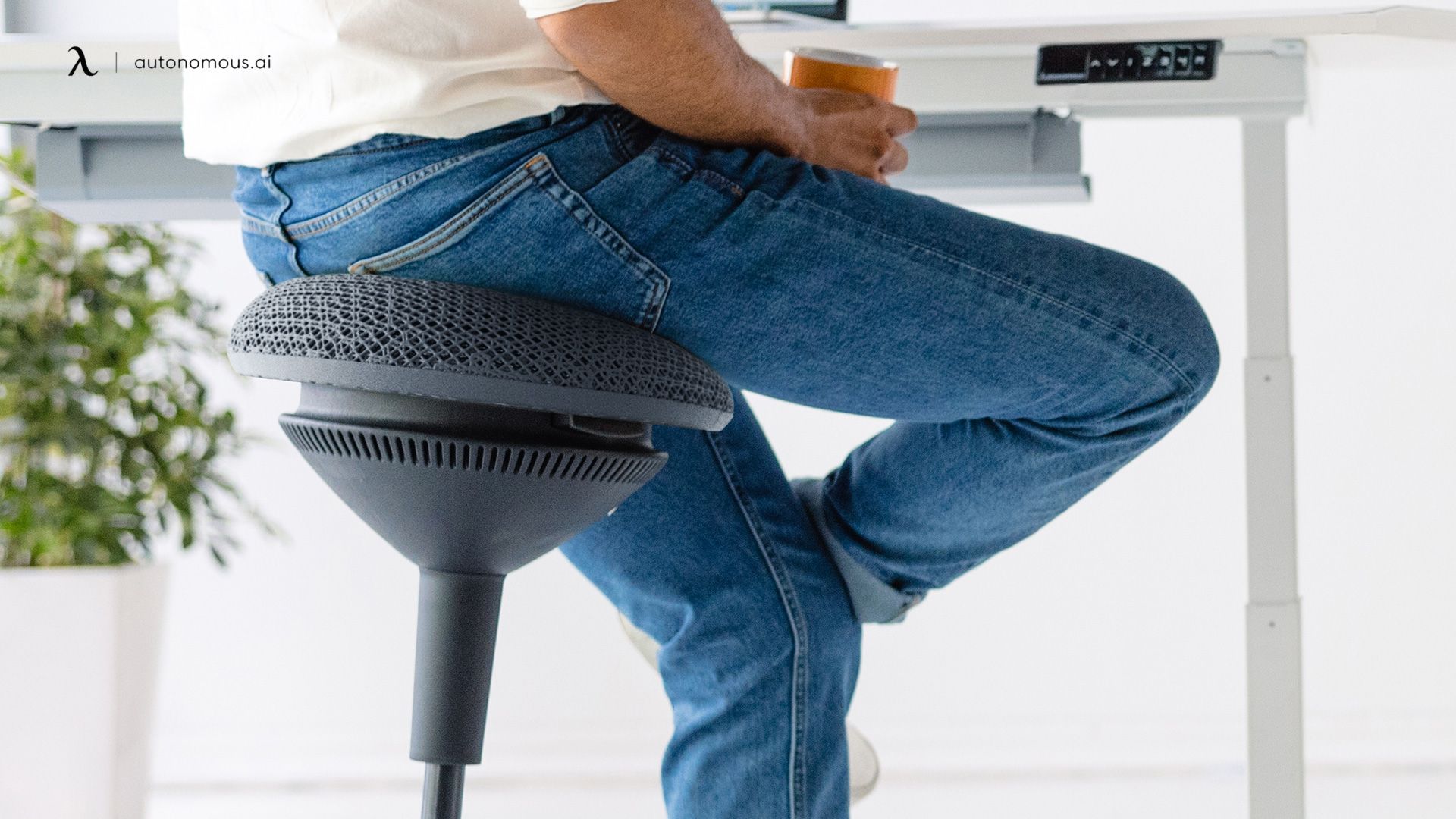
For those who benefit from active sitting, consider chairs with built-in stability balls, rocking mechanisms, or textured cushions. These ADHD-friendly office chair features engage your muscles and provide tactile feedback that can boost focus and regulate restless energy.
Popular Types Of Office Chairs For People With ADHD
The right ADHD-friendly office chair can transform your workday — but with so many types available, where do you start? From bounce chairs that channel restless energy to cross-legged designs that support alternative sitting positions, each style serves a different need. Here's what you should know about each type:
- Side-by-Side Comparison
Chair Type | Key Benefit | Best For | Movement Level | Sitting Duration | Extra Features |
Rubber Band Chair | Energy release through leg/foot engagement | Classrooms, long meetings | Moderate | Long | Elastic bungee cords |
Bounce Chair | Active bouncing for focus regulation | Home or office desks | High | Medium | Ball-like or flexible base |
Chair with Focus Cushion | Even weight distribution, pressure relief | Extended work/study sessions | Low | Long | Memory foam or gel cushions |
Criss-Cross Chair | Supports cross-legged sitting, micro-movements | Creative tasks, brainstorming | Moderate | Medium | Wide, smooth seat surface |
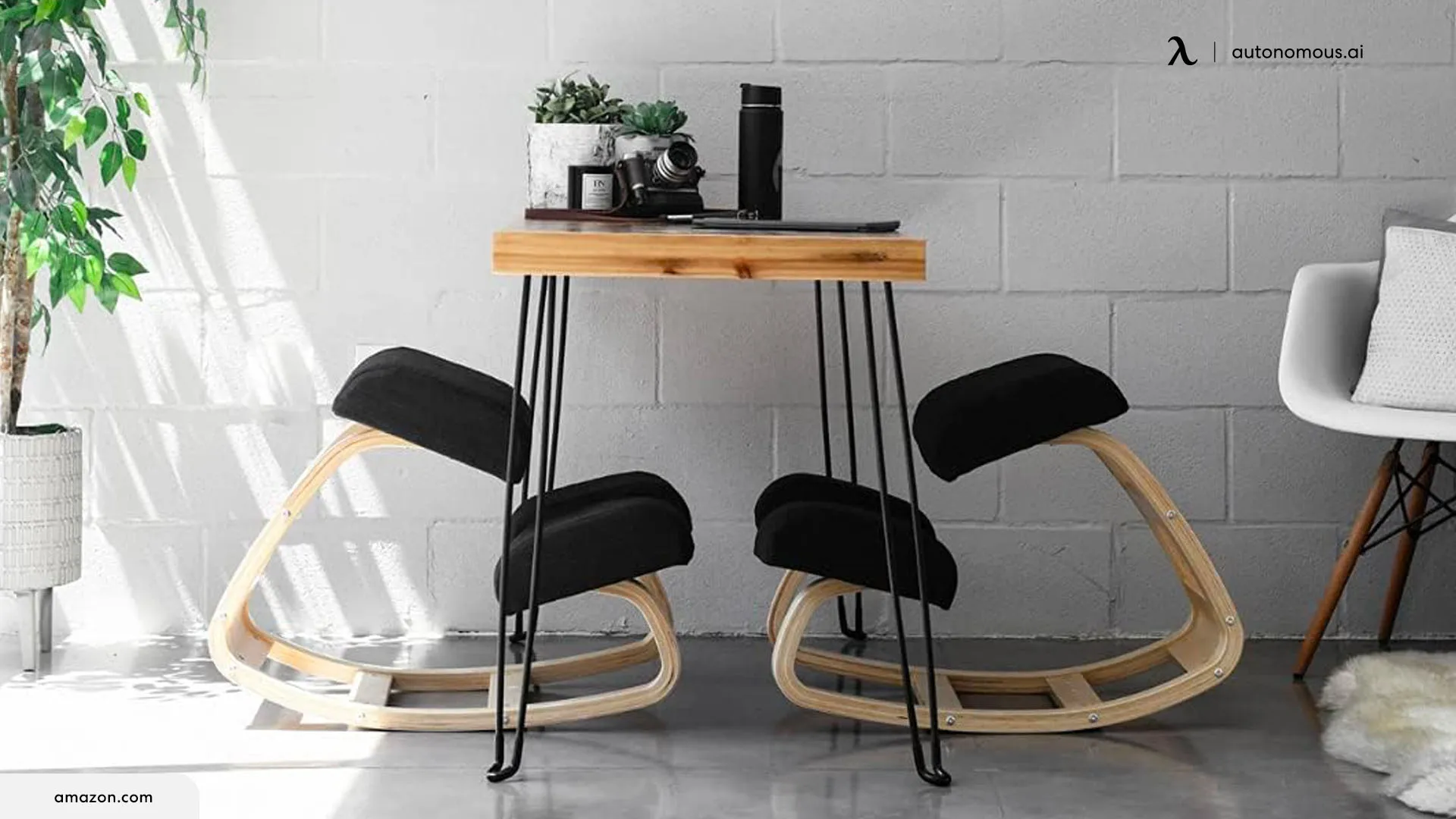
Kneeling Chair | Upright posture, core engagement | Short, focused work blocks | Low | Short–Medium | Shin and seat support |
Ergonomic Stool | Dynamic sitting to encourage frequent movement | Quick tasks, standing desk breaks | High | Short | Weighted, stable base |
Zero Gravity Desk Chair | Spine pressure relief, improved circulation | Relaxation, reading | Low | Long | Reclining to neutral position |
Top ADHD Office Chairs For Your Workspace
Living with ADHD often means dealing with a constant urge to fidget or shift positions — even while seated. The good news? The right chair can work with your body's needs, not against them. An ADHD-friendly office chair gives you the freedom to move and adjust throughout the day, helping you stay active, alert, and focused without needing to leave your seat.
After testing various options, here are my top picks for the best office chair for ADHD — chairs that truly support active sitting and make long work sessions more manageable.
1. Pipersong Meditation Chair
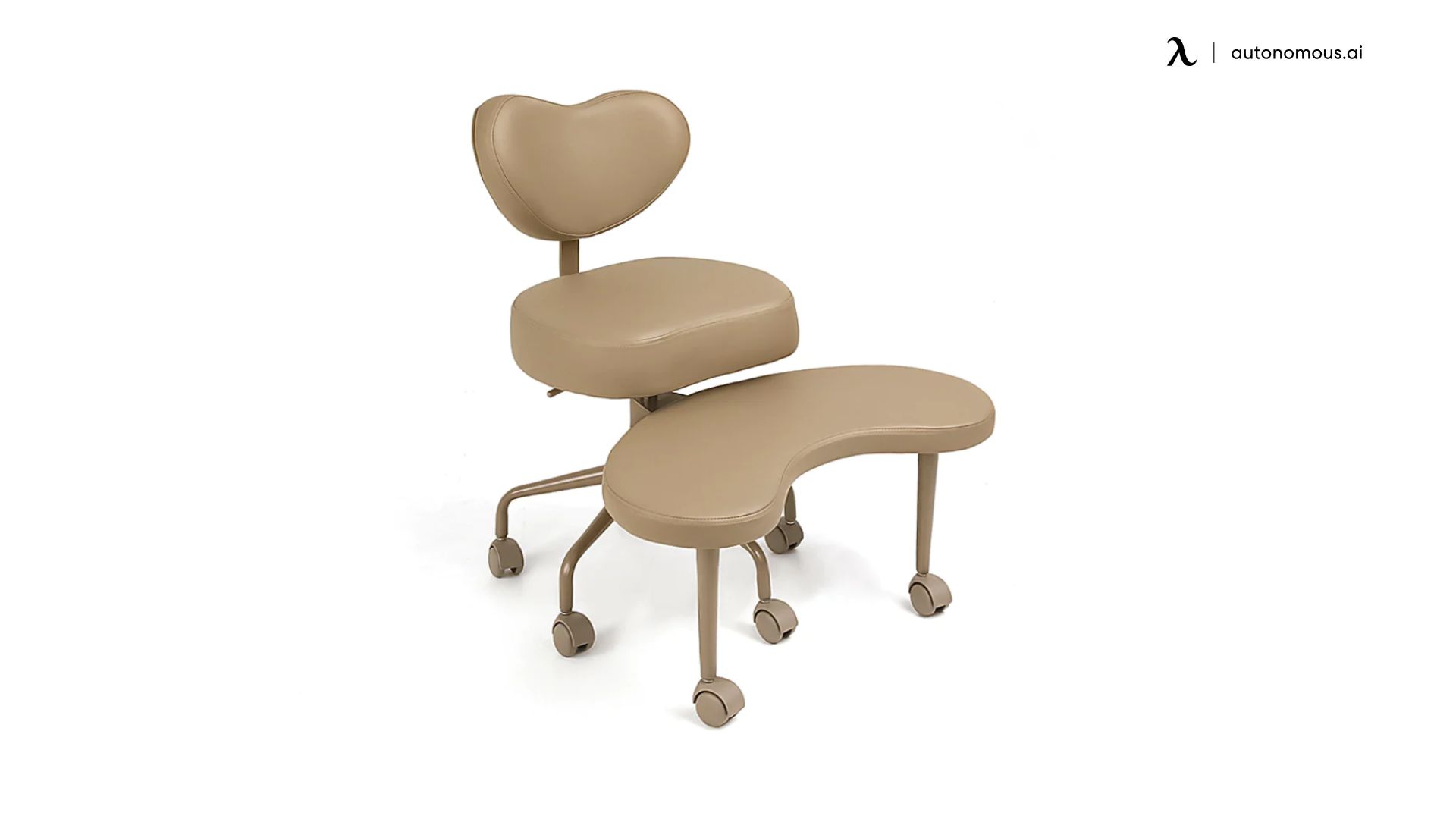
This cross-legged chair supports multiple sitting positions including cross-legged, kneeling, facing backward, or with one foot elevated. It's designed specifically for people who prefer alternative seating arrangements throughout their workday.
Quick Specs:
- Weight Capacity: 275 lbs
- Best For: Alternative sitting positions, flexible posture changes
- Movement Type: 360° swivel base + separate footrest swivel
- Key Feature: Wide seat platform (21" x 21")
The extra-wide seat accommodates cross-legged sitting and other non-traditional positions that standard office chairs don't support. During extended work sessions, the platform provides enough space to shift between positions — from sitting cross-legged during meetings to facing the backrest when deep focus is needed — without feeling restricted.
The perforated leather upholstery helps with temperature regulation, staying comfortable even during multi-hour stretches. It's easier to clean than fabric alternatives, though it does require occasional conditioning to maintain suppleness. In daily use, the material holds up well to frequent position changes without showing wear quickly.
The dual-base design (one for the seat, one for the footrest) allows independent adjustment of both components throughout the day. Customization options at purchase include backrest style, seat cushion firmness, and upholstery color.
Trade-offs: The footrest platform adds 8-10 inches to the chair's depth, which becomes noticeable in smaller home offices. Some adjustment is needed to find comfortable positions initially — it takes a few days to discover which sitting styles work best for your workflow.
Best suited for: Those who regularly sit cross-legged or shift between multiple positions throughout the day, and have adequate workspace to accommodate the larger footprint.
2. Autonomous ErgoStool
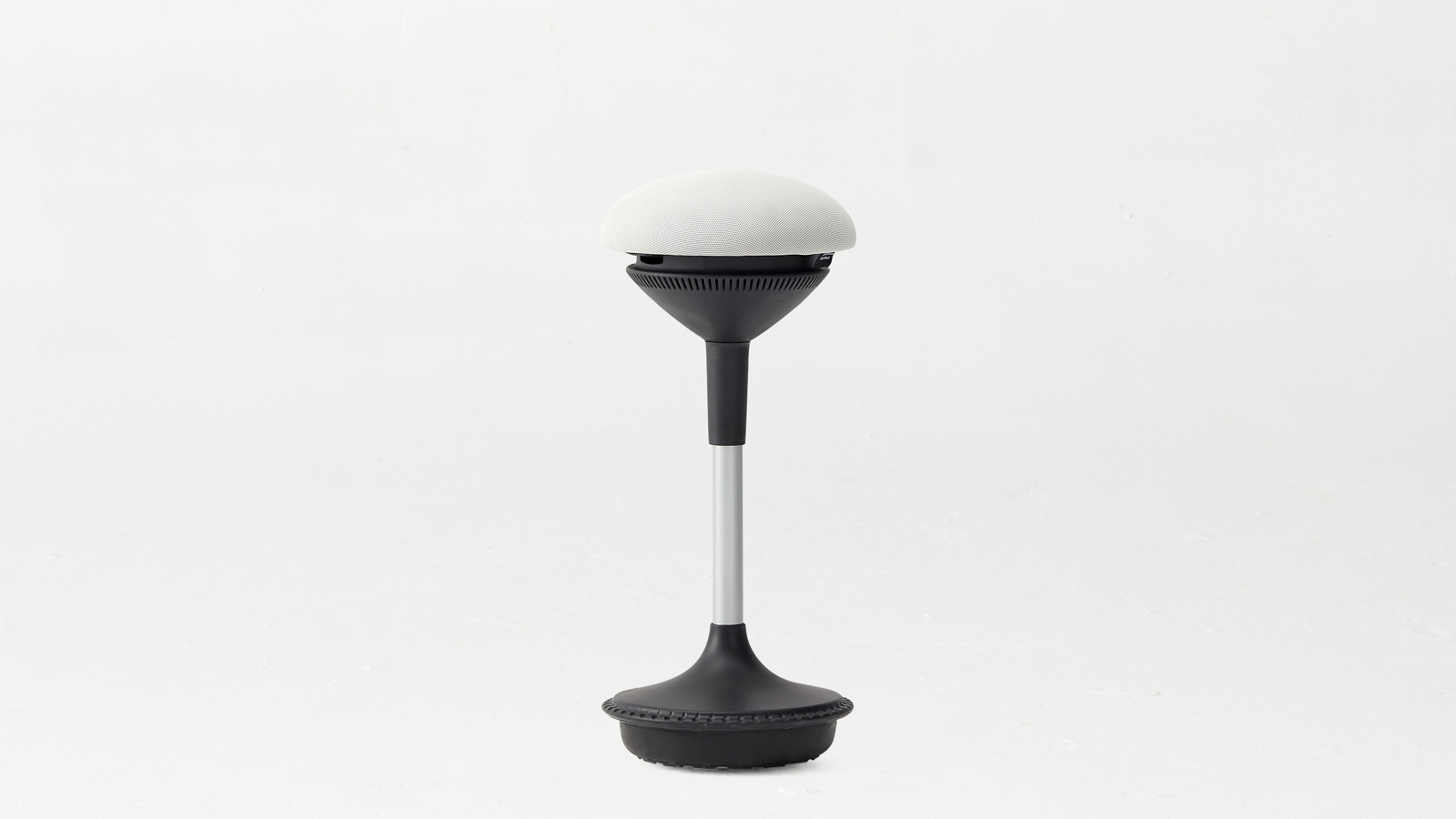
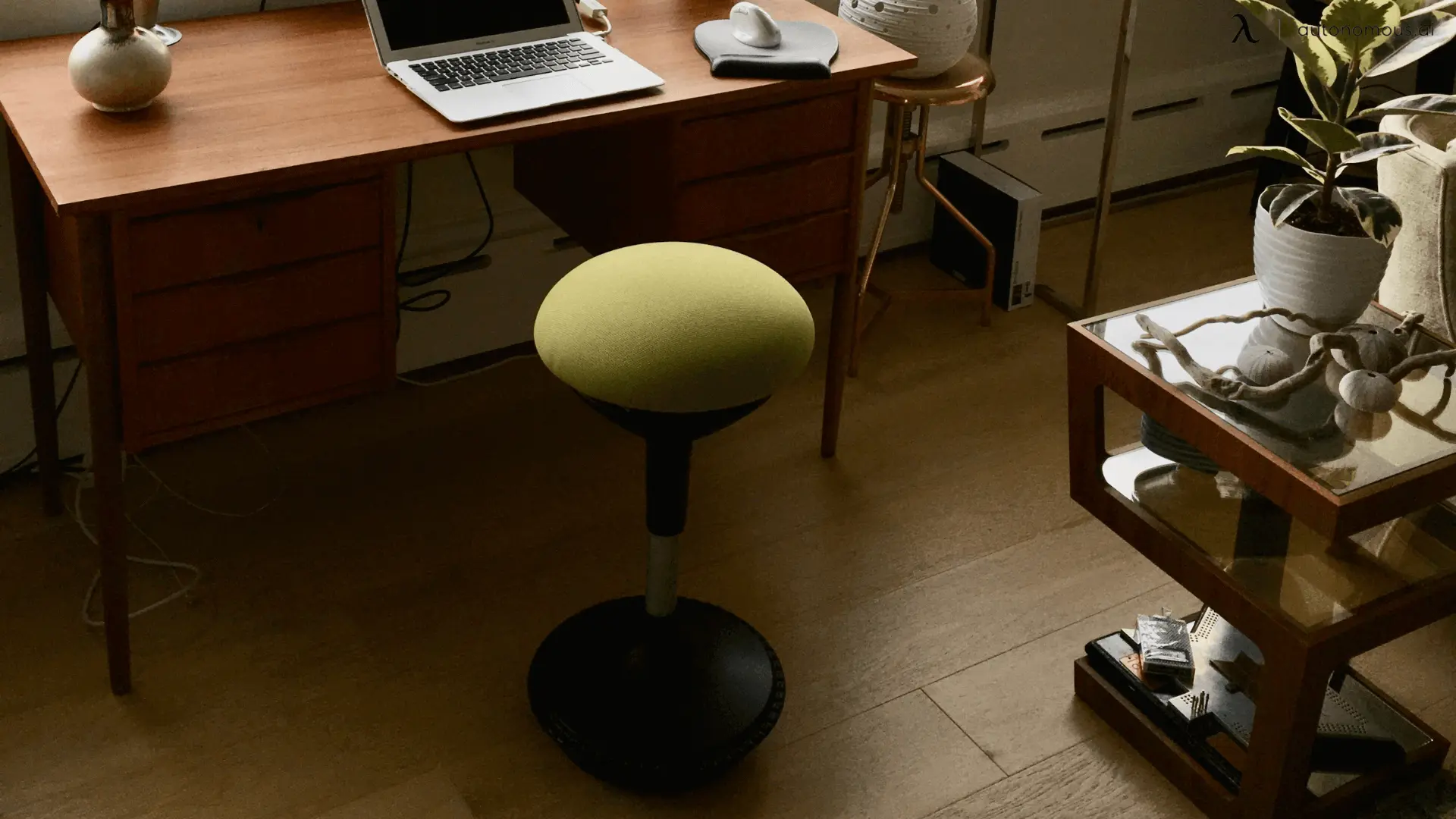
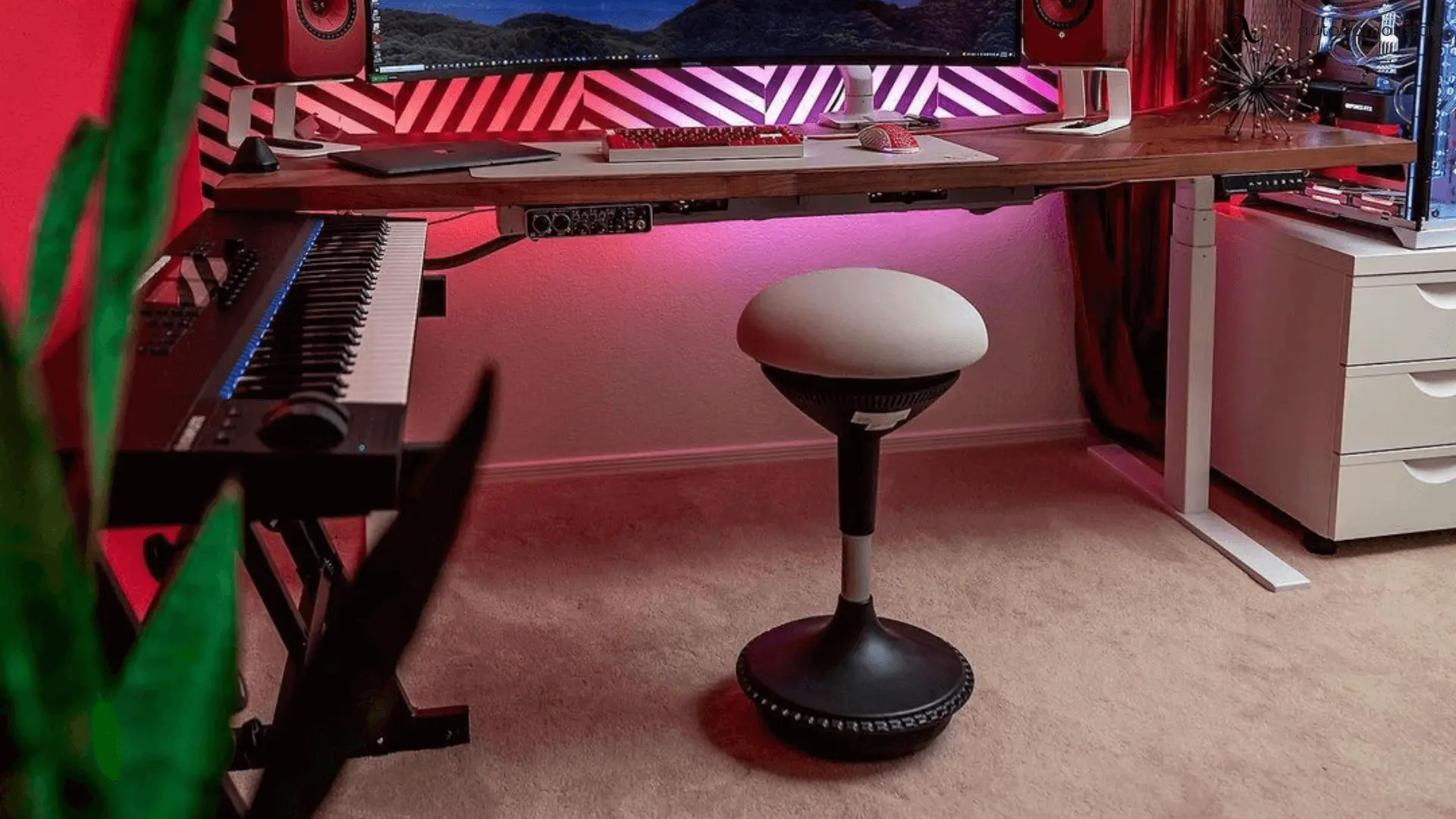
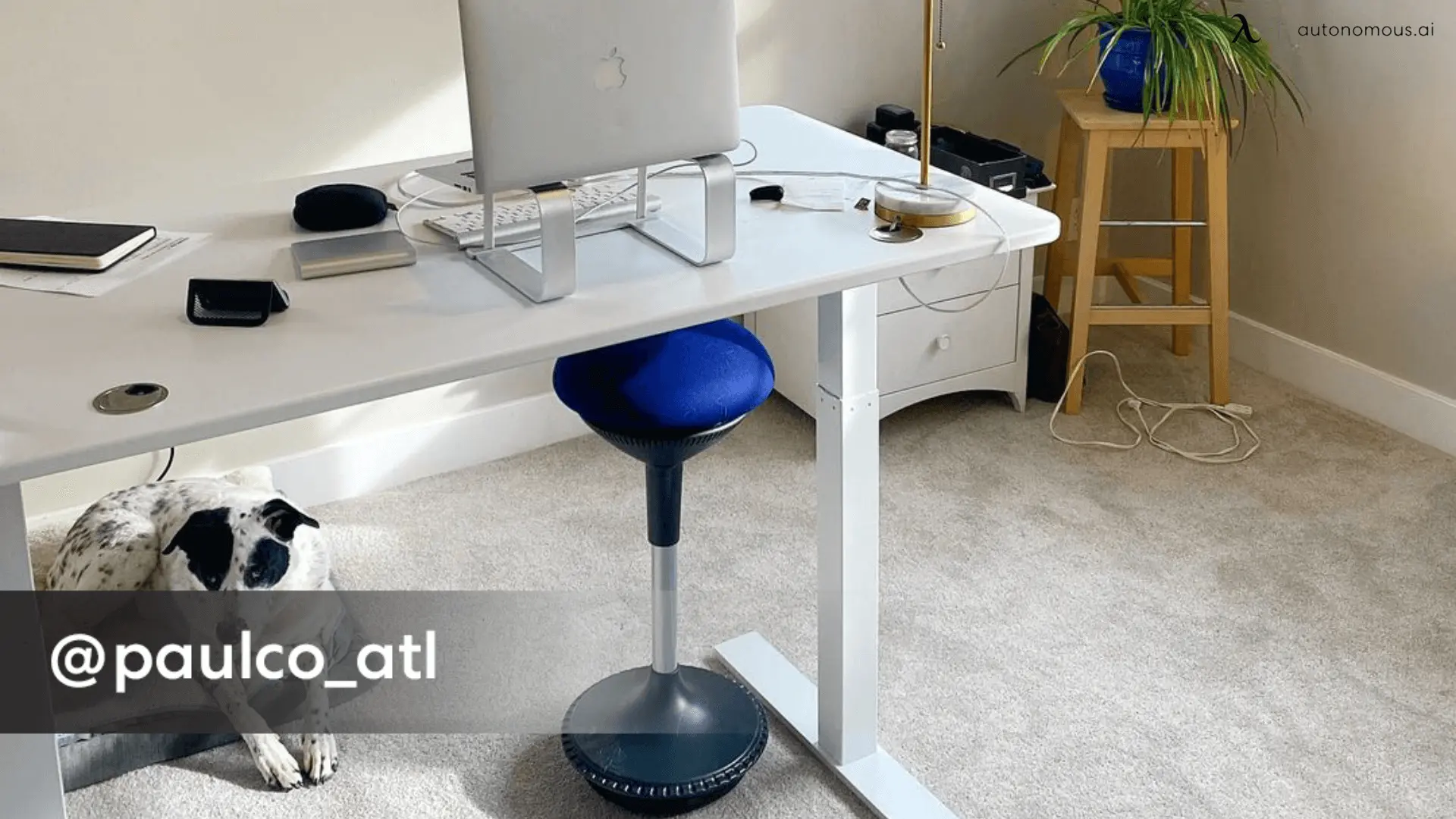
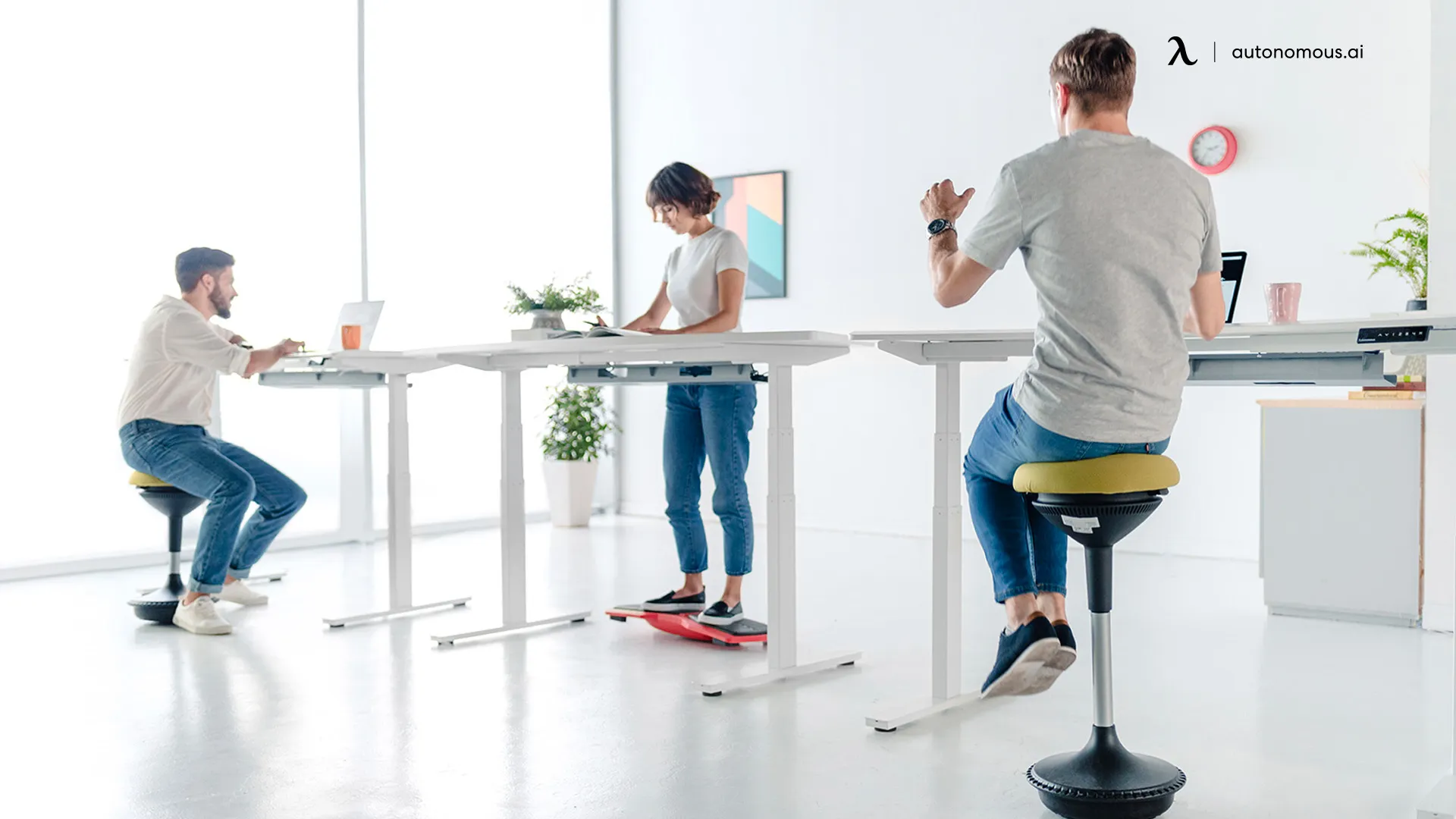
The Autonomous ErgoStool takes a minimalist approach to active sitting with a dome-shaped seat on a weighted base. It's built for those who want movement without the bulk of traditional office chairs.
Quick Specs:
- Weight Capacity: 265 lbs
- Best For: Short bursts of focused work, standing desk pairing
- Movement Type: Rocking, tilting, 360° rotation
- Key Feature: Weighted base prevents tipping
The compact design encourages natural micro-movements — small shifts in weight that keep your core engaged without conscious effort. Unlike padded chairs that let you sink in and zone out, the firm dome seat keeps your body slightly active. This ergonomic stool works well for tasks requiring 1-3 hours of concentration but becomes less comfortable for full 8-hour days.
The heavy base provides surprising stability despite the chair's small footprint. Rocking motions feel controlled rather than precarious, even when leaning at angles. The stool's portability is a practical advantage — it's light enough to move between rooms but stable enough that it won't roll away unexpectedly.
Assembly is straightforward with three main components that snap together. There's no adjustability beyond the natural movement the design allows, which simplifies setup but means it either works for your height or it doesn't.
Trade-offs: The lack of back support makes this unsuitable as a primary chair for all-day sitting. Taller users (over 6') may find the seat height limiting.
Best suited for: Budget-conscious buyers looking for an active sitting option to alternate with their main chair, or those with standing desks who need flexible perching between sit-stand transitions.
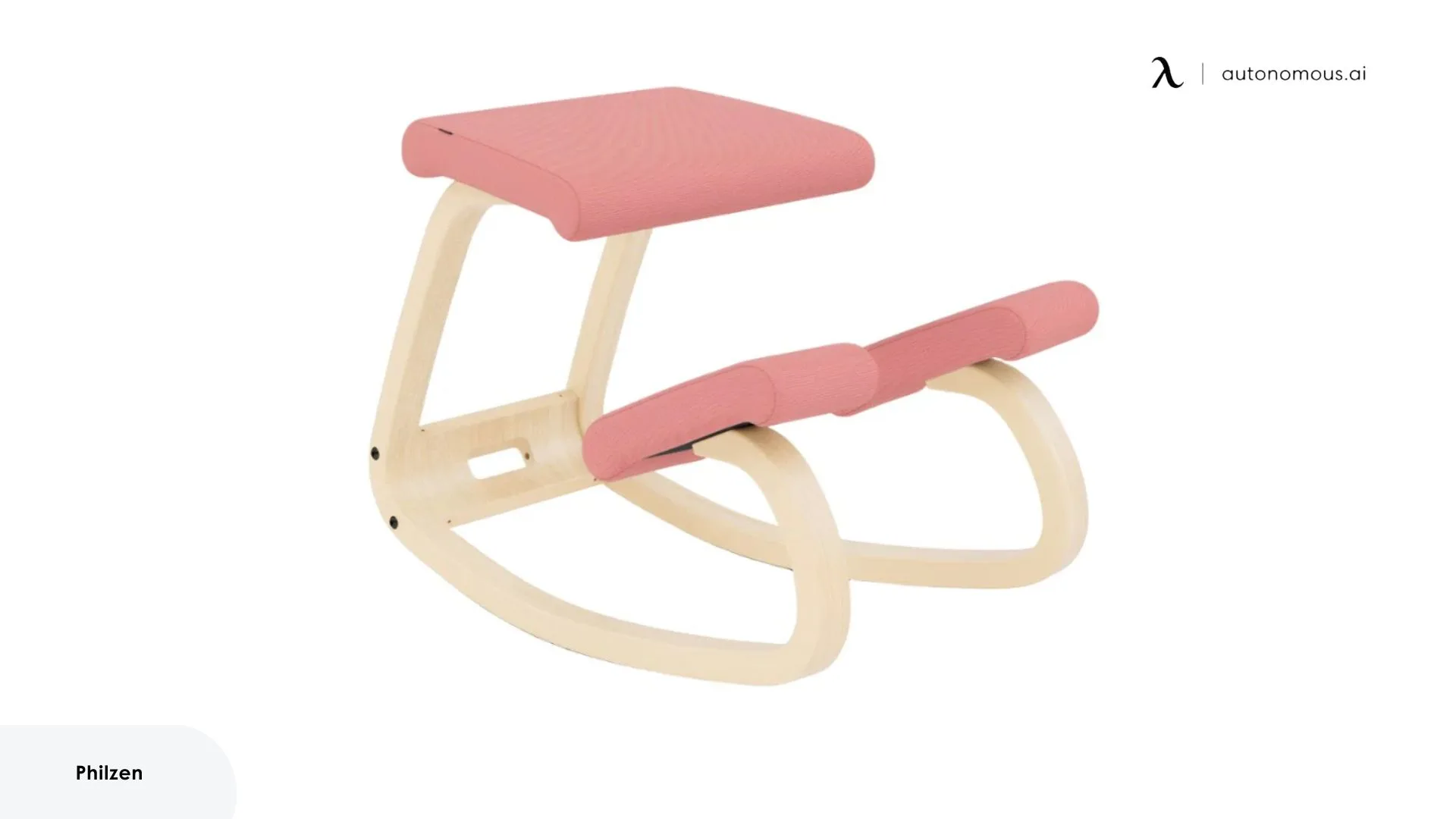
3. Variable Balans by Philzen
A popular kneeling chair from Variable uses an open kneeling design that shifts your weight forward, originally developed in Norway in 1979. It's an unconventional option that prioritizes posture correction over traditional comfort.
Quick Specs:
- Weight Capacity: 240-250 lbs
- Best For: Posture improvement, shorter work sessions
- Movement Type: Gentle rocking motion, no swivel
- Key Feature: Forward-tilting seat angle
The angled seat naturally tilts your pelvis forward, creating an open hip angle that encourages upright positioning. Your shins rest on padded supports while your core muscles stay engaged to maintain balance. This feels unusual at first — there's a definite adjustment period where you're more aware of your posture than usual.
The gentle rocking motion provides subtle movement without distraction. You can shift forward and back slightly, which offers enough variation to prevent stiffness during 30-90 minute work blocks. Beyond that timeframe, the lack of traditional back support becomes noticeable, and most users feel the need to switch seating.
The lightweight wood frame makes repositioning easy, and the minimal footprint fits well in tight spaces. The design is fixed with no adjustments available, so ergonomic fit depends entirely on whether your body proportions match the chair's geometry.
Trade-offs: Not suitable for all-day sitting, most comfortable for 1-2 hour intervals. Requires core strength to maintain position, which can be fatiguing initially. The kneeling posture doesn't accommodate cross-legged or alternative sitting styles. Understanding the kneeling vs. sitting biomechanics can help set realistic expectations for how this chair fits into your routine.
Best suited for: Those specifically seeking posture correction and willing to use this as a secondary chair rotated into their routine, rather than their primary all-day seating solution.
4. Classic Balance Ball® Chair – Gaiam
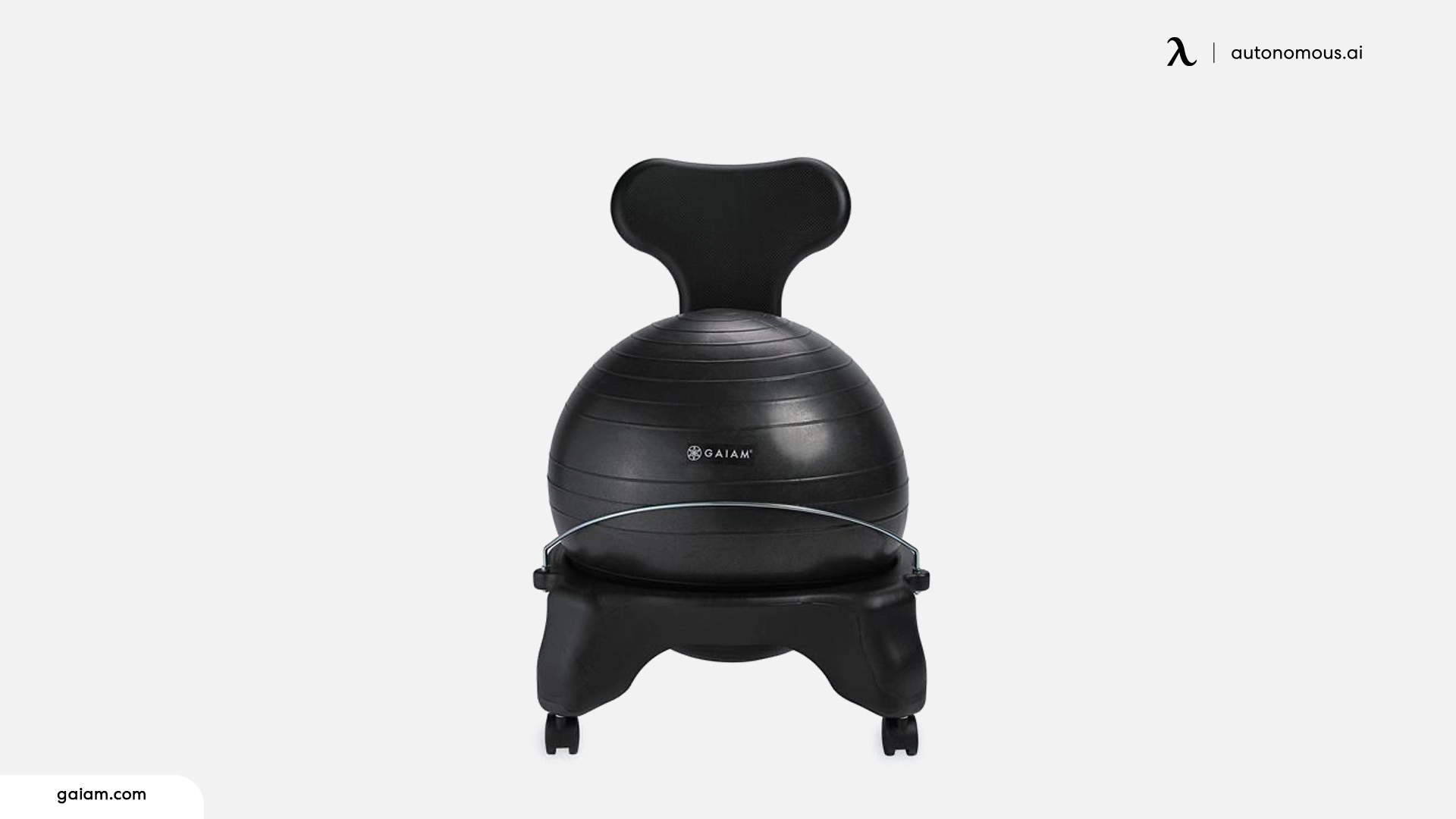
The Gaiam chair combines a stability ball with a traditional chair frame, featuring a backrest and rolling base. It's a hybrid approach for those curious about active sitting but hesitant to commit to a full ball chair.
Quick Specs:
- Weight Capacity: 300 lbs
- Best For: Core engagement, posture training
- Movement Type: Ball-based micro-movements, limited rolling
- Key Feature: Removable stability ball with pump included
The stability ball sits within a four-wheeled frame that prevents it from rolling away while still allowing subtle bouncing and shifting. The backrest offers occasional support when needed, making the transition from traditional chairs less abrupt than using a standalone ball.
Sitting on the ball activates core muscles continuously as your body makes small adjustments to maintain balance. This creates a noticeably different experience from static seating, you're slightly more alert and less likely to slouch. However, this constant engagement also means increased fatigue, particularly during the first few weeks of use.
The ball is removable and needs periodic re-inflation (typically every few months). Replacement balls are available separately if the original wears out. The backrest height is fixed and may not align properly for users significantly taller or shorter than average.
Trade-offs: The learning curve is real, expect an adjustment period where sitting feels awkward and tiring. The backrest is minimal and offers limited lumbar support compared to ergonomic chairs.
Best suited for: Those interested in building core strength while working and comfortable with a trial-and-error approach to finding the right ball firmness and sitting technique. Works better as a part-time option rotated with a more supportive primary chair.
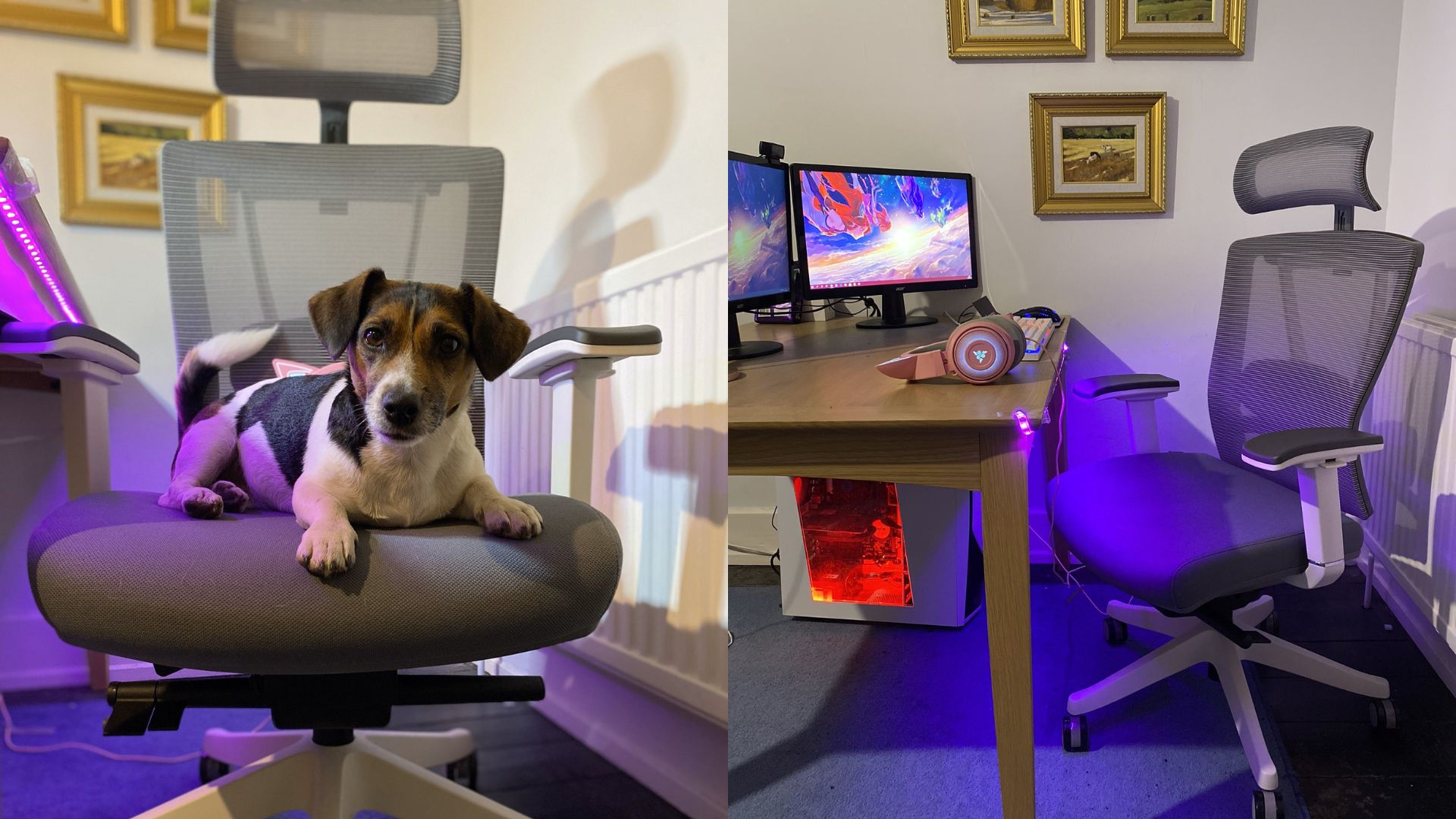
5. Autonomous ErgoChair Pro
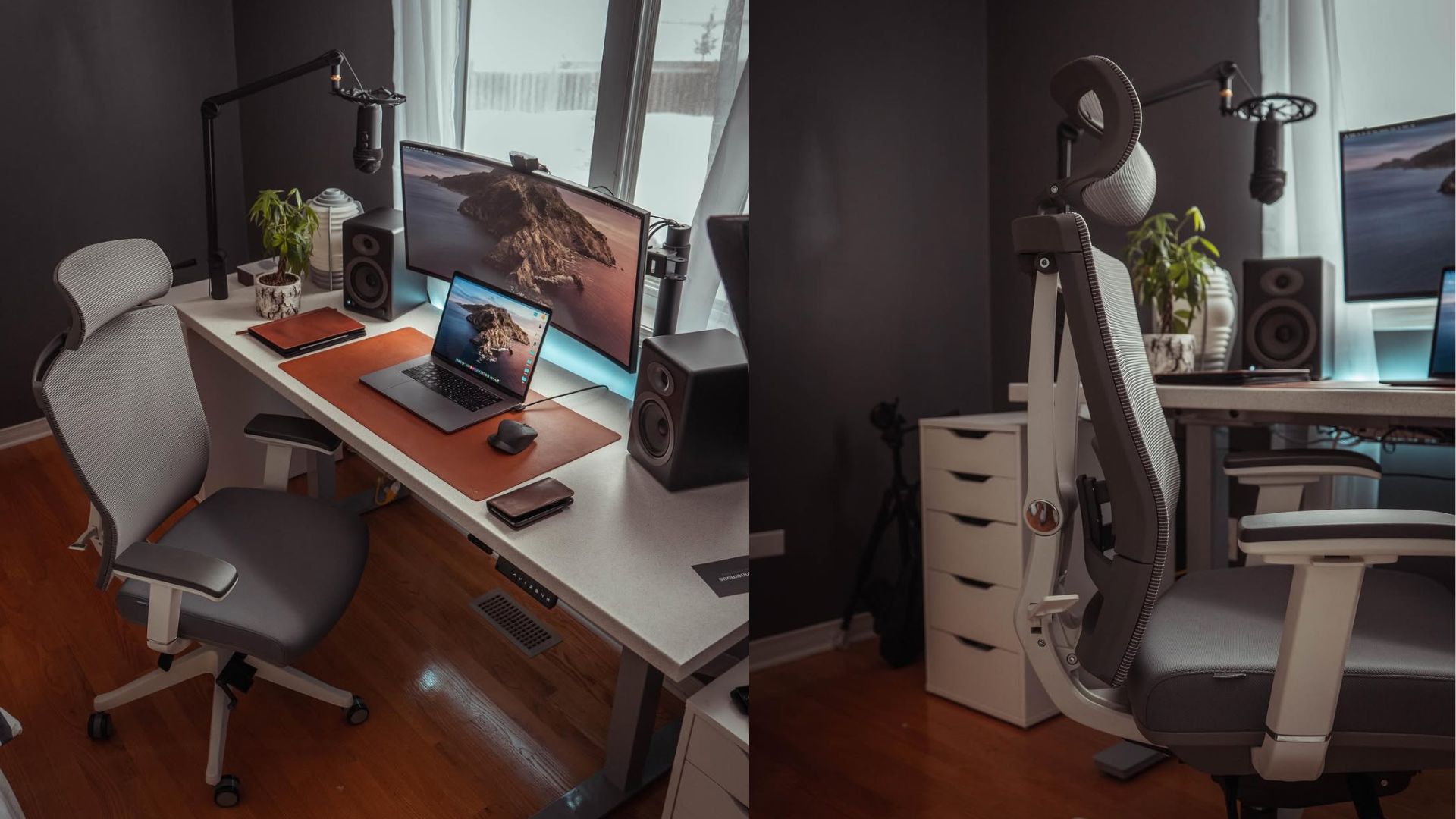
The Autonomous ErgoChair Pro is a fully-featured ergonomic office chair that emphasizes adjustability across multiple touchpoints. It’s designed for those seeking traditional office chair structure with enhanced customization for movement needs.
Quick Specs:
- Weight Capacity: 300 lbs
- Best For: Full workday sitting with flexibility to shift
- Movement Type: Recline, tilt tension control, 360° swivel
- Key Feature: 11-point adjustment system
Here's what sets this office chair for long hours apart: you can adjust nearly everything. Armrests move in four directions, the lumbar support slides up and down, seat depth changes, headrest tilts. During typical use, this means you can lower the armrests to sit briefly with legs tucked under, raise them back for typing support, or shift the lumbar support when moving between upright and reclined positions.
Mesh backing provides airflow across your back and reduces heat buildup during extended sessions. The recline mechanism includes tension adjustment — tighten it if you want resistance when leaning back, loosen it for easier movement. This affects how the chair responds to weight shifts throughout the day.
The catch? You'll spend your first week figuring out what all the levers do. Some adjustments require two hands and a bit of force. Once configured, though, most people leave settings alone and just use the recline and armrest adjustments day-to-day.
Trade-offs: The number of adjustments creates a learning period where you're figuring out optimal settings. Mesh seating feels less cushioned than foam padding. Armrests are functional rather than plush.
Best suited for: Those wanting a best desk chair for ADHD that maintains professional appearance while allowing position modifications throughout the workday without switching to alternative seating.

6. Hbada E3 Pro Ergonomic Office Chair
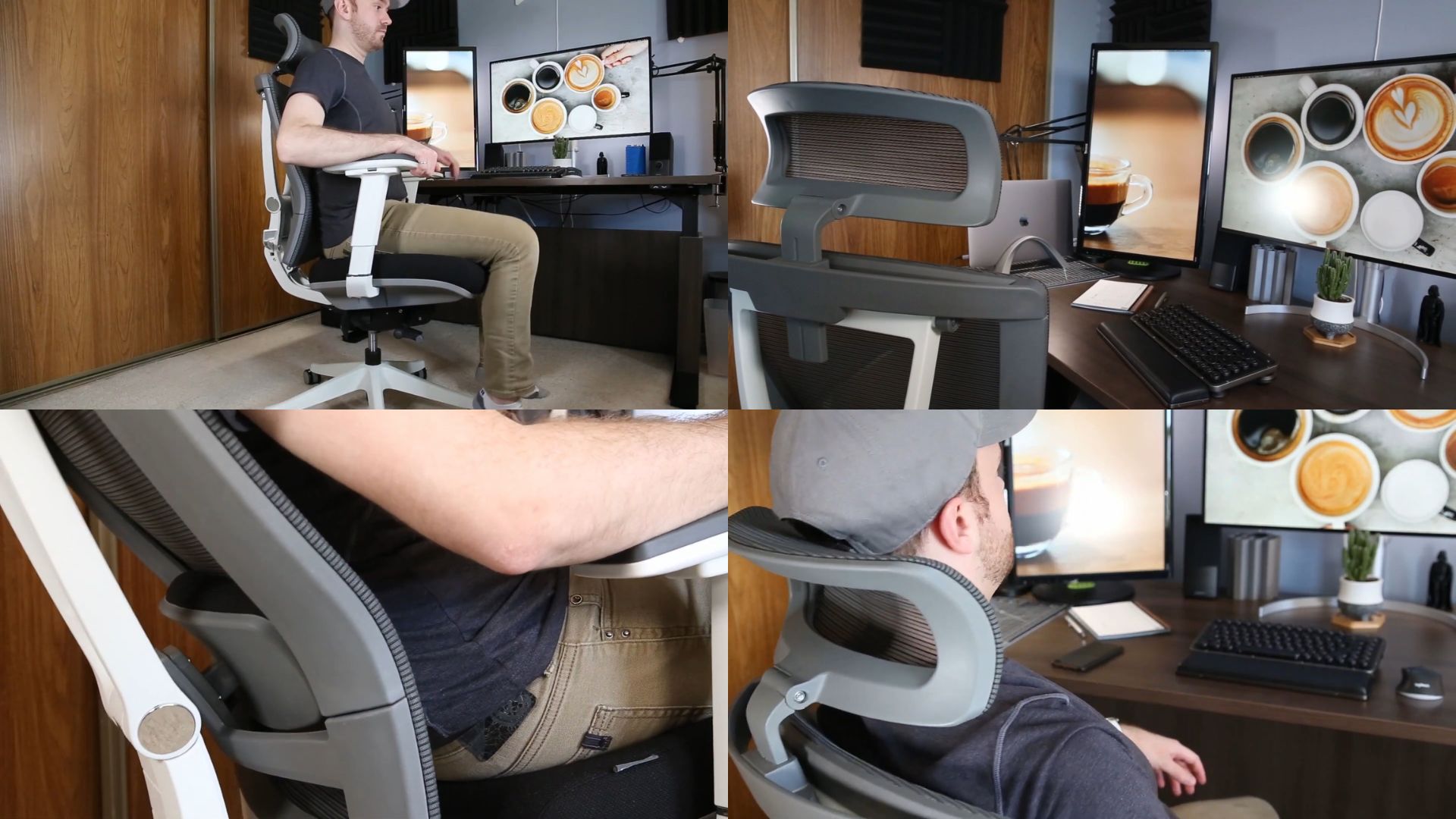
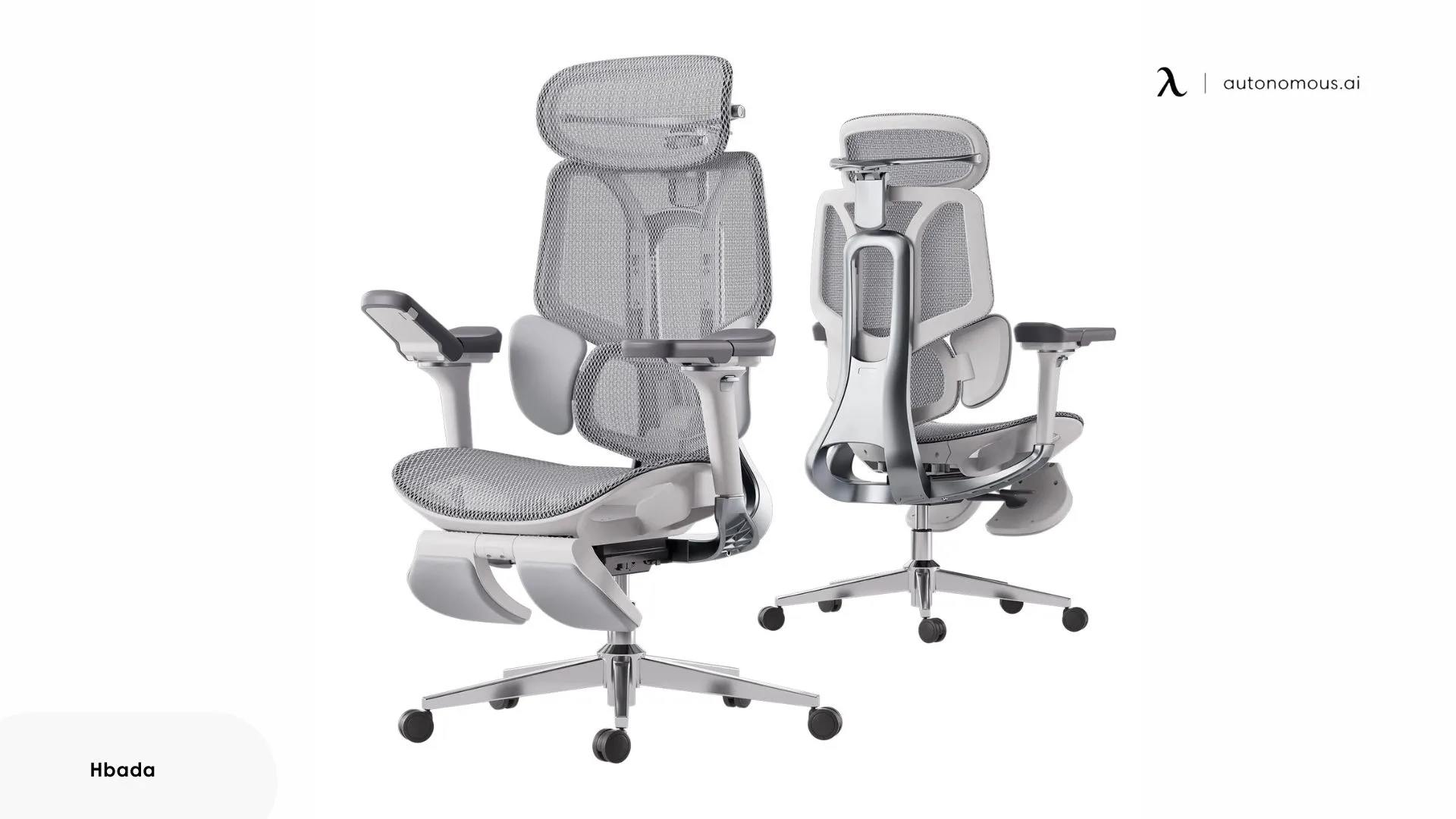
This ergonomic adhd chair distinguishes itself with an integrated flip-out footrest that extends from beneath the seat. This feature addresses a specific use case: alternating between standard desk work and reclined positions with elevated legs.
Quick Specs:
- Weight Capacity: 330 lbs
- Best For: Work patterns mixing upright focus and reclined review
- Movement Type: Recline with footrest extension, swivel
- Key Feature: Retractable footrest (stows completely when not in use)
Extending the footrest involves pulling a lever under the seat. The footrest locks at a fixed angle and supports your legs in a semi-reclined position. This setup works when reviewing documents, taking calls, or processing information in a less active state. Retracting it returns the chair to standard configuration without the footrest interfering with normal sitting or desk clearance.
Standard features include adjustable lumbar support, seat height control, and recline functionality. The headrest adjusts vertically but maintains a fixed angle. Armrests provide height adjustment only — no lateral or depth movement.
PU leather upholstery resists spills and cleans with a damp cloth. The material doesn't offer the breathability of mesh, which becomes noticeable during warm conditions or extended use. Cushioning sits in the medium-firm range, providing support without excessive softness.
Trade-offs: The footrest extends at one preset angle with no adjustment for different leg lengths or preferences. The chair's overall depth increases due to the footrest mechanism — measure your workspace before purchasing.
Best suited for: People whose work includes distinct phases requiring different physical positions — focused upright work alternating with periods where elevated leg positioning helps with concentration or comfort during less active tasks.
7. HAG Capisco 8106
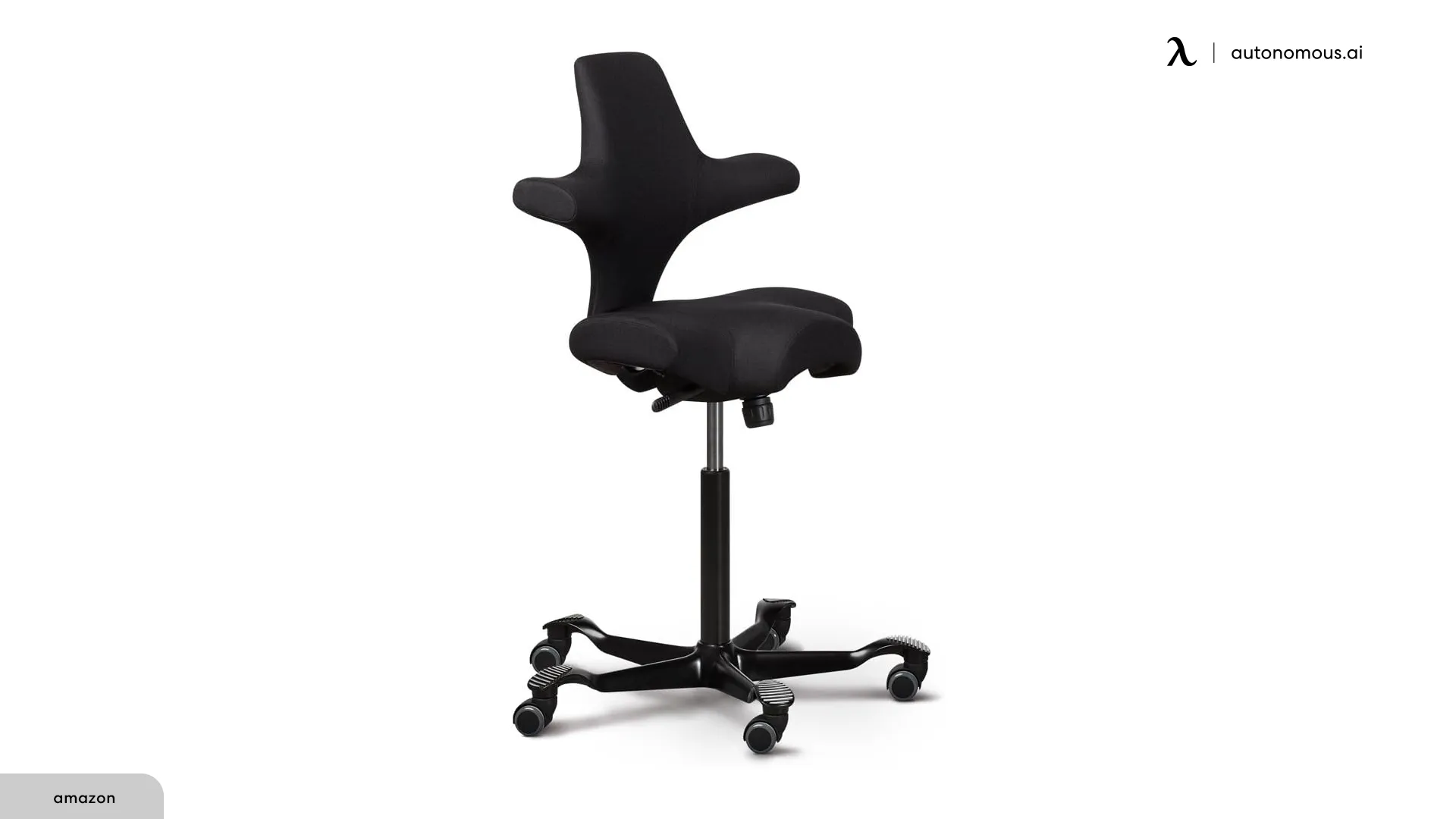
An ADHD chair for adults uses a saddle-shaped seat that accommodates multiple sitting orientations. Originally designed in Norway for industrial workspaces, it's engineered for environments where sitting and standing positions change frequently.
Quick Specs:
- Weight Capacity: 275 lbs
- Best For: Standing desk workflows, position variation
- Movement Type: Full 360° rotation, forward-backward tilting
- Key Feature: Saddle seat enables straddling, side-sitting, forward-facing
The saddle configuration allows you to face forward in standard position, straddle the seat with legs on either side, or sit sideways. Each orientation engages different muscle groups and changes your relationship to the desk. Height adjustment ranges from standard desk level to standing-desk height, supporting transitions between sitting and elevated working positions.
Seat firmness is considerably higher than conventional office chairs. This supports the active sitting concept by preventing you from settling into one static posture. A small backrest provides minimal lumbar contact when facing forward but doesn't restrict movement or encourage leaning back.
A circular foot ring at the base provides support at multiple heights depending on seat elevation. Material quality and mechanical components reflect industrial-grade construction designed for extended lifespan rather than immediate softness.
Trade-offs: Minimal back support makes this unsuitable for users who need substantial lumbar cushioning or prefer reclined positions. The saddle shape requires significant adaptation, initial use feels unnatural and potentially uncomfortable. Works best as part of a varied seating strategy, not as a sole all-day chair.
Best suited for: Standing desk users seeking an ADHD-friendly office chair that facilitates movement between elevated and seated positions, and who value long-term durability over immediate comfort during an adjustment period.
8. Newtral Freedom-X Multi-Posture Pro Chair
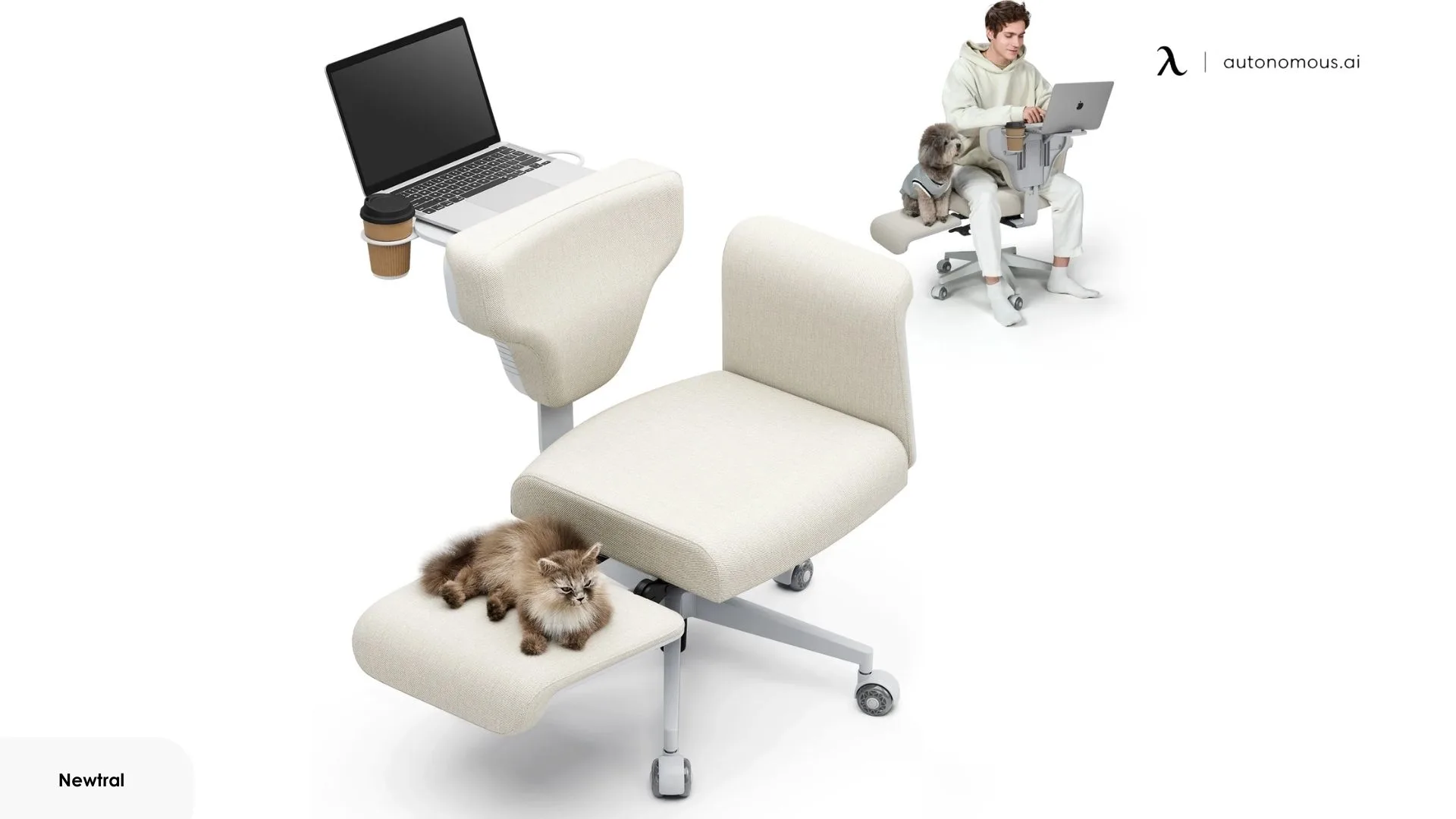
This ADHD computer chair centers on armrest flexibility as its primary feature. The armrests adjust from 90° to 210°, which changes how you can position yourself throughout the day — from standard upright sitting to fully reclined positions with the armrests lowered beside you.
Quick Specs:
- Weight Capacity: 220 lbs (armrests), standard base capacity
- Best For: Frequent posture switching, work-from-home flexibility
- Movement Type: Armrest-enabled position changes, 90°-117° backrest recline
- Key Feature: Adjustable armrests (90°-210° range)
The armrest mechanism determines most of your position options. When raised, they function as standard armrests for typing or desk work. Lowered completely, they create space for cross-legged sitting or allow you to sit facing backward. Mid-range positions support side-sitting or leaning postures.
The backrest includes a fold-out laptop tray rated to 66 lbs, with three angle settings and anti-slip slots. Hidden cup holders sit on either side. This setup creates what functions as a mobile workstation — you can work with the tray deployed while sitting in various positions, though the tray placement works best in upright or slightly reclined configurations.
Seat depth adjusts by 2.36 inches and backrest height by 3 inches. The recline range spans 90° to 117°, with a locking mechanism at your preferred angle. High-density foam cushioning provides support without excessive softness.
Trade-offs: Armrest adjustment requires manual repositioning—they don't lock into infinite positions, just specific angles. The laptop tray adds bulk to the backrest, and the integrated design means you can't remove it when not needed. At maximum recline with armrests down, the chair occupies more floor space than in standard position.
Best suited for: Those who want a cross legged ADHD office chair with integrated work accessories and value armrest-based position variety over other movement mechanisms. Works for people whose workflow includes distinct phases (focused typing, reclined reading, casual browsing) and who have space to accommodate the chair's footprint in various configurations.
FAQs
1. What is the best type of chair for ADHD?
The best ADHD-friendly chairs combine ergonomic support with movement-friendly features to reduce restlessness and improve focus. Popular choices include kneeling chairs, balance ball chairs, ergonomic stools, and chairs with sensory elements like rocking or tactile cushions.
The right option depends on your work style, posture needs, and how much movement helps you concentrate.
2. Are there office chairs specifically designed for ADHD?
Yes. Many brands design office chairs with ADHD-friendly features such as active sitting, flexible posture support, and easy adjustability. While they may look like standard ergonomic chairs, these models prioritize movement and comfort to support focus during long work sessions.
3. Are balance ball chairs good for people with ADHD?
Yes, they are! Balance ball chairs encourage active sitting and help users concentrate on what they’re doing at the moment. Additionally, their design helps release excess energy for those who need to stay focused for prolonged periods.
4. What chairs do people with ADHD Use?
People with ADHD often choose ergonomic chairs that support posture, reduce restlessness, and help maintain focus. Popular options include kneeling chairs, balance ball chairs, ergonomic stools, wobble chairs, or chairs with sensory features.
5. What is a sensory chair, and how does it help ADHD?
A sensory chair provides controlled movement or tactile feedback to increase body awareness and reduce restlessness. For adults with ADHD, sensory features like rocking, bouncing, or textured seating can help regulate attention and make it easier to stay engaged during desk work.
6. Do rocking chairs help calm ADHD symptoms?
Yes, they do! Rocking chairs offer many benefits to people with ADHD since their rhythmic motion can increase focus and concentration, decrease hyperactivity, and relieve anxiety symptoms.
7. What should I look for when buying an ADHD-friendly chair?
Look for adjustable ergonomic features such as seat height, lumbar support, and armrests, along with movement options like tilt, swivel, or bounce. Breathable materials and intuitive adjustments also help reduce distractions and support all-day comfort.
8. Can movement in a chair actually improve focus?
Yes. Micro-movements like rocking, bouncing, or shifting positions can help regulate attention in people with ADHD. Movement-friendly chairs allow you to stay physically engaged without breaking focus or leaving your desk.
Final Thoughts
The chair itself is just one component. Pairing it with an ADHD-friendly desk setup that accommodates your workflow and ADHD headphones that help manage auditory distractions creates a more complete environment for sustained focus. Each element works together to reduce the friction between your natural movement patterns and the demands of desk work.
Whether you're drawn to saddle chairs for their active sitting mechanics, ADHD wobble chairs for constant micro-movements, meditation-style designs for position flexibility, or traditional ergonomic options with extensive adjustability, the key is matching the chair's strengths to your actual working patterns.