Is the Secretlab MAGNUS Pro Standing Desk Worth It?
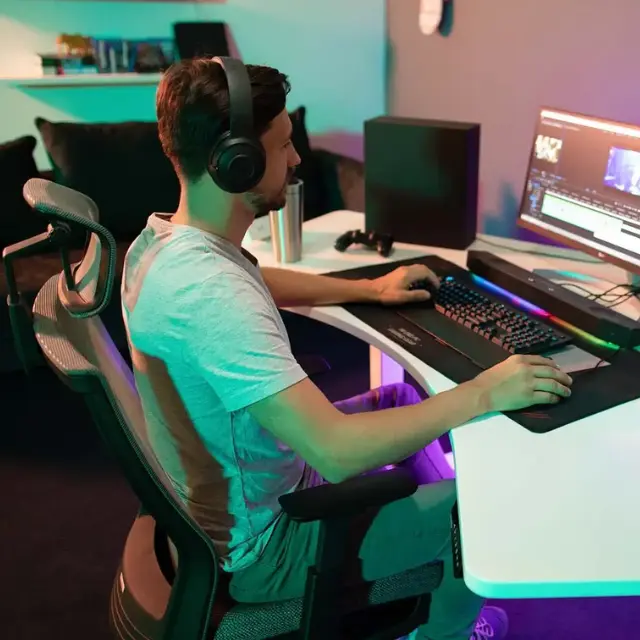
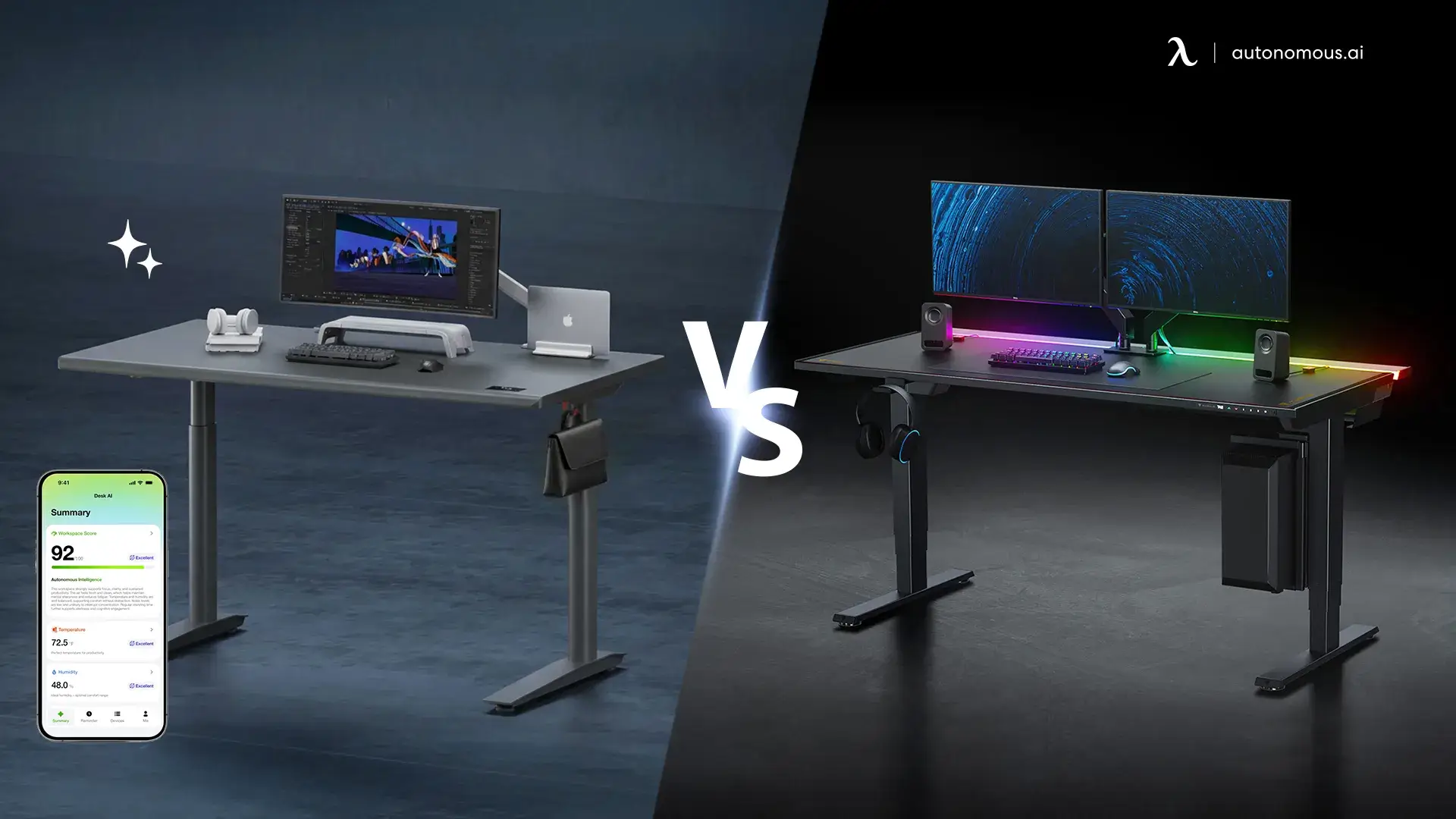
Table of Contents
Choosing a standing desk is less about finding the most advanced mechanism and more about matching design priorities to how you work. This article examines the Secretlab MAGNUS Pro through practical factors like build, cable management, and day-to-day stability. It then compares that approach with the Autonomous Desk AI, which focuses on guiding movement and posture over time.
Secretlab MAGNUS Pro Desk Review
1. First impressions and build quality
The Secretlab MAGNUS Pro doesn’t feel like a typical standing desk. The entire structure - from the desktop to the legs - is built around a steel-first design, with no laminated wood top or veneer. Even under heavier, multi-device setups, flex is minimal.
That rigidity becomes more apparent once the desk is in use. Height adjustments stay steady, and leaning into the surface doesn’t introduce the subtle movement common on lighter desks. For setups that evolve beyond a basic workstation - whether that means layered peripherals, multiple displays, or a more involved gaming desk setup - the desk maintains a planted feel. The same holds true for larger PC gaming setups, where stability matters as much as surface space.
2. Metal desktop experience
Unlike most sit-stand desks, the MAGNUS Pro uses a metal desktop rather than wood or composite materials. This choice changes how the desk behaves:
- The surface feels cool and rigid, with no bounce
- Accessories attach magnetically instead of mechanically
- The desk resists surface wear better than laminate tops
At the same time, the metal surface can feel less forgiving than wood for users who prefer a warmer, softer tactile experience. Desk mats are almost essential for long typing sessions, especially in cooler environments.
3. Height adjustment and movement
The MAGNUS Pro offers electric height adjustment from approximately 25.6” to 49.2”, covering both seated and standing positions comfortably for most users. Adjustments are smooth and controlled, with the desk maintaining stability even at standing height.
The control panel supports three height presets, allowing quick transitions throughout the day. While the desk does not actively prompt movement, the precision of its lift system makes frequent sit-stand changes easy and predictable.
This approach favors users who already have established movement habits rather than those who rely on reminders.
4. Cable management system in daily use
Cable management is the defining feature of the MAGNUS Pro. Instead of relying on add-on trays, the desk integrates a full-length rear cable compartment with a hinged cover. Power, monitor, and peripheral cables can be dropped directly into the tray without routing through tight channels.
The standout element is the integrated power supply column, which allows a single concealed cable to run from the desk to the wall outlet. This eliminates the usual tangle of power bricks and extension cords underneath the desk.
In practice, this system dramatically reduces visible clutter and makes it easier to reconfigure devices without dismantling the setup.
5. Ecosystem and accessories
The MAGNUS Pro is designed around a closed ecosystem of accessories, including:
- Monitor arms that fit inside the cable tray
- Under-desk PC mounts
- Magnetic desk mats and cable anchors
These standing desk accessories are tightly integrated and visually cohesive, but they also reinforce a specific workflow. Users who already own third-party arms or mounts may need adapters or replacements to achieve the same clean result.
6. Secretlab desk price context
Price is difficult to separate from expectations. Depending on configuration and promotions, the Secretlab MAGNUS Pro typically falls between $988 and $1,099, with accessories adding to the total. That places it well above entry-level options, and closer to what many buyers encounter when exploring broader standing desk price ranges across the market.
At this tier, comparisons tend to shift. Instead of asking how much a computer desk costs in general, the question becomes what kind of experience the price supports. The MAGNUS Pro is not trying to compete with the most expensive desk category, but it also sits far from what most would consider an affordable standing desk.
The value proposition is therefore less about raw specifications - such as lift speed or maximum load - and more about materials, cable management, and how tightly the desk integrates into a larger setup. For readers approaching the category from a gaming perspective, it can be useful to contrast this pricing with what’s typical of the best budget gaming desk, where priorities tend to skew differently.
Secretlab MAGNUS Pro vs Autonomous Desk AI
Category | Secretlab MAGNUS Pro | Autonomous Desk AI |
Desktop material | Steel (metal surface) | HDF wood |
Frame | Steel chassis | SPCC steel frame |
Max load capacity | 265 lbs | 330 lbs |
Height range | 25.6” – 49.2” | ~30.7” – 49.7” (with top) |
Motors | Electric lift with integrated PSU column | Dual motors |
Noise level | Not emphasized | <30 dB |
Presets | 3 manual presets | App-guided sit/stand prompts |
Cable management | Full-length rear tray + hidden power column | Standard cable tray |
Built-in power | Integrated power supply column | External power |
Ecosystem | Magnetic accessories, monitor arms, PC mounts | App, sensors, habit guidance |
Sensors & tracking | ❌ | ✔️ (movement + environment) |
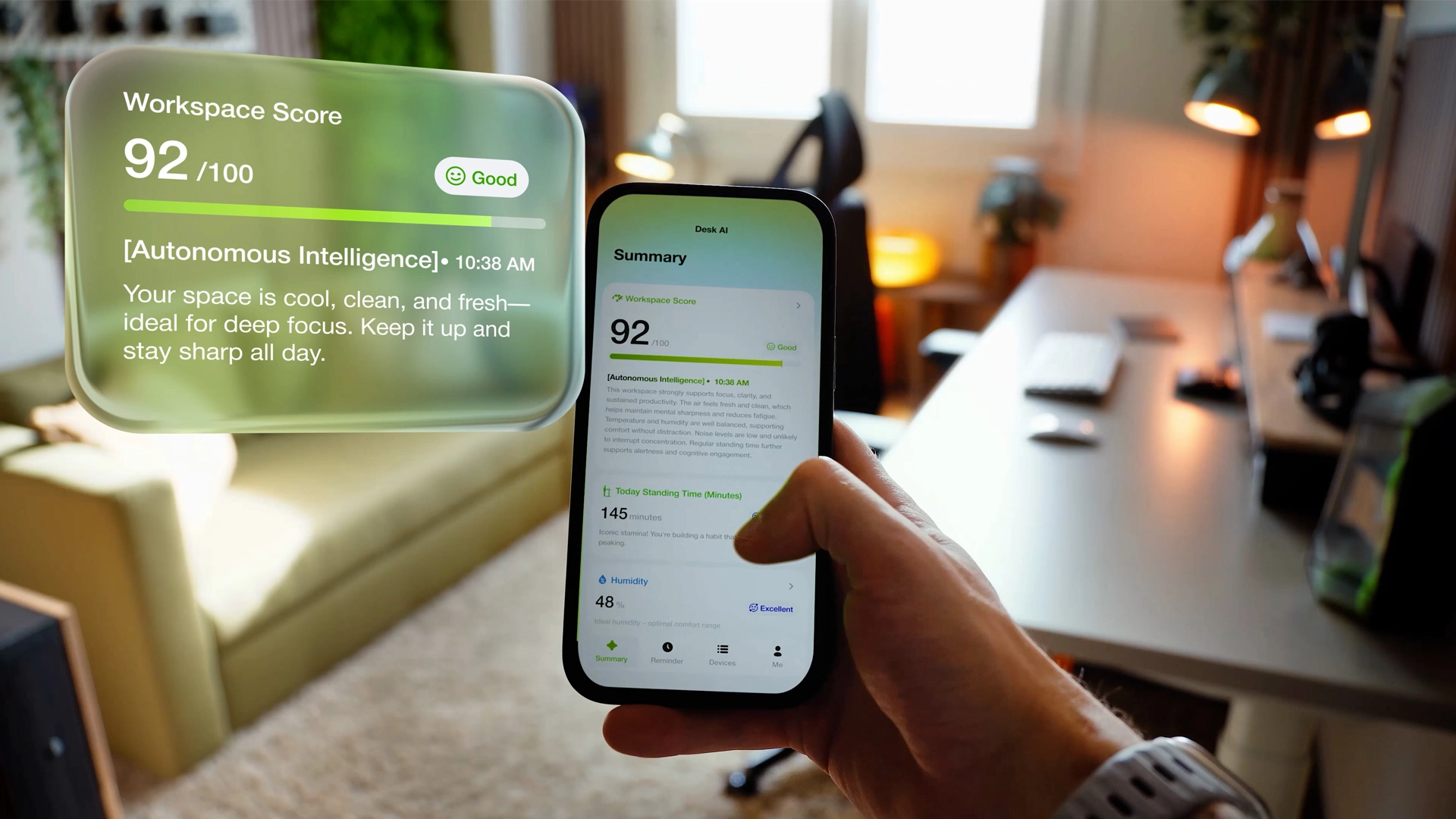
Software integration | ❌ | ✔️ Workspace Score app |
Visual style | Industrial, minimal, gaming-oriented | Neutral, home-office oriented |
Typical price | ~$988–$1,099 | ~$649 (often discounted) |
1. Price-to-value perspective
From a pricing standpoint, the two desks sit in different tiers:
- The MAGNUS Pro price reflects its material choice, integrated power design, and closed accessory ecosystem.
- Desk AI allocates more of its cost toward sensors and software, while keeping the desk hardware closer to standard premium sit-stand designs.
As a result, Desk AI often appears as a Secretlab desk alternative for users who want sit-stand functionality and long-day support without paying a premium for metal construction and proprietary accessories.
2. Choosing between the two approaches
Rather than asking which desk is better, the more useful question is which problem you’re trying to solve:
- If cable clutter, heavy gear, and desk rigidity are the main pain points, MAGNUS Pro’s design addresses those directly.
- If fatigue, posture drift, and inconsistent movement are bigger challenges, Desk AI’s guidance-based approach may feel more relevant.
Both desks support sitting and standing well. They simply optimize for very different definitions of a “better” workspace.
FAQs
Is the Secretlab MAGNUS Pro a good standing desk for work, not just gaming?
Yes. While it’s marketed toward gamers, the MAGNUS Pro functions as a full-featured standing desk for work. Its strengths - stability, precise height adjustment, and cable management - translate well to professional setups, especially those with multiple monitors or peripherals.
Is the Secretlab desk worth it for the price?
That depends on what you value. The MAGNUS Pro’s price reflects its metal construction, integrated power column, and accessory ecosystem. If those features solve real pain points in your setup, the cost can feel justified. If not, less expensive desks may meet your needs just as well.
How much does the Secretlab MAGNUS Pro desk usually cost?
The Secretlab MAGNUS Pro typically ranges from $988 to $1,099, depending on promotions and configuration. Accessories such as monitor arms and desk mats are sold separately and can increase the total cost.
What makes the Secretlab MAGNUS metal desk different from wood standing desks?
The metal desktop offers higher rigidity and enables magnetic accessories, which helps with organization and durability. However, it also feels cooler and harder than wood, making desk mats more important for comfort during long typing sessions.
Does the MAGNUS Pro wobble at standing height?
In normal use, wobble is minimal. The steel chassis and integrated power column help maintain stability even near maximum height, particularly compared to lighter wood-top desks.
Is Autonomous Desk AI a good Secretlab desk alternative?
Desk AI can be a strong alternative for users who care more about movement reminders, posture awareness, and price than metal construction or cable perfection. It targets daily work habits rather than physical desk organization.
Which desk is better for long workdays?
Both support long workdays, but in different ways. The MAGNUS Pro supports endurance through stability and a clean setup, while Desk AI supports endurance by encouraging movement and healthier work patterns through software guidance.
Can you use third-party accessories with the MAGNUS Pro?
Yes, but results vary. While many third-party accessories work, the cleanest cable management and fit are achieved with Secretlab’s own ecosystem, which is designed specifically for the desk.
Conclusion
A standing desk doesn’t just change height - it shapes how a workspace feels and how it’s used every day. The Secretlab MAGNUS Pro approaches this through hardware: a rigid metal structure, integrated power, and one of the most comprehensive cable management systems available. It’s designed to create a controlled, visually clean environment that stays out of the way once set up.
By contrast, desks like Autonomous Desk AI focus more on behavior - helping users move, reset posture, and stay aware of how they work throughout the day, often at a lower price point.
Whether the Secretlab desk is “worth it” ultimately comes down to priorities. If your biggest challenges are cable clutter, heavy equipment, and setup stability, the MAGNUS Pro directly addresses those. If your challenges are fatigue, inactivity, or maintaining healthy habits during long hours, a software-guided alternative may deliver more day-to-day value.