Top 5 Mesh Office Chairs With Footrest for Long Work Days

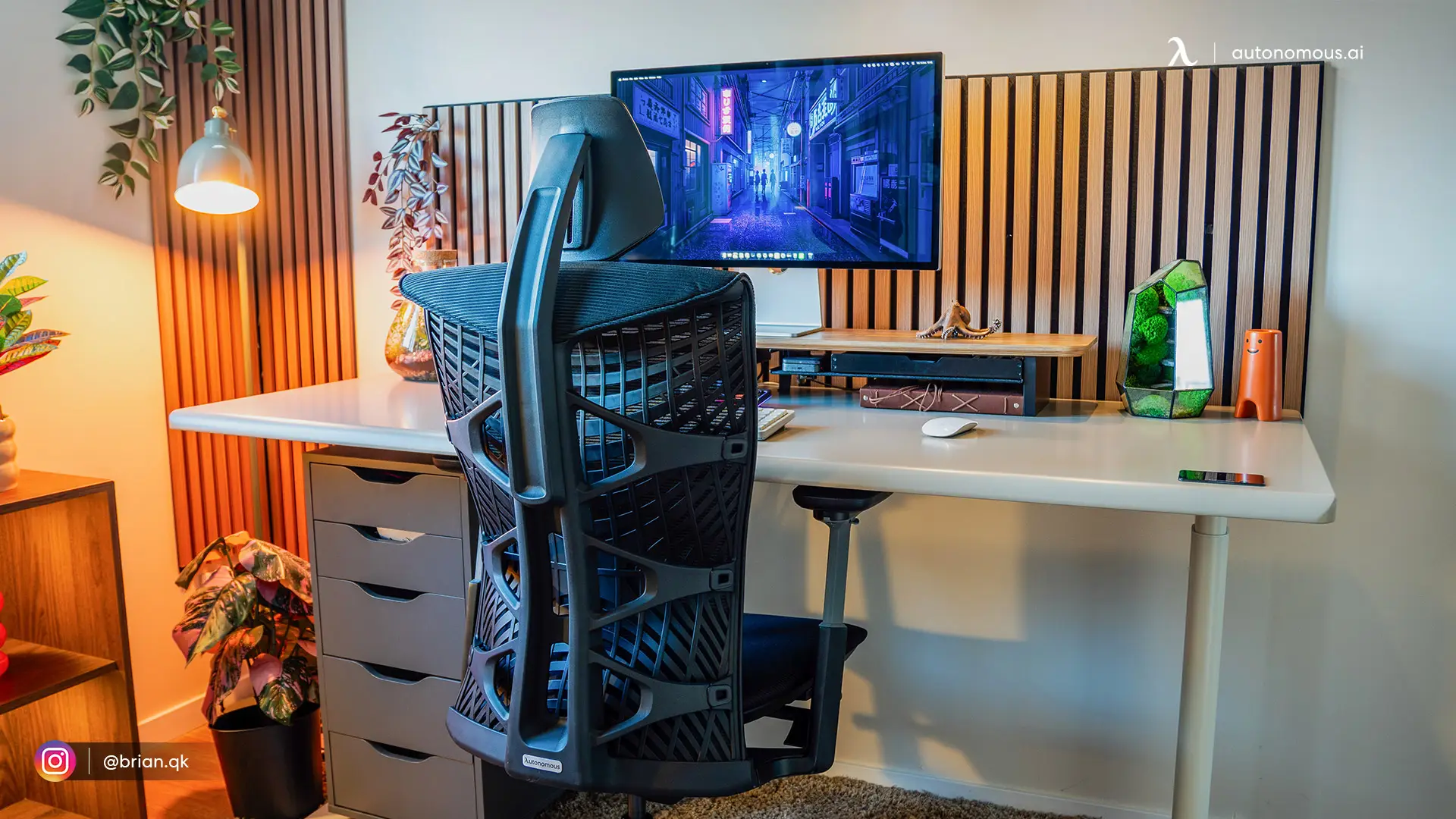
Mesh office chairs with footrests combine breathability with extended comfort in a way that makes practical sense. When you're using a footrest and spending longer periods in reclined positions, the material touching your back matters more than you might expect. Mesh maintains airflow even when you're leaning back, preventing the heat buildup that happens with leather or fabric during extended sessions.
We've evaluated mesh chairs across different price points to identify which models deliver genuine value and where the material choice actually affects your comfort throughout the workday.
Top 5 Ergonomic Mesh Office Chairs with Footrest
Mesh quality varies significantly across price points, affecting both immediate comfort and long-term durability. The ergonomic chairs below represent different approaches to combining mesh construction with footrest functionality, from budget-friendly options to more refined designs.
This comparison highlights the key differences in mesh type, footrest design, and build capacity to help you identify which chair matches your priorities before diving into detailed reviews.
- Side-by-Side Comparison:
Product | Mesh Type | Footrest Design | Weight Capacity | Key Strength |
COLAMY | Standard breathable | Retractable | 300 lbs | Budget entry point |
Qulomvs | High-density | Hidden pull-out | 300 lbs | Clean appearance |
OdinLake L2 Ergo PRO 633 | Multi-layer premium | Integrated retractable | 300 lbs | Long-term durability |
PatioMage | Basic weave | Flip-out | 250 lbs | Lightweight/portable |
ELABEST T96E | Reinforced | Padded retractable | 330 lbs | Heavy-duty capacity |
1. COLAMY Ergonomic Mesh Office Chair with Footrest – Best Entry-Level Mesh
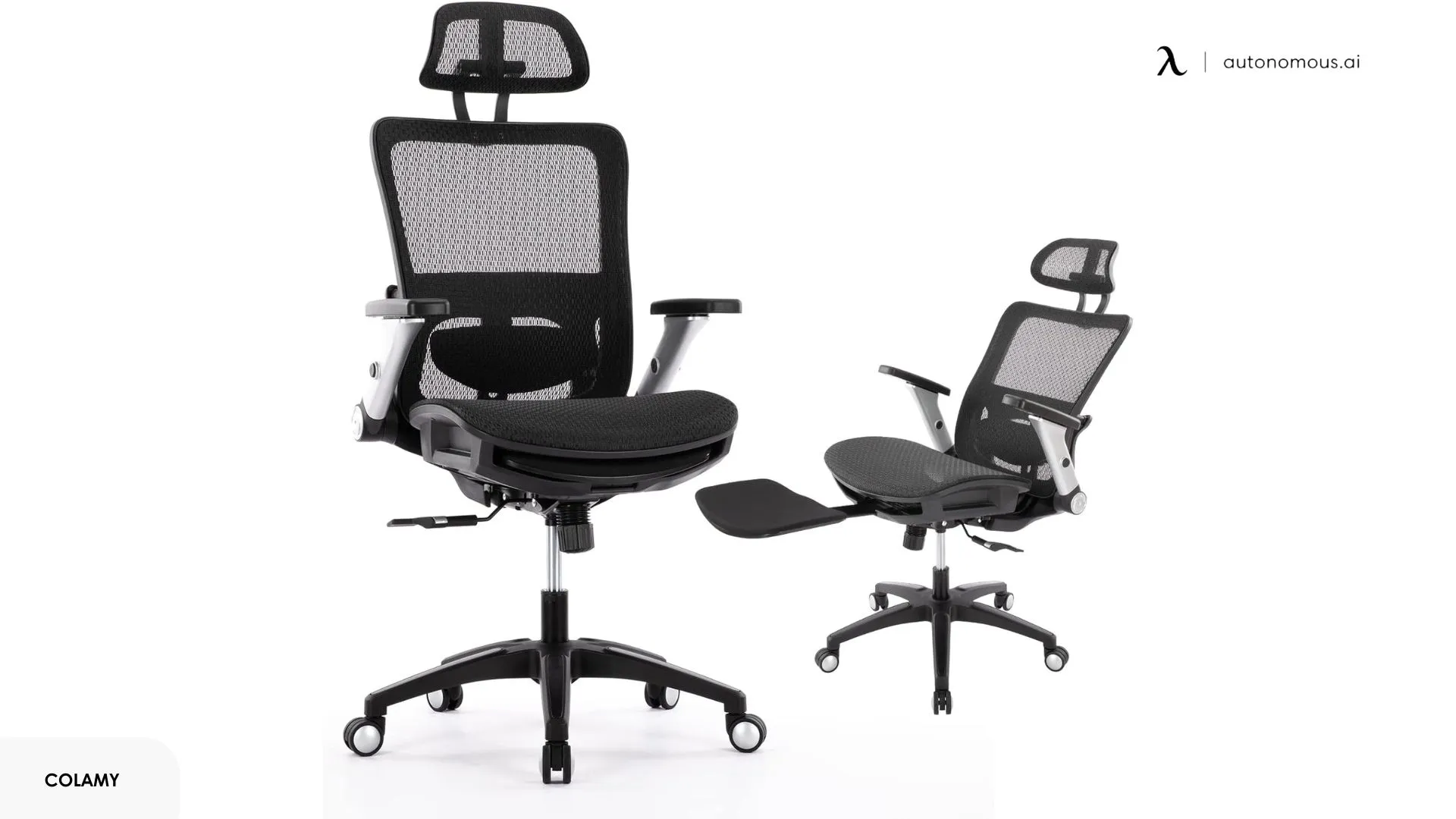
This COLAMY ergonomic mesh office chair with footrest serves as a practical entry point into mesh office chairs with footrest, offering the core benefits of breathable seating without premium pricing. At $180, it establishes what you can reasonably expect from budget mesh construction, adequate airflow, basic adjustability, and functional footrest capability without the refinement of $400+ options. This price point aligns with what most affordable office chairs deliver in terms of feature balance and build quality.
The standard breathable mesh provides consistent ventilation during normal sitting positions and improves noticeably when you recline with the footrest extended. The weave density sits in the middle range—not as open as ultra-breathable premium mesh, but sufficient to prevent the heat accumulation common with padded chairs.
The retractable footrest mechanism represents the expected trade-off at this price. It extends and locks adequately for users between 5'4" and 6'1", though the extension isn't as smooth as higher-priced alternatives. The footrest works best when deployed during intentional break periods rather than left extended throughout work sessions, as the locking mechanism can feel slightly loose under constant leg weight.
Best for: Budget-conscious users testing mesh breathability or needing basic footrest functionality.
2. Qulomvs Mesh Ergonomic Office Chair with Footrest – Best for Clean Workspace Aesthetics
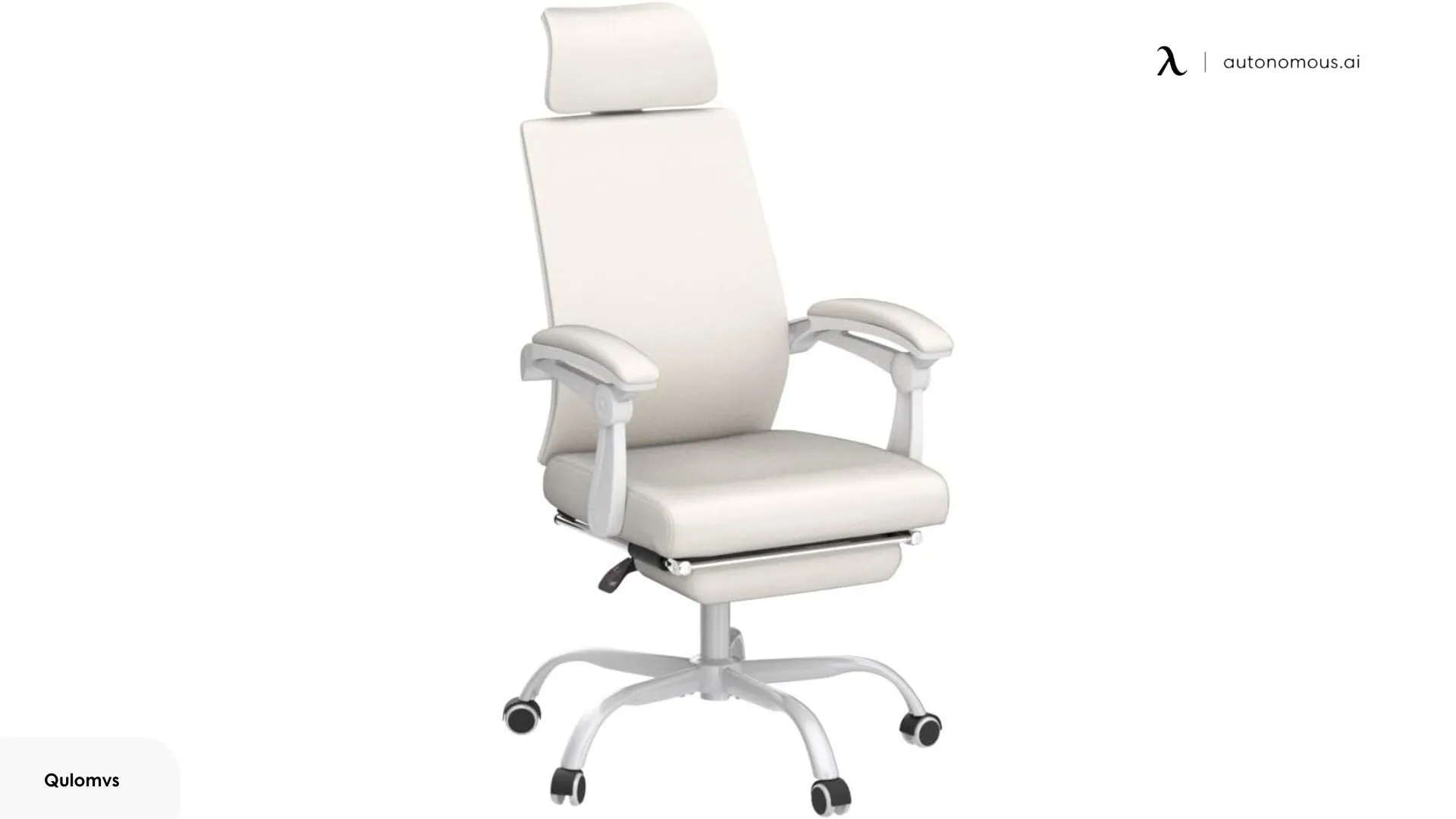
The Qulomvs mesh ergonomic office chair with footrest uses a hidden pull-out footrest that sits flush under the seat when not in use. This keeps the chair looking standard rather than obviously footrest-equipped, which matters if you're on video calls frequently or just prefer a cleaner visual line in your minimalist desk setup.
The high-density mesh feels firmer than the COLAMY's standard weave. You'll notice more resistance when you lean back, which helps maintain upright posture but might feel less forgiving during the first week of use. The tighter weave still allows decent airflow, though it's not quite as cooling as more open mesh patterns. If you tend to run hot, this is worth considering, but it's not a dealbreaker for most climate-controlled offices.
The footrest slides out smoothly enough and tucks back in without much effort. It's genuinely hidden when retracted, which is useful in smaller spaces where a visible footrest bar would feel like clutter. The extension works for most heights between 5'5" and 6'2". There's no audible click when it locks, so you're relying on the feel to know it's fully extended.
Best for: Users wanting a professional-looking chair with footrest capability that doesn't announce itself visually.
3. OdinLake L2 Ergo PRO 633 Ergonomic Office Chair with Footrest – Best For Daily Use
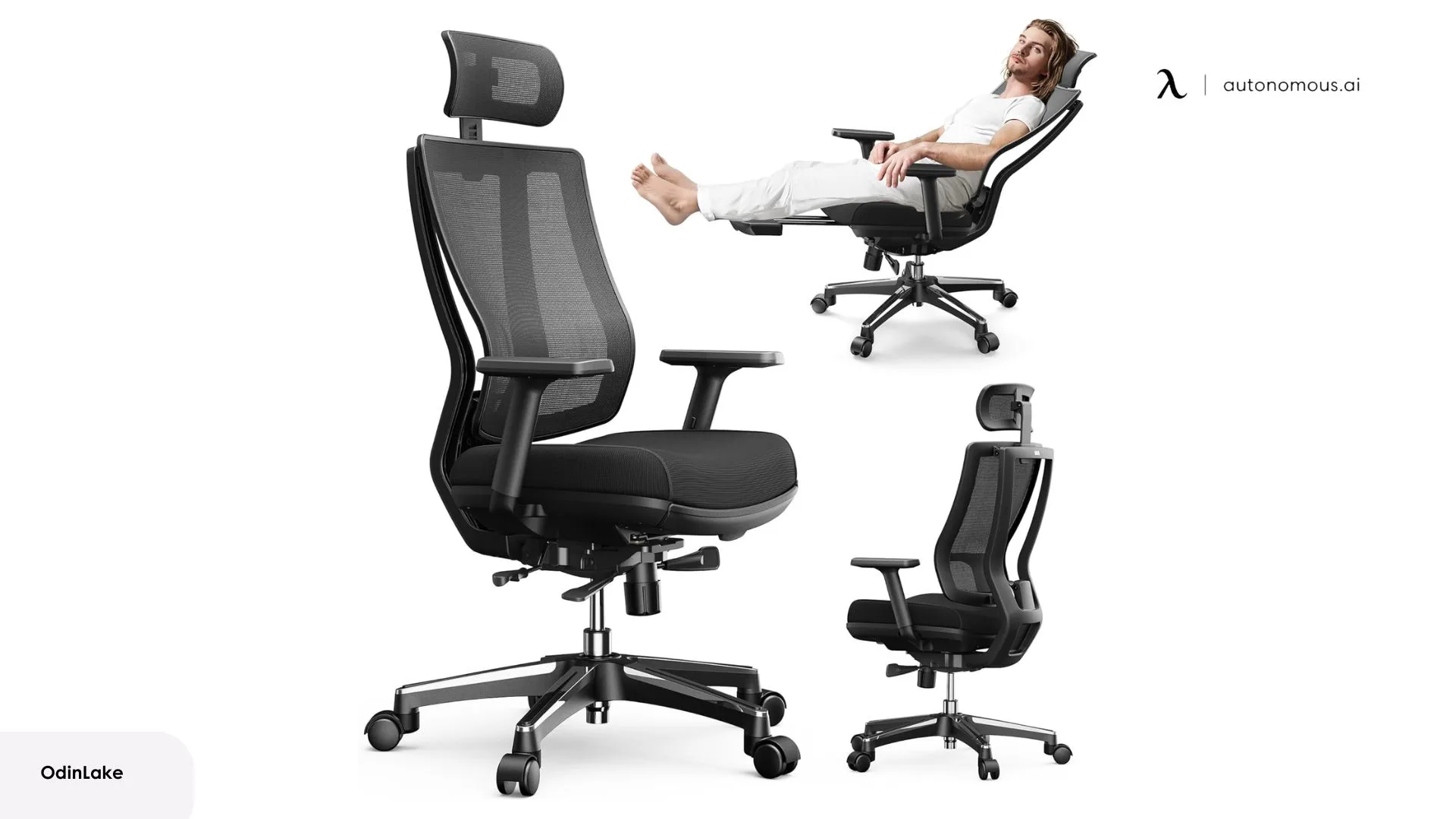
This mesh office chair with leg rest approaches the $350 price point with a focus on build quality that should hold up over years rather than months. The multi-layer mesh construction is where you feel the difference from budget options—it flexes when you shift position but springs back rather than staying compressed. Whether that justifies the cost depends on how many hours you're sitting daily and how long you plan to keep the chair.
The integrated footrest retracts into the chair base rather than pulling out from underneath, which creates a cleaner look when extended. The mechanism feels more substantial than the $180-220 range, with smoother extension and retraction that doesn't require much force.
The overall adjustment range is extensive—lumbar height and depth, armrest positioning in multiple directions, seat depth, and recline tension all have their own controls. This gives you more ways to dial in your position, though it also means spending more time on initial setup. At this price, you're essentially paying for durability and refinement rather than luxury features—characteristics that matter most for 8-hour office chair use.
Best for: Users sitting 8+ hours daily who want a chair that maintains performance over several years of heavy use.
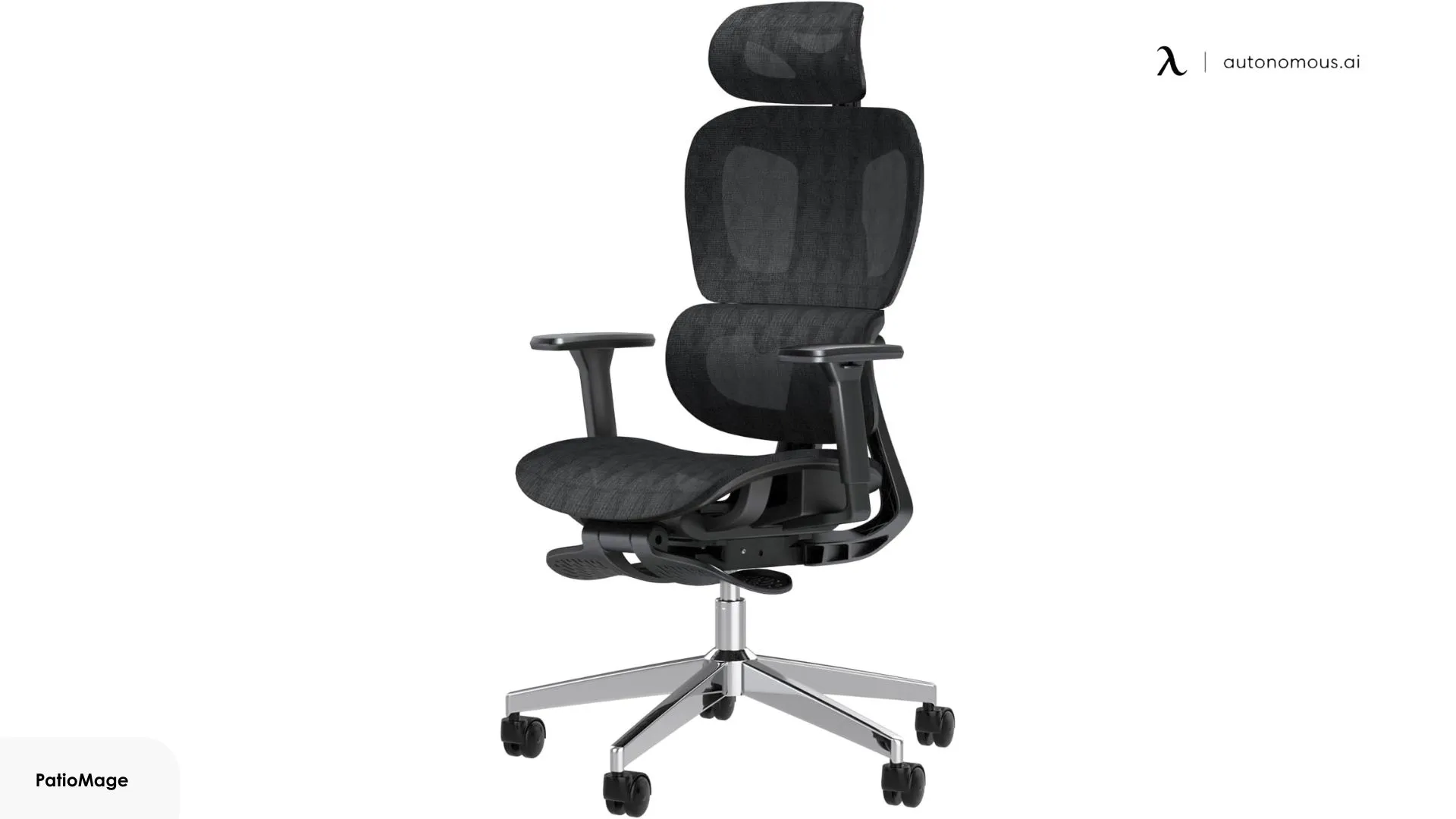
4. PatioMage Ergonomic Office Chair – Best Lightweight Design
The PatioMage uses a flip-out footrest mechanism instead of the retractable designs seen in other chairs on this list. The footrest folds down from underneath the seat and flips back up when not needed. This simpler mechanism means fewer moving parts that could potentially fail, though the flip-out design also means the footrest is somewhat visible even when stowed—it doesn't disappear completely like hidden pull-out styles.
The basic mesh weave provides adequate breathability for temperature-controlled environments. It's not as refined as high-density or multi-layer options, but it prevents the heat buildup you'd get with fabric or leather. The backrest height is moderate rather than extended, so users looking for a high-back office chair with more upper back and neck support might find this limiting.
Best for: Lighter users needing an affordable mesh office chair with leg rest in temperature-controlled spaces.
5. ELABEST T96E Ergonomic Mesh Office Chair – Best for Heavy-Duty Capacity
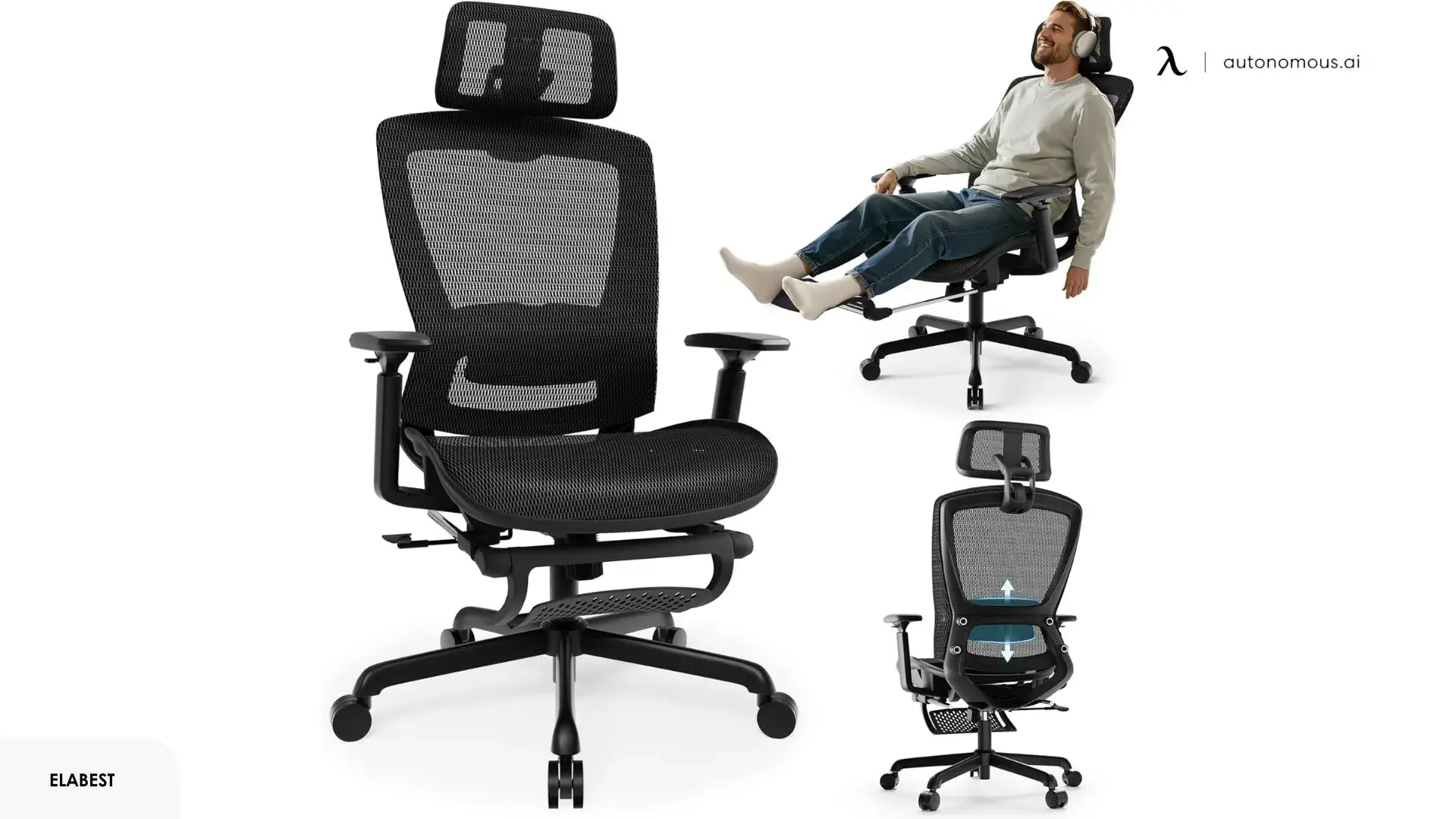
A mesh office chair with footrest stands out with its 330 lb weight capacity, the highest among these options. The reinforced mesh uses a denser weave structure with stronger edge support to handle heavier weight without stretching or sagging. This translates to a firmer feel across the backrest—noticeably more resistant than standard mesh, though still breathable enough to manage heat during extended sitting.
The footrest comes with padding rather than bare mesh or hard plastic surface. This makes a difference during longer recline sessions, particularly for heavier users where leg weight on an unpadded footrest can become uncomfortable after 20-30 minutes. The retractable mechanism handles the additional stress well, extending and retracting smoothly without the strain or wobble you sometimes get when chairs approach their weight limits.
The frame construction uses heavier-gauge materials to support the increased capacity rating. You'll notice this in the overall weight of the chair—it's less portable than lighter models but feels more stable as a result. The engineering reflects what you'd expect from a truly heavy-duty office chair designed for users who need the extra capacity assurance.
Best for: Users between 250-330 lbs needing reinforced mesh construction and padded footrest comfort.
FAQs
What is the best mesh office chair with footrest for long hours?
The best mesh office chair with footrest supports upright posture while allowing short leg-elevating breaks. Look for breathable mesh, stable lumbar support, and a footrest designed for circulation rather than constant reclining.
Is a mesh office chair with footrest good for all-day desk work?
Yes, a mesh office chair with footrest can work well for all-day use if the chair prioritizes posture first. The footrest should be used occasionally to reduce leg fatigue, not as a permanent sitting position.
Is a mesh office chair with a footrest good for back pain?
A mesh office chair with footrest can help reduce back strain by encouraging posture changes and improving circulation. However, consistent lumbar support is more important than the footrest for managing back pain.
Are mesh office chairs with footrests comfortable in hot environments?
Yes, mesh office chairs with footrests are especially comfortable in warm settings because the mesh improves airflow. This makes them a popular choice for home offices and long sitting sessions.
How is a mesh office chair with footrest different from a leather reclining chair?
A mesh office chair with footrest focuses on breathability and sustained sitting comfort, while leather reclining chairs emphasize relaxation. Mesh models are generally better for productivity and temperature control during long workdays.
Should I buy a mesh ergonomic chair with a footrest or use a separate footrest?
A mesh ergonomic chair with footrest offers convenience and integrated recline, while a separate footrest allows more precise leg positioning. Users who work upright most of the day often prefer a standalone footrest.
Is a mesh office chair with footrest worth the price?
A mesh office chair with footrest is worth it if breathability and occasional leg support improve your comfort during long workdays. For users who rarely recline, investing in core ergonomic support matters more than the footrest itself.
Conclusion
The best mesh office chair with footrest depends on your daily sitting time and how often you use the footrest. Better mesh quality matters more if you're sitting 8+ hours daily with regular footrest use. Budget options work fine for lighter use or occasional recline sessions.
Mesh handles the temperature and support challenges of extended footrest use better than leather or fabric. The material maintains consistent firmness over time, which becomes relevant during longer reclined positions. For most users in variable temperature environments, mesh provides more reliable comfort across different seasons.
Adjust your office chair with leg rest properly from the start. Mesh feels firmer initially, but this firmness is what maintains support over years. Proper lumbar position and seat depth affect your comfort more than price differences between models.