Best 70 Inch Standing Desks That Earn Their Footprint

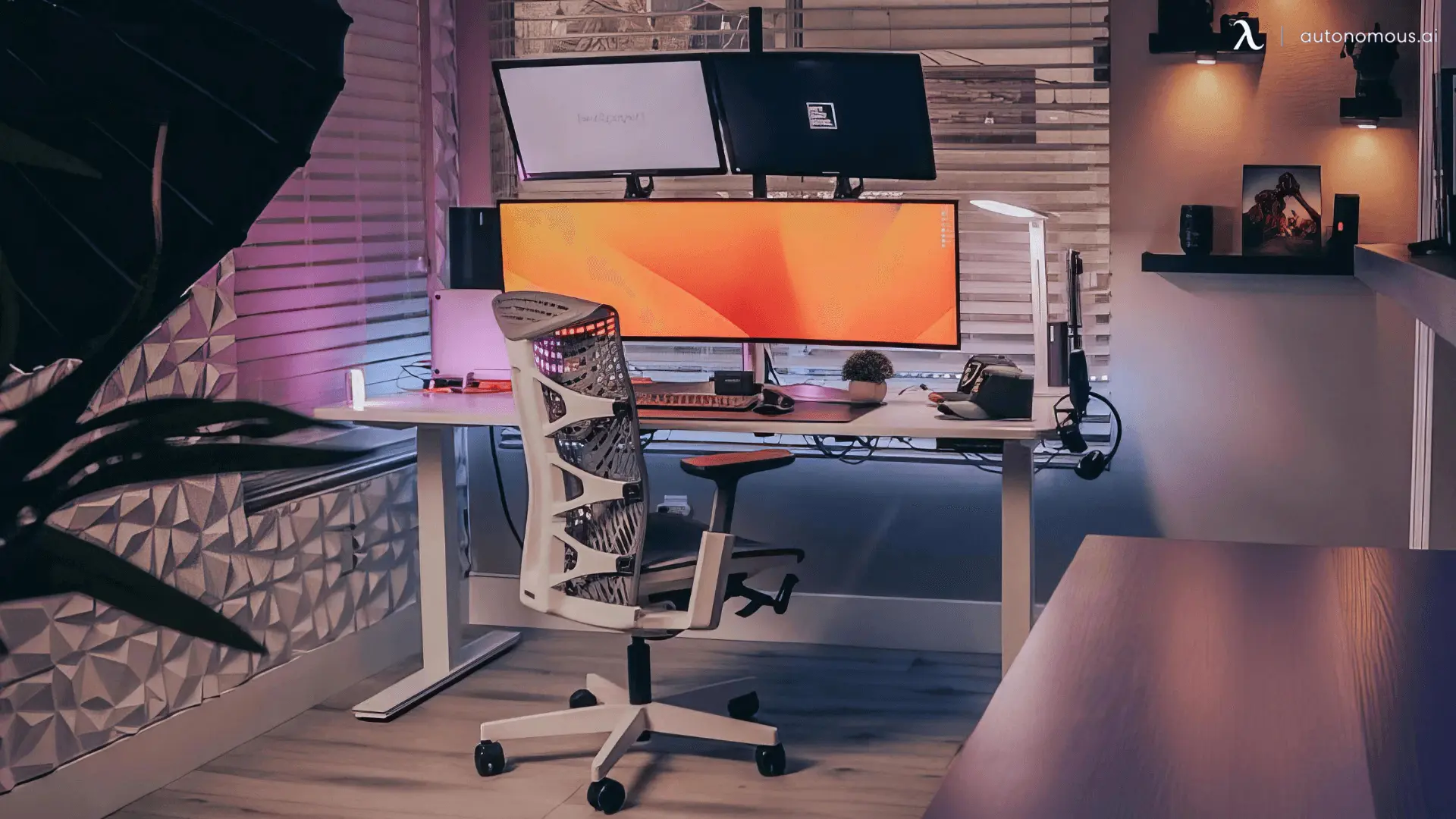
Table of Contents
A 70 inch standing desk sits at the intersection of space, flexibility, and intent. It is often chosen not for aesthetics alone, but for the freedom it creates across a workday. The wider surface supports multi-monitor setups, focused work, and moments that shift between sitting and standing without compromise.
For many home office setups, this size feels deliberate rather than excessive, offering room to think, organize, and move. Choosing the right standing desk at this scale is less about trends and more about building a workspace that keeps pace with how you actually work.
Why Choose a 70 Inch Standing Desk
Most people don't start here. They try a smaller desk first, realize they're constantly shuffling things around, and eventually accept that their setup needs more room to breathe.
A 70 inch standing desk solves that, but not just by adding surface area. The real value is separation. Your primary monitor stays centered where it should be. Secondary screens, a laptop, reference materials, or a notepad can live alongside it without stacking everything vertically or reaching across your body. Over prolonged sitting sessions, that separation reduces eye strain and cuts out the small, repetitive movements that add up to fatigue.
But width comes with trade-offs. A desk this size puts more stress on the frame, more torque, more flex, more opportunity for things to go wrong. On a 48 inch desk, you might not notice a slightly underpowered motor or minor wobble at standing height. At 70 inches, those flaws become obvious. Stability, leg geometry, and how well the motors stay synchronized all matter more here.
When the engineering holds up, a 70 inch sit stand desk feels solid at every height—no shimmy when you type, no drift when you lock it in place. When it doesn't, you'll feel it every time you raise the desk.
Key Specs to Look for in a 70 Inch Standing Desk
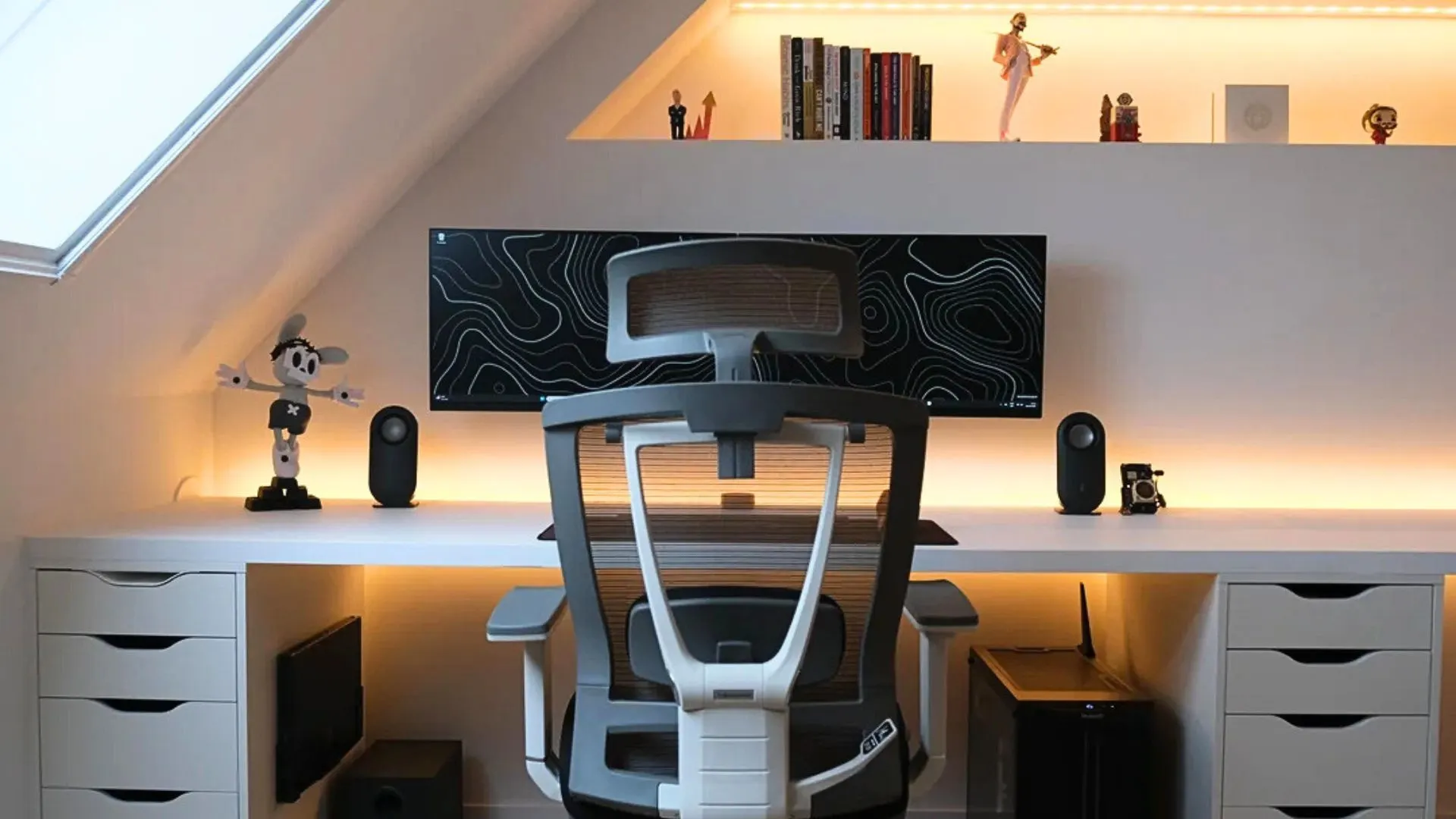
Once a desk reaches this width, specifications stop being interchangeable. A 70 inch standing desk behaves differently from smaller models, and certain design choices will directly affect how stable, quiet, and predictable it feels in daily use.
- Stability and Frame Design
At 70 inches, the desktop acts like a long lever when raised. This makes frame geometry more important than leg count alone. Pay close attention to steel thickness, joint reinforcement, and the length of the feet.
Crossbars can improve rigidity, but only when they are properly integrated rather than added as an afterthought. A well-designed standing desk frame should feel planted at standing height, even during typing or monitor adjustments.
- Weight Capacity
Weight ratings matter more at this size because loads are rarely evenly distributed. Monitor arms, speakers, and desktops concentrate weight toward the center and edges. A 70 inch adjustable desk should have enough headroom above your actual setup weight to maintain smooth lifting and avoid motor strain over time. Higher capacity often translates to quieter operation and longer mechanical lifespan.
- Height Range and Motor Control
Raising a wider surface evenly requires coordinated motors and controlled movement. In a 70 inch sit stand desk, smooth acceleration and consistent stopping points are more important than raw speed. A well-tuned standing desk motor system keeps both sides of the frame moving in sync, without that coordination, the desktop can tilt slightly mid-transition or land unevenly at your saved heights.
Desks that overshoot or drift at standing height tend to feel less stable and require frequent readjustment, which breaks focus. Look for motors with anti-collision detection and programmable presets, small features that make a noticeable difference when you're switching positions multiple times a day.
- Desktop Depth and Thickness
Width determines how much you can place on the desk, but depth determines how comfortably you use it. Adequate depth maintains proper viewing distance and arm support, while sufficient thickness prevents flex under monitor arms. On wide desks, thinner tops amplify vibration and sag over time, making material quality and internal reinforcement critical rather than optional.
7 Best 70 Inch Standing Desks Worth Building Your Workspace Around
Once you're shopping at a 70 inch desk, every model gives you the same amount of space. What separates them is everything underneath — how the frame handles weight, how smoothly it transitions between heights, and whether the desktop holds up after years of daily use.
The options below take different approaches to solving those problems. Some prioritize modularity, others build in storage, and a few are engineered for commercial-grade punishment. Here's how they compare.
1. Autonomous Desk 2 Expanse
Controlled electric desk engineered for stability at wider spans
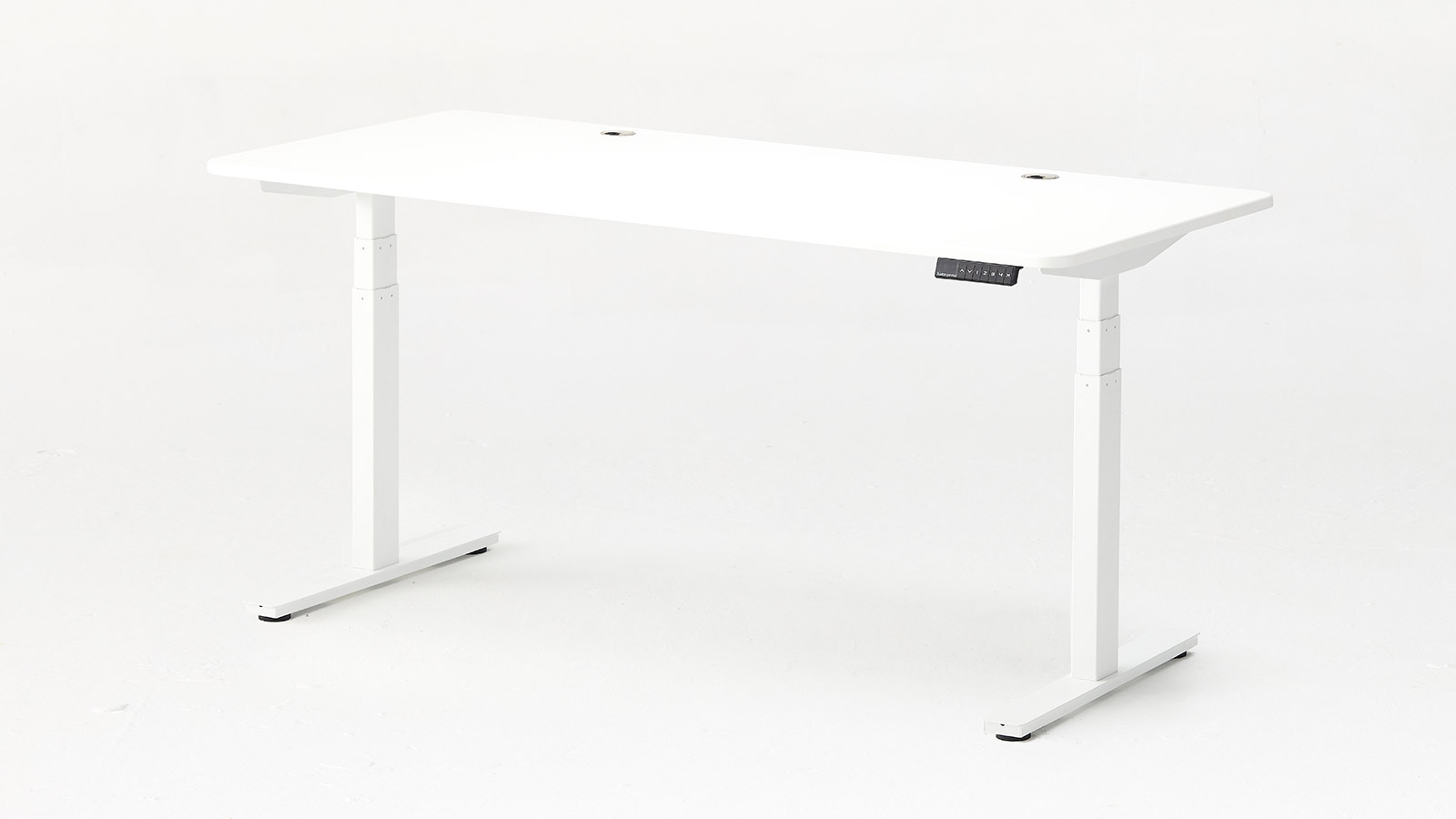
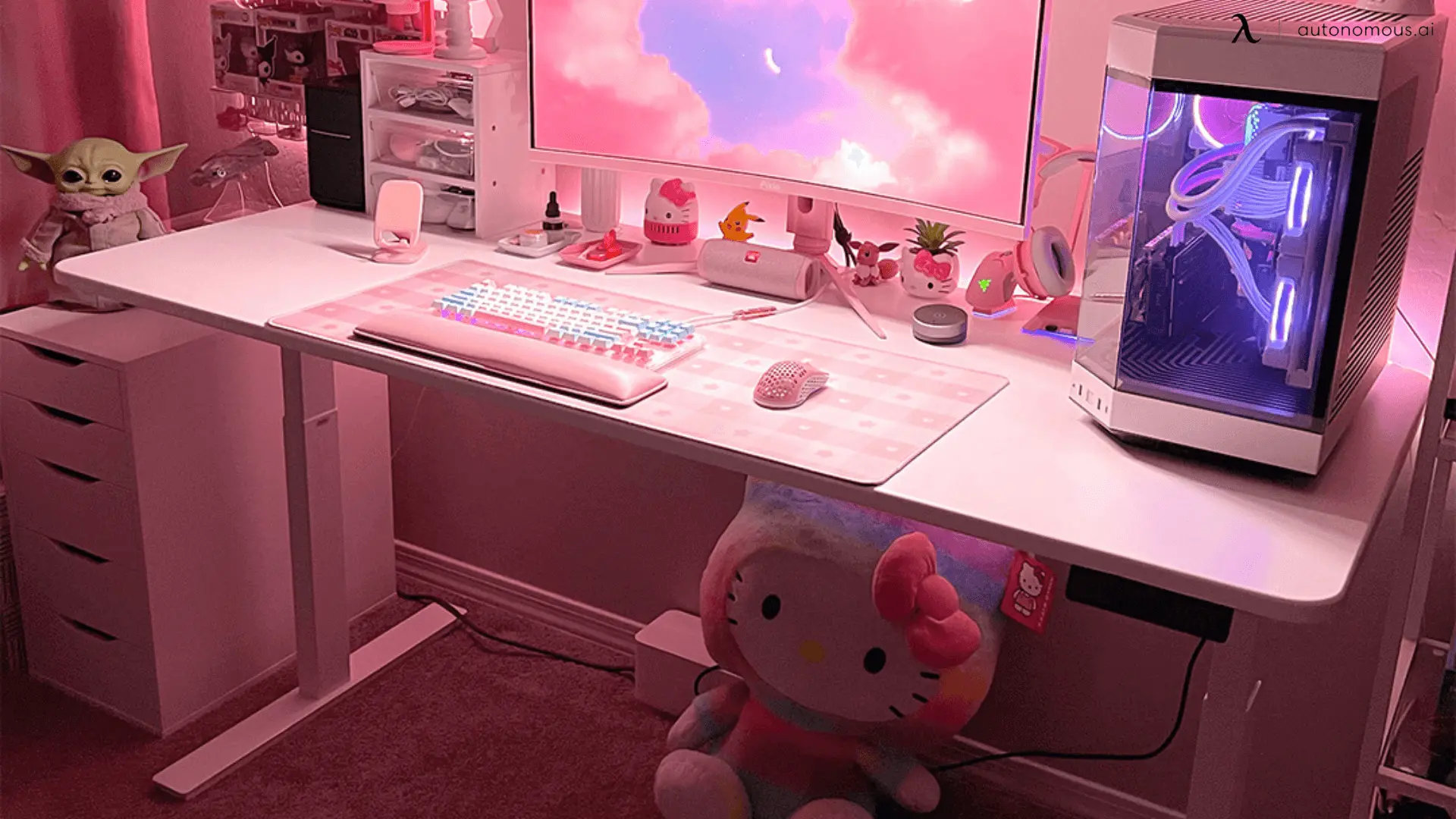
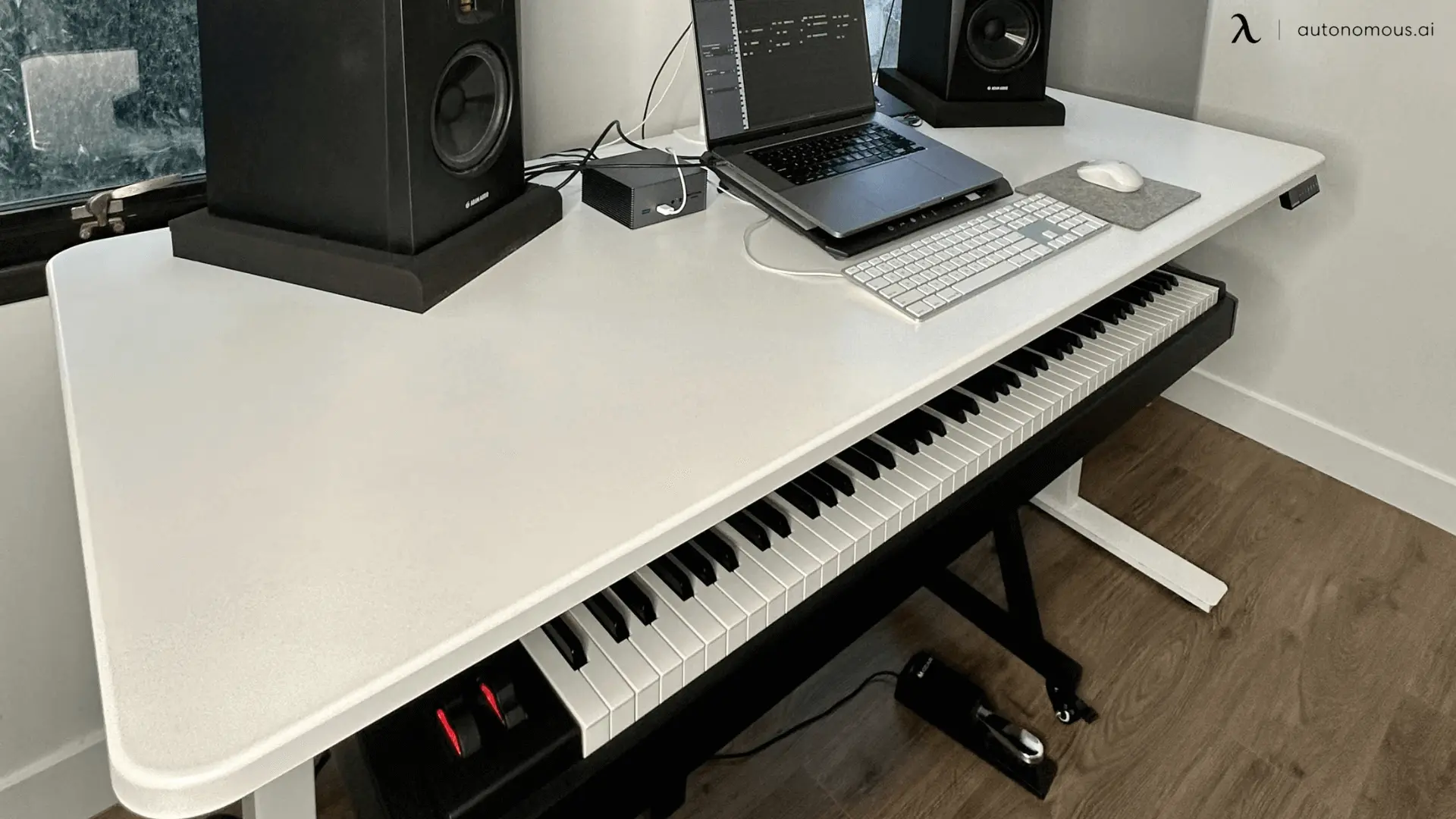
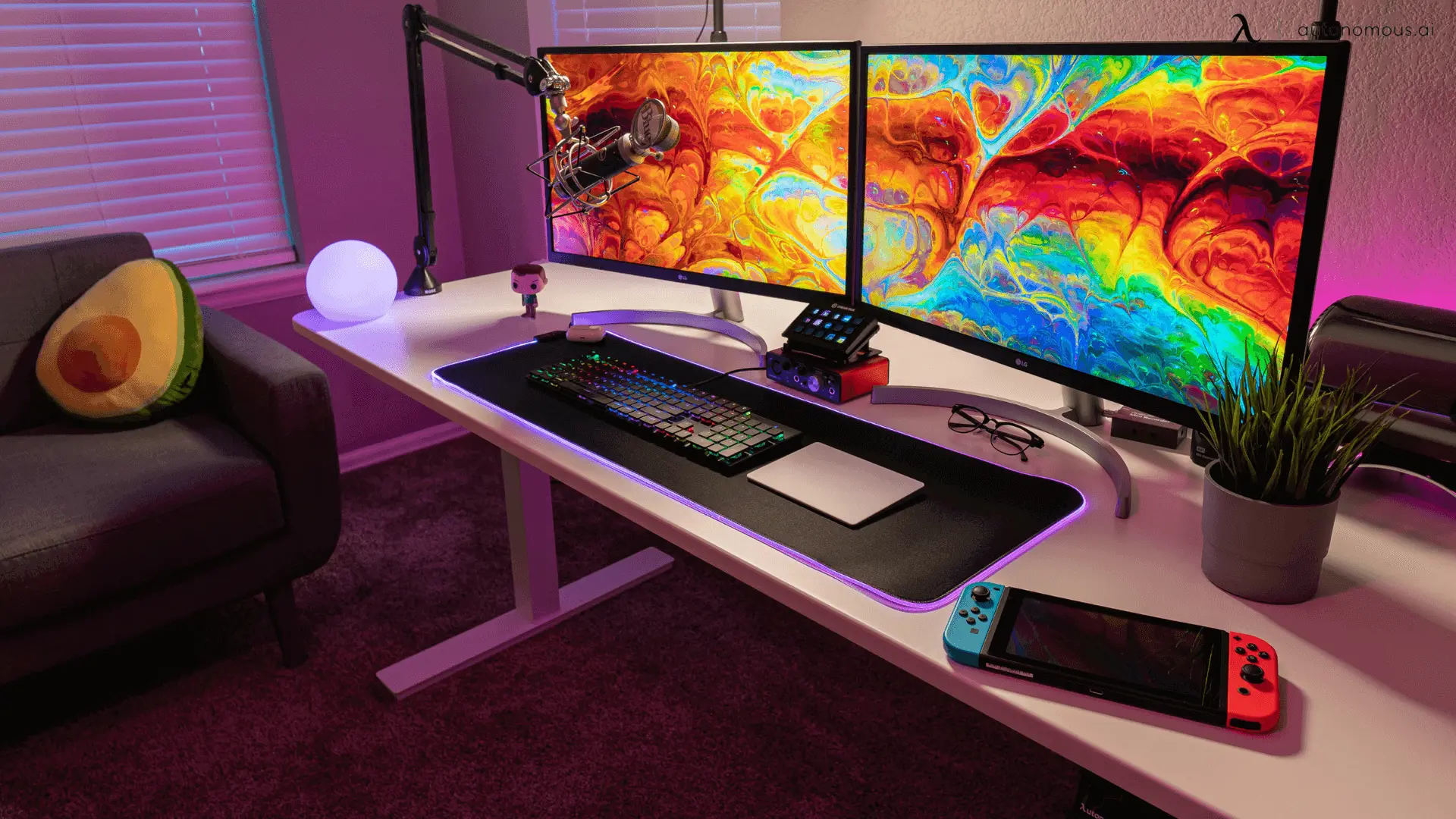
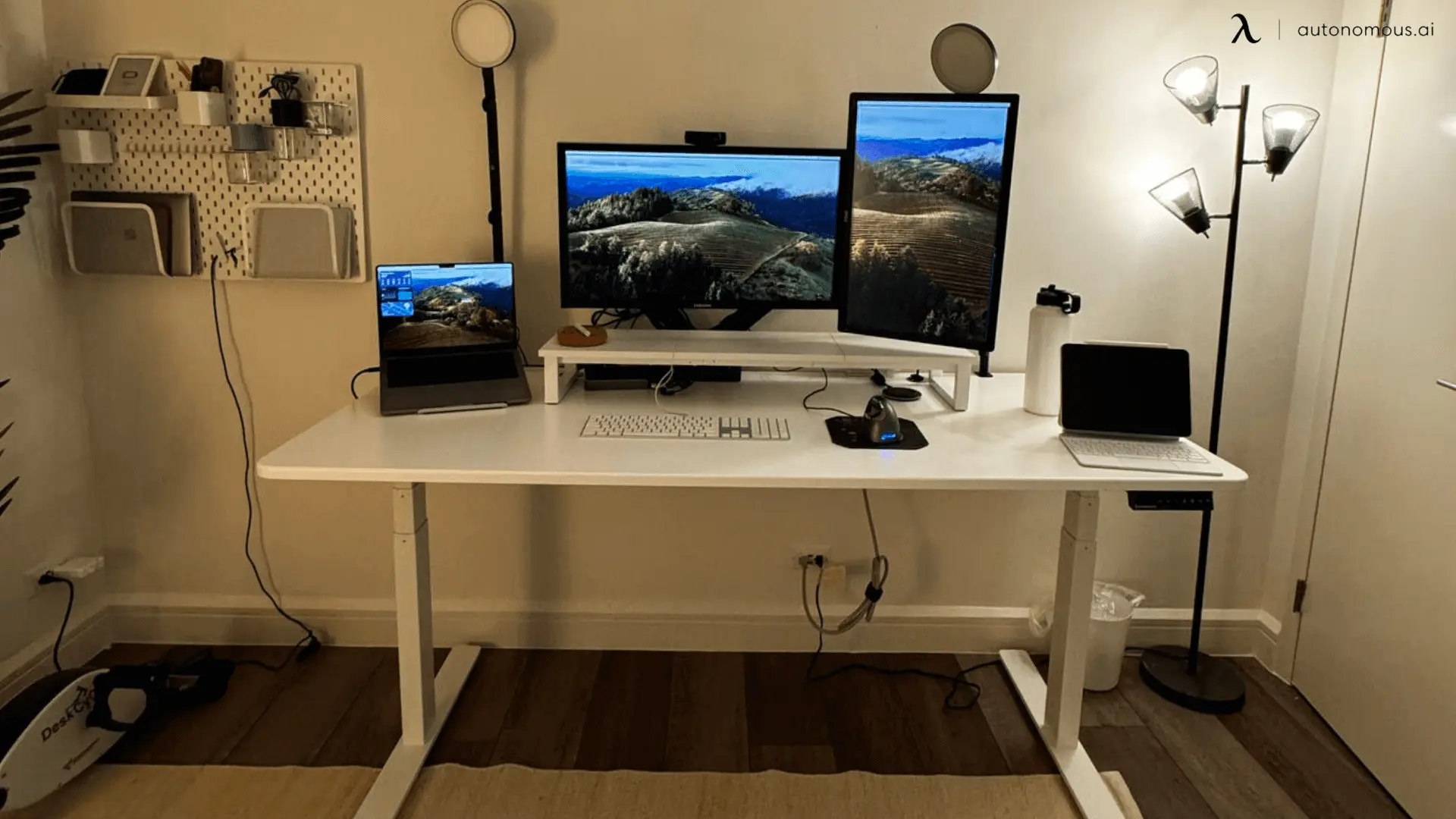
The Autonomous Desk 2 Expanse is built to manage the practical demands that come with a wider surface. The 70.5-inch desktop provides enough horizontal space to keep primary and secondary screens on the same visual plane, reducing the need for vertical stacking or shallow viewing distances. For anyone running a dual monitor setup, this width lets both displays sit comfortably side by side with room to spare.
The 30-inch depth allows monitors to sit farther back, which improves viewing ergonomics while preserving usable foreground space for input devices and reference materials.
At this span, load distribution matters. The desk’s frame and lifting system are designed to manage uneven weight from monitor arms, speakers, and desktop PCs while preserving a composed feel when raised, rather than reacting to small shifts across the surface.
Key characteristics:
- Dual-motor lifting system rated up to 310 lbs, providing sufficient headroom for heavier and unevenly distributed setups
- Quiet lift operation around 40 dB, minimizing distraction during frequent height adjustments
- Height range from 25" to 51" with programmable memory presets for consistent sit-to-stand positioning
Best suited for: Multi-monitor and mixed-use setups where consistent stability, smooth lift behavior, and predictable positioning are more important than added features or aggressive movement speed.
2. Autonomous Desk Pro Expanse
Heavier-duty electric desk designed for composure under load
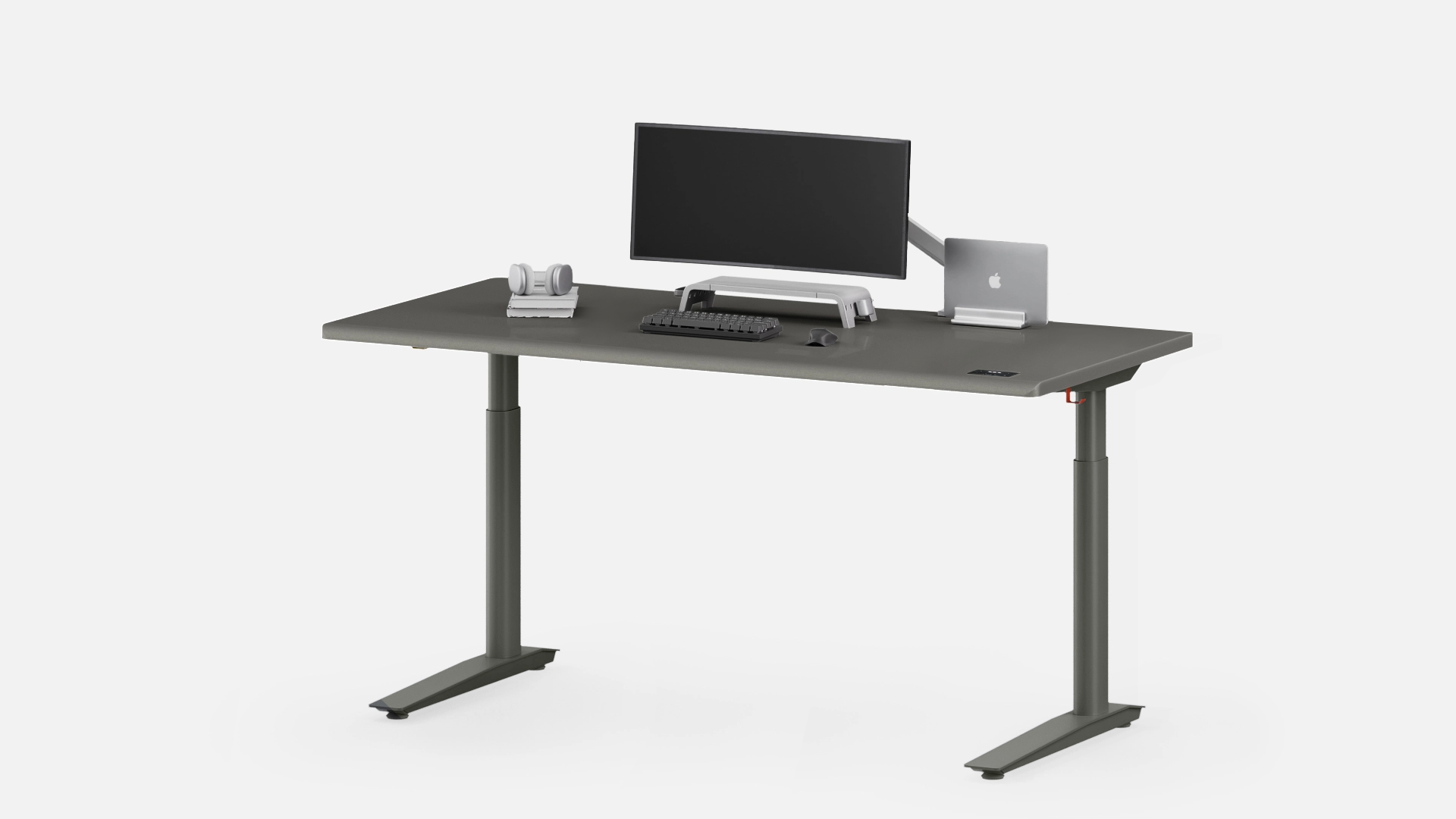
The Autonomous Desk Pro Expanse is built for situations where a wider desktop is paired with heavier, more concentrated equipment. At 70.5 inches, the challenge shifts from surface area to load control. This modern minimal desk addresses that reality with a reinforced frame and lifting system tuned to stay even and controlled when supporting dense setups where multiple mounted accessories, audio gear, and desktop hardware concentrate weight in specific zones rather than spreading evenly across the surface.
Its frame geometry places more emphasis on resisting torsional movement, which becomes noticeable at standing height on wide desks that carry uneven weight.
Key characteristics:
- Dual-motor system with higher load capacity than entry-level frames, maintaining smooth, synchronized lift under weight
- C-frame leg design that increases knee clearance while helping distribute load more evenly across a wide desktop
- Integrated cable tray and routing that keep power and data lines contained, reducing clutter on a wide surface
- Height adjustment range designed for repeatable positioning, minimizing drift during frequent sit-to-stand transitions
Best suited for: Larger, equipment-dense workstations built around a triple monitor setup where cable control, structural confidence, and long-term durability are as important as lift performance.
3. Eureka Ergonomic Cashew Shape Standing Desk
Curved, ergonomic standing desk with expanded depth for comfort and reach
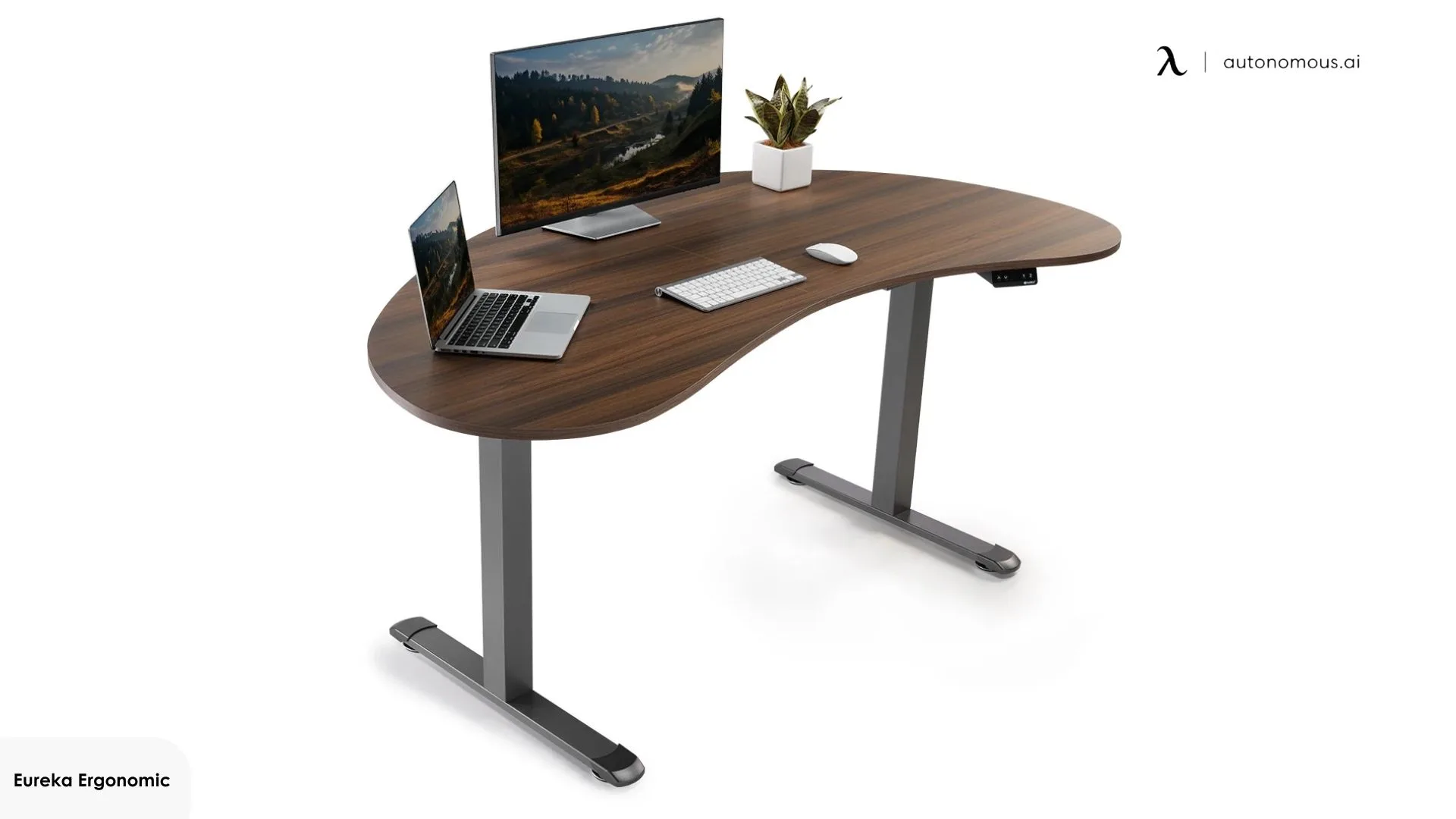
The defining feature of this desk is not its width, but how that width is shaped. Instead of extending straight across, the cashew-shaped desktop pulls the usable surface closer to the user. The design changes reach dynamics, keeping frequently used tools within a natural arc rather than spreading them across a flat plane. The added depth toward the center allows screens to sit further back without pushing keyboards and input devices forward.
This approach makes the desk feel more immersive without increasing horizontal span, which can be useful in rooms where width is available but depth is often compromised.
Key characteristics:
- Height range spanning sit-to-stand positions for varied postures across long sessions
- Robust wood-alloy desktop that resists flex under typical monitor and accessory loads
- Ample tabletop depth (nearly 40″) that places screens and input devices at ergonomic distances without encroaching on usable work area
Best suited for: Users who value reach efficiency and surface orientation, especially those who prefer a wide desk that feels enveloping rather than expansive from edge to edge.
4. Desky Dual Laminate Sit Stand Desk
Surface-first design focused on durability and everyday reliability
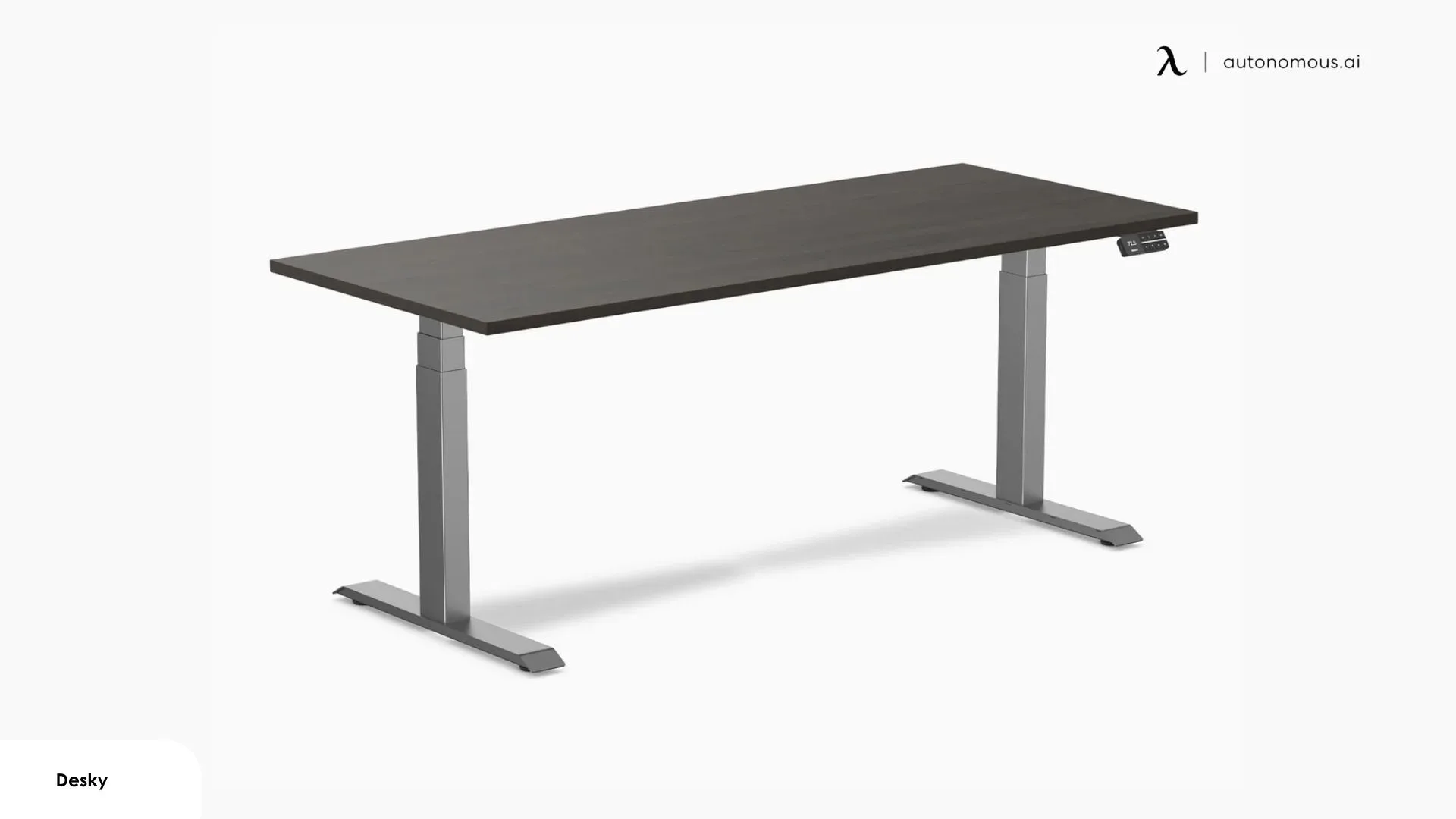
At a true 70 inch standing desk width, surface resilience and everyday usability become priorities. This desk addresses this by pairing a broad top with a dual-laminate finish that resists scratches, stains, and everyday wear — a practical consideration when you’re regularly sliding different desk accessories, such as keyboards, mice, coffee cups, and peripherals across a wide workspace.
The emphasis here is on delivering a durable surface without compromising the controlled movement and basic stability expected of a sit-stand desk at this scale. While the desk does not try to soften or sculpt the surface, it offers a predictable, stable workspace that remains consistent over time.
Key characteristics
- Dual-laminate table top designed for everyday durability and easy maintenance
- Uninterrupted surface that makes full use of the desk’s width
- Straight-leg steel frame that supports the span without added structural complexity
- Simple height controls focused on reliable adjustment
Best suited for: Users who value a wide, durable work surface and prefer a desk that stays out of the way visually while supporting regular, high-frequency use.
5. Autonomous Desk 2 L-Shaped
Expanded sit-stand desk designed to organize complex workflows
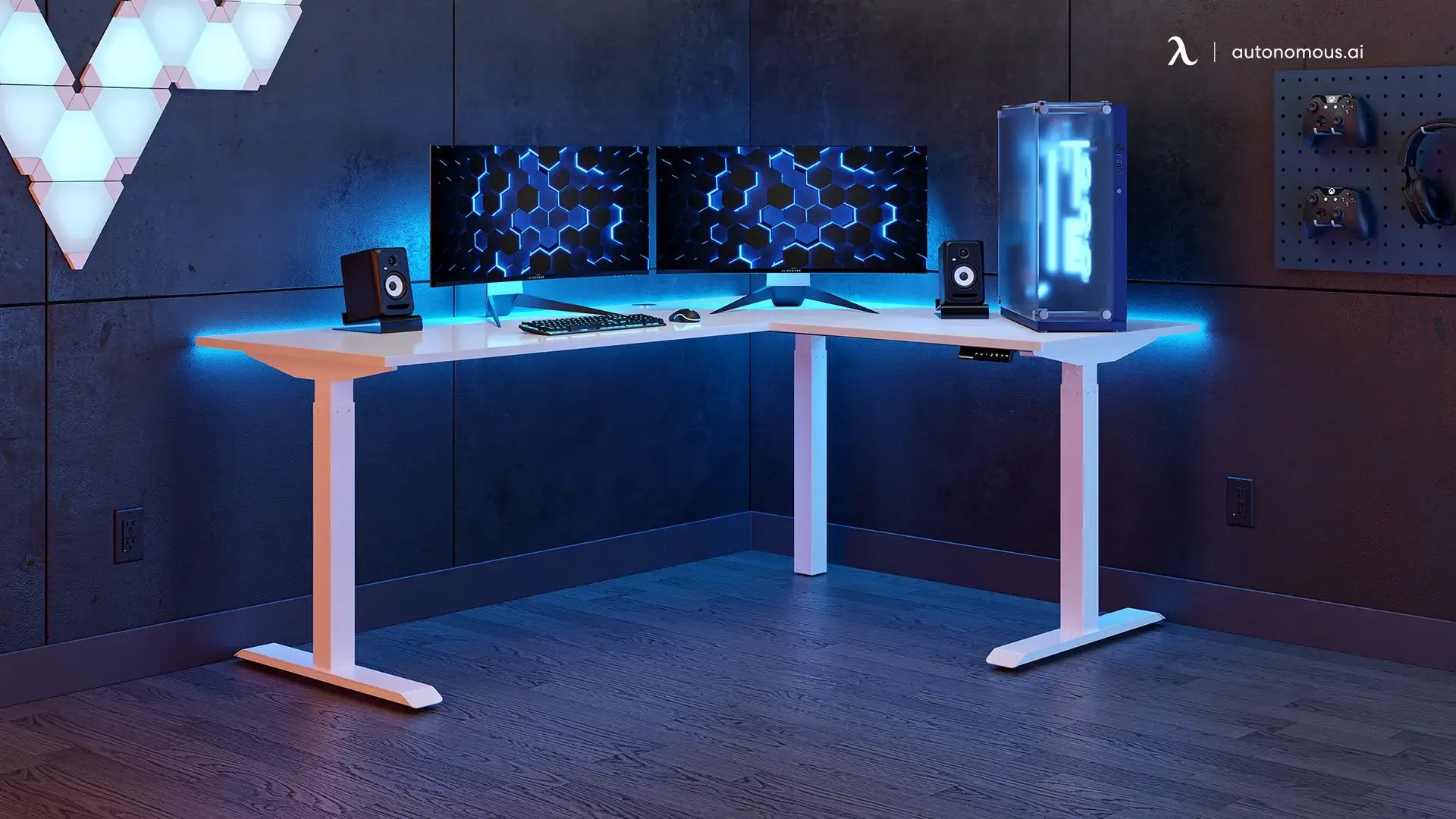
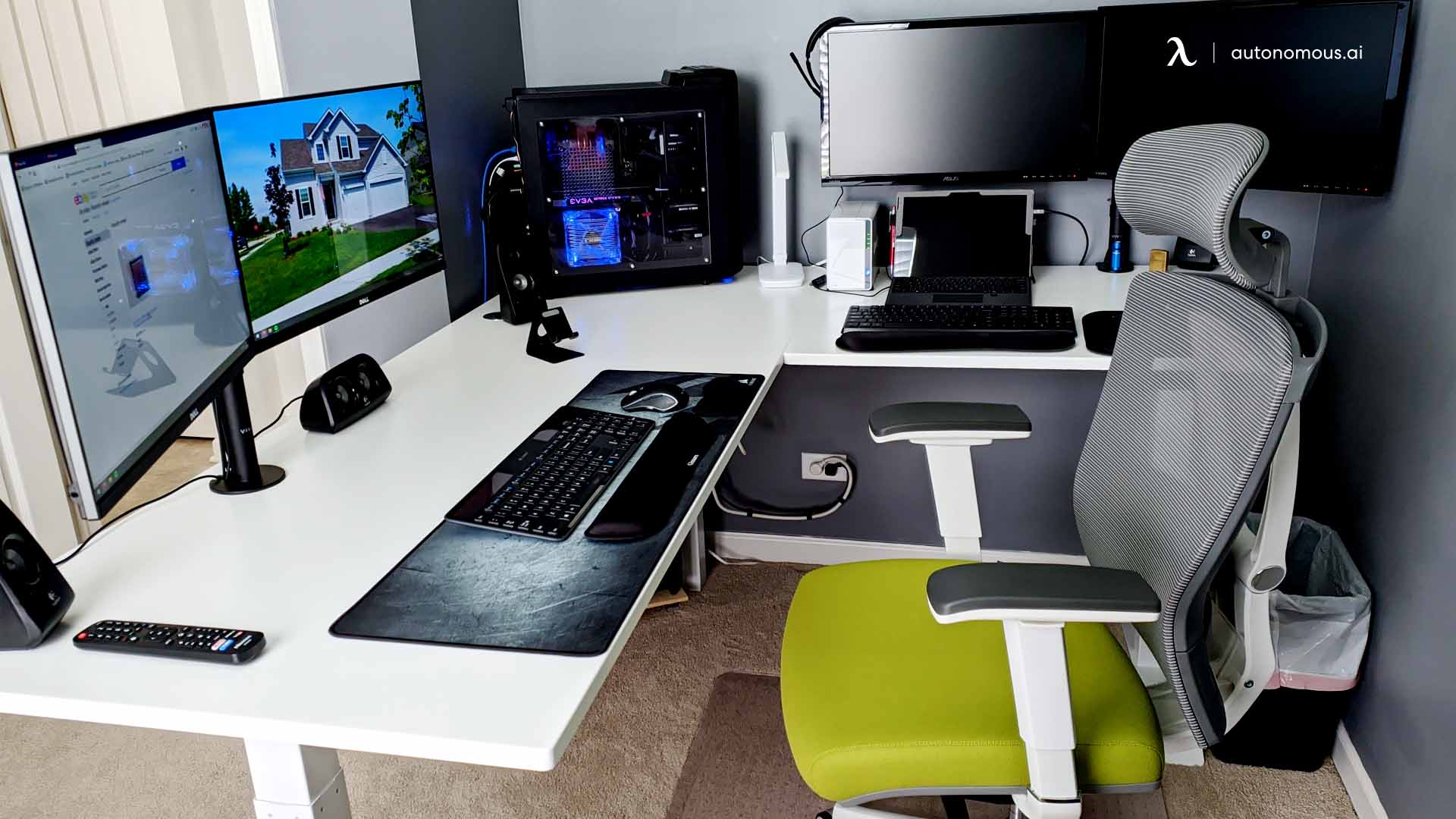
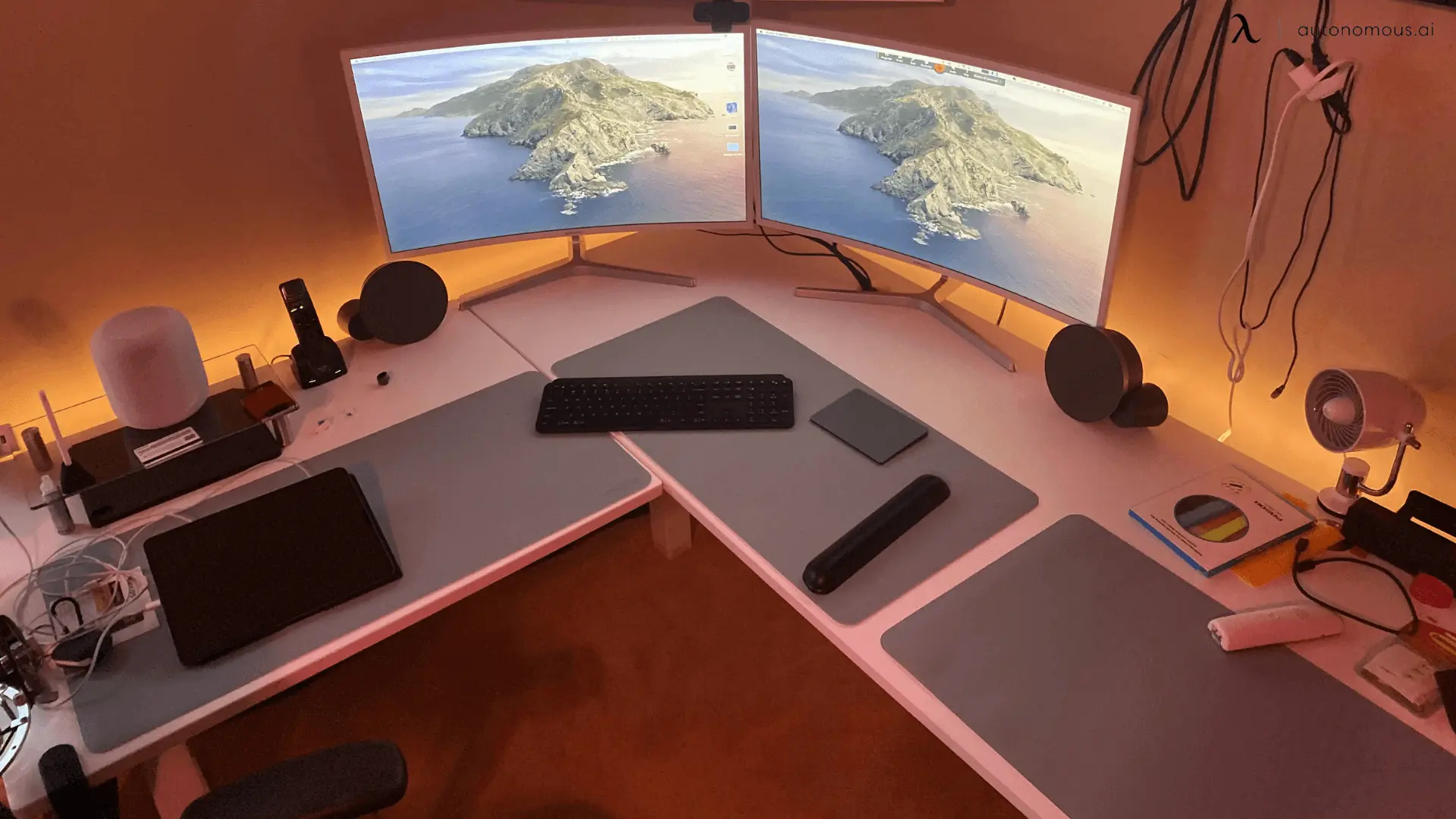
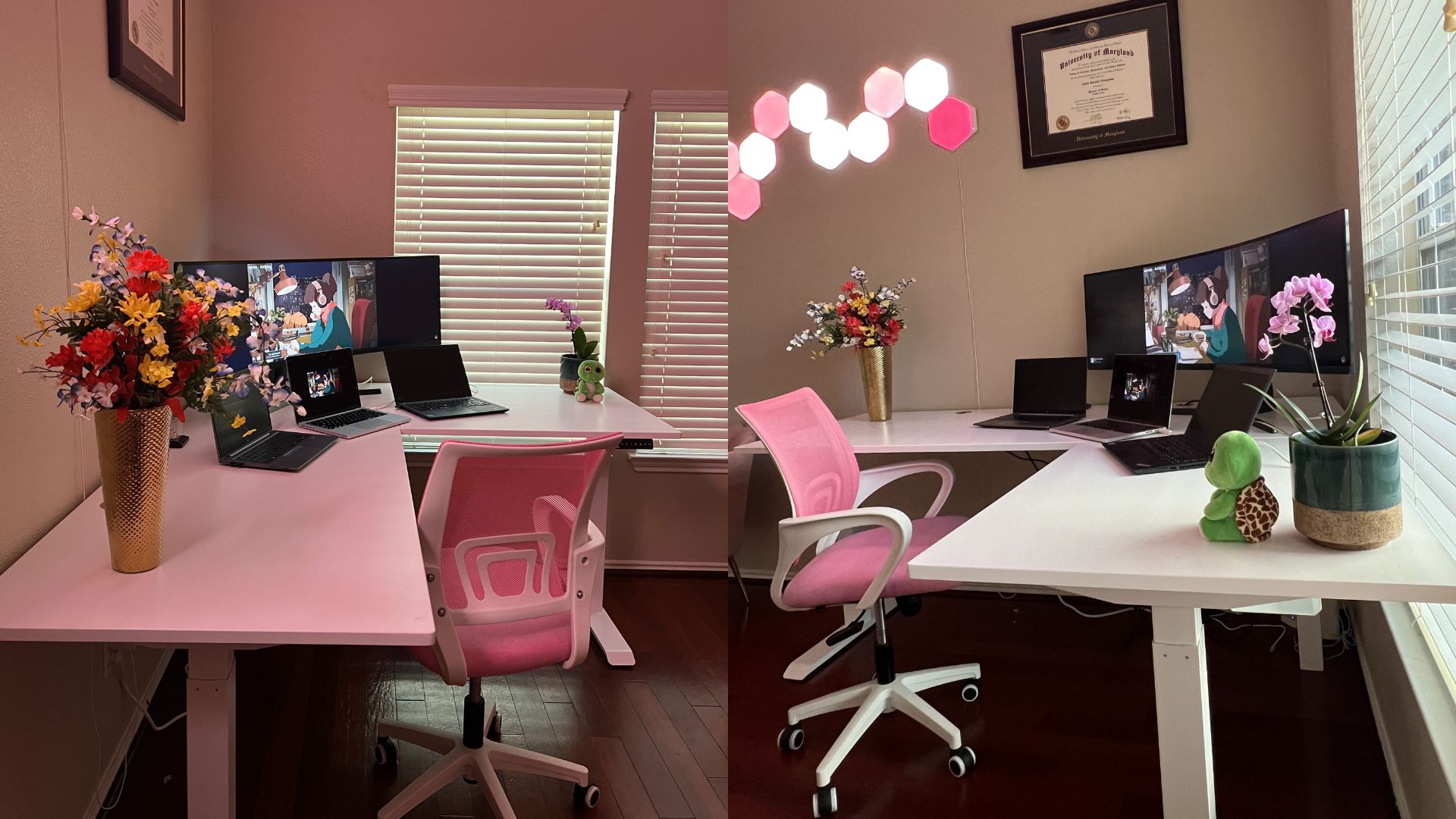
While not a traditional rectangular 70 inch standing desk, the Autonomous Desk 2 L-Shaped is often considered by users who have already reached the limits of wide, straight desks. Its L-configuration changes how space is used rather than extending width further. Instead of spreading everything across one long plane, this home office desk allows tasks, devices, and materials to be distributed across two connected surfaces.
This layout is particularly effective for workflows that move between focused screen work and secondary tasks, keeping each area visually and physically distinct. The triple-motor system also makes it a stable standing desk option for users loading up both sides with heavy equipment.
Key characteristics
- L-shaped surface with a large primary span paired with a secondary return, enabling natural separation between main and auxiliary work zones
- Triple-motor lifting system designed to keep the extended surface level under heavier, uneven loads
- Reversible return design that allows left- or right-side configuration to fit different room layouts
Best suited for: Users who find even a wide rectangular desk limiting, and need a sit-stand setup that supports parallel tasks or corner-based workspaces without stacking everything onto a single surface.

6. Perledesign 70" Standing Desk with File Cabinet
Wide sit-stand desk that blends storage into the workspace footprint
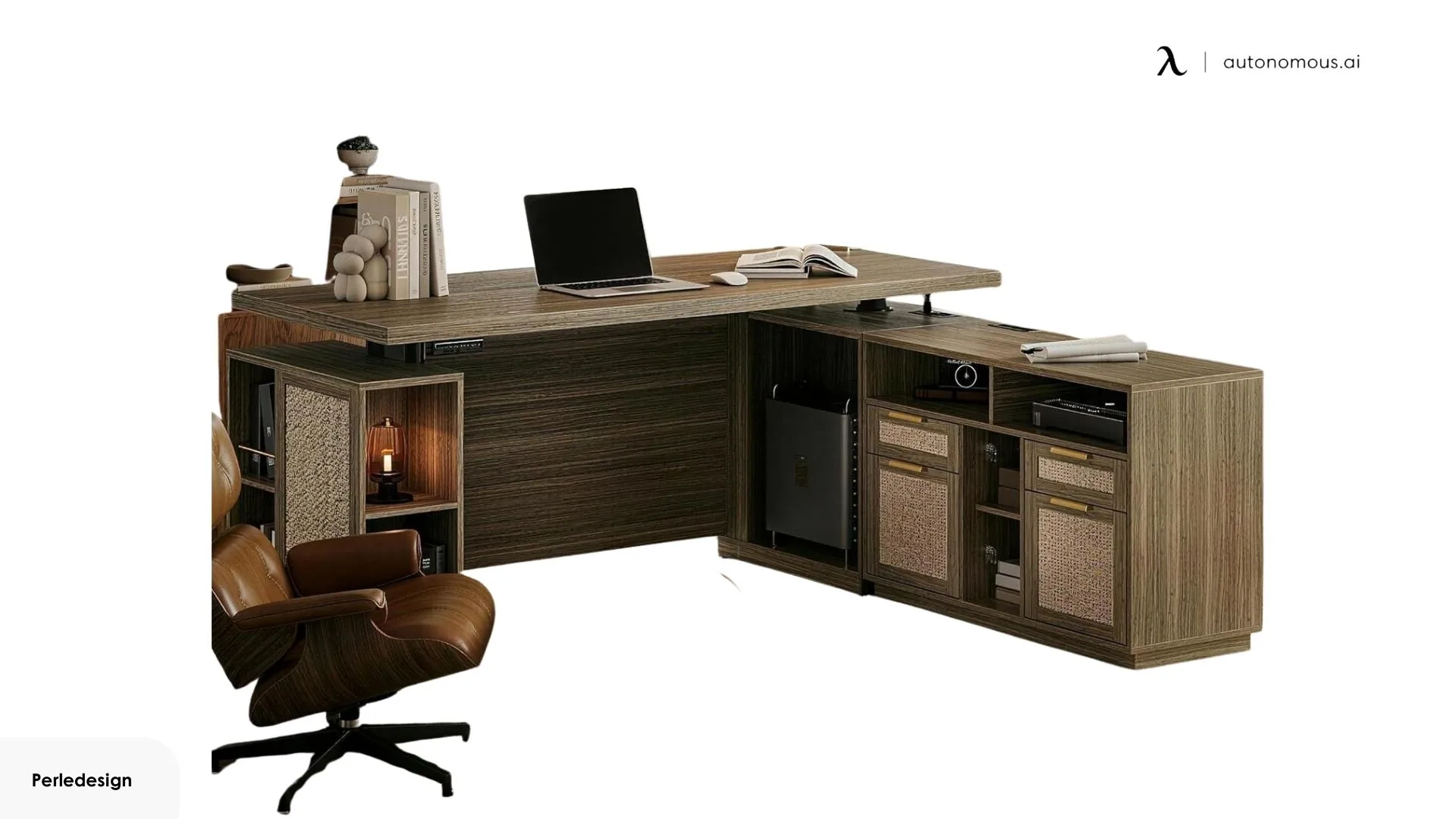
This desk approaches the 70-inch format from a space-efficiency angle. Instead of treating storage as an add-on, it integrates a file cabinet directly into the desk structure. That matters at this width, where adding separate storage can quickly crowd the area around the desk. By keeping filing and drawers within the same footprint, the surface stays clear and the layout feels contained rather than expanded outward.
The result is a desk that favors organization and proximity over openness, which can be a practical trade-off in smaller rooms that still need a wide work surface.
Key characteristics
- Integrated file cabinet that consolidates storage without increasing overall desk width
- Enclosed side structure that adds perceived solidity to the desk’s wide span
- Visual emphasis on function and storage over minimalism
Best suited for: Home offices where floor space is limited but document storage is still essential, and where a 70 inch sit stand desk needs to replace both a desk and a filing cabinet without fragmenting the room layout.
7. Haworth Upside Sit-to-Stand Desk
Commercial-grade sit-stand system refined for long-term daily use
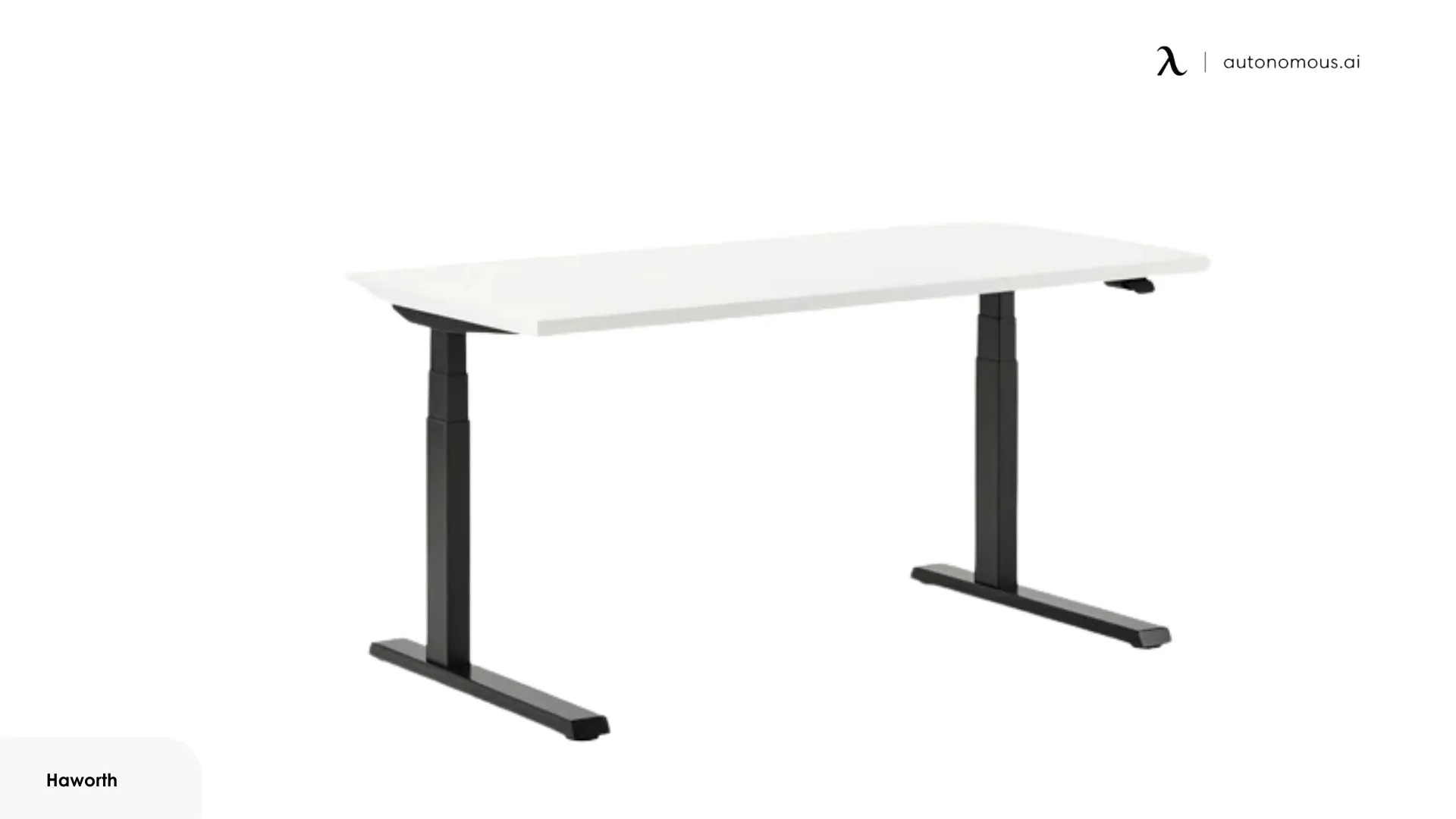
The Upside desk approaches the 70-inch format from a workplace systems perspective rather than a home setup mindset. At this width, the emphasis shifts to consistency and tolerance over time. The desk is designed to maintain uniform movement and alignment through repeated adjustments, supporting a wide surface without relying on visual bulk or oversized components. Its proportions feel deliberate, making the desk easier to integrate into rooms where balance and symmetry matter.
Rather than optimizing for maximum load or speed, the design favors uniform movement and long-term reliability, which becomes more apparent after months of daily use.
Key characteristics
- Refined frame architecture focused on maintaining alignment across wider desktops
- Clean, understated profile that avoids drawing attention to the structure beneath the surface
- Desktop options that prioritize durability and consistency over thickness or mass
Best suited for: Users who value a composed, long-lasting sit-stand desk that performs consistently over time, especially in workspaces where a 70 inch standing desk needs to feel integrated and intentional rather than oversized or visually dominant.
Room Size and Layout Considerations
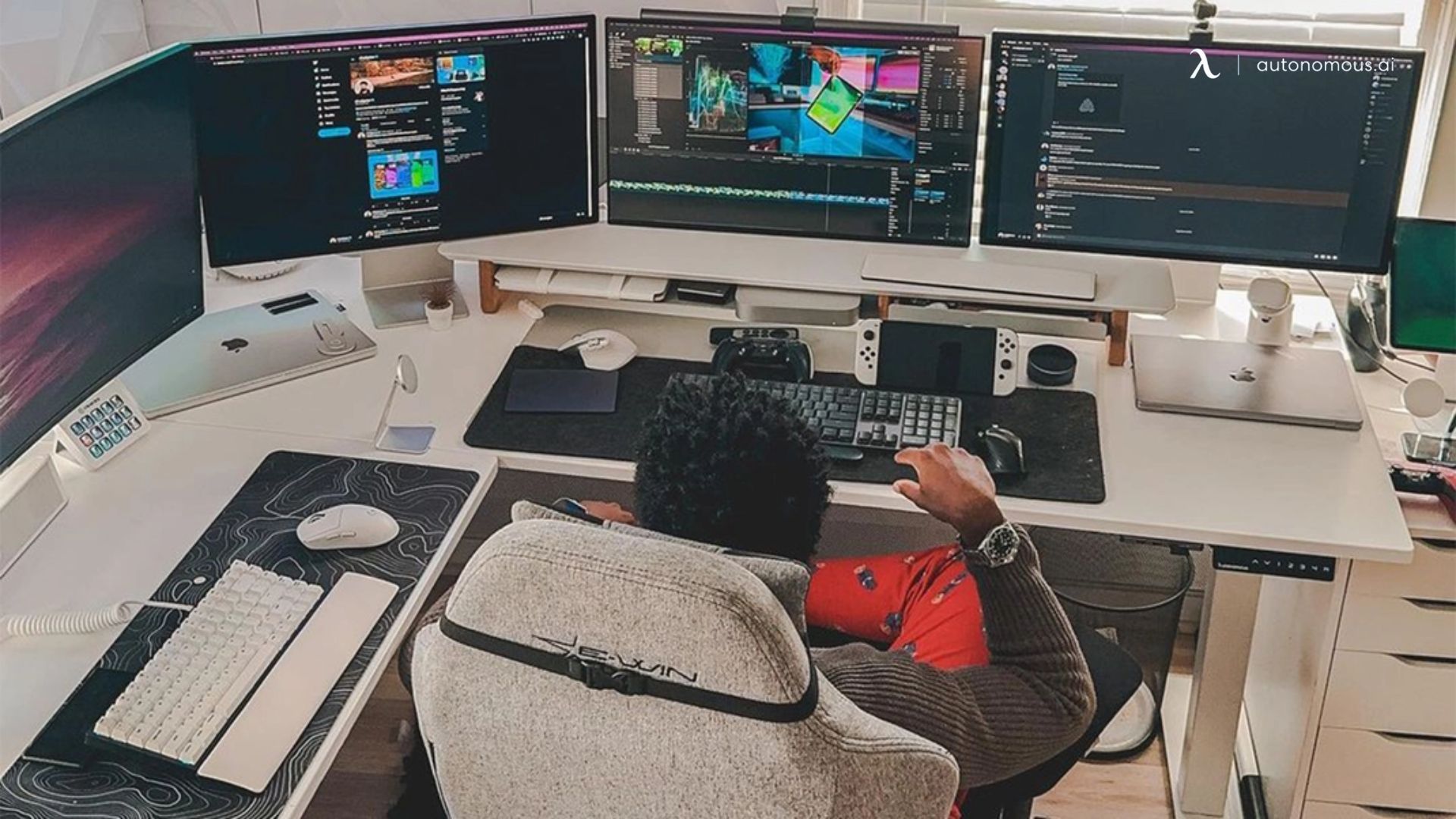
A 70 inch standing desk is a commitment—not just to your workflow, but to your floor plan. The good news: with the right standing desk setup, it won't overwhelm your space. Here's how to make it work.
- Know Your Minimum Room Size
A 70 inch desk fits comfortably in a room that's at least 10x10 feet. You can make it work in smaller spaces (around 8x10 feet), but you'll need to be more intentional about what else goes in the room. Anything tighter and the desk starts competing with everything around it.
- Follow The 30-Inch Rule
Leave at least 30 inches of clearance behind your desk. This gives you room to:
Push your chair back without hitting a wall or shelf
Transition between sitting and standing without feeling boxed in
Move naturally throughout the day
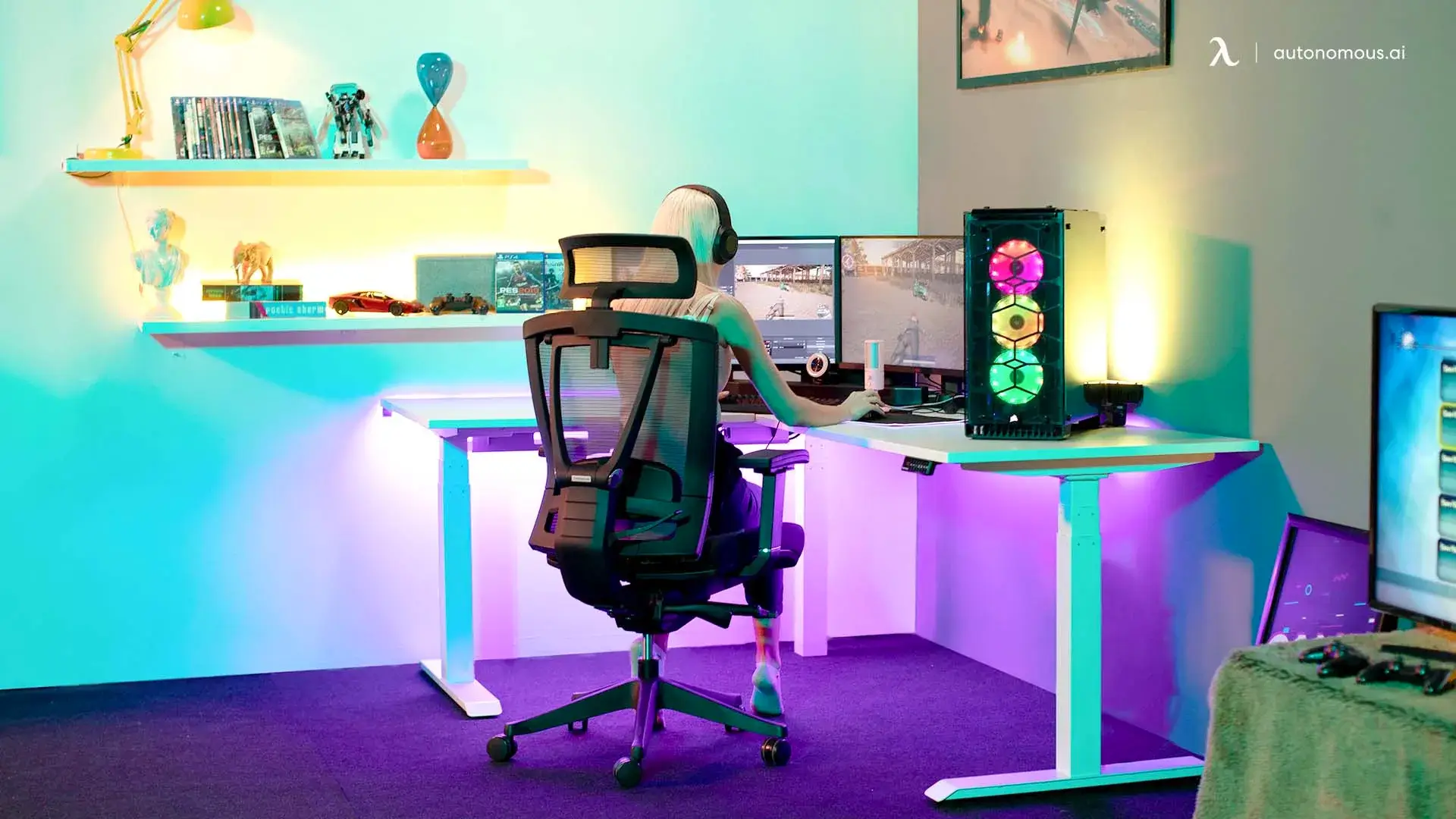
Side clearance matters too—aim for at least 20 inches on your dominant side so you're not brushing against walls or furniture every time you get up. If your room layout makes this difficult, a corner desk setup can sometimes solve the problem by tucking the desk into an angle rather than running it along a flat wall.
- Go Vertical, Not Horizontal
A wide desk doesn't need wide surroundings. Instead of adding side furniture that eats into your floor space, build upward:
Mount monitors on arms to free up desk surface
Use wall shelves for books, supplies, or plants
Try a pegboard for tools and office accessories you reach for often
This keeps the room feeling open while giving you more functional storage than a cluttered desktop ever would. The desk stays wide; everything else stays out of the way.
- Float It Or Anchor It
Two strategies, depending on your space:
Anchor it: Push the desk against a wall to maximize open floor space. Best for small office desk setups that share space with other functions. It also simplifies cable management.
Float it: Position the desk away from walls, closer to the room's center. This creates visual breathing room around it and can make a large desk feel more intentional, like a workstation rather than furniture shoved into a corner. Works best in dedicated offices with room to spare.
- Let The Desk Do The Work
One large surface reads cleaner than multiple smaller pieces fighting for space. If you're adding a 70 inch desk, reconsider the side table, the filing cabinet, and the printer stand. You likely don't need them — and removing them makes the room feel bigger, not emptier.
- Position For Natural Light
Before you finalize placement, check your windows. Ideally, natural light should come from the side, not directly behind your monitor (causes glare) or behind you (washes out your screen on video calls). This single factor often determines where a desk can realistically go. Work with it early so you're not rearranging everything a week later.
A 70 inch standing desk takes up space. But when you set it up with intention, right clearance, vertical storage, minimal clutter, it stops feeling like a large desk in a small room and starts feeling like the room was designed around it.
FAQs
Is a 70 inch standing desk too big for a home office?
A 70 inch standing desk can fit well in a home office if there is adequate clearance for movement and chair space. Most users need at least 9–10 feet of wall width to avoid the desk feeling crowded.
What room size works best for a 70 inch standing desk?
A 70 inch standing desk works best in rooms that are at least 10 × 10 feet. This allows space for sit-stand movement, accessories, and nearby storage without restricting walkways.
Is a 70 inch adjustable desk stable at standing height?
A 70 inch adjustable desk can remain stable if the frame is designed to handle wider spans and uneven loads. Stability depends more on frame design and motor control than on width alone.
How many monitors fit on a 70 inch standing desk?
A 70 inch standing desk typically supports two to three monitors comfortably on a single row. The exact number depends on monitor size, mounting method, and desired viewing distance.
What depth should a 70 inch sit stand desk have?
Most users prefer a 70 inch sit stand desk with at least 30 inches of depth. This allows monitors to sit at an ergonomic distance while keeping enough foreground space for input devices.
Is a 70 inch standing desk better than a 60 inch desk?
A 70 inch standing desk offers more horizontal separation for equipment and tasks than a 60-inch desk. It is often chosen by users who feel constrained by standard desk widths.
What is the difference between a 70 inch and 72 inch standing desk?
The difference between a 70 inch standing desk and a 72-inch model is small in surface area but noticeable in room fit. A 70-inch desk is usually easier to place and slightly easier to stabilize.
How much weight should a 70 inch adjustable desk support?
A 70 inch adjustable desk should comfortably support more than the actual setup weight to ensure smooth lifting. Higher capacity helps maintain even movement when weight is unevenly distributed.
Does a 70 inch standing desk wobble more than smaller desks?
A 70 inch standing desk can show more movement if the frame is under-engineered for the span. Well-designed frames manage this by reinforcing joints and controlling lift motion.
Is a 70 inch standing desk worth it for long workdays?
For users who need space to organize tools, screens, and materials, a 70 inch standing desk can reduce clutter and repositioning during long sessions. The added width often supports better workflow consistency.
Conclusion: Invest in a Desk That Works as Hard as You Do
Choosing a 70 inch standing desk is less about reaching for the largest option available and more about committing to a workspace that supports how you actually work. At this size, differences in design, structure, and layout become more apparent, shaping daily comfort and long-term usability. Some desks emphasize balance across a wide surface, others focus on handling dense equipment, while alternative layouts prioritize reach, storage, or task separation.
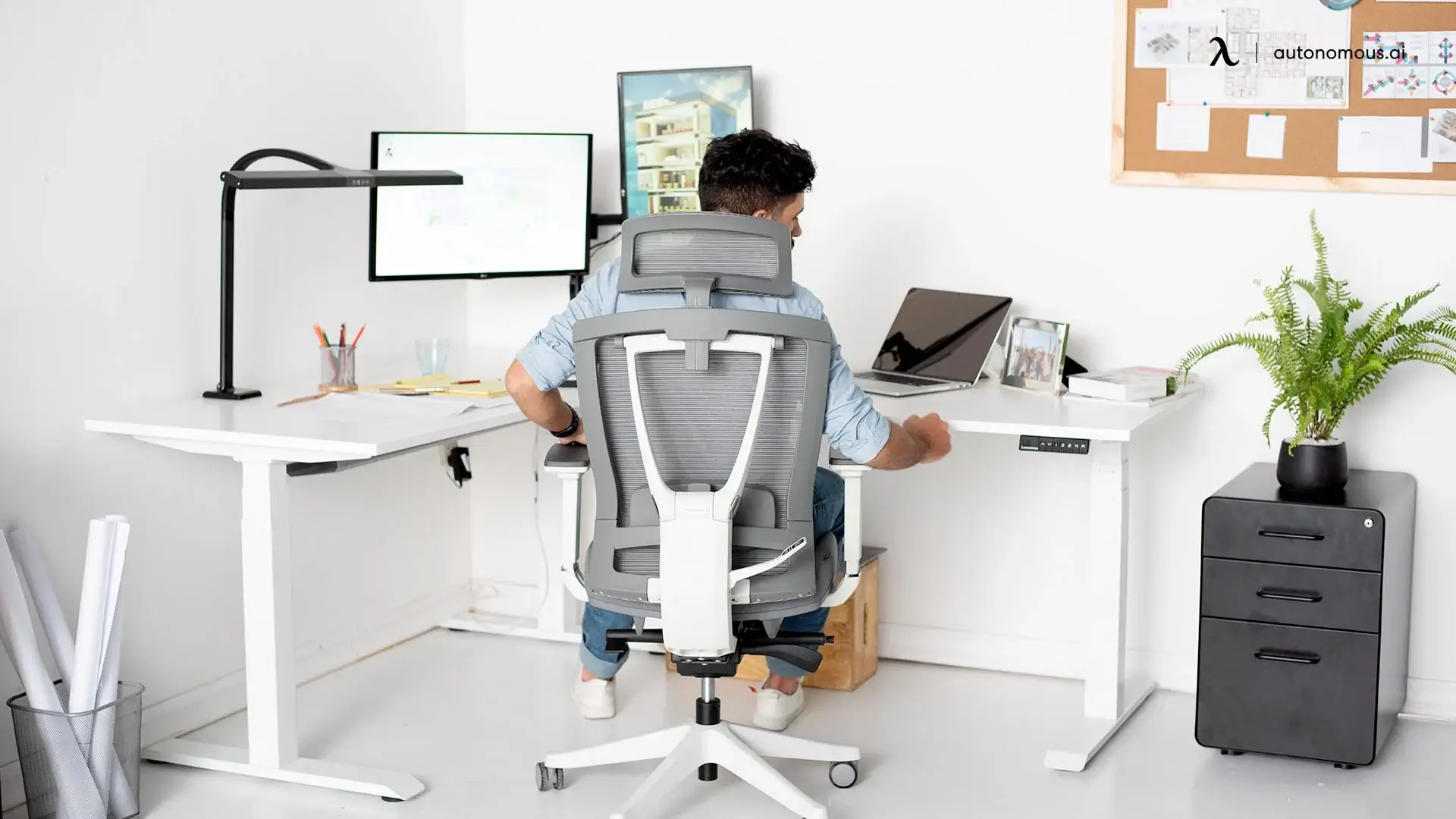
That said, a straight 70 inch surface isn't the only path forward. If your workflow involves task separation or you want dedicated zones for different projects, a large L-shaped standing desk offers that flexibility with a smaller footprint per side. If you're loading up with heavy monitors, studio gear, or lab equipment, a 4-leg standing desk provides the structural support that dual-leg frames can struggle to match.
The right choice depends on how the desk fits into your room, how weight is distributed across the surface, and how often you move between positions. When those factors align, a desk at this width feels intentional rather than oversized, offering the space and flexibility needed to work with clarity and consistency over time.